

Superoxide Fluxes Limit Nitric Oxide-induced Signaling
Open accessThe DOI matches its Crossref record; 55 of the 55 references it cites were found in a registry or an index.
Abstract
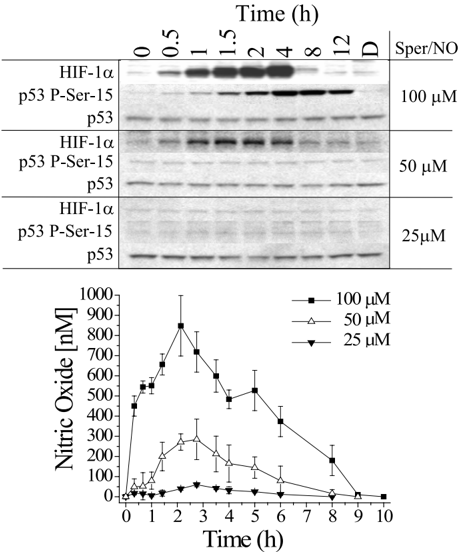
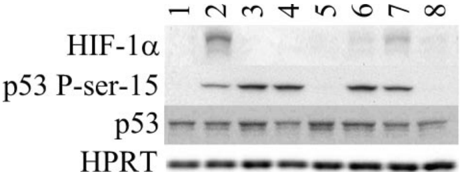
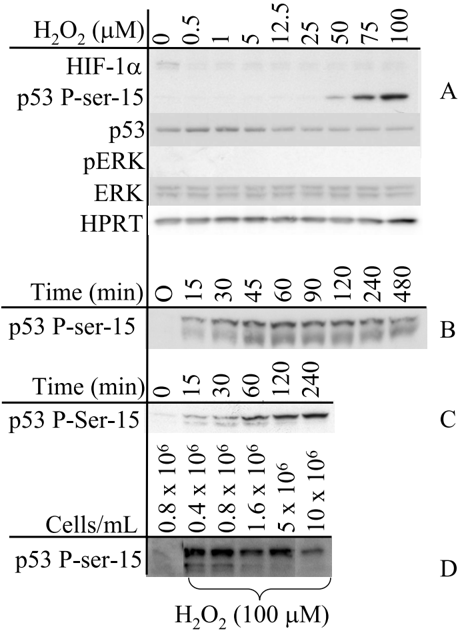
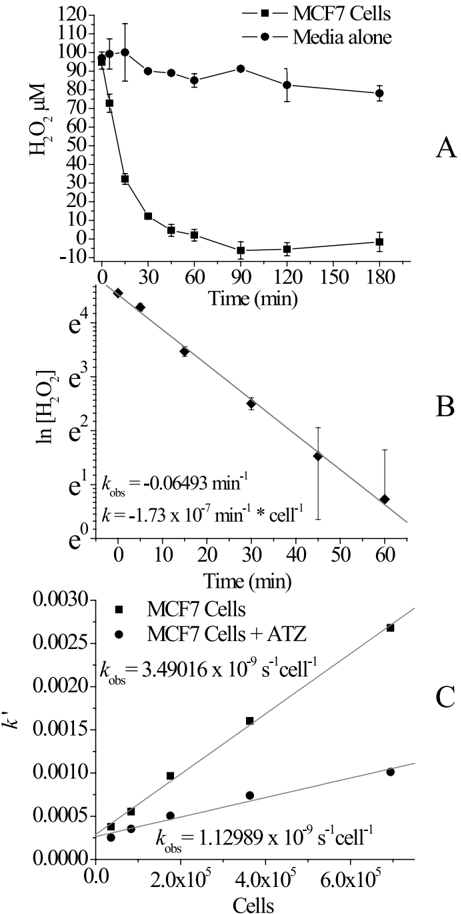
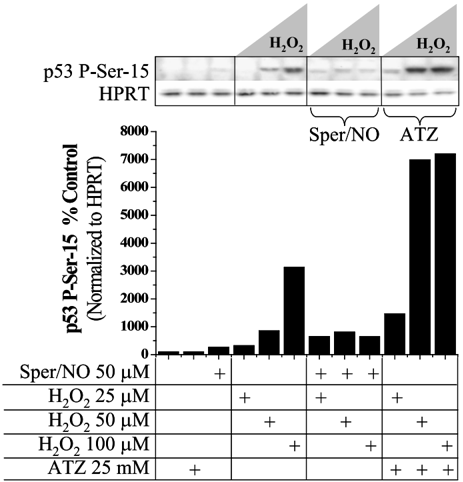
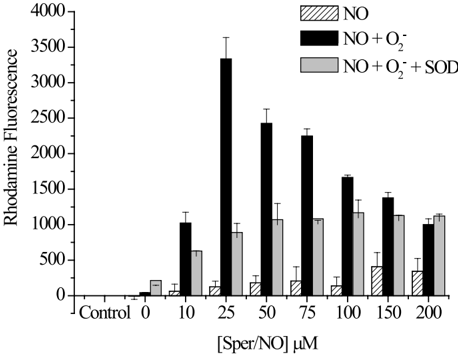
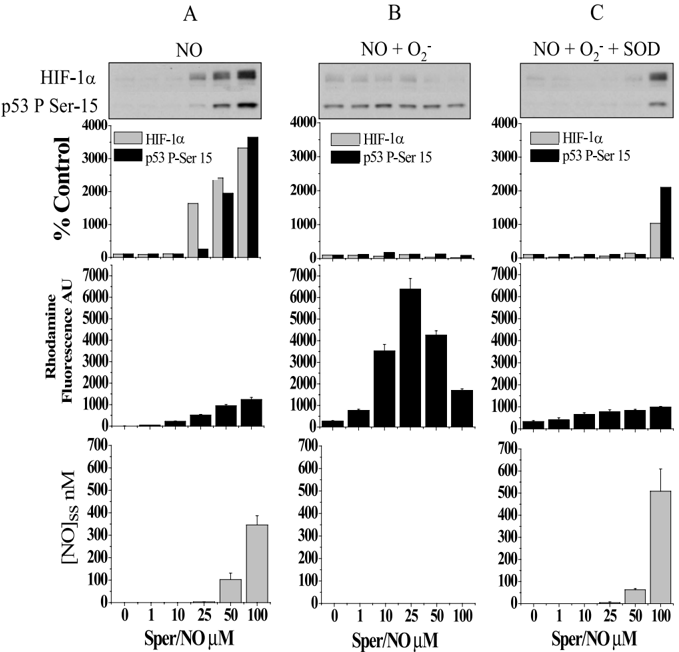
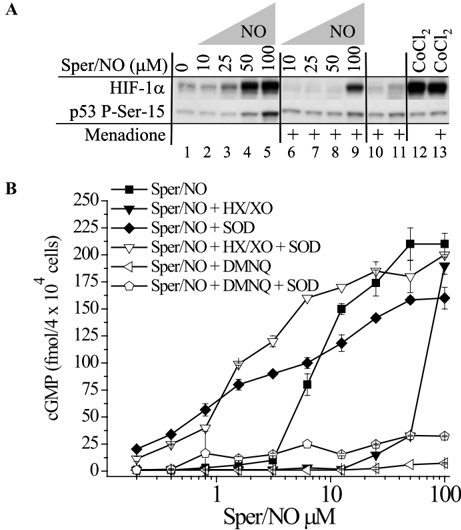
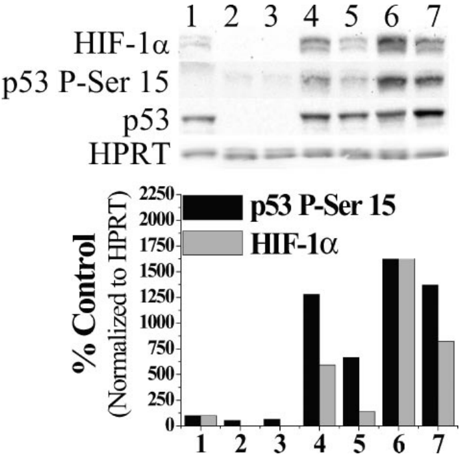
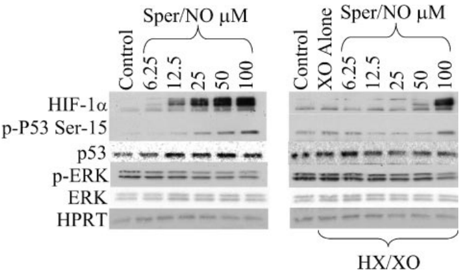
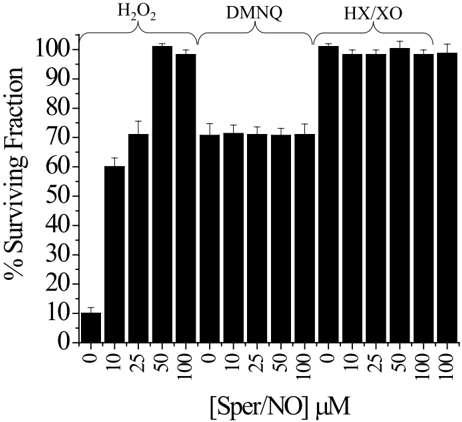
Independently, superoxide (O2-) and nitric oxide (NO) are biologically important signaling molecules. When co-generated, these radicals react rapidly to form powerful oxidizing and nitrating intermediates. Although this reaction was once thought to be solely cytotoxic, herein we demonstrate using MCF7, macrophage, and endothelial cells that when nanomolar levels of NO and O2- were produced concomitantly, the effective NO concentration was established by the relative fluxes of these two radicals. Differential regulation of sGC, pERK, HIF-1alpha, and p53 were used as biological dosimeters for NO concentration. Introduction of intracellular- or extracellular-generated O2- during NO generation resulted in a concomitant increase in oxidative intermediates with a decrease in steady-state NO concentrations and a proportional reduction in the levels of sGC, ERK, HIF-1alpha, and p53 regulation. NO responses were restored by addition of SOD. The intermediates formed from the reactions of NO with O2- were non-toxic, did not form 3-nitrotyrosine, nor did they elicit any signal transduction responses. H2O2 in bolus or generated from the dismutation of O2- by SOD, was cytotoxic at high concentrations and activated p53 independent of NO. This effect was completely inhibited by catalase, suppressed by NO, and exacerbated by intracellular catalase inhibition. We conclude that the reaction of O2- with NO is an important regulatory mechanism, which modulates signaling pathways by limiting steady-state levels of NO and preventing H2O2 formation from O2-.
Overview
The claims and statistics of this paper haven’t been checked yet.
Free: it reads the open-access text and checks the first 5 claims that cite a source we can check. Create a free account to check every claim.
Integrity signals
Registry
Cites
Statistics
Figures
Verification
Claims the paper makes
The claims and statistics of this paper haven’t been checked yet.
Free: it reads the open-access text and checks the first 5 claims that cite a source we can check. Create a free account to check every claim.
Claims other papers make about this one
Each is checked against this paper’s own text: does it say what the citing paper says it does?
In the citing paper
“However, NO-induced HIF-1α stabilization and p53 phosphorylation levels are decreased by O2− [57, 283].”
From Signaling and stress: The redox landscape in NOS2 biology (2015) · cites this paper as [283]
Self-check
Percentages, sums and reported differences re-computed from the paper’s own numbers.
The self-check needs the paper’s full text.
Citations
Cites
Beckman, J. S., Beckman, T. W., Chen, J., Marshall, P. A., & Freeman, B. A. (1990) · Proceedings of the National Academy of Sciences · doi:10.1073/pnas.87.4.1620 · Cited by 7,029
Superoxide anion is involved in the breakdown of endothelium-derived vascular relaxing factor
Gryglewski, R. J., Palmer, R. M. J., & Moncada, S. (1986) · Nature · doi:10.1038/320454a0 · Cited by 2,400
Nitric oxide: A cytotoxic activated macrophage effector molecule
Hibbs, J. B., Taintor, R. R., Vavrin, Z., & Rachlin, E. M. (1988) · Biochemical and Biophysical Research Communications · doi:10.1016/s0006-291x(88)80015-9 · Cited by 2,030
Hussain, S. P., Hofseth, L. J., & Harris, C. C. (2003) · Nature Reviews Cancer · doi:10.1038/nrc1046 · Cited by 1,690
Self-citationSuperoxide Anion Radical (O·̄2), Superoxide Dismutases, and Related Matters
Fridovich, I. (1997) · Journal of Biological Chemistry · doi:10.1074/jbc.272.30.18515 · Cited by 1,337
Ischiropoulos, H. (1998) · Archives of Biochemistry and Biophysics · doi:10.1006/abbi.1998.0755 · Cited by 1,022
Roles of nitric oxide in tumor growth.
Jenkins, D. C., Charles, I. G., Thomsen, L. L., Moss, D. W., Holmes, L. S., Baylis, S. A., Rhodes, P., Westmore, K., Emson, P. C., & Moncada, S. (1995) · Proceedings of the National Academy of Sciences · doi:10.1073/pnas.92.10.4392 · Cited by 780
The biological lifetime of nitric oxide: Implications for the perivascular dynamics of NO and O 2
Thomas, D. D., Liu, X., Kantrow, S. P., & Lancaster, J. R. (2001) · Proceedings of the National Academy of Sciences · doi:10.1073/pnas.98.1.355 · Cited by 760
Self-citationAn assay for superoxide dismutase activity in mammalian tissue homogenates
Spitz, D. R., & Oberley, L. W. (1989) · Analytical Biochemistry · doi:10.1016/0003-2697(89)90192-9 · Cited by 752
Peroxynitrite-mediated oxidation of dihydrorhodamine 123
Kooy, N. W., Royall, J. A., Ischiropoulos, H., & Beckman, J. S. (1994) · Free Radical Biology and Medicine · doi:10.1016/0891-5849(94)90138-4 · Cited by 719
Peroxynitrite reactivity with amino acids and proteins
Alvarez, B., & Radi, R. (2003) · Amino Acids · doi:10.1007/s00726-003-0018-8 · Cited by 560
p53: traffic cop at the crossroads of DNA repair and recombination
Sengupta, S., & Harris, C. C. (2005) · Nature Reviews Molecular Cell Biology · doi:10.1038/nrm1546 · Cited by 544
Self-citationBiological selectivity and functional aspects of protein tyrosine nitration
Ischiropoulos, H. (2003) · Biochemical and Biophysical Research Communications · doi:10.1016/s0006-291x(03)00814-3 · Cited by 500
Nitric Oxide Impairs Normoxic Degradation of HIF-1α by Inhibition of Prolyl Hydroxylases
Metzen, E., Zhou, J., Jelkmann, W., Fandrey, J., & Brüne, B. (2003) · Molecular Biology of the Cell · doi:10.1091/mbc.e02-12-0791 · Cited by 414
Mechanisms of the Antioxidant Effects of Nitric Oxide
Wink, D. A., Miranda, K. M., Espey, M. G., Pluta, R. M., Hewett, S. J., Colton, C., Vitek, M., Feelisch, M., & Grisham, M. B. (2001) · Antioxidants & Redox Signaling · doi:10.1089/152308601300185179 · Cited by 400
Self-citationSuperoxide Reacts with Nitric Oxide to Nitrate Tyrosine at Physiological pH via Peroxynitrite
Reiter, C. D., Teng, R.-J., & Beckman, J. S. (2000) · Journal of Biological Chemistry · doi:10.1074/jbc.m910433199 · Cited by 385
Modulation of Superoxide-dependent Oxidation and Hydroxylation Reactions by Nitric Oxide
Miles, A. M., Bohle, D. S., Glassbrenner, P. A., Hansert, B., Wink, D. A., & Grisham, M. B. (1996) · Journal of Biological Chemistry · doi:10.1074/jbc.271.1.40 · Cited by 351
Self-citationOxidative and nitrosative events in asthma
Andreadis, A. A., Hazen, S. L., Comhair, S. A. A., & Erzurum, S. C. (2003) · Free Radical Biology and Medicine · doi:10.1016/s0891-5849(03)00278-8 · Cited by 327
Nitric oxide regulates angiogenesis through a functional switch involving thrombospondin-1
Ridnour, L. A., Isenberg, J. S., Espey, M. G., Thomas, D. D., Roberts, D. D., & Wink, D. A. (2005) · Proceedings of the National Academy of Sciences · doi:10.1073/pnas.0502979102 · Cited by 323
Self-citationXie, K., Huang, S., Dong, Z., Juang, S. H., Gutman, M., Xie, Q. W., Nathan, C., & Fidler, I. J. (1995) · The Journal of experimental medicine · doi:10.1084/jem.181.4.1333 · Cited by 320
Thomas, D. D., Espey, M. G., Ridnour, L. A., Hofseth, L. J., Mancardi, D., Harris, C. C., & Wink, D. A. (2004) · Proceedings of the National Academy of Sciences · doi:10.1073/pnas.0400453101 · Cited by 289
Self-citationAmbs, S., Merriam, W. G., Ogunfusika, M. O., Bennett, W. P., Ishibe, N., Hussain, S. P., Tzeng, E. E., Geller, D. A., Billiar, T. R., & Harris, C. C. (1998) · Nature Medicine · doi:10.1038/3957 · Cited by 287
Self-citationBinding of Xanthine Oxidase to Vascular Endothelium
Houston, M., Estevez, A., Chumley, P., Aslan, M., Marklund, S., Parks, D. A., & Freeman, B. A. (1999) · Journal of Biological Chemistry · doi:10.1074/jbc.274.8.4985 · Cited by 271
Kinetics of Peroxynitrite Reaction with Amino Acids and Human Serum Albumin
Alvarez, B., Ferrer-Sueta, G., Freeman, B. A., & Radi, R. (1999) · Journal of Biological Chemistry · doi:10.1074/jbc.274.2.842 · Cited by 253
Reaction of Superoxide and Nitric Oxide with Peroxynitrite
Jourd'heuil, D., Jourd'heuil, F. L., Kutchukian, P. S., Musah, R. A., Wink, D. A., & Grisham, M. B. (2001) · Journal of Biological Chemistry · doi:10.1074/jbc.m102341200 · Cited by 239
Self-citationRegulation of hypoxia-inducible factor 1 by prolyl and asparaginyl hydroxylases
Hirota, K., & Semenza, G. L. (2005) · Biochemical and Biophysical Research Communications · doi:10.1016/j.bbrc.2005.08.193 · Cited by 229
Mitchell, J. B., DeGraff, W., Kaufman, D., Krishna, M. C., Samuni, A., Finkelstein, E., Ahn, M. S., Hahn, S. M., Gamson, J., & Russo, A. (1991) · Archives of Biochemistry and Biophysics · doi:10.1016/0003-9861(91)90442-l · Cited by 228
Self-citationFerrous ion oxidation in presence of xylenol orange for detection of lipid hydroperoxides in plasma
Nourooz-Zadeh, J. (1999) · Methods in Enzymology · doi:10.1016/s0076-6879(99)00113-5 · Cited by 223
Ekmekçioglu, S., Ellerhorst, J. A., Smid, C. M., Prieto, V. G., Munsell, M. F., Buzaid, A. C., & Grimm, E. A. (2000) · PubMed · Cited by 214
HIF‐1 and p53: communication of transcription factors under hypoxia
Schmid, T., Zhou, J., & Brüne, B. (2004) · Journal of Cellular and Molecular Medicine · doi:10.1111/j.1582-4934.2004.tb00467.x · Cited by 186
Sawa, T., Akaike, T., & Maeda, H. (2000) · Journal of Biological Chemistry · doi:10.1074/jbc.m910169199 · Cited by 185
Thomas, D. D., Espey, M. G., Vitek, M. P., Miranda, K. M., & Wink, D. A. (2002) · Proceedings of the National Academy of Sciences · doi:10.1073/pnas.202312699 · Cited by 181
Self-citationPervin, S., Singh, R., & Chaudhuri, G. (2001) · Proceedings of the National Academy of Sciences · doi:10.1073/pnas.041603998 · Cited by 176
Nitric oxide (NO) protects against cellular damage by reactive oxygen species
Wink, D. A., Cook, J. A., Pacelli, R., Liebmann, J., Krishna, M. C., & Mitchell, J. B. (1995) · Toxicology Letters · doi:10.1016/0378-4274(95)03557-5 · Cited by 173
Self-citationPFEIFFER, S., LASS, A., SCHMIDT, K., & MAYER1, B. (2001) · The FASEB Journal · doi:10.1096/fj.01-0295com · Cited by 166
Protein Tyrosine Nitration in Cytokine-activated Murine Macrophages
Pfeiffer, S., Lass, A., Schmidt, K., & Mayer, B. (2001) · Journal of Biological Chemistry · doi:10.1074/jbc.m100585200 · Cited by 160
Decrease of H2O2 Plasma Membrane Permeability during Adaptation to H2O2 in Saccharomyces cerevisiae
Branco, M. R., Marinho, H. S., Cyrne, L., & Antunes, F. (2004) · Journal of Biological Chemistry · doi:10.1074/jbc.m311818200 · Cited by 153
Distinction between Nitrosating Mechanisms within Human Cells and Aqueous Solution
Espey, M. G., Miranda, K. M., Thomas, D. D., & Wink, D. A. (2001) · Journal of Biological Chemistry · doi:10.1074/jbc.m101723200 · Cited by 141
Self-citationNitric Oxide, a Mediator of Inflammation, Suppresses Tumorigenesis
Hussain, S. P., Trivers, G. E., Hofseth, L. J., He, P., Shaikh, I., Mechanic, L. E., Doja, S., Jiang, W., Subleski, J., Shorts, L., et al. (2004) · Cancer Research · doi:10.1158/0008-5472.can-04-2201 · Cited by 128
Self-citationFeng, C. W., Wang, L., Jiao, L. H., Liu, B., Zheng, S., & Xie, X. (2002) · BMC Cancer · doi:10.1186/1471-2407-2-8 · Cited by 125
Wink, D. A., Cook, J. A., Krishna, M. C., Hanbauer, I., DeGraff, W., Gamson, J., & Mitchell, J. B. (1995) · Archives of Biochemistry and Biophysics · doi:10.1006/abbi.1995.1310 · Cited by 122
Self-citationMakino, N., Sasaki, K., Hashida, K., & Sakakura, Y. (2004) · Biochimica et Biophysica Acta (BBA) - General Subjects · doi:10.1016/j.bbagen.2004.04.011 · Cited by 121
The Intimate Relation Between Nitric Oxide and Superoxide in Apoptosis and Cell Survival
Brüne, B. (2005) · Antioxidants & Redox Signaling · doi:10.1089/ars.2005.7.497 · Cited by 117
Watanabe, N., & Forman, H. J. (2003) · Archives of Biochemistry and Biophysics · doi:10.1016/s0003-9861(02)00716-6 · Cited by 114
Pervin, S., Singh, R., Freije, W. A., & Chaudhuri, G. (2003) · PubMed · Cited by 101
Juang, S.-H., Xie, K., Xu, L., Shi, Q., Wang, Y., Yoneda, J., & Fidler, I. J. (1998) · Human Gene Therapy · doi:10.1089/hum.1998.9.6-845 · Cited by 89
Le, X., Wei, D., Huang, S., Lancaster, J. R., & Xie, K. (2005) · Proceedings of the National Academy of Sciences · doi:10.1073/pnas.0409581102 · Cited by 86
NO and TNF-α released from activated macrophages stabilize HIF-1α in resting tubular LLC-PK1 cells
Zhou, J., Fandrey, J., Schümann, J., Tiegs, G., & Brüne, B. (2003) · American Journal of Physiology-Cell Physiology · doi:10.1152/ajpcell.00294.2002 · Cited by 81
Jourd’heuil, D., Miranda, K. M., Kim, S. M., Espey, M. G., Vodovotz, Y., Laroux, S., Mai, C. T., Miles, A. M., Grisham, M. B., & Wink, D. A. (1999) · Archives of Biochemistry and Biophysics · doi:10.1006/abbi.1999.1143 · Cited by 79
Self-citationReactive oxygen species attenuate nitric-oxide-mediated hypoxia-inducible factor-1α stabilization
Köhl, R., Zhou, J., & Brüne, B. (2006) · Free Radical Biology and Medicine · doi:10.1016/j.freeradbiomed.2005.12.012 · Cited by 77
Wang, L., Shi, G. G., Yao, J. C., Gong, W., Wei, D., Wu, T., Ajani, J. A., Huang, S., & Xie, K. (2005) · Gastric Cancer · doi:10.1007/s10120-004-0310-7 · Cited by 56
Cancer chemoprevention by the antioxidant tempol acts partially via the p53 tumor suppressor
Erker, L. (2005) · Human Molecular Genetics · doi:10.1093/hmg/ddi181 · Cited by 55
Thresholds of Nitric Oxide-Mediated Toxicity in Human Lymphoblastoid Cells
Wang, C., Trudel, L. J., Wogan, G. N., & Deen, W. M. (2003) · Chemical Research in Toxicology · doi:10.1021/tx0340448 · Cited by 53
NO and transcriptional regulation: from signaling to death
Zhou, J., & Brüne, B. (2004) · Toxicology · doi:10.1016/j.tox.2004.11.021 · Cited by 50
SODs are involved in the regulation of ICAM-1 expression in human melanoma and endothelial cells.
Morandini, R., Boeynaems, J. M., Duhant, X., Jacquemotte, F., Kinnaert, E., & Ghanem, G. (1999) · PubMed · Cited by 16
Research works printed but not linked: 4
- Ekmekcioglu, S., Ellerhorst, J., Smid, C. M., Prieto, V. G., Munsell, M., Buzaid, A. C., and Grimm, E. A. (2000) Clin. Cancer Res. 6, 4768 -4775
- Liu, P., Xu, B., Hock, C. E., Nagele, R., Sun, F. F., and Wong, P. Y. (1998) Am. J. Physiol. 275, H2191-H2198
- Morandini, R., Boeynaems, J. M., Duhant, X., Jacquemotte, F., Kinnaert, E., and Ghanem, G. (1999) Cell Mol. Biol. 45, 1053-1063
- Pervin, S., Singh, R., Freije, W. A., and Chaudhuri, G. (2003) Cancer Res. 63, 8853-8860
Cited by
Radical-free biology of oxidative stress
Jones, D. P. (2008) · American Journal of Physiology-Cell Physiology · doi:10.1152/ajpcell.00283.2008 · Cited by 1,213
“The free radicals nitric oxide and superoxide react to generate the nonradical oxidant peroxynitrite (179, 180).”
BackgroundThe chemical biology of nitric oxide: Implications in cellular signaling
Thomas, D. D., Ridnour, L. A., Isenberg, J. S., Flores-Santana, W., Switzer, C. H., Donzelli, S., Hussain, P., Vecoli, C., Paolocci, N., Ambs, S., et al. (2008) · Free Radical Biology and Medicine · doi:10.1016/j.freeradbiomed.2008.03.020 · Cited by 975
Self-citationNitric oxide and redox mechanisms in the immune response
Wink, D. A., Hines, H. B., Cheng, R. Y. S., Switzer, C. H., Flores-Santana, W., Vitek, M. P., Ridnour, L. A., & Colton, C. A. (2011) · Journal of Leukocyte Biology · doi:10.1189/jlb.1010550 · Cited by 765
Self-citationMovafagh, S., Crook, S., & Vo, K. (2015) · Journal of Cellular Biochemistry · doi:10.1002/jcb.25074 · Cited by 469
“On the other hand, it has been shown that presence of SO leads to decreased endogenous NO mediated cellular signaling and post-translational modification of proteins [Thomas et al., 2006; Brüne and Zhou, 2007a].”
BackgroundNADPH Oxidase-Dependent Signaling in Endothelial Cells: Role in Physiology and Pathophysiology
Frey, R. S., Ushio–Fukai, M., & Malik, A. B. (2009) · Antioxidants & Redox Signaling · doi:10.1089/ars.2008.2220 · Cited by 420
“H2O2 is cytotoxic at high concentrations and activates p53 independent of NO (220).”
Metadata
- Authors
- Thomas, D. D., Ridnour, L. A., Espey, M. G., Donzelli, S., Ambs, S., Hussain, S. P., Harris, C. C., DeGraff, W., Roberts, D. D., Mitchell, J. B., & Wink, D. A.
- Affiliations
- National Institutes of Health (US)
- Corresponding author
- Thomas, Douglas D.
- Wink, David A.
- ORCID
- Venue
- Journal of Biological Chemistry
- Publisher
- Elsevier BV
- Published
- 2006-09
- Volume
- 281
- Issue
- 36
- Pages
- 25984-25993
- ISSN
- 0021-9258 (ISSN-L)
- OpenAlex
- W2125775877
- Cited by
- 121
- References
- 55
- Citations by year
- 2026: 3 · 2025: 6 · 2024: 4 · 2022: 1 · 2021: 4 · 2020: 6 · 2019: 2 · 2018: 4 · 2017: 6 · 2016: 3 · 2015: 5 · 2014: 11 · 2013: 8 · 2012: 10
- FWCI
- 7.69
- Type
- journal article
- Language
- en
- Open access
- hybrid
- doi.org
- Licence
- cc-by
- www.elsevier.com/tdm/userlicense/1.0/ (tdm)
- creativecommons.org/licenses/by/4.0/ (vor, 5168 d)
- Locations
- Journal of Biological Chemistry (publishedVersion, cc-by)
- PubMed (publishedVersion)
- Funders
- National Institutes of Health
- National Cancer Institute
- Topics
- Health Sciences › Medicine › Physiology (medical) › Nitric Oxide and Endothelin Effects
- Life Sciences › Biochemistry, Genetics and Molecular Biology › Molecular Biology › Redox biology and oxidative stress
- Life Sciences › Immunology and Microbiology › Immunology › Neutrophil, Myeloperoxidase and Oxidative Mechanisms
- Keywords
- superoxide, nitric oxide, hydrogen peroxide, superoxide dismutase, catalase, soluble guanylate cyclase, ERK signaling, HIF-1α, p53, MCF-7 cells, macrophages, endothelial cells, nitrotyrosine, oxidative stress
- MeSH terms
- Animals, Cattle, Cell Line, Gene Expression Regulation, Humans, Hydrogen Peroxide, Macrophages, Nitric Oxide, Oxidation-Reduction, Superoxides, Superoxide Dismutase, Second Messenger Systems, Tumor Suppressor Protein p53, Oxidants, Coculture Techniques, Endothelial Cells, Hypoxia-Inducible Factor 1, alpha Subunit
About these checks
Registry, retraction, Cites and statistics results are computed, not judged, with one exception: a printed reference that no index lists is read once by a model before it counts as a citation error. Claims are extracted by a model and kept only when their quote appears verbatim in the text; each cited source is then checked, with a model’s help, for whether it says what the claim relies on. Those verdicts can be wrong — read the claim’s quote and the cited source before relying on one.
Statistics and arithmetic are recomputed, not judged.
Confidence bands are shown only for fields calibrated on our annotated test set. None is calibrated yet, so no band is shown.
What counts as a claim ›How we measure confidence ›How we check this ›
Are you an author, or do you see a problem with this page? Request a review
Data sources
Bibliographic data: Semantic Scholar, OpenAlex, Crossref.
Contains information from the Semantic Scholar Academic Graph Datasets, made available under the ODC Attribution License (ODC-BY 1.0).
Semantic Scholar’s data is described in: Kinney, R., et al. (2023). The Semantic Scholar Open Data Platform. arXiv:2301.10140.
