

Superoxide Fluxes Limit Nitric Oxide-induced Signaling
Open accessThe DOI matches its Crossref record; 55 of the 55 references it cites were found in a registry or an index.
Abstract
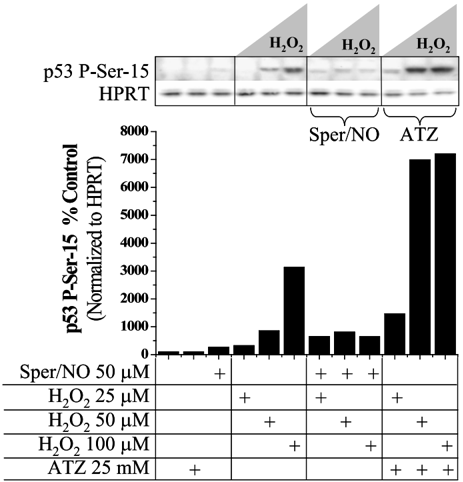
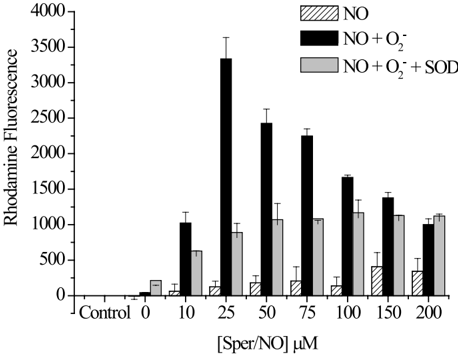
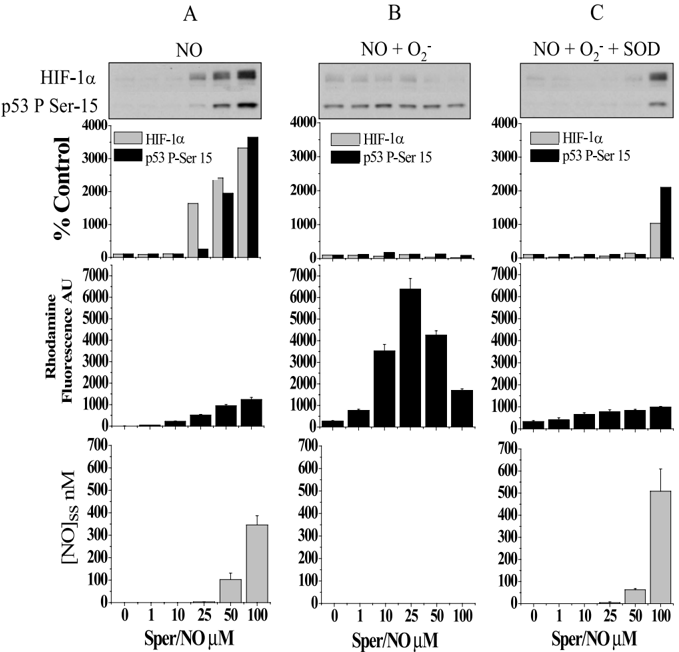
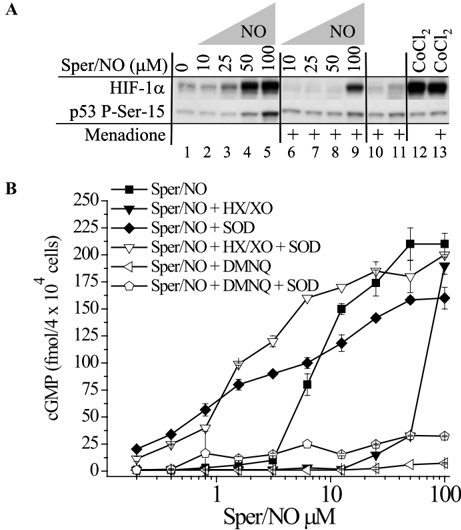
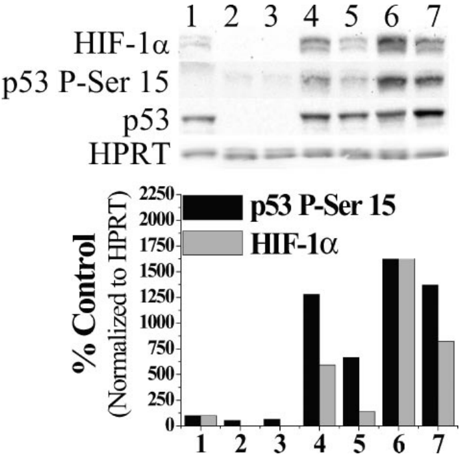
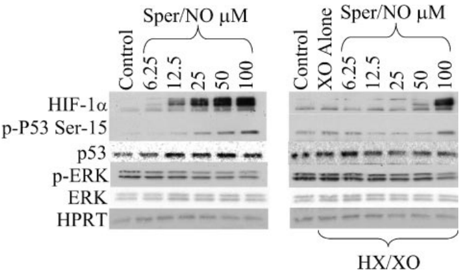
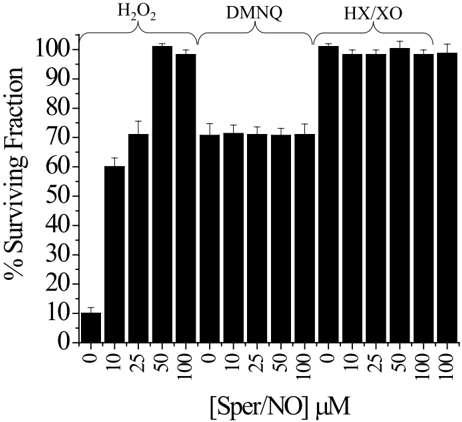
Independently, superoxide (O2-) and nitric oxide (NO) are biologically important signaling molecules. When co-generated, these radicals react rapidly to form powerful oxidizing and nitrating intermediates. Although this reaction was once thought to be solely cytotoxic, herein we demonstrate using MCF7, macrophage, and endothelial cells that when nanomolar levels of NO and O2- were produced concomitantly, the effective NO concentration was established by the relative fluxes of these two radicals. Differential regulation of sGC, pERK, HIF-1alpha, and p53 were used as biological dosimeters for NO concentration. Introduction of intracellular- or extracellular-generated O2- during NO generation resulted in a concomitant increase in oxidative intermediates with a decrease in steady-state NO concentrations and a proportional reduction in the levels of sGC, ERK, HIF-1alpha, and p53 regulation. NO responses were restored by addition of SOD. The intermediates formed from the reactions of NO with O2- were non-toxic, did not form 3-nitrotyrosine, nor did they elicit any signal transduction responses. H2O2 in bolus or generated from the dismutation of O2- by SOD, was cytotoxic at high concentrations and activated p53 independent of NO. This effect was completely inhibited by catalase, suppressed by NO, and exacerbated by intracellular catalase inhibition. We conclude that the reaction of O2- with NO is an important regulatory mechanism, which modulates signaling pathways by limiting steady-state levels of NO and preventing H2O2 formation from O2-.
Overview
The claims and statistics of this paper haven’t been checked yet.
Free: it reads the open-access text and checks the first 5 claims that cite a source we can check. Create a free account to check every claim.
Integrity signals
Registry
Cites
Statistics
Figures
Verification
Claims the paper makes
The claims and statistics of this paper haven’t been checked yet.
Free: it reads the open-access text and checks the first 5 claims that cite a source we can check. Create a free account to check every claim.
Claims other papers make about this one
Each is checked against this paper’s own text: does it say what the citing paper says it does?
In the citing paper
“However, NO-induced HIF-1α stabilization and p53 phosphorylation levels are decreased by O2− [57, 283].”
From Signaling and stress: The redox landscape in NOS2 biology (2015) · cites this paper as [283]
Self-check
Percentages, sums and reported differences re-computed from the paper’s own numbers.
The self-check needs the paper’s full text.
Citations
Cites
Beckman, J. S., Beckman, T. W., Chen, J., Marshall, P. A., & Freeman, B. A. (1990) · Proceedings of the National Academy of Sciences · doi:10.1073/pnas.87.4.1620 · Cited by 7,029
Superoxide anion is involved in the breakdown of endothelium-derived vascular relaxing factor
Gryglewski, R. J., Palmer, R. M. J., & Moncada, S. (1986) · Nature · doi:10.1038/320454a0 · Cited by 2,400
Nitric oxide: A cytotoxic activated macrophage effector molecule
Hibbs, J. B., Taintor, R. R., Vavrin, Z., & Rachlin, E. M. (1988) · Biochemical and Biophysical Research Communications · doi:10.1016/s0006-291x(88)80015-9 · Cited by 2,030
Hussain, S. P., Hofseth, L. J., & Harris, C. C. (2003) · Nature Reviews Cancer · doi:10.1038/nrc1046 · Cited by 1,690
Self-citationSuperoxide Anion Radical (O·̄2), Superoxide Dismutases, and Related Matters
Fridovich, I. (1997) · Journal of Biological Chemistry · doi:10.1074/jbc.272.30.18515 · Cited by 1,337
Ischiropoulos, H. (1998) · Archives of Biochemistry and Biophysics · doi:10.1006/abbi.1998.0755 · Cited by 1,022
Roles of nitric oxide in tumor growth.
Jenkins, D. C., Charles, I. G., Thomsen, L. L., Moss, D. W., Holmes, L. S., Baylis, S. A., Rhodes, P., Westmore, K., Emson, P. C., & Moncada, S. (1995) · Proceedings of the National Academy of Sciences · doi:10.1073/pnas.92.10.4392 · Cited by 780
The biological lifetime of nitric oxide: Implications for the perivascular dynamics of NO and O 2
Thomas, D. D., Liu, X., Kantrow, S. P., & Lancaster, J. R. (2001) · Proceedings of the National Academy of Sciences · doi:10.1073/pnas.98.1.355 · Cited by 760
Self-citationAn assay for superoxide dismutase activity in mammalian tissue homogenates
Spitz, D. R., & Oberley, L. W. (1989) · Analytical Biochemistry · doi:10.1016/0003-2697(89)90192-9 · Cited by 752
Peroxynitrite-mediated oxidation of dihydrorhodamine 123
Kooy, N. W., Royall, J. A., Ischiropoulos, H., & Beckman, J. S. (1994) · Free Radical Biology and Medicine · doi:10.1016/0891-5849(94)90138-4 · Cited by 719
Research works printed but not linked: 4
- Ekmekcioglu, S., Ellerhorst, J., Smid, C. M., Prieto, V. G., Munsell, M., Buzaid, A. C., and Grimm, E. A. (2000) Clin. Cancer Res. 6, 4768 -4775
- Liu, P., Xu, B., Hock, C. E., Nagele, R., Sun, F. F., and Wong, P. Y. (1998) Am. J. Physiol. 275, H2191-H2198
- Morandini, R., Boeynaems, J. M., Duhant, X., Jacquemotte, F., Kinnaert, E., and Ghanem, G. (1999) Cell Mol. Biol. 45, 1053-1063
- Pervin, S., Singh, R., Freije, W. A., and Chaudhuri, G. (2003) Cancer Res. 63, 8853-8860
Cited by
Radical-free biology of oxidative stress
Jones, D. P. (2008) · American Journal of Physiology-Cell Physiology · doi:10.1152/ajpcell.00283.2008 · Cited by 1,213
“The free radicals nitric oxide and superoxide react to generate the nonradical oxidant peroxynitrite (179, 180).”
BackgroundThe chemical biology of nitric oxide: Implications in cellular signaling
Thomas, D. D., Ridnour, L. A., Isenberg, J. S., Flores-Santana, W., Switzer, C. H., Donzelli, S., Hussain, P., Vecoli, C., Paolocci, N., Ambs, S., et al. (2008) · Free Radical Biology and Medicine · doi:10.1016/j.freeradbiomed.2008.03.020 · Cited by 975
Self-citationNitric oxide and redox mechanisms in the immune response
Wink, D. A., Hines, H. B., Cheng, R. Y. S., Switzer, C. H., Flores-Santana, W., Vitek, M. P., Ridnour, L. A., & Colton, C. A. (2011) · Journal of Leukocyte Biology · doi:10.1189/jlb.1010550 · Cited by 765
Self-citationMovafagh, S., Crook, S., & Vo, K. (2015) · Journal of Cellular Biochemistry · doi:10.1002/jcb.25074 · Cited by 469
“On the other hand, it has been shown that presence of SO leads to decreased endogenous NO mediated cellular signaling and post-translational modification of proteins [Thomas et al., 2006; Brüne and Zhou, 2007a].”
BackgroundNADPH Oxidase-Dependent Signaling in Endothelial Cells: Role in Physiology and Pathophysiology
Frey, R. S., Ushio–Fukai, M., & Malik, A. B. (2009) · Antioxidants & Redox Signaling · doi:10.1089/ars.2008.2220 · Cited by 420
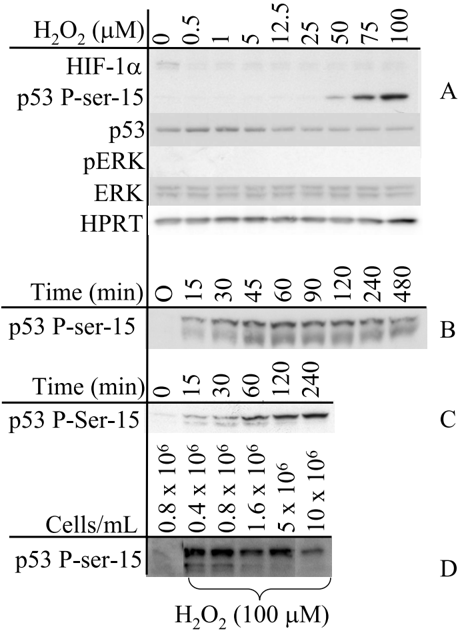
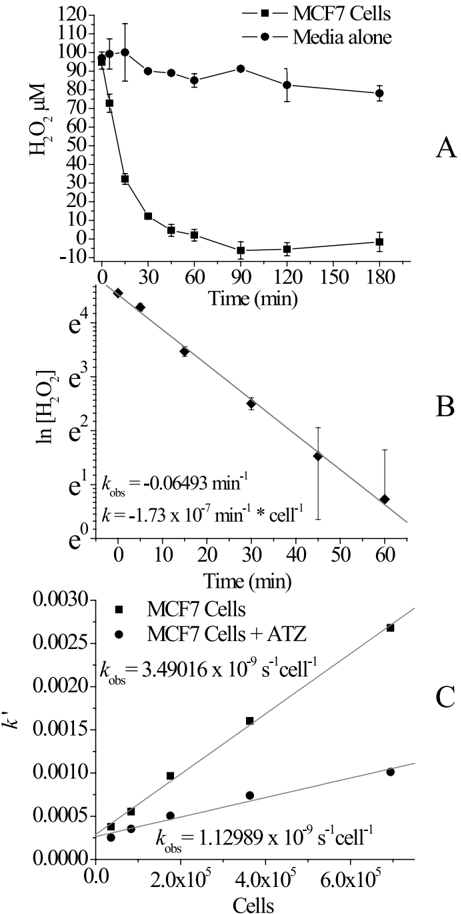
“H2O2 is cytotoxic at high concentrations and activates p53 independent of NO (220).”
Nitric oxide and neuronal death
Brown, G. C. (2010) · Nitric Oxide · doi:10.1016/j.niox.2010.06.001 · Cited by 393
Nitric oxide release: Part III. Measurement and reporting
Coneski, P. N., & Schoenfisch, M. H. (2012) · Chemical Society Reviews · doi:10.1039/c2cs15271a · Cited by 360
Analytical Chemistry of Nitric Oxide
Hetrick, E. M., & Schoenfisch, M. H. (2009) · Annual Review of Analytical Chemistry · doi:10.1146/annurev-anchem-060908-155146 · Cited by 314
Progress and Promise of Nitric Oxide‐Releasing Platforms
Yang, T., Zelikin, A. N., & Chandrawati, R. (2018) · Advanced Science · doi:10.1002/advs.201701043 · Cited by 309
Nitric Oxide in Macrophage Immunometabolism: Hiding in Plain Sight
Palmieri, E. M., McGinity, C., Wink, D. A., & McVicar, D. W. (2020) · Metabolites · doi:10.3390/metabo10110429 · Cited by 237
“Superoxide is generated within complexes I and III as byproduct of mitochondrial electron transfer which, if not consumed by mitochondrial manganese-dependent SOD (MnSOD) [77,78], can react with NO to form ONOO− which is rapidly converted to NO2 and N2O3 [34].”
BackgroundSelf-citationMolecular targets and oxidative stress biomarkers in hepatocellular carcinoma: an overview
Marra, M., Sordelli, I. M., Lombardi, A., Lamberti, M., Tarantino, L., Giudice, A., Stiuso, P., Abbruzzese, A., Sperlongano, R., Accardo, M., et al. (2011) · Journal of Translational Medicine · doi:10.1186/1479-5876-9-171 · Cited by 230
“In fact, superoxide anions and ROS, through the scavenging of NO, can lower NO levels favouring its tumour-promoting activity [92].”
BackgroundZielonka, J., Sikora, A., Joseph, J., & Kalyanaraman, B. (2010) · Journal of Biological Chemistry · doi:10.1074/jbc.m110.110080 · Cited by 222
Molecular Mechanisms of Nitric Oxide in Cancer Progression, Signal Transduction, and Metabolism
Somasundaram, V., Basudhar, D., Bharadwaj, G., No, J. H., Ridnour, L. A., Cheng, R. Y. S., Fujita, M., Thomas, D. D., Anderson, S. K., McVicar, D. W., et al. (2019) · Antioxidants & Redox Signaling · doi:10.1089/ars.2018.7527 · Cited by 213
“Interestingly, O2 - has been found to attenuate PI3K signaling, indicating that superoxide can antagonize NOmediated pathways and NO can, in turn, inhibit superoxidemediated molecular pathways (157).”
BackgroundMethodSelf-citationZhang, J., Boghossian, A. A., Barone, P. W., Rwei, A., Kim, J.-H., Lin, D., Heller, D. A., Hilmer, A. J., Nair, N., Reuel, N. F., et al. (2011) · Journal of the American Chemical Society · doi:10.1021/ja1084942 · Cited by 209
NADPH oxidases in lung biology and pathology: Host defense enzymes, and more
van der Vliet, A. (2008) · Free Radical Biology and Medicine · doi:10.1016/j.freeradbiomed.2007.11.016 · Cited by 203
The effects of superoxide dismutase on H2O2 formation
Liochev, S. I., & Fridovich, I. (2007) · Free Radical Biology and Medicine · doi:10.1016/j.freeradbiomed.2007.02.015 · Cited by 201
Molecular mechanisms for discrete nitric oxide levels in cancer
Ridnour, L. A., Thomas, D. D., Switzer, C., Flores-Santana, W., Isenberg, J. S., Ambs, S., Roberts, D. D., & Wink, D. A. (2008) · Nitric Oxide · doi:10.1016/j.niox.2008.04.006 · Cited by 196
“An interesting observation is that superoxide and ROS through the scavenging of NO can convert an anti-tumor concentration to a pro-growth paradigm [35].”
BackgroundSelf-citationRedox regulation of the hypoxia-inducible factor
Pouysségur, J., & Mechta-Grigoriou, F. (2006) · Biological Chemistry · doi:10.1515/bc.2006.167 · Cited by 186
“…ROS by NO and vice versa attenuates HIF-a stabilization under hypoxic conditions in a dose-dependent manner (Agani et al., 2002; Kohl et al., 2006; Thomas et al., 2006; for reviews see also Zhou et al., 2004; Postovit et al., 2005) and that this may be linked to increased free iron or 2-OG…”
BackgroundThomas, D. D. (2015) · Redox Biology · doi:10.1016/j.redox.2015.05.002 · Cited by 168
Self-citationAugsten, M., Sjöberg, E., Frings, O., Vorrink, S. U., Frijhoff, J., Olsson, E., Borg, Å., & Östman, A. (2014) · Cancer Research · doi:10.1158/0008-5472.can-13-2740 · Cited by 164
Nitric Oxide and Cancer Therapy: The Emperor has NO Clothes
Hickok, J., & Thomas, D. (2010) · Current Pharmaceutical Design · doi:10.2174/138161210790232149 · Cited by 154
“Therefore, the presence of other radical species can alter NO-mediated cellular phenotypes by diminishing its steady-state concentration [64].”
BackgroundSelf-citationSignaling and stress: The redox landscape in NOS2 biology
Thomas, D. D., Heinecke, J. L., Ridnour, L. A., Cheng, R. Y., Kesarwala, A. H., Switzer, C. H., McVicar, D. W., Roberts, D. D., Glynn, S., Fukuto, J. M., et al. (2015) · Free Radical Biology and Medicine · doi:10.1016/j.freeradbiomed.2015.06.002 · Cited by 150
Self-citationThe Chemistry of Peroxynitrite: Implications for Biological Activity
Goldstein, S., & Merényi, G. (2008) · Methods in enzymology on CD-ROM/Methods in enzymology · doi:10.1016/s0076-6879(08)36004-2 · Cited by 165
Switzer, C. H., Glynn, S. A., Cheng, R. Y.-S., Ridnour, L. A., Green, J. E., Ambs, S., & Wink, D. A. (2012) · Molecular Cancer Research · doi:10.1158/1541-7786.mcr-12-0124 · Cited by 141
“Because human breast cancer cell lines, like most other human cell lines, do not constitutively express this enzyme in culture despite overexpression in human breast tumors, we employed a murine macrophage coculture strategy (18).”
MethodSelf-citationMartin-Manso, G., Galli, S., Ridnour, L. A., Tsokos, M., Wink, D. A., & Roberts, D. D. (2008) · Cancer Research · doi:10.1158/0008-5472.can-08-0643 · Cited by 129
“5 mmol/L aminoguanidine) to permit O2 accumulation (39).”
Self-citationNitric oxide and superoxide: Interference with hypoxic signaling
BRUNE, B., & ZHOU, J. (2007) · Cardiovascular Research · doi:10.1016/j.cardiores.2007.03.005 · Cited by 125
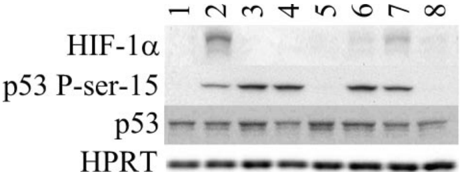
“Delivering intracellular or extracellular O2 − during NO generation resulted in a concomitant increase in oxidative intermediates, with a decrease in steady state NO concentrations and a proportional reduction of NOevoked HIF-1α stabilization [63].”
BackgroundHonokiol is a potent scavenger of superoxide and peroxyl radicals
Dikalov, S., Losik, T., & Arbiser, J. L. (2008) · Biochemical Pharmacology · doi:10.1016/j.bcp.2008.06.012 · Cited by 125
“Therefore, decrease in superoxide and lipid oxidation should lead to an increase in bioavalable nitric oxide, which will stimulate cGMP-dependent pathways [43].”
BackgroundXiao, H., Gu, Z.-Y., Wang, G., & Zhao, T. (2013) · International Journal of Medical Sciences · doi:10.7150/ijms.5630 · Cited by 140
“Enhanced O2- levels reacted with NO, resulting in a decrease in steady-state NO concentrations and therefore altering the signaling response mediated by NO [44].”
BackgroundMolecular Regulation of Tumor Angiogenesis and Perfusion via Redox Signaling
Miller, T. W., Isenberg, J. S., & Roberts, D. D. (2009) · Chemical Reviews · doi:10.1021/cr8005125 · Cited by 112
Self-citationRegulation of Peroxiredoxins by Nitric Oxide in Immunostimulated Macrophages
Diet, A., Abbas, K., Bouton, C., Guillon, B., Tomasello, M. F., Fourquet, S., Tolédano, M. B., & Drapier, J. (2007) · Journal of Biological Chemistry · doi:10.1074/jbc.m706420200 · Cited by 111
Paradoxical Activation of Endothelial Nitric Oxide Synthase by NADPH Oxidase
Zhang, Q., Malik, P., Pandey, D., Gupta, S., Jagnandan, D., de Chantemele, E. B., Banfi, B., Marrero, M. B., Rudic, R. D., Stepp, D. W., et al. (2008) · Arteriosclerosis, Thrombosis, and Vascular Biology · doi:10.1161/atvbaha.108.168278 · Cited by 107
Cancer cell metabolism and the modulating effects of nitric oxide
Chang, C.-F., Diers, A. R., & Hogg, N. (2015) · Free Radical Biology and Medicine · doi:10.1016/j.freeradbiomed.2014.11.012 · Cited by 102
Thomas, S., Kotamraju, S., Zielonka, J., Harder, D. R., & Kalyanaraman, B. (2007) · Free Radical Biology and Medicine · doi:10.1016/j.freeradbiomed.2007.01.005 · Cited by 107
Nitric Oxide Synthase-2-Derived Nitric Oxide Drives Multiple Pathways of Breast Cancer Progression
Basudhar, D., Somasundaram, V., de Oliveira, G. A., Kesarwala, A. H., Heinecke, J. L., Cheng, R. Y. S., Glynn, S. A., Ambs, S., Wink, D. A., & Ridnour, L. A. (2017) · Antioxidants and Redox Signaling · doi:10.1089/ars.2016.6813 · Cited by 101
“While we have long proposed that NO/ O2 - can lead to N2O3 and other RNS, in our hands, the addition of SOD enhanced Spermine NONOate (SPER/NO)induced cGMP output by 10-fold in MCF-7 cells (141).”
BackgroundSelf-citationBiological signaling by small inorganic molecules
Basudhar, D., Ridnour, L. A., Cheng, R. Y. S., Kesarwala, A. H., Heinecke, J. L., & Wink, D. A. (2015) · Coordination Chemistry Reviews · doi:10.1016/j.ccr.2015.06.001 · Cited by 97
Self-citationNitric Oxide (NO) and NO Synthases (NOS)-Based Targeted Therapy for Colon Cancer
Wang, H., Wang, L., Xie, Z., Zhou, S. Y., Li, Y., Zhou, Y., & Sun, M. (2020) · Cancers · doi:10.3390/cancers12071881 · Cited by 94
Castiglione, N., Rinaldo, S., Giardina, G., Stelitano, V., & Cutruzzolà, F. (2012) · Antioxidants & Redox Signaling · doi:10.1089/ars.2011.4196 · Cited by 79
Nithipongvanitch, R., Ittarat, W., Cole, M. P., Tangpong, J., Clair, D. K. S., & Oberley, T. D. (2007) · Antioxidants & Redox Signaling · doi:10.1089/ars.2007.1632 · Cited by 73
“However, in the presence of ROS, NO can be a powerful antioxidant, having the ability to suppress ROS-mediated oxidative stress and activation of p53 (34, 36).”
Hsiao, H., Chung, C.-W., Santos, J., Villaflores, O. B., & Lu, T. (2019) · Dalton Transactions · doi:10.1039/c9dt00777f · Cited by 71
MOFs-Based Nitric Oxide Therapy for Tendon Regeneration
Chen, J., Sheng, D., Ying, T., Zhao, H., Zhang, J., Li, Y., Xu, H., & Chen, S. (2020) · Nano-Micro Letters · doi:10.1007/s40820-020-00542-x · Cited by 70
Nitric Oxide Bioavailability in the Microcirculation: Insights from Mathematical Models
TSOUKIAS, N. M. (2008) · Microcirculation · doi:10.1080/10739680802010070 · Cited by 67
“Many studies since then have proposed a fundamental role of O2 production in regulating NO availability, to the point that some researchers view the scavenging of NO as the primary consequence of O2 generation [123].”
BackgroundWen, Z., Liu, L.-J., Qu, Y., Ouyang, X., Yang, L., & Xu, Z. (2013) · Marine Drugs · doi:10.3390/md11103582 · Cited by 72
“Thus, high NO levels in cell can, in the presence of oxygen, give rise to a potent mixture of ROS and reactive nitrogen species (RNS), and the most significant results of this are oxidation of protein cysteine residues, lipid oxidation, and DNA mutation [40].”
BackgroundSohn, J. J., Schetter, A. J., Yfantis, H. G., Ridnour, L. A., Horikawa, I., Khan, M. A., Robles, A. I., Hussain, S. P., Goto, A., Bowman, E. D., et al. (2012) · PLoS ONE · doi:10.1371/journal.pone.0044156 · Cited by 66
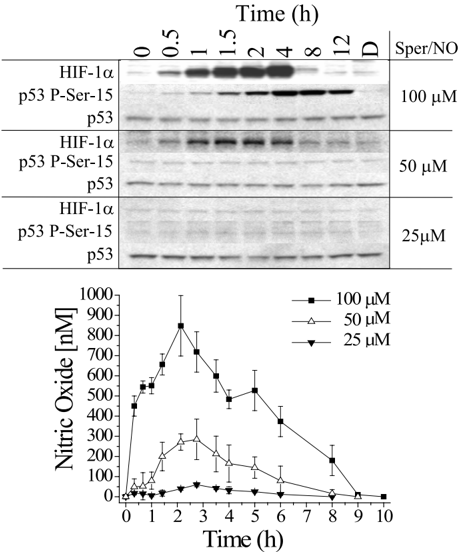
“(B) Normal human fibroblasts were incubated with 10 mM, 3 mM, and 0.9 mM Spermine NONOate (Sper/NON) over night (16 hrs).”
BackgroundInfluentialSelf-citationNew Challenges to Study Heterogeneity in Cancer Redox Metabolism
Benfeitas, R., Uhlén, M., Nielsen, J., & Mardinoğlu, A. (2017) · Frontiers in Cell and Developmental Biology · doi:10.3389/fcell.2017.00065 · Cited by 71
“Therefore, while O•−2 has some regulatory properties, these properties are possibly due to its role in nitric oxide and H2O2 metabolism (Brune, 2005; Thomas et al., 2006; D’Autréaux and Toledano, 2007; Kaewpila et al., 2008; Labunskyy and Gladyshev, 2013).”
BackgroundWen, Z., Liu, L.-J., Ouyang, X., Qu, Y., Chen, Y., & Ding, G. (2014) · International Journal of Biological Macromolecules · doi:10.1016/j.ijbiomac.2014.04.037 · Cited by 58
Lee, J., Kim, D., Park, S., Baek, S., Jung, J., Kim, T. P., & Han, D. K. (2022) · Advanced Science · doi:10.1002/advs.202205336 · Cited by 65
Peroxynitrite and myocardial contractility: In vivo versus in vitro effects
Katori, T., Donzelli, S., Tocchetti, C. G., Miranda, K. M., Cormaci, G., Thomas, D. D., Ketner, E., Lee, M. J., Mancardi, D., Wink, D. A., et al. (2006) · Free Radical Biology and Medicine · doi:10.1016/j.freeradbiomed.2006.08.023 · Cited by 61
Self-citationDietary intake and bio-activation of nitrite and nitrate in newborn infants
Jones, J. A., Hopper, A. O., Power, G. G., & Blood, A. B. (2015) · Pediatric Research · doi:10.1038/pr.2014.168 · Cited by 48
Oliveira, H. C., Wulff, A., Saviani, E. E., & Salgado, I. (2008) · Biochimica et Biophysica Acta (BBA) - Bioenergetics · doi:10.1016/j.bbabio.2008.02.006 · Cited by 50
“Recent work with animal cells suggests that rather than being a purely deleterious and cytotoxic process, the reaction of O2 with NO is an important regulatory mechanism that modulates signaling pathways by controlling the steady-state levels of NO and preventing the formation of peroxide and hydroxyl radical from O2…”
BackgroundTargeting oxidative stress, a crucial challenge in renal transplantation outcome
Carcy, R., Cougnon, M., Poët, M., Durandy, M., Sicard, A., Counillon, L., Blondeau, N., Hauet, T., Tauc, M., & Pisani, D. F. (2021) · Free Radical Biology and Medicine · doi:10.1016/j.freeradbiomed.2021.04.023 · Cited by 53
Nitric oxide reduces oxidative stress in cancer cells by forming dinitrosyliron complexes
Sahni, S., Hickok, J. R., & Thomas, D. D. (2018) · Nitric Oxide · doi:10.1016/j.niox.2018.03.003 · Cited by 48
“Pro- or anti-oxidant effects of •NO depend on its l ocal concentration, cell phenotype, and oxygen concentration as well as the presence of oth er reactive species in the biological milieu (16,18-20).”
Self-citationGonzález, R., Molina-Ruiz, F. J., Bárcena, J. A., Padilla, C. A., & Muntané, J. (2018) · Antioxidants and Redox Signaling · doi:10.1089/ars.2017.7072 · Cited by 40
“In this sense, the intracellular or extracellular generation of O 2 (cid:2) - resulted in a decrease of steady-state level of NO and NO-dependent cell signaling pathways (29, 213).”
Hypoxia‐Inducible Factor‐1α Under the Control of Nitric Oxide
Brüne, B., & Zhou, J. (2007) · Methods in enzymology on CD-ROM/Methods in enzymology · doi:10.1016/s0076-6879(07)35024-6 · Cited by 46
Insights into the Diverse Effects of Nitric Oxide on Tumor Biology
Vasudevan, D., & Thomas, D. D. (2014) · Vitamins and hormones · doi:10.1016/b978-0-12-800254-4.00011-8 · Cited by 42
Self-citationHoos, M. D., Vitek, M. P., Ridnour, L. A., Wilson, J., Jansen, M., Everhart, A., Wink, D. A., & Colton, C. A. (2014) · Molecular Neurodegeneration · doi:10.1186/1750-1326-9-50 · Cited by 35
“Because the direct and indirect reactions of NO are dependent on the available concentration of NO, the consumption of NO, for example by combination with superoxide anion, significantly impacts the redox environment of the tissue and alters multiple NO-dependent pathways [42-44].”
BackgroundSelf-citationBang‐Bang Model for Regulation of Local Blood Flow
Golub, A. S., & Pittman, R. N. (2013) · Microcirculation · doi:10.1111/micc.12051 · Cited by 42
Rogers, N. M., Seeger, F., Garcin, E. D., Roberts, D. D., & Isenberg, J. S. (2014) · Frontiers in Physiology · doi:10.3389/fphys.2014.00134 · Cited by 46
“In soft tissues and visceral organs TSP1 inhibits blood flow following ischemia reperfusion injury (IRI) (Isenberg et al., 2008b; Csanyi et al., 2012) while TSP1−/− (Isenberg et al., 2007a, 2008c) and CD47−/− animals (Rogers et al., 2012) display enhanced blood flow following ischemia and IRI.”
BackgroundSelf-citationThe chemical biology of nitric oxide — an outsider's reflections about its role in osteoarthritis
Feelisch, M. (2008) · Osteoarthritis and Cartilage · doi:10.1016/s1063-4584(08)60007-2 · Cited by 38
The mitochondrial thioredoxin system regulates nitric oxide-induced HIF-1α protein
Zhou, J., Chantzoura, E., Spyrou, G., & Brüne, B. (2007) · Free Radical Biology and Medicine · doi:10.1016/j.freeradbiomed.2007.09.012 · Cited by 32
Arias, F., Franco-Montalbán, F., Romero, M., Carriòn, M. D., & Camacho, M. E. (2021) · Bioorganic & Medicinal Chemistry · doi:10.1016/j.bmc.2021.116294 · Cited by 30
The interplay between nitric oxide and peroxiredoxins
Abbas, K., BRETON, J. L., & Drapier, J. (2008) · Immunobiology · doi:10.1016/j.imbio.2008.07.029 · Cited by 32
Xia, D., Guo, Y., Xu, R., & Li, N. (2025) · Journal of Nanobiotechnology · doi:10.1186/s12951-025-03135-1 · Cited by 36
“However, angiogenesis is a complex process involving the formation of new blood vessels from the original vascular beds and is influenced by various growth factors and cytokines [113].”
Lee, T.-F., Tymafichuk, C. N., Bigam, D. L., & Cheung, P. (2008) · Pediatric Research · doi:10.1203/pdr.0b013e31817cfcc0 · Cited by 28
Su, C., Chien, M., Lin, C., Chen, M.-K., Chow, J., Chuang, C., Chou, C.-H., Liu, Y., & Yang, S. (2018) · Nitric Oxide · doi:10.1016/j.niox.2018.06.005 · Cited by 30
Cheng, R. Y. S., Basudhar, D., Ridnour, L. A., Heinecke, J. L., Kesarwala, A. H., Glynn, S. A., Switzer, C., Ambs, S., Miranda, K. M., & Wink, D. A. (2014) · Nitric Oxide · doi:10.1016/j.niox.2014.08.003 · Cited by 25
“showed that low NO levels (< 50 nM steady state NO) increased cGMP-dependent mechanisms, while higher levels (500– 800 nM steady state NO) led to increased HIF-1α and p53 [51,52].”
BackgroundSelf-citationDo β-Cells Generate Peroxynitrite in Response to Cytokine Treatment?
Broniowska, K. A., Mathews, C. E., & Corbett, J. A. (2013) · Journal of Biological Chemistry · doi:10.1074/jbc.m113.522243 · Cited by 25
“Others have shown that concurrent generation of nitric oxide and superoxide can decrease the steady-state levels of nitric oxide, and this appears to modify cell signaling pathways in tumor cells (67).”
BackgroundRed Blood Cell Dysfunction in Critical Illness
Rogers, S. C., & Doctor, A. (2020) · Critical Care Clinics · doi:10.1016/j.ccc.2019.12.008 · Cited by 26
Broniowska, K. A., Diers, A. R., Corbett, J. A., & Hogg, N. (2013) · Biochemistry · doi:10.1021/bi400342t · Cited by 24
Nitric Oxide in Hematological Cancers: Partner or Rival?
Vivarelli, S., Falzone, L., Basile, M. S., Candido, S., & Libra, M. (2020) · Antioxidants and Redox Signaling · doi:10.1089/ars.2019.7958 · Cited by 24
“P53 is also activated by NO (produced via NOS2), but at a much higher intracellular concentration ( > 500 n M ) (76, 162, 165).”
Therapeutic Targeting of CD47 to Modulate Tissue Responses to Ischemia and Radiation
Pantoja, D. R. S. (2011) · Journal of Genetic Syndromes & Gene Therapy · doi:10.4172/2157-7412.1000105 · Cited by 23
“NO acts as a chemical sink for ROS by rapidly reacting with superoxide [12].”
BackgroundDecreased Hypoxia-Inducible Factor-1α in Gastrocnemius Muscle in Rats with Chronic Kidney Disease
Flisiński, M., Brymora, A., Bartłomiejczyk, I., Wiśniewska, E., Gołda, R., Stefańska, A., Pączek, L., & Manitius, J. (2012) · Kidney & Blood Pressure Research · doi:10.1159/000339706 · Cited by 22
Tumor macrophage redox and effector mechanisms associated with hypoxia
Espey, M. G. (2006) · Free Radical Biology and Medicine · doi:10.1016/j.freeradbiomed.2006.08.026 · Cited by 24
Self-citationMousavi, H., Rimaz, M., & Zeynizadeh, B. (2024) · ACS Chemical Neuroscience · doi:10.1021/acschemneuro.4c00055 · Cited by 22
Role of nitric oxide in the response to photooxidative stress in prostate cancer cells
D’Este, F., Pietra, E. D., Pazmay, G. V. B., Xodo, L. E., & Rapozzi, V. (2020) · Biochemical Pharmacology · doi:10.1016/j.bcp.2020.114205 · Cited by 21
Selective Vulnerability of Synaptic Signaling and Metabolism to Nitrosative Stress
Mongin, A. A., Dohare, P., & Jourd’heuil, D. (2012) · Antioxidants and Redox Signaling · doi:10.1089/ars.2012.4559 · Cited by 19
“Thus, superoxide may serve as a sink for NO, and, in some cases, suppress the NO-mediated signaling reactions (255).”
Kır, H. M., Şahin, D., Öztaş, B., Musul, M., & Kuşkay, S. (2013) · Biomolecules and Biomedicine · doi:10.17305/bjbms.2013.2332 · Cited by 22
Bautista-Ortega, J., Cortés-Cuevas, A., Ellis, E. A., & Ruiz-Feria, C. A. (2014) · Poultry Science · doi:10.3382/ps.2013-03698 · Cited by 21
“The reaction between superoxide and NO disturbs the steady state concentration of NO; superoxide generated either intracellularly or extracellularly during NO generation results in a concomitant increase in oxidative intermediates with a decrease in steady-state NO concentration and a proportional reduction in the lev…”
BackgroundDikalov, S., Mayorov, V., & Panov, A. V. (2017) · Frontiers in Physiology · doi:10.3389/fphys.2017.00907 · Cited by 19
“Diminished nitric oxide levels increases intracellular Ca2+ due to impaired cellular cGMP pathway and reduced NO-mediated post-translational modifications leading to cellar dysregulations (Adachi et al., 2004; Thomas et al., 2006).”
BackgroundNitric Oxide and Cancer: An Overview
Cheng, R. Y. S., Ridnour, L. A., Glynn, S. A., Switzer, C., Flores‐Santana, W., Hussain, S. P., Thomas, D. D., Ambs, S., Harris, C. C., & Wink, D. A. (2010) · Springer eBooks · doi:10.1007/978-1-4419-1432-3_1 · Cited by 21
Self-citationBullock, J. J., Mehta, S. L., Lin, Y., Lolla, P., & Li, P. A. (2009) · Neuroscience Letters · doi:10.1016/j.neulet.2009.03.076 · Cited by 18
Metal–Organic Frameworks: Unlocking New Frontiers in Cardiovascular Diagnosis and Therapy
Wu, Q., Feng, Y., Lepoitevin, M., Yu, M., Serre, C., Ge, J., & Huang, Y. (2025) · Advanced Science · doi:10.1002/advs.202416302 · Cited by 18
Nitric Oxide: Regulation and Function in Neutrophil Immune Responses
Kumar, S., & Dikshit, M. (2024) · Antioxidants and Redox Signaling · doi:10.1089/ars.2022.0220 · Cited by 17
Gill, R. S., Lee, T.-F., Liu, J.-Q., Chaudhary, H. R., Brocks, D. R., Bigam, D. L., & Cheung, P. (2012) · PLoS ONE · doi:10.1371/journal.pone.0040471 · Cited by 12
“Further, it has been recently shown that reduction of nitric oxide may lead to enhanced formation of H2O2 [26].”
Chen, H., Luo, H., Wen‐Bi, Z. E. N. G., Liu, B., Huang, J., Liu, M., Zeng, Y.-J., Zheng, Q., Li, J., Sun, X., et al. (2017) · Chinese Journal of Integrative Medicine · doi:10.1007/s11655-016-2645-4 · Cited by 13
Hu, T., & Ho, S.-C. (2010) · Biochemical and Biophysical Research Communications · doi:10.1016/j.bbrc.2010.12.059 · Cited by 13
A paradigm shift for local blood flow regulation
Golub, A. S., & Pittman, R. N. (2013) · Journal of Applied Physiology · doi:10.1152/japplphysiol.00964.2013 · Cited by 12
Rosier, B. T., Hajishengallis, G., Wink, D. A., & Mira, Á. (2025) · Periodontology 2000 · doi:10.1111/prd.70006 · Cited by 21
Self-citationThe interaction of superoxide with nitric oxide destabilizes hypoxia-inducible factor-1α
Herr, B., Zhou, J., Dröse, S., & Brüne, B. (2007) · Cellular and Molecular Life Sciences · doi:10.1007/s00018-007-7371-9 · Cited by 12
NO • and Pancreatic Cancer: A Complex Interaction with Therapeutic Potential
Wang, J., & Hussain, S. P. (2016) · Antioxidants and Redox Signaling · doi:10.1089/ars.2016.6809 · Cited by 11
“A concentration-dependent mapping of the biological response of NO showed that a distinct level of NO results in the post-translation modification and activation/stabilization of a specific protein implicated in cancer (74).”
BackgroundSelf-citationNitrogen Oxides and Their Roles in Cancer Etiology
Wang, Y.-T., & Thomas, D. D. (2017) · Current Pharmacology Reports · doi:10.1007/s40495-017-0092-3 · Cited by 9
“As NO is an important signaling molecule, reduction in its bioavailability due to ONOO formation can have significant phenotypic and pathological consequences [24].”
Self-citationMathematical Modeling of The Interaction Between Oxygen, Nitric Oxide And Superoxide
Buerk, D. G. (2008) · Advances in experimental medicine and biology · doi:10.1007/978-0-387-85998-9_2 · Cited by 8
Nitric oxide-releasing photocrosslinked chitosan cryogels
de Almeida, H. V., da Silva, L. C. E., & de Oliveira, M. G. (2024) · Nitric Oxide · doi:10.1016/j.niox.2024.03.006 · Cited by 8
Determinants of Nitric Oxide Chemistry
Thomas, D. D., Flores‐Santana, W., Switzer, C., Wink, D. A., & Ridnour, L. A. (2010) · Elsevier eBooks · doi:10.1016/b978-0-12-373866-0.00001-0 · Cited by 17
Self-citationDysregulation of Glutathione Synthesis in Psychiatric Disorders
Lorenc‐Koci, E. (2014) · Oxidative stress in applied basic research and clinical practice · doi:10.1007/978-1-4939-0440-2_14 · Cited by 8
“The free radicals NO• and O2 react to generate peroxynitrite (ONOO−) that is a powerful oxidizing and nitrating non-radical intermediate (Thomas et al. 2006).”
Backgroundde Moraes, L. H. O., Mancini, M. W., Almeida‐Lopes, L., & Rodrigues, G. J. (2021) · Lasers in Medical Science · doi:10.1007/s10103-021-03293-2 · Cited by 6
NO, way to go: critical amino acids to replenish nitric oxide production in treating mucositis
Molendijk, E. B. D., & Blijlevens, N. M. A. (2021) · Current Opinion in Supportive and Palliative Care · doi:10.1097/spc.0000000000000560 · Cited by 6
The Role of Reactive Nitrogen and Oxygen Intermediates in Systemic Lupus Erythematosus
Mashmoushi, A. K., Gilkeson, G. S., & Oates, J. C. (2011) · Elsevier eBooks · doi:10.1016/b978-0-12-374994-9.10012-9 · Cited by 3
Nitric oxide has diverse effects on head and neck cancer cell proliferation and glycolysis
Kokilakanit, P., Koontongkaew, S., & Utispan, K. (2024) · Biomedical Reports · doi:10.3892/br.2024.1794 · Cited by 6
“NO at 10‑30 nM promotes pro‑tumorigenic mechanisms, such as ERK pathway activation; NO >1 µM increases nitrative stress and apoptosis in a breast cancer cell line (32).”
BackgroundComplexity of Stress Signaling
Hyduke, D. R., Amundson, S. A., & Fornace, A. J. (2010) · Elsevier eBooks · doi:10.1016/b978-0-12-374145-5.00257-6 · Cited by 3
Visible/Red/NIR Light-Mediated NO Donors for Biological Applications
Chen, Y. (2025) · Chemistry · doi:10.3390/chemistry7030066 · Cited by 2
Metadata
- Authors
- Thomas, D. D., Ridnour, L. A., Espey, M. G., Donzelli, S., Ambs, S., Hussain, S. P., Harris, C. C., DeGraff, W., Roberts, D. D., Mitchell, J. B., & Wink, D. A.
- Affiliations
- National Institutes of Health (US)
- Corresponding author
- Thomas, Douglas D.
- Wink, David A.
- ORCID
- Venue
- Journal of Biological Chemistry
- Publisher
- Elsevier BV
- Published
- 2006-09
- Volume
- 281
- Issue
- 36
- Pages
- 25984-25993
- ISSN
- 0021-9258 (ISSN-L)
- OpenAlex
- W2125775877
- Cited by
- 121
- References
- 55
- Citations by year
- 2026: 3 · 2025: 6 · 2024: 4 · 2022: 1 · 2021: 4 · 2020: 6 · 2019: 2 · 2018: 4 · 2017: 6 · 2016: 3 · 2015: 5 · 2014: 11 · 2013: 8 · 2012: 10
- FWCI
- 7.69
- Type
- journal article
- Language
- en
- Open access
- hybrid
- doi.org
- Licence
- cc-by
- www.elsevier.com/tdm/userlicense/1.0/ (tdm)
- creativecommons.org/licenses/by/4.0/ (vor, 5168 d)
- Locations
- Journal of Biological Chemistry (publishedVersion, cc-by)
- PubMed (publishedVersion)
- Funders
- National Institutes of Health
- National Cancer Institute
- Topics
- Health Sciences › Medicine › Physiology (medical) › Nitric Oxide and Endothelin Effects
- Life Sciences › Biochemistry, Genetics and Molecular Biology › Molecular Biology › Redox biology and oxidative stress
- Life Sciences › Immunology and Microbiology › Immunology › Neutrophil, Myeloperoxidase and Oxidative Mechanisms
- Keywords
- superoxide, nitric oxide, hydrogen peroxide, superoxide dismutase, catalase, soluble guanylate cyclase, ERK signaling, HIF-1α, p53, MCF-7 cells, macrophages, endothelial cells, nitrotyrosine, oxidative stress
- MeSH terms
- Animals, Cattle, Cell Line, Gene Expression Regulation, Humans, Hydrogen Peroxide, Macrophages, Nitric Oxide, Oxidation-Reduction, Superoxides, Superoxide Dismutase, Second Messenger Systems, Tumor Suppressor Protein p53, Oxidants, Coculture Techniques, Endothelial Cells, Hypoxia-Inducible Factor 1, alpha Subunit
About these checks
Registry, retraction, Cites and statistics results are computed, not judged, with one exception: a printed reference that no index lists is read once by a model before it counts as a citation error. Claims are extracted by a model and kept only when their quote appears verbatim in the text; each cited source is then checked, with a model’s help, for whether it says what the claim relies on. Those verdicts can be wrong — read the claim’s quote and the cited source before relying on one.
Statistics and arithmetic are recomputed, not judged.
Confidence bands are shown only for fields calibrated on our annotated test set. None is calibrated yet, so no band is shown.
What counts as a claim ›How we measure confidence ›How we check this ›
Are you an author, or do you see a problem with this page? Request a review
Data sources
Bibliographic data: Semantic Scholar, OpenAlex, Crossref.
Contains information from the Semantic Scholar Academic Graph Datasets, made available under the ODC Attribution License (ODC-BY 1.0).
Semantic Scholar’s data is described in: Kinney, R., et al. (2023). The Semantic Scholar Open Data Platform. arXiv:2301.10140.
