

Energy Metabolism in Uncoupling Protein 3 Gene Knockout Mice
Open accessThe DOI matches its Crossref record; 63 of the 63 references it cites were found in a registry or an index.
Abstract
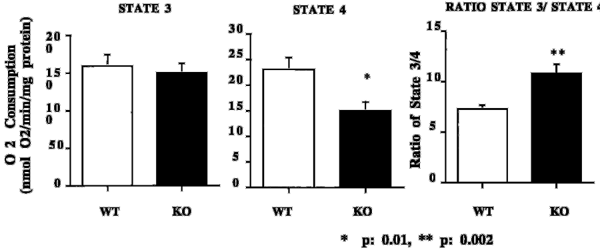
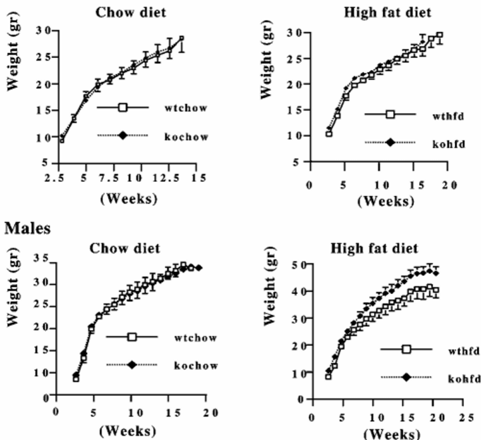
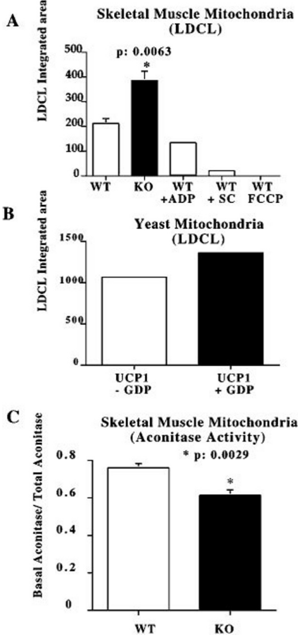
Uncoupling protein 3 (UCP3) is a member of the mitochondrial anion carrier superfamily. Based upon its high homology with UCP1 and its restricted tissue distribution to skeletal muscle and brown adipose tissue, UCP3 has been suggested to play important roles in regulating energy expenditure, body weight, and thermoregulation. Other postulated roles for UCP3 include regulation of fatty acid metabolism, adaptive responses to acute exercise and starvation, and prevention of reactive oxygen species (ROS) formation. To address these questions, we have generated mice lacking UCP3 (UCP3 knockout (KO) mice). Here, we provide evidence that skeletal muscle mitochondria lacking UCP3 are more coupled (i.e. increased state 3/state 4 ratio), indicating that UCP3 has uncoupling activity. In addition, production of ROS is increased in mitochondria lacking UCP3. This study demonstrates that UCP3 has uncoupling activity and that its absence may lead to increased production of ROS. Despite these effects on mitochondrial function, UCP3 does not seem to be required for body weight regulation, exercise tolerance, fatty acid oxidation, or cold-induced thermogenesis. The absence of such phenotypes in UCP3 KO mice could not be attributed to up-regulation of other UCP mRNAs. However, alternative compensatory mechanisms cannot be excluded. The consequence of increased mitochondrial coupling in UCP3 KO mice on metabolism and the possible role of yet unidentified compensatory mechanisms, remains to be determined.
Overview
The claims and statistics of this paper haven’t been checked yet.
Free: it reads the open-access text and checks the first 5 claims that cite a source we can check. Create a free account to check every claim.
Integrity signals
Registry
Cites
Statistics
Figures
Verification
Claims the paper makes
The claims and statistics of this paper haven’t been checked yet.
Free: it reads the open-access text and checks the first 5 claims that cite a source we can check. Create a free account to check every claim.
Claims other papers make about this one
Each is checked against this paper’s own text: does it say what the citing paper says it does?
The cited source says what the claim attributes to it.
In the citing paper
“Evidence has been presented that the new UCPs are involved in cell defense against oxidative stress (22-27).”
From Respiration, oxidative phosphorylation, and uncoupling protein in Candida albicans (2004) · cites this paper as [25]
The cited source says what the claim attributes to it.
In the citing paper
“They are able to induce mild uncoupling, thus increasing the rate of respiration and decreasing the production of reactive oxygen species (ROS) (24-27).”
From Respiration, oxidative phosphorylation, and uncoupling protein in Candida albicans (2004) · cites this paper as [25]
Self-check
Percentages, sums and reported differences re-computed from the paper’s own numbers.
The self-check needs the paper’s full text.
Citations
Cites
(1975) · Journal of AOAC INTERNATIONAL · doi:10.1093/jaoac/58.5.1085 · Cited by 19,795
(1974) · Elsevier eBooks · doi:10.1016/b978-0-12-091304-6.x5001-0 · Cited by 6,755
Boveris, A., & Chance, B. (1973) · Biochemical Journal · doi:10.1042/bj1340707 · Cited by 2,626
Changes in Energy Expenditure Resulting from Altered Body Weight
Leibel, R. L., Rosenbaum, M., & Hirsch, J. (1995) · New England Journal of Medicine · doi:10.1056/nejm199503093321001 · Cited by 2,012
Uncoupling protein-2: a novel gene linked to obesity and hyperinsulinemia
Fleury, C., Neverova, M., Collins, S., Raimbault, S., Champigny, O., Levi-Meyrueis, C., Bouillaud, F., Seldin, M. F., Surwit, R. S., Ricquier, D., et al. (1997) · Nature Genetics · doi:10.1038/ng0397-269 · Cited by 1,631
Thermogenic mechanisms in brown fat.
Nicholls, D. G., & Locke, R. M. (1984) · Physiological Reviews · doi:10.1152/physrev.1984.64.1.1 · Cited by 1,602
Mice lacking mitochondrial uncoupling protein are cold-sensitive but not obese
Enerbäck, S., Jacobsson, A., Simpson, E. M., Guerra, C., Yamashita, H., Harper, M.-E., & Kozak, L. P. (1997) · Nature · doi:10.1038/387090a0 · Cited by 1,379
Superoxide Anion Radical (O·̄2), Superoxide Dismutases, and Related Matters
Fridovich, I. (1997) · Journal of Biological Chemistry · doi:10.1074/jbc.272.30.18515 · Cited by 1,337
Reduced Rate of Energy Expenditure as a Risk Factor for Body-Weight Gain
Ravussin, E., Lillioja, S., Knowler, W. C., Christin, L., Freymond, D., Abbott, W. G. H., Boyce, V., Howard, B. V., & Bogardus, C. (1988) · New England Journal of Medicine · doi:10.1056/nejm198802253180802 · Cited by 1,215
Boss, O., Samec, S., Paoloni-Giacobino, A., Rossier, C., Dulloo, A., Seydoux, J., Muzzin, P., & Giacobino, J.-P. (1997) · FEBS Letters · doi:10.1016/s0014-5793(97)00384-0 · Cited by 1,041
Self-citation
Research works printed but not linked: 3
- Jaworek, D., Gruber, W., and Bergmeyer, H. U. (1974) in Methods of Enzy- matic Analysis (Bergmeyer, H. U., ed) Vol. 4, pp. 2127-2131, Verlag- Chemie, Winheim/Academic Press, New York 43. Deleted in proof
- Salmon, D. M., and Flat, J. P. (1985) Int. J. Obes. 9, 443-449
- Li, Y., Zhu, H., and Trush, M. A. (1999) Biochim. Biophys. Acta 28, 1-12
Cited by
Items 401–500 of 682
Esterbauer, H., Oberkofler, H., Krempler, F., Strosberg, A. D., & Patsch, W. (2000) · Journal of Biological Chemistry · doi:10.1074/jbc.m005713200 · Cited by 28
Investigational therapies in the treatment of obesity
Mancini, M. C., & Halpern, A. (2006) · Expert Opinion on Investigational Drugs · doi:10.1517/13543784.15.8.897 · Cited by 31
“UCP3 does not seem to be required for body weight regulation [128].”
BackgroundVariation in the uncoupling protein 2 and 3 genes and human performance
Dhamrait, S. S., Williams, A. G., Day, S. H., Skipworth, J. R. A., Payne, J. R., WORLD, M. J., Humphries, S. E., & Montgomery, H. (2012) · Journal of Applied Physiology · doi:10.1152/japplphysiol.00766.2011 · Cited by 28
Yashiro, K., Tonson, A., Pecchi, É., Dalmasso, C., Vilmen, C., Fur, Y. L., Bernard, M., Bendahan, D., & Giannesini, B. (2014) · American Journal of Physiology-Endocrinology and Metabolism · doi:10.1152/ajpendo.00520.2013 · Cited by 27
“However, this increased mitochondrial efficiency was not consistent with the lack of phenotypic changes regarding whole body energy metabolism and thermoregulation (9, 37).”
BackgroundKnuth, C. M., Peppler, W. T., Townsend, L. K., Miotto, P. M., Gudiksen, A., & Wright, D. C. (2018) · The Journal of Physiology · doi:10.1113/jp276228 · Cited by 27
Chou, C. J., Cha, M. C., Jung, D. W., Boozer, C. N., Hashim, S. A., & Pi‐Sunyer, F. X. (2001) · Obesity Research · doi:10.1038/oby.2001.39 · Cited by 30
Braun, N., Klumpp, D., Hennenlotter, J., Bedke, J., Duranton, C., Bleif, M., & Huber, S. M. (2015) · Scientific Reports · doi:10.1038/srep13450 · Cited by 28
Hoeks, J., Hesselink, M. K. C., Sluiter, W., Schaart, G., Willems, J., Morrisson, A., Clapham, J. C., Saris, W. H. M., & Schrauwen, P. (2006) · FEBS Letters · doi:10.1016/j.febslet.2006.01.059 · Cited by 26
Overexpression of UCP3 decreases mitochondrial efficiency in mouse skeletal muscle in vivo
Codella, R., Alves, T. C., Befroy, D. E., Choi, C. S., Luzi, L., Rothman, D. L., Kibbey, R. G., & Shulman, G. I. (2022) · FEBS Letters · doi:10.1002/1873-3468.14494 · Cited by 27
Sánchez-Pérez, P., Mata, A., Torp, M., López-Bernardo, E., Heiestad, C. M., Aronsen, J. M., de Molina-Iracheta, A., Jiménez‐Borreguero, L. J., García-Rovés, P. M., Costa, A. S. H., et al. (2023) · Free Radical Biology and Medicine · doi:10.1016/j.freeradbiomed.2023.05.014 · Cited by 25
Navet, R., Mouithys-Mickalad, A. A., Douette, P., Sluse‐Goffart, C. M., Jarmuszkiewicz, W., & Sluse, F. E. (2006) · Journal of Bioenergetics and Biomembranes · doi:10.1007/s10863-006-9002-9 · Cited by 28
Association of UCP2 and UCP3 polymorphisms with heart rate variability in Japanese men
Matsunaga, T., Gu, N., Yamazaki, H., Tsuda, M., Adachi, T., Yasuda, K., Moritani, T., Tsuda, K., Nonaka, M., & Nishiyama, T. (2009) · Journal of Hypertension · doi:10.1097/hjh.0b013e32831ac967 · Cited by 26
Nagai, N., Habuchi, H., Sugaya, N., Nakamura, M., Imamura, T., Watanabe, H., & Kimata, K. (2013) · Glycobiology · doi:10.1093/glycob/cwt037 · Cited by 26
Role of Mitochondria and Other ROS Sources in Hyperthyroidism-Linked Oxidative Stress
Venditti, P., Napolitano, G., & Meo, S. D. (2015) · Immunology Endocrine & Metabolic Agents - Medicinal Chemistry · doi:10.2174/187152221501150710124951 · Cited by 27
Coccurello, R., & Volonté, C. (2020) · Frontiers in Endocrinology · doi:10.3389/fendo.2020.00199 · Cited by 28
Bermejo-Nogales, A., Benedito‐Palos, L., Calduch-Giner, J. À., & Pérez‐Sánchez, J. (2011) · Comparative Biochemistry and Physiology Part A Molecular & Integrative Physiology · doi:10.1016/j.cbpa.2011.03.024 · Cited by 25
“As reviewed by Nabben and Hoeks (2008), isolated mitochondria frommice lacking UCP3 show a significant decrease in S4 respiration (Vidal-Puig et al., 2000) and an increased proton motive force (Gong et al.”
BackgroundReptilian uncoupling protein: functionality and expression in sub-zero temperatures
Rey, B., Sibille, B., Romestaing, C., Belouze, M., Letexier, D., Servais, S., Barré, H., Duchamp, C., & Voituron, Y. (2008) · Journal of Experimental Biology · doi:10.1242/jeb.012328 · Cited by 29
“Indeed, if initial studies argued for a general function in thermogenesis (Enerback et al., 1997; Gong et al., 1997; Vidal-Puig et al., 2000), recent work renders the situation less clear, even in mammals (Harper et al., 2001; Krauss et al., 2003; Trenker et al., 2007).”
BackgroundMcDonald, R. B., Walker, K. M., Warman, D. B., Griffey, S. M., Warden, C. H., Ramsey, J. J., & Horwitz, B. A. (2008) · Experimental Gerontology · doi:10.1016/j.exger.2008.09.011 · Cited by 29
Rodríguez, A. M., Roca, P., Bonet, M. L., Picó, C., Oliver, P., & Palou, A. (2003) · American Journal of Physiology-Regulatory, Integrative and Comparative Physiology · doi:10.1152/ajpregu.00698.2002 · Cited by 27
“More recently, analysis of UCP3 knockout mice provided evidence of uncoupling activity by UCP3 in skeletal muscle in vivo (7, 43), although results are conflicting (5).”
BackgroundInfluentialUncoupling protein‐3 sensitizes cells to mitochondrial‐dependent stimulus of apoptosis
Dejean, L. M., Cámara, Y., Sibille, B., Solanes, G., & Villarroya, F. (2004) · Journal of Cellular Physiology · doi:10.1002/jcp.20048 · Cited by 29
“Thus, UCP3null mice show enhanced ROS production in skeletal muscle mitochondria and accumulation of products resulting from oxidative stress in this tissue (9; 26).”
BackgroundChanged mitochondrial function by pre- and/or postpartum diet alterations in sheep
Jørgensen, W., Gam, C. M. B. F., Andersen, J. L., Schjerling, P., Scheibye‐Knudsen, M., Mortensen, O. H., Grunnet, N., Nielsen, M. O., & Quistorff, B. (2009) · American Journal of Physiology-Endocrinology and Metabolism · doi:10.1152/ajpendo.00505.2009 · Cited by 25
“2), corroborated also by the observation of higher respiratory coupling in UCP3-knockout mice (61).”
BackgroundHirasaka, K., Lago, C. U., Kenaston, M. A., Fathe, K., Nowinski, S. M., Nikawa, T., & Mills, E. (2011) · Antioxidants and Redox Signaling · doi:10.1089/ars.2011.3888 · Cited by 24
“In animal studies, relative to wild-type mice, those lacking UCP3 had increased levels of oxidative damage markers and decreased activity of aconitase, a tricarboxylic acid enzyme with a defined superoxideinhibited iron–sulfur cluster (51).”
BackgroundSbraccia, P., D’Adamo, M., Leonetti, F., Buongiorno, A. M., Silecchia, G., Basso, M. S., Tamburrano, G., Lauro, D., Federici, M., Daniele, N. D., et al. (2002) · Clinical Endocrinology · doi:10.1046/j.1365-2265.2002.01593.x · Cited by 27
“Consistent with this hypothesis, it was reported that proton leak is reduced (Vidal-Puig et al., 2000; Gong et al., 2000) and the production of reactive oxygen species is increased in mitochondria from UCP3 gene knockout mice (Vidal-Puig et al., 2000).”
BackgroundFLACHS, P., NOVOTNÝ, J., BAUMRUK, F., BARDOVÁ, K., BOUŘOVÁ, L., MIKŠÍK, I., ŠPONAROVÁ, J., SVOBODA, P., & KOPECKÝ, J. (2002) · Biochemical Journal · doi:10.1042/bj20011438 · Cited by 24
Nabben, M., Hoeks, J., Moonen‐Kornips, E., van Beurden, D., Briedé, J. J., Hesselink, M. K. C., Glatz, J. F. C., & Schrauwen, P. (2011) · FEBS Letters · doi:10.1016/j.febslet.2011.11.012 · Cited by 23
“UCP3 knockout (UCP3 / ) animals resulted in increased accumulation of IMCL [8], increased plasma free fatty acids and a tendency to increased body weight [10] compared to wildtype (WT) control animals.”
BackgroundResultHumphrey, D. M., Toivonen, J. M., Giannakou, M. E., Partridge, L., & Brand, M. D. (2009) · Experimental Gerontology · doi:10.1016/j.exger.2009.02.001 · Cited by 24
Regulação do metabolismo de glicose e ácido graxo no músculo esquelético durante exercício físico
Silveira, L. R., Pinheiro, C. H. D. J., Zoppi, C. C., Hirabara, S. M., Vitzel, K. F., Bassit, R. A., Barbosa, M. R., Sampaio, I. H., Melo, I. H. P., Fiamoncini, J., et al. (2011) · Arquivos Brasileiros de Endocrinologia & Metabologia · doi:10.1590/s0004-27302011000500002 · Cited by 41
Mancini, F. P., Sabatino, L., Colantuoni, V., Pasanisi, F., Finelli, C., Contaldo, F., Masulli, M., Riccardi, G., & Vaccaro, O. (2003) · Clinical Endocrinology · doi:10.1046/j.1365-2265.2003.01926.x · Cited by 25
“However, UCP3-knockout mice are not obese (Clapham et al., 2000; Vidal-Puig et al., 2000).”
Gómez‐Hernández, A., Perdomo, L., Heras, N. D. L., Beneit, N., Escribano, Ó., Otero, Y. F., Guillén, C., Díaz-Castroverde, S., Gozalbo-López, B., Cachofeiro, V., et al. (2014) · Cardiovascular Diabetology · doi:10.1186/s12933-014-0108-9 · Cited by 29
“Recent studies from UCP-2 and −3 knockout mice suggest that both UCPs have uncoupling activity and decreased ROS production in macrophages and skeletal muscle, respectively [7–9].”
Modulation of Lipid Metabolism by Energy Status of Adipocytes: Implications for Insulin Sensitivity
Kopecký, J., Flachs, P., Bardová, K., Brauner, P., Prazak, T., & Sponarova, J. (2002) · Annals of the New York Academy of Sciences · doi:10.1111/j.1749-6632.2002.tb04267.x · Cited by 30
Nau, K., Fromme, T., Meyer, C. W., von Praun, C., Heldmaier, G., & Klingenspor, M. (2007) · Journal of Comparative Physiology B · doi:10.1007/s00360-007-0219-7 · Cited by 26
“As a consequence, cold endurance or tolerance has not been tested in any of the three lines of Ucp3 knockout mice since they became available (Gong et al. 2000; Vidal-Puig et al. 2000; Brand et al. 2002).”
BackgroundMitochondrial uncoupling proteins: New insights from functional and proteomic studies
Douette, P., & Sluse, F. E. (2006) · Free Radical Biology and Medicine · doi:10.1016/j.freeradbiomed.2005.12.010 · Cited by 24
Noland, R. C., Hickner, R. C., Jimenez‐Liñan, M., Vidal‐Puig, A., Zheng, D., Dohm, G. L., & Cortright, R. N. (2003) · Metabolism · doi:10.1053/meta.2003.50021 · Cited by 23
Self-citationKabat, A. P., Rose, R. W., Harris, J. A., & West, A. K. (2003) · Comparative Biochemistry and Physiology Part B Biochemistry and Molecular Biology · doi:10.1016/s1096-4959(02)00189-6 · Cited by 23
“However, the expression of both UCP2 and UCP3 are not limited to BAT, as observed with UCP1; UCP2 is widely expressed in many tissues, including white adipose tissue(WAT), heart, and skeletal muscle in rodents and humans(Fleury et al., 1997; Vidal-Puig et al., 2000).”
BackgroundUncoupling protein 1 affects the yeast mitoproteome and oxygen free radical production
Douette, P., Gerkens, P., Navet, R., Leprince, P., Pauw, E. D., & Sluse, F. E. (2005) · Free Radical Biology and Medicine · doi:10.1016/j.freeradbiomed.2005.08.024 · Cited by 26
Vidal‐Puig, A. (2000) · Nature Genetics · doi:10.1038/82489 · Cited by 26
Self-citationMuscle-UCP3 in the regulation of energy metabolism
Guardia, L. D., Luzi, L., & Codella, R. (2024) · Mitochondrion · doi:10.1016/j.mito.2024.101872 · Cited by 26
Impact of methylmercury exposure on mitochondrial energetics in AC16 and H9C2 cardiomyocytes
Truong, J., Mailloux, R. J., & Chan, H. M. (2015) · Toxicology in Vitro · doi:10.1016/j.tiv.2015.03.016 · Cited by 23
Oxidative Stress and Heart Failure
Marín-García, J. (2010) · Humana Press eBooks · doi:10.1007/978-1-60761-147-9_10 · Cited by 22
Hefnawy, A., Youssef, S., Aguilera, P. V., Rodríguez, C. V., & Pérez, J. (2014) · Veterinary Medicine International · doi:10.1155/2014/105236 · Cited by 21
“of the major causes of newborn lamb mortality and that T 3 is essential to the synthesis of uncoupling protein necessary for the thermogenic activity of brown adipose tissue [27, 28].”
Neurohumoral regulation of body weight gain
Devaskar, S. U. (2001) · Pediatric Diabetes · doi:10.1034/j.1399-5448.2001.002003131.x · Cited by 22
“The energy metabolism in the UCP-3 gene knockout mice is affected without causing obesity, suggesting the presence of compensatory mechanisms that overcome the lack of this gene (108).”
BackgroundThe heat is on: Molecular mechanisms of drug-induced hyperthermia
Dao, C. K., Nowinski, S. M., & Mills, E. (2014) · Temperature · doi:10.4161/23328940.2014.985953 · Cited by 24
Uncoupling and oxidative stress in liver mitochondria isolated from rats with acute iron overload
Andreu, G. L. P., Inada, N. M., Vercesi, A. E., & Curti, C. (2008) · Archives of Toxicology · doi:10.1007/s00204-008-0322-x · Cited by 23
“Several lines of indirect observations have suggested that UCPs could be implicated in cellular defense against ROS (Vidal-Puig et al. 2000; Arsenijevic et al. 2000).”
BackgroundMitochondrial carriers in inflammation induced by bacterial endotoxin and cytokines
Iacobazzi, V., Infantino, V., Castegna, A., Menga, A., Palmieri, E. M., Convertini, P., & Palmieri, F. (2016) · Biological Chemistry · doi:10.1515/hsz-2016-0260 · Cited by 24
“, 2006), and in rat muscle the UCP3 (SLC25A9) protein content protects from ROS production (Vidal-Puig et al., 2000).”
BackgroundSimões-Alves, A. C., Silva‐Filho, R., Braz, G. R. F., Silva, S. C. A., da Silva, A. I., Lagranha, C. J., & Fernandes, M. P. (2018) · Journal of Cellular Biochemistry · doi:10.1002/jcb.26758 · Cited by 24
Ogunbona, O. B., & Claypool, S. M. (2019) · Frontiers in Cell and Developmental Biology · doi:10.3389/fcell.2019.00003 · Cited by 21
Effect of thyroid state on rate and sites of H2O2 production in rat skeletal muscle mitochondria
Venditti, P., Puca, A., & Meo, S. D. (2003) · Archives of Biochemistry and Biophysics · doi:10.1016/s0003-9861(02)00720-8 · Cited by 21
Long-Term Treatment with Insulin Induces Apoptosis in Brown Adipocytes: Role of Oxidative Stress
Porrás, A., Zuluaga, S., Valladares, A., Alvarez, A. M., Herrera, B. M., Fabregat, I., & Benito, M. (2003) · Endocrinology · doi:10.1210/en.2003-0622 · Cited by 23
“According to this, skeletal-muscle mitochondria from mice lacking UCP-3 are more coupled and produce more ROS (46).”
BackgroundRegulation of Aging and Longevity by Ion Channels and Transporters
Venkatachalam, K. (2022) · Cells · doi:10.3390/cells11071180 · Cited by 21
Impact of cancer cachexia on respiratory muscle function and the therapeutic potential of exercise
Murphy, B. T., Mackrill, J. J., & O’Halloran, K. D. (2022) · The Journal of Physiology · doi:10.1113/jp283569 · Cited by 22
“Additionally, increased ROS production was observed in the mitochondria of skeletal muscle from UCP3 knockout mice, suggesting a regulatory role of UCPs in ROS generation (Vidal-Puig et al., 2000).”
BackgroundJain, A., Kim, B. R., Yu, W., Moninger, T. O., Karp, P. H., Wagner, B. A., & Welsh, M. J. (2024) · Proceedings of the National Academy of Sciences · doi:10.1073/pnas.2318771121 · Cited by 25
Salgado, R. M., Sheard, A. C., Vaughan, R. A., Parker, D., Schneider, S. M., Kenefick, R. W., McCormick, J. J., Gannon, N. P., Dusseldorp, T. A. V., Kravitz, L. R., et al. (2017) · Physiological Reports · doi:10.14814/phy2.13054 · Cited by 20
“Gong et al. (2000) and Vidal-Puig et al. (2000) reported UCP3 knockout mice had enhanced mitochondrial coupling and reduced mitochondrial respiration compared to wild-type counterparts.”
BackgroundResultInfluentialUncoupling Proteins, Leptin, and Obesity: An Updated Review
Giacobino, J. (2002) · Annals of the New York Academy of Sciences · doi:10.1111/j.1749-6632.2002.tb04295.x · Cited by 28
Control and Regulatory Mechanisms Associated with Thermogenesis in Flying Insects and Birds
Loli, D., & Bicudo, J. E. P. W. (2005) · Bioscience Reports · doi:10.1007/s10540-005-2883-8 · Cited by 24
Uncoupling protein 2: Adiposity angel and diabetes devil?
O’Rahilly, S. (2001) · Nature Medicine · doi:10.1038/89877 · Cited by 23
“In the case of UCP3, there is evidence for this notion, as animals rendered null for this protein have normal body weigh”
BackgroundZaninovich, Á. A. (2005) · PubMed · Cited by 25
Crescenzo, R., Mainieri, D., Solinas, G., Montani, J. P., Seydoux, J., Liverini, G., Iossa, S., & Dulloo, A. G. (2003) · FEBS Letters · doi:10.1016/s0014-5793(03)00491-5 · Cited by 21
Ho, J. W.-M., Ho, P. W., Zhang, W., Liu, H., Kwok, K. H., Yiu, D. C.-W., Chan, K., Kung, M. H.-W., Ramsden, D. B., & Ho, S. (2010) · Free Radical Biology and Medicine · doi:10.1016/j.freeradbiomed.2010.04.002 · Cited by 19
Gustafsson, H., Tamm, C., & Forsby, A. (2003) · Journal of Neurochemistry · doi:10.1046/j.1471-4159.2003.02162.x · Cited by 19
Absence of UCP3 in Brown Adipose Tissue Does Not Impair Nonshivering Thermogenesis
Liebig, M., von Praun, C., Heldmaier, G., & Klingenspor, M. (2004) · Physiological and Biochemical Zoology · doi:10.1086/381464 · Cited by 20
Towards Comprehension of the Physiological Role of UCP3
Hesselink, M. K. C., & Schrauwen, P. (2005) · Hormone and Metabolic Research · doi:10.1055/s-2005-870421 · Cited by 20
Nomura, K., Kinoshita, S., Mizusaki, N., Senga, Y., Sasaki, T., Kitamura, T., Sakaue, H., Emi, A., Hosooka, T., Matsuo, M., et al. (2024) · Molecular Metabolism · doi:10.1016/j.molmet.2024.101968 · Cited by 17
“However, mice lacking UCP3 do not manifest frank obesity during normal chow feeding [36,37], which may implicate additional molecules or pathways in the obesity-prone phenotype of PGC-1 a AE1KO mice.”
BackgroundNutrigenomics and Proteomics in Health and Disease: Food Factors and Gene Interactions
Mine, Y., Miyashita, K., & Shahidi, F. (2009) · Wiley eBooks · doi:10.1002/9780813807263 · Cited by 22
Compromised respiratory adaptation and thermoregulation in aging and age-related diseases
Chan, S. L., Wei, Z., Chigurupati, S., & Tu, W. (2009) · Ageing Research Reviews · doi:10.1016/j.arr.2009.09.006 · Cited by 19
Flandin, P., Lehr, L., Asensio, C. S., Giacobino, J., Rohner‐Jeanrenaud, F., Muzzin, P., & Jimenez, M. (2009) · Endocrine · doi:10.1007/s12020-009-9217-8 · Cited by 21
Mostyn, A., Litten, J. C., Perkins, K. S., Alves‐Guerra, M., Pecqueur, C., Miroux, B., Symonds, M. E., & Clarke, L. (2004) · Journal of Endocrinology · doi:10.1677/joe.1.05448 · Cited by 18
“UCP3 has a number of proposed roles in the regulation of fatty acid metabolism (Brun et al. 1999, Himms-Hagen & Harper 2001, Schrauwen et al. 2001, Wang et al. 2003), protecting against obesity (Walder et al. 1998) and ROS accumulation (Vidal-Puig et al. 2000).”
BackgroundSibille, B., Filippi, C., Piquet, M., LECLERCQ, P., Fontaine, E. M., Ronot, X., Rigoulet, M., & Leverve, X. M. (2001) · Biochemical Journal · doi:10.1042/bj3550231 · Cited by 20
Busquets, S., Garcia‐Martínez, C., Oliván, M., Barreiro, E., López-Soriano, F. J., & Argilés, J. M. A. (2005) · Biochimica et Biophysica Acta (BBA) - General Subjects · doi:10.1016/j.bbagen.2005.10.011 · Cited by 18
Hirai, D. M., Copp, S. W., Schwagerl, P. J., Musch, T. I., & Poole, D. C. (2011) · Journal of Applied Physiology · doi:10.1152/japplphysiol.01489.2010 · Cited by 19
Hioki, C., Yoshida, T., Kogure, A., Yoshimoto, K., & Shimatsu, A. (2010) · The Open Endocrinology Journal · doi:10.2174/1874216501004010003 · Cited by 19
“Keywords: GH, kk-A y , obesity, IGF-1, thermogenesis.”
Mitochondrial uncoupling proteins as potential targets for pharmacological agents
Harper, M., & Gerrits, M. F. (2004) · Current Opinion in Pharmacology · doi:10.1016/j.coph.2004.06.006 · Cited by 19
Pedraza, N., Rosell, M., Villarroya, J., Iglesias, R., Gonzalez, F. J., Solanes, G., & Villarroya, F. (2006) · Endocrinology · doi:10.1210/en.2006-0226 · Cited by 20
“Various reports suggest that it can play a role in mitochondrial fatty acid metabolism (2) as well as in the control of mitochondrial reactive oxygen species production (3).”
BackgroundInsulin-like Growth Factor Type 1 Upregulates Uncoupling Protein 3
Gustafsson, H., Adamson, L., Hedander, J., Walum, E., & Forsby, A. (2001) · Biochemical and Biophysical Research Communications · doi:10.1006/bbrc.2001.5702 · Cited by 18
López-Solache, I., Marie, V., Vignault, E., Camirand, A., & Silva, J. E. (2002) · Endocrine · doi:10.1385/endo:19:2:197 · Cited by 18
Proton leak through the UCPs and ANT carriers and beyond: A breath for the electron transport chain
Nesci, S. (2023) · Biochimie · doi:10.1016/j.biochi.2023.06.008 · Cited by 20
Live fast – live long? A commentary on a recent paper by Speakman et al.
Voorhies, W. A. V. (2004) · Aging Cell · doi:10.1111/j.1474-9728.2004.00113.x · Cited by 17
Charalambous, M., da Rocha, S. T., Hernández, A., & Ferguson‐Smith, A. C. (2013) · Acta Physiologica · doi:10.1111/apha.12160 · Cited by 16
“Glucose (GTT) and insulin tolerance tests were carried out on 6-month-old mice according to published protocols (Vidal-Puig et al. 2000).”
MethodCaged mitochondrial uncouplers that are released in response to hydrogen peroxide
Quin, C., Robertson, L., McQuaker, S. J., Price, N. C., Brand, M. D., & Hartley, R. C. (2010) · Tetrahedron · doi:10.1016/j.tet.2010.01.103 · Cited by 18
Guigal, N., Rodriguez, M., Cooper, R. N., Dromaint, S., Santo, J. P. D., Mouly, V., Boutin, J. A., & Galizzi, J. (2002) · Journal of Biological Chemistry · doi:10.1074/jbc.m208048200 · Cited by 19
Tsuboyama-Kasaoka, N., Sano, K., Shozawa, C., Osaka, T., & Ezaki, O. (2007) · American Journal of Physiology-Endocrinology and Metabolism · doi:10.1152/ajpendo.00551.2007 · Cited by 16
Oliver, P., Picó, C., & Palou, A. (2001) · Cellular and Molecular Life Sciences · doi:10.1007/pl00000870 · Cited by 17
Available, N. (2001) · Diabetologia · doi:10.1007/s001250100579 · Cited by 17
Variations in the uncoupling protein-3 gene are associated with specific obesity phenotypes
van Abeelen, A. F. M., de Krom, M., Hendriks, J., Grobbee, D. E., Adan, R. A. H., & van der Schouw, Y. T. (2008) · European Journal of Endocrinology · doi:10.1530/eje-07-0834 · Cited by 16
“For instance, fasting, an energy expenditure attenuating condition, unregulated UCP3 expression (35), and UCP3 knockout mice had a normal metabolic rate and normal body weight, even though their mitochondria showed improved coupling (18, 46 ).”
BackgroundZhang, C., Gu, Y., Qing, D.-N., Zhu, J., Zhu, C., Zhang, M., & Guo, X. (2009) · Molecular Biology Reports · doi:10.1007/s11033-009-9898-3 · Cited by 14
Self-citationJoubert, R., Métayer, S., Crochet, S., Cailleau-Audouin, E., Dupont, J., Duclos, M. J. M. J., Tesseraud, S., & Collin, A. (2011) · American Journal of Physiology-Regulatory, Integrative and Comparative Physiology · doi:10.1152/ajpregu.00087.2010 · Cited by 16
“UCP1, present in brown adipose tissue (BAT), induces non-shivering 62 thermogenesis (18), while UCP2, which is expressed ubiquitously, and UCP3, which is mainly 63 expressed in skeletal muscle, have been suggested to be involved in energy substrate metabolism 64 (fatty acids (41); pyruvate (13)), calcium transport (21…”
BackgroundLombardi, A., Busiello, R. A., Matteis, R. D., Lionetti, L., Savarese, S., Moreno, M., Gentile, A., Silvestri, E., Senese, R., de Lange, P., et al. (2019) · Cells · doi:10.3390/cells8080916 · Cited by 14
“However, this accumulation was observed in mice that were housed at 23 ◦C that had received HFD for eight months, whereas the treatment was ineffective after only four months of HFD [19].”
BackgroundMethodMitochondrial uncoupling protein 3 (UCP3) in skeletal muscle
Tsuboyama-Kasaoka, N. (2001) · Frontiers in bioscience · doi:10.2741/kasaoka · Cited by 19
“Recently, two studies reported the analyze of UCP3 knockout mice (49, 50).”
BackgroundPascual-Gamarra, J. M., Salazar‐Tortosa, D. F., Martínez‐Téllez, B., Labayen, I., Rupérez, A. I., Censi, L., Μanios, Y., Nova, E., Gesteiro, E., Moreno, L. A., et al. (2019) · Pediatric Obesity · doi:10.1111/ijpo.12504 · Cited by 16
Guerini, D., Prati, E. G. P., Desai, U. J., Nick, H. P., Flammer, R., Grueninger, S., Cumin, F., Kaleko, M., Connelly, S., & Chiesi, M. (2002) · European Journal of Biochemistry · doi:10.1046/j.1432-1033.2002.02773.x · Cited by 15
“The role ofUCP3 in the control of energy homeostasis became apparent after the generation of mice with a disrupted UCP3 gene [20,21].”
BackgroundGuo, J.-J., Liu, Y., Li, M., Yang, Y.-J., Recker, R. R., & Deng, H. (2005) · Biochemical and Biophysical Research Communications · doi:10.1016/j.bbrc.2005.04.160 · Cited by 14
Kim, D.-H., Jitrapakdee, S., & Thompson, M. (2007) · BMB Reports · doi:10.5483/bmbrep.2007.40.6.921 · Cited by 14
“However, UCP2 and UCP3 do not appear to be solely involved in thermogenesis, but also have proposed roles in modulating the generation of reactive oxygen species (Arsenijevic et al., 2000; Vidal-Puig et al., 2000) and in lipid handling (Himms-Hagen and Haper, 2001; Schrauwen et al.”
Yun Chun, L. I. U., SATOH, K., & Hasegawa, Y. (2006) · Bioscience Biotechnology and Biochemistry · doi:10.1271/bbb.60349 · Cited by 13
Cámara, Y., Duval, C., Sibille, B., & Villarroya, F. (2006) · The International Journal of Biochemistry & Cell Biology · doi:10.1016/j.biocel.2006.07.009 · Cited by 13
“In ucp3−/− mice, skeletal muscle mitochondria lacking UCP3 are more coupled and generate more ROS than mitochondria from wild-type animals ( Vidal-Puig et al., 2000 ).”
BackgroundSkeletal muscle mitoflashes, pH, and the role of uncoupling protein-3
McBride, S., Wei‐LaPierre, L., McMurray, F., Macfarlane, M., Qiu, X., Patten, D. A., Dirksen, R. T., & Harper, M. (2019) · Archives of Biochemistry and Biophysics · doi:10.1016/j.abb.2019.01.018 · Cited by 13
“It was previously shown that there is increased oxidative damage, as measured by lower aconitase activity in muscle of UCP3KO mice [29].”
BackgroundНиканорова, А. А., Алексеевич, Б. Н., Пшенникова, В. Г., Gotovtsev, N. N., Romanov, G. P., Solovyev, A. V., Семеновна, К. С., Sazonov, N. N., & Федорова, С. А. (2022) · Genes · doi:10.3390/genes13091612 · Cited by 13
“Experimental data have shown that ROS production is increased in mice with knockout UCP3 [79,80].”
BackgroundPani, S., Dey, S., Pati, B., Senapati, U., & Bal, N. C. (2022) · Journal of the Endocrine Society · doi:10.1210/jendso/bvac151 · Cited by 14
“After birth, SkM shows marked upregulation of the enzymes associated with fat oxidation, and the mitochondria switch to free fatty acids as a primary fuel source [93, 98, 99].”
BackgroundAltered regulation of energy homeostasis in older rats in response to thyroid hormone administration
Walrand, S., Short, K. R., Heemstra, L. A., Novak, C. M., Levine, J. A., Coenen-Schimke, J. M., & Nair, K. S. (2013) · The FASEB Journal · doi:10.1096/fj.13-239806 · Cited by 12
“Ablation of UCP2 and UCP3 genes in animals results in increased ROS generation in tissues such as liver (49) and skeletal muscle (50).”
BackgroundPlaza, A., Antonazzi, M., Blanco‐Urgoiti, J., Olmo, N. D., & Ruiz‐Gayo, M. (2019) · Molecular Nutrition & Food Research · doi:10.1002/mnfr.201900110 · Cited by 13
The role of mitochondrial bioenergetics and reactive oxygen species in coronary collateral growth
Pung, Y. F., Sam, W. J., Hardwick, J. P., Yin, L., Ohanyan, V. A., Logan, S. J., DiVincenzo, L., & Chilian, W. M. (2013) · American Journal of Physiology-Heart and Circulatory Physiology · doi:10.1152/ajpheart.00077.2013 · Cited by 13
In vivo characterisation of the human UCP3 gene minimal promoter in mice tibialis anterior muscles
Riquet, F. B., Rodriguez, M., Guigal, N., Dromaint, S., Naime, I., Boutin, J. A., & Galizzi, J. (2003) · Biochemical and Biophysical Research Communications · doi:10.1016/j.bbrc.2003.10.034 · Cited by 14
Metadata
- Authors
- Vidal-Puig, A. J., Grujic, D., Zhang, C.-Y., Hagen, T., Boss, O., Ido, Y., Szczepanik, A., Wade, J., Mootha, V., Cortright, R., Muoio, D. M., & Lowell, B. B.
- Affiliations
- Beth Israel Deaconess Medical Center (US)
- Boston Medical Center (US)
- East Carolina University (US)
- Corresponding author
- Lowell, Bradford B.
- Venue
- Journal of Biological Chemistry
- Publisher
- Elsevier BV
- Published
- 2000-05
- Volume
- 275
- Issue
- 21
- Pages
- 16258-16266
- ISSN
- 0021-9258 (ISSN-L)
- OpenAlex
- W2156172044
- Cited by
- 677
- References
- 63
- Citations by year
- 2026: 2 · 2025: 6 · 2024: 7 · 2023: 5 · 2022: 12 · 2021: 11 · 2020: 7 · 2019: 16 · 2018: 16 · 2017: 8 · 2016: 14 · 2015: 18 · 2014: 14 · 2013: 23 · 2012: 18
- FWCI
- 23.73
- Type
- journal article
- Language
- en
- Open access
- hybrid
- doi.org
- Licence
- cc-by
- www.elsevier.com/tdm/userlicense/1.0/ (tdm)
- creativecommons.org/licenses/by/4.0/ (vor, 7462 d)
- Locations
- Journal of Biological Chemistry (publishedVersion, cc-by)
- PubMed (publishedVersion)
- USF Scholarship Repository (University of San Francisco) (submittedVersion)
- Funders
- Eli Lilly and Company
- National Institutes of Health (DK46200)
- National Institute of Diabetes and Digestive and Kidney Diseases (P30DK046200, DK 49569, R01DK049569, P30 DK-46200, R37DK053477)
- Topics
- Life Sciences › Biochemistry, Genetics and Molecular Biology › Molecular Biology › Mitochondrial Function and Pathology
- Health Sciences › Medicine › Physiology (medical) › Adipose Tissue and Metabolism
- Life Sciences › Biochemistry, Genetics and Molecular Biology › Molecular Biology › Metabolism, Diabetes, and Cancer
- Keywords
- UCP3, mitochondrial uncoupling, reactive oxygen species, skeletal muscle mitochondria, mitochondrial coupling, thermogenesis, fatty acid oxidation, exercise tolerance, energy metabolism
- MeSH terms
- Uncoupling Protein 2, Uncoupling Protein 3, Uncoupling Protein 1, Animals, Body Temperature, Body Weight, Carrier Proteins, Eating, Energy Metabolism, Female, Ion Channels, Male, Membrane Proteins, Mitochondria, Muscle, Oxygen Consumption, Phenotype, Physical Conditioning, Animal, Proteins, RNA, Messenger, Reactive Oxygen Species, Mice, Knockout, Gene Targeting, Muscle, Skeletal, Mitochondrial Proteins, Membrane Transport Proteins, Mice
About these checks
Registry, retraction, Cites and statistics results are computed, not judged, with one exception: a printed reference that no index lists is read once by a model before it counts as a citation error. Claims are extracted by a model and kept only when their quote appears verbatim in the text; each cited source is then checked, with a model’s help, for whether it says what the claim relies on. Those verdicts can be wrong — read the claim’s quote and the cited source before relying on one.
Statistics and arithmetic are recomputed, not judged.
Confidence bands are shown only for fields calibrated on our annotated test set. None is calibrated yet, so no band is shown.
What counts as a claim ›How we measure confidence ›How we check this ›
Are you an author, or do you see a problem with this page? Request a review
Data sources
Bibliographic data: Semantic Scholar, OpenAlex, Crossref.
Contains information from the Semantic Scholar Academic Graph Datasets, made available under the ODC Attribution License (ODC-BY 1.0).
Semantic Scholar’s data is described in: Kinney, R., et al. (2023). The Semantic Scholar Open Data Platform. arXiv:2301.10140.
