

Energy Metabolism in Uncoupling Protein 3 Gene Knockout Mice
Open accessThe DOI matches its Crossref record; 63 of the 63 references it cites were found in a registry or an index.
Abstract
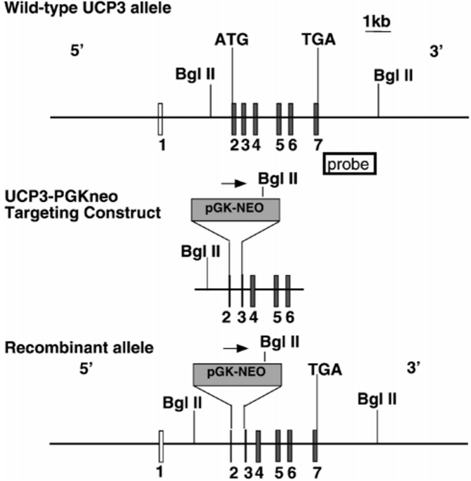
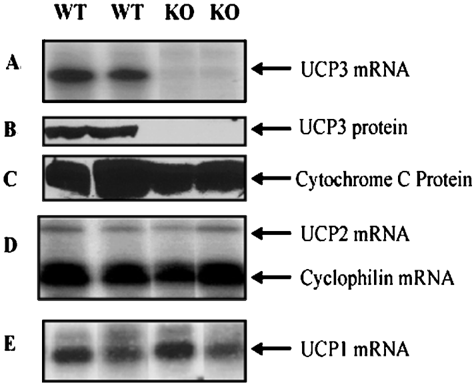
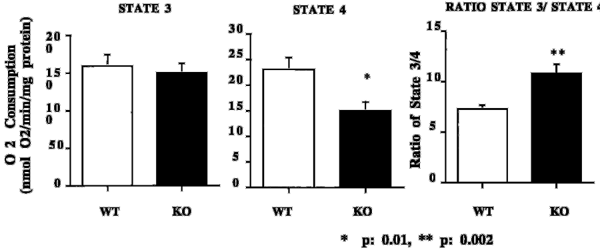
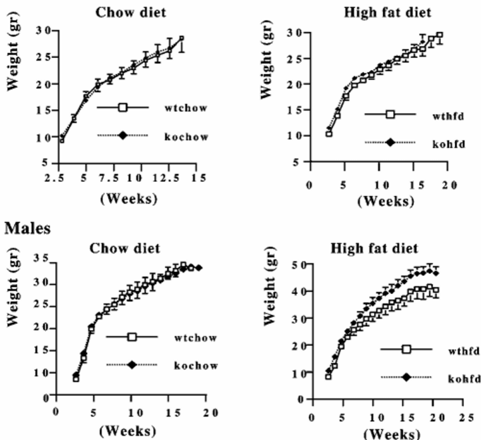
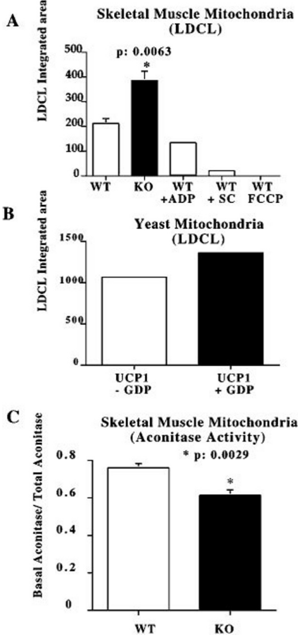
Uncoupling protein 3 (UCP3) is a member of the mitochondrial anion carrier superfamily. Based upon its high homology with UCP1 and its restricted tissue distribution to skeletal muscle and brown adipose tissue, UCP3 has been suggested to play important roles in regulating energy expenditure, body weight, and thermoregulation. Other postulated roles for UCP3 include regulation of fatty acid metabolism, adaptive responses to acute exercise and starvation, and prevention of reactive oxygen species (ROS) formation. To address these questions, we have generated mice lacking UCP3 (UCP3 knockout (KO) mice). Here, we provide evidence that skeletal muscle mitochondria lacking UCP3 are more coupled (i.e. increased state 3/state 4 ratio), indicating that UCP3 has uncoupling activity. In addition, production of ROS is increased in mitochondria lacking UCP3. This study demonstrates that UCP3 has uncoupling activity and that its absence may lead to increased production of ROS. Despite these effects on mitochondrial function, UCP3 does not seem to be required for body weight regulation, exercise tolerance, fatty acid oxidation, or cold-induced thermogenesis. The absence of such phenotypes in UCP3 KO mice could not be attributed to up-regulation of other UCP mRNAs. However, alternative compensatory mechanisms cannot be excluded. The consequence of increased mitochondrial coupling in UCP3 KO mice on metabolism and the possible role of yet unidentified compensatory mechanisms, remains to be determined.
Overview
The claims and statistics of this paper haven’t been checked yet.
Free: it reads the open-access text and checks the first 5 claims that cite a source we can check. Create a free account to check every claim.
Integrity signals
Registry
Cites
Statistics
Figures
Verification
Claims the paper makes
The claims and statistics of this paper haven’t been checked yet.
Free: it reads the open-access text and checks the first 5 claims that cite a source we can check. Create a free account to check every claim.
Claims other papers make about this one
Each is checked against this paper’s own text: does it say what the citing paper says it does?
The cited source says what the claim attributes to it.
In the citing paper
“Evidence has been presented that the new UCPs are involved in cell defense against oxidative stress (22-27).”
From Respiration, oxidative phosphorylation, and uncoupling protein in Candida albicans (2004) · cites this paper as [25]
The cited source says what the claim attributes to it.
In the citing paper
“They are able to induce mild uncoupling, thus increasing the rate of respiration and decreasing the production of reactive oxygen species (ROS) (24-27).”
From Respiration, oxidative phosphorylation, and uncoupling protein in Candida albicans (2004) · cites this paper as [25]
Self-check
Percentages, sums and reported differences re-computed from the paper’s own numbers.
The self-check needs the paper’s full text.
Citations
Cites
(1975) · Journal of AOAC INTERNATIONAL · doi:10.1093/jaoac/58.5.1085 · Cited by 19,795
(1974) · Elsevier eBooks · doi:10.1016/b978-0-12-091304-6.x5001-0 · Cited by 6,755
Boveris, A., & Chance, B. (1973) · Biochemical Journal · doi:10.1042/bj1340707 · Cited by 2,626
Changes in Energy Expenditure Resulting from Altered Body Weight
Leibel, R. L., Rosenbaum, M., & Hirsch, J. (1995) · New England Journal of Medicine · doi:10.1056/nejm199503093321001 · Cited by 2,012
Uncoupling protein-2: a novel gene linked to obesity and hyperinsulinemia
Fleury, C., Neverova, M., Collins, S., Raimbault, S., Champigny, O., Levi-Meyrueis, C., Bouillaud, F., Seldin, M. F., Surwit, R. S., Ricquier, D., et al. (1997) · Nature Genetics · doi:10.1038/ng0397-269 · Cited by 1,631
Thermogenic mechanisms in brown fat.
Nicholls, D. G., & Locke, R. M. (1984) · Physiological Reviews · doi:10.1152/physrev.1984.64.1.1 · Cited by 1,602
Mice lacking mitochondrial uncoupling protein are cold-sensitive but not obese
Enerbäck, S., Jacobsson, A., Simpson, E. M., Guerra, C., Yamashita, H., Harper, M.-E., & Kozak, L. P. (1997) · Nature · doi:10.1038/387090a0 · Cited by 1,379
Superoxide Anion Radical (O·̄2), Superoxide Dismutases, and Related Matters
Fridovich, I. (1997) · Journal of Biological Chemistry · doi:10.1074/jbc.272.30.18515 · Cited by 1,337
Reduced Rate of Energy Expenditure as a Risk Factor for Body-Weight Gain
Ravussin, E., Lillioja, S., Knowler, W. C., Christin, L., Freymond, D., Abbott, W. G. H., Boyce, V., Howard, B. V., & Bogardus, C. (1988) · New England Journal of Medicine · doi:10.1056/nejm198802253180802 · Cited by 1,215
Boss, O., Samec, S., Paoloni-Giacobino, A., Rossier, C., Dulloo, A., Seydoux, J., Muzzin, P., & Giacobino, J.-P. (1997) · FEBS Letters · doi:10.1016/s0014-5793(97)00384-0 · Cited by 1,041
Self-citation
Research works printed but not linked: 3
- Jaworek, D., Gruber, W., and Bergmeyer, H. U. (1974) in Methods of Enzy- matic Analysis (Bergmeyer, H. U., ed) Vol. 4, pp. 2127-2131, Verlag- Chemie, Winheim/Academic Press, New York 43. Deleted in proof
- Salmon, D. M., and Flat, J. P. (1985) Int. J. Obes. 9, 443-449
- Li, Y., Zhu, H., and Trush, M. A. (1999) Biochim. Biophys. Acta 28, 1-12
Cited by
Items 501–600 of 682
Kelly, O. M., McNamara, Y. M., Manzke, L. H., Meegan, M. J., & Porter, R. K. (2011) · Mitochondrion · doi:10.1016/j.mito.2011.03.011 · Cited by 13
“…of UCP3 has been shown to have no effect on state 4 oxygen consumption (Vidal-Puig et al., 2000; Cadenas et al., 2002) or proton leak (Cadenas et al., 2002) in some studies, while having an effect on state 4 oxygen consumption (Gong et al., 2000) or proton leak (Vidal-Puig et al., 2000) in others.”
BackgroundResultInfluentialGenetic diversity and selection signatures of the beef ‘Charolais de Cuba’ breed
Valera, Y. R., Renand, G., Navès, M., Jiménez, Y. F., Moreno-Probance, T. I., Ramos-Onsins, S. E., Rocha, D., & Ramayo‐Caldas, Y. (2018) · Scientific Reports · doi:10.1038/s41598-018-29453-z · Cited by 12
Fanter, C. E., Lin, Z., Keenan, S. W., Janzen, F. J., Mitchell, T. S., & Warren, D. E. (2019) · Journal of Experimental Biology · doi:10.1242/jeb.213918 · Cited by 11
“One example is UCP3, which encodes uncoupling protein 3 (Table 1), a mitochondrial inner membrane protein that affects mitochondrial reactive oxygen species (ROS) production in skeletal muscle (Nabben et al., 2008; Vidal-Puig et al., 2000).”
BackgroundEffect of heat exposure on uncoupling protein-3 mRNA abundance in porcine skeletal muscle
KATSUMATA, M., Matsumoto, M., Kawakami, S.-I., & Kaji, Y. (2004) · Journal of Animal Science · doi:10.2527/2004.82123493x · Cited by 12
“This suggests that UCP3 plays a significant role in the metabolism of fatty acids (Millet et al. 1997; Samec et al. 1998a,b; Weigle et al. 1998; Schrauwen et al., 2001, 2002).”
BackgroundBiological Implications of Protein Oxidation
Goto, S., Radak, Z. O., & Takahashi, R. (2002) · WORLD SCIENTIFIC eBooks · doi:10.1142/9789812775733_0020 · Cited by 11
Psurski, M. (2014) · Journal of Cancer Science & Therapy · doi:10.4172/1948-5956.1000249 · Cited by 12
“The loss of UCP2 or UCP3 in knockouts yielded an increase in ROS production [38].”
BackgroundMitochondrial Ion Channels in Metabolic Disease
Truong, A. H., Murugesan, S., Youssef, K. D., & Makino, A. (2016) · Springer eBooks · doi:10.1007/978-3-319-29635-7_18 · Cited by 12
Energy-dissipating hub in muscle mitochondria: Potassium channels and uncoupling proteins
Jarmuszkiewicz, W., & Szewczyk, A. M. (2019) · Archives of Biochemistry and Biophysics · doi:10.1016/j.abb.2019.01.036 · Cited by 12
Uncoupling proteins: gender-dependence and their relation to body weight control
Rodríguez, A. M., & Palou, A. (2004) · International Journal of Obesity · doi:10.1038/sj.ijo.0802579 · Cited by 10
Chronic Intermittent Mild Whole-Body Hypothermia Is Therapeutic in a Mouse Model of ALS
Martin, L. J., Niedzwiecki, M. V., & Wong, M. (2021) · Cells · doi:10.3390/cells10020320 · Cited by 11
“This loss of UCP3 could also be related to disease mechanisms because it can lead to increased production of mitochondrial ROS in skeletal muscle [51].”
BackgroundChen, X., Ashraf, S., Ashraf, N., & Harmancey, R. (2021) · Journal of the American Heart Association · doi:10.1161/jaha.121.022556 · Cited by 12
Wang, X., Gong, J., Liu, X., Zhan, R., Kong, R., Zhao, Y., Wan, D., Leng, X., Chen, M., & Qian, L. (2010) · Cell Stress and Chaperones · doi:10.1007/s12192-010-0185-y · Cited by 12
“Mice made null either for Ucp2 or Ucp3 maintain their body temperature in a cold environment (Vidalpuig et al. 2000).”
BackgroundSeevaratnam, N., Bennett, A. J., Webber, J., & Macdonald, I. A. (2006) · Diabetes Obesity and Metabolism · doi:10.1111/j.1463-1326.2006.00646.x · Cited by 12
Phulukdaree, A., Moodley, D., Khan, S., & Chuturgoon, A. A. (2013) · Gene · doi:10.1016/j.gene.2013.04.048 · Cited by 9
Fromme, T., Hoffmann, C., Nau, K., Rozman, J., Reichwald, K., Utting, M., Platzer, M., & Klingenspor, M. (2009) · Physiological Genomics · doi:10.1152/physiolgenomics.00249.2007 · Cited by 11
Induction of Uncoupling Protein 3 Gene Expression in Skeletal Muscle of Preterm Newborns
Brauner, P., Kopecky, P., Flachs, P., Ruffer, J., Sebroň, V., Plavka, R., Vítková, I., Vorlíček, J., & Kopecký, J. (2003) · Pediatric Research · doi:10.1203/01.pdr.0000054687.07095.0b · Cited by 10
“UCP3 may also have a similar role (47).”
BackgroundGaudry, M. J., Keuper, M., & Jastroch, M. (2019) · Molecular Aspects of Medicine · doi:10.1016/j.mam.2019.06.006 · Cited by 11
Wolf, A., Kutsche, H. S., Atmanspacher, F., Karadedeli, M. S., Schreckenberg, R., & Schlüter, K. (2021) · Frontiers in Physiology · doi:10.3389/fphys.2021.598723 · Cited by 9
Mitochondrial Respiration-Dependent ANT2-UCP2 Interaction
Schiffer, T. A., Löf, L., Gallini, R., Kamali‐Moghaddam, M., Carlström, M., & Palm, F. (2022) · Frontiers in Physiology · doi:10.3389/fphys.2022.866590 · Cited by 11
“In a skeletal muscle UCP3 knockout model, mitochondria were more coupled and this was associated with increased production of reactive oxygen species (ROS) (Vidal-Puig et al., 2000).”
BackgroundCarrageta, D. F., Freire‐Brito, L., Guerra‐Carvalho, B., Ribeiro, J. C., Monteiro, B. S., Barros, A., Oliveira, P. F., Monteiro, M. P., & Alves, M. G. (2023) · Antioxidants · doi:10.3390/antiox12020409 · Cited by 10
Kageyama, H., Osaka, T., Kageyama, A., Kawada, T., Hirano, T., Oka, J., Miura, M., Namba, Y., Ricquier, D., Shioda, S., et al. (2003) · Life Sciences · doi:10.1016/s0024-3205(03)00225-x · Cited by 10
The evolutionary trajectory of mitochondrial carrier family during metazoan evolution
Gong, M., Li, J., Wang, M., Wang, J., Zen, K., & Zhang, C. (2010) · BMC Evolutionary Biology · doi:10.1186/1471-2148-10-282 · Cited by 8
“Abbreviations MCF: mitochondrial carrier family; MC: mitochondrial carrier; SLC25: solute carrier family 25; TR: transmembrane region; IMM: inner membrane of mitochondria; UCP: uncoupling protein; ADP: adenosine-5’-diphosphate; ATP: adenosine-5’-triphosphate; ROS: reactive oxygen species; AAC: amino acid component.”
BackgroundSelf-citationKomelina, N. P., & Amerkhanov, Z. G. (2010) · Acta Biochimica Polonica · doi:10.18388/abp.2010_2427 · Cited by 8
“However, mice lacking UCP3 maintain their body temperature in a cold environment (Vidal-Puig et al., 2000).”
BackgroundKajimoto, K., Yamazaki, N., Kataoka, M., Terada, H., & Shinohara, Y. (2004) · The Journal of Medical Investigation · doi:10.2152/jmi.51.20 · Cited by 9
GH directly stimulates UCP3 expression
Hayashi, M., Futawaka, K., Matsushita, M., Koyama, R., Fun, Y., Fukuda, Y., Nushida, A., Nezu, S., Tagami, T., & Moriyama, K. (2018) · Growth Hormone & IGF Research · doi:10.1016/j.ghir.2018.01.002 · Cited by 10
Kelly, O. M., & Porter, R. K. (2011) · Biochimica et Biophysica Acta (BBA) - Bioenergetics · doi:10.1016/j.bbabio.2011.06.002 · Cited by 9
“However, data from UCP3 knock-out mice show no obvious metabolic phenotype compared to wild-types [17] [18].”
Girousse, A., Tavernier, G., Tiraby, C., Lichtenstein, L., Iacovoni, J. S., Mairal, A., Villarroya, F., & Langin, D. (2009) · Diabetologia · doi:10.1007/s00125-009-1385-9 · Cited by 9
“evidence of increased reactive oxygen species production and oxidative damage in skeletal muscle mitochondria [5].”
BackgroundDhillon, H. (2000) · Cited by 8
Skeletal Muscle Uncoupling Proteins in Mice Models of Obesity
Bombek, L. K., & Čater, M. (2022) · Metabolites · doi:10.3390/metabo12030259 · Cited by 9
“An increased ROS production and no significant thermoregulatory function of UCP3 were determined [108,164].”
BackgroundConstruction and Analysis of Disuse Atrophy Model of the Gastrocnemius Muscle in Chicken
Mo, J., Wang, Z., Liu, Q., Li, Z., & Nie, Q. (2022) · International Journal of Molecular Sciences · doi:10.3390/ijms23136892 · Cited by 10
“Compared with wild-type mice, UCP3 knockout mice can produce more ROS in skeletal muscle mitochondria [52].”
BackgroundKim, S. W., Yazawa, T., Koide, A., Yoneda, E., Aoki, R., Okazaki, T., Tomita, K., Watanabe, H., Muroi, Y., Testuka, M., et al. (2024) · Biology · doi:10.3390/biology13050284 · Cited by 9
Controlling lipogenesis and thermogenesis and the use of ergogenic aids for weight control
Palou, A., & Bonet, M. L. (2007) · Elsevier eBooks · doi:10.1533/9781845693114.1.58 · Cited by 9
Suzuki, M., Nakamura, F., Taguchi, E., Nakata, M., Wada, F., Takihi, M., Inoue, T., Ohta, S., & Kawachi, H. (2018) · Molecular and Cellular Biochemistry · doi:10.1007/s11010-018-3270-7 · Cited by 7
UCP3 reciprocally controls CD4+ Th17 and Treg cell differentiation
O’Connor, E. B., Muñoz‐Wolf, N., León, G., Lavelle, E. C., Mills, K. H. G., Walsh, P. T., & Porter, R. K. (2020) · PLoS ONE · doi:10.1371/journal.pone.0239713 · Cited by 8
“Its degree of homology to mitochondrial carriers other than UCP1 and UCP2 is approximately 30% in comparison [2, 10, 11].”
BackgroundMitochondrial uncoupling protein as a target of pharmacotherapy for obesity.
Saito, M., & Ohashi, A. (2001) · Folia Pharmacologica Japonica · doi:10.1254/fpj.118.327 · Cited by 7
Kano, S., & Doi, M. (2006) · Metabolism · doi:10.1016/j.metabol.2005.08.007 · Cited by 7
“Recently, however, in addition to its role as a UCP, UCP3 has also been identified as being involved in transporting fatty acid anions [22], preventing reactive oxygen species [23], and regulating fatty acids and glucose [24].”
BackgroundBarbara Cannon's Data on the UCP1-Ablated Mice: “Non-Cannonical” Point of View
Skulachev, V. P. (2001) · Bioscience Reports · doi:10.1023/a:1013600325266 · Cited by 7
“An interesting possibility is that UCP1 is somehow required for uncoupling by UCP2 and UCP3: that would be the case if a UCP-1 dependent activator of the UCP2 (3) uncoupling mechanism exists.”
BackgroundThe roles of orexins on sleep/wakefulness, energy homeostasis and intestinal secretion
Mäkelä, K. A. (2010) · Cited by 7
Papel de nuevas proteínas mitocondriales en el balance energético
Zorzano, A., Bach, D., Pich, S., & Palacin, M. (2017) · Revista de medicina de la Universidad de Navarra · doi:10.15581/021.7461 · Cited by 9
Brown adipose tissue and skeletal muscle coordinately contribute to thermogenesis in mice
Izumi-Mishima, Y., Tsutsumi, R., Shiuchi, T., Fujimoto, S., Taniguchi, M., Sugiuchi, M., Tsutsumi, M., Okamatsu‐Ogura, Y., Yoneshiro, T., Kuroda, M., et al. (2025) · eLife · doi:10.7554/elife.99982.3 · Cited by 7
Chung, E.-R., Shin, S.-C., & Heo, J.-P. (2011) · Korean Journal for Food Science of Animal Resources · doi:10.5851/kosfa.2011.31.4.530 · Cited by 6
“Uncoupling protein genes family has five members that named UCP1, UCP2, UCP3, BMCP1, and UCP4 (Vidal-Puig et al., 2000).”
BackgroundChristoffolete, M. A., & Moriscot, A. S. (2004) · Brazilian Journal of Medical and Biological Research · doi:10.1590/s0100-879x2004000600019 · Cited by 6
“In addition, UCP3 knock-out mice do not develop obesity, with their weights being similar to those of wild-type mice ( 19 ).”
BackgroundInhibitory Effects of Thyroid Hormones on Mitochondrial Oxidative Stress: A Systematic Review
Goharbari, M. H., Shadboorestan, A., & Abdollahi, M. R. (2016) · International Journal of Pharmacology · doi:10.3923/ijp.2016.249.261 · Cited by 6
Role of UCP2 Expression after Hepatic Warm Ischemia-Reperfusion in the Rat
Ninomiya, M., Shirabe, K., Shimada, M., Terashi, T., & Maehara, Y. (2011) · Gut and Liver · doi:10.5009/gnl.2011.5.4.486 · Cited by 6
“Accordingly, these proteins have been implicated mainly in the maintenance of metabolic rate and adaptational thermoregulation.(6,9) However, the diversity of their possible biological roles is illustrated by the paper describing the enhanced ability of UCP2 knock-out mouse to destroy intracellular pathogens due to al…”
BackgroundLong-chain polyunsaturated fatty acids
Das, U. N. (2002) · Springer eBooks · doi:10.1007/978-1-4419-8564-4_9 · Cited by 6
Thermoregulation of transgenic growth hormone mice
Rollo, C. D., Lai, M., Whitehead, K., Perreault, M. L., Lemon, J. A., & Chaudhry, A. M. (2004) · Canadian Journal of Zoology · doi:10.1139/z04-052 · Cited by 8
Wang, C., Sun, G., Chen, K., Lv, Z., Peng, S., Jiang, X., Xiang, Y., & Zhang, C. (2009) · Mitochondrion · doi:10.1016/j.mito.2009.09.003 · Cited by 6
Self-citationMiyashita, K. (2007) · CRC Press eBooks · doi:10.1201/9781420005479.ch36 · Cited by 6
Mitochondrial dysfunction in hypertension: mechanistic pathways and therapeutic implications
Tian, J., Yi, L., Lu, Y., Kou, Y., Zhang, L., Jin, P., Wang, X., Wu, T., Yang, X., Wang, Y., et al. (2026) · Functional & Integrative Genomics · doi:10.1007/s10142-025-01813-9 · Cited by 6
“Knockout studies of UCP3 have shown increased ROS production and decreased aconitase activity, indicating that UCPs play a crucial role in regulating mito - chondrial redox status (Vidal-Puig et al. 2000).”
The Uncoupling Proteins Family: From Thermogenesis to the Regulation of ROS
Alves‐Guerra, M., Pecqueur, C., Couplan, E., González‐Barroso, M. M., González‐Barroso, M. M., Ricquier, D., Bouillaud, F., Miroux, B., & Shaw, A. (2002) · Cell and molecular responses to stress · doi:10.1016/s1568-1254(02)80020-1 · Cited by 6
Leptin and the treatment of obesity
Walder, K. R., & de Silva, A. M. (2000) · Drug Development Research · doi:10.1002/1098-2299(200010)51:2<66::aid-ddr3>3.0.co;2-1 · Cited by 8
Voci, A., Demori, I., Franzi, A., Fugassa, E., Goglia, F., & Lanni, A. (2001) · European Journal of Endocrinology · doi:10.1530/eje.0.1450317 · Cited by 5
A Risky Job: In Search of Noncanonical Pathways
Skulachev, V. P. (2003) · Comprehensive biochemistry · doi:10.1016/s0069-8032(03)42011-1 · Cited by 6
Organization and Regulation of Mitochondrial Oxidative Phosphorylation
Rigoulet, M., Mourier, A., & Devin, A. (2007) · Wiley eBooks · doi:10.1002/9783527621095.ch2 · Cited by 6
Tough love: left out in the cold, but not abandoned, by UCP3
Cline, G. W. (2006) · Journal of Applied Physiology · doi:10.1152/japplphysiol.00234.2006 · Cited by 6
“Thus another primary and critical function of UCP3 may be to moderate ROS generation, thereby protecting the mitochondrial from the detrimental effects of ROS and its by-products.”
BackgroundInfluentialOld and new determinants in the regulation of energy expenditure
Russell, A. P., & Giacobino, J.-P. (2002) · Journal of Endocrinological Investigation · doi:10.1007/bf03344049 · Cited by 7
Uncoupling proteins: a molecular basis for racial differences in energy expenditure (and obesity?)
SCHONFELD-WARDEN, N. A., & Warden, C. H. (2002) · American Journal of Clinical Nutrition · doi:10.1093/ajcn/75.4.607 · Cited by 5
Gargiulo, S., Petretta, M. P., Greco, A., Panico, M., Larobina, M., Gramanzini, M., Schiattarella, G. G., Esposito, G., Petretta, M., Brunetti, A., et al. (2014) · BMC Cardiovascular Disorders · doi:10.1186/1471-2261-14-98 · Cited by 5
Antioxidant effects of LEDT in dystrophic muscle cells: involvement of PGC-1α and UCP-3 pathways
da Rocha, G. L., Guimarães, D. S. P. S. F., da Cruz, M. V., Mizobuti, D. S., da Silva, H. N. M., Pereira, E. C. L., Silveira, L. R., & Minatel, E. (2023) · Photochemical & Photobiological Sciences · doi:10.1007/s43630-023-00506-1 · Cited by 4
“Reinforcing this work, skeletal muscle mitochondria isolated from UCP3 −/− mice showed higher ROS levels and increased markers of oxidative damage than the wild type [62, 63].”
Uncoupling proteins: Targets of endocrine disruptors?
Pawade, T., Ho, P. W., Kwok, K. H., Chu, A. C. Y., Ho, S. L., & Ramsden, D. B. (2005) · Molecular and Cellular Endocrinology · doi:10.1016/j.mce.2005.06.008 · Cited by 5
Calsbeek, D. J., Thompson, T. L., Dahl, J. A., Stob, N. R., Brozinick, J. T., Hill, J. O., & Hickey, M. S. (2002) · American Journal of Physiology-Endocrinology and Metabolism · doi:10.1152/ajpendo.00449.2001 · Cited by 4
“Clearly, additional work must be done to clarify what role, if any, UCP3 might play in skeletal muscle ROS accumulation.”
BackgroundInfluentialEffect of regional muscle location but not adiposity on mitochondrial biogenesis-regulating proteins
Ponce‐González, J. G., Ara, I., Larsen, S., Guerra, B., Calbet, J. A. L., & Helge, J. W. (2015) · European Journal of Applied Physiology · doi:10.1007/s00421-015-3232-7 · Cited by 4
“2007, 2009), which has been associated with an improvement in mitochondrial efficiency (Garcia-Martinez et al. 2001; McCarthy et al. 2011; Gong et al. 2000; Vidal-Puig et al. 2000).”
BackgroundFahanik‐Babaei, J., Shayanfa, F., Khodaee, N., Saghiri, R., & Eliassi, A. (2017) · EXCLI journal · doi:10.17179/excli2016-808 · Cited by 6
“, 2000), and in the mitigation of cellular damage due to reactive oxygen species (Arsenijevic et al., 2000; Lee et al., 1999; Li et al., 2001; Negre-Salvayre et al., 1997; Vidal-Puig et al., 2000).”
BackgroundRiley, C. L., & Mills, E. (2020) · bioRxiv (Cold Spring Harbor Laboratory) · doi:10.1101/2020.03.24.003442 · Cited by 5
Relationships between the expression of adipose genes and profiles of hospitalized dogs
Sugiyama, Y., Shimokawa, F., Sugiyama, K., Kobayashi, T., Yamashita, Y., Kazama, K., Onda, K., Funaba, M., & Murakami, M. (2022) · Veterinary Research Communications · doi:10.1007/s11259-022-09989-2 · Cited by 5
Fung, T. K. H., Cheung, K., Wang, X., Lau, B. W.-M., & Ngai, S. P. C. (2024) · Journal of Cachexia Sarcopenia and Muscle · doi:10.1002/jcsm.13633 · Cited by 4
Pascual-Gamarra, J. M., Salazar‐Tortosa, D. F., Labayen, I., Rupérez, A. I., Leclercq, C., Marcos, A., Gómez‐Martínez, S., Moreno, L. A., Meirhaeghe, A., Castillo, M. J., et al. (2020) · Pediatric Research · doi:10.1038/s41390-019-0735-7 · Cited by 3
Studies on the Function and Regulation of Mitochondrial Uncoupling Proteins
Porter, R. K. (2012) · Advances in experimental medicine and biology · doi:10.1007/978-1-4614-3573-0_7 · Cited by 4
Zhang, C., Zhang, M., Zhu, J., Ji, C., Zhu, C., Kou, C., Qin, D., Tong, M., & Guo, X. (2010) · Journal of Bioenergetics and Biomembranes · doi:10.1007/s10863-010-9292-9 · Cited by 3
Self-citationAdult Head and Neck Sarcomas: Rare Localization with Difficult Therapeutic Management
Oualla, K. (2013) · Journal of Cancer Science & Therapy · doi:10.4172/1948-5956.1000248 · Cited by 3
Quel est le rôle des protéines découplantes mitochondriales chez les mammifères et les oiseaux ?
Damon, M., & Collin, A. (2006) · INRAE Productions Animales · doi:10.20870/productions-animales.2006.19.4.3497 · Cited by 4
Metabolic Fuels and Obesity: Carbohydrate and Lipid Metabolism in Skeletal Muscle and Adipose Tissue
Frayn, K. N., & Blaak, E. E. (2005) · Wiley eBooks · doi:10.1002/9780470987087.ch8 · Cited by 3
The Role of Sarcolipin in Calcium Handling and Obesity
Bombardier, É. (2010) · UWSpace (University of Waterloo) · Cited by 3
Thyroid Hormones and Thyromimetics
Ryono, D. E., Grover, G. J., & Mellström, K. (2003) · Wiley eBooks · doi:10.1002/0471266949.bmc052 · Cited by 3
Peripheral Targets for Antiobesity Drugs
Crowley, V., & Vidal‐Puig, A. (2004) · CRC Press eBooks · doi:10.1201/9780203508756-29 · Cited by 3
Self-citationHeat Shock Proteins and Their Associated Oxidative Stress-Induced Heart Disease
Mitra, S., Dasgupta, R., & Bagchi, A. (2019) · Springer eBooks · doi:10.1007/978-981-13-8946-7_9 · Cited by 2
Functional Anatomy of the ‘Adipose Organ’
Cinti, S. (2007) · Springer eBooks · doi:10.1007/978-88-470-0552-5_1 · Cited by 4
Redman, L. M., & Ravussin, É. (2007) · Humana Press eBooks · doi:10.1007/978-1-59745-400-1_8 · Cited by 3
Thermogenesis and the Metabolic Syndrome
Bonet, M. L., Picó, C., & Palou, A. (2005) · Elsevier eBooks · doi:10.1016/b978-84-8174-892-5.50017-6 · Cited by 2
Mitochondrial Uncoupling Proteins: Therapeutic Targets in Neurodegeneration?
Cardoso, S., Carvalho, C., Correia, S. C., Santos, R. X., Santos, M. S., & Moreira, P. I. (2010) · Cited by 2
Kozak, L. P., & Ravussin, É. (2004) · CRC Press eBooks · doi:10.1201/9780203508756.pt1 · Cited by 5
Exercise: Thermodynamic and Bioenergetic Principles
Halling, J. F., Gudiksen, A., Pilegaard, H., & Neufer, P. D. (2022) · Physiology in health and disease · doi:10.1007/978-3-030-94305-9_3 · Cited by 2
Animal Models of Mitochondrial Diseases Associated with Nuclear Gene Mutations
Averina, O. A., Kuznetsova, S. A., Permyakov, O. A., & Владимирович, С. П. (2024) · Acta Naturae · doi:10.32607/actanaturae.25442 · Cited by 3
Endocrine regulation of adipose tissue thermogenesis in the fetal and neonatal sheep
Mostyn, A. (2001) · Nottingham ePrints (University of Nottingham) · Cited by 2
Thyroid Hormones and Thyromimetics
Malm, J., & Grover, G. J. (2010) · Wiley eBooks · doi:10.1002/0471266949.bmc052.pub2 · Cited by 2
Joubert, R. (2009) · theses.fr (ABES) · doi:10.70675/bae98e89zfb75z4159zaeaazb91a61c4f7bc · Cited by 2
Никанорова, А. А., Алексеевич, Б. Н., Пшенникова, В. Г., Сергеевич, Н. С., Romanov, G. P., Solovyev, A. V., & Федорова, С. А. (2025) · Biology · doi:10.3390/biology14050454 · Cited by 2
Goshovska, Y. V., Korkach, Y. P., Shimanskaya, T. V., Kotsuruba, A. V., & Sagach, V. F. (2010) · International Journal of Physiology and Pathophysiology · doi:10.1615/intjphyspathophys.v1.i4.40 · Cited by 1
“Ç ë3òåðàòóðè â3äîìî, ùî ó ìèøåé ç äåô3öèòîì UCP2 àáî UCP3 ðîçâèâàþòüñÿ îçíàêè îêèñíîãî ñòðåñó [29].”
The Metabolic Syndrome and Cardiac Function
Bugger, H., & Abel, E. D. (2008) · Advances in Pulmonary Hypertension · doi:10.21693/1933-088x-7.3.332 · Cited by 2
Targeting the Mitochondria in Cardiovascular Diseases
Marín-García, J. (2012) · Springer eBooks · doi:10.1007/978-1-4614-4599-9_23 · Cited by 2
Role of Mitochondrial Uncoupling Protein 2 (UCP2) in Modulation of Adiposity
Sun, X. (2004) · Cited by 1
Mostyn, A., Bos, P., Litten, J. C., Laws, J., Symonds, M. E., & Clarke, L. (2008) · Organogenesis · doi:10.4161/org.4.3.6505 · Cited by 1
Donohoue, P. A., & Ali, O. (2013) · Elsevier eBooks · doi:10.1016/b978-0-12-383834-6.00094-x · Cited by 1
Nutritional Genomics: Genes and Polymorphisms in Energy Metabolism: An Overview
Verdi, T. (2022) · Acta Scientifci Nutritional Health · doi:10.31080/asnh.2022.06.1003 · Cited by 1
Yilmaz, B. A., & Törüner, F. B. (2013) · CRC Press eBooks · doi:10.1201/b14907-9 · Cited by 1
Exploring the mechanisms of cadmium tolerance and bioaccumulation in a soil amoeba
Zhao, Y., Zhang, L., Wang, Z., Wu, C., Liu, F., & Shu, L. (2025) · The Science of The Total Environment · doi:10.1016/j.scitotenv.2025.178637 · Cited by 2
Kindall, A., Huynh, Y., Kim, J.-S., Tiziani, S., & DiGiovanni, J. (2025) · American Journal of Physiology-Cell Physiology · doi:10.1152/ajpcell.00366.2025 · Cited by 1
Genetic Susceptibility of Rodents to Diet-Induced Obesity
Harrold, J. A. (2001) · Springer eBooks · doi:10.1007/978-94-015-9662-6_8 · Cited by 1
Factors associated with developing symptomatic HIV-associated sensory neuropathy
Wadley, A. L. (2014) · University of the Witwatersrand, Johannesburg Institutional Repository on DSpace (University of the Witwatersrand, Johannesburg) · Cited by 1
Mitochondrial Manipulation as a Treatment for Aging
Smigrodzki, R. M., & Portell, F. R. (2010) · Springer eBooks · doi:10.1007/978-90-481-3999-6_16 · Cited by 1
“Overloading of the ETC is known to occur with caloric overfeeding, and in some genetic contexts this results in increased ROS generation (Vidal-Puig et al. 2000).”
Background
Metadata
- Authors
- Vidal-Puig, A. J., Grujic, D., Zhang, C.-Y., Hagen, T., Boss, O., Ido, Y., Szczepanik, A., Wade, J., Mootha, V., Cortright, R., Muoio, D. M., & Lowell, B. B.
- Affiliations
- Beth Israel Deaconess Medical Center (US)
- Boston Medical Center (US)
- East Carolina University (US)
- Corresponding author
- Lowell, Bradford B.
- Venue
- Journal of Biological Chemistry
- Publisher
- Elsevier BV
- Published
- 2000-05
- Volume
- 275
- Issue
- 21
- Pages
- 16258-16266
- ISSN
- 0021-9258 (ISSN-L)
- OpenAlex
- W2156172044
- Cited by
- 677
- References
- 63
- Citations by year
- 2026: 2 · 2025: 6 · 2024: 7 · 2023: 5 · 2022: 12 · 2021: 11 · 2020: 7 · 2019: 16 · 2018: 16 · 2017: 8 · 2016: 14 · 2015: 18 · 2014: 14 · 2013: 23 · 2012: 18
- FWCI
- 23.73
- Type
- journal article
- Language
- en
- Open access
- hybrid
- doi.org
- Licence
- cc-by
- www.elsevier.com/tdm/userlicense/1.0/ (tdm)
- creativecommons.org/licenses/by/4.0/ (vor, 7462 d)
- Locations
- Journal of Biological Chemistry (publishedVersion, cc-by)
- PubMed (publishedVersion)
- USF Scholarship Repository (University of San Francisco) (submittedVersion)
- Funders
- Eli Lilly and Company
- National Institutes of Health (DK46200)
- National Institute of Diabetes and Digestive and Kidney Diseases (P30DK046200, DK 49569, R01DK049569, P30 DK-46200, R37DK053477)
- Topics
- Life Sciences › Biochemistry, Genetics and Molecular Biology › Molecular Biology › Mitochondrial Function and Pathology
- Health Sciences › Medicine › Physiology (medical) › Adipose Tissue and Metabolism
- Life Sciences › Biochemistry, Genetics and Molecular Biology › Molecular Biology › Metabolism, Diabetes, and Cancer
- Keywords
- UCP3, mitochondrial uncoupling, reactive oxygen species, skeletal muscle mitochondria, mitochondrial coupling, thermogenesis, fatty acid oxidation, exercise tolerance, energy metabolism
- MeSH terms
- Uncoupling Protein 2, Uncoupling Protein 3, Uncoupling Protein 1, Animals, Body Temperature, Body Weight, Carrier Proteins, Eating, Energy Metabolism, Female, Ion Channels, Male, Membrane Proteins, Mitochondria, Muscle, Oxygen Consumption, Phenotype, Physical Conditioning, Animal, Proteins, RNA, Messenger, Reactive Oxygen Species, Mice, Knockout, Gene Targeting, Muscle, Skeletal, Mitochondrial Proteins, Membrane Transport Proteins, Mice
About these checks
Registry, retraction, Cites and statistics results are computed, not judged, with one exception: a printed reference that no index lists is read once by a model before it counts as a citation error. Claims are extracted by a model and kept only when their quote appears verbatim in the text; each cited source is then checked, with a model’s help, for whether it says what the claim relies on. Those verdicts can be wrong — read the claim’s quote and the cited source before relying on one.
Statistics and arithmetic are recomputed, not judged.
Confidence bands are shown only for fields calibrated on our annotated test set. None is calibrated yet, so no band is shown.
What counts as a claim ›How we measure confidence ›How we check this ›
Are you an author, or do you see a problem with this page? Request a review
Data sources
Bibliographic data: Semantic Scholar, OpenAlex, Crossref.
Contains information from the Semantic Scholar Academic Graph Datasets, made available under the ODC Attribution License (ODC-BY 1.0).
Semantic Scholar’s data is described in: Kinney, R., et al. (2023). The Semantic Scholar Open Data Platform. arXiv:2301.10140.
