

Energy Metabolism in Uncoupling Protein 3 Gene Knockout Mice
Open accessThe DOI matches its Crossref record; 63 of the 63 references it cites were found in a registry or an index.
Abstract
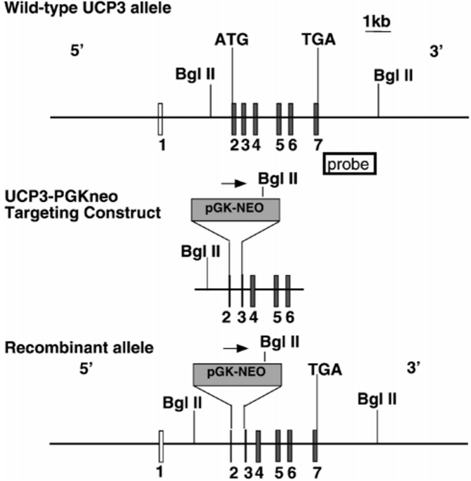
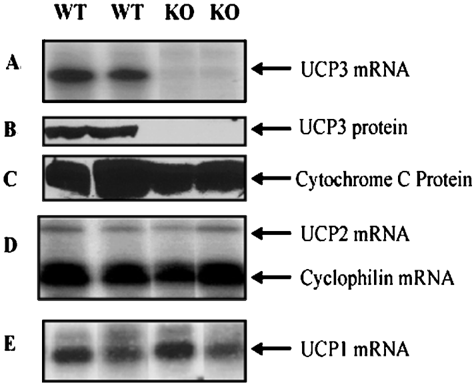
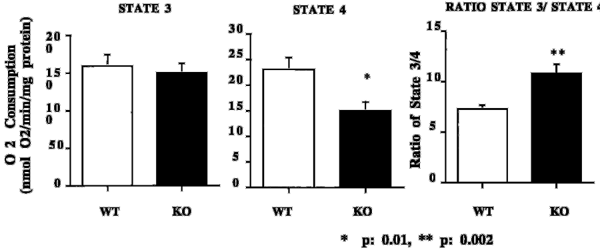
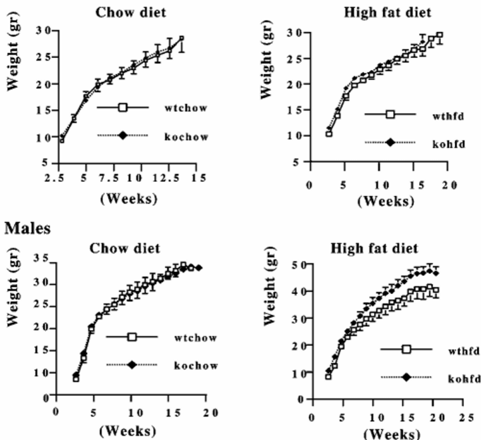
Uncoupling protein 3 (UCP3) is a member of the mitochondrial anion carrier superfamily. Based upon its high homology with UCP1 and its restricted tissue distribution to skeletal muscle and brown adipose tissue, UCP3 has been suggested to play important roles in regulating energy expenditure, body weight, and thermoregulation. Other postulated roles for UCP3 include regulation of fatty acid metabolism, adaptive responses to acute exercise and starvation, and prevention of reactive oxygen species (ROS) formation. To address these questions, we have generated mice lacking UCP3 (UCP3 knockout (KO) mice). Here, we provide evidence that skeletal muscle mitochondria lacking UCP3 are more coupled (i.e. increased state 3/state 4 ratio), indicating that UCP3 has uncoupling activity. In addition, production of ROS is increased in mitochondria lacking UCP3. This study demonstrates that UCP3 has uncoupling activity and that its absence may lead to increased production of ROS. Despite these effects on mitochondrial function, UCP3 does not seem to be required for body weight regulation, exercise tolerance, fatty acid oxidation, or cold-induced thermogenesis. The absence of such phenotypes in UCP3 KO mice could not be attributed to up-regulation of other UCP mRNAs. However, alternative compensatory mechanisms cannot be excluded. The consequence of increased mitochondrial coupling in UCP3 KO mice on metabolism and the possible role of yet unidentified compensatory mechanisms, remains to be determined.
Overview
The claims and statistics of this paper haven’t been checked yet.
Free: it reads the open-access text and checks the first 5 claims that cite a source we can check. Create a free account to check every claim.
Integrity signals
Registry
Cites
Statistics
Figures
Verification
Claims the paper makes
The claims and statistics of this paper haven’t been checked yet.
Free: it reads the open-access text and checks the first 5 claims that cite a source we can check. Create a free account to check every claim.
Claims other papers make about this one
Each is checked against this paper’s own text: does it say what the citing paper says it does?
The cited source says what the claim attributes to it.
In the citing paper
“Evidence has been presented that the new UCPs are involved in cell defense against oxidative stress (22-27).”
From Respiration, oxidative phosphorylation, and uncoupling protein in Candida albicans (2004) · cites this paper as [25]
The cited source says what the claim attributes to it.
In the citing paper
“They are able to induce mild uncoupling, thus increasing the rate of respiration and decreasing the production of reactive oxygen species (ROS) (24-27).”
From Respiration, oxidative phosphorylation, and uncoupling protein in Candida albicans (2004) · cites this paper as [25]
Self-check
Percentages, sums and reported differences re-computed from the paper’s own numbers.
The self-check needs the paper’s full text.
Citations
Cites
(1975) · Journal of AOAC INTERNATIONAL · doi:10.1093/jaoac/58.5.1085 · Cited by 19,795
(1974) · Elsevier eBooks · doi:10.1016/b978-0-12-091304-6.x5001-0 · Cited by 6,755
Boveris, A., & Chance, B. (1973) · Biochemical Journal · doi:10.1042/bj1340707 · Cited by 2,626
Changes in Energy Expenditure Resulting from Altered Body Weight
Leibel, R. L., Rosenbaum, M., & Hirsch, J. (1995) · New England Journal of Medicine · doi:10.1056/nejm199503093321001 · Cited by 2,012
Uncoupling protein-2: a novel gene linked to obesity and hyperinsulinemia
Fleury, C., Neverova, M., Collins, S., Raimbault, S., Champigny, O., Levi-Meyrueis, C., Bouillaud, F., Seldin, M. F., Surwit, R. S., Ricquier, D., et al. (1997) · Nature Genetics · doi:10.1038/ng0397-269 · Cited by 1,631
Thermogenic mechanisms in brown fat.
Nicholls, D. G., & Locke, R. M. (1984) · Physiological Reviews · doi:10.1152/physrev.1984.64.1.1 · Cited by 1,602
Mice lacking mitochondrial uncoupling protein are cold-sensitive but not obese
Enerbäck, S., Jacobsson, A., Simpson, E. M., Guerra, C., Yamashita, H., Harper, M.-E., & Kozak, L. P. (1997) · Nature · doi:10.1038/387090a0 · Cited by 1,379
Superoxide Anion Radical (O·̄2), Superoxide Dismutases, and Related Matters
Fridovich, I. (1997) · Journal of Biological Chemistry · doi:10.1074/jbc.272.30.18515 · Cited by 1,337
Reduced Rate of Energy Expenditure as a Risk Factor for Body-Weight Gain
Ravussin, E., Lillioja, S., Knowler, W. C., Christin, L., Freymond, D., Abbott, W. G. H., Boyce, V., Howard, B. V., & Bogardus, C. (1988) · New England Journal of Medicine · doi:10.1056/nejm198802253180802 · Cited by 1,215
Boss, O., Samec, S., Paoloni-Giacobino, A., Rossier, C., Dulloo, A., Seydoux, J., Muzzin, P., & Giacobino, J.-P. (1997) · FEBS Letters · doi:10.1016/s0014-5793(97)00384-0 · Cited by 1,041
Self-citation
Research works printed but not linked: 3
- Jaworek, D., Gruber, W., and Bergmeyer, H. U. (1974) in Methods of Enzy- matic Analysis (Bergmeyer, H. U., ed) Vol. 4, pp. 2127-2131, Verlag- Chemie, Winheim/Academic Press, New York 43. Deleted in proof
- Salmon, D. M., and Flat, J. P. (1985) Int. J. Obes. 9, 443-449
- Li, Y., Zhu, H., and Trush, M. A. (1999) Biochim. Biophys. Acta 28, 1-12
Cited by
Items 301–400 of 682
Sarcolipin Provides a Novel Muscle-Based Mechanism for Adaptive Thermogenesis
Gamu, D., Bombardier, É., Smith, I. C. P., Fajardo, V. A., & Tupling, A. R. (2014) · Exercise and Sport Sciences Reviews · doi:10.1249/jes.0000000000000016 · Cited by 53
“The generation of UCP-3 (skeletal muscle homologue)Yablated mice revealed that endogenous levels of UCP-3 uncouple mitochondrial respiration within skeletal muscle (16,37).”
BackgroundResultVDR regulates energy metabolism by modulating remodeling in adipose tissue
Xu, Y., Lou, Y., & Kong, J. (2019) · European Journal of Pharmacology · doi:10.1016/j.ejphar.2019.172761 · Cited by 51
Dalgaard, L. T., Sørensen, T. I. A., Drivsholm, T., Borch‐Johnsen, K., Andersen, T., Hansen, T. F., & Pedersen, O. B. (2001) · The Journal of Clinical Endocrinology & Metabolism · doi:10.1210/jcem.86.3.7301 · Cited by 51
“The absence of a functional UCP3 gene does not cause obesity in mice (25, 26), although this finding does not exclude that the gene has importance for energy homeostasis, as compensatory mechanisms might be activated.”
Raichur, S., Lau, P., Staels, B., & Muscat, G. E. O. (2007) · Journal of Molecular Endocrinology · doi:10.1677/jme.1.00010 · Cited by 51
Cha, S. H., Fukushima, A., Sakuma, K., & Kagawa, Y. (2001) · Journal of Nutrition · doi:10.1093/jn/131.10.2636 · Cited by 53
Arruda, A. P., da‐Silva, W. S., de Carvalho, D. P., & MEIS, L. D. (2003) · Biochemical Journal · doi:10.1042/bj20031015 · Cited by 56
The energetic implications of uncoupling protein-3 in skeletal muscle
Costford, S. R., Seifert, E. L., Bézaire, V., F. Gerrits, M., Bevilacqua, L., Gowing, A., & Harper, M.-E. (2007) · Applied Physiology, Nutrition, and Metabolism · doi:10.1139/h07-063 · Cited by 44
Brown adipose tissue growth and development: significance and nutritional regulation
Satterfield, M. C., & Wu, G. (2010) · Frontiers in bioscience · doi:10.2741/3807 · Cited by 51
“still express UCP2 and UCP3 are incapable of nonshivering thermogenesis, providing additional evidence that these two proteins are not essential for the thermogenic process (101-104).”
BackgroundWatanabe, M., Yamamoto, T., Mori, C., Okada, N., Yamazaki, N., Kajimoto, K., Kataoka, M., & Shinohara, Y. (2008) · Biological and Pharmaceutical Bulletin · doi:10.1248/bpb.31.775 · Cited by 54
Shi, Y., Pulliam, D. A., Liu, Y., Hamilton, R. T., Jernigan, A., Bhattacharya, A., Sloane, L. B., Qi, W., Chaudhuri, A. R., Buffenstein, R., et al. (2013) · American Journal of Physiology-Regulatory, Integrative and Comparative Physiology · doi:10.1152/ajpregu.00139.2012 · Cited by 52
“Studies have shown mitochondria of UCP3 knockout mice exhibit a higher rate of ROS production (56, 63, 68) and mice, which have UCP3 overexpressed in the muscle mitochondria, produce lower levels of H2O2 (27).”
BackgroundAndersen, Ø., Frantzen, M., Rosland, M., Timmerhaus, G., Škugor, A., & Krasnov, A. (2015) · Aquatic Toxicology · doi:10.1016/j.aquatox.2015.04.023 · Cited by 49
Functional Characterization of a Drosophila Mitochondrial Uncoupling Protein
Fridell, Y.-W. C., Sánchez-Blanco, A., Silvia, B. A., & Helfand, S. L. (2004) · Journal of Bioenergetics and Biomembranes · doi:10.1023/b:jobb.0000031973.20153.c6 · Cited by 48
Ealey, K. N., El‐Sohemy, A., & Archer, M. C. (2002) · Lipids · doi:10.1007/s11745-002-0971-6 · Cited by 46
“For isolation of mitochondria, tissues were homogenized in 4‐6 mL of buffer containing 250 mM sucrose, 10 mM HEPES, 0.5 mM EDTA, and 0.1% BSA, pH 7.2, and kept on ice ( 27 ).”
MethodInfluentialMitochondrial uncoupling protein 2 and pancreatic cancer: A new potential target therapy
Donadelli, M., Dando, I., Pozza, E. D., & Palmieri, M. (2015) · World Journal of Gastroenterology · doi:10.3748/wjg.v21.i11.3232 · Cited by 50
Gamboa, J. L., & Andrade, F. H. (2011) · Pflügers Archiv - European Journal of Physiology · doi:10.1007/s00424-011-1057-8 · Cited by 48
“UCP-3 knockout mice have lower mitochondrial respiration rates, particularly state 4, whereas UCP-3 overexpression results in higher state 4 [5, 20, 53].”
Thomson, D. M., Brown, J. D., Fillmore, N., Ellsworth, S. K., Jacobs, D. L., Winder, W. W., Fick, C. A., & Gordon, S. E. (2009) · The Journal of Physiology · doi:10.1113/jphysiol.2008.166512 · Cited by 49
“Likewise, decreased proton leak and increased mitochondrial coupling (Gong et al. 2000; Vidal-Puig et al. 2000), as well as increased rate of fasting ATP synthesis (Cline et al.”
BackgroundLeduc-Gaudet, J.-P., Reynaud, O., Chabot, F., Mercier, J., Andrich, D. E., St-Pierre, D. H., & Gouspillou, G. (2018) · Physiological Reports · doi:10.14814/phy2.13548 · Cited by 44
“These results are in line with those of previous studies showing no difference in total oxygen consumption following UCP3 inactivation in mice (Vidal-Puig et al. 2000; Gong et al. 2000) and those suggesting that UCP2 and 3 are not involved in basal proton conductance (Echtay et al. 2002; Brand and…”
Risperidone alters food intake, core body temperature, and locomotor activity in mice
Cope, M. B., Li, X., Jumbo‐Lucioni, P. P., DiCostanzo, C. A., Jamison, W. G., Kesterson, R. A., Allison, D. B., & Nagy, T. R. (2008) · Physiology & Behavior · doi:10.1016/j.physbeh.2008.11.011 · Cited by 50
“UCP3 knockout mice do not become obese on high fat diets [23].”
BackgroundCheng, S., Clancy, C. J., Zhang, Z., Hao, B., Wang, W., Iczkowski, K. A., Pfaller, M. A., & Nguyen, M. H. (2007) · Cellular Microbiology · doi:10.1111/j.1462-5822.2006.00805.x · Cited by 46
“Isoforms of UCP in diverse plant and animal species uncouple oxidative phosphorylation, reduce ROS and bolster cell defence against oxidative stress (Brand, 2000; Vidal-Puig et al., 2000; Brandalise et al., 2003).”
BackgroundAdopting New Orphans into the Family of Metabolic Regulators
Hummasti, S., & Tontonoz, P. (2008) · Molecular Endocrinology · doi:10.1210/me.2007-0566 · Cited by 47
The role of leptin in the transition from fetus to neonate
Mostyn, A., Keisler, D. H., WEBB, R., Stephenson, T. J., & Symonds, M. E. (2001) · Proceedings of The Nutrition Society · doi:10.1079/pns200086 · Cited by 49
“However, lack of UCP3 expression is not associated with obesity, nor a reduced ability to maintain body temperature during cold exposure (Vidal-Puig et al. 2000).”
BackgroundRespiration, oxidative phosphorylation, and uncoupling protein in Candida albicans
Cavalheiro, R. A., Fortes, F., Borecký, J., Faustinoni, V. C., & Schreiber, A. Z. (2004) · Brazilian Journal of Medical and Biological Research · doi:10.1590/s0100-879x2004001000003 · Cited by 44
“This protective role against ROS has been described for UCP2 (22) and UCP3 (25).”
BackgroundInfluentialExercise, fasting, and mimetics: toward beneficial combinations?
Jaspers, R. T., Zillikens, M. C., Friesema, E. C. H., delli Paoli, G., Bloch, W., Uitterlinden, A. G., Goglia, F., Lanni, A., & de Lange, P. (2017) · The FASEB Journal · doi:10.1096/fj.201600652r · Cited by 43
“Inmice, UCP3 overexpression ameliorates insulin sensitivity (65), whereas its ablation has been shown toworsen it (44, 66, 67),when the animals received a high-fat diet (44); however, this finding is controversial (68, 69).”
BackgroundLes espèces actives de l’oxygène : leyinet leyangde la mitochondrie
Carrière, A., Galinier, A., Fernandez, Y., Carmona, M.-C., Pénicaud, L., & Casteilla, L. (2006) · médecine/sciences · doi:10.1051/medsci/200622147 · Cited by 59
“Les protéines découplantes UCP (uncoupling protein), insérées dans la membrane interne mitochondriale, sont ainsi capables de moduler la production d’EAO [16] : cela est conforté par le fait que des animaux génétiquement invalidés pour le gène UCP3 ont des signes de stress oxydant notables [17].”
BackgroundRole of UCP3 in state 4 respiration during contractile activity-induced mitochondrial biogenesis
Ljubicic, V., Adhihetty, P. J., & Hood, D. A. (2004) · Journal of Applied Physiology · doi:10.1152/japplphysiol.00336.2004 · Cited by 45
“UCP3, a member of the mitochondrial transporter superfamily, is a protein for which several possible functions have been proposed (6, 18, 24, 46, 56).”
BackgroundResultLanni, A., Mancini, F. P., Sabatino, L., Silvestri, E., Franco, R., Rosa, G. D., Goglia, F., & Colantuoni, V. (2002) · FEBS Letters · doi:10.1016/s0014-5793(02)02828-4 · Cited by 45
Uncoupling Protein-3 Content Is Decreased in Peripheral Skeletal Muscle of Patients with COPD
Gosker, H. R., Schrauwen, P., Hesselink, M. K. C., Schaart, G., van der Vusse, G. J., Wouters, E. F. M., & Schols, A. M. W. J. (2003) · European Respiratory Journal · doi:10.1183/09031936.03.00089802 · Cited by 42
“Also, UCP3 knockout mice have normal EE and body weight, even though their mitochondria show improved coupling [ 33 ].”
BackgroundAguirre, E., & Cadenas, S. (2010) · Biochimica et Biophysica Acta (BBA) - Bioenergetics · doi:10.1016/j.bbabio.2010.06.009 · Cited by 50
Uncoupling Proteins and the Molecular Mechanisms of Thyroid Thermogenesis
Solmonson, A., & Mills, E. (2015) · Endocrinology · doi:10.1210/en.2015-1803 · Cited by 45
Grieco, J. P., Allen, M. E., Perry, J. B., Wang, Y., Song, Y., Rohani, A., Compton, S. L. E., Smyth, J. W., Swami, N. S., Brown, D. A., et al. (2021) · Frontiers in Oncology · doi:10.3389/fonc.2020.600113 · Cited by 47
“However, UCP2 and 3 have recently been identified as not only important in regulating proton leaks by negatively regulating mitochondrial membrane potential and ATP production during oxidative phosphorylation but to have a potential for regulating superoxide formation as well (85, 86).”
BackgroundHo, P. W., Chu, A. C., Kwok, K. H., Kung, M. H.-W., Ramsden, D. B., & Ho, S. (2006) · Journal of Neuroscience Research · doi:10.1002/jnr.21034 · Cited by 42
“UCP2 / and UCP3 / mice produced a single phenotype of increased mitochondrial ROS production (Arsenijevic et al., 2000; Vidal-Puig et al., 2000).”
BackgroundUncoupling proteins: gender dependence and their relation to body weight control
Rodríguez, A. M., & Palou, A. (2004) · International Journal of Obesity · doi:10.1038/sj.ijo.0802588 · Cited by 45
Nagai, S., Ikeda, K., Horie‐Inoue, K., Shiba, S., Nagasawa, S., Takeda, S., & Inoue, S. (2016) · Biochemical and Biophysical Research Communications · doi:10.1016/j.bbrc.2016.10.129 · Cited by 46
“Although studies of UCP3 transgenic or knockout mice suggests controversial data in terms of the effects of UCP3 on exercise endurance [29,30], the observation in humans and in rodents with exercise training suggests that estrogen-dependent UCP3 repression will be physiologically favorable for the enhancement of muscl…”
BackgroundInhibition of mitochondrial UCP1 and UCP3 by purine nucleotides and phosphate
Macher, G., Koehler, M., Rupprecht, A., Kreiter, J., Hinterdorfer, P., & Pohl, E. E. (2017) · Biochimica et Biophysica Acta (BBA) - Biomembranes · doi:10.1016/j.bbamem.2017.12.001 · Cited by 46
UCP3 overexpression neutralizes oxidative stress rather than nitrosative stress in mouse myotubes
Barreiro, E., Garcia-Martínez, C., Mas, S., Ametller, E., Gea, J., Argilés, J. M., Busquets, S., & López-Soriano, F. J. (2009) · FEBS Letters · doi:10.1016/j.febslet.2008.12.023 · Cited by 41
“Another aspect that deserves attention in this investigation has to do with the undetectable mRNA expression of endogenous UCP3 in either intact or control myotubes as opposed to the low, but detectable levels, of endogenous UCP3 in skeletal muscles of animals [23,33,34].”
BackgroundResultInfluentialTabassum, N., Kheya, I., Asaduzzaman, S. I., Maniha, S., Fayz, A., Zakaria, A., Fayz, A., Zakaria, A., & Noor, R. (2020) · Journal of Biomedical Research & Environmental Sciences · doi:10.37871/jels1127 · Cited by 55
“Reportedly, during various cardiac pathologies increased levels of ROS are produced and these ROS mediate the breakdown of plasma membrane of cardiomyocytes, increasing the potential for arrhythmogenesis during a post-ischemic event and led to apoptosis of myocytes as well [37].”
BackgroundUncoupling Proteins: Molecular, Functional, Regulatory, Physiological and Pathological Aspects
Sluse, F. E. (2011) · Advances in experimental medicine and biology · doi:10.1007/978-94-007-2869-1_6 · Cited by 42
Alberici, L. C., Oliveira, H. C. F., Patrício, P. R., Kowaltowski, A. J., & Vercesi, A. E. (2006) · Gastroenterology · doi:10.1053/j.gastro.2006.07.021 · Cited by 43
The extent and function of ‘food grinding’ in the laboratory mouse (Mus musculus)
Cameron, K., & Speakman, J. R. (2010) · Laboratory Animals · doi:10.1258/la.2010.010002 · Cited by 40
Nabben, M., Shabalina, I. G., Moonen‐Kornips, E., van Beurden, D., Cannon, B., Schrauwen, P., Nedergaard, J., & Hoeks, J. (2011) · Biochimica et Biophysica Acta (BBA) - Bioenergetics · doi:10.1016/j.bbabio.2011.04.003 · Cited by 45
“This is in contrast to what was observed in one of the original papers on the UCP3(−/−) mouse [36] but is in agreement with the other [12].”
Uncoupling Proteins—a New Family of Proteins With Unknown Function
Erlanson‐Albertsson, C. (2002) · Nutritional Neuroscience · doi:10.1080/10284150290007038 · Cited by 42
Improved glucose homeostasis in mice overexpressing human UCP3: a role for AMP-kinase?
Schrauwen, P., Hardie, D. G., Roorda, B. D., Clapham, J. C., Abuin, A., Thomason-Hughes, M., Green, K. A., Frederik, P. M., & Hesselink, M. K. C. (2004) · International Journal of Obesity · doi:10.1038/sj.ijo.0802629 · Cited by 44
Mitochondrial efficiency: lessons learned from transgenic mice
Harper, M.-E., & Himms-Hagen, J. (2001) · Biochimica et Biophysica Acta (BBA) - Bioenergetics · doi:10.1016/s0005-2728(00)00244-9 · Cited by 40
Mostyn, A., Litten, J. C., Perkins, K. S., Euden, P. J., Corson, A. M., Symonds, M. E., & Clarke, L. (2005) · American Journal of Physiology-Regulatory, Integrative and Comparative Physiology · doi:10.1152/ajpregu.00423.2004 · Cited by 41
Does Any Yeast Mitochondrial Carrier Have a Native Uncoupling Protein Function?
Roussel, D., Harding, M., Runswick, M. J., Walker, J. E., & Brand, M. D. (2002) · Journal of Bioenergetics and Biomembranes · doi:10.1023/a:1016027302232 · Cited by 42
Skeletal muscle non-shivering thermogenesis as an attractive strategy to combat obesity
Li, H., Wang, C., Li, L., & Li, L. (2021) · Life Sciences · doi:10.1016/j.lfs.2021.119024 · Cited by 38
Mailloux, R. J., Dumouchel, T., Aguer, C., deKemp, R., Beanlands, R. S., & Harper, M. (2011) · Biochemical Journal · doi:10.1042/bj20110571 · Cited by 44
Antioxidant and Regulatory Role of Mitochondrial Uncoupling Protein UCP2 in Pancreatic β-cells
Ježek, P., Olejár, T., Smolková, K., Ježek, J., Dlasková, A., Plecitá‐Hlavatá, L., Zelenka, J., Špaček, T., Engstová, H., Reguera, D. P., et al. (2014) · Physiological Research · doi:10.33549/physiolres.932633 · Cited by 45
Mingrone, G., Rosa, G., Greco, A. V., Manco, M., Vega, N., Hesselink, M. K., Castagneto, M., Schrauwen, P., & Vidal, H. (2003) · Obesity Research · doi:10.1038/oby.2003.91 · Cited by 38
“The high levels of reactive oxygen species in the macrophages of UCP2-knockout mice also support this hypothesis (”
BackgroundJoubert, R., Métayer, S., Swennen, Q., Sibut, V., Crochet, S., Cailleau-Audouin, E., Buyse, J. G., Decuypere, E., Wrutniak‐Cabello, C., Cabello, G., et al. (2009) · Domestic Animal Endocrinology · doi:10.1016/j.domaniend.2009.08.002 · Cited by 50
Lu, Z., & Sack, M. N. (2008) · Journal of Biological Chemistry · doi:10.1074/jbc.m801236200 · Cited by 46
UCP-2 and UCP-3 Proteins Are Differentially Regulated in Pancreatic Beta-Cells
Li, Y., Maedler, K., Shu, L., & Haataja, L. (2008) · PLoS ONE · doi:10.1371/journal.pone.0001397 · Cited by 44
“Both UCP-2 and UCP-3 prevent the reactive oxygen species formation and therefore protect living cells against oxidative stress [13,14].”
BackgroundKitahara, T., Li‐Korotky, H., & Balaban, C. D. (2005) · Neuroscience · doi:10.1016/j.neuroscience.2005.06.056 · Cited by 42
Mizuno, T., Miura-Suzuki, T., Yamashita, H., & Mori, N. (2000) · Biochemical and Biophysical Research Communications · doi:10.1006/bbrc.2000.3859 · Cited by 39
Neurotransmitters in the vestibular system
Balaban, C. D. (2016) · Handbook of clinical neurology · doi:10.1016/b978-0-444-63437-5.00003-0 · Cited by 41
Development and thyroid hormone dependence of skeletal muscle mitochondrial function towards birth
Davies, K., Camm, E. J., Atkinson, E. V., Lopez, T., Forhead, A. J., Murray, A. J., & Fowden, A. L. (2020) · The Journal of Physiology · doi:10.1113/jp279194 · Cited by 37
Uncoupling protein 2 (UCP2) lowers alcohol sensitivity and pain threshold
Horváth, B., Spies, C., Horváth, G., Kox, W. J., Miyamoto, S., Barry, S. J., Warden, C. H., Bechmann, I., Diano, S., Heemskerk, J., et al. (2002) · Biochemical Pharmacology · doi:10.1016/s0006-2952(02)01167-x · Cited by 39
Taylor, S. K. B., Minhas, M. H., Tong, J., Selvaganapathy, P. R., Mishra, R. K., & Gupta, B. P. (2021) · Scientific Reports · doi:10.1038/s41598-021-82466-z · Cited by 37
Thrush, A. B., Dent, R., McPherson, R., & Harper, M. (2013) · FEBS Journal · doi:10.1111/febs.12399 · Cited by 42
Reis, M. M., Farage, M., & MEIS, L. D. (2002) · Molecular Membrane Biology · doi:10.1080/09687680210166217 · Cited by 42
“Recent evidence (Gong et al. 2000, Vidal et al. 2000) indicates that the different UCP isoforms are involved in the regulation of the mitochondrial membrane potential, minimizing the production of the highly toxic reactive oxygen species (ROS).”
BackgroundInfluentialLanouette, C., Giacobino, J., Përusse, L., Lacaille, M., Yvon, C., Chagnon, M., Kühne, F., Bouchard, C., Muzzin, P., & Chagnon, Y. C. (2001) · Molecular Medicine · doi:10.1007/bf03401848 · Cited by 41
“In mice, the knockout of the UCP3 gene did not induce an obesity phenotype (12,13).”
BackgroundOrexin modulation of adipose tissue
Perez‐Leighton, C. E., Billington, C. J., & Kotz, C. M. (2013) · Biochimica et Biophysica Acta (BBA) - Molecular Basis of Disease · doi:10.1016/j.bbadis.2013.06.007 · Cited by 38
Wyrwoll, C. S., Mark, P. J., Mori, T. A., & Waddell, B. J. (2008) · Journal of Endocrinology · doi:10.1677/joe-08-0210 · Cited by 34
“UCP3 is best known for its roles in promoting fatty acid oxidation (MacLellan et al. 2005) and limiting mitochondrial damage by suppression of lipid peroxidation and the production of reactive oxygen species (Vidal-Puig et al. 2000, Brand et al. 2002).”
BackgroundRole of UCP2 and UCP3 in nutrition and obesity
Nagy, T. R., Blaylock, M. L., & Garvey, W. T. (2003) · Nutrition · doi:10.1016/j.nut.2003.09.024 · Cited by 39
Mitochondrial respiration in muscle and liver from cold-acclimated hypothyroid rats
Zaninovich, Á. A., Rebagliati, I., Raíces, M., Ricci, C. R., & Hagmüller, K. (2003) · Journal of Applied Physiology · doi:10.1152/japplphysiol.00363.2003 · Cited by 35
“(41) performed in UCP-3 knockout mice have provided clear biochemical evidence that even though UCP-3 has uncoupling activity, its absence did not alter cold-induced thermogenesis, whole body oxygen consumption or body temperature and have suggested the possibility of some other function of UCP-3, but the exact nature…”
BackgroundOxidative stress in cold-induced hyperthyroid state
Venditti, P., Stefano, L. D., & Meo, S. D. (2010) · Journal of Experimental Biology · doi:10.1242/jeb.043307 · Cited by 34
“, 1997) and ROS production in UCP3 knockout mice is higher than that in wild-type mice (Vidal-Puig et al., 2000).”
BackgroundNukitrangsan, N., Okabe, T., Toda, T., Inafuku, M., Iwasaki, H., & Oku, H. (2012) · Journal of Oleo Science · doi:10.5650/jos.61.89 · Cited by 34
Zolfaghari, P., Carré, J. E., Parker, N., Curtin, N. A., Duchen, M. R., & Singer, M. (2015) · American Journal of Physiology-Endocrinology and Metabolism · doi:10.1152/ajpendo.00562.2014 · Cited by 35
“Previous studies in healthy Ucp3 / mice also found little difference in thermoregulation and oxygen consumption rate compared with their wild-type controls (6, 64).”
BackgroundInfluentialInvolvement of UCP3 in mild uncoupling and lipotoxicity
Hoeks, J., Hesselink, M. K. C., & Schrauwen, P. (2006) · Experimental Gerontology · doi:10.1016/j.exger.2006.02.005 · Cited by 37
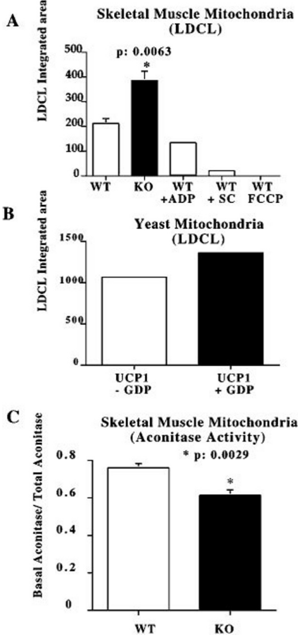
“…of reactive oxygen species, it was shown that aconitase activity (an enzyme in the citric acid cycle), which inversely correlates with intracellular ROS production, was significantly decreased in UCP3K/K mice, indicating an increased ROS production in vivo in these mice (Vidal-Puig et al., 2000).”
Alteration of Plant Mitochondrial Proton Conductance by Free Fatty Acids
Cabassa, C., Mesneau, A., Miroux, B., Roussaux, J., Ricquier, D., Zachowski, A., & Moreau, F. (2002) · Journal of Biological Chemistry · doi:10.1074/jbc.m202805200 · Cited by 40
Yu, X. X., Lewin, D. A., Zhong, A. W., Brush, J., Schow, P. W., Sherwood, S. W., Pan, G., & Adams, S. H. (2001) · Biochemical Journal · doi:10.1042/bj3530369 · Cited by 35
Faraut, B., Giannesini, B., Matarazzo, V. A., Fur, Y. L., Rougon, G., Cozzone, P. J., & Bendahan, D. (2009) · International Journal of Obesity · doi:10.1038/ijo.2009.182 · Cited by 34
Hagen, T., & Lowell, B. B. (2000) · Biochemical and Biophysical Research Communications · doi:10.1006/bbrc.2000.3535 · Cited by 33
Self-citationDamcott, C., Feingold, E., Moffett, S. P., Barmada, M. M., Marshall, J. A., Hamman, R. F., & Ferrell, R. E. (2004) · Metabolism · doi:10.1016/j.metabol.2003.11.019 · Cited by 34
Pedraza, N., Solanes, G., Iglesias, R., Vázquez‐Carrera, M., Giralt, M., & Villarroya, F. (2001) · Biochemical Journal · doi:10.1042/0264-6021:3550105 · Cited by 38
Majerczak, J., Korostyński, M., Nieckarz, Z., Szkutnik, Z., Duda, K., & Zoladz, J. A. (2012) · Experimental Physiology · doi:10.1113/expphysiol.2011.062992 · Cited by 37
Carbon Monoxide Induced PPARγ SUMOylation and UCP2 Block Inflammatory Gene Expression in Macrophages
Haschemi, A., Chin, B. Y., Jeitler, M., Esterbauer, H., Wagner, O. F., Bilban, M., & Otterbein, L. E. (2011) · PLoS ONE · doi:10.1371/journal.pone.0026376 · Cited by 35
“There are three known UCP proteins; UCP1, 2 and 3, each postulated to be involved in regulating respiration, thermogenesis, fatty acid oxidation and metabolism [20,21].”
BackgroundGenipin stimulates glucose transport in C2C12 myotubes via an IRS-1 and calcium-dependent mechanism
Ma, C.-J., Nie, A., Zhang, Z., Zhang, Z., Du, L., Li, X.-Y., & Ning, G. (2012) · Journal of Endocrinology · doi:10.1530/joe-11-0473 · Cited by 34
Essential role of the PGC‐1α/PPARβ axis in Ucp3 gene induction
de Lima, T. I., Guimarães, D. S. P. S. F., Sponton, C. H., Bajgelman, M. C., Palameta, S., Toscaro, J. M., Reis, O., & Silveira, L. R. (2019) · The Journal of Physiology · doi:10.1113/jp278006 · Cited by 34
“Recent findings have revealed the possible involvement of peroxisome proliferator-activated receptors (PPARs) in Ucp3 gene activation (Solanes et al. 2003; Fan et al. 2017).”
BackgroundInfluentialTart Cherry Increases Lifespan in Caenorhabditis elegans by Altering Metabolic Signaling Pathways
Jayarathne, S., Ramalingam, L., Edwards, H., Vanapalli, S. A., & Moustaïd‐Moussa, N. (2020) · Nutrients · doi:10.3390/nu12051482 · Cited by 33
“In support of these ideas, knocking down ucp-2 gene in mice generated more ROS than WT mice [83], and knocking down ucp-3 gene led to more ROS production in skeletal muscle [84].”
BackgroundExpression of Uncoupling Proteins in Human Skin and Skin-Derived Cells
Mori, S., Yoshizuka, N., Takizawa, M., Takema, Y., Murase, T., Tokimitsu, I., & Saito, M. (2008) · Journal of Investigative Dermatology · doi:10.1038/jid.2008.20 · Cited by 39
Montez, P., Vázquez‐Medina, J. P., Rodríguez, R., Thorwald, M. A., Viscarra, J. A., Lam, L., Peti‐Peterdi, J., Nakano, D., Nishiyama, A., & Ortiz, R. M. (2012) · Endocrinology · doi:10.1210/en.2012-1390 · Cited by 35
“Skeletal muscle mitochondria of UCP3 knockout mice (23) and inhibition of skeletal muscle UCP3 (24) are associated with decreased aconitase activity and increased markers of oxidative damage (25), consistent with the UCP2-aconitase activity relationship in the present study, suggesting that increased UCP2 content/acti…”
BackgroundSkeletal muscle mitochondrial dysfunction & diabetes.
Raghavakaimal, S., & Nair, K. S. (2007) · PubMed · Cited by 34
Cunningham, O., McElligott, A. M., Carroll, A. M., Breen, E., Reguenga, C., Oliveira, M. E., Azevedo, J. E., & Porter, R. K. (2003) · Biochimica et Biophysica Acta (BBA) - Bioenergetics · doi:10.1016/s0005-2728(03)00057-4 · Cited by 34
Liu, D., Huang, L., Wang, Y., Wang, W., Wehrens, X. H. T., Belousova, T., Abdelrahim, M., DiMattia, G. E., & Sheikh‐Hamad, D. (2012) · PLoS ONE · doi:10.1371/journal.pone.0036994 · Cited by 33
“While deletion of UCP3 increases ROS [36], the long-term effects of UCP3 upregulation in the heart are unknown.”
BackgroundSchrauwen, P. (2002) · Current Opinion in Clinical Nutrition & Metabolic Care · doi:10.1097/00075197-200205000-00005 · Cited by 32
Hyperoxia‐mediated oxidative stress increases expression of UCP3 mRNA and protein in skeletal muscle
Flandin, P., Donati, Y. R. A., Barazzone‐Argiroffo, C., & Muzzin, P. (2005) · FEBS Letters · doi:10.1016/j.febslet.2005.04.084 · Cited by 30
“an increase in ROS level in their muscles [8], and UCP3 overexpression in primary culture of neurons resulted in an inhibition of hyperglycemia-induced oxidative stress [9].”
BackgroundThe effect of mild cold exposure on UCP3 mRNA expression and UCP3 protein content in humans
Schrauwen, P., Westerterp‐Plantenga, M. S., Moonen‐Kornips, E., Schaart, G., & Lichtenbelt, W. D. V. M. (2002) · International Journal of Obesity · doi:10.1038/sj.ijo.0801943 · Cited by 35
Wei, Z., Chigurupati, S., Bagsiyao, P., Henríquez, A., & Chan, S. L. (2009) · Neurotoxicity Research · doi:10.1007/s12640-009-9039-8 · Cited by 29
“In knock-out mice lacking UCP2 or UCP3, both the ROS production and markers of oxidative damage are higher compared to their wild-type littermates (Arsenijevic et al. 2000; Vidal-Puig et al. 2000).”
BackgroundLocalization of the mitochondrial uncoupling protein family in the rat inner ear
Kitahara, T., Li, H.-S., & Balaban, C. D. (2004) · Hearing Research · doi:10.1016/j.heares.2004.02.002 · Cited by 29
“There is evidence that each of these UCP family members uncouples cell respiration from ATP production (Pecqueur et al., 2001; Jaburek et al., 1999; Hong et al., 2001; Vidal-Puig et al., 2000; Cline et al., 2001; Mao et al., 1999), which may be regarded as a trade-off of the level of ATP generation for other metabolic…”
BackgroundNguyen, A. Q., Duquette, N., Mamarbachi, M., & Thorin, É. (2016) · PLoS ONE · doi:10.1371/journal.pone.0151526 · Cited by 30
“Our study reveals that expression of UCP2, but not UCP3, is lower in the skeletal muscle of ATX mice, suggesting that ROS production is favoured under dyslipidemia and that oxidative stress is more prone to happen. doi:10.1371/journal.pone.0151526.g006 doi:10.1371/journal.pone.0151526.g007 PLOS ONE | DOI:10.1371/journ…”
BackgroundInfluentialFaraut, B., Giannesini, B., Matarazzo, V. A., Marqueste, T., Dalmasso, C., Rougon, G., Cozzone, P. J., & Bendahan, D. (2007) · American Journal of Physiology-Endocrinology and Metabolism · doi:10.1152/ajpendo.00292.2006 · Cited by 30
“, global energy metabolism and thermoregulation) (9, 39).”
BackgroundNishio, K., Qiao, S., & Yamashita, H. (2005) · The Histochemical Journal · doi:10.1007/s10735-004-2915-x · Cited by 30
“Similarly the muscle of UCP3-null mice produced higher level of ROS (Vidal-Puig et al. 2000).”
BackgroundKratky, D., Bogner‐Strauß, J. G., & Zechner, R. (2001) · Biochemical Journal · doi:10.1042/bj3550647 · Cited by 31
Putative role of polymorphisms in UCP1-3 genes for diabetic nephropathy
Lindholm, E., Klannemark, M., Agardh, E., Groop, L., & Agardh, C. (2004) · Journal of Diabetes and its Complications · doi:10.1016/s1056-8727(03)00019-9 · Cited by 29
“The also Of ACE of macroalbuminuria results from these mice also suggest that UCP2–3 may be important for the regulation of ROS.”
InfluentialDuval, C., Cámara, Y., Hondares, E., Sibille, B., & Villarroya, F. (2007) · FEBS Letters · doi:10.1016/j.febslet.2007.01.085 · Cited by 27
“chondria and accumulation of products resulting from oxidative stress in this tissue [5,22].”
BackgroundNogueira, F. T. S., Sassaki, F. T., & Maia, I. G. (2011) · Journal of Bioenergetics and Biomembranes · doi:10.1007/s10863-011-9336-9 · Cited by 30
Putman, C. T., Dixon, W. T., Pearcey, J. A., MacLean, I. M., Jendral, M. J., Kiricsi, M., Murdoch, G. K., & Pette, D. (2004) · American Journal of Physiology-Regulatory, Integrative and Comparative Physiology · doi:10.1152/ajpregu.00421.2004 · Cited by 31
“Exercise and CLFS are known to generate substantial amounts of ROS causing oxidative damage (22, 25).”
BackgroundInfluentialMolecular evolution of uncoupling proteins and implications for brain function
Gaudry, M. J., & Jastroch, M. (2018) · Neuroscience Letters · doi:10.1016/j.neulet.2018.12.027 · Cited by 28
Adrenoceptors, Uncoupling Proteins, and Energy Expenditure
Collins, S., Cao, W., Daniel, K. W., Dixon, T. M., Medvedev, A. V., Onuma, H., & Surwit, R. (2001) · Experimental Biology and Medicine · doi:10.1177/153537020122601104 · Cited by 28
Metadata
- Authors
- Vidal-Puig, A. J., Grujic, D., Zhang, C.-Y., Hagen, T., Boss, O., Ido, Y., Szczepanik, A., Wade, J., Mootha, V., Cortright, R., Muoio, D. M., & Lowell, B. B.
- Affiliations
- Beth Israel Deaconess Medical Center (US)
- Boston Medical Center (US)
- East Carolina University (US)
- Corresponding author
- Lowell, Bradford B.
- Venue
- Journal of Biological Chemistry
- Publisher
- Elsevier BV
- Published
- 2000-05
- Volume
- 275
- Issue
- 21
- Pages
- 16258-16266
- ISSN
- 0021-9258 (ISSN-L)
- OpenAlex
- W2156172044
- Cited by
- 677
- References
- 63
- Citations by year
- 2026: 2 · 2025: 6 · 2024: 7 · 2023: 5 · 2022: 12 · 2021: 11 · 2020: 7 · 2019: 16 · 2018: 16 · 2017: 8 · 2016: 14 · 2015: 18 · 2014: 14 · 2013: 23 · 2012: 18
- FWCI
- 23.73
- Type
- journal article
- Language
- en
- Open access
- hybrid
- doi.org
- Licence
- cc-by
- www.elsevier.com/tdm/userlicense/1.0/ (tdm)
- creativecommons.org/licenses/by/4.0/ (vor, 7462 d)
- Locations
- Journal of Biological Chemistry (publishedVersion, cc-by)
- PubMed (publishedVersion)
- USF Scholarship Repository (University of San Francisco) (submittedVersion)
- Funders
- Eli Lilly and Company
- National Institutes of Health (DK46200)
- National Institute of Diabetes and Digestive and Kidney Diseases (P30DK046200, DK 49569, R01DK049569, P30 DK-46200, R37DK053477)
- Topics
- Life Sciences › Biochemistry, Genetics and Molecular Biology › Molecular Biology › Mitochondrial Function and Pathology
- Health Sciences › Medicine › Physiology (medical) › Adipose Tissue and Metabolism
- Life Sciences › Biochemistry, Genetics and Molecular Biology › Molecular Biology › Metabolism, Diabetes, and Cancer
- Keywords
- UCP3, mitochondrial uncoupling, reactive oxygen species, skeletal muscle mitochondria, mitochondrial coupling, thermogenesis, fatty acid oxidation, exercise tolerance, energy metabolism
- MeSH terms
- Uncoupling Protein 2, Uncoupling Protein 3, Uncoupling Protein 1, Animals, Body Temperature, Body Weight, Carrier Proteins, Eating, Energy Metabolism, Female, Ion Channels, Male, Membrane Proteins, Mitochondria, Muscle, Oxygen Consumption, Phenotype, Physical Conditioning, Animal, Proteins, RNA, Messenger, Reactive Oxygen Species, Mice, Knockout, Gene Targeting, Muscle, Skeletal, Mitochondrial Proteins, Membrane Transport Proteins, Mice
About these checks
Registry, retraction, Cites and statistics results are computed, not judged, with one exception: a printed reference that no index lists is read once by a model before it counts as a citation error. Claims are extracted by a model and kept only when their quote appears verbatim in the text; each cited source is then checked, with a model’s help, for whether it says what the claim relies on. Those verdicts can be wrong — read the claim’s quote and the cited source before relying on one.
Statistics and arithmetic are recomputed, not judged.
Confidence bands are shown only for fields calibrated on our annotated test set. None is calibrated yet, so no band is shown.
What counts as a claim ›How we measure confidence ›How we check this ›
Are you an author, or do you see a problem with this page? Request a review
Data sources
Bibliographic data: Semantic Scholar, OpenAlex, Crossref.
Contains information from the Semantic Scholar Academic Graph Datasets, made available under the ODC Attribution License (ODC-BY 1.0).
Semantic Scholar’s data is described in: Kinney, R., et al. (2023). The Semantic Scholar Open Data Platform. arXiv:2301.10140.
