

Energy Metabolism in Uncoupling Protein 3 Gene Knockout Mice
Open accessThe DOI matches its Crossref record; 63 of the 63 references it cites were found in a registry or an index.
Abstract
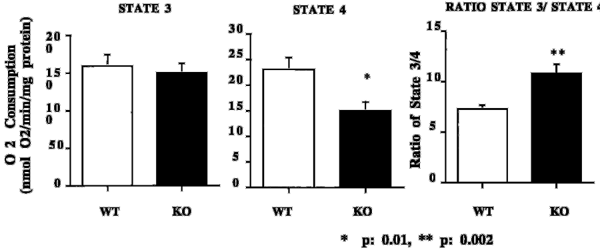
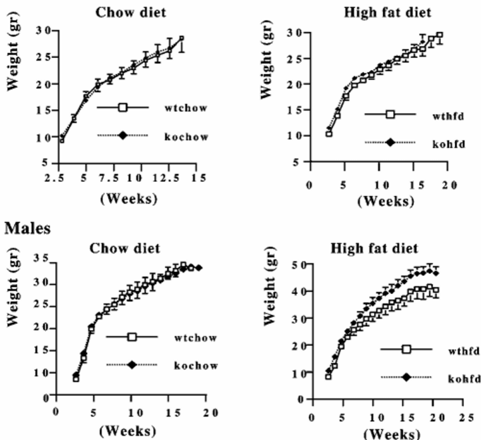
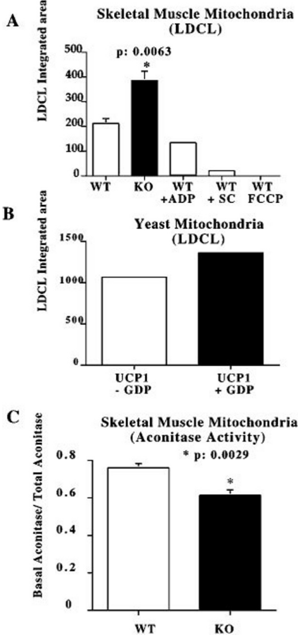
Uncoupling protein 3 (UCP3) is a member of the mitochondrial anion carrier superfamily. Based upon its high homology with UCP1 and its restricted tissue distribution to skeletal muscle and brown adipose tissue, UCP3 has been suggested to play important roles in regulating energy expenditure, body weight, and thermoregulation. Other postulated roles for UCP3 include regulation of fatty acid metabolism, adaptive responses to acute exercise and starvation, and prevention of reactive oxygen species (ROS) formation. To address these questions, we have generated mice lacking UCP3 (UCP3 knockout (KO) mice). Here, we provide evidence that skeletal muscle mitochondria lacking UCP3 are more coupled (i.e. increased state 3/state 4 ratio), indicating that UCP3 has uncoupling activity. In addition, production of ROS is increased in mitochondria lacking UCP3. This study demonstrates that UCP3 has uncoupling activity and that its absence may lead to increased production of ROS. Despite these effects on mitochondrial function, UCP3 does not seem to be required for body weight regulation, exercise tolerance, fatty acid oxidation, or cold-induced thermogenesis. The absence of such phenotypes in UCP3 KO mice could not be attributed to up-regulation of other UCP mRNAs. However, alternative compensatory mechanisms cannot be excluded. The consequence of increased mitochondrial coupling in UCP3 KO mice on metabolism and the possible role of yet unidentified compensatory mechanisms, remains to be determined.
Overview
The claims and statistics of this paper haven’t been checked yet.
Free: it reads the open-access text and checks the first 5 claims that cite a source we can check. Create a free account to check every claim.
Integrity signals
Registry
Cites
Statistics
Figures
Verification
Claims the paper makes
The claims and statistics of this paper haven’t been checked yet.
Free: it reads the open-access text and checks the first 5 claims that cite a source we can check. Create a free account to check every claim.
Claims other papers make about this one
Each is checked against this paper’s own text: does it say what the citing paper says it does?
The cited source says what the claim attributes to it.
In the citing paper
“Evidence has been presented that the new UCPs are involved in cell defense against oxidative stress (22-27).”
From Respiration, oxidative phosphorylation, and uncoupling protein in Candida albicans (2004) · cites this paper as [25]
The cited source says what the claim attributes to it.
In the citing paper
“They are able to induce mild uncoupling, thus increasing the rate of respiration and decreasing the production of reactive oxygen species (ROS) (24-27).”
From Respiration, oxidative phosphorylation, and uncoupling protein in Candida albicans (2004) · cites this paper as [25]
Self-check
Percentages, sums and reported differences re-computed from the paper’s own numbers.
The self-check needs the paper’s full text.
Citations
Cites
(1975) · Journal of AOAC INTERNATIONAL · doi:10.1093/jaoac/58.5.1085 · Cited by 19,795
(1974) · Elsevier eBooks · doi:10.1016/b978-0-12-091304-6.x5001-0 · Cited by 6,755
Boveris, A., & Chance, B. (1973) · Biochemical Journal · doi:10.1042/bj1340707 · Cited by 2,626
Changes in Energy Expenditure Resulting from Altered Body Weight
Leibel, R. L., Rosenbaum, M., & Hirsch, J. (1995) · New England Journal of Medicine · doi:10.1056/nejm199503093321001 · Cited by 2,012
Uncoupling protein-2: a novel gene linked to obesity and hyperinsulinemia
Fleury, C., Neverova, M., Collins, S., Raimbault, S., Champigny, O., Levi-Meyrueis, C., Bouillaud, F., Seldin, M. F., Surwit, R. S., Ricquier, D., et al. (1997) · Nature Genetics · doi:10.1038/ng0397-269 · Cited by 1,631
Thermogenic mechanisms in brown fat.
Nicholls, D. G., & Locke, R. M. (1984) · Physiological Reviews · doi:10.1152/physrev.1984.64.1.1 · Cited by 1,602
Mice lacking mitochondrial uncoupling protein are cold-sensitive but not obese
Enerbäck, S., Jacobsson, A., Simpson, E. M., Guerra, C., Yamashita, H., Harper, M.-E., & Kozak, L. P. (1997) · Nature · doi:10.1038/387090a0 · Cited by 1,379
Superoxide Anion Radical (O·̄2), Superoxide Dismutases, and Related Matters
Fridovich, I. (1997) · Journal of Biological Chemistry · doi:10.1074/jbc.272.30.18515 · Cited by 1,337
Reduced Rate of Energy Expenditure as a Risk Factor for Body-Weight Gain
Ravussin, E., Lillioja, S., Knowler, W. C., Christin, L., Freymond, D., Abbott, W. G. H., Boyce, V., Howard, B. V., & Bogardus, C. (1988) · New England Journal of Medicine · doi:10.1056/nejm198802253180802 · Cited by 1,215
Boss, O., Samec, S., Paoloni-Giacobino, A., Rossier, C., Dulloo, A., Seydoux, J., Muzzin, P., & Giacobino, J.-P. (1997) · FEBS Letters · doi:10.1016/s0014-5793(97)00384-0 · Cited by 1,041
Self-citation
Research works printed but not linked: 3
- Jaworek, D., Gruber, W., and Bergmeyer, H. U. (1974) in Methods of Enzy- matic Analysis (Bergmeyer, H. U., ed) Vol. 4, pp. 2127-2131, Verlag- Chemie, Winheim/Academic Press, New York 43. Deleted in proof
- Salmon, D. M., and Flat, J. P. (1985) Int. J. Obes. 9, 443-449
- Li, Y., Zhu, H., and Trush, M. A. (1999) Biochim. Biophys. Acta 28, 1-12
Cited by
Items 601–682 of 682
Damcott, C. (2002) · D-Scholarship@Pitt (University of Pittsburgh) · Cited by 1
The Role of Energy Expenditure in the Regulation of Energy Balance
Ravussin, É., & Kozak, L. P. (2003) · Wiley eBooks · doi:10.1002/0470862092.d0506 · Cited by 1
Functional maturation of mouse epididymal spermatozoa
Lee, Y.-H. (2008) · Figshare · Cited by 1
Liu, D., Huang, L., Wang, Y., Wang, W., Wehrens, X. H. T., Belousova, T., Abdelrahim, M., DiMattia, G. E., & Sheikh‐Hamad, D. (2012) · PLoS ONE · doi:10.1371/annotation/52d155b7-66af-425f-9a6a-2d853d5fd95d · Cited by 1
Sánchez, M. G. (2010) · UVaDOC UVaDOC University of Valladolid Documentary Repository (University of Valladolid) · doi:10.35376/10324/783 · Cited by 1
“Como ambos tejidos presentan un metabolismo altamente dependiente de la oxidación de los ácidos grasos, y determinados metabolitos como los ácidos grasos o el acil-CoA también inducen su síntesis, se planteó la posibilidad de que las proteínas UCP-3 podían tener cierta relevancia en el balance energético y el metaboli…”
BackgroundInfluentialScala, F. D. (2006) · edoc (University of Basel) · doi:10.5451/unibas-004071740
Role of Energy Expenditure in Regulation of Energy Homeostasis
Bachman, E. S. (2006) · Humana Press eBooks · doi:10.1007/978-1-59259-985-1_6
Zhang, R. (2012) · uO Research (University of Ottawa) · doi:10.20381/ruor-5570
MARCADORES MITOCONDRIALES DE ESTRÉS OXIDATIVO Y LIPOTOXICIDAD EN DORADA (Sparus aurata)
Bermejo-Nogales, A. (2012) · RiuNet (Universitat Politècnica de València) · doi:10.4995/thesis/10251/15189
THE UNDERLYING MECHANISM(S) OF FASTING INDUCED NEUROPROTECTION AFTER MODERATE TRAUMATIC BRAIN INJURY
Davis, L. M. (2008) · UKnowledge (University of Kentucky) · Cited by 1
Exercício físico, proteína desacopladora-3 e termogênese
Filho, A. D. D. R., Júnior, R. C. V., & Voltarelli, F. A. (2013) · Dialnet (Universidad de la Rioja)
Coriat, R. (2012) · theses.fr (ABES) · doi:10.70675/3c35ac86z7dbaz4ce0z8bafz1ec9be4fc738
“Ainsi, l’UCP2, qui a une expression ubiquitaire, et l’UCP3, qui est exprimée plus spécifiquement dans les tissus adipeux et le muscle squelettique, jouent un rôle plus spécifique dans la régulation de la production mitochondriale de FRO [110-112].”
BackgroundCandidate Genes for Late Diabetic Complications
Lindholm, E. (2007) · Lund University Publications (Lund University)
Oxidative Stress in Heart Failure
Moe, G. W. P. L. (2011) · Oxidative stress in applied basic research and clinical practice · doi:10.1007/978-1-61779-071-3_9
Chapter 6 Pathophysiology of Mitochondrial Disease as Illuminated by Animal Models
Wallace, D. (2002) · Blue books of practical neurology · doi:10.1016/s1877-3419(09)70065-0
Cámara, Y. (2005) · Dipòsit Digital de la Universitat de Barcelona (Universitat de Barcelona) · Cited by 3
Lago, C. U. (2009) · Texas ScholarWorks (Texas Digital Library)
Nunes-Laitz, A. V. (2014) · Americanae (AECID Library)
Bézaire, V. (2005) · Canadian Journal of Applied Physiology · doi:10.1139/h05-145
Identification of Developmental Related Genes in the Lab Animal
Lee, J.-D. (2009) · Journal of the Korea Academia-Industrial cooperation Society · doi:10.5762/kais.2009.10.6.1407
Villarroya, F. (2003) · Clínica e Investigación en Arteriosclerosis · doi:10.1016/s0214-9168(03)78915-3 · Cited by 1
“Una aproximación experimental distinta se ha desarrollado mediante la obtención de ratones mo-dificados genéticamente con disrupción dirigida del gen UCP3 (ratones UCP3 knockout ) 34,35 .”
Heart Mitochondrial ROS and Oxidative Stress
Marín-García, J. (2012) · Springer eBooks · doi:10.1007/978-1-4614-4599-9_10
Veron, S. M. (2014) · Texas ScholarWorks (Texas Digital Library)
The pathophysiology of respiratory chain dysfunction
Silva, J. P. (2005) · Figshare
Fávaro, R. D. (2008) · Americanae (AECID Library) · Cited by 1
Functional characterization of Angptl4 protein
Lichtenstein, L. (2009) · doi:10.18174/13610
“UCP3 has been proposed to protect against ROS production in muscle (Vidal-Puig et al. 2000).”
BackgroundAntiobesity therapeutics targeting energy expenditure
Levin, N., & Ghosh, S. S. (2002) · Expert Opinion on Therapeutic Patents · doi:10.1517/13543776.12.12.1831
“In opposition to these data is the finding that mice lacking UCP3 are not obese, although mitochondria isolated from skeletal muscle, brown adipose tissue and liver from UCP3 (-/-) mice demonstrated reduced proton leak, verifying that UCP3 is a functional uncoupling protein [33,34].”
BackgroundLeakRegulation and Physiology of Mitochondrial Proton
Dalton, N. D., Peterson, K. L., Gu, Y., Matkovich, S. J., Murphy, A. N., Ling, H., Divakaruni, A. S., Zambon, A. C., King, M. S., Kunji, E. R. S., et al. (2015)
thermoregulationReview: Uncoupling proteins and
Argyropoulos, G. A., Harper, M., Nagai, N., Habuchi, H., Sugaya, N., Nakamura, M., Imamura, T., Elias, L. K., da Silva, F., de Paula, F. J., et al. (2015)
de Bioquímica, U., & de Bioquímica, D. (2005)
Bian, F. (2006) · OhioLink ETD Center (Ohio Library and Information Network)
Mitochondria and energetics stress : signaling pathways and cellular adaptations.
Desquiret‐Dumas, V., & Malthièry, Y. (2008) · OpenGrey (Institut de l'Information Scientifique et Technique)
Phulukdaree, A. (2012) · ResearchSpace (University of KwaZulu-Natal)
Guillet, V., & REYNIER, P. (2009) · OpenGrey (Institut de l'Information Scientifique et Technique) · Cited by 2
Tesi doctoral presentada per En/Na
Ironia, E. I. (2002)
How to Expedite Energy Expenditure in the Face of Current Satiation
Shimazu, T. (2003) · Nippon Eiyo Shokuryo Gakkaishi · doi:10.4327/jsnfs.56.307 · Cited by 1
OXYGEN DELIVERY-UTILIZATION MATCHING IN SKELETAL MUSCLE by
Hirai, D. M., & Sc, B. (2012) · K-State Research Exchange (Kansas State University)
Gable, D. R. (2008) · OpenGrey (Institut de l'Information Scientifique et Technique)
Role of Uncoupling Protein 2 in Pancreatic _ Cell Function: Secretion and Survival
Diao, J., Chan, C. B., & Wheeler, M. B. (2007) · Oxidative stress and disease · doi:10.1201/9781420043792.ch13
The Role of Mitochondrial Thioesterase-I, Uncoupling Protein-3, and CD36 in Cardiac Mitochondria
King, K. L. (2008) · OhioLink ETD Center (Ohio Library and Information Network)
Gamu, D. (2012) · UWSpace (University of Waterloo) · Cited by 2
Baraldi, F. G. (2014) · Digital Library of Theses and Dissertations (Universidade de São Paulo) · doi:10.11606/d.17.2014.tde-09012015-172710
Função da Acil-CoA Sintetase 6 no metabolismo de músculo esquelético de ratos e humanos
Teodoro, B. G. (2016) · Digital Library of Theses and Dissertations (Universidade de São Paulo) · doi:10.11606/t.17.2016.tde-29082016-100827
Protection against high fat diet induced obesity in mdx mice: is sarcolipin involved?
Kwon, F. (2018) · UWSpace (University of Waterloo)
McLaughlin, L. D. (2005) · Louisiana State University · doi:10.31390/gradschool_dissertations.590
Examination of metabolism in diabetic offspring
Russell, R. (2011) · Louisiana State University · doi:10.31390/gradschool_dissertations.1588
“In other related studies, passive stretching increased glycogen breakdown [58], increased lactic acid production [57], and decreased phosphocreatine concentrations [59] Since increased metabolic activity is related to increased activation of the AMPK GLUT 4 activation pathway [60] [61] [62], it is plausible that the i…”
BackgroundO’Leary, M. F. (2018) · University of Birmingham Institutional Research Archive (University of Birmingham)
Chalker, J. (2017) · Memorial University Research Repository (Memorial University)
Physiological significance of uncoupling protein-3: a role in fatty acid handling?
Hesselink, M. K. C., & Schrauwen, P. (2003) · Advances in molecular and cell biology · doi:10.1016/s1569-2558(03)33014-0
Oti, K. S. T. (2021) · Digital Library of Theses and Dissertations (Universidade de São Paulo) · doi:10.11606/t.5.2021.tde-17082021-094904
Fernström, M. (2006) · Figshare
ROS Generation, Antioxidants, and Cell Death
Marı́n-Garcı́a, J. (2005) · Developments in cardiovascular medicine · doi:10.1007/0-387-25575-3_4
dos Santos, T. W. (2018) · doi:10.47749/t/unicamp.2018.1051961 · Cited by 2
Faculty Opinions recommendation of Mitochondrial function as a determinant of life span.
Jammes, Y. (2010) · Faculty Opinions – Post-Publication Peer Review of the Biomedical Literature · doi:10.3410/f.1448967.926071
Cavalli, F. A. (2024) · El Servicio de Difusión de la Creación Intelectual (National University of La Plata) · doi:10.35537/10915/169487 · Cited by 1
Rôle de PPARα et de PIEZO1 dans le métabolisme des adipocytes thermogéniques
Batrow, P.-L. (2024) · theses.fr (ABES) · doi:10.70675/2fab9a18z720az401cza039z80946dff6b7f
Chen, Y., & Chen, C. (2025) · Wiley eBooks · doi:10.1002/9781119790419.ch6
Brown Adipose Tissue and Skeletal Muscle Coordinately Contribute to Thermogenesis in MicePreprint
Izumi-Mishima, Y., Tsutsumi, R., Shiuchi, T., Fujimoto, S., Taniguchi, M., Sugiuchi, M., Tsutsumi, M., Okamatsu‐Ogura, Y., Yoneshiro, T., Kuroda, M., et al. (2025) · eLife · doi:10.7554/elife.99982.2
Mitochondrial uncoupling proteins: redox-metabolic homeostasis and disease pathogenesis
Vukobratovic, M., Jevtic, J., Zakić, T., Korać, A., Korać, B., & Janković, A. (2025) · Redox Experimental Medicine · doi:10.1530/rem-25-0012 · Cited by 1
The Role of Mitochondrial Uncoupling in the Development of Diabetic Nephropathy
Persson, M. F. (2012) · Cited by 1
Bartlett, M. F. (2012) · Carolina Digital Repository (University of North Carolina at Chapel Hill) · doi:10.17615/gma3-kv20
Baskara-Yhuellou, I. (2013) · theses.fr (ABES) · doi:10.70675/d74258fez17ffz424dz94cezbaf6e617cf55
Uncoupling proteins : regulation by IGF-1 and neuroprotection during hyperglycemia in vitro.
Gustafsson, H. (2004) · DiVA (Stockholm University)
Belouze, M. (2009) · theses.fr (ABES) · doi:10.70675/d075416azf85dz4c02za8eezda6e19b48c1e · Cited by 1
“Cependant, les souris UCP3 présentent des mitochondries mieux couplées, confirmant donc la capacité découplante de cette protéine (Vidal-Puig et al., 2000).”
Abdellaoui, A. (2011) · theses.fr (ABES) · doi:10.70675/2be5cfefz08ebz4947z85fdz3f676fb50fe6
Effet protecteur de la vitamine D sur l'obésité et les désordres physiologiques associés
Marcotorchino, J. (2012) · theses.fr (ABES) · doi:10.70675/5cdaedc0z5715z404cz90e6zab5ed54485a6
Andrianjafiniony, T. (2010) · theses.fr (ABES) · doi:10.70675/e8e80863z024fz49b2z87c6zd4ee4c88a3d6
Allard, L. (2013) · theses.fr (ABES) · doi:10.70675/9ec99efczaea5z472fzb8ecz5e385ec01ea4
“De plus, contrairement à UCP1, les protéines UCP2 et 3 ne semblent pas impliquées dans la thermogénèse (Arsenijevic et al., 2000; Vidal-Puig et al., 2000).”
BackgroundInfluentialRole of PGC-1β and TIF2 co-regulators in mouse skeletal muscle function
Ramamoorthy, T. G. (2013) · theses.fr (ABES) · doi:10.70675/e05002c4z4806z4363z90b1z0e406b6c0e4c
Elucidating Exogenous Stimulation and Molecular Mechanisms for Browning in Pig Adipocytes
Kim, S. (2024) · Institutional Repositories DataBase (IRDB)
Herrera, C. L. (2015) · theses.fr (ABES) · doi:10.70675/d09d7e9cz079fz4faaz985aza9cd4fc18f18
“However, one year before, an increase in skeletal muscle ATP synthesis in vivo in UCP3 (-/-) mice was shown by Gary W. and colleagues (Cline et al., 2001), which was accompanied by a INTRODUCTION: Mitochondria and Energy Homeostasis 49 concomitant reduction in H+ leak (Vidal-Puig et al., 2000).”
BackgroundEffet des acides gras polyinsaturés sur la conversion des adipocytes blancs en adipocytes brites
Ghandour, R. A. (2016) · theses.fr (ABES) · doi:10.70675/9e4d31dcz030dz40f4zbf5fz69f142a246bc · Cited by 1
Belhadj, S. (2017) · theses.fr (ABES) · doi:10.70675/a3ba8b1dz1c4fz47e3zb86bz3a49e1383bed · Cited by 1
Sarcolipin-SERCA uncoupling as a plausible heat source for sustaining fever
Humaid, A., & Tupling, A. R. (2026) · Frontiers in Physiology · doi:10.3389/fphys.2026.1865484
Silveira, L. R., da Justa, C. H., Pinheiro, Zoppi, C. C., Hirabara, S. M., Vitzel, K. F., Bassit, R. A., Leandro, C. G., Barbosa, M. R., Sampaio, I. H., et al. (2011)
Body Weight Regulation, Uncoupling Proteins, and Energy Metabolism
Collins, S., Cao, W., Dixon, T. M., Daniel, K. W., Onuma, H., & Medvedev, A. V. (2001) · CRC Press eBooks · doi:10.1201/9781420039108.ch12
Metadata
- Authors
- Vidal-Puig, A. J., Grujic, D., Zhang, C.-Y., Hagen, T., Boss, O., Ido, Y., Szczepanik, A., Wade, J., Mootha, V., Cortright, R., Muoio, D. M., & Lowell, B. B.
- Affiliations
- Beth Israel Deaconess Medical Center (US)
- Boston Medical Center (US)
- East Carolina University (US)
- Corresponding author
- Lowell, Bradford B.
- Venue
- Journal of Biological Chemistry
- Publisher
- Elsevier BV
- Published
- 2000-05
- Volume
- 275
- Issue
- 21
- Pages
- 16258-16266
- ISSN
- 0021-9258 (ISSN-L)
- OpenAlex
- W2156172044
- Cited by
- 677
- References
- 63
- Citations by year
- 2026: 2 · 2025: 6 · 2024: 7 · 2023: 5 · 2022: 12 · 2021: 11 · 2020: 7 · 2019: 16 · 2018: 16 · 2017: 8 · 2016: 14 · 2015: 18 · 2014: 14 · 2013: 23 · 2012: 18
- FWCI
- 23.73
- Type
- journal article
- Language
- en
- Open access
- hybrid
- doi.org
- Licence
- cc-by
- www.elsevier.com/tdm/userlicense/1.0/ (tdm)
- creativecommons.org/licenses/by/4.0/ (vor, 7462 d)
- Locations
- Journal of Biological Chemistry (publishedVersion, cc-by)
- PubMed (publishedVersion)
- USF Scholarship Repository (University of San Francisco) (submittedVersion)
- Funders
- Eli Lilly and Company
- National Institutes of Health (DK46200)
- National Institute of Diabetes and Digestive and Kidney Diseases (P30DK046200, DK 49569, R01DK049569, P30 DK-46200, R37DK053477)
- Topics
- Life Sciences › Biochemistry, Genetics and Molecular Biology › Molecular Biology › Mitochondrial Function and Pathology
- Health Sciences › Medicine › Physiology (medical) › Adipose Tissue and Metabolism
- Life Sciences › Biochemistry, Genetics and Molecular Biology › Molecular Biology › Metabolism, Diabetes, and Cancer
- Keywords
- UCP3, mitochondrial uncoupling, reactive oxygen species, skeletal muscle mitochondria, mitochondrial coupling, thermogenesis, fatty acid oxidation, exercise tolerance, energy metabolism
- MeSH terms
- Uncoupling Protein 2, Uncoupling Protein 3, Uncoupling Protein 1, Animals, Body Temperature, Body Weight, Carrier Proteins, Eating, Energy Metabolism, Female, Ion Channels, Male, Membrane Proteins, Mitochondria, Muscle, Oxygen Consumption, Phenotype, Physical Conditioning, Animal, Proteins, RNA, Messenger, Reactive Oxygen Species, Mice, Knockout, Gene Targeting, Muscle, Skeletal, Mitochondrial Proteins, Membrane Transport Proteins, Mice
About these checks
Registry, retraction, Cites and statistics results are computed, not judged, with one exception: a printed reference that no index lists is read once by a model before it counts as a citation error. Claims are extracted by a model and kept only when their quote appears verbatim in the text; each cited source is then checked, with a model’s help, for whether it says what the claim relies on. Those verdicts can be wrong — read the claim’s quote and the cited source before relying on one.
Statistics and arithmetic are recomputed, not judged.
Confidence bands are shown only for fields calibrated on our annotated test set. None is calibrated yet, so no band is shown.
What counts as a claim ›How we measure confidence ›How we check this ›
Are you an author, or do you see a problem with this page? Request a review
Data sources
Bibliographic data: Semantic Scholar, OpenAlex, Crossref.
Contains information from the Semantic Scholar Academic Graph Datasets, made available under the ODC Attribution License (ODC-BY 1.0).
Semantic Scholar’s data is described in: Kinney, R., et al. (2023). The Semantic Scholar Open Data Platform. arXiv:2301.10140.
