

Energy Metabolism in Uncoupling Protein 3 Gene Knockout Mice
Open accessThe DOI matches its Crossref record; 63 of the 63 references it cites were found in a registry or an index.
Abstract
Uncoupling protein 3 (UCP3) is a member of the mitochondrial anion carrier superfamily. Based upon its high homology with UCP1 and its restricted tissue distribution to skeletal muscle and brown adipose tissue, UCP3 has been suggested to play important roles in regulating energy expenditure, body weight, and thermoregulation. Other postulated roles for UCP3 include regulation of fatty acid metabolism, adaptive responses to acute exercise and starvation, and prevention of reactive oxygen species (ROS) formation. To address these questions, we have generated mice lacking UCP3 (UCP3 knockout (KO) mice). Here, we provide evidence that skeletal muscle mitochondria lacking UCP3 are more coupled (i.e. increased state 3/state 4 ratio), indicating that UCP3 has uncoupling activity. In addition, production of ROS is increased in mitochondria lacking UCP3. This study demonstrates that UCP3 has uncoupling activity and that its absence may lead to increased production of ROS. Despite these effects on mitochondrial function, UCP3 does not seem to be required for body weight regulation, exercise tolerance, fatty acid oxidation, or cold-induced thermogenesis. The absence of such phenotypes in UCP3 KO mice could not be attributed to up-regulation of other UCP mRNAs. However, alternative compensatory mechanisms cannot be excluded. The consequence of increased mitochondrial coupling in UCP3 KO mice on metabolism and the possible role of yet unidentified compensatory mechanisms, remains to be determined.
Overview
The claims and statistics of this paper haven’t been checked yet.
Free: it reads the open-access text and checks the first 5 claims that cite a source we can check. Create a free account to check every claim.
Integrity signals
Registry
Cites
Statistics
Figures
Verification
Claims the paper makes
The claims and statistics of this paper haven’t been checked yet.
Free: it reads the open-access text and checks the first 5 claims that cite a source we can check. Create a free account to check every claim.
Claims other papers make about this one
Each is checked against this paper’s own text: does it say what the citing paper says it does?
The cited source says what the claim attributes to it.
In the citing paper
“Evidence has been presented that the new UCPs are involved in cell defense against oxidative stress (22-27).”
From Respiration, oxidative phosphorylation, and uncoupling protein in Candida albicans (2004) · cites this paper as [25]
The cited source says what the claim attributes to it.
In the citing paper
“They are able to induce mild uncoupling, thus increasing the rate of respiration and decreasing the production of reactive oxygen species (ROS) (24-27).”
From Respiration, oxidative phosphorylation, and uncoupling protein in Candida albicans (2004) · cites this paper as [25]
Self-check
Percentages, sums and reported differences re-computed from the paper’s own numbers.
The self-check needs the paper’s full text.
Citations
Cites
(1975) · Journal of AOAC INTERNATIONAL · doi:10.1093/jaoac/58.5.1085 · Cited by 19,795
(1974) · Elsevier eBooks · doi:10.1016/b978-0-12-091304-6.x5001-0 · Cited by 6,755
Boveris, A., & Chance, B. (1973) · Biochemical Journal · doi:10.1042/bj1340707 · Cited by 2,626
Changes in Energy Expenditure Resulting from Altered Body Weight
Leibel, R. L., Rosenbaum, M., & Hirsch, J. (1995) · New England Journal of Medicine · doi:10.1056/nejm199503093321001 · Cited by 2,012
Uncoupling protein-2: a novel gene linked to obesity and hyperinsulinemia
Fleury, C., Neverova, M., Collins, S., Raimbault, S., Champigny, O., Levi-Meyrueis, C., Bouillaud, F., Seldin, M. F., Surwit, R. S., Ricquier, D., et al. (1997) · Nature Genetics · doi:10.1038/ng0397-269 · Cited by 1,631
Thermogenic mechanisms in brown fat.
Nicholls, D. G., & Locke, R. M. (1984) · Physiological Reviews · doi:10.1152/physrev.1984.64.1.1 · Cited by 1,602
Mice lacking mitochondrial uncoupling protein are cold-sensitive but not obese
Enerbäck, S., Jacobsson, A., Simpson, E. M., Guerra, C., Yamashita, H., Harper, M.-E., & Kozak, L. P. (1997) · Nature · doi:10.1038/387090a0 · Cited by 1,379
Superoxide Anion Radical (O·̄2), Superoxide Dismutases, and Related Matters
Fridovich, I. (1997) · Journal of Biological Chemistry · doi:10.1074/jbc.272.30.18515 · Cited by 1,337
Reduced Rate of Energy Expenditure as a Risk Factor for Body-Weight Gain
Ravussin, E., Lillioja, S., Knowler, W. C., Christin, L., Freymond, D., Abbott, W. G. H., Boyce, V., Howard, B. V., & Bogardus, C. (1988) · New England Journal of Medicine · doi:10.1056/nejm198802253180802 · Cited by 1,215
Boss, O., Samec, S., Paoloni-Giacobino, A., Rossier, C., Dulloo, A., Seydoux, J., Muzzin, P., & Giacobino, J.-P. (1997) · FEBS Letters · doi:10.1016/s0014-5793(97)00384-0 · Cited by 1,041
Self-citation
Research works printed but not linked: 3
- Jaworek, D., Gruber, W., and Bergmeyer, H. U. (1974) in Methods of Enzy- matic Analysis (Bergmeyer, H. U., ed) Vol. 4, pp. 2127-2131, Verlag- Chemie, Winheim/Academic Press, New York 43. Deleted in proof
- Salmon, D. M., and Flat, J. P. (1985) Int. J. Obes. 9, 443-449
- Li, Y., Zhu, H., and Trush, M. A. (1999) Biochim. Biophys. Acta 28, 1-12
Cited by
Items 201–300 of 682
Huppertz, C., Fischer, B. M., Kim, Y.-B., Kotani, K., Vidal-Puig, A., Slieker, L. J., Sloop, K. W., Lowell, B. B., & Kahn, B. B. (2001) · Journal of Biological Chemistry · doi:10.1074/jbc.m011708200 · Cited by 86
Self-citationEstradiol stimulates mitochondrial biogenesis and adiponectin expression in skeletal muscle
Capllonch-Amer, G., Sbert-Roig, M., Galmés-Pascual, B. M., Proenza, A. M., Lladó, I., Gianotti, M., & García-Palmer, F. J. (2014) · Journal of Endocrinology · doi:10.1530/joe-14-0008 · Cited by 81
“In fact, UCP3 has been proposed to play a relevant role in protection against ROS production in skeletal muscle (Vidal-Puig et al. 2000, Brand et al. 2002), and females have been shown to have a better ability to counteract oxidative-stress-associated pathologies induced by high-fat diet in part…”
BackgroundHuman Uncoupling Protein‐3 and Obesity: An Update
Hesselink, M. K. C., Mensink, M., & Schrauwen, P. (2003) · Obesity Research · doi:10.1038/oby.2003.192 · Cited by 85
Shi, S. Y., Lu, S.-Y., Sivasubramaniyam, T., Revelo, X. S., Cai, E. P., Luk, C. T., Schroer, S. A., Patel, P., Kim, R. H., Bombardier, E., et al. (2015) · Nature Communications · doi:10.1038/ncomms8415 · Cited by 86
Bézaire, V., Hofmann, W., Kramer, J. K. G., Kozak, L. P., & Harper, M.-E. (2001) · American Journal of Physiology-Endocrinology and Metabolism · doi:10.1152/ajpendo.2001.281.5.e975 · Cited by 85
“(33) did not measure mitochondrial protonmotive force but did show greater coupling in the Ucp3(2/2) mice.”
BackgroundInfluentialChan, L. L. Y., Chen, Q., Go, A. G. G., Lam, E. K. Y., & Li, E. T. S. (2005) · Journal of Nutrition · doi:10.1093/jn/135.11.2517 · Cited by 89
“(34,35), UCP3 knockout mice are not more susceptible to obesity and type 2 diabetes (36).”
BackgroundUncoupling proteins-2 and 3 influence obesity and inflammation in transgenic mice
Horváth, T. L., Diano, S., Miyamoto, S., Barry, S. J., Gatti, S., Alberati, D., Livák, F., Lombardi, A., Moreno, M., Goglia, F., et al. (2003) · International Journal of Obesity · doi:10.1038/sj.ijo.0802257 · Cited by 93
Hesselink, M. K. C., Greenhaff, P. L., Constantin-Teodosiu, D., Hultman, E., Saris, W. H. M., Nieuwlaat, R., Schaart, G., Kornips, E., & Schrauwen, P. (2003) · Journal of Clinical Investigation · doi:10.1172/jci16653 · Cited by 82
“Finally, mitochondria isolated from UCP3-ablated mice have been shown to be more tightly coupled in vitro (11, 12) and in vivo (13) in some but not all (6) studies.”
Suppression of complex I gene expression induces optic neuropathy
Qi, X., Lewin, A. S., Hauswirth, W. W., & Guy, J. (2003) · Annals of Neurology · doi:10.1002/ana.10426 · Cited by 81
Nabben, M., Hoeks, J., Briedé, J. J., Glatz, J. F. C., Moonen-Kornips, E., Hesselink, M. K. C., & Schrauwen, P. (2008) · FEBS Letters · doi:10.1016/j.febslet.2008.11.016 · Cited by 84
“ity of aconitase, an enzyme sensitive to ROS-induced inactivation [17].”
BackgroundFelipe, F., Bonet, M. L., Ribot, J., & Palou, A. (2003) · International Journal of Obesity · doi:10.1038/sj.ijo.0802188 · Cited by 88
Kagawa, Y., Yanagisawa, Y., Hasegawa, K., Suzuki, H., Yasuda, K., Kudo, H., Abe, M., Matsuda, S., Ishikawa, Y., Tsuchiya, N., et al. (2002) · Biochemical and Biophysical Research Communications · doi:10.1016/s0006-291x(02)00680-0 · Cited by 93
Gene Expression Profiling in Vastus Lateralis Muscle During an Acute Exacerbation of COPD
Crul, T., Testelmans, D., Spruit, M., Troosters, T., Gosselink, R., Geeraerts, I., Decramer, M., & Gayan-Ramirez, G. (2010) · Cellular Physiology and Biochemistry · doi:10.1159/000303054 · Cited by 79
Mitochondrial proton leak: a role for uncoupling proteins 2 and 3?
Porter, R. K. (2001) · Biochimica et Biophysica Acta (BBA) - Bioenergetics · doi:10.1016/s0005-2728(00)00246-2 · Cited by 88
Edwards, K. S., Ashraf, S., Lomax, T. M., Wiseman, J. M., Hall, M. E., Gava, F. N., Hall, J. E., Hosler, J. P., & Harmancey, R. (2018) · Basic Research in Cardiology · doi:10.1007/s00395-018-0707-9 · Cited by 81
“As mentioned above, ROS production is increased in cardiac mitochondria from mice lacking UCP3 in response to I/R [53, 67].”
BackgroundAbe, T., Mujahid, A., Sato, K., Akiba, Y., & Toyomizu, M. (2006) · FEBS Letters · doi:10.1016/j.febslet.2006.07.070 · Cited by 84
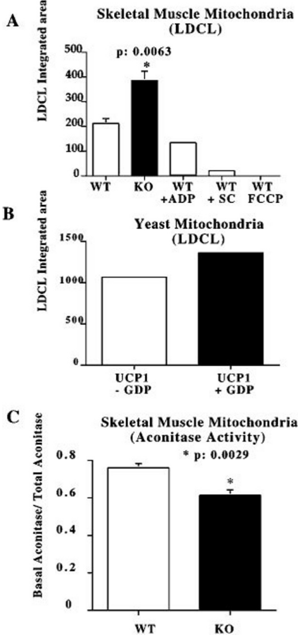
“Lucigenin-derived chemiluminescence (LDCL) method for the measurement of mitochondrial superoxide production The LDCL method using a Berthold luminometer was performed [34] to measure O 2 produced by the skeletal muscle mitochondria harvested from the pectoralis muscles of 0 or 24 h fasted chickens.”
MethodBugger, H., Guzman, C. V., Zechner, C., Palmeri, M., Russell, K. S., & Russell, R. R. (2010) · Cancer Chemotherapy and Pharmacology · doi:10.1007/s00280-010-1441-7 · Cited by 83
“Previous studies have revealed an inverse relationship between UCP3 expression and the production of ROS [35, 48].”
Chu, A. C., Ho, P. W., Kwok, K. H., Ho, J. W.-M., Chan, K., Liu, H., Kung, M. H.-W., Ramsden, D. B., & Ho, S. (2008) · Free Radical Biology and Medicine · doi:10.1016/j.freeradbiomed.2008.12.015 · Cited by 79
Solanes, G., Pedraza, N., Iglesias, R., Giralt, M., & Villarroya, F. (2003) · Molecular Endocrinology · doi:10.1210/me.2002-0395 · Cited by 75
“Moreover, mitochondria from mice with a targeted disruption of the UCP3 gene show reduced mitochondrial proton leak (8, 9) and increased efficiency in ATP production (10).”
BackgroundSkeletal muscle metabolism in physiology and in cancer disease
Giordano, A. M., Calvani, M., Petillo, O., Carteni', M., Melone, M. A. B., & Peluso, G. (2003) · Journal of Cellular Biochemistry · doi:10.1002/jcb.10601 · Cited by 83
“This finding indicates that UCP3 is able to minimize the production of ROS, thus preventing excessive oxidative stress [Vidal-Puig et al., 2000].”
BackgroundIncreased fatty acid oxidation in transgenic mice overexpressing UCP3 in skeletal muscle
Wang, S., Subramaniam, A., Cawthorne, M. A., & Clapham, J. C. (2003) · Diabetes, Obesity and Metabolism · doi:10.1046/j.1463-1326.2003.00273.x · Cited by 74
Cellular stress response, sirtuins and UCP proteins in Alzheimer disease: role of vitagenes
Cornelius, C., Trovato Salinaro, A., Scuto, M., Fronte, V., Cambria, M. T., Pennisi, M., Bella, R., Milone, P., Graziano, A., Crupi, R., et al. (2013) · Immunity & Ageing · doi:10.1186/1742-4933-10-41 · Cited by 73
“In general, the available data indicate that UCP activity results in decreased superoxide and hydrogen peroxide production [27,28].”
BackgroundNicolson, G. L., & Ash, M. E. (2017) · Biochimica et Biophysica Acta (BBA) - Biomembranes · doi:10.1016/j.bbamem.2017.04.013 · Cited by 79
“and diminishing superoxide production [287].”
Collins, P., Jones, C., Choudhury, S., Damelin, L., & Hodgson, H. (2005) · Liver International · doi:10.1111/j.1478-3231.2005.01104.x · Cited by 72
UCP2-dependent Proton Leak in Isolated Mammalian Mitochondria
Fink, B. D., Hong, Y.-S., Mathahs, M. M., Scholz, T. D., Dillon, J. S., & Sivitz, W. I. (2002) · Journal of Biological Chemistry · doi:10.1074/jbc.m107955200 · Cited by 73
Gable, D. R., Stephens, J. W., Cooper, J. A., Miller, G. J., & Humphries, S. E. (2006) · Diabetes · doi:10.2337/db05-1645 · Cited by 74
“This mouse model also had a significant reduction in mitochondrial ROS generation, and, conversely, increased mitochondrial ROS damage was seen in the UCP3 knockout mouse (43).”
BackgroundEnergization-dependent endogenous activation of proton conductance in skeletal muscle mitochondria
Parker, N., Affourtit, C., Vidal-Puig, A., & Brand, M. D. (2008) · Biochemical Journal · doi:10.1042/bj20080006 · Cited by 73
“UCP1 is not expressed in skeletal muscle of WT or Ucp3 KO mice [48].”
Self-citationDesquiret‐Dumas, V., Loiseau, D., Jacques, C. D. G., Douay, O., Malthièry, Y., Ritz, P., & Roussel, D. (2005) · Biochimica et Biophysica Acta (BBA) - Bioenergetics · doi:10.1016/j.bbabio.2005.11.005 · Cited by 79
“Mitochondrial proton conductance may also represent a mechanism for the regulation of mitochondrial reactive oxygen species production [5–8], mediators of oxidative cell damage.”
BackgroundJones, T. E., Baar, K., Ojuka, E., Chen, M., & Holloszy, J. O. (2003) · American Journal of Physiology-Endocrinology and Metabolism · doi:10.1152/ajpendo.00316.2002 · Cited by 73
“(7) failed to confirm the earlier findings of more tightly coupled mitochondria (9, 34); instead they found that”
BackgroundResultInfluentialIdentification of a Functioning Mitochondrial Uncoupling Protein 1 in Thymus
Carroll, A. M., Haines, L. R., Pearson, T. W., Fallon, P. G., Walsh, C. M., Brennan, C. M., Breen, E. P., & Porter, R. K. (2005) · Journal of Biological Chemistry · doi:10.1074/jbc.m413315200 · Cited by 68
Russell, A. P., Wadley, G. D., Hesselink, M. K. C., Schaart, G., Lo, S. K., Léger, B., GARNHAM, A. P., Moonen‐Kornips, E., Cameron‐Smith, D., Giacobino, J., et al. (2003) · Pflügers Archiv - European Journal of Physiology · doi:10.1007/s00424-002-0943-5 · Cited by 81
“Alternatively, based on UCP3 mRNA data it was proposed that UCP3 may also be involved in the exit of fatty acids out of the mitochondrial matrix [6], insulin sensitivity [7], protection against both reactive oxygen species [8] and the accumulation of nonesterified fatty acids inside the mitochondrial matrix [9].”
BackgroundMoore, G. B. T., Himms‐Hagen, J., Harper, M., & Clapham, J. C. (2001) · Biochemical and Biophysical Research Communications · doi:10.1006/bbrc.2001.4848 · Cited by 78
Uncoupling Proteins: Role in Insulin Resistance and Insulin Insufficiency
B.Chan, C., & Harper, M.-E. (2006) · Current Diabetes Reviews · doi:10.2174/157339906777950660 · Cited by 71
Huang, J. H., & Hood, D. A. (2009) · IUBMB Life · doi:10.1002/iub.164 · Cited by 65
“elevated levels of ROS production and oxidative modifications to cellular components (181).”
BackgroundRole of Uncoupling Proteins in Cancer
Valle, A., Oliver, J., & Roca, P. (2010) · Cancers · doi:10.3390/cancers2020567 · Cited by 84
“The loss of UCP2 or UCP3 in knockouts yielded increased ROS production concurrent with elevated membrane potential specifically in those tissues normally expressing the missing protein [54,55].”
BackgroundMitochondrial Actions of Thyroid Hormone
Lanni, A., Moreno, M., & Goglia, F. (2016) · Comprehensive physiology · doi:10.1002/cphy.c150019 · Cited by 75
Ishigaki, Y., Katagiri, H., Yamada, T., Ogihara, T., Imai, J., Uno, K., Hasegawa, Y., Gao, J., Ishihara, H., Shimosegawa, T., et al. (2005) · Diabetes · doi:10.2337/diabetes.54.2.322 · Cited by 70
“In addition, uncoupling reportedly decreases the production of reactive oxygen species (38), although total oxygen consumption HEPATIC UNCOUPLING AS THERAPEUTIC TARGET”
BackgroundParker, N., Crichton, P. G., Vidal-Puig, A. J., & Brand, M. D. (2009) · Journal of Bioenergetics and Biomembranes · doi:10.1007/s10863-009-9232-8 · Cited by 65
“…uncoupling proteins, it is unsurprising that ablation of UCP2 and UCP3 in mice does not lead to a decrease in basal metabolism (Gong et al. 2000; Vidal-Puig et al. 2000; Zhang et al. 2001) or lowered basal proton conductance in mitochondria (Arsenijevic et al. 2000; Cadenas et al. 2002), since…”
BackgroundSelf-citationRose, G., Crocco, P., De Rango, F., Montesanto, A., & Passarino, G. (2011) · PLoS ONE · doi:10.1371/journal.pone.0029650 · Cited by 68
“Indeed, Ucp-knockout mice have increased levels of ROS and show signs of increased oxidative damage [9–11].”
BackgroundQuintens, R., Singh, S., Lemaire, K., Bock, K. D., Granvik, M., Schraenen, A., Vroegrijk, I. O. C. M., Costa, V., Noten, P. V., Lambrechts, D., et al. (2013) · PLoS ONE · doi:10.1371/journal.pone.0056719 · Cited by 75
Understanding adipose tissue development from transgenic animal models
Valet, P., Tavernier, G., Castan‐Laurell, I., Saulnier‐Blache, J. S., & Langin, D. (2002) · Journal of Lipid Research · doi:10.1016/s0022-2275(20)30458-2 · Cited by 89
Anti‐fatigue effect of quercetin on enhancing muscle function and antioxidant capacity
Chen, X., Liang, D., Huang, Z., Jia, G., Zhao, H. Y., & Liu, G. (2021) · Journal of Food Biochemistry · doi:10.1111/jfbc.13968 · Cited by 77
Ionizing radiation, ion transports, and radioresistance of cancer cells
Huber, S. M., Butz, L., Stegen, B., Klumpp, D., Braun, N., Ruth, P., & Eckert, F. (2013) · Frontiers in Physiology · doi:10.3389/fphys.2013.00212 · Cited by 79
Hydroxynonenal and uncoupling proteins: A model for protection against oxidative damage
Echtay, K. S., Pakay, J. L., Esteves, T. C., & Brand, M. D. (2005) · BioFactors · doi:10.1002/biof.5520240114 · Cited by 74
“Work done using UCP2 and UCP3 knockout mice revealed that basal proton conductance, as well as thermoregulation, thermogenesis and body weight, are the same as those from wild-type controls [32,72].”
The complementary and divergent roles of uncoupling proteins 1 and 3 in thermoregulation
Riley, C. L., Dao, C. K., Kenaston, M. A., Muto, L., Kohno, S., Nowinski, S. M., Solmonson, A., Pfeiffer, M. E., Sack, M. N., Lu, Z., et al. (2016) · The Journal of Physiology · doi:10.1113/jp272971 · Cited by 70
“Uncoupling protein 3 (UCP3) is a UCP1 homologue expressed in BAT and skeletal muscle (SKM) that has been reported to regulate SKM mitochondrial coupling efficiency (Vidal-Puig et al. 2000) and increase fatty acid oxidation (Bézaire et al. 2001).”
BackgroundAlves-Guerra, M.-C., Rousset, S., Pecqueur, C., Mallat, Z., Blanc, J., Tedgui, A., Bouillaud, F., Cassard-Doulcier, A.-M., Ricquier, D., & Miroux, B. (2003) · Journal of Biological Chemistry · doi:10.1074/jbc.m306951200 · Cited by 67
Rudofsky, G., Schroedter, A., Schlotterer, A., Voron’ko, O. E., Schlimme, M., Tafel, J., Isermann, B. H., Humpert, P. M., Morcos, M., Bierhaus, A., et al. (2006) · Diabetes Care · doi:10.2337/diacare.29.01.06.dc05-0757 · Cited by 70
Son, C., Hosoda, K., Ishihara, K., Bevilacqua, L., Masuzaki, H., Fushiki, T., Harper, M., & Nakao, K. (2004) · Diabetologia · doi:10.1007/s00125-003-1272-8 · Cited by 73
“In two studies on UCP3 knock-out mice [10, 11] there was no difference between UCP3 knock-out and wild-type mice with regard to obesity, body temperature and serum concentrations of insulin, glucose, triglycerides and fatty acids.”
BackgroundQiao, W., Peng, Z., Wang, Z., Wei, J., & Zhou, A. (2009) · Biological Trace Element Research · doi:10.1007/s12011-009-8357-2 · Cited by 79
“Although UCP3 knockout mice appear to have normal glucose homeostasis [ 35 , 36], high level overexpression of either UCP1 or UCP3 in the muscle of transgenic mice results in increased energy expenditure, resistance to diet-induced obesity, and increased glucose tolerance and insulin sensitivity [37, 38].”
BackgroundMitochondrial uncoupling protein 3 and its role in cardiac- and skeletal muscle metabolism
Nabben, M., & Hoeks, J. (2007) · Physiology & Behavior · doi:10.1016/j.physbeh.2007.11.039 · Cited by 77
“In addition, UCP3 null mice showed the same increase in resting oxygen consumption as controls during 4 days of thyroid hormone treatment [ 13 ].”
BackgroundThe expression of UCP3 directly correlates to UCP1 abundance in brown adipose tissue
Hilse, K. E., Kalinovich, A., Rupprecht, A., Тихоновна, С. А., Zeitz, U., Staniek, K., Erben, R. G., & Pohl, E. E. (2015) · Biochimica et Biophysica Acta (BBA) - Bioenergetics · doi:10.1016/j.bbabio.2015.10.011 · Cited by 73
“This expression pattern generally confirms the previous reports [23,36].”
Sex‐Dependent Dietary Obesity, Induction of UCPs, and Leptin Expression in Rat Adipose Tissues
Rodríguez, A. M., Quevedo‐Coli, S., Roca, P., & Palou, A. (2001) · Obesity Research · doi:10.1038/oby.2001.75 · Cited by 66
Schrauwen, P., & Hesselink, M. (2003) · Proceedings of the Nutrition Society · doi:10.1079/pns2003277 · Cited by 65
“…state 4 respiration (rate of O2 consumption after all ADP in the mitochondria has been phosphorylated to form ATP), indicating improved coupling (Vidal-Puig et al. 2000), whereas mitochondria isolated from mice overexpressing UCP3 show an increased state 4 respiration (Clapham et al. 2000).”
BackgroundChanges in uncoupling protein-2 and -3 expression in aging rat skeletal muscle, liver, and heart
Barazzoni, R., & Nair, K. S. (2001) · American Journal of Physiology-Endocrinology and Metabolism · doi:10.1152/ajpendo.2001.280.3.e413 · Cited by 64
“Several reports provide indirect (26, 29, 43) and direct (14, 20, 46) evidence of a role of UCP-2 and UCP-3 in the in vivo regulation of energy production and expenditure.”
Background31P-Magnetization Transfer Magnetic Resonance Spectroscopy Measurements of In Vivo Metabolism
Befroy, D. E., Rothman, D. L., Petersen, K. F., & Shulman, G. I. (2012) · Diabetes · doi:10.2337/db12-0558 · Cited by 70
“The ATP/ADP ratio was increased in mitochondria isolated from the muscle of UCP3-knockout mice, and State III (ADP-stimulated) respiration rates were increased (50).”
BackgroundUncoupling proteins: A complex journey to function discovery
Cioffi, F., Senese, R., de Lange, P., Goglia, F., Lanni, A., & Lombardi, A. (2009) · BioFactors · doi:10.1002/biof.54 · Cited by 63
“Other experimental evidences support this idea: (a) in mitochondria from UCP3-null mice, a higher-than-normal rate of ROS production has been detected [83,105], (b) murine endothelial cells with oligonucleotides directed against UCP2 produce more ROS [106], (c) pancreatic beta cells from UCP2-null mice produce more RO…”
BackgroundResultLane, R. H., Kelley, D. E., Ritov, V. H., Tsirka, A. E., & Gruetzmacher, E. M. (2001) · Pediatric Research · doi:10.1203/00006450-200107000-00016 · Cited by 66
“Although the function of skeletal muscle UCP3 is still controversial, studies of UCP3 knockout mice indicate that UCP3 has uncoupling activity and its expression negatively correlates with mitochondrial free radical production (47).”
BackgroundCouplan, E., Gelly, C., Goubern, M., Fleury, C., Quesson, B., Silberberg, M., Thiaudière, E., Mateo, P., Lonchampt, M., Levens, N., et al. (2002) · Journal of Biological Chemistry · doi:10.1074/jbc.m206726200 · Cited by 60
CIDE-A, a novel link between brown adipose tissue and obesity
Lin, S., & Li, P. (2004) · Trends in Molecular Medicine · doi:10.1016/j.molmed.2004.07.005 · Cited by 68
Gustafsson, H., Söderdahl, T., Jönsson, G., Bratteng, J., & Forsby, A. (2004) · Journal of Neuroscience Research · doi:10.1002/jnr.20142 · Cited by 60
“The physiological function of the protein is debated; however, evidence indicates that UCPs decrease the formation of superoxide anions in state 4 respiration (Nègre-Salvayre et al., 1997; Arsenijevic et al., 2000; Nishikawa et al., 2000; Vidal-Puig et al., 2000; Echtay et al., 2002).”
BackgroundResultInfluentialMitochondrial Ca2+, the secret behind the function of uncoupling proteins 2 and 3?
Graier, W. F., Trenker, M., & Malli, R. (2008) · Cell Calcium · doi:10.1016/j.ceca.2008.01.001 · Cited by 71
Tonkonogi, M., Krook, A., Walsh, B. J., & Sahlin, K. (2000) · Biochemical Journal · doi:10.1042/0264-6021:3510805 · Cited by 59
Solanes, G., Pedraza, N., Iglesias, R., Giralt, M., & Villarroya, F. (2000) · The FASEB Journal · doi:10.1096/fj.00-0363fje · Cited by 60
“The recently obtained mice with targeted disruption of the UCP-3 gene did not show a major impairment in regulatory thermogenesis despite altered mitochondrial proton leak and enhanced reactive oxygen production in muscle mitochondria (12, 13).”
BackgroundLinkage and association analyses of the UCP3 gene with obesity phenotypes in Caucasian families
Liu, Y., Liu, P.-Y., Long, J., Lü, Y., Elze, L., Recker, R. R., & Deng, H. (2005) · Physiological Genomics · doi:10.1152/physiolgenomics.00031.2005 · Cited by 65
“For instance, fasting, an energy expenditure attenuating condition, unregulated UCP3 expression (35), and UCP3 knockout mice had a normal metabolic rate and normal body weight, even though their mitochondria showed improved coupling (18, 46).”
BackgroundTiraby, C., Tavernier, G., Capel, F., Mairal, A., Crampes, F., RAMI, J., Pujol, C., Boutin, J. A., & Langin, D. (2007) · Diabetologia · doi:10.1007/s00125-007-0765-2 · Cited by 66
“Accordingly, no difference was observed in Ucp3 knockout mice [6, 7, 30].”
BackgroundComparison of skeletal muscle miRNA and mRNA profiles among three pig breeds
Hou, X., Yang, Y., Zhu, S., Hua, C., Zhou, R., Mu, Y., Tang, Z., & Li, K. (2015) · Molecular Genetics and Genomics · doi:10.1007/s00438-015-1126-3 · Cited by 66
“H 2 O 2 production was decreased in L6 muscle cells when UCP3 was over-expressed (MacLellan et al. 2005), whereas Ucp3 knockout mice showed decreased aconitase activity, which indirectly indicates increased ROS production (Vidal-Puig et al. 2000).”
Background4-Hydroxynonenal induces Nrf2-mediated UCP3 upregulation in mouse cardiomyocytes
López-Bernardo, E., Anedda, A., Sánchez-Pérez, P., Acosta‐Iborra, B., & Cadenas, S. (2015) · Free Radical Biology and Medicine · doi:10.1016/j.freeradbiomed.2015.03.032 · Cited by 61
Muise, E. S., Souza, S., Chi, A., Tan, Y., Zhao, X., Liu, F., Dallas-yang, Q., Wu, M., Sarr, T., Zhu, L., et al. (2013) · PLoS ONE · doi:10.1371/journal.pone.0073011 · Cited by 57
“Four genes in this signature were previously reported to be regulated by FGF21 in WAT (PPARγ, Dgat1, and Ucp1 were up-regulated, while Ucp3 was down-regulated [12]).”
BackgroundInfluentialTalbot, D. A., & Brand, M. D. (2005) · Biochimica et Biophysica Acta (BBA) - Bioenergetics · doi:10.1016/j.bbabio.2005.07.001 · Cited by 62
Energetics and longevity in birds
Furness, L., & Speakman, J. R. (2008) · AGE · doi:10.1007/s11357-008-9054-3 · Cited by 62
“In addition, UCP2 and UCP3 knockout mice have been shown to exhibit increased superoxide production compared to that of wild-type mice (Negre-Salvayre et al. 1997; Vidal-Puig et al. 2000), but overexpression of UCP3 did not decrease ROS generation.”
BackgroundBugge, A. K., Siersbæk, M. S., Madsen, M. S., Göndör, A., Rougier, C., & Mandrup, S. (2010) · Journal of Biological Chemistry · doi:10.1074/jbc.m110.120584 · Cited by 61
Lanouette, C., Chagnon, Y. C., Rice, T., Përusse, L., Muzzin, P., Giacobino, J., Gagnon, J., Wilmore, J. H., Leon, A. S., Skinner, J. S., et al. (2002) · Journal of Applied Physiology · doi:10.1152/japplphysiol.00726.2001 · Cited by 59
“Although no phenotypic difference between UCP3 knockout and control mice was observed (15, 39), alternative compensatory mechanisms cannot be excluded.”
BackgroundEchtay, K. S., & Brand, M. D. (2007) · Redox Report · doi:10.1179/135100007x162158 · Cited by 54
Dalgaard, L. T. (2011) · Journal of Obesity · doi:10.1155/2011/340241 · Cited by 60
Beneficial Effects of Exercise on Muscle Mitochondrial Function in Diabetes Mellitus
Lumini‐Oliveira, J., Magalhães, J., Oliveira, P. J., & Ascensão, A. A. M. R. (2008) · Sports Medicine · doi:10.2165/00007256-200838090-00003 · Cited by 62
Bioenergetics of aging and calorie restriction
Hunt, N. D., Hyun, D., Allard, J. S., Minor, R. K., Mattson, M. P., Ingram, D. K., & de Cabo, R. (2006) · Ageing Research Reviews · doi:10.1016/j.arr.2006.03.006 · Cited by 61
Cold-induced changes in the energy coupling and the UCP3 level in rodent skeletal muscles
Simonyan, R. A., Jimenez, M., Ceddia, R. B., Giacobino, J., Muzzin, P., & Skulachev, V. P. (2001) · Biochimica et Biophysica Acta (BBA) - Bioenergetics · doi:10.1016/s0005-2728(01)00168-2 · Cited by 58
Chow, L., From, A., & Seaquist, E. (2010) · Metabolism · doi:10.1016/j.metabol.2009.07.009 · Cited by 52
“One mouse knockout model showed increased respiratory coupling in skeletal muscle mitochondria associated with increased generation of ROS; however, these mice did not display any differences in weight, exercise tolerance, fatty acid oxidation, fasting glucose, or glucose oxidation compared with wild-type mice [188].”
BackgroundMitochondrial ion transport pathways: Role in metabolic diseases
Cardoso, A. R., Queliconi, B. B., & Kowaltowski, A. J. (2010) · Biochimica et Biophysica Acta (BBA) - Bioenergetics · doi:10.1016/j.bbabio.2009.12.017 · Cited by 63
Evolutionary history of the UCP gene family: gene duplication and selection
Hughes, J., & Criscuolo, F. (2008) · BMC Evolutionary Biology · doi:10.1186/1471-2148-8-306 · Cited by 59
“Also, the physiological role of UCP1 is restricted to thermogenesis, which is unlikely to be the case for UCP2 and 3 as shown by their respective knockout models [20,21].”
BackgroundControl of energy metabolism by iodothyronines
Lanni, A., Moreno, M., Lombardi, A., de Lange, P., & Goglia, F. (2001) · Journal of Endocrinological Investigation · doi:10.1007/bf03343949 · Cited by 56
Mitochondrial Uncoupling Proteins: New Perspectives for Evolutionary Ecologists
Criscuolo, F., González‐Barroso, M. M., Bouillaud, F., Ricquier, D., Miroux, B., & Sorci, G. (2005) · The American Naturalist · doi:10.1086/497439 · Cited by 57
“Mice whose UCP2 and UCP3 genes have been knocked out are not cold sensitive, which argues against a thermogenic role for these proteins (Arsenijevic et al. 2000; Vidal-Puig et al. 2000).”
Chu, X., He, X., Shi, Z., Li, C., Guo, F., Li, S., Li, Y., Na, L., & Sun, C. (2015) · Molecular Nutrition & Food Research · doi:10.1002/mnfr.201400670 · Cited by 55
Cettour-Rose, P., & Rohner‐Jeanrenaud, F. (2002) · Endocrinology · doi:10.1210/en.143.6.2277 · Cited by 53
“oxygen species than those of controls (61), it may be thought”
Schrauwen, P., Hinderling, V., Hesselink, M. K. C., Schaart, G., Kornips, E., Saris, W. H. M., Westerterp‐Plantenga, M., & Langhans, W. (2002) · The FASEB Journal · doi:10.1096/fj.02-0275fje · Cited by 52
“Thus, mice lacking UCP3 have a normal metabolic rate and body weight (5, 6), and fasting, an energy preserving condition, rapidly up-regulates the expression of UCP3 (7).”
BackgroundProteomic research: potential opportunities for clinical and physiological investigators
Nair, K. S., Jaleel, A., Asmann, Y. W., Short, K. R., & Raghavakaimal, S. (2004) · American Journal of Physiology-Endocrinology and Metabolism · doi:10.1152/ajpendo.00370.2003 · Cited by 51
Mozo, J., Ferry, G., Studeny, A., Pecqueur, C., Rodriguez, M., Boutin, J. A., & Bouillaud, F. (2006) · Biochemical Journal · doi:10.1042/bj20050494 · Cited by 52
Senese, R., Valli, V., Moreno, M., Lombardi, A., Busiello, R. A., Cioffi, F., Silvestri, E., Goglia, F., Lanni, A., & de Lange, P. (2011) · Pflügers Archiv - European Journal of Physiology · doi:10.1007/s00424-010-0892-3 · Cited by 52
“The results of this paper, together with the data obtained by Vidal-Puig and colleagues [ 33 ], are in line with our observations.”
MethodResultInfluentialPerrino, C., Schiattarella, G. G., Sannino, A., Pironti, G., Petretta, M. P., Cannavò, A., Gargiulo, G., Ilardi, F., Magliulo, F., Franzone, A., et al. (2013) · Journal of the American Heart Association · doi:10.1161/jaha.113.000086 · Cited by 57
“The ucp3 / mice were obtained as previously described.(24) Male adult ucp3 / (aged 8 to 9 weeks, N=70) and wild-type (WT) mice (aged 8 to 9 weeks, N=67) were included in the study and maintained under identical conditions of temperature (21 1°C), humidity (60 5%), and light–dark cycle and had free access to normal mou…”
MethodEnergy, quiescence and the cellular basis of animal life spans
Stuart, J. A., & Brown, M. F. (2005) · Comparative Biochemistry and Physiology Part A Molecular & Integrative Physiology · doi:10.1016/j.cbpa.2005.11.002 · Cited by 55
Lombardi, A., Busiello, R. A., Napolitano, L., Cioffi, F., Moreno, M., de Lange, P., Silvestri, E., Lanni, A., & Goglia, F. (2010) · Journal of Biological Chemistry · doi:10.1074/jbc.m110.102699 · Cited by 60
Uncoupling proteins in heart failure
Laskowski, K. R., & Russell, R. R. (2008) · Current Heart Failure Reports · doi:10.1007/s11897-008-0013-1 · Cited by 61
Jucker, B. M., Ren, J., Dufour, S., Cao, X., Previs, S. F., Cadman, K. S., & Shulman, G. I. (2000) · Journal of Biological Chemistry · doi:10.1074/jbc.m007760200 · Cited by 51
Iser, W. B., Kim, D., Bachman, E. S., & Wolkow, C. A. (2005) · Mechanisms of Ageing and Development · doi:10.1016/j.mad.2005.04.002 · Cited by 54
“Genetic ablation of UCP function in mammalian cells has been correlated with increased cellular ROS levels and oxidative stress (Kim-Han et al., 2001; Krauss et al., 2003; Vidal-Puig et al., 2000).”
BackgroundInfluentialUncoupling protein homologs may provide a link between mitochondria, metabolism and lifespan
Wolkow, C. A., & Iser, W. B. (2006) · Ageing Research Reviews · doi:10.1016/j.arr.2006.03.007 · Cited by 51
Monteiro, B. S., Freire‐Brito, L., Carrageta, D. F., Oliveira, P. F., & Alves, M. G. (2021) · Antioxidants · doi:10.3390/antiox10111746 · Cited by 55
“Studies focusing in Ucp3 ablation have conflicting evidence as Ucp3−/− animals fed a fatty diet exhibited either enhanced [200], decrease [203] or unaltered [77] insulin resistance.”
BackgroundResultRegulation of UCP1 and UCP3 in arctic ground squirrels and relation with mitochondrial proton leak
Barger, J. L., Barnes, B. M., & Boyer, B. B. (2006) · Journal of Applied Physiology · doi:10.1152/japplphysiol.01260.2005 · Cited by 50
Rey, B., Halsey, L. G., Dolmazon, V., Rouanet, J., Roussel, D., Handrich, Y., Butler, P. J., & Duchamp, C. (2008) · American Journal of Physiology-Regulatory, Integrative and Comparative Physiology · doi:10.1152/ajpregu.00271.2007 · Cited by 49
“Moreover, the observation that UCP3 knockout mice are cold tolerant (64) suggests that mammalian UCP3 may not play a significant thermogenic role in muscles.”
BackgroundJimenez, M., Yvon, C., Lehr, L., Léger, B., Keller, P., Russell, A., Kuhne, F., Flandin, P., Giacobino, J., & Muzzin, P. (2002) · European Journal of Biochemistry · doi:10.1046/j.1432-1033.2002.02953.x · Cited by 46
cGMP rescues mitochondrial dysfunction induced by glucose and insulin in myocytes
Mitsuishi, M., Miyashita, K., & Itoh, H. (2008) · Biochemical and Biophysical Research Communications · doi:10.1016/j.bbrc.2008.01.017 · Cited by 48
Metadata
- Authors
- Vidal-Puig, A. J., Grujic, D., Zhang, C.-Y., Hagen, T., Boss, O., Ido, Y., Szczepanik, A., Wade, J., Mootha, V., Cortright, R., Muoio, D. M., & Lowell, B. B.
- Affiliations
- Beth Israel Deaconess Medical Center (US)
- Boston Medical Center (US)
- East Carolina University (US)
- Corresponding author
- Lowell, Bradford B.
- Venue
- Journal of Biological Chemistry
- Publisher
- Elsevier BV
- Published
- 2000-05
- Volume
- 275
- Issue
- 21
- Pages
- 16258-16266
- ISSN
- 0021-9258 (ISSN-L)
- OpenAlex
- W2156172044
- Cited by
- 677
- References
- 63
- Citations by year
- 2026: 2 · 2025: 6 · 2024: 7 · 2023: 5 · 2022: 12 · 2021: 11 · 2020: 7 · 2019: 16 · 2018: 16 · 2017: 8 · 2016: 14 · 2015: 18 · 2014: 14 · 2013: 23 · 2012: 18
- FWCI
- 23.73
- Type
- journal article
- Language
- en
- Open access
- hybrid
- doi.org
- Licence
- cc-by
- www.elsevier.com/tdm/userlicense/1.0/ (tdm)
- creativecommons.org/licenses/by/4.0/ (vor, 7462 d)
- Locations
- Journal of Biological Chemistry (publishedVersion, cc-by)
- PubMed (publishedVersion)
- USF Scholarship Repository (University of San Francisco) (submittedVersion)
- Funders
- Eli Lilly and Company
- National Institutes of Health (DK46200)
- National Institute of Diabetes and Digestive and Kidney Diseases (P30DK046200, DK 49569, R01DK049569, P30 DK-46200, R37DK053477)
- Topics
- Life Sciences › Biochemistry, Genetics and Molecular Biology › Molecular Biology › Mitochondrial Function and Pathology
- Health Sciences › Medicine › Physiology (medical) › Adipose Tissue and Metabolism
- Life Sciences › Biochemistry, Genetics and Molecular Biology › Molecular Biology › Metabolism, Diabetes, and Cancer
- Keywords
- UCP3, mitochondrial uncoupling, reactive oxygen species, skeletal muscle mitochondria, mitochondrial coupling, thermogenesis, fatty acid oxidation, exercise tolerance, energy metabolism
- MeSH terms
- Uncoupling Protein 2, Uncoupling Protein 3, Uncoupling Protein 1, Animals, Body Temperature, Body Weight, Carrier Proteins, Eating, Energy Metabolism, Female, Ion Channels, Male, Membrane Proteins, Mitochondria, Muscle, Oxygen Consumption, Phenotype, Physical Conditioning, Animal, Proteins, RNA, Messenger, Reactive Oxygen Species, Mice, Knockout, Gene Targeting, Muscle, Skeletal, Mitochondrial Proteins, Membrane Transport Proteins, Mice
About these checks
Registry, retraction, Cites and statistics results are computed, not judged, with one exception: a printed reference that no index lists is read once by a model before it counts as a citation error. Claims are extracted by a model and kept only when their quote appears verbatim in the text; each cited source is then checked, with a model’s help, for whether it says what the claim relies on. Those verdicts can be wrong — read the claim’s quote and the cited source before relying on one.
Statistics and arithmetic are recomputed, not judged.
Confidence bands are shown only for fields calibrated on our annotated test set. None is calibrated yet, so no band is shown.
What counts as a claim ›How we measure confidence ›How we check this ›
Are you an author, or do you see a problem with this page? Request a review
Data sources
Bibliographic data: Semantic Scholar, OpenAlex, Crossref.
Contains information from the Semantic Scholar Academic Graph Datasets, made available under the ODC Attribution License (ODC-BY 1.0).
Semantic Scholar’s data is described in: Kinney, R., et al. (2023). The Semantic Scholar Open Data Platform. arXiv:2301.10140.
