

DNA Replication Fidelity
Open accessThe DOI matches its Crossref record; 111 of the 111 references it cites were found in a registry or an index; 12 of the 104 sources its claims cite were checked for support.
Abstract
Review of the mechanisms that make DNA copying accurate, including nucleotide selectivity, proofreading, and mismatch repair.
Overview
CoChat Summary
TL;DR
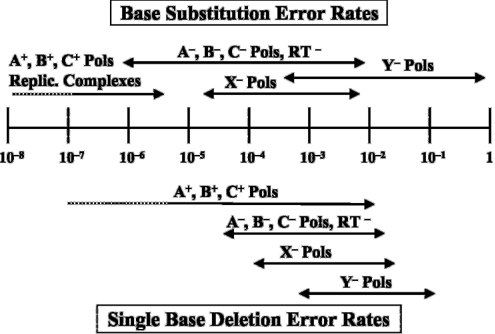
This review synthesizes how DNA polymerases achieve high replication fidelity, emphasizing nucleotide selectivity, conformational changes, proofreading, and mismatch/lesion handling. It also notes that fidelity varies enormously across polymerase families, from about \(10^{-7}\)–\(10^{-8}\) error rates for replicative systems to \(10^{-1}\)–\(10^{-3}\) for translesion synthesis polymerases.
Key findings
- In vivo, bacteriophage and *E. coli* replication in the absence of mismatch repair and external stress show base substitution error rates of about \(10^{-7}\) to \(10^{-8}\); eukaryotic replication is likely at least this accurate.
- Replicative polymerases from families A, B, and C typically have error rates in the \(10^{-6}\) to \(10^{-8}\) range, and their proofreading-defective derivatives reveal that fidelity often reflects \(10^{4}\)–\(10^{6}\)-fold selectivity for correct nucleotide insertion plus excision of 90%–99.9% of mismatches.
- Translesion synthesis polymerases are the least accurate, with misinsertion and base substitution error rates generally ranging from \(10^{-1}\) to \(10^{-3}\); for one polymerase, insertion of dGTP opposite template T can approach an error rate of 1.
- The paper argues that fidelity is shaped by multiple mechanisms, including geometric selection, base-base hydrogen bonding, water exclusion, dNTP-induced conformational change, mismatch extension/proofreading, and handling of damaged or misaligned substrates.
Methods
- Not an experimental study; this is a narrative review of DNA replication fidelity.
- It synthesizes prior biochemical, kinetic, structural, and mutational studies across bacteria, eukaryotes, and translesion synthesis polymerases, using published data and crystal structures.
- The main analysis is comparative and conceptual: it contrasts error-rate ranges, polymerase families, and mechanistic models of fidelity.
Limitations
- The paper states that error rates for repair reactions “have not yet been extensively studied,” so some conclusions about repair-associated DNA synthesis are predictive rather than directly measured.
- Many mechanistic claims are presented as hypotheses or interpretations of structural/kinetic data rather than definitive proof, especially for dNTP-induced conformational changes and water exclusion.
- The text makes evident that some sections are incomplete or only outlined in the provided version; if relying strictly on the excerpt, not all topics announced in the headings are fully developed.
Model-written summary. Check it against the paper before relying on it.
Integrity signals
Registry
Cites
Statistics
Figures


Verification
Claims the paper makes
10 Valid · 1 Not valid · 37 Not checked · 32 Own results and interpretations
The sources with a verdict support this claim; the rest weren’t checked yet, have no full text we could read, or their verdicts aren’t rated yet.
In the paper
“Kinetic studies (reviewed in Refs.15,19,[33][34][35][36] have established that fidelity depends on differences in the binding affinities and insertion rates of incorrect versus correct dNTPs.”
§ DNA Replication Fidelity > dNTP Binding Affinity, dNTP-induced Conformational
What the sources say
- Not checked — no full text of the sourcecites [15] 15. Kunkel, T. A., and Bebenek, K. (2000) Annu. Rev. Biochem. 69, 497-529 source
- Not checked — no full text of the sourcecites [19] 19. Beard, W. A., and Wilson, S. H. (2003) Structure 11, 489 -496 source
- Not checked — no full text of the sourcecites [33] 33. Goodman, M. F., Creighton, S., Bloom, L. B., and Petruska, J. (1993) Crit. Rev. Biochem. Mol. Biol. 28, 83-126 source
- Not checked — no full text of the sourcecites [34] 34. Johnson, K. A. (1993) Annu. Rev. Biochem. 62, 685-713 source
- Not checked — no full text of the sourcecites [35] 35. Showalter, A. K., and Tsai, M.-D. (2002) Biochemistry 41, 10571-10576 source
- Supportedcites [36] 36. Beard, W. A., Shock, D. D., Vande Berg, B. J., and Wilson, S. H. (2002) J. Biol. Chem. 277, 47393-47398 source
The paper’s introductory discussion defines nucleotide-insertion specificity as the insertion-rate constant divided by the incoming dNTP’s dissociation constant, and fidelity as the ratio of catalytic efficiencies for correct and incorrect nucleotides. That supports the claim that both binding and insertion kinetics enter into fidelity. (LLM, conf=0.92)
boostedstates a cause- Asserted: passes — The authors put it forward as true.
- Checkable: passes — It can be checked against evidence.
- Load-bearing: passes — The paper’s conclusions depend on it.
- Based: passes — The paper gives a reason why it holds.
Every source the paper cites for this claim was checked and supports it.
In the paper
“These results suggest that fidelity is primarily governed by the ability to insert the correct nucleotide (36) and focus attention on the conformational changes and interactions needed to achieve and stabilize the transition state.”
§ DNA Replication Fidelity > dNTP Binding Affinity, dNTP-induced Conformational
What the sources say
- Supportedcites [36] 36. Beard, W. A., Shock, D. D., Vande Berg, B. J., and Wilson, S. H. (2002) J. Biol. Chem. 277, 47393-47398 source
The paper’s Concluding Remarks state that differences between low- and high-fidelity DNA polymerases arise primarily from their ability to insert the correct nucleotide. This directly supports the clause attributed to citation (36). (LLM, conf=0.94)
hedgedstates a cause- Asserted: passes — The authors put it forward as true.
- Checkable: passes — It can be checked against evidence.
- Load-bearing: passes — The paper’s conclusions depend on it.
- Based: passes — The paper gives a reason why it holds.
- Supported
Every source the paper cites for this claim was checked and supports it.
In the paper
“In contrast, catalytic efficiencies for incorrect insertions by these polymerases vary over a much narrower range.”
§ DNA Replication Fidelity > dNTP Binding Affinity, dNTP-induced Conformational
What the sources say
- Supportedcites [36] 36. Beard, W. A., Shock, D. D., Vande Berg, B. J., and Wilson, S. H. (2002) J. Biol. Chem. 277, 47393-47398 source
In the Table I analysis (page not provided), correct-insertion efficiencies span a 10-million-fold range. The same section reports that, for most mispairs, a tenfold decrease in correct-insertion efficiency corresponds to little or no decrease in incorrect-insertion efficiency, supporting the narrower-range comparison. (LLM, conf=0.90)
plain- Asserted: passes — The authors put it forward as true.
- Checkable: passes — It can be checked against evidence.
- Load-bearing: passes — The paper’s conclusions depend on it.
- Based: passes — The paper gives a reason why it holds.
- Supported
The sources with a verdict support this claim; the rest weren’t checked yet, have no full text we could read, or their verdicts aren’t rated yet.
In the paper
“As for base substitutions, insertion/deletion error rates vary widely in a polymerase-and DNA sequence-dependent manner (56,57), such that single base deletion error rates (Fig. 1, bottom) can sometimes exceed base substitution error rates (58).”
§ DNA Replication Fidelity > Substrate Misalignments and Insertion/Deletion Fidelity
What the sources say
- Not checked — no full text of the sourcecites [56] 56. Kunkel, T. A. (1990) Biochemistry 29, 8003-8011 source
- Not checked — no full text of the sourcecites [57] 57. Bebenek, K., and Kunkel, T. A. (2000) Cold Spring Harbor Symp. Quant. Biol. 65, 81-91 source
- Supportedcites [58] 58. Bebenek, K., Garcı ´a-Dı ´az, M., Blanco, L., and Kunkel, T. A. (2003) J. Biol. Chem. 278, 34685-34690 source
Citation 58 is attached to the claim that single-base deletion error rates can exceed base-substitution error rates. The Results (p. 2) state that human Pol λ’s average single-base deletion error rate exceeds its single-base substitution error rate. The preceding claim about broad polymerase- and sequence-dependent variation is cited to references 56 and 57, not this paper. (LLM, conf=0.94)
plainstates an association- Asserted: passes — The authors put it forward as true.
- Checkable: passes — It can be checked against evidence.
- Load-bearing: unclear — It is unclear whether the paper’s conclusions depend on it.
- Based: passes — The paper gives a reason why it holds.
In the paper
“Studies of bacteriophage and Escherichia coli replication in the absence of DNA mismatch repair and external environmental stress suggest that the base substitution error rate of the replication machinery in vivo is in the range of 10 Ϫ7 to 10 Ϫ8 (4).”
§ DNA Replication Fidelity > How Accurate Is DNA Synthesis?
What the sources say
- Not checked — no full text of the sourcecites [4] 4. Schaaper, R. M. (1993) J. Biol. Chem. 268, 23762-23765 source
hedged- Asserted: passes — The authors put it forward as true.
- Checkable: passes — It can be checked against evidence.
- Load-bearing: unclear — It is unclear whether the paper’s conclusions depend on it.
- Based: passes — The paper gives a reason why it holds.
31 more claims
Create a free account to see all 80 claims and every source verdict.
- It may state two separate claims as one. 42
- Probably not a substantial claim. 8
Citations
Cites
Molecular Structure of Nucleic Acids: A Structure for Deoxyribose Nucleic Acid
WATSON, J. D., & CRICK, F. H. C. (1953) · Nature · doi:10.1038/171737a0 · Cited by 13,584
Friedberg, E. C., Walker, G. C., Siede, W., Wood, R. D., Schultz, R. A., & Ellenberger, T. (2005) · doi:10.1128/9781555816704 · Cited by 5,683
Bootsma, D., & Hoeijmakers, J. H. J. (1996) · Trends in Genetics · doi:10.1016/0168-9525(96)81408-9 · Cited by 2,282
Frameshift Mutations and the Genetic Code
Streisinger, G., Okada, Y., Emrich, J., Newton, J., Tsugita, A., Terzaghi, E., & Inouye, M. (1966) · Cold Spring Harbor Symposia on Quantitative Biology · doi:10.1101/sqb.1966.031.01.014 · Cited by 1,400
(1991) · PubMed · Cited by 1,305
A constant rate of spontaneous mutation in DNA-based microbes.
Drake, J. W. (1991) · Proceedings of the National Academy of Sciences · doi:10.1073/pnas.88.16.7160 · Cited by 1,199
Kunkel, T. A., & Bebenek, K. (2000) · Annual Review of Biochemistry · doi:10.1146/annurev.biochem.69.1.497 · Cited by 1,003
Self-citationMECHANISMS AND BIOLOGICAL EFFECTS OF MISMATCH REPAIR
Modrich, P. (1991) · Annual Review of Genetics · doi:10.1146/annurev.ge.25.120191.001305 · Cited by 892
MutT protein specifically hydrolyses a potent mutagenic substrate for DNA synthesis
Maki, H., & Sekiguchi, M. (1992) · Nature · doi:10.1038/355273a0 · Cited by 891
DNA Polymerases: Structural Diversity and Common Mechanisms
Steitz, T. A. (1999) · Journal of Biological Chemistry · doi:10.1074/jbc.274.25.17395 · Cited by 848
Research works printed but not linked: 1
- 5. Loeb, L. A. (2003) Cancer Res. 51, 3075-3079
Cited by
Items 201–300 of 752
The Structural Basis for Processing of Unnatural Base Pairs by DNA Polymerases
Marx, A., & Betz, K. (2019) · Chemistry - A European Journal · doi:10.1002/chem.201903525 · Cited by 52
Dynamics of Site Switching in DNA Polymerase
Lamichhane, R., Berezhna, S. Y., Gill, J. P., et al. (2013) · Journal of the American Chemical Society · doi:10.1021/ja311641b · Cited by 48
DWT based coding DNA watermarking for DNA copyright protection
Lee, S. (2014) · Information Sciences · doi:10.1016/j.ins.2014.03.039 · Cited by 49
“(1) Mutation Resistance: Mutations are caused by radiation, insertion of viral genomes, transposons, and mutagenic chemicals, as well as errors during meiosis or DNA replication [22,53].”
BackgroundStructural insights into eukaryotic DNA replication
Doublié, S., & Zahn, K. (2014) · Frontiers in Microbiology · doi:10.3389/fmicb.2014.00444 · Cited by 48
“DNA polymerase δ and ε elongate the primers generated by pol α in an accurate and processive manner (Kunkel, 2004, 2011; Pellegrini, 2012).”
BackgroundMethodInfluentialMechanism of Ribonucleotide Incorporation by Human DNA Polymerase η
Su, Y. R., Egli, M., & Guengerich, F. P. (2016) · Journal of Biological Chemistry · doi:10.1074/jbc.m115.706226 · Cited by 50
Translesion DNA Synthesis in Cancer: Molecular Mechanisms and Therapeutic Opportunities
Zafar, M. K., & Eoff, R. L. (2017) · Chemical Research in Toxicology · doi:10.1021/acs.chemrestox.7b00157 · Cited by 54
Plant organellar DNA polymerases are replicative and translesion DNA synthesis polymerases
Baruch‐Torres, N., & Brieba, L. G. (2017) · Nucleic Acids Research · doi:10.1093/nar/gkx744 · Cited by 47
Fedeles, B. I., & Essigmann, J. M. (2018) · DNA repair · doi:10.1016/j.dnarep.2018.08.008 · Cited by 71
“, imbalanced [9] or contaminated [10] nucleotide pool) are also strong contributors to mutagenesis by potentiating the effects of DNA damage.”
BackgroundWhy is immunotherapy effective (or not) in patients with MSI/MMRD tumors?
Nebot-Bral, L., Coutzac, C., Kannouche, P. L., & Chaput, N. (2018) · Bulletin du Cancer · doi:10.1016/j.bulcan.2018.08.007 · Cited by 52
Waisertreiger, I. S.-R., Liston, V. G., Menezes, M. R., Kim, H., Lobachev, K. S., Stepchenkova, E. I., Tahirov, T. H., Rogozin, I. B., & Pavlov, Y. I. (2012) · Environmental and Molecular Mutagenesis · doi:10.1002/em.21735 · Cited by 50
Foster, P. L., Niccum, B. A., Popodi, E. M., Townes, J. P., Lee, H., Ismail, W. M., & Tang, H. (2018) · Genetics · doi:10.1534/genetics.118.301237 · Cited by 46
Francklyn, C. S. (2008) · Biochemistry · doi:10.1021/bi801500z · Cited by 47
“In the A- and B- families, the exo domain is located on either side of the polymerase active site (12,13), while in the major E. coli DNA Pol III replicative complex, the 3′-5′activity resides in its own dedicated subunit (MutD).”
BackgroundInfluentialDynamics of Nucleotide Incorporation: Snapshots Revealed by 2-Aminopurine Fluorescence Studies
Hariharan, C., Bloom, L. B., Helquist, S. A., Kool, E. T., & Reha-Krantz, L. J. (2006) · Biochemistry · doi:10.1021/bi051644s · Cited by 47
“Three steps in the nucleotide incorporation pathway have been proposed to be important for ensuring high fidelity nucleotide incorporation (11, 12): (1) formation of a pre-insertion complex (for example formation of complexes II and III, Scheme 1), (2) a post-binding conformational change that evaluates the accuracy o…”
BackgroundInfluentialSingle-molecule views of MutS on mismatched DNA
Lee, J., Cho, W., Park, J., Jeon, Y., Kim, D., Lee, S. H., & Fishel, R. A. (2014) · DNA repair · doi:10.1016/j.dnarep.2014.02.014 · Cited by 44
Why Are There So Many Diverse Replication Machineries?
Forterre, P. (2013) · Journal of Molecular Biology · doi:10.1016/j.jmb.2013.09.032 · Cited by 50
Yadavalli, S. S., & Ibba, M. (2012) · Nucleic Acids Research · doi:10.1093/nar/gks1240 · Cited by 54
A Unified Kinetic Mechanism Applicable to Multiple DNA Polymerases,
Bakhtina, M., Roettger, M. P., Kumar, S., & Tsai, M. (2007) · Biochemistry · doi:10.1021/bi700084w · Cited by 48
“There have also been suggestions that even if Pol ‚ indeed lacks a ratelimiting step prior to chemistry, it is likely an exception among polymerases (16, 19 ).”
BackgroundPoly (ADP-ribose) polymerase 1 and neurodegenerative diseases: past, present, and future
Hu, M.-L., Pan, Y.-R., Yong, Y.-Y., Liu, Y., Yu, L., Qin, D.-L., Qiao, G., Law, B. Y.-K., Wu, J.-M., Zhou, X.-G., et al. (2023) · Ageing Research Reviews · doi:10.1016/j.arr.2023.102078 · Cited by 44
Corzett, C. H., Goodman, M. F., & Finkel, S. E. (2013) · Genetics · doi:10.1534/genetics.113.151837 · Cited by 44
“Given that the majority of mutations are introduced during replication, perturbations in the fidelity of replication can have dramatic consequences on the evolutionary trajectory of a population (Yeiser et al. 2002; Kunkel 2004; Foster 2007; Galhardo et al. 2007).”
BackgroundDNA Mismatch Synthesis Complexes Provide Insights into Base Selectivity of a B Family DNA Polymerase
Xia, S., Wang, J., & Konigsberg, W. H. (2012) · Journal of the American Chemical Society · doi:10.1021/ja3079048 · Cited by 46
Shen, C., Yang, W., Ji, Q., et al. (2009) · Nanotechnology · doi:10.1088/0957-4484/20/45/455103 · Cited by 44
Zhang, L., Brown, J. A., Newmister, S. A., & Suo, Z. (2009) · Biochemistry · doi:10.1021/bi900532w · Cited by 43
Gunka, K., Tholen, S., Gerwig, J., Herzberg, C., Stülke, J., & Commichau, F. M. (2011) · Journal of Bacteriology · doi:10.1128/jb.06470-11 · Cited by 46
“This mutation frequency is in the range typically observed in bacteria (31), but 3 orders of magnitude lower than the frequency found for the deletion event in the gudB gene context.”
BackgroundLynch Syndrome (HNPCC) and Microsatellite Instability
Umar, A. (2004) · Disease Markers · doi:10.1155/2004/486032 · Cited by 43
“normal cell division [5,7,11,12].”
Novel conserved motifs in Rev1 C-terminus are required for mutagenic DNA damage tolerance
D'Souza, S., Waters, L. S., & Walker, G. C. (2008) · DNA Repair · doi:10.1016/j.dnarep.2008.05.009 · Cited by 43
“In order to perform lesion bypass, TLS polymerases sacrifice replication accuracy on undamaged DNA, exhibiting error rates of 10−5 to 10−1, compared with ~10−7 for replicative polymerases [4,5].”
BackgroundBiochemical properties of a plastidial DNA polymerase of rice
Takeuchi, R., Kimura, S., Saotome, A., & Sakaguchi, K. (2007) · Plant Molecular Biology · doi:10.1007/s11103-007-9179-2 · Cited by 43
“4, indicating that the base substitution fidelity of GST-OsPOLP1 displayed relatively high fidelity (approximately 10-1000 fold higher than low fidelity polymerases) (Kunkel 2004), and that transition mutations occurred more frequently than transversion mutations in a similar fashion to a general polymerase (Boosalis…”
BackgroundMetabolism of Vertebrate Amino Sugars with N-Glycolyl Groups
Bergfeld, A. K., Pearce, O. M. T., Diaz, S. L., Lawrence, R., Vocadlo, D. J., Choudhury, B., Esko, J. D., & Varki, A. (2012) · Journal of Biological Chemistry · doi:10.1074/jbc.m112.363499 · Cited by 43
Biochemical Basis of Genotoxicity of Heterocyclic Arylamine Food Mutagens
Choi, J., Stover, J. S., Angel, K. C., Chowdhury, G., Rizzo, C. J., & Guengerich, F. P. (2006) · Journal of Biological Chemistry · doi:10.1074/jbc.m605699200 · Cited by 42
Beckman, J. W., Wang, Q., & Guengerich, F. P. (2008) · Journal of Biological Chemistry · doi:10.1074/jbc.m806785200 · Cited by 43
Sharma, A. S., Kottur, J., Narayanan, N., & Nair, D. T. (2013) · Nucleic Acids Research · doi:10.1093/nar/gkt146 · Cited by 45
Meyer, A. S., Blandino, M., & Spratt, T. E. (2004) · Journal of Biological Chemistry · doi:10.1074/jbc.c400232200 · Cited by 46
Pugliese, K. M., Gul, O. T., Choi, Y., Olsen, T. J., Sims, P. C., Collins, P. G., & Weiss, G. A. (2015) · Journal of the American Chemical Society · doi:10.1021/jacs.5b02074 · Cited by 48
NISHIDA, H., Mayanagi, K., Kiyonari, S., Sato, Y., Oyama, T., Ishino, Y., & Morikawa, K. (2009) · Proceedings of the National Academy of Sciences · doi:10.1073/pnas.0907780106 · Cited by 41
“Most replicative DNA polymerases consist of two independent functional components: polymerase and exonuclease moieties, which execute DNA synthesis and editing, respectively (1, 2).”
BackgroundAlkylating agents and DNA polymerases.
Bignold, L. P. (2006) · PubMed · Cited by 51
Schaaper, R. M. (1993) · Genetics · doi:10.1093/genetics/134.4.1031 · Cited by 46
Transient Expression of a Mutator Phenotype in Cancer Cells
Loeb, L. A. (1997) · Science · doi:10.1126/science.277.5331.1449 · Cited by 41
The Closing Mechanism of DNA Polymerase I at Atomic Resolution
Miller, B. R., Beese, L. S., Parish, C. A., & Wu, E. Y. (2015) · Structure · doi:10.1016/j.str.2015.06.016 · Cited by 42
“Speed and accuracy are critical for DNA polymerases, which can add nucleotides to a primer DNA strand tens to hundreds of times per second while only making a misincorporation once every 10,000–100,000 bases (Kunkel, 2004).”
Lenhart, J. S., Sharma, A., Hingorani, M., & Simmons, L. A. (2012) · Molecular Microbiology · doi:10.1111/mmi.12115 · Cited by 54
“Since replicative DNA polymerases have high fidelity, base pairing errors occur at a low frequency of one in 10(6)–10(7) correctly paired bases (Schaaper, 1993, and for review: Kunkel, 1992; Kunkel and Bebenek, 2000).”
BackgroundShen, X., Söderholm, J., Lin, F. W., Kobinger, G., Bello, A., Gregg, D. A., Broderick, K. E., & Sardesai, N. Y. (2012) · Vaccine · doi:10.1016/j.vaccine.2012.02.071 · Cited by 42
Durham, T. R., & Snow, E. T. (2006) · Birkhäuser-Verlag eBooks · doi:10.1007/3-7643-7378-4_5 · Cited by 56
Promiscuous mismatch extension by human DNA polymerase lambda
Picher, Á. J., García–Díaz, M., Bębenek, K., Pedersen, L. C., Kunkel, T. A., & Blanco, L. (2006) · Nucleic Acids Research · doi:10.1093/nar/gkl377 · Cited by 42
Brieba, L. G., Kokoska, R. J., Bębenek, K., Kunkel, T. A., & Ellenberger, T. (2005) · Structure · doi:10.1016/j.str.2005.07.020 · Cited by 44
Self-citationTemprine, K., Campbell, N. R., Huang, T. H., Langdon, E. M., Simon-Vermot, T., Mehta, K., Clapp, A., Chipman, M. E., & White, R. M. (2020) · Science Signaling · doi:10.1126/scisignal.aau1453 · Cited by 38
Sherrer, S. M., Brown, J. A., Pack, L. R., Jasti, V. P., Fowler, J. D., Basu, A. K., & Suo, Z. (2009) · Journal of Biological Chemistry · doi:10.1074/jbc.m808161200 · Cited by 46
Busch, C. R., & DiRuggiero, J. (2010) · PLoS ONE · doi:10.1371/journal.pone.0009045 · Cited by 45
“coli DNA polymerase III holoenzyme [37,38,39,47,48].”
Loop 1 modulates the fidelity of DNA polymerase
Bębenek, K., García–Díaz, M., Zhou, R., Povirk, L. F., & Kunkel, T. A. (2010) · Nucleic Acids Research · doi:10.1093/nar/gkq261 · Cited by 42
Self-citationThe cost of replication fidelity in human immunodeficiency virus type 1
Furió, V., Moyá, A., & Sanjuán, R. (2006) · Proceedings of the Royal Society B Biological Sciences · doi:10.1098/rspb.2006.3732 · Cited by 47
Effect of accessory proteins on T4 DNA polymerase replication fidelity
Kroutil, L. C., Frey, M. W., Kaboord, B. F., Kunkel, T. A., & Benkovic, S. J. (1998) · Journal of Molecular Biology · doi:10.1006/jmbi.1998.1676 · Cited by 42
Self-citationTargeting DNA mismatches with rhodium metalloinsertors
Boyle, K. M., & Barton, J. K. (2016) · Inorganica Chimica Acta · doi:10.1016/j.ica.2016.01.021 · Cited by 40
“The high fidelity of polymerases and their proofreading exonuclease activities result in a low error rate of ∼10-7 mismatches per base pair per replication, and this is improved upon by the MMR machinery, which increases fidelity an additional 50-1000-fold [39].”
BackgroundThe Rev1-Polζ translesion synthesis mutasome: Structure, interactions and inhibition
Rizzo, A. A., & Korzhnev, D. M. (2019) · The Enzymes · doi:10.1016/bs.enz.2019.07.001 · Cited by 42
“Given the role of DNA as information storage, replication must be performed accurately, and through evolution, the replicative DNA polymerases are able to achieve an error rate as low as ~10−6-10−8 [3].”
BackgroundLivneh, Z. (2006) · Cell Cycle · doi:10.4161/cc.5.17.3193 · Cited by 38
“Such regulation must ensure that (1) the specialized polymerases act only when needed, and (2) that polymerases act only at the right location in DNA, e.”
BackgroundZhang, H., Cao, W., Zakharova, E., Konigsberg, W. H., & Cruz, E. M. D. L. (2007) · Nucleic Acids Research · doi:10.1093/nar/gkm587 · Cited by 41
“The [dNTP] dependence of the observed rate constant (kobs) was fitted to a rectangular hyperbola [Equation.”
InfluentialA model for the correlation of mutation rate with GC content and the origin of GC-rich isochores
Gu, X., & Li, W. (1994) · Journal of Molecular Evolution · doi:10.1007/bf00178846 · Cited by 41
Koag, M., Jung, H., & Lee, S. (2019) · Journal of the American Chemical Society · doi:10.1021/jacs.8b08551 · Cited by 38
Mutagenesis mechanism of the major oxidative adenine lesion 7,8-dihydro-8-oxoadenine
Koag, M., Jung, H., & Lee, S. (2020) · Nucleic Acids Research · doi:10.1093/nar/gkaa193 · Cited by 37
Passaro, C., Volpe, M., Botta, G., Scamardella, E., Perruolo, G., Gillespie, D. A., Libertini, S., & Portella, G. (2014) · Molecular Oncology · doi:10.1016/j.molonc.2014.07.022 · Cited by 38
Kirchner, J. M., Tran, H. T., & Resnick, M. A. (2000) · Genetics · doi:10.1093/genetics/155.4.1623 · Cited by 42
Substrate‐induced DNA strand misalignment during catalytic cycling by DNA polymerase λ
Bebenek, K., Garcia‐Diaz, M., Foley, M. C., Pedersen, L. C., Schlick, T., & Kunkel, T. A. (2008) · EMBO reports · doi:10.1038/embor.2008.33 · Cited by 36
“That strand slippage does occur is evidenced by studies showing that indel mismatches arise during synthesis by all DNA polymerases examined so far, at rates that vary considerably and that can be very high, depending on the DNA polymerase and the sequence context (Kunkel, 2004; Garcia-Diaz & Kunkel, 2006).”
BackgroundSelf-citationDieckman, L. M., Johnson, R. E., Prakash, S., & Washington, M. T. (2010) · Biochemistry · doi:10.1021/bi100556m · Cited by 36
“Although both the polymerase activity and the proofreading exonuclease activity contribute to the fidelity of DNA synthesis by many DNA polymerases [23–25], we will focus here on the contribution of the polymerase activity.”
BackgroundBaños, B., Lázaro, J. M., Villar, L., Salas, M., & de Vega, M. (2008) · Nucleic Acids Research · doi:10.1093/nar/gkn526 · Cited by 41
Length, orientation, and plant host influence the mutation frequency in microsatellites
Azaiez, A., Bouchard, É. F., Jean, M., & Belzile, F. J. (2006) · Genome · doi:10.1139/g06-099 · Cited by 36
“Such a low mutation rate is achieved by the sequential operation of 3 mechanisms: the high selectivity of DNA polymerase, exonucleolytic proofreading, and postreplicative mismatch repair (Kunkel 1992; Schaaper 1993; Kroutil and Kunkel 1998).”
BackgroundTchurikov, N. A., Kretova, O. V., Fedoseeva, D. M., Сосин, Д. В., Grachev, S. A., Serebraykova, M. V., Romanenko, S. A., Vorobieva, N. V., & Kravatsky, Y. V. (2013) · PLoS Genetics · doi:10.1371/journal.pgen.1003429 · Cited by 38
Regulation of replication fork speed: Mechanisms and impact on genomic stability
Merchut‐Maya, J. M., Bártek, J., & Maya‐Mendoza, A. (2019) · DNA repair · doi:10.1016/j.dnarep.2019.102654 · Cited by 39
Plant organellar DNA polymerases paralogs exhibit dissimilar nucleotide incorporation fidelity
Ayala‐García, V. M., Baruch‐Torres, N., García‐Medel, P. L., & Brieba, L. G. (2018) · FEBS Journal · doi:10.1111/febs.14645 · Cited by 39
Rizzo, A. A., Salerno, P., Bezsonova, I., & Korzhnev, D. M. (2014) · Biochemistry · doi:10.1021/bi500823h · Cited by 41
Differential binding of Escherichia coli DNA polymerases to the β‐sliding clamp
Maul, R. W., Ponticelli, S. K. S., Duzen, J. M., & Sutton, M. D. (2007) · Molecular Microbiology · doi:10.1111/j.1365-2958.2007.05828.x · Cited by 35
“Due to its high fidelity, pol III is unable to catalyse replication over damaged DNA bases (Schaaper, 1993; Kunkel, 2004; Friedberg et al., 2006).”
BackgroundZahn, K. E., Wallace, S. S., & Doublié, S. (2011) · Current Opinion in Structural Biology · doi:10.1016/j.sbi.2011.03.008 · Cited by 35
“High-fidelity replicative DNA polymerases achieve mutation frequencies such that one mistake occurs in every 104 to 106 nucleotides synthesized opposite undamaged templates [34].”
BackgroundLiu, S., Lu, G., Ali, S., Liu, W., Zheng, L., Dai, H., Li, H., Xu, H., Hua, Y., Zhou, Y., et al. (2015) · The EMBO Journal · doi:10.15252/embj.201489865 · Cited by 35
“This was consistent with the finding that the Pol a-dependent mutation rate is strongly elevated when MSH2 is deleted in yeast (Kunkel, 2004; Niimi et al, 2004; Li, 2008; Liberti et al, 2013) and indicates that the MutSa complex may be involved in AEE in vivo.”
Self-citationSynthetic Life with Alternative Nucleic Acids as Genetic Materials
Nie, P., Bai, Y., & Mei, H. (2020) · Molecules · doi:10.3390/molecules25153483 · Cited by 37
Altered dynamics of DNA bases adjacent to a mismatch: a cue for mismatch recognition by MutS.
Nag, N., Rao, B., & Krishnamoorthy, G. (2007) · Journal of Molecular Biology · doi:10.1016/j.jmb.2007.08.065 · Cited by 33
Wu, Y., Wang, L., Zhou, M., et al. (2013) · PLoS ONE · doi:10.1371/journal.pone.0082495 · Cited by 34
“At present, there are five known families of DNA polymerases [56,57].”
BackgroundKinetic Mechanism of DNA Polymerization Catalyzed by Human DNA Polymerase ε
Zahurancik, W. J., Klein, S. J., & Suo, Z. (2013) · Biochemistry · doi:10.1021/bi400803v · Cited by 38
“Due to a combination of high intrinsic fidelity and 3′→5′ proofreading activity, most B-family replicative DNA polymerases have fidelities in the range of 10−6 to 10−8, or one error per 106 to 108 nucleotide incorporations (7).”
BackgroundEfficient gene targeted random mutagenesis in genetically stable Escherichia coli strains
Fabret, C. (2000) · Nucleic Acids Research · doi:10.1093/nar/28.21.e95 · Cited by 35
Regulatory Role of Ubiquitin in Eukaryotic DNA Translesion Synthesis
Yang, K., Weinacht, C. P., & Zhuang, Z. (2013) · Biochemistry · doi:10.1021/bi400194r · Cited by 40
Is mitochondrial DNA turnover slower than commonly assumed?
Poovathingal, S. K., Gruber, J., Lakshmanan, L. N., Halliwell, B. B., & Gunawan, R. (2012) · Biogerontology · doi:10.1007/s10522-012-9390-7 · Cited by 34
“In the simulations of the POLG transgenic mice, the replication error frequency due to POLG fidelity was set to 200 times higher than that of the wild-type mouse, based on the commonly reported literature data (Kunkel 1992; Zhang et al. 2000).”
Moore, M. M., Schoeny, R. S., Becker, R. A., White, K. W., & Pottenger, L. H. (2018) · Critical Reviews in Toxicology · doi:10.1080/10408444.2017.1423462 · Cited by 39
“…the replication fork) ensures that DNA replication waits for repair to occur before proceeding, preventing replication of the damaged DNA, thus avoiding a mutation (Hanawalt 2003; Hanawalt et al. 2003; Kunkel 2004; Brown et al. 2011; Dianov and H€ubscher 2013; Kozmin and Jinks-Robertson 2013).”
BackgroundNiu, M., Wang, Y., Wang, C., et al. (2017) · Journal of Experimental Botany · doi:10.1093/jxb/erx380 · Cited by 33
Schmidt, T. T., Reyes, G. X., Gries, K., Ceylan, C. Ü., Sharma, S., Meurer, M., Knop, M., Chabes, A., & Hombauer, H. (2017) · Proceedings of the National Academy of Sciences · doi:10.1073/pnas.1618714114 · Cited by 39
“Without any exception, all mutational hotspots identified in this study can be explained by the “next-nucleotide effect” (8, 89).”
BackgroundDirected adenovirus evolution using engineered mutator viral polymerases
Uil, T. G., Vellinga, J., de Vrij, J., van den Hengel, S. K., Rabelink, M. J. W. E., Cramer, S. J., Eekels, J. J. M., Ariyürek, Y., van Galen, M., & Hoeben, R. C. (2010) · Nucleic Acids Research · doi:10.1093/nar/gkq1258 · Cited by 32
Giaretti, W. (1997) · Analytical Cellular Pathology · doi:10.1155/1997/264135 · Cited by 32
Wang, L., Broyde, S. B., & Zhang, Y. (2009) · Journal of Molecular Biology · doi:10.1016/j.jmb.2009.04.029 · Cited by 33
Bashir, T., Sailer, C., Gerber, F., Loganathan, N., Bhoopalan, H., Eichenberger, C., Grossniklaus, U., & Baskar, R. (2014) · PLANT PHYSIOLOGY · doi:10.1104/pp.114.238451 · Cited by 34
Shivalingam, A., Tyburn, A. E. S., El-Sagheer, A. H., & Brown, T. (2017) · Journal of the American Chemical Society · doi:10.1021/jacs.6b11530 · Cited by 31
Calcium-driven DNA synthesis by a high-fidelity DNA polymerase
Ralec, C., Henry, E., Lemor, M., Killelea, T., & Henneke, G. (2017) · Nucleic Acids Research · doi:10.1093/nar/gkx927 · Cited by 37
Single-molecule studies contrast ordered DNA replication with stochastic translesion synthesis
Zhao, G., Gleave, E. S., & Lamers, M. H. (2017) · eLife · doi:10.7554/elife.32177 · Cited by 33
“In addition, rare nucleotide misincorporations into the primer strand prevent further DNA synthesis and a 3’ 5’ exonuclease is required to remove the misincorporated nucleotides (Kunkel, 2004).”
BackgroundKou, Y., Koag, M., & Lee, S. (2018) · Biochemistry · doi:10.1021/acs.biochem.8b00331 · Cited by 31
The plant DNA polymerase theta is essential for the repair of replication‐associated DNA damage
Nisa, M., Bergis, C., Pedroza‐García, J. A., Drouin‐Wahbi, J., Mazubert, C., Bergounioux, C., Benhamed, M., & Raynaud, C. (2021) · The Plant Journal · doi:10.1111/tpj.15295 · Cited by 32
Elevated expression of Rad18 regulates melanoma cell proliferation
Wong, R. P. C., Aguissa-Touré, A.-H., Wani, A. A., Khosravi, S., Martinka, M., Martinka, M., & Li, G. (2011) · Pigment Cell & Melanoma Research · doi:10.1111/j.1755-148x.2011.00948.x · Cited by 34
“UV photolesions can stall replicative polymerase because of the inability of the polymerase to recognize these lesions (Kunkel, 2004).”
BackgroundMatamoros, T., Kim, B., & Menéndez‐Arias, L. (2007) · Journal of Molecular Biology · doi:10.1016/j.jmb.2007.11.021 · Cited by 31
“Polymerization errors can be generated either by misinsertion of an incorrect nucleotide followed by mispair extension, or by transient primer slippage.(6) Mutational studies have shown that molecular determinants of nucleotide specificity and fidelity of DNA synthesis map within the HIV-1 RT p66 subunit, mostly in th…”
BackgroundSchultz, S. T., & Scofield, D. G. (2009) · The American Naturalist · doi:10.1086/600100 · Cited by 30
“…and other chromosomal rearrangements; (2) during mitotic cell division, as, for example, an error in DNA duplication or repair (Maki 2002; Kunkel 2004) or a crossing-over rearrangement (Evans and Paddock 1979; Tischfield 1997; Ray and Langer 2002; Prado et al. 2003); or (3) during…”
BackgroundA Mechanism of Nucleotide Misincorporation during Transcription due to Template-Strand Misalignment
Pomerantz, R. T., Temiakov, D., Anikin, M., Vassylyev, D. G., & McAllister, W. T. (2006) · Molecular Cell · doi:10.1016/j.molcel.2006.08.014 · Cited by 31
“Comparison of Error Mechanisms of Pol I DNAP versus T7 RNAP The efficient extension of a mismatched primer by T7 RNAP is in contrast to results of previous studies with Pol I DNAPs, in which it has been reported that the presence of a mismatched base within the p/t reduces the rate of extension by factors of 100 to on…”
BackgroundResultInfluentialMoore, C. L., Živković, A., Engels, J. W., & Kuchta, R. D. (2004) · Biochemistry · doi:10.1021/bi0490791 · Cited by 31
Mutations in clusters and showers
Drake, J. W. (2007) · Proceedings of the National Academy of Sciences · doi:10.1073/pnas.0703089104 · Cited by 31
Within-Host Evolution of Bacterial Pathogens in Acute and Chronic Infection
Dekker, J. P. (2023) · Annual Review of Pathology Mechanisms of Disease · doi:10.1146/annurev-pathmechdis-051122-111408 · Cited by 38
Ubiquitin mediates the physical and functional interaction between human DNA polymerases η and ι
McIntyre, J., Vidal, A. E., McLenigan, M. P., Bomar, M. G., Curti, E., McDonald, J. P., Plosky, B. S., Ohashi, E., & Woodgate, R. (2012) · Nucleic Acids Research · doi:10.1093/nar/gks1277 · Cited by 32
Pedroza‐García, J. A., Veylder, L. D., & Raynaud, C. (2019) · International Journal of Molecular Sciences · doi:10.3390/ijms20194814 · Cited by 31
“Replicative DNA polymerases that need to synthesize large amounts of DNA within a short period of time and generate as few errors as possible typically show the lowest error rate and highest processivity, whereas TLS polymerases have a more open active site that allows them to accommodate lesions, resulting in a highe…”
BackgroundRibonucleotide incorporation into DNA during DNA replication and its consequences
Zhou, Z.-X., Williams, J. S., Lujan, S. A., & Kunkel, T. A. (2021) · Critical Reviews in Biochemistry and Molecular Biology · doi:10.1080/10409238.2020.1869175 · Cited by 30
Self-citationThe mismatch repair system promotes DNA polymerase ζ-dependent translesion synthesis in yeast
Lehner, K. R., & Jinks-Robertson, S. (2009) · Proceedings of the National Academy of Sciences · doi:10.1073/pnas.0812715106 · Cited by 31
“Mistakes of the first type are corrected by the proofreading activity of the replicative DNA polymerases or by the postreplicative mismatch repair (MMR) machinery (1, 2).”
BackgroundEmond, S., Mondon, P., Pizzut‐Serin, S., Douchy, L., Crozet, F., Bouayadi, K., Kharrat, H., Potocki-Véronèse, G., MONSAN, P. F., & Remaud‐Siméon, M. (2008) · Protein Engineering Design and Selection · doi:10.1093/protein/gzn004 · Cited by 36
High-fidelity DNA replication in Mycobacterium tuberculosis relies on a trinuclear zinc center
Baños-Mateos, S., van Roon, A. M., Lang, U. F., Maslen, S., Skehel, M. J., & Lamers, M. H. (2017) · Nature Communications · doi:10.1038/s41467-017-00886-w · Cited by 39
Metadata
- Authors
- Kunkel, T. A.
- Affiliations
- National Institutes of Health (US)
- Corresponding author
- Kunkel, Thomas A.
- ORCID
- Kunkel, Thomas A.
- Venue
- Journal of Biological Chemistry
- Publisher
- Elsevier BV
- Published
- 2004-04
- Volume
- 279
- Issue
- 17
- Pages
- 16895-16898
- ISSN
- 0021-9258 (ISSN-L)
- OpenAlex
- W2152112318
- Cited by
- 754
- References
- 110
- Citations by year
- 2026: 17 · 2025: 14 · 2024: 11 · 2023: 19 · 2022: 16 · 2021: 24 · 2020: 33 · 2019: 35 · 2018: 30 · 2017: 36 · 2016: 29 · 2015: 29 · 2014: 38 · 2013: 43 · 2012: 47
- FWCI
- 3.27
- Type
- journal article
- Language
- en
- Open access
- hybrid
- doi.org
- Licence
- cc-by
- www.elsevier.com/tdm/userlicense/1.0/ (tdm)
- creativecommons.org/licenses/by/4.0/ (vor, 6043 d)
- Locations
- Journal of Biological Chemistry (publishedVersion, cc-by)
- PubMed (publishedVersion)
- Topics
- Life Sciences › Biochemistry, Genetics and Molecular Biology › Molecular Biology › DNA Repair Mechanisms
- Life Sciences › Biochemistry, Genetics and Molecular Biology › Molecular Biology › DNA and Nucleic Acid Chemistry
- Health Sciences › Medicine › Pathology and Forensic Medicine › Genetic factors in colorectal cancer
- Keywords
- DNA replication fidelity, DNA polymerase, DNA mismatch repair, DNA polymerase V, DNA polymerase IV, translesion synthesis
- MeSH terms
- Base Composition, DNA, DNA Replication, Escherichia coli, Hydrogen Bonding, Models, Molecular, Nucleic Acid Conformation, Thermodynamics, Gene Deletion, Entropy, Base Pairing, Base Pair Mismatch
About these checks
Registry, retraction, Cites and statistics results are computed, not judged, with one exception: a printed reference that no index lists is read once by a model before it counts as a citation error. Claims are extracted by a model and kept only when their quote appears verbatim in the text; each cited source is then checked, with a model’s help, for whether it says what the claim relies on. Those verdicts can be wrong — read the claim’s quote and the cited source before relying on one.
The claim verdicts this report counts are experimental: their accuracy is not yet measured.
A language model drew the claims from the paper on 2026-10-09, under version 3 of the claim definition (model deepseek-v4.1-flash, prompt extract-v3).
A second model labelled each claim on 2026-10-09 (model jev-1.13-20260917, definition revision gold-guideline-v0.2).
Cited sources are checked with a language model’s help (gpt-6-sol).
Statistics and arithmetic are recomputed, not judged.
Confidence bands are shown only for fields calibrated on our annotated test set. None is calibrated yet, so no band is shown.
What counts as a claim ›How we measure confidence ›How we check this ›
Are you an author, or do you see a problem with this page? Request a review
Data sources
Bibliographic data: Semantic Scholar, OpenAlex, Crossref.
Contains information from the Semantic Scholar Academic Graph Datasets, made available under the ODC Attribution License (ODC-BY 1.0).
Semantic Scholar’s data is described in: Kinney, R., et al. (2023). The Semantic Scholar Open Data Platform. arXiv:2301.10140.
