

DNA Replication Fidelity
Open accessThe DOI matches its Crossref record; 111 of the 111 references it cites were found in a registry or an index; 12 of the 104 sources its claims cite were checked for support.
Abstract
Review of the mechanisms that make DNA copying accurate, including nucleotide selectivity, proofreading, and mismatch repair.
Overview
CoChat Summary
TL;DR
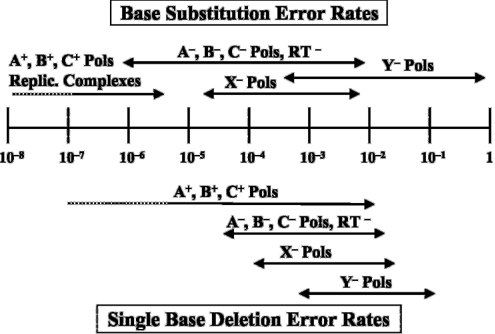
This review synthesizes how DNA polymerases achieve high replication fidelity, emphasizing nucleotide selectivity, conformational changes, proofreading, and mismatch/lesion handling. It also notes that fidelity varies enormously across polymerase families, from about \(10^{-7}\)–\(10^{-8}\) error rates for replicative systems to \(10^{-1}\)–\(10^{-3}\) for translesion synthesis polymerases.
Key findings
- In vivo, bacteriophage and *E. coli* replication in the absence of mismatch repair and external stress show base substitution error rates of about \(10^{-7}\) to \(10^{-8}\); eukaryotic replication is likely at least this accurate.
- Replicative polymerases from families A, B, and C typically have error rates in the \(10^{-6}\) to \(10^{-8}\) range, and their proofreading-defective derivatives reveal that fidelity often reflects \(10^{4}\)–\(10^{6}\)-fold selectivity for correct nucleotide insertion plus excision of 90%–99.9% of mismatches.
- Translesion synthesis polymerases are the least accurate, with misinsertion and base substitution error rates generally ranging from \(10^{-1}\) to \(10^{-3}\); for one polymerase, insertion of dGTP opposite template T can approach an error rate of 1.
- The paper argues that fidelity is shaped by multiple mechanisms, including geometric selection, base-base hydrogen bonding, water exclusion, dNTP-induced conformational change, mismatch extension/proofreading, and handling of damaged or misaligned substrates.
Methods
- Not an experimental study; this is a narrative review of DNA replication fidelity.
- It synthesizes prior biochemical, kinetic, structural, and mutational studies across bacteria, eukaryotes, and translesion synthesis polymerases, using published data and crystal structures.
- The main analysis is comparative and conceptual: it contrasts error-rate ranges, polymerase families, and mechanistic models of fidelity.
Limitations
- The paper states that error rates for repair reactions “have not yet been extensively studied,” so some conclusions about repair-associated DNA synthesis are predictive rather than directly measured.
- Many mechanistic claims are presented as hypotheses or interpretations of structural/kinetic data rather than definitive proof, especially for dNTP-induced conformational changes and water exclusion.
- The text makes evident that some sections are incomplete or only outlined in the provided version; if relying strictly on the excerpt, not all topics announced in the headings are fully developed.
Model-written summary. Check it against the paper before relying on it.
Integrity signals
Registry
Cites
Statistics
Figures


Verification
Claims the paper makes
10 Valid · 1 Not valid · 37 Not checked · 32 Own results and interpretations
The sources with a verdict support this claim; the rest weren’t checked yet, have no full text we could read, or their verdicts aren’t rated yet.
In the paper
“Kinetic studies (reviewed in Refs.15,19,[33][34][35][36] have established that fidelity depends on differences in the binding affinities and insertion rates of incorrect versus correct dNTPs.”
§ DNA Replication Fidelity > dNTP Binding Affinity, dNTP-induced Conformational
What the sources say
- Not checked — no full text of the sourcecites [15] 15. Kunkel, T. A., and Bebenek, K. (2000) Annu. Rev. Biochem. 69, 497-529 source
- Not checked — no full text of the sourcecites [19] 19. Beard, W. A., and Wilson, S. H. (2003) Structure 11, 489 -496 source
- Not checked — no full text of the sourcecites [33] 33. Goodman, M. F., Creighton, S., Bloom, L. B., and Petruska, J. (1993) Crit. Rev. Biochem. Mol. Biol. 28, 83-126 source
- Not checked — no full text of the sourcecites [34] 34. Johnson, K. A. (1993) Annu. Rev. Biochem. 62, 685-713 source
- Not checked — no full text of the sourcecites [35] 35. Showalter, A. K., and Tsai, M.-D. (2002) Biochemistry 41, 10571-10576 source
- Supportedcites [36] 36. Beard, W. A., Shock, D. D., Vande Berg, B. J., and Wilson, S. H. (2002) J. Biol. Chem. 277, 47393-47398 source
The paper’s introductory discussion defines nucleotide-insertion specificity as the insertion-rate constant divided by the incoming dNTP’s dissociation constant, and fidelity as the ratio of catalytic efficiencies for correct and incorrect nucleotides. That supports the claim that both binding and insertion kinetics enter into fidelity. (LLM, conf=0.92)
boostedstates a cause- Asserted: passes — The authors put it forward as true.
- Checkable: passes — It can be checked against evidence.
- Load-bearing: passes — The paper’s conclusions depend on it.
- Based: passes — The paper gives a reason why it holds.
Every source the paper cites for this claim was checked and supports it.
In the paper
“These results suggest that fidelity is primarily governed by the ability to insert the correct nucleotide (36) and focus attention on the conformational changes and interactions needed to achieve and stabilize the transition state.”
§ DNA Replication Fidelity > dNTP Binding Affinity, dNTP-induced Conformational
What the sources say
- Supportedcites [36] 36. Beard, W. A., Shock, D. D., Vande Berg, B. J., and Wilson, S. H. (2002) J. Biol. Chem. 277, 47393-47398 source
The paper’s Concluding Remarks state that differences between low- and high-fidelity DNA polymerases arise primarily from their ability to insert the correct nucleotide. This directly supports the clause attributed to citation (36). (LLM, conf=0.94)
hedgedstates a cause- Asserted: passes — The authors put it forward as true.
- Checkable: passes — It can be checked against evidence.
- Load-bearing: passes — The paper’s conclusions depend on it.
- Based: passes — The paper gives a reason why it holds.
- Supported
Every source the paper cites for this claim was checked and supports it.
In the paper
“In contrast, catalytic efficiencies for incorrect insertions by these polymerases vary over a much narrower range.”
§ DNA Replication Fidelity > dNTP Binding Affinity, dNTP-induced Conformational
What the sources say
- Supportedcites [36] 36. Beard, W. A., Shock, D. D., Vande Berg, B. J., and Wilson, S. H. (2002) J. Biol. Chem. 277, 47393-47398 source
In the Table I analysis (page not provided), correct-insertion efficiencies span a 10-million-fold range. The same section reports that, for most mispairs, a tenfold decrease in correct-insertion efficiency corresponds to little or no decrease in incorrect-insertion efficiency, supporting the narrower-range comparison. (LLM, conf=0.90)
plain- Asserted: passes — The authors put it forward as true.
- Checkable: passes — It can be checked against evidence.
- Load-bearing: passes — The paper’s conclusions depend on it.
- Based: passes — The paper gives a reason why it holds.
- Supported
The sources with a verdict support this claim; the rest weren’t checked yet, have no full text we could read, or their verdicts aren’t rated yet.
In the paper
“As for base substitutions, insertion/deletion error rates vary widely in a polymerase-and DNA sequence-dependent manner (56,57), such that single base deletion error rates (Fig. 1, bottom) can sometimes exceed base substitution error rates (58).”
§ DNA Replication Fidelity > Substrate Misalignments and Insertion/Deletion Fidelity
What the sources say
- Not checked — no full text of the sourcecites [56] 56. Kunkel, T. A. (1990) Biochemistry 29, 8003-8011 source
- Not checked — no full text of the sourcecites [57] 57. Bebenek, K., and Kunkel, T. A. (2000) Cold Spring Harbor Symp. Quant. Biol. 65, 81-91 source
- Supportedcites [58] 58. Bebenek, K., Garcı ´a-Dı ´az, M., Blanco, L., and Kunkel, T. A. (2003) J. Biol. Chem. 278, 34685-34690 source
Citation 58 is attached to the claim that single-base deletion error rates can exceed base-substitution error rates. The Results (p. 2) state that human Pol λ’s average single-base deletion error rate exceeds its single-base substitution error rate. The preceding claim about broad polymerase- and sequence-dependent variation is cited to references 56 and 57, not this paper. (LLM, conf=0.94)
plainstates an association- Asserted: passes — The authors put it forward as true.
- Checkable: passes — It can be checked against evidence.
- Load-bearing: unclear — It is unclear whether the paper’s conclusions depend on it.
- Based: passes — The paper gives a reason why it holds.
In the paper
“Studies of bacteriophage and Escherichia coli replication in the absence of DNA mismatch repair and external environmental stress suggest that the base substitution error rate of the replication machinery in vivo is in the range of 10 Ϫ7 to 10 Ϫ8 (4).”
§ DNA Replication Fidelity > How Accurate Is DNA Synthesis?
What the sources say
- Not checked — no full text of the sourcecites [4] 4. Schaaper, R. M. (1993) J. Biol. Chem. 268, 23762-23765 source
hedged- Asserted: passes — The authors put it forward as true.
- Checkable: passes — It can be checked against evidence.
- Load-bearing: unclear — It is unclear whether the paper’s conclusions depend on it.
- Based: passes — The paper gives a reason why it holds.
31 more claims
Create a free account to see all 80 claims and every source verdict.
- It may state two separate claims as one. 42
- Probably not a substantial claim. 8
Citations
Cites
Molecular Structure of Nucleic Acids: A Structure for Deoxyribose Nucleic Acid
WATSON, J. D., & CRICK, F. H. C. (1953) · Nature · doi:10.1038/171737a0 · Cited by 13,584
Friedberg, E. C., Walker, G. C., Siede, W., Wood, R. D., Schultz, R. A., & Ellenberger, T. (2005) · doi:10.1128/9781555816704 · Cited by 5,683
Bootsma, D., & Hoeijmakers, J. H. J. (1996) · Trends in Genetics · doi:10.1016/0168-9525(96)81408-9 · Cited by 2,282
Frameshift Mutations and the Genetic Code
Streisinger, G., Okada, Y., Emrich, J., Newton, J., Tsugita, A., Terzaghi, E., & Inouye, M. (1966) · Cold Spring Harbor Symposia on Quantitative Biology · doi:10.1101/sqb.1966.031.01.014 · Cited by 1,400
(1991) · PubMed · Cited by 1,305
A constant rate of spontaneous mutation in DNA-based microbes.
Drake, J. W. (1991) · Proceedings of the National Academy of Sciences · doi:10.1073/pnas.88.16.7160 · Cited by 1,199
Kunkel, T. A., & Bebenek, K. (2000) · Annual Review of Biochemistry · doi:10.1146/annurev.biochem.69.1.497 · Cited by 1,003
Self-citationMECHANISMS AND BIOLOGICAL EFFECTS OF MISMATCH REPAIR
Modrich, P. (1991) · Annual Review of Genetics · doi:10.1146/annurev.ge.25.120191.001305 · Cited by 892
MutT protein specifically hydrolyses a potent mutagenic substrate for DNA synthesis
Maki, H., & Sekiguchi, M. (1992) · Nature · doi:10.1038/355273a0 · Cited by 891
DNA Polymerases: Structural Diversity and Common Mechanisms
Steitz, T. A. (1999) · Journal of Biological Chemistry · doi:10.1074/jbc.274.25.17395 · Cited by 848
Research works printed but not linked: 1
- 5. Loeb, L. A. (2003) Cancer Res. 51, 3075-3079
Cited by
Items 401–500 of 752
A Deep Dive into DNA Base Pairing Interactions Under Water
Li, R., & Mak, C. H. (2020) · The Journal of Physical Chemistry B · doi:10.1021/acs.jpcb.0c03069 · Cited by 19
Li, Y., Gridley, C. L., Jäger, J., Sweasy, J. B., & Tamar Schlick, A. (2012) · Journal of the American Chemical Society · doi:10.1021/ja300361r · Cited by 18
Probing Minor Groove Hydrogen Bonding Interactions between RB69 DNA Polymerase and DNA
Xia, S., Christian, T. D., Wang, J., & Konigsberg, W. H. (2012) · Biochemistry · doi:10.1021/bi300416z · Cited by 18
Utilization of a Deoxynucleoside Diphosphate Substrate by HIV Reverse Transcriptase
Garforth, S., Parniak, M. A., & Prasad, V. R. (2008) · PLoS ONE · doi:10.1371/journal.pone.0002074 · Cited by 18
“HIV-1 reverse transcriptase (RT) is a replicative DNA polymerase, but has a fidelity (the accuracy with which it copies the template strand) that is intermediate between typical replicative and repair polymerases [2,3].”
BackgroundEquilenin-Derived DNA Adducts to Cytosine in DNA Duplexes: Structures and Thermodynamics
Ding, S., Shapiro, R., Geacintov, N. E., & Broyde, S. B. (2005) · Biochemistry · doi:10.1021/bi051090t · Cited by 17
Structure and expression of the Zea mays mutS-homologs Mus1 and Mus2
Horwath, M., Kramer, W., & Kunze, R. (2002) · Theoretical and Applied Genetics · doi:10.1007/s00122-002-0955-8 · Cited by 17
“Single-stranded loops frequently result from DNA polymerase slippage during the replication of microsatellite sequences (simple sequence repeats) ( Kunkel 1992 ).”
BackgroundWu, W., Palaniappan, C., Bambara, R. A., & Fay, P. J. (1996) · Nucleic Acids Research · doi:10.1093/nar/24.9.1710 · Cited by 17
Fagan, S. P., Mukherjee, P., Jaremko, W. J., Nelson-Rigg, R., Wilson, R. C., Dangerfield, T. L., Johnson, K. A., Lahiri, I., & Pata, J. D. (2021) · Nucleic Acids Research · doi:10.1093/nar/gkab613 · Cited by 15
Kouso, H., Yoshino, I., Miura, N., Takenaka, T., Ohba, T., Yohena, T., Osoegawa, A., Shoji, F., & Maehara, Y. (2008) · Journal of Surgical Oncology · doi:10.1002/jso.21108 · Cited by 16
Huang, Y., O’Mara, B. W., Conover, M., Ludwig, R. T., Fu, J., Tao, L., Li, Z. J., Rieble, S., Grace, M. J., & Russell, R. J. (2012) · Protein Science · doi:10.1002/pro.2046 · Cited by 16
Geronimo, I. M., Vidossich, P., & Vivo, M. D. (2021) · ACS Catalysis · doi:10.1021/acscatal.1c03840 · Cited by 16
Luan, G., Cai, Z., Gong, F., Dong, H., Zhao, L., Zhang, Y., & Li, Y. (2013) · Protein & Cell · doi:10.1007/s13238-013-3079-9 · Cited by 19
“…mutL are coding for activities of MMR, an important proofreading mechanism for DNA replication (Echols and Goodman, 1991; Kunkel and Bebenek, 2000; Kunkel, 2004), the resulted mutants are expected to exhibit signifi cantly increased mutation rates due to decreased fi delity of genome replication.”
BackgroundIdentification of an Unfolding Intermediate for a DNA Lesion Bypass Polymerase
Sherrer, S. M., Maxwell, B. A., Pack, L. R., Fiala, K. A., Fowler, J. D., Zhang, J., & Suo, Z. (2012) · Chemical Research in Toxicology · doi:10.1021/tx3002115 · Cited by 19
Nucleotide sequence determines the accelerated rate of point mutations
Kini, R. M., & Chinnasamy, A. (2010) · Toxicon · doi:10.1016/j.toxicon.2009.12.022 · Cited by 16
Partial base flipping is sufficient for strand slippage near DNA duplex termini.
Banavali, N. (2013) · Journal of the American Chemical Society · doi:10.1021/ja401573j · Cited by 15
UvrA and UvrB enhance mutations induced by oxidized deoxyribonucleotides
Hori, M., Ishiguro, C., Suzuki, T., Nakagawa, N., Nunoshiba, T., Kuramitsu, S., Yamamoto, K., Kasai, H., Harashima, H., & Kamiya, H. (2007) · DNA repair · doi:10.1016/j.dnarep.2007.06.013 · Cited by 18
“Introduction Replication errors by DNA polymerases and DNA lesions induced by mutagens cause mutations that are recognized as important steps in carcinogenesis [1-4].”
BackgroundXu, P., Oum, L., Lee, Y.-C., Geacintov, N. E., & Broyde, S. B. (2009) · Biochemistry · doi:10.1021/bi802363f · Cited by 16
“Various strand slippage mechanisms as mutational intermediates have been extensively studied by Ripley (59) and by Kunkel (58, 62).”
BackgroundInfluentialFranzolin, E., Coletta, S., Ferraro, P., Pontarin, G., D'Aronco, G., Stevanoni, M., Palumbo, E., Cagnin, S., Bertoldi, L., Feltrin, E., et al. (2019) · The FASEB Journal · doi:10.1096/fj.201902508r · Cited by 16
García‐Ortiz, M. V., Roldán‐Arjona, T., & Ariza, R. R. (2007) · FEBS Journal · doi:10.1111/j.1742-4658.2007.05868.x · Cited by 18
Gloeckner, C., Sauter, K. B. M., & Marx, A. (2007) · Angewandte Chemie · doi:10.1002/ange.200603987 · Cited by 16
Zang, H., Harris, T. M., & Guengerich, F. P. (2005) · Chemical Research in Toxicology · doi:10.1021/tx049683c · Cited by 16
Begomoviral βC1 orchestrates organellar genomic instability to augment viral infection
Nair, A., Harshith, C. Y., Narjala, A., et al. (2023) · The Plant Journal · doi:10.1111/tpj.16186 · Cited by 15
del Prado, A., Franco-Echevarría, E., González, B., Blanco, L., Salas, M., & de Vega, M. (2018) · Proceedings of the National Academy of Sciences · doi:10.1073/pnas.1718787115 · Cited by 13
“T guarantee faithful DNA synthesis, most replicative DNA polymerases (DNAPs) are associated with a 3′-5′ exonuclease activity contained in an independent domain of the same polypeptidic chain (with the exception of the multisubunit DNAP III of Escherichia coli, where the editing activity resides on the separate subuni…”
BackgroundGabr, M. T., & Pigge, F. C. (2018) · Inorganic Chemistry · doi:10.1021/acs.inorgchem.8b01782 · Cited by 15
del Prado, A., Rodríguez, I., Lázaro, J. M., Moreno‐Morcillo, M., de Vega, M., & Salas, M. (2019) · Scientific Reports · doi:10.1038/s41598-018-37513-7 · Cited by 14
POLE and POLD1 pathogenic variants in the proofreading domain in papillary thyroid cancer
Siraj, A. K., Bu, R., Arshad, M., Iqbal, K., Parvathareddy, S. K., Masoodi, T., Ghazwani, L. O., Al-Sobhi, S. S., Al‐Dayel, F., & Al-Kuraya, K. S. (2020) · Endocrine Connections · doi:10.1530/ec-20-0258 · Cited by 16
Engineering a fidelity-variant live-attenuated vaccine for chikungunya virus
Weiss, C. M., Liu, H., Riemersma, K. K., Ball, E. E., & Coffey, L. L. (2020) · npj Vaccines · doi:10.1038/s41541-020-00241-z · Cited by 18
Inomata, Y., Abe, T., Tsuda, M., Takeda, S., & Hirota, K. (2021) · PLoS ONE · doi:10.1371/journal.pone.0252587 · Cited by 14
Chi, L. M., & Lam, S. L. (2008) · Biochemistry · doi:10.1021/bi8001456 · Cited by 15
A recurrent frameshift mutation of the ankyrin gene associated with severe hereditary spherocytosis
Gallagher, P. G., Ferreira, J. D. S., Costa, F. F., Saad, S. T. O., & Forget, B. G. (2000) · British Journal of Haematology · doi:10.1046/j.1365-2141.2000.02441.x · Cited by 16
Chi, L. M., & Lam, S. L. (2006) · FEBS Letters · doi:10.1016/j.febslet.2006.11.001 · Cited by 15
“nucleolytic proofreading function and post-replication mismatch repair activity [1].”
BackgroundThe pattern of DNA cleavage intensity around indels
Chen, W., & Zhang, L. (2015) · Scientific Reports · doi:10.1038/srep08333 · Cited by 16
Jóźwiakowski, S. K., & Connolly, B. A. (2009) · Nucleic Acids Research · doi:10.1093/nar/gkp494 · Cited by 17
Mutagenesis and the three R's in yeast
Abdulovic, A. L., Kim, N., & Jinks-Robertson, S. (2006) · DNA repair · doi:10.1016/j.dnarep.2005.11.006 · Cited by 20
“[23] T.”
BackgroundEffect of dNTP pool alterations on fidelity of leading and lagging strand DNA replication in E. coli
Gaweł, D., Fijałkowska, I. J., Jonczyk, P., & Schaaper, R. M. (2013) · Mutation research. Fundamental and molecular mechanisms of mutagenesis · doi:10.1016/j.mrfmmm.2013.11.003 · Cited by 14
“Mechanistically, high levels of the next nucleotide promote extension of a mismatch and reduce the probability of removal of the misinserted base by proofreading [1, 22].”
BackgroundGenotoxic therapy stimulates error-prone DNA repair in dormant hepatocellular cancer stem cells
Nishikawa, S., Ishii, H., Haraguchi, N., KANO, Y., Fukusumi, T., Ohta, K., Ozaki, M., Sakai, D., Satoh, T., Nagano, H., et al. (2012) · Experimental and Therapeutic Medicine · doi:10.3892/etm.2012.522 · Cited by 14
“DNA damage that is too severe to be successfully repaired instead triggers programmed cell death (4,5).”
Dynamics of Proofreading by the E. coli Pol III Replicase
Park, J., Jergic, S., Jeon, Y., et al. (2017) · Cell chemical biology · doi:10.1016/j.chembiol.2017.09.008 · Cited by 14
Mukherjee, S., Dohno, C., Asano, K., & Nakatani, K. (2016) · Nucleic Acids Research · doi:10.1093/nar/gkw672 · Cited by 14
Estimation of the Genome-Wide Mutation Rate and Spectrum in the Archaeal Species Haloferax volcanii
Küçükyıldırım, S., Behringer, M. G., Williams, E. M., Doak, T. G., & Lynch, M. (2020) · Genetics · doi:10.1534/genetics.120.303299 · Cited by 18
“40 Previous in vitro studies suggesting the possibility that the fidelity of archaeal 41 DNA polymerases is higher than that of its bacterial counterparts (KUNKEL 1992; 42 CLINE et al. 1996; BLOOM et al. 1997; GROGAN et al. 2001) provide further 43 motivation for the current study.”
BackgroundWang, M., Lee, H. R., & Konigsberg, W. H. (2009) · Biochemistry · doi:10.1021/bi801627h · Cited by 17
Human Base Excision Repair Creates a Bias Toward −1 Frameshift Mutations
Lyons, D. M., & O’Brien, P. (2010) · Journal of Biological Chemistry · doi:10.1074/jbc.m110.118596 · Cited by 14
The Promise of Biomarkers in Colorectal Cancer Detection
Umar, A., & Srivastava, S. (2004) · Disease Markers · doi:10.1155/2004/303016 · Cited by 14
“For a complete review of DNA mismatch repair see references [14,53].”
BackgroundThe Fidelity of Cellular and Viral polymerases and its manipulation for Hypermutagenesis
Meyerhans, A., & Vartanian, J. (1999) · Elsevier eBooks · doi:10.1016/b978-012220360-2/50006-4 · Cited by 16
Analysis of the Excision Step in Human DNA Mismatch Repair
Genschel, J., & Modrich, P. L. (2006) · Methods in enzymology on CD-ROM/Methods in enzymology · doi:10.1016/s0076-6879(06)08017-7 · Cited by 14
Analysis of spontaneous frameshift mutations in REV1 and rev1-1 strains of Saccharomyces cerevisiae
Kalinowski, D. P., Larimer, F. W., & Plewa, M. J. (1995) · Mutation research. Fundamental and molecular mechanisms of mutagenesis · doi:10.1016/0027-5107(95)00064-p · Cited by 13
Mechanistic Basis for the Bypass of a Bulky DNA Adduct Catalyzed by a Y-Family DNA Polymerase
Vyas, R., Efthimiopoulos, G., Tokarsky, E. J., Malik, C. K., Basu, A. K., & Suo, Z. (2015) · Journal of the American Chemical Society · doi:10.1021/jacs.5b08027 · Cited by 16
Chen, Y., & Sugiyama, T. (2017) · DNA repair · doi:10.1016/j.dnarep.2017.08.011 · Cited by 11
Das, D., Dutta, A., & Mondal, P. (2015) · Computational and Theoretical Chemistry · doi:10.1016/j.comptc.2015.08.020 · Cited by 14
Evidence That the DNA Mismatch Repair System Removes 1-Nucleotide Okazaki Fragment Flaps
Kadyrova, L. Y., Dahal, B. K., & Kadyrov, F. A. (2015) · Journal of Biological Chemistry · doi:10.1074/jbc.m115.660357 · Cited by 13
“High fidelity DNA replication is required for the maintenance of genome integrity and the suppression of human diseases (65).”
BackgroundLi, J., Wang, C., Liu, J., Yu, Y., Liu, Y., Peng, Q., Liu, H., & Guan, X. (2021) · Molecular Biology Reports · doi:10.1007/s11033-021-06370-5 · Cited by 12
“But the probability of DNA replication errors in eukaryotic cells is very low, unless DNA mismatch repair is impaired [20, 21].”
BackgroundSeed banks alter the molecular evolutionary dynamics of Bacillus subtilis
Shoemaker, W. R., Polezhaeva, E., Givens, K. B., & Lennon, J. T. (2022) · Genetics · doi:10.1093/genetics/iyac071 · Cited by 16
“First, the ability to enter a dormant state dampens the 20 accumulation of de novo genetic diversity as well as its fluctuations over its sojourn 21 time, as dormant individuals do not reproduce and the vast majority of mutations are 22 typically acquired during the process of genome replication [15,16].”
BackgroundSherrer, S. M., Taggart, D. J., Pack, L. R., Malik, C. K., Basu, A. K., & Suo, Z. (2012) · Mutation research. Fundamental and molecular mechanisms of mutagenesis · doi:10.1016/j.mrfmmm.2012.08.002 · Cited by 17
“DNA lesions, derived from both endogenous and exogenous ources, often cause DNA polymerases to stall during genomic repliation [1–3].”
Díaz‐Anzaldúa, A., Díaz-Martínez, A., & Díaz-Martínez, L. R. (2011) · LA Referencia (Red Federada de Repositorios Institucionales de Publicaciones Científicas) · Cited by 18
Fidelity of DNA polymerases in the detection of intraindividual variation of mitochondrial DNA
Ricardo, P. C., Françoso, E., & Arias, M. C. (2019) · Mitochondrial DNA Part B · doi:10.1080/23802359.2019.1697188 · Cited by 16
Causes of Variation in the Rate of Molecular Evolution
Bromham, L. D. (2020) · Springer eBooks · doi:10.1007/978-3-030-60181-2_4 · Cited by 18
Probing the mechanisms of two exonuclease domain mutators of DNA polymerase ϵ
Dahl, J. M., Thomas, N., Tracy, M., Hearn, B. L., Perera, L., Kennedy, S. R., Herr, A. J., & Kunkel, T. A. (2022) · Nucleic Acids Research · doi:10.1093/nar/gkab1255 · Cited by 12
Self-citationPreston, R. J. (1996) · Toxicology · doi:10.1016/0300-483x(96)03386-0 · Cited by 13
Ramirez‐Aguilar, K. A., Moore, C. L., & Kuchta, R. D. (2005) · Biochemistry · doi:10.1021/bi0513711 · Cited by 13
Xia, S., Wood, M., Bradley, M. J., Cruz, E. M. D. L., & Konigsberg, W. H. (2013) · Nucleic Acids Research · doi:10.1093/nar/gkt674 · Cited by 13
Bowen, N. E., Oo, A., & Kim, B. (2022) · Viruses · doi:10.3390/v14081622 · Cited by 14
Chi, L. M., & Lam, S. L. (2007) · Biochemistry · doi:10.1021/bi700865e · Cited by 12
Lieberman, K. R., Dahl, J. M., & Wang, H. (2014) · Journal of the American Chemical Society · doi:10.1021/ja5026408 · Cited by 12
Rey, J., Ducros, V., Pujol, P., Wang, Q., Buisine, M., Aissaoui, H., Maudelondé, T., & Olschwang, S. (2017) · Journal of Molecular Diagnostics · doi:10.1016/j.jmoldx.2017.04.005 · Cited by 14
Russell, H. J., Richardson, T. T., Emptage, K., & Connolly, B. A. (2009) · Nucleic Acids Research · doi:10.1093/nar/gkp800 · Cited by 12
Allosteric Regulation of HIV-1 Reverse Transcriptase by ATP for Nucleotide Selection
Yokoyama, M., Mori, H., & Sato, H. (2010) · PLoS ONE · doi:10.1371/journal.pone.0008867 · Cited by 14
“Instead, the M41L, T69I, L210W, and T215Y substitutions augmented the hydrophobicity of the catalytic cavity of p66, which could enhance p66’s ability to exclude water from the catalytic site cleft for a higher fidelity of nucleotide selection [6,29].”
BackgroundProteomic dissection of DNA polymerization
Beck, J. L., Urathamakul, T., WATT, S. J., Sheil, M. M., Schaeffer, P. M., & Dixon, N. E. (2006) · Expert Review of Proteomics · doi:10.1586/14789450.3.2.197 · Cited by 12
The RUNX Family, a Novel Multifaceted Guardian of the Genome
Dutta, B., & Osato, M. (2023) · Cells · doi:10.3390/cells12020255 · Cited by 12
“This complicated process is not completely error-proof, and as a result, base substitutions and insertions/deletions (indels) accumulate at a rate of 10−6 to 10−8 per generation of the cell cycle [2].”
BackgroundSzekely, O., Rangadurai, A., Gu, S., Manghrani, A., Guseva, S., & Al‐Hashimi, H. M. (2024) · Nucleic Acids Research · doi:10.1093/nar/gkae027 · Cited by 12
High-throughput DNA melt measurements enable improved models of DNA folding thermodynamics
Ke, Y., Sharma, E., Wayment-Steele, H. K., Becker, W. R., Ho, A., Marklund, E., & Greenleaf, W. J. (2025) · Nature Communications · doi:10.1038/s41467-025-60455-4 · Cited by 17
“Current methods for predicting stability from DNA sequence use nearest-neighbor models that struggle to accurately capture the diverse sequence dependence of secondary structural motifs beyond Watson-Crick base pairs, likely due to insuf fi cient experimental data.”
The guiding role of dissipation in kinetic proofreading networks: Implications for protein synthesis
Banerjee, K., Das, B., & Gangopadhyay, G. (2020) · The Journal of Chemical Physics · doi:10.1063/1.5144726 · Cited by 11
Conformational Dynamics of DNA Polymerases Revealed at the Single-Molecule Level
Millar, D. P. (2022) · Frontiers in Molecular Biosciences · doi:10.3389/fmolb.2022.826593 · Cited by 11
Kumar, P., Chaitanya, P., & Nagarajaram, H. A. (2010) · Nucleic Acids Research · doi:10.1093/nar/gkq1198 · Cited by 13
Estable, M. C. (2007) · International Journal of Biological Sciences · doi:10.7150/ijbs.3.318 · Cited by 12
“This can be attributed to the high fidelity of mammalian cellular DNA replication, mediated by the 3'-5' exonuclease proofreading activity of DNA polymerase [6].”
Coordination and Substitution of DNA Polymerases in Response to Genomic Obstacles
Trakselis, M. A., Cranford, M. T., & Chu, A. M. (2017) · Chemical Research in Toxicology · doi:10.1021/acs.chemrestox.7b00190 · Cited by 12
Influence of DNA Lesions on Polymerase-Mediated DNA Replication at Single-Molecule Resolution
Gahlon, H. L., Romano, L. J., & Rueda, D. (2017) · Chemical Research in Toxicology · doi:10.1021/acs.chemrestox.7b00224 · Cited by 12
POLE Mutation Characteristics in a Chinese Cohort with Endometrial Carcinoma
Li, Y., He, Q., Li, S., Wen, X., Ye, L., Wang, K., & Wan, X. (2020) · OncoTargets and Therapy · doi:10.2147/ott.s258642 · Cited by 12
Barbari, S. R., Beach, A. K., Markgren, J. G., Parkash, V., Moore, E. A., Johansson, E., & Shcherbakova, P. V. (2022) · Nucleic Acids Research · doi:10.1093/nar/gkac602 · Cited by 12
Zhang, L., Shapiro, R., & Broyde, S. B. (2005) · Chemical Research in Toxicology · doi:10.1021/tx050132b · Cited by 11
Jóźwiakowski, S. K., Keith, B. J., Gilroy, L., Doherty, A. J., & Connolly, B. A. (2014) · Nucleic Acids Research · doi:10.1093/nar/gku683 · Cited by 14
“In high fidelity polymerases, the conformational change, and hence extension, requires correct partnering of dNTP and templating base, a feature that ensures accuracy (58,59).”
BackgroundOn the embedding capacity of DNA strands under substitution, insertion, and deletion mutations
Balado, F. (2010) · Proceedings of SPIE, the International Society for Optical Engineering/Proceedings of SPIE · doi:10.1117/12.838537 · Cited by 11
“Mutations other than substitutions are not less important: the study by Kunkel reveals that single base deletion error rates in DNA synthesis are in the range 10−5 to 10−1 per replication.(24)”
BackgroundInfluentialBiochemistry of Mammalian DNA Mismatch Repair
Lu, A.-L. (1998) · Humana Press eBooks · doi:10.1007/978-1-59259-455-9_7 · Cited by 12
Protein Assemblies in Translesion Synthesis
Arianna, G. A., & Korzhnev, D. M. (2024) · Genes · doi:10.3390/genes15070832 · Cited by 12
Xia, S., Eom, S. H., Konigsberg, W. H., & Wang, J. (2012) · Biochemistry · doi:10.1021/bi2016487 · Cited by 12
Insertion of oxidized nucleotide triggers rapid DNA polymerase opening
Kim, T., Freudenthal, B., Beard, W. A., Wilson, S. H., & Tamar Schlick, A. (2016) · Nucleic Acids Research · doi:10.1093/nar/gkw174 · Cited by 10
Genome Instability in DNA Viruses
Sanjuán, R., Pereira-Gómez, M., & Risso-Ballester, J. (2016) · Elsevier eBooks · doi:10.1016/b978-0-12-803309-8.00003-3 · Cited by 16
Koag, M., & Lee, S. (2018) · Biochemical Journal · doi:10.1042/bcj20170787 · Cited by 10
“mechanism, intrinsic proofreading activity, and minor groove interactions, have been identified as contributors to the replication fidelity of DNA polymerases [6,7].”
BackgroundSorting DNA with asymmetry: a new player in gene regulation?
Evano, B., & Tajbakhsh, S. (2013) · Chromosome Research · doi:10.1007/s10577-013-9359-7 · Cited by 14
“Some of these polymerases (e.g. Pol ζ, Pol η, Pol ι, and Pol κ) lack proofreading activity, and introduce errors ranging from 10–1 to 10–3 (Kunkel 2004).”
BackgroundDNA Pol λˈs Extraordinary Ability To Stabilize Misaligned DNA
Foley, M. C., Padow, V. A., & Tamar Schlick, A. (2010) · Journal of the American Chemical Society · doi:10.1021/ja1049687 · Cited by 10
Harms, K., Lunnan, A., Hülter, N. F., Mourier, T., Vinner, L., Andam, C. P., Marttinen, P., Fridholm, H., Hansen, A. J., Hanage, W. P., et al. (2016) · Proceedings of the National Academy of Sciences · doi:10.1073/pnas.1615819114 · Cited by 8
“Known mechanisms responsible for clustered nucleotide variations include error-prone DNA polymerases (9) and conversions at imperfect palindromes through template-switching (10) (templated mutagenesis), which can generate tracts of single nucleotide changes, respectively.”
BackgroundFishel, R. A., & Lee, J. (2016) · Springer eBooks · doi:10.1007/978-4-431-55873-6_12 · Cited by 10
Measuring the Fidelity of Translesion DNA Synthesis
McCulloch, S. D., & Kunkel, T. A. (2006) · Methods in enzymology on CD-ROM/Methods in enzymology · doi:10.1016/s0076-6879(06)08021-9 · Cited by 13
Self-citationHowell, C. A., Kondratick, C. M., & Washington, M. T. (2008) · Nucleic Acids Research · doi:10.1093/nar/gkn023 · Cited by 12
Directed Evolution of an Error‐Prone T7 DNA Polymerase that Attenuates Viral Replication
Söte, S., Kleine, S., Schlicke, M., & Brakmann, S. (2011) · ChemBioChem · doi:10.1002/cbic.201000799 · Cited by 12
Isolation and characterization of pLS 1 plasmid mutants with increased copy numbers
Acebo, P., Alda, M. T., Espinosa, M., et al. (1996) · FEMS Microbiology Letters · doi:10.1111/j.1574-6968.1996.tb08319.x · Cited by 10
Venkatramani, R., & Radhakrishnan, R. (2007) · Proteins Structure Function and Bioinformatics · doi:10.1002/prot.21824 · Cited by 11
“2, black line) for conforming to the ‘‘ideal-two-metal-ion’’ geometry: (1) the average O30Pa distance of 3.”
BackgroundResultA macroscopic kinetic model for DNA polymerase elongation and high-fidelity nucleotide selection
Viljoen, S., Griep, M. A., Nelson, M., & Viljoen, H. J. (2005) · Computational Biology and Chemistry · doi:10.1016/j.compbiolchem.2005.02.003 · Cited by 12
“Comparative analysis suggests that all DNA polymerases will have the same broadly conserved molecular properties and mechanisms, but that each polymerase will have its unique set of microscopic rates and equilibria (Jager and Pata, 1999; Joyce and Benkovic, 2004; Kunkel, 2004).”
BackgroundTokarsky, E. J., Gadkari, V. V., Zahurancik, W. J., Malik, C. K., Basu, A. K., & Suo, Z. (2016) · DNA repair · doi:10.1016/j.dnarep.2016.08.002 · Cited by 10
Trzemecka, A., Jacewicz, A., Carver, G. T., Drake, J. W., & Bębenek, A. (2010) · Journal of Molecular Biology · doi:10.1016/j.jmb.2010.09.058 · Cited by 10
“A mismatch at the 3′ terminus usually increases Exo activity by weakening Pol binding to the substrate.(7) Using gel retardation assays, we measured the strength of dsDNA binding for Pol, Pol, Pol, and Pol polymerases in Exo backgrounds with either a normal terminal base pair or a terminal T·dGMP mismatch using the sa…”
Flow cytometric detection of tandem repeat mutations induced by various chemical classes
Healy, C., Wade, M., McMahon, A., Williams, A., Johnson, D. A., & Parfett, C. L. J. (2006) · Mutation research. Fundamental and molecular mechanisms of mutagenesis · doi:10.1016/j.mrfmmm.2006.01.012 · Cited by 10
Hashem, V. I., & Sinden, R. R. (2005) · Mutation research. Fundamental and molecular mechanisms of mutagenesis · doi:10.1016/j.mrfmmm.2004.11.009 · Cited by 10
Metadata
- Authors
- Kunkel, T. A.
- Affiliations
- National Institutes of Health (US)
- Corresponding author
- Kunkel, Thomas A.
- ORCID
- Kunkel, Thomas A.
- Venue
- Journal of Biological Chemistry
- Publisher
- Elsevier BV
- Published
- 2004-04
- Volume
- 279
- Issue
- 17
- Pages
- 16895-16898
- ISSN
- 0021-9258 (ISSN-L)
- OpenAlex
- W2152112318
- Cited by
- 754
- References
- 110
- Citations by year
- 2026: 17 · 2025: 14 · 2024: 11 · 2023: 19 · 2022: 16 · 2021: 24 · 2020: 33 · 2019: 35 · 2018: 30 · 2017: 36 · 2016: 29 · 2015: 29 · 2014: 38 · 2013: 43 · 2012: 47
- FWCI
- 3.27
- Type
- journal article
- Language
- en
- Open access
- hybrid
- doi.org
- Licence
- cc-by
- www.elsevier.com/tdm/userlicense/1.0/ (tdm)
- creativecommons.org/licenses/by/4.0/ (vor, 6043 d)
- Locations
- Journal of Biological Chemistry (publishedVersion, cc-by)
- PubMed (publishedVersion)
- Topics
- Life Sciences › Biochemistry, Genetics and Molecular Biology › Molecular Biology › DNA Repair Mechanisms
- Life Sciences › Biochemistry, Genetics and Molecular Biology › Molecular Biology › DNA and Nucleic Acid Chemistry
- Health Sciences › Medicine › Pathology and Forensic Medicine › Genetic factors in colorectal cancer
- Keywords
- DNA replication fidelity, DNA polymerase, DNA mismatch repair, DNA polymerase V, DNA polymerase IV, translesion synthesis
- MeSH terms
- Base Composition, DNA, DNA Replication, Escherichia coli, Hydrogen Bonding, Models, Molecular, Nucleic Acid Conformation, Thermodynamics, Gene Deletion, Entropy, Base Pairing, Base Pair Mismatch
About these checks
Registry, retraction, Cites and statistics results are computed, not judged, with one exception: a printed reference that no index lists is read once by a model before it counts as a citation error. Claims are extracted by a model and kept only when their quote appears verbatim in the text; each cited source is then checked, with a model’s help, for whether it says what the claim relies on. Those verdicts can be wrong — read the claim’s quote and the cited source before relying on one.
The claim verdicts this report counts are experimental: their accuracy is not yet measured.
A language model drew the claims from the paper on 2026-10-09, under version 3 of the claim definition (model deepseek-v4.1-flash, prompt extract-v3).
A second model labelled each claim on 2026-10-09 (model jev-1.13-20260917, definition revision gold-guideline-v0.2).
Cited sources are checked with a language model’s help (gpt-6-sol).
Statistics and arithmetic are recomputed, not judged.
Confidence bands are shown only for fields calibrated on our annotated test set. None is calibrated yet, so no band is shown.
What counts as a claim ›How we measure confidence ›How we check this ›
Are you an author, or do you see a problem with this page? Request a review
Data sources
Bibliographic data: Semantic Scholar, OpenAlex, Crossref.
Contains information from the Semantic Scholar Academic Graph Datasets, made available under the ODC Attribution License (ODC-BY 1.0).
Semantic Scholar’s data is described in: Kinney, R., et al. (2023). The Semantic Scholar Open Data Platform. arXiv:2301.10140.
