

DNA Replication Fidelity
Open accessThe DOI matches its Crossref record; 111 of the 111 references it cites were found in a registry or an index; 12 of the 104 sources its claims cite were checked for support.
Abstract
Review of the mechanisms that make DNA copying accurate, including nucleotide selectivity, proofreading, and mismatch repair.
Overview
CoChat Summary
TL;DR
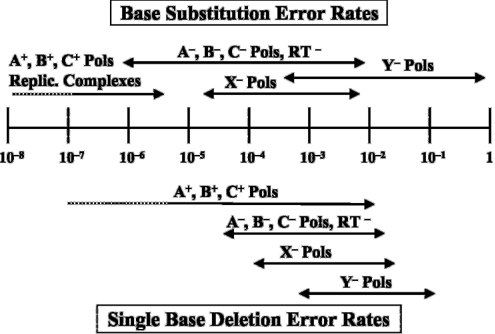
This review synthesizes how DNA polymerases achieve high replication fidelity, emphasizing nucleotide selectivity, conformational changes, proofreading, and mismatch/lesion handling. It also notes that fidelity varies enormously across polymerase families, from about \(10^{-7}\)–\(10^{-8}\) error rates for replicative systems to \(10^{-1}\)–\(10^{-3}\) for translesion synthesis polymerases.
Key findings
- In vivo, bacteriophage and *E. coli* replication in the absence of mismatch repair and external stress show base substitution error rates of about \(10^{-7}\) to \(10^{-8}\); eukaryotic replication is likely at least this accurate.
- Replicative polymerases from families A, B, and C typically have error rates in the \(10^{-6}\) to \(10^{-8}\) range, and their proofreading-defective derivatives reveal that fidelity often reflects \(10^{4}\)–\(10^{6}\)-fold selectivity for correct nucleotide insertion plus excision of 90%–99.9% of mismatches.
- Translesion synthesis polymerases are the least accurate, with misinsertion and base substitution error rates generally ranging from \(10^{-1}\) to \(10^{-3}\); for one polymerase, insertion of dGTP opposite template T can approach an error rate of 1.
- The paper argues that fidelity is shaped by multiple mechanisms, including geometric selection, base-base hydrogen bonding, water exclusion, dNTP-induced conformational change, mismatch extension/proofreading, and handling of damaged or misaligned substrates.
Methods
- Not an experimental study; this is a narrative review of DNA replication fidelity.
- It synthesizes prior biochemical, kinetic, structural, and mutational studies across bacteria, eukaryotes, and translesion synthesis polymerases, using published data and crystal structures.
- The main analysis is comparative and conceptual: it contrasts error-rate ranges, polymerase families, and mechanistic models of fidelity.
Limitations
- The paper states that error rates for repair reactions “have not yet been extensively studied,” so some conclusions about repair-associated DNA synthesis are predictive rather than directly measured.
- Many mechanistic claims are presented as hypotheses or interpretations of structural/kinetic data rather than definitive proof, especially for dNTP-induced conformational changes and water exclusion.
- The text makes evident that some sections are incomplete or only outlined in the provided version; if relying strictly on the excerpt, not all topics announced in the headings are fully developed.
Model-written summary. Check it against the paper before relying on it.
Integrity signals
Registry
Cites
Statistics
Figures


Verification
Claims the paper makes
10 Valid · 1 Not valid · 37 Not checked · 32 Own results and interpretations
The sources with a verdict support this claim; the rest weren’t checked yet, have no full text we could read, or their verdicts aren’t rated yet.
In the paper
“Kinetic studies (reviewed in Refs.15,19,[33][34][35][36] have established that fidelity depends on differences in the binding affinities and insertion rates of incorrect versus correct dNTPs.”
§ DNA Replication Fidelity > dNTP Binding Affinity, dNTP-induced Conformational
What the sources say
- Not checked — no full text of the sourcecites [15] 15. Kunkel, T. A., and Bebenek, K. (2000) Annu. Rev. Biochem. 69, 497-529 source
- Not checked — no full text of the sourcecites [19] 19. Beard, W. A., and Wilson, S. H. (2003) Structure 11, 489 -496 source
- Not checked — no full text of the sourcecites [33] 33. Goodman, M. F., Creighton, S., Bloom, L. B., and Petruska, J. (1993) Crit. Rev. Biochem. Mol. Biol. 28, 83-126 source
- Not checked — no full text of the sourcecites [34] 34. Johnson, K. A. (1993) Annu. Rev. Biochem. 62, 685-713 source
- Not checked — no full text of the sourcecites [35] 35. Showalter, A. K., and Tsai, M.-D. (2002) Biochemistry 41, 10571-10576 source
- Supportedcites [36] 36. Beard, W. A., Shock, D. D., Vande Berg, B. J., and Wilson, S. H. (2002) J. Biol. Chem. 277, 47393-47398 source
The paper’s introductory discussion defines nucleotide-insertion specificity as the insertion-rate constant divided by the incoming dNTP’s dissociation constant, and fidelity as the ratio of catalytic efficiencies for correct and incorrect nucleotides. That supports the claim that both binding and insertion kinetics enter into fidelity. (LLM, conf=0.92)
boostedstates a cause- Asserted: passes — The authors put it forward as true.
- Checkable: passes — It can be checked against evidence.
- Load-bearing: passes — The paper’s conclusions depend on it.
- Based: passes — The paper gives a reason why it holds.
Every source the paper cites for this claim was checked and supports it.
In the paper
“These results suggest that fidelity is primarily governed by the ability to insert the correct nucleotide (36) and focus attention on the conformational changes and interactions needed to achieve and stabilize the transition state.”
§ DNA Replication Fidelity > dNTP Binding Affinity, dNTP-induced Conformational
What the sources say
- Supportedcites [36] 36. Beard, W. A., Shock, D. D., Vande Berg, B. J., and Wilson, S. H. (2002) J. Biol. Chem. 277, 47393-47398 source
The paper’s Concluding Remarks state that differences between low- and high-fidelity DNA polymerases arise primarily from their ability to insert the correct nucleotide. This directly supports the clause attributed to citation (36). (LLM, conf=0.94)
hedgedstates a cause- Asserted: passes — The authors put it forward as true.
- Checkable: passes — It can be checked against evidence.
- Load-bearing: passes — The paper’s conclusions depend on it.
- Based: passes — The paper gives a reason why it holds.
- Supported
Every source the paper cites for this claim was checked and supports it.
In the paper
“In contrast, catalytic efficiencies for incorrect insertions by these polymerases vary over a much narrower range.”
§ DNA Replication Fidelity > dNTP Binding Affinity, dNTP-induced Conformational
What the sources say
- Supportedcites [36] 36. Beard, W. A., Shock, D. D., Vande Berg, B. J., and Wilson, S. H. (2002) J. Biol. Chem. 277, 47393-47398 source
In the Table I analysis (page not provided), correct-insertion efficiencies span a 10-million-fold range. The same section reports that, for most mispairs, a tenfold decrease in correct-insertion efficiency corresponds to little or no decrease in incorrect-insertion efficiency, supporting the narrower-range comparison. (LLM, conf=0.90)
plain- Asserted: passes — The authors put it forward as true.
- Checkable: passes — It can be checked against evidence.
- Load-bearing: passes — The paper’s conclusions depend on it.
- Based: passes — The paper gives a reason why it holds.
- Supported
The sources with a verdict support this claim; the rest weren’t checked yet, have no full text we could read, or their verdicts aren’t rated yet.
In the paper
“As for base substitutions, insertion/deletion error rates vary widely in a polymerase-and DNA sequence-dependent manner (56,57), such that single base deletion error rates (Fig. 1, bottom) can sometimes exceed base substitution error rates (58).”
§ DNA Replication Fidelity > Substrate Misalignments and Insertion/Deletion Fidelity
What the sources say
- Not checked — no full text of the sourcecites [56] 56. Kunkel, T. A. (1990) Biochemistry 29, 8003-8011 source
- Not checked — no full text of the sourcecites [57] 57. Bebenek, K., and Kunkel, T. A. (2000) Cold Spring Harbor Symp. Quant. Biol. 65, 81-91 source
- Supportedcites [58] 58. Bebenek, K., Garcı ´a-Dı ´az, M., Blanco, L., and Kunkel, T. A. (2003) J. Biol. Chem. 278, 34685-34690 source
Citation 58 is attached to the claim that single-base deletion error rates can exceed base-substitution error rates. The Results (p. 2) state that human Pol λ’s average single-base deletion error rate exceeds its single-base substitution error rate. The preceding claim about broad polymerase- and sequence-dependent variation is cited to references 56 and 57, not this paper. (LLM, conf=0.94)
plainstates an association- Asserted: passes — The authors put it forward as true.
- Checkable: passes — It can be checked against evidence.
- Load-bearing: unclear — It is unclear whether the paper’s conclusions depend on it.
- Based: passes — The paper gives a reason why it holds.
In the paper
“Studies of bacteriophage and Escherichia coli replication in the absence of DNA mismatch repair and external environmental stress suggest that the base substitution error rate of the replication machinery in vivo is in the range of 10 Ϫ7 to 10 Ϫ8 (4).”
§ DNA Replication Fidelity > How Accurate Is DNA Synthesis?
What the sources say
- Not checked — no full text of the sourcecites [4] 4. Schaaper, R. M. (1993) J. Biol. Chem. 268, 23762-23765 source
hedged- Asserted: passes — The authors put it forward as true.
- Checkable: passes — It can be checked against evidence.
- Load-bearing: unclear — It is unclear whether the paper’s conclusions depend on it.
- Based: passes — The paper gives a reason why it holds.
31 more claims
Create a free account to see all 80 claims and every source verdict.
- It may state two separate claims as one. 42
- Probably not a substantial claim. 8
Citations
Cites
Molecular Structure of Nucleic Acids: A Structure for Deoxyribose Nucleic Acid
WATSON, J. D., & CRICK, F. H. C. (1953) · Nature · doi:10.1038/171737a0 · Cited by 13,584
Friedberg, E. C., Walker, G. C., Siede, W., Wood, R. D., Schultz, R. A., & Ellenberger, T. (2005) · doi:10.1128/9781555816704 · Cited by 5,683
Bootsma, D., & Hoeijmakers, J. H. J. (1996) · Trends in Genetics · doi:10.1016/0168-9525(96)81408-9 · Cited by 2,282
Frameshift Mutations and the Genetic Code
Streisinger, G., Okada, Y., Emrich, J., Newton, J., Tsugita, A., Terzaghi, E., & Inouye, M. (1966) · Cold Spring Harbor Symposia on Quantitative Biology · doi:10.1101/sqb.1966.031.01.014 · Cited by 1,400
(1991) · PubMed · Cited by 1,305
A constant rate of spontaneous mutation in DNA-based microbes.
Drake, J. W. (1991) · Proceedings of the National Academy of Sciences · doi:10.1073/pnas.88.16.7160 · Cited by 1,199
Kunkel, T. A., & Bebenek, K. (2000) · Annual Review of Biochemistry · doi:10.1146/annurev.biochem.69.1.497 · Cited by 1,003
Self-citationMECHANISMS AND BIOLOGICAL EFFECTS OF MISMATCH REPAIR
Modrich, P. (1991) · Annual Review of Genetics · doi:10.1146/annurev.ge.25.120191.001305 · Cited by 892
MutT protein specifically hydrolyses a potent mutagenic substrate for DNA synthesis
Maki, H., & Sekiguchi, M. (1992) · Nature · doi:10.1038/355273a0 · Cited by 891
DNA Polymerases: Structural Diversity and Common Mechanisms
Steitz, T. A. (1999) · Journal of Biological Chemistry · doi:10.1074/jbc.274.25.17395 · Cited by 848
Research works printed but not linked: 1
- 5. Loeb, L. A. (2003) Cancer Res. 51, 3075-3079
Cited by
Items 301–400 of 752
Vaisman, A., Lehmann, A. R., & Woodgate, R. (2004) · Advances in protein chemistry · doi:10.1016/s0065-3233(04)69007-3 · Cited by 34
Heterogeneity of spontaneous DNA replication errors in single isogenic Escherichia coli cells
Woo, A. C., Faure, L., Dapa, T., & Matic, I. (2018) · Science Advances · doi:10.1126/sciadv.aat1608 · Cited by 29
“These include metabolic control over concentrations of endogenous and exogenous mutagens, DNA repair systems, deoxynucleotide triphosphate pool balance, the insertion accuracy of DNA polymerases, DNA polymerases’ 3′→ 5′ exonucleolytic proofreading, and several postreplication systems for repairing mismatches (2, 3).”
BackgroundVisualizing structure-mediated interactions in supercoiled DNA molecules
Scott, S., Xu, Z. M., Kouzine, F., et al. (2018) · Nucleic Acids Research · doi:10.1093/nar/gky266 · Cited by 29
“Deviations from the expected interaction can have severe consequences: in the case of DNA replication, permanent errors in the genetic code could lead to mutations in the genome, causing diseases such as cancer (5).”
BackgroundDas erweiterte genetische Alphabet
Malyshev, D. A., & Romesberg, F. E. (2015) · Angewandte Chemie · doi:10.1002/ange.201502890 · Cited by 29
Molecular characterization of microbial mutations induced by ion beam irradiation
Ichida, H., Matsuyama, T., Ryuto, H., et al. (2007) · Mutation research. Fundamental and molecular mechanisms of mutagenesis · doi:10.1016/j.mrfmmm.2007.10.009 · Cited by 29
Lee, H. R., Wang, M., & Konigsberg, W. H. (2009) · Biochemistry · doi:10.1021/bi8016284 · Cited by 29
Capacity of DNA Data Embedding Under Substitution Mutations
Balado, F. (2012) · Arrow@dit (Dublin Institute of Technology) · Cited by 29
Nucleotide analogues as probes for DNA polymerases
Jung, K., & Marx, A. (2005) · Cellular and Molecular Life Sciences · doi:10.1007/s00018-005-5117-0 · Cited by 36
Triplet Repeat Expansion Generated by DNA Slippage Is Suppressed by Human Flap Endonuclease 1
Ruggiero, B. L., & Topal, M. D. (2004) · Journal of Biological Chemistry · doi:10.1074/jbc.m313170200 · Cited by 33
DNA damage in cancer development: special implications in viral oncogenesis.
Katerji, M., & Duerksen-Hughes, P. J. (2021) · PubMed Central · Cited by 58
Postreplication repair mechanisms in the presence of DNA adducts in Escherichia coli
Bichara, M., Meier, M. J., Wagner, J. E., Cordonnier, A. M., & Lambert, I. B. (2011) · Mutation Research/Reviews in Mutation Research · doi:10.1016/j.mrrev.2011.04.003 · Cited by 36
Conformational Changes during Nucleotide Selection by Sulfolobus solfataricus DNA Polymerase Dpo4
Eoff, R. L., Sánchez-Ponce, R., & Guengerich, F. P. (2009) · Journal of Biological Chemistry · doi:10.1074/jbc.m109.009506 · Cited by 30
Choi, J., Lim, S., Eoff, R. L., & Guengerich, F. P. (2009) · Journal of Molecular Biology · doi:10.1016/j.jmb.2009.04.023 · Cited by 29
Strerath, M., Gloeckner, C., Liu, D., Schnur, A., & Marx, A. (2007) · ChemBioChem · doi:10.1002/cbic.200600337 · Cited by 31
Genomic Stability and Instability: A Working Paradigm
Cheng, K. C., & Loeb, L. A. (1997) · Current topics in microbiology and immunology · doi:10.1007/978-3-642-60505-5_2 · Cited by 34
Geronimo, I. M., Vidossich, P., Donati, E., & Vivo, M. D. (2021) · Wiley Interdisciplinary Reviews Computational Molecular Science · doi:10.1002/wcms.1534 · Cited by 27
“For example, A- and B-family DNA Pols have an exonuclease 30 ! 50 proofreading domain that enhances their fidelity by as much as 100-fold (10 to 10).(50,51) X-family DNA Pols have an additional lyase domain involved in the excision of apyrimidinic sites.”
BackgroundAnnett, K., Duggan, O., Freeburn, R. W., Hyland, P., Pawelec, G., & Barnett, Y. (2005) · Experimental Gerontology · doi:10.1016/j.exger.2005.09.001 · Cited by 30
Zhang, H., Rhee, C., Bębenek, A., Drake, J. W., Wang, J., & Konigsberg, W. H. (2006) · Biochemistry · doi:10.1021/bi052099y · Cited by 27
“On the other hand, misincorporation results in reduced primer extension rates, providing an opportunity for the exonuclease activity of the replicative polymerases or their associated subunits, to remove mismatched bases at the 3’ primerterminus of the primer before they become part of the DNA duplex (23, 24).”
BackgroundAvramidou, E. V., Doulis, A. G., & Aravanopoulos, F. A. (2015) · Gene · doi:10.1016/j.gene.2015.02.068 · Cited by 27
“plants is very low (10−7–10−8) in order to adequately explain the remarkable plasticity of plant phenotypes (Kunkel, 2004).”
BackgroundKinetic Analysis of the Bypass of a Bulky DNA Lesion Catalyzed by Human Y-Family DNA Polymerases
Sherrer, S. M., Sanman, L. E., Xia, C. X., Bolin, E. R., Malik, C. K., Efthimiopoulos, G., Basu, A. K., & Suo, Z. (2012) · Chemical Research in Toxicology · doi:10.1021/tx200531y · Cited by 31
Coggins, G. E., Maddukuri, L., Penthala, N. R., Hartman, J. H., Eddy, S., Ketkar, A. D., Crooks, P. A., & Eoff, R. L. (2013) · ACS Chemical Biology · doi:10.1021/cb400305r · Cited by 29
Replication of 2-hydroxyadenine-containing DNA and recognition by human MutSα
Barone, F., McCulloch, S. D., Macpherson, P., Maga, G., Yamada, M., Nohmi, T., Minoprio, A., Mazzei, F., Kunkel, T. A., Karran, P., et al. (2007) · DNA repair · doi:10.1016/j.dnarep.2006.11.002 · Cited by 27
“Since miscoding by a DNA lesion can be influenced by the type of DNA polymerase [25,26] and the sequence context, we examined the ability of A, B and Y family DNA polymerases to bypass a template 2-OH-A in two different sequences.”
BackgroundSelf-citationRodriguez, H., & Loechler, E. L. (1995) · Mutation research. Fundamental and molecular mechanisms of mutagenesis · doi:10.1016/0027-5107(95)00149-d · Cited by 27
Therapeutic targeting of mismatch repair-deficient cancers
Johannet, P. M., Rousseau, B., Aghajanian, C. A., Foote, M. B., & Diaz, L. A. (2025) · Nature Reviews Clinical Oncology · doi:10.1038/s41571-025-01054-6 · Cited by 50
Multiple displacement amplification for complex mixtures of DNA fragments
Shoaib, M., Baconnais, S., Mechold, U., Cam, É. L., Lipinski, M., & Ogryzko, V. V. (2008) · BMC Genomics · doi:10.1186/1471-2164-9-415 · Cited by 27
“It appears to have an accuracy comparable to other polymerases with a 3' proofreading exonuclease [21] which, is generally in the range of 10-6 to 10-8 [25], allowing high fidelity replication of input DNA template [21,18].”
Metabolism of Vertebrate Amino Sugars with N-Glycolyl Groups
Macauley, M. S., Chan, J., Zandberg, W. F., He, Y., Whitworth, G. E., Stubbs, K. A., Yuzwa, S. A., Bennet, A. J., Varki, A. P., Davies, G. J., et al. (2012) · Journal of Biological Chemistry · doi:10.1074/jbc.m112.363721 · Cited by 26
“In nature, the biosynthesis of centrally important biomolecules, such as DNA and protein, is prone tomis-incorporation ofmonomeric units arising from a low level of inaccuracy in the biosynthetic machinery (1, 2).”
BackgroundSnapshots of an evolved DNA polymerase pre- and post-incorporation of an unnatural nucleotide
Singh, I., Laos, R., Hoshika, S., Benner, S. A., & Georgiadis, M. M. (2018) · Nucleic Acids Research · doi:10.1093/nar/gky552 · Cited by 26
Kretulskie, A. M., & Spratt, T. E. (2006) · Biochemistry · doi:10.1021/bi052306u · Cited by 26
Gaweł, D., Pham, P., Fijałkowska, I. J., Jonczyk, P., & Schaaper, R. M. (2007) · Journal of Bacteriology · doi:10.1128/jb.01463-07 · Cited by 28
Gardner, A. F., Wang, J., Wu, W., Karouby, J., Li, H., Stupi, B. P., Jack, W. E., Hersh, M. N., & Metzker, M. L. (2012) · Nucleic Acids Research · doi:10.1093/nar/gks330 · Cited by 27
Gaweł, D., Hamilton, M. D., & Schaaper, R. M. (2008) · Journal of Bacteriology · doi:10.1128/jb.00935-08 · Cited by 29
“The accuracy of DNA replication is controlled at several levels, including the fidelity of base selection by the DNA polymerases and their associated proofreading abilities (29).”
BackgroundKinetic Basis of Sugar Selection by a Y-Family DNA Polymerase from Sulfolobus solfataricus P2
Sherrer, S. M., Beyer, D. C., Xia, C. X., Fowler, J. D., & Suo, Z. (2010) · Biochemistry · doi:10.1021/bi101465n · Cited by 25
Onel, K., Thelen, M. P., Ferguson, D. O., Bennett, R. L., & Holloman, W. K. (1995) · Molecular and Cellular Biology · doi:10.1128/mcb.15.10.5329 · Cited by 26
Herpesvirus DNA Polymerase Mutants—How Important Is Faithful Genome Replication?
Trimpert, J., & Osterrieder, N. (2019) · Current Clinical Microbiology Reports · doi:10.1007/s40588-019-00135-2 · Cited by 26
Proofreading through spatial gradients
Galstyan, V., Husain, K. B., Xiao, F., Murugan, A., & Phillips, R. (2020) · eLife · doi:10.7554/elife.60415 · Cited by 25
Bacterial Strategies for Growth on Aromatic Compounds
George, K. W., & Hay, A. G. (2011) · Advances in applied microbiology · doi:10.1016/b978-0-12-387022-3.00005-7 · Cited by 28
Rapid and sensitive detection of DNA polymerase fidelity by singly labeled smart fluorescent probes
Song, C., Zhang, C., & Zhao, M. (2010) · Biosensors and Bioelectronics · doi:10.1016/j.bios.2010.08.073 · Cited by 24
Rucker, R. B., Oelschlaeger, P., & Warshel, A. (2009) · Proteins Structure Function and Bioinformatics · doi:10.1002/prot.22596 · Cited by 25
Error-Prone DNA Repair Activity during Somatic Hypermutation in Shark B Lymphocytes
Zhu, C. Y., & Hsu, E. (2010) · The Journal of Immunology · doi:10.4049/jimmunol.1000779 · Cited by 26
In vitro expansion of mammalian telomere repeats by DNA polymerase alpha-primase
Nozawa, K., Suzuki, M., Takemura, M., & Yoshida, S. (2000) · Nucleic Acids Research · doi:10.1093/nar/28.16.3117 · Cited by 28
Fluorous Base‐Pairing Effects in a DNA Polymerase Active Site
Lai, J. S., & Kool, E. T. (2005) · Chemistry - A European Journal · doi:10.1002/chem.200401151 · Cited by 26
Zhang, H., Beckman, J. W., Wang, J., & Konigsberg, W. H. (2009) · Biochemistry · doi:10.1021/bi900422b · Cited by 25
“There also appears to be a correlation between the rates of nucleotide incorporation and Watson–Crick (W–C) ideal geometry as reported kpol values of correct dNMP insertions are several orders of magnitude higher than that found for incorrect dNMPs (3,8).”
BackgroundA Role for Non-B DNA Forming Sequences in Mediating Microlesions Causing Human Inherited Disease
Kamat, M., Bacolla, A., Cooper, D. N., & Chuzhanova, N. A. (2015) · Human Mutation · doi:10.1002/humu.22917 · Cited by 25
“The fidelity of DNA polymerases is also dependent upon the local DNA sequence architecture and the identity of the DNA polymerase involved [Kunkel and Bebenek, 2000; Kunkel, 2004].”
BackgroundExcessive excision of correct nucleotides during DNA synthesis explained by replication hurdles
Singh, A., Pandey, M., Nandakumar, D., Raney, K. D., Yin, Y. W., & Patel, S. S. (2020) · The EMBO Journal · doi:10.15252/embj.2019103367 · Cited by 25
Peng, C. G., & Damha, M. J. (2008) · Canadian Journal of Chemistry · doi:10.1139/v08-089 · Cited by 27
Biochemical analysis of active site mutations of human polymerase η
Suarez, S. C., Beardslee, R. A., Toffton, S. M., & McCulloch, S. D. (2013) · Mutation research. Fundamental and molecular mechanisms of mutagenesis · doi:10.1016/j.mrfmmm.2013.03.001 · Cited by 24
Zahurancik, W. J., Klein, S. J., & Suo, Z. (2014) · Nucleic Acids Research · doi:10.1093/nar/gku1184 · Cited by 22
DNA Polymerases at the Eukaryotic Replication Fork Thirty Years after: Connection to Cancer
Pavlov, Y., Zhuk, A., & Stepchenkova, E. (2020) · Cancers · doi:10.3390/cancers12123489 · Cited by 19
“Three steps, base selection, exonucleolytic proofreading, and DNA mismatch repair (MMR), ensure the high fidelity of DNA replication [13,14].”
BackgroundSingle-molecule Taq DNA polymerase dynamics
Turvey, M. W., Gabriel, K., Lee, W., Taulbee, J. J., Kim, J. K., Chen, S., Lau, C. J., Kattan, R. E., Pham, J. T., Majumdar, S., et al. (2022) · Science Advances · doi:10.1126/sciadv.abl3522 · Cited by 23
“This separation exactly matches the difference in binding affinities revealed by ensemble assays two decades ago (6, 9, 45, 46).”
BackgroundTopoisomerase 1-dependent R-loop deficiency drives accelerated replication and genomic instability
Sarni, D., Barroso, S. I., Shtrikman, A., Sinai, M. I., Oren, Y. S., Aguilera, A., & Kerem, B. (2022) · Cell Reports · doi:10.1016/j.celrep.2022.111397 · Cited by 28
“It was suggested that accelerated replication may impair DNA polymerase fidelity, leading to DNA damage by increased mutagenesis (Kunkel, 2004;Maya-Mendoza et al., 2018).”
BackgroundGanguly, O. M., & Moulik, S. (2023) · Dalton Transactions · doi:10.1039/d3dt00659j · Cited by 22
Janečka, J. E., Chowdhary, B. P., & Murphy, W. J. (2012) · Journal of Biosciences · doi:10.1007/s12038-012-9254-y · Cited by 27
“Body size and longevity are hypothesized to put selective pressure on processes that directly affect mutation rate including polymerase fidelity, proofreading, excision-repair and the SOS response (Kornberg 1980; Echols and Goodman 1991; Kunkel 1992; Bromham et al. 1996).”
BackgroundHuman Pol ɛ-dependent replication errors and the influence of mismatch repair on their correction
Agbor, A. A., Goksenin, A. Y., LeCompte, K. G., Hans, S. H., & Pursell, Z. F. (2013) · DNA repair · doi:10.1016/j.dnarep.2013.08.012 · Cited by 26
“While mutation of the conserved tyrosine results in severe growth defects, changing the adjacent residue in a variety of B family Pols from different organisms generally results in alleles with reduced replication fidelity through mechanisms that are incompletely understood [26–33].”
BackgroundInfluentialReal-time DNA microarrays: reality check
Chagovetz, A. M., & Blair, S. (2009) · Biochemical Society Transactions · doi:10.1042/bst0370471 · Cited by 22
One, No One, and One Hundred Thousand: The Many Forms of Ribonucleotides in DNA
Nava, G. M., Grasso, L., Sertic, S., Pellicioli, A., Muzi-Falconi, M., & Lazzaro, F. G. (2020) · International Journal of Molecular Sciences · doi:10.3390/ijms21051706 · Cited by 23
The problem of the eukaryotic genome size
Patrushev, L. I., & Minkevich, I. G. (2008) · Biochemistry (Moscow) · doi:10.1134/s0006297908130117 · Cited by 28
de Vega, M., Blanco, L., & Salas, M. (1999) · Journal of Molecular Biology · doi:10.1006/jmbi.1999.3052 · Cited by 22
Medial pith cells per meter in twigs as a proxy for mitotic growth rate (Φ/m) in the apical meristem
Scofield, D. G. (2006) · American Journal of Botany · doi:10.3732/ajb.93.12.1740 · Cited by 21
“The U model assumes that U is a positive function of U, based on two critical observations: (1) plants do not segregate a separate germ line (Klekowski, 1988), and (2) there is a minimum error rate associated with DNA replication during mitosis (Maki, 2002; Kunkel, 2004).”
MethodSchmidt, T. T., Sharma, S., Reyes, G. X., Gries, K., Gross, M., Zhao, B., Yuan, J.-H., Wade, R. C., Chabes, A., & Hombauer, H. (2018) · Nucleic Acids Research · doi:10.1093/nar/gky1154 · Cited by 18
Jamburuthugoda, V. K., & Eickbush, T. H. (2011) · Journal of Molecular Biology · doi:10.1016/j.jmb.2011.02.015 · Cited by 25
Molecular Precision at Micrometer Length Scales: Hierarchical Assembly of DNA–Protein Nanostructures
Schiffels, D., Szalai, V. A., & Liddle, J. A. (2017) · ACS Nano · doi:10.1021/acsnano.7b00320 · Cited by 21
A cancer vaccine approach for personalized treatment of Lynch Syndrome
Majumder, S., Shah, R., Elias, J., Manoharan, M., Shah, P., Kumari, A., Chakraborty, P., Kode, V., Mistry, Y., Coral, K., et al. (2018) · Scientific Reports · doi:10.1038/s41598-018-30466-x · Cited by 23
Association of DNA repair gene polymorphisms with colorectal cancer risk and treatment outcomes
Al-Shaheri, F. N., Al-Shami, K. M., Gamal, E. H., Mahasneh, A., & Ayoub, N. M. (2019) · Experimental and Molecular Pathology · doi:10.1016/j.yexmp.2019.104364 · Cited by 24
Hydrophobic Amino Acid and Single-Atom Substitutions Increase DNA Polymerase Selectivity
Rudinger, N. Z., Kranaster, R., & Marx, A. (2007) · Chemistry & Biology · doi:10.1016/j.chembiol.2006.11.016 · Cited by 26
Hamburgh, M. E., Curr, K. A., Monaghan, M., Rao, V. R., Tripathi, S., Preston, B. D., Sarafianos, S. G., Arnold, E., Darden, T. A., & Prasad, V. R. (2006) · Journal of Biological Chemistry · doi:10.1074/jbc.m511380200 · Cited by 23
Residues in the N-Terminal Domain of MutL Required for Mismatch Repair in Bacillus subtilis
Bolz, N. J., Lenhart, J. S., Weindorf, S. C., & Simmons, L. A. (2012) · Journal of Bacteriology · doi:10.1128/jb.01142-12 · Cited by 27
DNA Replication Fidelity: Proofreading in Trans
Albertson, T., & Preston, B. D. (2006) · Current Biology · doi:10.1016/j.cub.2006.02.031 · Cited by 23
“This is accomplished through the combined actions of 30/50 exonucleolytic proofreading and post-replication mismatch repair [2].”
Polymorphism and Divergence in the β-Globin Replication Origin Initiation Region
Fullerton, S. M., Bond, J., Schneider, J. A., Hamilton, B., Harding, R. M., Boyce, A. J., & Clegg, J. B. (2000) · Molecular Biology and Evolution · doi:10.1093/oxfordjournals.molbev.a026230 · Cited by 22
Genetics and immunity in the era of single-cell genomics
Braga, F. A. V., Teichmann, S. A., & Chen, X. X. (2016) · Human Molecular Genetics · doi:10.1093/hmg/ddw192 · Cited by 21
“The genome is usually considered stable during development due to the low error rate of DNA replication (27,28).”
BackgroundRomesberg, F. E. (2023) · Philosophical Transactions of the Royal Society B Biological Sciences · doi:10.1098/rstb.2022.0030 · Cited by 18
Zhang, L. (2006) · Nucleic Acids Research · doi:10.1093/nar/gkl425 · Cited by 20
Michalková, A., Kosenkov, D., Gorb, L., & Leszczyński, J. (2008) · The Journal of Physical Chemistry B · doi:10.1021/jp801807x · Cited by 20
The effect of sequence context on spontaneous Polζ-dependent mutagenesis in Saccharomyces cerevisiae
Abdulovic, A. L., Minesinger, B. K., & Jinks-Robertson, S. (2008) · Nucleic Acids Research · doi:10.1093/nar/gkn054 · Cited by 23
“Relative to normal DNA synthesis, TLS is inherently error-prone; not only is there the potential of inserting an incorrect nucleotide across from a DNA lesion, but all TLS polymerases have low fidelity on undamaged DNA templates ( 4 ).”
BackgroundMicroRNA miR-374, a potential radiosensitizer for carbon ion beam radiotherapy
Baek, S.-J., Sato, K., Nishida, N., et al. (2016) · Oncology Reports · doi:10.3892/or.2016.5122 · Cited by 20
“Because DNA double-strand breaks are lethal to cells (5), this may be a promising therapeutic mechanism for efficient eradication of cancer cells.”
BackgroundTwo forms of human DNA polymerase δ: Who does what and why?
Lee, M., Zhang, S., Wang, X., Chao, H. H., Zhao, H. L., Darżynkiewicz, Z., Zhang, Z., & Lee, E. Y. C. (2019) · DNA repair · doi:10.1016/j.dnarep.2019.102656 · Cited by 20
Gadkari, V. V., Tokarsky, E. J., Malik, C. K., Basu, A. K., & Suo, Z. (2014) · DNA repair · doi:10.1016/j.dnarep.2014.06.003 · Cited by 22
“However, these attributes of the Y-family enzymes also lead to their error-prone manner of DNA synthesis with both undamaged and damaged DNA.[4, 5] Interestingly, the Y-family DNA polymerases have been identified in all three domains of life, e.”
BackgroundInfluentialA triazole linkage that mimics the DNA phosphodiester group in living systems
El-Sagheer, A. H., & Brown, T. (2015) · Quarterly Reviews of Biophysics · doi:10.1017/s0033583515000141 · Cited by 22
“In efforts to minimize errors in the sequence of the synthesized DNA, high-fidelity proofreading DNA polymerases are employed in the DNA amplification steps, and enzymatic mismatch repair is incorporated into the workflow (Kunkel, 2004).”
MethodIg gene hypermutation: A mechanism is due
Weil, J.-C., Bertocci, B., Faili, A., Aoufouchi, S., Frey, S., Smet, A. D., Storck, S., Dahan, A., Delbos, F., Weller, S., et al. (2002) · Advances in immunology · doi:10.1016/s0065-2776(02)80015-3 · Cited by 20
Yang, Y., Karthikeyan, R., Mack, S., Vonarx, E. J., & Kunz, B. A. (1999) · Molecular and General Genetics MGG · doi:10.1007/s004380050021 · Cited by 22
Dynamic basis for dA•dGTP and dA•d8OGTP misincorporation via Hoogsteen base pairs
Gu, S., Szymanski, E. S., Rangadurai, A., Shi, H., Liu, B., Manghrani, A., & Al‐Hashimi, H. M. (2023) · Nature Chemical Biology · doi:10.1038/s41589-023-01306-5 · Cited by 18
de Vega, M., & Salas, M. (2007) · Nucleic Acids Research · doi:10.1093/nar/gkm545 · Cited by 20
“In addition, DNA polymerases contain residues that make interactions through the minor groove of the DNA at post-replication positions that contribute to binding affinity and to the ability to sense base-pair geometry (3).”
Selective Modulation of DNA Polymerase Activity by Fixed‐Conformation Nucleoside Analogues
Eoff, R. L., McGrath, C. E., Maddukuri, L., Salamanca-Pinzon, S. G., Márquez, V. E., Marnett, L. J., Guengerich, F. P., & Egli, M. (2010) · Angewandte Chemie International Edition · doi:10.1002/anie.201003168 · Cited by 24
Somatic Mutations and Genome Stability Maintenance in Clonal Coral Colonies
López, E. H., & Palumbi, S. R. (2020) · Molecular Biology and Evolution · doi:10.1093/molbev/msz270 · Cited by 18
Zurita-Leal, A. C., Schwebs, M., Briggs, E. M., Weisert, N., Reis, H., Lemgruber, L., Luko, K., Wilkes, J., Butter, F., McCulloch, R., et al. (2020) · Nucleic Acids Research · doi:10.1093/nar/gkaa686 · Cited by 20
Garforth, S., Kim, T. W., Parniak, M. A., Kool, E. T., & Prasad, V. R. (2006) · Journal of Molecular Biology · doi:10.1016/j.jmb.2006.09.057 · Cited by 27
Microbial Diversity of Soda Lake Habitats
Baumgarte, S. (2003) · Digitale Bibliothek Braunschweig (Verbundzentrale Göttingen (VZG)) · doi:10.24355/dbbs.084-200511080100-566 · Cited by 27
Tumour suppressor ING1b maintains genomic stability upon replication stress
Wong, R. P. C., Lin, H., Khosravi, S., Piche, B., Jafarnejad, S. M., Chen, D. W. C., & Li, G. (2011) · Nucleic Acids Research · doi:10.1093/nar/gkq1337 · Cited by 25
Xu, X., Yan, C., Kossmann, B. R., & Ivanov, I. N. (2016) · The Journal of Physical Chemistry B · doi:10.1021/acs.jpcb.6b02082 · Cited by 19
“20 Å in different Pol structures(4-7)) suggests a switching mechanism must exist to transfer the primer terminus from one site to the other.(8)”
Routh, A. L., Ordoukhanian, P. T., & Johnson, J. E. (2012) · Journal of Molecular Biology · doi:10.1016/j.jmb.2012.10.005 · Cited by 22
Vorontsov, I. I., Wu, Y., DeLucia, M., Minasov, G., Mehrens, J., Shuvalova, L., Anderson, W. F., & Ahn, J. (2013) · Journal of Biological Chemistry · doi:10.1074/jbc.m113.524207 · Cited by 19
A trimeric DNA polymerase complex increases the native replication processivity
Mikheikin, A. L., Lin, H.-K., Mehta, P., Jen‐Jacobson, L., & Trakselis, M. A. (2009) · Nucleic Acids Research · doi:10.1093/nar/gkp767 · Cited by 18
Foley, M. C., Arora, K., & Tamar Schlick, A. (2006) · Biophysical Journal · doi:10.1529/biophysj.106.092080 · Cited by 17
“The large-scale subdomain conformational transition from an open to closed state is believed to be a key factor in determining DNA synthesis fidelity (29), while lack of large scale motions may be connected with low fidelity (30).”
BackgroundAbramson, R. D. (1995) · Elsevier eBooks · doi:10.1016/b978-012372182-2/50006-x · Cited by 20
Opposed Steric Constraints in Human DNA Polymerase β and E. coli DNA Polymerase I
Pasquale, F. D., Fischer, D., Grohmann, D., Restle, T., Geyer, A., & Marx, A. (2008) · Journal of the American Chemical Society · doi:10.1021/ja8028284 · Cited by 21
SARS-CoV-2: The Interplay Between Evolution and Host Immunity
Case, J. B., Jain, S., Suthar, M. S., & Diamond, M. (2024) · Annual Review of Immunology · doi:10.1146/annurev-immunol-083122-043054 · Cited by 29
“Many RNA viruses exhibit high genome mutation rates (7), a characteristic attributed to their error-prone viral RNA-dependent RNA polymerases (RdRps) and the absence of proofreading enzymes such as those encoded by DNA-based organisms (7–9).”
Zhang, A., Chen, Z., Li, M., et al. (2020) · mAbs · doi:10.1080/19420862.2020.1791399 · Cited by 17
Washif, M., Ahmad, T., Hosen, M. B., Rahman, M. R., Taniguchi, T., Okubo, H., Hirota, K., & Kawasumi, R. (2023) · DNA repair · doi:10.1016/j.dnarep.2023.103503 · Cited by 19
Khatun, R., Modak, R., Islam, A. S. M., Moni, D., Sepay, N., Mukherjee, R., Das, G., Murmu, N., & Ali, M. (2023) · ACS Applied Bio Materials · doi:10.1021/acsabm.3c00297 · Cited by 19
Xia, S., Wang, M., Lee, H. R., Sinha, A., Blaha, G. M., Christian, T. D., Wang, J., & Konigsberg, W. H. (2011) · Journal of Molecular Biology · doi:10.1016/j.jmb.2010.12.033 · Cited by 17
“Since they are members of the B family and have extensive sequence and structural similarities to human and other eukaryotic replicative pols,(3) they have served as good models for studying structure/ function relationships and fidelity mechanisms.(4,5) RB69 DNA polymerase (RB69pol), in particular, has been extensive…”
Gadkari, V. V., Harvey, S. R., Raper, A. T., Chu, W., Wang, J., Wysocki, V. H., & Suo, Z. (2018) · Nucleic Acids Research · doi:10.1093/nar/gky125 · Cited by 17
Metadata
- Authors
- Kunkel, T. A.
- Affiliations
- National Institutes of Health (US)
- Corresponding author
- Kunkel, Thomas A.
- ORCID
- Kunkel, Thomas A.
- Venue
- Journal of Biological Chemistry
- Publisher
- Elsevier BV
- Published
- 2004-04
- Volume
- 279
- Issue
- 17
- Pages
- 16895-16898
- ISSN
- 0021-9258 (ISSN-L)
- OpenAlex
- W2152112318
- Cited by
- 754
- References
- 110
- Citations by year
- 2026: 17 · 2025: 14 · 2024: 11 · 2023: 19 · 2022: 16 · 2021: 24 · 2020: 33 · 2019: 35 · 2018: 30 · 2017: 36 · 2016: 29 · 2015: 29 · 2014: 38 · 2013: 43 · 2012: 47
- FWCI
- 3.27
- Type
- journal article
- Language
- en
- Open access
- hybrid
- doi.org
- Licence
- cc-by
- www.elsevier.com/tdm/userlicense/1.0/ (tdm)
- creativecommons.org/licenses/by/4.0/ (vor, 6043 d)
- Locations
- Journal of Biological Chemistry (publishedVersion, cc-by)
- PubMed (publishedVersion)
- Topics
- Life Sciences › Biochemistry, Genetics and Molecular Biology › Molecular Biology › DNA Repair Mechanisms
- Life Sciences › Biochemistry, Genetics and Molecular Biology › Molecular Biology › DNA and Nucleic Acid Chemistry
- Health Sciences › Medicine › Pathology and Forensic Medicine › Genetic factors in colorectal cancer
- Keywords
- DNA replication fidelity, DNA polymerase, DNA mismatch repair, DNA polymerase V, DNA polymerase IV, translesion synthesis
- MeSH terms
- Base Composition, DNA, DNA Replication, Escherichia coli, Hydrogen Bonding, Models, Molecular, Nucleic Acid Conformation, Thermodynamics, Gene Deletion, Entropy, Base Pairing, Base Pair Mismatch
About these checks
Registry, retraction, Cites and statistics results are computed, not judged, with one exception: a printed reference that no index lists is read once by a model before it counts as a citation error. Claims are extracted by a model and kept only when their quote appears verbatim in the text; each cited source is then checked, with a model’s help, for whether it says what the claim relies on. Those verdicts can be wrong — read the claim’s quote and the cited source before relying on one.
The claim verdicts this report counts are experimental: their accuracy is not yet measured.
A language model drew the claims from the paper on 2026-10-09, under version 3 of the claim definition (model deepseek-v4.1-flash, prompt extract-v3).
A second model labelled each claim on 2026-10-09 (model jev-1.13-20260917, definition revision gold-guideline-v0.2).
Cited sources are checked with a language model’s help (gpt-6-sol).
Statistics and arithmetic are recomputed, not judged.
Confidence bands are shown only for fields calibrated on our annotated test set. None is calibrated yet, so no band is shown.
What counts as a claim ›How we measure confidence ›How we check this ›
Are you an author, or do you see a problem with this page? Request a review
Data sources
Bibliographic data: Semantic Scholar, OpenAlex, Crossref.
Contains information from the Semantic Scholar Academic Graph Datasets, made available under the ODC Attribution License (ODC-BY 1.0).
Semantic Scholar’s data is described in: Kinney, R., et al. (2023). The Semantic Scholar Open Data Platform. arXiv:2301.10140.
