

DNA Replication Fidelity
Open accessThe DOI matches its Crossref record; 111 of the 111 references it cites were found in a registry or an index; 12 of the 104 sources its claims cite were checked for support.
Abstract
Review of the mechanisms that make DNA copying accurate, including nucleotide selectivity, proofreading, and mismatch repair.
Overview
CoChat Summary
TL;DR
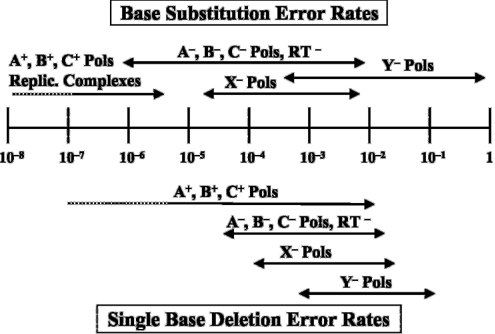
This review synthesizes how DNA polymerases achieve high replication fidelity, emphasizing nucleotide selectivity, conformational changes, proofreading, and mismatch/lesion handling. It also notes that fidelity varies enormously across polymerase families, from about \(10^{-7}\)–\(10^{-8}\) error rates for replicative systems to \(10^{-1}\)–\(10^{-3}\) for translesion synthesis polymerases.
Key findings
- In vivo, bacteriophage and *E. coli* replication in the absence of mismatch repair and external stress show base substitution error rates of about \(10^{-7}\) to \(10^{-8}\); eukaryotic replication is likely at least this accurate.
- Replicative polymerases from families A, B, and C typically have error rates in the \(10^{-6}\) to \(10^{-8}\) range, and their proofreading-defective derivatives reveal that fidelity often reflects \(10^{4}\)–\(10^{6}\)-fold selectivity for correct nucleotide insertion plus excision of 90%–99.9% of mismatches.
- Translesion synthesis polymerases are the least accurate, with misinsertion and base substitution error rates generally ranging from \(10^{-1}\) to \(10^{-3}\); for one polymerase, insertion of dGTP opposite template T can approach an error rate of 1.
- The paper argues that fidelity is shaped by multiple mechanisms, including geometric selection, base-base hydrogen bonding, water exclusion, dNTP-induced conformational change, mismatch extension/proofreading, and handling of damaged or misaligned substrates.
Methods
- Not an experimental study; this is a narrative review of DNA replication fidelity.
- It synthesizes prior biochemical, kinetic, structural, and mutational studies across bacteria, eukaryotes, and translesion synthesis polymerases, using published data and crystal structures.
- The main analysis is comparative and conceptual: it contrasts error-rate ranges, polymerase families, and mechanistic models of fidelity.
Limitations
- The paper states that error rates for repair reactions “have not yet been extensively studied,” so some conclusions about repair-associated DNA synthesis are predictive rather than directly measured.
- Many mechanistic claims are presented as hypotheses or interpretations of structural/kinetic data rather than definitive proof, especially for dNTP-induced conformational changes and water exclusion.
- The text makes evident that some sections are incomplete or only outlined in the provided version; if relying strictly on the excerpt, not all topics announced in the headings are fully developed.
Model-written summary. Check it against the paper before relying on it.
Integrity signals
Registry
Cites
Statistics
Figures


Verification
Claims the paper makes
10 Valid · 1 Not valid · 37 Not checked · 32 Own results and interpretations
The sources with a verdict support this claim; the rest weren’t checked yet, have no full text we could read, or their verdicts aren’t rated yet.
In the paper
“Kinetic studies (reviewed in Refs.15,19,[33][34][35][36] have established that fidelity depends on differences in the binding affinities and insertion rates of incorrect versus correct dNTPs.”
§ DNA Replication Fidelity > dNTP Binding Affinity, dNTP-induced Conformational
What the sources say
- Not checked — no full text of the sourcecites [15] 15. Kunkel, T. A., and Bebenek, K. (2000) Annu. Rev. Biochem. 69, 497-529 source
- Not checked — no full text of the sourcecites [19] 19. Beard, W. A., and Wilson, S. H. (2003) Structure 11, 489 -496 source
- Not checked — no full text of the sourcecites [33] 33. Goodman, M. F., Creighton, S., Bloom, L. B., and Petruska, J. (1993) Crit. Rev. Biochem. Mol. Biol. 28, 83-126 source
- Not checked — no full text of the sourcecites [34] 34. Johnson, K. A. (1993) Annu. Rev. Biochem. 62, 685-713 source
- Not checked — no full text of the sourcecites [35] 35. Showalter, A. K., and Tsai, M.-D. (2002) Biochemistry 41, 10571-10576 source
- Supportedcites [36] 36. Beard, W. A., Shock, D. D., Vande Berg, B. J., and Wilson, S. H. (2002) J. Biol. Chem. 277, 47393-47398 source
The paper’s introductory discussion defines nucleotide-insertion specificity as the insertion-rate constant divided by the incoming dNTP’s dissociation constant, and fidelity as the ratio of catalytic efficiencies for correct and incorrect nucleotides. That supports the claim that both binding and insertion kinetics enter into fidelity. (LLM, conf=0.92)
boostedstates a cause- Asserted: passes — The authors put it forward as true.
- Checkable: passes — It can be checked against evidence.
- Load-bearing: passes — The paper’s conclusions depend on it.
- Based: passes — The paper gives a reason why it holds.
Every source the paper cites for this claim was checked and supports it.
In the paper
“These results suggest that fidelity is primarily governed by the ability to insert the correct nucleotide (36) and focus attention on the conformational changes and interactions needed to achieve and stabilize the transition state.”
§ DNA Replication Fidelity > dNTP Binding Affinity, dNTP-induced Conformational
What the sources say
- Supportedcites [36] 36. Beard, W. A., Shock, D. D., Vande Berg, B. J., and Wilson, S. H. (2002) J. Biol. Chem. 277, 47393-47398 source
The paper’s Concluding Remarks state that differences between low- and high-fidelity DNA polymerases arise primarily from their ability to insert the correct nucleotide. This directly supports the clause attributed to citation (36). (LLM, conf=0.94)
hedgedstates a cause- Asserted: passes — The authors put it forward as true.
- Checkable: passes — It can be checked against evidence.
- Load-bearing: passes — The paper’s conclusions depend on it.
- Based: passes — The paper gives a reason why it holds.
- Supported
Every source the paper cites for this claim was checked and supports it.
In the paper
“In contrast, catalytic efficiencies for incorrect insertions by these polymerases vary over a much narrower range.”
§ DNA Replication Fidelity > dNTP Binding Affinity, dNTP-induced Conformational
What the sources say
- Supportedcites [36] 36. Beard, W. A., Shock, D. D., Vande Berg, B. J., and Wilson, S. H. (2002) J. Biol. Chem. 277, 47393-47398 source
In the Table I analysis (page not provided), correct-insertion efficiencies span a 10-million-fold range. The same section reports that, for most mispairs, a tenfold decrease in correct-insertion efficiency corresponds to little or no decrease in incorrect-insertion efficiency, supporting the narrower-range comparison. (LLM, conf=0.90)
plain- Asserted: passes — The authors put it forward as true.
- Checkable: passes — It can be checked against evidence.
- Load-bearing: passes — The paper’s conclusions depend on it.
- Based: passes — The paper gives a reason why it holds.
- Supported
The sources with a verdict support this claim; the rest weren’t checked yet, have no full text we could read, or their verdicts aren’t rated yet.
In the paper
“As for base substitutions, insertion/deletion error rates vary widely in a polymerase-and DNA sequence-dependent manner (56,57), such that single base deletion error rates (Fig. 1, bottom) can sometimes exceed base substitution error rates (58).”
§ DNA Replication Fidelity > Substrate Misalignments and Insertion/Deletion Fidelity
What the sources say
- Not checked — no full text of the sourcecites [56] 56. Kunkel, T. A. (1990) Biochemistry 29, 8003-8011 source
- Not checked — no full text of the sourcecites [57] 57. Bebenek, K., and Kunkel, T. A. (2000) Cold Spring Harbor Symp. Quant. Biol. 65, 81-91 source
- Supportedcites [58] 58. Bebenek, K., Garcı ´a-Dı ´az, M., Blanco, L., and Kunkel, T. A. (2003) J. Biol. Chem. 278, 34685-34690 source
Citation 58 is attached to the claim that single-base deletion error rates can exceed base-substitution error rates. The Results (p. 2) state that human Pol λ’s average single-base deletion error rate exceeds its single-base substitution error rate. The preceding claim about broad polymerase- and sequence-dependent variation is cited to references 56 and 57, not this paper. (LLM, conf=0.94)
plainstates an association- Asserted: passes — The authors put it forward as true.
- Checkable: passes — It can be checked against evidence.
- Load-bearing: unclear — It is unclear whether the paper’s conclusions depend on it.
- Based: passes — The paper gives a reason why it holds.
In the paper
“Studies of bacteriophage and Escherichia coli replication in the absence of DNA mismatch repair and external environmental stress suggest that the base substitution error rate of the replication machinery in vivo is in the range of 10 Ϫ7 to 10 Ϫ8 (4).”
§ DNA Replication Fidelity > How Accurate Is DNA Synthesis?
What the sources say
- Not checked — no full text of the sourcecites [4] 4. Schaaper, R. M. (1993) J. Biol. Chem. 268, 23762-23765 source
hedged- Asserted: passes — The authors put it forward as true.
- Checkable: passes — It can be checked against evidence.
- Load-bearing: unclear — It is unclear whether the paper’s conclusions depend on it.
- Based: passes — The paper gives a reason why it holds.
31 more claims
Create a free account to see all 80 claims and every source verdict.
- It may state two separate claims as one. 42
- Probably not a substantial claim. 8
Citations
Cites
Molecular Structure of Nucleic Acids: A Structure for Deoxyribose Nucleic Acid
WATSON, J. D., & CRICK, F. H. C. (1953) · Nature · doi:10.1038/171737a0 · Cited by 13,584
Friedberg, E. C., Walker, G. C., Siede, W., Wood, R. D., Schultz, R. A., & Ellenberger, T. (2005) · doi:10.1128/9781555816704 · Cited by 5,683
Bootsma, D., & Hoeijmakers, J. H. J. (1996) · Trends in Genetics · doi:10.1016/0168-9525(96)81408-9 · Cited by 2,282
Frameshift Mutations and the Genetic Code
Streisinger, G., Okada, Y., Emrich, J., Newton, J., Tsugita, A., Terzaghi, E., & Inouye, M. (1966) · Cold Spring Harbor Symposia on Quantitative Biology · doi:10.1101/sqb.1966.031.01.014 · Cited by 1,400
(1991) · PubMed · Cited by 1,305
A constant rate of spontaneous mutation in DNA-based microbes.
Drake, J. W. (1991) · Proceedings of the National Academy of Sciences · doi:10.1073/pnas.88.16.7160 · Cited by 1,199
Kunkel, T. A., & Bebenek, K. (2000) · Annual Review of Biochemistry · doi:10.1146/annurev.biochem.69.1.497 · Cited by 1,003
Self-citationMECHANISMS AND BIOLOGICAL EFFECTS OF MISMATCH REPAIR
Modrich, P. (1991) · Annual Review of Genetics · doi:10.1146/annurev.ge.25.120191.001305 · Cited by 892
MutT protein specifically hydrolyses a potent mutagenic substrate for DNA synthesis
Maki, H., & Sekiguchi, M. (1992) · Nature · doi:10.1038/355273a0 · Cited by 891
DNA Polymerases: Structural Diversity and Common Mechanisms
Steitz, T. A. (1999) · Journal of Biological Chemistry · doi:10.1074/jbc.274.25.17395 · Cited by 848
Research works printed but not linked: 1
- 5. Loeb, L. A. (2003) Cancer Res. 51, 3075-3079
Cited by
Items 101–200 of 752
Ong, J. L., Loakes, D., Jarosławski, S., Too, K., & Holliger, P. (2006) · Journal of Molecular Biology · doi:10.1016/j.jmb.2006.06.050 · Cited by 113
Elucidating interplay of speed and accuracy in biological error correction
Banerjee, K., Kolomeisky, A. B., & Igoshin, O. A. (2017) · Proceedings of the National Academy of Sciences · doi:10.1073/pnas.1614838114 · Cited by 114
“This general framework is applied to two important examples, namely, DNA replication by T7 DNA polymerase (DNAP) [3, 14] and protein synthesis by E .”
BackgroundMethodInfluentialFlorián, J., Goodman, M. F., & Warshel, A. (2005) · Proceedings of the National Academy of Sciences · doi:10.1073/pnas.0408173102 · Cited by 108
Do mutator mutations fuel tumorigenesis?
Fox, E. J., Prindle, M. J., & Loeb, L. A. (2013) · Cancer and Metastasis Reviews · doi:10.1007/s10555-013-9426-8 · Cited by 99
“nucleotides, a multistep process has evolved, catalyzed by multiple components with a variety of mechanisms for removing mistakes [22, 23].”
A novel function of DNA polymerase ζ regulated by PCNA
Northam, M. R., Garg, P., Baitin, D., Burgers, P., & Shcherbakova, P. V. (2006) · The EMBO Journal · doi:10.1038/sj.emboj.7601320 · Cited by 112
“Crick base pairs to allow efficient and accurate synthesis (Kunkel, 2004).”
BackgroundInteractions of Carcinogen-Bound DNA with Individual DNA Polymerases
Guengerich, F. P. (2006) · Chemical Reviews · doi:10.1021/cr0404693 · Cited by 110
Chen, C., Merrill, B. J., Lau, P. J., Holm, C., & Kolodner, R. D. (1999) · Molecular and Cellular Biology · doi:10.1128/mcb.19.11.7801 · Cited by 98
McNeill, D. R., & Wilson, D. M. (2007) · Molecular Cancer Research · doi:10.1158/1541-7786.mcr-06-0329 · Cited by 96
DNA polymerase ε and its roles in genome stability
Henninger, E. E., & Pursell, Z. F. (2014) · IUBMB Life · doi:10.1002/iub.1276 · Cited by 118
Visualization of Mismatch Repair in Bacterial Cells
Smith, B. T., Grossman, A. D., & Walker, G. C. (2001) · Molecular Cell · doi:10.1016/s1097-2765(01)00402-6 · Cited by 97
Two Distinct DNA Binding Modes Guide Dual Roles of a CRISPR-Cas Protein Complex
Blosser, T. R., Loeff, L., Westra, E. R., Vlot, M., Künne, T., Sobota, M., Dekker, C., Brouns, S. J. J., & Joo, C. (2015) · Molecular Cell · doi:10.1016/j.molcel.2015.01.028 · Cited by 92
“Faithful copying and decoding of genetic information is central to the most important processes in the cell, including DNA replication (Kunkel, 2004), RNA transcription (Xu et al., 2014), and protein translation (Zaher and Green, 2009).”
Structural Analysis of Strand Misalignment during DNA Synthesis by a Human DNA Polymerase
García–Díaz, M., Bębenek, K., Krahn, J. M., Pedersen, L. C., & Kunkel, T. A. (2006) · Cell · doi:10.1016/j.cell.2005.10.039 · Cited by 91
Self-citationEnzymatic switching for efficient and accurate translesion DNA replication
McCulloch, S. D. (2004) · Nucleic Acids Research · doi:10.1093/nar/gkh777 · Cited by 90
The eukaryotic replicative DNA polymerases take shape
Johansson, E., & MacNeill, S. A. (2010) · Trends in Biochemical Sciences · doi:10.1016/j.tibs.2010.01.004 · Cited by 90
Structure–function studies of DNA polymerase lambda
García–Díaz, M., Bębenek, K., Gao, G., Pedersen, L. C., London, R. E., & Kunkel, T. A. (2005) · DNA repair · doi:10.1016/j.dnarep.2005.09.001 · Cited by 102
Self-citationDNA polymerases drive DNA sequencing-by-synthesis technologies: both past and present
Chen, C.-Y. (2014) · Frontiers in Microbiology · doi:10.3389/fmicb.2014.00305 · Cited by 88
“None of these Pols have any intrinsic 3′ to 5′ proofreading exonuclease activity and are thus more error-prone during DNA synthesis (Kunkel and Bebenek, 2000; Kunkel, 2004, 2009).”
BackgroundFirst Principles Calculations of the p K a Values and Tautomers of Isoguanine and Xanthine
Rogstad, K. N., Jang, Y. H., Sowers, L. C., & Goddard, W. A. (2003) · Chemical Research in Toxicology · doi:10.1021/tx034068e · Cited by 97
Vilar, E., Scaltriti, M., Balmaña, J., Saura, C., Guzman, M., Arribas, J., Baselga, J., & Tabernero, J. (2008) · British Journal of Cancer · doi:10.1038/sj.bjc.6604691 · Cited by 88
“Microsatellites are multiple tandem repeats of a small number of nucleotides that are very prone to these errors; therefore MMR system activity is critical for their maintenance (Kunkel, 2004; Jiricny, 2006).”
BackgroundA rhodium(III) complex for high-affinity DNA base-pair mismatch recognition
Junicke, H., Hart, J. R., Kisko, J. L., et al. (2003) · Proceedings of the National Academy of Sciences · doi:10.1073/pnas.0537194100 · Cited by 88
The role of mismatch repair in the prevention of base pair mutations in Saccharomyces cerevisiae
Earley, M. C., & Crouse, G. F. (1998) · Proceedings of the National Academy of Sciences · doi:10.1073/pnas.95.26.15487 · Cited by 94
Variations on a theme: Eukaryotic Y-family DNA polymerases
Washington, M. T., Carlson, K. D., Freudenthal, B., & Pryor, J. M. (2009) · Biochimica et Biophysica Acta (BBA) - Proteins and Proteomics · doi:10.1016/j.bbapap.2009.07.004 · Cited by 103
Structural insights into DNA polymerase β fidelity: hold tight if you want it right
Beard, W. A., & Wilson, S. H. (1998) · Chemistry & Biology · doi:10.1016/s1074-5521(98)90081-3 · Cited by 86
Engineering polymerases for applications in synthetic biology
Nikoomanzar, A., Chim, N., Yik, E. J., & Chaput, J. C. (2020) · Quarterly Reviews of Biophysics · doi:10.1017/s0033583520000050 · Cited by 91
An underlying mechanism for the increased mutagenesis of lagging-strand genes in Bacillus subtilis
Million‐Weaver, S., Samadpour, A. N., Moreno-Habel, D. A., Nugent, P., Brittnacher, M., Weiss, E. J., Hayden, H. S., Miller, S. I., Liachko, I., & Merrikh, H. (2015) · Proceedings of the National Academy of Sciences · doi:10.1073/pnas.1416651112 · Cited by 102
“Because the replication machinery is generally high fidelity (38), the majority of mutagenesis within cells, across the majority of species, is thought to arise from DNA damage and its subsequent error-prone bypass or repair (39–41).”
BackgroundDNA Replication Errors Produced by the Replicative Apparatus of Escherichia coli
藤井, 慎., Akiyama, M., Aoki, K., Sugaya, Y., Higuchi, K., Hiraoka, M., 三木陽平, Saitoh, N., Yoshiyama, K., Ihara, K., et al. (1999) · Journal of Molecular Biology · doi:10.1006/jmbi.1999.2802 · Cited by 85
The Toolbox for Modified Aptamers
Lapa, S. A., Chudinov, A. V., & Timofeev, E. N. (2015) · Molecular Biotechnology · doi:10.1007/s12033-015-9907-9 · Cited by 86
Microsatellite instability in the development of DNA mismatch repair deficient tumors
Woerner, S. M., Kloor, M., Doeberitz, M. V. K., & Gebert, J. F. (2006) · Cancer Biomarkers · doi:10.3233/cbm-2006-21-208 · Cited by 95
“In MMR-deficient cells microsatellite sequences, in particular mono- and dinucleotide repeats, are highly susceptible to insertion and deletion mutations due to increased error rates of replicative DNA polymerases at these loci [94].”
Specific RNA Residue Interactions Required for Enzymatic Functions of Tetrahymena Telomerase
Gilley, D., & Blackburn, E. H. (1996) · Molecular and Cellular Biology · doi:10.1128/mcb.16.1.66 · Cited by 84
Visualizing high error levels during gene expression in living bacterial cells
Meyerovich, M., Mamou, G., & Ben‐Yehuda, S. (2010) · Proceedings of the National Academy of Sciences · doi:10.1073/pnas.0912989107 · Cited by 94
Mismatch repair in correction of replication errors and processing of DNA damage
Aquilina, G., & Bignami, M. (2001) · Journal of Cellular Physiology · doi:10.1002/jcp.1067 · Cited by 82
Bakhtina, M., Lee, S., Wang, Y., Dunlap, C. A., Lamarche, B. J., & Tsai, M. (2005) · Biochemistry · doi:10.1021/bi047664w · Cited by 90
DNA Polymerase ε: A Polymerase of Unusual Size (and Complexity)
Pursell, Z. F., & Kunkel, T. A. (2008) · Progress in nucleic acid research and molecular biology · doi:10.1016/s0079-6603(08)00004-4 · Cited by 98
“While the specific nature of these changes depends on the polymerase (reviewed in (42)), the dNTP-induced conformational changes result in assembly of an active site (Fig.”
BackgroundSelf-citationParthasarathi, S., Varela-Echavarría, A., Ron, Y., Preston, B. D., & Dougherty, J. P. (1995) · Journal of Virology · doi:10.1128/jvi.69.12.7991-8000.1995 · Cited by 80
Structural Insights into DNA Replication without Hydrogen Bonds
Betz, K., Malyshev, D. A., Lavergne, T., Welte, W., Diederichs, K., Romesberg, F. E., & Marx, A. (2013) · Journal of the American Chemical Society · doi:10.1021/ja409609j · Cited by 81
Molecular Regulation of UV ‐Induced DNA Repair
Shah, P., & He, Y. (2015) · Photochemistry and Photobiology · doi:10.1111/php.12406 · Cited by 75
“McCulloch, S. D., R. J. Kokoska, C. Masutani, S. Iwai, F. Hanaoka and T. A. Kunkel (2004) Preferential cis-syn thymine dimer bypass by DNA polymerase eta occurs with biased fidelity.”
Eoff, R. L., Irimia, A., Angel, K. C., Egli, M., & Guengerich, F. P. (2007) · Journal of Biological Chemistry · doi:10.1074/jbc.m702290200 · Cited by 78
DNA structure and polymerase fidelity 1 1Edited by T. Richmond
Timsit, Y. (1999) · Journal of Molecular Biology · doi:10.1006/jmbi.1999.3199 · Cited by 79
An improved method for chloroplast genome sequencing in non-model forest tree species
Du, F., Lang, T., Lu, S., Wang, Y., Li, J., & Yin, K. (2015) · Tree Genetics & Genomes · doi:10.1007/s11295-015-0942-2 · Cited by 75
“The mean of four replicates±SE is shown in fold differences relative to gDNA comparable to DNA polymerases with 3' proofreading exonuclease activity (Esteban and SalasM 1993; Kunkel 2004 ).”
BackgroundMethodBerezhna, S. Y., Gill, J. P., Lamichhane, R., et al. (2012) · Journal of the American Chemical Society · doi:10.1021/ja3038273 · Cited by 76
Pozhidaeva, A., Pustovalova, Y., D’Souza, S., Bezsonova, I., Walker, G. C., & Korzhnev, D. M. (2012) · Biochemistry · doi:10.1021/bi300566z · Cited by 76
How DNA polymerases catalyse replication and repair with contrasting fidelity
Wu, W.-J., Yang, W., & Tsai, M.-D. (2017) · Nature Reviews Chemistry · doi:10.1038/s41570-017-0068 · Cited by 76
DNA Sequence Analysis of Spontaneous Mutagenesis in Saccharomyces cerevisiae
Kunz, B. A., Ramachandran, K., & Vonarx, E. J. (1998) · Genetics · doi:10.1093/genetics/148.4.1491 · Cited by 76
Karthikeyan, R., Vonarx, E. J., Straffon, A. F. L., Simon, M., Faye, G., & Kunz, B. A. (2000) · Journal of Molecular Biology · doi:10.1006/jmbi.2000.3744 · Cited by 82
Cisneros, G. A., Perera, L., Schaaper, R. M., Pedersen, L. C., London, R. E., Pedersen, L. G., & Darden, T. A. (2009) · Journal of the American Chemical Society · doi:10.1021/ja8082818 · Cited by 75
Cell-specific differences in the requirements for translation quality control
Reynolds, N. M., Ling, J., Roy, H., Banerjee, R., Repasky, S. E., Hamel, P. P., & Ibba, M. (2010) · Proceedings of the National Academy of Sciences · doi:10.1073/pnas.0909640107 · Cited by 90
“T error rates for individual steps in gene maintenance and expression range from 10−8 for DNA replication (1) to 10−5 for mRNA transcription (2) and 10−4 for mRNA translation (3).”
BackgroundMutator phenotype in cancer: Timing and perspectives
Bielas, J. H., & Loeb, L. A. (2005) · Environmental and Molecular Mutagenesis · doi:10.1002/em.20111 · Cited by 82
Wimmer, K., Beilken, A., Nustede, R., Ripperger, T., Lamottke, B., Ure, B., Steinmann, D., Reineke‐Plaaß, T., Lehmann, U., Zschocke, J., et al. (2016) · Familial Cancer · doi:10.1007/s10689-016-9925-1 · Cited by 74
“activity intrinsic to the replication polymerases, and (2) DNA mismatch repair (MMR) [1].”
BackgroundRPA and PCNA suppress formation of large deletion errors by yeast DNA polymerase δ
Fortune, J. M., Stith, C. M. W., Kissling, G. E., Burgers, P., & Kunkel, T. A. (2006) · Nucleic Acids Research · doi:10.1093/nar/gkl403 · Cited by 75
Self-citationBase excision repair fidelity in normal and cancer cells
Chan, K. K. L., Zhang, Q.-M., & Dianov, G. L. (2006) · Mutagenesis · doi:10.1093/mutage/gel020 · Cited by 72
Showalter, A. K., Lamarche, B. J., Bakhtina, M., Su, M., Tang, K., & Tsai, M. (2006) · Chemical Reviews · doi:10.1021/cr040487k · Cited by 77
Translesion DNA Polymerases and Cancer
Makridakis, N. M., & Reichardt, J. K. V. (2012) · Frontiers in Genetics · doi:10.3389/fgene.2012.00174 · Cited by 70
“These polymerases display the second lowest replication fidelity among the six major DNA polymerase families (after the Yfamily; Kunkel, 2004).”
BackgroundSmith, D., Zhong, J., Matsuura, M., Lambowitz, A. M., & Belfort, M. (2005) · Genes & Development · doi:10.1101/gad.1345105 · Cited by 85
“If there is residual RNA attached to the top strand of the upstream exon, then the accommodating active site of a repair polymerase (Kunkel 2004) may more readily initiate second-strand synthesis than Pol III.”
BackgroundA recurrent cancer-associated substitution in DNA polymerase ε produces a hyperactive enzyme
Xing, X., Kane, D. P., Bulock, C. R., Moore, E. A., Sharma, S., Chabes, A., & Shcherbakova, P. V. (2019) · Nature Communications · doi:10.1038/s41467-018-08145-2 · Cited by 72
Structures of DNA and RNA polymerases and their interactions with nucleic acid substrates
Arnold, E., Ding, J., Hughes, S. H., & Hostomský, Z. (1995) · Current Opinion in Structural Biology · doi:10.1016/0959-440x(95)80006-m · Cited by 77
Mechanism for De Novo RNA Synthesis and Initiating Nucleotide Specificity by T7 RNA Polymerase
Kennedy, W. P., Momand, J. R., & Yin, Y. W. (2007) · Journal of Molecular Biology · doi:10.1016/j.jmb.2007.03.041 · Cited by 69
Evolution of replication machines
Yao, N. Y., & O’Donnell, M. E. (2016) · Critical Reviews in Biochemistry and Molecular Biology · doi:10.3109/10409238.2015.1125845 · Cited by 67
Differential DNA secondary structure-mediated deletion mutation in the leading and lagging strands
Rosche, W. A., Trinh, T. Q., & Sinden, R. R. (1995) · Journal of Bacteriology · doi:10.1128/jb.177.15.4385-4391.1995 · Cited by 74
Structure–Function Studies of DNA Polymerase λ
Bebenek, K., Pedersen, L. C., & Kunkel, T. A. (2014) · Biochemistry · doi:10.1021/bi4017236 · Cited by 65
Self-citationMutational consequences of dNTP pool imbalances in E. coli
Schaaper, R. M., & Mathews, C. K. (2012) · DNA repair · doi:10.1016/j.dnarep.2012.10.011 · Cited by 75
“Cells employ multiple mechanisms to ensure an appropriate low error rate during the replication of their genome [1-3].”
BackgroundZafar, M. K., Ketkar, A. D., Lodeiro, M. F., Cameron, C. E., & Eoff, R. L. (2014) · Biochemistry · doi:10.1021/bi501024u · Cited by 67
Biochemical Properties of Saccharomyces cerevisiae DNA Polymerase IV
Bebenek, K., Garcia-Diaz, M., Patishall, S. R., & Kunkel, T. A. (2005) · Journal of Biological Chemistry · doi:10.1074/jbc.m501981200 · Cited by 64
Self-citationWeston, J. (2009) · Wiley eBooks · doi:10.1002/9780470682531.pat0407 · Cited by 69
Multigenerational epigenetic inheritance: One step forward, two generations back
Tuscher, J. J., & Day, J. J. (2019) · Neurobiology of Disease · doi:10.1016/j.nbd.2019.104591 · Cited by 63
Proofreading of ribonucleotides inserted into DNA by yeast DNA polymerase ɛ
Williams, J. S., Clausen, A. R., Nick McElhinny, S. A., Watts, B. E., Johansson, E., & Kunkel, T. A. (2012) · DNA Repair · doi:10.1016/j.dnarep.2012.05.004 · Cited by 61
“This may be important because studies of single base-base mismatches clearly show that the balance between excision and extension determines proofreading efficiency (reviewed in [9, 10]).”
BackgroundSelf-citationChen, T. ‐., Chang, S., Huang, C., Wang, K. ‐., Yeh, K., Liu, C., Lee, H., Lin, C., & Cheng, Y. ‐. (2013) · Colorectal Disease · doi:10.1111/codi.12318 · Cited by 64
Analysis of the Quaternary Structure of the MutL C-terminal Domain
Kosiński, J., Steindorf, I., Bujnicki, J. M., Giron-Monzon, L., & Friedhoff, P. (2005) · Journal of Molecular Biology · doi:10.1016/j.jmb.2005.06.044 · Cited by 78
Label-Free Detection of DNA by Field-Effect Devices
Kataoka-Hamai, C., & Miyahara, Y. (2011) · IEEE Sensors Journal · doi:10.1109/jsen.2011.2167143 · Cited by 60
Translesion DNA synthesis in the context of cancer research
Knobel, P. A., & Marti, T. M. (2011) · Cancer Cell International · doi:10.1186/1475-2867-11-39 · Cited by 60
“The error rate of the TLS polymerases ranges from 10 to 10 for replication of undamaged DNA [55,56].”
BackgroundKiritsi, D., He, Y., Pasmooij, A. M. G., Önder, M., Happle, R., Jonkman, M. F., Bruckner‐Tuderman, L., & Has, C. (2012) · Journal of Clinical Investigation · doi:10.1172/jci61976 · Cited by 59
“The fidelity of DNA replication is dependent on the local sequence environment and the DNA polymerase (19).”
Mapping Protein-Protein Interactions between MutL and MutH by Cross-linking
Giron-Monzon, L., Manelytė, L., Ahrends, R., Kirsch, D., Spengler, B., & Friedhoff, P. (2004) · Journal of Biological Chemistry · doi:10.1074/jbc.m409307200 · Cited by 59
Malet, I., Belnard, M., Agut, H., & Cahour, A. (2003) · Journal of Virological Methods · doi:10.1016/s0166-0934(03)00067-3 · Cited by 59
Targeting the Translesion Synthesis Pathway for the Development of Anti-Cancer Chemotherapeutics
Korzhnev, D. M., & Hadden, M. K. (2016) · Journal of Medicinal Chemistry · doi:10.1021/acs.jmedchem.6b00596 · Cited by 58
The MASTER (methylation-assisted tailorable ends rational) ligation method for seamless DNA assembly
Chen, W., Qin, Z., Wang, J., & Zhao, G. (2013) · Nucleic Acids Research · doi:10.1093/nar/gkt122 · Cited by 64
Bumps in the road: how replicative DNA polymerases see DNA damage
Hogg, M., Wallace, S. S., & Doublié, S. (2005) · Current Opinion in Structural Biology · doi:10.1016/j.sbi.2005.01.014 · Cited by 69
Küçükyıldırım, S., Long, H., Sung, W., Miller, S. F., Doak, T. G., & Lynch, M. (2016) · G3 Genes Genomes Genetics · doi:10.1534/g3.116.030130 · Cited by 65
“…fidelity: nucleotide insertion fidelity of the DNA polymerase, removal of mispaired nucleotides by the DNA proofreading exonuclease, and MMR. Sequential action of these three steps is responsible for the typically low bacterial error rate of 10210 per base replicated (Schaaper 1993; Kunkel 2004).”
BackgroundSavino, C., Federici, L., Johnson, K. A., Vallone, B., Nastopoulos, V., Rossi, M., Pisani, F. M., & Tsernoglou, D. (2004) · Structure · doi:10.1016/j.str.2004.09.007 · Cited by 56
Oxygen radical induced mutagenesis is DNA polymerase specific
Feig, D. I., & Loeb, L. A. (1994) · Journal of Molecular Biology · doi:10.1016/s0022-2836(05)80009-9 · Cited by 56
A comprehensive study of p53 protein
Patil, M. R., & Bihari, A. (2022) · Journal of Cellular Biochemistry · doi:10.1002/jcb.30331 · Cited by 64
“Surprisingly, mild and severe DNA damage is absorbed into cellular signaling networks in distinct ways, resulting in alternative cell fate decisions.(63,64) DNA damage is a common occurrence that demands a variety of DNA damage repairs to ensure that genetic information is faithfully passed during cell division.”
BackgroundMarima, R. M., Hull, R., Penny, C. B., & Dlamini, Z. (2021) · Mutation Research/Reviews in Mutation Research · doi:10.1016/j.mrrev.2021.108376 · Cited by 60
Architecture of the DNA polymerase B-proliferating cell nuclear antigen (PCNA)-DNA ternary complex
Mayanagi, K., Kiyonari, S., NISHIDA, H., Saito, M., Kohda, D., Ishino, Y., Shirai, T., & Morikawa, K. (2011) · Proceedings of the National Academy of Sciences · doi:10.1073/pnas.1010933108 · Cited by 55
“The exonuclease domain, which is responsible for the 30 → 50 editing of incorrect synthesis by the polymerizing activity, ensures the high fidelity of DNA replication (11, 12).”
BackgroundPolymerase-Directed Synthesis of 2‘-Deoxy-2‘-fluoro-β- D -arabinonucleic Acids
Peng, C. G., & Damha, M. J. (2007) · Journal of the American Chemical Society · doi:10.1021/ja069100g · Cited by 64
Evolving a Thermostable DNA Polymerase That Amplifies from Highly Damaged Templates
Gloeckner, C., Sauter, K. B. M., & Marx, A. (2007) · Angewandte Chemie International Edition · doi:10.1002/anie.200603987 · Cited by 55
Khan, Z. A., Jonas, S., Marer, N. L., Patel, H., Wharton, R. Q., Tarragona, A., Ivison, A., & Allen-Mersh, T. G. (2000) · PubMed · Cited by 59
Whitford, C. M., Dymek, S., Kerkhoff, D., März, C., Schmidt, O., Edich, M., Droste, J., Pucker, B., Rückert, C., & Kalinowski, J. (2018) · Journal of Biological Engineering · doi:10.1186/s13036-018-0105-8 · Cited by 63
“As any single biosafety system might fail with roughly the probability of a point mutation (10 (7)) [369, 370], a combination of multiple systems can increase the safety in a linear way (Fig.”
BackgroundMolecular Dynamics Study of the Opening Mechanism for DNA Polymerase I
Miller, B. R., Parish, C. A., & Wu, E. Y. (2014) · PLoS Computational Biology · doi:10.1371/journal.pcbi.1003961 · Cited by 54
“hundreds of thousands of nucleotides added [1].”
Engineering and application of polymerases for synthetic genetics
Houlihan, G., Arangundy‐Franklin, S., & Holliger, P. (2017) · Current Opinion in Biotechnology · doi:10.1016/j.copbio.2017.04.004 · Cited by 58
DNA Adduct Structure–Function Relationships: Comparing Solution with Polymerase Structures
Broyde, S. B., Wang, L., Zhang, L., Rechkoblit, O., Geacintov, N. E., & Patel, D. J. (2007) · Chemical Research in Toxicology · doi:10.1021/tx700193x · Cited by 62
“Bypass polymerases are typically low fidelity on unmodified DNA and may be high or low fidelity in lesion bypass (43).”
BackgroundBertocci, B., Quint, L., Delbos, F., Cordier, C., Reynaud, C., & Weill, J. (1998) · Immunity · doi:10.1016/s1074-7613(00)80608-1 · Cited by 51
Kadyrova, L. Y., Mertz, T. M., Zhang, Y., Northam, M. R., Sheng, Z., Lobachev, K. S., Shcherbakova, P. V., & Kadyrov, F. A. (2013) · PLoS Genetics · doi:10.1371/journal.pgen.1003899 · Cited by 56
“selectivity at the active sites of replicative polymerases that permits DNA synthesis with an error rate of 10(24)–10(25) [6].”
BackgroundFunction and origin of mistranslation in distinct cellular contexts
Schwartz, M. H., & Pan, T. (2017) · Critical Reviews in Biochemistry and Molecular Biology · doi:10.1080/10409238.2016.1274284 · Cited by 52
Stochastic Drift in Mitochondrial DNA Point Mutations: A Novel Perspective Ex Silico
Poovathingal, S. K., Gruber, J., Halliwell, B. B., & Gunawan, R. (2009) · PLoS Computational Biology · doi:10.1371/journal.pcbi.1000572 · Cited by 49
“Mutator mice carry a proofreading-deficient allele of POLG which has 200 times the error rate of the wild-type enzyme [28,43].”
BackgroundMallory, J. D., Kolomeisky, A. B., & Igoshin, O. A. (2019) · The Journal of Physical Chemistry B · doi:10.1021/acs.jpcb.9b03757 · Cited by 54
Pustovalova, Y. E., Maciejewski, M. W., & Korzhnev, D. M. (2013) · Journal of Molecular Biology · doi:10.1016/j.jmb.2013.05.029 · Cited by 57
Conde, F., & San-Segundo, P. A. (2008) · Genetics · doi:10.1534/genetics.108.089003 · Cited by 51
“However, damage-tolerant polymerases, specialized for TLS, contain more relaxed catalytic centers, which can accommodate lesions in the template, although fidelity is compromised (Kunkel 2004).”
BackgroundFidelity of hepatitis B virus polymerase
Park, S., Kim, Y., Park, E., Ryu, H. M., & Jung, G. (2003) · European Journal of Biochemistry · doi:10.1046/j.1432-1033.2003.03650.x · Cited by 67
“These low mutation rates are achieved by multiple steps in error discrimination including base selection by DNA polymerase, 3¢ fi 5¢ exonucleolytic proofreading, and postreplicative repair [39].”
BackgroundRB69 DNA Polymerase Structure, Kinetics, and Fidelity
Xia, S., & Konigsberg, W. H. (2014) · Biochemistry · doi:10.1021/bi4014215 · Cited by 49
Johnson, R. P., Fleming, A. M., Beuth, L. R., Burrows, C. J., & White, H. S. (2015) · Journal of the American Chemical Society · doi:10.1021/jacs.5b10710 · Cited by 49
Lee, H. R., Helquist, S. A., Kool, E. T., & Johnson, K. A. (2007) · Journal of Biological Chemistry · doi:10.1074/jbc.m705007200 · Cited by 49
Two Distinct Pathways Support Gene Correction by Single-Stranded Donors at DNA Nicks
Davis, L., & Maizels, N. (2016) · Cell Reports · doi:10.1016/j.celrep.2016.10.049 · Cited by 54
“Efficiency of the ADDS pathway is sensitive to heterology between the 3’ end of the nick or DSB and the donor, because mismatched primer termini are not efficiently extended by most DNA polymerases (Goodman et al., 1993; Kunkel, 2004).”
BackgroundLi, D., Fedeles, B. I., Singh, V., Peng, C. S., Silvestre, K. J., Simi, A. K., Simpson, J. H., Tokmakoff, A., & Essigmann, J. M. (2014) · Proceedings of the National Academy of Sciences · doi:10.1073/pnas.1405635111 · Cited by 50
Metadata
- Authors
- Kunkel, T. A.
- Affiliations
- National Institutes of Health (US)
- Corresponding author
- Kunkel, Thomas A.
- ORCID
- Kunkel, Thomas A.
- Venue
- Journal of Biological Chemistry
- Publisher
- Elsevier BV
- Published
- 2004-04
- Volume
- 279
- Issue
- 17
- Pages
- 16895-16898
- ISSN
- 0021-9258 (ISSN-L)
- OpenAlex
- W2152112318
- Cited by
- 754
- References
- 110
- Citations by year
- 2026: 17 · 2025: 14 · 2024: 11 · 2023: 19 · 2022: 16 · 2021: 24 · 2020: 33 · 2019: 35 · 2018: 30 · 2017: 36 · 2016: 29 · 2015: 29 · 2014: 38 · 2013: 43 · 2012: 47
- FWCI
- 3.27
- Type
- journal article
- Language
- en
- Open access
- hybrid
- doi.org
- Licence
- cc-by
- www.elsevier.com/tdm/userlicense/1.0/ (tdm)
- creativecommons.org/licenses/by/4.0/ (vor, 6043 d)
- Locations
- Journal of Biological Chemistry (publishedVersion, cc-by)
- PubMed (publishedVersion)
- Topics
- Life Sciences › Biochemistry, Genetics and Molecular Biology › Molecular Biology › DNA Repair Mechanisms
- Life Sciences › Biochemistry, Genetics and Molecular Biology › Molecular Biology › DNA and Nucleic Acid Chemistry
- Health Sciences › Medicine › Pathology and Forensic Medicine › Genetic factors in colorectal cancer
- Keywords
- DNA replication fidelity, DNA polymerase, DNA mismatch repair, DNA polymerase V, DNA polymerase IV, translesion synthesis
- MeSH terms
- Base Composition, DNA, DNA Replication, Escherichia coli, Hydrogen Bonding, Models, Molecular, Nucleic Acid Conformation, Thermodynamics, Gene Deletion, Entropy, Base Pairing, Base Pair Mismatch
About these checks
Registry, retraction, Cites and statistics results are computed, not judged, with one exception: a printed reference that no index lists is read once by a model before it counts as a citation error. Claims are extracted by a model and kept only when their quote appears verbatim in the text; each cited source is then checked, with a model’s help, for whether it says what the claim relies on. Those verdicts can be wrong — read the claim’s quote and the cited source before relying on one.
The claim verdicts this report counts are experimental: their accuracy is not yet measured.
A language model drew the claims from the paper on 2026-10-09, under version 3 of the claim definition (model deepseek-v4.1-flash, prompt extract-v3).
A second model labelled each claim on 2026-10-09 (model jev-1.13-20260917, definition revision gold-guideline-v0.2).
Cited sources are checked with a language model’s help (gpt-6-sol).
Statistics and arithmetic are recomputed, not judged.
Confidence bands are shown only for fields calibrated on our annotated test set. None is calibrated yet, so no band is shown.
What counts as a claim ›How we measure confidence ›How we check this ›
Are you an author, or do you see a problem with this page? Request a review
Data sources
Bibliographic data: Semantic Scholar, OpenAlex, Crossref.
Contains information from the Semantic Scholar Academic Graph Datasets, made available under the ODC Attribution License (ODC-BY 1.0).
Semantic Scholar’s data is described in: Kinney, R., et al. (2023). The Semantic Scholar Open Data Platform. arXiv:2301.10140.
