

DNA Replication Fidelity
Open accessThe DOI matches its Crossref record; 111 of the 111 references it cites were found in a registry or an index; 12 of the 104 sources its claims cite were checked for support.
Abstract
Review of the mechanisms that make DNA copying accurate, including nucleotide selectivity, proofreading, and mismatch repair.
Overview
CoChat Summary
TL;DR
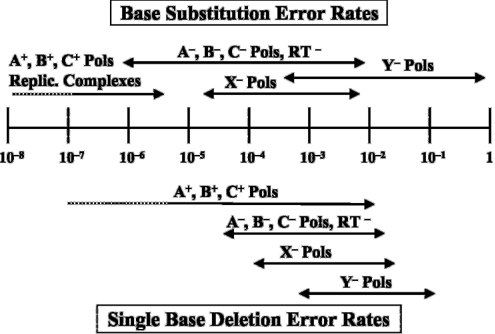
This review synthesizes how DNA polymerases achieve high replication fidelity, emphasizing nucleotide selectivity, conformational changes, proofreading, and mismatch/lesion handling. It also notes that fidelity varies enormously across polymerase families, from about \(10^{-7}\)–\(10^{-8}\) error rates for replicative systems to \(10^{-1}\)–\(10^{-3}\) for translesion synthesis polymerases.
Key findings
- In vivo, bacteriophage and *E. coli* replication in the absence of mismatch repair and external stress show base substitution error rates of about \(10^{-7}\) to \(10^{-8}\); eukaryotic replication is likely at least this accurate.
- Replicative polymerases from families A, B, and C typically have error rates in the \(10^{-6}\) to \(10^{-8}\) range, and their proofreading-defective derivatives reveal that fidelity often reflects \(10^{4}\)–\(10^{6}\)-fold selectivity for correct nucleotide insertion plus excision of 90%–99.9% of mismatches.
- Translesion synthesis polymerases are the least accurate, with misinsertion and base substitution error rates generally ranging from \(10^{-1}\) to \(10^{-3}\); for one polymerase, insertion of dGTP opposite template T can approach an error rate of 1.
- The paper argues that fidelity is shaped by multiple mechanisms, including geometric selection, base-base hydrogen bonding, water exclusion, dNTP-induced conformational change, mismatch extension/proofreading, and handling of damaged or misaligned substrates.
Methods
- Not an experimental study; this is a narrative review of DNA replication fidelity.
- It synthesizes prior biochemical, kinetic, structural, and mutational studies across bacteria, eukaryotes, and translesion synthesis polymerases, using published data and crystal structures.
- The main analysis is comparative and conceptual: it contrasts error-rate ranges, polymerase families, and mechanistic models of fidelity.
Limitations
- The paper states that error rates for repair reactions “have not yet been extensively studied,” so some conclusions about repair-associated DNA synthesis are predictive rather than directly measured.
- Many mechanistic claims are presented as hypotheses or interpretations of structural/kinetic data rather than definitive proof, especially for dNTP-induced conformational changes and water exclusion.
- The text makes evident that some sections are incomplete or only outlined in the provided version; if relying strictly on the excerpt, not all topics announced in the headings are fully developed.
Model-written summary. Check it against the paper before relying on it.
Integrity signals
Registry
Cites
Statistics
Figures


Verification
Claims the paper makes
10 Valid · 1 Not valid · 37 Not checked · 32 Own results and interpretations
The sources with a verdict support this claim; the rest weren’t checked yet, have no full text we could read, or their verdicts aren’t rated yet.
In the paper
“Kinetic studies (reviewed in Refs.15,19,[33][34][35][36] have established that fidelity depends on differences in the binding affinities and insertion rates of incorrect versus correct dNTPs.”
§ DNA Replication Fidelity > dNTP Binding Affinity, dNTP-induced Conformational
What the sources say
- Not checked — no full text of the sourcecites [15] Kunkel, 2000, Annu. Rev. Biochem. source
- Not checked — no full text of the sourcecites [19] Beard, 2003, Structure source
- Not checked — no full text of the sourcecites [33] Goodman, 1993, Crit. Rev. Biochem. Mol. Biol. source
- Not checked — no full text of the sourcecites [34] Johnson, 1993, Annu. Rev. Biochem. source
- Not checked — no full text of the sourcecites [35] Showalter, 2002, Biochemistry source
- Supportedcites [36] Beard, 2002, J. Biol. Chem. source
The paper’s introductory discussion defines nucleotide-insertion specificity as the insertion-rate constant divided by the incoming dNTP’s dissociation constant, and fidelity as the ratio of catalytic efficiencies for correct and incorrect nucleotides. That supports the claim that both binding and insertion kinetics enter into fidelity. (LLM, conf=0.92)
boostedstates a cause- Asserted: passes — The authors put it forward as true.
- Checkable: passes — It can be checked against evidence.
- Load-bearing: passes — The paper’s conclusions depend on it.
- Based: passes — The paper gives a reason why it holds.
Every source the paper cites for this claim was checked and supports it.
In the paper
“These results suggest that fidelity is primarily governed by the ability to insert the correct nucleotide (36) and focus attention on the conformational changes and interactions needed to achieve and stabilize the transition state.”
§ DNA Replication Fidelity > dNTP Binding Affinity, dNTP-induced Conformational
What the sources say
- Supportedcites [36] Beard, 2002, J. Biol. Chem. source
The paper’s Concluding Remarks state that differences between low- and high-fidelity DNA polymerases arise primarily from their ability to insert the correct nucleotide. This directly supports the clause attributed to citation (36). (LLM, conf=0.94)
hedgedstates a cause- Asserted: passes — The authors put it forward as true.
- Checkable: passes — It can be checked against evidence.
- Load-bearing: passes — The paper’s conclusions depend on it.
- Based: passes — The paper gives a reason why it holds.
- Supported
Every source the paper cites for this claim was checked and supports it.
In the paper
“In contrast, catalytic efficiencies for incorrect insertions by these polymerases vary over a much narrower range.”
§ DNA Replication Fidelity > dNTP Binding Affinity, dNTP-induced Conformational
What the sources say
- Supportedcites [36] Beard, 2002, J. Biol. Chem. source
In the Table I analysis (page not provided), correct-insertion efficiencies span a 10-million-fold range. The same section reports that, for most mispairs, a tenfold decrease in correct-insertion efficiency corresponds to little or no decrease in incorrect-insertion efficiency, supporting the narrower-range comparison. (LLM, conf=0.90)
plain- Asserted: passes — The authors put it forward as true.
- Checkable: passes — It can be checked against evidence.
- Load-bearing: passes — The paper’s conclusions depend on it.
- Based: passes — The paper gives a reason why it holds.
- Supported
The sources with a verdict support this claim; the rest weren’t checked yet, have no full text we could read, or their verdicts aren’t rated yet.
In the paper
“As for base substitutions, insertion/deletion error rates vary widely in a polymerase-and DNA sequence-dependent manner (56,57), such that single base deletion error rates (Fig. 1, bottom) can sometimes exceed base substitution error rates (58).”
§ DNA Replication Fidelity > Substrate Misalignments and Insertion/Deletion Fidelity
What the sources say
- Not checked — no full text of the sourcecites [56] Kunkel, 1990, Biochemistry source
- Not checked — no full text of the sourcecites [57] Bebenek, 2000, Cold Spring Harbor Symp. Quant. Biol. source
- Supportedcites [58] Bebenek, 2003, J. Biol. Chem. source
Citation 58 is attached to the claim that single-base deletion error rates can exceed base-substitution error rates. The Results (p. 2) state that human Pol λ’s average single-base deletion error rate exceeds its single-base substitution error rate. The preceding claim about broad polymerase- and sequence-dependent variation is cited to references 56 and 57, not this paper. (LLM, conf=0.94)
plainstates an association- Asserted: passes — The authors put it forward as true.
- Checkable: passes — It can be checked against evidence.
- Load-bearing: unclear — It is unclear whether the paper’s conclusions depend on it.
- Based: passes — The paper gives a reason why it holds.
In the paper
“Studies of bacteriophage and Escherichia coli replication in the absence of DNA mismatch repair and external environmental stress suggest that the base substitution error rate of the replication machinery in vivo is in the range of 10 Ϫ7 to 10 Ϫ8 (4).”
§ DNA Replication Fidelity > How Accurate Is DNA Synthesis?
What the sources say
- Not checked — no full text of the sourcecites [4] Schaaper, 1993, J. Biol. Chem. source
hedged- Asserted: passes — The authors put it forward as true.
- Checkable: passes — It can be checked against evidence.
- Load-bearing: unclear — It is unclear whether the paper’s conclusions depend on it.
- Based: passes — The paper gives a reason why it holds.
31 more claims
Create a free account to see all 80 claims and every source verdict.
- It may state two separate claims as one. 42
- Probably not a substantial claim. 8
Citations
Cites
Molecular Structure of Nucleic Acids: A Structure for Deoxyribose Nucleic Acid
WATSON, J. D., & CRICK, F. H. C. (1953) · Nature · doi:10.1038/171737a0 · Cited by 13,584
Friedberg, E. C., Walker, G. C., Siede, W., Wood, R. D., Schultz, R. A., & Ellenberger, T. (2005) · doi:10.1128/9781555816704 · Cited by 5,683
Bootsma, D., & Hoeijmakers, J. H. J. (1996) · Trends in Genetics · doi:10.1016/0168-9525(96)81408-9 · Cited by 2,282
Frameshift Mutations and the Genetic Code
Streisinger, G., Okada, Y., Emrich, J., Newton, J., Tsugita, A., Terzaghi, E., & Inouye, M. (1966) · Cold Spring Harbor Symposia on Quantitative Biology · doi:10.1101/sqb.1966.031.01.014 · Cited by 1,400
(1991) · PubMed · Cited by 1,305
A constant rate of spontaneous mutation in DNA-based microbes.
Drake, J. W. (1991) · Proceedings of the National Academy of Sciences · doi:10.1073/pnas.88.16.7160 · Cited by 1,199
Kunkel, T. A., & Bebenek, K. (2000) · Annual Review of Biochemistry · doi:10.1146/annurev.biochem.69.1.497 · Cited by 1,003
Self-citationMECHANISMS AND BIOLOGICAL EFFECTS OF MISMATCH REPAIR
Modrich, P. (1991) · Annual Review of Genetics · doi:10.1146/annurev.ge.25.120191.001305 · Cited by 892
MutT protein specifically hydrolyses a potent mutagenic substrate for DNA synthesis
Maki, H., & Sekiguchi, M. (1992) · Nature · doi:10.1038/355273a0 · Cited by 891
DNA Polymerases: Structural Diversity and Common Mechanisms
Steitz, T. A. (1999) · Journal of Biological Chemistry · doi:10.1074/jbc.274.25.17395 · Cited by 848
Research works printed but not linked: 1
- Loeb, 2003, Cancer Res., 51, 3075
Cited by
Bird, A. (2007) · Nature · doi:10.1038/nature05913 · Cited by 3,011
“DNA synthesis is spectacularly accurate, making only 1 'unforced' error for every 10 7 –10 8 bases copie”
BackgroundMechanisms of DNA damage, repair, and mutagenesis
Chatterjee, N., & Walker, G. C. (2017) · Environmental and Molecular Mutagenesis · doi:10.1002/em.22087 · Cited by 2,039
Rates of evolutionary change in viruses: patterns and determinants
Duffy, S., Shackelton, L. A., & Holmes, E. C. (2008) · Nature Reviews Genetics · doi:10.1038/nrg2323 · Cited by 1,551
“Similarly, it is uncertain what portion of the in vivo mutation rate in DNA viruses is due to polymerase error, as opposed to the differing effects of host and viral error-correction enzyme”
BackgroundKunkel, T. A., & Erie, D. A. (2005) · Annual Review of Biochemistry · doi:10.1146/annurev.biochem.74.082803.133243 · Cited by 1,367
Self-citationSanjuán, R., Nebot, M. R., Chirico, N., Mansky, L. M., & Belshaw, R. (2010) · Journal of Virology · doi:10.1128/jvi.00694-10 · Cited by 1,246
“additional host-mediated copying processes (50, 87), they probably contribute little to the overall mutation rate.”
BackgroundClonal hematopoiesis in human aging and disease
Jaiswal, S., & Ebert, B. L. (2019) · Science · doi:10.1126/science.aan4673 · Cited by 1,156
“The error rate of eukaryotic DNA replication tends to be very low, except in the case where DNA mismatch repair function is compromised (10, 11) The number of replication cycles that a cell has undergone typically increases with age; therefore the number of polymerase errors also cumulatively increases (12).”
BackgroundDNA Mismatch Repair: Functions and Mechanisms
Iyer, R. R., Pluciennik, A., Burdett, V., & Modrich, P. L. (2006) · Chemical Reviews · doi:10.1021/cr0404794 · Cited by 905
PCR fidelity of pfu DNA polymerase and other thermostable DNA polymerases
Cline, J. (1996) · Nucleic Acids Research · doi:10.1093/nar/24.18.3546 · Cited by 718
The contribution of endogenous sources of DNA damage to the multiple mutations in cancer
Jackson, A. L., & Loeb, L. A. (2001) · Mutation Research - Fundamental and Molecular Mechanisms of Mutagenesis · doi:10.1016/s0027-5107(01)00091-4 · Cited by 630
Eukaryotic Translesion Polymerases and Their Roles and Regulation in DNA Damage Tolerance
Waters, L. S., Minesinger, B. K., Wiltrout, M. E., D'Souza, S., Woodruff, R. V., & Walker, G. C. (2009) · Microbiology and Molecular Biology Reviews · doi:10.1128/mmbr.00034-08 · Cited by 591
Regulation of monoubiquitinated PCNA by DUB autocleavage
Huang, T. T., Nijman, S. M. B., Mirchandani, K. D., Galardy, P. J., Cohn, M. A., Haas, W., Gygi, S. P., Ploegh, H. L., Bernards, R., & D'Andrea, A. D. (2006) · Nature Cell Biology · doi:10.1038/ncb1378 · Cited by 581
“Although many TLS polymerases are intrinsically mutagenic, polη allows replication past UV-damaged bases with high fidelit”
BackgroundHigh speed of fork progression induces DNA replication stress and genomic instability
Maya-Mendoza, A., Moudry, P., Merchut-Maya, J. M., Lee, M., Strauss, R., & Bartek, J. (2018) · Nature · doi:10.1038/s41586-018-0261-5 · Cited by 514
Inflammation-induced DNA damage, mutations and cancer
Kay, J., Thadhani, E., Samson, L., & Engelward, B. (2019) · DNA Repair · doi:10.1016/j.dnarep.2019.102673 · Cited by 464
A panoply of errors: polymerase proofreading domain mutations in cancer
Rayner, E., van Gool, I. C., Palles, C., Kearsey, S. E., Bosse, T., Tomlinson, I., & Church, D. N. (2016) · Nature Reviews Cancer · doi:10.1038/nrc.2015.12 · Cited by 373
“53 NR NR De novo 1 and 1 (2) 31 100 0 0 0 0 0 100 100 0 68”
InfluentialDNA polymerase ɛ and δ exonuclease domain mutations in endometrial cancer
Church, D. N., Briggs, S. E. W., Palles, C., Domingo, E., Kearsey, S. J., Grimes, J. M., Gorman, M., Martin, L., Howarth, K. M., Hodgson, S. V., et al. (2013) · Human Molecular Genetics · doi:10.1093/hmg/ddt131 · Cited by 352
“fidelity of DNA polymerases and post-replication surveillance by the mismatch repair apparatus (1).”
BackgroundThe Normalcy of Dormancy: Common Themes in Microbial Quiescence
Rittershaus, E. S. C., Baek, S.-H., & Sassetti, C. M. (2013) · Cell Host & Microbe · doi:10.1016/j.chom.2013.05.012 · Cited by 340
“While the mutation rate of rapidly-growing organisms is largely determined by the error rate of the replisome (Kunkel, 2004), the fidelity of DNA repair systems might dominate in organisms that spend a significant portion of their existence in slowly-growing states.”
DNA polymerases and human disease
Loeb, L. A., & Monnat, R. J. (2008) · Nature Reviews Genetics · doi:10.1038/nrg2345 · Cited by 320
Krawczak, M., Ball, E. V., & Cooper, D. N. (1998) · The American Journal of Human Genetics · doi:10.1086/301965 · Cited by 319
DNA precursor metabolism and genomic stability
Mathews, C. K. (2006) · The FASEB Journal · doi:10.1096/fj.06-5730rev · Cited by 311
“It is generally thought that cells are organized to maximize DNA replication accuracy, because spontaneous mutation rates are sometimes lower than expected from the fidelity of replication complexes, even when mismatch repair is taken into account (33).”
BackgroundDeterminants of rate variation in mammalian DNA sequence evolution.
Bromham, L., Rambaut, A., & Harvey, P. H. (1996) · Journal of Molecular Evolution · doi:10.1007/bf02202109 · Cited by 291
Asymmetric substitution patterns: a review of possible underlying mutational or selective mechanisms
Frank, A. C., & Lobry, J. R. (1999) · Gene · doi:10.1016/s0378-1119(99)00297-8 · Cited by 294
Orthogonality in organic, polymer, and supramolecular chemistry: from Merrifield to click chemistry
Wong, C.-H., & Zimmerman, S. C. (2013) · Chemical Communications · doi:10.1039/c2cc37316e · Cited by 292
Franzolin, E., Pontarin, G., Rampazzo, C., Miazzi, C., Ferraro, P., Palumbo, E., Reichard, P., & Bianchi, V. (2013) · Proceedings of the National Academy of Sciences · doi:10.1073/pnas.1312033110 · Cited by 271
Structural evidence for the rare tautomer hypothesis of spontaneous mutagenesis
Wang, W., Hellinga, H. W., & Beese, L. S. (2011) · Proceedings of the National Academy of Sciences · doi:10.1073/pnas.1114496108 · Cited by 263
“Nevertheless, polymerases do incorporate mismatched nucleotide base pairs at low frequency, leading to spontaneous mutagenesis (1).”
BackgroundMethodInfluentialVisualizing transient Watson–Crick-like mispairs in DNA and RNA duplexes
Kimsey, I. J., Petzold, K., Sathyamoorthy, B., Stein, Z. W., & Al-Hashimi, H. M. (2015) · Nature · doi:10.1038/nature14227 · Cited by 261
Bebenek, K., & Kunkel, T. A. (2004) · Advances in Protein Chemistry · doi:10.1016/s0065-3233(04)69005-x · Cited by 258
Self-citationRescuing Stalled or Damaged Replication Forks
Yeeles, J. T. P., Poli, J., Marians, K. J., & Pasero, P. (2013) · Cold Spring Harbor Perspectives in Biology · doi:10.1101/cshperspect.a012815 · Cited by 257
“To achieve the high fidelity required for genome duplication, the architecture and mechanism of replicative polymerases efficiently discriminate against the incorporation of mismatched bases (Kunkel 2004).”
BackgroundJackson, A. L., & Loeb, L. A. (1998) · Genetics · doi:10.1093/genetics/148.4.1483 · Cited by 253
Usdin, K., & Woodford, K. J. (1995) · Nucleic Acids Research · doi:10.1093/nar/23.20.4202 · Cited by 241
Ubiquitinated proliferating cell nuclear antigen activates translesion DNA polymerases η and REV1
Garg, P., & Burgers, P. M. (2005) · Proceedings of the National Academy of Sciences · doi:10.1073/pnas.0505949102 · Cited by 236
Dynamic Basis for One-Dimensional DNA Scanning by the Mismatch Repair Complex Msh2-Msh6
Gorman, J., Chowdhury, A., Surtees, J. A., Shimada, J., Reichman, D. R., Alani, E., & Greene, E. C. (2007) · Molecular Cell · doi:10.1016/j.molcel.2007.09.008 · Cited by 234
“4 3 10(7) base pairs, will only incur approximately two mispaired bases with each replication cycle (Fortune et al., 2005; Kunkel, 2004).”
BackgroundInfluentialRepair and tolerance of oxidative DNA damage in plants
Roldán-Arjona, T., & Ariza, R. R. (2009) · Mutation Research/Reviews in Mutation Research · doi:10.1016/j.mrrev.2008.07.003 · Cited by 232
Are RNA Viruses Candidate Agents for the Next Global Pandemic? A Review
Carrasco-Hernandez, R., Jácome, R., López Vidal, Y., & Ponce de León, S. (2017) · ILAR Journal · doi:10.1093/ilar/ilx026 · Cited by 234
“…nucleotide makes replication a less efficient process, the number of polymerase-nucleotide interactions diminishes, and the conformational changes are slower, deforming the catalytic site of the enzyme making the phosphoryl transfer reaction less proficient (Castro et al. 2005; Kunkel 2004).”
BackgroundNisa, M.-U., Huang, Y., Benhamed, M., & Raynaud, C. (2019) · Frontiers in Plant Science · doi:10.3389/fpls.2019.00653 · Cited by 231
Harnessing biological motors to engineer systems for nanoscale transport and assembly
Goel, A., & Vogel, V. (2008) · Nature Nanotechnology · doi:10.1038/nnano.2008.190 · Cited by 230
“The tight-fitting complementarity of shapes between the polymerase binding site and the properly paired base pair guarantees a 'geometric selection' for the correct nucleotid”
BackgroundDeoxyribonucleoside triphosphate levels: A critical factor in the maintenance of genetic stability
Kunz, B. A., Kohalmi, S. E., Kunkel, T. A., Mathews, C. K., McIntosh, E. M., & Reidy, J. A. (1994) · Mutation Research/Reviews in Genetic Toxicology · doi:10.1016/0165-1110(94)90006-x · Cited by 225
Self-citationClick Nucleic Acid Ligation: Applications in Biology and Nanotechnology
El-Sagheer, A. H., & Brown, T. (2012) · Accounts of Chemical Research · doi:10.1021/ar200321n · Cited by 223
Structural basis for the dual coding potential of 8‐oxoguanosine by a high‐fidelity DNA polymerase
Brieba, L. G., Eichman, B. F., Kokoska, R. J., Doublié, S., Kunkel, T. A., & Ellenberger, T. (2004) · The EMBO Journal · doi:10.1038/sj.emboj.7600354 · Cited by 209
“Most DNA polymerases exhibit an error rate of about 10 (3)–10 5 per nucleotide incorporated in the absence of proofreading activity (Echols and Goodman, 1991; Kool, 2002; Kunkel, 2004).”
BackgroundSelf-citationBarrett, T. C., Mok, W. W. K., Murawski, A. M., & Brynildsen, M. P. (2019) · Nature Communications · doi:10.1038/s41467-019-09058-4 · Cited by 202
Tissier, A., Kannouche, P., Reck, M.-P., Lehmann, A. R., Fuchs, R. P. P., & Cordonnier, A. (2004) · DNA Repair · doi:10.1016/j.dnarep.2004.06.015 · Cited by 207
Replication errors: cha(lle)nging the genome
Jiricny, J. (1998) · The EMBO Journal · doi:10.1093/emboj/17.22.6427 · Cited by 204
Malyshev, D. A., & Romesberg, F. E. (2015) · Angewandte Chemie International Edition · doi:10.1002/anie.201502890 · Cited by 200
Controlling the subcellular localization of DNA polymerases ι and η via interactions with ubiquitin
Plosky, B. S., Vidal, A. E., de Henestrosa, A. R. F., McLenigan, M. P., McDonald, J. P., Mead, S., & Woodgate, R. (2006) · The EMBO Journal · doi:10.1038/sj.emboj.7601178 · Cited by 196
“As a consequence, Y-family DNA polymerases often exhibit low-fidelity when replicating undamaged DNA (reviewed in Kunkel, 2004).”
BackgroundMechanisms of mutagenesis in vivo due to imbalanced dNTP pools
Kumar, D., Abdulovic, A. L., Viberg, J., Nilsson, A. K., Kunkel, T. A., & Chabes, A. (2011) · Nucleic Acids Research · doi:10.1093/nar/gkq829 · Cited by 192
Self-citationDNA mismatch repair and its many roles in eukaryotic cells
Liu, D., Keijzers, G., & Rasmussen, L. J. (2017) · Mutation Research/Reviews in Mutation Research · doi:10.1016/j.mrrev.2017.07.001 · Cited by 193
Endometrial Carcinomas with POLE Exonuclease Domain Mutations Have a Favorable Prognosis
McConechy, M. K., Talhouk, A., Leung, S., Chiu, D., Yang, W., Senz, J., Reha-Krantz, L. J., Lee, C.-H., Huntsman, D. G., Gilks, C. B., et al. (2016) · Clinical Cancer Research · doi:10.1158/1078-0432.ccr-15-2233 · Cited by 190
“POLEhigh replication fidelity depends, in part, on its 30 to 50 proofreading abilities (19, 20).”
BackgroundUpdate on genetic predisposition to colorectal cancer and polyposis
Valle, L., de Voer, R. M., Goldberg, Y., Sjursen, W., Försti, A., Ruiz-Ponte, C., Caldés, T., Garré, P., Olsen, M. F., Nordling, M., et al. (2019) · Molecular Aspects of Medicine · doi:10.1016/j.mam.2019.03.001 · Cited by 186
The Rate and Character of Spontaneous Mutation in an RNA Virus
Malpica, J. M., Fraile, A., Moreno, I., Obies, C. I., Drake, J. W., & García-Arenal, F. (2002) · Genetics · doi:10.1093/genetics/162.4.1505 · Cited by 184
Oxidative guanine base damage regulates human telomerase activity
Fouquerel, E., Lormand, J., Bose, A., Lee, H.-T., Kim, G. S., Li, J., Sobol, R. W., Freudenthal, B. D., Myong, S., & Opresko, P. L. (2016) · Nature Structural & Molecular Biology · doi:10.1038/nsmb.3319 · Cited by 182
Phung, Q. H., Winter, D. B., Cranston, A., Tarone, R. E., Bohr, V. A., Fishel, R., & Gearhart, P. J. (1998) · The Journal of Experimental Medicine · doi:10.1084/jem.187.11.1745 · Cited by 182
Cell-free cloning using φ29 DNA polymerase
Hutchison, C. A., Smith, H. O., Pfannkoch, C., & Venter, J. C. (2005) · Proceedings of the National Academy of Sciences · doi:10.1073/pnas.0508809102 · Cited by 180
An NMR View of Protein Dynamics in Health and Disease
Sekhar, A., & Kay, L. E. (2019) · Annual Review of Biophysics · doi:10.1146/annurev-biophys-052118-115647 · Cited by 177
Evidence that Errors Made by DNA Polymerase α are Corrected by DNA Polymerase δ
Pavlov, Y. I., Frahm, C., McElhinny, S. A. N., Niimi, A., Suzuki, M., & Kunkel, T. A. (2006) · Current Biology · doi:10.1016/j.cub.2005.12.002 · Cited by 177
Self-citationAn Overview of Y-Family DNA Polymerases and a Case Study of Human DNA Polymerase η
Yang, W. (2014) · Biochemistry · doi:10.1021/bi500019s · Cited by 173
Single-molecule imaging reveals target-search mechanisms during DNA mismatch repair
Gorman, J., Wang, F., Redding, S., Plys, A. J., Fazio, T., Wind, S., Alani, E. E., & Greene, E. C. (2012) · Proceedings of the National Academy of Sciences · doi:10.1073/pnas.1211364109 · Cited by 175
Motors, Switches, and Contacts in the Replisome
Hamdan, S. M., & Richardson, C. C. (2009) · Annual Review of Biochemistry · doi:10.1146/annurev.biochem.78.072407.103248 · Cited by 167
The structural basis for the mutagenicity of O 6 -methyl-guanine lesions
Warren, J. J., Forsberg, L. J., & Beese, L. S. (2006) · Proceedings of the National Academy of Sciences · doi:10.1073/pnas.0609580103 · Cited by 164
DNA replication fidelity in Escherichia coli: a multi-DNA polymerase affair
Fijalkowska, I. J., Schaaper, R. M., & Jonczyk, P. (2012) · FEMS Microbiology Reviews · doi:10.1111/j.1574-6976.2012.00338.x · Cited by 162
“McCulloch SD & Kunkel TA (2008) The fidelity of DNA”
BackgroundInfluentialBall, E. V., Stenson, P. D., Abeysinghe, S. S., Krawczak, M., Cooper, D. N., & Chuzhanova, N. A. (2005) · Human Mutation · doi:10.1002/humu.20212 · Cited by 161
Sequencing small genomic targets with high efficiency and extreme accuracy
Schmitt, M. W., Fox, E. J., Prindle, M. J., Reid-Bayliss, K. S., True, L. D., Radich, J. P., & Loeb, L. A. (2015) · Nature Methods · doi:10.1038/nmeth.3351 · Cited by 160
Shapiro, J. A. (2005) · Gene · doi:10.1016/j.gene.2004.11.020 · Cited by 166
Chen, C., Umezu, K., & Kolodner, R. D. (1998) · Molecular Cell · doi:10.1016/s1097-2765(00)80109-4 · Cited by 158
Human exonuclease I interacts with the mismatch repair protein hMSH2.
Schmütte, C., Marinescu, R. C., Sadoff, M. M., Guerrette, S., Overhauser, J., & Fishel, R. A. (1998) · PubMed · Cited by 179
Functional Overlap in Mismatch Repair by Human MSH3 and MSH6
Umar, A., Risinger, J. I., Glaab, W. E., Tindall, K. R., Barrett, J. C., & Kunkel, T. A. (1998) · Genetics · doi:10.1093/genetics/148.4.1637 · Cited by 152
Self-citationKlenTaq polymerase replicates unnatural base pairs by inducing a Watson-Crick geometry
Betz, K., Malyshev, D. A., Lavergne, T., Welte, W., Diederichs, K., Dwyer, T. J., Ordoukhanian, P. T., Romesberg, F. E., & Marx, A. (2012) · Nature Chemical Biology · doi:10.1038/nchembio.966 · Cited by 160
Mechanism of a genetic glissando*: structural biology of indel mutations
García–Díaz, M., & Kunkel, T. A. (2006) · Trends in Biochemical Sciences · doi:10.1016/j.tibs.2006.02.004 · Cited by 163
Self-citationThe dual role model for p53 in maintaining genomic integrity
Janus, F., Albrechtsen, N. J. W., Dornreiter, I., Wiesmüller, L., Große, F., & Deppert, W. (1999) · Cellular and Molecular Life Sciences · doi:10.1007/s000180050266 · Cited by 351
The role of DNA repair pathways in cisplatin resistant lung cancer
O’Grady, S., Finn, S. P., Cuffe, S. D., Richard, D. J., O'Byrne, K. J., & Barr, M. P. (2014) · Cancer Treatment Reviews · doi:10.1016/j.ctrv.2014.10.003 · Cited by 161
The landscape of transcription errors in eukaryotic cells
Gout, J.-F., Li, W., Fritsch, C., Li, A., Haroon, S., Singh, L., Hua, D., Fazelinia, H., Smith, Z., Seeholzer, S., et al. (2017) · Science Advances · doi:10.1126/sciadv.1701484 · Cited by 142
“These results suggest that each polymerase has its own unique error rate, similar to what has been observed for DNA polymerases (16).”
ResultCellular mechanisms that control mistranslation
Reynolds, N. M., Lazazzera, B. A., & Ibba, M. (2010) · Nature Reviews Microbiology · doi:10.1038/nrmicro2472 · Cited by 167
Luo, G., Wang, M., Konigsberg, W. H., & Xie, X. S. (2007) · Proceedings of the National Academy of Sciences · doi:10.1073/pnas.0700920104 · Cited by 163
Hypermutated tumours in the era of immunotherapy: The paradigm of personalised medicine
Nebot-Bral, L., Brandão, D., Verlingue, L., Rouleau, É., Caron, O., Despras, E., Dakdouki, Y. E., Champiat, S., Aoufouchi, S., Leary, A. F., et al. (2017) · European Journal of Cancer · doi:10.1016/j.ejca.2017.07.026 · Cited by 151
Genetic control of microsatellite stability
Sia, E. A., Jinks-Robertson, S., & Petes, T. D. (1997) · Mutation Research/DNA Repair · doi:10.1016/s0921-8777(96)00046-8 · Cited by 168
Johansson, E., & Dixon, N. (2013) · Cold Spring Harbor Perspectives in Biology · doi:10.1101/cshperspect.a012799 · Cited by 135
“In addition they have either a built-in 30 –50 exonuclease site, located at a distance from the polymerase active site, or an associated subunit with 30 –50 exonuclease activity (reviewed in Patel and Loeb 2001; Kunkel 2004; McHenry 2011).”
BackgroundCooper, D. N., Bacolla, A., Férec, C., Vásquez, K. M., Kehrer‐Sawatzki, H., & Chen, J. (2011) · Human Mutation · doi:10.1002/humu.21557 · Cited by 146
Virus Evolution: Insights from an Experimental Approach
Elena, S. F., & Sanjuán, R. (2007) · Annual Review of Ecology, Evolution, and Systematics · doi:10.1146/annurev.ecolsys.38.091206.095637 · Cited by 131
“A clue to the mechanism underlying the cost of fidelity in HIV-1 RT came from the observation that, if an incorrect nucleotide is incorporated to the nascent chain, its extension occurs at a much slower rate than for the correct pair (Kunkel 2004).”
Saccharomyces cerevisiae DNA Polymerase δ
Fortune, J. M., Pavlov, Y. I., Welch, C. M., Johansson, E., Burgers, P. M. J., & Kunkel, T. A. (2005) · Journal of Biological Chemistry · doi:10.1074/jbc.m505236200 · Cited by 128
Self-citationSavir, Y., & Tlusty, T. (2007) · PLoS ONE · doi:10.1371/journal.pone.0000468 · Cited by 137
“Binding of protein to DNA is also associated with conformational changes, which may affect the fidelity of DNA polymerase [12-15], and similar effects were observed in the binding of RNA by proteins [16-18].”
BackgroundMismatch Repair Balances Leading and Lagging Strand DNA Replication Fidelity
Lujan, S. A., Williams, J. S., Pursell, Z. F., Abdulovic-Cui, A. A., Clark, A. B., Nick McElhinny, S. A., & Kunkel, T. A. (2012) · PLoS Genetics · doi:10.1371/journal.pgen.1003016 · Cited by 124
“Three processes operate to ensure faithful replication of the eukaryotic nuclear genome [1,2].”
BackgroundSelf-citationThinking Outside the Triangle: Replication Fidelity of the Largest RNA Viruses
Smith, E. C., Sexton, N. R., & Denison, M. R. (2014) · Annual Review of Virology · doi:10.1146/annurev-virology-031413-085507 · Cited by 127
Chromatin Constrains the Initiation and Elongation of DNA Replication
Devbhandari, S., Jiang, J., Kumar, C., Whitehouse, I., & Remus, D. (2016) · Molecular Cell · doi:10.1016/j.molcel.2016.10.035 · Cited by 122
“Pol a synthesizes DNAwith a high error rate because of its lack of proofreading activity (Kunkel, 2004), requiring that Pol a-synthesized DNA in the genome be kept at a minimum to ensure maintenance of the genetic information.”
Construction of transgenic mice with tissue-specific acceleration of mitochondrial DNA mutagenesis
Zhang, D., Mott, J. L., Chang, S.-W., Denniger, G., Feng, Z., & Zassenhaus, H. P. (2000) · Genomics · doi:10.1006/geno.2000.6333 · Cited by 124
Roles of DNA Polymerases in Replication, Repair, and Recombination in Eukaryotes
Pavlov, Y. I., Shcherbakova, P. V., & Rogozin, I. B. (2006) · International Review of Cytology · doi:10.1016/s0074-7696(06)55002-8 · Cited by 123
“, 2005; Ulrich, 2005b), on DNA polymerase fidelity (Kunkel, 2004), on the regulation of DNA replication through the S phase (Takeda andDutta, 2005), on replication complexes in genome stability (Toueille and Hubscher, 2004), and many”
BackgroundNeoantigens and genome instability: impact on immunogenomic phenotypes and immunotherapy response
Mardis, E. R. (2019) · Genome Medicine · doi:10.1186/s13073-019-0684-0 · Cited by 123
Low-fidelity Pyrococcus furiosus DNA polymerase mutants useful in error-prone PCR
Biles, B. D., & Connolly, B. A. (2004) · Nucleic Acids Research · doi:10.1093/nar/gnh174 · Cited by 125
Menéndez-Arias, L., Sebastián-Martín, A., & Álvarez, M. (2017) · Virus Research · doi:10.1016/j.virusres.2016.12.019 · Cited by 123
Mitosis, stature and evolution of plant mating systems: low-Φ and high-Φ plants
Scofield, D. G., & Schultz, S. T. (2005) · Proceedings of the Royal Society B Biological Sciences · doi:10.1098/rspb.2005.3304 · Cited by 121
“There is a minimum error rate during DNA replication due to necessary biophysical and chemical constraints within the cell (Maki 2002; Kunkel 2004), which results in a minimum deleterious mutation rate per mitotic cell division.”
BackgroundProbing the active site tightness of DNA polymerase in subangstrom increments
Kim, T. W., Delaney, J. C., Essigmann, J. M., & Kool, E. T. (2005) · Proceedings of the National Academy of Sciences · doi:10.1073/pnas.0505113102 · Cited by 124
The capacity of oocytes for DNA repair
Stringer, J. M., Winship, A., Liew, S. H., & Hutt, K. J. (2018) · Cellular and Molecular Life Sciences · doi:10.1007/s00018-018-2833-9 · Cited by 132
Finley, S. J., Benbow, M. E., & Javan, G. T. (2014) · International Journal of Legal Medicine · doi:10.1007/s00414-014-1059-0 · Cited by 142
“established that the error rate for several high-fidelity thermostable DNA polymerases with 3′→5′ exonuclease-dependent proofreading activity is one substitution per 10–10 bases [41, 42].”
BackgroundThe mutational signatures of formalin fixation on the human genome
Guo, Q., Lakatos, E., Bakir, I. A., Curtius, K., Graham, T. A., & Mustonen, V. (2022) · Nature Communications · doi:10.1038/s41467-022-32041-5 · Cited by 147
Multiple Functions of DNA Polymerases
García–Díaz, M., & Bębenek, K. (2007) · Critical Reviews in Plant Sciences · doi:10.1080/07352680701252817 · Cited by 155
“Family Y enzymes have low fidelity of synthesis on undamaged DNA (Kunkel, 2004).”
BackgroundInfluentialSabbioneda, S., Minesinger, B. K., Giannattasio, M., Plevani, P., Muzi-Falconi, M., & Jinks-Robertson, S. (2005) · Journal of Biological Chemistry · doi:10.1074/jbc.m507638200 · Cited by 130
Finding needles in a basestack: recognition of mismatched base pairs in DNA by small molecules
Granzhan, A., Kotera, N., & Teulade‐Fichou, M. (2014) · Chemical Society Reviews · doi:10.1039/c3cs60455a · Cited by 117
Wu, E. Y., & Beese, L. S. (2011) · Journal of Biological Chemistry · doi:10.1074/jbc.m110.191130 · Cited by 112
Evolution with a seed bank: The population genetic consequences of microbial dormancy
Shoemaker, W. R., & Lennon, J. T. (2017) · Evolutionary Applications · doi:10.1111/eva.12557 · Cited by 130
“, active) individuals, the majority of newly acquired genetic variation is due to genome replication errors acquired during cell division (Kunkel, 2004).”
BackgroundEpigenetics and DNA Methylation Come of Age in Toxicology
Watson, R. E., & Goodman, J. I. (2002) · Toxicological Sciences · doi:10.1093/toxsci/67.1.11 · Cited by 120
“For example, hyperplasia can occur in response to necrosis (Cohen and Ellwein, 1990), and this may result in mutagenesis as a consequence of the less than perfect fidelity of DNA polymerase (Kunkel, 1992).”
BackgroundBarbari, S. R., & Shcherbakova, P. V. (2017) · DNA repair · doi:10.1016/j.dnarep.2017.06.003 · Cited by 114
Variation of human papillomavirus type 6 (HPV-6) and HPV-11 genomes sampled throughout the world
Heinzel, P. A., Chan, S. Y., Ho, L., O’Connor, M. J., Balaram, P., Campo, M. S., Fujinaga, K., Kiviat, N. B., Kuypers, J. M., & Pfister, H. (1995) · Journal of Clinical Microbiology · doi:10.1128/jcm.33.7.1746-1754.1995 · Cited by 105
Parker, J. L., Bielen, A. B., Dikic, I., & Ulrich, H. D. (2007) · Nucleic Acids Research · doi:10.1093/nar/gkl1102 · Cited by 104
“One inevitable consequence of their ability to synthesize across DNA lesions is the overall reduced fidelity of TLS polymerases, even on undamaged templates ( 7 ).”
Background
Metadata
- Authors
- Kunkel, T. A.
- Affiliations
- National Institutes of Health (US)
- Corresponding author
- Kunkel, Thomas A.
- ORCID
- Kunkel, Thomas A.
- Venue
- Journal of Biological Chemistry
- Publisher
- Elsevier BV
- Published
- 2004-04
- Volume
- 279
- Issue
- 17
- Pages
- 16895-16898
- ISSN
- 0021-9258 (ISSN-L)
- OpenAlex
- W2152112318
- Cited by
- 754
- References
- 110
- Citations by year
- 2026: 17 · 2025: 14 · 2024: 11 · 2023: 19 · 2022: 16 · 2021: 24 · 2020: 33 · 2019: 35 · 2018: 30 · 2017: 36 · 2016: 29 · 2015: 29 · 2014: 38 · 2013: 43 · 2012: 47
- FWCI
- 3.27
- Type
- journal article
- Language
- en
- Open access
- hybrid
- doi.org
- Licence
- cc-by
- www.elsevier.com/tdm/userlicense/1.0/ (tdm)
- creativecommons.org/licenses/by/4.0/ (vor, 6043 d)
- Locations
- Journal of Biological Chemistry (publishedVersion, cc-by)
- PubMed (publishedVersion)
- Topics
- Life Sciences › Biochemistry, Genetics and Molecular Biology › Molecular Biology › DNA Repair Mechanisms
- Life Sciences › Biochemistry, Genetics and Molecular Biology › Molecular Biology › DNA and Nucleic Acid Chemistry
- Health Sciences › Medicine › Pathology and Forensic Medicine › Genetic factors in colorectal cancer
- Keywords
- DNA replication fidelity, DNA polymerase, DNA mismatch repair, DNA polymerase V, DNA polymerase IV, translesion synthesis
- MeSH terms
- Base Composition, DNA, DNA Replication, Escherichia coli, Hydrogen Bonding, Models, Molecular, Nucleic Acid Conformation, Thermodynamics, Gene Deletion, Entropy, Base Pairing, Base Pair Mismatch
About these checks
Registry, retraction, Cites and statistics results are computed, not judged, with one exception: a printed reference that no index lists is read once by a model before it counts as a citation error. Claims are extracted by a model and kept only when their quote appears verbatim in the text; each cited source is then checked, with a model’s help, for whether it says what the claim relies on. Those verdicts can be wrong — read the claim’s quote and the cited source before relying on one.
The claim verdicts this report counts are experimental: their accuracy is not yet measured.
A language model drew the claims from the paper on 2026-10-09, under version 3 of the claim definition (model deepseek-v4.1-flash, prompt extract-v3).
A second model labelled each claim on 2026-10-09 (model jev-1.13-20260917, definition revision gold-guideline-v0.2).
Cited sources are checked with a language model’s help (gpt-6-sol).
Statistics and arithmetic are recomputed, not judged.
Confidence bands are shown only for fields calibrated on our annotated test set. None is calibrated yet, so no band is shown.
What counts as a claim ›How we measure confidence ›How we check this ›
Are you an author, or do you see a problem with this page? Request a review
Data sources
Bibliographic data: Semantic Scholar, OpenAlex, Crossref.
Contains information from the Semantic Scholar Academic Graph Datasets, made available under the ODC Attribution License (ODC-BY 1.0).
Semantic Scholar’s data is described in: Kinney, R., et al. (2023). The Semantic Scholar Open Data Platform. arXiv:2301.10140.
