

DNA Replication Fidelity
Open accessThe DOI matches its Crossref record; 111 of the 111 references it cites were found in a registry or an index; 12 of the 104 sources its claims cite were checked for support.
Abstract
Review of the mechanisms that make DNA copying accurate, including nucleotide selectivity, proofreading, and mismatch repair.
Overview
CoChat Summary
TL;DR
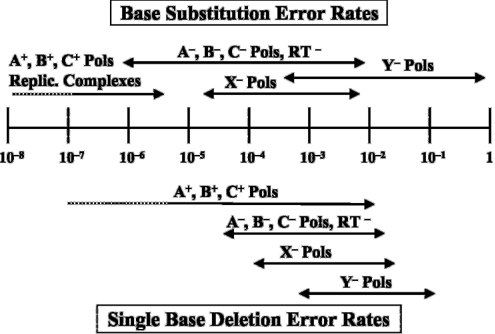
This review synthesizes how DNA polymerases achieve high replication fidelity, emphasizing nucleotide selectivity, conformational changes, proofreading, and mismatch/lesion handling. It also notes that fidelity varies enormously across polymerase families, from about \(10^{-7}\)–\(10^{-8}\) error rates for replicative systems to \(10^{-1}\)–\(10^{-3}\) for translesion synthesis polymerases.
Key findings
- In vivo, bacteriophage and *E. coli* replication in the absence of mismatch repair and external stress show base substitution error rates of about \(10^{-7}\) to \(10^{-8}\); eukaryotic replication is likely at least this accurate.
- Replicative polymerases from families A, B, and C typically have error rates in the \(10^{-6}\) to \(10^{-8}\) range, and their proofreading-defective derivatives reveal that fidelity often reflects \(10^{4}\)–\(10^{6}\)-fold selectivity for correct nucleotide insertion plus excision of 90%–99.9% of mismatches.
- Translesion synthesis polymerases are the least accurate, with misinsertion and base substitution error rates generally ranging from \(10^{-1}\) to \(10^{-3}\); for one polymerase, insertion of dGTP opposite template T can approach an error rate of 1.
- The paper argues that fidelity is shaped by multiple mechanisms, including geometric selection, base-base hydrogen bonding, water exclusion, dNTP-induced conformational change, mismatch extension/proofreading, and handling of damaged or misaligned substrates.
Methods
- Not an experimental study; this is a narrative review of DNA replication fidelity.
- It synthesizes prior biochemical, kinetic, structural, and mutational studies across bacteria, eukaryotes, and translesion synthesis polymerases, using published data and crystal structures.
- The main analysis is comparative and conceptual: it contrasts error-rate ranges, polymerase families, and mechanistic models of fidelity.
Limitations
- The paper states that error rates for repair reactions “have not yet been extensively studied,” so some conclusions about repair-associated DNA synthesis are predictive rather than directly measured.
- Many mechanistic claims are presented as hypotheses or interpretations of structural/kinetic data rather than definitive proof, especially for dNTP-induced conformational changes and water exclusion.
- The text makes evident that some sections are incomplete or only outlined in the provided version; if relying strictly on the excerpt, not all topics announced in the headings are fully developed.
Model-written summary. Check it against the paper before relying on it.
Integrity signals
Registry
Cites
Statistics
Figures


Verification
Claims the paper makes
10 Valid · 1 Not valid · 37 Not checked · 32 Own results and interpretations
The sources with a verdict support this claim; the rest weren’t checked yet, have no full text we could read, or their verdicts aren’t rated yet.
In the paper
“Kinetic studies (reviewed in Refs.15,19,[33][34][35][36] have established that fidelity depends on differences in the binding affinities and insertion rates of incorrect versus correct dNTPs.”
§ DNA Replication Fidelity > dNTP Binding Affinity, dNTP-induced Conformational
What the sources say
- Not checked — no full text of the sourcecites [15] 15. Kunkel, T. A., and Bebenek, K. (2000) Annu. Rev. Biochem. 69, 497-529 source
- Not checked — no full text of the sourcecites [19] 19. Beard, W. A., and Wilson, S. H. (2003) Structure 11, 489 -496 source
- Not checked — no full text of the sourcecites [33] 33. Goodman, M. F., Creighton, S., Bloom, L. B., and Petruska, J. (1993) Crit. Rev. Biochem. Mol. Biol. 28, 83-126 source
- Not checked — no full text of the sourcecites [34] 34. Johnson, K. A. (1993) Annu. Rev. Biochem. 62, 685-713 source
- Not checked — no full text of the sourcecites [35] 35. Showalter, A. K., and Tsai, M.-D. (2002) Biochemistry 41, 10571-10576 source
- Supportedcites [36] 36. Beard, W. A., Shock, D. D., Vande Berg, B. J., and Wilson, S. H. (2002) J. Biol. Chem. 277, 47393-47398 source
The paper’s introductory discussion defines nucleotide-insertion specificity as the insertion-rate constant divided by the incoming dNTP’s dissociation constant, and fidelity as the ratio of catalytic efficiencies for correct and incorrect nucleotides. That supports the claim that both binding and insertion kinetics enter into fidelity. (LLM, conf=0.92)
boostedstates a cause- Asserted: passes — The authors put it forward as true.
- Checkable: passes — It can be checked against evidence.
- Load-bearing: passes — The paper’s conclusions depend on it.
- Based: passes — The paper gives a reason why it holds.
Every source the paper cites for this claim was checked and supports it.
In the paper
“These results suggest that fidelity is primarily governed by the ability to insert the correct nucleotide (36) and focus attention on the conformational changes and interactions needed to achieve and stabilize the transition state.”
§ DNA Replication Fidelity > dNTP Binding Affinity, dNTP-induced Conformational
What the sources say
- Supportedcites [36] 36. Beard, W. A., Shock, D. D., Vande Berg, B. J., and Wilson, S. H. (2002) J. Biol. Chem. 277, 47393-47398 source
The paper’s Concluding Remarks state that differences between low- and high-fidelity DNA polymerases arise primarily from their ability to insert the correct nucleotide. This directly supports the clause attributed to citation (36). (LLM, conf=0.94)
hedgedstates a cause- Asserted: passes — The authors put it forward as true.
- Checkable: passes — It can be checked against evidence.
- Load-bearing: passes — The paper’s conclusions depend on it.
- Based: passes — The paper gives a reason why it holds.
- Supported
Every source the paper cites for this claim was checked and supports it.
In the paper
“In contrast, catalytic efficiencies for incorrect insertions by these polymerases vary over a much narrower range.”
§ DNA Replication Fidelity > dNTP Binding Affinity, dNTP-induced Conformational
What the sources say
- Supportedcites [36] 36. Beard, W. A., Shock, D. D., Vande Berg, B. J., and Wilson, S. H. (2002) J. Biol. Chem. 277, 47393-47398 source
In the Table I analysis (page not provided), correct-insertion efficiencies span a 10-million-fold range. The same section reports that, for most mispairs, a tenfold decrease in correct-insertion efficiency corresponds to little or no decrease in incorrect-insertion efficiency, supporting the narrower-range comparison. (LLM, conf=0.90)
plain- Asserted: passes — The authors put it forward as true.
- Checkable: passes — It can be checked against evidence.
- Load-bearing: passes — The paper’s conclusions depend on it.
- Based: passes — The paper gives a reason why it holds.
- Supported
The sources with a verdict support this claim; the rest weren’t checked yet, have no full text we could read, or their verdicts aren’t rated yet.
In the paper
“As for base substitutions, insertion/deletion error rates vary widely in a polymerase-and DNA sequence-dependent manner (56,57), such that single base deletion error rates (Fig. 1, bottom) can sometimes exceed base substitution error rates (58).”
§ DNA Replication Fidelity > Substrate Misalignments and Insertion/Deletion Fidelity
What the sources say
- Not checked — no full text of the sourcecites [56] 56. Kunkel, T. A. (1990) Biochemistry 29, 8003-8011 source
- Not checked — no full text of the sourcecites [57] 57. Bebenek, K., and Kunkel, T. A. (2000) Cold Spring Harbor Symp. Quant. Biol. 65, 81-91 source
- Supportedcites [58] 58. Bebenek, K., Garcı ´a-Dı ´az, M., Blanco, L., and Kunkel, T. A. (2003) J. Biol. Chem. 278, 34685-34690 source
Citation 58 is attached to the claim that single-base deletion error rates can exceed base-substitution error rates. The Results (p. 2) state that human Pol λ’s average single-base deletion error rate exceeds its single-base substitution error rate. The preceding claim about broad polymerase- and sequence-dependent variation is cited to references 56 and 57, not this paper. (LLM, conf=0.94)
plainstates an association- Asserted: passes — The authors put it forward as true.
- Checkable: passes — It can be checked against evidence.
- Load-bearing: unclear — It is unclear whether the paper’s conclusions depend on it.
- Based: passes — The paper gives a reason why it holds.
In the paper
“Studies of bacteriophage and Escherichia coli replication in the absence of DNA mismatch repair and external environmental stress suggest that the base substitution error rate of the replication machinery in vivo is in the range of 10 Ϫ7 to 10 Ϫ8 (4).”
§ DNA Replication Fidelity > How Accurate Is DNA Synthesis?
What the sources say
- Not checked — no full text of the sourcecites [4] 4. Schaaper, R. M. (1993) J. Biol. Chem. 268, 23762-23765 source
hedged- Asserted: passes — The authors put it forward as true.
- Checkable: passes — It can be checked against evidence.
- Load-bearing: unclear — It is unclear whether the paper’s conclusions depend on it.
- Based: passes — The paper gives a reason why it holds.
31 more claims
Create a free account to see all 80 claims and every source verdict.
- It may state two separate claims as one. 42
- Probably not a substantial claim. 8
Citations
Cites
Molecular Structure of Nucleic Acids: A Structure for Deoxyribose Nucleic Acid
WATSON, J. D., & CRICK, F. H. C. (1953) · Nature · doi:10.1038/171737a0 · Cited by 13,584
Friedberg, E. C., Walker, G. C., Siede, W., Wood, R. D., Schultz, R. A., & Ellenberger, T. (2005) · doi:10.1128/9781555816704 · Cited by 5,683
Bootsma, D., & Hoeijmakers, J. H. J. (1996) · Trends in Genetics · doi:10.1016/0168-9525(96)81408-9 · Cited by 2,282
Frameshift Mutations and the Genetic Code
Streisinger, G., Okada, Y., Emrich, J., Newton, J., Tsugita, A., Terzaghi, E., & Inouye, M. (1966) · Cold Spring Harbor Symposia on Quantitative Biology · doi:10.1101/sqb.1966.031.01.014 · Cited by 1,400
(1991) · PubMed · Cited by 1,305
A constant rate of spontaneous mutation in DNA-based microbes.
Drake, J. W. (1991) · Proceedings of the National Academy of Sciences · doi:10.1073/pnas.88.16.7160 · Cited by 1,199
Kunkel, T. A., & Bebenek, K. (2000) · Annual Review of Biochemistry · doi:10.1146/annurev.biochem.69.1.497 · Cited by 1,003
Self-citationMECHANISMS AND BIOLOGICAL EFFECTS OF MISMATCH REPAIR
Modrich, P. (1991) · Annual Review of Genetics · doi:10.1146/annurev.ge.25.120191.001305 · Cited by 892
MutT protein specifically hydrolyses a potent mutagenic substrate for DNA synthesis
Maki, H., & Sekiguchi, M. (1992) · Nature · doi:10.1038/355273a0 · Cited by 891
DNA Polymerases: Structural Diversity and Common Mechanisms
Steitz, T. A. (1999) · Journal of Biological Chemistry · doi:10.1074/jbc.274.25.17395 · Cited by 848
Research works printed but not linked: 1
- 5. Loeb, L. A. (2003) Cancer Res. 51, 3075-3079
Cited by
Items 501–600 of 752
DNA polymerase chain reaction: A model of error frequencies and extension rates
Griep, M. A., Whitney, S. E., Nelson, M., & Viljoen, H. J. (2005) · AIChE Journal · doi:10.1002/aic.10604 · Cited by 13
Haydon, D. T., Knowles, N. J., & McCauley, J. W. (1998) · Virus Genes · doi:10.1023/a:1008018403582 · Cited by 10
Eoff, R. L., Egli, M., & Guengerich, F. P. (2010) · Wiley eBooks · doi:10.1002/9783527630110.ch13 · Cited by 10
Knopf, C. W., & Strick, R. (1994) · Frontiers of virology · doi:10.1007/978-3-642-85004-2_6 · Cited by 10
Implications of Translesion DNA Synthesis Polymerases on Genomic Stability and Human Health
Venkadakrishnan, J., Lahane, G. P., Dhar, A., Xiao, W., Bhat, K. M., Pandita, T. K., & Bhat, A. (2023) · Molecular and Cellular Biology · doi:10.1080/10985549.2023.2224199 · Cited by 13
“Compared to TLS polymerases, replicative DNA polymerases exhibit error rates in the range of one nucleotide for every 10(6) to 10(8) replicated bases.(62) In contrast, TLS polymerases when replicating undamaged DNA exhibit error rates in the range of one base for every 10–10,000 bases.”
BackgroundKinetic analysis of the unique error signature of human DNA polymerase ν
Arana, M. E., Potapova, O., Kunkel, T., & Joyce, C. (2011) · Biochemistry · doi:10.1021/bi201197p · Cited by 10
“coli Pol I (10), T7 DNA polymerase (11, 12) and Pol γ (13-15), have intrinsic 3′ to 5′ exonuclease activity that can edit the occasional mismatches they create, thereby enhancing the fidelity with which they synthesize DNA (16, 17).”
BackgroundSelf-citationPools and Pols: Mechanism of a mutator phenotype
Sohl, C. D., Ray, S., & Sweasy, J. B. (2015) · Proceedings of the National Academy of Sciences · doi:10.1073/pnas.1505169112 · Cited by 9
Human DNA Polymerase ν Catalyzes Correct and Incorrect DNA Synthesis with High Catalytic Efficiency
Gowda, A. S. P., Moldovan, G., & Spratt, T. E. (2015) · Journal of Biological Chemistry · doi:10.1074/jbc.m115.653287 · Cited by 10
“A current hypothesis is that polymerases amplify the differences in energy and structure of correct versus mispairs to both enhance the rate of correct base pair formation and decrease the rate of mispair formation (51-53).”
BackgroundSneppen, K., & Semsey, S. (2014) · Scientific Reports · doi:10.1038/srep07346 · Cited by 9
Impact of DNA physical properties on local sequence bias of human mutation
Nakken, S., Rødland, E. A., & Hovig, E. J. (2010) · Human Mutation · doi:10.1002/humu.21371 · Cited by 10
Human DNA polymerase α interacts with mismatch repair proteins MSH 2 and MSH 6
Itkonen, H. M., Kantelinen, J., Vaara, M., Parkkinen, S., Schlott, B., Große, F., Nyström, M., Syväoja, J. E., & Pospiech, H. (2016) · FEBS Letters · doi:10.1002/1873-3468.12475 · Cited by 9
Peralta-Castro, A., García‐Medel, P. L., Baruch‐Torres, N., Trasviña‐Arenas, C. H., Juárez-Quintero, V., Morales‐Vázquez, C. M., & Brieba, L. G. (2020) · Genes · doi:10.3390/genes11111370 · Cited by 9
“This substitution rate is similar to that observed for nuclear replicative DNAPs (1 × 10⁻⁸ to 1 × 10⁻⁶) [39].”
BackgroundTheoretical Analysis Reveals the Cost and Benefit of Proofreading in Coronavirus Genome Replication
Mallory, J. D., Mallory, X., Kolomeisky, A. B., & Igoshin, O. A. (2021) · The Journal of Physical Chemistry Letters · doi:10.1021/acs.jpclett.1c00190 · Cited by 11
Lamb, N. A., Bard, J., Loll‐Krippleber, R., Brown, G. W., & Surtees, J. A. (2022) · Genetics · doi:10.1093/genetics/iyac092 · Cited by 9
Li, Y., & Schlick, T. (2013) · PLoS Computational Biology · doi:10.1371/journal.pcbi.1003074 · Cited by 11
“Although DNA polymerases conduct similar nucleotidyl transfer reaction and share a similar structure - palm, thumb and fingers subdomains [14], they can exhibit varying levels of accuracy (‘‘fidelity’’) in inserting nucleotides [15].”
Nagaraj, V. H., Mukhopadhyay, S., Dayarian, A., & Sengupta, A. M. (2014) · PLoS ONE · doi:10.1371/journal.pone.0113516 · Cited by 10
“Kinetic proofreading allows the rate to go down to p2 or higher powers of p [7, 8] explaining the observed higher fidelity (10(27)–10(28) per base per replication [9]) of polymerases with backtracking and exonuclease activity.”
BackgroundCranford, M. T., Kaszubowski, J. D., & Trakselis, M. A. (2020) · Nucleic Acids Research · doi:10.1093/nar/gkaa803 · Cited by 9
Patterns of TP53 Mutations in Human Cancer: Interplay Between Mutagenesis, DNA Repair and Selection
Shi, H., Calvez‐Kelm, F. L., Olivier, M., & Hainaut, P. L. (2005) · Springer eBooks · doi:10.1007/978-1-4020-2922-6_13 · Cited by 9
Somatic mutations in human cancer: applications in molecular epidemiology
Roux, E. L., Gormally, E., & Hainaut, P. L. (2005) · Revue d Épidémiologie et de Santé Publique · doi:10.1016/s0398-7620(05)84603-6 · Cited by 8
Omidvar, S., Vahedian, V., Sourani, Z., Yari, D., Asadi, M., Jafari, N., Khodavirdilou, L., Bagherieh, M., Shirzad, M., & Hosseini, V. (2024) · Pathology - Research and Practice · doi:10.1016/j.prp.2024.155405 · Cited by 9
Haratipour, P., Minard, C., Nakhjiri, M., Negahbani, A., Chamberlain, B. T., Osuna, J., Upton, T. G., Zhao, M., Kashemirov, B. A., & McKenna, C. E. (2020) · The Journal of Organic Chemistry · doi:10.1021/acs.joc.0c01204 · Cited by 8
HIV Reverse Transcriptase Fidelity, Clade Diversity, and Acquisition of Drug Resistance
Menéndez‐Arias, L. (2013) · Springer eBooks · doi:10.1007/978-1-4614-7291-9_11 · Cited by 11
DNA Polymerases and Mutagenesis in Human Cancers
Crespan, E., Amoroso, A., & Maga, G. (2009) · Sub-cellular biochemistry/Subcellular biochemistry · doi:10.1007/978-90-481-3471-7_9 · Cited by 8
Hong, Y.-B., Choi, Y., & Jung, G. (2004) · BMB Reports · doi:10.5483/bmbrep.2004.37.2.167 · Cited by 11
Targeting Kinetoplastid and Apicomplexan Thymidylate Biosynthesis as an Antiprotozoal Strategy
Valente, M., Vidal, A. E., & González‐Pacanowska, D. (2018) · Current Medicinal Chemistry · doi:10.2174/0929867325666180926154329 · Cited by 8
Mondon, P., Grand, D., Souyris, N., Emond, S., Bouayadi, K., & Kharrat, H. (2010) · Methods in molecular biology · doi:10.1007/978-1-60761-652-8_26 · Cited by 8
Ketkar, A. D., Zafar, M. K., Banerjee, S., Márquez, V. E., Egli, M., & Eoff, R. L. (2012) · Journal of the American Chemical Society · doi:10.1021/ja304176q · Cited by 9
Marx, A., Amacker, M., Stucki, M., Hübscher, U., Bickle, T. A., & Giese, B. (1998) · Nucleic Acids Research · doi:10.1093/nar/26.17.4063 · Cited by 12
In vitroselections with RNAs of variable length converge on a robust catalytic core
Popović, M., Ellingson, A. Q., Chu, T. P., Wei, C., Pohorille, A., & Ditzler, M. A. (2020) · Nucleic Acids Research · doi:10.1093/nar/gkaa1238 · Cited by 8
Laatri, S., Khayari, S. E., & Qriouet, Z. (2024) · International Journal of Biological Macromolecules · doi:10.1016/j.ijbiomac.2024.133924 · Cited by 11
On the Shannon capacity of DNA data embedding
Balado, F. (2010) · IEEE International Conference on Acoustics Speech and Signal Processing · doi:10.1109/icassp.2010.5495437 · Cited by 7
“As x B = y B , and as DNA bases constitute a 4 -ary alphabet, one can always embed P nc = log 2”
BackgroundAllostery and Kinetic Proofreading
Galstyan, V., & Phillips, R. (2019) · The Journal of Physical Chemistry B · doi:10.1021/acs.jpcb.9b08380 · Cited by 9
Kojima, K., Ooka, M., Abe, T., et al. (2021) · DNA repair · doi:10.1016/j.dnarep.2021.103056 · Cited by 7
Kumar, P., & Nagarajaram, H. A. (2012) · Journal of Molecular Evolution · doi:10.1007/s00239-012-9491-6 · Cited by 6
“The DNA replication process can involve introduction of wrong bases into the newly synthesized strand at a rate of one wrong base per 10–10 bases (Kunkel 2004; Kunkel and Bebenek 2000; Kunkel and Loeb 1980; Umar and Kunkel 1996).”
BackgroundXia, S., Beckman, J. W., Wang, J., & Konigsberg, W. H. (2012) · Biochemistry · doi:10.1021/bi300241m · Cited by 7
Pérez-Arnaiz, P., Lázaro, J. M., Salas, M., & de Vega, M. (2009) · Journal of Molecular Biology · doi:10.1016/j.jmb.2009.06.068 · Cited by 7
Diversity of Genome Organisation
Budd, A. (2012) · Methods in molecular biology · doi:10.1007/978-1-61779-582-4_2 · Cited by 9
Molecular Evolutionary Dynamics of Energy Limited Microorganisms
Shoemaker, W. R., Polezhaeva, E., Givens, K. B., & Lennon, J. T. (2021) · Molecular Biology and Evolution · doi:10.1093/molbev/msab195 · Cited by 6
Catalytic Mechanism of DNA Polymerases
Roettger, M. P., Bakhtina, M. M., Kumar, S., & Tsai, M. (2010) · Elsevier eBooks · doi:10.1016/b978-008045382-8.00669-9 · Cited by 5
Evolution and Variation of the Parvoviruses
Hoelzer, K., & Parrish, C. R. (2008) · Elsevier eBooks · doi:10.1016/b978-0-12-374153-0.00017-5 · Cited by 11
Foley, M. C., & Tamar Schlick, A. (2009) · The Journal of Physical Chemistry B · doi:10.1021/jp903172x · Cited by 7
Hartig, J. S., & Kool, E. T. (2005) · Nucleic Acids Research · doi:10.1093/nar/gki803 · Cited by 7
An Overview of Nanoparticle‐Assisted Polymerase Chain Reaction Technology
Shen, C., & Zhang, Z. (2013) · doi:10.1002/9781118451915.ch5 · Cited by 7
Santos, E., Lázaro, J. M., Pérez-Arnaiz, P., Salas, M., & de Vega, M. (2013) · Journal of Biological Chemistry · doi:10.1074/jbc.m113.530980 · Cited by 6
“Such a selectivity relies on the common structure of their polymerization domains formed by the universal fingers, palm, and thumb subdomains that form a U-shaped groove responsible for dsDNA binding (1, 2).”
BackgroundWang, R., Belew, A. T., Achuthan, V., El-Sayed, N. M., & DeStefano, J. J. (2021) · Journal of General Virology · doi:10.1099/jgv.0.001708 · Cited by 6
Quality control mechanisms of protein biogenesis: proteostasis dies hard
Bergmann, T. J., Pisoni, G. B., & Molinari, M. (2016) · AIMS Biophysics · doi:10.3934/biophy.2016.4.456 · Cited by 8
Komić, L., Kumrić, M., Urlić, H., Rizikalo, A., Grahovac, M., Komic, J., Tomičić, M., Rušić, D., Kurir, T. T., & Božić, J. (2023) · Life · doi:10.3390/life13061365 · Cited by 10
“Mistakes during DNA polymerase replication are yet another form of mutation [3,6].”
BackgroundEvolutionary dynamics of BRCA1 alterations in breast tumorigenesis
Roditi, L. D. V., & Michor, F. (2010) · Journal of Theoretical Biology · doi:10.1016/j.jtbi.2010.12.033 · Cited by 6
“Since the baseline mutation rate per base per cell division is about 10 10 (Kunkel, 2004), the rate of inactivating the first of two BRCA1 alleles is approximately 2 500 10 (10)1⁄410 (7).”
Iwata, F., Hirakawa, H., & Nagamune, T. (2016) · Scientific Reports · doi:10.1038/srep26588 · Cited by 6
A DNA-centered explanation of the DNA polymerase translocation mechanism
Arias‐Gonzalez, J. R. (2017) · Scientific Reports · doi:10.1038/s41598-017-08038-2 · Cited by 6
Neisseria gonorrhoeae: DNA Repair Systems and Their Role in Pathogenesis
Savitskaya, V. Y., Monakhova, M. V., Iakushkina, I. V., Borovikova, I., & Kubareva, E. A. (2022) · Biochemistry (Moscow) · doi:10.1134/s0006297922090097 · Cited by 7
“DNA mismatch repair (MMR) [54] MutS, MutL “errors” of DNA polymerase [55] mismatches”
BackgroundDahal, B. K., Kadyrova, L. Y., Delfino, K. R., Rogozin, I. B., Gujar, V. V., Lobachev, K. S., & Kadyrov, F. A. (2017) · PLoS Genetics · doi:10.1371/journal.pgen.1007074 · Cited by 6
Yang, Y., Kang, X., Kohalmi, L., Karthikeyan, R., & Kunz, B. A. (1999) · Current Genetics · doi:10.1007/s002940050445 · Cited by 6
Hassan, O., Pizzagalli, M. D., Leary, O. P., Zepecki, J. P., Corseri, A., Wu, L. J., Sasipalli, S., Lee, D., Hayward, L., Tran, L. H., et al. (2025) · Journal of Biological Chemistry · doi:10.1016/j.jbc.2025.110732 · Cited by 5
“DNA fiber analysis revealed a significant increase in replication fork speed, which may diminish the fidelity of DNA polymerases, potentially contributing to genomic instability (41, 50).”
Nucleic Acid Polymerase Fidelity and Viral Population Fitness
Smidansky, E. D., Arnold, J. J., & Cameron, C. E. (2008) · Elsevier eBooks · doi:10.1016/b978-0-12-374153-0.00006-0 · Cited by 5
Accuracy and speed of elongation in a minimal model of DNA replication
Sahoo, M., Arsha, N., Baral, P. R., & Klumpp, S. (2021) · Physical review. E · doi:10.1103/physreve.104.034417 · Cited by 5
Predicting evolutionary outcomes through the probability of accessing sequence variants
Gunnarsson, P. A., & Babu, M. M. (2023) · Science Advances · doi:10.1126/sciadv.ade2903 · Cited by 9
Negureanu, L., & Salsbury, F. R. (2013) · Journal of Molecular Modeling · doi:10.1007/s00894-013-1998-2 · Cited by 5
“DNA mismatch repair (MMR) proteins maintain genetic integrity in virtually all organisms [1] by recognizing and repairing post-replicative DNA errors [2].”
Hydrogen Bond Disruption in DNA Base Pairs from14C Transmutation
Sassi, M. J., Carter, D. J., Uberuaga, B. P., Stanek, C. R., Mancera, R. L., & Marks, N. A. (2014) · The Journal of Physical Chemistry B · doi:10.1021/jp508118f · Cited by 5
Ketkar, A. D., Zafar, M. K., Banerjee, S., et al. (2012) · Biochemistry · doi:10.1021/bi301043k · Cited by 5
Manjari, S. R., Pata, J. D., & Banavali, N. K. (2014) · Biochemistry · doi:10.1021/bi500189g · Cited by 5
Nanobiology—Symphony of bioscience and nanoscience
Zhang, X. (2020) · Science China Life Sciences · doi:10.1007/s11427-020-1741-y · Cited by 5
“Through these three progressive processes, the probability of a newly synthesized DNA containing wrong base is mere 10–10 (Kunkel, 2004).”
BackgroundMismatch detection in homologous strand exchange amplified by hydrophobic effects
Nordén, B., Brown, T. P., & Feng, B. (2021) · Biopolymers · doi:10.1002/bip.23426 · Cited by 4
Medžiūnė, J., Kapustina, Ž., Žeimytė, S., Jakubovska, J., Sindikevičienė, R., Čikotienė, I., & Lubys, A. (2022) · Communications Chemistry · doi:10.1038/s42004-022-00649-9 · Cited by 5
Selection of a reference sequence for the determination of nucleotide sequences in DNA molecules
Голубев, С. С., Kononogov, S. A., Ravin, N. V., & Георгиевич, С. К. (2012) · Measurement Techniques · doi:10.1007/s11018-012-9903-4 · Cited by 5
Huber, C., & Marx, A. (2017) · PLoS ONE · doi:10.1371/journal.pone.0183623 · Cited by 5
“DNA polymerases do extend mismatched primer ends, albeit with lower efficiency than the matched counterparts [3, 5, 20, 22].”
BackgroundThermodynamic framework for information in nanoscale systems with memory
Arias‐Gonzalez, J. R. (2017) · The Journal of Chemical Physics · doi:10.1063/1.5004793 · Cited by 5
Räz, M. H., Sandell, E. S., Patil, K. M., Gillingham, D. G., & Sturla, S. J. (2019) · ACS Chemical Biology · doi:10.1021/acschembio.8b00802 · Cited by 5
Brandsma, J. A., de Ruijter, M., Visse, R., van Meerten, D., van der Kaaden, M., Moggs, J. G., & van de Putte, P. (1996) · Mutation Research/DNA Repair · doi:10.1016/0921-8777(95)00028-3 · Cited by 5
Introduction to Nucleic Acid Polymerases: Families, Themes, and Mechanisms
Trakselis, M. A., & Murakami, K. S. (2013) · Nucleic acids and molecular biology · doi:10.1007/978-3-642-39796-7_1 · Cited by 6
“999999 % accurate) (Kunkel 2004).”
Streckenbach, F., Gopinath, R., Möller, H. M., & Marx, A. (2009) · ChemBioChem · doi:10.1002/cbic.200900123 · Cited by 7
Huang, A. Y., Cheng, Y., Ku, J., Zhao, B., Park, J., Kim, D., Choi, J., & Lee, E. A. (2026) · Nucleic Acids Research · doi:10.1093/nar/gkaf1450 · Cited by 4
“Somatic variants arise from inevitable errors in DNA replication and exposures to exogenous and endogenous mutagenesis factors [ 1 , 2 ].”
Effect of pH on the Misincorporation Rate of DNA Polymerase η
Nishimoto, N., Suzuki, M., & Izuta, S. (2016) · Biological and Pharmaceutical Bulletin · doi:10.1248/bpb.b15-00900 · Cited by 5
The putative error prone polymerase REV1 mediates DNA damage and drug resistance in Candida albicans
Agyare-Tabbi, M. R., Uthayakumar, D., Francis, D., Maroc, L., Grant, C., McQueen, P., Westmacott, G., Shaker, H., Skulska, I., Gagnon‐Arsenault, I., et al. (2024) · npj Antimicrobials and Resistance · doi:10.1038/s44259-024-00057-0 · Cited by 8
Kaveh, K., Manem, V. S., Kohandel, M., & Sivaloganathan, S. (2014) · Radiation and Environmental Biophysics · doi:10.1007/s00411-014-0576-z · Cited by 30
“A gene is approximately 10kb long, and we assume a hit on 5 per cent of bases (500 bases) can cause a change-of-function mutation, while each hit might occur with a probability of 10−10 per cell division (Michor et al, 2004)(Kunkel, 2004).”
BackgroundDNA expansions generated by human Polµ on iterative sequences
Aza, A., Martín, M. J., Juárez, R., Blanco, L., & Terrados, G. (2012) · Nucleic Acids Research · doi:10.1093/nar/gks1054 · Cited by 5
Molecular Variants Characterization in Protein Therapeutics Development
Ludwig, R. T., Bongers, J., Tao, L., Huang, Y., Fu, J., Wu, W., Liu, P., Song, H., & Russell, R. J. (2013) · Springer eBooks · doi:10.1007/978-1-4419-7862-2_6 · Cited by 4
Bacterial Mutation During Seasonal Epidemics
Sharma, A., Timilsina, S., Abrahamian, P. E., Minsavage, G. V., Jones, J. B., Vallad, G. E., & Goss, E. M. (2023) · Molecular Plant-Microbe Interactions · doi:10.1094/mpmi-10-23-0164-sc · Cited by 4
Pérez-Arnaiz, P., Lázaro, J. M., Salas, M., & de Vega, M. (2009) · Journal of Molecular Biology · doi:10.1016/j.jmb.2009.10.061 · Cited by 5
“These domains are composed of three universally present subdomains (fingers, palm, and thumb) that form a U-shaped groove responsible for binding the double-strandedDNA and the incoming nucleotide.(1,2) In the absence of the latter, the fingers”
Ju, W., Wang, H., Li, T., et al. (2016) · RSC Advances · doi:10.1039/c6ra07792g · Cited by 4
Srivastava, A., Idriss, H. T., & Homouz, D. (2023) · International Journal of Molecular Sciences · doi:10.3390/ijms24108988 · Cited by 4
“Moreover, replicative DNA polymerases can synthesize DNA at rates ranging from tens to hundreds of nucleotide additions per second, with a relatively low error rate of misincorporation occurring only once every ten to hundred of thousands of nucleotides added [5].”
BackgroundData storage in cellular DNA: contextualizing diverse encoding schemes
Dagher, G. G., Machado, A. P., Davis, E. C., Green, T., Martin, J., & Ferguson, M. (2019) · Evolutionary Intelligence · doi:10.1007/s12065-019-00202-z · Cited by 6
Lynch syndrome (HNPCC) and microsatellite instability analysis guidelines
Umar, A. (2006) · Cancer Biomarkers · doi:10.3233/cbm-2006-21-201 · Cited by 4
“The major mismatch repair proteins have some options with their protein pairs, and at least in the case of the Mut S homologs (MSH2, MSH3 and MSH6) which are recognition proteins; it confers some specificity for what is going to be repaired [9,11].”
Systems for Genetic Assessment of the Impact of Environmental Factors
Кисляк, С., Дуган, О. М., & Yalovenko, O. (2024) · Innovative Biosystems and Bioengineering · doi:10.20535/ibb.2024.8.2.288127 · Cited by 10
“Despite the highly developed replication apparatus, errors in the incorporation of pyrimidine and purine heterocyclic bases occur with a frequency of 10 8 to 10 6 per cell per generation [15, 54–56].”
BackgroundXia, Z., Kondhare, D., Deshmukh, S. S., et al. (2025) · Chemistry - A European Journal · doi:10.1002/chem.202500529 · Cited by 3
Lattice vibrational spectra of double-helix LiP
Wang, H., Li, T., Lv, Z., et al. (2014) · Europhysics Letters (EPL) · doi:10.1209/0295-5075/105/16001 · Cited by 3
Maximizing signal-to-noise ratio in the random mutation capture assay
Poovathingal, S. K., Gruber, J., Ng, L. F., Halliwell, B. B., & Gunawan, R. (2011) · Nucleic Acids Research · doi:10.1093/nar/gkr1221 · Cited by 3
Understanding Rad51 function is a prerequisite for progress in cancer research
Nordén, B., & Takahashi, M. (2020) · QRB Discovery · doi:10.1017/qrd.2020.13 · Cited by 3
“Modification could be caused by replication errors; this is, however, very rare because the high fidelity of DNA replication is maintained by DNA polymerase itself, its proofreading functions and other surveillance systems such as mismatch-repair systems (Kunkel, 2004; Bębenek and Graczyk, 2018).”
BackgroundMolecular and therapeutic bases of cancer
Fajardo-Orduña, G. R., & Chamorro-Plata, D. (2021) · Elsevier eBooks · doi:10.1016/b978-0-12-819828-5.00002-4 · Cited by 3
Kondhare, D., Heddinga, X., Leonard, P., et al. (2023) · Bioconjugate Chemistry · doi:10.1021/acs.bioconjchem.3c00169 · Cited by 3
Disordered peptide-based design of intrinsically disordered polymers for biomedical applications
Coskuner‐Weber, O., Çaylı, F. N., & Uversky, V. N. (2025) · International Journal of Polymer Analysis and Characterization · doi:10.1080/1023666x.2025.2458470 · Cited by 3
Integration of the DNA Damage Response with Innate Immune Pathways
Gordon, M., & Gasser, S. (2011) · InTech eBooks · doi:10.5772/24735 · Cited by 3
“) (Lindahl, 1993; Nyberg et al., 2002; Kunkel, 2004).”
BackgroundFaucett, A., & Islas, Á. L. (2005) · Biochemical and Biophysical Research Communications · doi:10.1016/j.bbrc.2005.09.156 · Cited by 3
Xie, J. P., Zhang, P., Li, C., Huang, Q., Zhou, R., & Peng, T. (2011) · Gene · doi:10.1016/j.gene.2011.02.007 · Cited by 4
“Biochemical data generated using site-directed mutagenesis and structural studies on HIV-1 RT have shown that the polymerase interactions important to fidelity occur primarily within the nascent base pair binding pocket, especially with the incoming nucleotide, with the minor groove edges of the templating nucleotide…”
MethodTransgenerational Teratogenesis by Prenatal Exposure to Endocrine Disrupting Chemicals
Nagao, T., Takada, N., & Onoda, N. (2011) · Genes and Environment · doi:10.3123/jemsge.33.50 · Cited by 3
Mechanisms of Global and Region-Specific Control of Mutagenesis
Pavlov, Y. I., Lada, A. G., Grabow, C. E., & Stepchenkova, E. I. (2016) · Springer eBooks · doi:10.1007/978-3-319-48838-7_6 · Cited by 4
Räz, M. H., Sturla, S. J., & Gahlon, H. L. (2018) · Biochemistry · doi:10.1021/acs.biochem.8b00861 · Cited by 3
Construction of a highly error-prone DNA polymerase for developing organelle mutation systems
Ji, J., & Day, A. (2020) · Nucleic Acids Research · doi:10.1093/nar/gkaa929 · Cited by 4
“Discrimination of the correct nucleotide during polymerisation is the major determinant of replication fidelity (65).”
Hébert, B., & Braslavsky, I. (2007) · Perspectives in bioanalysis · doi:10.1016/s1871-0069(06)02007-6 · Cited by 3
Pandyra, A. A., Tsankov, D. T., Andrushchenko, V., et al. (2005) · Biopolymers · doi:10.1002/bip.20416 · Cited by 3
Metadata
- Authors
- Kunkel, T. A.
- Affiliations
- National Institutes of Health (US)
- Corresponding author
- Kunkel, Thomas A.
- ORCID
- Kunkel, Thomas A.
- Venue
- Journal of Biological Chemistry
- Publisher
- Elsevier BV
- Published
- 2004-04
- Volume
- 279
- Issue
- 17
- Pages
- 16895-16898
- ISSN
- 0021-9258 (ISSN-L)
- OpenAlex
- W2152112318
- Cited by
- 754
- References
- 110
- Citations by year
- 2026: 17 · 2025: 14 · 2024: 11 · 2023: 19 · 2022: 16 · 2021: 24 · 2020: 33 · 2019: 35 · 2018: 30 · 2017: 36 · 2016: 29 · 2015: 29 · 2014: 38 · 2013: 43 · 2012: 47
- FWCI
- 3.27
- Type
- journal article
- Language
- en
- Open access
- hybrid
- doi.org
- Licence
- cc-by
- www.elsevier.com/tdm/userlicense/1.0/ (tdm)
- creativecommons.org/licenses/by/4.0/ (vor, 6043 d)
- Locations
- Journal of Biological Chemistry (publishedVersion, cc-by)
- PubMed (publishedVersion)
- Topics
- Life Sciences › Biochemistry, Genetics and Molecular Biology › Molecular Biology › DNA Repair Mechanisms
- Life Sciences › Biochemistry, Genetics and Molecular Biology › Molecular Biology › DNA and Nucleic Acid Chemistry
- Health Sciences › Medicine › Pathology and Forensic Medicine › Genetic factors in colorectal cancer
- Keywords
- DNA replication fidelity, DNA polymerase, DNA mismatch repair, DNA polymerase V, DNA polymerase IV, translesion synthesis
- MeSH terms
- Base Composition, DNA, DNA Replication, Escherichia coli, Hydrogen Bonding, Models, Molecular, Nucleic Acid Conformation, Thermodynamics, Gene Deletion, Entropy, Base Pairing, Base Pair Mismatch
About these checks
Registry, retraction, Cites and statistics results are computed, not judged, with one exception: a printed reference that no index lists is read once by a model before it counts as a citation error. Claims are extracted by a model and kept only when their quote appears verbatim in the text; each cited source is then checked, with a model’s help, for whether it says what the claim relies on. Those verdicts can be wrong — read the claim’s quote and the cited source before relying on one.
The claim verdicts this report counts are experimental: their accuracy is not yet measured.
A language model drew the claims from the paper on 2026-10-09, under version 3 of the claim definition (model deepseek-v4.1-flash, prompt extract-v3).
A second model labelled each claim on 2026-10-09 (model jev-1.13-20260917, definition revision gold-guideline-v0.2).
Cited sources are checked with a language model’s help (gpt-6-sol).
Statistics and arithmetic are recomputed, not judged.
Confidence bands are shown only for fields calibrated on our annotated test set. None is calibrated yet, so no band is shown.
What counts as a claim ›How we measure confidence ›How we check this ›
Are you an author, or do you see a problem with this page? Request a review
Data sources
Bibliographic data: Semantic Scholar, OpenAlex, Crossref.
Contains information from the Semantic Scholar Academic Graph Datasets, made available under the ODC Attribution License (ODC-BY 1.0).
Semantic Scholar’s data is described in: Kinney, R., et al. (2023). The Semantic Scholar Open Data Platform. arXiv:2301.10140.
