

DNA Replication Fidelity
Open accessThe DOI matches its Crossref record; 111 of the 111 references it cites were found in a registry or an index; 12 of the 104 sources its claims cite were checked for support.
Abstract
Review of the mechanisms that make DNA copying accurate, including nucleotide selectivity, proofreading, and mismatch repair.
Overview
CoChat Summary
TL;DR
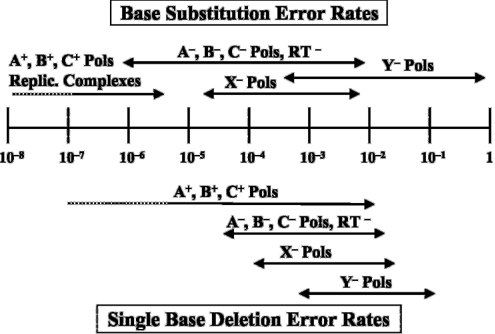
This review synthesizes how DNA polymerases achieve high replication fidelity, emphasizing nucleotide selectivity, conformational changes, proofreading, and mismatch/lesion handling. It also notes that fidelity varies enormously across polymerase families, from about \(10^{-7}\)–\(10^{-8}\) error rates for replicative systems to \(10^{-1}\)–\(10^{-3}\) for translesion synthesis polymerases.
Key findings
- In vivo, bacteriophage and *E. coli* replication in the absence of mismatch repair and external stress show base substitution error rates of about \(10^{-7}\) to \(10^{-8}\); eukaryotic replication is likely at least this accurate.
- Replicative polymerases from families A, B, and C typically have error rates in the \(10^{-6}\) to \(10^{-8}\) range, and their proofreading-defective derivatives reveal that fidelity often reflects \(10^{4}\)–\(10^{6}\)-fold selectivity for correct nucleotide insertion plus excision of 90%–99.9% of mismatches.
- Translesion synthesis polymerases are the least accurate, with misinsertion and base substitution error rates generally ranging from \(10^{-1}\) to \(10^{-3}\); for one polymerase, insertion of dGTP opposite template T can approach an error rate of 1.
- The paper argues that fidelity is shaped by multiple mechanisms, including geometric selection, base-base hydrogen bonding, water exclusion, dNTP-induced conformational change, mismatch extension/proofreading, and handling of damaged or misaligned substrates.
Methods
- Not an experimental study; this is a narrative review of DNA replication fidelity.
- It synthesizes prior biochemical, kinetic, structural, and mutational studies across bacteria, eukaryotes, and translesion synthesis polymerases, using published data and crystal structures.
- The main analysis is comparative and conceptual: it contrasts error-rate ranges, polymerase families, and mechanistic models of fidelity.
Limitations
- The paper states that error rates for repair reactions “have not yet been extensively studied,” so some conclusions about repair-associated DNA synthesis are predictive rather than directly measured.
- Many mechanistic claims are presented as hypotheses or interpretations of structural/kinetic data rather than definitive proof, especially for dNTP-induced conformational changes and water exclusion.
- The text makes evident that some sections are incomplete or only outlined in the provided version; if relying strictly on the excerpt, not all topics announced in the headings are fully developed.
Model-written summary. Check it against the paper before relying on it.
Integrity signals
Registry
Cites
Statistics
Figures


Verification
Claims the paper makes
10 Valid · 1 Not valid · 37 Not checked · 32 Own results and interpretations
The sources with a verdict support this claim; the rest weren’t checked yet, have no full text we could read, or their verdicts aren’t rated yet.
In the paper
“Kinetic studies (reviewed in Refs.15,19,[33][34][35][36] have established that fidelity depends on differences in the binding affinities and insertion rates of incorrect versus correct dNTPs.”
§ DNA Replication Fidelity > dNTP Binding Affinity, dNTP-induced Conformational
What the sources say
- Not checked — no full text of the sourcecites [15] 15. Kunkel, T. A., and Bebenek, K. (2000) Annu. Rev. Biochem. 69, 497-529 source
- Not checked — no full text of the sourcecites [19] 19. Beard, W. A., and Wilson, S. H. (2003) Structure 11, 489 -496 source
- Not checked — no full text of the sourcecites [33] 33. Goodman, M. F., Creighton, S., Bloom, L. B., and Petruska, J. (1993) Crit. Rev. Biochem. Mol. Biol. 28, 83-126 source
- Not checked — no full text of the sourcecites [34] 34. Johnson, K. A. (1993) Annu. Rev. Biochem. 62, 685-713 source
- Not checked — no full text of the sourcecites [35] 35. Showalter, A. K., and Tsai, M.-D. (2002) Biochemistry 41, 10571-10576 source
- Supportedcites [36] 36. Beard, W. A., Shock, D. D., Vande Berg, B. J., and Wilson, S. H. (2002) J. Biol. Chem. 277, 47393-47398 source
The paper’s introductory discussion defines nucleotide-insertion specificity as the insertion-rate constant divided by the incoming dNTP’s dissociation constant, and fidelity as the ratio of catalytic efficiencies for correct and incorrect nucleotides. That supports the claim that both binding and insertion kinetics enter into fidelity. (LLM, conf=0.92)
boostedstates a cause- Asserted: passes — The authors put it forward as true.
- Checkable: passes — It can be checked against evidence.
- Load-bearing: passes — The paper’s conclusions depend on it.
- Based: passes — The paper gives a reason why it holds.
Every source the paper cites for this claim was checked and supports it.
In the paper
“These results suggest that fidelity is primarily governed by the ability to insert the correct nucleotide (36) and focus attention on the conformational changes and interactions needed to achieve and stabilize the transition state.”
§ DNA Replication Fidelity > dNTP Binding Affinity, dNTP-induced Conformational
What the sources say
- Supportedcites [36] 36. Beard, W. A., Shock, D. D., Vande Berg, B. J., and Wilson, S. H. (2002) J. Biol. Chem. 277, 47393-47398 source
The paper’s Concluding Remarks state that differences between low- and high-fidelity DNA polymerases arise primarily from their ability to insert the correct nucleotide. This directly supports the clause attributed to citation (36). (LLM, conf=0.94)
hedgedstates a cause- Asserted: passes — The authors put it forward as true.
- Checkable: passes — It can be checked against evidence.
- Load-bearing: passes — The paper’s conclusions depend on it.
- Based: passes — The paper gives a reason why it holds.
- Supported
Every source the paper cites for this claim was checked and supports it.
In the paper
“In contrast, catalytic efficiencies for incorrect insertions by these polymerases vary over a much narrower range.”
§ DNA Replication Fidelity > dNTP Binding Affinity, dNTP-induced Conformational
What the sources say
- Supportedcites [36] 36. Beard, W. A., Shock, D. D., Vande Berg, B. J., and Wilson, S. H. (2002) J. Biol. Chem. 277, 47393-47398 source
In the Table I analysis (page not provided), correct-insertion efficiencies span a 10-million-fold range. The same section reports that, for most mispairs, a tenfold decrease in correct-insertion efficiency corresponds to little or no decrease in incorrect-insertion efficiency, supporting the narrower-range comparison. (LLM, conf=0.90)
plain- Asserted: passes — The authors put it forward as true.
- Checkable: passes — It can be checked against evidence.
- Load-bearing: passes — The paper’s conclusions depend on it.
- Based: passes — The paper gives a reason why it holds.
- Supported
The sources with a verdict support this claim; the rest weren’t checked yet, have no full text we could read, or their verdicts aren’t rated yet.
In the paper
“As for base substitutions, insertion/deletion error rates vary widely in a polymerase-and DNA sequence-dependent manner (56,57), such that single base deletion error rates (Fig. 1, bottom) can sometimes exceed base substitution error rates (58).”
§ DNA Replication Fidelity > Substrate Misalignments and Insertion/Deletion Fidelity
What the sources say
- Not checked — no full text of the sourcecites [56] 56. Kunkel, T. A. (1990) Biochemistry 29, 8003-8011 source
- Not checked — no full text of the sourcecites [57] 57. Bebenek, K., and Kunkel, T. A. (2000) Cold Spring Harbor Symp. Quant. Biol. 65, 81-91 source
- Supportedcites [58] 58. Bebenek, K., Garcı ´a-Dı ´az, M., Blanco, L., and Kunkel, T. A. (2003) J. Biol. Chem. 278, 34685-34690 source
Citation 58 is attached to the claim that single-base deletion error rates can exceed base-substitution error rates. The Results (p. 2) state that human Pol λ’s average single-base deletion error rate exceeds its single-base substitution error rate. The preceding claim about broad polymerase- and sequence-dependent variation is cited to references 56 and 57, not this paper. (LLM, conf=0.94)
plainstates an association- Asserted: passes — The authors put it forward as true.
- Checkable: passes — It can be checked against evidence.
- Load-bearing: unclear — It is unclear whether the paper’s conclusions depend on it.
- Based: passes — The paper gives a reason why it holds.
In the paper
“Studies of bacteriophage and Escherichia coli replication in the absence of DNA mismatch repair and external environmental stress suggest that the base substitution error rate of the replication machinery in vivo is in the range of 10 Ϫ7 to 10 Ϫ8 (4).”
§ DNA Replication Fidelity > How Accurate Is DNA Synthesis?
What the sources say
- Not checked — no full text of the sourcecites [4] 4. Schaaper, R. M. (1993) J. Biol. Chem. 268, 23762-23765 source
hedged- Asserted: passes — The authors put it forward as true.
- Checkable: passes — It can be checked against evidence.
- Load-bearing: unclear — It is unclear whether the paper’s conclusions depend on it.
- Based: passes — The paper gives a reason why it holds.
31 more claims
Create a free account to see all 80 claims and every source verdict.
- It may state two separate claims as one. 42
- Probably not a substantial claim. 8
Citations
Cites
Molecular Structure of Nucleic Acids: A Structure for Deoxyribose Nucleic Acid
WATSON, J. D., & CRICK, F. H. C. (1953) · Nature · doi:10.1038/171737a0 · Cited by 13,584
Friedberg, E. C., Walker, G. C., Siede, W., Wood, R. D., Schultz, R. A., & Ellenberger, T. (2005) · doi:10.1128/9781555816704 · Cited by 5,683
Bootsma, D., & Hoeijmakers, J. H. J. (1996) · Trends in Genetics · doi:10.1016/0168-9525(96)81408-9 · Cited by 2,282
Frameshift Mutations and the Genetic Code
Streisinger, G., Okada, Y., Emrich, J., Newton, J., Tsugita, A., Terzaghi, E., & Inouye, M. (1966) · Cold Spring Harbor Symposia on Quantitative Biology · doi:10.1101/sqb.1966.031.01.014 · Cited by 1,400
(1991) · PubMed · Cited by 1,305
A constant rate of spontaneous mutation in DNA-based microbes.
Drake, J. W. (1991) · Proceedings of the National Academy of Sciences · doi:10.1073/pnas.88.16.7160 · Cited by 1,199
Kunkel, T. A., & Bebenek, K. (2000) · Annual Review of Biochemistry · doi:10.1146/annurev.biochem.69.1.497 · Cited by 1,003
Self-citationMECHANISMS AND BIOLOGICAL EFFECTS OF MISMATCH REPAIR
Modrich, P. (1991) · Annual Review of Genetics · doi:10.1146/annurev.ge.25.120191.001305 · Cited by 892
MutT protein specifically hydrolyses a potent mutagenic substrate for DNA synthesis
Maki, H., & Sekiguchi, M. (1992) · Nature · doi:10.1038/355273a0 · Cited by 891
DNA Polymerases: Structural Diversity and Common Mechanisms
Steitz, T. A. (1999) · Journal of Biological Chemistry · doi:10.1074/jbc.274.25.17395 · Cited by 848
Research works printed but not linked: 1
- 5. Loeb, L. A. (2003) Cancer Res. 51, 3075-3079
Cited by
Items 601–700 of 752
Singh, A., & Patel, S. S. (2022) · Methods in enzymology on CD-ROM/Methods in enzymology · doi:10.1016/bs.mie.2022.03.011 · Cited by 2
Tsukada, K., Imamura, R., Miyake, T., Saikawa, K., Saito, M., Kase, N., Fu, L., Ishiai, M., Matsumoto, Y., & Shimada, M. (2025) · eLife · doi:10.7554/elife.99217 · Cited by 5
“Regulating the speed of DNA synthesis is important for accurate DNA replication and fork integrity ( Kunkel, 2004 ; Genois et al., 2021 ).”
Seo, J., Park, H., Oh, A., Jeong, C. B., Kim, S., Lee, S., Kim, C., Chang, H., Nam, J., & Park, D. (2025) · Molecular Therapy · doi:10.1016/j.ymthe.2025.06.033 · Cited by 4
“16,17 Additionally, repeated identical fluorescence signals during Illumina NGS induce signal carryover, where residual fluorescence affects the color interpretation of new signals, decreasing the base quality.”
Tsarin, L., & Shcherbakova, P. V. (2025) · Database · doi:10.1093/database/baaf076 · Cited by 3
“Among these, high-fidelity DNA synthesis by replicative polymerases ε (Pol ε ) and δ (Pol δ ) is the most critical for preventing spontaneous mutations [ 1 , 2 ].”
Cresti, J. R., & Simmons, L. A. (2026) · Molecular Microbiology · doi:10.1111/mmi.70047 · Cited by 2
“In the case of mismatched rNMPs, we test rA:dC and rG:dT because these ribonucleotide mismatches should be the most common mismatched rNMPs if rNMP errors follow the same trend as dNMP errors during replication (Kunkel 2004; Kunkel and Bebenek 2000; Kunkel and Erie 2005).”
Молекулярная классификация рака эндометрия
Раскин, Г. А., Kaurtseva, A. S., & Mukhina, M. S. (2023) · Malignant tumours · doi:10.18027/2224-5057-2023-13-3s1-40-48 · Cited by 2
Precise and Accurate DNA-3′/5-Ends Polishing with Thermus thermophilus Phage vb_Tt72 DNA Polymerase
Dorawa, S., & Kaczorowski, T. (2024) · International Journal of Molecular Sciences · doi:10.3390/ijms252413544 · Cited by 3
Связь матричных процессов I и II рода: амилоиды и стабильность генома
Andreychuk, Y. V., Zadorsky, S. P., Zhuk, A. S., Stepchenkova, E. I., & Inge-Vechtomov, S. G. (2020) · Molecular Biology · doi:10.31857/s002689842005002x · Cited by 2
Length heteroplasmy of the polyC-polyT-polyC stretch in the dog mtDNA control region
Verscheure, S., Backeljau, T., & Desmyter, S. (2014) · International Journal of Legal Medicine · doi:10.1007/s00414-014-1106-x · Cited by 2
“both in vivo and in vitro [23, 31], so that the possible contribution of in vitro polymerase errors to LH at polynucleotide stretches should not be neglected [3, 24–26, 32–34].”
BackgroundOncolytic Virotherapy for Thyroid Cancer: Will it Translate to the Clinic?
Passaro, C., & Portella, G. (2015) · International Journal of Endocrine Oncology · doi:10.2217/ije.14.33 · Cited by 2
Heidenreich, E., & Steinboeck, F. (2016) · Journal of Microbiological Methods · doi:10.1016/j.mimet.2016.11.007 · Cited by 2
“Occasional slippage of the polymerase complex may result in mismatches of the two DNA strands that, if unrepaired, eventually are converted to frameshift mutations (Kunkel, 1992).”
BackgroundMethod for Detecting and Studying Genome-Wide Mutations in Single Living Cells in Real Time
Elez, M., Robert, L., & Matić, I. (2018) · Methods in molecular biology · doi:10.1007/978-1-4939-7638-6_3 · Cited by 4
Approaches and Methods for Variant Analysis in the Genome of a Single Cell
Abyzov, A. S., Vaccarino, F. M., Urban, A. E., & Sarangi, V. (2019) · Healthy ageing and longevity · doi:10.1007/978-3-030-24970-0_14 · Cited by 2
Transcriptional Fidelity of Mitochondrial RNA Polymerase RpoTm from Arabidopsis thaliana
Yadav, A. K., Sahoo, P. K., Goswami, H. N., & Jain, D. (2019) · Journal of Molecular Biology · doi:10.1016/j.jmb.2019.08.022 · Cited by 2
Human mitochondrial DNA repair
Sia, E. A., & Stein, A. (2020) · Elsevier eBooks · doi:10.1016/b978-0-12-819656-4.00008-5 · Cited by 2
The Role p53 Protein in DNA Repair
Bakhanashvili, M. (2021) · IntechOpen eBooks · doi:10.5772/intechopen.99051 · Cited by 2
APPLICATIONS OF EPIGENETICS IN FORENSIC INVESTIGATIONS: A BRIEF REVIEW
Ullah, R., Ali, A., Hussain, N., & Malik, A. (2021) · Biological and Clinical Sciences Research Journal · doi:10.54112/bcsrj.v2021i1.58 · Cited by 1
“The mixture of DNA remains enormously precise, creating just single un-imposed miscalculation for each of the given bases (Kunkel, 2004).”
BackgroundSelective Modulation of DNA Polymerase Activity by Fixed‐Conformation Nucleoside Analogues
Eoff, R. L., McGrath, C. E., Maddukuri, L., Salamanca-Pinzon, S. G., Márquez, V. E., Marnett, L. J., Guengerich, F. P., & Egli, M. (2010) · Angewandte Chemie · doi:10.1002/ange.201003168 · Cited by 2
Chachula, S. T., Scheetz, P. M., Zureick, A. H., et al. (2023) · Organometallics · doi:10.1021/acs.organomet.3c00188 · Cited by 2
Ribonucleotide and R-Loop Damage in Plastid DNA and Mitochondrial DNA during Maize Development
Tripathi, D., Oldenburg, D. J., & Bendich, A. J. (2023) · Plants · doi:10.3390/plants12173161 · Cited by 2
“R-loop-induced DNA damage and genome instability are thought to be caused primarily by transcription–replication conflicts [55].”
BackgroundHypermutated Colorectal Cancer and Neoantigen Load
Glaire, M. A., & Church, D. N. (2017) · Springer eBooks · doi:10.1007/978-3-319-43063-8_8 · Cited by 1
Phi, K. K., Smith, M. C., Tokarsky, E. J., & Suo, Z. (2019) · Chemical Research in Toxicology · doi:10.1021/acs.chemrestox.9b00219 · Cited by 2
Quantum Effects and Genetics Code: Dynamics and Information Transfer in DNA ReplicationPreprint
Mayburov, S. N., Nicolini, C. A., & Sivozhelezov, V. (2006) · arXiv (Cornell University) · doi:10.48550/arxiv.q-bio/0611009 · Cited by 4
“experimental data shows that dNTP selection induces the complex sequence of chemical and mechanical processes ( Kunkel, 2004 ).”
BackgroundInfluentialDNA strand exchange and hydrophobic interactions between biomolecules
Feng, B. (2015) · Chalmers Publication Library (Chalmers University of Technology) · Cited by 2
The role of DNA polymerases, in particular DNA polymerase ε in DNA repair and replication
Pospiech, H. (2002) · Cited by 2
Shultz, R. R., Carey, A., Ragheb, K., Robinson, J. P., & Harpur, B. A. (2024) · Insectes Sociaux · doi:10.1007/s00040-024-00948-5 · Cited by 1
“Each time a copy of the genome is made, errors can accrue, albeit at a low frequency (Alberts, 2003; Kunkel, 2004).”
Ivonina, M. V., Orimoto, Y., & Aoki, Y. (2025) · Journal of Computational Chemistry · doi:10.1002/jcc.70091 · Cited by 2
Yuan, Y., Wang, H., Fu, H., Yang, C., Lin, Z., Xu, C., Hu, S., Chen, T., Jia, Q., Li, M., et al. (2025) · Journal of the American Chemical Society · doi:10.1021/jacs.5c14087 · Cited by 1
Non-enzymatic error correction in self-replicators without extraneous energy supply
Ghosh, K., Sahu, P., Barik, S., & Subramanian, H. (2026) · Scientific Reports · doi:10.1038/s41598-026-40325-9 · Cited by 3
Bulut, B., & Pfenninger, M. (2026) · Evolution Letters · doi:10.1093/evlett/qrag010 · Cited by 2
“…bias toward transitions ( Ts / Tv = 1.14) and a higher relative frequency of indels, are molecular signatures frequently associated with replicative polymerase errors, which are expected to occur more often when developmental processes are accelerated ( Kunkel, 2004 ; Lindahl, 1993 ; Lynch, 2010 ).”
InfluentialShansab, M., & Selsing, E. (2011) · Molecular Immunology · doi:10.1016/j.molimm.2011.01.004 · Cited by 1
“The rate of SHM is about 1 mutation per 1000 base pairs (bp) per cell cycle, which is close to a million fold higher than the spontaneous mutation rate that occurs in the remainder of the genome (Kunkel, 2004; Rajewsky, 1996).”
BackgroundThe 8-oxo-dGTP interaction with human DNA polymerase β: two patterns of ligand behavior
Nyporko, A. Y. (2015) · Structural Chemistry · doi:10.1007/s11224-015-0691-8 · Cited by 1
“At the same time, replicative polymerases from family B include oxidized GTP mainly opposed to the template dC [13], which is another proof of the high fidelity of this pol family [14, 15].”
BackgroundGlushenkov, A. N., & Hovorun, D. М. (2016) · Reports of the National Academy of Sciences of Ukraine · doi:10.15407/dopovidi2016.03.098 · Cited by 1
Detection of allelic variants of the POLE and POLD1 genes in colorectal cancer patients
Pätzold, L., Bērziņa, D., Daneberga, Z., et al. (2017) · Balkan Journal of Medical Genetics · doi:10.1515/bjmg-2017-0028 · Cited by 1
“9% of base-base mismatches are corrected by exonuclease activity of the polymerase itself (Pol δ, Pol ε) or by other exonucleases [5].”
Belmont, J. W. (2008) · Elsevier eBooks · doi:10.1016/b978-0-323-04404-2.10101-0 · Cited by 1
Shapiro, J. A. (2007) · Biological and medical physics series · doi:10.1007/978-3-540-35306-5_6 · Cited by 1
Inestabilidad microsatelital y cáncer gástrico
Negrete-Tobar, G., González-Motta, A., Messa-Botero, O. A., et al. (2021) · Revista Colombiana de Cirugía · doi:10.30944/20117582.658 · Cited by 1
Analysis of Cell and Nucleus Genome by Next-Generation Sequencing
Oh, J. W., & Abyzov, A. S. (2020) · Springer eBooks · doi:10.1007/978-3-030-62532-0_3 · Cited by 1
Topoisomerase 1-dependent R-loop deficiency drives accelerated replication and genomic instability
Sarni, D., Barroso Ceballos, S. I., Shtrikman, A., Irony-Tur Sinai, M., Oren, Y. S., Aguilera López, A., & Kerem, B. (2022) · Deposito de Investigacion Universidad de Sevilla (University of Seville) · Cited by 1
Relationship between Type I and Type II Template Processes: Amyloids and Genome Stability
Andreychuk, Y. V., Zadorsky, S. P., Zhuk, A. S., Stepchenkova, E. I., & Inge-Vechtomov, S. G. (2020) · Molecular Biology · doi:10.1134/s0026893320050027 · Cited by 1
Mutagenesis, Genetic Disorders and Diseases
Dixit, M., & Kumar, A. (2017) · Elsevier eBooks · doi:10.1016/b978-0-12-809252-1.00001-8 · Cited by 6
Carbon ion beam radioresistant rodent cells are sensitized to trifluorothymidine exposure
Baek, S., Sato, K., Nishida, N., Koseki, J., Hayashi, K., Kawamoto, K., Konno, M., Doki, Y., Mori, M., Ogawa, K., et al. (2018) · Oncology Letters · doi:10.3892/ol.2018.9004 · Cited by 1
“As DNA double‑stranded breaks are harmful to cells, this presents a promising therapeutic mechanism via which efficient eradication of tumors is expected (5).”
Dual coding potential of a 2′,5′-branched ribonucleotide in DNA
Döring, J., & Hurek, T. (2018) · RNA · doi:10.1261/rna.068486.118 · Cited by 1
The epigenomic impact of methylation in metabolic dysfunction and cancer
Zahnow, C. A. (2019) · Elsevier eBooks · doi:10.1016/b978-0-12-816843-1.00005-9 · Cited by 1
Vormittag-Nocito, E. R., Groth, J., & Mohapatra, G. (2020) · Pathology - Research and Practice · doi:10.1016/j.prp.2020.152863 · Cited by 1
Making Mutations is an Active Process: Methods to Examine DNA Polymerase Errors
Eckert, K. A., & Gestl, E. E. (2010) · Wiley eBooks · doi:10.1002/9783527629398.ch4 · Cited by 1
Grundlagen der Polymerasekettenreaktion (PCR) [Biomonitoring Methods in German language, 2004]
Krause, G., Scherer, G., Müller, M., & Weiß, T. (2012) · Wiley eBooks · doi:10.1002/3527600418.bipcrbasicd0016 · Cited by 1
Influence of Protein Electromagnetic Field on Hydrogen BondingPreprint
Mayburov, S., Nicolini, C. A., & Sivozhelezov, V. (2009) · arXiv (Cornell University) · doi:10.48550/arxiv.0911.3563 · Cited by 1
“The investigation of DNA-pol conformations shows that during the induced-fit the electrostatic configuration of DNA-pol changes significantly, and such changes influence directly on some features of DNA replication (Li, 1998, Kunkel, 2004).”
BackgroundInfluentialUnfaithful DNA Polymerase Caught in the Act
Jiricny, J. (2004) · Molecular Cell · doi:10.1016/s1097-2765(04)00149-2 · Cited by 1
Molecular Evolution: Patterns and Rates
Bromham, L. D. (2008) · Wiley eBooks · doi:10.1002/9780470015902.a0001799.pub3 · Cited by 1
Doublié, S. (2004) · Structure · doi:10.1016/j.str.2004.09.002 · Cited by 1
Gunka, K. (2011) · eDiss (Georg-August-Universität Göttingen) · doi:10.53846/goediss-470 · Cited by 5
The Principles and Drivers of Cancer
Saxe, C. C., & Phelps, W. C. (2017) · Wiley eBooks · doi:10.1002/9781119468868.ch12 · Cited by 2
Lamb, N. A., Bard, J., Buck, M. J., & Surtees, J. A. (2020) · bioRxiv (Cold Spring Harbor Laboratory) · doi:10.1101/2020.06.25.171595 · Cited by 1
“While the lower variant frequencies in permissive controls were expected, it was higher than predicted given the known mutation rates of replicative polymerases, (56-58) indicating that background mutations were being introduced as part of the PCR/sequencing pipeline.”
Tsukada, K., Miyake, T., Imamura, R., Saikawa, K., Saito, M., Kase, N., Ishiai, M., Matsumoto, Y., & Shimada, M. (2021) · bioRxiv (Cold Spring Harbor Laboratory) · doi:10.1101/2021.07.29.452278 · Cited by 1
Bulut, B., & Pfenninger, M. (2025) · bioRxiv (Cold Spring Harbor Laboratory) · doi:10.1101/2025.10.13.682077 · Cited by 1
“…spectrum; the increased observed transition bias (Ts/Tv ratio = 1.28) is a molecular signature frequently associated with replicative polymerase errors, which are expected to occur more often when developmental processes are accelerated (Fitzsimmons et al., 2018; Kunkel, 2004; Lynch, 2010) .”
InfluentialPlant MutS Homolog 1 is a mismatch-directed nuclease required for organelle genome maintenancePreprint
Peñafiel-Ayala, A., Zhou, C., Baruch‐Torres, N., Sloan, D. B., Arimura, S., & Brieba, L. G. (2026) · bioRxiv (Cold Spring Harbor Laboratory) · doi:10.64898/2026.06.11.731605 · Cited by 2
Use of FRET to Study Dynamics of DNA Replication
Nevin, P., & Beuning, P. J. (2014) · RNA technologies · doi:10.1007/978-3-642-54452-1_6
“In general, DNA polymerases are able to insert the correct nucleotide opposite the complementary templating base with amazing specificity, making only one error in every 10–10 nucleotides incorporated (Kunkel 2004), far surpassing what would be expected from only the energetics of base paring (Kunkel and Bebenek 2000).”
BackgroundExploring the early effects of AP endonuclease 1 knockdown in zebrafish embryogenesis
Snow, B. (2012) · Digital Repository Service (Northeastern University) · doi:10.17760/d20002985 · Cited by 1
2′‐Deoxyribose‐Modified Nucleoside Triphosphates and their Recognition by DNA Polymerases
Jung, K., & Marx, A. (2008) · Wiley eBooks · doi:10.1002/9783527623112.ch4
Basics of Molecular Biology, Genetic Engineering, and Metabolic Engineering
Wang, M., & Shi, H. (2009) · Wiley eBooks · doi:10.1002/9780470437988.ch2
Marx, A. (2010) · Wiley eBooks · doi:10.1002/9780470664001.ch3 · Cited by 1
De nouvelles méthodes pour l'alignement des séquences biologiques
Gîrdea, M., Kucherov, G., & Noé, L. (2010) · theses.fr (ABES)
Estudio de la función Dot1 en la respuesta celular al daño en el DNA en "Saccharomyces cerevisiae"
Pérez, F. M. C. (2009) · Gredos (University of Salamanca) · doi:10.14201/gredos.22497
Functional significance of minor MLH1 germline alterations found in colon cancer patients
Raevaara, T. E. (2005) · Työväentutkimus Vuosikirja
Kosenkov, D., Kholod, Y. A., Gorb, L., & Leszczyński, J. (2010) · Challenges and advances in computational chemistry and physics · doi:10.1007/978-90-481-3034-4_7
Bacterial DNA Polymerases, Chemistry of
Pomerantz, R. T., & O’Donnell, M. E. (2008) · Wiley eBooks · doi:10.1002/9780470048672.wecb033
Precision Optical Measurements of DNA Structure and Synthesis
Ma, Z. (2008) · PhDT · doi:10.7907/vknw-bs41
Spontaneous Mutagenesis in Escherichia coli and Saccharomyces cerevisiae
Imai, M., Tago, Y.-I., Endo, K., Ohnishi, G., Nagata, Y., Nunoshiba, T., & Yamamoto, K. (2006) · Genes and Environment · doi:10.3123/jemsge.28.9
Carbon Nanopowder Binds with DNA and May Induce DNA Aggregation
Guo, C., Liu, Q., Ji, Q., et al. (2010) · International Conference on Bioinformatics and Biomedical Engineering · doi:10.1109/icbbe.2010.5517975
“The first is the type of DNA polymerase [18], the second is the DNA template sequence [18–20] and the third is the nanofluid where nanoparticles are suspended in the reaction buffer.”
BackgroundSome Key Enzymes Used in Cloning
Julin, D. A. (2014) · Springer eBooks · doi:10.1007/978-1-4614-6436-5_89-1
Identification of driver genes in microsatellite-unstable colorectal cancers
Djureinovic, T., & Sjöblom, T. (2013) · Colorectal Cancer · doi:10.2217/crc.13.62
Replication—The Synthesis of DNA
Stenesh, J. (1998) · Springer eBooks · doi:10.1007/978-1-4757-9427-4_17
Maternal environment modulates the defence response in P. pinaster progenies
Krause, K. S. (2014) · Epsilon Archive for Student Projects (University of Southampton)
Neural network analysis of mRNA secondary structure across transcriptomes
Lockhart, & Ronald, E. G. (2010) · Atlanta University Center Robert W. Woodruff Library (Atlanta University Center Robert W. Woodruff Library)
Axelsson, E., & Webster, M. T. (2011) · Wiley eBooks · doi:10.1002/9780470015902.a0001805.pub2
Epigenetic alterations in sporadic and familial cancers
Joensuu, E. I. (2015) · Helda - University of Helsinki Institutional Repository
Purcell, P. (2013) · Northumbria Research Link (Northumbria University)
Mechanisms and Consequences of Chromosomal Instability in Malignant tumours
Stewénius, Y. (2008) · Lund University Publications (Lund University)
hMSH6 protein phosphorylation : DNA mismatch repair or DNA damage signaling?
Kaliyaperumal, S. (2009) · OhioLink ETD Center (Ohio Library and Information Network)
Irregular transcription dynamics for rapid production of high-fidelity transcriptsPreprint
Depken, M., Parrondo, J. M. R., & Grill, S. W. (2012) · arXiv (Cornell University) · doi:10.48550/arxiv.1201.5344
“In fact, post-incorporation proofreading (PIP) has long been recognized to play a vital role in error suppression [5, 9, 11, 17, 19, 20], but has received little attention at a quantitative theoretical level [21].”
BackgroundJoseph, L. (2015) · ResearchSpace (University of KwaZulu-Natal)
The I mpact of Nucleoside Sugar Modific ation on Biochemical DNA Transactions
Williams, A. A. (2012) · The Scholars Repository - LLU (Loma Linda University)
Methods of genetic diversity creation and functional display for directed evolution experiments
Huovinen, T. (2014) · UTUPub (University of Turku) · Cited by 1
Identifizierung und Charakterisierung eines Vsr-Homologen aus
Lagging, M. (2000)
Schanz, S. (2008) · Repository for Publications and Research Data (ETH Zurich) · doi:10.3929/ethz-a-005710407
DNA, RNA, and Protein Synthesis
Meisenberg, G., & Simmons, W. H. (2012) · Elsevier eBooks · doi:10.1016/b978-0-323-07155-0.00006-x · Cited by 1
Azaiez, A. (2005) · Corpus Université Laval (Université Laval)
A timidilát bioszintézis és a genomi integritás preventív védelme
Hírmondó, R. (2015) · Eötvös Loránd Tudományegyetem · doi:10.15476/elte.2015.115
The dynamics of Y-family DNA polymerases and their accessory factors
Nevin, P. (2014) · Digital Repository Service (Northeastern University) · doi:10.17760/d20194084
Nucleotide-time alignment for molecular recorders
Cybulski, T. R., Boyden, E. S., Church, G. M., Tyo, K. E. J., & Kording, K. P. (2017) · PLoS Computational Biology · doi:10.1371/journal.pcbi.1005483
“Further, natural DNAPs tend to be either fast or error-prone, but not generally both; the highest error rates we see in highincorporation-rate DNAPs are at the low end of what we simulate here [21,30].”
BackgroundGraphite-MicroMégas, a tool for DNA modeling
Hornus, S., Larivière, D., & Fourmentin-guilbert, F. (2011)
Gowda, A. S. P., & Spratt, T. E. (2017) · Chemical Research in Toxicology · doi:10.1021/acs.chemrestox.7b00257
“3 The high fidelity is remarkable because the DNA polymerases (pols) (1) must recognize four different base-pairs as the correct substrates, (2) the position of the nascent base pair, where the selectivity is determined, is 10 Å from the site of chemistry, and (3) the flexibility of the DNA attenuates differences in b…”
BackgroundKey Enzymes Used in Cloning, Some
Julin, D. A. (2018) · Springer eBooks · doi:10.1007/978-1-4614-1531-2_89 · Cited by 1
Nyporko, A. Y. (2014) · Studia Biologica · doi:10.30970/sbi.0801.340
Genetik menschlicher Erkrankungen
Graw, J. (2015) · Springer eBooks · doi:10.1007/978-3-662-44817-5_13 · Cited by 1
Access denied : A closer look at anti-phage defense mechanisms
Vlot, M. (2018) · doi:10.18174/449991 · Cited by 1
Is High Fidelity Imitation Necessary for Cumulative Culture? An Analysis of the Ratchet Argument
Elettra, F. (2018) · Open Access Victoria University of Wellington | Te Herenga Waka (Figshare) · doi:10.26686/wgtn.19288292
Metadata
- Authors
- Kunkel, T. A.
- Affiliations
- National Institutes of Health (US)
- Corresponding author
- Kunkel, Thomas A.
- ORCID
- Kunkel, Thomas A.
- Venue
- Journal of Biological Chemistry
- Publisher
- Elsevier BV
- Published
- 2004-04
- Volume
- 279
- Issue
- 17
- Pages
- 16895-16898
- ISSN
- 0021-9258 (ISSN-L)
- OpenAlex
- W2152112318
- Cited by
- 754
- References
- 110
- Citations by year
- 2026: 17 · 2025: 14 · 2024: 11 · 2023: 19 · 2022: 16 · 2021: 24 · 2020: 33 · 2019: 35 · 2018: 30 · 2017: 36 · 2016: 29 · 2015: 29 · 2014: 38 · 2013: 43 · 2012: 47
- FWCI
- 3.27
- Type
- journal article
- Language
- en
- Open access
- hybrid
- doi.org
- Licence
- cc-by
- www.elsevier.com/tdm/userlicense/1.0/ (tdm)
- creativecommons.org/licenses/by/4.0/ (vor, 6043 d)
- Locations
- Journal of Biological Chemistry (publishedVersion, cc-by)
- PubMed (publishedVersion)
- Topics
- Life Sciences › Biochemistry, Genetics and Molecular Biology › Molecular Biology › DNA Repair Mechanisms
- Life Sciences › Biochemistry, Genetics and Molecular Biology › Molecular Biology › DNA and Nucleic Acid Chemistry
- Health Sciences › Medicine › Pathology and Forensic Medicine › Genetic factors in colorectal cancer
- Keywords
- DNA replication fidelity, DNA polymerase, DNA mismatch repair, DNA polymerase V, DNA polymerase IV, translesion synthesis
- MeSH terms
- Base Composition, DNA, DNA Replication, Escherichia coli, Hydrogen Bonding, Models, Molecular, Nucleic Acid Conformation, Thermodynamics, Gene Deletion, Entropy, Base Pairing, Base Pair Mismatch
About these checks
Registry, retraction, Cites and statistics results are computed, not judged, with one exception: a printed reference that no index lists is read once by a model before it counts as a citation error. Claims are extracted by a model and kept only when their quote appears verbatim in the text; each cited source is then checked, with a model’s help, for whether it says what the claim relies on. Those verdicts can be wrong — read the claim’s quote and the cited source before relying on one.
The claim verdicts this report counts are experimental: their accuracy is not yet measured.
A language model drew the claims from the paper on 2026-10-09, under version 3 of the claim definition (model deepseek-v4.1-flash, prompt extract-v3).
A second model labelled each claim on 2026-10-09 (model jev-1.13-20260917, definition revision gold-guideline-v0.2).
Cited sources are checked with a language model’s help (gpt-6-sol).
Statistics and arithmetic are recomputed, not judged.
Confidence bands are shown only for fields calibrated on our annotated test set. None is calibrated yet, so no band is shown.
What counts as a claim ›How we measure confidence ›How we check this ›
Are you an author, or do you see a problem with this page? Request a review
Data sources
Bibliographic data: Semantic Scholar, OpenAlex, Crossref.
Contains information from the Semantic Scholar Academic Graph Datasets, made available under the ODC Attribution License (ODC-BY 1.0).
Semantic Scholar’s data is described in: Kinney, R., et al. (2023). The Semantic Scholar Open Data Platform. arXiv:2301.10140.
