

The DOI matches its Crossref record; 59 of the 59 references it cites were found in a registry or an index.
Discrete Generation of Superoxide and Hydrogen Peroxide by T Cell Receptor Stimulation
Open accessAbstract
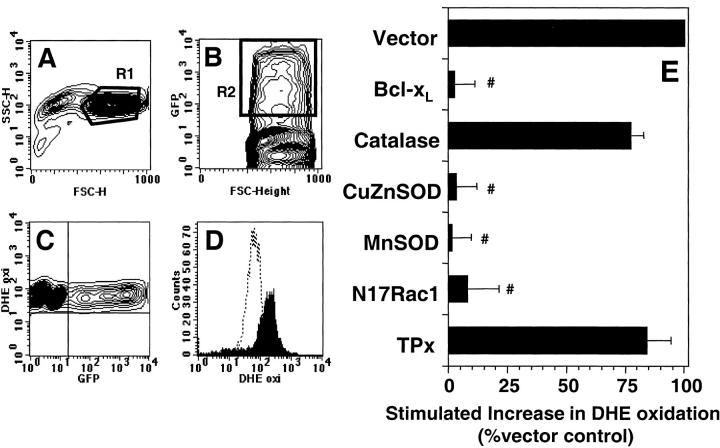
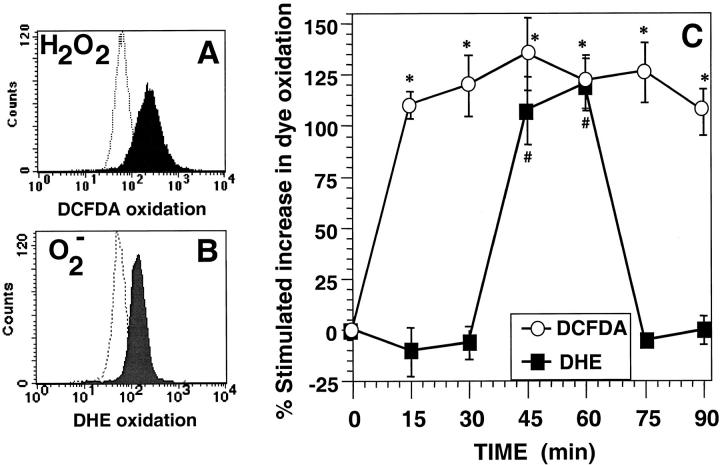
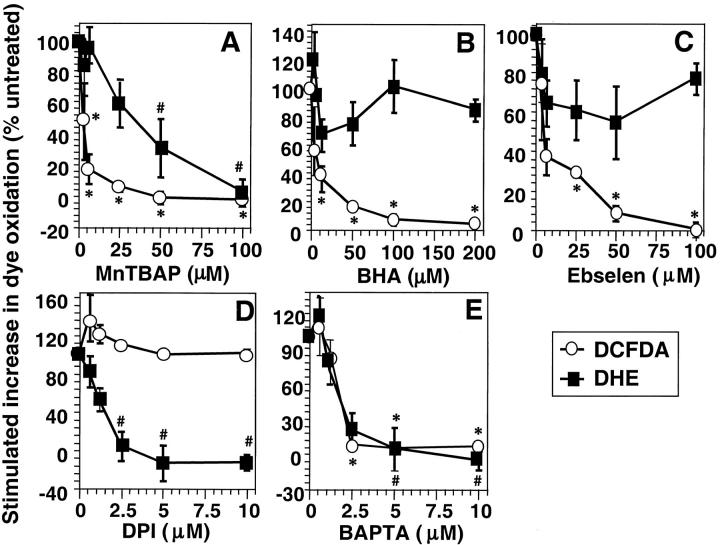
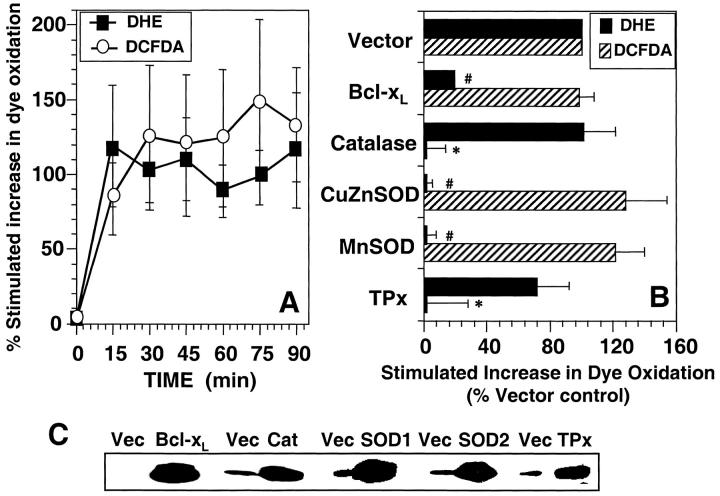
Receptor-stimulated generation of reactive oxygen species (ROS) has been shown to regulate signal transduction, and previous studies have suggested that T cell receptor (TCR) signals may involve or be sensitive to ROS. In this study, we have shown for the first time that TCR cross-linking induced rapid (within 15 min) generation of both hydrogen peroxide and superoxide anion, as defined with oxidation-sensitive dyes, selective pharmacologic antioxidants, and overexpression of specific antioxidant enzymes. Furthermore, the data suggest the novel observation that superoxide anion and hydrogen peroxide are produced separately by distinct TCR-stimulated pathways. Unexpectedly, TCR-stimulated activation of the Fas ligand (FasL) promoter and subsequent cell death was dependent upon superoxide anion, but independent of hydrogen peroxide, while nuclear factor of activated T cells (NFAT) activation or interleukin 2 transcription was independent of all ROS. Anti-CD3 induced phosphorylation of extracellular signal–regulated kinase (ERK)1/2 required hydrogen peroxide generation but was unaffected by superoxide anion. Thus, antigen receptor signaling induces generation of discrete species of oxidants that selectively regulate two distinct redox sensitive pathways, a proapoptotic (FasL) and a proliferative pathway (ERK).
Overview
The claims and statistics of this paper haven’t been checked yet.
Run the check — free, no account needed. It reads the open-access text and checks the sources it cites.
Integrity signals
Registry
Cites
Statistics
Figures
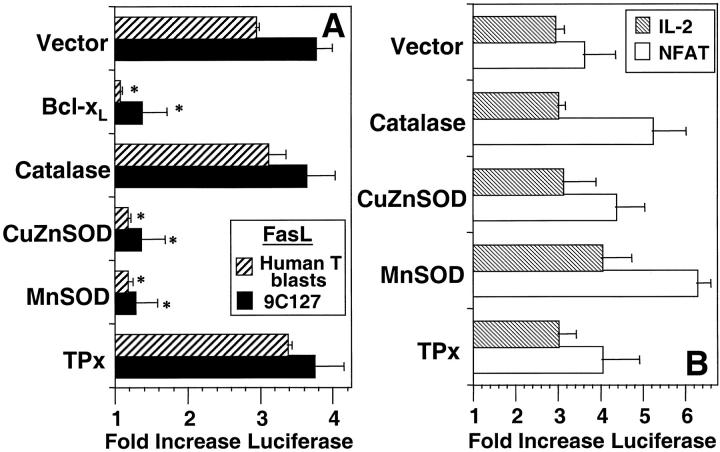
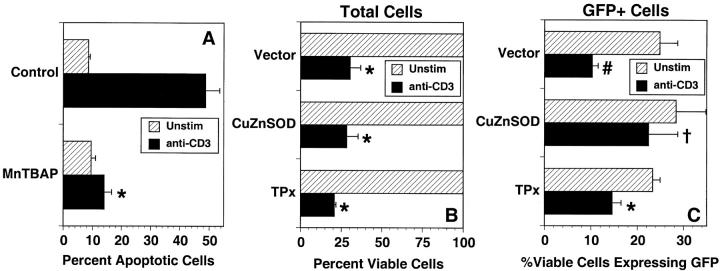
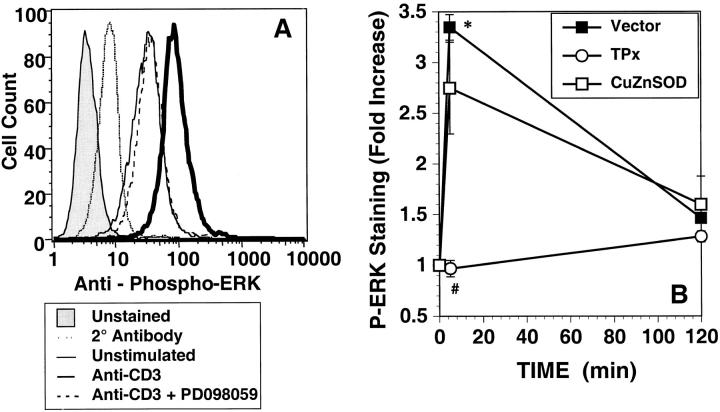
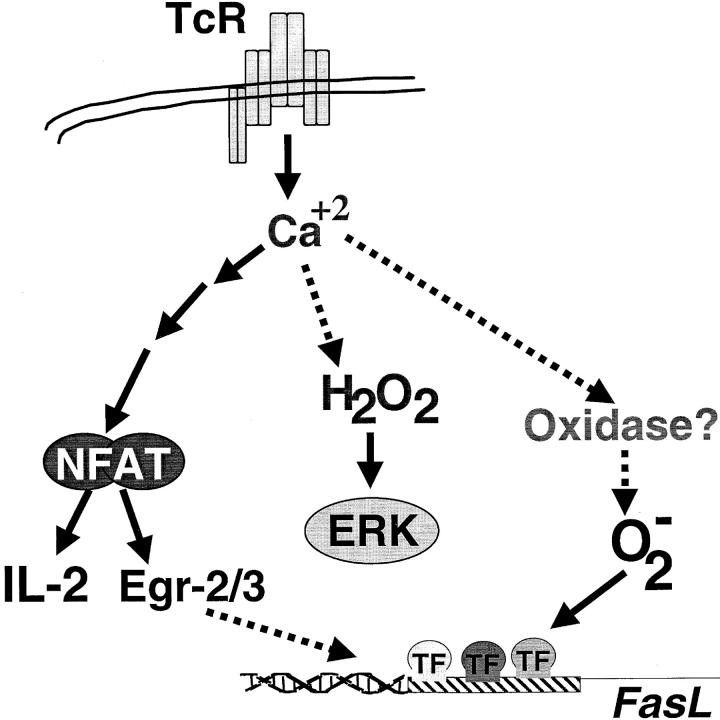
Verification
Claims the paper makes
The claims and statistics of this paper haven’t been checked yet.
Run the check — free, no account needed. It reads the open-access text and checks the sources it cites.
Claims other papers make about this one
Each is checked against this paper’s own text: does it say what the citing paper says it does?
In the citing paper
“There has long been evidence that ROS can play critical roles in shaping T cell responses (28–30).”
From Fueling Immunity: Insights into Metabolism and Lymphocyte Function (2013) · cites this paper as [29]
Self-check
Percentages, sums and reported differences re-computed from the paper’s own numbers.
The self-check needs the paper’s full text.
Citations
Cites
NAD(P)H Oxidase: Role in Cardiovascular Biology and Disease
Griendling, K. K., Sorescu, D., & Ushio-Fukai, M. (2000) · Circulation Research · doi:10.1161/01.res.86.5.494 · Cited by 2,886
Requirement for Generation of H 2 O 2 for Platelet-Derived Growth Factor Signal Transduction
Sundaresan, M., Yu, Z.-X., Ferrans, V. J., Irani, K., & Finkel, T. (1995) · Science · doi:10.1126/science.270.5234.296 · Cited by 2,520
Cell transformation by the superoxide-generating oxidase Mox1
Suh, Y.-A., Arnold, R. S., Lassegue, B., Shi, J., Xu, X., Sorescu, D., Chung, A. B., Griendling, K. K., & Lambeth, J. D. (1999) · Nature · doi:10.1038/43459 · Cited by 1,480
Activation of Mitogen-activated Protein Kinase by H2O2
Guyton, K. Z., Liu, Y., Gorospe, M., Xu, Q., & Holbrook, N. J. (1996) · Journal of Biological Chemistry · doi:10.1074/jbc.271.8.4138 · Cited by 1,212
Epidermal Growth Factor (EGF)-induced Generation of Hydrogen Peroxide
Bae, Y. S., Kang, S. W., Seo, M. S., Baines, I., Tekle, E., Chock, P. B., & Rhee, S. G. (1997) · Journal of Biological Chemistry · doi:10.1074/jbc.272.1.217 · Cited by 1,208
Self-citationOxidative stress: the paradox of aerobic life
Davies, K. J. A. (1995) · Biochemical Society Symposia · doi:10.1042/bss0610001 · Cited by 1,150
Regulation of JNK signaling by GSTp
Adler, V., Yin, Z., Fuchs, S. Y., Benezra, M., Rosario, L., Tew, K. D., Pincus, M. R., Sardana, M., Henderson, C. J., Wolf, C. R., et al. (1999) · The EMBO Journal · doi:10.1093/emboj/18.5.1321 · Cited by 1,105
An essential role for free radicals and derived species in signal transduction
Lander, H. M. (1997) · The FASEB Journal · doi:10.1096/fasebj.11.2.9039953 · Cited by 908
Rothe, G., & Valet, G. (1990) · Journal of Leukocyte Biology · doi:10.1002/jlb.47.5.440 · Cited by 870
Kang, S. W., Chae, H. Z., Seo, M. S., Kim, K., Baines, I., & Rhee, S. G. (1998) · Journal of Biological Chemistry · doi:10.1074/jbc.273.11.6297 · Cited by 693
Self-citation
Research works printed but not linked: 4
- 1992, Adv. Enzymol., 65, 49
- 1988, Immunology., 63, 431
- 1999, Cancer Res., 59, 6276
- 1998, Environ. Health Perspect., 106, 1179
Cited by
Sorted by citations
Regulation of immune responses by L-arginine metabolism
Bronte, V., & Zanovello, P. (2005) · Nature Reviews Immunology · doi:10.1038/nri1668 · Cited by 1,775
The role of ROS in tumour development and progression
Cheung, E. C., & Vousden, K. H. (2022) · Nature reviews. Cancer · doi:10.1038/s41568-021-00435-0 · Cited by 1,663
Beyond oxidative stress: an immunologist's guide to reactive oxygen species
Nathan, C., & Cunningham-Bussel, A. (2013) · Nature Reviews Immunology · doi:10.1038/nri3423 · Cited by 1,619
NF-κB activation by reactive oxygen species: Fifteen years later
Gloire, G., Legrand-Poels, S., & Piette, J. G. (2006) · Biochemical Pharmacology · doi:10.1016/j.bcp.2006.04.011 · Cited by 1,561
Oxidant signals and oxidative stress
Finkel, T. (2003) · Current Opinion in Cell Biology · doi:10.1016/s0955-0674(03)00002-4 · Cited by 1,393
Fueling Immunity: Insights into Metabolism and Lymphocyte Function
Pearce, E. L., Poffenberger, M. C., Chang, C.-H., & Jones, R. G. (2013) · Science · doi:10.1126/science.1242454 · Cited by 1,363
Sena, L. A., Li, S., Jairaman, A., Prakriya, M., Ezponda, T., Hildeman, D. A., Wang, C.-R., Schumacker, P. T., Licht, J. D., Perlman, H., et al. (2013) · Immunity · doi:10.1016/j.immuni.2012.10.020 · Cited by 1,338
T cell metabolism drives immunity
Buck, M. D., O’Sullivan, D., & Pearce, E. L. (2015) · The Journal of Experimental Medicine · doi:10.1084/jem.20151159 · Cited by 1,238
Glucose Metabolism Regulates T Cell Activation, Differentiation, and Functions
Palmer, C. S., Ostrowski, M., Balderson, B., Christian, N., & Crowe, S. M. (2015) · Frontiers in Immunology · doi:10.3389/fimmu.2015.00001 · Cited by 1,015
Zinc as a Gatekeeper of Immune Function
Weßels, I., Maywald, M., & Rink, L. (2017) · Nutrients · doi:10.3390/nu9121286 · Cited by 809
Hydrogen peroxide as second messenger in lymphocyte activation
Reth, M. G. (2002) · Nature Immunology · doi:10.1038/ni1202-1129 · Cited by 793
Imai, H., & Nakagawa, Y. (2003) · Free Radical Biology and Medicine · doi:10.1016/s0891-5849(02)01197-8 · Cited by 776
T cell lipid peroxidation induces ferroptosis and prevents immunity to infection
Matsushita, M., Freigang, S., Schneider, C., Conrad, M., Bornkamm, G. W., & Kopf, M. (2015) · Journal of Experimental Medicine · doi:10.1084/jem.20140857 · Cited by 672
“Erastin-induced ferroptotic death of RAS mutant tumor cells has been reported to prevent glutamate-induced neurotoxicity (Dixon et al., 2012), regulated by Gpx4 (Yang et al., 2014).”
BackgroundInduction of reactive oxygen species: an emerging approach for cancer therapy
Zou, Z., Chang, H., Li, H., & Wang, S. (2017) · APOPTOSIS · doi:10.1007/s10495-017-1424-9 · Cited by 599
Glutathione primes t cell metabolism for inflammation
Mak, T. W., Grusdat, M., Duncan, G. S., Dostert, C., Nonnenmacher, Y., Cox, M., Binsfeld, C., Hao, Z., Brüstle, A., Itsumi, M., et al. (2017) · Immunity · doi:10.1016/j.immuni.2017.03.019 · Cited by 511
Reactive Oxygen Species in the Immune System
Yang, Y., Bazhin, A. V., Werner, J., & Karakhanova, S. (2013) · International Reviews of Immunology · doi:10.3109/08830185.2012.755176 · Cited by 523
Reactive Oxygen Species in the Tumor Microenvironment: An Overview
Weinberg, F., Ramnath, N., & Nagrath, D. (2019) · Cancers · doi:10.3390/cancers11081191 · Cited by 502
T cells express a phagocyte-type NADPH oxidase that is activated after T cell receptor stimulation
Jackson, S. H., Devadas, S., Kwon, J., Pinto, L. A., & Williams, M. S. (2004) · Nature Immunology · doi:10.1038/ni1096 · Cited by 457
Self-citationSpecificity of a third kind: reactive oxygen and nitrogen intermediates in cell signaling
Nathan, C. (2003) · Journal of Clinical Investigation · doi:10.1172/jci200318174 · Cited by 460
The Nox Family of NAD(P)H Oxidases: Host Defense and Beyond
Geiszt, M., & Leto, T. L. (2004) · Journal of Biological Chemistry · doi:10.1074/jbc.r400024200 · Cited by 464
Oxidative Stress and Antioxidants in Disease and Cancer: A Review
Gupta, R. K., Patel, A., Shah, N., Chaudhary, A. K., Jha, U. K., Yadav, U. C., Gupta, P. K., & Pakuwal, U. (2014) · Asian Pacific Journal of Cancer Prevention · doi:10.7314/apjcp.2014.15.11.4405 · Cited by 432
Major Mango Polyphenols and Their Potential Significance to Human Health
Masibo, M., & Qian, H. (2008) · Comprehensive Reviews in Food Science and Food Safety · doi:10.1111/j.1541-4337.2008.00047.x · Cited by 425
Selenium–GPX4 axis protects follicular helper T cells from ferroptosis
Yao, Y., Chen, Z., Zhang, H., Chen, C., Zeng, M., Yunis, J., Wei, Y., Wan, Y., Wang, N., Zhou, M., et al. (2021) · Nature Immunology · doi:10.1038/s41590-021-00996-0 · Cited by 387
Metabolic Hallmarks of Tumor and Immune Cells in the Tumor Microenvironment
Renner, K., Singer, K., Koehl, G. E., Geissler, E. K., Peter, K., Siska, P. J., & Kreutz, M. P. (2017) · Frontiers in Immunology · doi:10.3389/fimmu.2017.00248 · Cited by 384
Fisicaro, P., Barili, V., Montanini, B., Acerbi, G., Ferracin, M., Guerrieri, F., Salerno, D., Boni, C., Massari, M., Cavallo, M. C., et al. (2017) · Nature Medicine · doi:10.1038/nm.4275 · Cited by 356
Melatonin signaling and cell protection function
Luchetti, F., Canonico, B., Betti, M., Arcangeletti, M., Pilolli, F., Piroddi, M., Canesi, L., Papa, S., & Galli, F. (2010) · The FASEB Journal · doi:10.1096/fj.10-154450 · Cited by 349
Metabolic signaling in T cells
Shyer, J. A., Flavell, R. A., & Bailis, W. (2020) · Cell Research · doi:10.1038/s41422-020-0379-5 · Cited by 346
Reactive Oxygen Species Regulate T Cell Immune Response in the Tumor Microenvironment
Chen, X., Song, M., Zhang, B., & Zhang, Y. (2016) · Oxidative Medicine and Cellular Longevity · doi:10.1155/2016/1580967 · Cited by 326
Oxidative stress in multiple sclerosis: Central and peripheral mode of action
Ohl, K., Tenbrock, K., & Kipp, M. (2015) · Experimental Neurology · doi:10.1016/j.expneurol.2015.11.010 · Cited by 322
Reactive Oxygen Species: Involvement in T Cell Signaling and Metabolism
Franchina, D. G., Dostert, C., & Brenner, D. (2018) · Trends in Immunology · doi:10.1016/j.it.2018.01.005 · Cited by 334
RNA Viruses: ROS-Mediated Cell Death
Reshi, L., Su, Y.-C., & Hong, J. (2014) · International Journal of Cell Biology · doi:10.1155/2014/467452 · Cited by 314
Mitochondria as central hub of the immune system
Breda, C. N. D. S., Davanzo, G. G., Basso, P. J., Câmara, N. O. S., & Moraes‐Vieira, P. M. (2019) · Redox Biology · doi:10.1016/j.redox.2019.101255 · Cited by 289
Immunopathogenesis of infection with the visceralizing Leishmania species
Wilson, M. E., Jerônimo, S. M. B., & Pearson, R. D. (2005) · Microbial Pathogenesis · doi:10.1016/j.micpath.2004.11.002 · Cited by 282
An activin receptor IIA ligand trap corrects ineffective erythropoiesis in β-thalassemia
Dussiot, M., Maciel, T. T., Fricot, A., Chartier, C., Negre, O., Veiga, J., Grapton, D., Paubelle, E., Payen, E., Beuzard, Y., et al. (2014) · Nature Medicine · doi:10.1038/nm.3468 · Cited by 279
Yang, Z., Shen, Y., Oishi, H., Matteson, E. L., Tian, L., Goronzy, J. J., & Weyand, C. M. (2016) · Science Translational Medicine · doi:10.1126/scitranslmed.aad7151 · Cited by 275
Redox signaling across cell membranes
Fisher, A. B. (2009) · Antioxidants & Redox Signaling · doi:10.1089/ars.2008.2378 · Cited by 269
T cells and reactive oxygen species
Belikov, A. V., Schraven, B., & Simeoni, L. (2015) · Journal of Biomedical Science · doi:10.1186/s12929-015-0194-3 · Cited by 264
Kamiński, M. M., Sauer, S. W., Klemke, C., Süss, D., Okun, J. G., Krammer, P. H., & Gülow, K. (2010) · The Journal of Immunology · doi:10.4049/jimmunol.0901662 · Cited by 259
Control of Bcl-2 expression by reactive oxygen species
Hildeman, D. A., Mitchell, T. C., Aronow, B. J., Wojciechowski, S., Kappler, J. W., & Marrack, P. (2003) · Proceedings of the National Academy of Sciences · doi:10.1073/pnas.1936213100 · Cited by 250
Generation and Function of Reactive Oxygen Species in Dendritic Cells During Antigen Presentation
Matsue, H., Edelbaum, D., Shalhevet, D., Mizumoto, N., Yang, C., Mummert, M. E., Oeda, J., Masayasu, H., & Takashima, A. (2003) · The Journal of Immunology · doi:10.4049/jimmunol.171.6.3010 · Cited by 253
Glutathione Restricts Serine Metabolism to Preserve Regulatory T Cell Function
Kurniawan, H., Franchina, D. G., Guerra, L., Bonetti, L., Soriano‐Baguet, L., Grusdat, M., Schlicker, L., Hunewald, O. E., Dostert, C., Merz, M. P., et al. (2020) · Cell Metabolism · doi:10.1016/j.cmet.2020.03.004 · Cited by 249
Diaz, B., Shani, G., Pass, I., Anderson, D., Quintavalle, M., & Courtneidge, S. A. (2009) · Science Signaling · doi:10.1126/scisignal.2000368 · Cited by 242
Kesarwani, P., Murali, A. K., Al-Khami, A. A., & Mehrotra, S. (2012) · Antioxidants and Redox Signaling · doi:10.1089/ars.2011.4073 · Cited by 242
Effect of medium chain fatty acid in human health and disease
Roopashree, P. G., Shetty, S. S., & Kumari, S. (2021) · Journal of Functional Foods · doi:10.1016/j.jff.2021.104724 · Cited by 237
Moro‐García, M. A., Mayo, J. C., Sainz, R. M., & Alonso‐Arias, R. (2018) · Frontiers in Immunology · doi:10.3389/fimmu.2018.00339 · Cited by 241
Generation of CD8 T Cell Memory Is Regulated by IL-12
Pearce, E. L., & Shen, H. (2007) · The Journal of Immunology · doi:10.4049/jimmunol.179.4.2074 · Cited by 228
Metabolism of activated T lymphocytes
Maciolek, J. A., Pasternak, J. A., & Wilson, H. L. (2014) · Current Opinion in Immunology · doi:10.1016/j.coi.2014.01.006 · Cited by 232
The Influence of Gut Microbiota on Oxidative Stress and the Immune System
Kunst, C., Schmid, S. A., Michalski, M., Tümen, D., Buttenschoen, J., Müller, M., & Gülow, K. (2023) · Biomedicines · doi:10.3390/biomedicines11051388 · Cited by 240
Inhibition of PTPs by H2O2 regulates the activation of distinct MAPK pathways
Lee, K., & Esselman, W. J. (2002) · Free Radical Biology and Medicine · doi:10.1016/s0891-5849(02)01000-6 · Cited by 221
Ligtenberg, M. A., Mougiakakos, D., Mukhopadhyay, M., Witt, K., Lladser, Á., Chmielewski, M. M., Riët, T., Abken, H., & Kiessling, R. W. (2015) · The Journal of Immunology · doi:10.4049/jimmunol.1401710 · Cited by 222
The Role of Reactive Oxygen Species in Regulating T Cell-mediated Immunity and Disease
Yarosz, E. L., & Chang, C.-H. (2018) · Immune Network · doi:10.4110/in.2018.18.e14 · Cited by 214
Hoffmann, F. W., Hashimoto, A. C., Shafer, L. A., Dow, S., Berry, M. J., & Hoffmann, P. R. (2010) · The Journal of Nutrition · doi:10.3945/jn.109.120725 · Cited by 213
Apoptosis and Autophagy: Decoding Calcium Signals that Mediate Life or DeathPreprint
Harr, M. W., & Distelhorst, C. (2010) · Cold Spring Harbor Perspectives in Biology · doi:10.1101/cshperspect.a005579 · Cited by 217
Singh, D. K., Kumar, D., Siddiqui, Z., Basu, S. K., Kumar, V., & Rao, K. V. S. (2005) · Cell · doi:10.1016/j.cell.2005.02.036 · Cited by 206
Kamiński, M. M., Sauer, S. W., Kamiński, M., Opp, S., Ruppert, T., Grigaravičius, P., Grudnik, P., Gröne, H., Krammer, P. H., & Gülow, K. (2012) · Cell Reports · doi:10.1016/j.celrep.2012.10.009 · Cited by 208
The Cooperative Roles of Inflammation and Oxidative Stress in the Pathogenesis of Hypertension
Crowley, S. D. (2013) · Antioxidants and Redox Signaling · doi:10.1089/ars.2013.5258 · Cited by 196
Late-stage tumors induce anemia and immunosuppressive extramedullary erythroid progenitor cells
Zhao, L., He, R., Long, H., Guo, B., Jia, Q., Qin, D., Liu, S.-Q., Wang, Z., Xiang, T., Zhang, J., et al. (2018) · Nature Medicine · doi:10.1038/s41591-018-0205-5 · Cited by 196
T cell apoptosis and reactive oxygen species
Hildeman, D. A., Mitchell, T. C., Kappler, J. W., & Marrack, P. (2003) · Journal of Clinical Investigation · doi:10.1172/jci200318007 · Cited by 191
Superoxide Flux in Endothelial Cells via the Chloride Channel-3 Mediates Intracellular Signaling
Hawkins, B. J., Madesh, M., Kirkpatrick, C. J., & Fisher, A. B. (2007) · Molecular Biology of the Cell · doi:10.1091/mbc.e06-09-0830 · Cited by 187
Friedman, J. S., Lopez, M. F., Fleming, M. D., Rivera, A., Martin, F. M., Welsh, M. L., Boyd, A. S., Doctrow, S. R., & Burakoff, S. J. (2004) · Blood · doi:10.1182/blood-2003-11-3858 · Cited by 183
Regulation of redox balance in cancer and T cells
Kong, H., & Chandel, N. S. (2017) · Journal of Biological Chemistry · doi:10.1074/jbc.tm117.000257 · Cited by 182
Gene expression profiling reveals a signaling role of glutathione in redox regulation
Fratelli, M., Goodwin, L. O., Ørom, U. A., Lombardi, S., Tonelli, R., Mengozzi, M., & Ghezzi, P. (2005) · Proceedings of the National Academy of Sciences · doi:10.1073/pnas.0504398102 · Cited by 180
Thioredoxin Reductase Inhibition for Cancer Therapy
Gencheva, R., & Arnér, E. S. J. (2021) · The Annual Review of Pharmacology and Toxicology · doi:10.1146/annurev-pharmtox-052220-102509 · Cited by 181
Inflammation and Oxidative Stress in Multiple Sclerosis: Consequences for Therapy Development
Pegoretti, V., Swanson, K. A., Bethea, J. R., Probert, L., Eisel, U. L. M., & Fischer, R. (2020) · Oxidative Medicine and Cellular Longevity · doi:10.1155/2020/7191080 · Cited by 187
Zheng, Y., Niyonsaba, F., Ushio, H., Nagaoka, I., Ikeda, S., Okumura, K., & Ogawa, H. (2007) · British Journal of Dermatology · doi:10.1111/j.1365-2133.2007.08196.x · Cited by 179
Regulation of IL4 gene expression by T cells and therapeutic perspectives
Li‐Weber, M., & Krammer, P. H. (2003) · Nature reviews. Immunology · doi:10.1038/nri1128 · Cited by 174
T Cell Receptor Stimulation, Reactive Oxygen Species, and Cell Signaling
Williams, M. S., & Kwon, J. (2004) · Free Radical Biology and Medicine · doi:10.1016/j.freeradbiomed.2004.05.029 · Cited by 167
Self-citationSelenoproteins Mediate T Cell Immunity through an Antioxidant Mechanism
Shrimali, R. K., Irons, R., Carlson, B. A., Sano, Y., Gladyshev, V. N., Park, J. M., & Hatfield, D. L. (2008) · Journal of Biological Chemistry · doi:10.1074/jbc.m802559200 · Cited by 167
Regulation of Signal Transduction Through Protein Cysteine Oxidation
Cross, J. V., & Templeton, D. J. (2006) · Antioxidants and Redox Signaling · doi:10.1089/ars.2006.8.1819 · Cited by 162
Reactive Oxygen Species and Antitumor Immunity—From Surveillance to Evasion
Kotsafti, A., Scarpa, M., Castagliuolo, I., & Scarpa, M. (2020) · Cancers · doi:10.3390/cancers12071748 · Cited by 161
Oxidative stress and hepatitis C virus
Paracha, U. Z., Fatima, K., Alqahtani, M. H., Chaudhary, A., Abuzenadah, A. M., Damanhouri, G. A., & Qadri, I. (2013) · Virology Journal · doi:10.1186/1743-422x-10-251 · Cited by 161
Mango Bioactive Compounds and Related Nutraceutical Properties—A Review
Masibo, M., & Qian, H. (2009) · Food Reviews International · doi:10.1080/87559120903153524 · Cited by 160
The Influence of Reactive Oxygen Species in the Immune System and Pathogenesis of Multiple Sclerosis
Tavassolifar, M. J., Vodjgani, M., Salehi, Z., & Izad, M. H. (2020) · Autoimmune Diseases · doi:10.1155/2020/5793817 · Cited by 160
Metabolic programs tailor T cell immunity in viral infection, cancer, and aging
Møller, S. H., Hsueh, P., Yu, Y.-R., Zhang, L., & Ho, P. (2022) · Cell Metabolism · doi:10.1016/j.cmet.2022.02.003 · Cited by 154
Mitochondria Regulate Neutrophil Activation by Generating ATP for Autocrine Purinergic Signaling
Bao, Y., Ledderose, C., Seier, T., Graf, A. F., Brix, B., Chong, E., & JUNGER, W. G. (2014) · Journal of Biological Chemistry · doi:10.1074/jbc.m114.572495 · Cited by 147
Ardolino, M., Zingoni, A., Cerboni, C., Cecere, F., Soriani, A., Iannitto, M. L., & Santoni, A. (2011) · Blood · doi:10.1182/blood-2010-08-300954 · Cited by 146
Effective immunotherapy against cancer
Malmberg, K. (2004) · Cancer Immunology Immunotherapy · doi:10.1007/s00262-004-0577-x · Cited by 147
The Role of Peroxiredoxins in the Transduction of H 2 O 2 Signals
Rhee, S. G., Woo, H. A., & Kang, D. (2017) · Antioxidants and Redox Signaling · doi:10.1089/ars.2017.7167 · Cited by 146
Self-citationMetabolic Reprogramming and Reactive Oxygen Species in T Cell Immunity
Peng, H., Lucavs, J., Ballard, D. J., Das, J. K., Kumar, A., Wang, L., Ren, Y., Xiong, X., & Song, J. J. (2021) · Frontiers in Immunology · doi:10.3389/fimmu.2021.652687 · Cited by 144
Precise modulation and use of reactive oxygen species for immunotherapy
Li, X., Gao, J., Wu, C., Wang, C., Zhang, R., He, J., Xia, Z. J., Joshi, N., Karp, J. M., & Kuai, R. (2024) · Science Advances · doi:10.1126/sciadv.adl0479 · Cited by 140
Kwon, J., Shatynski, K. E., Chen, H., Morand, S. C., Deken, X. D., Miot, F., Leto, T. L., & Williams, M. S. (2010) · Science Signaling · doi:10.1126/scisignal.2000976 · Cited by 143
Self-citationKamiński, M. M., Kießling, M. K., Süss, D., Krammer, P. H., & Gülow, K. (2007) · Molecular and Cellular Biology · doi:10.1128/mcb.02295-06 · Cited by 144
Kouidhi, S., Elgaaïed, A. B., & Chouaïb, S. (2017) · Frontiers in Immunology · doi:10.3389/fimmu.2017.00270 · Cited by 145
Ren, Y., Wang, R., Weng, S., Xu, H., Zhang, Y., Chen, S., Liu, S., Ba, Y., Zhou, Z., Luo, P., et al. (2023) · Molecular Cancer · doi:10.1186/s12943-023-01831-w · Cited by 149
Gelderman, K. A., Hultqvist, M. H., Olsson, L. M., Bauer, K., Pizzolla, A., Olofsson, P., & Holmdahl, R. (2007) · Antioxidants and Redox Signaling · doi:10.1089/ars.2007.1569 · Cited by 132
Oxidative Stress and Redox Modulation Potential in Type 1 Diabetes
Delmastro-Greenwood, M. M., & Piganelli, J. D. (2011) · Clinical and Developmental Immunology · doi:10.1155/2011/593863 · Cited by 130
Aldosteronism and Peripheral Blood Mononuclear Cell Activation
Ahokas, R. A., Warrington, K. J., Gerling, I., Sun, Y., Wodi, L. A., Herring, P. A., Lu, L., Bhattacharya, S. K., Postlethwaite, A. E., & Weber, K. T. (2003) · Circulation Research · doi:10.1161/01.res.0000102404.81461.25 · Cited by 128
Redox Regulation of the Calcium/Calmodulin-dependent Protein Kinases
Howe, C. J., LaHair, M. M., McCubrey, J. A., & Franklin, R. A. (2004) · Journal of Biological Chemistry · doi:10.1074/jbc.m404175200 · Cited by 127
Receptor‐stimulated oxidation of SHP‐2 promotes T‐cell adhesion through SLP‐76–ADAP
Kwon, J., Qu, C., Maeng, J.-S., Falahati, R., Lee, C., & Williams, M. S. (2005) · The EMBO Journal · doi:10.1038/sj.emboj.7600706 · Cited by 126
Self-citationTraore, K., Trush, M. A., George, M., Spannhake, E. W., Anderson, W. A., & Asseffa, A. (2005) · Leukemia Research · doi:10.1016/j.leukres.2004.12.011 · Cited by 123
Silva, A., Gírio, A., Cebola, I., Santos, C. I., Antunes, F., & Barata, J. T. (2011) · Leukemia · doi:10.1038/leu.2011.56 · Cited by 122
Inducible nitric oxide synthase in T cells regulates T cell death and immune memory
Vig, M., Srivastava, S., Kandpal, U., Sade, H., Lewis, V., Sarin, A., George, A., Bal, V., Durdik, J. M., & Rath, S. (2004) · Journal of Clinical Investigation · doi:10.1172/jci20225 · Cited by 118
Modulation of T Cell Metabolism and Function through Calcium Signaling
Fracchia, K. M., Pai, C., & Walsh, C. M. (2013) · Frontiers in Immunology · doi:10.3389/fimmu.2013.00324 · Cited by 117
Phillips, D. C., Dias, I. H. K., Kitas, G. D., & Griffiths, H. R. (2009) · Antioxidants and Redox Signaling · doi:10.1089/ars.2009.2607 · Cited by 114
The Requirement of Reversible Cysteine Sulfenic Acid Formation for T Cell Activation and Function
Michalek, R. D., Nelson, K. J., Holbrook, B. C., Yi, J. S., Stridiron, D., Daniel, L. W., Fetrow, J. S., King, S. B., Poole, L. B., & Grayson, J. M. (2007) · The Journal of Immunology · doi:10.4049/jimmunol.179.10.6456 · Cited by 112
Madesh, M., Hawkins, B. J., Milovanova, T. N., Bhanumathy, C. D., Joseph, S. K., RamachandraRao, S. P., Sharma, K., Kurosaki, T., & Fisher, A. B. (2005) · The Journal of Cell Biology · doi:10.1083/jcb.200505022 · Cited by 111
Jones, R. G., Bui, T., White, C., Madesh, M., Krawczyk, C. M., Lindsten, T., Hawkins, B. J., Kubek, S., Frauwirth, K. A., Wang, Y. L., et al. (2007) · Immunity · doi:10.1016/j.immuni.2007.05.023 · Cited by 109
Miller, T. W., Kaur, S., Ivins-O'Keefe, K., & Roberts, D. D. (2013) · Matrix Biology · doi:10.1016/j.matbio.2013.02.009 · Cited by 109
NADPH-dependent and -independent disulfide reductase systems
Miller, C. G., Holmgren, A., Arnér, E. S. J., & Schmidt, E. E. (2018) · Free Radical Biology and Medicine · doi:10.1016/j.freeradbiomed.2018.03.051 · Cited by 110
Gnanaprakasam, J. R., Wu, R., & Wang, R. (2018) · Frontiers in Immunology · doi:10.3389/fimmu.2018.01075 · Cited by 108
Metadata
- Authors
- Devadas, S., Zaritskaya, L., Rhee, S. G., Oberley, L., & Williams, M. S.
- Affiliations
- American Red Cross (US)
- National Institutes of Health (US)
- University of Iowa (US)
- Venue
- The Journal of Experimental Medicine
- Publisher
- Rockefeller University Press
- Published
- 2002-01-07
- Volume
- 195
- Issue
- 1
- Pages
- 59-70
- ISSN
- 0022-1007 (ISSN-L)
- 1540-9538
- PMC
- PMC2196010
- OpenAlex
- W2157579772
- Cited by
- 458
- References
- 59
- Citations by year
- 2026: 11 · 2025: 10 · 2024: 22 · 2023: 10 · 2022: 19 · 2021: 26 · 2020: 29 · 2019: 19 · 2018: 18 · 2017: 21 · 2016: 19 · 2015: 19 · 2014: 21 · 2013: 18 · 2012: 15
- FWCI
- 8.23
- Type
- journal article
- Language
- en
- Open access
- bronze
- doi.org
- Locations
- The Journal of Experimental Medicine (publishedVersion)
- PubMed Central (publishedVersion, cc-by-nc-sa)
- PubMed (publishedVersion)
- Funders
- American Heart Association
- Topics
- Life Sciences › Biochemistry, Genetics and Molecular Biology › Molecular Biology › Redox biology and oxidative stress
- Life Sciences › Immunology and Microbiology › Immunology › Neutrophil, Myeloperoxidase and Oxidative Mechanisms
- Life Sciences › Immunology and Microbiology › Immunology › T-cell and B-cell Immunology
- Keywords
- T cell receptor signaling, reactive oxygen species, superoxide, hydrogen peroxide, T cell activation, apoptosis, NFAT activation, interleukin-2 transcription, ERK1/2 phosphorylation, redox signaling, oxidative stress
- MeSH terms
- Animals, Humans, Hybridomas, Hydrogen Peroxide, Lymphocyte Activation, Membrane Glycoproteins, Oxidation-Reduction, Peroxides, Receptors, Antigen, T-Cell, Superoxides, T-Lymphocytes, Signal Transduction, Free Radical Scavengers, Apoptosis, CD3 Complex, Reactive Oxygen Species, Models, Immunological, Mitogen-Activated Protein Kinases, Mice, Fas Ligand Protein
About these checks
Registry, retraction, Cites and statistics results are computed, not judged, with one exception: a printed reference that no index lists is read once by a model before it counts as a citation error. Claims are extracted by a model and kept only when their quote appears verbatim in the text; each cited source is then checked, with a model’s help, for whether it says what the claim relies on. Those verdicts can be wrong — read the claim’s quote and the cited source before relying on one.
Statistics and arithmetic are recomputed, not judged.
Confidence bands are shown only for fields calibrated on our annotated test set. None is calibrated yet, so no band is shown.
What counts as a claim ›How we measure confidence ›How we check this ›
Are you an author, or do you see a problem with this page? Request a review
