

The DOI matches its Crossref record; 23 of the 23 references it cites were found in a registry or an index.
ATM regulates ATR chromatin loading in response to DNA double-strand breaks
Open accessAbstract
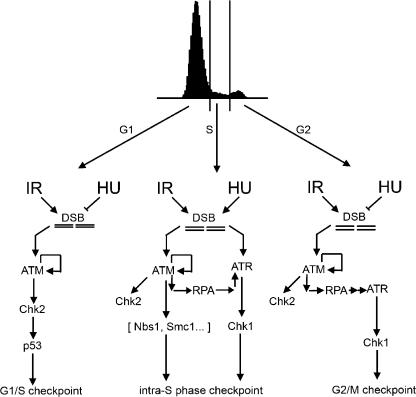
DNA double-strand breaks (DSBs) are among the most deleterious lesions that can challenge genomic integrity. Concomitant to the repair of the breaks, a rapid signaling cascade must be coordinated at the lesion site that leads to the activation of cell cycle checkpoints and/or apoptosis. In this context, ataxia telangiectasia mutated (ATM) and ATM and Rad-3–related (ATR) protein kinases are the earliest signaling molecules that are known to initiate the transduction cascade at damage sites. The current model places ATM and ATR in separate molecular routes that orchestrate distinct pathways of the checkpoint responses. Whereas ATM signals DSBs arising from ionizing radiation (IR) through a Chk2-dependent pathway, ATR is activated in a variety of replication-linked DSBs and leads to activation of the checkpoints in a Chk1 kinase–dependent manner. However, activation of the G2/M checkpoint in response to IR escapes this accepted paradigm because it is dependent on both ATM and ATR but independent of Chk2. Our data provides an explanation for this observation and places ATM activity upstream of ATR recruitment to IR-damaged chromatin. These data provide experimental evidence of an active cross talk between ATM and ATR signaling pathways in response to DNA damage.
Overview
The claims and statistics of this paper haven’t been checked yet.
Run the check — free, no account needed. It reads the open-access text and checks the sources it cites.
Integrity signals
Registry
Cites
Statistics
Figures
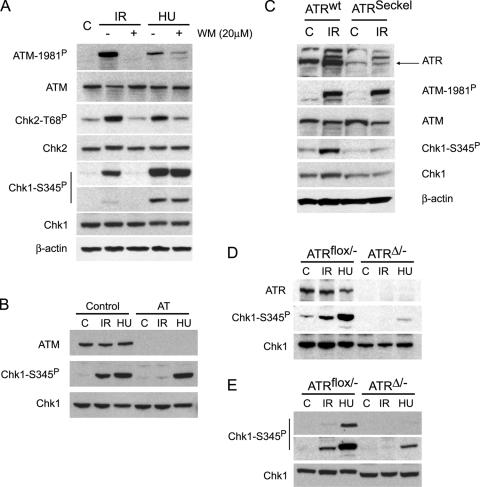
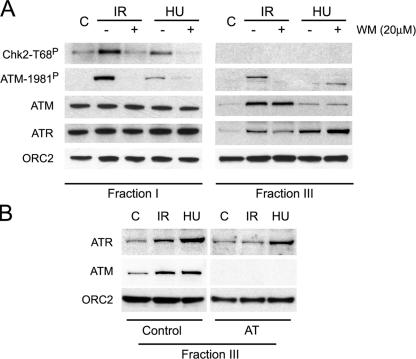
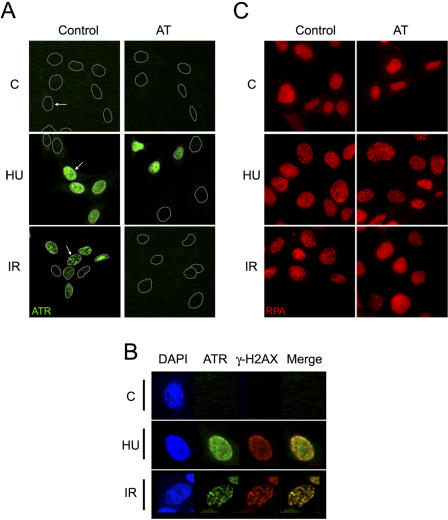
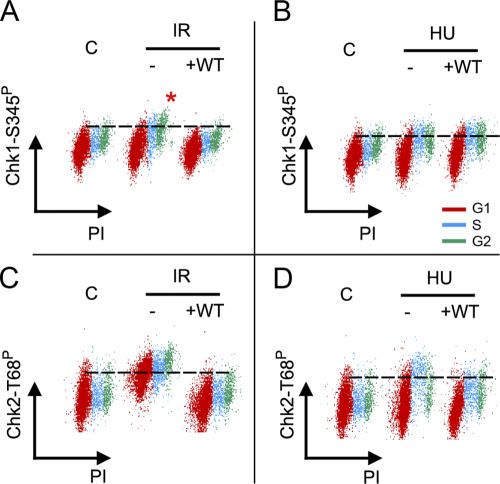
Verification
Claims the paper makes
The claims and statistics of this paper haven’t been checked yet.
Run the check — free, no account needed. It reads the open-access text and checks the sources it cites.
Claims other papers make about this one
Each is checked against this paper’s own text: does it say what the citing paper says it does?
In the citing paper
“ATM is essential for the recruitment of ATR to IR-damaged chromatin and Chk1 phosphorylation at Serine 345 [139].”
From Functional interplay between ATM/ATR-mediated DNA damage response and DNA repair pathways in oxidative stress (2014) · cites this paper as [139]
Self-check
Percentages, sums and reported differences re-computed from the paper’s own numbers.
The self-check needs the paper’s full text.
Citations
Cites
DNA damage activates ATM through intermolecular autophosphorylation and dimer dissociation
Bakkenist, C. J., & Kastan, M. B. (2003) · Nature · doi:10.1038/nature01368 · Cited by 3,466
Cell-cycle checkpoints and cancer
Kastan, M. B., & Bartek, J. (2004) · Nature · doi:10.1038/nature03097 · Cited by 2,836
DNA damage response as a candidate anti-cancer barrier in early human tumorigenesis
Bartkova, J., Hořejší, Z., Koed, K., Krämer, A., Tort, F., Zieger, K., Guldberg, P., Sehested, M., Nesland, J. M., Lukas, C., et al. (2005) · Nature · doi:10.1038/nature03482 · Cited by 2,688
Cell Cycle Checkpoints: Preventing an Identity Crisis
Elledge, S. J. (1996) · Science · doi:10.1126/science.274.5293.1664 · Cited by 2,050
Activation of the DNA damage checkpoint and genomic instability in human precancerous lesions
Gorgoulis, V. G., Vassiliou, L.-V. F., Karakaidos, P., Zacharatos, P., Kotsinas, A., Liloglou, T., Venere, M., DiTullio, R. A., Kastrinakis, N. G., Levy, B., et al. (2005) · Nature · doi:10.1038/nature03485 · Cited by 2,009
Cell cycle checkpoint signaling through the ATM and ATR kinases
Abraham, R. T. (2001) · Genes & Development · doi:10.1101/gad.914401 · Cited by 1,966
Liu, Q., Guntuku, S., Cui, X.-S., Matsuoka, S., Cortez, D., Tamai, K., Luo, G., Carattini-Rivera, S., DeMayo, F., Bradley, A., et al. (2000) · Genes & Development · doi:10.1101/gad.14.12.1448 · Cited by 1,625
ATM- and cell cycle-dependent regulation of ATR in response to DNA double-strand breaks
Jazayeri, A., Falck, J., Lukas, C., Bartek, J., Smith, G. C. M., Lukas, J., & Jackson, S. P. (2006) · Nature Cell Biology · doi:10.1038/ncb1337 · Cited by 1,064
ATR and ATRIP: Partners in Checkpoint Signaling
Cortez, D., Guntuku, S., Qin, J., & Elledge, S. J. (2001) · Science · doi:10.1126/science.1065521 · Cited by 985
O'Driscoll, M., Ruiz-Perez, V. L., Woods, C. G., Jeggo, P. A., & Goodship, J. A. (2003) · Nature Genetics · doi:10.1038/ng1129 · Cited by 794
Research works printed but not linked: 3
- 1998, Cancer Res., 58, 4375
- 2004, Methods Mol. Biol., 263, 67
- 2005, Nat. Cell Biol., 8, 37
Cited by
Sorted by citations
ATM, ATR, and DNA-PK: The Trinity at the Heart of the DNA Damage Response
Blackford, A. N., & Jackson, S. P. (2017) · Molecular Cell · doi:10.1016/j.molcel.2017.05.015 · Cited by 2,050
ATR: an essential regulator of genome integrity
Cimprich, K. A., & Cortez, D. (2008) · Nature Reviews Molecular Cell Biology · doi:10.1038/nrm2450 · Cited by 1,798
Human CtIP promotes DNA end resection
Sartori, A. A., Lukas, C., Coates, J., Mistrik, M., Fu, S., Bartek, J., Baer, R., Lukas, J., & Jackson, S. P. (2007) · Nature · doi:10.1038/nature06337 · Cited by 1,362
The ATM–Chk2 and ATR–Chk1 Pathways in DNA Damage Signaling and Cancer
Smith, J., Tho, L. M., Xu, N., & Gillespie, D. A. (2010) · Advances in cancer research · doi:10.1016/b978-0-12-380888-2.00003-0 · Cited by 1,331
DNA damage-induced cell death: From specific DNA lesions to the DNA damage response and apoptosis
Roos, W. P., & Kaina, B. (2013) · Cancer Letters · doi:10.1016/j.canlet.2012.01.007 · Cited by 879
DNA damage checkpoints: from initiation to recovery or adaptation
Bartek, J., & Lukas, J. (2007) · Current Opinion in Cell Biology · doi:10.1016/j.ceb.2007.02.009 · Cited by 784
Surviving the Breakup: The DNA Damage Checkpoint
Harrison, J. C., & Haber, J. E. (2006) · Annual Review of Genetics · doi:10.1146/annurev.genet.40.051206.105231 · Cited by 565
The ATM-mediated DNA-damage response: taking shape
Shiloh, Y. (2006) · Trends in Biochemical Sciences · doi:10.1016/j.tibs.2006.05.004 · Cited by 556
Toledo, L. I., Murga, M., Zur, R., Soria, R., Rodriguez, A., Martinez, S., Oyarzabal, J., Pastor, J., Bischoff, J. R., & Fernandez-Capetillo, O. (2011) · Nature Structural & Molecular Biology · doi:10.1038/nsmb.2076 · Cited by 465
Self-citationRoles of Chk1 in cell biology and cancer therapy
Zhang, Y., & Hunter, T. (2014) · International Journal of Cancer · doi:10.1002/ijc.28226 · Cited by 462
Recurrent Initiation: A Mechanism for Triggering p53 Pulses in Response to DNA Damage
Batchelor, E., Mock, C. S., Bhan, I., Loewer, A., & Lahav, G. (2008) · Molecular Cell · doi:10.1016/j.molcel.2008.03.016 · Cited by 422
Thompson, L. H. (2012) · Mutation Research/Reviews in Mutation Research · doi:10.1016/j.mrrev.2012.06.002 · Cited by 357
The DNA damage-induced cell death response: a roadmap to kill cancer cells
Matt, S., & Hofmann, T. G. (2016) · Cellular and Molecular Life Sciences · doi:10.1007/s00018-016-2130-4 · Cited by 298
Bothmer, A., Robbiani, D. F., Feldhahn, N., Gazumyan, A., Nussenzweig, A., & Nussenzweig, M. C. (2010) · The Journal of Experimental Medicine · doi:10.1084/jem.20100244 · Cited by 315
Ranuncolo, S. M., Polo, J. M., Dierov, J., Singer, M., Kuo, T., Greally, J., Green, R., Carroll, M., & Melnick, A. (2007) · Nature Immunology · doi:10.1038/ni1478 · Cited by 278
DNA damage kinase signaling: checkpoint and repair at 30 years
Lanz, M. C., Dibitetto, D., & Smolka, M. B. (2019) · The EMBO Journal · doi:10.15252/embj.2019101801 · Cited by 270
Yan, S., Sorrell, M., & Berman, Z. (2014) · Cellular and Molecular Life Sciences · doi:10.1007/s00018-014-1666-4 · Cited by 247
Hammad, M., Raftari, M., Cesário, R., Salma, R., Godoy, P. R. D. V., Emami, S. N., & Haghdoost, S. (2023) · Antioxidants · doi:10.3390/antiox12071371 · Cited by 258
Global chromatin compaction limits the strength of the DNA damage response
Murga, M., Jaco, I., Fan, Y., Soria, R., Martínez-Pastor, B., Cuadrado, M., Yang, S.-M., Blasco, M. A., Skoultchi, A. I., & Fernández-Capetillo, Ó. (2007) · The Journal of Cell Biology · doi:10.1083/jcb.200704140 · Cited by 236
Self-citationCtIP Links DNA Double-Strand Break Sensing to Resection
You, Z., Shi, L. Z., Zhu, Q., Wu, P., Zhang, Y.-W., Basilio, A., Tonnu, N., Verma, I. M., Berns, M. W., & Hunter, T. (2009) · Molecular Cell · doi:10.1016/j.molcel.2009.12.002 · Cited by 231
Collis, S. J., Ciccia, A., Deans, A. J., Hořejšı́, Z., Martin, J. S., Maslen, S., Skehel, M. J., Elledge, S. J., West, S. C., & Boulton, S. J. (2008) · Molecular Cell · doi:10.1016/j.molcel.2008.10.014 · Cited by 220
Impact of genomic damage and ageing on stem cell function
Behrens, A., van Deursen, J. M., Rudolph, K. L., & Schumacher, B. (2014) · Nature Cell Biology · doi:10.1038/ncb2928 · Cited by 207
Callén, E., Janković, M., Wong, N., Zha, S., Chen, H.-T., Difilippantonio, S., Virgilio, M. D., Heidkamp, G. F., Alt, F. W., Nussenzweig, A., et al. (2009) · Molecular Cell · doi:10.1016/j.molcel.2009.04.025 · Cited by 205
Effects of Atmospheric Pressure Plasmas on Isolated and Cellular DNA—A Review
Arjunan, K. P., Sharma, V. K., & Ptasińska, S. (2015) · International Journal of Molecular Sciences · doi:10.3390/ijms16022971 · Cited by 198
Targeting ATR in DNA damage response and cancer therapeutics
Fokas, E., Prevo, R., Hammond, E. M., Brunner, T. B., McKenna, W. G., & Muschel, R. J. (2013) · Cancer Treatment Reviews · doi:10.1016/j.ctrv.2013.03.002 · Cited by 197
Phosphorylation of EXO1 by CDKs 1 and 2 regulates DNA end resection and repair pathway choice
Tomimatsu, N., Mukherjee, B., Hardebeck, M. C., Ilcheva, M., Camacho, C. V., Harris, J. L., Porteus, M. H., Llorente, B., Khanna, K. K., & Burma, S. (2014) · Nature Communications · doi:10.1038/ncomms4561 · Cited by 187
The F Box Protein Fbx6 Regulates Chk1 Stability and Cellular Sensitivity to Replication Stress
Zhang, Y.-W., Brognard, J., Coughlin, C., You, Z., Dolled-Filhart, M. P., Aslanian, A., Manning, G., Abraham, R. T., & Hunter, T. R. (2009) · Molecular Cell · doi:10.1016/j.molcel.2009.06.030 · Cited by 193
DNA damage response in cisplatin-induced nephrotoxicity
Zhu, S., Pabla, N., Tang, C., He, L., & Dong, Z. (2015) · Archives of Toxicology · doi:10.1007/s00204-015-1633-3 · Cited by 183
ATM Prevents the Persistence and Propagation of Chromosome Breaks in Lymphocytes
Callén, E., Janković, M., Difilippantonio, S., Daniel, J. A., Chen, H. T., Celeste, A., Pellegrini, M., McBride, K. M., Wangsa, D., Bredemeyer, A. L., et al. (2007) · Cell · doi:10.1016/j.cell.2007.06.016 · Cited by 178
Checkpoint Responses to DNA Double-Strand Breaks
Waterman, D. P., Haber, J. E., & Smolka, M. B. (2020) · Annual Review of Biochemistry · doi:10.1146/annurev-biochem-011520-104722 · Cited by 184
DNA damage and decisions: CtIP coordinates DNA repair and cell cycle checkpoints
You, Z., & Bailis, J. M. (2010) · Trends in Cell Biology · doi:10.1016/j.tcb.2010.04.002 · Cited by 189
Targeting ATR and Chk1 kinases for cancer treatment: A new model for new (and old) drugs
Toledo, L. I., Murga, M., & Fernández-Capetillo, Ó. (2011) · Molecular Oncology · doi:10.1016/j.molonc.2011.07.002 · Cited by 180
Self-citationXu, X., Vaithiyalingam, S., Glick, G. G., Mordes, D. A., Chazin, W., & Cortez, D. (2008) · Molecular and Cellular Biology · doi:10.1128/mcb.01079-08 · Cited by 171
Ataxia telangiectasia and Rad3-related inhibitors and cancer therapy: where we stand
Mei, L., Zhang, J., He, K., & Zhang, J. (2019) · Journal of Hematology & Oncology · doi:10.1186/s13045-019-0733-6 · Cited by 157
Asharani, P. V., Sethu, S., Lim, H. K., Balaji, G., Valiyaveettil, S., & Hande, M. P. (2012) · Genome Integrity · doi:10.1186/2041-9414-3-2 · Cited by 151
The ATR barrier to replication-born DNA damage
Lopez-Contreras, A. J., & Fernández-Capetillo, Ó. (2010) · DNA repair · doi:10.1016/j.dnarep.2010.09.012 · Cited by 148
Activation of DSB Processing Requires Phosphorylation of CtIP by ATR
Peterson, S., Li, Y., Wu-Baer, F., Chait, B. T., Baer, R. J., Yan, H., Gottesman, M. E., & Gautier, J. (2012) · Molecular Cell · doi:10.1016/j.molcel.2012.11.020 · Cited by 137
Single- and double-stranded DNA: building a trigger of ATR-mediated DNA damage response: Figure 1.Preprint
Zou, L. (2007) · Genes & Development · doi:10.1101/gad.1550307 · Cited by 133
Eukaryotic DNA damage checkpoint activation in response to double-strand breaks
Finn, K., Lowndes, N. F., & Grenon, M. (2012) · Cellular and Molecular Life Sciences · doi:10.1007/s00018-011-0875-3 · Cited by 127
Distinct roles of ATR and DNA‐PKcs in triggering DNA damage responses in ATM‐deficient cells
Tomimatsu, N., Mukherjee, B., & Burma, S. (2009) · EMBO Reports · doi:10.1038/embor.2009.60 · Cited by 135
Early events in the mammalian response to DNA double-strand breaks
Riches, L. C., Lynch, A. M., & Gooderham, N. J. (2008) · Mutagenesis · doi:10.1093/mutage/gen039 · Cited by 124
Ionizing Radiation-Induced Responses in Human Cells with Differing TP53 Status
Mirzayans, R., Andrais, B., Scott, A., Wang, Y., & Murray, D. L. (2013) · International Journal of Molecular Sciences · doi:10.3390/ijms141122409 · Cited by 127
Yoo, H. Y., Kumagai, A., Shevchenko, A., Shevchenko, A., & Dunphy, W. G. (2007) · Journal of Biological Chemistry · doi:10.1074/jbc.m701770200 · Cited by 118
An extra allele of Chk1 limits oncogene-induced replicative stress and promotes transformation
Lopez-Contreras, A. J., Gutierrez‐Martinez, P., Specks, J., Rodrigo-Perez, S., & Fernández-Capetillo, Ó. (2012) · The Journal of Experimental Medicine · doi:10.1084/jem.20112147 · Cited by 121
Self-citationDoksani, Y., Bermejo, R., Fiorani, S., Haber, J. E., & Foiani, M. (2009) · Cell · doi:10.1016/j.cell.2009.02.016 · Cited by 114
BRCA1 Haploinsufficiency Is Masked by RNF168-Mediated Chromatin Ubiquitylation
Zong, D., Adam, S., Wang, Y., Sasanuma, H., Callén, E., Murga, M., Day, A., Kruhlak, M. J., Wong, N., Munro, M., et al. (2019) · Molecular Cell · doi:10.1016/j.molcel.2018.12.010 · Cited by 110
Self-citationLoss of ATM kinase activity leads to embryonic lethality in mice
Daniel, J. A., Pellegrini, M., Lee, B.-S., Guo, Z., Filsuf, D., Belkina, N. V., You, Z., Paull, T. T., Sleckman, B. P., Feigenbaum, L., et al. (2012) · The Journal of Cell Biology · doi:10.1083/jcb.201204035 · Cited by 111
Bitomsky, N., & Hofmann, T. G. (2009) · FEBS Journal · doi:10.1111/j.1742-4658.2009.07331.x · Cited by 115
Targeting DNA repair in cancer: current state and novel approaches
Klinakis, A., Karagiannis, D., & Rampias, T. N. (2019) · Cellular and Molecular Life Sciences · doi:10.1007/s00018-019-03299-8 · Cited by 108
Meiotic silencing and the epigenetics of sex
Kelly, W. G., & Aramayo, R. (2007) · Chromosome Research · doi:10.1007/s10577-007-1143-0 · Cited by 108
Dillon, M. T., Good, J., & Harrington, K. J. (2014) · Clinical Oncology · doi:10.1016/j.clon.2014.01.009 · Cited by 104
NRF2 preserves genomic integrity by facilitating ATR activation and G2 cell cycle arrest
Sun, X., Wang, Y., Ji, K., Liu, Y., Kong, Y., Nie, S., Li, N., Hao, J., Xie, Y., Xu, C., et al. (2020) · Nucleic Acids Research · doi:10.1093/nar/gkaa631 · Cited by 103
ATM-Mediated Transcriptional and Developmental Responses to γ-rays in Arabidopsis
Ricaud, L., Proux, C., Renou, J., Pichon, O., Fochesato, S., Ortet, P., & Montané, M. (2007) · PLoS ONE · doi:10.1371/journal.pone.0000430 · Cited by 107
Regulation of the cellular DNA double-strand break response
Cann, K. L., & Hicks, G. G. (2007) · Biochemistry and Cell Biology · doi:10.1139/o07-135 · Cited by 105
Rapid activation of ATM on DNA flanking double-strand breaks
You, Z., Bailis, J. M., Johnson, S. A., Dilworth, S. M., & Hunter, T. R. (2007) · Nature Cell Biology · doi:10.1038/ncb1651 · Cited by 107
The cell cycle checkpoint inhibitors in the treatment of leukemias
di Rorà, A. G. L., Iacobucci, I., & Martinelli, G. (2017) · Journal of Hematology & Oncology · doi:10.1186/s13045-017-0443-x · Cited by 95
ATM/ATR checkpoint activation downregulates CDC25C to prevent mitotic entry with uncapped telomeres
Thanasoula, M., Escandell, J. M., Suwaki, N., & Tarsounas, M. (2012) · The EMBO Journal · doi:10.1038/emboj.2012.191 · Cited by 99
Carlessi, L., Buscemi, G., Larson, G., Hong, Z., Wu, J. Z., & Delia, D. (2007) · Molecular Cancer Therapeutics · doi:10.1158/1535-7163.mct-06-0567 · Cited by 89
RAD51C facilitates checkpoint signaling by promoting CHK2 phosphorylation
Badie, S., Liao, C., Thanasoula, M., Barber, P. R., Hill, M. A., & Tarsounas, M. (2009) · The Journal of Cell Biology · doi:10.1083/jcb.200811079 · Cited by 90
PPARγ Interaction with UBR5/ATMIN Promotes DNA Repair to Maintain Endothelial Homeostasis
Li, C. G., Mahon, C. S., Sweeney, N. M., Verschueren, E., Kantamani, V., Li, D., Hennigs, J. K., Marciano, D. P., Diebold, I., Abu‐Halawa, O., et al. (2019) · Cell Reports · doi:10.1016/j.celrep.2019.01.013 · Cited by 82
Zhou, B., Yang, Y., Pang, X., Shi, J., Jiang, T., & Zheng, X. (2023) · Biomedicine & Pharmacotherapy · doi:10.1016/j.biopha.2023.115071 · Cited by 82
Singh, R., Bhardwaj, V. K., Sharma, J., Das, P., & Purohit, R. (2020) · Genomics · doi:10.1016/j.ygeno.2020.10.001 · Cited by 80
Tomimatsu, N., Mukherjee, B., Harris, J. L., Boffo, F. L., Hardebeck, M. C., Potts, P. R., Khanna, K. K., & Burma, S. (2017) · Journal of Biological Chemistry · doi:10.1074/jbc.m116.772475 · Cited by 85
APC loss affects DNA damage repair causing doxorubicin resistance in breast cancer cells
Stefanski, C. D., Keffler, K., McClintock, S., Milac, L., & Prosperi, J. R. (2019) · Neoplasia · doi:10.1016/j.neo.2019.09.002 · Cited by 78
Cheng, W., Muftic, D., Müftüoğlu, M., Dawut, L., Morris, C., Helleday, T., Shiloh, Y., & Bohr, V. A. (2008) · Molecular Biology of the Cell · doi:10.1091/mbc.e07-07-0698 · Cited by 81
ATR maintains select progenitors during nervous system development
Lee, Y., Shull, E. R. P., Frappart, P., Katyal, S., Enriquez-Rios, V. D., Zhao, J., Russell, H. R., Brown, E. J., & McKinnon, P. J. (2012) · The EMBO Journal · doi:10.1038/emboj.2011.493 · Cited by 78
Sanz-García, M., Monsalve, D. M., Sevilla, A., & Lazo, P. A. (2012) · Journal of Biological Chemistry · doi:10.1074/jbc.m112.353102 · Cited by 76
c-Myc Accelerates S-Phase and Requires WRN to Avoid Replication Stress
Robinson, K. L., Asawachaicharn, N., Galloway, D. A., & Grandori, C. (2009) · PLoS ONE · doi:10.1371/journal.pone.0005951 · Cited by 78
Cellular senescence: a hitchhiker’s guide
Aravinthan, A. D. (2015) · Human Cell · doi:10.1007/s13577-015-0110-x · Cited by 83
The Mre11-Rad50-Nbs1 Complex Mediates Activation of TopBP1 by ATM
Yoo, H. Y., Kumagai, A., Shevchenko, A., Shevchenko, A., & Dunphy, W. G. (2009) · Molecular Biology of the Cell · doi:10.1091/mbc.e08-12-1190 · Cited by 76
Augmented HR Repair Mediates Acquired Temozolomide Resistance in Glioblastoma
del Alcazar, C. R. G., Todorova, P. K., Habib, A. A., Mukherjee, B., & Burma, S. (2016) · Molecular Cancer Research · doi:10.1158/1541-7786.mcr-16-0125 · Cited by 73
Gene regulation in response to DNA damage
Mannuß, A., Trapp, O., & Puchta, H. (2011) · Biochimica et Biophysica Acta (BBA) - Gene Regulatory Mechanisms · doi:10.1016/j.bbagrm.2011.08.003 · Cited by 73
Lee, J., & Dunphy, W. G. (2010) · Molecular Biology of the Cell · doi:10.1091/mbc.e09-11-0958 · Cited by 74
Keeping checkpoint kinases in line: new selective inhibitors in clinical trials
Ashwell, S., Janetka, J. W., & abludoff, S. Z. (2008) · Expert Opinion on Investigational Drugs · doi:10.1517/13543784.17.9.1331 · Cited by 69
Lee, J., & Dunphy, W. G. (2013) · Molecular Biology of the Cell · doi:10.1091/mbc.e13-01-0025 · Cited by 71
Inhibition of ATM kinase activity does not phenocopy ATM protein disruption
Choi, S., Gamper, A. M., White, J. S., & Bakkenist, C. J. (2010) · Cell Cycle · doi:10.4161/cc.9.20.13471 · Cited by 68
Mladenov, E., Fan, X., Dueva, R., Soni, A., & Iliakis, G. E. (2019) · Scientific Reports · doi:10.1038/s41598-019-44771-6 · Cited by 67
Transient ATM Kinase Inhibition Disrupts DNA Damage–Induced Sister Chromatid Exchange
White, J. S., Choi, S., & Bakkenist, C. J. (2010) · Science Signaling · doi:10.1126/scisignal.2000758 · Cited by 66
Berberine, a genotoxic alkaloid, induces ATM-Chk1 mediated G2 arrest in prostate cancer cells
Wang, Y., Liu, Q., Liu, Z., Li, B., Sun, Z.-L., Zhou, H., Zhang, X., Gong, Y., & Shao, C. (2012) · Mutation research. Fundamental and molecular mechanisms of mutagenesis · doi:10.1016/j.mrfmmm.2012.04.005 · Cited by 66
HERC2/USP20 coordinates CHK1 activation by modulating CLASPIN stability
Zhu, M., Zhao, H., Liao, J., & Xu, X. (2014) · Nucleic Acids Research · doi:10.1093/nar/gku978 · Cited by 66
Myers, J. S., Zhao, R., Xu, X., Ham, A. L., & Cortez, D. (2007) · Cancer Research · doi:10.1158/0008-5472.can-07-0495 · Cited by 66
Interplay between ATM and ATR in the regulation of common fragile site stability
Ozeri-Galai, E., Schwartz, M., Rahat, A., & Kerem, B. (2007) · Oncogene · doi:10.1038/sj.onc.1210849 · Cited by 67
In vitro lung toxicity of indoor PM10 from a stove fueled with different biomasses
Marchetti, S., Longhin, E., Bengalli, R. D., Avino, P., Stabile, L., Buonanno, G., Colombo, A., Camatini, M., & Mantecca, P. (2018) · The Science of The Total Environment · doi:10.1016/j.scitotenv.2018.08.249 · Cited by 63
The Mre11 Nuclease Is Critical for the Sensitivity of Cells to Chk1 Inhibition
Thompson, R. H., Montano, R. E., & Eastman, A. R. (2012) · PLoS ONE · doi:10.1371/journal.pone.0044021 · Cited by 62
Overall Cdk activity modulates the DNA damage response in mammalian cells
Cerqueira, A., Santamarı́a, D., Martínez-Pastor, B., Cuadrado, M., Fernández-Capetillo, Ó., & Barbacid, M. (2009) · The Journal of Cell Biology · doi:10.1083/jcb.200903033 · Cited by 62
Self-citationHIV-1 Tat and AIDS-associated cancer: targeting the cellular anti-cancer barrier?
Nunnari, G., Smith, J. A., & Daniel, R. (2008) · Journal of Experimental & Clinical Cancer Research · doi:10.1186/1756-9966-27-3 · Cited by 64
Emerging links between the biological clock and the DNA damage response
Collis, S. J., & Boulton, S. J. (2007) · Chromosoma · doi:10.1007/s00412-007-0108-6 · Cited by 60
Wilsker, D. F., & Bunz, F. (2007) · Molecular Cancer Therapeutics · doi:10.1158/1535-7163.mct-06-0679 · Cited by 57
Human cancer cells require ATR for cell cycle progression following exposure to ionizing radiation
Hurley, P. J., Wilsker, D. F., & Bunz, F. (2006) · Oncogene · doi:10.1038/sj.onc.1210049 · Cited by 57
Kulkarni, A., & Das, K. C. (2008) · American Journal of Physiology-Lung Cellular and Molecular Physiology · doi:10.1152/ajplung.00004.2008 · Cited by 56
Fallone, F., Britton, S., Nieto, L., Salles, B., & Muller, C. (2012) · Oncogene · doi:10.1038/onc.2012.462 · Cited by 56
The DNA-damage response: new molecular insights and new approaches to cancer therapy
Jackson, S. P. (2009) · Biochemical Society Transactions · doi:10.1042/bst0370483 · Cited by 59
Immunofluorescence-Based Methods to Monitor DNA End Resection
Mukherjee, B., Tomimatsu, N., & Burma, S. (2015) · Methods in molecular biology · doi:10.1007/978-1-4939-2522-3_5 · Cited by 55
Ataxin-3 promotes genome integrity by stabilizing Chk1
Tu, Y., Liu, H., Zhu, X., Shen, H., Ma, X., Wang, F., Huang, M., Gong, J., Li, X., Wang, Y., et al. (2017) · Nucleic Acids Research · doi:10.1093/nar/gkx095 · Cited by 57
Sankunny, M., Parikh, R. A., Lewis, D. W., Gooding, W. E., Saunders, W. S., & Gollin, S. M. (2013) · Genes Chromosomes and Cancer · doi:10.1002/gcc.22125 · Cited by 56
Activation of the S phase DNA damage checkpoint by mitomycin C
Mladenov, E., Tsaneva, I. R., & Anachkova, B. (2006) · Journal of Cellular Physiology · doi:10.1002/jcp.20957 · Cited by 53
Targeting WEE1 to enhance conventional therapies for acute lymphoblastic leukemia
di Rorà, A. G. L., Beeharry, N., Imbrogno, E., Ferrari, A., Robustelli, V., Righi, S., Sabattini, E., Falzacappa, M. V. V., Ronchini, C., Testoni, N., et al. (2018) · Journal of Hematology & Oncology · doi:10.1186/s13045-018-0641-1 · Cited by 52
Mouse models of DNA double-strand break repair and neurological disease
Frappart, P., & McKinnon, P. J. (2008) · DNA repair · doi:10.1016/j.dnarep.2008.03.007 · Cited by 53
Yamaguchi, M., Fujimori-Tonou, N., Yoshimura, Y., Kishi, T., Okamoto, H., & Masai, I. (2008) · Development · doi:10.1242/dev.011015 · Cited by 51
Decision Making by p53: Life versus Death.
Jiang, L., Sheikh, M. S., & Huang, Y. K. (2010) · PubMed · Cited by 50
Metadata
- Authors
- Cuadrado, M., Martinez-Pastor, B., Murga, M., Toledo, L. I., Gutierrez-Martinez, P., Lopez, E., & Fernandez-Capetillo, O.
- Affiliations
- Spanish National Cancer Research Centre (ES)
- Genomic Instability Group, Spanish National Cancer Center, Madrid 28029, Spain
- Venue
- The Journal of Experimental Medicine
- Publisher
- Rockefeller University Press
- Published
- 2006-02-06
- Volume
- 203
- Issue
- 2
- Pages
- 297-303
- ISSN
- 0022-1007 (ISSN-L)
- 1540-9538
- PMC
- PMC2118201
- OpenAlex
- W2149468013
- Cited by
- 232
- References
- 23
- Citations by year
- 2026: 2 · 2025: 3 · 2024: 6 · 2023: 6 · 2022: 3 · 2021: 6 · 2020: 8 · 2019: 17 · 2018: 5 · 2017: 8 · 2016: 12 · 2015: 9 · 2014: 16 · 2013: 9 · 2012: 17
- FWCI
- 9.78
- Type
- journal article
- Language
- en
- Open access
- green
- europepmc.org
- Licence
- cc-by-nc-sa
- Locations
- The Journal of Experimental Medicine (publishedVersion)
- Europe PMC (PubMed Central) (publishedVersion, cc-by-nc-sa)
- PubMed Central (publishedVersion, cc-by-nc-sa)
- PubMed (publishedVersion)
- Topics
- Life Sciences › Biochemistry, Genetics and Molecular Biology › Molecular Biology › DNA Repair Mechanisms
- Health Sciences › Medicine › Radiology, Nuclear Medicine and Imaging › Effects of Radiation Exposure
- Life Sciences › Biochemistry, Genetics and Molecular Biology › Molecular Biology › Genomics and Chromatin Dynamics
- Keywords
- ATM kinase, ATR kinase, DNA double-strand breaks, chromatin loading, ionizing radiation, G2/M checkpoint, Chk2, Chk1, DNA damage signaling, DNA repair
- MeSH terms
- Checkpoint Kinase 1, Ataxia Telangiectasia, Cell Cycle, Cell Line, Transformed, Chromatin, DNA Damage, DNA Replication, DNA-Binding Proteins, Flow Cytometry, Gamma Rays, Humans, Phosphorylation, Protein Kinases, Signal Transduction, Protein Serine-Threonine Kinases, Cell Cycle Proteins, Chromosome Breakage, Tumor Suppressor Proteins, Cell Line, Tumor, Ataxia Telangiectasia Mutated Proteins, Checkpoint Kinase 2
About these checks
Registry, retraction, Cites and statistics results are computed, not judged, with one exception: a printed reference that no index lists is read once by a model before it counts as a citation error. Claims are extracted by a model and kept only when their quote appears verbatim in the text; each cited source is then checked, with a model’s help, for whether it says what the claim relies on. Those verdicts can be wrong — read the claim’s quote and the cited source before relying on one.
Statistics and arithmetic are recomputed, not judged.
Confidence bands are shown only for fields calibrated on our annotated test set. None is calibrated yet, so no band is shown.
What counts as a claim ›How we measure confidence ›How we check this ›
Are you an author, or do you see a problem with this page? Request a review
