

Host type I IFN signals are required for antitumor CD8+ T cell responses through CD8α+ dendritic cells
Open accessThe DOI matches its Crossref record; 58 of the 60 references it cites were found in a registry or an index.
Abstract
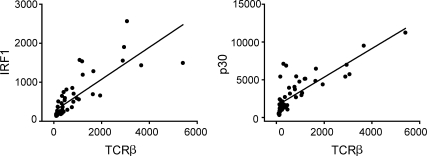
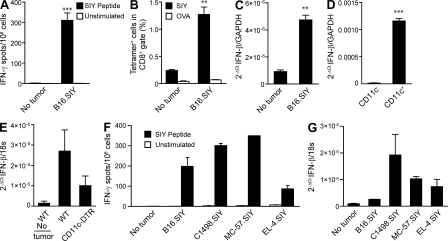
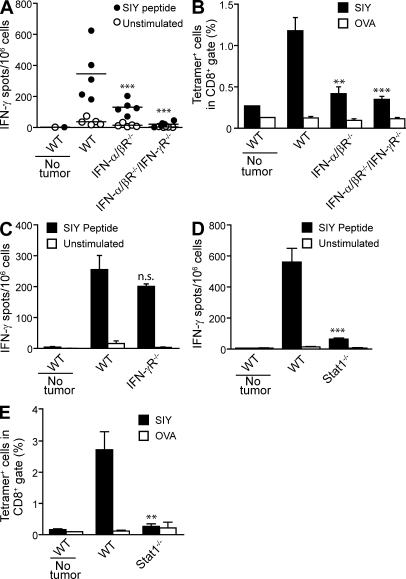
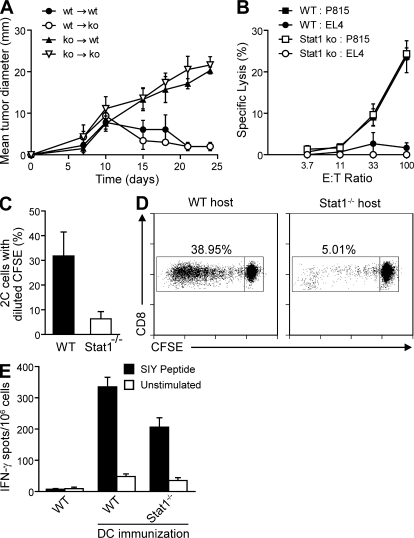
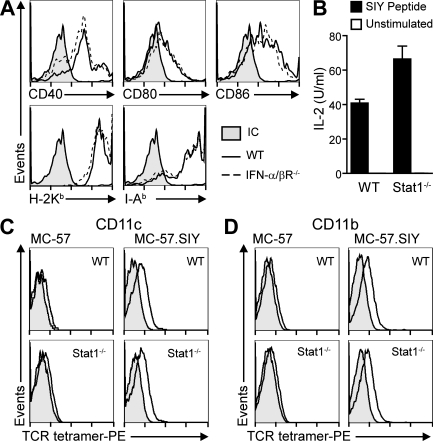
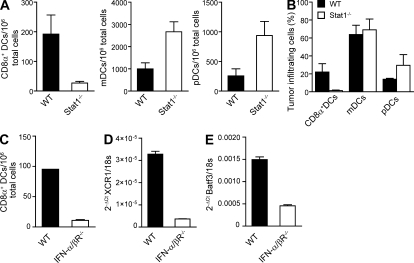
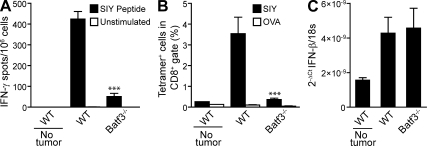
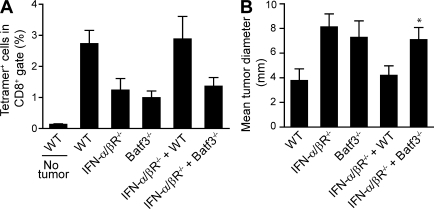
Despite lack of tumor control in many models, spontaneous T cell priming occurs frequently in response to a growing tumor. However, the innate immune mechanisms that promote natural antitumor T cell responses are undefined. In human metastatic melanoma, there was a correlation between a type I interferon (IFN) transcriptional profile and T cell markers in metastatic tumor tissue. In mice, IFN-β was produced by CD11c+ cells after tumor implantation, and tumor-induced T cell priming was defective in mice lacking IFN-α/βR or Stat1. IFN signaling was required in the hematopoietic compartment at the level of host antigen-presenting cells, and selectively for intratumoral accumulation of CD8α+ dendritic cells, which were demonstrated to be essential using Batf3−/− mice. Thus, host type I IFNs are critical for the innate immune recognition of a growing tumor through signaling on CD8α+ DCs.
Overview
The claims and statistics of this paper haven’t been checked yet.
Free: it reads the open-access text and checks the first 5 claims that cite a source we can check. Create a free account to check every claim.
Integrity signals
Registry
Cites
Statistics
Figures
Verification
Claims the paper makes
The claims and statistics of this paper haven’t been checked yet.
Free: it reads the open-access text and checks the first 5 claims that cite a source we can check. Create a free account to check every claim.
Claims other papers make about this one
Each is checked against this paper’s own text: does it say what the citing paper says it does?
The source backs part of the claim, not all of it — or backs it for a different population, condition or comparison.
In the citing paper
“For instance, DCs secrete the chemoattractants chemokine (C‐X‐C motif) ligand 9 (CXCL9) and 10 (CXCL10) to facilitate the infiltration of CD8+ Teff cells in the TME and for T cell cytotoxic activity [15].”
From Tumor microenvironment signaling and therapeutics in cancer progression (2023) · cites this paper as [15]
Experimental — accuracy not yet measuredThe source backs part of the claim, not all of it — or backs it for a different population, condition or comparison.
In the citing paper
“Previous study showed that DC-specific Ifnar -/- mice were unble to reject highly immunogenic tumor cells due to the defects in antigen cross-presentation to CD8+ T cells.”
From mRNA vaccine with unmodified uridine induces robust type I interferon-dependent anti-tumor immunity in a melanoma model (2022) · cites this paper as [52]
Experimental — accuracy not yet measuredThe cited source says what the claim attributes to it.
In the citing paper
“This evidence strongly shows that IFN-I can act through DCs to promote T cell immunity (52).”
From mRNA vaccine with unmodified uridine induces robust type I interferon-dependent anti-tumor immunity in a melanoma model (2022) · cites this paper as [52]
The cited source says what the claim attributes to it.
In the citing paper
“multiple clinical observations have linked intratumoral presence of CD8+ T cells to a type-I interferon (IFN) transcriptional signature14–16.”
From Epigenetic state determines the in vivo efficacy of STING agonist therapy (2023) · cites this paper as [14]
Self-check
Percentages, sums and reported differences re-computed from the paper’s own numbers.
The self-check needs the paper’s full text.
Citations
Cites
Release of chromatin protein HMGB1 by necrotic cells triggers inflammation
Scaffidi, P., Misteli, T., & Bianchi, M. E. (2002) · Nature · doi:10.1038/nature00858 · Cited by 4,221 · cited 2×
“, 2003), HMGB1 (high-mobility-group box 1; Scaffidi et al., 2002), ATP (Haag et al.”
BackgroundHOW CELLS RESPOND TO INTERFERONS
Stark, G. R., Kerr, I. M., Williams, B. R. G., Silverman, R. H., & Schreiber, R. D. (1998) · Annual Review of Biochemistry · doi:10.1146/annurev.biochem.67.1.227 · Cited by 3,932 · cited 1×
“During various types of viral infection, type I IFNs induce the expression of an array of genes that act to prevent viral spread, thus creating an antiviral state (Stark et al., 1998).”
BackgroundInaba, K., Inaba, M., Romani, N., Aya, H., Deguchi, M., Ikehara, S., Muramatsu, S., & Steinman, R. M. (1992) · The Journal of experimental medicine · doi:10.1084/jem.176.6.1693 · Cited by 3,738 · cited 2×
“version of a published protocol (Inaba et al., 1992).”
MethodApetoh, L., Ghiringhelli, F., Tesniere, A., Obeid, M., Ortiz, C., Criollo, A., Mignot, G., Maiuri, M. C., Ullrich, E., Saulnier, P., et al. (2007) · Nature Medicine · doi:10.1038/nm1622 · Cited by 3,056
STING regulates intracellular DNA-mediated, type I interferon-dependent innate immunity
Ishikawa, H., Ma, Z., & Barber, G. N. (2009) · Nature · doi:10.1038/nature08476 · Cited by 2,759 · cited 2×
“…proteomics that the CD8+ DC subpopulation selectively lacks the receptors and signaling molecules (such as DAI [Takaoka et al., 2007] and Sting [Ishikawa et al., 2009]) required for the detection of nucleotides in the cytoplasm (Luber et al., 2010), so if this is indeed the pathway involved in…”
BackgroundNatural Innate and Adaptive Immunity to Cancer
Vesely, M. D., Kershaw, M. H., Schreiber, R. D., & Smyth, M. J. (2011) · Annual Review of Immunology · doi:10.1146/annurev-immunol-031210-101324 · Cited by 2,101 · cited 2×
“However, recent results have indicated that in many instances, spontaneous T cell responses against tumor antigens can be detected in both human cancer patients and in murine models, and that immune escape in those cases appears to occur through dominant inhibition by immunoregulatory pathways (Vesely et al., 2011).”
BackgroundResultBatf3 Deficiency Reveals a Critical Role for CD8α + Dendritic Cells in Cytotoxic T Cell Immunity
Hildner, K., Edelson, B. T., Purtha, W. E., Diamond, M., Matsushita, H., Kohyama, M., Calderon, B., Schraml, B. U., Unanue, E. R., Diamond, M. S., et al. (2008) · Science · doi:10.1126/science.1164206 · Cited by 2,081 · cited 4×
“Recent work has indicated that mice lacking the transcriptional regulator, Batf3, have a specific deficiency in the development of the CD8+ DC lineage (which includes a CD103+ DC subset; Hildner et al., 2008).”
BackgroundMethodInfluentialSelf-citationGhiringhelli, F., Apetoh, L., Tesniere, A., Aymeric, L., Ma, Y., Ortiz, C., Vermaelen, K., Panaretakis, T., Mignot, G., Ullrich, E., et al. (2009) · Nature Medicine · doi:10.1038/nm.2028 · Cited by 1,898 · cited 2×
“It has been recently demonstrated that after radiotherapy or chemotherapy, dying tumor cells can release HMGB1 that binds to TLR4 (Apetoh et al., 2007) and ATP that activates the NALP3 inflammasome (Ghiringhelli et al., 2009).”
BackgroundJung, S., Unutmaz, D., Wong, P., Sano, G.-I., De los Santos, K., Sparwasser, T., Wu, S., Vuthoori, S., Ko, K., Zavala, F., et al. (2002) · Immunity · doi:10.1016/s1074-7613(02)00365-5 · Cited by 1,773 · cited 2×
“CD11c-DTR mice (Jung et al., 2002) were provided by D. Littman (New York University School of Medicine, New York, NY).”
MethodHow dying cells alert the immune system to danger
Kono, H., & Rock, K. L. (2008) · Nature Reviews Immunology · doi:10.1038/nri2215 · Cited by 1,737 · cited 10×
“Recently, it has been shown that dsDNA can be released from necrotic cells, reach the cytoplasm of APCs, and be recognized by a TLR-independent on January 17, 2012 jem .rupress.org D ow nloaded from JEM Vol. 208, No. 10 Article 2013 of type I IFNs, which are already FDA approved for other indications, in order to prom…”
BackgroundInfluential
Cited by
Items 301–400 of 1,000
Current modalities in cancer immunotherapy: Immunomodulatory antibodies, CARs and vaccines
Lohmueller, J. J., & Finn, O. J. (2017) · Pharmacology & Therapeutics · doi:10.1016/j.pharmthera.2017.03.008 · Cited by 101
“Looking at gene expression profiles of responders versus non-responders, type I interferon gene signature correlated with a better response (Diamond et al., 2011; Fuertes et al., 2011).”
BackgroundType I IFN activating type I dendritic cells for antitumor immunity
Liang, Y., Hannan, R., & Fu, Y.-X. (2021) · Clinical Cancer Research · doi:10.1158/1078-0432.ccr-20-2564 · Cited by 91
“Activating IFNAR signaling in cDC1s promoted the priming of tumor antigen–specific CD8þ T cells and resulted in the spontaneous rejection of immunogenic tumors (26, 27).”
BackgroundMarciscano, A. E. E., Haimovitz‐Friedman, A., Lee, P. P., Tran, P. T., Tomé, W. A., Guha, C., Kong, F., Sahgal, A., Naqa, I. E., Rimner, A., et al. (2019) · International Journal of Radiation Oncology*Biology*Physics · doi:10.1016/j.ijrobp.2019.02.046 · Cited by 100
Nucleic Acid Sensors as Therapeutic Targets for Human Disease
McWhirter, S. M., & Jefferies, C. A. (2020) · Immunity · doi:10.1016/j.immuni.2020.04.004 · Cited by 91
The AIM2 and NLRP3 inflammasomes trigger IL-1–mediated antitumor effects during radiation
Han, C., Godfrey, V., Liu, Z., Han, Y., Liu, L., Peng, H., Weichselbaum, R. R., Zaki, H., & Fu, Y. (2021) · Science Immunology · doi:10.1126/sciimmunol.abc6998 · Cited by 99
Comprehensive Mechanism Analysis of Mesoporous‐Silica‐Nanoparticle‐Induced Cancer Immunotherapy
Wang, X., Li, X., Yoshiyuki, K., Watanabe, Y., Sogo, Y., Ohno, T., Tsuji, N. M., & Ito, A. (2016) · Advanced Healthcare Materials · doi:10.1002/adhm.201501013 · Cited by 90
Wu, X., Giobbie-Hurder, A., Liao, X., Lawrence, D., McDermott, D., Zhou, J., Rodig, S., & Hodi, F. S. (2016) · Cancer Immunology Research · doi:10.1158/2326-6066.cir-16-0084 · Cited by 88
“Type I IFNs can be critical to the innate immune recognition of a growing tumor in animal studies (48).”
BackgroundWang, C., Beiss, V., & Steinmetz, N. F. (2019) · Journal of Virology · doi:10.1128/jvi.00129-19 · Cited by 93
“IFN- plays a key role in the activation and editing of immune responses and is released mainly by cytotoxic T cells and T helper cells to induce a Th1-type immune response (31, 32).”
BackgroundThe Resistance Mechanisms of Lung Cancer Immunotherapy
Wang, F., Wang, S., & Zhou, Q. H. (2020) · Frontiers in Oncology · doi:10.3389/fonc.2020.568059 · Cited by 99
Interleukin-17D Mediates Tumor Rejection through Recruitment of Natural Killer Cells
O’Sullivan, T., Saddawi-Konefka, R., Gross, E., Tran, M., Mayfield, S. P., Ikeda, H., & Bui, J. D. (2014) · Cell Reports · doi:10.1016/j.celrep.2014.03.073 · Cited by 88
“…their rejection whereas others do not (Dunn et al., 2005), even though IFNAR / mice lacking interferon a/b (IFNa/b) responsiveness are more susceptible to cancer (Diamond et al., 2011; Dunn et al., 2005; Fuertes et al., 2011), and IFNa/b is used in the treatment of melanoma (Garbe et al., 2011).”
BackgroundZeng, B., Middelberg, A. P. J., Gemiarto, A. T., MacDonald, K. P. A., Baxter, A. G., Talekar, M., Moi, D., Tullett, K. M., Caminschi, I., Lahoud, M. H., et al. (2018) · Journal of Clinical Investigation · doi:10.1172/jci96791 · Cited by 90
“They infiltrate tumors and take up antigens released by dying tumor cells and, when signaled by type I IFN, are able to induce strong and specific CD4+ and CD8+ T cell responses (13, 14).”
Herzog, B. H., Baer, J. M., Borcherding, N. C., Kingston, N. L., Belle, J. I., Knolhoff, B. L., Hogg, G. D., Ahmad, F. F., Kang, L., Petrone, J., et al. (2023) · Science Translational Medicine · doi:10.1126/scitranslmed.adh8005 · Cited by 104
ENPP1 is an innate immune checkpoint of the anticancer cGAMP–STING pathway in breast cancer
Wang, S., Böhnert, V., Joseph, A. J., Sudaryo, V., Skariah, G. M., Swinderman, J. T., Yu, F. B., Subramanyam, V., Wolf, D. M., Lyu, X., et al. (2023) · Proceedings of the National Academy of Sciences · doi:10.1073/pnas.2313693120 · Cited by 105
From DNA Damage to Nucleic Acid Sensing: A Strategy to Enhance Radiation Therapy
Deng, L., Liang, H. L., Fu, S., Weichselbaum, R. R., & Fu, Y. (2016) · Clinical Cancer Research · doi:10.1158/1078-0432.ccr-14-3110 · Cited by 94
“More recently, two studies showed that IFNa/b promotes maturation of bone marrow–derived cells and splenic dendritic cells (DC) and stimulates the process of cross-priming of CD8þ T cells against tumor invasion (37, 38).”
BackgroundPhase Ib/II Study of Pembrolizumab and Pegylated-Interferon Alfa-2b in Advanced Melanoma
Davar, D., Wang, H., Chauvin, J.-M., Pagliano, O., Fourcade, J. J., Ka, M., Menna, C., Rose, A., Sander, C., Borhani, A. A., et al. (2018) · Journal of Clinical Oncology · doi:10.1200/jco.18.00632 · Cited by 86
Sánchez-Paulete, A. R., Teijeira, Á., Quetglas, J. I., Rodriguez-Ruiz, M. E., Sánchez-Arráez, Á., Labiano, S., Etxeberría, I., Azpilikueta, A., Bolaños, E., Ballesteros-Briones, M. C., et al. (2018) · Cancer Research · doi:10.1158/0008-5472.can-18-0933 · Cited by 95
“BATF3-dependent DCs are also termed type 1 conventional DCs (cDC1) and excel in uptaking antigens fromdeadcells andpresenting their peptideson MHC-I molecules (cross-presentation), leading to the activation/ expansion of specific CTLs (cross-priming).”
BackgroundInfluentialMyeloid Cells as Clinical Biomarkers for Immune Checkpoint Blockade
Peranzoni, E., Ingangi, V., Masetto, E., Pinton, L., & Marigo, I. (2020) · Frontiers in Immunology · doi:10.3389/fimmu.2020.01590 · Cited by 86
“STING Agonists Type I interferon pathway is crucial in linking the innate and adaptive immune responses to mediate tumor rejection in mice and humans (216, 217).”
BackgroundHelm, A., Tinganelli, W., Simoniello, P., Kurosawa, F., Fournier, C., Shimokawa, T., & Durante, M. (2020) · International Journal of Radiation Oncology*Biology*Physics · doi:10.1016/j.ijrobp.2020.09.041 · Cited by 87
Mao, C., Beiss, V., Fields, J. L., Steinmetz, N. F., & Fiering, S. (2021) · Biomaterials · doi:10.1016/j.biomaterials.2021.120914 · Cited by 88
“IFN-γ, a key cytokine released by T cells to induce a Th1-type immune response, is also induced by both particles, although more by CPMV [38, 39].”
BackgroundAnuraga, G., Wang, W., Phan, N. N., Ton, N. T. A., Ta, H. D. K., Prayugo, F. B., Xuan, D. T. M., Ku, S., Wu, Y.-F., Andriani, V., et al. (2021) · Journal of Personalized Medicine · doi:10.3390/jpm11111089 · Cited by 99
Therapeutic Activity of High-Dose Intratumoral IFN-β Requires Direct Effect on the Tumor Vasculature
Spaapen, R. M., Leung, M. Y. K., Fuertes, M. B., Kline, J. P., Zhang, L., Zheng, Y., Fu, Y.-X., Luo, X., Cohen, K. S., & Gajewski, T. F. (2014) · The Journal of Immunology · doi:10.4049/jimmunol.1401109 · Cited by 85
“Low levels of transiently produced type I IFNs are associated with productive T cell priming, including activation of T cells in the tumor context (3, 4).”
BackgroundMethodSelf-citationTumor and Host Factors Controlling Antitumor Immunity and Efficacy of Cancer Immunotherapy
Spranger, S., Sivan, A., Corrales, L., & Gajewski, T. F. (2016) · Advances in Immunology · doi:10.1016/bs.ai.2015.12.003 · Cited by 85
Self-citationZhou, S., Cheng, F., Zhang, Y., Su, T., & Zhu, G. (2023) · Accounts of Chemical Research · doi:10.1021/acs.accounts.3c00394 · Cited by 92
Lifting the innate immune barriers to antitumor immunity
Rothlin, C. V., & Ghosh, S. (2020) · Journal for ImmunoTherapy of Cancer · doi:10.1136/jitc-2020-000695 · Cited by 90
Dendritic cells in brain diseases
Ludewig, P., Gallizioli, M., Urra, X., Behr, S., Brait, V. H., Gelderblom, M., Magnus, T. U., & Planas, A. M. (2015) · Biochimica et Biophysica Acta (BBA) - Molecular Basis of Disease · doi:10.1016/j.bbadis.2015.11.003 · Cited by 99
Engineered biomaterials for cancer immunotherapy
Cai, L., Xu, J., Yang, Z., Tong, R., Dong, Z., Wang, C., & Leong, K. W. (2020) · MedComm · doi:10.1002/mco2.8 · Cited by 85
The unique potency of Cowpea mosaic virus (CPMV) in situ cancer vaccine
Shukla, S., Wang, C., Beiss, V., Cai, H., Washington, T., Murray, A. A., Gong, X., Zhao, Z., Hema, M., Zlotnick, A., et al. (2020) · Biomaterials Science · doi:10.1039/d0bm01219j · Cited by 83
Wolff, F., Leisch, M., Greil, R., Risch, A., & Pleyer, L. (2017) · Cell Communication and Signaling · doi:10.1186/s12964-017-0168-z · Cited by 89
“It has been noted that successful anti-tumor T-cell priming requires a critical number of tumor infiltrating type 1 IFN-producing dendritic cells [110, 111].”
BackgroundMatuszewska, K., Santry, L. A., van Vloten, J. P., AuYeung, A. W. K., Major, P. P., Lawler, J., Wootton, S. K., Bridle, B. W., & Petrik, J. (2019) · Clinical Cancer Research · doi:10.1158/1078-0432.ccr-18-0220 · Cited by 86
“The type I IFN pathway is emerging as a key player in the induction of antitumor immunity, including innate immune recognition and activation of adaptive immunity, particularly with respect to activation of CD8þ T-cell responses (13, 66, 67), macrophages (68–70), dendritic cells (71), and NK (72) cells.”
BackgroundTherapeutic applications of TRAIL receptor agonists in cancer and beyond
Amarante-Mendes, G. P., & Griffith, T. S. (2015) · Pharmacology & Therapeutics · doi:10.1016/j.pharmthera.2015.09.001 · Cited by 92
“While the mechanism of action of most (if not all) chemotherapeutics is to kill tumor cells, IFNs induce antitumor immunity (Dunn et al., 2006; Swann et al., 2007; Fuertes et al., 2011), as well as modulate the apoptosis signaling pathway (Kayagaki et al., 1999; Varela et al., 2001).”
Activation of human STING by a molecular glue-like compound
Li, J., Canham, S. M., Wu, H. J., Hénault, M., Chen, L., Liu, G., Chen, Y., Yu, G. Z., Miller, H., Horn̆ák, V., et al. (2023) · Nature Chemical Biology · doi:10.1038/s41589-023-01434-y · Cited by 84
“Host IFN signaling is important for the development of an antitumor CD8 + T cell response and for the antitumoral efficacy of CDN STING agonists 42,45,46 .”
Tomasello, E., Pollet, É., Manh, T. V., Uzé, G., & Dalod, M. (2014) · Frontiers in Immunology · doi:10.3389/fimmu.2014.00526 · Cited by 94
“It remains to define the useful targets according to pathologies, for example, tumor cells themselves and professional cross-presenting XCR1 + DCs for cancer (97, 98, 249) , or hepatocytes for chronic HCV infection.”
BackgroundInfluentialHope and Fear for Interferon: The Receptor-Centric Outlook on the Future of Interferon Therapy
Fuchs, S. Y. (2013) · Journal of Interferon & Cytokine Research · doi:10.1089/jir.2012.0117 · Cited by 80
Ying, X., Chen, Q., Yang, Y., Wu, Z., Zeng, W., Miao, C., Huang, Q., & Ai, K. (2024) · Molecular Cancer · doi:10.1186/s12943-024-02186-6 · Cited by 95
Bossi, G., Buisson, S., Oates, J., Jakobsen, B. K., & Hassan, N. J. (2014) · Cancer Immunology Immunotherapy · doi:10.1007/s00262-014-1525-z · Cited by 81
Sittplangkoon, C., Alameh, M.-G., Weissman, D., Lin, P. J. C., Tam, Y. K., Prompetchara, E., & Palaga, T. (2022) · Frontiers in Immunology · doi:10.3389/fimmu.2022.983000 · Cited by 91
“This evidence strongly shows that IFN-I can act through DCs to promote T cell immunity (52).”
BackgroundVasou, A., Sultanoğlu, N., Goodbourn, S., Randall, R. E., & Kostrikis, L. G. (2017) · Viruses · doi:10.3390/v9070186 · Cited by 93
“Current evidence suggests that type I IFN signaling participates in innate recognition of tumors and subsequently leads to a functional tumor-associated antigen (TAA)-specific T cell immunity [54,55].”
BackgroundEffects of Radiation on the Tumor Microenvironment
Monjazeb, A. M., Schalper, K. A., Villarroel‐Espíndola, F., Nguyen, A. T., Shiao, S. L., & Young, K. H. (2020) · Seminars in Radiation Oncology · doi:10.1016/j.semradonc.2019.12.004 · Cited by 94
Svensson‐Arvelund, J., Cuadrado‐Castano, S., Pantsulaia, G., Kim, K., Aleynick, M., Hammerich, L., Upadhyay, R., Yellin, M. J., Marsh, H. C., Oreper, D., et al. (2022) · Nature Communications · doi:10.1038/s41467-022-34791-8 · Cited by 84
Shen, M., Wang, Y., Bing, T., Tang, Y., Liu, X., & Yu, Y. (2023) · Advanced Functional Materials · doi:10.1002/adfm.202307013 · Cited by 80
Van der Jeught, K., Joe, P. T., Bialkowski, L., Heirman, C., Daszkiewicz, L., Liechtenstein, T., Escors, D., Thielemans, K., & Breckpot, K. (2014) · Oncotarget · doi:10.18632/oncotarget.2463 · Cited by 79
Kuss-Duerkop, S. K., Westrich, J. A., & Pyeon, D. (2018) · Viruses · doi:10.3390/v10020082 · Cited by 83
Combinatorial Approaches With Checkpoint Inhibitors to Enhance Anti-tumor Immunity
Seliger, B. (2019) · Frontiers in Immunology · doi:10.3389/fimmu.2019.00999 · Cited by 84
Multiple Sclerosis and Cancer: The Ying-Yang Effect of Disease Modifying Therapies
Melamed, E., & Lee, M. W. (2020) · Frontiers in Immunology · doi:10.3389/fimmu.2019.02954 · Cited by 88
“These include upregulation of MHC I on APCs and expression of tumor cell antigens (30, 31), differentiation of CD8+ T cells into cytolytic effector cells (32), downregulation of T regulatory cells (33), reduction in IL-12p40 (34), and upregulation of IL15 together with further lymphocyte expansion (30).”
BackgroundVarikuti, S., Singh, B., Volpedo, G., Ahirwar, D. K., Jha, B. K., Saljoughian, N., Viana, A. G., Verma, C., Hamza, O., Halsey, G., et al. (2020) · British Journal of Cancer · doi:10.1038/s41416-020-0743-8 · Cited by 76
Meng, X., Gao, Y., Yang, L., Jing, H., Teng, F., Huang, Z., & Xing, L. (2019) · Clinical Lung Cancer · doi:10.1016/j.cllc.2018.09.012 · Cited by 66
Uncoupling protein 2 reprograms the tumor microenvironment to support the anti-tumor immune cycle
Cheng, W.-C., Tsui, Y., Ragusa, S., Koelzer, V. H., Mina, M., Franco, F., Laubli, H. P., Tschumi, B., Speiser, D. E., Romero, P. J., et al. (2019) · Nature Immunology · doi:10.1038/s41590-018-0290-0 · Cited by 87
Lung adenocarcinoma-intrinsic GBE1 signaling inhibits anti-tumor immunity
Li, L., Yang, L., Cheng, S., Fan, Z., Shen, Z., Xue, W., Zheng, Y., Li, F., Wang, D., Zhang, K., et al. (2019) · Molecular Cancer · doi:10.1186/s12943-019-1027-x · Cited by 76
TLR3 agonists: RGC100, ARNAX, and poly-IC: a comparative review
Komal, A., Noreen, M., & El-kott, A. F. (2021) · Immunologic Research · doi:10.1007/s12026-021-09203-6 · Cited by 83
Gajewski, T. F. (2012) · Molecular Oncology · doi:10.1016/j.molonc.2012.01.002 · Cited by 99
Self-citationRole of Type I and II Interferons in Colorectal Cancer and Melanoma
Franco, S. D., Turdo, A., Todaro, M., & Stassi, G. (2017) · Frontiers in Immunology · doi:10.3389/fimmu.2017.00878 · Cited by 87
“The immunoregulatory effect of IFNs includes the up-regulation of tumor antigens expression (33), the DCs tumor antigen presentation to T cells, the acquisition of CD8+ T cell effector phenotype (34, 35), the down-regulation of (Treg) (36, 37), the inhibition of myeloid-derived suppressor cells (MDSCs) accumulation (3…”
BackgroundTumoricidal activity of human dendritic cells
Tel, J., Anguille, S., Waterborg, C. E. J., Smits, E. L., Figdor, C. G., & de Vries, I. J. M. (2014) · Trends in Immunology · doi:10.1016/j.it.2013.10.007 · Cited by 75
“Furthermore, type I IFNs can regulate NK cell function, by enhancing the of NK cells to kill target cells and to produce IFNg [65] .”
T cell receptor repertoire usage in cancer as a surrogate marker for immune responses
Schrama, D., Ritter, C., & Becker, J. C. (2017) · Seminars in Immunopathology · doi:10.1007/s00281-016-0614-9 · Cited by 83
Engineering Chimeric Antigen Receptor T-Cells for Racing in Solid Tumors: Don’t Forget the Fuel
Irving, M. B., de Silly, R. V., Scholten, K. B. J., Dilek, N., & Coukos, G. (2017) · Frontiers in Immunology · doi:10.3389/fimmu.2017.00267 · Cited by 80
“WNT/β-catenin signaling upregulation may be one of the tumor cell-intrinsic pathways driving a non-T-cell inflamed phenotype, at least in metastatic melanoma (29) for which a genetically engineered mouse model revealed reduced expression of the chemokine CCL4, impaired recruitment of Batf3+ DCs and T-cells, and resist…”
BackgroundAllies or Enemies—The Multifaceted Role of Myeloid Cells in the Tumor Microenvironment
Haas, L., & Obenauf, A. C. (2019) · Frontiers in Immunology · doi:10.3389/fimmu.2019.02746 · Cited by 89
“The crucial role of CD103 cDC1s has been further substantiated using BATF3 mice devoid of CD103 cDC1s, which fail to reject immunogenic cancer cell lines and are unresponsive to immune checkpoint inhibition (17, 19, 21, 22).”
BackgroundLi, B., Wang, P., Jiao, J., Wei, H., Xu, W., & Zhou, P. (2022) · Frontiers in Immunology · doi:10.3389/fimmu.2022.824117 · Cited by 98
Yu, K.-X., Yuan, W.-J., Wang, H.-Z., & Li, Y. (2024) · Cancer Immunology Immunotherapy · doi:10.1007/s00262-024-03675-9 · Cited by 96
“However, only a portion of patients showed clinical reactions to these interventions, and the presence of immune exclusion resulted in a decrease in the response rate of some patients [33, 34].”
BackgroundRational combinations of immunotherapeutics that target discrete pathways
Spranger, S., & Gajewski, T. F. (2013) · Journal for ImmunoTherapy of Cancer · doi:10.1186/2051-1426-1-16 · Cited by 82
“Indeed, Batf3 mice that are deficient in this lineage fail to generate a spontaneous anti-tumor T cell response [10,11].”
BackgroundSelf-citationThe Emerging Understanding of Myeloid Cells as Partners and Targets in Tumor Rejection
Broz, M. L., & Krummel, M. F. (2015) · Cancer Immunology Research · doi:10.1158/2326-6066.cir-15-0041 · Cited by 74
“This result is consistent with previous studies of BATF3 knockout mice, lacking all cells of the CD103þ DC lineage in all organs, which showed decreased spontaneous CTL activity and rejection of spontaneously regressing tumors (44, 45).”
ResultLucarini, V., Buccione, C., Ziccheddu, G., Peschiaroli, F., Sestili, P., Puglisi, R., Mattia, G., Zanetti, C., Parolini, I., Bracci, L., et al. (2016) · Journal of Investigative Dermatology · doi:10.1016/j.jid.2016.08.024 · Cited by 77
“IFN-I play a crucial role in cancer immunoediting and immunosurveillance (Diamond et al., 2011; Dunn et al., 2006; Fuertes et al., 2011) and are endowed with potent ability to activate dendritic cells, natural killer, and CD8 T cell responses and to dampen immunosuppressive activities of regulatory…”
BackgroundImmune mechanisms mediating abscopal effects in radioimmunotherapy
Rodriguez-Ruiz, M. E., Rodríguez, I., Leaman, O., López‐Campos, F., Montero, A., Conde-Moreno, A. J., Aristu, J., Lara, P. C., Calvo, F. Á., & Melero, I. (2018) · Pharmacology & Therapeutics · doi:10.1016/j.pharmthera.2018.12.002 · Cited by 81
Curdlan activates dendritic cells through dectin-1 and toll-like receptor 4 signaling
Kim, H. S., Park, K. H., Lee, H. K., Kim, J. S., Kim, Y. G., Lee, J. H., Kim, K. H., Yun, J., Hwang, B. Y., Hong, J. T., et al. (2016) · International Immunopharmacology · doi:10.1016/j.intimp.2016.07.013 · Cited by 79
Recent Advances in Solid Tumor CAR-T Cell Therapy: Driving Tumor Cells From Hero to Zero?
Kozani, P. S., Kozani, P. S., Najafabadi, M. A., Yousefi, F., Mirarefin, S. M. J., & Rahbarizadeh, F. (2022) · Frontiers in Immunology · doi:10.3389/fimmu.2022.795164 · Cited by 78
Lian, J., Liang, Y., Zhang, H., Lan, M., Ye, Z., Lin, B., Qiu, X., & Zeng, J. (2022) · Frontiers in Immunology · doi:10.3389/fimmu.2022.912279 · Cited by 84
Nakamura, A., Grossman, S., Song, K., Xega, K., Zhang, Y., Cvet, D., Berger, A., Shapiro, G., & Huszar, D. (2022) · Blood · doi:10.1182/blood.2021014267 · Cited by 80
Innate immune regulation by STAT ‐mediated transcriptional mechanisms
Li, H. S., & Watowich, S. S. (2014) · Immunological Reviews · doi:10.1111/imr.12198 · Cited by 80
Ag-Presenting CpG-Activated pDCs Prime Th17 Cells That Induce Tumor Regression
Guéry, L., Dubrot, J., Lippens, C., Brighouse, D., Malinge, P., Irla, M., Pot, C., Reith, W., Waldburger, J., & Hugues, S. (2014) · Cancer Research · doi:10.1158/0008-5472.can-14-1149 · Cited by 82
Kim, V. M., Blair, A. B., Lauer, P., Foley, K., Che, X., Soares, K. C., Xia, T., Muth, S. T., Kleponis, J., Armstrong, T. D., et al. (2019) · Journal for ImmunoTherapy of Cancer · doi:10.1186/s40425-019-0601-5 · Cited by 75
Tumor-Mediated Neutrophil Polarization and Therapeutic Implications
Raftopoulou, S., Valadez-Cosmes, P., Mihalič, Z. N., Schicho, R., & Kargl, J. (2022) · International Journal of Molecular Sciences · doi:10.3390/ijms23063218 · Cited by 75
Transcriptional control of dendritic cell development and functions
Amon, L., Lehmann, C. H. K., Barańska, A., Schoen, J., Heger, L., & Dudziak, D. (2019) · International review of cytology · doi:10.1016/bs.ircmb.2019.10.001 · Cited by 78
Batf3+ DCs and type I IFN are critical for the efficacy of neoadjuvant cancer immunotherapy
Liu, J., Rozeman, E. A., O’Donnell, J. S., Allen, S., Fanchi, L., Smyth, M. J., Blank, C. U., & Teng, M. W. L. (2019) · OncoImmunology · doi:10.1080/2162402x.2018.1546068 · Cited by 70
Injectable hydrogels for personalized cancer immunotherapies
Mohaghegh, N., Ahari, A. F., Zehtabi, F., Buttles, C., Davani, S., Hoang, H., Tseng, K., Zamanian, B. B., Khosravi, S., Daniali, A., et al. (2023) · Acta Biomaterialia · doi:10.1016/j.actbio.2023.10.002 · Cited by 74
TGFβ blocks IFNα/β release and tumor rejection in spontaneous mammary tumors
Guérin, M. V., Régnier, F., Feuillet, V., Vimeux, L., Weiss, J. M., Bismuth, G., Altan-Bonnet, G. Y., Guilbert, T., Thoreau, M., Finisguerra, V., et al. (2019) · Nature Communications · doi:10.1038/s41467-019-11998-w · Cited by 77
CD40 ligation reverses T cell tolerance in acute myeloid leukemia
Zhang, L., Chen, X., Liu, X., Kline, D. E., Teague, R. M., Gajewski, T. F., & Kline, J. P. (2013) · Journal of Clinical Investigation · doi:10.1172/jci63980 · Cited by 76
Self-citationWhat, Why, Where, and When: Bringing Timing to Immuno-Oncology
Rothschilds, A. M., & Wittrup, K. D. (2018) · Trends in Immunology · doi:10.1016/j.it.2018.11.003 · Cited by 72
The intersection of COVID-19 and cancer: signaling pathways and treatment implications
Zong, Z., Wei, Y., Ren, J., Zhang, L., & Zhou, F. (2021) · Molecular Cancer · doi:10.1186/s12943-021-01363-1 · Cited by 82
Anti-tumorigenic effects of Type 1 interferon are subdued by integrated stress responses
Bhattacharya, S., HuangFu, W.-C., Dong, G., Qian, J., Baker, D. P., Karar, J., Koumenis, C., Diehl, J. A., & Fuchs, S. Y. (2013) · Oncogene · doi:10.1038/onc.2012.439 · Cited by 68
Allen, C. T., Clavijo, P. E., Waes, C. V., & Chen, Z. (2015) · Cancers · doi:10.3390/cancers7040900 · Cited by 74
“Type I interferon signals are specifically required for the cross presentation of tumor antigen by dendritic cells to both CD4 and CD8 T-cells to allow development of an adaptive immune response [21,22].”
BackgroundToll-Like Receptor 3 Signal in Dendritic Cells Benefits Cancer Immunotherapy
Matsumoto, M., Takeda, Y., Tatematsu, M., & Seya, T. (2017) · Frontiers in Immunology · doi:10.3389/fimmu.2017.01897 · Cited by 72
Functional Role of Dendritic Cell Subsets in Cancer Progression and Clinical Implications
Prete, A. D., Sozio, F., Barbazza, I., Salvi, V., Tiberio, L., Laffranchi, M., Gismondi, A., Bosisio, D., Schioppa, T., & Sozzani, S. (2020) · International Journal of Molecular Sciences · doi:10.3390/ijms21113930 · Cited by 73
Theisen, D. J., Ferris, S. T., Briseño, C. G., Kretzer, N., Iwata, A., Murphy, K. M., & Murphy, T. L. (2019) · Cancer Immunology Research · doi:10.1158/2326-6066.cir-18-0138 · Cited by 66
Self-citationLei, X., de Groot, D., Welters, M. J. P., de Wit, T., Schrama, E., van Eenennaam, H., Santegoets, S. J. A. M., Oosenbrug, T., van der Veen, A. G., Vos, J. L., et al. (2024) · Cellular and Molecular Immunology · doi:10.1038/s41423-024-01133-1 · Cited by 74
“DCs were isolated from HLA-A2 + donors, while the CD4 + and CD8 + T cells used in this study were used regardless of their HLA type and were not necessarily from the same donor.”
Neoadjuvant vidutolimod and nivolumab in high-risk resectable melanoma: A prospective phase II trial
Davar, D., Morrison, R. M., Dzutsev, A., Karunamurthy, A. D., Chauvin, J.-M., Amatore, F., Deutsch, J. S., das Neves, R. X., Rodrigues, R. R., McCulloch, J. A., et al. (2024) · Cancer Cell · doi:10.1016/j.ccell.2024.10.007 · Cited by 80
Growing tumors induce a local STING dependent Type I IFN response in dendritic cells
Andzinski, L., Spanier, J., Kasnitz, N., Kröger, A., Jin, L., Brinkmann, M. M., Kalinke, U., Weiss, S., Jablonska, J., & Lienenklaus, S. (2016) · International Journal of Cancer · doi:10.1002/ijc.30159 · Cited by 66
“Interestingly, the anti-microbial peptide LL37, which is overexpressed in psoriasis patients, very efficiently transports extracellular self-DNA into the cytosol of plasmacytoid DCs.42 Moreover, TLR independent Type I IFN induction has been reported upon phagocytosis of apoptotic cells by DNase II-deficient macrophage…”
BackgroundMethodInfluentialDendritic Cell Maturation Defines Immunological Responsiveness of Tumors to Radiation Therapy
Blair, T. C., Bambina, S., Alice, A. F., Kramer, G. F., Medler, T. R., Baird, J. R., Broz, M. L., Tormoen, G. W., Troesch, V., Crittenden, M. R., et al. (2020) · The Journal of Immunology · doi:10.4049/jimmunol.2000194 · Cited by 73
O’Brien, S. A., Orf, J. N., Skrzypczynska, K. M., Tan, H. L. E., Kim, J., DeVoss, J., Belmontes, B., & Egen, J. G. (2021) · Cancer Immunology Immunotherapy · doi:10.1007/s00262-021-02861-3 · Cited by 74
Doshi, A. S., Cantin, S., Prickett, L. B., Mele, D. A., & Amiji, M. M. (2022) · Journal of Controlled Release · doi:10.1016/j.jconrel.2022.03.054 · Cited by 65
Cunniff, E. C., Sato, Y., Mai, D., Appleman, V. A., Iwasaki, S., Kolev, V. N., Matsuda, A., Shi, J. Q., Mochizuki, M., Yoshikawa, M., et al. (2022) · Cancer Research Communications · doi:10.1158/2767-9764.crc-21-0161 · Cited by 67
“It has been shown that productive type I IFN-mediated antitumor immunity requires an intact STING pathway within the DC population (8).”
BackgroundZhang, L., Shang, K., Li, X., Shen, M., Lü, S., Tang, D., Han, H., & Yu, Y. (2022) · Advanced Functional Materials · doi:10.1002/adfm.202204589 · Cited by 65
Glutathione‐Responsive Nanoparticles of Camptothecin Prodrug for Cancer Therapy
Zhang, L., Zhu, L., Tang, L., Xie, J., Gao, Y., Yu, C., Shang, K., Han, H., Liu, C., & Lu, Y. (2022) · Advanced Science · doi:10.1002/advs.202205246 · Cited by 65
The confluence of radiotherapy and immunotherapy
Burnette, B., Fu, Y., & Weichselbaum, R. R. (2012) · Frontiers in Oncology · doi:10.3389/fonc.2012.00143 · Cited by 68
“Non-mutated tumor-associated antigens, on the other hand, are readily identified by established screening methods and are widely expressed across tumor types.”
BackgroundMego, M., Gao, H., Cohen, E. N., Anfossi, S., Giordano, A., Tin, S., Fouad, T. M., Giorgi, U. D., Giuliano, M., Woodward, W. A., et al. (2016) · Oncotarget · doi:10.18632/oncotarget.10290 · Cited by 69
“On the other hand, impaired IFN-α production by pDCs could potentially affect the generation of effector CD8+ T cells and compromise antitumor responses [24, 25].”
BackgroundRationale for stimulator of interferon genes–targeted cancer immunotherapy
Rivera Vargas, T., Benoit-Lizon, I., & Apetoh, L. (2017) · European Journal of Cancer · doi:10.1016/j.ejca.2016.12.028 · Cited by 65
The role of dendritic cells in tumor microenvironments and their uses as therapeutic targets
Kim, C. W., Kim, K.-D., & Lee, H. K. (2021) · BMB Reports · doi:10.5483/bmbrep.2021.54.1.224 · Cited by 62
Role of immune system in tumor progression and carcinogenesis
Upadhyay, S., Sharma, N., Gupta, K. B., & Dhiman, M. (2018) · Journal of Cellular Biochemistry · doi:10.1002/jcb.26663 · Cited by 70
“The mechanism by which tumors induce type I interferon production in host dendritic cells bridges the adaptive CD25+ T cell response.(75) The regulatory dendritic cells can also prompt antigenic tolerance and immune suppression by instructing CD25+ T cells via B7 receptor signaling pathway (Figure 3).”
BackgroundThe Role of TGF-β Signaling Pathways in Cancer and Its Potential as a Therapeutic Target
Yang, Y., Ye, W.-L., Zhang, R., He, X., Wang, J., Liu, Y., Wang, Y., Yang, X., Zhang, Y., & Gan, W.-J. (2021) · Evidence-based Complementary and Alternative Medicine · doi:10.1155/2021/6675208 · Cited by 86
“Dendritic cells (DCs) are antigen-presenting cells responsible for inducing adaptive T cell response, and their activity has essential significance in antitumor immunity [68, 69].”
BackgroundGao, Y., Zhang, N., Zeng, Z., Wu, Q., Jiang, X., Li, S., Sun, W., Zhang, J., Li, Y., Li, J., et al. (2022) · Clinical and Translational Medicine · doi:10.1002/ctm2.792 · Cited by 71
cGAS/STING signalling pathway in senescence and oncogenesis
Yu, L., & Liu, P. (2024) · Seminars in Cancer Biology · doi:10.1016/j.semcancer.2024.08.007 · Cited by 73
New perspectives on type I IFNs in cancer
Gajewski, T. F., & Corrales, L. P. (2015) · Cytokine & Growth Factor Reviews · doi:10.1016/j.cytogfr.2015.01.001 · Cited by 74
“melanoma gene expression profiles for evidence of innate immune activation pathways that might be associated with the presence of T cell transcripts revealed evidence for a positive correlation with a type I IFN gene signature [14,15].”
BackgroundMethodSelf-citationRadiation as an In Situ Auto-Vaccination: Current Perspectives and Challenges
Goto, T. (2019) · Vaccines · doi:10.3390/vaccines7030100 · Cited by 66
Metadata
- Authors
- Fuertes, M. B., Kacha, A. K., Kline, J., Woo, S.-R., Kranz, D. M., Murphy, K. M., & Gajewski, T. F.
- Affiliations
- University of Chicago (US)
- University of Illinois Urbana-Champaign (US)
- Washington University in St. Louis (US)
- Corresponding author
- Gajewski, Thomas F.
- ORCID
- Venue
- Journal of Experimental Medicine
- Publisher
- Rockefeller University Press
- Published
- 2011-09-19
- Volume
- 208
- Issue
- 10
- Pages
- 2005-2016
- ISSN
- 0022-1007 (ISSN-L)
- 1540-9538
- PMC
- PMC3182064
- OpenAlex
- W2143523733
- Cited by
- 1,192
- References
- 60
- Citations by year
- 2026: 56 · 2025: 67 · 2024: 94 · 2023: 114 · 2022: 102 · 2021: 115 · 2020: 102 · 2019: 100 · 2018: 74 · 2017: 91 · 2016: 71 · 2015: 67 · 2014: 53 · 2013: 54 · 2012: 31
- FWCI
- 19.73
- Type
- journal article
- Language
- en
- Open access
- bronze
- doi.org
- Locations
- The Journal of Experimental Medicine (publishedVersion)
- Europe PMC (PubMed Central) (publishedVersion, cc-by-nc-sa)
- PubMed Central (publishedVersion, cc-by-nc-sa)
- PubMed (publishedVersion)
- Digital Commons@Becker (Washington University School of Medicine) (submittedVersion)
- LA Referencia (Red Federada de Repositorios Institucionales de Publicaciones Científicas) (submittedVersion, other-oa)
- Americanae (AECID Library) (submittedVersion, cc-by-nc-sa)
- Funders
- University of Chicago
- Wellcome Trust
- National Cancer Institute (P01CA97296, P01CA097296)
- Topics
- Life Sciences › Immunology and Microbiology › Immunology › Immunotherapy and Immune Responses
- Health Sciences › Medicine › Oncology › Cancer Immunotherapy and Biomarkers
- Life Sciences › Immunology and Microbiology › Immunology › interferon and immune responses
- Keywords
- type I interferon, antitumor immunity, CD8+ T cell responses, CD8α+ dendritic cells, CD11c+ antigen-presenting cells, interferon-beta, IFN-alpha/beta receptor, STAT1, Batf3, melanoma, host innate immunity
- MeSH terms
- Animals, Dendritic Cells, Humans, Immunity, Innate, Interferon Type I, Lymph Nodes, Lymphatic Metastasis, Melanoma, Mice, Inbred C57BL, Signal Transduction, Lymphocyte Subsets, Mice, Knockout, CD8-Positive T-Lymphocytes, Cell Line, Tumor, STAT1 Transcription Factor, Mice
About these checks
Registry, retraction, Cites and statistics results are computed, not judged, with one exception: a printed reference that no index lists is read once by a model before it counts as a citation error. Claims are extracted by a model and kept only when their quote appears verbatim in the text; each cited source is then checked, with a model’s help, for whether it says what the claim relies on. Those verdicts can be wrong — read the claim’s quote and the cited source before relying on one.
Statistics and arithmetic are recomputed, not judged.
Confidence bands are shown only for fields calibrated on our annotated test set. None is calibrated yet, so no band is shown.
What counts as a claim ›How we measure confidence ›How we check this ›
Are you an author, or do you see a problem with this page? Request a review
Data sources
Bibliographic data: Semantic Scholar, OpenAlex, Crossref.
Contains information from the Semantic Scholar Academic Graph Datasets, made available under the ODC Attribution License (ODC-BY 1.0).
Semantic Scholar’s data is described in: Kinney, R., et al. (2023). The Semantic Scholar Open Data Platform. arXiv:2301.10140.
