

Host type I IFN signals are required for antitumor CD8+ T cell responses through CD8α+ dendritic cells
Open accessThe DOI matches its Crossref record; 58 of the 60 references it cites were found in a registry or an index.
Abstract
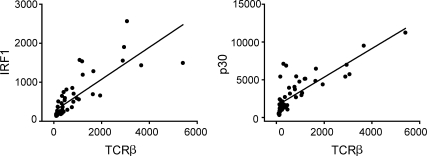
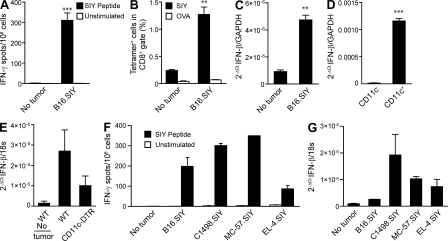
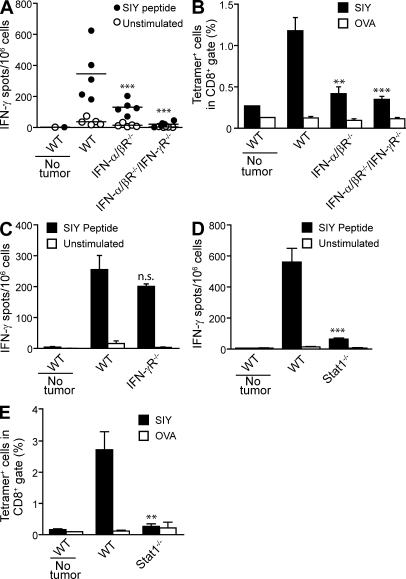
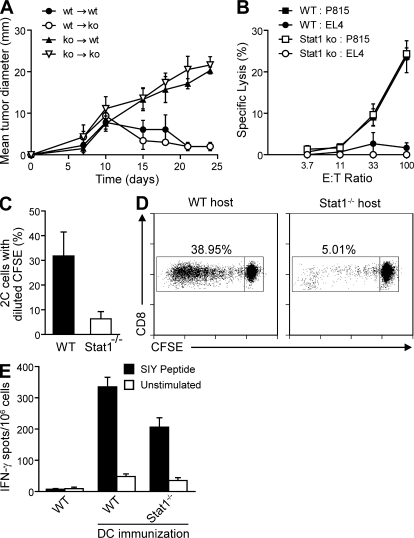
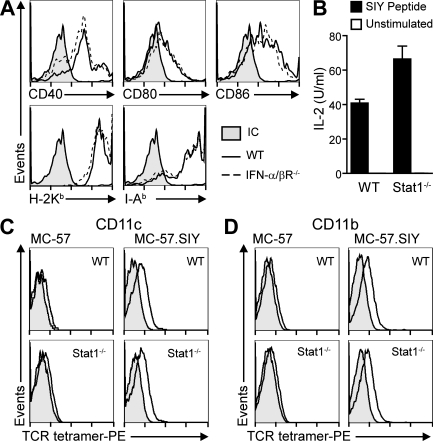
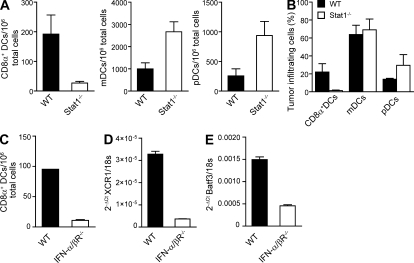
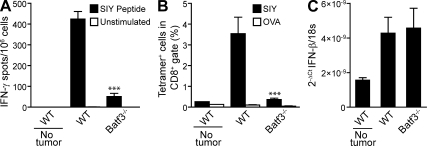
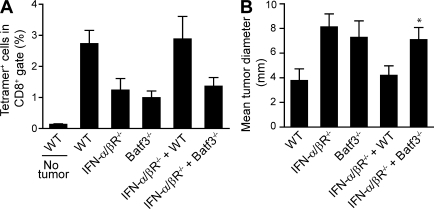
Despite lack of tumor control in many models, spontaneous T cell priming occurs frequently in response to a growing tumor. However, the innate immune mechanisms that promote natural antitumor T cell responses are undefined. In human metastatic melanoma, there was a correlation between a type I interferon (IFN) transcriptional profile and T cell markers in metastatic tumor tissue. In mice, IFN-β was produced by CD11c+ cells after tumor implantation, and tumor-induced T cell priming was defective in mice lacking IFN-α/βR or Stat1. IFN signaling was required in the hematopoietic compartment at the level of host antigen-presenting cells, and selectively for intratumoral accumulation of CD8α+ dendritic cells, which were demonstrated to be essential using Batf3−/− mice. Thus, host type I IFNs are critical for the innate immune recognition of a growing tumor through signaling on CD8α+ DCs.
Overview
The claims and statistics of this paper haven’t been checked yet.
Free: it reads the open-access text and checks the first 5 claims that cite a source we can check. Create a free account to check every claim.
Integrity signals
Registry
Cites
Statistics
Figures
Verification
Claims the paper makes
The claims and statistics of this paper haven’t been checked yet.
Free: it reads the open-access text and checks the first 5 claims that cite a source we can check. Create a free account to check every claim.
Claims other papers make about this one
Each is checked against this paper’s own text: does it say what the citing paper says it does?
The source backs part of the claim, not all of it — or backs it for a different population, condition or comparison.
In the citing paper
“For instance, DCs secrete the chemoattractants chemokine (C‐X‐C motif) ligand 9 (CXCL9) and 10 (CXCL10) to facilitate the infiltration of CD8+ Teff cells in the TME and for T cell cytotoxic activity [15].”
From Tumor microenvironment signaling and therapeutics in cancer progression (2023) · cites this paper as [15]
Experimental — accuracy not yet measuredThe source backs part of the claim, not all of it — or backs it for a different population, condition or comparison.
In the citing paper
“Previous study showed that DC-specific Ifnar -/- mice were unble to reject highly immunogenic tumor cells due to the defects in antigen cross-presentation to CD8+ T cells.”
From mRNA vaccine with unmodified uridine induces robust type I interferon-dependent anti-tumor immunity in a melanoma model (2022) · cites this paper as [52]
Experimental — accuracy not yet measuredThe cited source says what the claim attributes to it.
In the citing paper
“This evidence strongly shows that IFN-I can act through DCs to promote T cell immunity (52).”
From mRNA vaccine with unmodified uridine induces robust type I interferon-dependent anti-tumor immunity in a melanoma model (2022) · cites this paper as [52]
The cited source says what the claim attributes to it.
In the citing paper
“multiple clinical observations have linked intratumoral presence of CD8+ T cells to a type-I interferon (IFN) transcriptional signature14–16.”
From Epigenetic state determines the in vivo efficacy of STING agonist therapy (2023) · cites this paper as [14]
Self-check
Percentages, sums and reported differences re-computed from the paper’s own numbers.
The self-check needs the paper’s full text.
Citations
Cites
Release of chromatin protein HMGB1 by necrotic cells triggers inflammation
Scaffidi, P., Misteli, T., & Bianchi, M. E. (2002) · Nature · doi:10.1038/nature00858 · Cited by 4,221 · cited 2×
“, 2003), HMGB1 (high-mobility-group box 1; Scaffidi et al., 2002), ATP (Haag et al.”
BackgroundHOW CELLS RESPOND TO INTERFERONS
Stark, G. R., Kerr, I. M., Williams, B. R. G., Silverman, R. H., & Schreiber, R. D. (1998) · Annual Review of Biochemistry · doi:10.1146/annurev.biochem.67.1.227 · Cited by 3,932 · cited 1×
“During various types of viral infection, type I IFNs induce the expression of an array of genes that act to prevent viral spread, thus creating an antiviral state (Stark et al., 1998).”
BackgroundInaba, K., Inaba, M., Romani, N., Aya, H., Deguchi, M., Ikehara, S., Muramatsu, S., & Steinman, R. M. (1992) · The Journal of experimental medicine · doi:10.1084/jem.176.6.1693 · Cited by 3,738 · cited 2×
“version of a published protocol (Inaba et al., 1992).”
MethodApetoh, L., Ghiringhelli, F., Tesniere, A., Obeid, M., Ortiz, C., Criollo, A., Mignot, G., Maiuri, M. C., Ullrich, E., Saulnier, P., et al. (2007) · Nature Medicine · doi:10.1038/nm1622 · Cited by 3,056
STING regulates intracellular DNA-mediated, type I interferon-dependent innate immunity
Ishikawa, H., Ma, Z., & Barber, G. N. (2009) · Nature · doi:10.1038/nature08476 · Cited by 2,759 · cited 2×
“…proteomics that the CD8+ DC subpopulation selectively lacks the receptors and signaling molecules (such as DAI [Takaoka et al., 2007] and Sting [Ishikawa et al., 2009]) required for the detection of nucleotides in the cytoplasm (Luber et al., 2010), so if this is indeed the pathway involved in…”
BackgroundNatural Innate and Adaptive Immunity to Cancer
Vesely, M. D., Kershaw, M. H., Schreiber, R. D., & Smyth, M. J. (2011) · Annual Review of Immunology · doi:10.1146/annurev-immunol-031210-101324 · Cited by 2,101 · cited 2×
“However, recent results have indicated that in many instances, spontaneous T cell responses against tumor antigens can be detected in both human cancer patients and in murine models, and that immune escape in those cases appears to occur through dominant inhibition by immunoregulatory pathways (Vesely et al., 2011).”
BackgroundResultBatf3 Deficiency Reveals a Critical Role for CD8α + Dendritic Cells in Cytotoxic T Cell Immunity
Hildner, K., Edelson, B. T., Purtha, W. E., Diamond, M., Matsushita, H., Kohyama, M., Calderon, B., Schraml, B. U., Unanue, E. R., Diamond, M. S., et al. (2008) · Science · doi:10.1126/science.1164206 · Cited by 2,081 · cited 4×
“Recent work has indicated that mice lacking the transcriptional regulator, Batf3, have a specific deficiency in the development of the CD8+ DC lineage (which includes a CD103+ DC subset; Hildner et al., 2008).”
BackgroundMethodInfluentialSelf-citationGhiringhelli, F., Apetoh, L., Tesniere, A., Aymeric, L., Ma, Y., Ortiz, C., Vermaelen, K., Panaretakis, T., Mignot, G., Ullrich, E., et al. (2009) · Nature Medicine · doi:10.1038/nm.2028 · Cited by 1,898 · cited 2×
“It has been recently demonstrated that after radiotherapy or chemotherapy, dying tumor cells can release HMGB1 that binds to TLR4 (Apetoh et al., 2007) and ATP that activates the NALP3 inflammasome (Ghiringhelli et al., 2009).”
BackgroundJung, S., Unutmaz, D., Wong, P., Sano, G.-I., De los Santos, K., Sparwasser, T., Wu, S., Vuthoori, S., Ko, K., Zavala, F., et al. (2002) · Immunity · doi:10.1016/s1074-7613(02)00365-5 · Cited by 1,773 · cited 2×
“CD11c-DTR mice (Jung et al., 2002) were provided by D. Littman (New York University School of Medicine, New York, NY).”
MethodHow dying cells alert the immune system to danger
Kono, H., & Rock, K. L. (2008) · Nature Reviews Immunology · doi:10.1038/nri2215 · Cited by 1,737 · cited 10×
“Recently, it has been shown that dsDNA can be released from necrotic cells, reach the cytoplasm of APCs, and be recognized by a TLR-independent on January 17, 2012 jem .rupress.org D ow nloaded from JEM Vol. 208, No. 10 Article 2013 of type I IFNs, which are already FDA approved for other indications, in order to prom…”
BackgroundInfluential
Cited by
Items 401–500 of 1,000
Qiu, K., Duan, X., Mao, M., Song, Y., Rao, Y., Cheng, D., Feng, L., Shao, X., Jiang, C., Huang, H., et al. (2023) · npj Vaccines · doi:10.1038/s41541-023-00733-8 · Cited by 72
microRNA control of interferons and interferon induced anti-viral activity
Sedger, L. M. (2013) · Molecular Immunology · doi:10.1016/j.molimm.2013.07.009 · Cited by 69
Recent advances in understanding antitumor immunity
Munhoz, R. R., & Postow, M. A. (2016) · F1000Research · doi:10.12688/f1000research.9356.1 · Cited by 84
Vonderhaar, E. P., Barnekow, N. S., McAllister, D., McOlash, L., Eid, M. A., Riese, M. J., Tarakanova, V. L., Johnson, B. D., & Dwinell, M. B. (2021) · Cellular and Molecular Gastroenterology and Hepatology · doi:10.1016/j.jcmgh.2021.01.018 · Cited by 61
IFNA2: The prototypic human alpha interferon
Paul, F., Pellegrini, S., & Uzé, G. (2015) · Gene · doi:10.1016/j.gene.2015.04.087 · Cited by 85
“In the last 3 years, it has been demonstrated that type I IFNs are essential in the processes of immunosurveillance, tumor rejection and regulation of metastasis spread (Diamond et al., 2011; Fuertes et al., 2011; Bidwell et al., 2012).”
Gandhapudi, S. K., Ward, M. R., Bush, J. P., Bedu-Addo, F. K., Conn, G., & Woodward, J. G. (2019) · The Journal of Immunology · doi:10.4049/jimmunol.1801634 · Cited by 64
“greatly enhance cross-presentation pathways (46), such that even proteins or peptides not directly associated with R-DOTAP nanoparticles are taken up and cross-presented efficiently.”
BackgroundNakamura, K., Karmokar, A., Farrington, P. M., James, N. H., Ramos‐Montoya, A., Bickerton, S. J., Hughes, G. D., Illidge, T., Cadogan, E. B., Davies, B. R., et al. (2021) · Clinical Cancer Research · doi:10.1158/1078-0432.ccr-20-3701 · Cited by 63
Liu, Z., Zhou, H., Wang, W., Fu, Y., & Zhu, M. (2016) · OncoImmunology · doi:10.1080/2162402x.2016.1147641 · Cited by 65
Cauwels, A., Van Lint, S., Garcin, G., Bultinck, J., Paul, F., Gerlo, S., Van der Heyden, J., Bordat, Y., Catteeuw, D., De Cauwer, L., et al. (2018) · OncoImmunology · doi:10.1080/2162402x.2017.1398876 · Cited by 60
Ye, Z., Dong, H., Li, Y., Ma, T., Huang, H., Leong, H. S., Eckel-Passow, J., Kocher, J.-P. A., Liang, H., & Wang, L. (2018) · Clinical Cancer Research · doi:10.1158/1078-0432.ccr-17-3008 · Cited by 59
Beyond CAR T Cells: Other Cell-Based Immunotherapeutic Strategies Against Cancer
Patel, S., Burga, R. A., Powell, A. B., Chorvinsky, E. A., Hoq, N., McCormack, S., Pelt, S. N. V., Hanley, P. J., & Cruz, C. C. (2019) · Frontiers in Oncology · doi:10.3389/fonc.2019.00196 · Cited by 62
Interferon α in cancer immunoediting: From elimination to escape
Vidal, P. D. (2020) · Scandinavian Journal of Immunology · doi:10.1111/sji.12863 · Cited by 69
Mattiuz, R., Brousse, C., Ambrosini, M., Cancel, J.-C., Bessou, G., Mussard, J., Sanlaville, A., Caux, C., Bendriss‐Vermare, N., Valladeau‐Guilemond, J., et al. (2021) · Clinical & Translational Immunology · doi:10.1002/cti2.1305 · Cited by 65
Appleton, E. S., Hassan, J., Hak, C. C. W., Sivamanoharan, N., Wilkins, A. C., Samson, A., Lab), M. O. (., Harrington, K. J., Melcher, A. A., & Wennerberg, E. (2021) · Frontiers in Immunology · doi:10.3389/fimmu.2021.754436 · Cited by 68
“A main role of IFNs in antitumour immunity is to recruit DCs (97) and facilitate their maturation and migration to tumour-draining lymph nodes allowing for cross-priming of naïve T cells (98).”
BackgroundConde, E., Vercher, E., Soria-Castellano, M., Suárez-Olmos, J., Mancheño, U., Elizalde, E., Rodriguez, M. L., Glez‐Vaz, J., Casares, N., Rodríguez‐García, E., et al. (2021) · Journal for ImmunoTherapy of Cancer · doi:10.1136/jitc-2021-003351 · Cited by 67
Morgan, D. M., Horton, B. L., Bhandarkar, V., Van, R., Dinter, T., Zagorulya, M., Love, J. C., & Spranger, S. (2024) · Science Immunology · doi:10.1126/sciimmunol.adi3487 · Cited by 67
STING signaling in tumorigenesis and cancer therapy: A friend or foe?
He, L., Xiao, X., Yang, X., Zhang, Z., Wu, L., & Liu, Z. (2017) · Cancer Letters · doi:10.1016/j.canlet.2017.05.026 · Cited by 70
Choi, S. H., Stuckey, D. W., Pignatta, S., Reinshagen, C., Khalsa, J. K., Roozendaal, N., Martínez‐Quintanilla, J., Tamura, K., Keleş, E., & Shah, K. (2017) · Clinical Cancer Research · doi:10.1158/1078-0432.ccr-17-0077 · Cited by 66
“We chose IFNb as it is known to specifically enhance CD8þ cytotoxic T-cell recruitment (14, 29) and also directly induce apoptosis in cancer cells, thereby possibly exposing tumor-related antigens and potentiating antitumor efficacy (9, 10).”
BackgroundEppensteiner, J. C., Davis, R. P., Barbas, A. S., Kwun, J., & Lee, J. W. (2018) · Frontiers in Immunology · doi:10.3389/fimmu.2018.00190 · Cited by 63
Chrisikos, T. T., Zhou, Y., Slone, N., Babcock, R. L., Watowich, S. S., & Li, H. S. (2018) · Molecular Immunology · doi:10.1016/j.molimm.2018.01.014 · Cited by 65
“STAT1 and STAT2 are important mediators of DC activation, in particular DC responses to IFN-Is (Fuertes et al., 2011; Jackson et al., 2004; Johnson and Scott, 2007; Xu et al., 2016).”
BackgroundInfluentialTargeting Innate Immunity to Enhance the Efficacy of Radiation Therapy
Dar, T. B., Henson, R. M., & Shiao, S. L. (2019) · Frontiers in Immunology · doi:10.3389/fimmu.2018.03077 · Cited by 65
Bacillus Calmette–Guérin Immunotherapy for Cancer
Cardillo, F., Bonfim, M., Sousa-Vasconcelos, P. D. S., Mengel, J., Castello-Branco, L. R. R., & Pinho, R. T. (2021) · Vaccines · doi:10.3390/vaccines9050439 · Cited by 69
“It was shown, in melanoma patients, that type I IFN is a transcriptional signature associated with tumor-infiltrating T cells, playing a crucial role in tumor-initiated T cell priming–infiltrating T cells [98,99].”
BackgroundLuo, R., Onyshchenko, K., Wang, L., Gaedicke, S., Grosu, A., Firat, E., & Niedermann, G. (2022) · Clinical Cancer Research · doi:10.1158/1078-0432.ccr-22-1591 · Cited by 63
Interferon Family Cytokines in Obesity and Insulin Sensitivity
Huang, L.-Y., Chiu, C.-J., Hsing, C., & Hsu, Y. (2022) · Cells · doi:10.3390/cells11244041 · Cited by 65
“IFNAR−/− or STAT1−/− mice had a defective ability to recruit CD8α+ DCs to tumors [35].”
Vornholz, L., Isay, S. E., Kurgyis, Z., Strobl, D. C., Loll, P., Mosa, M. H., Luecken, M. D., Sterr, M., Lickert, H., Winter, C., et al. (2023) · Science Advances · doi:10.1126/sciadv.add8564 · Cited by 62
Li, C., Liang, S., Zhang, C., Liu, Y., Yang, M., Zhang, J., Zhi, X., Pan, F., & Cui, D. (2015) · Biomaterials · doi:10.1016/j.biomaterials.2015.03.024 · Cited by 57
“/ [5,6], immunological surveillance of the host can not identify and eliminate the malignant cells that distributed out of the resection field and the peripheral lymphoid organs.”
BackgroundPrognostic Factors for Checkpoint Inhibitor Based Immunotherapy: An Update With New Evidences
Yan, X., Zhang, S., Deng, Y., Wang, P., Hou, Q., & Xu, H. (2018) · Frontiers in Pharmacology · doi:10.3389/fphar.2018.01050 · Cited by 57
“Distinct from IFNγ, type I IFN within innate immune system is critical for T cell priming and tumor elimination through signaling on DCs and lack of type I IFN will result in limited useful T cells for reactivating of antitumor activities (Diamond et al., 2011; Fuertes et al., 2011).”
BackgroundLorkowski, M. E., Atukorale, P. U., Bielecki, P. A., Tong, K.-K., Covarrubias, G., Zhang, Y., Loutrianakis, G., Moon, T. J., Santulli, A. R., Becicka, W. M., et al. (2020) · Journal of Controlled Release · doi:10.1016/j.jconrel.2020.11.014 · Cited by 60
Chemotherapy-induced metastasis: molecular mechanisms and clinical therapies
Su, J.-X., Li, S.-J., Zhou, X., Zhang, Z., Yu, Y., Liu, S.-L., & Qi, Q. (2023) · Acta Pharmacologica Sinica · doi:10.1038/s41401-023-01093-8 · Cited by 59
Mannosylated STING Agonist Drugamers for Dendritic Cell-Mediated Cancer Immunotherapy
Nguyen, D. C., Song, K., Jokonya, S., Yazdani, O., Sellers, D. L., Wang, Y., Zakaria, A., Pun, S. H., & Stayton, P. S. (2024) · ACS Central Science · doi:10.1021/acscentsci.3c01310 · Cited by 57
Dendritic Cell-Based Vaccination in Cancer: Therapeutic Implications Emerging from Murine Models
Keon, S. M., Ruiz, M. S., Gazzaniga, S., & Wainstok, R. (2015) · Frontiers in Immunology · doi:10.3389/fimmu.2015.00243 · Cited by 62
“In particular, IFN-β signaling in CD8 DCs has been found to be responsible for spontaneous tumor antigen-specific T cell priming and tumor rejection (105).”
BackgroundHuman dendritic cell subsets in vaccination
Palucka, K., & Banchereau, J. (2013) · Current Opinion in Immunology · doi:10.1016/j.coi.2013.05.001 · Cited by 67
A Dual Role of Type I Interferons in Antitumor Immunity
Zhou, L., Zhang, Y., Wang, Y., Zhang, M., Sun, W., Dai, T., Wang, A., Wu, X., Zhang, S., Wang, S., et al. (2020) · Advanced Biosystems · doi:10.1002/adbi.201900237 · Cited by 64
Impact of proton therapy on antitumor immune response
Mirjolet, C., Nicol, A., Limagne, E., Mura, C., Richard, C., Morgand, V., Rousseau, M., Boidot, R., Ghiringhelli, F., Noël, G., et al. (2021) · Scientific Reports · doi:10.1038/s41598-021-92942-1 · Cited by 62
Dendritic Cells and Cancer Immunotherapy: The Adjuvant Effect
Nava, S., Lisini, D., Frigerio, S., & Bersano, A. (2021) · International Journal of Molecular Sciences · doi:10.3390/ijms222212339 · Cited by 64
“This DCs capability results in the generation of tumor-specific Cytotoxic T Lymphocytes (CTLs) that contribute to tumor rejection [3,4].”
BackgroundZhou, T., Hu, Q., Sun, Z., Wang, N., He, H., Tang, Z., & Chen, W. (2023) · ACS Nano · doi:10.1021/acsnano.3c08064 · Cited by 59
Dendritic cell vaccines for high-grade gliomas
Eagles, M. E., Nassiri, F., Badhiwala, J. H., Suppiah, S., Almenawer, S. A., Zadeh, G. M., & Aldape, K. (2018) · Therapeutics and Clinical Risk Management · doi:10.2147/tcrm.s135865 · Cited by 57
Ubiquitin Ligases in Cancer Immunotherapy – Balancing Antitumor and Autoimmunity
Fujita, Y., Tinoco, R., Li, Y., Senft, D., & Ronai, Z. A. (2019) · Trends in Molecular Medicine · doi:10.1016/j.molmed.2019.02.002 · Cited by 58
Heidegger, S. M., Kreppel, D., Bscheider, M., Stritzke, F., Nedelko, T., Wintges, A., Bek, S., Fischer, J. C., Graalmann, T., Kalinke, U., et al. (2019) · EBioMedicine · doi:10.1016/j.ebiom.2019.02.056 · Cited by 58
“This is in line with previous reports showing that RIG-I signaling and DC-intrinsic IFN-I signaling is crucial for antigen cross-presentation and induction of antiviral and antitumor cytotoxic T [14,15,35].”
BackgroundResultModulation of the immune microenvironment by tumor-intrinsic oncogenic signaling
Nguyen, K. B., & Spranger, S. (2019) · The Journal of Cell Biology · doi:10.1083/jcb.201908224 · Cited by 59
“These cross-presenting DC are critical in priming the antitumor T cell response as they harbor the ability to engulf tumorderived peptides and via cross-presentation present peptide to naive CD8+ T cells (Hildner et al., 2008; Fuertes et al., 2011).”
BackgroundCD47 blockade enhances the efficacy of intratumoral STING-targeting therapy by activating phagocytes
Kosaka, A., Ishibashi, K., Nagato, T., Kitamura, H., Fujiwara, Y., Yasuda, S., Nagata, M., Harabuchi, S., Hayashi, R., Yajima, Y., et al. (2021) · The Journal of Experimental Medicine · doi:10.1084/jem.20200792 · Cited by 61
Targeting STING in cancer: Challenges and emerging opportunities
Zhao, K., Huang, J., Zhao, Y., Wang, S., Xu, J., & Yin, K. (2023) · Biochimica et Biophysica Acta (BBA) - Reviews on Cancer · doi:10.1016/j.bbcan.2023.188983 · Cited by 63
Kusamori, K., Katsumi, H., Sakai, R., Hayashi, R., Hirai, Y., Tanaka, Y., Hitomi, K., Quan, Y., Kamiyama, F., Yamada, K., et al. (2016) · Biofabrication · doi:10.1088/1758-5090/8/1/015006 · Cited by 54
Tuning cancer fate: the unremitting role of host immunity
Calì, B., Molon, B., & Viola, A. (2017) · Open Biology · doi:10.1098/rsob.170006 · Cited by 62
Xiao, P., Guo, Y. L., Zhang, H., Zhang, X., Cheng, H., Cao, Q., & Ke, Y. (2018) · Oncogene · doi:10.1038/s41388-018-0337-6 · Cited by 56
Vitiello, G. A. F., Ferreira, W. A. S., de Lima, V. C. C., & Medina, T. D. S. (2021) · Frontiers in Immunology · doi:10.3389/fimmu.2021.782852 · Cited by 59
“IFN-I-induced transcripts correlated with T cell infiltration in human melanoma and mice models have shown that IFN-I can be produced by intratumoral DCs upon tumor implantation, being indispensable for the accumulation of intratumor cross-presenting dendritic cells and priming of CD8 T cells (60) (Figures 2, 3).”
BackgroundBukhalid, R. A., Duvall, J. R., Lancaster, K. L., Catcott, K. C., Cetinbas, N. M., Monnell, T. E., Routhier, C. A., Thomas, J. D., Bentley, K. W., Collins, S. D., et al. (2025) · Clinical Cancer Research · doi:10.1158/1078-0432.ccr-24-2449 · Cited by 70
Dendritic Cells in Oncolytic Virus-Based Anti-Cancer Therapy
Kim, Y., Clements, D. R., Sterea, A. M., Jang, H. G., Gujar, S. A., & Lee, P. C. (2015) · Viruses · doi:10.3390/v7122953 · Cited by 63
“In spontaneous priming of anti-tumor CD8+ T cells, DNA released from necrotic tumor cells can trigger the production of IFN-β by DCs through the STING pathway [95,96], wherein type I IFN signaling may contribute to innate immune responses against tumors [97].”
BackgroundAu, K. K., Page, C. L., Ren, R., Meunier, L., Clément, I., Tyrishkin, K., Peterson, N. T., Kendall‐Dupont, J., Childs, T. J., Francis, J., et al. (2016) · The Journal of Pathology Clinical Research · doi:10.1002/cjp2.55 · Cited by 56
“The role of Type I IFN has been previously correlated with therapeutic outcome in cancer [39].”
BackgroundCross-Presenting XCR1+ Dendritic Cells as Targets for Cancer Immunotherapy
Audsley, K. M., McDonnell, A. M., & Waithman, J. C. (2020) · Cells · doi:10.3390/cells9030565 · Cited by 58
“One of the primary difficulties faced in DC vaccination approaches is ensuring successful migration to the TDLNs, which is typically poor [133].”
BackgroundInfluentialMechanisms of measles virus oncolytic immunotherapy
Pidelaserra-Martí, G., & Engeland, C. E. (2020) · Cytokine & Growth Factor Reviews · doi:10.1016/j.cytogfr.2020.07.009 · Cited by 58
The Innate Immune Signalling Pathways: Turning RIG-I Sensor Activation against Cancer
Iurescia, S., Fioretti, D., & Rinaldi, M. (2020) · Cancers · doi:10.3390/cancers12113158 · Cited by 60
Tang, J., He, J., Guo, H., Lin, H., Li, M., Yang, T., Wang, H., Li, D., Liu, J., Li, L., et al. (2023) · Research · doi:10.34133/research.0033 · Cited by 57
Mondal, I., Das, O., Sun, R., Jian, G., Yu, B., Diaz, A. A., Behnan, J., Dubey, A., Meng, Z., Eskandar, E. N., et al. (2023) · Cancer Research · doi:10.1158/0008-5472.can-22-3382 · Cited by 60
Liu, X., Gibbons, R., Harrington, S. M., Krco, C. J., Markovic, S. N., Kwon, E. D., & Dong, H. (2013) · OncoImmunology · doi:10.4161/onci.23972 · Cited by 55
Dendritic Cells, Inflammation, and Breast Cancer
Palucka, K., Coussens, L. M., & O’Shaughnessy, J. (2013) · The Cancer Journal · doi:10.1097/ppo.0000000000000007 · Cited by 55
“Such inhibition of type I interferon secretion might also impact generation of effector T cells as DCs require type I interferon signals to cross-present tumor Ags.80,81 Whether this mechanism explains why pDCs are associated with poor prognosis in early breast cancer82 remains to be determined.”
BackgroundVanderford, T. H., Slichter, C. K., Rogers, K. A., Lawson, B., Obaede, R., Else, J. G., Villinger, F. J., Bosinger, S. E., & Silvestri, G. (2012) · Blood · doi:10.1182/blood-2012-02-411496 · Cited by 54
Ascierto, P. A., Atkins, M. B., Bifulco, C. B., Botti, G., Cochran, A. J., Davies, M. A., Demaria, S., Dummer, R., Ferrone, S., Formenti, S. C., et al. (2015) · Journal of Translational Medicine · doi:10.1186/s12967-015-0736-1 · Cited by 53
“Innate immune sensing of tumors drives host type I IFN production and cross-priming of CD8 T cells via CD8α+/−DCs [108].”
BackgroundSelf-citationUnderstanding Dendritic Cells and Their Role in Cutaneous Carcinoma and Cancer Immunotherapy
Yanofsky, V. R., Mitsui, H., Felsen, D., & Carucci, J. A. (2013) · Clinical and Developmental Immunology · doi:10.1155/2013/624123 · Cited by 60
Dendritic Cell Subsets in Asthma: Impaired Tolerance or Exaggerated Inflammation?
Vroman, H. H., Hendriks, R. W., & Kool, M. (2017) · Frontiers in Immunology · doi:10.3389/fimmu.2017.00941 · Cited by 58
“Function of cDC1s in Asthma cDC1s are well appreciated for their superior cross-presentation of antigens to CD8+ T-cells, essential for induction of virusspecific CD8+ T-cells and antitumor immune responses (21, 24, 25).”
BackgroundcGAS-STING Activation in the Tumor Microenvironment and Its Role in Cancer Immunity
Pépin, G., & Gantier, M. P. (2017) · Advances in experimental medicine and biology · doi:10.1007/978-981-10-5987-2_8 · Cited by 56
Liang, S., Li, J., Zou, Z., Mao, M., Ming, S., Lin, F., Zhang, Z., Cao, C., Zhou, J., Zhang, Y., et al. (2021) · Acta Pharmaceutica Sinica B · doi:10.1016/j.apsb.2021.12.010 · Cited by 54
Bowman-Kirigin, J. A., Saunders, B. T., Desai, R., Wang, A. Z., Schaettler, M. O., Liu, C. J., Livingstone, A. J., Kobayashi, D. K., Durai, V., Kretzer, N. M., et al. (2022) · Cancer Immunology Research · doi:10.1158/2326-6066.cir-22-0098 · Cited by 62
Self-citationCAR-T Cells in the Treatment of Ovarian Cancer: A Promising Cell Therapy
Zhang, X., Wu, Y., Xu, T., & Cui, M. (2023) · Biomolecules · doi:10.3390/biom13030465 · Cited by 58
Enhancing T cell therapy by overcoming the immunosuppressive tumor microenvironment
Arina, A., Corrales, L. P., & Bronte, V. (2016) · Seminars in Immunology · doi:10.1016/j.smim.2016.01.002 · Cited by 56
Au, K. K., Peterson, N. T., Truesdell, P. F., Reid‐Schachter, G., Khalaj, K., Ren, R., Francis, J., Graham, C. H., Craig, A. W., & Koti, M. (2017) · Gynecologic Oncology · doi:10.1016/j.ygyno.2017.03.007 · Cited by 56
Hendriks, D., Choi, G., de Bruyn, M., Wiersma, V. R., & Bremer, E. (2017) · International review of cytology · doi:10.1016/bs.ircmb.2016.10.002 · Cited by 67
Heterogeneity of colon cancer: from bench to bedside
Merlano, M. C., Granetto, C., Fea, E., Ricci, V., & Garrone, O. (2017) · ESMO Open · doi:10.1136/esmoopen-2017-000218 · Cited by 58
The Interactions Between Cancer Stem Cells and the Innate Interferon Signaling Pathway
Martín-Hijano, L., & Sáinz, B. (2020) · Frontiers in Immunology · doi:10.3389/fimmu.2020.00526 · Cited by 57
Interferons: role in cancer therapy
Abdolvahab, M. H., Darvishi, B., Zarei, M., Majidzadeh-A, K., & Farahmand, L. (2020) · Immunotherapy · doi:10.2217/imt-2019-0217 · Cited by 50
Innate immune sensing of cancer: clues from an identified role for type I IFNs
Gajewski, T. F., Fuertes, M. B., & Woo, S. (2012) · Cancer Immunology Immunotherapy · doi:10.1007/s00262-012-1305-6 · Cited by 54
“Together, these data argue that host DCs ‘‘sense’’ something derived from the implanted tumor in vivo, which drives IFN-b production and cross-priming via CD8a DCs [25].”
BackgroundSelf-citationThe interferon-dependent orchestration of innate and adaptive immunity after transplantation
Robb, R. J., & Hill, G. R. (2012) · Blood · doi:10.1182/blood-2012-02-368076 · Cited by 50
Xǔ, J., Wang, Y., Shi, J., Liu, J., Li, Q., & Chen, L. (2018) · Oncology Letters · doi:10.3892/ol.2018.8946 · Cited by 66
“This interaction between the innate responses and adaptive immunity has critical roles in promoting the maturation and activation of DCs to improve tumor antigen presentation (64-66).”
The abscopal effect: a sense of DNA damage is in the air
Lippert, T. P., & Greenberg, R. A. (2021) · Journal of Clinical Investigation · doi:10.1172/jci148274 · Cited by 55
Dmello, C., Zhao, J., Chen, L., Gould, A., Castro, B. A., Arrieta, V. A., Zhang, D. Y., Kim, K.-S., Kanojia, D., Zhang, P., et al. (2023) · Nature Communications · doi:10.1038/s41467-023-36878-2 · Cited by 55
Harnessing Human Cross-Presenting CLEC9A+XCR1+ Dendritic Cells for Immunotherapy
Tullett, K. M., Lahoud, M. H., & Radford, K. J. (2014) · Frontiers in Immunology · doi:10.3389/fimmu.2014.00239 · Cited by 55
“However, activation of human pDC by CpG induces large amounts of type I IFN that could potentially play an important bystander function for activation of CLEC9AXCR1 DC and subsequent induction of anti-tumor responses (41, 42).”
BackgroundAchard, C., Boisgerault, N., Delaunay, T., Roulois, D., Nédellec, S., Royer, P., Pain, M., Combredet, C., Mesel‐Lemoine, M., Cellerin, L., et al. (2015) · Oncotarget · doi:10.18632/oncotarget.6285 · Cited by 58
“Furthermore, MV still has an effect on insensitive tumor cell lines by inducing a strong type I IFN response that could be beneficial for the patient by increasing tumor immunogenicity [26-28].”
BackgroundEmerging Role of the Unfolded Protein Response in Tumor Immunosurveillance
Vanacker, H., Vetters, J., Moudombi, L., Caux, C., Janssens, S., & Michallet, M. (2017) · Trends in cancer · doi:10.1016/j.trecan.2017.05.005 · Cited by 53
“Furthermore, XBP1 synergizes with Toll-like receptor (TLR) signaling for optimal type I interferon production [71], a pathway that has been shown to be essential for efficient crosspriming [72].”
Anti-CD137 Suppresses Tumor Growth by Blocking Reverse Signaling by CD137 Ligand
Kang, S. W., Lee, S. C., Park, S. H., Kim, J., Kim, H. H., Lee, H., Seo, S. K., Kwon, B. S., Cho, H. R., & Kwon, B. (2017) · Cancer Research · doi:10.1158/0008-5472.can-17-0610 · Cited by 52
“Seemingly paradoxically, tumor escape from immune-mediated destruction also depends upon CD8 + T cells, which play a role in the upregulation of IDO and PD-L1 and in the recruitment of Treg cells in tumors (6).”
BackgroundCrespo, M. I., Zacca, E. R., Núñez, N. G., Ranocchia, R. P., Maccioni, M., Maletto, B. A., Pistoresi-Palencia, M. C., & Morón, G. (2013) · The Journal of Immunology · doi:10.4049/jimmunol.1102725 · Cited by 57
“(48) that IFN-b induction is comparable between wild-type and Batf3 mice (lacking CD8a and CD103 DCs).”
BackgroundHammerl, D., Massink, M. P. G., Smid, M., van Deurzen, C. H. M., Meijers-Heijboer, H. E. J., Waisfisz, Q., Debets, R., & Martens, J. W. M. (2019) · Clinical Cancer Research · doi:10.1158/1078-0432.ccr-19-0285 · Cited by 49
Ye, W., Gunti, S., Allen, C. T., Hong, Y., Clavijo, P. E., Waes, C. V., & Schmitt, N. C. (2020) · OncoImmunology · doi:10.1080/2162402x.2019.1710398 · Cited by 53
Theelen, W. S. M. E., de Jong, M. C., & Baas, P. (2020) · Lung Cancer · doi:10.1016/j.lungcan.2020.02.015 · Cited by 51
Radiotherapy Cooperates with IL15 to Induce Antitumor Immune Responses
Pilones, K. A., Charpentier, M., García-Martínez, E., Daviaud, C., Kraynak, J., Aryankalayil, J. B., Formenti, S. C., & Demaria, S. (2020) · Cancer Immunology Research · doi:10.1158/2326-6066.cir-19-0338 · Cited by 50
Diverse Catalytic Reactions for the Stereoselective Synthesis of Cyclic Dinucleotide MK-1454
Benkovics, T., Peng, F., Phillips, E. M., An, C., Bade, R. S., Chung, C. K., Dance, Z. E. X., Fier, P. S., Forstater, J. H., Liu, Z., et al. (2022) · Journal of the American Chemical Society · doi:10.1021/jacs.1c12106 · Cited by 49
In situ vaccination with defined factors overcomes T cell exhaustion in distant tumors
Khalil, D. N., Suek, N., Campesato, L. F., Budhu, S., Redmond, D., Samstein, R. M., Krishna, C., Panageas, K. S., Capanu, M., Houghton, S., et al. (2019) · Journal of Clinical Investigation · doi:10.1172/jci128562 · Cited by 50
STING modulators: Predictive significance in drug discovery
Cui, X., Zhang, R., Cen, S., & Zhou, J. (2019) · European Journal of Medicinal Chemistry · doi:10.1016/j.ejmech.2019.111591 · Cited by 51
Todoric, J., Umemura, A., Taniguchi, K., & Karin, M. (2017) · Wiley eBooks · doi:10.1002/9781119000822.hfcm027 · Cited by 46
Time for remodeling: SNF2-family DNA translocases in replication fork metabolism and human disease
Joseph, S. A., Taglialatela, A., Leuzzi, G., Huang, J., Cuella-Martin, R., & Ciccia, A. (2020) · DNA repair · doi:10.1016/j.dnarep.2020.102943 · Cited by 48
Oncolytic influenza A virus expressing interleukin-15 decreases tumor growth in vivo
Hock, K., Laengle, J., Kuznetsova, I., Egorov, A., Hegedűs, B., Döme, B., Wekerle, T., Sachet, M., & Bergmann, M. M. (2016) · Surgery · doi:10.1016/j.surg.2016.08.045 · Cited by 45
Temporally Programmed CD8α+ DC Activation Enhances Combination Cancer Immunotherapy
Tzeng, A., Kauke, M. J., Zhu, E. F., Moynihan, K. D., Opel, C. F., Yang, N. J., Mehta, N. K., Kelly, R. L., Szeto, G. L., Overwijk, W. W., et al. (2016) · Cell Reports · doi:10.1016/j.celrep.2016.11.020 · Cited by 53
Klauber, T. C. B., Moll, J. M., Zucker, D., Brix, S., Jensen, S. S., & Andresen, T. L. (2017) · Acta Biomaterialia · doi:10.1016/j.actbio.2017.01.072 · Cited by 45
Unal, B., Kuzu, O. F., Jin, Y., Osorio, D., Kildal, W., Pradhan, M., Kung, S. H. Y., Oo, H. Z., Daugaard, M., Vendelbo, M. H., et al. (2024) · Nature Communications · doi:10.1038/s41467-024-53039-1 · Cited by 59
Aricò, E., & Belardelli, F. (2012) · Journal of Interferon & Cytokine Research · doi:10.1089/jir.2011.0077 · Cited by 45
Dillmann, C., Ringel, C., Ringleb, J., Mora, J., Olesch, C., Fink, A. F., Roberts, E., Brüne, B., & Weigert, A. (2016) · The Journal of Immunology · doi:10.4049/jimmunol.1403168 · Cited by 47
“P lasmacytoid dendritic cells (pDCs) are a rare DC subpopulation, characterized by their potent ability to produce large amounts of type I IFN (IFN-a/b; IFN-I), a plasma cell-like morphology, and a unique set of cell-surface markers.”
BackgroundInfluentialPotentiation of immunomodulatory antibody therapy with oncolytic viruses for treatment of cancer
Zamarin, D., & Wolchok, J. D. (2014) · Molecular Therapy — Oncolytics · doi:10.1038/mto.2014.4 · Cited by 47
Prognostic impact of high levels of circulating plasmacytoid dendritic cells in breast cancer
Bailur, J. K., Gueckel, B., & Pawelec, G. (2016) · Journal of Translational Medicine · doi:10.1186/s12967-016-0905-x · Cited by 48
“This notion is supported by mouse studies showing that type I IFNs play an important role in the induction of anti-tumor responses [4, 38].”
Human Tumor-Infiltrating Dendritic Cells: From In Situ Visualization to High-Dimensional Analyses
Hubert, M., Gobbini, É., Bendriss‐Vermare, N., Caux, C., & Valladeau‐Guilemond, J. (2019) · Cancers · doi:10.3390/cancers11081082 · Cited by 50
Interplay between dendritic cells and cancer cells
(2019) · International Review of Cell and Molecular Biology · doi:10.1016/bs.ircmb.2019.07.008 · Cited by 44
Kapp, K., Volz, B., Oswald, D., Wittig, B., Baumann, M., & Schmidt, M. (2019) · OncoImmunology · doi:10.1080/2162402x.2019.1659096 · Cited by 52
Metadata
- Authors
- Fuertes, M. B., Kacha, A. K., Kline, J., Woo, S.-R., Kranz, D. M., Murphy, K. M., & Gajewski, T. F.
- Affiliations
- University of Chicago (US)
- University of Illinois Urbana-Champaign (US)
- Washington University in St. Louis (US)
- Corresponding author
- Gajewski, Thomas F.
- ORCID
- Venue
- Journal of Experimental Medicine
- Publisher
- Rockefeller University Press
- Published
- 2011-09-19
- Volume
- 208
- Issue
- 10
- Pages
- 2005-2016
- ISSN
- 0022-1007 (ISSN-L)
- 1540-9538
- PMC
- PMC3182064
- OpenAlex
- W2143523733
- Cited by
- 1,192
- References
- 60
- Citations by year
- 2026: 56 · 2025: 67 · 2024: 94 · 2023: 114 · 2022: 102 · 2021: 115 · 2020: 102 · 2019: 100 · 2018: 74 · 2017: 91 · 2016: 71 · 2015: 67 · 2014: 53 · 2013: 54 · 2012: 31
- FWCI
- 19.73
- Type
- journal article
- Language
- en
- Open access
- bronze
- doi.org
- Locations
- The Journal of Experimental Medicine (publishedVersion)
- Europe PMC (PubMed Central) (publishedVersion, cc-by-nc-sa)
- PubMed Central (publishedVersion, cc-by-nc-sa)
- PubMed (publishedVersion)
- Digital Commons@Becker (Washington University School of Medicine) (submittedVersion)
- LA Referencia (Red Federada de Repositorios Institucionales de Publicaciones Científicas) (submittedVersion, other-oa)
- Americanae (AECID Library) (submittedVersion, cc-by-nc-sa)
- Funders
- University of Chicago
- Wellcome Trust
- National Cancer Institute (P01CA97296, P01CA097296)
- Topics
- Life Sciences › Immunology and Microbiology › Immunology › Immunotherapy and Immune Responses
- Health Sciences › Medicine › Oncology › Cancer Immunotherapy and Biomarkers
- Life Sciences › Immunology and Microbiology › Immunology › interferon and immune responses
- Keywords
- type I interferon, antitumor immunity, CD8+ T cell responses, CD8α+ dendritic cells, CD11c+ antigen-presenting cells, interferon-beta, IFN-alpha/beta receptor, STAT1, Batf3, melanoma, host innate immunity
- MeSH terms
- Animals, Dendritic Cells, Humans, Immunity, Innate, Interferon Type I, Lymph Nodes, Lymphatic Metastasis, Melanoma, Mice, Inbred C57BL, Signal Transduction, Lymphocyte Subsets, Mice, Knockout, CD8-Positive T-Lymphocytes, Cell Line, Tumor, STAT1 Transcription Factor, Mice
About these checks
Registry, retraction, Cites and statistics results are computed, not judged, with one exception: a printed reference that no index lists is read once by a model before it counts as a citation error. Claims are extracted by a model and kept only when their quote appears verbatim in the text; each cited source is then checked, with a model’s help, for whether it says what the claim relies on. Those verdicts can be wrong — read the claim’s quote and the cited source before relying on one.
Statistics and arithmetic are recomputed, not judged.
Confidence bands are shown only for fields calibrated on our annotated test set. None is calibrated yet, so no band is shown.
What counts as a claim ›How we measure confidence ›How we check this ›
Are you an author, or do you see a problem with this page? Request a review
Data sources
Bibliographic data: Semantic Scholar, OpenAlex, Crossref.
Contains information from the Semantic Scholar Academic Graph Datasets, made available under the ODC Attribution License (ODC-BY 1.0).
Semantic Scholar’s data is described in: Kinney, R., et al. (2023). The Semantic Scholar Open Data Platform. arXiv:2301.10140.
