

Host type I IFN signals are required for antitumor CD8+ T cell responses through CD8α+ dendritic cells
Open accessThe DOI matches its Crossref record; 58 of the 60 references it cites were found in a registry or an index.
Abstract
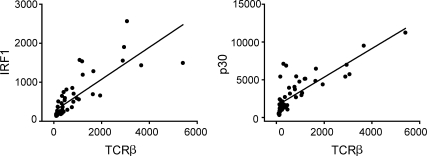
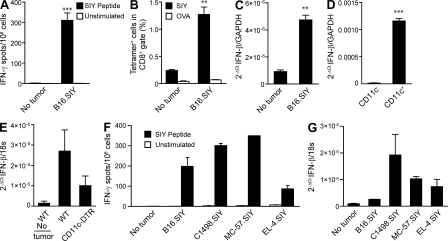
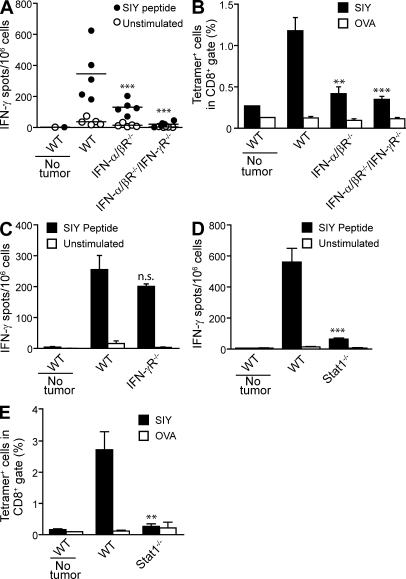
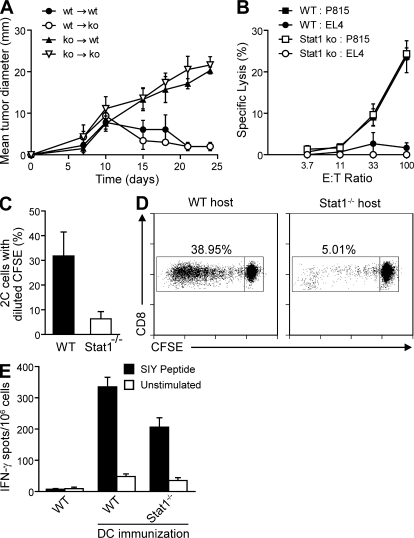
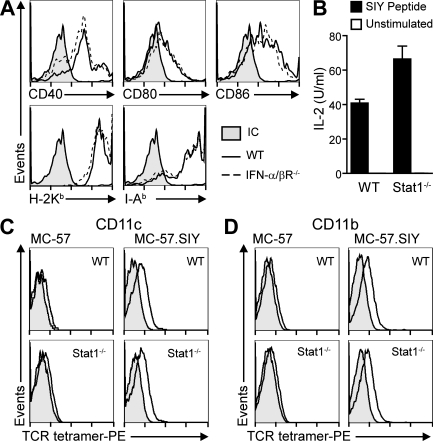
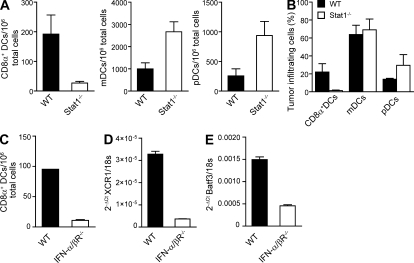
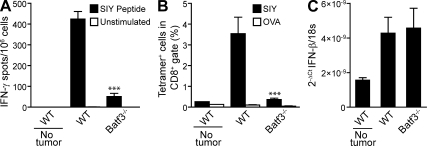
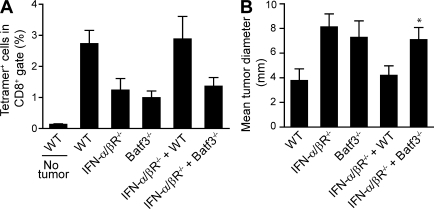
Despite lack of tumor control in many models, spontaneous T cell priming occurs frequently in response to a growing tumor. However, the innate immune mechanisms that promote natural antitumor T cell responses are undefined. In human metastatic melanoma, there was a correlation between a type I interferon (IFN) transcriptional profile and T cell markers in metastatic tumor tissue. In mice, IFN-β was produced by CD11c+ cells after tumor implantation, and tumor-induced T cell priming was defective in mice lacking IFN-α/βR or Stat1. IFN signaling was required in the hematopoietic compartment at the level of host antigen-presenting cells, and selectively for intratumoral accumulation of CD8α+ dendritic cells, which were demonstrated to be essential using Batf3−/− mice. Thus, host type I IFNs are critical for the innate immune recognition of a growing tumor through signaling on CD8α+ DCs.
Overview
The claims and statistics of this paper haven’t been checked yet.
Free: it reads the open-access text and checks the first 5 claims that cite a source we can check. Create a free account to check every claim.
Integrity signals
Registry
Cites
Statistics
Figures
Verification
Claims the paper makes
The claims and statistics of this paper haven’t been checked yet.
Free: it reads the open-access text and checks the first 5 claims that cite a source we can check. Create a free account to check every claim.
Claims other papers make about this one
Each is checked against this paper’s own text: does it say what the citing paper says it does?
The source backs part of the claim, not all of it — or backs it for a different population, condition or comparison.
In the citing paper
“For instance, DCs secrete the chemoattractants chemokine (C‐X‐C motif) ligand 9 (CXCL9) and 10 (CXCL10) to facilitate the infiltration of CD8+ Teff cells in the TME and for T cell cytotoxic activity [15].”
From Tumor microenvironment signaling and therapeutics in cancer progression (2023) · cites this paper as [15]
Experimental — accuracy not yet measuredThe source backs part of the claim, not all of it — or backs it for a different population, condition or comparison.
In the citing paper
“Previous study showed that DC-specific Ifnar -/- mice were unble to reject highly immunogenic tumor cells due to the defects in antigen cross-presentation to CD8+ T cells.”
From mRNA vaccine with unmodified uridine induces robust type I interferon-dependent anti-tumor immunity in a melanoma model (2022) · cites this paper as [52]
Experimental — accuracy not yet measuredThe cited source says what the claim attributes to it.
In the citing paper
“This evidence strongly shows that IFN-I can act through DCs to promote T cell immunity (52).”
From mRNA vaccine with unmodified uridine induces robust type I interferon-dependent anti-tumor immunity in a melanoma model (2022) · cites this paper as [52]
The cited source says what the claim attributes to it.
In the citing paper
“multiple clinical observations have linked intratumoral presence of CD8+ T cells to a type-I interferon (IFN) transcriptional signature14–16.”
From Epigenetic state determines the in vivo efficacy of STING agonist therapy (2023) · cites this paper as [14]
Self-check
Percentages, sums and reported differences re-computed from the paper’s own numbers.
The self-check needs the paper’s full text.
Citations
Cites
Release of chromatin protein HMGB1 by necrotic cells triggers inflammation
Scaffidi, P., Misteli, T., & Bianchi, M. E. (2002) · Nature · doi:10.1038/nature00858 · Cited by 4,221 · cited 2×
“, 2003), HMGB1 (high-mobility-group box 1; Scaffidi et al., 2002), ATP (Haag et al.”
BackgroundHOW CELLS RESPOND TO INTERFERONS
Stark, G. R., Kerr, I. M., Williams, B. R. G., Silverman, R. H., & Schreiber, R. D. (1998) · Annual Review of Biochemistry · doi:10.1146/annurev.biochem.67.1.227 · Cited by 3,932 · cited 1×
“During various types of viral infection, type I IFNs induce the expression of an array of genes that act to prevent viral spread, thus creating an antiviral state (Stark et al., 1998).”
BackgroundInaba, K., Inaba, M., Romani, N., Aya, H., Deguchi, M., Ikehara, S., Muramatsu, S., & Steinman, R. M. (1992) · The Journal of experimental medicine · doi:10.1084/jem.176.6.1693 · Cited by 3,738 · cited 2×
“version of a published protocol (Inaba et al., 1992).”
MethodApetoh, L., Ghiringhelli, F., Tesniere, A., Obeid, M., Ortiz, C., Criollo, A., Mignot, G., Maiuri, M. C., Ullrich, E., Saulnier, P., et al. (2007) · Nature Medicine · doi:10.1038/nm1622 · Cited by 3,056
STING regulates intracellular DNA-mediated, type I interferon-dependent innate immunity
Ishikawa, H., Ma, Z., & Barber, G. N. (2009) · Nature · doi:10.1038/nature08476 · Cited by 2,759 · cited 2×
“…proteomics that the CD8+ DC subpopulation selectively lacks the receptors and signaling molecules (such as DAI [Takaoka et al., 2007] and Sting [Ishikawa et al., 2009]) required for the detection of nucleotides in the cytoplasm (Luber et al., 2010), so if this is indeed the pathway involved in…”
BackgroundNatural Innate and Adaptive Immunity to Cancer
Vesely, M. D., Kershaw, M. H., Schreiber, R. D., & Smyth, M. J. (2011) · Annual Review of Immunology · doi:10.1146/annurev-immunol-031210-101324 · Cited by 2,101 · cited 2×
“However, recent results have indicated that in many instances, spontaneous T cell responses against tumor antigens can be detected in both human cancer patients and in murine models, and that immune escape in those cases appears to occur through dominant inhibition by immunoregulatory pathways (Vesely et al., 2011).”
BackgroundResultBatf3 Deficiency Reveals a Critical Role for CD8α + Dendritic Cells in Cytotoxic T Cell Immunity
Hildner, K., Edelson, B. T., Purtha, W. E., Diamond, M., Matsushita, H., Kohyama, M., Calderon, B., Schraml, B. U., Unanue, E. R., Diamond, M. S., et al. (2008) · Science · doi:10.1126/science.1164206 · Cited by 2,081 · cited 4×
“Recent work has indicated that mice lacking the transcriptional regulator, Batf3, have a specific deficiency in the development of the CD8+ DC lineage (which includes a CD103+ DC subset; Hildner et al., 2008).”
BackgroundMethodInfluentialSelf-citationGhiringhelli, F., Apetoh, L., Tesniere, A., Aymeric, L., Ma, Y., Ortiz, C., Vermaelen, K., Panaretakis, T., Mignot, G., Ullrich, E., et al. (2009) · Nature Medicine · doi:10.1038/nm.2028 · Cited by 1,898 · cited 2×
“It has been recently demonstrated that after radiotherapy or chemotherapy, dying tumor cells can release HMGB1 that binds to TLR4 (Apetoh et al., 2007) and ATP that activates the NALP3 inflammasome (Ghiringhelli et al., 2009).”
BackgroundJung, S., Unutmaz, D., Wong, P., Sano, G.-I., De los Santos, K., Sparwasser, T., Wu, S., Vuthoori, S., Ko, K., Zavala, F., et al. (2002) · Immunity · doi:10.1016/s1074-7613(02)00365-5 · Cited by 1,773 · cited 2×
“CD11c-DTR mice (Jung et al., 2002) were provided by D. Littman (New York University School of Medicine, New York, NY).”
MethodHow dying cells alert the immune system to danger
Kono, H., & Rock, K. L. (2008) · Nature Reviews Immunology · doi:10.1038/nri2215 · Cited by 1,737 · cited 10×
“Recently, it has been shown that dsDNA can be released from necrotic cells, reach the cytoplasm of APCs, and be recognized by a TLR-independent on January 17, 2012 jem .rupress.org D ow nloaded from JEM Vol. 208, No. 10 Article 2013 of type I IFNs, which are already FDA approved for other indications, in order to prom…”
BackgroundInfluential
Cited by
Items 801–900 of 1,000
Establishment and validation of an immune-associated signature in lung adenocarcinoma
Wang, Z., & Chen, X. (2020) · International Immunopharmacology · doi:10.1016/j.intimp.2020.106867 · Cited by 16
Enhancing the immunogenicity of cancer vaccines by harnessing CLEC9A
Lahoud, M. H., & Radford, K. J. (2021) · Human Vaccines & Immunotherapeutics · doi:10.1080/21645515.2021.1873056 · Cited by 14
CDK12/13 inactivation triggers STING-mediated antitumor immunity in preclinical models
Bao, Y., Chang, Y., Tien, J. C.-Y., Cruz, G., Yang, F., Mannan, R., Mahapatra, S., Paturu, R., Cao, X., Su, F., et al. (2025) · Journal of Clinical Investigation · doi:10.1172/jci193745 · Cited by 14
The cGAS-STING pathway in cancer: friend or foe
Li, Q., Song, Q., Ma, L., Kang, K., Zhu, X., Li, Y., Lin, X., Lu, X., Zeng, Z., Li, G., et al. (2026) · Cell Death and Disease · doi:10.1038/s41419-026-08607-2 · Cited by 20
Mapping intratumor heterogeneity across layers for advancing immunotherapy
Marine, J., Bartok, O., Sagie, S., Vitiello, P. P., Bardelli, A., Weller, C., Chang, T., Tonelli, C., Spranger, S., Ruppin, E., et al. (2026) · Cell · doi:10.1016/j.cell.2026.03.025 · Cited by 16
“125,135,136 cDC1 detects tumor-cell-derived antigen via the c-type lectin receptor DNGR-1 (Clec9a), which binds to exposed filamentous actin (F-actin), mediates phagocytosis followed by antigen degradation and subsequent presentation of the antigen on cDC1.”
Watanabe, T., Sato, G. E., Yoshimura, M., Suzuki, M., & Mizowaki, T. (2022) · International Journal of Clinical Oncology · doi:10.1007/s10147-022-02172-2 · Cited by 15
Tan, J., Ge, Y., Zhang, M., & Ding, M. (2022) · Journal of Biological Chemistry · doi:10.1016/j.jbc.2022.102779 · Cited by 14
“Spontaneous tumor antigen-specific T-cell priming is dependent on host type I IFN production, via a mechanism that involves the promotion of crosspresentation by CD8α+ DCs (8, 9).”
BackgroundHeo, Y., Ko, E., Park, S., Park, S.-O., Ahn, B.-C., Yum, J. S., & Chun, E. (2023) · Cancers · doi:10.3390/cancers15153978 · Cited by 13
“pDCs (B220+) are specialized in producing type I IFN that activates the CD8+ T-cell anti-tumor response [17].”
BackgroundExtrachromosomal circular DNA and their roles in cancer progression
Zheng, S., Li, Y., Wang, L., Wei, Q., Wei, M., Yu, T., & Zhao, L. (2023) · Genes & Diseases · doi:10.1016/j.gendis.2023.101202 · Cited by 17
Han, X., Leng, C., Zhao, S., Wang, S., Chen, S., Wang, S., Zhang, M., Li, X., Lu, Y., Wang, B., et al. (2024) · Frontiers in Immunology · doi:10.3389/fimmu.2024.1377472 · Cited by 21
Traditional Chinese herbal medicine: harnessing dendritic cells for anti-tumor benefits
Shen, M., Li, Z., Wang, J., Xiang, H., & Xie, Q. (2024) · Frontiers in Immunology · doi:10.3389/fimmu.2024.1408474 · Cited by 13
“Type I IFN is crucial for the cross-presentation of CD8 a + DC and the development of tumor antigen speci fi c CD8 + T cell in vivo (51). pDC also produces various chemokines and cytokines like CC chemokine receptor 4 (CCL4), CCL3, CXC chemokine ligand 10 (CXCL10), CXCL8, IL-6 and IL-12. pDCs submit…”
BackgroundThe curious case of type I interferon signaling in cancer
Chhipa, A. S., Boscaro, V., Gallicchio, M., & Patel, S. S. (2024) · Biochimica et Biophysica Acta (BBA) - Reviews on Cancer · doi:10.1016/j.bbcan.2024.189204 · Cited by 15
Tarbell, K. V., & Egen, J. G. (2018) · Journal of Leukocyte Biology · doi:10.1002/jlb.3mir1017-400r · Cited by 16
Mimicking Pathogens to Augment the Potency of Liposomal Cancer Vaccines
Twilhaar, M. K. N., Czentner, L., van Nostrum, C. F., Storm, G., & den Haan, J. M. M. (2021) · Pharmaceutics · doi:10.3390/pharmaceutics13070954 · Cited by 14
Low-dose exposure to PBDE disrupts genomic integrity and innate immunity in mammary tissue
Lamkin, D. M., Chen, S., Bradshaw, K. P., Xu, S., Faull, K. F., Sloan, E. K., & Cole, S. W. (2022) · Frontiers in Genetics · doi:10.3389/fgene.2022.904607 · Cited by 15
“, 2005), because they enable DC activation and migration during tumor immunosurveillance (Diamond et al., 2011; Fuertes et al., 2011).”
BackgroundGriffith, T. S., & James, B. R. (2014) · Research and Reports in Biochemistry · doi:10.2147/rrbc.s59123 · Cited by 14
Hira, S. K., Mondal, I., & Manna, P. P. (2015) · Cytotherapy · doi:10.1016/j.jcyt.2015.01.006 · Cited by 15
Patel, A. P., Oba, T., Kajihara, R., Yokoi, T., Abrams, S. I., & Ito, F. (2021) · The Journal of Immunology · doi:10.4049/jimmunol.2100281 · Cited by 13
Busà, R., Bulati, M., Badami, E., Zito, G., Maresca, D. C., Conaldi, P. G., Ercolano, G., & Ianaro, A. (2022) · Frontiers in Cell and Developmental Biology · doi:10.3389/fcell.2022.907572 · Cited by 16
Anticancer Effect of STING Agonist-Encapsulated Liposomes on Breast Cancer
Zhang, J., Cui, X., Huang, Y., Xiangdong, X., Feng, C., & Li, J. (2023) · Molecules · doi:10.3390/molecules28093740 · Cited by 15
“It has been shown in several studies that type I IFN can induce CD8+ T cell activation to exert antitumor effects [25,26].”
BackgroundChimeric antigen receptor T cells in the treatment of osteosarcoma (Review)
Yu, T., Jiang, W., Wang, Y., Zhou, Y. Y., Jiao, J., & Wu, M. (2024) · International Journal of Oncology · doi:10.3892/ijo.2024.5628 · Cited by 14
Shen, Y., Zhao, X., Chen, L., Wang, X., Wang, D., Zhang, H., Zheng, Z., Huang, W., Zheng, C., Chen, Y., et al. (2024) · International Journal of Biological Macromolecules · doi:10.1016/j.ijbiomac.2024.133297 · Cited by 16
Riluzole Enhancing Anti-PD-1 Efficacy by Activating cGAS/STING Signaling in Colorectal Cancer
Liang, B., Khan, M., Storts, H., Zhang, E. H., Zheng, X., Xing, X., Claybon, H., Wilson, J. L., Li, C., Jin, N. Y., et al. (2024) · Molecular Cancer Therapeutics · doi:10.1158/1535-7163.mct-24-0289 · Cited by 15
Appleman, V. A., Matsuda, A., Ganno, M. L., Zhang, D. M., Rosentrater, E., Lopez, A. E. M., Porciuncula, A., Hatten, T., Christensen, C. L., Merrigan, S. A., et al. (2025) · Cancer Immunology Research · doi:10.1158/2326-6066.cir-24-0103 · Cited by 16
Piot, C., da Costa, M. P., Biram, A., Minutti, C. M., Lim, K. H. J., Green, M. J., Mikolajczak, A., Jenkins, R. P., Meader, L., Buck, M. D., et al. (2025) · European Journal of Immunology · doi:10.1002/eji.70011 · Cited by 15
Tüting, T. (2013) · Pigment Cell & Melanoma Research · doi:10.1111/pcmr.12111 · Cited by 13
“…of experimental investigations strongly support a critical requirement of type I IFNs for the induction of CTL responses and for the recruitment of CTL into the tumor microenvironment through the induction of IFN-regulated chemokines (Fuertes et al., 2011; Harlin et al., 2009; Steitz et al., 2001).”
BackgroundDendritic Cell Strategies for Eliciting Mutation-Derived Tumor Antigen Responses in Patients
Balan, S., Finnigan, J. P., & Bhardwaj, N. (2017) · The Cancer Journal · doi:10.1097/ppo.0000000000000251 · Cited by 13
Novel immunotherapeutic approaches in head and neck cancer
Neal, M. E. H., Haring, C. T., Mann, J. E., Brenner, J. C., Spector, M. E., & Swiecicki, P. L. (2019) · Journal of Cancer Metastasis and Treatment · doi:10.20517/2394-4722.2019.32 · Cited by 14
“PD-L1 is expressed on APCs and causes T cell anergy and apoptosis upon binding with PD-1 receptors, thereby serving as a check to prevent an overactive immune response([44,45]).”
BackgroundImmunotherapy and Radiation Therapy in Renal Cell Carcinoma
Mollica, V., Santoni, M., Nunno, V. D., Cimadamore, A., Cheng, L., López-Beltrán, A., Battelli, N., Montironi, R., & Massari, F. (2020) · Current Drug Targets · doi:10.2174/1389450121666200311121540 · Cited by 13
Jiang, T. T., Kruglov, O., Lin, G. H. Y., Minic, A., Jordan, K., Uger, R. A., Wong, M., Shou, Y., & Akilov, O. E. (2021) · Cancers · doi:10.3390/cancers13235982 · Cited by 12
Prasit, K., Ferrer‐Font, L., Burn, O. K., Anderson, R. J., Compton, B. J., Schmidt, A., Mayer, J. U., Chen, C. J., Dasyam, N., Ritchie, D. S., et al. (2022) · OncoImmunology · doi:10.1080/2162402x.2022.2081009 · Cited by 12
“Given that CD8 T cells were involved in both the immediate antitumour response and a memory response at re-challenge, it is likely that type I IFN has a role in promoting this function.(60,61) The immediate source of the type I IFN was not identified, although it was notable that significant levels of IFN-α were obser…”
BackgroundFatty acid metabolism and radiation-induced anti-tumor immunity
Martino, M. D., Daviaud, C., Hajjar, E., & Vanpouille‐Box, C. (2023) · International review of cytology · doi:10.1016/bs.ircmb.2023.01.003 · Cited by 15
STING-mediated DNA sensing in cancer immunotherapy
Zhou, X., & Jiang, Z. (2017) · Science China Life Sciences · doi:10.1007/s11427-016-9066-0 · Cited by 13
Mechanisms of Resistance to PD-1 Checkpoint Blockade
Moser, J. C., & Hu‐Lieskovan, S. (2020) · Drugs · doi:10.1007/s40265-020-01270-7 · Cited by 11
Kohanbash, G., Ishikawa, E., Fujita, M., Ikeura, M., McKaveney, K., Zhu, J., Sakaki, M., Sarkar, S. N., & Okada, H. (2012) · OncoImmunology · doi:10.4161/onci.19964 · Cited by 12
“Although they have been long known to induce tumor cell apoptosis and angiogenesis inhibition,(2) hematopoietic cells in the host (rather than tumor cells) are the crucial targets of the antitumor activity of endogenous Type-1 IFNs,(3,4) More recent studies with melanoma have demonstrated that host type I IFNs are cri…”
IRF4 expression by lung dendritic cells drives acute but not Trm cell–dependent memory Th2 responses
Camacho, D. F., Velez, T. E., Hollinger, M. K., Wang, E., Howard, C. L., Darnell, E. P., Kennedy, D. E., Krishack, P. A., Hrusch, C. L., Clark, M. R., et al. (2022) · JCI Insight · doi:10.1172/jci.insight.140384 · Cited by 13
Flores‐Santibáñez, F., Rennen, S., Fernández, D., Nolf, C. D., Velde, E. V. D., González, S. G., Fuentes, C., Moreno, C., Figueroa, D. A., Lladser, Á., et al. (2023) · Frontiers in Immunology · doi:10.3389/fimmu.2023.1209588 · Cited by 11
“In 478 ovarian cancer models, tumor-associated DCs are spontaneously immunosuppressive 479 (53) and in fact, whereas depletion of CD11c+ cells delays ovarian cancer progression in 480 later stages (54), the same process curtails CD8+ T cell priming in melanoma (55).”
Backgroundvan Gogh, M., Garzon, J. F. G., Şahin, D., Knopfová, L., Beneš, P., Boyman, O., Jurišica, I., & Borsig, L. (2023) · Cancer Immunology Research · doi:10.1158/2326-6066.cir-22-0912 · Cited by 11
Intratumoral NKT cell accumulation promotes antitumor immunity in pancreatic cancer
Li, J., Moresco, P., & Fearon, D. T. (2024) · Proceedings of the National Academy of Sciences · doi:10.1073/pnas.2403917121 · Cited by 11
Stinson, J. A., Sheen, A. M., Lax, B. M., Yang, G. N., Duhamel, L., Santollani, L., Fink, E., Palmeri, J. R., & Wittrup, K. D. (2024) · Molecular Cancer Therapeutics · doi:10.1158/1535-7163.mct-24-0163 · Cited by 13
Linking COVID-19 and cancer: Underlying mechanism
Tyagi, S., Tyagi, N., Singh, A., Gautam, A., Singh, A., Jindal, S., Singh, R. P., Chaturvedi, R., & Kushwaha, H. R. (2024) · Biochimica et Biophysica Acta (BBA) - Molecular Basis of Disease · doi:10.1016/j.bbadis.2024.167563 · Cited by 14
Carvedilol sensitizes chemotherapy by targeting STING to boost anti-tumor immunity
Dang, Y., Ma, M., Wang, Y., Zhao, M., Cao, Y., Su, H., Liu, T., Zheng, M., Gao, J., Wu, X., et al. (2025) · Cell Reports · doi:10.1016/j.celrep.2025.115572 · Cited by 11
Schuster, P., Thomann, S., Werner, M., Vollmer, J., & Schmidt, B. (2015) · Frontiers in Microbiology · doi:10.3389/fmicb.2015.00557 · Cited by 11
Knitz, M. W., Darragh, L. B., Bickett, T. E., Bhatia, S., Bukkapatnam, S., Gadwa, J., Piper, M., Corbo, S., Nguyen, D., Court, B. V., et al. (2021) · Cancer Immunology Immunotherapy · doi:10.1007/s00262-021-03059-3 · Cited by 11
Sex-Based Differences in the Tumor Microenvironment
Wuidar, V., Gillot, L., Silva, I. D. D., Lebeau, A., Gallez, A., & Péqueux, C. (2021) · Advances in experimental medicine and biology · doi:10.1007/978-3-030-73119-9_23 · Cited by 11
Development of Small-Molecule STING Activators for Cancer Immunotherapy
Jung, H. R., Jo, S., Jeon, M. J., Lee, H., Chu, Y., Lee, J., Kim, E., Song, G., Jung, C., Kim, H., et al. (2021) · Biomedicines · doi:10.3390/biomedicines10010033 · Cited by 11
“ICIs block tumor cells escaping from immune surveillance and induce tumor-cell death by increasing the recognition of tumor antigens and the generation of tumor-specific cytotoxic T lymphocytes (CTLs) [2].”
BackgroundHarnessing dendritic cell diversity in cancer immunotherapy
Park, H., Ashayeripanah, M., & Chopin, M. (2023) · Current Opinion in Immunology · doi:10.1016/j.coi.2023.102341 · Cited by 12
Radiotherapy Combined with Intralesional Immunostimulatory Agents for Soft Tissue Sarcomas
Su, C., Kim, S. K., Wang, C. X., Kirsch, D. G., & Monjazeb, A. M. (2024) · Seminars in Radiation Oncology · doi:10.1016/j.semradonc.2024.01.001 · Cited by 13
Kapp, K., Schneider, J., Schneider, L., Gollinge, N., Jänsch, S., Schroff, M., Wittig, B., & Kleuss, C. (2016) · Immunity Inflammation and Disease · doi:10.1002/iid3.126 · Cited by 11
“Beside the innate immune response, IFN-a also regulates the adaptive arm of antitumor response as was recently shown for the activation of CD8-aþ dendritic cells cross-presenting antigens to cytotoxic T cells [46, 47].”
BackgroundBagaev, A., Av, P., Nelson, E. L., Agadjanyan, M. G., Ghochikyan, A., & Ataullakhanov, R. I. (2018) · The Journal of Immunology · doi:10.4049/jimmunol.1701126 · Cited by 11
Therapeutic potential of toll‐like receptors in treatment of gynecological cancers
Moradi‐Marjaneh, R., Hassanian, S. M., Hasanzadeh, M., Rezayi, M., Maftouh, M., Mehramiz, M., Ferns, G. A., Khazaei, M., & Avan, A. (2019) · IUBMB Life · doi:10.1002/iub.2011 · Cited by 11
“The mechanisms are attributed to the activation of dendritic cells as professional antigen-presenting cells (APC) and also direct cytotoxic effects on tumor cells, secretion of type I interferon (16), activation of natural killer cells (17), and inhibition of regulatory T cell functions (7) (Fig.”
BackgroundOverview of Basic Immunology and Clinical Application
Stephen, B., & Hajjar, J. (2020) · Advances in experimental medicine and biology · doi:10.1007/978-3-030-41008-7_1 · Cited by 13
Ponvilawan, B., Rittiphairoj, T., Charoenngam, N., Rujirachun, P., Wattanachayakul, P., Tornsatitkul, S., & Ungprasert, P. (2021) · Journal of Clinical Gastroenterology · doi:10.1097/mcg.0000000000001532 · Cited by 11
Potential role of cGAS/STING pathway in regulating cancer progression
Dhanisha, S. S., & Guruvayoorappan, C. (2022) · Critical Reviews in Oncology/Hematology · doi:10.1016/j.critrevonc.2022.103780 · Cited by 12
Chen, H. C., Zhan, X., Tran, K. K., & Shen, H. Y. (2013) · Biomaterials · doi:10.1016/j.biomaterials.2013.05.016 · Cited by 11
Kuwabara, J., Akihiro, U., Abe, N., Sumida, Y., Ohsumi, S., Usa, E., Taguchi, K., Choudhury, M. E., Yano, H., Matsumoto, S., et al. (2018) · Biochemical and Biophysical Research Communications · doi:10.1016/j.bbrc.2018.01.065 · Cited by 11
Novel non-Nucleotidic STING Agonists for Cancer Immunotherapy
Berger, G., & Lawler, S. E. (2018) · Future Medicinal Chemistry · doi:10.4155/fmc-2018-0367 · Cited by 12
Localized ablative immunotherapy drives de novo CD8+ T-cell responses to poorly immunogenic tumors
Hoover, A. R., Kaabinejadian, S., Krawic, J. R., Sun, X.-H., Naqash, A. R., Yin, Q., Yang, X., García, K. C., Davis, M. M., Hildebrand, W. H., et al. (2022) · Journal for ImmunoTherapy of Cancer · doi:10.1136/jitc-2022-004973 · Cited by 10
Waanders, L., van der Donk, L. E. H., Ates, L. S., Maaskant, J. J., van Hamme, J. L., Eldering, E., van Bruggen, J. A. C., Rietveld, J. M., Bitter, W., Geijtenbeek, T. B. H., et al. (2023) · Journal for ImmunoTherapy of Cancer · doi:10.1136/jitc-2022-005839 · Cited by 14
Role of micronucleus-activated cGAS-STING signaling in antitumor immunity
Qin, S. H. E. N., Xu, P., & Chen, M. (2024) · Journal of Zhejiang University (Medical Sciences) · doi:10.3724/zdxbyxb-2023-0485 · Cited by 15
The dawn of a new Era: mRNA vaccines in colorectal cancer immunotherapy
Song, J., Zhang, Y., Zhou, C., Zhan, J., Cheng, X., Huang, H., Mao, S., & Zong, Z. (2024) · International Immunopharmacology · doi:10.1016/j.intimp.2024.112037 · Cited by 11
Research progress of cGAS-STING signaling pathway in intestinal diseases
Wang, J., Yao, N., Chen, Y., Li, X., & Jiang, Z. (2024) · International Immunopharmacology · doi:10.1016/j.intimp.2024.112271 · Cited by 10
Prospects and Challenges of Immunotherapy for Thyroid Cancer
Song, P., Pan, G., Zhang, Y. L., Ni, Y., Wang, Q., Shi, J., Peng, Y., Jing, R., & Luo, D. (2024) · Endocrine Practice · doi:10.1016/j.eprac.2024.11.012 · Cited by 16
Wang, X., Zhan, Z., Wang, Z., Zhang, Y., Zhao, K., Han, L., Zhou, X., Guo, Y., Fan, F., Ding, J., et al. (2024) · MedComm · doi:10.1002/mco2.70001 · Cited by 14
Marinković, E., Chen, M., Schubert, N., Dar, E. D., Poth, T., Leung, J. Y., Lohre, J., Sahni, J. M., Tun, C., Rajeswaran, P., et al. (2025) · Cancer Research · doi:10.1158/0008-5472.can-24-2262 · Cited by 13
Dendritic Cell-Based Tumor Vaccinations in Epithelial Ovarian Cancer: A Systematic Review
Tanyi, J. L., & Chu, C. (2012) · Immunotherapy · doi:10.2217/imt.12.100 · Cited by 11
Resident Memory T Cells in the Tumor Microenvironment
Williams, J. B., & Kupper, T. S. (2020) · Advances in experimental medicine and biology · doi:10.1007/978-3-030-49270-0_3 · Cited by 12
Oosenbrug, T., van den Wollenberg, D. J. M., Duits, E. W., Hoeben, R. C., & Ressing, M. E. (2021) · Human Gene Therapy · doi:10.1089/hum.2021.140 · Cited by 11
Song, X., Ye, P., Wang, X., Chen, Q., Lan, X., & Shi, F. (2022) · Clinical & Translational Oncology · doi:10.1007/s12094-022-03065-6 · Cited by 13
Zhao, Z., Ortega-Rivera, O. A., Chung, Y. H., Simms, A., & Steinmetz, N. F. (2023) · Journal of Materials Chemistry B · doi:10.1039/d2tb02355e · Cited by 10
Graham, J. P., Authié, P., Palucka, K., & Zurawski, G. (2017) · Vaccine · doi:10.1016/j.vaccine.2017.07.032 · Cited by 10
Negligible Role for Deletion Mediated by cDC1 in CD8+ T Cell Tolerance
MacNabb, B. W., Kline, D. E., Albright, A. R., Chen, X., Leventhal, D. S., Savage, P. A., & Kline, J. P. (2019) · The Journal of Immunology · doi:10.4049/jimmunol.1801621 · Cited by 11
Self-citationUrbani, F., Ferraresi, V., Capone, I., Macchia, I., Palermo, B., Nuzzo, C. M. A., Torsello, A., Pezzotti, P., Giannarelli, D., Pozzi, A. F., et al. (2020) · Frontiers in Oncology · doi:10.3389/fonc.2020.00202 · Cited by 13
Signal‐transducing innate receptors in tumor immunity
Hangai, S., Kimura, Y., Taniguchi, T., & Yanai, H. (2021) · Cancer Science · doi:10.1111/cas.14848 · Cited by 14
ENPP1 is an innate immune checkpoint of the anticancer cGAMP-STING pathwayPreprint
Wang, S., Böhnert, V., Joseph, A. J., Sudaryo, V., Swinderman, J. T., Yu, F. B., Lyu, X., Skariah, G. M., Subramanyam, V., Gilbert, L. A., et al. (2023) · bioRxiv (Cold Spring Harbor Laboratory) · doi:10.1101/2023.06.01.543353 · Cited by 10
Topper, M. J., Anagnostou, V., Marrone, K. A., Velculescu, V. E., Jones, P. A., Brahmer, J. R., Baylin, S. B., & Hostetter, G. H. (2023) · iScience · doi:10.1016/j.isci.2023.107095 · Cited by 9
Hu, Z., Zhang, Y., Xie, Y., Yang, J., Tang, H., Fan, B., Zeng, K., Han, Z., Lu, J., Jiang, H., et al. (2024) · Advanced Science · doi:10.1002/advs.202400952 · Cited by 10
Dumolard, L., Gerster, T., Chuffart, F., Decaens, T., Hilleret, M., Larrat, S., Saas, P., Jouvin‐Marche, E., Durantel, D., Marche, P. N., et al. (2025) · Hepatology Communications · doi:10.1097/hc9.0000000000000625 · Cited by 12
Signal peptide–independent secretion of keratin-19 by pancreatic cancer cells
Moresco, P., Kastan, J. P., Yang, J., Prabakar, R. K., Kelley, Z. L., Minicozzi, F., Adams, D. W., Cifani, P., Tuveson, D. A., & Fearon, D. T. (2025) · Proceedings of the National Academy of Sciences · doi:10.1073/pnas.2426218122 · Cited by 11
Wu, J., Zhu, S., Zang, G., Wang, H., Yang, N., Qiao, Y., Wei, Q., Wang, L., Ren, Z., Liu, Y., et al. (2025) · Journal for ImmunoTherapy of Cancer · doi:10.1136/jitc-2025-012162 · Cited by 9
Oncolytic Virotherapy and Immunogenic Cell Death: Mechanisms, Platforms, and Clinical Translation
Inoue, H. (2026) · Viruses · doi:10.3390/v18040461 · Cited by 12
Jo, T., Noguchi, K., Sakai, T., Kubota‐Koketsu, R., Irie, S., Matsuo, M., Taguchi, J., Abe, K., & Shigematsu, K. (2022) · Cancer Medicine · doi:10.1002/cam4.4689 · Cited by 9
Li, X., Guo, X., Huang, J., Lin, Q., Qin, B., Jiang, M., Shan, X., Luo, Z., Zhang, J., Shi, Y., et al. (2022) · Journal of Controlled Release · doi:10.1016/j.jconrel.2022.12.032 · Cited by 9
Chemical Biology Perspectives on STING Agonists as Tumor Immunotherapy
Xuan, C., & Hu, R. (2023) · ChemMedChem · doi:10.1002/cmdc.202300405 · Cited by 9
Heath, E. I., Thakur, A. B., Chen, W., Hwang, C., Paller, C. J., Cackowski, F. C., Boerner, J. L., Heilbrun, L. K., Smith, M. P., Schalk, D. L., et al. (2024) · Cancer Research Communications · doi:10.1158/2767-9764.crc-24-0112 · Cited by 10
Shao, C., Chen, J., Qiang, B., Ye, J., Yan, F., & Zhu, Y. (2024) · Frontiers in Immunology · doi:10.3389/fimmu.2024.1451305 · Cited by 11
MATSUHASHI, T., Shimizu, M., Negishi, Y., Takeshita, T., & Takahashi, H. (2014) · Biomedical Research · doi:10.2220/biomedres.35.369 · Cited by 9
EnanDIM - a novel family of L-nucleotide-protected TLR9 agonists for cancer immunotherapy
Kapp, K., Volz, B., Curran, M. A., Oswald, D., Wittig, B., & Schmidt, M. (2019) · Journal for ImmunoTherapy of Cancer · doi:10.1186/s40425-018-0470-3 · Cited by 9
Lucia, F., Geier, M., Schick, U., & Bourbonne, V. (2022) · Biomedicines · doi:10.3390/biomedicines10061414 · Cited by 12
In vitro and ex vivo evaluation of a multi‐epitope heparinase vaccine for various malignancies
Tang, X., Guo, S., Wang, G., Li, N., Wu, Y., Fang, D., Fan, Y., & Yang, S. (2013) · Cancer Science · doi:10.1111/cas.12308 · Cited by 9
Mistarz, A., Komorowski, M. P., Graczyk, M. A., Gil, M., Jiang, A., Opyrchal, M., Rokita, H., Odunsi, K. O., & Kozbor, D. (2019) · Molecular Therapy — Oncolytics · doi:10.1016/j.omto.2019.06.003 · Cited by 10
“Accumulating evidence suggests that tumor lesions enriched in type I interferon (IFN)-induced genes are also rich in T cells and that type I IFN production by the CD103 DC lineage controls spontaneous T cell priming to tumor antigens.(29) On the other hand, defective recruitment and activation of CD103 DCs leads to re…”
BackgroundType I interferons: One stone to concurrently kill two birds, viral infections and cancers
Kumar, A., Khani, A. T., & Swaminathan, S. (2021) · Current Research in Virological Science · doi:10.1016/j.crviro.2021.100014 · Cited by 9
STING in tumors: a focus on non-innate immune pathways
Yang, J., Yang, M., Wang, Y., Sun, J., Liu, Y., Zhang, L., & Guo, B. (2023) · Frontiers in Cell and Developmental Biology · doi:10.3389/fcell.2023.1278461 · Cited by 12
Ju, Y., Dai, F., Wang, Y., Ye, Z., Li, Y., Ju, S., Ge, Y., & Chen, W. (2024) · Translational Oncology · doi:10.1016/j.tranon.2024.102151 · Cited by 8
“Not only did the CD8 α + DC subpopulation exist in lymphatic organs, but it also infiltrated in tumor tissues, playing a vital role in the tumor rejection process, including capturing tumor antigens, stimulating CD8 + T cells, and so on [49-51].”
The hypoxic ECM and neutrophils in MIBC immunotherapy resistance
Child, F., Lunj, S., Gough, J. E., Humphries, M. J., Biolatti, L. V., Hoskin, P., Choudhury, A., & Quiles, C. G. (2025) · Nature Reviews Urology · doi:10.1038/s41585-025-01092-w · Cited by 9
Checkpoint Inhibitors for Renal Cell Carcinoma: Current Landscape and Future Directions
Zibelman, M. R., Ghatalia, P., Geynisman, D. M., & Plimack, E. R. (2016) · Immunotherapy · doi:10.2217/imt-2016-0028 · Cited by 8
Myeloid Immune Cells CARrying a New Weapon Against Cancer
Ramos, R. N., Couto, S. C. F., de Oliveira, T. G. M., Klinger, P. H. D. S., Braga, T. T., Rego, E. M., Barbuto, J. A. M., & Rocha, V. (2021) · Frontiers in Cell and Developmental Biology · doi:10.3389/fcell.2021.784421 · Cited by 8
Dendritic cell maturation in the tumor microenvironment
Miao, Y., Liu, Y., Tang, H., & Zhang, Z. (2023) · National Science Open · doi:10.1360/nso/20220053 · Cited by 13
Feng, T., Wang, Y., Zhang, W., Cai, T., Tian, X., Su, J., Zhang, Z., Zheng, S., Ye, S., Dai, B., et al. (2024) · International Journal of Biological Sciences · doi:10.7150/ijbs.94555 · Cited by 8
Dong, H., Franklin, N. A., Ritchea, S., Yagita∥, H., Glennie, M. J., & Bullock, T. N. J. (2015) · European Journal of Immunology · doi:10.1002/eji.201445291 · Cited by 8
Metadata
- Authors
- Fuertes, M. B., Kacha, A. K., Kline, J., Woo, S.-R., Kranz, D. M., Murphy, K. M., & Gajewski, T. F.
- Affiliations
- University of Chicago (US)
- University of Illinois Urbana-Champaign (US)
- Washington University in St. Louis (US)
- Corresponding author
- Gajewski, Thomas F.
- ORCID
- Venue
- Journal of Experimental Medicine
- Publisher
- Rockefeller University Press
- Published
- 2011-09-19
- Volume
- 208
- Issue
- 10
- Pages
- 2005-2016
- ISSN
- 0022-1007 (ISSN-L)
- 1540-9538
- PMC
- PMC3182064
- OpenAlex
- W2143523733
- Cited by
- 1,192
- References
- 60
- Citations by year
- 2026: 56 · 2025: 67 · 2024: 94 · 2023: 114 · 2022: 102 · 2021: 115 · 2020: 102 · 2019: 100 · 2018: 74 · 2017: 91 · 2016: 71 · 2015: 67 · 2014: 53 · 2013: 54 · 2012: 31
- FWCI
- 19.73
- Type
- journal article
- Language
- en
- Open access
- bronze
- doi.org
- Locations
- The Journal of Experimental Medicine (publishedVersion)
- Europe PMC (PubMed Central) (publishedVersion, cc-by-nc-sa)
- PubMed Central (publishedVersion, cc-by-nc-sa)
- PubMed (publishedVersion)
- Digital Commons@Becker (Washington University School of Medicine) (submittedVersion)
- LA Referencia (Red Federada de Repositorios Institucionales de Publicaciones Científicas) (submittedVersion, other-oa)
- Americanae (AECID Library) (submittedVersion, cc-by-nc-sa)
- Funders
- University of Chicago
- Wellcome Trust
- National Cancer Institute (P01CA97296, P01CA097296)
- Topics
- Life Sciences › Immunology and Microbiology › Immunology › Immunotherapy and Immune Responses
- Health Sciences › Medicine › Oncology › Cancer Immunotherapy and Biomarkers
- Life Sciences › Immunology and Microbiology › Immunology › interferon and immune responses
- Keywords
- type I interferon, antitumor immunity, CD8+ T cell responses, CD8α+ dendritic cells, CD11c+ antigen-presenting cells, interferon-beta, IFN-alpha/beta receptor, STAT1, Batf3, melanoma, host innate immunity
- MeSH terms
- Animals, Dendritic Cells, Humans, Immunity, Innate, Interferon Type I, Lymph Nodes, Lymphatic Metastasis, Melanoma, Mice, Inbred C57BL, Signal Transduction, Lymphocyte Subsets, Mice, Knockout, CD8-Positive T-Lymphocytes, Cell Line, Tumor, STAT1 Transcription Factor, Mice
About these checks
Registry, retraction, Cites and statistics results are computed, not judged, with one exception: a printed reference that no index lists is read once by a model before it counts as a citation error. Claims are extracted by a model and kept only when their quote appears verbatim in the text; each cited source is then checked, with a model’s help, for whether it says what the claim relies on. Those verdicts can be wrong — read the claim’s quote and the cited source before relying on one.
Statistics and arithmetic are recomputed, not judged.
Confidence bands are shown only for fields calibrated on our annotated test set. None is calibrated yet, so no band is shown.
What counts as a claim ›How we measure confidence ›How we check this ›
Are you an author, or do you see a problem with this page? Request a review
Data sources
Bibliographic data: Semantic Scholar, OpenAlex, Crossref.
Contains information from the Semantic Scholar Academic Graph Datasets, made available under the ODC Attribution License (ODC-BY 1.0).
Semantic Scholar’s data is described in: Kinney, R., et al. (2023). The Semantic Scholar Open Data Platform. arXiv:2301.10140.
