

Host type I IFN signals are required for antitumor CD8+ T cell responses through CD8α+ dendritic cells
Open accessThe DOI matches its Crossref record; 58 of the 60 references it cites were found in a registry or an index.
Abstract
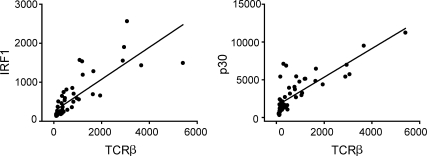
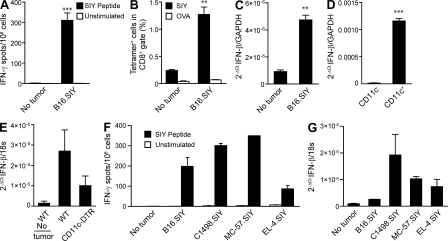
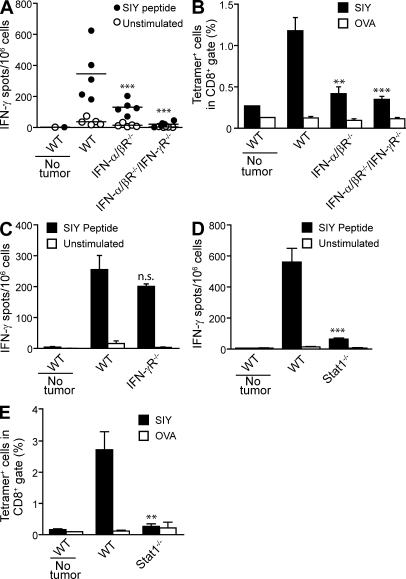
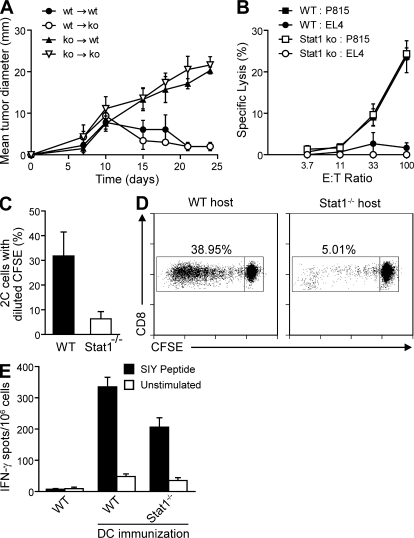
Despite lack of tumor control in many models, spontaneous T cell priming occurs frequently in response to a growing tumor. However, the innate immune mechanisms that promote natural antitumor T cell responses are undefined. In human metastatic melanoma, there was a correlation between a type I interferon (IFN) transcriptional profile and T cell markers in metastatic tumor tissue. In mice, IFN-β was produced by CD11c+ cells after tumor implantation, and tumor-induced T cell priming was defective in mice lacking IFN-α/βR or Stat1. IFN signaling was required in the hematopoietic compartment at the level of host antigen-presenting cells, and selectively for intratumoral accumulation of CD8α+ dendritic cells, which were demonstrated to be essential using Batf3−/− mice. Thus, host type I IFNs are critical for the innate immune recognition of a growing tumor through signaling on CD8α+ DCs.
Overview
The claims and statistics of this paper haven’t been checked yet.
Free: it reads the open-access text and checks the first 5 claims that cite a source we can check. Create a free account to check every claim.
Integrity signals
Registry
Cites
Statistics
Figures
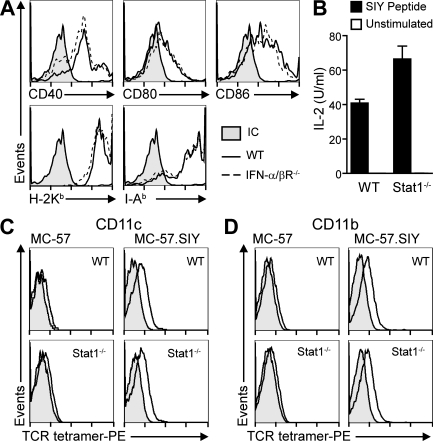
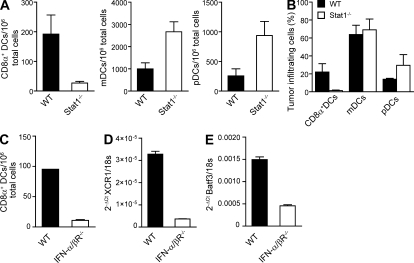
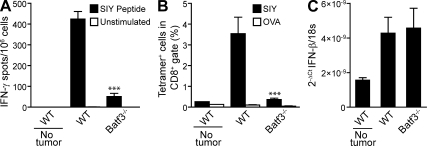
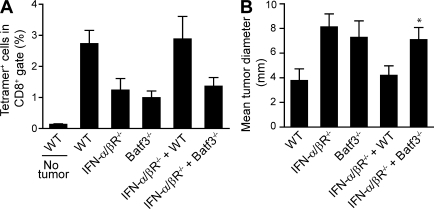
Verification
Claims the paper makes
The claims and statistics of this paper haven’t been checked yet.
Free: it reads the open-access text and checks the first 5 claims that cite a source we can check. Create a free account to check every claim.
Claims other papers make about this one
Each is checked against this paper’s own text: does it say what the citing paper says it does?
The source backs part of the claim, not all of it — or backs it for a different population, condition or comparison.
In the citing paper
“For instance, DCs secrete the chemoattractants chemokine (C‐X‐C motif) ligand 9 (CXCL9) and 10 (CXCL10) to facilitate the infiltration of CD8+ Teff cells in the TME and for T cell cytotoxic activity [15].”
From Tumor microenvironment signaling and therapeutics in cancer progression (2023) · cites this paper as [15]
Experimental — accuracy not yet measuredThe source backs part of the claim, not all of it — or backs it for a different population, condition or comparison.
In the citing paper
“Previous study showed that DC-specific Ifnar -/- mice were unble to reject highly immunogenic tumor cells due to the defects in antigen cross-presentation to CD8+ T cells.”
From mRNA vaccine with unmodified uridine induces robust type I interferon-dependent anti-tumor immunity in a melanoma model (2022) · cites this paper as [52]
Experimental — accuracy not yet measuredThe cited source says what the claim attributes to it.
In the citing paper
“This evidence strongly shows that IFN-I can act through DCs to promote T cell immunity (52).”
From mRNA vaccine with unmodified uridine induces robust type I interferon-dependent anti-tumor immunity in a melanoma model (2022) · cites this paper as [52]
The cited source says what the claim attributes to it.
In the citing paper
“multiple clinical observations have linked intratumoral presence of CD8+ T cells to a type-I interferon (IFN) transcriptional signature14–16.”
From Epigenetic state determines the in vivo efficacy of STING agonist therapy (2023) · cites this paper as [14]
Self-check
Percentages, sums and reported differences re-computed from the paper’s own numbers.
The self-check needs the paper’s full text.
Citations
Cites
Release of chromatin protein HMGB1 by necrotic cells triggers inflammation
Scaffidi, P., Misteli, T., & Bianchi, M. E. (2002) · Nature · doi:10.1038/nature00858 · Cited by 4,221 · cited 2×
“, 2003), HMGB1 (high-mobility-group box 1; Scaffidi et al., 2002), ATP (Haag et al.”
BackgroundHOW CELLS RESPOND TO INTERFERONS
Stark, G. R., Kerr, I. M., Williams, B. R. G., Silverman, R. H., & Schreiber, R. D. (1998) · Annual Review of Biochemistry · doi:10.1146/annurev.biochem.67.1.227 · Cited by 3,932 · cited 1×
“During various types of viral infection, type I IFNs induce the expression of an array of genes that act to prevent viral spread, thus creating an antiviral state (Stark et al., 1998).”
BackgroundInaba, K., Inaba, M., Romani, N., Aya, H., Deguchi, M., Ikehara, S., Muramatsu, S., & Steinman, R. M. (1992) · The Journal of experimental medicine · doi:10.1084/jem.176.6.1693 · Cited by 3,738 · cited 2×
“version of a published protocol (Inaba et al., 1992).”
MethodApetoh, L., Ghiringhelli, F., Tesniere, A., Obeid, M., Ortiz, C., Criollo, A., Mignot, G., Maiuri, M. C., Ullrich, E., Saulnier, P., et al. (2007) · Nature Medicine · doi:10.1038/nm1622 · Cited by 3,056
STING regulates intracellular DNA-mediated, type I interferon-dependent innate immunity
Ishikawa, H., Ma, Z., & Barber, G. N. (2009) · Nature · doi:10.1038/nature08476 · Cited by 2,759 · cited 2×
“…proteomics that the CD8+ DC subpopulation selectively lacks the receptors and signaling molecules (such as DAI [Takaoka et al., 2007] and Sting [Ishikawa et al., 2009]) required for the detection of nucleotides in the cytoplasm (Luber et al., 2010), so if this is indeed the pathway involved in…”
BackgroundNatural Innate and Adaptive Immunity to Cancer
Vesely, M. D., Kershaw, M. H., Schreiber, R. D., & Smyth, M. J. (2011) · Annual Review of Immunology · doi:10.1146/annurev-immunol-031210-101324 · Cited by 2,101 · cited 2×
“However, recent results have indicated that in many instances, spontaneous T cell responses against tumor antigens can be detected in both human cancer patients and in murine models, and that immune escape in those cases appears to occur through dominant inhibition by immunoregulatory pathways (Vesely et al., 2011).”
BackgroundResultBatf3 Deficiency Reveals a Critical Role for CD8α + Dendritic Cells in Cytotoxic T Cell Immunity
Hildner, K., Edelson, B. T., Purtha, W. E., Diamond, M., Matsushita, H., Kohyama, M., Calderon, B., Schraml, B. U., Unanue, E. R., Diamond, M. S., et al. (2008) · Science · doi:10.1126/science.1164206 · Cited by 2,081 · cited 4×
“Recent work has indicated that mice lacking the transcriptional regulator, Batf3, have a specific deficiency in the development of the CD8+ DC lineage (which includes a CD103+ DC subset; Hildner et al., 2008).”
BackgroundMethodInfluentialSelf-citationGhiringhelli, F., Apetoh, L., Tesniere, A., Aymeric, L., Ma, Y., Ortiz, C., Vermaelen, K., Panaretakis, T., Mignot, G., Ullrich, E., et al. (2009) · Nature Medicine · doi:10.1038/nm.2028 · Cited by 1,898 · cited 2×
“It has been recently demonstrated that after radiotherapy or chemotherapy, dying tumor cells can release HMGB1 that binds to TLR4 (Apetoh et al., 2007) and ATP that activates the NALP3 inflammasome (Ghiringhelli et al., 2009).”
BackgroundJung, S., Unutmaz, D., Wong, P., Sano, G.-I., De los Santos, K., Sparwasser, T., Wu, S., Vuthoori, S., Ko, K., Zavala, F., et al. (2002) · Immunity · doi:10.1016/s1074-7613(02)00365-5 · Cited by 1,773 · cited 2×
“CD11c-DTR mice (Jung et al., 2002) were provided by D. Littman (New York University School of Medicine, New York, NY).”
MethodHow dying cells alert the immune system to danger
Kono, H., & Rock, K. L. (2008) · Nature Reviews Immunology · doi:10.1038/nri2215 · Cited by 1,737 · cited 10×
“Recently, it has been shown that dsDNA can be released from necrotic cells, reach the cytoplasm of APCs, and be recognized by a TLR-independent on January 17, 2012 jem .rupress.org D ow nloaded from JEM Vol. 208, No. 10 Article 2013 of type I IFNs, which are already FDA approved for other indications, in order to prom…”
BackgroundInfluential
Cited by
Items 201–300 of 1,000
Interferons in cancer immunoediting: sculpting metastasis and immunotherapy response
von Locquenghien, M., Rozalén, C., & Celià-Terrassa, T. (2021) · Journal of Clinical Investigation · doi:10.1172/jci143296 · Cited by 150
“, CD80 and CD86), and other immunomodulatory ISGs in DCs (4, 54), which promote activation and cytotoxicity of CD8+ T cells (55, 56) and differentiation of CD4+ T cells into Th1 cells (57).”
BackgroundSTING licensing of type I dendritic cells potentiates antitumor immunity
Wang, J., Li, S., Wang, M., Wang, X., Chen, S., Sun, Z., Ren, X., Huang, G., Sumer, B. D., Yan, N., et al. (2024) · Science Immunology · doi:10.1126/sciimmunol.adj3945 · Cited by 156
“Collectively, these data indicate that the host STING–IFN-I signaling is essential in PolySTING-mediated immunity against MC38 tumors.”
BackgroundLu, C., Klement, J. D., Ibrahim, M. L., Xiao, W. L., Redd, P. S., Nayak-Kapoor, A., Zhou, G., & Liu, K. (2019) · Journal for ImmunoTherapy of Cancer · doi:10.1186/s40425-019-0635-8 · Cited by 157
Dexosomes as a cell-free vaccine for cancer immunotherapy
Nikfarjam, S., Rezaie, J., Kashanchi, F., & Jafari, R. (2020) · Journal of Experimental & Clinical Cancer Research · doi:10.1186/s13046-020-01781-x · Cited by 157
“I IFN, pDCs trigger antigen cross-presentation and CD8 CTL antitumor immune response [44, 45].”
BackgroundZamarin, D., Holmgaard, R. B., Ricca, J., Plitt, T., Palese, P., Sharma, P., Merghoub, T., Wolchok, J. D., & Allison, J. P. (2017) · Nature Communications · doi:10.1038/ncomms14340 · Cited by 139
Radiation therapy-induced remodeling of the tumor immune microenvironment
Charpentier, M., Spada, S., Nest, S. J. V., & Demaria, S. (2022) · Seminars in Cancer Biology · doi:10.1016/j.semcancer.2022.04.003 · Cited by 160
Type I and II Interferons in the Anti-Tumor Immune Response
Fenton, S. E., Saleiro, D., & Platanias, L. C. (2021) · Cancers · doi:10.3390/cancers13051037 · Cited by 161
Stimulation of In Vivo Antitumor Immunity with Hollow Mesoporous Silica Nanospheres
Wang, X., Li, X., Ito, A., Watanabe, Y., Sogo, Y., Tsuji, N. M., & Ohno, T. (2015) · Angewandte Chemie International Edition · doi:10.1002/anie.201506179 · Cited by 138
STING, DCs and the link between innate and adaptive tumor immunity
Vatner, R. E., & Janssen, E. M. (2017) · Molecular Immunology · doi:10.1016/j.molimm.2017.12.001 · Cited by 148
“In human patients with metastatic melanoma, metastatic lesions infiltrated with T cells are characterized by an IFN gene signature (Fuertes et al., 2011; Harlin et al., 2009) .”
BackgroundInfluentialOba, T., Long, M. D., Keler, T., Marsh, H. C., Minderman, H., Abrams, S. I., Liu, S., & Ito, F. (2020) · Nature Communications · doi:10.1038/s41467-020-19192-z · Cited by 147
Context-dependent functions of pattern recognition receptors in cancer
Man, S. M., & Jenkins, B. J. (2022) · Nature reviews. Cancer · doi:10.1038/s41568-022-00462-5 · Cited by 151
Emerging strategies in targeting tumor-resident myeloid cells for cancer immunotherapy
Wang, Y., Johnson, K. C. C., Gatti-Mays, M. E., & Li, Z. (2022) · Journal of Hematology & Oncology · doi:10.1186/s13045-022-01335-y · Cited by 138
Cross-priming in cancer immunology and immunotherapy
Luri‐Rey, C., Teijeira, Á., Wculek, S. K., de Andrea, C. E., Herrero, C., López‐Janeiro, Á., Rodriguez-Ruiz, M. E., Heras‐Murillo, I., Aggelakopoulou, M., Berraondo, P., et al. (2025) · Nature reviews. Cancer · doi:10.1038/s41568-024-00785-5 · Cited by 166
Balancing the innate immune system in tumor development
Hagerling, C., Casbon, A.-J., & Werb, Z. (2015) · Trends in Cell Biology · doi:10.1016/j.tcb.2014.11.001 · Cited by 133
Listeria monocytogenes as a Vector for Cancer Immunotherapy: Current Understanding and Progress
Flickinger, J. C., Rodeck, U., & Snook, A. E. (2018) · Vaccines · doi:10.3390/vaccines6030048 · Cited by 151
“Importantly, IFN-β and activation of the STING pathway improve the priming of CD8+ T cells in the tumor microenvironment, leading to potent antitumor responses [25,26].”
BackgroundRIG-I activation is critical for responsiveness to checkpoint blockade
Heidegger, S. M., Wintges, A., Stritzke, F., Bek, S., Steiger, K., Koenig, P.-A., Göttert, S., Engleitner, T., Öllinger, R., Nedelko, T., et al. (2019) · Science Immunology · doi:10.1126/sciimmunol.aau8943 · Cited by 142
Holíček, P., Guilbaud, E., Klapp, V., Truxová, I., Špíšek, R., Galluzzi, L., & Fucikova, J. P. (2023) · Immunological Reviews · doi:10.1111/imr.13272 · Cited by 159
IFN-α in the Treatment of Melanoma
Tarhini, A. A., Gogas, H., & Kirkwood, J. M. (2012) · The Journal of Immunology · doi:10.4049/jimmunol.1290060 · Cited by 133
“More interesting, this is consistent with the data that suggest that a type I IFN signature is associated with an effector immune response to cancer, specifically in murine and human melanoma (26).”
BackgroundResultImmunogenomic Classification of Colorectal Cancer and Therapeutic Implications
Roelands, J. P., Kuppen, P. J. K., Vermeulen, L., Maccalli, C., Decock, J. V., Wang, E., Marincola, F. M., Bedognetti, D., & Hendrickx, W. (2017) · International Journal of Molecular Sciences · doi:10.3390/ijms18102229 · Cited by 151
The abscopal effect 67 years later: from a side story to center stage
Demaria, S., & Formenti, S. C. (2020) · British Journal of Radiology · doi:10.1259/bjr.20200042 · Cited by 149
Innate immune mediators in cancer: between defense and resistance
Berraondo, P., Minute, L., Ajona, D., Corrales, L. P., Melero, I., & Pío, R. (2016) · Immunological Reviews · doi:10.1111/imr.12464 · Cited by 147
The immuno-oncological challenge of COVID-19
Derosa, L., Melenotte, C., Griscelli, F., Gachot, B., Marabelle, A., Kroemer, G., & Zitvogel, L. (2020) · Nature Cancer · doi:10.1038/s43018-020-00122-3 · Cited by 149
Toll-Like Receptor 9 Agonists in Cancer
Karapetyan, L., Luke, J. J., & Davar, D. (2020) · OncoTargets and Therapy · doi:10.2147/ott.s247050 · Cited by 147
Griffiths, K., Ahmed, M., Das, S., Gopal, R., Horne, W. T., Connell, T. D., Moynihan, K. D., Kolls, J. K., Irvine, D. J., Artyomov, M. N., et al. (2016) · Nature Communications · doi:10.1038/ncomms13894 · Cited by 132
Mittal, D., Vijayan, D., Putz, E. M., Aguilera, A. R., Markey, K. A., Straube, J., Kazakoff, S., Nutt, S. L., Takeda, K., Hill, G. R., et al. (2017) · Cancer Immunology Research · doi:10.1158/2326-6066.cir-17-0341 · Cited by 130
“Increased metastasis in Batf3-deficient mice is NK-cell dependent Most of the phenotype of Batf3 mice has previously been attributed to the poor priming, activation, and functionofCD8þT lymphocytes (7, 26).”
BackgroundZhang, C.-X., Ye, S., Ni, J., Cai, T., Liu, Y.-N., Huang, D.-J., Mai, H., Chen, Q.-Y., He, J., Zhang, X.-S., et al. (2019) · Cell Death and Differentiation · doi:10.1038/s41418-019-0302-0 · Cited by 138
Chen, W., Teo, J. M. N., Yau, S. W., Wong, M. Y., Lok, C., Che, C., Javed, A., Huang, Y., Ma, S., & Ling, G. S. (2022) · Cell Reports · doi:10.1016/j.celrep.2022.111647 · Cited by 146
Zhang, Y., Sun, Y., Rao, E., Yan, F., Li, Q., Zhang, Y., Silverstein, K. A. T., Liu, S., Sauter, E., Cleary, M. P., et al. (2014) · Cancer Research · doi:10.1158/0008-5472.can-13-2689 · Cited by 129
Type I Interferons and Cancer: An Evolving Story Demanding Novel Clinical Applications
Aricò, E., Castiello, L., Capone, I., Gabriele, L., & Belardelli, F. (2019) · Cancers · doi:10.3390/cancers11121943 · Cited by 139
“An ensemble of data published over the last two decades have shown that IFN-I are important factors for inducing a rapid differentiation and activation of DC in both mouse and human models (reviewed in [43]) and that IFN-DC interactions can play key roles in the antitumor immune response [46,47].”
MethodEngineering interferons and interleukins for cancer immunotherapy
Holder, P. G., Lim, S. A., Huang, C., Sharma, P. A., Dagdas, Y. S., Bulutoglu, B., & Sockolosky, J. T. (2022) · Advanced Drug Delivery Reviews · doi:10.1016/j.addr.2022.114112 · Cited by 139
Type I interferons and dendritic cells in cancer immunotherapy
(2019) · International Review of Cell and Molecular Biology · doi:10.1016/bs.ircmb.2019.06.001 · Cited by 124
Oweida, A. J., Lennon, S., Calame, D. J., Korpela, S. P., Bhatia, S., Sharma, J., Graham, C., Binder, D. C., Serkova, N. J., Raben, D., et al. (2017) · OncoImmunology · doi:10.1080/2162402x.2017.1356153 · Cited by 138
Grabowska, J. A., Venegas, M. L., Affandi, A. J., & den Haan, J. M. M. (2018) · Frontiers in Immunology · doi:10.3389/fimmu.2018.02472 · Cited by 150
Darragh, L. B., Oweida, A. J., & Karam, S. D. (2019) · Frontiers in Immunology · doi:10.3389/fimmu.2018.03154 · Cited by 141
Beyond cDC1: Emerging Roles of DC Crosstalk in Cancer Immunity
Noubade, R., Majri-Morrison, S. S., & Tarbell, K. V. (2019) · Frontiers in Immunology · doi:10.3389/fimmu.2019.01014 · Cited by 146
“I IFN is critical for proper functioning of cDC1s (85) and cDC2s are one of the important sources of this cytokine, as shown by depletion of pDCs using anti-pDCA antibodies in Batf3-deficient mice (84).”
BackgroundOncolytic virus-derived type I interferon restricts CAR T cell therapy
Evgin, L., Huff, A. L., Wongthida, P., Thompson, J., Kottke, T., Tonne, J., Schuelke, M., Ayasoufi, K., Driscoll, C. B., Shim, K. G., et al. (2020) · Nature Communications · doi:10.1038/s41467-020-17011-z · Cited by 128
Myeloid-Derived Cells in Tumors: Effects of Radiation
Vatner, R. E., & Formenti, S. C. (2014) · Seminars in Radiation Oncology · doi:10.1016/j.semradonc.2014.07.008 · Cited by 142
Dai, P., Wang, W., Yang, N., Serna-Tamayo, C., Ricca, J. M., Zamarin, D., Shuman, S., Merghoub, T., Wolchok, J. D., & Deng, L. (2017) · Science Immunology · doi:10.1126/sciimmunol.aal1713 · Cited by 125
“Spontaneous tumor-specific T cell priming is also defective in IFNAR1-deficient mice (5, 6).”
BackgroundDendritic Cells: Arbiters of Immunity and Immunological Tolerance
Lewis, K. L., & Reizis, B. (2012) · Cold Spring Harbor Perspectives in Biology · doi:10.1101/cshperspect.a007401 · Cited by 125
“Recent data suggest that endogenous DCs play an important role in antitumor immunity (Diamond et al. 2011; Fuertes et al. 2011), and that they may be functionally impaired by immunoevasive tumors (Engelhardt et al.”
BackgroundCancer Immunotherapy via Dendritic Cells
Palucka, K., & Banchereau, J. (2013) · Springer eBooks · doi:10.1007/978-3-7091-1300-4_4 · Cited by 128
Chromosomal instability as a driver of cancer progression
Chen, X., Agustinus, A. S., Li, J., Bona, M. D., & Bakhoum, S. F. W. (2024) · Nature Reviews Genetics · doi:10.1038/s41576-024-00761-7 · Cited by 176
Cytosolic sensing of immuno-stimulatory DNA, the enemy within
Dhanwani, R., Takahashi, M., & Sharma, S. (2018) · Current Opinion in Immunology · doi:10.1016/j.coi.2017.11.004 · Cited by 123
De Beuckelaer, A., Pollard, C., Van Lint, S., Roose, K., Van Hoecke, L., Naessens, T., Udhayakumar, V. K., Smet, M., Sanders, N., Lienenklaus, S., et al. (2016) · Molecular Therapy · doi:10.1038/mt.2016.161 · Cited by 122
Targeting dendritic cells—why bother?
Kreutz, M., Tacken, P. J., & Figdor, C. G. (2013) · Blood · doi:10.1182/blood-2012-09-452078 · Cited by 138
Broos, K., Van der Jeught, K., Puttemans, J., Goyvaerts, C., Heirman, C., Dewitte, H., Verbeke, R., Lentacker, I., Thielemans, K., & Breckpot, K. (2016) · Molecular Therapy — Nucleic Acids · doi:10.1038/mtna.2016.38 · Cited by 121
Guillerme, J.-B., Boisgerault, N., Roulois, D., Ménager, J., Combredet, C., Tangy, F., Fonteneau, J., & Grégoire, M. (2013) · Clinical Cancer Research · doi:10.1158/1078-0432.ccr-12-2733 · Cited by 151
Investigating Evolutionary Conservation of Dendritic Cell Subset Identity and Functions
Vu Manh, T.-P., Bertho, N., Hosmalin, A., Schwartz-Cornil, I., & Dalod, M. (2015) · Frontiers in Immunology · doi:10.3389/fimmu.2015.00260 · Cited by 119
“achieved in mice XCR1 cDC are critical for anti-tumoral responses in mice (72, 121, 152, 153).”
BackgroundExercise in Regulation of Inflammation-Immune Axis Function in Cancer Initiation and Progression.
Koelwyn, G. J., Wennerberg, E., Demaria, S., & Jones, L. W. (2015) · PubMed · Cited by 162
Targeting tumor-necrosis factor receptor pathways for tumor immunotherapy
Schaer, D. A., Hirschhorn-Cymerman, D., & Wolchok, J. D. (2014) · Journal for ImmunoTherapy of Cancer · doi:10.1186/2051-1426-2-7 · Cited by 119
“The host response to tumors has been well described [6-9].”
BackgroundDendritic cell subsets require cis-activation for cytotoxic CD8 T-cell induction
Desch, A. N., Gibbings, S. L., Clambey, E. T., Janssen, W. J., Slansky, J. E., Kedl, R. M., Henson, P. M., & Jakubzick, C. (2014) · Nature Communications · doi:10.1038/ncomms5674 · Cited by 118
Takeda, Y., Kataoka, K., Yamagishi, J., Ogawa, S., Seya, T., & Matsumoto, M. (2017) · Cell Reports · doi:10.1016/j.celrep.2017.05.015 · Cited by 118
Carozza, J. A., Brown, J. A., Böhnert, V., Fernández, D., AlSaif, Y., Mardjuki, R. E., Smith, M. A., & Li, L. (2020) · Cell chemical biology · doi:10.1016/j.chembiol.2020.07.007 · Cited by 121
Targeting Innate Immunity in Cancer Therapy
Rameshbabu, S., Labadie, B. W., Argulian, A., & Patnaik, A. (2021) · Vaccines · doi:10.3390/vaccines9020138 · Cited by 129
Role of inflammatory dendritic cells in innate and adaptive immunity
Hespel, C., & Moser, M. (2012) · European Journal of Immunology · doi:10.1002/eji.201242480 · Cited by 153
Inverse cancer comorbidity: a serendipitous opportunity to gain insight into CNS disorders
Tabarés‐Seisdedos, R., & Rubenstein, J. L. R. (2013) · Nature reviews. Neuroscience · doi:10.1038/nrn3464 · Cited by 129
Everts, B., Tussiwand, R., Dreesen, L., Fairfax, K. C., Huang, S. C.-C., Smith, A. M., O’Neill, C. M., Lam, W. Y., Edelson, B. T., Urban, J. F., et al. (2016) · Journal of Experimental Medicine · doi:10.1084/jem.20150235 · Cited by 117
“…Batf3−/− mice have demonstrated that CD8α+ and CD103+ DCs have superior Ag cross-presenting capabilities and as a result play a critical role in antiviral and antitumor immunity through the generation of cytotoxic T cell responses (Hildner et al., 2008; Fuertes et al., 2011; Zelenay et al., 2012).”
BackgroundSelf-citationProspects for combined use of oncolytic viruses and CAR T-cells
Ajina, A., & Maher, J. (2017) · Journal for ImmunoTherapy of Cancer · doi:10.1186/s40425-017-0294-6 · Cited by 116
Ma, F., Lei, Y., Ding, M.-G., Luo, L., Xie, Y., & Liu, X. (2020) · Frontiers in Genetics · doi:10.3389/fgene.2020.00250 · Cited by 127
“…cGAS/STING Signaling and Induces Downstream Expression of CXCL10, CCL5, and IFNβ Given that type I IFN signaling is necessary for the generation of CD8+ T cell responses against tumors (Fuertes et al., 2011), the chemokines and IFNβ mRNA and protein expression were examined in tumor cell lines.”
BackgroundPharmacological Modulation of the STING Pathway for Cancer Immunotherapy
Berger, G., Marloye, M., & Lawler, S. E. (2019) · Trends in Molecular Medicine · doi:10.1016/j.molmed.2019.02.007 · Cited by 111
“This ispredominately induced by CD11c DCs within the TME, which in turn promotes intratumoral accumulation of CD8a + DCs and finally leads to the activation of CD8 T cells [79].”
BackgroundDendritic cells and cancer immunotherapy
Radford, K. J., Tullett, K. M., & Lahoud, M. H. (2014) · Current Opinion in Immunology · doi:10.1016/j.coi.2014.01.005 · Cited by 121
Turning tumors from cold to inflamed to improve immunotherapy response
Gerard, C. L., Delyon, J., Wicky, A. M., Homicskó, K., Cuendet, M. A., & Michielin, O. A. (2021) · Cancer Treatment Reviews · doi:10.1016/j.ctrv.2021.102227 · Cited by 131
Development, Diversity, and Function of Dendritic Cells in Mouse and Human
Anderson, D. A., MURPHY, K. M. M., & Briseño, C. G. (2017) · Cold Spring Harbor Perspectives in Biology · doi:10.1101/cshperspect.a028613 · Cited by 125
“In models of viral infection and tumor rejection, the action of type I IFN on cDCs was required for optimal CD8 T-cell priming and Th1-cell polarization (Brewitz et al. 2017; Diamond et al. 2011; Fuertes et al. 2011).”
BackgroundSelf-citationLiu, Y., Wang, L., Song, Q., Ali, M., Crowe, W. N., Kucera, G. L., Hawkins, G. A., Söker, S., Thomas, K. W., Miller, L. D., et al. (2021) · Nature Nanotechnology · doi:10.1038/s41565-021-01032-w · Cited by 125
Genetic Engineering of Hematopoiesis for Targeted IFN-α Delivery Inhibits Breast Cancer Progression
Escobar, G., Moi, D., Ranghetti, A., Ozkal-Baydin, P., Squadrito, M. L., Kajaste-Rudnitski, A., Bondanza, A., Gentner, B., De Palma, M., Mazzieri, R., et al. (2014) · Science Translational Medicine · doi:10.1126/scitranslmed.3006353 · Cited by 113
“S15) to enhance costimulation and cross-presentation of tumor antigens, resulting in more effective induction of T cell responses (6, 7).”
BackgroundSTING, the Endoplasmic Reticulum, and Mitochondria: Is Three a Crowd or a Conversation?
Smith, J. A. (2021) · Frontiers in Immunology · doi:10.3389/fimmu.2020.611347 · Cited by 122
“IFN promotes maturation and antigen presentation by CD8a+ dendritic cells (DC) and thus priming and activation of tumor infiltrating CD8 T cells and Natural Killer (NK) cells (49, 105).”
BackgroundTREX1 dictates the immune fate of irradiated cancer cells
Vanpouille‐Box, C., Formenti, S. C., & Demaria, S. (2017) · OncoImmunology · doi:10.1080/2162402x.2017.1339857 · Cited by 120
“Conditional silencing of cGAS or STING in the cancer cells at the irradiated tumor site demonstrated that cancer-cell cGAS/STING pathway activation was essential for the RT-driven initiation of systemic antitumor immunity via the recruitment of BATF3-dependent dendritic cells (DCs) to the tumor, a DC subset well-known…”
BackgroundA minimal RNA ligand for potent RIG-I activation in living mice
Linehan, M. M., Dickey, T. H., Molinari, E. S., Fitzgerald, M. E., Potapova, O., Iwasaki, A., & Pyle, A. M. (2018) · Science Advances · doi:10.1126/sciadv.1701854 · Cited by 110
Qiu, J., Xu, B., Ye, D., Ren, D., Wang, S., Benci, J. L., Xu, Y., Ishwaran, H., Beltra, J., Wherry, E. J., et al. (2023) · Nature Cancer · doi:10.1038/s43018-022-00490-y · Cited by 174
Type I Interferons Modulate CD8 + T Cell Immunity to mRNA Vaccines
Beuckelaer, A. D., Grooten, J., & Koker, S. D. (2017) · Trends in Molecular Medicine · doi:10.1016/j.molmed.2017.01.006 · Cited by 122
Roles of the cGAS-STING Pathway in Cancer Immunosurveillance and Immunotherapy
Yum, S., Li, M., Frankel, A. E., & Chen, Z. J. (2019) · Annual Review of Cancer Biology · doi:10.1146/annurev-cancerbio-030518-055636 · Cited by 105
“STING activation–induced cell death is not common, but specific cell lines are vulnerable, as a recent study showed that STING activation can induce lysosomal cell death in human myeloid cells (Gaidt et al. 2017).”
BackgroundSisirak, V., Vey, N., Goutagny, N., Renaudineau, S., Malfroy, M., Thys, S., Treilleux, I., Labidi‐Galy, S. I., Bachelot, T., Dezutter‐Dambuyant, C., et al. (2013) · International Journal of Cancer · doi:10.1002/ijc.28072 · Cited by 128
Katlinskaya, Y. V., Katlinski, K. V., Yu, Q., Ortiz, A., Beiting, D. P., Brice, A., Davar, D., Sanders, C., Kirkwood, J. M., Rui, H., et al. (2016) · Cell Reports · doi:10.1016/j.celrep.2016.03.006 · Cited by 108
“Although growth of transplanted melanoma tumors was modestly (if at all) stimulated in Ifnar1−/− mice (Bald et al., 2014; Fuertes et al., 2011; Nunez et al., 2012), ablation of Ifnar1 in Hgf-Cdk4 R24C mice did not accelerate development of cutaneous melanoma induced by 7,12-…”
BackgroundResultDichotomous roles of TGF-β in human cancer
Huang, J. J., & Blobe, G. C. (2016) · Biochemical Society Transactions · doi:10.1042/bst20160065 · Cited by 123
Mechanisms of Tumor Cell–Intrinsic Immune Evasion
Spranger, S., & Gajewski, T. F. (2018) · Annual Review of Cancer Biology · doi:10.1146/annurev-cancerbio-030617-050606 · Cited by 108
“This observation is consistent with the critical importance of Batf3 DCs in the cross-presentation of tumor-derived antigens to CD8+ T cells in vivo (Engelhardt et al. 2012, Fuertes et al. 2011, Hildner et al. 2008).”
ResultSelf-citationWang, S., Xiong, Y., Zhang, Q., Su, D., Yu, C., Cao, Y., Pan, Y., Lu, Q., Zuo, Y., & Yang, L. (2020) · Briefings in Bioinformatics · doi:10.1093/bib/bbaa311 · Cited by 140
Mechanisms of Immune Tolerance in Leukemia and Lymphoma
Curran, E. K., Godfrey, J. K., & Kline, J. P. (2017) · Trends in Immunology · doi:10.1016/j.it.2017.04.004 · Cited by 128
Self-citationLeuzzi, G., Vasciaveo, A., Taglialatela, A., Chen, X., Firestone, T. M., Hickman, A. R., Mao, W., Thakar, T., Vaitsiankova, A., Huang, J., et al. (2024) · Cell · doi:10.1016/j.cell.2024.01.008 · Cited by 116
Cao, X., Liang, Y., Hu, Z., Li, H., Yang, J., Hsu, E. J., Zhu, J., Zhou, J., & Fu, Y. (2021) · Nature Communications · doi:10.1038/s41467-021-26112-2 · Cited by 111
cGAS-STING pathway mediates activation of dendritic cell sensing of immunogenic tumors
Li, G., Zhao, X., Zheng, Z., Zhang, H., Wu, Y., Shen, Y., & Chen, Q. (2024) · Cellular and Molecular Life Sciences · doi:10.1007/s00018-024-05191-6 · Cited by 121
Regression in primary cutaneous melanoma: etiopathogenesis and clinical significance
Aung, P. P., Nagarajan, P., & Prieto, V. G. (2017) · Laboratory Investigation · doi:10.1038/labinvest.2017.8 · Cited by 117
Transcriptional Control of Dendritic Cell Development
MURPHY, K. M. M. (2013) · Advances in immunology · doi:10.1016/b978-0-12-417028-5.00009-0 · Cited by 112
Self-citationXia, X., Mai, J., Xu, R., Perez, J. E. T., Guevara, M. L., Shen, Q., Mu, C., Tung, H.-Y., Corry, D. B., Evans, S. E., et al. (2015) · Cell Reports · doi:10.1016/j.celrep.2015.04.009 · Cited by 103
“Increased levels of IFN-I have been reported to correlate favorablywith clinical immune responses against cancer (Fuertes et al., 2011), and intra-tumor IFN-I levels were shown to predict the clinical responses of breast cancer patients to anthracycline-based chemotherapy (Sistigu et al., 2014).”
Iraolagoitia, X. L. R., Spallanzani, R. G., Torres, N. I., Araya, R. E., Ziblat, A., Domaica, C. I., Sierra, J. M., Núñez, S. Y., Secchiari, F., Gajewski, T. F., et al. (2016) · The Journal of Immunology · doi:10.4049/jimmunol.1502291 · Cited by 107
“Considering that IFN-b produced by DCs early during an antitumor immune response is critical for priming of CD8 T cells (42), expression of this cytokine also was examined.”
BackgroundSelf-citationTargeting innate sensing in the tumor microenvironment to improve immunotherapy
Liu, Z., Han, C., & Fu, Y. (2019) · Cellular and Molecular Immunology · doi:10.1038/s41423-019-0341-y · Cited by 112
Ultraviolet Radiation and Melanomagenesis: From Mechanism to Immunotherapy
Sun, X., Zhang, N., Yin, C., Zhu, B., & Li, X. (2020) · Frontiers in Oncology · doi:10.3389/fonc.2020.00951 · Cited by 124
Ottensmeier, C. H., Perry, K. L., Harden, E. L., Stasakova, J., Jenei, V., Fleming, J., Wood, O., Woo, J., Woelk, C. H., Thomas, G. J., et al. (2016) · Cancer Research · doi:10.1158/0008-5472.can-15-3121 · Cited by 99
“These include lack of chemokinemediated trafficking (6), poor innate immune cell activation (7), and the presence of specific immunosuppressive populations, such as Foxp3þ regulatory T cells andmyeloid-derived suppressor cells (8, 9).”
BackgroundNewcastle Disease Virus at the Forefront of Cancer Immunotherapy
Burman, B., Pesci, G., & Zamarin, D. (2020) · Cancers · doi:10.3390/cancers12123552 · Cited by 114
“Recognition of PAMPs and DAMPs by PRRs leads to the activation of transcription factors including IFN regulatory factor (IRF)3, IRF7, and nuclear factor kappa B via the adaptors interferon β stimulator-1 and stimulator of interferon genes (STING) [44].”
BackgroundInfluentialPatel, R. R., He, K., Barsoumian, H. B., Chang, J. Y., Tang, C. Z., Verma, V., Comeaux, N. I., Chun, S. G., Gandhi, S. J., Truong, M. T., et al. (2021) · Radiotherapy and Oncology · doi:10.1016/j.radonc.2021.06.037 · Cited by 113
Guo, Z., Li, Y., Zhang, D., & Ma, J. (2017) · Oncotarget · doi:10.18632/oncotarget.21125 · Cited by 110
cGAS-STING pathway in oncogenesis and cancer therapeutics
Hoong, B. Y. D., Gan, Y., Liu, H., & Chen, E. S. (2020) · Oncotarget · doi:10.18632/oncotarget.27673 · Cited by 109
Lo, J. A., Kawakubo, M., Juneja, V. R., Su, M. Y., Erlich, T. H., LaFleur, M. W., Kemeny, L. V., Rashid, M., Malehmir, M., Rabi, S. A., et al. (2021) · Science Translational Medicine · doi:10.1126/scitranslmed.abd8636 · Cited by 97
Immunotherapy of cancers comes of age
Yousefi, H., Yuan, J. D., Keshavarz‐Fathi, M., Murphy, J. F., & Rezaei, N. (2017) · Expert Review of Clinical Immunology · doi:10.1080/1744666x.2017.1366315 · Cited by 107
“The majority of efforts in animal models with spontaneous tumors have demonstrated that the presentation of tumor antigens by DCs resurge the potential antitumor response of immune system [176,177].”
BackgroundSexual Dimorphism of Immune Responses: A New Perspective in Cancer Immunotherapy
Capone, I., Marchetti, P., Ascierto, P. A., Malorni, W., & Gabriele, L. (2018) · Frontiers in Immunology · doi:10.3389/fimmu.2018.00552 · Cited by 114
Ho, W. W., Gomes-Santos, I. L., Aoki, S., Datta, M., Kawaguchi, K., Talele, N. P., Roberge, S., Ren, J. P., Liu, H., Chen, I. X., et al. (2021) · Proceedings of the National Academy of Sciences · doi:10.1073/pnas.2105323118 · Cited by 102
“Dendritic cells (43) IFN-α treatment Dendritic cells, CD8 T cells "; CD4FOXP3 T cells unchanged (SL4) Improved survival (SL4 and CT26) IFN-α+ICB not better than IFN-α alone (SL4 and CT26) Fig.”
BackgroundDecoding immunogenic cell death from a dendritic cell perspective
Janssens, S., Rennen, S., & Agostinis, P. (2023) · Immunological Reviews · doi:10.1111/imr.13301 · Cited by 114
Prostanoid induces premetastatic niche in regional lymph nodes
Ogawa, F., Amano, H., Eshima, K., Ito, Y., Matsui, Y., Hosono, K., Kitasato, H., Iyoda, A., Iwabuchi, K., Kumagai, Y., et al. (2014) · Journal of Clinical Investigation · doi:10.1172/jci73530 · Cited by 100
STING Signaling in Melanoma Cells Shapes Antigenicity and Can Promote Antitumor T-cell Activity
Falahat, R., Perez-Villarroel, P., Mailloux, A. W., Zhu, G., Pilon-Thomas, S., Barber, G. N., & Mulé, J. J. (2019) · Cancer Immunology Research · doi:10.1158/2326-6066.cir-19-0229 · Cited by 95
Epigenetic state determines the in vivo efficacy of STING agonist therapy
Falahat, R., Berglund, A., Perez-Villarroel, P., Putney, R. M., Hamaidi, I., Kim, S., Pilon-Thomas, S., Barber, G. N., & Mulé, J. J. (2023) · Nature Communications · doi:10.1038/s41467-023-37217-1 · Cited by 94
Lymphatic Vessels, Inflammation, and Immunity in Skin Cancer
Lund, A. W., Medler, T. R., Leachman, S. A., & Coussens, L. M. (2016) · Cancer Discovery · doi:10.1158/2159-8290.cd-15-0023 · Cited by 104
Radiation Therapy and the In Situ Vaccination Approach
Golden, E. B., Marciscano, A. E. E., & Formenti, S. C. (2020) · International Journal of Radiation Oncology*Biology*Physics · doi:10.1016/j.ijrobp.2020.08.023 · Cited by 102
Metadata
- Authors
- Fuertes, M. B., Kacha, A. K., Kline, J., Woo, S.-R., Kranz, D. M., Murphy, K. M., & Gajewski, T. F.
- Affiliations
- University of Chicago (US)
- University of Illinois Urbana-Champaign (US)
- Washington University in St. Louis (US)
- Corresponding author
- Gajewski, Thomas F.
- ORCID
- Venue
- Journal of Experimental Medicine
- Publisher
- Rockefeller University Press
- Published
- 2011-09-19
- Volume
- 208
- Issue
- 10
- Pages
- 2005-2016
- ISSN
- 0022-1007 (ISSN-L)
- 1540-9538
- PMC
- PMC3182064
- OpenAlex
- W2143523733
- Cited by
- 1,192
- References
- 60
- Citations by year
- 2026: 56 · 2025: 67 · 2024: 94 · 2023: 114 · 2022: 102 · 2021: 115 · 2020: 102 · 2019: 100 · 2018: 74 · 2017: 91 · 2016: 71 · 2015: 67 · 2014: 53 · 2013: 54 · 2012: 31
- FWCI
- 19.73
- Type
- journal article
- Language
- en
- Open access
- bronze
- doi.org
- Locations
- The Journal of Experimental Medicine (publishedVersion)
- Europe PMC (PubMed Central) (publishedVersion, cc-by-nc-sa)
- PubMed Central (publishedVersion, cc-by-nc-sa)
- PubMed (publishedVersion)
- Digital Commons@Becker (Washington University School of Medicine) (submittedVersion)
- LA Referencia (Red Federada de Repositorios Institucionales de Publicaciones Científicas) (submittedVersion, other-oa)
- Americanae (AECID Library) (submittedVersion, cc-by-nc-sa)
- Funders
- University of Chicago
- Wellcome Trust
- National Cancer Institute (P01CA97296, P01CA097296)
- Topics
- Life Sciences › Immunology and Microbiology › Immunology › Immunotherapy and Immune Responses
- Health Sciences › Medicine › Oncology › Cancer Immunotherapy and Biomarkers
- Life Sciences › Immunology and Microbiology › Immunology › interferon and immune responses
- Keywords
- type I interferon, antitumor immunity, CD8+ T cell responses, CD8α+ dendritic cells, CD11c+ antigen-presenting cells, interferon-beta, IFN-alpha/beta receptor, STAT1, Batf3, melanoma, host innate immunity
- MeSH terms
- Animals, Dendritic Cells, Humans, Immunity, Innate, Interferon Type I, Lymph Nodes, Lymphatic Metastasis, Melanoma, Mice, Inbred C57BL, Signal Transduction, Lymphocyte Subsets, Mice, Knockout, CD8-Positive T-Lymphocytes, Cell Line, Tumor, STAT1 Transcription Factor, Mice
About these checks
Registry, retraction, Cites and statistics results are computed, not judged, with one exception: a printed reference that no index lists is read once by a model before it counts as a citation error. Claims are extracted by a model and kept only when their quote appears verbatim in the text; each cited source is then checked, with a model’s help, for whether it says what the claim relies on. Those verdicts can be wrong — read the claim’s quote and the cited source before relying on one.
Statistics and arithmetic are recomputed, not judged.
Confidence bands are shown only for fields calibrated on our annotated test set. None is calibrated yet, so no band is shown.
What counts as a claim ›How we measure confidence ›How we check this ›
Are you an author, or do you see a problem with this page? Request a review
Data sources
Bibliographic data: Semantic Scholar, OpenAlex, Crossref.
Contains information from the Semantic Scholar Academic Graph Datasets, made available under the ODC Attribution License (ODC-BY 1.0).
Semantic Scholar’s data is described in: Kinney, R., et al. (2023). The Semantic Scholar Open Data Platform. arXiv:2301.10140.
