

Host type I IFN signals are required for antitumor CD8+ T cell responses through CD8α+ dendritic cells
Open accessThe DOI matches its Crossref record; 58 of the 60 references it cites were found in a registry or an index.
Abstract
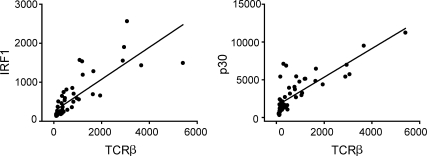
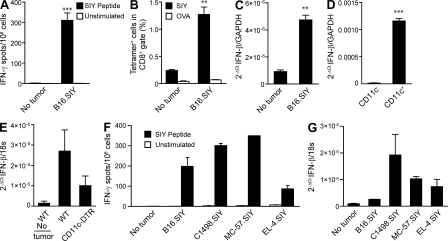
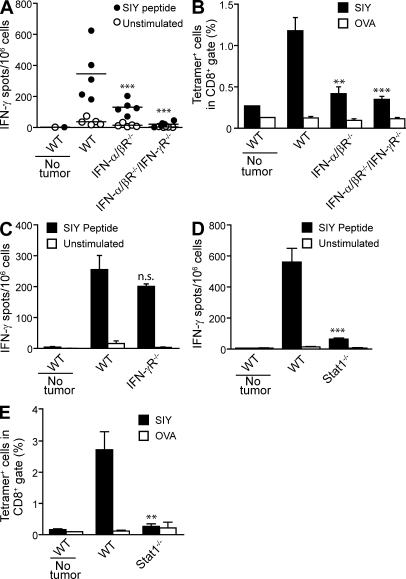
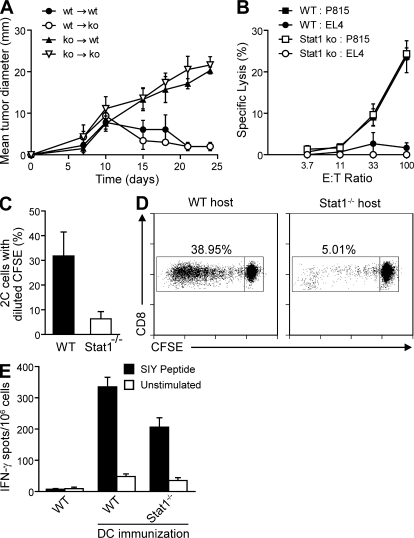
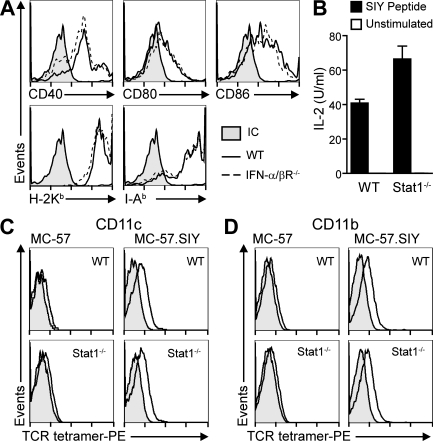
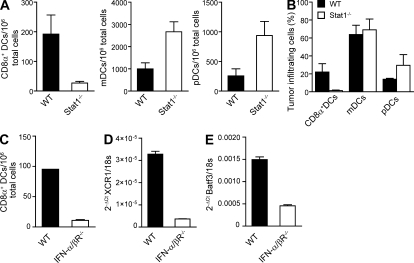
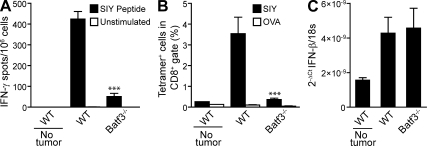
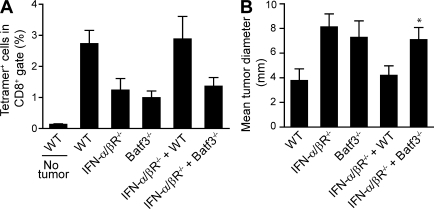
Despite lack of tumor control in many models, spontaneous T cell priming occurs frequently in response to a growing tumor. However, the innate immune mechanisms that promote natural antitumor T cell responses are undefined. In human metastatic melanoma, there was a correlation between a type I interferon (IFN) transcriptional profile and T cell markers in metastatic tumor tissue. In mice, IFN-β was produced by CD11c+ cells after tumor implantation, and tumor-induced T cell priming was defective in mice lacking IFN-α/βR or Stat1. IFN signaling was required in the hematopoietic compartment at the level of host antigen-presenting cells, and selectively for intratumoral accumulation of CD8α+ dendritic cells, which were demonstrated to be essential using Batf3−/− mice. Thus, host type I IFNs are critical for the innate immune recognition of a growing tumor through signaling on CD8α+ DCs.
Overview
The claims and statistics of this paper haven’t been checked yet.
Free: it reads the open-access text and checks the first 5 claims that cite a source we can check. Create a free account to check every claim.
Integrity signals
Registry
Cites
Statistics
Figures
Verification
Claims the paper makes
The claims and statistics of this paper haven’t been checked yet.
Free: it reads the open-access text and checks the first 5 claims that cite a source we can check. Create a free account to check every claim.
Claims other papers make about this one
Each is checked against this paper’s own text: does it say what the citing paper says it does?
The source backs part of the claim, not all of it — or backs it for a different population, condition or comparison.
In the citing paper
“For instance, DCs secrete the chemoattractants chemokine (C‐X‐C motif) ligand 9 (CXCL9) and 10 (CXCL10) to facilitate the infiltration of CD8+ Teff cells in the TME and for T cell cytotoxic activity [15].”
From Tumor microenvironment signaling and therapeutics in cancer progression (2023) · cites this paper as [15]
Experimental — accuracy not yet measuredThe source backs part of the claim, not all of it — or backs it for a different population, condition or comparison.
In the citing paper
“Previous study showed that DC-specific Ifnar -/- mice were unble to reject highly immunogenic tumor cells due to the defects in antigen cross-presentation to CD8+ T cells.”
From mRNA vaccine with unmodified uridine induces robust type I interferon-dependent anti-tumor immunity in a melanoma model (2022) · cites this paper as [52]
Experimental — accuracy not yet measuredThe cited source says what the claim attributes to it.
In the citing paper
“This evidence strongly shows that IFN-I can act through DCs to promote T cell immunity (52).”
From mRNA vaccine with unmodified uridine induces robust type I interferon-dependent anti-tumor immunity in a melanoma model (2022) · cites this paper as [52]
The cited source says what the claim attributes to it.
In the citing paper
“multiple clinical observations have linked intratumoral presence of CD8+ T cells to a type-I interferon (IFN) transcriptional signature14–16.”
From Epigenetic state determines the in vivo efficacy of STING agonist therapy (2023) · cites this paper as [14]
Self-check
Percentages, sums and reported differences re-computed from the paper’s own numbers.
The self-check needs the paper’s full text.
Citations
Cites
Release of chromatin protein HMGB1 by necrotic cells triggers inflammation
Scaffidi, P., Misteli, T., & Bianchi, M. E. (2002) · Nature · doi:10.1038/nature00858 · Cited by 4,221 · cited 2×
“, 2003), HMGB1 (high-mobility-group box 1; Scaffidi et al., 2002), ATP (Haag et al.”
BackgroundHOW CELLS RESPOND TO INTERFERONS
Stark, G. R., Kerr, I. M., Williams, B. R. G., Silverman, R. H., & Schreiber, R. D. (1998) · Annual Review of Biochemistry · doi:10.1146/annurev.biochem.67.1.227 · Cited by 3,932 · cited 1×
“During various types of viral infection, type I IFNs induce the expression of an array of genes that act to prevent viral spread, thus creating an antiviral state (Stark et al., 1998).”
BackgroundInaba, K., Inaba, M., Romani, N., Aya, H., Deguchi, M., Ikehara, S., Muramatsu, S., & Steinman, R. M. (1992) · The Journal of experimental medicine · doi:10.1084/jem.176.6.1693 · Cited by 3,738 · cited 2×
“version of a published protocol (Inaba et al., 1992).”
MethodApetoh, L., Ghiringhelli, F., Tesniere, A., Obeid, M., Ortiz, C., Criollo, A., Mignot, G., Maiuri, M. C., Ullrich, E., Saulnier, P., et al. (2007) · Nature Medicine · doi:10.1038/nm1622 · Cited by 3,056
STING regulates intracellular DNA-mediated, type I interferon-dependent innate immunity
Ishikawa, H., Ma, Z., & Barber, G. N. (2009) · Nature · doi:10.1038/nature08476 · Cited by 2,759 · cited 2×
“…proteomics that the CD8+ DC subpopulation selectively lacks the receptors and signaling molecules (such as DAI [Takaoka et al., 2007] and Sting [Ishikawa et al., 2009]) required for the detection of nucleotides in the cytoplasm (Luber et al., 2010), so if this is indeed the pathway involved in…”
BackgroundNatural Innate and Adaptive Immunity to Cancer
Vesely, M. D., Kershaw, M. H., Schreiber, R. D., & Smyth, M. J. (2011) · Annual Review of Immunology · doi:10.1146/annurev-immunol-031210-101324 · Cited by 2,101 · cited 2×
“However, recent results have indicated that in many instances, spontaneous T cell responses against tumor antigens can be detected in both human cancer patients and in murine models, and that immune escape in those cases appears to occur through dominant inhibition by immunoregulatory pathways (Vesely et al., 2011).”
BackgroundResultBatf3 Deficiency Reveals a Critical Role for CD8α + Dendritic Cells in Cytotoxic T Cell Immunity
Hildner, K., Edelson, B. T., Purtha, W. E., Diamond, M., Matsushita, H., Kohyama, M., Calderon, B., Schraml, B. U., Unanue, E. R., Diamond, M. S., et al. (2008) · Science · doi:10.1126/science.1164206 · Cited by 2,081 · cited 4×
“Recent work has indicated that mice lacking the transcriptional regulator, Batf3, have a specific deficiency in the development of the CD8+ DC lineage (which includes a CD103+ DC subset; Hildner et al., 2008).”
BackgroundMethodInfluentialSelf-citationGhiringhelli, F., Apetoh, L., Tesniere, A., Aymeric, L., Ma, Y., Ortiz, C., Vermaelen, K., Panaretakis, T., Mignot, G., Ullrich, E., et al. (2009) · Nature Medicine · doi:10.1038/nm.2028 · Cited by 1,898 · cited 2×
“It has been recently demonstrated that after radiotherapy or chemotherapy, dying tumor cells can release HMGB1 that binds to TLR4 (Apetoh et al., 2007) and ATP that activates the NALP3 inflammasome (Ghiringhelli et al., 2009).”
BackgroundJung, S., Unutmaz, D., Wong, P., Sano, G.-I., De los Santos, K., Sparwasser, T., Wu, S., Vuthoori, S., Ko, K., Zavala, F., et al. (2002) · Immunity · doi:10.1016/s1074-7613(02)00365-5 · Cited by 1,773 · cited 2×
“CD11c-DTR mice (Jung et al., 2002) were provided by D. Littman (New York University School of Medicine, New York, NY).”
MethodHow dying cells alert the immune system to danger
Kono, H., & Rock, K. L. (2008) · Nature Reviews Immunology · doi:10.1038/nri2215 · Cited by 1,737 · cited 10×
“Recently, it has been shown that dsDNA can be released from necrotic cells, reach the cytoplasm of APCs, and be recognized by a TLR-independent on January 17, 2012 jem .rupress.org D ow nloaded from JEM Vol. 208, No. 10 Article 2013 of type I IFNs, which are already FDA approved for other indications, in order to prom…”
BackgroundInfluential
Cited by
Items 101–200 of 1,000
Antigen cross-presentation and T-cell cross-priming in cancer immunology and immunotherapy
Sánchez-Paulete, A. R., Teijeira, A., Cueto, F. J., Garasa, S., Pérez-Gracia, J. L., Sánchez-Arráez, A., Sancho, D., & Melero, I. (2017) · Annals of Oncology · doi:10.1093/annonc/mdx237 · Cited by 267
The good and the bad faces of STAT1 in solid tumours
Meissl, K., Macho-Maschler, S., Müller, M., & Strobl, B. (2017) · Cytokine · doi:10.1016/j.cyto.2015.11.011 · Cited by 264
Nakamura, T., Sato, T., Endo, R., Sasaki, S., Takahashi, N., Sato, Y., Hyodo, M., Hayakawa, Y., & Harashima, H. (2021) · Journal for ImmunoTherapy of Cancer · doi:10.1136/jitc-2021-002852 · Cited by 257
Cytosolic DNA Sensing in Organismal Tumor Control
Vanpouille-Box, C., Demaria, S., Formenti, S. C., & Galluzzi, L. (2018) · Cancer Cell · doi:10.1016/j.ccell.2018.05.013 · Cited by 250
“Type I IFN secretion by cancer cells (Sistigu et al., 2014; Vanpouille-Box et al., 2017) and DCs (Diamond et al., 2011; Fuertes et al., 2011) supports the activation of tumor-targeting immune response by a variety of mechanisms (Box 3).”
BackgroundLim, J. Y. H., Gerber, S. A., Murphy, S. P., & Lord, E. M. (2014) · Cancer Immunology, Immunotherapy · doi:10.1007/s00262-013-1506-7 · Cited by 257
“For example, type I IFNs have been found to be required for the activation and maturation of DCs, particularly CD8α+ DCs that are important in cross-presenting tumor antigens to CD8+ T cells [25].”
BackgroundInterferons and Their Stimulated Genes in the Tumor Microenvironment
Cheon, H., Borden, E. C., & Stark, G. R. (2014) · Seminars in Oncology · doi:10.1053/j.seminoncol.2014.02.002 · Cited by 255
Immune Cell–Poor Melanomas Benefit from PD-1 Blockade after Targeted Type I IFN Activation
Bald, T., Landsberg, J., Lopez-Ramos, D., Renn, M., Glodde, N., Jansen, P., Gaffal, E., Steitz, J., Tolba, R., Kalinke, U., et al. (2014) · Cancer Discovery · doi:10.1158/2159-8290.cd-13-0458 · Cited by 256
Liu, Y., Crowe, W. N., Wang, L., Lu, Y., Petty, W. J., Habib, A. A., & Zhao, D. (2019) · Nature Communications · doi:10.1038/s41467-019-13094-5 · Cited by 254
Challenges and Opportunities in the Clinical Development of STING Agonists for Cancer Immunotherapy
Motedayen Aval, L., Pease, J. E., Sharma, R., & Pinato, D. J. (2020) · Journal of Clinical Medicine · doi:10.3390/jcm9103323 · Cited by 248
Ohkuri, T., Ghosh, A., Kosaka, A., Zhu, J., Ikeura, M., David, M., Watkins, S. C., Sarkar, S. N., & Okada, H. (2014) · Cancer Immunology Research · doi:10.1158/2326-6066.cir-14-0099 · Cited by 252
Katlinski, K. V., Gui, J., Katlinskaya, Y. V., Ortiz, A., Chakraborty, R., Bhattacharya, S., Carbone, C. J., Beiting, D. P., Girondo, M. A., Peck, A. R., et al. (2017) · Cancer Cell · doi:10.1016/j.ccell.2017.01.004 · Cited by 248
“While not arguing against additional role of IFNAR1 in IFN-modulated regulation of antigen presentation and activation of DCs (Diamond et al., 2011; Fuertes et al., 2011; Hildner et al., 2008), stromal resistance to tumor-induced angiogenesis (Zheng et al., 2011) and other processes, our current…”
InfluentialTumor-infiltrating dendritic cell states are conserved across solid human cancers
Gerhard, G. M., Bill, R., Messemaker, M., Klein, A. M., & Pittet, M. J. (2021) · Journal of Experimental Medicine · doi:10.1084/jem.20200264 · Cited by 247
Cell death, therapeutics, and the immune response in cancer
Hänggi, K., & Ruffell, B. (2023) · Trends in Cancer · doi:10.1016/j.trecan.2023.02.001 · Cited by 237
Nanoparticle-Mediated Remodeling of the Tumor Microenvironment to Enhance Immunotherapy
Musetti, S., & Huang, L. (2018) · ACS Nano · doi:10.1021/acsnano.8b05893 · Cited by 239
Trial watch: TLR3 agonists in cancer therapy
Le Naour, J., Galluzzi, L., Zitvogel, L., Kroemer, G., & Vacchelli, E. (2020) · OncoImmunology · doi:10.1080/2162402x.2020.1771143 · Cited by 239
Current and future immunotherapeutic approaches in pancreatic cancer treatment
Farhangnia, P., Khorramdelazad, H., Nickho, H., & Delbandi, A.-A. (2024) · Journal of Hematology & Oncology · doi:10.1186/s13045-024-01561-6 · Cited by 229
STING Ligand c-di-GMP Improves Cancer Vaccination against Metastatic Breast Cancer
Chandra, D., Quispe-Tintaya, W., Jahangir, A., Asafu-Adjei, D., Ramos, I., Sintim, H. O., Zhou, J., Hayakawa, Y., Karaolis, D. K. R., & Gravekamp, C. (2014) · Cancer Immunology Research · doi:10.1158/2326-6066.cir-13-0123 · Cited by 231
“Recently, it has been shown that IFNb is involved in the intratumoral accumulation of CD8aþ DCs, which is required for T-cell stimulation (34).”
BackgroundWang, S., Campos, J., Gallotta, M., Gong, M., Crain, C., Naik, E., Coffman, R. L., & Guiducci, C. (2016) · Proceedings of the National Academy of Sciences · doi:10.1073/pnas.1608555113 · Cited by 231
“In mouse models, ablation of type I IFN production decreased rejection of immunogenic tumor cells due to impaired ability of DC to cross-prime tumor-associated antigens to CTLs (cytotoxic T lymphocytes) (36, 37).”
BackgroundThe Impact of Radiation-Induced DNA Damage on cGAS-STING-Mediated Immune Responses to Cancer
Storozynsky, Q., & Hitt, M. M. (2020) · International Journal of Molecular Sciences · doi:10.3390/ijms21228877 · Cited by 228
“Studies using highly immunogenic tumor models capable of producing spontaneous antitumor T cell activity revealed that type I IFN is essential for regulating the capacity of CD8α+ DCs to prime CD8+ T cells and facilitate subsequent immune-mediated antitumor responses [42,43].”
BackgroundWard, J. P., Gubin, M. M., & Schreiber, R. D. (2016) · Advances in Immunology · doi:10.1016/bs.ai.2016.01.001 · Cited by 228
Danger signalling during cancer cell death: origins, plasticity and regulation
Garg, A. D., Martin, S., Golab, J., & Agostinis, P. (2014) · Cell Death & Differentiation · doi:10.1038/cdd.2013.48 · Cited by 226
Exploiting innate immunity for cancer immunotherapy
Yi, M., Li, T., Niu, M., Mei, Q., Zhao, B., Chu, Q., Dai, Z., & Wu, K. (2023) · Molecular Cancer · doi:10.1186/s12943-023-01885-w · Cited by 225
Adjustment of dendritic cells to the breast-cancer microenvironment is subset specific
Michea, P., Noël, F., Zakine, E., Czerwinska, U., Sirven, P., Abouzid, O., Goudot, C., Scholer-Dahirel, A., Vincent-Salomon, A., Reyal, F., et al. (2018) · Nature Immunology · doi:10.1038/s41590-018-0145-8 · Cited by 223
Lai, J., Mardiana, S., House, I. G., Sek, K., Henderson, M. A., Giuffrida, L., Chen, A. X. Y., Todd, K. L., Petley, E. V., Chan, J. D., et al. (2020) · Nature Immunology · doi:10.1038/s41590-020-0676-7 · Cited by 219
Systemic vaccination induces CD8+ T cells and remodels the tumor microenvironment
Baharom, F., Ramirez-Valdez, R. A., Khalilnezhad, A., Khalilnezhad, S., Dillon, M., Hermans, D., Fussell, S., Tobin, K. K. S., Dutertre, C.-A., Lynn, G. M., et al. (2022) · Cell · doi:10.1016/j.cell.2022.10.006 · Cited by 219
Kureshi, C. T., & Dougan, S. K. (2025) · Cancer Cell · doi:10.1016/j.ccell.2024.11.011 · Cited by 213
Jing, W., McAllister, D., Vonderhaar, E. P., Palen, K., Riese, M. J., Gershan, J., Johnson, B. D., & Dwinell, M. B. (2019) · Journal for ImmunoTherapy of Cancer · doi:10.1186/s40425-019-0573-5 · Cited by 217
Yang, L., Li, A., Lei, Q., & Zhang, Y. (2019) · Journal of Hematology & Oncology · doi:10.1186/s13045-019-0804-8 · Cited by 215
Dine, J., Gordon, R., Shames, Y., Kasler, M. K., & Barton-Burke, M. (2017) · Asia-Pacific Journal of Oncology Nursing · doi:10.4103/apjon.apjon_4_17 · Cited by 214
“Regulation of the T‐cell‐mediated response to antigen presenting cells (APCs), including foreign and the body’s own dendritic cells, is critical to eliminating cancer cells.([8,9]) More specifically, CD8+ effector T‐cells, or cytotoxic T‐cells, can recognize “self ” and “nonself ” antigens bound to major histocompatib…”
BackgroundSTING-Mediated DNA Sensing Promotes Antitumor and Autoimmune Responses to Dying Cells
Klarquist, J., Hennies, C. M., Lehn, M. A., Reboulet, R. A., Feau, S., & Janssen, E. M. (2014) · The Journal of Immunology · doi:10.4049/jimmunol.1401869 · Cited by 211
“Additional studies showed that the spontaneous induction of tumor-specific CD8 T cells in tumor-bearing mice was predominantly mediated by type I IFN sensing in dendritic cells (DCs) (6, 7).”
BackgroundWilliams, J. B., Horton, B. L., Zheng, Y., Duan, Y., Powell, J. D., & Gajewski, T. F. (2017) · Journal of Experimental Medicine · doi:10.1084/jem.20160485 · Cited by 210
“Spontaneously primed CD8+ T cells can home to tumor sites in mouse tumor models (Harlin et al., 2009; Fuertes et al., 2011) and in a subset of patients with advanced cancer (Harlin et al., 2006).”
BackgroundSelf-citationOptimising efficacy and reducing toxicity of anticancer radioimmunotherapy
Deutsch, E., Chargari, C., Galluzzi, L., & Kroemer, G. (2019) · The Lancet Oncology · doi:10.1016/s1470-2045(19)30171-8 · Cited by 210
If we build it they will come: targeting the immune response to breast cancer
Gatti-Mays, M. E., Balko, J. M., Gameiro, S. R., Bear, H. D., Prabhakaran, S., Fukui, J., Disis, M. L., Nanda, R., Gulley, J. L., Kalinsky, K., et al. (2019) · npj Breast Cancer · doi:10.1038/s41523-019-0133-7 · Cited by 207
Role of the cGAS–STING pathway in cancer development and oncotherapeutic approaches
Khoo, L. T., & Chen, L. (2018) · The EMBO Reports · doi:10.15252/embr.201846935 · Cited by 204
“It has been shown that in the tumor microenvironment, IFN-b expression in DCs is STING-dependent and correlates with the uptake of tumor-derived DNA by DCs [6].”
InfluentialOhkuri, T., Kosaka, A., Ishibashi, K., Kumai, T., Hirata, Y., Ohara, K., Nagato, T., Oikawa, K., Aoki, N., Harabuchi, Y., et al. (2017) · Cancer Immunology, Immunotherapy · doi:10.1007/s00262-017-1975-1 · Cited by 201
Cancer immunotherapy: nanodelivery approaches for immune cell targeting and tracking
Conniot, J., Silva, J. M., Fernandes, J. G., Silva, L. C., Gaspar, R., Brocchini, S., Florindo, H. F., & Barata, T. S. (2014) · Frontiers in Chemistry · doi:10.3389/fchem.2014.00105 · Cited by 200
“However, the production of type I interferon by DCs remain an underexplored issue (Fuertes et al., 2011).”
BackgroundCorrales, L., & Gajewski, T. F. (2015) · Clinical Cancer Research · doi:10.1158/1078-0432.ccr-15-1362 · Cited by 197
“Mixed bone marrow chimeras confirmed that type I IFN signaling in the CD8aþ DC lineage was necessary for maximal T-cell priming against tumors in vivo (31).”
BackgroundSelf-citationOpposing Roles of Type I Interferons in Cancer Immunity
Boukhaled, G. M., Harding, S., & Brooks, D. G. (2021) · Annual Review of Pathology: Mechanisms of Disease · doi:10.1146/annurev-pathol-031920-093932 · Cited by 191
Cancer immunotherapy: Challenges and limitations
Taefehshokr, S., Parhizkar, A., Hayati, S., Mousapour, M., Mahmoudpour, A., Eleid, L., Rahmanpour, D., Fattahi, S., Shabani, H., & Taefehshokr, N. (2022) · Pathology - Research and Practice · doi:10.1016/j.prp.2021.153723 · Cited by 195
The tumor suppressor PTEN has a critical role in antiviral innate immunity
Li, S., Zhu, M., Pan, R., Fang, T., Cao, Y.-Y., Chen, S., Zhao, X., Lei, C.-Q., Guo, L., Chen, Y., et al. (2016) · Nature Immunology · doi:10.1038/ni.3311 · Cited by 195
Are Conventional Type 1 Dendritic Cells Critical for Protective Antitumor Immunity and How?
Cancel, J.-C., Crozat, K., Dalod, M., & Mattiuz, R. (2019) · Frontiers in Immunology · doi:10.3389/fimmu.2019.00009 · Cited by 194
Saddawi-Konefka, R., O’Farrell, A., Faraji, F., Clubb, L., Allevato, M. M., Jensen, S. M., Yung, B. S., Wang, Z., Wu, V. H., Anang, N.-A., et al. (2022) · Nature Communications · doi:10.1038/s41467-022-31941-w · Cited by 189
“In support, we find that conventional type I dendritic cells and IFN-I signaling within tdLNs are critical for the priming and subsequent tumor-infiltration of tumor-specific antigen cytotoxic lymphocytes, which aligns more broadly with a host of reports defining the essential function of cDC1s and IFN-I signaling in…”
BackgroundRole of the immunosuppressive microenvironment in immunotherapy
Tormoen, G. W., Crittenden, M. R., & Gough, M. J. (2018) · Advances in Radiation Oncology · doi:10.1016/j.adro.2018.08.018 · Cited by 189
Extrinsic Phagocyte-Dependent STING Signaling Dictates the Immunogenicity of Dying Cells
Ahn, J., Xia, T., Rabasa Capote, A., Betancourt, D., & Barber, G. N. (2018) · Cancer Cell · doi:10.1016/j.ccell.2018.03.027 · Cited by 189
“…cells (APCs) and the priming of tumor-specific T cells remain to be clarified but are thought to involve the generation of immune stimulatory type I interferon (IFN) and other cytokines (Diamond et al., 2011; Fuertes et al., 2011; Ma et al., 2013; Marichal et al., 2011; Zitvogel et al., 2015).”
Falahat, R., Berglund, A., Putney, R. M., Perez-Villarroel, P., Aoyama, S., Pilon-Thomas, S., Barber, G. N., & Mulé, J. J. (2021) · Proceedings of the National Academy of Sciences · doi:10.1073/pnas.2013598118 · Cited by 190
“Studies using both carcinogen-induced and transplantable tumor models have indicated that endogenous induction of type I IFNs is required for the generation of a spontaneous T cell response (10, 11).”
BackgroundThe cGAS/STING Pathway: A Novel Target for Cancer Therapy
Gan, Y., Li, X., Han, S., Liang, Q., Ma, X., Rong, P., Wang, W., & Li, W. (2022) · Frontiers in Immunology · doi:10.3389/fimmu.2021.795401 · Cited by 186
“org 4 zipper transcription factor ATF-like 3 (BATF3) is a central step in the overall cancer immune cycle (46).”
BackgroundDying cell clearance and its impact on the outcome of tumor radiotherapy
Lauber, K., Ernst, A., Orth, M., Herrmann, M., & Belka, C. (2012) · Frontiers in Oncology · doi:10.3389/fonc.2012.00116 · Cited by 187
“Consequently, in the context of cancer immunoediting, IFN-α/β-responsiveness is specifically required in DCs and macrophages, whereas it appears to be dispensable in tumor cells (Diamond et al., 2011; Fuertes et al., 2011).”
BackgroundCritical Roles of a Dendritic Cell Subset Expressing a Chemokine Receptor, XCR1
Yamazaki, C., Sugiyama, M., Ohta, T., Hemmi, H., Hamada, E., Sasaki, I., Fukuda, Y., Yano, T., Nobuoka, M., Hirashima, T., et al. (2013) · The Journal of Immunology · doi:10.4049/jimmunol.1202798 · Cited by 184
Targeting microRNAs as key modulators of tumor immune response
Paladini, L., Fabris, L., Bottai, G., Raschioni, C., Calin, G. A., & Santarpia, L. (2016) · Journal of Experimental & Clinical Cancer Research · doi:10.1186/s13046-016-0375-2 · Cited by 184
“On the contrary, dendritic cells (DCs) play an important role as antigen presenting cells (APCs), which contribute to mount antitumor CTL immune response [54, 55].”
BackgroundImmunobiology of high-grade serous ovarian cancer: lessons for clinical translation
Kandalaft, L. E., Dangaj Laniti, D., & Coukos, G. (2022) · Nature Reviews Cancer · doi:10.1038/s41568-022-00503-z · Cited by 180
Hallmarks of glioblastoma: a systematic review
Nørøxe, D. S., Poulsen, H. S., & Lassen, U. (2016) · ESMO Open · doi:10.1136/esmoopen-2016-000144 · Cited by 183
MacNabb, B. W., Chen, X., Tumuluru, S., Godfrey, J., Kasal, D. N., Yu, J., Jongsma, M. L. M., Spaapen, R. M., Kline, D. E., & Kline, J. (2022) · Immunity · doi:10.1016/j.immuni.2022.04.016 · Cited by 181
Self-citationOld dogs, new trick: classic cancer therapies activate cGAS
Yum, S., Li, M., & Chen, Z. J. (2020) · Cell Research · doi:10.1038/s41422-020-0346-1 · Cited by 181
Ribas, A., Medina, T., Kirkwood, J. M., Zakharia, Y., Gonzalez, R., Davar, D., Chmielowski, B., Campbell, K. M., Bao, R., Kelley, H., et al. (2021) · Cancer Discovery · doi:10.1158/2159-8290.cd-21-0425 · Cited by 180
Surace, L., Lysenko, V., Fontana, A. O., Cecconi, V., Janssen, H., Bicvic, A., Okoniewski, M., Pruschy, M., Dummer, R., Neefjes, J., et al. (2015) · Immunity · doi:10.1016/j.immuni.2015.03.009 · Cited by 179
“, 2010), type I interferon (IFN) resulting in enhanced antigen cross-presentation (Burnette et al., 2011; Fuertes et al., 2011), increased expression of major histocompatibility complex (MHC) class I glycoproteins and tumor-associated antigens (Reits et al.”
BackgroundPark, S.-J., Ye, W., Xiao, R., Silvin, C., Padget, M., Hodge, J. W., Van Waes, C., & Schmitt, N. C. (2019) · Oral Oncology · doi:10.1016/j.oraloncology.2019.06.016 · Cited by 179
Berger, G., Knelson, E. H., Jimenez-Macias, J. L., Nowicki, M. O., Han, S., Panagioti, E., Lizotte, P. H., Adu-Berchie, K., Stafford, A., Dimitrakakis, N., et al. (2022) · Proceedings of the National Academy of Sciences · doi:10.1073/pnas.2111003119 · Cited by 179
Lactate Induces Pro-tumor Reprogramming in Intratumoral Plasmacytoid Dendritic Cells
Raychaudhuri, D., Bhattacharya, R., Sinha, B. P., Liu, C. S. C., Ghosh, A. R., Rahaman, O., Bandopadhyay, P., Sarif, J., D'Rozario, R., Paul, S., et al. (2019) · Frontiers in Immunology · doi:10.3389/fimmu.2019.01878 · Cited by 176
Delivery of STING agonists for adjuvanting subunit vaccines
Van Herck, S., Feng, B., & Tang, L. (2021) · Advanced Drug Delivery Reviews · doi:10.1016/j.addr.2021.114020 · Cited by 175
Dendritic cell maturation in cancer
Moon, C. Y., Belabed, M., Park, M. D., Mattiuz, R., Puleston, D., & Merad, M. (2025) · Nature Reviews Cancer · doi:10.1038/s41568-024-00787-3 · Cited by 170
Crosstalk between cGAS–STING signaling and cell death
Murthy, A. M. V., Robinson, N., & Kumar, S. (2020) · Cell Death & Differentiation · doi:10.1038/s41418-020-00624-8 · Cited by 174
Interferon-dependent IL-10 production by Tregs limits tumor Th17 inflammation
Stewart, C. A., Metheny, H., Iida, N., Smith, L., Hanson, M., Steinhagen, F., Leighty, R. M., Roers, A., Karp, C. L., Müller, W., et al. (2013) · Journal of Clinical Investigation · doi:10.1172/jci65180 · Cited by 173
“66, 72) and is required for cross-presentation of tumor antigens (82, 95), but its capacity to promote Treg activation and expression of IL-10 described herein may counteract Th1 antitumor responses.”
Toward Precision Radiotherapy for Use with Immune Checkpoint Blockers
Vanpouille-Box, C., Formenti, S. C., & Demaria, S. (2018) · Clinical Cancer Research · doi:10.1158/1078-0432.ccr-16-0037 · Cited by 171
STING Pathway Activation Stimulates Potent Immunity against Acute Myeloid Leukemia
Curran, E., Chen, X., Corrales, L., Kline, D. E., Dubensky, T. W., Duttagupta, P., Kortylewski, M., & Kline, J. (2016) · Cell Reports · doi:10.1016/j.celrep.2016.05.023 · Cited by 170
Self-citationType I Interferons as Stimulators of DC-Mediated Cross-Priming: Impact on Anti-Tumor Response
Schiavoni, G., Mattei, F., & Gabriele, L. (2013) · Frontiers in Immunology · doi:10.3389/fimmu.2013.00483 · Cited by 169
“(49) reported that endogenous IFN-I, produced shortly after tumor challenge, was essential for intratumoral accumulation of CD8α DC and for induction of tumor Ag-specific T-cell priming and tumor rejection via CD8α DC stimulation.”
BackgroundSalvagno, C., Ciampricotti, M., Tuit, S., Hau, C.-S., van Weverwijk, A., Coffelt, S. B., Kersten, K., Vrijland, K., Kos, K., Ulas, T., et al. (2019) · Nature Cell Biology · doi:10.1038/s41556-019-0298-1 · Cited by 168
Nanoparticle‐Mediated Delivery of Inhaled Immunotherapeutics for Treating Lung Metastasis
Jin, Q., Zhu, W., Zhu, J., Zhu, J., Shen, J., Liu, Z., Yang, Y., & Chen, Q. (2021) · Advanced Materials · doi:10.1002/adma.202007557 · Cited by 169
Radiation as an Immune Modulator
Burnette, B., & Weichselbaum, R. R. (2013) · Seminars in Radiation Oncology · doi:10.1016/j.semradonc.2013.05.009 · Cited by 165
Targeting STING to promote antitumor immunity
Chin, E. N., Sulpizio, A., & Lairson, L. L. (2023) · Trends in Cell Biology · doi:10.1016/j.tcb.2022.06.010 · Cited by 160
Nagaya, T., Friedman, J., Maruoka, Y., Ogata, F., Okuyama, S., Clavijo, P. E., Choyke, P. L., Allen, C., & Kobayashi, H. (2019) · Cancer Immunology Research · doi:10.1158/2326-6066.cir-18-0546 · Cited by 161
“Batf3þDCs are required for production of chemokine signals that drive trafficking of effector T cells into tumors (23), and type I interferon production by DCs is required for innate activation of adaptive T-cell immunity (24, 25).”
BackgroundType I Interferons and Natural Killer Cell Regulation in Cancer
Müller, L., Aigner, P., & Stoiber, D. (2017) · Frontiers in Immunology · doi:10.3389/fimmu.2017.00304 · Cited by 160
“In response to type I IFNs, CTLs have also been shown to acquire full effector functions (26, 33).”
BackgroundZanna, M. Y., Yasmin, A. R., Omar, A. R., Arshad, S. S., Mariatulqabtiah, A. R., Nur-Fazila, S. H., & Mahiza, M. I. N. (2021) · International Journal of Molecular Sciences · doi:10.3390/ijms22158044 · Cited by 158
Zagorulya, M., Yim, L., Morgan, D. M., Edwards, A. W., Torres-Mejia, E., Momin, N., McCreery, C. V., Zamora, I., Horton, B. L., Fox, J. G., et al. (2023) · Immunity · doi:10.1016/j.immuni.2023.01.010 · Cited by 180
Moore, E., Clavijo, P. E., Davis, R., Cash, H., Van Waes, C., Kim, Y., & Allen, C. (2016) · Cancer Immunology Research · doi:10.1158/2326-6066.cir-16-0104 · Cited by 157
“CD8þ DCs are critical for cross-presentation of tumor antigen to activate adaptive immunity (19, 20).”
BackgroundA diamidobenzimidazole STING agonist protects against SARS-CoV-2 infection
Humphries, F., Shmuel-Galia, L., Jiang, Z., Wilson, R., Landis, P., Ng, S.-L., Parsi, K. M., Maehr, R., Cruz, J., Morales, A., et al. (2021) · Science Immunology · doi:10.1126/sciimmunol.abi9002 · Cited by 158
Control of CD8 T-Cell Infiltration into Tumors by Vasculature and Microenvironment
(2015) · Advances in Cancer Research · doi:10.1016/bs.acr.2015.05.001 · Cited by 159
Wood, L. M., & Paterson, Y. (2014) · Frontiers in Cellular and Infection Microbiology · doi:10.3389/fcimb.2014.00051 · Cited by 157
“However, there is a growing body of evidence emphasizing the importance of Type I IFN signaling in tumor immunosurveillance and the formation of effective anti-tumor adaptive immunity (Diamond et al., 2011; Fuertes et al., 2011).”
BackgroundThe role of dendritic cells in cancer
(2019) · International Review of Cell and Molecular Biology · doi:10.1016/bs.ircmb.2019.07.006 · Cited by 157
Akalu, Y. T., Rothlin, C. V., & Ghosh, S. (2017) · Immunological Reviews · doi:10.1111/imr.12522 · Cited by 153
Molecular Control of Steady-State Dendritic Cell Maturation and Immune Homeostasis
Hammer, G. E., & Ma, A. (2013) · Annual Review of Immunology · doi:10.1146/annurev-immunol-020711-074929 · Cited by 154
KEAP1 mutation in lung adenocarcinoma promotes immune evasion and immunotherapy resistance
Zavitsanou, A., Pillai, R., Yuan, H., Wu, W., Bartnicki, E., Karakousi, T. R., Rajalingam, S., Herrera, A. M., Karatza, A., Rashidfarrokhi, A., et al. (2023) · Cell Reports · doi:10.1016/j.celrep.2023.113295 · Cited by 177
Wong, J. L., Berk, E., Edwards, R. P., & Kaliński, P. (2013) · Cancer Research · doi:10.1158/0008-5472.can-12-4366 · Cited by 163
Turn Back the TIMe: Targeting Tumor Infiltrating Myeloid Cells to Revert Cancer Progression
Awad, R. M., De Vlaeminck, Y., Maebe, J., Goyvaerts, C., & Breckpot, K. (2018) · Frontiers in Immunology · doi:10.3389/fimmu.2018.01977 · Cited by 151
You, S., Li, S., Zeng, L., Song, J., Li, Z., Li, W., Ni, H., Xu, X., Deng, W., Li, H., et al. (2024) · Cancer Cell · doi:10.1016/j.ccell.2024.06.014 · Cited by 175
Immune Response Regulation in the Tumor Microenvironment by Hypoxia
Labiano, S., Palazón, A., & Melero, I. (2015) · Seminars in Oncology · doi:10.1053/j.seminoncol.2015.02.009 · Cited by 169
Foote, J. B., Kok, M., Leatherman, J. M., Armstrong, T. D., Marcinkowski, B. C., Ojalvo, L. S., Kanne, D. B., Jaffee, E. M., Dubensky, T. W., & Emens, L. A. (2017) · Cancer Immunology Research · doi:10.1158/2326-6066.cir-16-0284 · Cited by 151
Durante, M., & Formenti, S. C. (2018) · Frontiers in Oncology · doi:10.3389/fonc.2018.00192 · Cited by 172
Leveraging NKG2D Ligands in Immuno-Oncology
Fuertes, M. B., Domaica, C. I., & Zwirner, N. W. (2021) · Frontiers in Immunology · doi:10.3389/fimmu.2021.713158 · Cited by 166
Self-citationTargeting Stimulator of Interferon Genes (STING): A Medicinal Chemistry Perspective
Zhang, H., You, Q., & Xu, X. (2019) · Journal of Medicinal Chemistry · doi:10.1021/acs.jmedchem.9b01039 · Cited by 155
Antigen processing and presentation in cancer immunotherapy
Lee, M. Y., Jeon, J. W., Sievers, C., & Allen, C. T. (2020) · Journal for ImmunoTherapy of Cancer · doi:10.1136/jitc-2020-001111 · Cited by 149
Antagonism of the STING Pathway via Activation of the AIM2 Inflammasome by Intracellular DNA
Corrales, L., Woo, S.-R., Williams, J. B., McWhirter, S. M., Dubensky, T. W., & Gajewski, T. F. (2016) · The Journal of Immunology · doi:10.4049/jimmunol.1502538 · Cited by 146
“We and others have identified that production of host type I IFN has a critical role in the spontaneous activation of specific tumor CD8 T cells (2, 3).”
BackgroundSelf-citationLightcap, E. S., Yu, P., Grossman, S., Song, K., Khattar, M., Xega, K., He, X., Gavin, J. M., Imaichi, H., Garnsey, J., et al. (2021) · Science Translational Medicine · doi:10.1126/scitranslmed.aba7791 · Cited by 162
“5 of 12 Because DCs have been shown to serve as important targets for, and mediators of, the antitumorigenic effects of IFN1 (8, 18, 19), we assessed the effects of TAK-981 on these cells.”
BackgroundDNA sensor cGAS-mediated immune recognition
Xia, P., Wang, S., Gao, P., Gao, G., & Fan, Z. (2016) · Protein & Cell · doi:10.1007/s13238-016-0320-3 · Cited by 165
“In tumor microenvironments, spontaneous T cell activation is constitutively observed with signatures of production of cytokines such as type I IFNs by CD8α+ DCs (Diamond et al., 2011; Fuertes et al., 2011).”
BackgroundPD-L1 in tumor microenvironment mediates resistance to oncolytic immunotherapy
Zamarin, D., Ricca, J. M., Sadekova, S., Oseledchyk, A., Yu, Y., Blumenschein, W. M., Wong, J., Gigoux, M., Merghoub, T., & Wolchok, J. D. (2018) · Journal of Clinical Investigation · doi:10.1172/jci98047 · Cited by 147
Carrero, R. M. S., Beceren‐Braun, F., Rivas, S., Hegde, S., Gangadharan, A., Plote, D., Pham, G., Anthony, S. M., & Schluns, K. S. (2018) · Proceedings of the National Academy of Sciences · doi:10.1073/pnas.1814642116 · Cited by 156
“Since IFN-Is expressed in the TME are important for spontaneous antitumor responses (31) and we have previously demonstrated IFN-Is are potent inducers of sIL-15 complexes in vivo (17), we asked if IFN-I signaling is important for the production of sIL-15 complexes in the TME.”
BackgroundLi, Z., Cai, H., Li, Z., Ren, L. F., Ma, X., Zhu, H., Gong, Q., Zhang, H., Gu, Z., & Luo, K. (2022) · Bioactive Materials · doi:10.1016/j.bioactmat.2022.08.028 · Cited by 176
The Tumor Microenvironment: A Pitch for Multiple Players
Schiavoni, G., Gabriele, L., & Mattei, F. (2013) · Frontiers in Oncology · doi:10.3389/fonc.2013.00090 · Cited by 147
“These TIDC then migrate toward draining lymph nodes in order to activate both naïve CD4+ and CD8+ T lymphocytes (Fuertes et al., 2011; Gerlini et al., 2012a,b).”
BackgroundInfluentialIFN-III is selectively produced by cDC1 and predicts good clinical outcome in breast cancer
Hubert, M., Gobbini, É., Couillault, C., Manh, T. V., Doffin, A., Berthet, J., Rodriguez, C., Ollion, V., Kielbassa, J., Sajous, C., et al. (2020) · Science Immunology · doi:10.1126/sciimmunol.aav3942 · Cited by 167
“IFN-I is already known to be an inducer of cDC maturation (52), and it appears to strongly enhance cross-presentation, which is critical for the induction of CD8+ T cell responses against cancer (53).”
BackgroundTumor-intrinsic oncogene pathways mediating immune avoidance
Spranger, S., & Gajewski, T. F. (2016) · OncoImmunology · doi:10.1080/2162402x.2015.1086862 · Cited by 145
“Recent work has indicated that the innate immune signals involved in triggering type I IFN production by host DCs in the tumor context occur predominantly via the STING pathway of cytosolic DNA sensing 16,20.”
BackgroundSelf-citationDysfunction of antigen processing and presentation by dendritic cells in cancer
Bandola-Simon, J., & Roche, P. A. (2019) · Molecular Immunology · doi:10.1016/j.molimm.2018.03.025 · Cited by 144
Metadata
- Authors
- Fuertes, M. B., Kacha, A. K., Kline, J., Woo, S.-R., Kranz, D. M., Murphy, K. M., & Gajewski, T. F.
- Affiliations
- University of Chicago (US)
- University of Illinois Urbana-Champaign (US)
- Washington University in St. Louis (US)
- Corresponding author
- Gajewski, Thomas F.
- ORCID
- Venue
- Journal of Experimental Medicine
- Publisher
- Rockefeller University Press
- Published
- 2011-09-19
- Volume
- 208
- Issue
- 10
- Pages
- 2005-2016
- ISSN
- 0022-1007 (ISSN-L)
- 1540-9538
- PMC
- PMC3182064
- OpenAlex
- W2143523733
- Cited by
- 1,192
- References
- 60
- Citations by year
- 2026: 56 · 2025: 67 · 2024: 94 · 2023: 114 · 2022: 102 · 2021: 115 · 2020: 102 · 2019: 100 · 2018: 74 · 2017: 91 · 2016: 71 · 2015: 67 · 2014: 53 · 2013: 54 · 2012: 31
- FWCI
- 19.73
- Type
- journal article
- Language
- en
- Open access
- bronze
- doi.org
- Locations
- The Journal of Experimental Medicine (publishedVersion)
- Europe PMC (PubMed Central) (publishedVersion, cc-by-nc-sa)
- PubMed Central (publishedVersion, cc-by-nc-sa)
- PubMed (publishedVersion)
- Digital Commons@Becker (Washington University School of Medicine) (submittedVersion)
- LA Referencia (Red Federada de Repositorios Institucionales de Publicaciones Científicas) (submittedVersion, other-oa)
- Americanae (AECID Library) (submittedVersion, cc-by-nc-sa)
- Funders
- University of Chicago
- Wellcome Trust
- National Cancer Institute (P01CA97296, P01CA097296)
- Topics
- Life Sciences › Immunology and Microbiology › Immunology › Immunotherapy and Immune Responses
- Health Sciences › Medicine › Oncology › Cancer Immunotherapy and Biomarkers
- Life Sciences › Immunology and Microbiology › Immunology › interferon and immune responses
- Keywords
- type I interferon, antitumor immunity, CD8+ T cell responses, CD8α+ dendritic cells, CD11c+ antigen-presenting cells, interferon-beta, IFN-alpha/beta receptor, STAT1, Batf3, melanoma, host innate immunity
- MeSH terms
- Animals, Dendritic Cells, Humans, Immunity, Innate, Interferon Type I, Lymph Nodes, Lymphatic Metastasis, Melanoma, Mice, Inbred C57BL, Signal Transduction, Lymphocyte Subsets, Mice, Knockout, CD8-Positive T-Lymphocytes, Cell Line, Tumor, STAT1 Transcription Factor, Mice
About these checks
Registry, retraction, Cites and statistics results are computed, not judged, with one exception: a printed reference that no index lists is read once by a model before it counts as a citation error. Claims are extracted by a model and kept only when their quote appears verbatim in the text; each cited source is then checked, with a model’s help, for whether it says what the claim relies on. Those verdicts can be wrong — read the claim’s quote and the cited source before relying on one.
Statistics and arithmetic are recomputed, not judged.
Confidence bands are shown only for fields calibrated on our annotated test set. None is calibrated yet, so no band is shown.
What counts as a claim ›How we measure confidence ›How we check this ›
Are you an author, or do you see a problem with this page? Request a review
Data sources
Bibliographic data: Semantic Scholar, OpenAlex, Crossref.
Contains information from the Semantic Scholar Academic Graph Datasets, made available under the ODC Attribution License (ODC-BY 1.0).
Semantic Scholar’s data is described in: Kinney, R., et al. (2023). The Semantic Scholar Open Data Platform. arXiv:2301.10140.
