

Monitoring and estimating tropical forest carbon stocks: making REDD a reality
Open accessThe DOI matches its Crossref record; 86 of the 86 references it cites were found in a registry or an index.
Abstract
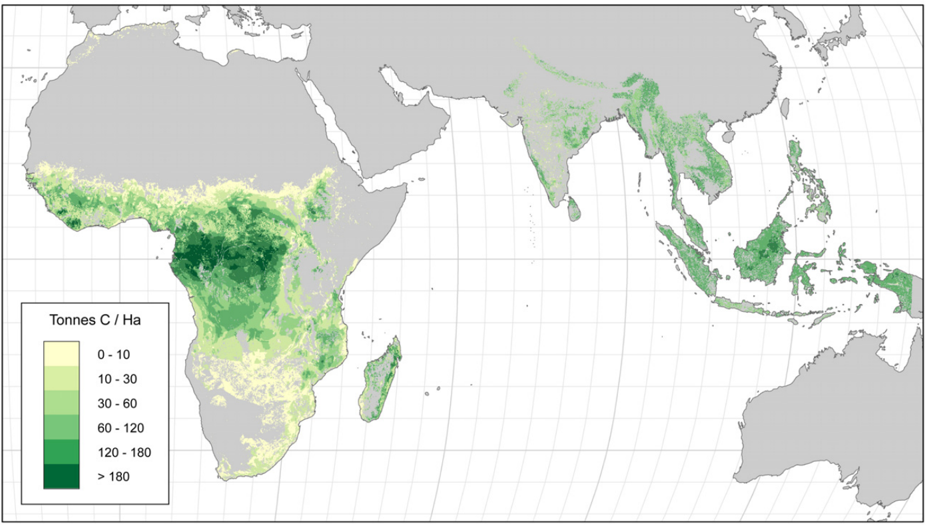
Reducing carbon emissions from deforestation and degradation in developing countries is of central importance in efforts to combat climate change. Key scientific challenges must be addressed to prevent any policy roadblocks. Foremost among the challenges is quantifying nations’ carbon emissions from deforestation and forest degradation, which requires information on forest clearing and carbon storage. Here we review a range of methods available to estimate national-level forest carbon stocks in developing countries. While there are no practical methods to directly measure all forest carbon stocks across a country, both ground-based and remote-sensing measurements of forest attributes can be converted into estimates of national carbon stocks using allometric relationships. Here we synthesize, map and update prominent forest biomass carbon databases to create the first complete set of national-level forest carbon stock estimates. These forest carbon estimates expand on the default values recommended by the Intergovernmental Panel on Climate Change’s National Greenhouse Gas Inventory Guidelines and provide a range of globally consistent estimates.
Overview
The claims and statistics of this paper haven’t been checked yet.
Free: it reads the open-access text and checks the first 5 claims that cite a source we can check. Create a free account to check every claim.
Integrity signals
Registry
Cites
Statistics
Figures
Verification
Claims the paper makes
The claims and statistics of this paper haven’t been checked yet.
Free: it reads the open-access text and checks the first 5 claims that cite a source we can check. Create a free account to check every claim.
Claims other papers make about this one
Each is checked against this paper’s own text: does it say what the citing paper says it does?
The source backs part of the claim, not all of it — or backs it for a different population, condition or comparison.
In the citing paper
“Tropical ecosystems store an enormous 340 billion tonnes of carbon (Gibbs et al 2007), equivalent to more than 40 times the total annual anthropogenic emissions from fossil fuel combustion (Canadell et al 2007).”
From Carbon payback times for crop-based biofuel expansion in the tropics: the effects of changing yield and technology (2008) · cites this paper as Gibbs et al 2007
Experimental — accuracy not yet measuredThe source backs part of the claim, not all of it — or backs it for a different population, condition or comparison.
In the citing paper
“However, estimating forest characteristics such as canopy height or biomass from optical images is a challenging task14, as the physical relationships between spectral signatures and vertical forest structure are complex and not well understood15.”
From A high-resolution canopy height model of the Earth (2023) · cites this paper as [14]
Experimental — accuracy not yet measuredThe cited source says what the claim attributes to it.
In the citing paper
“To estimate the potential carbon stocks that can accumulate in the long term in above-and belowground biomass after restoration, we used an approach commonly used in global estimates (for example, ref. 53 ).”
From Global priority areas for ecosystem restoration (2020) · cites this paper as [53]
In the citing paper
“However, with policies such as REDD in place, farmers and large-scale producers would have greater incentives to improve management of previously cleared land and receive carbon payments for avoiding carbon release from further deforestation (45,46).”
From Tropical forests were the primary sources of new agricultural land in the 1980s and 1990s (2010) · cites this paper as [45]
In the citing paper
“We assign biomass and soil organic carbon content values to each biome from the literature ([27](#r27)–[29](#r29)), and assume an uncertainty of ±20% in these values, reflective of regional differences”
From Greenhouse gas mitigation by agricultural intensification (2010) · cites this paper as [28]
Self-check
Percentages, sums and reported differences re-computed from the paper’s own numbers.
The self-check needs the paper’s full text.
Citations
Cites
Tree allometry and improved estimation of carbon stocks and balance in tropical forests
Chave, J., Andalo, C., Brown, S., Cairns, M. A., Chambers, J. Q., Eamus, D., Fölster, H., Fromard, F., Higuchi, N., Kira, T., et al. (2005) · Oecologia · doi:10.1007/s00442-005-0100-x · Cited by 3,533 · cited 1×
“example, none of the trees Chave et al (2005) used to develop”
MethodSelf-citationGood Practice Guidance for Land Use, Land-Use Change and Forestry
Penman, J., Gytarsky, M. L., Hiraishi, T., Krug, T., Kruger, D., Pipatti, R., Buendia, L. V., Miwa, K., Ngara, T., Tanabe, K., et al. (2003) · IIASA PURE (International Institute of Applied Systems Analysis) · Cited by 2,254
Determination of Deforestation Rates of the World's Humid Tropical Forests
Achard, F., Eva, H. D., Stibig, H.-J., Mayaux, P., Gallego, J., Richards, T., & Malingreau, J.-P. (2002) · Science · doi:10.1126/science.1070656 · Cited by 1,993 · cited 6×
“…of biome-average datasets where a single representative value of forest carbon per unit area (e.g. tonnes of C per hectare) is applied to broad forest categories or biomes (e.g. Fearnside 2000, Houghton 1999, Houghton et al 2001, DeFries et al 2002, Achard et al 2002, 2004, Ramankutty et al 2007).”
BackgroundInfluentialThe amount of carbon released from peat and forest fires in Indonesia during 1997
Page, S. E., Siegert, F., Rieley, J. O., Boehm, H.-D. V., Jaya, A., & Limin, S. (2002) · Nature · doi:10.1038/nature01131 · Cited by 1,885
Root biomass allocation in the world's upland forests
Cairns, M. A., Brown, S., Helmer, E. H., & Baumgardner, G. A. (1997) · Oecologia · doi:10.1007/s004420050201 · Cited by 1,622
Self-citationCritical analysis of root : shoot ratios in terrestrial biomes
MOKANY, K., RAISON, R. J., & PROKUSHKIN, A. S. (2006) · Global Change Biology · doi:10.1111/j.1365-2486.2005.001043.x · Cited by 1,588 · cited 1×
“For example, root biomass is typically estimated to be 20% of the aboveground forest carbon stocks (e.g. Houghton et al 2001, Achard et al 2002, Ramankutty et al 2007) based on a predictive relationship established from extensive literature reviews (Cairns et al 1997, Mokany et al 2006).”
BackgroundLand use, land use change and forestry
(2015) · Research Handbook on Climate Change Mitigation Law · doi:10.4337/9781849805834.00023 · Cited by 1,492
Estimating biomass and biomass change of tropical forests: A primer
Brown, S. (1997) · Medical Entomology and Zoology · Cited by 1,320
Self-citationBiomass Estimation Methods for Tropical Forests with Applications to Forest Inventory Data
Brown, S., Gillespie, A. J. R., & Lugo, A. E. (1989) · Forest Science · doi:10.1093/forestscience/35.4.881 · Cited by 1,279 · cited 1×
“…has gone into developing tools and models that can ‘scale up’ or extrapolate destructive harvest data points to larger scales based on proxies measured in the field or from remotesensing instruments (e.g. Brown et al, 1989, 1993, Waring et al 1995, Brown 1997, Chave et al 2005, Saatchi et al 2007).”
BackgroundSelf-citationMcGroddy, M. E., Daufresne, T., & Hedin, L. O. (2004) · Ecology · doi:10.1890/03-0351 · Cited by 1,124
Research works printed but not linked: 12
- Brown S, 1992, Interciencia, 17, 8
- Brown S Pearson T, 2005, Report to The Nature Conservancy
- IPCC, 2006, IPCC Guidelines for National Greenhouse Gas Inventories. Prepared by the National Greenhouse Gas Inventories Programme
- Mette T Papathanassiou K P Hajnsek I Zimmerman R, 2003, Proc. POLnSAR
- Olander L P, 2007, Environ. Res. Lett.
- Pearson T Brown S Petrova S Moore N Slaymaker D, 2005, Report to The Nature Conservancy
- Pearson T Walker S Brown S, 2005, Winrock International and the BioCarbon Fund of the World Bank, 57
- Penman J, 2003, IPCC National Greenhouse Gas Inventories Programme and Institute for Global Environmental Strategies, Kanagawa, Japan
- Post W M Izaurralde R C Mann L K Bliss N Rosenberg N J Izaurralde R C Malone E L, 1999, Proc. Symp. Carbon Sequestration in Soils Science, Monitoring and Beyond, 41
- Rosenqvist A Shimada M Igarashi T Watanabe M Tadono T Yamamoto H, 2003, Geoscience and Remote Sensing Symposium, 2003 Proc. 2003 IEEE International, 1471
- Shimada M Rosenqvist A Watanabe M Tadono T, 2005, Proc. POLinSAR 2005
- Watson R T Noble I R Bolin B Ravindranath N H Verardo D J Dokken D J, 2000, Special Report of the Intergovernmental Panel on Climate Change, 375
Cited by
Items 601–700 of 1,000
Deforestation in forest-savannah transition zone of Ghana: Boabeng-Fiema monkey sanctuary
Amankwah, A. A., Quaye‐Ballard, J. A., Koomson, B., Amankwah, R. K., Awotwi, A., Kankam, B. O., Opuni-Frimpong, N. Y., Baah, D. S., & Adu‐Bredu, S. (2020) · Global Ecology and Conservation · doi:10.1016/j.gecco.2020.e01440 · Cited by 29
“Deforestation and forest degradation of the tropical forest account for about 15 e 25% annual global greenhouse gas emission (Gibbs et al., 2007).”
BackgroundMeragiaw, M., Woldu, Z., Martinsen, V., & Singh, B. R. (2021) · PLoS ONE · doi:10.1371/journal.pone.0254231 · Cited by 31
“The protection and sustainable management of forest C stocks need to be given serious attention to promote REDD (reducing emissions from deforestation and forest degradation) and REDD+ projects and thereby make mitigation of climate change and conservation of biodiversity [1, 12, 25, 46, 67, 71, 72].”
BackgroundBarandica, J. M., Delgado, J. A., Berzosa, Á., Fernández‐Sánchez, G., Serrano, J. M., & Zorrilla, J. M. (2014) · Ecological Engineering · doi:10.1016/j.ecoleng.2014.07.009 · Cited by 29
Eneji, I. S., Obinna, O., & Azua, E. T. (2014) · Journal of Geoscience and Environment Protection · doi:10.4236/gep.2014.22022 · Cited by 29
“Figure 1 also presents a generally observed trend that there is a progressively direct relationship between the dry weight of trees and the sequestered CO2, as represented by trees on the plot and the corresponding rectangles (Gibbs et al., 2007).”
BackgroundDoes Collective Action Sequester Carbon? Evidence from the Nepal Community Forestry Program
BLUFFSTONE, R. A., Somanathan, E., Jha, P. K., Luintel, H., Bista, R., Toman, M., Paudel, N. S., & Adhikari, B. (2017) · World Development · doi:10.1016/j.worlddev.2017.07.030 · Cited by 29
Chiteculo, V., & Surový, P. (2018) · Forests · doi:10.3390/f9060321 · Cited by 29
“Many programs and projects, such as ‘’Reducing Emission from Deforestation and Forest Degradation in developing countries (REDD+), aim to reduce the impact on climate change, conserve biodiversity, and protect ecosystems services by reducing carbon emissions [11,12].”
BackgroundForest Cover in Tunisia Before and After the 2011 Tunisian Revolution: a Spatial Analysis Approach
Achour, H., Toujani, A., Rzigui, T., & Faïz, S. (2018) · Journal of Geovisualization and Spatial Analysis · doi:10.1007/s41651-018-0017-7 · Cited by 32
Daba, D. E., & Soromessa, T. (2019) · Ecosystem Health and Sustainability · doi:10.1080/20964129.2019.1591169 · Cited by 32
Lessons for REDD+ from protected areas and integrated conservation and development projects
Brandon, K. E., & Wells, M. (2009) · Cited by 39
Gara, T. W., Murwira, A., & Ndaimani, H. (2015) · Geocarto International · doi:10.1080/10106049.2015.1041563 · Cited by 29
“Carbon sequestration by terrestrial ecosystems particularly forests is considered an important pathway to mitigate the greenhouse effect and climate change (Gibbs et al. 2007).”
BackgroundSkole, D. L., Samek, J. H., Mbow, C., Chirwa, M., Ndalowa, D., Tumeo, T., Kachamba, D., Kamoto, J., Chioza, A., & Kamangadazi, F. (2021) · Forests · doi:10.3390/f12040426 · Cited by 28
“In spite of recent claims that Malawi has the highest rate of deforestation in Southern Africa [57], we find almost no consistent and comprehensive data on the national deforestation rates and location.”
BackgroundInfluentialZambia country profile: Monitoring, reporting and verification for REDD+
Day, M. J., Gumbo, D., Moombe, K. B., Wijaya, A., & Sunderland, T. (2014) · Center for International Forestry Research (CIFOR) eBooks · doi:10.17528/cifor/004932 · Cited by 28
Shen, X., Cao, L., Chen, D., Sun, Y., Wang, G., & Ruan, H. (2018) · Remote Sensing · doi:10.3390/rs10111729 · Cited by 32
Trend of studies on carbon sequestration dynamics in the Himalaya hotspot region: A review
Tolangay, D., & Moktan, S. (2020) · Journal of Applied and Natural Science · doi:10.31018/jans.v12i4.2426 · Cited by 28
High-resolution forest carbon modelling for climate mitigation planning over the RGGI region, USA
Ma, L., HURTT, G. C., Tang, H., Lamb, R., Campbell, E. T., Dubayah, R., Guy, M., Huang, W., Lister, A. J., Lu, J., et al. (2021) · Environmental Research Letters · doi:10.1088/1748-9326/abe4f4 · Cited by 35
“In particular, there is a growing need for advanced forest carbon models to quantify potential future options for additional carbon storage in forests by integrating scientific advances in remote sensing and modelling (Achard et al 2007, Gibbs et al 2007, Hurtt et al 2014, Reinmann et al 2020).”
BackgroundSebrala, H., Abich, A., Negash, M., Asrat, Z., & Lojka, B. (2022) · Trees Forests and People · doi:10.1016/j.tfp.2022.100314 · Cited by 32
Kumar, A., Pierce, R. B., Ahmadov, R., Pereira, G., Freitas, S. R., Grell, G., Schmidt, C. C., Lenzen, A. J., Schwarz, J. P., Perring, A. E., et al. (2022) · Atmospheric chemistry and physics · doi:10.5194/acp-22-10195-2022 · Cited by 29
Kenzo, T., Furutani, R., Hattori, D., Tanaka, S., Sakurai, K., Ninomiya, I., & Kendawang, J. J. (2014) · Journal of Forest Research · doi:10.1007/s10310-014-0465-y · Cited by 28
“; Gibbs et al. 2007; Angelsen 2009).”
MethodQasim, M., Porembski, S., Sattler, D., Stein, K., Thiombiano, A., & Lindner, A. (2016) · Environments · doi:10.3390/environments3040025 · Cited by 30
Forest biomass carbon stocks and variation in Tibet’s carbon-dense forests from 2001 to 2050
Sun, X., Wang, G., Huang, M., Chang, R., & Ran, F. (2016) · Scientific Reports · doi:10.1038/srep34687 · Cited by 35
“Because the national forestry inventories may not be suitable for estimating carbon stocks at the national and biome scale, these results have been questioned 24,25 .”
Mena, C. F., Laso, F., Martinez, P., & Sampedro, C. (2017) · Journal of Land Use Science · doi:10.1080/1747423x.2017.1404648 · Cited by 31
“Table 4 also show the effects of projected deforestation to the year 2030 in existing carbon maps (Baccini et al., 2012; FAO, 2014; Gibbs et al., 2007; Saatchi et al., 2011).”
BackgroundCoomes, D. A., Šafka, D., Shepherd, J. D., Dalponte, M., & Holdaway, R. J. (2018) · Forest Ecosystems · doi:10.1186/s40663-017-0119-6 · Cited by 33
“Forests are a key component of the global carbon cycle (Pan et al. 2013), storing and sequestering more carbon than any other ecosystem (Gibbs et al. 2007).”
BackgroundModels for estimating aboveground biomass of four dryland woody species in Burkina Faso, West Africa
Bayen, P., Noulèkoun, F., Bognounou, F., Lykke, A. M., Djomo, A. N., Lamers, J. P. A., & Thiombiano, A. (2020) · Journal of Arid Environments · doi:10.1016/j.jaridenv.2020.104205 · Cited by 29
Häme, T., Kilpi, J., Ahola, H. A., Rauste, Y., Antropov, O. S., Rautiainen, M., Sirro, L., & Bounpone, S. (2013) · IEEE Journal of Selected Topics in Applied Earth Observations and Remote Sensing · doi:10.1109/jstars.2013.2241019 · Cited by 28
“Only very few developing countries have comprehensive national forest inventories [10].”
BackgroundAllometric models for aboveground biomass estimation of the mangrove Avicennia schaueriana
Estrada, G. C. D., Soares, M. L. G., Santos, D. M. C., Fernandez, V., de Almeida, P. M. M., ESTEVAM, M. R. M., & Machado, M. R. O. (2014) · Hydrobiologia · doi:10.1007/s10750-014-1878-5 · Cited by 28
“The inclusion of forest ecosystems in the market of carbon credits or in REDD (reducing emissions from deforestation and forest degradation) projects requires highly precise carbon inventories (Gibbs et al., 2007).”
BackgroundCreating financial value for tropical forests by disentangling people from nature
Cuckston, T. (2018) · Accounting Forum · doi:10.1016/j.accfor.2018.07.001 · Cited by 30
Land Use Change and Prediction for Valuating Carbon Sequestration in Viti Levu Island, Fiji
Avtar, R., Rinamalo, A. V., Umarhadi, D. A., Gupta, A. K., Khedher, K. M., Yunus, A. P., Singh, B. P., Kumar, P., Sahu, N., & Sakti, A. D. (2022) · Land · doi:10.3390/land11081274 · Cited by 27
“This research may assist the Ministry of Forest, Fiji, and the REDD+ project to explore the potential of Fiji’s forest regarding its social, economic, and environmental benefits to communities, especially forest owners.”
BackgroundInfluentialProspects for Payments for Ecosystem Services in the Brazilian Pantanal: A Scenario Analysis
Schulz, C., Ioris, A. A. R., Martín-Ortega, J., & Glenk, K. (2014) · The Journal of Environment & Development · doi:10.1177/1070496514548580 · Cited by 30
Lloyd, C. R., Rebelo, L., & Finlayson, C. M. (2013) · Environmental Research Letters · doi:10.1088/1748-9326/8/1/015010 · Cited by 29
Pfeifer, M., Platts, P. J., Burgess, N. D., Swetnam, R. D., Willcock, S., Lewis, S. L., & Marchant, R. (2012) · Environmental Conservation · doi:10.1017/s0376892912000379 · Cited by 30
“Carbon stored in the aboveground living biomass of trees is a major carbon pool in tropical forest ecosystems that is most directly impacted by deforestation and forest degradation (Gibbs et al. 2007).”
BackgroundInfluentialSchlund, M., von Poncet, F., Kuntz, S., Boehm, H.-D. V., Hoekman, D. H., & Schmullius, C. (2016) · International Journal of Remote Sensing · doi:10.1080/01431161.2016.1226001 · Cited by 30
“This could support climate change mitigation (Van der Werf et al. 2009; Gibbs et al. 2007; Olander et al. 2008).”
Pargal, S., Fararoda, R., Rajashekar, G., Balachandran, N., Réjou‐Méchain, M., Barbier, N., Jha, C., Pélissier, R., Dadhwal, V. K., & Couteron, P. (2017) · Remote Sensing · doi:10.3390/rs9030228 · Cited by 29
“Recognizing the importance of reducing GhG emissions from tropical forests, the United Nations Framework Convention on Climate Change (UNFCCC) developed an international program on Reducing Emissions from Deforestation and forest Degradation (REDD), which proposes mechanisms to provide financial and technological supp…”
BackgroundChinembiri, T. S., Bronsveld, M. C., Rossiter, D. G., & Dube, T. J. (2013) · Natural Resources Research · doi:10.1007/s11053-013-9216-6 · Cited by 27
“To date, significant advances have been made toward the estimation and quantification of C in tropical forests using techniques ranging from forest inventories to remote sensing (Gibbs et al. 2007).”
BackgroundMaternal deaths among women with pregnancies outside of family planning in Sichuan, China.
Ni, H., & Rossignol, A. M. (1994) · PubMed · Cited by 27
Tesfaye, M. A., Gardi, O., Bekele, T., & Blaser, J. (2019) · Journal of Ecology and Environment · doi:10.1186/s41610-019-0112-9 · Cited by 27
“(Gibbs et al. 2007; Ponce-Hernandez 2004) where ACD is the aboveground carbon density (t C ha) and BCD is the belowground carbon density (t C ha).”
BackgroundInfluentialRodríguez‐Veiga, P., Carreiras, J. M. B., Smallman, T. L., Exbrayat, J., Ndambiri, J., Mutwiri, F. K., Nyasaka, D. O., Quegan, S., Williams, M., & Balzter, H. (2020) · Remote Sensing · doi:10.3390/rs12152380 · Cited by 29
“The use of optical imagery is limited by the saturation of the signal at low AGBC levels [10], while the sensitivity of SAR backscatter to AGBC depends on the radar wavelength [11].”
BackgroundMankou, G. S., Ligot, G., Panzou, G. J. L., Boyemba, F., Loumeto, J. J., Ngomanda, A., Obiang, D., Rossi, V., Sonké, B., Yongo, O. D., et al. (2021) · Forest Ecology and Management · doi:10.1016/j.foreco.2021.119262 · Cited by 27
Carbon storage in coastal wetlands is related to elevation and how it changes over time
Owers, C. J., Woodroffe, C. D., Mazumder, D., & Rogers, K. (2022) · Estuarine Coastal and Shelf Science · doi:10.1016/j.ecss.2022.107775 · Cited by 26
Mengist, W., Soromessa, T., & Feyisa, G. L. (2022) · Environmental Impact Assessment Review · doi:10.1016/j.eiar.2022.106960 · Cited by 26
Babu, K. N., Mandyam, S., Jetty, S., Dar, A. A., Ayushi, K., Ayyappan, N., Sundarapandian, S., & Parthasarathy, N. (2023) · Environmental Monitoring and Assessment · doi:10.1007/s10661-023-10964-w · Cited by 27
“Forests cover almost 30% of the land area of which the carbon (C) pool in tropical ecosystems alone and account for about 340 billion tonnes (Gibbs et al., 2007); they comprise 40% of the total terrestrial C storage (Dixon et al., 1994).”
BackgroundFearnside, P. M. (2012) · Carbon Management · doi:10.4155/cmt.12.9 · Cited by 31
“[99] Gibbs HK, Brown SL, Niles JO, Foley JA.”
BackgroundEstimating wood volume from canopy area in deciduous woodlands of Zimbabwe
Gara, T. W., Murwira, A., Chivhenge, E., Dube, T. J., & Bangira, T. (2014) · Southern Forests a Journal of Forest Science · doi:10.2989/20702620.2014.965981 · Cited by 26
“Carbon sequestration by terrestrial ecosystems, particularly forests, is considered the possible pathway to mitigate the greenhouse effect and climate change (Losia et al. 2003; Gibbs et al. 2007).”
BackgroundMbaabu, P. R., Hussin, Y. A., Weir, M. J. C., & Gilani, H. (2014) · Journal of the Indian Society of Remote Sensing · doi:10.1007/s12524-014-0379-3 · Cited by 26
Rahlao, S., Mantlana, B. K., Winkler, H., & Knowles, T. (2012) · Environmental Science & Policy · doi:10.1016/j.envsci.2011.11.013 · Cited by 26
Assessment of Carbon Balance in Community Forests in Dolakha, Nepal
Shrestha, S., Karky, B. S., Gurung, A., Bista, R., & Vetaas, O. R. (2012) · Small-scale Forestry · doi:10.1007/s11842-012-9226-y · Cited by 26
“They can store more carbon dioxide (CO2) (4,500 Gt) than the atmosphere (3,000 Gt) (Prentice 2001).”
BackgroundInfluentialReduced Emissions for Deforestation and Degradation: A Critical Review
Hufty, M., & Haakenstad, A. (2011) · Graduate Institute Geneva Institutional Repository (Graduate Institute of International and Development Studies) · doi:10.7916/consilience.v0i5.4528 · Cited by 34
Reddy, C. S., Rakesh, F., Jha, C. S., Athira, K., Singh, S., Alekhya, V. V. L. P., Rajashekar, G., Diwakar, P. G., & Dadhwal, V. K. (2016) · Global and Planetary Change · doi:10.1016/j.gloplacha.2016.05.011 · Cited by 26
Kapinga, K., Syampungani, S., Kasubika, R., Yambayamba, A. M., & Shamaoma, H. (2018) · Forest Ecology and Management · doi:10.1016/j.foreco.2018.02.044 · Cited by 27
Mulatu, K. A., Decuyper, M., Brede, B., Kooistra, L., Reiche, J., Mora, B., & Herold, M. (2019) · Forests · doi:10.3390/f10030291 · Cited by 26
“Other studies support this finding [32,69,70] as SRS signals are weakened by canopy closure in tropical forests, thus providing limited information on volume-related parameters such as AGB and PAVD.”
ResultAguilar, F. J., Nemmaoui, A., Peñalver, A., Barzola, J. R. R., & Aguilar, M. A. (2019) · Forests · doi:10.3390/f10121050 · Cited by 29
“In fact, it is widely recognized that reducing carbon emissions from deforestation and degradation in developing countries is of central importance in efforts to combat climate change, which requires information on forest clearing and carbon storage [11].”
BackgroundJoshi, R., Sharma, B., Singh, H., Dhakal, N., Ayer, S., & Maraseni, T. (2024) · Journal of Resources and Ecology · doi:10.5814/j.issn.1674-764x.2024.04.009 · Cited by 25
“Among all the available biomass estimation meth-ods, the destructive method, also known as the harvest method, is the most direct method for estimating above-ground biomass and the carbon stocks stored in the forest ecosystems (Gibbs et al., 2007).”
Picard, N., Fonton, N., Bosela, F. B., Fayolle, A., Loumeto, J., Ayecaba, G. N., Sonké, B., Yongo, O. D., Maïdou, H. M., & Ngomanda, A. (2025) · Biogeosciences · doi:10.5194/bg-22-1413-2025 · Cited by 27
“Our method is a Monte Carlo method that relied on randomly generated plot-level data, thus allowing us to compare equations for different plot sizes Given a dataset on individual tree attributes (including tree biomass), a plot was generated by randomly picking trees while constraining plot…”
Ramananantoandro, T., Rafidimanantsoa, H. P., & Ramanakoto, M. F. (2015) · Journal of Forestry Research · doi:10.1007/s11676-015-0029-9 · Cited by 25
“Quantification of carbon emissions—or avoided emissions—requires information on the rate of deforestation and the carbon stocks at a given time (Gibbs et al. 2007; Moutinho and Schwartzman 2005).”
BackgroundEne, L. T., Næsset, E., & Gobakken, T. (2016) · Remote Sensing of Environment · doi:10.1016/j.rse.2016.01.025 · Cited by 26
Goïta, K., Mouloungou, J., & Bénié, G. B. (2017) · Geocarto International · doi:10.1080/10106049.2017.1386720 · Cited by 25
“…as taylor & Francis Group KEYWORDS aboveground biomass; carbon stocks; remote sensing; SrtM; GPS; tropical rain forest; Gabon ARTICLE HISTORY received 30 March 2017 accepted 26 September 2017 CONTACT Kalifa Goïta Kalifa.Goita@usherbrooke.ca forest degradation (REDD programme), (Gibbs et al. 2007).”
BackgroundInfluentialAo, A., Changkija, S., & Tripathi, S. K. (2021) · Tropical Ecology · doi:10.1007/s42965-021-00170-5 · Cited by 27
Effect of Forest Management on Carbon Stock of Tropical Moist Afromontane Forest
Daba, D. E., Dullo, B. W., & Soromessa, T. (2022) · International Journal of Forestry Research · doi:10.1155/2022/3691638 · Cited by 30
Parracciani, C., Buitenwerf, R., & Svenning, J. (2023) · Land · doi:10.3390/land12112052 · Cited by 31
Dube, T. J., & Mutanga, O. (2015) · Applied Geography · doi:10.1016/j.apgeog.2015.09.003 · Cited by 25
Wekesa, C., Leley, N., Maranga, E. K., Kirui, B., Muturi, G. M., Mbuvi, M. T. E., & Chikamai, B. N. (2016) · Open Journal of Forestry · doi:10.4236/ojf.2016.62013 · Cited by 27
“For example, tropical deforestation is estimated to have released 1 - 2 billion tonnes of carbon annually during 1990s (Houghton, 2005; Gibbs et al., 2007).”
BackgroundMattsson, E., Ostwald, M., Wallin, G., & Nissanka, S. P. (2016) · Land Use Policy · doi:10.1016/j.landusepol.2016.08.026 · Cited by 30
Deadwood stocks increase with selective logging and large tree frequency in Gabon
Carlson, B., Koerner, S. E., Medjibe, V. P., WHITE, L. J. T., & Poulsen, J. R. (2016) · Global Change Biology · doi:10.1111/gcb.13453 · Cited by 25
“The disproportionate role tropical forests play in the global carbon cycle and increasing concern over global climate change has intensified research into the stocks and fluxes of tropical forest carbon (Gibbs et al., 2007).”
BackgroundRemote Sensing of Forest Biomass
Zhang, X., & Ni‐Meister, W. (2013) · Springer remote sensing/photogrammetry · doi:10.1007/978-3-642-25047-7_3 · Cited by 31
Uncertain Emission Reductions from Forest Conservation: REDD in the Bale Mountains, Ethiopia
Watson, C., Mourato, S., & Milner‐Gulland, E. J. (2013) · Ecology and Society · doi:10.5751/es-05670-180306 · Cited by 25
Measurement matters in managing landscape carbon
Law, E. A., Bryan, B. A., Torabi, N., Bekessy, S. A., McAlpine, C., & Wilson, K. A. (2014) · Ecosystem Services · doi:10.1016/j.ecoser.2014.07.007 · Cited by 27
“All reviews conclude that comprehensive, field-derived carbon measures are labor intensive, time consuming, expensive, often destructive (Gibbs et al., 2007), and therefore generally prohibitive over extensive areas.”
BackgroundMethodMehta, N., PANDYA, N. R., Thomas, V. O., & Krishnayya, N. S. R. (2014) · Ecological Research · doi:10.1007/s11284-014-1192-8 · Cited by 24
Carbon Sink Conservation and Global Justice: Benefitting, Free Riding and Non-compliance
Schuppert, F. (2015) · Res Publica · doi:10.1007/s11158-015-9314-x · Cited by 24
“For an overview of different methodologies and their varying results see Gibbs et al. (2007).”
BackgroundImproving the accuracy of aboveground biomass estimations in secondary tropical dry forests
Bojórquez, A., Martínez‐Yrizar, A., Búrquez, A., Jaramillo, V. J., Mora, F., Balvanera, P., & Álvarez‐Yépiz, J. C. (2020) · Forest Ecology and Management · doi:10.1016/j.foreco.2020.118384 · Cited by 27
Above-ground carbon stock and REDD+ opportunities of community-managed forests in northern Thailand
Thammanu, S., Han, H. S., Marod, D., Srichaichana, J., & Chung, J. (2021) · PLoS ONE · doi:10.1371/journal.pone.0256005 · Cited by 24
Shiferaw, H., Kassawmar, T., & Zeleke, G. (2022) · Trees Forests and People · doi:10.1016/j.tfp.2022.100204 · Cited by 26
Asrat, F., Soromessa, T., Bekele, T., Kurakalva, R. M., Guddeti, S. S., Smart, D. R., & Steger, K. (2022) · International Journal of Forestry Research · doi:10.1155/2022/9447946 · Cited by 27
“[138] on national level forest biomass carbon stock estimates, Ethiopia’s average carbon stock is 183 t ha, 153 t ha, 553 t ha, and 168 t·ha, respectively.”
BackgroundMallick, J., Mesfer, M. K. A., Alsubih, M., Ahmed, M., & Kahla, N. B. (2022) · Frontiers in Ecology and Evolution · doi:10.3389/fevo.2022.905799 · Cited by 27
Allometric equations for estimating biomass of natural shrubs and young trees of subtropical forests
Chen, J., Fang, X., Wu, A., Xiang, W., Lei, P., & Ouyang, S. (2023) · New Forests · doi:10.1007/s11056-023-09963-z · Cited by 25
“However, owing to the high species richness in (sub) tropical forest, it is impracticable to develop species-specific equations for each species, in this case could multispecies general equations be ideal alternatives (Chave et al. 2005; Gibbs et al. 2007).”
Forest carbon stock and biomass estimation in West Central India using two allometric models
Salunkhe, O., Valvi, G. R., Singh, S., Rane, G. M., Khan, M. L., Saxena, V., & Khare, P. K. (2023) · Carbon Research · doi:10.1007/s44246-023-00039-3 · Cited by 28
The Role of Forest Ecosystems for Carbon Sequestration and Poverty Alleviation in Ethiopia
Cherinet, A., & Lemi, T. (2023) · International Journal of Forestry Research · doi:10.1155/2023/3838404 · Cited by 31
“[11] reported a carbon stock of 867Mt·C.”
BackgroundEivazi, A., Kolesnikov, A., Junttila, V., & Kauranne, T. (2015) · ISPRS Journal of Photogrammetry and Remote Sensing · doi:10.1016/j.isprsjprs.2015.03.007 · Cited by 24
A “Matchstick Model” of microwave backscatter from a forest
Brolly, M., & Woodhouse, I. H. (2012) · Ecological Modelling · doi:10.1016/j.ecolmodel.2012.04.014 · Cited by 24
“Understanding the trends in radar backscatter measurements of forests is undeniably important from scientific, economic and policy related standpoints, since one of the most important applications of remote sensing is the monitoring of forests and their contribution to the terrestrial carbon cycle and related policy i…”
BackgroundAhlering, M., Fargione, J., & Parton, W. J. (2016) · Ecosphere · doi:10.1002/ecs2.1625 · Cited by 25
Koglo, Y. S., Agyare, W. A., Diwediga, B., Sogbedji, J. M., Adden, A. K., & Gaiser, T. (2018) · Soil Systems · doi:10.3390/soilsystems2030049 · Cited by 24
Mavouroulou, Q. M., Ngomanda, A., Obiang, N. L. E., Lebamba, J., Gomat, H. Y., Mankou, G. S., Loumeto, J., Iponga, D. M., Ditsouga, F. K., Koumba, R. Z., et al. (2014) · Canadian Journal of Forest Research · doi:10.1139/cjfr-2013-0520 · Cited by 30
“tions (Gibbs et al. 2007).”
Fleming, A. L., Wang, G., & McRoberts, R. E. (2014) · European Journal of Forest Research · doi:10.1007/s10342-014-0838-y · Cited by 24
“The methods can be used to provide important information to support and inform policy decisions regarding global climate change (Dong et al. 2003; Gibbs et al. 2007; Peltoniemi et al. 2006; Wang et al. 2009).”
BackgroundMethodInfluentialNew Estimates of Soil and Biomass Carbon Stocks for Global Economic Models
Gibbs, H., Yui, S., & Plevin, R. J. (2014) · GTAP technical paper series · doi:10.21642/gtap.tp33 · Cited by 24
Self-citationForest Carbon Stock and Fluxes: Distribution, Biogeochemical Cycles, and Measurement Techniques
Mukul, S. A., Halim, M. A., & Herbohn, J. (2020) · Encyclopedia of the UN sustainable development goals · doi:10.1007/978-3-319-71065-5_23-1 · Cited by 34
Khatun, K., Imbach, P., & Zamora, J. (2013) · iForest - Biogeosciences and Forestry · doi:10.3832/ifor0743-006 · Cited by 23
Environmental benefits of renewable building materials: A case study in Taiwan
Lo, C.-L. (2017) · Energy and Buildings · doi:10.1016/j.enbuild.2017.02.010 · Cited by 25
Impact of Ex-Closure in above and below Ground Carbon Stock Biomass
Tsegay, G., & Meng, X. (2021) · Forests · doi:10.3390/f12020130 · Cited by 23
“The sequestr tion of oil carbon implies plant atmospheric carbon dioxide elimination and storing of fixed carbon as organic matter in the soil [123].”
BackgroundAbich, A., Alemu, A., Gebremariam, Y., Mucheye, T., Gurebiyaw, K., & Kassie, M. (2021) · Trees Forests and People · doi:10.1016/j.tfp.2021.100122 · Cited by 23
Estimation of Alpine Forest Structural Variables from Imaging Spectrometer Data
Fatehi, P., Damm, A., Schaepman, M. E., & Kneubühler, M. (2015) · Remote Sensing · doi:10.3390/rs71215830 · Cited by 23
“, steep slopes or rough topography) can also impose uncertainties to retrieval of structural parameters from LiDAR data [33,34].”
Woodall, C. W., Walters, B. F., Russell, M. B., Coulston, J. W., Domke, G. M., D’Amato, A. W., & Sowers, P. A. (2016) · Ecosystems · doi:10.1007/s10021-016-0012-0 · Cited by 23
“…sensing data and associated products (for example, Landsat and the National Land Cover Database) are often used as a surrogate for land use (Gibbs and others 2007) with associated modeling of forest C attributes based on activity data (for example, even-aged forest management systems) and/or…”
MethodMelese, S. M. (2016) · International Journal of Biodiversity and Conservation · doi:10.5897/ijbc2015.0919 · Cited by 23
“ABC for carbon sequestration: Forests involve largest carbon pool of all terrestrial ecosystems (Gibbs et al., 2007; Jandl et al., 2007).”
BackgroundPandey, S. S., Maraseni, T., Reardon‐Smith, K., & Cockfield, G. (2017) · Land Use Policy · doi:10.1016/j.landusepol.2017.09.007 · Cited by 23
Yang, H., Liu, S., Li, Y., & Xu, H. (2017) · Ecological Research · doi:10.1007/s11284-017-1550-4 · Cited by 24
“However, the estimates of GHG emissions in tropical forest soil are currently uncertain (Mutuo et al. 2005; Gibbs et al. 2007), mainly because of the lack of field observation data for nighttime as a result of the difficulties in taking field measurements during the night.”
BackgroundZarandian, A., Badamfirouz, J., Musazadeh, R., Rahmati, A., & Azimi, S. B. (2018) · Environmental Monitoring and Assessment · doi:10.1007/s10661-018-6845-6 · Cited by 23
Nurda, N., Noguchi, R., & Ahamed, T. (2020) · Asia-Pacific Journal of Regional Science · doi:10.1007/s41685-020-00163-7 · Cited by 23
How do we measure and monitor forest degradation
Murdiyarso, D., Skutsch, M., Guariguata, M. R., Kanninen, M., Luttrell, C., Verweij, P. A., & Martins, O. S. (2008) · CGSPace A Repository of Agricultural Research Outputs (Consultative Group for International Agricultural Research) · Cited by 29
Economic Valuation of Forest Ecosystem Services: Methodology and Monetary EstimatesPreprint
Chiabai, A., Travisi, C. M., Ding, H., Markandya, A., & Nunes, P. A. L. D. (2009) · SSRN Electronic Journal · doi:10.2139/ssrn.1396661 · Cited by 23
Life Cycle Regulation of Transportation Fuels: Uncertainty and its Policy Implications
Plevin, R. J. (2010) · eScholarship (California Digital Library) · Cited by 36
Michel, O. O., Yu, Y., Fan, W., Lubalega, T. K., Chen, C., & Kaiko, C. K. S. (2022) · Land · doi:10.3390/land11060787 · Cited by 22
A regional map of mangrove extent for Myanmar, Thailand, and Cambodia shows losses of 44% by 1996
Baltezar, P., Murillo‐Sandoval, P. J., Cavanaugh, K. C., Doughty, C. L., Lagomasino, D., Tieng, T., Simard, M., & Fatoyinbo, T. (2023) · Frontiers in Marine Science · doi:10.3389/fmars.2023.1127720 · Cited by 22
“Estimates of mangrove loss depend on the availability, observation period, and spatial coverage of mangrove data products (Gibbs et al., 2007; Friess and Webb, 2014) to reduce this variability.”
BackgroundBhandari, K., Srinet, R., & Nandy, S. (2023) · Journal of the Indian Society of Remote Sensing · doi:10.1007/s12524-023-01792-z · Cited by 24
“The terrestrial eco-system stores a huge amount of carbon and plays a vital role in the global carbon cycle (Gibbs et al., 2007; Dhanda et al., 2017; Nandy et al., 2019).”
Metadata
- Authors
- Gibbs, H. K., Brown, S., Niles, J. O., & Foley, J. A.
- Affiliations
- University of Wisconsin–Madison (US)
- Winrock International (United States) (US)
- ORCID
- Gibbs, Holly K
- Venue
- Environmental Research Letters
- Publisher
- IOP Publishing
- Published
- 2007-10
- Volume
- 2
- Issue
- 4
- Pages
- 045023
- ISSN
- 1748-9326 (ISSN-L)
- OpenAlex
- W2040120109
- Semantic Scholar
- 6d28e7b3cb196fc6233340c2b9201e21c6d89a85
- Cited by
- 1,653
- References
- 86
- Citations by year
- 2026: 49 · 2025: 68 · 2024: 79 · 2023: 75 · 2022: 97 · 2021: 95 · 2020: 116 · 2019: 98 · 2018: 97 · 2017: 108 · 2016: 99 · 2015: 108 · 2014: 138 · 2013: 103 · 2012: 105
- FWCI
- 35.91
- Type
- journal article
- Language
- en
- Open access
- gold
- doi.org
- Licence
- cc-by
- Locations
- Environmental Research Letters (publishedVersion, cc-by)
- Funders
- U.S. Department of Energy
- National Aeronautics and Space Administration
- Topics
- Life Sciences › Agricultural and Biological Sciences › Forestry › Forest ecology and management
- Life Sciences › Agricultural and Biological Sciences › Forestry › Remote Sensing and LiDAR Applications
- Life Sciences › Agricultural and Biological Sciences › Forestry › Forest Management and Policy
- Keywords
- REDD+, deforestation, forest degradation, CO2 emissions, forest biomass carbon, allometric relationships, remote sensing, ground-based observations, developing countries
About these checks
Registry, retraction, Cites and statistics results are computed, not judged, with one exception: a printed reference that no index lists is read once by a model before it counts as a citation error. Claims are extracted by a model and kept only when their quote appears verbatim in the text; each cited source is then checked, with a model’s help, for whether it says what the claim relies on. Those verdicts can be wrong — read the claim’s quote and the cited source before relying on one.
Statistics and arithmetic are recomputed, not judged.
Confidence bands are shown only for fields calibrated on our annotated test set. None is calibrated yet, so no band is shown.
What counts as a claim ›How we measure confidence ›How we check this ›
Are you an author, or do you see a problem with this page? Request a review
Data sources
Bibliographic data: Semantic Scholar, OpenAlex, Crossref.
Contains information from the Semantic Scholar Academic Graph Datasets, made available under the ODC Attribution License (ODC-BY 1.0).
Semantic Scholar’s data is described in: Kinney, R., et al. (2023). The Semantic Scholar Open Data Platform. arXiv:2301.10140.
