

Monitoring and estimating tropical forest carbon stocks: making REDD a reality
Open accessThe DOI matches its Crossref record; 86 of the 86 references it cites were found in a registry or an index.
Abstract
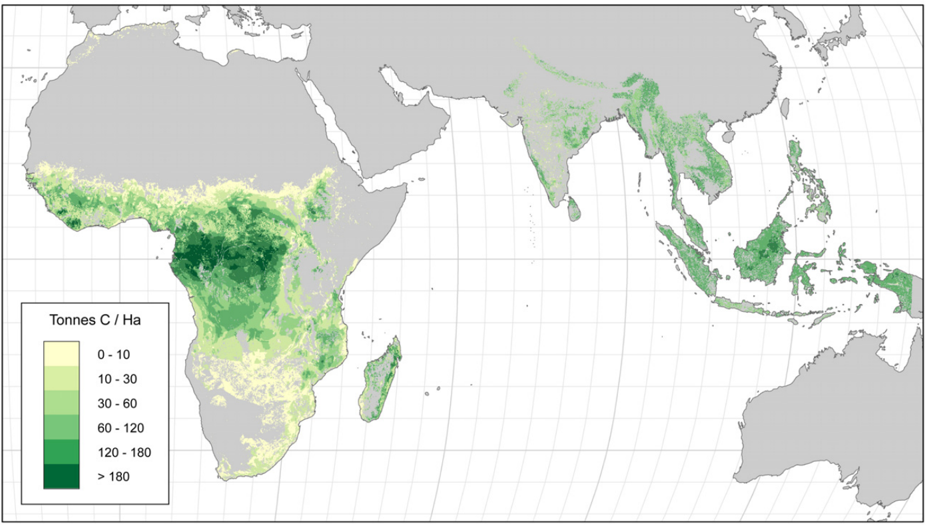
Reducing carbon emissions from deforestation and degradation in developing countries is of central importance in efforts to combat climate change. Key scientific challenges must be addressed to prevent any policy roadblocks. Foremost among the challenges is quantifying nations’ carbon emissions from deforestation and forest degradation, which requires information on forest clearing and carbon storage. Here we review a range of methods available to estimate national-level forest carbon stocks in developing countries. While there are no practical methods to directly measure all forest carbon stocks across a country, both ground-based and remote-sensing measurements of forest attributes can be converted into estimates of national carbon stocks using allometric relationships. Here we synthesize, map and update prominent forest biomass carbon databases to create the first complete set of national-level forest carbon stock estimates. These forest carbon estimates expand on the default values recommended by the Intergovernmental Panel on Climate Change’s National Greenhouse Gas Inventory Guidelines and provide a range of globally consistent estimates.
Overview
The claims and statistics of this paper haven’t been checked yet.
Free: it reads the open-access text and checks the first 5 claims that cite a source we can check. Create a free account to check every claim.
Integrity signals
Registry
Cites
Statistics
Figures
Verification
Claims the paper makes
The claims and statistics of this paper haven’t been checked yet.
Free: it reads the open-access text and checks the first 5 claims that cite a source we can check. Create a free account to check every claim.
Claims other papers make about this one
Each is checked against this paper’s own text: does it say what the citing paper says it does?
The source backs part of the claim, not all of it — or backs it for a different population, condition or comparison.
In the citing paper
“Tropical ecosystems store an enormous 340 billion tonnes of carbon (Gibbs et al 2007), equivalent to more than 40 times the total annual anthropogenic emissions from fossil fuel combustion (Canadell et al 2007).”
From Carbon payback times for crop-based biofuel expansion in the tropics: the effects of changing yield and technology (2008) · cites this paper as Gibbs et al 2007
Experimental — accuracy not yet measuredThe source backs part of the claim, not all of it — or backs it for a different population, condition or comparison.
In the citing paper
“However, estimating forest characteristics such as canopy height or biomass from optical images is a challenging task14, as the physical relationships between spectral signatures and vertical forest structure are complex and not well understood15.”
From A high-resolution canopy height model of the Earth (2023) · cites this paper as [14]
Experimental — accuracy not yet measuredThe cited source says what the claim attributes to it.
In the citing paper
“To estimate the potential carbon stocks that can accumulate in the long term in above-and belowground biomass after restoration, we used an approach commonly used in global estimates (for example, ref. 53 ).”
From Global priority areas for ecosystem restoration (2020) · cites this paper as [53]
In the citing paper
“However, with policies such as REDD in place, farmers and large-scale producers would have greater incentives to improve management of previously cleared land and receive carbon payments for avoiding carbon release from further deforestation (45,46).”
From Tropical forests were the primary sources of new agricultural land in the 1980s and 1990s (2010) · cites this paper as [45]
In the citing paper
“We assign biomass and soil organic carbon content values to each biome from the literature ([27](#r27)–[29](#r29)), and assume an uncertainty of ±20% in these values, reflective of regional differences”
From Greenhouse gas mitigation by agricultural intensification (2010) · cites this paper as [28]
Self-check
Percentages, sums and reported differences re-computed from the paper’s own numbers.
The self-check needs the paper’s full text.
Citations
Cites
Tree allometry and improved estimation of carbon stocks and balance in tropical forests
Chave, J., Andalo, C., Brown, S., Cairns, M. A., Chambers, J. Q., Eamus, D., Fölster, H., Fromard, F., Higuchi, N., Kira, T., et al. (2005) · Oecologia · doi:10.1007/s00442-005-0100-x · Cited by 3,533 · cited 1×
“example, none of the trees Chave et al (2005) used to develop”
MethodSelf-citationGood Practice Guidance for Land Use, Land-Use Change and Forestry
Penman, J., Gytarsky, M. L., Hiraishi, T., Krug, T., Kruger, D., Pipatti, R., Buendia, L. V., Miwa, K., Ngara, T., Tanabe, K., et al. (2003) · IIASA PURE (International Institute of Applied Systems Analysis) · Cited by 2,254
Determination of Deforestation Rates of the World's Humid Tropical Forests
Achard, F., Eva, H. D., Stibig, H.-J., Mayaux, P., Gallego, J., Richards, T., & Malingreau, J.-P. (2002) · Science · doi:10.1126/science.1070656 · Cited by 1,993 · cited 6×
“…of biome-average datasets where a single representative value of forest carbon per unit area (e.g. tonnes of C per hectare) is applied to broad forest categories or biomes (e.g. Fearnside 2000, Houghton 1999, Houghton et al 2001, DeFries et al 2002, Achard et al 2002, 2004, Ramankutty et al 2007).”
BackgroundInfluentialThe amount of carbon released from peat and forest fires in Indonesia during 1997
Page, S. E., Siegert, F., Rieley, J. O., Boehm, H.-D. V., Jaya, A., & Limin, S. (2002) · Nature · doi:10.1038/nature01131 · Cited by 1,885
Root biomass allocation in the world's upland forests
Cairns, M. A., Brown, S., Helmer, E. H., & Baumgardner, G. A. (1997) · Oecologia · doi:10.1007/s004420050201 · Cited by 1,622
Self-citationCritical analysis of root : shoot ratios in terrestrial biomes
MOKANY, K., RAISON, R. J., & PROKUSHKIN, A. S. (2006) · Global Change Biology · doi:10.1111/j.1365-2486.2005.001043.x · Cited by 1,588 · cited 1×
“For example, root biomass is typically estimated to be 20% of the aboveground forest carbon stocks (e.g. Houghton et al 2001, Achard et al 2002, Ramankutty et al 2007) based on a predictive relationship established from extensive literature reviews (Cairns et al 1997, Mokany et al 2006).”
BackgroundLand use, land use change and forestry
(2015) · Research Handbook on Climate Change Mitigation Law · doi:10.4337/9781849805834.00023 · Cited by 1,492
Estimating biomass and biomass change of tropical forests: A primer
Brown, S. (1997) · Medical Entomology and Zoology · Cited by 1,320
Self-citationBiomass Estimation Methods for Tropical Forests with Applications to Forest Inventory Data
Brown, S., Gillespie, A. J. R., & Lugo, A. E. (1989) · Forest Science · doi:10.1093/forestscience/35.4.881 · Cited by 1,279 · cited 1×
“…has gone into developing tools and models that can ‘scale up’ or extrapolate destructive harvest data points to larger scales based on proxies measured in the field or from remotesensing instruments (e.g. Brown et al, 1989, 1993, Waring et al 1995, Brown 1997, Chave et al 2005, Saatchi et al 2007).”
BackgroundSelf-citationMcGroddy, M. E., Daufresne, T., & Hedin, L. O. (2004) · Ecology · doi:10.1890/03-0351 · Cited by 1,124
Research works printed but not linked: 12
- Brown S, 1992, Interciencia, 17, 8
- Brown S Pearson T, 2005, Report to The Nature Conservancy
- IPCC, 2006, IPCC Guidelines for National Greenhouse Gas Inventories. Prepared by the National Greenhouse Gas Inventories Programme
- Mette T Papathanassiou K P Hajnsek I Zimmerman R, 2003, Proc. POLnSAR
- Olander L P, 2007, Environ. Res. Lett.
- Pearson T Brown S Petrova S Moore N Slaymaker D, 2005, Report to The Nature Conservancy
- Pearson T Walker S Brown S, 2005, Winrock International and the BioCarbon Fund of the World Bank, 57
- Penman J, 2003, IPCC National Greenhouse Gas Inventories Programme and Institute for Global Environmental Strategies, Kanagawa, Japan
- Post W M Izaurralde R C Mann L K Bliss N Rosenberg N J Izaurralde R C Malone E L, 1999, Proc. Symp. Carbon Sequestration in Soils Science, Monitoring and Beyond, 41
- Rosenqvist A Shimada M Igarashi T Watanabe M Tadono T Yamamoto H, 2003, Geoscience and Remote Sensing Symposium, 2003 Proc. 2003 IEEE International, 1471
- Shimada M Rosenqvist A Watanabe M Tadono T, 2005, Proc. POLinSAR 2005
- Watson R T Noble I R Bolin B Ravindranath N H Verardo D J Dokken D J, 2000, Special Report of the Intergovernmental Panel on Climate Change, 375
Cited by
Items 101–200 of 1,000
How well do we know the flux of CO2 from land-use change?
Houghton, R. A. (2010) · Tellus B: Chemical and Physical Meteorology · doi:10.1111/j.1600-0889.2010.00473.x · Cited by 178
“Satellite data are also being used to estimate aboveground biomass at high spatial resolution (Gibbs et al., 2007; Baccini et al., 2008; Goetz et al., 2009), so that actual, rather than mean, carbon densities might be assigned to the areas deforested.”
MethodNæsset, E., Gobakken, T., Solberg, S., Grégoire, T. G., NELSON, R. F., Ståhl, G., & Weydahl, D. J. (2011) · Remote Sensing of Environment · doi:10.1016/j.rse.2011.08.021 · Cited by 203
Quantifying Forest Biomass Carbon Stocks From Space
Rodríguez-Veiga, P., Wheeler, J., Louis, V., Tansey, K., & Balzter, H. (2017) · Current Forestry Reports · doi:10.1007/s40725-017-0052-5 · Cited by 177
Error propagation in biomass estimation in tropical forests
Molto, Q., Rossi, V., & Blanc, L. (2013) · Methods in Ecology and Evolution · doi:10.1111/j.2041-210x.2012.00266.x · Cited by 177
“Tropical forests are a large planetary carbon stock, with 40% of the Earth’s total carbon stored in the terrestrial vegetation [from 158 to 324 Pg (Gibbs et al. 2007)].”
Local spatial structure of forest biomass and its consequences for remote sensing of carbon stocks
Réjou-Méchain, M., Muller-Landau, H. C., Detto, M., Thomas, S. C., Le Toan, T., Saatchi, S. S., Barreto-Silva, J. S., Bourg, N. A., Bunyavejchewin, S., Butt, N., et al. (2014) · Biogeosciences · doi:10.5194/bg-11-6827-2014 · Cited by 176
“The global Biogeosciences, 11, 6827–6840, 2014 www.biogeosciences.net/11/6827/2014/ monitoring of forest carbon stocks has thus come to the fore of the research agenda, with important implications in economics, policy and conservation (Gibbs et al., 2007).”
BackgroundSensitivity of L-Band SAR Backscatter to Aboveground Biomass of Global Forests
Yu, Y., & Saatchi, S. (2016) · Remote Sensing · doi:10.3390/rs8060522 · Cited by 175
“Quantifying the aboveground biomass (AGB) of global forests and the changes from LULC activities has become an urgent task of the science community for reducing the uncertainty in global carbon cycle, and an important responsibility of the international community for reporting and assessing national scale carbon emiss…”
BackgroundSillman, J., Nygren, L., Kahiluoto, H., Ruuskanen, V., Tamminen, A., Bajamundi, C., Nappa, M., Wuokko, M., Lindh, T., Vainikka, P., et al. (2019) · Global Food Security · doi:10.1016/j.gfs.2019.09.007 · Cited by 185
Decrease of L-band SAR backscatter with biomass of dense forests
Mermoz, S., Réjou-Méchain, M., Villard, L., Le Toan, T., Rossi, V., & Gourlet-Fleury, S. (2015) · Remote Sensing of Environment · doi:10.1016/j.rse.2014.12.019 · Cited by 173
“…of forest carbon is mostly based on ground measurements with 7 relatively small field plots, which are not necessarily representative of their 8 surrounding areas (Réjou-Méchain et al., 2014) and not uniformly distributed 9 over forested areas and biomes (Gibbs et al., 2007; Houghton et al., 2009).”
BackgroundOlander, L. P., Gibbs, H. K., Steininger, M., Swenson, J. J., & Murray, B. C. (2008) · Environmental Research Letters · doi:10.1088/1748-9326/3/2/025011 · Cited by 172
“These same surveys can be used to enhance existing data on forest carbon stocks, which is greatly needed to assess the emissions from deforestation (Gibbs et al 2007).”
BackgroundMethodInfluentialSelf-citationLiu, Y., Gong, W., Xing, Y., Hu, X., & Gong, J. (2019) · ISPRS Journal of Photogrammetry and Remote Sensing · doi:10.1016/j.isprsjprs.2019.03.016 · Cited by 171
David, R. M., Rosser, N. J., & Donoghue, D. N. M. (2022) · Remote Sensing of Environment · doi:10.1016/j.rse.2022.113232 · Cited by 177
Tradeoffs in carbon commodification: A political ecology of common property forest governance
Osborne, T. (2015) · Geoforum · doi:10.1016/j.geoforum.2015.10.007 · Cited by 177
Aboveground biomass variability across intact and degraded forests in the Brazilian Amazon
Longo, M., Keller, M., dos‐Santos, M. N., Leitold, V., Pinagé, E. R., Baccini, A., Saatchi, S., Nogueira, E. M., Batistella, M., & Morton, D. C. (2016) · Global Biogeochemical Cycles · doi:10.1002/2016gb005465 · Cited by 166
Carbon emissions from tropical forest degradation caused by logging
Pearson, T. R. H., Brown, S., & Casarim, F. M. (2014) · Environmental Research Letters · doi:10.1088/1748-9326/9/3/034017 · Cited by 153
Self-citationSocial and Environmental Impacts of Forest Management Certification in Indonesia
Miteva, D. A., Loucks, C. J., & Pattanayak, S. K. (2015) · PLOS ONE · doi:10.1371/journal.pone.0129675 · Cited by 163
“Tropical forests are of primary importance to biodiversity conservation and climate change mitigation [1,2].”
Carbon density and accumulation in woody species of tropical dry forest in India
Chaturvedi, R. K., Raghubanshi, A. S., & Singh, J. S. (2011) · Forest Ecology and Management · doi:10.1016/j.foreco.2011.07.006 · Cited by 163
“carbon in biomass per unit land area) and its accumulation rate (Gibbs et al., 2007).”
BackgroundMethodInfluentialFriess, D. A., & Webb, E. L. (2013) · Global Ecology and Biogeography · doi:10.1111/geb.12140 · Cited by 163
“Accurate estimates of habitat extent and change are crucial inputs into national, regional and global estimations of change in ecosystem function, such as carbon storage (Gibbs et al., 2007).”
BackgroundAboveground mangrove biomass estimation in Beibu Gulf using machine learning and UAV remote sensing
Tian, Y., Huang, H., Zhou, G., Zhang, Q., Tao, J., Zhang, Y., & Lin, J. (2021) · The Science of The Total Environment · doi:10.1016/j.scitotenv.2021.146816 · Cited by 164
(2009) · CGSPace A Repository of Agricultural Research Outputs (Consultative Group for International Agricultural Research) · Cited by 161
Tropical montane forests are a larger than expected global carbon store
Spracklen, D. V., & Righelato, R. (2014) · Biogeosciences · doi:10.5194/bg-11-2741-2014 · Cited by 161
“Regional biomass stocks are typically calculated by multiplying the biomass storage per unit area by the planimetric area of the forested region (Gibbs et al., 2007; Baccini et al., 2012).”
BackgroundMethodBrosofske, K. D., Froese, R. E., Falkowski, M. J., & Banskota, A. (2014) · Forest Science · doi:10.5849/forsci.12-134 · Cited by 192
Pan-tropical monitoring of deforestation
Achard, F., DeFries, R., Eva, H., Hansen, M., Mayaux, P., & Stibig, H.-J. (2007) · Environmental Research Letters · doi:10.1088/1748-9326/2/4/045022 · Cited by 160
“Reference data on biomass and accepted procedures to estimate the fluxes are equally essential, as described in Gibbs et al (2007).”
MethodCulmsee, H., Leuschner, C., Moser, G. M., & Pitopang, R. (2010) · Journal of Biogeography · doi:10.1111/j.1365-2699.2009.02269.x · Cited by 174
“The carbon stored in the AGB of trees is that which is the most directly affected by deforestation and degradation, and the most relevant in reforestation efforts (Gibbs et al., 2007).”
BackgroundOptical and SAR sensor synergies for forest and land cover mapping in a tropical site in West Africa
Vaglio Laurin, G., Liesenberg, V., Chen, Q., Guerriero, L., Del Frate, F., Bartolini, A., Coomes, D., Wilebore, B., Lindsell, J., & Valentini, R. (2013) · International Journal of Applied Earth Observation and Geoinformation · doi:10.1016/j.jag.2012.08.002 · Cited by 158
Kearsley, E., de Haulleville, T., Hufkens, K., Kidimbu, A., Toirambe, B., Baert, G., Huygens, D., Kebede, Y., Defourny, P., Bogaert, J., et al. (2013) · Nature Communications · doi:10.1038/ncomms3269 · Cited by 158
Laurin, G. V., Balling, J., Corona, P., Mattioli, W., Papale, D., Puletti, N., Rizzo, M., Truckenbrodt, J., & Urban, M. (2018) · Journal of Applied Remote Sensing · doi:10.1117/1.jrs.12.016008 · Cited by 171
Effects of elevation and land use on the biomass of trees, shrubs and herbs at Mount Kilimanjaro
Ensslin, A., Rutten, G., Pommer, U., Zimmermann, R., Hemp, A., & Fischer, M. (2015) · Ecosphere · doi:10.1890/es14-00492.1 · Cited by 158
“, in programs for the reduction of emissions due to deforestation and degradation (REDDþ; Gibbs et al. 2007).”
BackgroundEcosystem Services as Boundary Objects for Transdisciplinary Collaboration
Steger, C., Hirsch, S. L., Evers, C., Branoff, B., Petrova, M. A., Nielsen‐Pincus, M., Wardropper, C. B., & van Riper, C. J. (2017) · Ecological Economics · doi:10.1016/j.ecolecon.2017.07.016 · Cited by 168
“The United Nations Framework Convention on Climate Change has championed programs geared towards reducing emissions from deforestation and degradation (REDD) in forest-rich developing countries, allowing them to receive payments from other carbon emitting countries in exchange for the carbon sequestration and biodiver…”
BackgroundFox, J., Castella, J., & Ziegler, A. D. (2013) · Global Environmental Change · doi:10.1016/j.gloenvcha.2013.05.011 · Cited by 174
“Data from Hainan (PRC), Thailand, and Cambodia suggest BGC for rubber ranges from 7 to 29 Mg/ha, with root:shoot ratios ranging from 0.1 to 0.3 (Cheng et al., 2007; Gnanavelrajah et al., 2008; Mizoue et al., 2009; Yuen et al., submitted for publication).”
BackgroundInfluentialZhang, G., Ganguly, S., Nemani, R., White, M. A., MILESI, C., Hashimoto, H., Wang, W., Saatchi, S. S., Yu, Y., & Myneni, R. B. (2014) · Remote Sensing of Environment · doi:10.1016/j.rse.2014.01.025 · Cited by 166
Andrew, M. E., Wulder, M. A., NELSON, T. A., & Coops, N. C. (2015) · GIScience & Remote Sensing · doi:10.1080/15481603.2015.1033809 · Cited by 170
“A typical example is the linking of average above-ground biomass values to LULC classes to map the distribution of the carbon storage service (e.g., Gibbs et al. 2007).”
BackgroundPandit, S., Tsuyuki, S., & Dube, T. J. (2018) · Remote Sensing · doi:10.3390/rs10040601 · Cited by 175
High-resolution mapping of forest carbon stocks in the Colombian Amazon
Asner, G. P., Clark, J. K., Mascaro, J., Galindo García, G. A., Chadwick, K. D., Navarrete Encinales, D. A., Paez-Acosta, G., Cabrera Montenegro, E., Kennedy-Bowdoin, T., Duque, Á., et al. (2012) · Biogeosciences · doi:10.5194/bg-9-2683-2012 · Cited by 150
“In ge eral, spatially explicit carbon mapping methods will yield similar regionally-integrated results as long as there are no large systematic biases, such as those observed when generic ACD values are applied to low resolution forest cover maps (Gibbs et al., 2007; Goetz et al., 2009; Avitabile et al., 2011).”
BackgroundMeasuring and modelling above-ground carbon and tree allometry along a tropical elevation gradient
Marshall, A. R., Willcock, S., Platts, P. J., Lovett, J. C., Balmford, A. P., Burgess, N. D., Latham, J., Munishi, P. K. T., Salter, R., Shirima, D. D., et al. (2012) · Biological Conservation · doi:10.1016/j.biocon.2012.03.017 · Cited by 171
Monitoring tropical forest carbon stocks and emissions using Planet satellite data
Csillik, O., Kumar, P., Mascaro, J., O’Shea, T., & Asner, G. P. (2019) · Scientific Reports · doi:10.1038/s41598-019-54386-6 · Cited by 162
Forest Figures: Ecosystem Services Valuation and Policy Evaluation in Developing Countries
Ferraro, P. J., Lawlor, K., Mullan, K. L., & Pattanayak, S. K. (2012) · Review of Environmental Economics and Policy · doi:10.1093/reep/rer019 · Cited by 141
“Biome-specific averages in the tropics range from 72 tons of carbon (tC)/ha in African dry forests to 225 tC/ha in Southeast Asian rainforests (not including soil) (Gibbs et al. 2007).”
BackgroundKalaba, F. K., Quinn, C. H., Dougill, A. J., & Vinya, R. (2013) · Forest Ecology and Management · doi:10.1016/j.foreco.2013.04.024 · Cited by 166
“Forests are one of the most important terrestrial biomes contributing immensely to carbon (C) sequestration and storage, and regulating other climate related cycles (Nasi et al., 2002; Gibbs et al., 2007).”
Community forest monitoring in REDD+: the ‘M’ in MRV?
Fry, B. (2011) · Environmental Science & Policy · doi:10.1016/j.envsci.2010.12.004 · Cited by 149
Applying the conservativeness principle to REDD to deal with the uncertainties of the estimates
Grassi, G., Monni, S., Federici, S., Achard, F., & Mollicone, D. (2008) · Environmental Research Letters · doi:10.1088/1748-9326/3/3/035005 · Cited by 149
Getting ready for REDD+ in Tanzania: a case study of progress and challenges
Burgess, N. D., Bahane, B., Clairs, T., Danielsen, F., Dalsgaard, S., Funder, M., Hagelberg, N., Harrison, P., Haule, C., Kabalimu, K. A., et al. (2010) · Oryx · doi:10.1017/s0030605310000554 · Cited by 148
“…Tanzanian National Forestry Assessment, and the carbon management and measurement projects that will be supported by the Royal Norwegian Embassy, additional relevant data may come from global sources on deforestation and carbon stocks (Gibbs et al., 2007; Hansen et al., 2008; Schmitt et al., 2009).”
BackgroundChidumayo, E. N. (2013) · Forest Ecology and Management · doi:10.1016/j.foreco.2012.11.031 · Cited by 147
Mechanisms and Impacts of Earth System Tipping Elements
Wang, S., Foster, A. C., Lenz, E. A., Kessler, J. D., Stroeve, J. C., Anderson, L. O., Turetsky, M. R., Betts, R., Zou, S., Liu, W., et al. (2023) · Reviews of Geophysics · doi:10.1029/2021rg000757 · Cited by 164
Reconciling biodiversity and carbon conservation
Thomas, C. D., Anderson, B. J., Moilanen, A., Eigenbrod, F., Heinemeyer, A., Quaife, T., Roy, D. B., Gillings, S., Armsworth, P. R., & Gaston, K. J. (2013) · Ecology Letters · doi:10.1111/ele.12054 · Cited by 138
Carbon storage of a tropical mangrove forest in Mui Ca Mau National Park, Vietnam
Tuệ, N. T., Dũng, L. V., Nhuận, M. T., & Omori, K. (2014) · CATENA · doi:10.1016/j.catena.2014.05.008 · Cited by 156
Lidar plots — a new large-area data collection option: context, concepts, and case study
Wulder, M. A., White, J. C., Bater, C. W., Coops, N. C., Hopkinson, C., & Chen, G. (2012) · Canadian Journal of Remote Sensing · doi:10.5589/m12-049 · Cited by 152
“A variety of possible approaches exist, including traditional forest inventories, spaceborne optical and microwave remote sensing, and airborne lidar (Gibbs et al., 2007; Asner, 2009).”
BackgroundMethodA better Amazon road network for people and the environment
Vilela, T., Malky Harb, A., Bruner, A., Laísa da Silva Arruda, V., Ribeiro, V., Auxiliadora Costa Alencar, A., Julissa Escobedo Grandez, A., Rojas, A., Laina, A., & Botero, R. (2020) · Proceedings of the National Academy of Sciences · doi:10.1073/pnas.1910853117 · Cited by 136
Verhegghen, A., Mayaux, P., de Wasseige, C., & Defourny, P. (2012) · Biogeosciences · doi:10.5194/bg-9-5061-2012 · Cited by 130
Carbon storage, structure and composition of miombo woodlands in Tanzania’s Eastern Arc Mountains
Shirima, D. D., Munishi, P., Lewis, S. L., Burgess, N. D., Marshall, A. R., Balmford, A. P., Swetnam, R. D., & Zahabu, E. M. (2011) · African Journal of Ecology · doi:10.1111/j.1365-2028.2011.01269.x · Cited by 141
“We estimate carbon to be 50% of tree biomass (Gibbs et al., 2007; Thomas & Malczewski, 2007; Lewis et al., 2009).”
BackgroundNew Mining Concessions Could Severely Decrease Biodiversity and Ecosystem Services in Ecuador
Roy, B. A., Zorrilla, M., Endara, L., Thomas, D. C., Vandegrift, R., Rubenstein, J. M., Policha, T., Ríos-Touma, B., & Read, M. (2018) · Tropical Conservation Science · doi:10.1177/1940082918780427 · Cited by 90
UAV LiDAR for below-canopy forest surveys
Chisholm, R. A., Cui, J., Lum, S. K. Y., & Chen, B. M. (2013) · Journal of Unmanned Vehicle Systems · doi:10.1139/juvs-2013-0017 · Cited by 140
“A range of remote-sensing technologies is currently available for assessing the structure of forest ecosystems (Gibbs et al. 2007).”
BackgroundTallis, H. M., Kennedy, C. M., Ruckelshaus, M. H., Goldstein, J., & Kiesecker, J. M. (2015) · Environmental Impact Assessment Review · doi:10.1016/j.eiar.2015.06.005 · Cited by 167
“Carbon storage and sequestration benefits are tightly associated with vegetation communities, which can be characterized relatively well by habitat or land cover types (Gibbs et al., 2007).”
BackgroundCoomes, D. A., Holdaway, R. J., Kobe, R. K., Lines, E. R., & Allen, R. B. (2011) · Journal of Ecology · doi:10.1111/j.1365-2745.2011.01920.x · Cited by 140
“…management could make a cost-effective contribution to stabilizing atmospheric CO2 concentration at 550 p.p.m. by 2050 (Pacala & Socolow 2004), and implementing a carbon-credit system to reduce emissions from tropical deforestation and degradation is a UnitedNations priority (Gibbs et al. 2007).”
BackgroundInfluentialSingh, A. K., Liu, W., Zakari, S., Wu, J., Yang, B., Jiang, X., Zhu, X., Zou, X., Zhang, W., Chen, C., et al. (2021) · The Science of The Total Environment · doi:10.1016/j.scitotenv.2021.148948 · Cited by 143
Blackman, A. (2013) · Forest Policy and Economics · doi:10.1016/j.forpol.2013.04.006 · Cited by 143
Magnitude, spatial distribution and uncertainty of forest biomass stocks in Mexico
Rodríguez‐Veiga, P., Saatchi, S. S., Tansey, K. J., & Balzter, H. (2016) · Remote Sensing of Environment · doi:10.1016/j.rse.2016.06.004 · Cited by 140
“…neither data source is able to satisfy the full data requirements for MRV. Remote sensing data allows the production of spatial maps that can improve GHG monitoring at local and national scales, and provide information that can be used for land use planning and management (Gibbs et al., 2007).”
InfluentialDube, T. J., Mutanga, O., Adam, E., & Ismail, R. (2014) · Sensors · doi:10.3390/s140815348 · Cited by 152
“Information on forest spatial distribution, biomass levels and dynamics is therefore, required for accurate estimation of greenhouse gases flux, policy development and implementation [4].”
BackgroundKeith, H., Mackey, B., Berry, S. L., Lindenmayer, D. B., & Gibbons, P. (2009) · Global Change Biology · doi:10.1111/j.1365-2486.2009.02146.x · Cited by 145
“This has been shown by Baccini et al. (2004) and Gibbs et al. (2007).”
MethodUnderstanding changes in business strategies regarding biodiversity and ecosystem services
Houdet, J., Trommetter, M., & Weber, J. (2011) · Ecological Economics · doi:10.1016/j.ecolecon.2011.10.013 · Cited by 160
Biomass Estimation Using 3D Data from Unmanned Aerial Vehicle Imagery in a Tropical Woodland
Kachamba, D., Ørka, H. O., Gobakken, T., Eid, T., & Mwase, W. (2016) · Remote Sensing · doi:10.3390/rs8110968 · Cited by 138
“carbon density v lues across he map with th same forest strata [1].”
BackgroundMethodEstoque, R. C., Myint, S. W., Wang, C., Ishtiaque, A., Aung, T., Emerton, L., Ooba, M., Hijioka, Y., Mon, M. S., Wang, Z., et al. (2018) · Global Change Biology · doi:10.1111/gcb.14409 · Cited by 135
Ota, T., Ogawa, M., Shimizu, K., Kajisa, T., Mizoue, N., Yoshida, S., Takao, G., Hirata, Y., Furuya, N., Sano, T., et al. (2015) · Forests · doi:10.3390/f6113882 · Cited by 141
“Tropical forests have been recognized as an important type of ecosystem that can be used in mitigating climate change, because they sequester and store more carbon than any other vegetation types [1,2].”
BackgroundCarbon sequestration estimates of indigenous street trees in the City of Tshwane, South Africa
Stoffberg, G. H., Rooyen, M. W. V., der Linde, M. J. V., & GROENEVELD, H. T. (2009) · Urban forestry & urban greening · doi:10.1016/j.ufug.2009.09.004 · Cited by 126
Equity in Climate Change: An Analytical Review
Mattoo, A., & Subramanian, A. (2012) · World Development · doi:10.1016/j.worlddev.2011.11.007 · Cited by 150
Næsset, E., Gobakken, T., Bollandsås, O. M., Grégoire, T. G., Nelson, R., & Ståhl, G. (2012) · Remote Sensing of Environment · doi:10.1016/j.rse.2012.11.010 · Cited by 135
“, 2011) and national forest inventory (Næsset, 2005) and for REDD (Deforestation and Forest Degradation inDeveloping Countries)monitoring has been emphasized (Angelsen, 2008; Gibbs et al., 2007).”
BackgroundCombined use of Sentinel-1 and Sentinel-2 data for improving above-ground biomass estimation
Nuthammachot, N., Askar, A., Stratoulias, D., & Wicaksono, P. (2020) · Geocarto International · doi:10.1080/10106049.2020.1726507 · Cited by 131
“So far, studies attempting to measure biomass have focused on the Above-ground Biomass (AGB) as it is methodologically simpler to estimate and it accounts for the majority of the AGB widely (Gibbs et al. 2007).”
BackgroundThe carbon sequestration potential of tree crop plantations
Kongsager, R., Napier, J., & Mertz, O. (2012) · Mitigation and Adaptation Strategies for Global Change · doi:10.1007/s11027-012-9417-z · Cited by 122
“Most emissions come from fossil fuels, but tropical ecosystems store 340 billion tons of C (Gibbs et al. 2007), corresponding to more than forty times total annual anthropogenic emissions from fossil fuels (Canadell et al.”
BackgroundSmall Sample Sizes Yield Biased Allometric Equations in Temperate Forests
Duncanson, L., Rourke, O., & Dubayah, R. (2015) · Scientific Reports · doi:10.1038/srep17153 · Cited by 109
“The average exponents are used as the b coefficients in equation (3).”
BackgroundMethodInfluentialCarreiras, J. M. B., Melo, J., & de Vasconcelos, M. J. P. (2013) · Remote Sensing · doi:10.3390/rs5041524 · Cited by 132
“These maps can be used to monitor forests (deforestation, regrowth and degradation processes), to estimate and model greenhouse gas emissions and the effects of conservation actions, sustainable management and enhancement of C stocks [4,14].”
BackgroundPhelps, J., Guerrero, M. C., Dalabajan, D., Young, B., & Webb, E. L. (2010) · Global Environmental Change · doi:10.1016/j.gloenvcha.2010.01.002 · Cited by 117
Jones, A. R., Segaran, R. R., Clarke, K. D., Waycott, M., Goh, W. S. H., & Gillanders, B. M. (2020) · Frontiers in Marine Science · doi:10.3389/fmars.2019.00784 · Cited by 117
Trends in shifting cultivation and the REDD mechanism
Mertz, O. (2009) · Current Opinion in Environmental Sustainability · doi:10.1016/j.cosust.2009.10.002 · Cited by 116
Estimating canopy structure and biomass in bamboo forests using airborne LiDAR data
Cao, L., Coops, N. C., Sun, Y., Ruan, H., Wang, G., Dai, J., & She, G. (2019) · ISPRS Journal of Photogrammetry and Remote Sensing · doi:10.1016/j.isprsjprs.2018.12.006 · Cited by 117
Chen, Q., McRoberts, R. E., Wang, C., & Radtke, P. J. (2016) · Remote Sensing of Environment · doi:10.1016/j.rse.2016.07.023 · Cited by 117
“Estimating andmonitoring changes in forest biomass over large spatial extents is crucial for advancing our understanding of the global carbon cycle and implementing effective carbon emission mitigation strategies such as the UNFCCC program to Reduce Emissions from Deforestation and forest Degradation (REDD+) (e.g., Wo…”
MethodHerold, M., & Johns, T. (2007) · Environmental Research Letters · doi:10.1088/1748-9326/2/4/045025 · Cited by 115
“Please refer to other papers in this focus issue for technical work on estimation of carbon stocks and changes (Gibbs et al 2007).”
BackgroundEstimating Aboveground Biomass on Private Forest Using Sentinel-2 Imagery
Askar, Nuthammachot, N., Phairuang, W., Wicaksono, P., & Sayektiningsih, T. (2018) · Journal of Sensors · doi:10.1155/2018/6745629 · Cited by 114
Modeling predictive assessment of carbon storage using InVEST model in Uva province, Sri Lanka
Piyathilake, I. D. U. H., Udayakumara, E. P. N., Ranaweera, L. V., & Gunatilake, S. K. (2021) · Modeling Earth Systems and Environment · doi:10.1007/s40808-021-01207-3 · Cited by 125
Economic Assessment of Forest Ecosystem Services Losses: Cost of Policy Inaction
Chiabai, A., Travisi, C. M., Markandya, A., Ding, H., & Nunes, P. A. L. D. (2011) · Environmental and Resource Economics · doi:10.1007/s10640-011-9478-6 · Cited by 126
“Finally, the studies of Myneni et al. (2001) and Gibbs et al. (2007) do not cover all the geographical regions, so that the available figures have been transferred from the original study sites to regions with similar forest types, assuming for the latter the same carbon capacity.”
InfluentialAccounting for indirect land-use change in the life cycle assessment of biofuel supply chains
Sanchez, S. T., Woods, J., Akhurst, M., Brander, M., O'Hare, M., Dawson, T. P., Edwards, R., Liska, A. J., & Malpas, R. (2012) · Journal of The Royal Society Interface · doi:10.1098/rsif.2011.0769 · Cited by 113
Securing tropical forest carbon: the contribution of protected areas to REDD
Scharlemann, J. P. W., Kapos, V., Campbell, A., Lysenko, I., Burgess, N. D., Hansen, M. C., Gibbs, H. K., Dickson, B., & Miles, L. (2010) · Oryx · doi:10.1017/s0030605310000542 · Cited by 112
Self-citationPacheco, P., Aguilar‐Støen, M., Börner, J., Andrés Etter, R., Putzel, L., & Diaz, M. D. C. V. (2010) · Forests · doi:10.3390/f2010001 · Cited by 142
“Forests are recognized as biodiversity repositories and carbon stocks [1].”
BackgroundCarbon storage in a restored mangrove forest in Can Gio Mangrove Forest Park, Mekong Delta, Vietnam
Dũng, L. V., Tuệ, N. T., Nhuận, M. T., & Omori, K. (2016) · Forest Ecology and Management · doi:10.1016/j.foreco.2016.08.032 · Cited by 118
Linking lidar and forest modeling to assess biomass estimation across scales and disturbance states
Knapp, N., Fischer, R., & Huth, A. (2017) · Remote Sensing of Environment · doi:10.1016/j.rse.2017.11.018 · Cited by 115
“In recent years, remote sensing has led to considerable improvements in this field (Gibbs et al., 2007; De Sy et al., 2012; Pan et al., 2013).”
BackgroundAlgal Biomass from Wastewater and Flue Gases as a Source of Bioenergy
Lage, S., Gojkovic, Z., Funk, C., & Gentili, F. (2018) · Energies · doi:10.3390/en11030664 · Cited by 105
The carbon balance of South America: a review of the status, decadal trends and main determinants
Gloor, M. U., Gatti, L. V., Brienen, R., Feldpausch, T. R., Phillips, O. L., Miller, J. B., Ometto, J. P., da Rocha, H. R., Baker, T. R., Jong, B. H. D., et al. (2012) · Biogeosciences · doi:10.5194/bg-9-5407-2012 · Cited by 127
Birhane, E., Ashfare, H., Fenta, A. A., Hishe, H., Gebremedhin, M. A., wahed, H. G., & Solomon, N. (2018) · Remote Sensing Applications Society and Environment · doi:10.1016/j.rsase.2018.10.017 · Cited by 111
Kronseder, K., Ballhorn, U., Boehm, V., & Siegert, F. (2012) · International Journal of Applied Earth Observation and Geoinformation · doi:10.1016/j.jag.2012.01.010 · Cited by 130
“…of tropical forest biomass by the means f optical remote sensing methods is generally challenging and has ot yet been satisfactorily resolved due to dense canopies, heteroeneous, complex, tall structure, and the low saturation level of pectral bands and derived indices (Gibbs et al., 2007).”
BackgroundInfluentialDay, M., Baldauf, C., Rutishauser, E., & Sunderland, T. (2013) · Environmental Conservation · doi:10.1017/s0376892913000295 · Cited by 117
“As well as holding the largest stocks of carbon within biomass, mature trees are often most impacted by forest degradation and deforestation (Gibbs et al. 2007).”
Kenzo, T., Furutani, R., Hattori, D., Kendawang, J. J., Tanaka, S., Sakurai, K., & Ninomiya, I. (2009) · Journal of Forest Research · doi:10.1007/s10310-009-0149-1 · Cited by 109
“Therefore, accurate methods for estimating aboveground biomass in logged-over tropical rainforest are needed to estimate the effects of carbon sequestration after logging and to evaluate the baseline for nations’ carbon storage on the REDD scheme (Gibbs et al. 2007; Angelsen 2008).”
MethodGourlet‐Fleury, S., Rossi, V., Réjou‐Méchain, M., Freycon, V., Fayolle, A., Saint‐André, L., Cornu, G., Gérard, J., Sarrailh, J.-M., Flores, O., et al. (2011) · Journal of Ecology · doi:10.1111/j.1365-2745.2011.01829.x · Cited by 109
“…estimates used formost African countries are based on a ‘biome-average approach’ which scales up point-based biomass harvest measurement data or forest inventory data to broad forest categories or biomes often with the use of remote sensing techniques (Gibbs et al. 2007; Baccini et al. 2008).”
BackgroundInfluentialHigh‐resolution carbon mapping on the million‐hectare Island of Hawaii
Asner, G. P., Hughes, R. F., Mascaro, J., Uowolo, A. L., Knapp, D., Jacobson, J., Kennedy-Bowdoin, T., & Clark, J. K. (2011) · Frontiers in Ecology and the Environment · doi:10.1890/100179 · Cited by 108
“The most general approach (Tier I) is based on estimated biome-level variation in C stocks calculated from published values and other sources, which will undoubtedly generate major uncertainty and lower reliability for C stock and emissions information (Gibbs et al. 2007; Angelsen 2008).”
Restoring degraded tropical forests for carbon and biodiversity
Budiharta, S., Meijaard, E., Erskine, P. D., Rondinini, C., Pacifici, M., & Wilson, K. A. (2014) · Environmental Research Letters · doi:10.1088/1748-9326/9/11/114020 · Cited by 107
“We develop a stratification matrix of forest condition for East Kalimantan based on the level of degradation and apply this across broad forest types following Gibbs et al (2007).”
MethodScenarios for land use and ecosystem services under global change
Martinez‐Harms, M. J., Bryan, B. A., Figueroa, E., Pliscoff, P., Runting, R. K., & Wilson, K. A. (2017) · Ecosystem Services · doi:10.1016/j.ecoser.2017.03.021 · Cited by 110
“Carbon storage in the native Mediterranean forest has been identified as an important mechanism for mitigating the burden of climate change (Gibbs et al., 2007; Caparros et al., 2011).”
BackgroundShao, Z., & Zhang, L. (2016) · Sensors · doi:10.3390/s16060834 · Cited by 105
“Furthermore, the assessment of carbon stocks for global climate change modeling and initiatives such as Reducing Emissions from Deforestation and Forest Degradation (REDD) and REDD+ rely on forest AGB estimates [2,3].”
BackgroundFatoyinbo, T., Feliciano, E. A., Lagomasino, D., Lee, S.-K., & Trettin, C. (2018) · Environmental Research Letters · doi:10.1088/1748-9326/aa9f03 · Cited by 115
“One of the main challenges for implementing REDD+ is the accurate quantification of C emissions from deforestation and forest degradation, which requires accurate estimates of deforestation rates and biomass (Gibbs et al 2007).”
BackgroundSy, V. D., Herold, M., Achard, F., Avitabile, V., Baccini, A., Carter, S., Clevers, J. G. P. W., Lindquist, E., Pereira, M. J. V. D. C. R., & Verchot, L. V. (2019) · Environmental Research Letters · doi:10.1088/1748-9326/ab3dc6 · Cited by 109
A systematic review on the aboveground biomass and carbon stocks of Indian forest ecosystems
Salunkhe, O., Khare, P. K., Kumari, R., & Khan, M. L. (2018) · Ecological Processes · doi:10.1186/s13717-018-0130-z · Cited by 104
“known as harvest method which is direct method for estimation aboveground biomass (AGB) and carbon stock (Gibbs et al. 2007).”
BackgroundMethodInfluentialBöttcher, H., Eisbrenner, K., Fritz, S., Kindermann, G., Kraxner, F., McCallum, I., & Obersteiner, M. H. (2009) · Carbon Balance and Management · doi:10.1186/1750-0680-4-7 · Cited by 104
“For many potential REDD applications, remote sensing technologies for REDD are often no longer technically constrained, as has been shown by several studies for many regions [3-5].”
Tackling unresolved questions in forest ecology: The past and future role of simulation models
Maréchaux, I., Langerwisch, F., Huth, A., Bugmann, H. K. M., Morin, X., Reyer, C., Seidl, R., Collalti, A., de Paula, M. D., Fischer, R., et al. (2021) · Ecology and Evolution · doi:10.1002/ece3.7391 · Cited by 112
“As another illustration, quantifying forest carbon stocks and fluxes and identifying their drivers are important tasks, in particular to inform climate change mitigation policies such as REDD (Reducing Emissions from Deforestation and Degradation; Gibbs et al., 2007).”
BackgroundMertz, O., Müller, D., Sikor, T. O., Hett, C., Heinimann, A., Castella, J., Lestrelin, G., Ryan, C. M., Reay, D., Schmidt‐Vogt, D., et al. (2012) · Geografisk Tidsskrift-Danish Journal of Geography · doi:10.1080/00167223.2012.709678 · Cited by 114
“Successful implementation of REDD+ therefore requires an improvement in current techniques for assessing carbon emissions and their changes through time (Gibbs et al., 2007).”
BackgroundSchwartz, M., Ciais, P., Truchis, A. D., Chave, J., Ottlé, C., Vega, C., Wigneron, J., Nicolas, M., Jouaber, S., Liu, S., et al. (2023) · Earth system science data · doi:10.5194/essd-15-4927-2023 · Cited by 108
“…the only method to actually measure the biomass of a tree, which involves felling trees and weighing the biomass components (Fayolle et al., 2013; Gibbs et al., 2007; Goodman et al., 2014) More recently, terrestrial laser scanning (TLS) has emerged as a promising alternative for an accurate…”
Method
Metadata
- Authors
- Gibbs, H. K., Brown, S., Niles, J. O., & Foley, J. A.
- Affiliations
- University of Wisconsin–Madison (US)
- Winrock International (United States) (US)
- ORCID
- Gibbs, Holly K
- Venue
- Environmental Research Letters
- Publisher
- IOP Publishing
- Published
- 2007-10
- Volume
- 2
- Issue
- 4
- Pages
- 045023
- ISSN
- 1748-9326 (ISSN-L)
- OpenAlex
- W2040120109
- Semantic Scholar
- 6d28e7b3cb196fc6233340c2b9201e21c6d89a85
- Cited by
- 1,653
- References
- 86
- Citations by year
- 2026: 49 · 2025: 68 · 2024: 79 · 2023: 75 · 2022: 97 · 2021: 95 · 2020: 116 · 2019: 98 · 2018: 97 · 2017: 108 · 2016: 99 · 2015: 108 · 2014: 138 · 2013: 103 · 2012: 105
- FWCI
- 35.91
- Type
- journal article
- Language
- en
- Open access
- gold
- doi.org
- Licence
- cc-by
- Locations
- Environmental Research Letters (publishedVersion, cc-by)
- Funders
- U.S. Department of Energy
- National Aeronautics and Space Administration
- Topics
- Life Sciences › Agricultural and Biological Sciences › Forestry › Forest ecology and management
- Life Sciences › Agricultural and Biological Sciences › Forestry › Remote Sensing and LiDAR Applications
- Life Sciences › Agricultural and Biological Sciences › Forestry › Forest Management and Policy
- Keywords
- REDD+, deforestation, forest degradation, CO2 emissions, forest biomass carbon, allometric relationships, remote sensing, ground-based observations, developing countries
About these checks
Registry, retraction, Cites and statistics results are computed, not judged, with one exception: a printed reference that no index lists is read once by a model before it counts as a citation error. Claims are extracted by a model and kept only when their quote appears verbatim in the text; each cited source is then checked, with a model’s help, for whether it says what the claim relies on. Those verdicts can be wrong — read the claim’s quote and the cited source before relying on one.
Statistics and arithmetic are recomputed, not judged.
Confidence bands are shown only for fields calibrated on our annotated test set. None is calibrated yet, so no band is shown.
What counts as a claim ›How we measure confidence ›How we check this ›
Are you an author, or do you see a problem with this page? Request a review
Data sources
Bibliographic data: Semantic Scholar, OpenAlex, Crossref.
Contains information from the Semantic Scholar Academic Graph Datasets, made available under the ODC Attribution License (ODC-BY 1.0).
Semantic Scholar’s data is described in: Kinney, R., et al. (2023). The Semantic Scholar Open Data Platform. arXiv:2301.10140.
