

Monitoring and estimating tropical forest carbon stocks: making REDD a reality
Open accessThe DOI matches its Crossref record; 86 of the 86 references it cites were found in a registry or an index.
Abstract
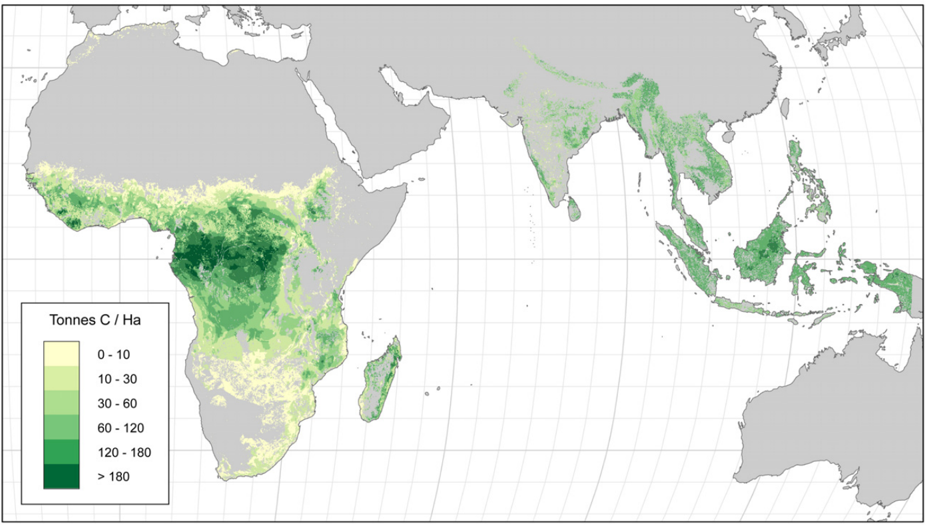
Reducing carbon emissions from deforestation and degradation in developing countries is of central importance in efforts to combat climate change. Key scientific challenges must be addressed to prevent any policy roadblocks. Foremost among the challenges is quantifying nations’ carbon emissions from deforestation and forest degradation, which requires information on forest clearing and carbon storage. Here we review a range of methods available to estimate national-level forest carbon stocks in developing countries. While there are no practical methods to directly measure all forest carbon stocks across a country, both ground-based and remote-sensing measurements of forest attributes can be converted into estimates of national carbon stocks using allometric relationships. Here we synthesize, map and update prominent forest biomass carbon databases to create the first complete set of national-level forest carbon stock estimates. These forest carbon estimates expand on the default values recommended by the Intergovernmental Panel on Climate Change’s National Greenhouse Gas Inventory Guidelines and provide a range of globally consistent estimates.
Overview
The claims and statistics of this paper haven’t been checked yet.
Free: it reads the open-access text and checks the first 5 claims that cite a source we can check. Create a free account to check every claim.
Integrity signals
Registry
Cites
Statistics
Figures
Verification
Claims the paper makes
The claims and statistics of this paper haven’t been checked yet.
Free: it reads the open-access text and checks the first 5 claims that cite a source we can check. Create a free account to check every claim.
Claims other papers make about this one
Each is checked against this paper’s own text: does it say what the citing paper says it does?
The source backs part of the claim, not all of it — or backs it for a different population, condition or comparison.
In the citing paper
“Tropical ecosystems store an enormous 340 billion tonnes of carbon (Gibbs et al 2007), equivalent to more than 40 times the total annual anthropogenic emissions from fossil fuel combustion (Canadell et al 2007).”
From Carbon payback times for crop-based biofuel expansion in the tropics: the effects of changing yield and technology (2008) · cites this paper as Gibbs et al 2007
Experimental — accuracy not yet measuredThe source backs part of the claim, not all of it — or backs it for a different population, condition or comparison.
In the citing paper
“However, estimating forest characteristics such as canopy height or biomass from optical images is a challenging task14, as the physical relationships between spectral signatures and vertical forest structure are complex and not well understood15.”
From A high-resolution canopy height model of the Earth (2023) · cites this paper as [14]
Experimental — accuracy not yet measuredThe cited source says what the claim attributes to it.
In the citing paper
“To estimate the potential carbon stocks that can accumulate in the long term in above-and belowground biomass after restoration, we used an approach commonly used in global estimates (for example, ref. 53 ).”
From Global priority areas for ecosystem restoration (2020) · cites this paper as [53]
In the citing paper
“However, with policies such as REDD in place, farmers and large-scale producers would have greater incentives to improve management of previously cleared land and receive carbon payments for avoiding carbon release from further deforestation (45,46).”
From Tropical forests were the primary sources of new agricultural land in the 1980s and 1990s (2010) · cites this paper as [45]
In the citing paper
“We assign biomass and soil organic carbon content values to each biome from the literature ([27](#r27)–[29](#r29)), and assume an uncertainty of ±20% in these values, reflective of regional differences”
From Greenhouse gas mitigation by agricultural intensification (2010) · cites this paper as [28]
Self-check
Percentages, sums and reported differences re-computed from the paper’s own numbers.
The self-check needs the paper’s full text.
Citations
Cites
Tree allometry and improved estimation of carbon stocks and balance in tropical forests
Chave, J., Andalo, C., Brown, S., Cairns, M. A., Chambers, J. Q., Eamus, D., Fölster, H., Fromard, F., Higuchi, N., Kira, T., et al. (2005) · Oecologia · doi:10.1007/s00442-005-0100-x · Cited by 3,533 · cited 1×
“example, none of the trees Chave et al (2005) used to develop”
MethodSelf-citationGood Practice Guidance for Land Use, Land-Use Change and Forestry
Penman, J., Gytarsky, M. L., Hiraishi, T., Krug, T., Kruger, D., Pipatti, R., Buendia, L. V., Miwa, K., Ngara, T., Tanabe, K., et al. (2003) · IIASA PURE (International Institute of Applied Systems Analysis) · Cited by 2,254
Determination of Deforestation Rates of the World's Humid Tropical Forests
Achard, F., Eva, H. D., Stibig, H.-J., Mayaux, P., Gallego, J., Richards, T., & Malingreau, J.-P. (2002) · Science · doi:10.1126/science.1070656 · Cited by 1,993 · cited 6×
“…of biome-average datasets where a single representative value of forest carbon per unit area (e.g. tonnes of C per hectare) is applied to broad forest categories or biomes (e.g. Fearnside 2000, Houghton 1999, Houghton et al 2001, DeFries et al 2002, Achard et al 2002, 2004, Ramankutty et al 2007).”
BackgroundInfluentialThe amount of carbon released from peat and forest fires in Indonesia during 1997
Page, S. E., Siegert, F., Rieley, J. O., Boehm, H.-D. V., Jaya, A., & Limin, S. (2002) · Nature · doi:10.1038/nature01131 · Cited by 1,885
Root biomass allocation in the world's upland forests
Cairns, M. A., Brown, S., Helmer, E. H., & Baumgardner, G. A. (1997) · Oecologia · doi:10.1007/s004420050201 · Cited by 1,622
Self-citationCritical analysis of root : shoot ratios in terrestrial biomes
MOKANY, K., RAISON, R. J., & PROKUSHKIN, A. S. (2006) · Global Change Biology · doi:10.1111/j.1365-2486.2005.001043.x · Cited by 1,588 · cited 1×
“For example, root biomass is typically estimated to be 20% of the aboveground forest carbon stocks (e.g. Houghton et al 2001, Achard et al 2002, Ramankutty et al 2007) based on a predictive relationship established from extensive literature reviews (Cairns et al 1997, Mokany et al 2006).”
BackgroundLand use, land use change and forestry
(2015) · Research Handbook on Climate Change Mitigation Law · doi:10.4337/9781849805834.00023 · Cited by 1,492
Estimating biomass and biomass change of tropical forests: A primer
Brown, S. (1997) · Medical Entomology and Zoology · Cited by 1,320
Self-citationBiomass Estimation Methods for Tropical Forests with Applications to Forest Inventory Data
Brown, S., Gillespie, A. J. R., & Lugo, A. E. (1989) · Forest Science · doi:10.1093/forestscience/35.4.881 · Cited by 1,279 · cited 1×
“…has gone into developing tools and models that can ‘scale up’ or extrapolate destructive harvest data points to larger scales based on proxies measured in the field or from remotesensing instruments (e.g. Brown et al, 1989, 1993, Waring et al 1995, Brown 1997, Chave et al 2005, Saatchi et al 2007).”
BackgroundSelf-citationMcGroddy, M. E., Daufresne, T., & Hedin, L. O. (2004) · Ecology · doi:10.1890/03-0351 · Cited by 1,124
Research works printed but not linked: 12
- Brown S, 1992, Interciencia, 17, 8
- Brown S Pearson T, 2005, Report to The Nature Conservancy
- IPCC, 2006, IPCC Guidelines for National Greenhouse Gas Inventories. Prepared by the National Greenhouse Gas Inventories Programme
- Mette T Papathanassiou K P Hajnsek I Zimmerman R, 2003, Proc. POLnSAR
- Olander L P, 2007, Environ. Res. Lett.
- Pearson T Brown S Petrova S Moore N Slaymaker D, 2005, Report to The Nature Conservancy
- Pearson T Walker S Brown S, 2005, Winrock International and the BioCarbon Fund of the World Bank, 57
- Penman J, 2003, IPCC National Greenhouse Gas Inventories Programme and Institute for Global Environmental Strategies, Kanagawa, Japan
- Post W M Izaurralde R C Mann L K Bliss N Rosenberg N J Izaurralde R C Malone E L, 1999, Proc. Symp. Carbon Sequestration in Soils Science, Monitoring and Beyond, 41
- Rosenqvist A Shimada M Igarashi T Watanabe M Tadono T Yamamoto H, 2003, Geoscience and Remote Sensing Symposium, 2003 Proc. 2003 IEEE International, 1471
- Shimada M Rosenqvist A Watanabe M Tadono T, 2005, Proc. POLinSAR 2005
- Watson R T Noble I R Bolin B Ravindranath N H Verardo D J Dokken D J, 2000, Special Report of the Intergovernmental Panel on Climate Change, 375
Cited by
Items 301–400 of 1,000
Twenty‐first century remote sensing technologies are revolutionizing the study of tropical forests
Sánchez-Azofeifa, A. G., Q., J. A. G., Campos-Vargas, C., Castro, S., Millan, V. E. G., Nightingale, J. M., & Rankine, C. (2017) · Biotropica · doi:10.1111/btp.12454 · Cited by 70
Hampf, A. C., Stella, T., Berg‐Mohnicke, M., Kawohl, T., Kilian, M., & Nendel, C. (2019) · Agricultural Systems · doi:10.1016/j.agsy.2019.102707 · Cited by 71
Khan, M. N. I., Islam, M. R., Rahman, A., Azad, M. S., Mollick, A. S., Kamruzzaman, M., Sadath, M. N., Feroz, S. M., Rakkibu, G., & Knohl, A. (2020) · Global Ecology and Conservation · doi:10.1016/j.gecco.2020.e01025 · Cited by 72
High carbon stocks in roadside plantations under participatory management in Bangladesh
Rahman, M. M., Kabir, M. E., Akon, A. S. M. J. U., & Ando, K. (2015) · Global Ecology and Conservation · doi:10.1016/j.gecco.2015.01.011 · Cited by 78
“80 Mg ha−1) was higher that the reported range (65–158 Mg ha−1) of tree biomass carbon for Bangladesh (Gibbs et al., 2007).”
BackgroundInfluentialApproaches to monitoring changes in carbon stocks for REDD+
Birdsey, R. A., Ángeles–Pérez, G., Kurz, W. A., Lister, A. J., Olguín, M., Pan, Y., Wayson, C. A., Wilson, B. T., & Johnson, K. D. (2013) · Carbon Management · doi:10.4155/cmt.13.49 · Cited by 68
Bamboo and climate change mitigation.
Lou, Y., Li, Y., Buckingham, K. C., Henley, G., & Zhou, G. (2010) · Cited by 126
Laurin, G. V., Puletti, N., Chen, Q., Corona, P., Papale, D., & Valentini, R. (2016) · International Journal of Applied Earth Observation and Geoinformation · doi:10.1016/j.jag.2016.07.008 · Cited by 83
Mbow, C., Verstraete, M. M., Sambou, B., Diaw, A. T., & Neufeldt, H. (2013) · Journal of Forest Research · doi:10.1007/s10310-013-0414-1 · Cited by 67
“It supplements other synthesis studies (Gibbs et al. 2007; Saatchi et al. 2011).”
Cabral, A. I. R., de Vasconcelos, M. J. P., Oom, D., & Sardinha, R. M. A. (2010) · Applied Geography · doi:10.1016/j.apgeog.2010.09.003 · Cited by 67
Lianas suppress seedling growth and survival of 14 tree species in a Panamanian tropical forest
Martínez‐Izquierdo, L., García, M. M., Powers, J. S., & Schnitzer, S. A. (2016) · Ecology · doi:10.1890/14-2261.1 · Cited by 66
Lei, Y., Treuhaft, R., & Gonçalves, F. (2021) · Remote Sensing of Environment · doi:10.1016/j.rse.2020.112132 · Cited by 61
Attarchi, S., & Gloaguen, R. (2014) · Remote Sensing · doi:10.3390/rs6053693 · Cited by 68
“Estimation of forest biomass by means of optical remote sensing still remains challenging especially in a forest with dense canopy or complex structure as well as in high relief areas [9,12].”
BackgroundImani, G., Boyemba, F., Lewis, S. L., Nabahungu, N. L., Calders, K., Zapfack, L., Riéra, B., Balegamire, C., & Cuní‐Sanchez, A. (2017) · PLoS ONE · doi:10.1371/journal.pone.0179653 · Cited by 79
National forest carbon inventories: policy needs and assessment capacity
Andersson, K. P., Evans, T. P., & Richards, K. (2008) · Climatic Change · doi:10.1007/s10584-008-9526-6 · Cited by 84
“proceed to stratify the landscape into a number of land cover categories, with similar levels of carbon stock density (Gibbs et al. 2007).”
BackgroundThe impact of near-real-time deforestation alerts across the tropics
Moffette, F., Alix‐Garcia, J., Shea, K. M., & Pickens, A. (2021) · Nature Climate Change · doi:10.1038/s41558-020-00956-w · Cited by 74
Uncertainty in below-ground carbon biomass for major land covers in Southeast Asia
Yuen, J. Q., Ziegler, A. D., Webb, E. L., & Ryan, C. M. (2013) · Forest Ecology and Management · doi:10.1016/j.foreco.2013.09.042 · Cited by 69
“…above-ground carbon of various land covers is frequently measured, and new techniques are emerging to 65 make AGC calculations more reliable (cf. Gibbs et al., 2007; Tollefson, 2009), much less work has addressed estimating 66 below-ground woody carbon biomass (cf. Mokany et al., 2006; Vogt et…”
BackgroundVariation in wood density and carbon content of tropical plantation tree species from Ghana
Yeboah, D., Burton, A. J., Storer, A. J., & Opuni‐Frimpong, E. (2013) · New Forests · doi:10.1007/s11056-013-9390-8 · Cited by 72
“Ghana is among the REDD partner countries, and thus needs to be able to provide authenticated estimates of the nation’s forest carbon stocks (Gibbs et al. 2007).”
BackgroundBispo, P. D. C., Rodríguez‐Veiga, P., Zimbres, B., de Miranda, S. D. C., Cezare, C. H. G., Fleming, S., Baldacchino, F., Louis, V., Rains, D., García, M., et al. (2020) · Remote Sensing · doi:10.3390/rs12172685 · Cited by 80
Estimating state-wide biomass carbon stocks for a REDD plan in Acre, Brazil
Salimon, C. I., Putz, F. E., Menezes-Filho, L., Anderson, A. Β., Silveira, M., Brown, F., & de Oliveira, L. C. (2011) · Forest Ecology and Management · doi:10.1016/j.foreco.2011.04.025 · Cited by 64
Carbon stock of oil palm plantations and tropical forests in M alaysia: A review
Kho, L. K., & Jepsen, M. R. (2015) · Singapore Journal of Tropical Geography · doi:10.1111/sjtg.12100 · Cited by 64
Lung, M. A., & Espira, A. (2015) · Forest Ecology and Management · doi:10.1016/j.foreco.2015.04.032 · Cited by 67
Aboveground Forest Biomass Estimation Combining L- and P-Band SAR Acquisitions
Schlund, M., & Davidson, M. W. J. (2018) · Remote Sensing · doi:10.3390/rs10071151 · Cited by 67
Odebiri, O., Mutanga, O., Odindi, J., Peerbhay, K. Y., & Dovey, S. (2020) · GIScience & Remote Sensing · doi:10.1080/15481603.2020.1731108 · Cited by 71
“…become a better alternative to the use of broadband low-resolution traditional sensors such as Landsat Thematic Mapper (TM), Moderate Resolution Imaging Spectroradiometer (MODIS) and SPOT Vegetation (VGT) (Odindi, Bangamwabo, and Mutanga 2015; Roy et al. 2014; Hall et al. 2011; Gibbs et al. 2007).”
BackgroundMethodAbutaleb, K., Mudede, M. F., Nkongolo, N. V., & Newete, S. W. (2020) · The Egyptian Journal of Remote Sensing and Space Science · doi:10.1016/j.ejrs.2020.07.002 · Cited by 73
Allometric models for estimating aboveground biomass in the tropical woodlands of Ghana, West Africa
Aabeyir, R., Adu‐Bredu, S., Agyare, W. A., & Weir, M. J. C. (2020) · Forest Ecosystems · doi:10.1186/s40663-020-00250-3 · Cited by 72
“However, the model efficiency of 91.4% is lower than 95% as reported by Gibbs et al. (2007) in tropical forest.”
BackgroundInfluentialCarbon sequestration and storage capacity of Chinese fir at different stand ages
Li, X., Aguila, L. C. R., Wu, D., Lie, Z., Xu, W., Tang, X., & Liu, J. (2023) · The Science of The Total Environment · doi:10.1016/j.scitotenv.2023.166962 · Cited by 68
When REDD+ goes national: a review of realities, opportunities and challenges
Peskett, L. M., & Brockhaus, M. (2009) · CGSPace A Repository of Agricultural Research Outputs (Consultative Group for International Agricultural Research) · Cited by 79
Yang, X., Blagodatsky, S., Lippe, M., Liu, F., Hammond, J., Xu, J., & Cadisch, G. (2016) · Forest Ecology and Management · doi:10.1016/j.foreco.2016.04.009 · Cited by 71
Kim, C.-M. (2016) · Forest Science and Technology · doi:10.1080/21580103.2016.1147498 · Cited by 63
“A variety of satellite data sources are used in classifying land use and establishing historical trends of forest changes, especially for deforestation and forest degradation (Rosenqvist et al. 2003; DeFries et al. 2006; Gibbs et al. 2007).”
BackgroundCarreiras, J. M. B., Jones, J., Lucas, R., & Shimabukuro, Y. E. (2017) · Remote Sensing of Environment · doi:10.1016/j.rse.2017.03.016 · Cited by 69
“Optical data alone have limited value to directly retrieve the aboveground biomass of tropical forests (Gibbs et al., 2007), since the upper layers of the canopy are contributing the most to the at-sensor reflectance.”
BackgroundBergamaschi, B. A., Bernknopf, R. L., Clow, D. W., Dye, D. G., Faulkner, S. P., Forney, W. M., Gleason, R. A., Hawbaker, T. J., Liu, J., Liu, S., et al. (2010) · Scientific investigations report · doi:10.3133/sir20105233 · Cited by 78
Airborne LiDAR Detects Selectively Logged Tropical Forest Even in an Advanced Stage of Recovery
Kent, R., Lindsell, J., Laurin, G. V., Valentini, R., & Coomes, D. A. (2015) · Remote Sensing · doi:10.3390/rs70708348 · Cited by 62
“Whilst considerable progress has been made in “real-time” detection of logging using satellite multispectral sensors [16,17], selectively logged areas can be very difficult to detect remotely after only a few years of recovery [1,14,18].”
BackgroundNatural Forest Biomass Estimation Based on Plantation Information Using PALSAR Data
Avtar, R., Suzuki, R., & Sawada, H. (2014) · PLoS ONE · doi:10.1371/journal.pone.0086121 · Cited by 68
“LiDAR data are very expensive and cannot provide global coverage with plant species information [20;43].”
BackgroundMethodMokria, M., Gebrekirstos, A., Aynekulu, E., & Bräuning, A. (2015) · Forest Ecology and Management · doi:10.1016/j.foreco.2015.02.008 · Cited by 70
Bundling ecosystem services in the Panama Canal watershed
Simonit, S., & Perrings, C. A. (2013) · Proceedings of the National Academy of Sciences · doi:10.1073/pnas.1112242110 · Cited by 62
Challenges for REDD+ in Indonesia: a case study of three project sites
Enrici, A., & Hubacek, K. (2018) · Ecology and Society · doi:10.5751/es-09805-230207 · Cited by 75
“The initial goal of REDD+ was to lower carbon emissions by reducing deforestation and forest degradation, and shortly thereafter, biodiversity preservation was acknowledged as an important component (Gibbs et al. 2007).”
BackgroundUrban ecosystems: A new frontier for payments for ecosystem services
Richards, D. R., & Thompson, B. S. (2019) · People and Nature · doi:10.1002/pan3.20 · Cited by 65
Global socioeconomic carbon stocks in long-lived products 1900–2008
Lauk, C., Haberl, H., Erb, K.-H., Gingrich, S., & Krausmann, F. (2012) · Environmental Research Letters · doi:10.1088/1748-9326/7/3/034023 · Cited by 61
Mammo, S. (2019) · South African Journal of Botany · doi:10.1016/j.sajb.2019.09.003 · Cited by 62
Importance of bistatic SAR features from TanDEM-X for forest mapping and monitoring
Schlund, M., von Poncet, F., Hoekman, D. H., Kuntz, S., & Schmullius, C. (2013) · Remote Sensing of Environment · doi:10.1016/j.rse.2013.08.024 · Cited by 64
Gasparri, I., & Baldi, G. (2013) · Regional Environmental Change · doi:10.1007/s10113-013-0422-x · Cited by 69
“This method estimates tree biomass based on DBH and wood density and was indicated as the best technique available to estimate biomass from a forest inventory data when regional and species-specific functions are not available (Gibbs et al. 2007).”
MethodBuckeridge, M. S., de Souza, A. P., Arundale, R. A., Anderson‐Teixeira, K. J., & DeLucia, E. H. (2011) · GCB Bioenergy · doi:10.1111/j.1757-1707.2011.01122.x · Cited by 90
“130–140 tons per ha (Gibbs et al., 2007; Vieira et al., 2008), 18 times more than what is found in sugarcane plantation.”
BackgroundInfluentialVerstegen, J. A., van der Laan, C., Dekker, S. C., Faaij, A. P. C., & Santos, M. J. (2019) · Ecological Indicators · doi:10.1016/j.ecolind.2019.04.053 · Cited by 62
Conti, G., Harguindeguy, N. P., Quétier, F., Gorné, L. D., Jaureguiberry, P., Bertone, G. A., Enrico, L., Cuchietti, A., & Díaz, S. M. (2014) · Agriculture Ecosystems & Environment · doi:10.1016/j.agee.2014.07.025 · Cited by 70
“Methods for C estimation are well established and standardized for tropical and temperate forest across the world (Brown, 1997; Chave et al., 2014, 2005; Don et al., 2011; Gibbs et al., 2007; Keith et al., 2009; Marín-Spiotta and Sharma, 2013).”
BackgroundLiesenberg, V., & Gloaguen, R. (2012) · International Journal of Applied Earth Observation and Geoinformation · doi:10.1016/j.jag.2012.08.016 · Cited by 68
Cao, J., Wang, X., Tian, Y., Wen, Z., & Zha, T. (2012) · Ecological Research · doi:10.1007/s11284-012-0965-1 · Cited by 67
“A value of 50 % of the C concentration has been commonly used for C conversion from biomass (Fang et al. 2001; Dieter and Elsasser 2002; Gibbs et al. 2007; Rhemtulla et al. 2009).”
MethodChi, H., Sun, G., Huang, J., Li, R., Ren, X., Ni, W., & Fu, A. (2017) · Remote Sensing · doi:10.3390/rs9070707 · Cited by 62
“, the spectral reflectance or vegetation index of optical remote-sensing sensors are of limited value in medium to high biomass forests) are the major disadvantages of this technology [11,25,26].”
BackgroundSalas, E. A. L. (2020) · Geo-spatial Information Science · doi:10.1080/10095020.2020.1761763 · Cited by 62
“Plant biomass is approximately 50% carbon (Drake et al. 2003; Gibbs et al. 2007), and estimates of the total aboveground biomass in forest ecosystems are critical for carbon dynamics studies (Asner et al. 2013; Laurin et al. 2014; Réjou-Méchain et al. 2015) at multiple scales and periods (Simonson…”
BackgroundKarna, Y. K., Hussin, Y. A., Gilani, H., Bronsveld, M. C., Murthy, M. S. R., Qamer, F. M., Karky, B. S., Bhattarai, T., Xu, A., & Baniya, C. B. (2015) · International Journal of Applied Earth Observation and Geoinformation · doi:10.1016/j.jag.2015.01.011 · Cited by 59
Biomass and carbon stocks of a tropical dry forest of the Javadi Hills, Eastern Ghats, India
Naveenkumar, J., Arunkumar, K. S., & Sundarapandian, S. (2017) · Carbon Management · doi:10.1080/17583004.2017.1362946 · Cited by 59
Biomass carbon stocks of different land use management in the forest vegetative zone of Nigeria
Olorunfemi, I. E., Komolafe, A. A., Fasinmirin, J. T., & Olufayo, A. A. (2019) · Acta Oecologica · doi:10.1016/j.actao.2019.01.004 · Cited by 65
Ou, G., Li, C., Lv, Y., Wei, A., Hexian, X., Xu, H., & Wang, G. (2019) · Remote Sensing · doi:10.3390/rs11070738 · Cited by 59
Crediting carbon in dry forests: The potential for community forest management in West Africa
Skutsch, M., & Ba, L. (2010) · Forest Policy and Economics · doi:10.1016/j.forpol.2009.12.003 · Cited by 58
“…above-groundper hectare than humid forests, and thus proportionally less above-ground carbon stock on an area basis (for the case of sub Saharan Africa, 17–70 tons carbon/ha compared to 193–200 in equatorial forest, Gibbs et al 2007) , although the carbon pool in the soil may be much greater.”
BackgroundPolicy options to reduce deforestation
Angelsen, A. (2009) · CGSPace A Repository of Agricultural Research Outputs (Consultative Group for International Agricultural Research) · Cited by 58
TanDEM-X data for aboveground biomass retrieval in a tropical peat swamp forest
Schlund, M., von Poncet, F., Kuntz, S., Schmullius, C., & Hoekman, D. H. (2014) · Remote Sensing of Environment · doi:10.1016/j.rse.2014.11.016 · Cited by 62
“Thus, combinations of remote sensing and field measurements are recommended for REDD+, because of their ability to up-scale the field measurements on a larger scale (Asner, Hughes, Varga, Knapp, & Kennedy-Bowdoin, 2009; Gibbs et al., 2007).”
BackgroundSpatial distribution of forest biomass carbon (Above and below ground) in Indian forests
Rajashekar, G., Fararoda, R., Reddy, R. S., Jha, C. S., Ganeshaiah, K. N., Singh, J. S., & Dadhwal, V. K. (2017) · Ecological Indicators · doi:10.1016/j.ecolind.2017.11.024 · Cited by 58
Chaddad, F., Mello, F. A. D. O., Tayebi, M., Safanelli, J. L., Campos, L. R., Amorim, M. T. A., de Sousa, G. P. B., Ferreira, T. O., Ruíz, F., Perlatti, F., et al. (2022) · Journal of South American Earth Sciences · doi:10.1016/j.jsames.2022.103983 · Cited by 57
Synthesis of the land carbon fluxes of the Amazon region between 2010 and 2020
Rosan, T. M., Sitch, S. A., O’Sullivan, M., Basso, L. S., Wilson, C., Silva, C., Gloor, E., Fawcett, D., Heinrich, V., Souza, J. G., et al. (2024) · Communications Earth & Environment · doi:10.1038/s43247-024-01205-0 · Cited by 62
Governing carbon, transforming forest politics: A case study of I ndonesia's REDD + T ask F orce
Astuti, R., & McGregor, A. (2015) · Asia Pacific Viewpoint · doi:10.1111/apv.12087 · Cited by 57
Hu, Y., Su, Z., Li, W., Li, J., & Ke, X.-D. (2015) · PLoS ONE · doi:10.1371/journal.pone.0136984 · Cited by 57
“Under the Clean Development Mechanism (CDM) and emissions trading, worldwide afforestation and reforestation projects for carbon sequestration have been initiated, thus advancing related work on the measurement, monitoring, and evaluation of carbon stocks and sequestration potentials in forest ecosystems [4, 5].”
BackgroundPelletier, J., Kirby, K. R., & Potvin, C. (2010) · Forest Policy and Economics · doi:10.1016/j.forpol.2010.05.005 · Cited by 68
Detection of large above-ground biomass variability in lowland forest ecosystems by airborne LiDAR
Jubanski, J., Ballhorn, U., Kronseder, K., Franke, J., & Siegert, F. (2013) · Biogeosciences · doi:10.5194/bg-10-3917-2013 · Cited by 62
“Detection of degradation is also important as it is predicted that degraded and regrowing forests will include increasingly large areas of the tropical regions (Gibbs et al., 2007).”
BackgroundMethodInfluentialAtela, J. O., Minang, P. A., Quinn, C. H., & Duguma, L. A. (2015) · Journal of Environmental Management · doi:10.1016/j.jenvman.2015.04.015 · Cited by 72
“Areas or countries endowed with forest resources retain more carbon (Gibbs et al., 2007) and so support REDDþ implementation (Atela et al., 2014; Lin et al., 2014).”
BackgroundDeng, S., Katoh, M., Guan, Q., Yin, N., & Li, M. (2014) · Remote Sensing · doi:10.3390/rs6097878 · Cited by 62
“In a forest inventory, the sample plotting method provides very accurate AGB values at the plot level [4].”
BackgroundMethodThe context of REDD+ in Cameroon: Drivers, agents and institutions
Dkamela, G. P. (2011) · Center for International Forestry Research (CIFOR) eBooks · doi:10.17528/cifor/003323 · Cited by 56
“Global estimates of carbon stocks are also available but differ depending on the source: 3454–6138 million tonnes (Gibbs et al. 2007), 3131 million tonnes (Gaston et al.”
BackgroundRethinking forest carbon assessments to account for policy institutions
Macintosh, A., Keith, H., & Lindenmayer, D. B. (2015) · Nature Climate Change · doi:10.1038/nclimate2695 · Cited by 59
Synergistic evaluation of Sentinel 1 and 2 for biomass estimation in a tropical forest of India
Malhi, R. K. M., Anand, A., Srivastava, P. K., Chaudhary, S. K., Pandey, M. K., Behera, M. D., Kumar, A., Singh, P., & Kiran, G. S. (2021) · Advances in Space Research · doi:10.1016/j.asr.2021.03.035 · Cited by 56
Musthafa, M., & Singh, G. (2022) · Frontiers in Forests and Global Change · doi:10.3389/ffgc.2022.822704 · Cited by 60
“sensing technology has evolved as a key tool in measuring and monitoring forests (Gibbs et al., 2007; Rodrí-guez-Veiga et al., 2017) in the past couple of decades.”
MethodTwongyirwe, R., Sheil, D., Majaliwa, J. G. M., Ebanyat, P., Tenywa, M. M., van Heist, M., & Kumar, L. (2012) · Geoderma · doi:10.1016/j.geoderma.2012.09.005 · Cited by 56
Tree community composition as an indicator in biodiversity monitoring of REDD+
Imai, N., Tanaka, A., Samejima, H., Sugau, J. B., Pereira, J. T., Titin, J., Kurniawan, Y., & Kitayama, K. (2013) · Forest Ecology and Management · doi:10.1016/j.foreco.2013.10.041 · Cited by 61
“Stratification of targeted areas by broad forest types before field inventory greatly increases survey efficiency by reducing unnecessary sampling and ensuring that major variation can be captured (Gibbs et al., 2007).”
BackgroundRobinson, C., Saatchi, S. S., Neumann, M., & Gillespie, T. (2013) · Remote Sensing · doi:10.3390/rs5031001 · Cited by 56
“The role of remote sensing for estimating and monitoring forest biomass has become significantly more important with recent international agreements on climate mitigations through the United Nations Reduced Emissions from Deforestation and Degradation project (UN-REDD) [20].”
BackgroundResultRaha, D., Dar, J. A., Pandey, P. K., Lone, P. A., Verma, S., Khare, P. K., & Khan, M. L. (2020) · Carbon Management · doi:10.1080/17583004.2020.1712181 · Cited by 66
“In this context, Reducing Emissions from Deforestation and Forest Degradation (REDDþ), an initiative of United Nations Framework Convention on Climate Change (UNFCCC) has been designed focusing on maintaining C storage in the tropical forests of developing nations [20].”
BackgroundREMOTELY SENSED L-BAND SAR DATA FOR TROPICAL FOREST BIOMASS ESTIMATION
Hamdan, O., Aziz, H. K., & Rahman, K. A. (2011) · JOURNAL OF TROPICAL FOREST SCIENCE · Cited by 55
Tesfaye, M. A., Bravo‐Oviedo, A., Bravo, F., & Ruíz‐Peinado, R. (2015) · Annals of Forest Science · doi:10.1007/s13595-015-0533-2 · Cited by 56
“Carbon stock estimates in Ethiopia range from 153 Tg C (Houghton 1999) to 867 Tg C (Gibbs et al. 2007).”
Herr, D., Agardy, T. S., Benzaken, D., Hicks, F., Howard, J., Landis, E., Soles, A., & Vegh, T. (2016) · doi:10.2305/iucn.ch.2015.10.en · Cited by 65
Global and national REDD+ architecture: linking institutions and actions
Wertz-Kanounnikoff, S., & Angelsen, A. (2009) · CGSPace A Repository of Agricultural Research Outputs (Consultative Group for International Agricultural Research) · Cited by 86
Monitoring Fire and Selective Logging Activities in Tropical Peat Swamp Forests
Franke, J., Navratil, P., Keuck, V., Peterson, K., & Siegert, F. (2012) · IEEE Journal of Selected Topics in Applied Earth Observations and Remote Sensing · doi:10.1109/jstars.2012.2202638 · Cited by 54
“To improve current emission estimates from land cover change and for climate change mitigation and conservation schemes, such as REDD (Reducing Emissions from Deforestation and forest Degradation), the accurate monitoring of tropical forest disturbance is essential, including both deforestation and forest degradation…”
BackgroundSánchez, M. E. R., & Ponce-Hernandez, R. (2017) · Forests · doi:10.3390/f8090302 · Cited by 63
“These changes in forest attributes occurring during a period of time can be detected using information from forest resources inventories (FRI) and some from remote sensing [5,15].”
BackgroundAssessment of Bias in Pan-Tropical Biomass Predictions
Burt, A., Calders, K., Cuní‐Sanchez, A., Gomez-Dans, J. L., Lewis, P., Lewis, S. L., Malhi, Y. S., Phillips, O. L., & Disney, M. I. (2020) · Frontiers in Forests and Global Change · doi:10.3389/ffgc.2020.00012 · Cited by 59
Operationalizing REDD+: scope of reduced emissions from deforestation and forest degradation
Olander, L. P., Galik, C. S., & Kissinger, G. (2012) · Current Opinion in Environmental Sustainability · doi:10.1016/j.cosust.2012.07.003 · Cited by 53
Ene, L. T., Næsset, E., Gobakken, T., Grégoire, T. G., Ståhl, G., & Holm, S. (2013) · Remote Sensing of Environment · doi:10.1016/j.rse.2013.02.002 · Cited by 53
Toward “optimal” integration of terrestrial biosphere models
Schwalm, C. R., Huntzinger, D. N., Fisher, J. B., Michalak, A. M., Bowman, K. W., Ciais, P., Cook, R. B., Masri, B. E., Hayes, D. J., Huang, M., et al. (2015) · Geophysical Research Letters · doi:10.1002/2015gl064002 · Cited by 54
Boosted carbon emissions from Amazon deforestation
Loarie, S. R., Asner, G. P., & Field, C. B. (2009) · Geophysical Research Letters · doi:10.1029/2009gl037526 · Cited by 52
Garrastazú, M. C., Mendonça, S. D., Horokoski, T. T., Cardoso, D. J., Rosot, M. A. D., Nimmo, E. R., & de Lacerda, A. E. B. (2014) · Land Use Policy · doi:10.1016/j.landusepol.2014.08.003 · Cited by 52
Chidumayo, E. N. (2013) · Environmental Conservation · doi:10.1017/s0376892913000210 · Cited by 52
“The carbon stored in the aboveground living biomass of trees is the largest pool and most directly impacted by deforestation and forest degradation (Gibbs et al. 2007).”
BackgroundAboveground biomass and carbon stock in the largest sacred grove of Manipur, Northeast India
Waikhom, A. C., Nath, A. J., & Yadava, P. S. (2017) · Journal of Forestry Research · doi:10.1007/s11676-017-0439-y · Cited by 52
“Therefore, it is essential to keep forests as intact as possible so they can continue to act as carbon stocks (Gibbs et al. 2007).”
BackgroundPredicting the Potential Impact of Climate Change on Carbon Stock in Semi-Arid West African Savannas
Dimobe, K., Kouakou, J. L. N., Tondoh, J. E., Zoungrana, B. J.-B., Forkuor, G., & Ouédraogo, K. (2018) · Land · doi:10.3390/land7040124 · Cited by 53
Predicting pan-tropical climate change induced forest stock gains and losses – implications for REDD
Gumpenberger, M., Vohland, K., Heyder, U., Poulter, B., Macey, K., Rammig, A., Popp, A., & Cramer, W. (2010) · Environmental Research Letters · doi:10.1088/1748-9326/5/1/014013 · Cited by 51
Illarionova, S., Tregubova, P., Shukhratov, I., Shadrin, D., Efimov, A., & Burnaev, E. V. (2024) · Scientific Reports · doi:10.1038/s41598-024-71133-8 · Cited by 56
“Tables 5, 7, 8, 9, 11, 10, 12, and 13 provide outcomes for the direct prediction of individual forest parameters, including species, age, height, basal area, volume, and carbon stock, respectively.”
BackgroundAvtar, R., Suzuki, R., Takeuchi, W., & Sawada, H. (2013) · PLoS ONE · doi:10.1371/journal.pone.0074807 · Cited by 56
“The disadvantages of optical sensors are not related to plant structural parameters, availability of cloud-free images in tropical countries, and a low saturation level for spectral bands and various other vegetation indices [42].”
BackgroundSingle-Scan Stem Reconstruction Using Low-Resolution Terrestrial Laser Scanner Data
Kelbe, D., van Aardt, J., Romanczyk, P., van Leeuwen, M., & Cawse-Nicholson, K. A. (2015) · IEEE Journal of Selected Topics in Applied Earth Observations and Remote Sensing · doi:10.1109/jstars.2015.2416001 · Cited by 55
“2416001 cycling [5], and risks such as erosion [6], forest fires [7], and”
BackgroundTigges, J., Churkina, G., & Lakes, T. (2016) · Urban Ecosystems · doi:10.1007/s11252-016-0585-6 · Cited by 54
“…surveys have been supplemented by terrestrial (TLS) and mobile laser scanning (MLS), which can offer accurate measures of an individual tree’s shape, quick estimates for a larger number of trees, and support for ground-based validation (Gibbs et al. 2007; Hyyppä et al. 2008; Nielsen et al. 2014).”
BackgroundMethodLedo, A., Cornulier, T., Illian, J., Iida, Y., Kassim, A. R., & Burslem, D. F. R. P. (2016) · Ecological Applications · doi:10.1002/eap.1450 · Cited by 58
Carbon Storage and Land-Use Strategies in Agricultural Landscapes across Three Continents
Williams, D., Phalan, B., Feniuk, C., Green, R. E., & Balmford, A. P. (2018) · Current Biology · doi:10.1016/j.cub.2018.05.087 · Cited by 55
“Monitoring and estimating tropical forest carbon stocks: making REDD a reality.”
Zaher, H., Sabir, M., Benjelloun, H., & Paul-Igor, H. (2019) · Journal of Environmental Management · doi:10.1016/j.jenvman.2019.109544 · Cited by 54
Aboveground Biomass Mapping Using ALOS-2/PALSAR-2 Time-Series Images for Borneo's Forest
Hayashi, M., Motohka, T., & Sawada, Y. (2019) · IEEE Journal of Selected Topics in Applied Earth Observations and Remote Sensing · doi:10.1109/jstars.2019.2957549 · Cited by 53
Padalia, H., Prakash, A., & Watham, T. (2023) · Ecological Informatics · doi:10.1016/j.ecoinf.2023.102234 · Cited by 51
Csillik, O., Keller, M., Longo, M., Ferraz, A., Pinagé, E. R., Görgens, E. B., Ometto, J. P., Silgueiro, V. D. F., Brown, D., Duffy, P. A., et al. (2024) · Proceedings of the National Academy of Sciences · doi:10.1073/pnas.2310157121 · Cited by 53
Mapping a burned forest area from Landsat TM data by multiple methods
Chen, W., Moriya, K. C., Sakai, T., Koyama, L. A., & Cao, C. (2014) · Geomatics Natural Hazards and Risk · doi:10.1080/19475705.2014.925982 · Cited by 55
“Although they occupy less than 14% of the Earth’s surface, forests and savannahs together account for more than 40% of the total solar energy captured each year by green plants, as well as containing the largest concentrations of organic material compared to all other global ecosystems (Gibbs et al. 2007; David et al.…”
BackgroundWard, A., Dargusch, P., Thomas, S., Liu, Y., & Fulton, E. A. (2014) · Global Environmental Change · doi:10.1016/j.gloenvcha.2014.05.008 · Cited by 54
Metadata
- Authors
- Gibbs, H. K., Brown, S., Niles, J. O., & Foley, J. A.
- Affiliations
- University of Wisconsin–Madison (US)
- Winrock International (United States) (US)
- ORCID
- Gibbs, Holly K
- Venue
- Environmental Research Letters
- Publisher
- IOP Publishing
- Published
- 2007-10
- Volume
- 2
- Issue
- 4
- Pages
- 045023
- ISSN
- 1748-9326 (ISSN-L)
- OpenAlex
- W2040120109
- Semantic Scholar
- 6d28e7b3cb196fc6233340c2b9201e21c6d89a85
- Cited by
- 1,653
- References
- 86
- Citations by year
- 2026: 49 · 2025: 68 · 2024: 79 · 2023: 75 · 2022: 97 · 2021: 95 · 2020: 116 · 2019: 98 · 2018: 97 · 2017: 108 · 2016: 99 · 2015: 108 · 2014: 138 · 2013: 103 · 2012: 105
- FWCI
- 35.91
- Type
- journal article
- Language
- en
- Open access
- gold
- doi.org
- Licence
- cc-by
- Locations
- Environmental Research Letters (publishedVersion, cc-by)
- Funders
- U.S. Department of Energy
- National Aeronautics and Space Administration
- Topics
- Life Sciences › Agricultural and Biological Sciences › Forestry › Forest ecology and management
- Life Sciences › Agricultural and Biological Sciences › Forestry › Remote Sensing and LiDAR Applications
- Life Sciences › Agricultural and Biological Sciences › Forestry › Forest Management and Policy
- Keywords
- REDD+, deforestation, forest degradation, CO2 emissions, forest biomass carbon, allometric relationships, remote sensing, ground-based observations, developing countries
About these checks
Registry, retraction, Cites and statistics results are computed, not judged, with one exception: a printed reference that no index lists is read once by a model before it counts as a citation error. Claims are extracted by a model and kept only when their quote appears verbatim in the text; each cited source is then checked, with a model’s help, for whether it says what the claim relies on. Those verdicts can be wrong — read the claim’s quote and the cited source before relying on one.
Statistics and arithmetic are recomputed, not judged.
Confidence bands are shown only for fields calibrated on our annotated test set. None is calibrated yet, so no band is shown.
What counts as a claim ›How we measure confidence ›How we check this ›
Are you an author, or do you see a problem with this page? Request a review
Data sources
Bibliographic data: Semantic Scholar, OpenAlex, Crossref.
Contains information from the Semantic Scholar Academic Graph Datasets, made available under the ODC Attribution License (ODC-BY 1.0).
Semantic Scholar’s data is described in: Kinney, R., et al. (2023). The Semantic Scholar Open Data Platform. arXiv:2301.10140.
