

Monitoring and estimating tropical forest carbon stocks: making REDD a reality
Open accessThe DOI matches its Crossref record; 86 of the 86 references it cites were found in a registry or an index.
Abstract
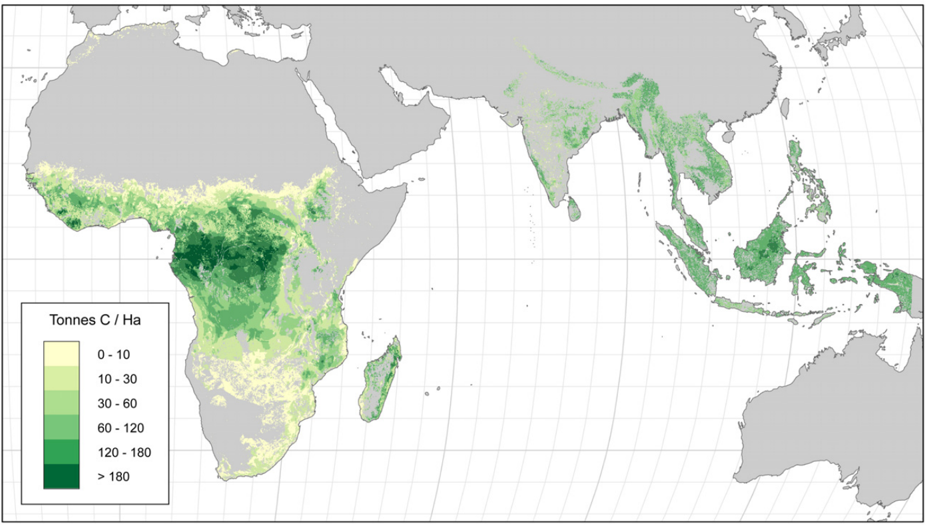
Reducing carbon emissions from deforestation and degradation in developing countries is of central importance in efforts to combat climate change. Key scientific challenges must be addressed to prevent any policy roadblocks. Foremost among the challenges is quantifying nations’ carbon emissions from deforestation and forest degradation, which requires information on forest clearing and carbon storage. Here we review a range of methods available to estimate national-level forest carbon stocks in developing countries. While there are no practical methods to directly measure all forest carbon stocks across a country, both ground-based and remote-sensing measurements of forest attributes can be converted into estimates of national carbon stocks using allometric relationships. Here we synthesize, map and update prominent forest biomass carbon databases to create the first complete set of national-level forest carbon stock estimates. These forest carbon estimates expand on the default values recommended by the Intergovernmental Panel on Climate Change’s National Greenhouse Gas Inventory Guidelines and provide a range of globally consistent estimates.
Overview
The claims and statistics of this paper haven’t been checked yet.
Free: it reads the open-access text and checks the first 5 claims that cite a source we can check. Create a free account to check every claim.
Integrity signals
Registry
Cites
Statistics
Figures
Verification
Claims the paper makes
The claims and statistics of this paper haven’t been checked yet.
Free: it reads the open-access text and checks the first 5 claims that cite a source we can check. Create a free account to check every claim.
Claims other papers make about this one
Each is checked against this paper’s own text: does it say what the citing paper says it does?
The source backs part of the claim, not all of it — or backs it for a different population, condition or comparison.
In the citing paper
“Tropical ecosystems store an enormous 340 billion tonnes of carbon (Gibbs et al 2007), equivalent to more than 40 times the total annual anthropogenic emissions from fossil fuel combustion (Canadell et al 2007).”
From Carbon payback times for crop-based biofuel expansion in the tropics: the effects of changing yield and technology (2008) · cites this paper as Gibbs et al 2007
Experimental — accuracy not yet measuredThe source backs part of the claim, not all of it — or backs it for a different population, condition or comparison.
In the citing paper
“However, estimating forest characteristics such as canopy height or biomass from optical images is a challenging task14, as the physical relationships between spectral signatures and vertical forest structure are complex and not well understood15.”
From A high-resolution canopy height model of the Earth (2023) · cites this paper as [14]
Experimental — accuracy not yet measuredThe cited source says what the claim attributes to it.
In the citing paper
“To estimate the potential carbon stocks that can accumulate in the long term in above-and belowground biomass after restoration, we used an approach commonly used in global estimates (for example, ref. 53 ).”
From Global priority areas for ecosystem restoration (2020) · cites this paper as [53]
In the citing paper
“However, with policies such as REDD in place, farmers and large-scale producers would have greater incentives to improve management of previously cleared land and receive carbon payments for avoiding carbon release from further deforestation (45,46).”
From Tropical forests were the primary sources of new agricultural land in the 1980s and 1990s (2010) · cites this paper as [45]
In the citing paper
“We assign biomass and soil organic carbon content values to each biome from the literature ([27](#r27)–[29](#r29)), and assume an uncertainty of ±20% in these values, reflective of regional differences”
From Greenhouse gas mitigation by agricultural intensification (2010) · cites this paper as [28]
Self-check
Percentages, sums and reported differences re-computed from the paper’s own numbers.
The self-check needs the paper’s full text.
Citations
Cites
Tree allometry and improved estimation of carbon stocks and balance in tropical forests
Chave, J., Andalo, C., Brown, S., Cairns, M. A., Chambers, J. Q., Eamus, D., Fölster, H., Fromard, F., Higuchi, N., Kira, T., et al. (2005) · Oecologia · doi:10.1007/s00442-005-0100-x · Cited by 3,533 · cited 1×
“example, none of the trees Chave et al (2005) used to develop”
MethodSelf-citationGood Practice Guidance for Land Use, Land-Use Change and Forestry
Penman, J., Gytarsky, M. L., Hiraishi, T., Krug, T., Kruger, D., Pipatti, R., Buendia, L. V., Miwa, K., Ngara, T., Tanabe, K., et al. (2003) · IIASA PURE (International Institute of Applied Systems Analysis) · Cited by 2,254
Determination of Deforestation Rates of the World's Humid Tropical Forests
Achard, F., Eva, H. D., Stibig, H.-J., Mayaux, P., Gallego, J., Richards, T., & Malingreau, J.-P. (2002) · Science · doi:10.1126/science.1070656 · Cited by 1,993 · cited 6×
“…of biome-average datasets where a single representative value of forest carbon per unit area (e.g. tonnes of C per hectare) is applied to broad forest categories or biomes (e.g. Fearnside 2000, Houghton 1999, Houghton et al 2001, DeFries et al 2002, Achard et al 2002, 2004, Ramankutty et al 2007).”
BackgroundInfluentialThe amount of carbon released from peat and forest fires in Indonesia during 1997
Page, S. E., Siegert, F., Rieley, J. O., Boehm, H.-D. V., Jaya, A., & Limin, S. (2002) · Nature · doi:10.1038/nature01131 · Cited by 1,885
Root biomass allocation in the world's upland forests
Cairns, M. A., Brown, S., Helmer, E. H., & Baumgardner, G. A. (1997) · Oecologia · doi:10.1007/s004420050201 · Cited by 1,622
Self-citationCritical analysis of root : shoot ratios in terrestrial biomes
MOKANY, K., RAISON, R. J., & PROKUSHKIN, A. S. (2006) · Global Change Biology · doi:10.1111/j.1365-2486.2005.001043.x · Cited by 1,588 · cited 1×
“For example, root biomass is typically estimated to be 20% of the aboveground forest carbon stocks (e.g. Houghton et al 2001, Achard et al 2002, Ramankutty et al 2007) based on a predictive relationship established from extensive literature reviews (Cairns et al 1997, Mokany et al 2006).”
BackgroundLand use, land use change and forestry
(2015) · Research Handbook on Climate Change Mitigation Law · doi:10.4337/9781849805834.00023 · Cited by 1,492
Estimating biomass and biomass change of tropical forests: A primer
Brown, S. (1997) · Medical Entomology and Zoology · Cited by 1,320
Self-citationBiomass Estimation Methods for Tropical Forests with Applications to Forest Inventory Data
Brown, S., Gillespie, A. J. R., & Lugo, A. E. (1989) · Forest Science · doi:10.1093/forestscience/35.4.881 · Cited by 1,279 · cited 1×
“…has gone into developing tools and models that can ‘scale up’ or extrapolate destructive harvest data points to larger scales based on proxies measured in the field or from remotesensing instruments (e.g. Brown et al, 1989, 1993, Waring et al 1995, Brown 1997, Chave et al 2005, Saatchi et al 2007).”
BackgroundSelf-citationMcGroddy, M. E., Daufresne, T., & Hedin, L. O. (2004) · Ecology · doi:10.1890/03-0351 · Cited by 1,124
Research works printed but not linked: 12
- Brown S, 1992, Interciencia, 17, 8
- Brown S Pearson T, 2005, Report to The Nature Conservancy
- IPCC, 2006, IPCC Guidelines for National Greenhouse Gas Inventories. Prepared by the National Greenhouse Gas Inventories Programme
- Mette T Papathanassiou K P Hajnsek I Zimmerman R, 2003, Proc. POLnSAR
- Olander L P, 2007, Environ. Res. Lett.
- Pearson T Brown S Petrova S Moore N Slaymaker D, 2005, Report to The Nature Conservancy
- Pearson T Walker S Brown S, 2005, Winrock International and the BioCarbon Fund of the World Bank, 57
- Penman J, 2003, IPCC National Greenhouse Gas Inventories Programme and Institute for Global Environmental Strategies, Kanagawa, Japan
- Post W M Izaurralde R C Mann L K Bliss N Rosenberg N J Izaurralde R C Malone E L, 1999, Proc. Symp. Carbon Sequestration in Soils Science, Monitoring and Beyond, 41
- Rosenqvist A Shimada M Igarashi T Watanabe M Tadono T Yamamoto H, 2003, Geoscience and Remote Sensing Symposium, 2003 Proc. 2003 IEEE International, 1471
- Shimada M Rosenqvist A Watanabe M Tadono T, 2005, Proc. POLinSAR 2005
- Watson R T Noble I R Bolin B Ravindranath N H Verardo D J Dokken D J, 2000, Special Report of the Intergovernmental Panel on Climate Change, 375
Cited by
Benchmark map of forest carbon stocks in tropical regions across three continents
Saatchi, S. S., Harris, N. L., Brown, S., Lefsky, M., Mitchard, E. T. A., Salas, W., Zutta, B. R., Buermann, W., Lewis, S. L., Hagen, S., et al. (2011) · Proceedings of the National Academy of Sciences · doi:10.1073/pnas.1019576108 · Cited by 2,353
“Estimates of GHG emissions from deforestation require information on both the area of forest loss and the corresponding carbon stock of the land that is cleared (8, 9).”
BackgroundSelf-citationTropical forests were the primary sources of new agricultural land in the 1980s and 1990s
Gibbs, H. K., Ruesch, A. S., Achard, F., Clayton, M. K., Holmgren, P., Ramankutty, N., & Foley, J. A. (2010) · Proceedings of the National Academy of Sciences · doi:10.1073/pnas.0910275107 · Cited by 1,876
Self-citationGlobal priority areas for ecosystem restoration
Strassburg, B. B. N., Iribarrem, A., Beyer, H. L., Cordeiro, C. L., Crouzeilles, R., Jakovac, C. C., Braga Junqueira, A., Lacerda, E., Latawiec, A. E., Balmford, A., et al. (2020) · Nature · doi:10.1038/s41586-020-2784-9 · Cited by 1,175
Greenhouse gas mitigation by agricultural intensification
Burney, J. A., Davis, S. J., & Lobell, D. B. (2010) · Proceedings of the National Academy of Sciences · doi:10.1073/pnas.0914216107 · Cited by 1,128
Nobre, C. A., Sampaio, G., Borma, L. S., Castilla-Rubio, J. C., Silva, J. S., & Cardoso, M. (2016) · Proceedings of the National Academy of Sciences · doi:10.1073/pnas.1605516113 · Cited by 1,045
“processes over tropical South America? Clim Dyn 41(11-12):3127–3143.”
BackgroundPrimary forest cover loss in Indonesia over 2000–2012
Margono, B. A., Potapov, P. V., Turubanova, S., Stolle, F., & Hansen, M. C. (2014) · Nature Climate Change · doi:10.1038/nclimate2277 · Cited by 1,030
The Structure, Distribution, and Biomass of the World's Forests
Pan, Y., Birdsey, R. A., Phillips, O. L., & Jackson, R. B. (2013) · Annual Review of Ecology, Evolution, and Systematics · doi:10.1146/annurev-ecolsys-110512-135914 · Cited by 1,002
“Agricultural expansion has been the most important proximate cause of recent forest loss, accounting for 80% of deforestation worldwide, primarily during the 1980s and 1990s through conversion of tropical forests (Gibbs et al. 2007, Houghton 2007).”
Biophysical climate impacts of recent changes in global forest cover
Alkama, R., & Cescatti, A. (2016) · Science · doi:10.1126/science.aac8083 · Cited by 903
Re-evaluation of forest biomass carbon stocks and lessons from the world's most carbon-dense forests
Keith, H., Mackey, B. G., & Lindenmayer, D. B. (2009) · Proceedings of the National Academy of Sciences · doi:10.1073/pnas.0901970106 · Cited by 889
“Biome default values likely under-represent Southern Hemisphere evergreen temperate moist forest types and do not distinguish forest condition caused by land-use history (5).”
BackgroundMethodA high-resolution canopy height model of the Earth
Lang, N., Jetz, W., Schindler, K., & Wegner, J. D. (2023) · Nature Ecology & Evolution · doi:10.1038/s41559-023-02206-6 · Cited by 810
“height or biomass from optical images is a challenging task (Gibbs et al., 2007), as the physical relationships between spectral signatures and vertical forest structure are complex and not well understood (Rodŕıguez-Veiga et al.”
Role of Brazilian Amazon protected areas in climate change mitigation
Soares-Filho, B., Moutinho, P., Nepstad, D., Anderson, A., Rodrigues, H., Garcia, R., Dietzsch, L., Merry, F., Bowman, M., Hissa, L., et al. (2010) · Proceedings of the National Academy of Sciences · doi:10.1073/pnas.0913048107 · Cited by 785
“T forests play a major role in the world’s climate system by storing large stocks of carbon (1) and by regulating energy and water fluxes (2).”
BackgroundFifty years of Landsat science and impacts
Wulder, M. A., Roy, D. P., Radeloff, V. C., Loveland, T. R., Anderson, M. C., Johnson, D. M., Healey, S., Zhu, Z., Scambos, T. A., Pahlevan, N., et al. (2022) · Remote Sensing of Environment · doi:10.1016/j.rse.2022.113195 · Cited by 771
High-resolution forest carbon stocks and emissions in the Amazon
Asner, G. P., Powell, G. V. N., Mascaro, J., Knapp, D. E., Clark, J. K., Jacobson, J., Kennedy-Bowdoin, T., Balaji, A., Paez-Acosta, G., Victoria, E., et al. (2010) · Proceedings of the National Academy of Sciences · doi:10.1073/pnas.1004875107 · Cited by 687
“The IPCC (1) tier-I approach was applied to the study area using their prescribed forest carbon density values combinedwith suggested land cover data (25).”
MethodRealising REDD+: national strategy and policy options
A., A., M., B., M., K., E., S., W.D., S., S., W.-K., & (eds.) (2009) · Center for International Forestry Research (CIFOR) eBooks · doi:10.17528/cifor/002871 · Cited by 663
Allometric equations for estimating the above-ground biomass in tropical lowland Dipterocarp forests
Basuki, T. M., van Laake, P. E., Skidmore, A. K., & Hussin, Y. A. (2009) · Forest Ecology and Management · doi:10.1016/j.foreco.2009.01.027 · Cited by 607
One Hundred Questions of Importance to the Conservation of Global Biological Diversity
SUTHERLAND, W. J., ADAMS, W. M., ARONSON, R. B., AVELING, R., BLACKBURN, T. M., BROAD, S., CEBALLOS, G., CÔTÉ, I. M., COWLING, R. M., DA FONSECA, G. A. B., et al. (2009) · Conservation Biology · doi:10.1111/j.1523-1739.2009.01212.x · Cited by 595
Tree height integrated into pantropical forest biomass estimates
Feldpausch, T. R., Lloyd, J., Lewis, S. L., Brienen, R. J. W., Gloor, M., Monteagudo Mendoza, A., Lopez-Gonzalez, G., Banin, L., Abu Salim, K., Affum-Baffoe, K., et al. (2012) · Biogeosciences · doi:10.5194/bg-9-3381-2012 · Cited by 571
“…emissions under deforestation (INPE, 2009), selective logging (Pinard and Putz, 1996; Feldpausch et al., 2005), sinks caused by forest regrowth (Uhl and Jordan, 1984; Feldpausch et al., 2004) and carbon valuation under REDD+ (Aragao and Shimabukuro, 2010; Asner et al., 2010; Gibbs et al., 2007).”
BackgroundCarbon Content of Tree Tissues: A Synthesis
Thomas, S. C., & Martin, A. R. (2012) · Forests · doi:10.3390/f3020332 · Cited by 509
“Similarly, although Becker et al. [35] provide data for Kenyan and Ugandan trees (Table 1), our review found no species-specific wood C data for trees from the Congo basin, a forested region that is likely the most C-rich in continental Africa [7,15].”
BackgroundDuncanson, L., Kellner, J. R., Armston, J., Dubayah, R., Minor, D. M., Hancock, S., Healey, S. P., Patterson, P. L., Saarela, S., Marselis, S., et al. (2022) · Remote Sensing of Environment · doi:10.1016/j.rse.2021.112845 · Cited by 495
Analysing REDD+: Challenges and choices
A., A., M., B., W.D., S., L., V., & eds (2012) · Center for International Forestry Research (CIFOR) eBooks · doi:10.17528/cifor/003805 · Cited by 477
“However, there is significant variation across studies (Gibbs et al. 2007).”
A synthesis of current knowledge on forests and carbon storage in the United States
McKinley, D. C., Ryan, M. G., Birdsey, R. A., Giardina, C. P., Harmon, M. E., Heath, L. S., Houghton, R. A., Jackson, R. B., Morrison, J. F., Murray, B. C., et al. (2011) · Ecological Applications · doi:10.1890/10-0697.1 · Cited by 475
“At the scale of individual forest stands, standard inventory methods are used to estimate the carbon stored in trees, plants, dead wood, and in forest floor litter (Gibbs et al. 2007).”
BackgroundMethodGibbs, H. K., Johnston, M., Foley, J. A., Holloway, T., Monfreda, C., Ramankutty, N., & Zaks, D. (2008) · Environmental Research Letters · doi:10.1088/1748-9326/3/3/034001 · Cited by 470
Self-citationHarmonized global maps of above and belowground biomass carbon density in the year 2010
Spawn, S. A., Sullivan, C. C., Lark, T. J., & Gibbs, H. K. (2020) · Scientific Data · doi:10.1038/s41597-020-0444-4 · Cited by 469
Self-citationA Contemporary Assessment of Change in Humid Tropical Forests
ASNER, G. P., RUDEL, T. K., AIDE, T. M., DEFRIES, R., & EMERSON, R. (2009) · Conservation Biology · doi:10.1111/j.1523-1739.2009.01333.x · Cited by 459
“Trends in the biofuels and agricultural sectors drive continued forest losses at the expense of both primary and secondary-forest cover, but the potential for forest regeneration and protection is also growing with the continued push for carbon-crediting mechanisms to reward for reduced deforestation and forest degrad…”
Plevin, R. J., Jones, A. D., Torn, M. S., & Gibbs, H. K. (2010) · Environmental Science & Technology · doi:10.1021/es101946t · Cited by 443
Self-citationMapping and monitoring carbon stocks with satellite observations: a comparison of methods
Goetz, S. J., Baccini, A., Laporte, N. T., Johns, T., Walker, W., Kellndorfer, J., Houghton, R. A., & Sun, M. (2009) · Carbon Balance and Management · doi:10.1186/1750-0680-4-2 · Cited by 442
“ling" is that values can be aggregated and provided for specific political jurisdictions [27] (see Figure).”
Sasaki, N., & Putz, F. E. (2009) · Conservation Letters · doi:10.1111/j.1755-263x.2009.00067.x · Cited by 420
A first map of tropical Africa’s above-ground biomass derived from satellite imagery
Baccini, A., Laporte, N., Goetz, S. J., Sun, M., & Dong, H. (2008) · Environmental Research Letters · doi:10.1088/1748-9326/3/4/045011 · Cited by 419
Reducing Emissions from Deforestation and Forest Degradation
Agrawal, A., Nepstad, D., & Chhatre, A. (2011) · Annual Review of Environment and Resources · doi:10.1146/annurev-environ-042009-094508 · Cited by 381
“These advances have overcome an important obstacle to the inclusion of avoided deforestation in the Kyoto Protocol (101).”
BackgroundInfluentialCarbon emissions and the drivers of deforestation and forest degradation in the tropics
Houghton, R. A. (2012) · Current Opinion in Environmental Sustainability · doi:10.1016/j.cosust.2012.06.006 · Cited by 377
Alves, L. F., Vieira, S. A., Scaranello, M. A., Camargo, P. B., Santos, F. A. M., Joly, C. A., & Martinelli, L. A. (2010) · Forest Ecology and Management · doi:10.1016/j.foreco.2010.05.023 · Cited by 369
“In the coming decades, long-term onitoring of permanent forest plots will be crucial to quantify hanges in carbon stocks of the Atlantic forest, to evaluate forest rowth response to climate and land use change, and to be a source f quality reference data for international mechanisms to reduce missions from deforestati…”
BackgroundInfluentialSlik, J. W. F., Aiba, S., Brearley, F. Q., Cannon, C. H., Forshed, O., Kitayama, K., Nagamasu, H., Nilus, R., Payne, J., Paoli, G., et al. (2010) · Global Ecology and Biogeography · doi:10.1111/j.1466-8238.2009.00489.x · Cited by 364
Abrupt increase in harvested forest area over Europe after 2015
Ceccherini, G., Duveiller, G., Grassi, G., Lemoine, G., Avitabile, V., Pilli, R., & Cescatti, A. (2020) · Nature · doi:10.1038/s41586-020-2438-y · Cited by 352
Trading carbon for food: Global comparison of carbon stocks vs. crop yields on agricultural land
West, P. C., Gibbs, H. K., Monfreda, C., Wagner, J., Barford, C. C., Carpenter, S. R., & Foley, J. A. (2010) · Proceedings of the National Academy of Sciences · doi:10.1073/pnas.1011078107 · Cited by 346
“Tropical vegetation currently stores ∼340 billion tons of carbon (19), which is 40 times more than annual global fossil fuel emissions (20).”
BackgroundSelf-citationEstimating tree biomass of sub-Saharan African forests: a review of available allometric equations
Henry, M., Picard, N., Trotta, C., Manlay, R., Valentini, R., Bernoux, M., & Saint-André, L. (2011) · Silva Fennica · doi:10.14214/sf.38 · Cited by 346
“3 alone explains more than 95% of the variation in aboveground tropical forest C stocks, even in highly diverse regions (Brown 2002, Gibbs et al. 2007), However, the analyses of the present database reveal important variation in wood gravity, volume and biomass between and within ecological zones…”
BackgroundSantoro, M., Cartus, O., Carvalhais, N., Rozendaal, D. M. A., Avitabile, V., Araza, A., de Bruin, S., Herold, M., Quegan, S., Rodríguez-Veiga, P., et al. (2021) · Earth System Science Data · doi:10.5194/essd-13-3927-2021 · Cited by 338
Henry, M., Besnard, A., Asante, W. A., Eshun, J., Adu-Bredu, S., Valentini, R., Bernoux, M., & Saint-André, L. (2010) · Forest Ecology and Management · doi:10.1016/j.foreco.2010.07.040 · Cited by 338
“The forest reserve has a total area of 122 km2 and is classified as wet-evergreen forest type (Hall and Swaine, 1976).”
BackgroundA Reassessment of Carbon Content in Tropical Trees
Martin, A. R., & Thomas, S. C. (2011) · PLoS ONE · doi:10.1371/journal.pone.0023533 · Cited by 375
Polycentric governance of multifunctional forested landscapes
Nagendra, H., & Ostrom, E. (2012) · International Journal of the Commons · doi:10.18352/bmgn-lchr.321 · Cited by 337
“…Woolcock (2004) Meyfroidt and Lambin 2011 Berkes 2007 Geist and Lambin 2002 Nagendra 2007 Southworth and Nagendra 2010 Geist and Lambin 2002 Ostrom and Nagendra 2006 Ostrom 2007 Sugden 1986 models of resource systems but now conduct empirical research of the operation of these models in practice.”
BackgroundToward a whole-landscape approach for sustainable land use in the tropics
DeFries, R., & Rosenzweig, C. (2010) · Proceedings of the National Academy of Sciences · doi:10.1073/pnas.1011163107 · Cited by 332
Methods to Estimate Above-Ground Biomass and Carbon Stock in Natural Forests - A Review
T. Vashum, K. (2012) · Journal of Ecosystem & Ecography · doi:10.4172/2157-7625.1000116 · Cited by 331
Boom-and-Bust Development Patterns Across the Amazon Deforestation Frontier
Rodrigues, A. S. L., Ewers, R. M., Parry, L., Souza, C., Veríssimo, A., & Balmford, A. (2009) · Science · doi:10.1126/science.1174002 · Cited by 330
Targeting perennial vegetation in agricultural landscapes for enhancing ecosystem services
Asbjornsen, H., Hernandez-Santana, V., Liebman, M., Bayala, J., Chen, J., Helmers, M., Ong, C. K., & Schulte, L. A. (2014) · Renewable Agriculture and Food Systems · doi:10.1017/s1742170512000385 · Cited by 326
The high value of logged tropical forests: lessons from northern Borneo
Berry, N. J., Phillips, O. L., Lewis, S. L., Hill, J. K., Edwards, D. P., Tawatao, N. B., Ahmad, N., Magintan, D., Khen, C. V., Maryati, M., et al. (2010) · Biodiversity and Conservation · doi:10.1007/s10531-010-9779-z · Cited by 317
“(Gibbs et al. 2007; Miles and Kapos 2008).”
Carbon stock and density of northern boreal and temperate forests
Thurner, M., Beer, C., Santoro, M., Carvalhais, N., Wutzler, T., Schepaschenko, D., Shvidenko, A., Kompter, E., Ahrens, B., Levick, S. R., et al. (2014) · Global Ecology and Biogeography · doi:10.1111/geb.12125 · Cited by 308
“Forest inventory data represent the stand scale and upscaling is also highly uncertain (Gibbs et al., 2007; Saatchi et al., 2007, 2011).”
BackgroundA review of radar remote sensing for biomass estimation
Sinha, S., Jeganathan, C., Sharma, L. K., & Nathawat, M. S. (2015) · International Journal of Environmental Science and Technology · doi:10.1007/s13762-015-0750-0 · Cited by 302
“In context to the climate change mitigation mechanisms like REDD (reducing emissions from deforestation and forest degradation), an extensive forest monitoring campaign is especially important.”
BackgroundInfluentialAbove ground biomass estimation in an African tropical forest with lidar and hyperspectral data
Vaglio Laurin, G., Chen, Q., Lindsell, J. A., Coomes, D. A., Frate, F. D., Guerriero, L., Pirotti, F., & Valentini, R. (2014) · ISPRS Journal of Photogrammetry and Remote Sensing · doi:10.1016/j.isprsjprs.2014.01.001 · Cited by 301
“In particular, biomass mapping in tropical biomes is particularly important given the critical role of tropical forests in the global carbon cycle (Gibbs et al., 2007).”
BackgroundPutz, F. E., & Redford, K. H. (2010) · Biotropica · doi:10.1111/j.1744-7429.2009.00567.x · Cited by 297
“We are concerned that the second ‘D’ in this now familiar acronym is often dropped altogether (e.g., Hall 2008), mentioned but then disregarded (Gibbs et al. 2007), or is interpreted as standing for ‘developing countries’ instead of ‘degradation’ (UNFCCC 2006, Putz et al. 2008).”
Backgroundvan Breugel, M., Ransijn, J., Craven, D., Bongers, F., & Hall, J. S. (2011) · Forest Ecology and Management · doi:10.1016/j.foreco.2011.07.018 · Cited by 325
“The introduction of carbon credits through programs such as the United Nation’s programs for Global Reforestation and Reducing Emissions from Deforestation and Forest Degradation links important financial implications to the accuracy of carbon stock estimates of tropical landscapes (Gibbs et al., 2007; Canadell and Ra…”
BackgroundAutomated mapping of tropical deforestation and forest degradation: CLASlite
Asner, G. P. (2009) · Journal of Applied Remote Sensing · doi:10.1117/1.3223675 · Cited by 293
“At the national level, it is likely that many tropical countries will rely initially on Tier-I levels of accuracy, yet this approach will provide carbon stock estimates with very large uncertainties [4].”
BackgroundEnglhart, S., Keuck, V., & Siegert, F. (2011) · Remote Sensing of Environment · doi:10.1016/j.rse.2011.01.008 · Cited by 293
Estimation of above‐ground biomass of large tropical trees with terrestrial LiDAR
Gonzalez de Tanago, J., Lau, A., Bartholomeus, H., Herold, M., Avitabile, V., Raumonen, P., Martius, C., Goodman, R. C., Disney, M., Manuri, S., et al. (2018) · Methods in Ecology and Evolution · doi:10.1111/2041-210x.12904 · Cited by 291
“Forest carbon stocks are not measured directly, but derived either from interpolation or extrapolation of point estimates of the aboveground biomass (AGB) contained in forest inventory plots, or from measurements of remote sensing proxies calibrated with plot- based AGB estimates (Gibbs et al., 2007).”
BackgroundZhao, K., Suarez, J. C., Garcia, M., Hu, T., Wang, C., & Londo, A. (2018) · Remote Sensing of Environment · doi:10.1016/j.rse.2017.09.007 · Cited by 287
“However, this capability may not automatically manifest itself as true utility to end users (Gibbs et al., 2007; Kalluri et al., 2003).”
BackgroundQuantifying aboveground forest carbon pools and fluxes from repeat LiDAR surveys
Hudak, A. T., Strand, E. K., Vierling, L. A., Byrne, J. C., Eitel, J. U. H., Martinuzzi, S., & Falkowski, M. J. (2012) · Remote Sensing of Environment · doi:10.1016/j.rse.2012.02.023 · Cited by 282
Dube, T., & Mutanga, O. (2015) · ISPRS Journal of Photogrammetry and Remote Sensing · doi:10.1016/j.isprsjprs.2014.11.001 · Cited by 279
Forests: Carbon sequestration, biomass energy, or both?
Favero, A., Daigneault, A., & Sohngen, B. (2020) · Science Advances · doi:10.1126/sciadv.aay6792 · Cited by 279
Tropical forest carbon assessment: integrating satellite and airborne mapping approaches
Asner, G. P. (2009) · Environmental Research Letters · doi:10.1088/1748-9326/4/3/034009 · Cited by 270
Remote Sensing of Above-Ground Biomass
Kumar, L., & Mutanga, O. (2017) · Remote Sensing · doi:10.3390/rs9090935 · Cited by 270
Collect Earth: Land Use and Land Cover Assessment through Augmented Visual Interpretation
Bey, A., Sánchez-Paus Díaz, A., Maniatis, D., Marchi, G., Mollicone, D., Ricci, S., Bastin, J.-F., Moore, R., Federici, S., Rezende, M., et al. (2016) · Remote Sensing · doi:10.3390/rs8100807 · Cited by 268
“Land monitoring through remote sensing has traditionally been challenging due to the cost of acquiring satellite imagery and commercial software to conduct remote sensing analysis [1] and due to the high level of technical skill required to pre-process and analyze imagery and conduct a robust land assessment [2].”
BackgroundThe ecological impact of biofuels
Fargione, J. E., Plevin, R. J., & Hill, J. D. (2010) · Annual Review of Ecology Evolution and Systematics · doi:10.1146/annurev-ecolsys-102209-144720 · Cited by 260
“2008), but new methods can reduce this uncertainty (Gibbs et al. 2007).”
BackgroundMethodImproved Tropical Forest Management for Carbon Retention
Putz, F. E., Zuidema, P. A., Pinard, M. A., Boot, R. G. A., Sayer, J. A., Sheil, D., Sist, P., Elias, & Vanclay, J. K. (2008) · PLoS Biology · doi:10.1371/journal.pbio.0060166 · Cited by 251
Bustamante, M. M. C., Roitman, I., Aide, T. M., Alencar, A., Anderson, L. O., Aragão, L., Asner, G. P., Barlow, J., Berenguer, E., Chambers, J., et al. (2016) · Global Change Biology · doi:10.1111/gcb.13087 · Cited by 249
“Gibbs et al. (2007) outlined the benefits and limitations of different methods to estimate carbonstock changes, concluding that there is no best method, and most are complementary.”
BackgroundMethodInfluentialSola, G., Picard, N., Saint‐André, L., & Henry, M. (2012) · Agritrop (Cirad) · Cited by 271
Satellite passive microwaves reveal recent climate-induced carbon losses in African drylands
Brandt, M., Wigneron, J.-P., Chave, J., Tagesson, T., Penuelas, J., Ciais, P., Rasmussen, K., Tian, F., Mbow, C., Al-Yaari, A., et al. (2018) · Nature Ecology & Evolution · doi:10.1038/s41559-018-0530-6 · Cited by 245
Tree height and tropical forest biomass estimation
Hunter, M. O., Keller, M., Victoria, D., & Morton, D. C. (2013) · Biogeosciences · doi:10.5194/bg-10-8385-2013 · Cited by 237
“In an effort to reduce deforestation and degradation by creating monetary value for the carbon in forests, the United Nations has developed REDD (Reducing Emissions from Degradation and Deforestation) (Gibbs et al., 2007).”
Accelerated deforestation in the humid tropics from the 1990s to the 2000s
Kim, D., Sexton, J. O., & Townshend, J. R. (2015) · Geophysical Research Letters · doi:10.1002/2014gl062777 · Cited by 231
“Tropical deforestation was among the largest anthropogenic sources of greenhouse gas emissions in the 1990s [Gibbs et al., 2007].”
BackgroundQuantifying the Loss of a Marine Ecosystem Service: Filtration by the Eastern Oyster in US Estuaries
zu Ermgassen, P. S. E., Spalding, M. D., Grizzle, R. E., & Brumbaugh, R. D. (2013) · Estuaries and Coasts · doi:10.1007/s12237-012-9559-y · Cited by 230
“This is problematic in deriving estimates of ecosystem service provision historically, as many services are strongly dependent on species abundance or species richness (Diaz et al. 2006; Gibbs et al. 2007).”
BackgroundAvitabile, V., Baccini, A., Friedl, M. A., & Schmullius, C. (2012) · Remote Sensing of Environment · doi:10.1016/j.rse.2011.10.012 · Cited by 227
Fayolle, A., Doucet, J.-L., Gillet, J.-F., Bourland, N., & Lejeune, P. (2013) · Forest Ecology and Management · doi:10.1016/j.foreco.2013.05.036 · Cited by 227
Vieilledent, G., Vaudry, R., Andriamanohisoa, S. F. D., Rakotonarivo, O. S., Randrianasolo, H. Z., Razafindrabe, H. N., Rakotoarivony, C. B., Ebeling, J., & Rasamoelina, M. (2012) · Ecological Applications · doi:10.1890/11-0039.1 · Cited by 227
“Consequently, theoretical models that include too few ecological explicative variables or empirical generic models that have been calibrated at particular sites are unlikely to yield accurate tree biomass estimates at other sites.”
BackgroundDerivation of biomass information for semi-arid areas using remote-sensing data
Eisfelder, C., Kuenzer, C., & Dech, S. (2012) · International Journal of Remote Sensing · doi:10.1080/01431161.2011.620034 · Cited by 226
“…markets or via the post-Kyoto climate change agreement, a universal, robust and low-cost technique to measure and monitor carbon stocks over large areas and through time is essential (e.g. Pfaff et al. 2000, Rosenqvist et al. 2003, Gibbs et al. 2007, Grassi et al. 2008, Mitchard et al. 2009).”
BackgroundThe distribution and amount of carbon in the largest peatland complex in Amazonia
Draper, F. C., Roucoux, K. H., Lawson, I. T., Mitchard, E. T. A., Honorio Coronado, E. N., Lähteenoja, O., Torres Montenegro, L., Valderrama Sandoval, E., Zaráte, R., & Baker, T. R. (2014) · Environmental Research Letters · doi:10.1088/1748-9326/9/12/124017 · Cited by 225
Global demand for gold is another threat for tropical forests
Alvarez-Berríos, N. L., & Mitchell Aide, T. (2015) · Environmental Research Letters · doi:10.1088/1748-9326/10/1/014006 · Cited by 224
Mugasha, W. A., Eid, T., Bollandsås, O. M., Malimbwi, R. E., Chamshama, S. A. O., Zahabu, E., & Katani, J. Z. (2013) · Forest Ecology and Management · doi:10.1016/j.foreco.2013.08.003 · Cited by 223
Freitas, S. R., Longo, K. M., Alonso, M. F., Pirre, M., Marecal, V., Grell, G., Stockler, R., Mello, R. F., & Sánchez Gácita, M. (2011) · Geoscientific Model Development · doi:10.5194/gmd-4-419-2011 · Cited by 212
“The corresponding aboveground carbon density (α) is defined from the carbon in live vegetation data, estimated using Olson et al. (2000) and updated by Gibbs (2006) and Gibbs et al. (2007) using the Global Land Cover Database (GLC2000).”
MethodDeforestation-induced climate change reduces carbon storage in remaining tropical forests
Li, Y., Brando, P. M., Morton, D. C., Lawrence, D. M., Yang, H., & Randerson, J. T. (2022) · Nature Communications · doi:10.1038/s41467-022-29601-0 · Cited by 209
STICKLER, C. M., NEPSTAD, D. C., COE, M. T., McGRATH, D. G., RODRIGUES, H. O., WALKER, W. S., SOARES‐FILHO, B. S., & DAVIDSON, E. A. (2009) · Global Change Biology · doi:10.1111/j.1365-2486.2009.02109.x · Cited by 207
“The measurement of these terrestrial carbon stocks is, itself, the topic of much debate under the theme ‘Monitoring, Reporting, and Verification’ (MRV; Achard et al., 2007; Gibbs et al., 2007; GOFC-GOLD, 2009).”
BackgroundTime, space, place, and the Bonn Challenge global forest restoration target
Verdone, M., & Seidl, A. (2017) · Restoration Ecology · doi:10.1111/rec.12512 · Cited by 205
“…who estimated the carbon stocks for forests in Canada, North America, China, Japan, Russia, Finland, Sweden, Eurasia, and South Eastern Asia and Gibbs et al. (2007) who reported 906 Restoration Ecology November 2017 carbon stock estimates for forests in Brazil, Latin America, Sub-Saharan…”
BackgroundKotowska, M. M., Leuschner, C., Triadiati, T., Meriem, S., & Hertel, D. (2015) · Global Change Biology · doi:10.1111/gcb.12979 · Cited by 204
“In accordance with other studies, we found that AGB accounted for 65–80% of total plant C in all four landuse systems (Gibbs et al., 2007; Nogueira et al., 2008; Hertel et al., 2009b; Saner et al., 2012), followed by coarse roots, while dead wood (present only in natural forest and jungle rubber) contributed only a fe…”
BackgroundMethodResultInfluentialMorel, A. C., Saatchi, S. S., Malhi, Y., Berry, N. J., Banin, L., Burslem, D., Nilus, R., & Ong, R. C. (2011) · Forest Ecology and Management · doi:10.1016/j.foreco.2011.07.008 · Cited by 201
“Nevertheless, PALSAR FBD may not be an effective dataset for mapping very biomass-rich forest types due to saturation of the signal (Gibbs et al., 2007; Magnusson et al., 2008) or its inability to distinguish between types of severely degraded forests (Watanbe et al.”
BackgroundMethodInfluentialBecknell, J. M., Kissing Kucek, L., & Powers, J. S. (2012) · Forest Ecology and Management · doi:10.1016/j.foreco.2012.03.033 · Cited by 200
Synergies of multiple remote sensing data sources for REDD+ monitoring
De Sy, V., Herold, M., Achard, F., Asner, G. P., Held, A., Kellndorfer, J., & Verbesselt, J. (2012) · Current Opinion in Environmental Sustainability · doi:10.1016/j.cosust.2012.09.013 · Cited by 200
Nandy, S., Srinet, R., & Padalia, H. (2021) · Geophysical Research Letters · doi:10.1029/2021gl093799 · Cited by 199
“The forest ecosystem plays a significant role in regulating the global climate and carbon budget (Baccini et al., 2012; Brown, 2002; Gibbs et al., 2007; Li, Li, et al., 2020).”
BackgroundDisentangling stand and environmental correlates of aboveground biomass in Amazonian forests
BARALOTO, C., RABAUD, S., MOLTO, Q., BLANC, L., FORTUNEL, C., HÉRAULT, B., DÁVILA, N., MESONES, I., RIOS, M., VALDERRAMA, E., et al. (2011) · Global Change Biology · doi:10.1111/j.1365-2486.2011.02432.x · Cited by 199
“…and regional patterns (Malhi et al., 2006; Lewis et al., 2009; Slik et al., 2010), little agreement has been reached regarding the ecological drivers for these patterns and the extent to which they can be extrapolated to construct regional planning maps (Houghton et al., 2001; Gibbs et al., 2007).”
BackgroundAboveground biomass assessment in Colombia: A remote sensing approach
Anaya, J. A., Chuvieco, E., & Palacios-Orueta, A. (2009) · Forest Ecology and Management · doi:10.1016/j.foreco.2008.11.016 · Cited by 199
“This requires developing scientific methods to delineate biomass distribution at scales from local and regional to global with their respective uncertainty (Moutiño and Schwartzman, 2005; Herold et al., 2006; DeFries et al., 2007; Gibbs et al., 2007; Pearson et al., 2008).”
MethodCarbon storage in successional and plantation forest soils: a tropical analysis
Marín‐Spiotta, E., & Sharma, S. (2013) · Global Ecology and Biogeography · doi:10.1111/j.1466-8238.2012.00788.x · Cited by 198
“Accounting models that estimate the effects of deforestation and reforestation on the global C cycle are limited by accurate assessments of C stocks in original and replacement biomass and in soils (Houghton & Goodale, 2004; Gibbs et al., 2007; Ramankutty et al., 2007).”
BackgroundZiegler, A. D., Phelps, J., Yuen, J. Q., Webb, E. L., Lawrence, D., Fox, J. M., Bruun, T. B., Leisz, S. J., Ryan, C. M., Dressler, W., et al. (2012) · Global Change Biology · doi:10.1111/j.1365-2486.2012.02747.x · Cited by 198
Forkuor, G., Benewinde Zoungrana, J.-B., Dimobe, K., Ouattara, B., Vadrevu, K. P., & Tondoh, J. E. (2020) · Remote Sensing of Environment · doi:10.1016/j.rse.2019.111496 · Cited by 195
Indirect land use change: review of existing models and strategies for mitigation
Wicke, B., Verweij, P., van Meijl, H., van Vuuren, D. P., & Faaij, A. P. (2012) · Biofuels · doi:10.4155/bfs.11.154 · Cited by 194
Mlambo, R., Woodhouse, I., Gerard, F., & Anderson, K. (2017) · Forests · doi:10.3390/f8030068 · Cited by 192
“However, fundamental to the success of REDD is the availability of robust and consistent methodologies for monitoring, reporting and verification (MRVs) so that the incentives paid out can be evidence-based, and linked directly to the amount of carbon emission reduction [3].”
BackgroundLiu, G., Wang, J., Dong, P., Chen, Y., & Liu, Z. (2018) · Forests · doi:10.3390/f9070398 · Cited by 191
“canopy cover, atmospheric scattering, and topography, it is difficult for optical remote sensing to provide accurate information about the vertical distribution of the forests [6,7].”
BackgroundVaglio Laurin, G., Puletti, N., Hawthorne, W., Liesenberg, V., Corona, P., Papale, D., Chen, Q., & Valentini, R. (2016) · Remote Sensing of Environment · doi:10.1016/j.rse.2016.01.017 · Cited by 190
Perturbations in the carbon budget of the tropics
Grace, J., Mitchard, E., & Gloor, E. (2014) · Global Change Biology · doi:10.1111/gcb.12600 · Cited by 190
“…forests, pastures and crops may be obtained from FAO statistics and satellite remote sensing (Table 1), although the various definitions of ‘tropical forest’ adopted by authors lead inevitably to confusion and contradictory figures (see Lambin et al.,2003; Gibbs et al., 2007; Hansen et al., 2013).”
BackgroundDonato, D. C., Kauffman, J. B., MacKenzie, R. A., Ainsworth, A., & Pfleeger, A. Z. (2011) · Journal of Environmental Management · doi:10.1016/j.jenvman.2011.12.004 · Cited by 190
“This study addresses this information need (Baker et al., 2010; Gibbs et al., 2007) by quantifying and comparing C storage in major vegetation types of two Pacific Island landscapes in western”
BackgroundCaatinga, the Brazilian dry tropical forest: can it tolerate climate changes?
Santos, M. G., Oliveira, M. T., Figueiredo, K. V., Falcão, H. M., Arruda, E. C. P., Almeida-Cortez, J., Sampaio, E. V. S. B., Ometto, J. P. H. B., Menezes, R. S. C., Oliveira, A. F. M., et al. (2014) · Theoretical and Experimental Plant Physiology · doi:10.1007/s40626-014-0008-0 · Cited by 188
“2011) mitigating global climate change (Gibbs et al. 2007; Harris et al. 2012).”
BackgroundGoetz, S. J., Hansen, M., Houghton, R. A., Walker, W., Laporte, N., & Busch, J. (2015) · Environmental Research Letters · doi:10.1088/1748-9326/10/12/123001 · Cited by 183
“This approach assigns average carbon stock values to vegetation types, land use types or even ecoregion types (e.g. Gibbs et al 2007).”
BackgroundLand Use and Land Cover Change in the Bale Mountain Eco-Region of Ethiopia during 1985 to 2015
Hailemariam, S., Soromessa, T., & Teketay, D. (2016) · Land · doi:10.3390/land5040041 · Cited by 183
“Gibbs et al. [44] confirmed that substantial amounts of new cropland in East Africa and South America were derived from shrubland.”
BackgroundResultInfluentialNgomanda, A., Engone Obiang, N. L., Lebamba, J., Moundounga Mavouroulou, Q., Gomat, H., Mankou, G. S., Loumeto, J., Midoko Iponga, D., Kossi Ditsouga, F., Zinga Koumba, R., et al. (2014) · Forest Ecology and Management · doi:10.1016/j.foreco.2013.10.029 · Cited by 180
Cao, L., Coops, N. C., Innes, J. L., Sheppard, S. R. J., Fu, L., Ruan, H., & She, G. (2016) · Remote Sensing of Environment · doi:10.1016/j.rse.2016.03.012 · Cited by 180
A synthesis of change in deep soil organic carbon stores with afforestation of agricultural soils
Shi, S., Zhang, W., Zhang, P., Yu, Y., & Ding, F. (2013) · Forest Ecology and Management · doi:10.1016/j.foreco.2013.01.026 · Cited by 179
“However, estimation of changes to deep SOC stores is very difficult because of forest growth over long time periods and low accumulation rates compared with top soils (Gibbs et al., 2007; McKinley et al., 2011).”
Background
Metadata
- Authors
- Gibbs, H. K., Brown, S., Niles, J. O., & Foley, J. A.
- Affiliations
- University of Wisconsin–Madison (US)
- Winrock International (United States) (US)
- ORCID
- Gibbs, Holly K
- Venue
- Environmental Research Letters
- Publisher
- IOP Publishing
- Published
- 2007-10
- Volume
- 2
- Issue
- 4
- Pages
- 045023
- ISSN
- 1748-9326 (ISSN-L)
- OpenAlex
- W2040120109
- Semantic Scholar
- 6d28e7b3cb196fc6233340c2b9201e21c6d89a85
- Cited by
- 1,653
- References
- 86
- Citations by year
- 2026: 49 · 2025: 68 · 2024: 79 · 2023: 75 · 2022: 97 · 2021: 95 · 2020: 116 · 2019: 98 · 2018: 97 · 2017: 108 · 2016: 99 · 2015: 108 · 2014: 138 · 2013: 103 · 2012: 105
- FWCI
- 35.91
- Type
- journal article
- Language
- en
- Open access
- gold
- doi.org
- Licence
- cc-by
- Locations
- Environmental Research Letters (publishedVersion, cc-by)
- Funders
- U.S. Department of Energy
- National Aeronautics and Space Administration
- Topics
- Life Sciences › Agricultural and Biological Sciences › Forestry › Forest ecology and management
- Life Sciences › Agricultural and Biological Sciences › Forestry › Remote Sensing and LiDAR Applications
- Life Sciences › Agricultural and Biological Sciences › Forestry › Forest Management and Policy
- Keywords
- REDD+, deforestation, forest degradation, CO2 emissions, forest biomass carbon, allometric relationships, remote sensing, ground-based observations, developing countries
About these checks
Registry, retraction, Cites and statistics results are computed, not judged, with one exception: a printed reference that no index lists is read once by a model before it counts as a citation error. Claims are extracted by a model and kept only when their quote appears verbatim in the text; each cited source is then checked, with a model’s help, for whether it says what the claim relies on. Those verdicts can be wrong — read the claim’s quote and the cited source before relying on one.
Statistics and arithmetic are recomputed, not judged.
Confidence bands are shown only for fields calibrated on our annotated test set. None is calibrated yet, so no band is shown.
What counts as a claim ›How we measure confidence ›How we check this ›
Are you an author, or do you see a problem with this page? Request a review
Data sources
Bibliographic data: Semantic Scholar, OpenAlex, Crossref.
Contains information from the Semantic Scholar Academic Graph Datasets, made available under the ODC Attribution License (ODC-BY 1.0).
Semantic Scholar’s data is described in: Kinney, R., et al. (2023). The Semantic Scholar Open Data Platform. arXiv:2301.10140.
