

A decade of clinical development of PARP inhibitors in perspective
Open accessThe DOI matches its Crossref record; 98 of the 100 references it cites were found in a registry or an index.
Abstract
Genomic instability is a hallmark of cancer, and often is the result of altered DNA repair capacities in tumour cells. DNA damage repair defects are common in different cancer types; these alterations can also induce tumour-specific vulnerabilities that can be exploited therapeutically. In 2009, a first-in-man clinical trial of the poly(ADP-ribose) polymerase (PARP) inhibitor olaparib clinically validated the synthetic lethal interaction between inhibition of PARP1, a key sensor of DNA damage, and BRCA1/BRCA2 deficiency. In this review, we summarize a decade of PARP inhibitor clinical development, a work that has resulted in the registration of several PARP inhibitors in breast (olaparib and talazoparib) and ovarian cancer (olaparib, niraparib and rucaparib, either alone or following platinum chemotherapy as maintenance therapy). Over the past 10 years, our knowledge on the mechanism of action of PARP inhibitor as well as how tumours become resistant has been extended, and we summarise this work here. We also discuss opportunities for expanding the precision medicine approach with PARP inhibitors, identifying a wider population who could benefit from this drug class. This includes developing and validating better predictive biomarkers for patient stratification, mainly based on homologous recombination defects beyond BRCA1/BRCA2 mutations, identifying DNA repair deficient tumours in other cancer types such as prostate or pancreatic cancer, or by designing combination therapies with PARP inhibitors.
Overview
The claims and statistics of this paper haven’t been checked yet.
Free: it reads the open-access text and checks the first 5 claims that cite a source we can check. Create a free account to check every claim.
Integrity signals
Registry
Cites
Statistics
Figures
Verification
Claims the paper makes
The claims and statistics of this paper haven’t been checked yet.
Free: it reads the open-access text and checks the first 5 claims that cite a source we can check. Create a free account to check every claim.
Claims other papers make about this one
Each is checked against this paper’s own text: does it say what the citing paper says it does?
The cited source says what the claim attributes to it.
In the citing paper
“PARP inhibitors are used as tumor therapy drugs, specifically targeting cancer cells with genetic defects in DNA repair genes such as BRCA1, exploiting their synthetic lethal relationship with PARP1 (Mateo et al, 2019).”
From Network integration of thermal proteome profiling with multi-omics data decodes PARP inhibition (2024) · cites this paper as Mateo et al, 2019
Self-check
Percentages, sums and reported differences re-computed from the paper’s own numbers.
The self-check needs the paper’s full text.
Citations
Cites
Signatures of mutational processes in human cancer
Initiative, A. P. C. G., Alexandrov, L. B., ICGC Breast Cancer Consortium, ICGC MMML-Seq Consortium, PedBrain, I., Nik-Zainal, S., Wedge, D. C., Aparicio, S. A. J. R., Behjati, S., Biankin, A. V., et al. (2013) · Nature · doi:10.1038/nature12477 · Cited by 9,660 · cited 1×
“Genomic signatures or scars represent repetitive patterns of DNA alterations that translate an underlying biological condition [56].”
BackgroundSelf-citationIntegrated genomic analyses of ovarian carcinoma
Perou, C. M. (2019) · Carolina Digital Repository (University of North Carolina at Chapel Hill) · doi:10.17615/hvp3-wg08 · Cited by 7,925
Targeting the DNA repair defect in BRCA mutant cells as a therapeutic strategy
Farmer, H., McCabe, N., Lord, C. J., Tutt, A. N. J., Johnson, D. A., Richardson, T. B., Santarosa, M., Dillon, K. J., Hickson, I., Knights, C., et al. (2005) · Nature · doi:10.1038/nature03445 · Cited by 6,683 · cited 2×
“In 2005, two seminal studies demonstrated that tumour cells lacking BRCA1 or BRCA2, key tumour suppressor proteins involved in double-strand DNA break (DSB) repair by homologous recombination (HR), are selectively sensitive to small molecule inhibitors of the PARP family of DNA repair enzymes [1, 2].”
BackgroundSelf-citationSpecific killing of BRCA2-deficient tumours with inhibitors of poly(ADP-ribose) polymerase
Bryant, H. E., Schultz, N., Thomas, H. D., Parker, K. M., Flower, D., Lopez, E., Kyle, S., Meuth, M., Curtin, N. J., & Helleday, T. (2005) · Nature · doi:10.1038/nature03443 · Cited by 5,198
Integrative Clinical Genomics of Advanced Prostate Cancer
Robinson, D., Van Allen, E. M., Wu, Y.-M., Schultz, N., Lonigro, R. J., Mosquera, J.-M., Montgomery, B., Taplin, M.-E., Pritchard, C. C., Attard, G., et al. (2015) · Cell · doi:10.1016/j.cell.2015.05.001 · Cited by 3,645
Self-citationInhibition of Poly(ADP-Ribose) Polymerase in Tumors from BRCA Mutation Carriers
Fong, P. C., Boss, D. S., Yap, T. A., Tutt, A., Wu, P., Mergui-Roelvink, M., Mortimer, P., Swaisland, H., Lau, A., O'Connor, M. J., et al. (2009) · New England Journal of Medicine · doi:10.1056/nejmoa0900212 · Cited by 3,634 · cited 1×
“A first-in-human clinical trial of KU-0059436 (KuDOS Pharmaceuticals/ AstraZeneca, later named AZD-2281/olaparib) was conducted to establish a recommended dose and to generate preliminary data in a biomarker-defined population [6, 7].”
MethodSelf-citationZehir, A., Benayed, R., Shah, R. H., Syed, A., Middha, S., Kim, H. R., Srinivasan, P., Gao, J., Chakravarty, D., Devlin, S. M., et al. (2017) · Nature Medicine · doi:10.1038/nm.4333 · Cited by 3,380 · cited 1×
“As interest has evolved beyond gBRCA1/2 mutations, multiplexed NGS assays of both germline and somatic DNA have become the preferred tool for patient identification [53, 54].”
BackgroundOlaparib for Metastatic Breast Cancer in Patients with a Germline BRCA Mutation
Robson, M., Im, S.-A., Senkus, E., Xu, B., Domchek, S. M., Masuda, N., Delaloge, S., Li, W., Tung, N., Armstrong, A., et al. (2017) · New England Journal of Medicine · doi:10.1056/nejmoa1706450 · Cited by 3,294 · cited 1×
“In 2017, results from a randomized phase III trial (OlympiAD) in HER2-negative, gBRCA1/2 mutation-associated, metastatic breast cancer comparing olaparib with physician’s treatment choice (capecitabine, eribulin, vinorelbine, or gemcitabine) were reported [36].”
BackgroundMaintenance Olaparib in Patients with Newly Diagnosed Advanced Ovarian Cancer
Moore, K., Colombo, N., Scambia, G., Kim, B.-G., Oaknin, A., Friedlander, M., Lisyanskaya, A., Floquet, A., Leary, A., Sonke, G. S., et al. (2018) · New England Journal of Medicine · doi:10.1056/nejmoa1810858 · Cited by 2,870 · cited 1×
“30) in the maintenance setting after first-line platinum-based chemotherapy in FIGO stage III/IV high-grade ovarian cancer [25].”
BackgroundSelf-citationA rapid method for determining sequences in DNA by primed synthesis with DNA polymerase
Sanger, F., & Coulson, A. R. (1975) · Journal of Molecular Biology · doi:10.1016/0022-2836(75)90213-2 · Cited by 2,709 · cited 1×
“During early phases of PARPi development, most efforts centred on detecting gBRCA1/ 2 mutations, initially using Sanger sequencing [52].”
Method
Cited by
Small molecules in targeted cancer therapy: advances, challenges, and future perspectives
Zhong, L., Li, Y., Xiong, L., Wang, W., Wu, M., Yuan, T., Yang, W., Tian, C., Miao, Z., Wang, T., et al. (2021) · Signal Transduction and Targeted Therapy · doi:10.1038/s41392-021-00572-w · Cited by 1,696
DNA damage response signaling pathways and targets for radiotherapy sensitization in cancer
Huang, R.-X., & Zhou, P.-K. (2020) · Signal Transduction and Targeted Therapy · doi:10.1038/s41392-020-0150-x · Cited by 1,198
Ganesh, K., & Massagué, J. (2021) · Nature Medicine · doi:10.1038/s41591-020-01195-4 · Cited by 1,051
PARP and PARG inhibitors in cancer treatment
Slade, D. (2020) · Genes & Development · doi:10.1101/gad.334516.119 · Cited by 667
“since 2009 have demonstrated PARP inhibitor efficacy in BRCA mutated ovarian and breast cancer, but also prostate, pancreatic cancer, and small cell lung carcinoma (SCLC), irrespective of the BRCA status (Weaver and Yang 2013; Sonnenblick et al. 2015; Mirza et al. 2018; Franzese et al. 2019; Keung et al. 2019; Mateo e…”
InfluentialTargeting mutant p53 for cancer therapy: direct and indirect strategies
Hu, J., Cao, J., Topatana, W., Juengpanich, S., Li, S., Zhang, B., Shen, J., Cai, L., Cai, X., & Chen, M. (2021) · Journal of Hematology & Oncology · doi:10.1186/s13045-021-01169-0 · Cited by 483
Understanding and overcoming resistance to PARP inhibitors in cancer therapy
Dias, M. P., Moser, S. C., Ganesan, S., & Jonkers, J. (2021) · Nature Reviews Clinical Oncology · doi:10.1038/s41571-021-00532-x · Cited by 505
Adaptive mutability of colorectal cancers in response to targeted therapies
Russo, M., Crisafulli, G., Sogari, A., Reilly, N. M., Arena, S., Lamba, S., Bartolini, A., Amodio, V., Magrì, A., Novara, L., et al. (2019) · Science · doi:10.1126/science.aav4474 · Cited by 433
An Overview of PARP Inhibitors for the Treatment of Breast Cancer
Cortesi, L., Rugo, H. S., & Jackisch, C. (2021) · Targeted Oncology · doi:10.1007/s11523-021-00796-4 · Cited by 393
“Evaluation of mutations in various HRR genes could be fundamental to identify patients suitable for PARP inhibitor therapy, as has been suggested by studies of prostate cancer [56].”
BackgroundInfluentialOvercoming resistance to tumor-targeted and immune-targeted therapies
Aldea, M., Andre, F., Marabelle, A., Dogan, S., Barlesi, F., & Soria, J.-C. (2021) · Cancer Discovery · doi:10.1158/2159-8290.cd-20-1638 · Cited by 311
Cancer Risks Associated With BRCA1 and BRCA2 Pathogenic Variants
Li, S., Silvestri, V., Leslie, G., Rebbeck, T. R., Neuhausen, S. L., Hopper, J. L., Nielsen, H. R., Lee, A., Yang, X., McGuffog, L., et al. (2022) · Journal of Clinical Oncology · doi:10.1200/jco.21.02112 · Cited by 287
Morice, P.-M., Leary, A., Dolladille, C., Chrétien, B., Poulain, L., González-Martín, A., Moore, K., O'Reilly, E. M., Ray-Coquard, I., & Alexandre, J. (2021) · The Lancet Haematology · doi:10.1016/s2352-3026(20)30360-4 · Cited by 252
Pazzaglia, S., & Pioli, C. (2019) · Cells · doi:10.3390/cells9010041 · Cited by 223
“The present third generation includes inhibitors effective at low micromolar/high nanomolar concentrations, several of which proceeded to clinical development or were already approved by regulatory agencies [132].”
BackgroundOlaparib monotherapy as primary treatment in unselected triple negative breast cancer
Eikesdal, H. P., Yndestad, S., Elzawahry, A., Llop-Guevara, A., Gilje, B., Blix, E. S., Espelid, H., Lundgren, S., Geisler, J., Vagstad, G., et al. (2021) · Annals of Oncology · doi:10.1016/j.annonc.2020.11.009 · Cited by 219
Self-citationCancer Risks Associated With BRCA1 and BRCA2 Pathogenic Variants.
Li, S., Silvestri, V., Leslie, G., Rebbeck, T. R., Neuhausen, S. L., Hopper, J. L., Nielsen, H. R., Lee, A., Yang, X., McGuffog, L., et al. (2021) · Kölner Universitäts PublikationsServer (Universität zu Köln) · doi:10.17863/cam.78454 · Cited by 207
Wu, Q., Qian, W., Sun, X., & Jiang, S. (2022) · Journal of Hematology & Oncology · doi:10.1186/s13045-022-01362-9 · Cited by 200
Andrés Conejero, R., Lastra del Prado, R., Zurera Berjaga, M., & Arévalo Vázquez, E. (2022) · Revisiones en Cáncer · doi:10.20960/revcancer.00003 · Cited by 193
Illuzzi, G., Staniszewska, A. D., Gill, S. J., Pike, A., McWilliams, L., Critchlow, S. E., Cronin, A., Fawell, S., Hawthorne, G., Jamal, K., et al. (2022) · Clinical Cancer Research · doi:10.1158/1078-0432.ccr-22-0301 · Cited by 178
“This robust antitumor effect and absence of regrowth in long-term experiments suggests AZD5305 may have the potential to delay or reduce the appearance of resistance, frequently observed with firstgeneration PARPi (24).”
BackgroundSokol, E. S., Pavlick, D., Khiabanian, H., Frampton, G. M., Ross, J. S., Gregg, J. P., Lara, P. N., Oesterreich, S., Agarwal, N., Necchi, A., et al. (2020) · JCO Precision Oncology · doi:10.1200/po.19.00345 · Cited by 176
“Another study evaluated a group of 102 HR pathway genes and found that biallelic alterations were associated with HRD.35 Other HR pathway genes sequenced here could inform gLOH-high thresholds JCO Precision Oncology 451 in the future; however, we focused on BRCA1/2 because other HR pathway genes have not been consiste…”
BackgroundMethodInfluentialPARP inhibitors: enhancing efficacy through rational combinations
Bhamidipati, D., Haro-Silerio, J. I., Yap, T. A., & Ngoi, N. (2023) · British Journal of Cancer · doi:10.1038/s41416-023-02326-7 · Cited by 169
“Following the approval of olaparib, various other PARPis including rucaparib, niraparib, and talazoparib have since obtained regulatory approval for various indications in patients with ovarian cancer, breast cancer, prostate cancer, and pancreatic cancer [8].”
BackgroundInfluentialSipos, A., Ujlaki, G., Mikó, E., Maka, E., Szabó, J., Uray, K., Krasznai, Z. T., & Bai, P. (2021) · Molecular Medicine · doi:10.1186/s10020-021-00295-2 · Cited by 165
A review: FDA-approved fluorine-containing small molecules from 2015 to 2022
Sheikhi, N., Bahraminejad, M., Saeedi, M., & Mirfazli, S. S. (2023) · European Journal of Medicinal Chemistry · doi:10.1016/j.ejmech.2023.115758 · Cited by 154
Targeting DNA repair pathway in cancer: Mechanisms and clinical application
Wang, M., Chen, S., & Ao, D. (2021) · MedComm · doi:10.1002/mco2.103 · Cited by 150
Gruber, J. J., Afghahi, A., Timms, K. M., DeWees, A., Gross, W., Aushev, V. N., Wu, H.-T., Balcioglu, M., Sethi, H., Scott, D., et al. (2022) · Nature Cancer · doi:10.1038/s43018-022-00439-1 · Cited by 147
“Circulating tumor DNA (ctDNA) from plasma was sequenced with two technologies: (1) the commercial Signatera assay and (2) plasma whole-exome sequencing (pWES), which was performed independently of tumor biopsy sequencing, but was compared to normal tissue to isolate tumor-associated mutations (Fig.”
MethodBRCA1 and Breast Cancer: Molecular Mechanisms and Therapeutic Strategies
Fu, X., Tan, W., Song, Q., Pei, H., & Li, J. (2022) · Frontiers in Cell and Developmental Biology · doi:10.3389/fcell.2022.813457 · Cited by 152
“In addition, a number of clinical trials of PARP inhibitors combined with chemotherapy or immunotherapy are under way, and preliminary results show that PARP inhibitors combined with immunotherapy can enhance the killing effect of BRCA1 germline mutation BC (Mateo et al., 2019; Domchek et al., 2020).”
BackgroundGenetic Predisposition to Breast and Ovarian Cancers: How Many and Which Genes to Test?
Angeli, D., Salvi, S., & Tedaldi, G. (2020) · International Journal of Molecular Sciences · doi:10.3390/ijms21031128 · Cited by 146
A Subset of Colorectal Cancers with Cross-Sensitivity to Olaparib and Oxaliplatin
Arena, S., Corti, G., Durinikova, E., Montone, M., Reilly, N. M., Russo, M., Lorenzato, A., Arcella, P., Lazzari, L., Rospo, G., et al. (2020) · Clinical Cancer Research · doi:10.1158/1078-0432.ccr-19-2409 · Cited by 115
PROTAC’ing oncoproteins: targeted protein degradation for cancer therapy
Kelm, J. M., Pandey, D. S., Malin, E., Kansou, H., Arora, S., Kumar, R., & Gavande, N. S. (2023) · Molecular Cancer · doi:10.1186/s12943-022-01707-5 · Cited by 110
Li, G., Zhao, X., Wang, Z., Luo, M.-S., Shi, S.-N., Yan, D., Li, H., Liu, J., Yang, Y., Tan, J., et al. (2022) · Signal Transduction and Targeted Therapy · doi:10.1038/s41392-022-01131-7 · Cited by 120
“Recently, poly (ADPribose) polymerase inhibitors (PARPi) have revolutionized EOC management.(13) However, acquired resistance to PARPi is still inevitable.”
BackgroundGupta, N., Huang, T., Horibata, S., & Lee, J. (2022) · Pharmacological Research · doi:10.1016/j.phrs.2022.106162 · Cited by 134
ATM-Deficient Cancers Provide New Opportunities for Precision Oncology
Jette, N., Kumar, M., Radhamani, S., Arthur, G., Goutam, S., Yip, S., Kolinsky, M. P., Williams, G. J., Bose, P., & Lees‐Miller, S. P. (2020) · Cancers · doi:10.3390/cancers12030687 · Cited by 116
Multi-omics strategies for biomarker discovery and application in personalized oncology
Jiang, Z., Zhang, H., Gao, Y., & Sun, Y. (2025) · Molecular Biomedicine · doi:10.1186/s43556-025-00340-0 · Cited by 151
“PARP inhibitors have been shown to significantly extend survival in BRCA-mutated ovarian cancer patients, especially in first-line therapy and maintenance therapy after recurrence [215].”
Xiong, Y., Guo, Y., Liu, Y., Wang, H., Gong, W., Liu, Y., Wang, X., Gao, Y., Yu, F., Su, D., et al. (2020) · Neoplasia · doi:10.1016/j.neo.2020.06.009 · Cited by 102
“Thus, another direction for PARP inhibitors in clinical development is their combination with chemotherapies [15].”
BackgroundHarrision, D., Gravells, P., Thompson, R. H., & Bryant, H. E. (2020) · Frontiers in Molecular Biosciences · doi:10.3389/fmolb.2020.00191 · Cited by 112
FEN1 endonuclease as a therapeutic target for human cancers with defects in homologous recombination
Guo, E., Ishii, Y., Mueller, J., Srivatsan, A., Gahman, T. C., Putnam, C. D., Wang, J. Y. J., & Kolodner, R. D. (2020) · Proceedings of the National Academy of Sciences · doi:10.1073/pnas.2009237117 · Cited by 111
Zhu, X., Chen, L., Huang, B., Li, X., Yang, L., Hu, X., Jiang, Y., Shao, Z., & Wang, Z. (2021) · Journal of Experimental & Clinical Cancer Research · doi:10.1186/s13046-021-01930-w · Cited by 96
“Rational drug combinations that include PARPi may expand the patient population who may benefit from this drug class [14].”
BackgroundPrecision medicine in gastric cancer
Bonelli, P., Borrelli, A., Tuccillo, F. M., Silvestro, L., Palaia, R., & Buonaguro, F. M. (2019) · World Journal of Gastrointestinal Oncology · doi:10.4251/wjgo.v11.i10.804 · Cited by 124
Barchiesi, G., Roberto, M., Verrico, M., Vici, P., Tomao, F., & Tomao, F. (2021) · Frontiers in Oncology · doi:10.3389/fonc.2021.769280 · Cited by 120
“On the contrary, healthy cells can be spared, thus providing a clinical benefit in patients with BRCA 1 or 2 mutation (62).”
BackgroundClinical approaches to overcome PARP inhibitor resistance
Zou, Y., Zhang, H., Chen, P., Tang, J., Yang, S., Nicot, C., Guan, Z., Li, X., & Tang, H. (2025) · Molecular Cancer · doi:10.1186/s12943-025-02355-1 · Cited by 132
“Additionally, VEGFR and PI3 K/AKT pathways have been shown to modulate HR function, providing rationale for combination therapy with PARPi [195].”
Current Strategies and Novel Therapeutic Approaches for Metastatic Urothelial Carcinoma
Mollica, V., Rizzo, A., Montironi, R., Liang Cheng, C., Giunchi, F., Schiavina, R., Santoni, M., Fiorentino, M., Antonio Lopez-beltran, B., Brunocilla, E., et al. (2020) · Cancers · doi:10.3390/cancers12061449 · Cited by 96
“One of the new promising therapeutic approaches is the use of Poly(ADP-ribose) polymerase (PARP) inhibitors that target DNA repair gene mutations and have been proven active in other type of cancer like ovarian, breast, and prostate cancer [130,131].”
BackgroundExploiting synthetic lethality to target BRCA1/2-deficient tumors: where we stand
Patel, P. S., Algouneh, A., & Hakem, R. (2021) · Oncogene · doi:10.1038/s41388-021-01744-2 · Cited by 106
Double‐strand DNA break repair: molecular mechanisms and therapeutic targets
Tan, J., Sun, X., Zhao, H., Guan, H., Gao, S., & Zhou, P. (2023) · MedComm · doi:10.1002/mco2.388 · Cited by 122
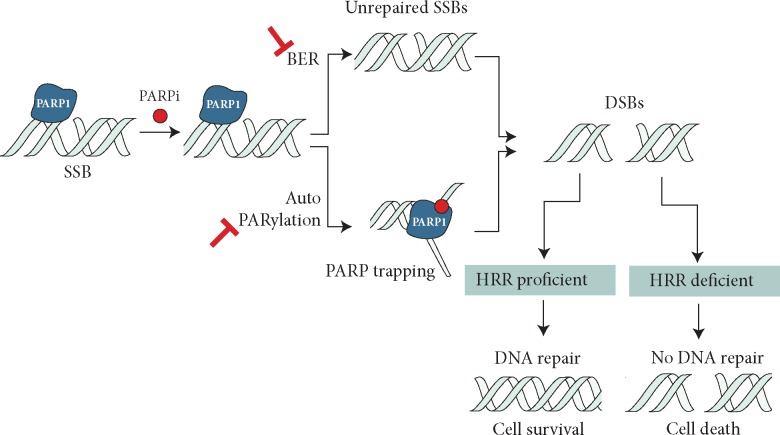
“194,359 In addition to inhibiting PARP1’s ability to repair DSBs, PARPi also attracts other proteins to DSB sites, which exacerbate a drug’s cytotoxic effects by impeding DNA replication.”
Chang, X., Sun, D., Shi, D., Wang, G., Chen, Y., Zhang, K., Tan, H., Liu, J., Liu, B., & Ouyang, L. (2020) · Acta Pharmaceutica Sinica B · doi:10.1016/j.apsb.2020.06.003 · Cited by 90
The DNA damage response pathway as a land of therapeutic opportunities for colorectal cancer
Mauri, G., Arena, S., Siena, S., Bardelli, A., & Sartore-Bianchi, A. (2020) · Annals of Oncology · doi:10.1016/j.annonc.2020.05.027 · Cited by 86
Advances in targeted therapy for osteosarcoma based on molecular classification
Chen, Y., Liu, R., Wang, W., Wang, C., Zhang, N., Shao, X., He, Q., & Ying, M. (2021) · Pharmacological Research · doi:10.1016/j.phrs.2021.105684 · Cited by 91
Is There a Role for Immunotherapy in Prostate Cancer?
Rizzo, A., Mollica, V., Cimadamore, A., Santoni, M., Scarpelli, M., Giunchi, F., Cheng, L., López-Beltrán, A., Fiorentino, M., Montironi, R., et al. (2020) · Cells · doi:10.3390/cells9092051 · Cited by 92
Therapeutic and prognostic insights from the analysis of cancer mutational signatures
Brady, S. W., Gout, A. M., & Zhang, J. (2021) · Trends in Genetics · doi:10.1016/j.tig.2021.08.007 · Cited by 92
Regulation and pharmacological targeting of RAD51 in cancer
Grundy, M. K., Buckanovich, R. J., & Bernstein, K. A. (2020) · NAR Cancer · doi:10.1093/narcan/zcaa024 · Cited by 90
“PARPi are small molecule drugs that target PARP, a crucial enzyme in the repair of single-strand breaks (109,110).”
BackgroundMechanism of PARP inhibitor resistance and potential overcoming strategies
Fu, X., Li, P., Zhou, Q., He, R., Wang, G., Zhu, S., Bagheri, A., Kupfer, G. M., Pei, H., & Li, J. (2023) · Genes & Diseases · doi:10.1016/j.gendis.2023.02.014 · Cited by 94
“Thus far, olaparib, niraparib, talazoparib, and rucaparib have been approved for selected patients with breast, ovarian, or pancreatic cancer.(31,32) The timeline for the development of PARPi is shown in Figure 1, and the”
Targeting DNA Damage Response in Prostate and Breast Cancer
Wengner, A. M., Scholz, A., & Haendler, B. (2020) · International Journal of Molecular Sciences · doi:10.3390/ijms21218273 · Cited by 88
“Olaparib was the first PARP-1 inhibitor approved, initially for advanced ovarian cancer with mutated BRCA, and then later also for breast cancer [106].”
BackgroundThe Role of ARID1A in Tumors: Tumor Initiation or Tumor Suppression?
Xu, S., & Tang, C. (2021) · Frontiers in Oncology · doi:10.3389/fonc.2021.745187 · Cited by 91
Wang, F., Zhao, M., Chang, B., Zhou, Y., Wu, X., Ma, M., Liu, S., Cao, Y., Zheng, M., Dang, Y., et al. (2022) · Molecular Cell · doi:10.1016/j.molcel.2022.03.034 · Cited by 84
Single‐cell transcriptomes reveal heterogeneity of high‐grade serous ovarian carcinoma
Hao, Q., Li, J., Zhang, Q., Xu, F., Xie, B., Lu, H., Wu, X., & Zhou, X. Y. (2021) · Clinical and Translational Medicine · doi:10.1002/ctm2.500 · Cited by 90
“36,37 Intriguingly, these cells also overexpressed a myriad of homologous recombination-associated genes, strongly suggesting that they are active in the homologous recombination pathway leading to resistance to PARP inhibition.”
The lactate-NAD+ axis activates cancer-associated fibroblasts by downregulating p62
Linares, J. F., Cid-Diaz, T., Duran, A., Osrodek, M., Martinez-Ordoñez, A., Reina-Campos, M., Kuo, H.-H., Elemento, O., Martin, M. L., Cordes, T., et al. (2022) · Cell Reports · doi:10.1016/j.celrep.2022.110792 · Cited by 76
“…the creation of synthetic lethality in combination with genetic defects in homologous recombination-mediated repair (Farmer et al., 2005; Lord and Ashworth, 2017; McCabe et al., 2006), which are the basis for the treatment of patients with BRCA1-and BRCA2-associated cancers (Mateo et al., 2019).”
Herencia-Ropero, A., Llop‐Guevara, A., Staniszewska, A. D., Domènech-Vivó, J., García‐Galea, E., Moles‐Fernández, A., Pedretti, F., Domènech, H., Rodríguez, O., Guzmán, M., et al. (2024) · Genome Medicine · doi:10.1186/s13073-024-01370-z · Cited by 90
“However, and despite this practice-changing discovery, the emergence of drug resistance remains a clinical limitation and thus, more efficient therapeutic options are needed [17, 19, 59].”
BackgroundSelf-citationTlemsani, C., Takahashi, N., Pongor, L. S., Rajapakse, V. N., Tyagi, M. G., Wen, X., Fasaye, G., Schmidt, K. T., Desai, P. A., Kim, C., et al. (2021) · Science Translational Medicine · doi:10.1126/scitranslmed.abc7488 · Cited by 76
Gao, Y., Zhang, H., Lirussi, F., Garrido, C., Ye, X., & Xie, T. (2020) · Biochemical Pharmacology · doi:10.1016/j.bcp.2020.114224 · Cited by 73
Liu, S., Chen, X., & Lin, T. (2021) · Journal of Advanced Research · doi:10.1016/j.jare.2021.11.010 · Cited by 81
“Thus, PARP inhibitors lead to DNA double-strand breaks that are normally repaired by the homologous recombination repair mechanism in the late S or G2 phase of the cell cycle, which has shown attractive results in other types of tumours, such as ovarian, breast and prostate cancers [61].”
BackgroundInactivation of the tumor suppressor p53 by long noncoding RNA RMRP
Chen, Y., Hao, Q., Wang, S., Cao, M., Huang, Y., Weng, X., Wang, J., Zhang, Z., He, X., Lu, H., et al. (2021) · Proceedings of the National Academy of Sciences · doi:10.1073/pnas.2026813118 · Cited by 71
“These PARP inhibitors are widely used for treatment of various tumors harboring BRCA1/2 mutations or with homologous recombination deficiency (43).”
BackgroundLi, G., Lin, S., Yu, Z., Wu, X.-H., Liu, J., Tu, G., Liu, Q., Tang, Y.-L., Jiang, Q., Xu, J.-H., et al. (2022) · Biochemical Pharmacology · doi:10.1016/j.bcp.2022.115329 · Cited by 82
Immunomodulatory Roles of PARP-1 and PARP-2: Impact on PARP-Centered Cancer Therapies
Yélamos, J., Moreno-Lama, L., Jimeno, J., & Ali, S. O. (2020) · Cancers · doi:10.3390/cancers12020392 · Cited by 73
Germline testing and genetic counselling in prostate cancer
Russo, J. R., & Giri, V. N. (2022) · Nature Reviews Urology · doi:10.1038/s41585-022-00580-7 · Cited by 75
Ruiz de Porras, V., Font, A., & Aytes, A. (2021) · Cancer Letters · doi:10.1016/j.canlet.2021.08.033 · Cited by 65
Domergue, C., Martin, E., Lemarié, C., Jézéquel, P., Frenel, J., Augereau, P., Campone, M., & Patsouris, A. (2022) · Cancers · doi:10.3390/cancers14102509 · Cited by 64
“More recently, PARP inhibitors in patients with a germline mutation of BRCA1/2 [4,5] and immunotherapy [6] have shown efficacy in early settings.”
BackgroundLi, P., Zhen, Y., Kim, C., Liu, Z., Hao, J., Deng, H., Deng, H., Zhou, M., Wang, X., Qin, T., et al. (2023) · Science Advances · doi:10.1126/sciadv.adg7752 · Cited by 66
Emerging strategies for cancer therapy by ATR inhibitors
Yano, K., & Shiotani, B. (2023) · Cancer Science · doi:10.1111/cas.15845 · Cited by 73
Lønning, P. E., Nikolaienko, O., Pan, K., Kurian, A. W., Eikesdal, H. P., Pettinger, M. B., Anderson, G. L., Prentice, R. L., Chlebowski, R. T., & Knappskog, S. (2022) · JAMA Oncology · doi:10.1001/jamaoncol.2022.3846 · Cited by 72
Estrogen receptor‐low breast cancer: Biology chaos and treatment paradox
Yu, K., Cai, Y., Wu, S., Shui, R., & Shao, Z.-M. (2021) · 癌症:英文版 · doi:10.1002/cac2.12191 · Cited by 69
Peng, X., Pan, W., Jiang, F., Chen, W., Qi, Z., Peng, W., & Chen, J. (2022) · Pharmacological Research · doi:10.1016/j.phrs.2022.106529 · Cited by 69
Targeting the DNA Damage Response Pathways and Replication Stress in Colorectal Cancer
Durinikova, E., Reilly, N. M., Buzo, K., Mariella, E., Chilà, R., Lorenzato, A., Dias, J. M. L., Grasso, G., Pisati, F., Lamba, S., et al. (2022) · Clinical Cancer Research · doi:10.1158/1078-0432.ccr-22-0875 · Cited by 59
“Several studies have already elucidated the role of HR defects and their clinical implications in cancers such as those of ovarian, breast, prostate, and pancreatic origin (3).”
Current Strategies and Future Perspectives for Precision Medicine in Pancreatic Cancer
Regel, I., Mayerle, J. V., & Mukund, M. U. (2020) · Cancers · doi:10.3390/cancers12041024 · Cited by 66
“Notably, a platinum-based chemotherapy also causes DNA damage so that DNA repair deficient tumors show increased treatment sensitivity [22].”
BackgroundTargeting Lysophosphatidic Acid in Cancer: The Issues in Moving from Bench to Bedside
Xu, Y. (2019) · Cancers · doi:10.3390/cancers11101523 · Cited by 58
Hilke, F. J., Sinnberg, T. W., Gschwind, A., Niessner, H., Demidov, G. M., Amaral, T. M. S., Ossowski, S., Bonzheim, I., Röcken, M., Rieß, O., et al. (2020) · Cancers · doi:10.3390/cancers12092359 · Cited by 73
“One treatment option would be PARP inhibitors or platinum-based chemotherapy [49].”
BackgroundChakrabarty, A., Chakraborty, S., Bhattacharya, R., & Chowdhury, G. (2021) · Frontiers in Oncology · doi:10.3389/fonc.2021.674354 · Cited by 62
“Currently, PARPi are recommended for the treatment of TNBC (olaparib and talazoparib) and epithelial ovarian cancers (olaparib, niraparib, and rucaparib) harboring BRCA1/2 mutations (22), but their long-term efficacies are variable and independent of the HR status (23, 169, 170).”
BackgroundImmune Checkpoint Inhibitors in Advanced Prostate Cancer: Current Data and Future Perspectives
Rebuzzi, S. E., Rescigno, P., Catalano, F., Mollica, V., Vogl, U. M., Marandino, L., Massari, F., Mestre, R. P., Zanardi, E., Signori, A., et al. (2022) · Cancers · doi:10.3390/cancers14051245 · Cited by 61
“PARP inhibitors interact with the DDR gene pathway by blocking the DNA repair gene mechanism, especially in patients with other DDR gene alterations (such as BRCA1 or 2 or ATM mutation), leading to cancer cell death [49].”
BackgroundSun, J., Liu, J., Gao, C., Zheng, J., Zhang, J., Ding, Y., Gong, W., Yang, M., Li, Z., Wang, Y., et al. (2021) · Acta Biomaterialia · doi:10.1016/j.actbio.2021.12.023 · Cited by 57
Herzog, T. J., Vergote, I. B., Gomella, L. G., Milenkova, T., French, T., Tonikian, R., Poehlein, C. H., & Hussain, M. (2022) · European Journal of Cancer · doi:10.1016/j.ejca.2022.10.021 · Cited by 63
“PARPi sensitivity has been well established for tumours that harbour BRCA mutations [21].”
BackgroundCombining PARP Inhibition with Platinum, Ruthenium or Gold Complexes for Cancer Therapy
Yusoh, N. A., Ahmad, H., & Gill, M. R. (2020) · ChemMedChem · doi:10.1002/cmdc.202000391 · Cited by 57
Hu, X., Zhang, J., Zhang, Y., Jiao, F., Wang, J., Chen, H., Ouyang, L., & Wang, Y. (2021) · European Journal of Medicinal Chemistry · doi:10.1016/j.ejmech.2021.114094 · Cited by 53
Regulatory mechanism of miR-20a-5p expression in Cancer
Huang, W., Wu, X., Xiang, S., Qiao, M., Cen, X. B., Pan, X., Huang, X., & Zhao, Z. (2022) · Cell Death Discovery · doi:10.1038/s41420-022-01005-5 · Cited by 57
“0% in patients with PALB2 embryogenic mutations [42].”
BackgroundPyruvate and uridine rescue the metabolic profile of OXPHOS dysfunction
Adant, I., Bird, M., Decru, B., Windmolders, P., Wallays, M., de Witte, P. A. M., Rymen, D., Witters, P., Vermeersch, P., Cassiman, D. M., et al. (2022) · Molecular Metabolism · doi:10.1016/j.molmet.2022.101537 · Cited by 53
Development of PARP inhibitors in advanced prostate cancer
Bourlon, M. T., Valdez-Sandoval, P. I., & Castro, E. (2024) · Therapeutic Advances in Medical Oncology · doi:10.1177/17588359231221337 · Cited by 57
“24 Initial reports described that BRCA1 -/- or BRCA2 -/- cell lines displayed a 60-to 1000-fold greater sensitivity to olaparib and talazoparib pre-cursors than BRCA + / + cell lines.”
BackgroundClinical potential of ATM inhibitors
Lavin, M. F., & Yeo, A. J. (2020) · Mutation research. Fundamental and molecular mechanisms of mutagenesis · doi:10.1016/j.mrfmmm.2020.111695 · Cited by 56
Wang, Z., Wang, S., Qin, J., Zhang, X., Lü, G., Liu, H., Guo, H., Wu, L., Shender, V. О., Shao, C., et al. (2022) · Nature Communications · doi:10.1038/s41467-022-34042-w · Cited by 59
“PARP inhibitors are the first clinically approved drugs based on their synthetic lethality in BRCA1/2 mutant ovarian cancer (Mateo et al., 2019).”
BackgroundRecent advancements in PARP inhibitors-based targeted cancer therapy
Zhou, P., Wang, J. L., Mishail, D., & Wang, C. (2020) · Precision Clinical Medicine · doi:10.1093/pcmedi/pbaa030 · Cited by 52
Small-Molecule Inhibitors Targeting the Canonical WNT Signaling Pathway for the Treatment of Cancer
Liu, Z., Wang, P., Wold, E. A., Song, Q., Zhao, C., Wang, C., & Zhou, J. (2021) · Journal of Medicinal Chemistry · doi:10.1021/acs.jmedchem.0c01799 · Cited by 50
CSMD3 is Associated with Tumor Mutation Burden and Immune Infiltration in Ovarian Cancer Patients
Lü, N., Liu, J., Xu, M., Liang, J., Wang, Y., Wu, Z., Xing, Y. T., & Diao, F. (2021) · International Journal of General Medicine · doi:10.2147/ijgm.s335592 · Cited by 63
“A series of clinical evidence-based medical studies have demonstrated that PARPi significantly prolong PFS in patients with OC in both the first-line and platinum-sensitive, relapsed, maintenance therapy settings.(32) PARPi has been reported to lead to the upregulation of PD-L1.”
BackgroundBiegała, Ł., Gajek, A., Marczak, A., & Rogalska, A. (2021) · Biochimica et Biophysica Acta (BBA) - Reviews on Cancer · doi:10.1016/j.bbcan.2021.188633 · Cited by 55
HMGB3 promotes PARP inhibitor resistance through interacting with PARP1 in ovarian cancer
Ma, H., Qi, G., Han, F., Lu, W., Peng, J., Li, R., Shi, Y., Yuan, C., & Kong, B. (2022) · Cell Death and Disease · doi:10.1038/s41419-022-04670-7 · Cited by 54
“Olaparib has been shown to suppress PARP1 catalytic activity through PARP trapping, which ultimately leads to DNA damage and cell death [26].”
BackgroundcAMP-Dependent Signaling and Ovarian Cancer
Kilanowska, A., Ziółkowska, A., Stasiak, P., & Gibas-Dorna, M. (2022) · Cells · doi:10.3390/cells11233835 · Cited by 54
Therapeutic applications of PARP inhibitors in ovarian cancer
Xie, H., Wang, W., Xia, B., Jin, W., & Lou, G. (2020) · Biomedicine & Pharmacotherapy · doi:10.1016/j.biopha.2020.110204 · Cited by 52
Jiang, Y. X., Luo, L., Hu, T., Cui, Y., Sun, X., Gou, W., Hou, W., Li, Y., & Sun, T. (2021) · European Journal of Medicinal Chemistry · doi:10.1016/j.ejmech.2021.113898 · Cited by 50
E2A Modulates Stemness, Metastasis, and Therapeutic Resistance of Breast Cancer
López‐Menéndez, C., Vázquez-Naharro, A., Santos, V., Dubus, P. R., Santamaría, P. G., Martínez‐Ramírez, Á., Portillo, F., Moreno‐Bueno, G., Faraldo, M. M., & Cano, A. (2021) · Cancer Research · doi:10.1158/0008-5472.can-20-2685 · Cited by 45
“In particular, PARP inhibitors (PARPi) are being used for the treatment of breast cancer exhibiting defects on homologous recombination (HR)-medi- ated DNA repair (54), as well as in recurrent ovarian cancer and other tumor types regardless of their BRCA status or the presence of HR defects (55).”
Witz, A., Dardare, J., Betz, M., Michel, C., Husson, M., Gilson, P., Merlin, J., & Harlé, A. (2025) · Biomarker Research · doi:10.1186/s40364-025-00740-y · Cited by 62
“1) [4].”
Wu, N., Zhang, X., Fang, C., Zhu, M., Wang, Z., Jian, L., Tan, W., Wang, Y., Li, H., Xu, X., et al. (2024) · Research · doi:10.34133/research.0371 · Cited by 51
“Patients with BRCA wild-type ovarian cancer, especially those with homologous recombination deficiency (HRD)-negative tumors, do not benefit as much from PARPi [17–20], which limits their use in ovarian cancer therapy.”
BackgroundOvercoming Barriers in Cancer Biology Research: Current Limitations and Solutions
(2025) · doi:10.3390/cancers17132102 · Cited by 44
“Here are some of the most promising strategies in targeted therapies concerning PARP inhibitors [236].”
Targeting DNA damage repair pathways in pancreas cancer
Crowley, F., Park, W., & O’Reilly, E. M. (2021) · Cancer and Metastasis Reviews · doi:10.1007/s10555-021-09983-1 · Cited by 43
Guffanti, F., Alvisi, M. F., Anastasia, A., Ricci, F., Chiappa, M., Llop‐Guevara, A., Serra, V., Fruscio, R., Degasperi, A., Nik‐Zainal, S., et al. (2021) · British Journal of Cancer · doi:10.1038/s41416-021-01609-1 · Cited by 46
“PARPi have been shown to be in synthetic lethality with a deficiency in BRCA1/2, meaning that the inhibition of PARP1 enzyme in cancer cells, where also BRCA1/2 function is compromised, causes cell death and this has fostered the clinical development of these compounds in BRCA1/2-mutated tumours, with very interesting…”
ResultSelf-citationWoll, P. J., Gaunt, P., Danson, S. J., Steele, N. L., Ahmed, S. I., Mulatero, C., Shah, R. N. H., Bhosle, J., Hodgkinson, E., Watkins, B., et al. (2022) · Lung Cancer · doi:10.1016/j.lungcan.2022.07.007 · Cited by 46
Targeting DNA Damage Response and Immune Checkpoint for Anticancer Therapy
Huang, J.-L., Chang, Y.-T., Hong, Z.-Y., & Lin, C.-S. (2022) · International Journal of Molecular Sciences · doi:10.3390/ijms23063238 · Cited by 42
PARP-1-Associated Pathological Processes: Inhibition by Natural Polyphenols
Maluchenko, N. V., Feofanov, A. V., & Studitsky, V. M. (2021) · International Journal of Molecular Sciences · doi:10.3390/ijms222111441 · Cited by 44
“Several inhibitors of the enzymatic activity of PARP-1 (PARPi) are already used in clinical practice for the treatment of cancer [6,7].”
Method
Metadata
- Authors
- Mateo, J., Lord, C. J., Serra, V., Tutt, A., Balmaña, J., Castroviejo-Bermejo, M., Cruz, C., Oaknin, A., Kaye, S. B., & de Bono, J. S.
- Affiliations
- Vall d'Hebron Hospital Universitari (ES)
- Institute of Cancer Research (GB)
- Vall d'Hebron Institute of Oncology (ES)
- Royal Marsden NHS Foundation Trust (GB)
- Venue
- Annals of Oncology
- Publisher
- Elsevier BV
- Published
- 2019-09
- Volume
- 30
- Issue
- 9
- Pages
- 1437-1447
- ISSN
- 0923-7534 (ISSN-L)
- PMC
- PMC6771225
- OpenAlex
- W2951058429
- Cited by
- 743
- References
- 100
- Citations by year
- 2026: 58 · 2025: 123 · 2024: 81 · 2023: 123 · 2022: 145 · 2021: 128 · 2020: 77 · 2019: 8
- FWCI
- 8.58
- Type
- journal article
- Language
- en
- Open access
- hybrid
- doi.org
- Licence
- cc-by-nc
- www.elsevier.com/tdm/userlicense/1.0/ (tdm)
- creativecommons.org/licenses/by-nc/4.0/ (vor, 206 d)
- Locations
- Annals of Oncology (publishedVersion, cc-by-nc)
- PubMed Central (publishedVersion, cc-by-nc)
- PubMed (publishedVersion)
- Research Portal (King's College London) (submittedVersion, other-oa)
- Funders
- Prostate Cancer Foundation
- Instituto de Salud Carlos III
- FERO Foundation
- Asociación Española Contra el Cáncer
- AECC-JP Barcelona
- Cancer Research UK
- Department of Health (C12540/A25128)
- NHS funding
- NIHR Biomedical Research Centre
- Institute of Cancer Research
- National Institute for Health Research
- NIHR
- Topics
- Health Sciences › Medicine › Oncology › PARP inhibition in cancer therapy
- Life Sciences › Biochemistry, Genetics and Molecular Biology › Genetics › BRCA gene mutations in cancer
- Life Sciences › Biochemistry, Genetics and Molecular Biology › Molecular Biology › DNA Repair Mechanisms
- Keywords
- PARP inhibitors, olaparib, talazoparib, niraparib, rucaparib, synthetic lethality, DNA repair deficiency, genomic instability, breast cancer, ovarian cancer, maintenance therapy, platinum-based chemotherapy, PARP inhibitor resistance, predictive biomarkers, homologous recombination defects, precision medicine, prostate cancer, pancreatic cancer, combination therapy
- MeSH terms
- Poly(ADP-ribose) Polymerase Inhibitors, Poly (ADP-Ribose) Polymerase-1, Breast Neoplasms, Female, Humans, Indazoles, Indoles, Ovarian Neoplasms, Phthalazines, Piperazines, Piperidines, BRCA1 Protein, BRCA2 Protein, Genomic Instability
About these checks
Registry, retraction, Cites and statistics results are computed, not judged, with one exception: a printed reference that no index lists is read once by a model before it counts as a citation error. Claims are extracted by a model and kept only when their quote appears verbatim in the text; each cited source is then checked, with a model’s help, for whether it says what the claim relies on. Those verdicts can be wrong — read the claim’s quote and the cited source before relying on one.
Statistics and arithmetic are recomputed, not judged.
Confidence bands are shown only for fields calibrated on our annotated test set. None is calibrated yet, so no band is shown.
What counts as a claim ›How we measure confidence ›How we check this ›
Are you an author, or do you see a problem with this page? Request a review
Data sources
Bibliographic data: Semantic Scholar, OpenAlex, Crossref.
Contains information from the Semantic Scholar Academic Graph Datasets, made available under the ODC Attribution License (ODC-BY 1.0).
Semantic Scholar’s data is described in: Kinney, R., et al. (2023). The Semantic Scholar Open Data Platform. arXiv:2301.10140.
