

Bending the Curve of Global Freshwater Biodiversity Loss: An Emergency Recovery Plan
Open accessThe DOI matches its Crossref record; 86 of the 94 references it cites were found in a registry or an index; 5 of the 63 sources its claims cite were checked for support.
Abstract
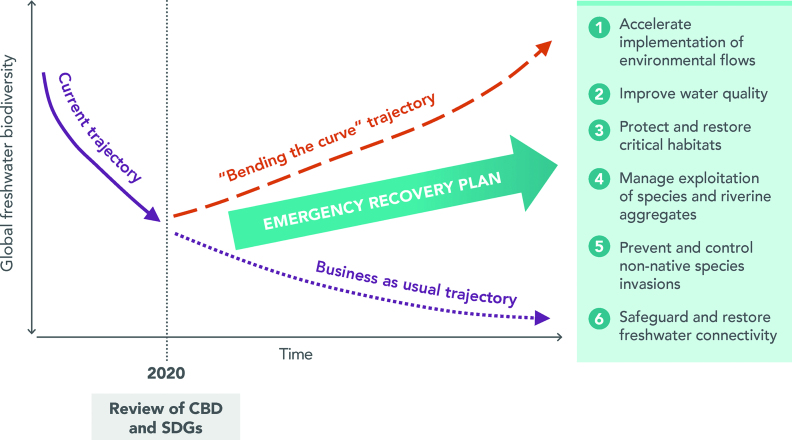
Despite their limited spatial extent, freshwater ecosystems host remarkable biodiversity, including one-third of all vertebrate species. This biodiversity is declining dramatically: Globally, wetlands are vanishing three times faster than forests, and freshwater vertebrate populations have fallen more than twice as steeply as terrestrial or marine populations. Threats to freshwater biodiversity are well documented but coordinated action to reverse the decline is lacking. We present an Emergency Recovery Plan to bend the curve of freshwater biodiversity loss. Priority actions include accelerating implementation of environmental flows; improving water quality; protecting and restoring critical habitats; managing the exploitation of freshwater ecosystem resources, especially species and riverine aggregates; preventing and controlling nonnative species invasions; and safeguarding and restoring river connectivity. We recommend adjustments to targets and indicators for the Convention on Biological Diversity and the Sustainable Development Goals and roles for national and international state and nonstate actors.
Overview
CoChat Summary
TL;DR
The paper presents an Emergency Recovery Plan to reverse global freshwater biodiversity loss through six priority actions: environmental flows, water quality, habitat protection and restoration, sustainable exploitation, invasive species control, and connectivity restoration. It recommends embedding these actions in post-2020 Convention on Biological Diversity and Sustainable Development Goal targets and indicators.
Key findings
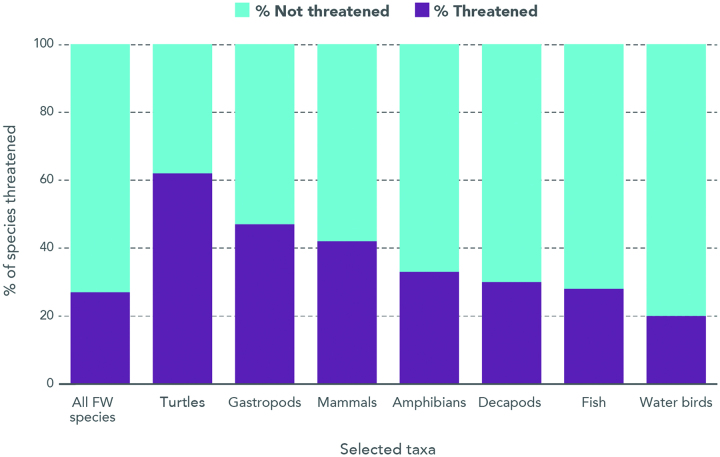
Freshwater ecosystems cover less than 1% of Earth’s surface but host approximately one-third of vertebrate species and 10% of all species; wetlands are vanishing three times faster than forests, and freshwater vertebrate populations have fallen more than twice as steeply as terrestrial or marine populations. Of 29,500 freshwater-dependent species assessed for the IUCN Red List, 27% are threatened with extinction, including an estimated 62% of turtle species, 47% of gastropods, 42% of mammals, 33% of amphibians, 30% of decapod crustaceans, 28% of fishes, and 20% of birds. Freshwater megafauna populations declined by 88% from 1970 to 2012, with the highest declines in Indomalaya (−99%) and Palearctic (−97%) realms. An estimated 30% of natural freshwater ecosystems have disappeared since 1970 and 87% of inland wetlands since 1700; only one-third of the world’s very long rivers remain free flowing, and approximately 3,700 new hydropower dams were identified worldwide at varying planning stages.
Methods
This is a policy and synthesis article, not a primary empirical study; it is structured around six priority actions derived from major causes of freshwater biodiversity loss: flow alteration, pollution, habitat degradation and loss, overexploitation, invasive nonnative species, and connectivity loss. The evidence base consists of cited global assessments, peer-reviewed literature, and implementation case studies from multiple regions, with no new field sample or primary data collection. The main analysis is a narrative review and policy-alignment exercise; Tables 1a and 1b map 13 existing or potential CBD and SDG targets and indicators to the six priority actions.
Limitations
Stated in the paper: implementation examples are “currently isolated successes”; human water demands and transboundary characteristics complicate implementation; data and science-based management are lacking for freshwater fisheries and riverine aggregate extraction; large-scale implementation of nature-based solutions is “in its infancy”; and substantial data gaps remain, including approximately 30% of freshwater mollusk species and 40% of decapod crustaceans classified as data deficient. Evident from the text: the plan is not empirically tested as a whole, relying instead on illustrative case studies and expert synthesis; the paper also notes that offsetting is controversial and open to misapplication.
Model-written summary. Check it against the paper before relying on it.
Integrity signals
Registry
Cites
Statistics
Figures
Verification
Claims the paper makes
5 Valid · 12 Not valid · 50 Not checked · 28 Own results and interpretations
Every source the paper cites for this claim was checked and supports it.
In the paper
“of the fish species assessed for the freshwater ecoregions of the world, over half were confined to a single ecoregion (Abell et al. 2008).”
§ Bending the Curve of Global Freshwater Biodiversity Loss: An Emergency Recovery Plan > Abstract
What the sources say
- Supportedcites Abell et al. 2008 matched to “Freshwater Ecoregions of the World: A New Map of Biogeographic Units for Freshwater Biodiversity Conservation” (2008) source
The “Freshwater ecoregional map and species results” section reports that more than 13,400 freshwater fish species were assigned to ecoregions and more than 6,900 to single ecoregions—over half of those assigned. No page number is supplied in the excerpt. (LLM, conf=0.94)
plain- Asserted: passes — The authors put it forward as true.
- Checkable: passes — It can be checked against evidence.
- Load-bearing: passes — The paper’s conclusions depend on it.
- Based: passes — The paper gives a reason why it holds.
- Supported
The cited sources support only part of this claim — read each source’s verdict below.
In the paper
“Recommendations to address immediate threats to and underlying drivers of global biodiversity loss have focused mainly on terrestrial ecosystems, such as forests and grasslands (e.g., Kok et al. 2018)”
§ Bending the Curve of Global Freshwater Biodiversity Loss: An Emergency Recovery Plan > Abstract
What the sources say
- Partly supportedcites Kok et al. 2018 matched to “Pathways for agriculture and forestry to contribute to terrestrial biodiversity conservation: A global scenario-study” (2018) sourceExperimental — accuracy not yet measured
Our copy supports only the exemplifying part of the attribution: Kok et al. (2018) is itself a terrestrial-scoped recommendations study — the Introduction (p. 1) states it 'evaluates the impacts on biodiversity of different response strategies in the agriculture and forestry sectors', and the Abstract and Sections 2.3/3.1–3.2 build pathways around forests, cropland and grazing land and terrestrial MSA. But no passage makes the comparative claim attributed here, namely that recommendations for global biodiversity loss have focused 'mainly' on terrestrial ecosystems; the closest statement (Introduction) is that societal responses have increased yet remain insufficient, and it credits that to Leadley et al. (2014), CBD (2014) and Tittensor et al. (2014). Aquatic biodiversity is not dismissed as neglected but explicitly handled in a separate companion analysis (Boelee et al., 2017, Introduction), so the 'mainly terrestrial' characterisation and the threats-versus-drivers distinction are not supported by this source. (LLM, conf=0.65)
plain- Asserted: passes — The authors put it forward as true.
- Checkable: passes — It can be checked against evidence.
- Load-bearing: passes — The paper’s conclusions depend on it.
- Based: passes — The paper gives a reason why it holds.
- Partly supported
In the paper
“with the highest declines in the Indomalaya and Palearctic realms (−99% and −97%, respectively; He et al. 2019).”
§ Bending the Curve of Global Freshwater Biodiversity Loss: An Emergency Recovery Plan > Abstract
What the sources say
- Not checked yetcites He et al. 2019
plain- Asserted: passes — The authors put it forward as true.
- Checkable: passes — It can be checked against evidence.
- Load-bearing: unclear — It is unclear whether the paper’s conclusions depend on it.
- Based: passes — The paper gives a reason why it holds.
In the paper
“Populations of freshwater megafauna, defined as animals that reach a body mass of 30 kilograms, declined by 88% from 1970 to 2012”
§ Bending the Curve of Global Freshwater Biodiversity Loss: An Emergency Recovery Plan > Abstract
What the sources say
- Not checked yetcites He et al. 2019
plain- Asserted: passes — The authors put it forward as true.
- Checkable: passes — It can be checked against evidence.
- Load-bearing: passes — The paper’s conclusions depend on it.
- Based: passes — The paper gives a reason why it holds.
In the paper
“Human demands for water will increase in some regions, making implementation more challenging (Palazzo et al. 2019).”
§ Bending the Curve of Global Freshwater Biodiversity Loss: An Emergency Recovery Plan > The Emergency Recovery Plan: Priorities for action > Action 1: Accelerate implementation of environmental flows
What the sources say
- Not checked yetcites Palazzo et al. 2019 matched to “Investment Needs for Irrigation Infrastructure along Different Socioeconomic Pathways” (2019) source
plainstates a cause- Asserted: passes — The authors put it forward as true.
- Checkable: passes — It can be checked against evidence.
- Load-bearing: unclear — It is unclear whether the paper’s conclusions depend on it.
- Based: passes — The paper gives a reason why it holds.
40 more claims
Create a free account to see all 95 claims and to verify the 58 references still open.
- It may state two separate claims as one. 29
- Probably not a substantial claim. 30
Claims other papers make about this one
Each is checked against this paper’s own text: does it say what the citing paper says it does?
The check wasn’t confident either way, so it gives no verdict — never disputed.
In the citing paper
“Hunting at Parker River National Wildlife Refuge represents both a traditional recreational use and serves as an important wildlife management tool.185”
From Protecting and restoring habitats to benefit freshwater biodiversity (2024) · cites this paper as [185]
Experimental — accuracy not yet measured
Citations
Cites
Freshwater biodiversity: importance, threats, status and conservation challenges
Dudgeon, D., Arthington, A. H., Gessner, M. O., Kawabata, Z., Knowler, D. J., Lévêque, C., Naiman, R. J., Prieur‐Richard, A., Soto, D., Stiassny, M. L. J., et al. (2006) · Biological Reviews · doi:10.1017/s1464793105006950 · Cited by 8,489
Self-citationPoff, N. L., Allan, J. D., Bain, M. B., Karr, J. R., Prestegaard, K. L., Richter, B. D., Sparks, R. E., & Stromberg, J. C. (1997) · BioScience · doi:10.2307/1313099 · Cited by 6,500
Pimentel, D., Zuniga, R., & Morrison, D. (2005) · Ecological Economics · doi:10.1016/j.ecolecon.2004.10.002 · Cited by 4,771
Emerging threats and persistent conservation challenges for freshwater biodiversity
Reid, A. J., Carlson, A. K., Creed, I. F., Eliason, E. J., Gell, P. A., Johnson, P. T. J., Kidd, K. A., MacCormack, T. J., Olden, J. D., Ormerod, S. J., et al. (2019) · Biological Reviews · doi:10.1111/brv.12480 · Cited by 3,645
Self-citationBasic Principles and Ecological Consequences of Altered Flow Regimes for Aquatic Biodiversity
BUNN, S. E., & ARTHINGTON, A. H. (2002) · Environmental Management · doi:10.1007/s00267-002-2737-0 · Cited by 3,379
Self-citationCeballos, G., Ehrlich, P. R., & Dirzo, R. (2017) · Proceedings of the National Academy of Sciences · doi:10.1073/pnas.1704949114 · Cited by 2,663
Mapping the world’s free-flowing rivers
Grill, G., Lehner, B., Thieme, M., Geenen, B., Tickner, D., Antonelli, F., Babu, S., Borrelli, P., Cheng, L., Crochetiere, H., et al. (2019) · Nature · doi:10.1038/s41586-019-1111-9 · Cited by 2,473
Self-citationA global boom in hydropower dam construction
Zarfl, C., Lumsdon, A. E., Berlekamp, J., Tydecks, L., & Tockner, K. (2015) · Aquatic Sciences · doi:10.1007/s00027-014-0377-0 · Cited by 2,181
Self-citationHow much wetland has the world lost? Long-term and recent trends in global wetland area
Davidson, N. C. (2014) · Marine and Freshwater Research · doi:10.1071/mf14173 · Cited by 2,177
Abell, R., Thieme, M. L., Revenga, C., Bryer, M., Kottelat, M., Bogutskaya, N., Coad, B., Mandrak, N., Balderas, S. C., Bussing, W., et al. (2008) · BioScience · doi:10.1641/b580507 · Cited by 2,045
Self-citation
Research works printed but not linked: 14
- Döll P, Bunn SE. 2014 Cross-chapter box on the impact of climate change on freshwater ecosystems due to altered river flow regimes. Pages 143– 146 in Field CB et al., eds. Climate Change Impacts, Adaptation, and Vulnerability. Part A: Global and Sectoral Aspects. Contribution of Working Group II to the Fifth Assessment Report of the Intergovernmental Panel on Climate Change. Cambridge University Press.
- Fricke R, Eschmeyer W, van der Laan R 2019 Catalog of fishes: Genera, species, references. California Academy of Sciences. http://researcharchive.calacademy.org/research/ichthyology/catalog/SpeciesByFamily.asp.
- Funge-Smith S. 2018 Review of the State of the World Fishery Resources: Inland Fisheries. Food and Agriculture Organization of the United Nations Fisheries and Aquaculture Circular.
- Harwood A, Johnson S, Richter B, Locke A, Yu X, Tickner D 2017 Listen to the River: Lessons from a Global Review of Environmental Flow Success Stories. World Wildlife Fund.
- [IUCN] International Union for Conservation of Nature 2019 The IUCN Red List of Threatened Species, version 2019-1. IUCN www.iucnredlist.org.
- Koehnken L, Rintoul M. 2018 Impacts of Sand Mining on Ecosystem Structure, Process and Biodiversity in Rivers. World Wildlife Fund International.
- Koning AA. 2018 Riverine Reserves: The Conservation Benefits of Spatial Protection for Rivers in the Context of Environmental Change. University of Wisconsin–Madison.
- Le Quesne T, Kendy E, Weston D 2010 The Implementation Challenge: Taking Stock of Government Policies to Protect and Restore Environmental flows. WWF and The Nature Conservancy.
- Moir K, Thieme M, Opperman J 2016 Securing a Future that Flows: Case Studies of Protection Mechanisms for Rivers. World Wildlife Fund and The Nature Conservancy.
- NBI (Nile Basin Initiative) 2016 Strategy for Management of Environmental Flows in the Nile Basin. Nile Basin Initiative Secretariat. 17p.
- Opperman J et al. 2019a Connected and Flowing: A Renewable Future for Rivers, Climate, and People. WWF and The Nature Conservancy.
- Speed R, Tickner D, Naiman R, Gang L, Sayers P, Yu W, Yuanyuan L, Houjian H, Jianting C, Lili Y 2016 River Restoration: A Strategic Approach to Planning and Management. UNESCO.
- [UNEP] United Nations Environment Programme 2016 Snapshot of the World's Water Quality: Towards a Global Assessment. UNEP.
- UN Environment 2017 A Framework for Freshwater Ecosystem Management, vol. 2: Technical Guide for Classification and Target-Setting. United Nations.
Cited by
Items 501–600 of 1,243
The combined effects of land use and seasonal environmental factors on stream food web structure
Wang, Y., Li, S., Tan, X., & Zhang, Q. (2022) · Frontiers in Environmental Science · doi:10.3389/fenvs.2022.969980 · Cited by 9
“In urbanized rivers, the impervious surface cover, such as dams, weirs, or levees, fragment longitudinal (upstream to downstream) and lateral (river to floodplain) connectivity (Grill et al., 2019; Tickner et al., 2020).”
BackgroundBurying water and biodiversity through road constructions in Brazil
Rosa, C., Secco, H. K. C., da Silva, L. G., de Lima, M. G., Gordo, M., & Magnusson, W. E. (2021) · Aquatic Conservation Marine and Freshwater Ecosystems · doi:10.1002/aqc.3544 · Cited by 7
Morissette, O., Charette, C., Windle, M. J. S., Francis, A., Drouin, A., Goldsmit, J., & Derry, A. M. (2022) · doi:10.1101/2022.09.07.506921 · Cited by 7
Nature-based solutions for water resilience in thriving European urban areas
Bona, S., Rodrigues, F., Gomes, R., et al. (2024) · Urban Water Journal · doi:10.1080/1573062x.2024.2359661 · Cited by 6
“(4) Ecological restoration with multi-species wetlands: this NbS approach offers a holistic solution for sustainable urban drainage (Tickner et al. 2020).”
Jin, L., Li, Z., Wang, C., Wang, Y., Li, X., Yang, J., Zhao, Y., & Guo, B. (2022) · Frontiers in Genetics · doi:10.3389/fgene.2022.958076 · Cited by 9
“Freshwater organisms are vulnerable to drastic climate changes because they have limited abilities to disperse; and availability of water–their habitat–are highly climate-dependent (Sala et al., 2000; Dudgeon et al., 2006; Woodward et al., 2010; Poff et al., 2012; Tickner et al., 2020).”
BackgroundBarchiesi, S., Camacho, A., Hernández, E., Guelmami, A., Monti, F., Satta, A., Jordán, O., & Angelini, C. (2022) · Wetlands · doi:10.1007/s13157-022-01562-6 · Cited by 6
“In bringing together the ecohydrological and socioeconomic perspectives underpinned by the two sides of a sciencemanagement partnership, our goal was also to highlight any interconnected process that, if replicated, could accelerate progress in the field of environmental water management as part of a renewed call to p…”
BackgroundJeanson, A. L., Kadykalo, A. N., Cooke, S. J., & Young, N. (2024) · Marine Policy · doi:10.1016/j.marpol.2024.106541 · Cited by 6
“Nevertheless, the management of at-risk species and freshwater ecosystems is becoming increasingly important for the conservation of biodiversity at a global scale [14 – 16].”
Self-citationLiu, Y., Yan, Y., Lin, L., Wang, L., Zhang, Y., & Kang, B. (2024) · Journal of Environmental Management · doi:10.1016/j.jenvman.2024.121301 · Cited by 9
Substantial unrealised global biodiversity of continental microcrustaceans
Macêdo, R. L., Toutain, M., Reid, J. W., Soto, I., Haubrock, P. J., Cuthbert, R. N., & Rocha, O. (2024) · Journal of Plankton Research · doi:10.1093/plankt/fbae020 · Cited by 8
A systematic map of hydropower impacts on megafauna at the land-water interface
Altanov, V. Y., Jähnig, S. C., & He, F. (2025) · Biological Conservation · doi:10.1016/j.biocon.2025.111092 · Cited by 8
Unveiling the ripple effect: how human activities reshape ecosystems
Hoque, M. (2023) · Romanian Journal of Ecology & Environmental Chemistry · doi:10.21698/rjeec.2023.202 · Cited by 14
South, J., Dickey, J. W. E., Cuthbert, R. N., & Dick, J. T. A. (2022) · Ecological Indicators · doi:10.1016/j.ecolind.2022.109260 · Cited by 7
Life‐history connections to long‐term fish population trends in a species‐rich temperate river
Nagy, A. J., Freeman, M. C., Irwin, B. J., & Wenger, S. J. (2024) · Ecology Of Freshwater Fish · doi:10.1111/eff.12767 · Cited by 8
Pesce, S., Bérard, A., Coutellec, M., Hedde, M., Langlais, A., Larras, F., Leenhardt, S., Mongruel, R., Munaron, D., Sabater, S., et al. (2023) · Environmental Science and Pollution Research · doi:10.1007/s11356-023-29128-x · Cited by 9
“Environmental managers and regulators increasingly recognize biodiversity as an important protection goal in environmental risk assessment (EFSA 2016a) and sustainability programs (Glaser 2012; Bach et al. 2020; European Commission 2020; Tickner et al. 2020).”
Climate Change Impacts on the Phenology of Laurentian Great Lakes Fishes
Piczak, M. L., Sergio, A. J. A., Lennox, R. J., Theÿsmeÿer, T., Bowman, J. E., Midwood, J. D., & Cooke, S. J. (2025) · Global Change Biology · doi:10.1111/gcb.70436 · Cited by 7
“Relative to other types of ecosystems (i.e., terrestrial and marine), freshwater ecosystems are experiencing biodiversity declines at much higher rates (WWF 2022) and are in a crisis state (Tickner et al. 2020).”
Self-citationHappel, A., Lederman, N., & Snyder, C. (2024) · Aquatic Conservation: Marine and Freshwater Ecosystems · doi:10.1002/aqc.4158 · Cited by 6
Nutritional Quality of Phytoplankton Shapes Estuarine Food Webs Under Salinity and Nutrient Stress
Wu, J., Li, F., Guo, F., Fry, B., Ouyang, X., Gao, X., Gao, W., & Zhang, Y. (2025) · ACS ES&T Water · doi:10.1021/acsestwater.5c00005 · Cited by 6
Xiaowei, J., Xianfu, Z., Xiaodong, 渠. Q., Renji, X., Shouliang, H., Wang, Y., Fusheng, W., & Wu, F. (2023) · Journal of Lake Sciences · doi:10.18307/2023.0300 · Cited by 7
Digital innovation in citizen science to enhance water quality monitoring in developing countries
Pattinson, N. B., Taylor, J. A., Dickens, C. W. S., & Graham, P. M. (2023) · CGSPace A Repository of Agricultural Research Outputs (Consultative Group for International Agricultural Research) · doi:10.5337/2024.201 · Cited by 10
Brizuela, S. R., Funk, A., Tiwari, S., Baldan, D., & Hein, T. I. A. (2024) · Landscape Ecology · doi:10.1007/s10980-024-01975-0 · Cited by 11
“Floodplain landscapes have been subjected to long-term anthropogenic stressors, contributing to global freshwater biodiversity loss (Hein et al. 2019; Tickner et al. 2020).”
Campos, D. S., de Oliveira, R. F., Vieira, L. D. O., Bragança, P. H. N., Guimarães, E. C., Katz, A. M., Henschel, E., de Brito, P. S., South, J., & Ottoni, F. P. (2024) · Reviews in Fish Biology and Fisheries · doi:10.1007/s11160-024-09901-y · Cited by 8
“Such an approach alone is not desirable, especially for freshwater fishes that are under severe pressure from stressors (Dudgeon et al. 2006; Darwall et al. 2018; Harrison et al. 2018; Reid et al. 2019; Tickner et al. 2020; Albert et al. 2020; Ottoni et al. 2023).”
Bayesian design with sampling windows for complex spatial processes
Buchhorn, K., Mengersen, K. L., Santos–Fernández, E., Peterson, E. E., & McGree, J. M. (2023) · Journal of the Royal Statistical Society Series C (Applied Statistics) · doi:10.1093/jrsssc/qlad099 · Cited by 8
Assessing the Risks of Extreme Droughts to Amphibian Populations in the Northwestern Mediterranean
Pujol‐Buxó, E., & Montori, A. (2025) · Land · doi:10.3390/land14081668 · Cited by 10
Rosenfeld, J. S., & Enright, D. (2025) · Transactions of the American Fisheries Society · doi:10.1093/tafafs/vnaf001 · Cited by 8
Neto, J. G. D. S., Williams, L. A., Lawson, C. R., Groves, J. D., Byl, T. D., Gibson, C. M., Perkins, C. R., & Sutton, W. B. (2023) · Freshwater Science · doi:10.1086/727800 · Cited by 8
“Anthropogenic disturbances have degraded the integrity of lotic ecosystems, and these impacts tend to be greatest in landscapes with high levels of urban and agricultural development (Masterson and Bannerman 1994; Booth and Jackson 1997; May et al. 1997).”
BackgroundMoore, M. J., & Hyman, A. A. (2023) · Biological Conservation · doi:10.1016/j.biocon.2023.110397 · Cited by 8
Conservation of freshwater biodiversity in North Africa under future climate and land-cover changes
Belhaj, A., Mingarro, M., Sánchez‐Fernández, D., Bennas, N., Chergui, B., & Pallarés, S. (2024) · Biodiversity and Conservation · doi:10.1007/s10531-024-02790-4 · Cited by 8
“Freshwater ecosystems are among the most threatened in the world and are experiencing declines in biodiversity which are far greater than those occurring in the most affected terres - trial and marine environments (Tickner et al. 2020; World Wildlife Fund 2020).”
Yash, Y., Ghosh, A., Arora, R., Kumar, C., & Bhadury, P. (2024) · Environmental Research Communications · doi:10.1088/2515-7620/ad75ec · Cited by 6
Gui, J.-F., & Hughes, R. M. (2022) · Water Biology and Security · doi:10.1016/j.watbs.2021.10.001 · Cited by 6
Salinas‐Rodríguez, S. A., van de Giesen, N., & McClain, M. E. (2022) · Water · doi:10.3390/w14091489 · Cited by 7
Self-citationCondachou, C., Coutant, O., Brosse, S., & Murienne, J. (2024) · Limnology and Oceanography Methods · doi:10.1002/lom3.10634 · Cited by 6
“Freshwaters are among the most threatened ecosystems (Albert et al. 2021), and within the 29,500 freshwater species assessed by the IUCN Red List, nearly a third are threatened with extinction corresponding to 42% of the mammals, 33% of the amphibians, and 28% of the fi shes (Tickner et al. 2020).”
Risk screening of non-native freshwater fishes in Yunnan Province, China
Ge, Y., Gu, X., Zeng, Q., Mao, Z., Chen, H., & Yang, H. (2024) · Management of Biological Invasions · doi:10.3391/mbi.2024.15.1.05 · Cited by 8
Freshwater fish in mid and northern German rivers – Long-term trends and associated species traits
Friedrichs‐Manthey, M., Bowler, D. E., & Freyhof, J. (2024) · The Science of The Total Environment · doi:10.1016/j.scitotenv.2024.177759 · Cited by 6
Comalada, F., Acuña, V., & García, X. (2025) · Journal of Environmental Management · doi:10.1016/j.jenvman.2025.127667 · Cited by 8
Suitability of Natura 2000 sites for threatened freshwater species under projected climate change
Basen, T., Chucholl, C., Oexle, S., Ros, A. F. H., & Brinker, A. (2022) · Aquatic Conservation Marine and Freshwater Ecosystems · doi:10.1002/aqc.3899 · Cited by 9
“The rate of biodiversity loss in fresh waters is greater than in terrestrial biomes and is on track towards a sixth mass extinction event (Ceballos et al., 2015; Reid et al., 2019; Tickner et al., 2020).”
BackgroundInfluentialMurdoch, A. D., Yip, D. A., Cooke, S. J., & Mantyka‐Pringle, C. (2022) · Current Landscape Ecology Reports · doi:10.1007/s40823-022-00074-7 · Cited by 6
“In particular, incorporating climate variation 75 Current Landscape Ecology Reports (2022) 7:68–82”
Self-citationThe Wild and Scenic Rivers Act at 50: Managers’ views of actions, barriers and partnerships
Paveglio, T. B., McGown, B., Wilson, P. I., & Krumpe, E. E. (2021) · Journal of Outdoor Recreation and Tourism · doi:10.1016/j.jort.2021.100459 · Cited by 7
“…beyond a designated river segment, and thus expand upon high levels of river protection in the context of broader watershed management or freshwater biodiversity, both of which are increasing foci of international water management (Tickner et al., 2020; Perry et al., 2021; van Rees et al., 2021).”
BackgroundHow effective are ecological metrics in supporting conservation and management in degraded streams?
Mathers, K. L., Robinson, C. T., Hill, M. J., Kowarik, C., Heino, J., Deacon, C., & Weber, C. (2024) · Biodiversity and Conservation · doi:10.1007/s10531-024-02933-7 · Cited by 12
“Rivers support a disproportionate level of biodiversity (Strayer and Dudgeon 2010), but have suffered losses far exceeding their terrestrial and marine counterparts (Grooten and Almond 2018; Tickner et al. 2020; Albert et al. 2021).”
BackgroundEditorial: Environmental flows in an uncertain future
Stein, E. D., Horne, A., Tharme, R. E., & Tonkin, J. D. (2022) · Frontiers in Environmental Science · doi:10.3389/fenvs.2022.1070364 · Cited by 7
“resources, leading to competition for ever scarcer water and overallocation (Tickner et al., 2020; Vanham et al., 2022).”
BackgroundSelf-citationEnvironmental DNA: The First Snapshot of the Vertebrate Biodiversity in Three Sicilian Lakes
Mauro, M., Valvo, M. L., Vazzana, M., Radović, S., Vizzini, A., Badalamenti, R., Hornsby, L. B., & Arizza, V. (2023) · Animals · doi:10.3390/ani13233687 · Cited by 7
Abedin, I., Singh, A., Purkayastha, J., Singh, S., Das, K. C., Kim, H., Kang, H., & Kundu, S. (2025) · Ecology and Evolution · doi:10.1002/ece3.71530 · Cited by 5
“Moreover, it will contribute to the formulation and implementation of emergency recovery plans aimed at halting the decline and promoting the restoration of freshwater biodiversity using multidisciplinary approaches (Tickner et al. 2020; Ottoni et al. 2023).”
García-Márquez, J. R., Grigoropoulou, A., Tomiczek, T., Schürz, M., Bremerich, V., Torres-Cambas, Y., Buurman, M., Bego, K., Amatulli, G., & Domisch, S. (2026) · Earth System Science Data · doi:10.5194/essd-18-1541-2026 · Cited by 6
Yang, F., Liu, Z., Yang, G., & Feng, G. (2022) · doi:10.22541/au.165477260.05314847/v1 · Cited by 8
Basin-scale riverine ecosystem services vary with network geometry
Karki, S., Webb, J. A., Stewardson, M. J., Fowler, K., & Kattel, G. (2023) · Ecosystem Services · doi:10.1016/j.ecoser.2023.101555 · Cited by 7
Multiple stressors in river networks: local and downstream effects on freshwater macroinvertebrates
Burgazzi, G., Juvigny‐Khenafou, N. P. D., Schreiner, V. C., Manfrin, A., Jupke, J., Piggott, J., Harvey, E., Terui, A., Leese, F., & Schäfer, R. B. (2026) · Ecography · doi:10.1002/ecog.07758 · Cited by 5
Bolpagni, R., Lubomír, A., & Alice, D. V. (2024) · Perspectives in Plant Ecology, Evolution and Systematics · doi:10.1016/j.ppees.2024.125826 · Cited by 5
Messager, M., Dickens, C. W. S., Eriyagama, N., & Tharme, R. E. (2024) · Environmental Research Letters · doi:10.1088/1748-9326/ad1cb5 · Cited by 9
“Freshwater biodiversity is exceptionally threatened by human activities and climate change, endangering the well-being and livelihoods of people world-wide (Tickner et al 2020).”
BackgroundSelf-citationEmmons, S. C., Cashman, M. J., Fanelli, R. M., Pond, G. R., Noe, G. B., Woods, T., & Maloney, K. O. (2025) · Ecological Indicators · doi:10.1016/j.ecolind.2025.113501 · Cited by 5
Beyond a ‘just add water’ perspective: environmental water management for vegetation outcomes
Campbell, C. J., Lovett, S., Capon, S. J., Thompson, R. M., & Dyer, F. J. (2023) · Journal of Environmental Management · doi:10.1016/j.jenvman.2023.119499 · Cited by 6
Tsavdaridou, A. I., Doxa, A., & Mazaris, A. D. (2023) · Biological Conservation · doi:10.1016/j.biocon.2023.110233 · Cited by 8
Carballo, J. L., Cruz‐Barraza, J. A., & García‐Gómez, J. C. (2024) · Limnological Review · doi:10.3390/limnolrev24040034 · Cited by 5
A safe operating space for the major rivers in the Bangladesh Delta
Kabir, A., Hasan, M. M., Rokonuzzaman, S., Abdullah, H. M., & Hossain, M. S. (2024) · Environmental Research Letters · doi:10.1088/1748-9326/ad796d · Cited by 5
“…alteration (increase or decrease) in post-impact period river flow compared with the pre-impact period flow regime was defined as a cautious state (20% alteration), which could be a key driver of degradation in the freshwater ecosystem and biodiversity (Tickner et al 2020, Richardson et al 2023).”
Isotopic niches reveal the impact of topmouth gudgeon and gibel carp on native crucian carp
Šmejkal, M., Thomas, K., Šmejkalová, Z., Stepanyshyna, Y., Bartoň, D., Tapkir, S. D., Meador, T. B., & Vašek, M. (2024) · NeoBiota · doi:10.3897/neobiota.93.119274 · Cited by 8
“Wetland and floodplain ecosystems are amongst the most threatened freshwater ecosystems (Davidson 2014; Colvin et al. 2019; Tickner et al. 2020).”
BackgroundBarinova, S., Gabyshev, V., & Gabysheva, O. (2023) · Land · doi:10.3390/land12091775 · Cited by 5
Towards durable legal protections for rivers in Chile
Salazar, P. W., Macpherson, E., & Willaarts, B. (2024) · Water International · doi:10.1080/02508060.2024.2346394 · Cited by 7
“Striking a balance between development and river health remains one of the world’s greatest environmental and social challenges (Thieme et al., 2021; Tickner et al., 2020).”
Secondary production of macroinvertebrates as indicators of success in stream rehabilitation
Al‐Zankana, A. F. A., Matheson, T., & Harper, D. M. (2020) · River Research and Applications · doi:10.1002/rra.3762 · Cited by 8
“2021;37:408–422.wileyonlinelibrary.com/journal/rra to biodiversity (Wilcove, Rothstein, Dubow, Phillips, & Losos, 1998); and freshwater ecosystems are generally more heavily affected than terrestrial ecosystems (Allan & Flecker, 1993; Sala et al., 2000; Tickner et al., 2020).”
BackgroundRudberg, P. M., & Karpouzoglou, T. (2022) · Water · doi:10.3390/w14020193 · Cited by 6
Mather, R., Chin, A., Rigby, C. L., Cooke, S. J., Fahmi, F., Haque, A. B., Mizrahi, M., & Grant, M. I. (2023) · Aquatic Conservation Marine and Freshwater Ecosystems · doi:10.1002/aqc.4039 · Cited by 5
“Freshwater environments are some of the most biodiverse on the planet, harbouring one-third of all vertebrate species, and almost half of all fish species, despite covering only approximately 1% of the Earth's surface (Tickner et al., 2020; Su et al., 2021).”
BackgroundSelf-citationPronin, E. (2023) · Limnological Review · doi:10.3390/limnolrev24010002 · Cited by 5
“Obtaining information about a plant’s origin from a particular aquatic ecosystem holds significant value, especially in light of the rapid decline in overall biodiversity in these ecosystems [1].”
BackgroundBiodiversity Conservation of Aquatic Ecosystems
Linke, S., & Hermoso, V. (2022) · Elsevier eBooks · doi:10.1016/b978-0-12-819166-8.00202-4 · Cited by 11
Sofi, M. S., Bhat, S. U., & Muslim, M. (2023) · Ecohydrology · doi:10.1002/eco.2575 · Cited by 7
“While the importance and advantages of establishing E-flows have been widely acknowledged, the process of implementing them has been sluggish according to a study by Tickner et al. (2020).”
Bridging protected areas along the Danube
Kmetova-Biro, E., Rožac, V., Frank, G., et al. (2026) · Nature Conservation · doi:10.3897/natureconservation.62.160887 · Cited by 5
Munyai, L. F., Liphadzi, T., Mutshekwa, T., et al. (2023) · Water · doi:10.3390/w16010042 · Cited by 5
Mori, T., KAWAGUCHI, K., HAYASAKA, H., HIMURA, M., Nakajima, J., Nakamura, K., & KAYABA, Y. (2022) · Ecology and Civil Engineering · doi:10.3825/ece.21-00020 · Cited by 5
Nester, T. L., López‐Solano, A., Perea, S., & Doadrio, I. (2024) · Conservation Genetics · doi:10.1007/s10592-024-01665-z · Cited by 6
“…especially for those with reduced dispersal opportunity, such as aquatic fauna, where habitat destruc - tion, the contamination of waterways, and the introduction of invasive species have produced dramatic population declines worldwide (Allendorf and Luikart 2007; Tickner et al., 2020 ).”
COVID-19 Lockdowns Promoted Recovery of the Yangtze River’s Aquatic Ecosystem
Fang, D., Yang, H., Zhang, H., Du, H., Yang, J., & Wei, Q. (2022) · Water · doi:10.3390/w14223622 · Cited by 7
Coupling in situ and remote sensing data to assess α‐ and β‐diversity over biogeographic gradients
Lenormand, M., Féret, J., Papuga, G., et al. (2025) · Ecography · doi:10.1111/ecog.07479 · Cited by 5
“The main limitation is the potential difficulty in obtaining comprehensive data for larger landscapes due to time and resource constraints [3, 8–11].”
Integrating freshwater biodiversity data sources: Key challenges and opportunities
Jarvis, S. G., Mackay, E. B., Risser, H. A., et al. (2023) · Freshwater Biology · doi:10.1111/fwb.14143 · Cited by 4
Biodiversity Exploitation for Online Entertainment
Khelifa, R., Mellal, M. K., Mahdjoub, H., Hasanah, N., & Kremen, C. (2022) · Frontiers in Conservation Science · doi:10.3389/fcosc.2021.788269 · Cited by 7
Arthington, A. H. (2022) · Elsevier eBooks · doi:10.1016/b978-0-12-819166-8.00089-x · Cited by 9
Self-citationRange-wide climate risk and adaptive potential in a cold-water fish species
Meek, M. H., Mamoozadeh, N. R., Glaubitz, J. C., Hare, M. P., & Kraft, C. E. (2025) · Nature Communications · doi:10.1038/s41467-025-62811-w · Cited by 10
Early detection and environmental drivers of sewage fungus outbreaks in rivers
Albini, D., Lester, L., Sanders, P., Hughes, J., & Jackson, M. C. (2023) · Ecological Solutions and Evidence · doi:10.1002/2688-8319.12277 · Cited by 6
Nunn, A. D., Ainsworth, R. F., Qu, Y., Keller, V. D. J., Bachiller‐Jareno, N., Antoniou, V., Eastman, M., Rizzo, C., Peirson, G., Eley, F., et al. (2025) · Water Research · doi:10.1016/j.watres.2025.123163 · Cited by 7
Landscape Reading for Alpine Rivers: A Case Study from the river Biya
Schmalfuss, L., Hauer, C., Yanygina, L. V., & Schletterer, M. (2023) · GEOGRAPHY ENVIRONMENT SUSTAINABILITY · doi:10.24057/2071-9388-2022-046 · Cited by 5
Temporal Changes of Fish Diversity and Driver Factors in a National Nature Reserve, China
Luo, D., Wan, Z., Jia, C., Zhu, Y., Zou, Q., Ye, F., Feng, Y., Zhang, M., Wu, X., Liu, X., et al. (2022) · Animals · doi:10.3390/ani12121544 · Cited by 6
“Similarly, other studies also reported that environmental filtering was the main contributor to the community construction of fish [60,61].”
ResultLueders, M. B., & McManamay, R. (2023) · Ecological Indicators · doi:10.1016/j.ecolind.2023.109989 · Cited by 5
Shahab, A., Bohnett, E., Ahmad, B., Rashid, A., Hayat, M., & Alam, N. (2023) · River Research and Applications · doi:10.1002/rra.4131 · Cited by 7
“…also known as ecological integrity or ecosystem health, has become essential for addressing the vast array of benefits and services they provide to communities, thereby enabling the design of conservation and restoration measures to address critical impacts and threats (Tickner et al., 2020).”
BackgroundBonassin, L., Pârvulescu, L., Boštjančić, L. L., Francesconi, C., Paetsch, J., Rutz, C., Lecompte, O., & Theißinger, K. (2024) · BMC Ecology and Evolution · doi:10.1186/s12862-024-02268-5 · Cited by 11
“Unfortunately, freshwater biodiversity is declining rapidly, faster than that of terrestrial or marine, with small endemic populations with limited distribution being especially affected [2].”
BackgroundManzoni, A., Hamam, M., Pastorelli, G., Servadei, L., Chiappini, S., Pesce, A., Tarangioli, S., & Pergamo, R. (2025) · Land · doi:10.3390/land14050987 · Cited by 8
A Global Synthesis on Land‐Cover Changes in Watersheds Shaping Freshwater Detrital Food Webs
Oester, R., Keck, F., Moretti, M. S., Altermatt, F., Bruder, A., & Ferreira, V. (2025) · Global Change Biology · doi:10.1111/gcb.70380 · Cited by 5
Graham, P. M., Pattinson, N. B., Stassen, R., Pike, T., & Hamidan, N. A. F. (2024) · Ecohydrology · doi:10.1002/eco.2705 · Cited by 6
“Despite the recognition of their importance (Tickner et al., 2020), the implementation of e-flows globally has been slower than required and unevenly distributed geographically.”
Two celebrations and the Sustainable Development Goals
Martens, K., Fontaneto, D., Thomaz, S. M., & Naselli‐Flores, L. (2022) · Hydrobiologia · doi:10.1007/s10750-022-05102-5 · Cited by 5
Simões, S., Augusto, T., Oliveira, R., Gonçalves, A. L., & Canhoto, C. (2023) · Aquatic Sciences · doi:10.1007/s00027-023-01014-1 · Cited by 5
“Several anthropogenic-related stressors presently affect stream ecosystems at an unprecedented level (Reid et al. 2019; Tickner et al. 2020).”
BackgroundMathers, K. L., Clinton, K., Constable, D. C., Gerrard, C., Patel, C., & Wood, P. J. (2023) · Ecosphere · doi:10.1002/ecs2.4593 · Cited by 6
Elemental analysis of vertebrae discerns diadromous movements of threatened non‐marine elasmobranchs
Grant, M. I., Kyne, P. M., James, J., et al. (2023) · Journal of Fish Biology · doi:10.1111/jfb.15537 · Cited by 5
Bioenergetics model for the nonnative Redside Shiner
Johnson, R. C., Beauchamp, D. A., & Olden, J. D. (2023) · Transactions of the American Fisheries Society · doi:10.1002/tafs.10392 · Cited by 6
Self-citationSouth, J., Stubbington, O., Kaiser, A., Bossman, E., Singh, N., Mthembu, M., Voysey, M. D., Maavara, T., O'Brien, G. C., Masenya, K., et al. (2025) · Aquatic Conservation Marine and Freshwater Ecosystems · doi:10.1002/aqc.70184 · Cited by 6
Expansion of conservation areas should be informed by sectoral interlinkages
Jung, M., Coll, M., Meta×as, A., Thomas, S. M., Tsuchiya, K., de Oliveira, B. M., Popp, A., & Rounsevell, M. (2025) · Trends in Ecology & Evolution · doi:10.1016/j.tree.2025.09.013 · Cited by 8
Biofiltration by an imperilled freshwater mussel: implications for water quality in a drying climate
Daviot, J. R., Lymbery, A. J., & Beatty, S. J. (2025) · Hydrobiologia · doi:10.1007/s10750-025-05815-3 · Cited by 8
“…and invasive species have been major causes of population declines in freshwater species and these threats are now exacerbated by increasing water temperatures and hydrological disturbances as a result of climate change (Dudgeon et al., 2006; Dudgeon, 2019; Reid et al., 2019; Tickner et al., 2020).”
Clark, R., & Hobson, K. (2022) · Current Biology · doi:10.1016/j.cub.2022.01.076 · Cited by 5
De, K., Ali, S. Z., Dasgpta, N., Uniyal, V. P., Johnson, J. A., & Hussain, S. A. (2020) · Journal of Threatened Taxa · doi:10.11609/jott.6106.12.14.16962-16970 · Cited by 7
Accounting for Uncertainty in Regional Flow–Ecology Relationships
Morgan, B., & Lane, B. (2022) · Journal of Water Resources Planning and Management · doi:10.1061/(asce)wr.1943-5452.0001533 · Cited by 4
Jibiki, T., & Fukuda, S. (2024) · iScience · doi:10.1016/j.isci.2024.109445 · Cited by 8
The “Leverage points” theory in nature-based wetland restoration
LiJuan, C. U. I., Wang, R., Chi, X. U., Jing, L. I., He, Q., Zhang, M., Li, W., Cui, B., Bai, J., & Liu, C. (2025) · Scientia Sinica Vitae · doi:10.1360/ssv-2024-0295 · Cited by 5
Burnett, M. J., O'Brien, G. C., Blackmore, A., et al. (2024) · River Research and Applications · doi:10.1002/rra.4359 · Cited by 4
“Globally, peri-urban and urban development and infrastructure, mining, agriculture and industry development have negatively affected water resources on large regional scales (Jewitt et al., 2015; Rodell et al., 2018; Sibanda et al., 2015; Tickner et al., 2020; Wade et al., 2021).”
López‐Solano, A., Doadrio, I., Nester, T. L., & Perea, S. (2025) · BMC Genomics · doi:10.1186/s12864-025-11327-0 · Cited by 6
“Additionally, numerous fish species that inhabit coastal lagoons, salty rivers, and other coastal water bodies are experiencing drastic population declines, posing a severe threat to their survival [14–17].”
River connectivity increases the diversity of fish communities in gravel pit lakes
Laiveling, A., Lorentz, C. N., & Booth, M. T. (2023) · Transactions of the American Fisheries Society · doi:10.1002/tafs.10417 · Cited by 5
A case for stronger integration of physical landscape processes in conservation science and practice
Cienciala, P. (2024) · Conservation Biology · doi:10.1111/cobi.14229 · Cited by 8
Roccatello, S., Lagrotteria, A., Andrà, C., & Doretto, A. (2025) · Ecological Indicators · doi:10.1016/j.ecolind.2025.113199 · Cited by 8
Commercially traded fish portfolios mask household utilization of biodiversity in wild food systems
Fiorella, K. J., Bageant, E., Thilsted, S. H., & Heilpern, S. (2024) · Proceedings of the National Academy of Sciences · doi:10.1073/pnas.2403691121 · Cited by 4
Metadata
- Authors
- Tickner, D., Opperman, J. J., Abell, R., Acreman, M., Arthington, A. H., Bunn, S. E., Cooke, S. J., Dalton, J., Darwall, W., Edwards, G., Harrison, I., Hughes, K., Jones, T., Leclère, D., Lynch, A. J., Leonard, P., McClain, M. E., Muruven, D., Olden, J. D., Ormerod, S. J., Robinson, J., Tharme, R. E., Thieme, M., Tockner, K., Wright, M., & Young, L.
- Affiliations
- WWF-UK (GB)
- World Wildlife Fund (US)
- Conservation International (US)
- UK Centre for Ecology & Hydrology (GB)
- Griffith University (AU)
- Carleton University (CA)
- International Union for Conservation of Nature (CH)
- International Union for Conservation of Nature (United Kingdom) (GB)
- DJEnvironmental, Harpers Mill, United Kingdom
- International Institute for Applied Systems Analysis (AT)
- United States Geological Survey (US)
- IHE Delft Institute for Water Education (NL)
- Freshwater Practice of WWF International, Zeist, The Netherlands
- University of Washington (US)
- Cardiff University (GB)
- Wildfowl & Wetlands Trust (GB)
- Director of Riverfutures, Cressbrook, United Kingdom
- Leibniz Institute of Freshwater Ecology and Inland Fisheries (DE)
- Corresponding author
- Tickner, David
- ORCID
- Venue
- BioScience
- Publisher
- Oxford University Press (OUP)
- Published
- 2020-02-19
- Volume
- 70
- Issue
- 4
- Pages
- 330-342
- ISSN
- 0006-3568 (ISSN-L)
- 1525-3244
- PMC
- PMC7138689
- OpenAlex
- W2982687801
- Cited by
- 1,241
- References
- 94
- Citations by year
- 2026: 233 · 2025: 222 · 2024: 229 · 2023: 184 · 2022: 192 · 2021: 140 · 2020: 41
- FWCI
- 88.45
- Type
- journal article
- Language
- en
- Open access
- hybrid
- doi.org
- Licence
- Locations
- BioScience (publishedVersion, cc-by-nc)
- Europe PMC (PubMed Central) (publishedVersion, cc-by-nc)
- PubMed Central (publishedVersion, cc-by-nc)
- PubMed (publishedVersion)
- ORCA Online Research @Cardiff (Cardiff University) (acceptedVersion)
- NERC Open Research Archive (Natural Environment Research Council) (acceptedVersion)
- IIASA PURE (International Institute of Applied Systems Analysis) (acceptedVersion)
- Griffith Research Online (submittedVersion, cc-by-nc)
- Funders
- University of Washington
- Cardiff University
- Griffith University
- Technische Universiteit Delft
- WWF International
- Freie Universität Berlin
- U.S. Geological Survey
- School of Aquatic and Fishery Sciences
- Centre for Ecology and Hydrology
- Topics
- Physical Sciences › Environmental Science › Nature and Landscape Conservation › Fish Ecology and Management Studies
- Physical Sciences › Environmental Science › Ecology › Aquatic Ecosystems and Biodiversity
- Physical Sciences › Environmental Science › Ecology › Freshwater macroinvertebrate diversity and ecology
- Keywords
- freshwater biodiversity loss, biodiversity recovery, wetland loss, freshwater vertebrates, environmental flows, water quality, habitat restoration, freshwater management, river connectivity, Convention on Biological Diversity, Sustainable Development Goals
About these checks
Registry, retraction, Cites and statistics results are computed, not judged, with one exception: a printed reference that no index lists is read once by a model before it counts as a citation error. Claims are extracted by a model and kept only when their quote appears verbatim in the text; each cited source is then checked, with a model’s help, for whether it says what the claim relies on. Those verdicts can be wrong — read the claim’s quote and the cited source before relying on one.
The claim verdicts this report counts are experimental: their accuracy is not yet measured.
A language model drew the claims from the paper on 2026-10-05, under version 3 of the claim definition (model deepseek-v4.1-flash, prompt extract-v3).
A second model labelled each claim on 2026-10-05 (model jev-1.13-20260917, definition revision gold-guideline-v0.2).
Cited sources are checked with a language model’s help (gpt-6-sol and qwen3.8-omni-flash).
Statistics and arithmetic are recomputed, not judged.
Confidence bands are shown only for fields calibrated on our annotated test set. None is calibrated yet, so no band is shown.
What counts as a claim ›How we measure confidence ›How we check this ›
Are you an author, or do you see a problem with this page? Request a review
Data sources
Bibliographic data: Semantic Scholar, OpenAlex, Crossref.
Contains information from the Semantic Scholar Academic Graph Datasets, made available under the ODC Attribution License (ODC-BY 1.0).
Semantic Scholar’s data is described in: Kinney, R., et al. (2023). The Semantic Scholar Open Data Platform. arXiv:2301.10140.
