

The DOI matches its Crossref record; 80 of the 80 references it cites were found in a registry or an index.
The Dopaminergic Midbrain Encodes the Expected Certainty about Desired Outcomes
Open accessAbstract
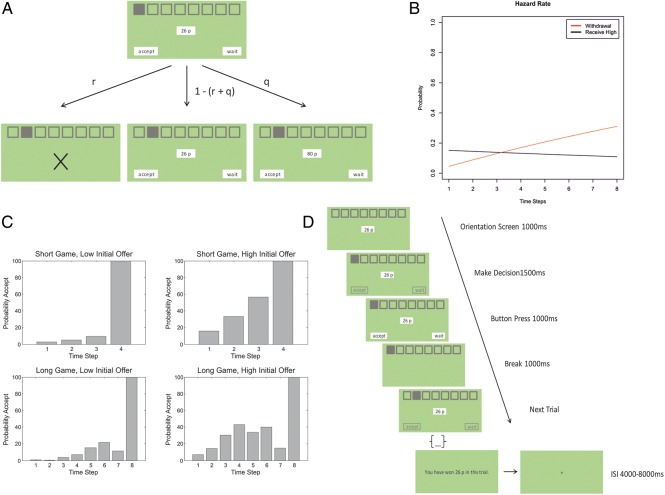
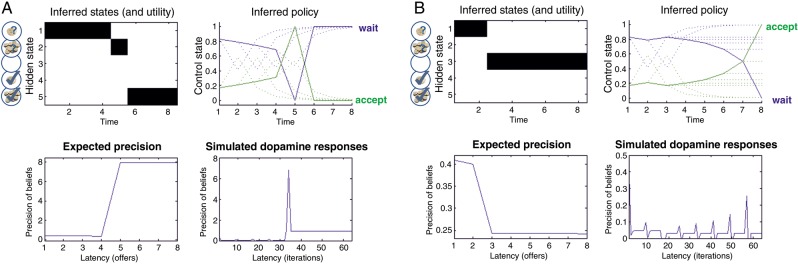
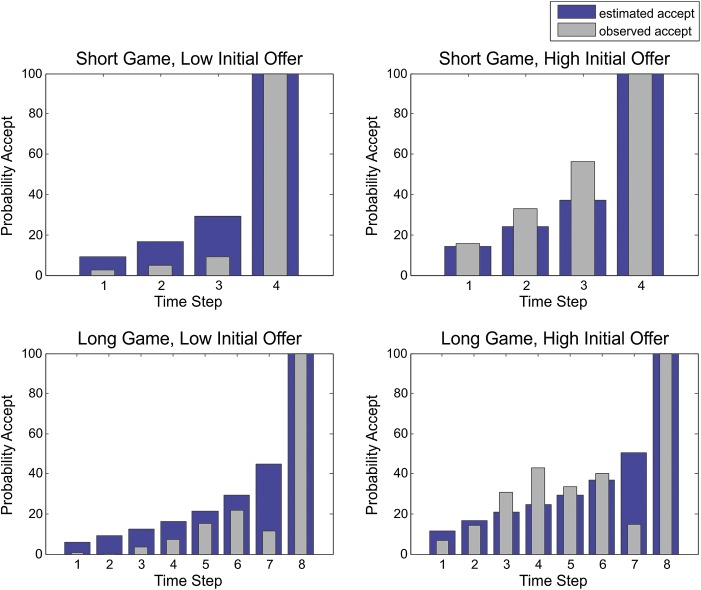
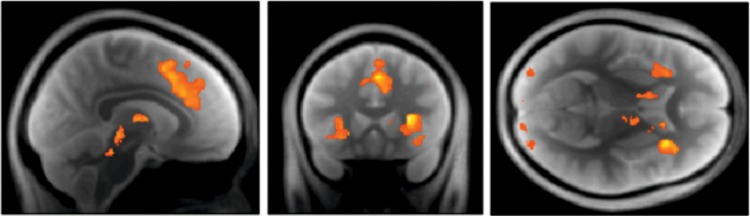
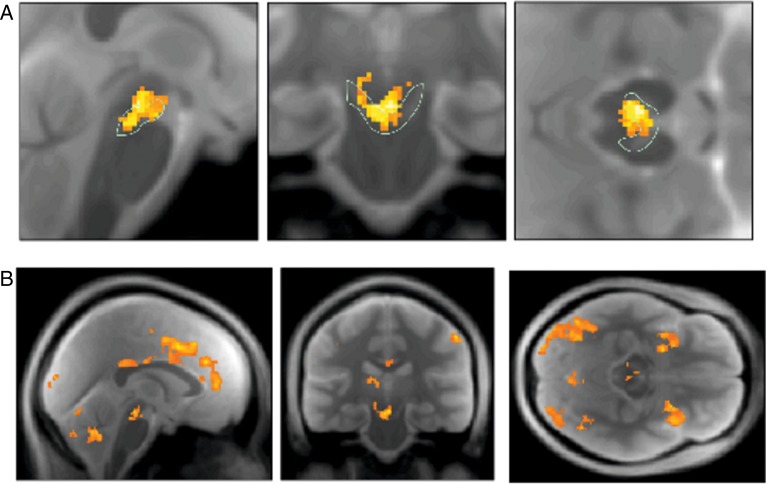
Dopamine plays a key role in learning; however, its exact function in decision making and choice remains unclear. Recently, we proposed a generic model based on active (Bayesian) inference wherein dopamine encodes the precision of beliefs about optimal policies. Put simply, dopamine discharges reflect the confidence that a chosen policy will lead to desired outcomes. We designed a novel task to test this hypothesis, where subjects played a "limited offer" game in a functional magnetic resonance imaging experiment. Subjects had to decide how long to wait for a high offer before accepting a low offer, with the risk of losing everything if they waited too long. Bayesian model comparison showed that behavior strongly supported active inference, based on surprise minimization, over classical utility maximization schemes. Furthermore, midbrain activity, encompassing dopamine projection neurons, was accurately predicted by trial-by-trial variations in model-based estimates of precision. Our findings demonstrate that human subjects infer both optimal policies and the precision of those inferences, and thus support the notion that humans perform hierarchical probabilistic Bayesian inference. In other words, subjects have to infer both what they should do as well as how confident they are in their choices, where confidence may be encoded by dopaminergic firing.
Overview
The claims and statistics of this paper haven’t been checked yet.
Run the check — free, no account needed. It reads the open-access text and checks the sources it cites.
Integrity signals
Registry
Cites
Statistics
Figures
Verification
Claims the paper makes
The claims and statistics of this paper haven’t been checked yet.
Run the check — free, no account needed. It reads the open-access text and checks the sources it cites.
Claims other papers make about this one
Each is checked against this paper’s own text: does it say what the citing paper says it does?
In the citing paper
“This approach has been used, for example, to identify links between activity in neuromodulatory nuclei and computational trajectories, such as (precision-weighted) prediction errors or uncertainty (111, 115–117).”
From Can Bayesian Theories of Autism Spectrum Disorder Help Improve Clinical Practice? (2016) · cites this paper as [117]
Self-check
Percentages, sums and reported differences re-computed from the paper’s own numbers.
The self-check needs the paper’s full text.
Citations
Cites
Reinforcement Learning: An Introduction
Sutton, R. S., & Barto, A. G. (1998) · IEEE Transactions on Neural Networks · doi:10.1109/tnn.1998.712192 · Cited by 27,225
Reinforcement Learning: An Introduction
Sutton, R. S., & Barto, A. (2005) · IEEE Transactions on Neural Networks · doi:10.1109/tnn.2004.842673 · Cited by 25,268
Tzourio-Mazoyer, N., Landeau, B., Papathanassiou, D., Crivello, F., Etard, O., Delcroix, N., Mazoyer, B., & Joliot, M. (2002) · NeuroImage · doi:10.1006/nimg.2001.0978 · Cited by 16,319
A Stochastic Approximation Method
Robbins, H., & Monro, S. (1951) · The Annals of Mathematical Statistics · doi:10.1214/aoms/1177729586 · Cited by 9,643
A neural substrate of prediction and reward
Schultz, W., Dayan, P., & Montague, P. R. (1997) · Science · doi:10.1126/science.275.5306.1593 · Cited by 9,388
A fast diffeomorphic image registration algorithm
Ashburner, J. (2007) · NeuroImage · doi:10.1016/j.neuroimage.2007.07.007 · Cited by 8,122
Conflict monitoring and cognitive control
Botvinick, M. M., Braver, T. S., Barch, D. M., Carter, C. S., & Cohen, J. D. (2001) · Psychological Review · doi:10.1037/0033-295x.108.3.624 · Cited by 7,351
Rao, R. P. N., & Ballard, D. H. (1999) · Nature Neuroscience · doi:10.1038/4580 · Cited by 5,483 · cited 2×
“It can be thought of as the discrete time version of predictive coding—that now predominates in models of perceptual inference and learning (Srinivasan 1982; Rao and Ballard 1999; Seth 2011; Bastos et al. 2012).”
BackgroundMaldjian, J. A., Laurienti, P. J., Kraft, R., & Burdette, J. H. (2003) · NeuroImage · doi:10.1016/s1053-8119(03)00169-1 · Cited by 5,066
A theory of cortical responses.
Friston, K. (2005) · Philosophical Transactions of the Royal Society B: Biological Sciences · doi:10.1098/rstb.2005.1622 · Cited by 4,578
Self-citation
Cited by
Sorted by citations
Active inference: a process theory
Friston, K., FitzGerald, T., Rigoli, F., Schwartenbeck, P., & Pezzulo, G. (2017) · Neural Computation · doi:10.1162/neco_a_00912 · Cited by 1,156
Self-citationActive inference and epistemic value
Friston, K., Rigoli, F., Ognibene, D., Mathys, C., Fitzgerald, T., & Pezzulo, G. (2015) · Cognitive Neuroscience · doi:10.1080/17588928.2015.1020053 · Cited by 731
Self-citationSerotonin and brain function: a tale of two receptors
Carhart-Harris, R., & Nutt, D. (2017) · Journal of Psychopharmacology · doi:10.1177/0269881117725915 · Cited by 739
Friston, K., FitzGerald, T., Rigoli, F., Schwartenbeck, P., O⿿Doherty, J., & Pezzulo, G. (2016) · Neuroscience & Biobehavioral Reviews · doi:10.1016/j.neubiorev.2016.06.022 · Cited by 674
Self-citationAllostatic Self-efficacy: A Metacognitive Theory of Dyshomeostasis-Induced Fatigue and Depression
Stephan, K. E., Manjaly, Z. M., Mathys, C. D., Weber, L. A. E., Paliwal, S., Gard, T., Tittgemeyer, M., Fleming, S. M., Haker, H., Seth, A. K., et al. (2016) · Frontiers in Human Neuroscience · doi:10.3389/fnhum.2016.00550 · Cited by 437
Self-citationNeural elements for predictive coding
Shipp, S. (2016) · Frontiers in Psychology · doi:10.3389/fpsyg.2016.01792 · Cited by 340
Active Inference, Curiosity and Insight
Friston, K. J., Lin, M., Frith, C., Pezzulo, G., Hobson, J. A., & Ondobaka, S. (2017) · Neural Computation · doi:10.1162/neco_a_00999 · Cited by 372
Self-citationHierarchical active inference: A theory of motivated control
Pezzulo, G., Rigoli, F., & Friston, K. J. (2018) · Trends in Cognitive Sciences · doi:10.1016/j.tics.2018.01.009 · Cited by 334
Self-citationA step-by-step tutorial on active inference and its application to empirical data
Smith, R., Friston, K. J., & Whyte, C. J. (2022) · Journal of Mathematical Psychology · doi:10.1016/j.jmp.2021.102632 · Cited by 246
Self-citationComputational mechanisms of curiosity and goal-directed exploration
Schwartenbeck, P., Passecker, J., Hauser, T. U., FitzGerald, T. H. B., Kronbichler, M., & Friston, K. J. (2019) · eLife · doi:10.7554/elife.41703 · Cited by 278
Self-citationDeep temporal models and active inference
Friston, K. J., Rosch, R. E., Parr, T., Price, C. J., & Bowman, H. (2017) · Neuroscience & Biobehavioral Reviews · doi:10.1016/j.neubiorev.2017.04.009 · Cited by 256
Self-citationDeeply Felt Affect: The Emergence of Valence in Deep Active Inference
Hesp, C., Smith, R., Parr, T., Allen, M., Friston, K. J., & Ramstead, M. J. D. (2021) · Neural Computation · doi:10.1162/neco_a_01341 · Cited by 246
Self-citationGeneralised free energy and active inference
Parr, T., & Friston, K. J. (2019) · Biological Cybernetics · doi:10.1007/s00422-019-00805-w · Cited by 236
Self-citationActive inference on discrete state-spaces: A synthesis
Da Costa, L., Parr, T., Sajid, N., Veselic, S., Neacsu, V., & Friston, K. (2020) · Journal of Mathematical Psychology · doi:10.1016/j.jmp.2020.102447 · Cited by 226
“This parameter, regulating precision of policy selection, has a clear biological interpretation in terms of confidence encoded in dopaminergic firing [34–36 ,”
BackgroundInfluentialSelf-citationWorking memory, attention, and salience in active inference
Parr, T., & Friston, K. J. (2017) · Scientific Reports · doi:10.1038/s41598-017-15249-0 · Cited by 226
Self-citationPlanning and navigation as active inference
Kaplan, R., & Friston, K. J. (2018) · Biological Cybernetics · doi:10.1007/s00422-018-0753-2 · Cited by 203
Self-citationThe Anatomy of Inference: Generative Models and Brain Structure
Parr, T., & Friston, K. J. (2018) · Frontiers in Computational Neuroscience · doi:10.3389/fncom.2018.00090 · Cited by 215
Self-citationActive inference on discrete state-spaces: A synthesis
Costa, L. D., Parr, T., Sajid, N., Veselic, S., Neacsu, V., & Friston, K. J. (2020) · UCL Discovery (University College London) · Cited by 204
Self-citationSmith, R. S., Kuplicki, R., Feinstein, J. S., Forthman, K. L., Stewart, J. L., Paulus, M. P., Tulsa 1000 investigators, & Khalsa, S. S. (2020) · PLoS Computational Biology · doi:10.1371/journal.pcbi.1008484 · Cited by 207
Translational perspectives for computational neuroimaging
Stephan, K. E., Iglesias, S., Heinzle, J., & Diaconescu, A. O. (2015) · Neuron · doi:10.1016/j.neuron.2015.07.008 · Cited by 169
Scene Construction, Visual Foraging, and Active Inference
Mirza, M. B., Adams, R. A., Mathys, C. D., & Friston, K. J. (2016) · Frontiers in Computational Neuroscience · doi:10.3389/fncom.2016.00056 · Cited by 165
Self-citationSmith, R., Badcock, P., & Friston, K. J. (2021) · Psychiatry and Clinical Neurosciences · doi:10.1111/pcn.13138 · Cited by 174
Unexpected arousal modulates the influence of sensory noise on confidence
Allen, M., Frank, D., Schwarzkopf, D. S., Fardo, F., Winston, J. S., Hauser, T. U., & Rees, G. (2016) · eLife · doi:10.7554/elife.18103 · Cited by 182
Computational neuroimaging strategies for single patient predictions
Stephan, K. E., Schlagenhauf, F., Huys, Q. J. M., Raman, S., Aponte, E. A., Brodersen, K. H., Rigoux, L., Moran, R., Jean Daunizeau, A., Dolan, R. J., et al. (2016) · NeuroImage · doi:10.1016/j.neuroimage.2016.06.038 · Cited by 174
Self-citationUltra‐high‐field fMRI insights on insight: Neural correlates of the Aha!‐moment
Tik, M., Sladky, R., Luft, C. D. B., Willinger, D., Hoffmann, A., Banissy, M. J., Bhattacharya, J., & Windischberger, C. (2018) · Human Brain Mapping · doi:10.1002/hbm.24073 · Cited by 170
The feeling of grip: novelty, error dynamics, and the predictive brain
Kiverstein, J., Miller, M., & Rietveld, E. (2019) · Synthese · doi:10.1007/s11229-017-1583-9 · Cited by 143
Can Bayesian Theories of Autism Spectrum Disorder Help Improve Clinical Practice?
Haker, H., Schneebeli, M., & Stephan, K. E. (2016) · Frontiers in Psychiatry · doi:10.3389/fpsyt.2016.00107 · Cited by 130
Separate mesocortical and mesolimbic pathways encode effort and reward learning signals
Hauser, T. U., Eldar, E., & Dolan, R. J. (2017) · Proceedings of the National Academy of Sciences · doi:10.1073/pnas.1705643114 · Cited by 142
Self-citationHierarchical prediction errors in midbrain and septum during social learning
Diaconescu, A. O., Mathys, C. D., Weber, L. A. E., Kasper, L., Mauer, J., & Stephan, K. E. (2016) · Social Cognitive and Affective Neuroscience · doi:10.1093/scan/nsw171 · Cited by 138
Self-citationDeep temporal models and active inference
Friston, K. J., Rosch, R., Parr, T., Price, C., & Bowman, H. (2018) · Neuroscience & Biobehavioral Reviews · doi:10.1016/j.neubiorev.2018.04.004 · Cited by 119
Self-citationDopamine, reward learning, and active inference
FitzGerald, T. H. B., Dolan, R. J., & Friston, K. (2015) · Frontiers in Computational Neuroscience · doi:10.3389/fncom.2015.00136 · Cited by 112
Self-citationSmith, R. S., Parr, T., & Friston, K. J. (2019) · Frontiers in Psychology · doi:10.3389/fpsyg.2019.02844 · Cited by 133
Self-citationComputational Phenotyping in Psychiatry: A Worked Example
Schwartenbeck, P., & Friston, K. J. (2016) · eNeuro · doi:10.1523/eneuro.0049-16.2016 · Cited by 134
Self-citationVisual Mismatch and Predictive Coding: A Computational Single-Trial ERP Study
Stefanics, G., Heinzle, J., Horvath, A. A., & Stephan, K. E. (2018) · Journal of Neuroscience · doi:10.1523/jneurosci.3365-17.2018 · Cited by 131
Computational Psychiatry of ADHD: Neural Gain Impairments across Marrian Levels of Analysis
Hauser, T. U., Fiore, V. G., Moutoussis, M., & Dolan, R. J. (2016) · Trends in Neurosciences · doi:10.1016/j.tins.2015.12.009 · Cited by 125
Self-citationAnterior insula coordinates hierarchical processing of tactile mismatch responses
Allen, M., Fardo, F., Dietz, M. J., Hillebrandt, H. F., Friston, K. J., Rees, G. E., & Roepstorff, A. (2015) · NeuroImage · doi:10.1016/j.neuroimage.2015.11.030 · Cited by 125
Self-citationGenerative models, linguistic communication and active inference
Friston, K. J., Parr, T., Yufik, Y. M., Sajid, N., Price, C. J., & Holmes, E. (2020) · Neuroscience & Biobehavioral Reviews · doi:10.1016/j.neubiorev.2020.07.005 · Cited by 120
Self-citationOptimal inference with suboptimal models: Addiction and active Bayesian inference
Schwartenbeck, P., FitzGerald, T. H. B., Mathys, C. D., Dolan, R. J., Wurst, F. M., Kronbichler, M., & Friston, K. J. (2014) · Medical Hypotheses · doi:10.1016/j.mehy.2014.12.007 · Cited by 111
Self-citationEvidence for surprise minimization over value maximization in choice behavior
Schwartenbeck, P., FitzGerald, T. H. B., Mathys, C., Dolan, R., Kronbichler, M., & Friston, K. (2015) · Scientific Reports · doi:10.1038/srep16575 · Cited by 96
Self-citationDopaminergic basis for signaling belief updates, but not surprise, and the link to paranoia
Nour, M. M., Dahoun, T., Schwartenbeck, P., Adams, R. A., FitzGerald, T. H. B., Coello, C., Wall, M. B., Dolan, R. J., & Howes, O. D. (2018) · Proceedings of the National Academy of Sciences · doi:10.1073/pnas.1809298115 · Cited by 101
Self-citationAffective Value in the Predictive Mind
Van De Cruys, S. (2017) · Theoretical Philosophy/MIND Group – JGU Mainz · doi:10.15502/9783958573253 · Cited by 100
An Active Inference Approach to Modeling Structure Learning: Concept Learning as an Example Case
Smith, R. S., Schwartenbeck, P., Parr, T., & Friston, K. J. (2020) · Frontiers in Computational Neuroscience · doi:10.3389/fncom.2020.00041 · Cited by 119
Self-citationThe structure of reinforcement-learning mechanisms in the human brain
O’Doherty, J. P., Lee, S. W., & McNamee, D. (2014) · Current Opinion in Behavioral Sciences · doi:10.1016/j.cobeha.2014.10.004 · Cited by 106
Smith, R. S., Kirlić, N., Stewart, J. L., Touthang, J., Kuplicki, R., Khalsa, S. S., Feinstein, J. S., Paulus, M. P., & Aupperle, R. L. (2021) · Journal of Psychiatry and Neuroscience · doi:10.1503/jpn.200032 · Cited by 86
Neural signals encoding shifts in beliefs
Schwartenbeck, P., FitzGerald, T. H. B., & Dolan, R. J. (2015) · NeuroImage · doi:10.1016/j.neuroimage.2015.10.067 · Cited by 84
Self-citationActive Inference, Evidence Accumulation, and the Urn Task
FitzGerald, T. H. B., Schwartenbeck, P., Moutoussis, M., Dolan, R. J., & Friston, K. J. (2014) · Neural Computation · doi:10.1162/neco_a_00699 · Cited by 79
Self-citationHow deep is the brain? The shallow brain hypothesis
Suzuki, M., Pennartz, C. M. A., & Aru, J. (2023) · Nature Reviews Neuroscience · doi:10.1038/s41583-023-00756-z · Cited by 79
The empirical status of predictive coding and active inference
Hodson, R., Mehta, M., & Smith, R. (2024) · Neuroscience & Biobehavioral Reviews · doi:10.1016/j.neubiorev.2023.105473 · Cited by 69
Atypical processing of uncertainty in individuals at risk for psychosis
Cole, D. M., Diaconescu, A. O., Pfeiffer, U. J., Brodersen, K. H., Mathys, C. D., Julkowski, D., Ruhrmann, S., Schilbach, L., Tittgemeyer, M., Vogeley, K. T., et al. (2020) · NeuroImage Clinical · doi:10.1016/j.nicl.2020.102239 · Cited by 72
Self-citationThe Discrete and Continuous Brain: From Decisions to Movement—And Back Again
Parr, T., & Friston, K. J. (2018) · Neural Computation · doi:10.1162/neco_a_01102 · Cited by 77
Self-citationpymdp: A Python library for active inference in discrete state spaces
Heins, C., Millidge, B., Demekas, D., Klein, B., Friston, K., Couzin, I. D., & Tschantz, A. (2022) · Journal of Open Source Software · doi:10.21105/joss.04098 · Cited by 70
Self-citationTherapeutic Alliance as Active Inference: The Role of Therapeutic Touch and Synchrony
McParlin, Z., Cerritelli, F., Friston, K. J., & Esteves, J. E. (2022) · Frontiers in Psychology · doi:10.3389/fpsyg.2022.783694 · Cited by 76
Self-citationActive Inference and Auditory Hallucinations
Benrimoh, D. A., Parr, T., Vincent, P., Adams, R. A., & Friston, K. J. (2018) · Computational Psychiatry · doi:10.1162/cpsy_a_00022 · Cited by 66
Self-citationThe computational neurology of movement under active inference
Parr, T., Limanowski, J., Rawji, V., & Friston, K. J. (2021) · Brain · doi:10.1093/brain/awab085 · Cited by 63
Self-citationActive Inference in OpenAI Gym: A Paradigm for Computational Investigations Into Psychiatric Illness
Cullen, M., Davey, B., Friston, K. J., & Moran, R. (2018) · Biological Psychiatry Cognitive Neuroscience and Neuroimaging · doi:10.1016/j.bpsc.2018.06.010 · Cited by 61
Self-citationEverything is connected: Inference and attractors in delusions
Adams, R. A., Vincent, P., Benrimoh, D. A., Friston, K. J., & Parr, T. (2021) · Schizophrenia Research · doi:10.1016/j.schres.2021.07.032 · Cited by 60
Self-citationThe Role of the Melanocortin System in Metabolic Disease: New Developments and Advances
Hill, J. W., & Faulkner, L. D. (2016) · Neuroendocrinology · doi:10.1159/000450649 · Cited by 57
Arnaldo, I., Corcoran, A. W., Friston, K. J., & Ramstead, M. J. D. (2022) · Neuroscience & Biobehavioral Reviews · doi:10.1016/j.neubiorev.2022.104590 · Cited by 56
Self-citationDopamine modulates subcortical responses to surprising sounds
Valdés‐Baizabal, C., Carbajal, G. V., Pérez‐González, D., & Malmierca, M. S. (2020) · PLoS Biology · doi:10.1371/journal.pbio.3000744 · Cited by 58
A neuro-cognitive process model of emotional intelligence
Smith, R. S., Killgore, W. D. S., Alkozei, A., & Lane, R. D. (2018) · Biological Psychology · doi:10.1016/j.biopsycho.2018.10.012 · Cited by 73
Kiverstein, J. D., Miller, M., & Rietveld, E. (2020) · Neuroscience of Consciousness · doi:10.1093/nc/niaa003 · Cited by 60
With an eye on uncertainty: Modelling pupillary responses to environmental volatility
Vincent, P., Parr, T., Benrimoh, D. A., & Friston, K. J. (2019) · PLoS Computational Biology · doi:10.1371/journal.pcbi.1007126 · Cited by 58
Self-citationThe Computational Anatomy of Visual Neglect
Parr, T., & Friston, K. J. (2017) · Cerebral Cortex · doi:10.1093/cercor/bhx316 · Cited by 51
Self-citationHopkins, J. (2016) · Frontiers in Psychology · doi:10.3389/fpsyg.2016.00922 · Cited by 53
Herzog, P., Κube, T., & Faßbinder, E. (2022) · Psychological Medicine · doi:10.1017/s0033291722002458 · Cited by 58
Hallucinations both in and out of context: An active inference account
Benrimoh, D. A., Parr, T., Adams, R. A., & Friston, K. J. (2019) · PLoS ONE · doi:10.1371/journal.pone.0212379 · Cited by 54
Self-citationA Step-by-Step Tutorial on Active Inference and its Application to Empirical DataPreprint
Smith, R. S., Friston, K. J., & Whyte, C. J. (2021) · doi:10.31234/osf.io/b4jm6 · Cited by 51
Self-citationHezemans, F. H., Wolpe, N., O’Callaghan, C., Ye, R., Rua, C., Jones, P. S., Murley, A. G., Holland, N., Regenthal, R., Tsvetanov, K. A., et al. (2022) · PLoS Computational Biology · doi:10.1371/journal.pcbi.1010079 · Cited by 51
Maisto, D., Barca, L., den Bergh, O. V., & Pezzulo, G. (2021) · Psychological Review · doi:10.1037/rev0000290 · Cited by 60
Smith, R. S., Steklis, H. D., Steklis, N. G., Weihs, K. L., & Lane, R. D. (2020) · Biological Psychology · doi:10.1016/j.biopsycho.2020.107925 · Cited by 47
Affect-biased attention and predictive processing
Ransom, M., Fazelpour, S., Markovic, J., Kryklywy, J. H., Thompson, E. T., & Todd, R. M. (2020) · Cognition · doi:10.1016/j.cognition.2020.104370 · Cited by 49
Caching mechanisms for habit formation in Active Inference
Maisto, D., Friston, K. J., & Pezzulo, G. (2019) · Neurocomputing · doi:10.1016/j.neucom.2019.05.083 · Cited by 49
Self-citationActive inference models do not contradict folk psychology
Smith, R. S., Ramstead, M. J. D., & Kiefer, A. B. (2022) · Synthese · doi:10.1007/s11229-022-03480-w · Cited by 55
Iglesias, S., Kasper, L., Harrison, S. J., Manka, R., Mathys, C. D., & Stephan, K. E. (2020) · NeuroImage · doi:10.1016/j.neuroimage.2020.117590 · Cited by 45
Self-citationAn empirical evaluation of active inference in multi-armed bandits
Marković, D., Stojić, H., Schwöbel, S., & Kiebel, S. J. (2021) · Neural Networks · doi:10.1016/j.neunet.2021.08.018 · Cited by 44
Smith, R. S., Moutoussis, M., & Bilek, E. (2021) · Scientific Reports · doi:10.1038/s41598-021-89047-0 · Cited by 46
Clinical Applications of Stochastic Dynamic Models of the Brain, Part I: A Primer
Roberts, J. A., Friston, K. J., & Breakspear, M. J. (2017) · Biological Psychiatry Cognitive Neuroscience and Neuroimaging · doi:10.1016/j.bpsc.2017.01.010 · Cited by 41
Self-citationDopamine, inference, and uncertainty
Gershman, S. J. (2017) · Neural Computation · doi:10.1162/neco_a_01023 · Cited by 40
An Active-Inference Approach to Second-Person Neuroscience
Lehmann, K., Bolis, D., Friston, K. J., Schilbach, L., Ramstead, M. J. D., & Kanske, P. (2023) · Perspectives on Psychological Science · doi:10.1177/17456916231188000 · Cited by 53
Self-citationThe two kinds of free energy and the Bayesian revolution
Gottwald, S., & Braun, D. A. (2020) · PLoS Computational Biology · doi:10.1371/journal.pcbi.1008420 · Cited by 46
Neural dynamics under active inference: plausibility and efficiency of information processing
Da Costa, L., Parr, T., Sengupta, B., & Friston, K. (2021) · Entropy · doi:10.3390/e23040454 · Cited by 38
Self-citationActive Inference, Belief Propagation, and the Bethe Approximation
Schwöbel, S., Kiebel, S. J., & Marković, D. (2018) · Neural Computation · doi:10.1162/neco_a_01108 · Cited by 37
Neural Dynamics under Active Inference: Plausibility and Efficiency of Information Processing
Costa, L. D., Parr, T., Sengupta, B., & Friston, K. J. (2021) · UCL Discovery (University College London) · Cited by 37
Self-citationReward maximization through discrete active inference
Da Costa, L., Sajid, N., Parr, T., Friston, K., & Smith, R. (2023) · Neural Computation · doi:10.1162/neco_a_01574 · Cited by 35
Self-citationNeural and neurochemical basis of reinforcement-guided decision making
Khani, A., & Rainer, G. (2016) · Journal of Neurophysiology · doi:10.1152/jn.01113.2015 · Cited by 38
Dopamine regulates decision thresholds in human reinforcement learning in males
Chakroun, K., Wiehler, A., Wagner, B., Mathar, D., Ganzer, F., van Eimeren, T., Sommer, T., & Peters, J. (2023) · Nature Communications · doi:10.1038/s41467-023-41130-y · Cited by 36
Smith, R. S., Weihs, K. L., Alkozei, A., Killgore, W. D. S., & Lane, R. D. (2018) · Psychosomatic Medicine · doi:10.1097/psy.0000000000000661 · Cited by 35
Neural arbitration between social and individual learning systems
Diaconescu, A. O., Stecy, M., Kasper, L., Burke, C. J., Nagy, Z., Mathys, C. D., & Tobler, P. N. (2020) · eLife · doi:10.7554/elife.54051 · Cited by 32
Self-citationSmith, R. S., Varshney, L. R., Nagayama, S., Kazama, M., Kitagawa, T., Shunsuke, M., & Ishikawa, Y. (2022) · International Journal of Wellbeing · doi:10.5502/ijw.v12i4.2659 · Cited by 30
Constant, A., Hesp, C., Davey, C. G., Friston, K. J., & Badcock, P. B. (2021) · Computational Psychiatry · doi:10.5334/cpsy.70 · Cited by 35
Self-citationActive Inference and Cognitive Consistency
Friston, K. J. (2018) · Psychological Inquiry · doi:10.1080/1047840x.2018.1480693 · Cited by 34
Self-citationAdams, R. A., Moutoussis, M., Nour, M. M., Dahoun, T., Lewis, D. J., Illingworth, B. J. G., Veronese, M., Mathys, C. D., de Boer, L., Guitart‐Masip, M., et al. (2019) · Cerebral Cortex · doi:10.1093/cercor/bhz327 · Cited by 29
Self-citationActive inference as a computational framework for consciousness
Vilas, M. G., Auksztulewicz, R., & Melloni, L. (2022) · Review of Philosophy and Psychology · doi:10.1007/s13164-021-00579-w · Cited by 28
Feature-specific prediction errors for visual mismatch
Stefanics, G., Stephan, K. E., & Heinzle, J. (2019) · NeuroImage · doi:10.1016/j.neuroimage.2019.04.020 · Cited by 26
Synthesising boredom: a predictive processing approach
Darling, T. (2023) · Synthese · doi:10.1007/s11229-023-04380-3 · Cited by 30
Linking unfounded beliefs to genetic dopamine availability
Schmack, K., Rössler, H., Sekutowicz, M., Brandl, E. J., Müller, D. J., Petrovic, P., & Sterzer, P. (2015) · Frontiers in Human Neuroscience · doi:10.3389/fnhum.2015.00521 · Cited by 24
Storm on predictive brain: A neurocomputational account of ketamine antidepressant effect
Bottemanne, H., Berkovitch, L., Gauld, C., Balcerac, A., Schmidt, L., Mouchabac, S., & Fossati, P. (2023) · Neuroscience & Biobehavioral Reviews · doi:10.1016/j.neubiorev.2023.105410 · Cited by 31
Luu, P., Tucker, D. M., & Friston, K. J. (2023) · Cerebral Cortex · doi:10.1093/cercor/bhad458 · Cited by 27
Self-citationModels of neuromodulation for computational psychiatry
Iglesias, S., Tomiello, S., Schneebeli, M., & Stephan, K. E. (2016) · Wiley Interdisciplinary Reviews Cognitive Science · doi:10.1002/wcs.1420 · Cited by 28
An Active Inference Approach to Modeling Structure Learning: Concept Learning as an Example Case
Smith, R., Schwartenbeck, P., Parr, T., & Friston, K. J. (2020) · UCL Discovery (University College London) · Cited by 26
Self-citation
Metadata
- Authors
- Schwartenbeck, P., FitzGerald, T. H. B., Mathys, C., Dolan, R., & Friston, K.
- Affiliations
- Wellcome Centre for Human Neuroimaging (GB)
- Corresponding author
- Schwartenbeck, Philipp
- Venue
- Cerebral Cortex
- Publisher
- Oxford University Press (OUP)
- Published
- 2014-07-23
- Volume
- 25
- Issue
- 10
- Pages
- 3434-3445
- ISSN
- 1047-3211 (ISSN-L)
- 1460-2199
- PMC
- PMC4585497
- OpenAlex
- W2128918015
- Cited by
- 219
- References
- 80
- Citations by year
- 2026: 20 · 2025: 19 · 2024: 13 · 2023: 19 · 2022: 26 · 2021: 19 · 2020: 26 · 2019: 15 · 2018: 20 · 2017: 12 · 2016: 17 · 2015: 10 · 2014: 3
- FWCI
- 7.81
- Type
- journal article
- Language
- en
- Open access
- hybrid
- doi.org
- Licence
- cc-by
- Locations
- Cerebral Cortex (publishedVersion, cc-by)
- PubMed Central (publishedVersion, cc-by)
- PubMed (publishedVersion)
- SDL (submittedVersion, cc-by)
- UEA Digital Repository (University of East Anglia) (submittedVersion, other-oa)
- UCL Discovery (University College London) (submittedVersion)
- MPG.PuRe (Max Planck Society) (submittedVersion)
- Funders
- Wellcome Trust (091593, 091593/Z/10/, 098362, 098362/Z/12/Z, 091593/Z/10/Z, 088130, 098362/Z/12/)
- University College London (098362/Z/12/Z)
- Max-Planck-Gesellschaft (098362/Z/12/Z)
- Topics
- Life Sciences › Neuroscience › Cognitive Neuroscience › Neural and Behavioral Psychology Studies
- Life Sciences › Neuroscience › Cellular and Molecular Neuroscience › Neurotransmitter Receptor Influence on Behavior
- Social Sciences › Decision Sciences › General Decision Sciences › Decision-Making and Behavioral Economics
- Keywords
- dopamine, midbrain, Bayesian inference, active inference, decision-making, surprise minimization, utility maximization, hierarchical Bayesian inference
- MeSH terms
- Adult, Bayes Theorem, Brain Mapping, Cerebral Cortex, Choice Behavior, Conflict, Psychological, Dopamine, Female, Humans, Magnetic Resonance Imaging, Male, Middle Aged, Risk, Substantia Nigra, Ventral Tegmental Area, Young Adult
About these checks
Registry, retraction, Cites and statistics results are computed, not judged, with one exception: a printed reference that no index lists is read once by a model before it counts as a citation error. Claims are extracted by a model and kept only when their quote appears verbatim in the text; each cited source is then checked, with a model’s help, for whether it says what the claim relies on. Those verdicts can be wrong — read the claim’s quote and the cited source before relying on one.
Statistics and arithmetic are recomputed, not judged.
Confidence bands are shown only for fields calibrated on our annotated test set. None is calibrated yet, so no band is shown.
What counts as a claim ›How we measure confidence ›How we check this ›
Are you an author, or do you see a problem with this page? Request a review
