

The DOI matches its Crossref record; 90 of the 90 references it cites were found in a registry or an index.
Cortical Foxp2 Supports Behavioral Flexibility and Developmental Dopamine D1 Receptor Expression
Published version of a preprint
Abstract
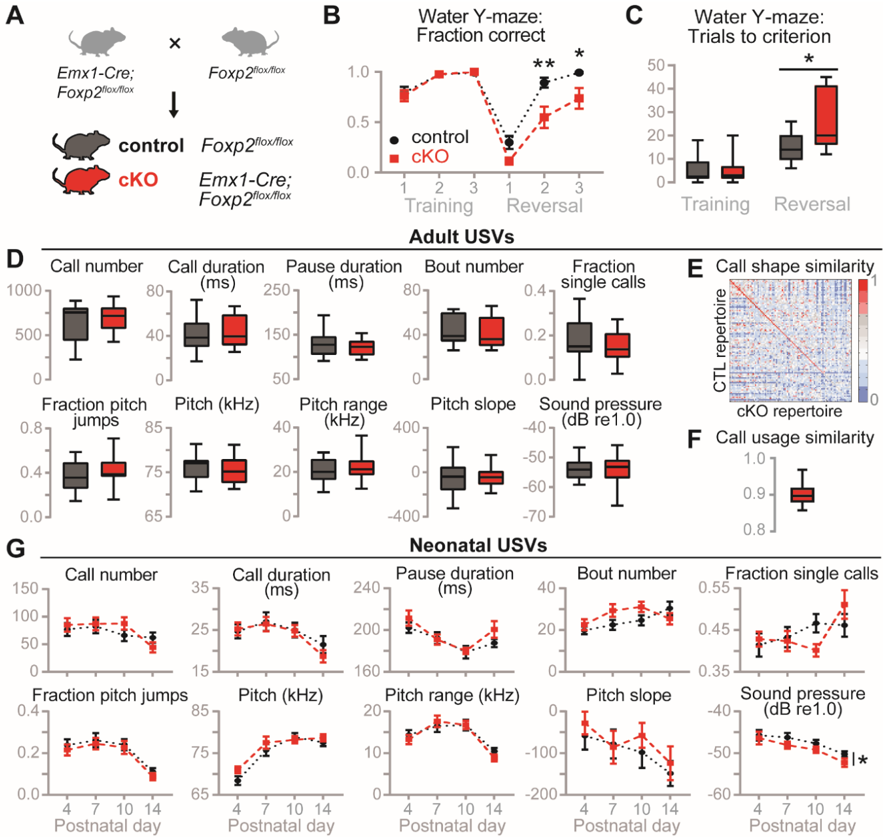
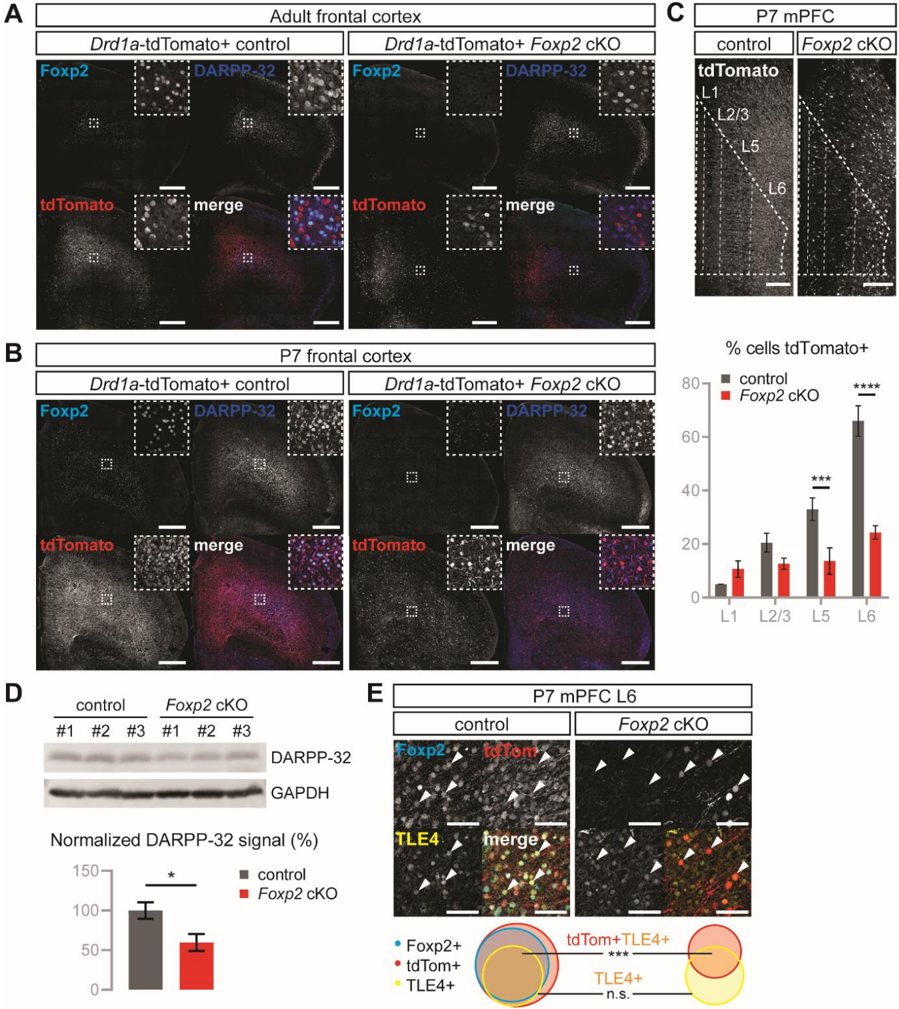
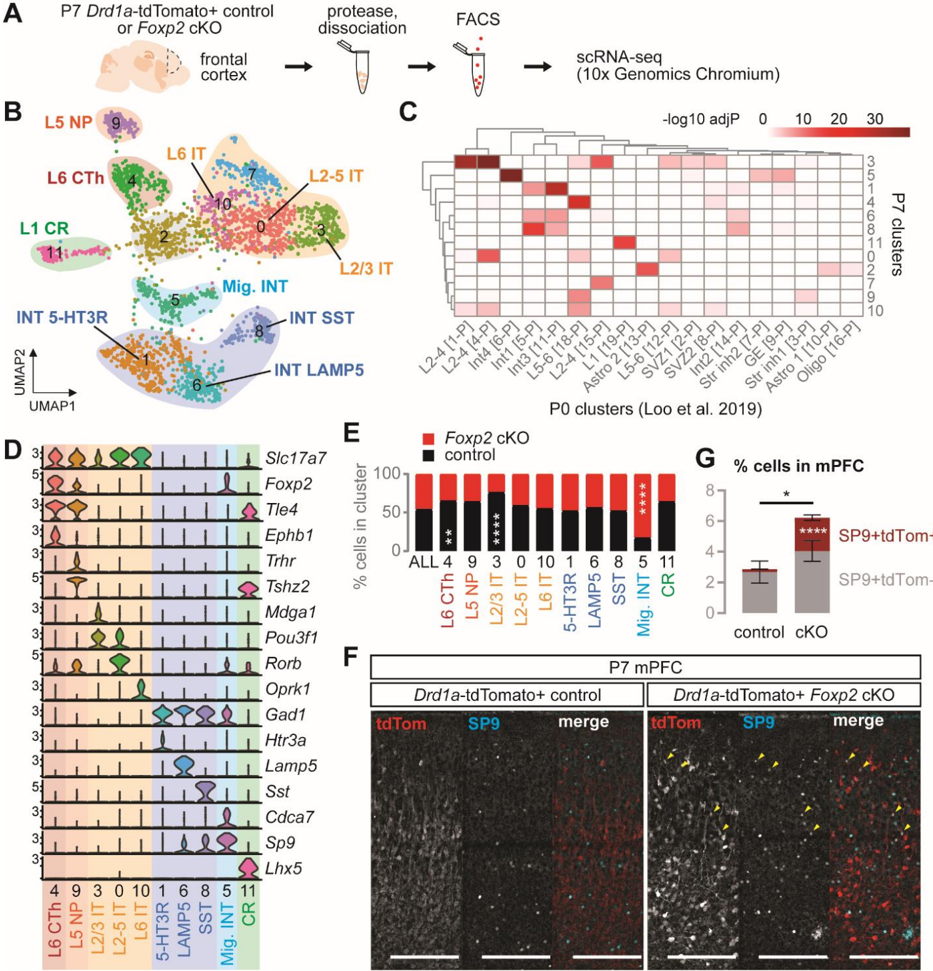
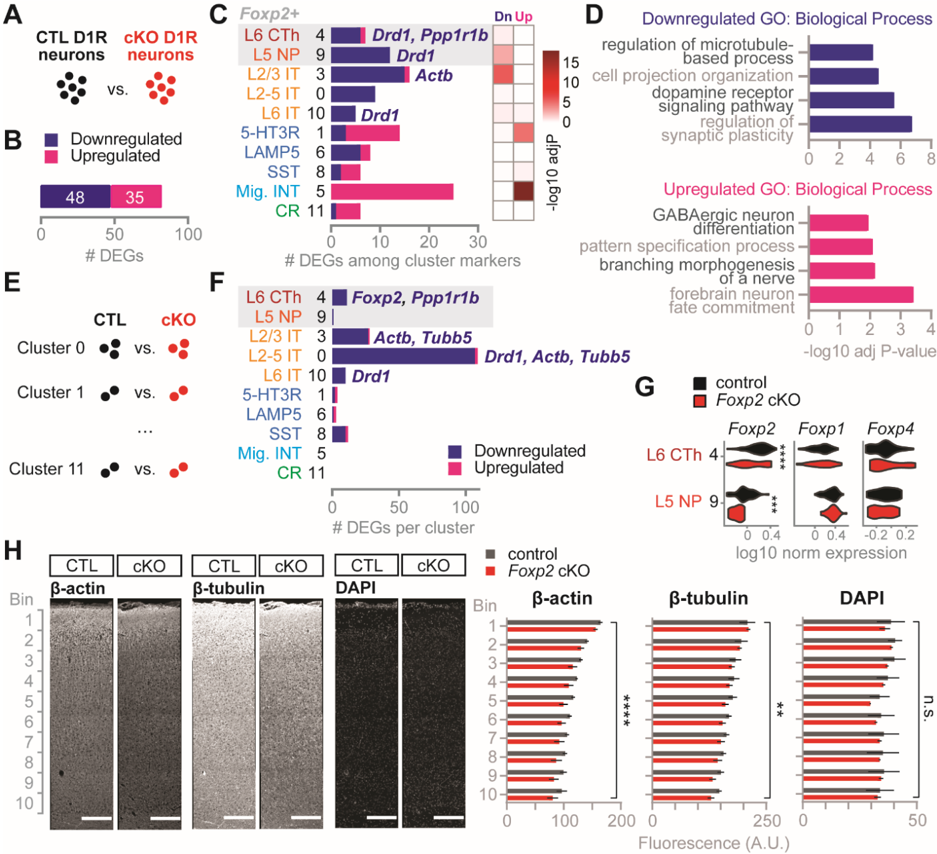
Genetic studies have associated FOXP2 variation with speech and language disorders and other neurodevelopmental disorders (NDDs) involving pathology of the cortex. In this brain region, FoxP2 is expressed from development into adulthood, but little is known about its downstream molecular and behavioral functions. Here, we characterized cortex-specific Foxp2 conditional knockout mice and found a major deficit in reversal learning, a form of behavioral flexibility. In contrast, they showed normal activity levels, anxiety, and vocalizations, save for a slight decrease in neonatal call loudness. These behavioral phenotypes were accompanied by decreased cortical dopamine D1 receptor (D1R) expression at neonatal and adult stages, while general cortical development remained unaffected. Finally, using single-cell transcriptomics, we identified at least five excitatory and three inhibitory D1R-expressing cell types in neonatal frontal cortex, and we found changes in D1R cell type composition and gene expression upon cortical Foxp2 deletion. Strikingly, these alterations included non-cell-autonomous changes in upper layer neurons and interneurons. Together, these data support a role for Foxp2 in the development of dopamine-modulated cortical circuits and behaviors relevant to NDDs.
Overview
The claims and statistics of this paper haven’t been checked yet.
Run the check — free, no account needed. It reads the open-access text and checks the sources it cites.
Integrity signals
Registry
Cites
Statistics
Figures
Verification
Claims the paper makes
The claims and statistics of this paper haven’t been checked yet.
Run the check — free, no account needed. It reads the open-access text and checks the sources it cites.
Claims other papers make about this one
Each is checked against this paper’s own text: does it say what the citing paper says it does?
In the citing paper
“Mechanistic studies have shown FoxP2 to regulate genes that contribute to neurite outgrowth and NN formation (51), and to influence dopamine-modulated cortical circuits (54) in the mouse brain.”
From Behavior-related gene regulatory networks: A new level of organization in the brain (2020) · cites this paper as [54]
Self-check
Percentages, sums and reported differences re-computed from the paper’s own numbers.
The self-check needs the paper’s full text.
Citations
Cites
STAR: ultrafast universal RNA-seq aligner
Dobin, A., Davis, C. A., Schlesinger, F., Drenkow, J., Zaleski, C., Jha, S., Batut, P., Chaisson, M., & Gingeras, T. R. (2013) · Bioinformatics · doi:10.1093/bioinformatics/bts635 · Cited by 51,709
featureCounts: an efficient general purpose program for assigning sequence reads to genomic features
Liao, Y., Smyth, G. K., & Shi, W. (2014) · Bioinformatics · doi:10.1093/bioinformatics/btt656 · Cited by 27,219
Integrating single-cell transcriptomic data across different conditions, technologies, and species
Butler, A., Hoffman, P., Smibert, P., Papalexi, E., & Satija, R. (2018) · Nature Biotechnology · doi:10.1038/nbt.4096 · Cited by 13,174
The Human Genome Browser at UCSC
Kent, W. J., Sugnet, C. W., Furey, T. S., Roskin, K. M., Pringle, T. H., Zahler, A. M., & Haussler, A. D. (2002) · Genome Research · doi:10.1101/gr.229102 · Cited by 10,400
Massively parallel digital transcriptional profiling of single cells
Zheng, G. X. Y., Terry, J. M., Belgrader, P., Ryvkin, P., Bent, Z. W., Wilson, R., Ziraldo, S. B., Wheeler, T. D., McDermott, G. P., Zhu, J., et al. (2017) · Nature Communications · doi:10.1038/ncomms14049 · Cited by 7,353
REVIGO summarizes and visualizes long lists of gene ontology terms
Supek, F., Bošnjak, M., Škunca, N., & Šmuc, T. (2011) · PLoS ONE · doi:10.1371/journal.pone.0021800 · Cited by 6,264
Stress signalling pathways that impair prefrontal cortex structure and function
Arnsten, A. F. T. (2009) · Nature Reviews Neuroscience · doi:10.1038/nrn2648 · Cited by 3,299
ToppGene Suite for gene list enrichment analysis and candidate gene prioritization
Chen, J., Bardes, E. E., Aronow, B. J., & Jegga, A. G. (2009) · Nucleic Acids Research · doi:10.1093/nar/gkp427 · Cited by 2,952
Satterstrom, F. K., Kosmicki, J. A., Wang, J., Breen, M. S., De Rubeis, S., An, J.-Y., Peng, M., Collins, R., Grove, J., Klei, L., et al. (2020) · Cell · doi:10.1016/j.cell.2019.12.036 · Cited by 2,321
ADHD Working Group of the Psychiatric Genomics Consortium (PGC), Demontis, D., Early Lifecourse & Genetic Epidemiology (EAGLE) Consortium, 23andMe Research Team, Walters, R. K., Martin, J., Mattheisen, M., Als, T. D., Agerbo, E., Baldursson, G., et al. (2019) · Nature Genetics · doi:10.1038/s41588-018-0269-7 · Cited by 2,203
Smith, T. S., Heger, A., & Sudbery, I. M. (2017) · Genome Research · doi:10.1101/gr.209601.116 · Cited by 2,177
Shared and distinct transcriptomic cell types across neocortical areas
Tasic, B., Yao, Z., Graybuck, L. T., Smith, K. A., Nguyen, T. N., Bertagnolli, D., Goldy, J., Garren, E., Economo, M. N., Viswanathan, S., et al. (2018) · Nature · doi:10.1038/s41586-018-0654-5 · Cited by 1,746
Adult mouse cortical cell taxonomy revealed by single cell transcriptomics
Tasic, B., Menon, V., Nguyen, T. N., Kim, T. K., Jarsky, T., Yao, Z., Levi, B., Gray, L. T., Sorensen, S. A., Dolbeare, T., et al. (2016) · Nature Neuroscience · doi:10.1038/nn.4216 · Cited by 1,714
Gorski, J. A., Talley, T., Qiu, M., Puelles, L., Rubenstein, J. L. R., & Jones, K. R. (2002) · The Journal of Neuroscience · doi:10.1523/jneurosci.22-15-06309.2002 · Cited by 1,416
The neurobiological basis of spontaneous alternation
Lalonde, R. (2002) · Neuroscience & Biobehavioral Reviews · doi:10.1016/s0149-7634(01)00041-0 · Cited by 838
Development and Functional Diversification of Cortical Interneurons
Lim, L., Mi, D., Llorca, A., & Marín, O. (2018) · Neuron · doi:10.1016/j.neuron.2018.10.009 · Cited by 714
Holy, T. E., & Guo, Z. (2005) · PLoS Biology · doi:10.1371/journal.pbio.0030386 · Cited by 670
A humanized version of Foxp2 affects cortico-basal ganglia circuits in mice
Enard, W., Gehre, S., Hammerschmidt, K., Hölter, S. M., Blass, T., Somel, M., Brückner, M. K., Schreiweis, C., Winter, C., Sohr, R., et al. (2009) · Cell · doi:10.1016/j.cell.2009.03.041 · Cited by 605
Genetic targeting of principal neurons in neocortex and hippocampus of NEX-Cre mice
Goebbels, S., Bormuth, I., Bode, U., Hermanson, O., Schwab, M. H., & Nave, K.-A. (2006) · genesis · doi:10.1002/dvg.20256 · Cited by 577
Dopamine and Cognitive Control in Prefrontal Cortex
Ott, T., & Nieder, A. (2019) · Trends in Cognitive Sciences · doi:10.1016/j.tics.2018.12.006 · Cited by 530
FOXP2 and the neuroanatomy of speech and language
Vargha-Khadem, F., Gadian, D. G., Copp, A., & Mishkin, M. (2005) · Nature Reviews Neuroscience · doi:10.1038/nrn1605 · Cited by 497
van Rooij, D., Anagnostou, E., Arango, C., Auzias, G., Behrmann, M., Busatto, G. F., Calderoni, S., Daly, E., Deruelle, C., Di Martino, A., et al. (2018) · American Journal of Psychiatry · doi:10.1176/appi.ajp.2017.17010100 · Cited by 485
Characterization of Foxp2 and Foxp1 mRNA and protein in the developing and mature brain
Ferland, R. J., Cherry, T. J., Preware, P. O., Morrisey, E. E., & Walsh, C. A. (2003) · Journal of Comparative Neurology · doi:10.1002/cne.10654 · Cited by 484
Stoodley, C. J., D’Mello, A. M., Ellegood, J., Jakkamsetti, V., Liu, P., Nebel, M. B., Gibson, J. M., Kelly, E., Meng, F., Cano, C. A., et al. (2017) · Nature Neuroscience · doi:10.1038/s41593-017-0004-1 · Cited by 387
Floresco, S. B. (2013) · Frontiers in Neuroscience · doi:10.3389/fnins.2013.00062 · Cited by 336
Gaspar, P., Bloch, B., & Le Moine, C. (1995) · European Journal of Neuroscience · doi:10.1111/j.1460-9568.1995.tb01092.x · Cited by 323
Tbr1 regulates regional and laminar identity of postmitotic neurons in developing neocortex
Bedogni, F., Hodge, R. D., Elsen, G. E., Nelson, B. R., Daza, R. A. M., Beyer, R. P., Bammler, T. K., Rubenstein, J. L. R., & Hevner, R. F. (2010) · Proceedings of the National Academy of Sciences · doi:10.1073/pnas.1002285107 · Cited by 322
Single-cell transcriptomic analysis of mouse neocortical development
Loo, L., Simon, J. M., Xing, L., McCoy, E. S., Niehaus, J. K., Guo, J., Anton, E. S., & Zylka, M. J. (2019) · Nature Communications · doi:10.1038/s41467-018-08079-9 · Cited by 289
Brenhouse, H. C., Sonntag, K. C., & Andersen, S. L. (2008) · The Journal of Neuroscience · doi:10.1523/jneurosci.5064-07.2008 · Cited by 287
Groszer, M., Keays, D. A., Deacon, R. M. J., de Bono, J. P., Prasad-Mulcare, S., Gaub, S., Baum, M. G., French, C. A., Nicod, J., Coventry, J. A., et al. (2008) · Current Biology · doi:10.1016/j.cub.2008.01.060 · Cited by 281
Foxp2 regulates gene networks implicated in neurite outgrowth in the developing brain
Vernes, S. C., Oliver, P. L., Spiteri, E., Lockstone, H. E., Puliyadi, R., Taylor, J. M., Ho, J., Mombereau, C., Brewer, A., Lowy, E., et al. (2011) · PLoS Genetics · doi:10.1371/journal.pgen.1002145 · Cited by 276
Molyneaux, B. J., Goff, L. A., Brettler, A. C., Chen, H.-H., Brown, J. R., Hrvatin, S., Rinn, J. L., & Arlotta, P. (2014) · Neuron · doi:10.1016/j.neuron.2014.12.024 · Cited by 259
Portmann, T., Yang, M., Mao, R., Panagiotakos, G., Ellegood, J., Dolen, G., Bader, P. L., Grueter, B. A., Goold, C., Fisher, E., et al. (2014) · Cell Reports · doi:10.1016/j.celrep.2014.03.036 · Cited by 245
Cellular distribution of dopamine D1 and D2 receptors in rat medial prefrontal cortex
Vincent, S. L., Khan, Y., & Benes, F. (1993) · Journal of Neuroscience · doi:10.1523/jneurosci.13-06-02551.1993 · Cited by 225
Developmental origins of brain disorders: roles for dopamine
Money, K. M., & Stanwood, G. D. (2013) · Frontiers in Cellular Neuroscience · doi:10.3389/fncel.2013.00260 · Cited by 221
Schreiweis, C., Bornschein, U., Burguière, E., Kerimoglu, C., Schreiter, S., Dannemann, M., Goyal, S., Rea, E., French, C. A., Puliyadi, R., et al. (2014) · Proceedings of the National Academy of Sciences · doi:10.1073/pnas.1414542111 · Cited by 190
Tbr1 haploinsufficiency impairs amygdalar axonal projections and results in cognitive abnormality
Huang, T.-N., Chuang, H.-C., Chou, W.-H., Chen, C.-Y., Wang, H.-F., Chou, S.-J., & Hsueh, Y.-P. (2014) · Nature Neuroscience · doi:10.1038/nn.3626 · Cited by 180
Ade, K. K., Wan, Y., Chen, M., Gloss, B. R., & Calakos, N. (2011) · Frontiers in Systems Neuroscience · doi:10.3389/fnsys.2011.00032 · Cited by 175
Tarazi, F. I., Tomasini, E. C., & Baldessarini, R. (1999) · Developmental Neuroscience · doi:10.1159/000017365 · Cited by 169
FoxP2 Regulates Neurogenesis during Embryonic Cortical Development
Tsui, D. C. C., Vessey, J. P., Tomita, H., Kaplan, D. R., & Miller, F. D. (2013) · Journal of Neuroscience · doi:10.1523/jneurosci.1665-12.2013 · Cited by 158
The Human Language–Associated Gene SRPX2 Regulates Synapse Formation and Vocalization in Mice
Sia, G.-M., Clem, R. L., & Huganir, R. L. (2013) · Science · doi:10.1126/science.1245079 · Cited by 154
Crandall, J. E., McCarthy, D. M., Araki, K. Y., Sims, J. R., Ren, J.-Q., & Bhide, P. G. (2007) · The Journal of Neuroscience · doi:10.1523/jneurosci.5124-06.2007 · Cited by 134
Correlated gene expression and target specificity demonstrate excitatory projection neuron diversity
Sorensen, S. A., Bernard, A., Menon, V., Royall, J. J., Glattfelder, K. J., Desta, T., Hirokawa, K., Mortrud, M., Miller, J. A., Zeng, H., et al. (2015) · Cerebral Cortex · doi:10.1093/cercor/bht243 · Cited by 131
Segbroeck, M. V., Knoll, A. T., Levitt, P. R., & Narayanan, S. S. (2017) · Neuron · doi:10.1016/j.neuron.2017.04.005 · Cited by 130
Hisaoka, T., Nakamura, Y. K., Senba, E., & Morikawa, Y. (2009) · Neuroscience · doi:10.1016/j.neuroscience.2009.12.055 · Cited by 124
Murugan, M., Harward, S. C., Scharff, C., & MOONEY, R. D. (2013) · Neuron · doi:10.1016/j.neuron.2013.09.021 · Cited by 124
De novo TBR1 mutations in sporadic autism disrupt protein functions
Deriziotis, P., O’Roak, B. J., Graham, S. A., Estruch, S. B., Dimitropoulou, D., Bernier, R., Gerdts, J. A., Shendure, J., Eichler, E. E., & Fisher, S. E. (2014) · Nature Communications · doi:10.1038/ncomms5954 · Cited by 117
Foxp2 controls synaptic wiring of corticostriatal circuits and vocal communication by opposing Mef2c
Chen, Y.-C., Kuo, H., Bornschein, U., Takahashi, H., Chen, S.-Y., Lu, K.-M., Yang, H.-Y., Chen, G.-M., Lin, J.-R., Lee, Y.-H., et al. (2016) · Nature Neuroscience · doi:10.1038/nn.4380 · Cited by 117
Anastasiades, P. G., Boada, C. M., & Carter, A. G. (2018) · Cerebral Cortex · doi:10.1093/cercor/bhy299 · Cited by 116
Jacobs, E. C., Campagnoni, C. W., Kampf, K., Reyes, S. D., Kalra, V., Handley, V., Xie, Y., Hong‐Hu, Y., Spreuer, V., Fisher, R. S., et al. (2007) · European Journal of Neuroscience · doi:10.1111/j.1460-9568.2006.05258.x · Cited by 112
FoxP1 orchestration of ASD-relevant signaling pathways in the striatum
Araujo, D. J., Anderson, A. G., Berto, S., Runnels, W., Harper, M., Ammanuel, S., Rieger, M. A., Huang, H.-C., Rajkovich, K., Loerwald, K. W., et al. (2015) · Genes & Development · doi:10.1101/gad.267989.115 · Cited by 111
Self-citationNeonatal Tbr1 Dosage Controls Cortical Layer 6 Connectivity
Darbandi, S. F., Schwartz, S. E. R., Qi, Q., Catta-Preta, R., Pai, E. L.-L., Mandell, J. D., Everitt, A., Rubin, A. N., Krasnoff, R., Katzman, S. J., et al. (2018) · Neuron · doi:10.1016/j.neuron.2018.09.027 · Cited by 104
Chabout, J., Sarkar, A., Patel, S. R., Radden, T., Dunson, D. B., Fisher, S. E., & Jarvis, E. D. (2016) · Frontiers in Behavioral Neuroscience · doi:10.3389/fnbeh.2016.00197 · Cited by 101
Insights into the Neural and Genetic Basis of Vocal Communication
Konopka, G., & Roberts, T. F. (2016) · Cell · doi:10.1016/j.cell.2016.02.039 · Cited by 99
Self-citationGeneration of mice with a conditional Foxp2 null allele
French, C. A., Groszer, M., Preece, C., Coupe, A., Rajewsky, K., & Fisher, S. E. (2007) · genesis · doi:10.1002/dvg.20305 · Cited by 94
Anatomic and Molecular Development of Corticostriatal Projection Neurons in Mice
Sohur, U. S., Padmanabhan, H. K., Kotchetkov, I. S., Menezes, J. R. L., & Macklis, J. D. (2012) · Cerebral Cortex · doi:10.1093/cercor/bhs342 · Cited by 94
The structure of innate vocalizations in Foxp2‐deficient mouse pups
Gaub, S., Groszer, M., Fisher, S. E., & Ehret, G. (2010) · Genes Brain & Behavior · doi:10.1111/j.1601-183x.2010.00570.x · Cited by 87
Reuter, M. S., Rieß, A., Moog, U., Briggs, T. A., Chandler, K., Rauch, A. M., Stampfer, M., Steindl, K., Gläser, D., Joset, P., et al. (2016) · Journal of Medical Genetics · doi:10.1136/jmedgenet-2016-104094 · Cited by 80
Cell-Type-Specific Contributions of Medial Prefrontal Neurons to Flexible Behaviors
Nakayama, H., Ibáñez-Tallon, I., & Heintz, N. (2018) · Journal of Neuroscience · doi:10.1523/jneurosci.3537-17.2018 · Cited by 80
Knockout of Foxp2 disrupts vocal development in mice
Castellucci, G. A., McGinley, M. J., & McCormick, D. A. (2016) · Scientific Reports · doi:10.1038/srep23305 · Cited by 79
Araujo, D. J., Toriumi, K., Escamilla, C. O., Kulkarni, A., Anderson, A. G., Harper, M., Usui, N., Ellegood, J., Lerch, J. P., Birnbaum, S. G., et al. (2017) · The Journal of Neuroscience · doi:10.1523/jneurosci.1005-17.2017 · Cited by 73
Self-citationYang, M., Lewis, F. C., Sarvi, M. S., Foley, G. M., & Crawley, J. N. (2015) · Learning & Memory · doi:10.1101/lm.039602.115 · Cited by 70
Wester, J. C., Mahadevan, V., Rhodes, C. T., Calvigioni, D., Venkatesh, S., Maric, D., Hunt, S., Yuan, X. Q., Zhang, Y., Petros, T. J., et al. (2019) · Neuron · doi:10.1016/j.neuron.2019.03.036 · Cited by 69
Unraveling the Role of the Hippocampus in Reversal Learning
Vilà‐Balló, A., Herrero, E. M., Ripollés, P., Simó, M., Miró, J., Cucurell, D., López-Barroso, D., Juncadella, M., Marco‐Pallarés, J., Falip, M., et al. (2017) · Journal of Neuroscience · doi:10.1523/jneurosci.3212-16.2017 · Cited by 68
Hickey, S. L., Berto, S., & Konopka, G. (2019) · Cell Reports · doi:10.1016/j.celrep.2019.04.044 · Cited by 65
Self-citationWhat can mice tell us about Foxp2 function?
French, C. A., & Fisher, S. E. (2014) · Current Opinion in Neurobiology · doi:10.1016/j.conb.2014.07.003 · Cited by 63
Ultrasonic vocalizations of adult male Foxp2‐mutant mice: behavioral contexts of arousal and emotion
Gaub, S., Fisher, S. E., & Ehret, G. (2015) · Genes Brain & Behavior · doi:10.1111/gbb.12274 · Cited by 61
Usui, N., Co, M., Harper, M. J., Rieger, M. A., Dougherty, J. D., & Konopka, G. (2016) · Biological Psychiatry · doi:10.1016/j.biopsych.2016.02.008 · Cited by 59
Self-citationCullity, E. R., Madsen, H. B., Perry, C. J., & Kim, J. H. (2018) · The Journal of Comparative Neurology · doi:10.1002/cne.24574 · Cited by 59
Foxp1 regulation of neonatal vocalizations via cortical developmentPreprint
Usui, N., Araujo, D. J., Kulkarni, A., Co, M., Ellegood, J., Harper, M. J., Toriumi, K., Lerch, J. P., & Konopka, G. (2017) · Genes & Development · doi:10.1101/gad.305037.117 · Cited by 57
Self-citationLiu, J., Wang, F., Huang, C., Long, L., Wu, W., Cai, F., Wang, J., Ma, L., & Chen, J. (2008) · Cellular and Molecular Neurobiology · doi:10.1007/s10571-008-9323-9 · Cited by 50
Meechan, D. W., Rutz, H. L. H., Fralish, M. S., Maynard, T. M., Rothblat, L. A., & LaMantia, A. (2013) · Cerebral Cortex · doi:10.1093/cercor/bht308 · Cited by 50
Kast, R. J., Lanjewar, A. L., Smith, C. D., & Levitt, P. R. (2019) · eLife · doi:10.7554/elife.42012 · Cited by 43
Foxp2 regulates anatomical features that may be relevant for vocal behaviors and bipedal locomotion
Xu, S., Liu, P., Chen, Y., Chen, Y., Zhang, W., Zhao, H., Cao, Y., Wang, F., Jiang, N., Lin, S., et al. (2018) · Proceedings of the National Academy of Sciences · doi:10.1073/pnas.1721820115 · Cited by 42
Altered social behavior in mice carrying a corticalFoxp2deletion
Medvedeva, V. P., Rieger, M. A., Vieth, B., Mombereau, C., Ziegenhain, C., Ghosh, T., Cressant, A., Enard, W., Granon, S., Dougherty, J. D., et al. (2018) · Human Molecular Genetics · doi:10.1093/hmg/ddy372 · Cited by 41
Differential effects of Foxp2 disruption in distinct motor circuits
French, C. A., Veloz, M. F. V., Zhou, K., Peter, S., Fisher, S. E., Costa, R. M., & Zeeuw, C. I. D. (2018) · Molecular Psychiatry · doi:10.1038/s41380-018-0199-x · Cited by 39
Rieger, M. A., & Dougherty, J. D. (2016) · Frontiers in Behavioral Neuroscience · doi:10.3389/fnbeh.2016.00182 · Cited by 38
Rytter, H. M., Andersen, L. G., Christensen, R. F., Felbinger, A., Hagstrøm, J., Meder, D., Pearce, H. L., & Mogensen, J. (2015) · Brain Research Bulletin · doi:10.1016/j.brainresbull.2015.05.006 · Cited by 37
Cui, Q., Li, Q., Geng, H.-Y., Chen, L., Ip, N. Y., Ke, Y., & Yung, W. (2018) · Proceedings of the National Academy of Sciences · doi:10.1073/pnas.1717106115 · Cited by 36
Fujita‐Jimbo, E., & Momoi, T. (2014) · Neuroscience Letters · doi:10.1016/j.neulet.2014.02.062 · Cited by 27
Cuomo, V., Cagiano, R., Renna, G. M., Salvia, M. A. D., & Racagni, G. (1987) · Neuropharmacology · doi:10.1016/0028-3908(87)90230-9 · Cited by 27
Calaminus, C., & Hauber, W. (2008) · Neuroscience · doi:10.1016/j.neuroscience.2008.04.046 · Cited by 26
Phonological working memory and FOXP2
Schulze, K., Vargha‐Khadem, F., & Mishkin, M. (2017) · Neuropsychologia · doi:10.1016/j.neuropsychologia.2017.11.027 · Cited by 26
Bissonette, G. B., Bae, M. H., Suresh, T., Jaffe, D. E., & Powell, E. M. (2010) · Journal of Neuroscience · doi:10.1523/jneurosci.5268-09.2010 · Cited by 25
Orbitofrontal dopaminergic dysfunction causes age-related impairment of reversal learning in rats
Mizoguchi, K., Shoji, H., Tanaka, Y., & Tabira, T. (2010) · Neuroscience · doi:10.1016/j.neuroscience.2010.08.037 · Cited by 22
Garcı́a-Calero, E., Botella-López, A., Bahamonde, O., Perez‐Balaguer, A., & Martı́nez, S. (2015) · Brain Structure and Function · doi:10.1007/s00429-015-1079-7 · Cited by 20
Thompson, J. L., Yang, J., Lau, B. K., Liu, S., Baimel, C., Kerr, L. E., Liu, F., & Borgland, S. L. (2015) · Cerebral Cortex · doi:10.1093/cercor/bhv222 · Cited by 18
Projection targets of medial frontal D1DR-expressing neurons
Han, S.-W., Kim, Y.-C., & Narayanan, N. S. (2017) · Neuroscience Letters · doi:10.1016/j.neulet.2017.06.057 · Cited by 17
Effects of Dopamine D1and D2Receptor Antagonists on Laryngeal Neurophysiology in the Rat
Feng, X., Henriquez, V. M., Walters, J. R., & Ludlow, C. L. (2009) · Journal of Neurophysiology · doi:10.1152/jn.00121.2009 · Cited by 13
Andersen (2000) · doi:10.1002/1098-2396(200008)37:2<167::aid-syn11>3.0.co;2-b
Research works printed but not linked: 2
- Andrews, 2010, Fastqc: a quality control tool for high throughput sequence data
- Morgan, 2017, Genereviews((r))Foxp2-related speech and language disorders
Cited by
Confronting false discoveries in single-cell differential expression
Squair, J. W., Gautier, M., Kathe, C., Anderson, M. A., James, N. D., Hutson, T. H., Hudelle, R., Qaiser, T., Matson, K. J. E., Barraud, Q., et al. (2021) · doi:10.1101/2021.03.12.435024 · Cited by 1,086
Behavior-related gene regulatory networks: A new level of organization in the brain
Sinha, S., Jones, B. M., Traniello, I. M., Bukhari, S. A., Halfon, M. S., Hofmann, H. A., Huang, S., Katz, P. S., Keagy, J., Lynch, V. J., et al. (2020) · Proceedings of the National Academy of Sciences · doi:10.1073/pnas.1921625117 · Cited by 85
Matho, K. S., Huilgol, D., Galbavy, W., He, M., Kim, G., An, X., Lu, J., Wu, P., Di Bella, D. J., Shetty, A. S., et al. (2020) · doi:10.1101/2020.04.22.054064 · Cited by 20
Metadata
- Authors
- Co, M., Hickey, S. L., Kulkarni, A., Harper, M., & Konopka, G.
- Affiliations
- Department of Neuroscience, University of Texas Southwestern Medical Center, Dallas, TX, USA
- ORCID
- Konopka, Genevieve
- Venue
- Cerebral Cortex
- Publisher
- Oxford University Press (OUP)
- Published
- 2019-11-11
- Volume
- 30
- Issue
- 3
- Pages
- 1855-1870
- ISSN
- 1047-3211
- 1460-2199
- Cited by
- 48
- References
- 90
- Language
- en
- Licence
- academic.oup.com/journals/pages/open_access/funder_policies/chorus/standard_publication_model (vor)
- Funders
- National Institutes of Health (T32GM109776, TL1TR001104, DC014702, DC016340, MH102603)
- Autism Science Foundation (REG 15-002)
- Simons Foundation (SFARI 573689, 401220)
- James S. McDonnell Foundation (220020467)
- Silicon Valley Community Foundation (HCA-A-1704-01747)
About these checks
Registry, retraction, Cites and statistics results are computed, not judged, with one exception: a printed reference that no index lists is read once by a model before it counts as a citation error. Claims are extracted by a model and kept only when their quote appears verbatim in the text; each cited source is then checked, with a model’s help, for whether it says what the claim relies on. Those verdicts can be wrong — read the claim’s quote and the cited source before relying on one.
Statistics and arithmetic are recomputed, not judged.
Confidence bands are shown only for fields calibrated on our annotated test set. None is calibrated yet, so no band is shown.
What counts as a claim ›How we measure confidence ›How we check this ›
Are you an author, or do you see a problem with this page? Request a review
Data sources
Bibliographic data: Semantic Scholar, OpenAlex, Crossref.
Contains information from the Semantic Scholar Academic Graph Datasets, made available under the ODC Attribution License (ODC-BY 1.0).
Semantic Scholar’s data is described in: Kinney, R., et al. (2023). The Semantic Scholar Open Data Platform. arXiv:2301.10140.
