

External validation of prognostic models: what, why, how, when and where?
Open accessThe DOI matches its Crossref record; 45 of the 46 references it cites were found in a registry or an index.
Abstract
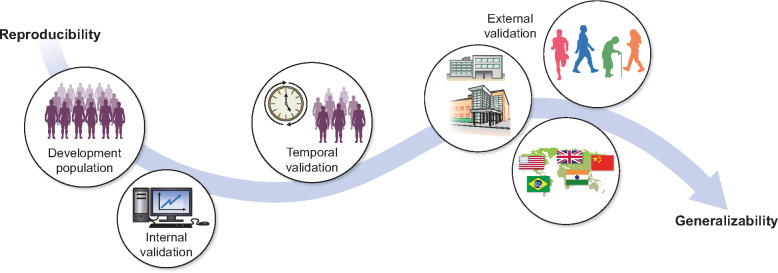
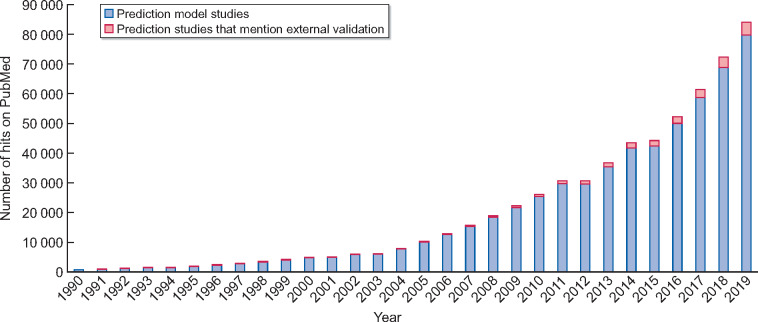
Prognostic models that aim to improve the prediction of clinical events, individualized treatment and decision-making are increasingly being developed and published. However, relatively few models are externally validated and validation by independent researchers is rare. External validation is necessary to determine a prediction model's reproducibility and generalizability to new and different patients. Various methodological considerations are important when assessing or designing an external validation study. In this article, an overview is provided of these considerations, starting with what external validation is, what types of external validation can be distinguished and why such studies are a crucial step towards the clinical implementation of accurate prediction models. Statistical analyses and interpretation of external validation results are reviewed in an intuitive manner and considerations for selecting an appropriate existing prediction model and external validation population are discussed. This study enables clinicians and researchers to gain a deeper understanding of how to interpret model validation results and how to translate these results to their own patient population.
Overview
The claims and statistics of this paper haven’t been checked yet.
Free: it reads the open-access text and checks the first 5 claims that cite a source we can check. Create a free account to check every claim.
Integrity signals
Registry
Cites
Statistics
Figures
Verification
Claims the paper makes
The claims and statistics of this paper haven’t been checked yet.
Free: it reads the open-access text and checks the first 5 claims that cite a source we can check. Create a free account to check every claim.
Self-check
Percentages, sums and reported differences re-computed from the paper’s own numbers.
The self-check needs the paper’s full text.
Citations
Cites
An Introduction to the Bootstrap
Efron, B., & Tibshirani, R. J. (1994) · doi:10.1201/9780429246593 · Cited by 40,500
Decision curve analysis: a novel method for evaluating prediction models
Vickers, A. J., & Elkin, E. B. (2006) · Medical Decision Making · doi:10.1177/0272989x06295361 · Cited by 6,341
Assessing the Performance of Prediction Models: A Framework for Traditional and Novel Measures
Steyerberg, E. W., Vickers, A. J., Cook, N. R., Gerds, T., Gonen, M., Obuchowski, N., Pencina, M. J., & Kattan, M. W. (2010) · Epidemiology · doi:10.1097/ede.0b013e3181c30fb2 · Cited by 5,170 · cited 1×
“net benefit, decision analysis) may also be assessed but are generally complementary to the discrimination and calibration results [22].”
BackgroundMoons, K. G. M., Altman, D. G., Reitsma, J. B., Ioannidis, J. P. A., Macaskill, P., Steyerberg, E. W., Vickers, A. J., Ransohoff, D. F., & Collins, G. S. (2015) · Annals of Internal Medicine · doi:10.7326/m14-0698 · Cited by 5,147 · cited 3×
“For researchers planning an external validation study we highly recommend consulting the Transparent Reporting of a multivariable prediction model for Individual Prognosis Or Diagnosis checklist and explanation and elaboration document [4].”
BackgroundMethodClinical Prediction Models: A Practical Approach to Development, Validation, and Updating
Steyerberg, E. W. (2019) · Statistics for Biology and Health · doi:10.1007/978-3-030-16399-0 · Cited by 3,281
An Introduction to the Bootstrap.
Buckland, S. T., Efron, B., & Tibshirani, R. J. (1994) · Biometrics · doi:10.2307/2532810 · Cited by 3,103
PROBAST: A Tool to Assess the Risk of Bias and Applicability of Prediction Model Studies
Wolff, R. F., Moons, K. G. M., Riley, R. D., Whiting, P. F., Westwood, M., Collins, G. S., Reitsma, J. B., Kleijnen, J., Mallett, S., & for the PROBAST Group† (2019) · Annals of Internal Medicine · doi:10.7326/m18-1376 · Cited by 2,984 · cited 1×
“Bias in prognostic models can be assessed using the Prediction model Risk Of Bias ASsessment Tool tool [31].”
MethodInternal validation of predictive models
Steyerberg, E. W., Harrell, F. E., Borsboom, G. J. J. M., Eijkemans, M. J. C., Vergouwe, Y., & Habbema, J. D. F. (2001) · Journal of Clinical Epidemiology · doi:10.1016/s0895-4356(01)00341-9 · Cited by 2,746
Use and Misuse of the Receiver Operating Characteristic Curve in Risk Prediction
Cook, N. R. (2007) · Circulation · doi:10.1161/circulationaha.106.672402 · Cited by 2,112 · cited 1×
“When assessing the overall performance of a prognostic model, it is important to take both discrimination and calibration into account, as well as the intended use of the model [4, 26, 27].”
MethodUno, H., Cai, T., Pencina, M. J., D'Agostino, R. B., & Wei, L. J. (2011) · Statistics in Medicine · doi:10.1002/sim.4154 · Cited by 1,535 · cited 1×
“For Cox proportional hazards prediction models a time-toevent C-index such as Harrel’s C-index or Uno’s C-index can be computed [21, 25].”
Method
Cited by
Items 901–976 of 976
Zayas-Borquez, R., Canto-Losa, J., Posadas-Trujillo, E., Salgado‐Nesme, N., & Santes, O. (2026) · Revista de Gastroenterología de México · doi:10.1016/j.rgmx.2026.06.003
Therán-León, J. S., Montagut-Bermón, D. A., & Calderón-Salazar, C. A. (2026) · Revista de Gastroenterología de México · doi:10.1016/j.rgmx.2026.06.001
yaqingxp, Sun, Y., Zhang, L., Li, X., Zhang, Y., Liao, L., & Yang, J. (2026) · Geriatric Nursing · doi:10.1016/j.gerinurse.2026.104350
Gao, Y., Yu, S., Xia, Y., Ren, Y., Chen, S., 夏生龙, An, R., Zeng, J., Zhao, F., Ma, Y., et al. (2026) · SSRN Electronic Journal · doi:10.64898/2026.08.30.26361693
(2026) · International Journal of Biomedicine · doi:10.21103/article16(3)_ra2
Pardo, À., Gómez, J., Berrueta, J., García-Martínez, A., Orts, P., Manrique, S., Rodríguez, A. H., & Bodí, M. A. (2026) · Journal of Clinical Medicine · doi:10.3390/jcm15186957 · Cited by 1
“Robust external validation, where a frozen model is evaluated on independent databases, is therefore a prerequisite for clinical use, but it is still relatively rare [4].”
Ding, Z., Han, G., Ma, T., Wang, F., Hajagos, J., Kurç, T., & Kumar, A. R. (2026) · medRxiv · doi:10.64898/2026.09.02.26361824
Chen, H., Yang, C., Zhang, J., Dai, Y., Mo, P., Peng, Z., & Wu, Z. (2026) · Research Square · doi:10.21203/rs.3.rs-10717154/v1
Ahn, K.-G., Kim, J. W., Gwak, S. C., Oh, E., Lee, S., Siripoonsub, J., Sirivisoot, S., Teewasutrakul, P., Techangamsuwan, S., Chaipipat, S., et al. (2026) · International Journal of Molecular Sciences · doi:10.3390/ijms27188016
“It is necessary to evaluate whether performance is maintained across different cohort compositions and validation conditions [15,16].”
Machine learning-based risk prediction models for type 2 diabetes in primary care: a scoping review
Ravi, R., & Olickal, J. J. (2026) · Frontiers in Public Health · doi:10.3389/fpubh.2026.1946070
Ten key considerations for developing interpretable risk prediction models
Zhang, X., Xu, W., & Smith, D. R. (2026) · Frontiers in Bioinformatics · doi:10.3389/fbinf.2026.1878681
“A common practice is to use temporal validation, establishing a strict chronological split between your derivation and validation datasets (Ramspek et al., 2021).”
Responsible Implementation of EHR-Based Clinical Prediction Models—Beyond Performance
Zhao, S. J., & Deardorff, W. J. (2026) · JAMA Network Open · doi:10.1001/jamanetworkopen.2026.32906
Resource Overlap and Reporting of Independence in Public Prostate Cancer ResearchPreprint
Yue, W., Pemma, R., Tewari, A. K., & Padanilam, B. J. (2026) · medRxiv · doi:10.64898/2026.09.10.26362786
Qin, L.-H., Lü, Y.-X., Liang, W., Song, R., Chen, P.-Y., Xu, W., Zeng, G., Chen, J., Zhao, Y., & Long, L. (2026) · Academic Radiology · doi:10.1016/j.acra.2026.08.110
Parkinson’s disease diagnosis using machine learning and multimodal biomarkers: A systematic review
Imran, M., Imran, A., & Alshammari, A. A. (2026) · Computational Biology and Chemistry · doi:10.1016/j.compbiolchem.2026.109388
Musto, H. (2026) · Goldsmiths (University of London) · doi:10.25602/gold.00040930
Fanaki, M., Baroutis, D., Antsaklis, P. G., Daskalakis, G., & Pergialiotis, V. (2026) · Diagnostics · doi:10.3390/diagnostics16182963
“Although many algorithms demonstrate excellent discrimination during model development, relatively few have undergone rigorous external validation across geographically and ethnically diverse populations [52].”
Artificial intelligence–based automated scoring of the mouse grimace scale: a systematic review
Rabierad, M., Schulz, L., Kumstel, S., von Lukas, U. F., Vollmar, B., & Zechner, D. (2026) · PAIN Reports · doi:10.1097/pr9.0000000000001497
“31 For example, cross-laboratory assessments using several experimental conditions and external validation data sets might be necessary to provide scientists with a robust widely applicable AI tool to score MGS.”
Designed nutrient-gradient phenotyping enables predictive ionomics of tropical leafy greensPreprint
Shenhar, I., Pebes-Trujillo, M. R., Harikumar, A., Zhao, Z., Tan, L. Y., Setyawati, M. I., He, J., Herrmann, I., Ng, K. W., Gavish, M., et al. (2026) · bioRxiv (Cold Spring Harbor Laboratory) · doi:10.64898/2026.09.16.751971
“Predictive models should therefore be evaluated outside their development domain when the intended application involves new populations or operating conditions (Ramspek et al., 2020; Steyerberg and Harrell, 2016).”
de León‐González, E. D., Cavazos, H. E. G., Hernandez, A. C. I., Perez, A. D. C., Alcala, M. N. G., Leon, A. M. D., & Hermosillo, H. G. (2026) · European Geriatric Medicine · doi:10.1007/s41999-026-01611-x
External Validation of the ARCAD Nomogram in a Real-World Cohort with Stage 4 Colorectal Cancer
Yu, J. B., Li, J., Schell, M. J., Ginestet, P. G., Zalcberg, J. R., Simes, R. J., Marschner, I., Kim, R. D., & Sjoquist, K. M. (2026) · Cancers · doi:10.3390/cancers18183031
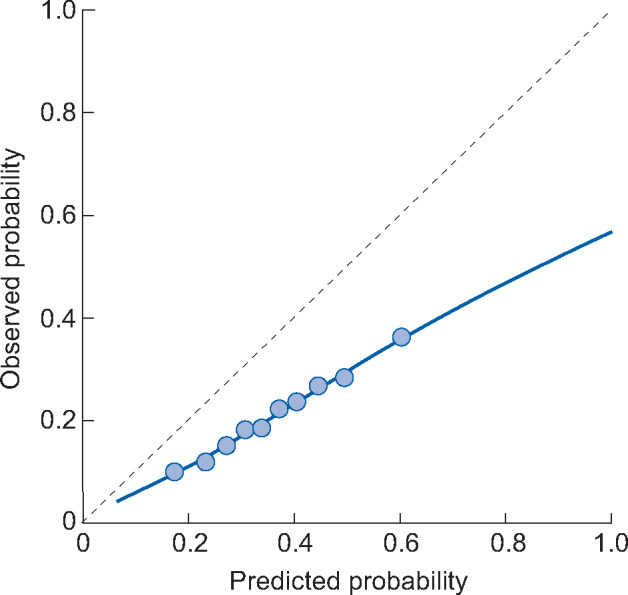
“Subsequently, model calibration was visually evaluated using a calibration plot, where well-calibrated predictions align with the 45 ◦ line [15,19,20].”
Machine learning–enabled vibrational spectroscopy for translational bioclinical applications
Egbewole, B. I., Ilesanmi, T. M., Olatunde, S. K., Bamidele, D. B., Ogbonna, C. E., & Olawade, D. B. (2026) · Microchemical Journal · doi:10.1016/j.microc.2026.119784 · Cited by 1
Alqahtani, T. S., & Alfawzan, F. (2026) · Applied Sciences · doi:10.3390/app16189248
Temporal leakage and calibration concerns in a pleural-reaction prediction model
Jiang, J., Yuan, S., & Li, Z. (2026) · Quantitative Imaging in Medicine and Surgery · doi:10.21037/qims-2026-1613
Nekhlopochyn, O. S., Витальевич, В. В., Nykyforak, Z. M., Cheshuk, I. V., & Vorodi, M. V. (2026) · MOJ Applied Bionics and Biomechanics · doi:10.15406/mojabb.2026.10.00237
Amorocho-Morales, J. D., Peláez, S., Forero, J. F., Liscano, J., & Correa‐Morales, J. E. (2026) · Research Square · doi:10.21203/rs.3.rs-10543145/v1
Ghosh, J., & Chattopadhyay, D. (2026) · Discover Public Health · doi:10.1186/s12982-026-02933-8
Ma, H., Zhang, J., Meng, Q., Meng, Z., Li, W., Liu, C., & Wang, G. (2026) · Frontiers in Oncology · doi:10.3389/fonc.2026.1915006
“This degree of cross-population stability is notable because SEER-derived prognostic models are often criticized for their limited transportability, and performance degradation is the norm rather than the exception when such tools are tested outside the United States (23, 24).”
Thongprayoon, C., Aiumtrakul, N., Pesce, F., & Cheungpasitporn, W. (2026) · Risk Management and Healthcare Policy · doi:10.2147/rmhp.s618968
“36,66 Bias and Fairness AI systems may inadvertently amplify existing healthcare disparities if trained on incomplete or unrepresentative datasets.”
Alameer, S. A., Alturki, R. T., Alsaleh, A., & Almusined, M. M. (2026) · Neurology International · doi:10.3390/neurolint18100185
“This finding is consistent with the general prediction model protocol, which emphasizes parsimony and the need to assess performance beyond the derivation sample, rather than maximizing the apparent performance within the original dataset alone [26].”
Teti, F. S. L., Keke, K. J.-B., Yao, K. S., Dongo, K. Y. S., Fionko, Y. B., & Haïdara, A. (2026) · International Journal of Scientific Research and Modern Technology. · doi:10.38124/ijsrmt.v5i9.1664
Artificial Intelligence in European Healthcare
Cole-Hunter, T., Abboud, L., Knottnerus, J. A., Martí-Bonmatí, L., Barua, I., Boman, M., Fialová, E., Mihalaş, G., Komadina, R., Korja, M., et al. (2026) · doi:10.1553/easac-feam_report_ai-in-healthcare_2026
Reproducibility in biomedical research
Zhong, J., D’Angelo, D., Lyu, C., Xu, I., Enns, P. K., Wang, F., & Kaushal, R. (2026) · Nature Medicine · doi:10.1038/s41591-026-04667-1
A comprehensive review on emerging analytical techniques for the authenticity of red fruits’ juices
Khan, M. K., SHAHZADI, H., Shehzadi, U., Aamir, F., SATTAR, S., Aslam, I., FATIMA, I., & Nazir, A. (2026) · Food Control · doi:10.1016/j.foodcont.2026.112662
Revisiting Ferritin‐ IgG Score to Predict Complete Biochemical Response in Autoimmune Hepatitis
Díaz‐González, Á., Engel, B., Hernández‐Guerra, M., Pérez-Medrano, I., Muñoz, B., Morillas, R. M., Góméz, E., Gómez‐Camarero, J., Horta, D., Conde, I., et al. (2026) · Alimentary Pharmacology & Therapeutics · doi:10.1111/apt.71014
Zygouris, N. C., Styliaras, S. K., Vlachos, F. M., Spyrou, E., Patrikelis, P., Messinis, L., & Nasios, G. (2026) · Journal of Integrative Neuroscience · doi:10.31083/jin52375
Zayas-Borquez, R., Canto-Losa, J., Posadas-Trujillo, E., Salgado‐Nesme, N., & Santes, O. (2026) · Revista de Gastroenterología de México (English Edition) · doi:10.1016/j.rgmxen.2026.09.006
Therán-León, J. S., Montagut-Bermón, D. A., & Calderón-Salazar, C. A. (2026) · Revista de Gastroenterología de México (English Edition) · doi:10.1016/j.rgmxen.2026.09.005
Liu, R., Arena, R. A., Lavie, C. J., Arruda-Olson, A. M., & Popović, D. (2026) · Frontiers in Public Health · doi:10.3389/fpubh.2026.1963871
Zhu, X.-Y., Jiang, T., Yin, Y., & Yuan, G.-L. (2026) · Frontiers in Nutrition · doi:10.3389/fnut.2026.1969226
Murad, H., Bowirrat, A., Khatib, M., Qawasmi, F., Robinson, D., AbdAllah, L., shehadeh, M., Safadi, H., Lavon, E., Yassin, M., et al. (2026) · Journal of Clinical Medicine · doi:10.3390/jcm15197658
“Finally, the marker is exploratory: like any candidate prediction rule, it requires prospective, multicentre and external—ideally three-dimensional—validation before any clinical application [37].”
Predicting Retinopathy of Prematurity in Thailand: A Practical Model for Risk-Based Screening
Lawanaskol, S., Patumanond, J., Phinyo, P., Noppakaonamchokchai, S., Kunaviktikul, C., Bupphachareonsuk, A., Vuttipittayamongkol, P., Tantraworasin, A., & Choovuthayakorn, J. (2026) · Diagnostics · doi:10.3390/diagnostics16193207
der Vorst, A. V., Grimberg, C., van Maaren, M. C., Hueting, T. A., Weltens, C. G., Siesling, S., & Groothuis‐Oudshoorn, C. G. M. (2026) · The Breast · doi:10.1016/j.breast.2026.104944
“In this study, differences in case-mix and incidence rates likely contributed to the observed miscalibration [14,17].”
InfluentialFu, X., 秦, 毅., Huang, Q., Wu, H., Jiang, L., & Liu, L. (2026) · Frontiers in Endocrinology · doi:10.3389/fendo.2026.1949824 · Cited by 1
“This accords with methodological guidance that external and temporal validation provide a more rigorous test of a prediction model ’ s transportability than internal random-split validation alone (32).”
Aggarwal, A. (2026) · Journal of chemical health risks
Alabi, R. O., Almangush, A., Elmusrati, M. S., Ehrsson, Y. T., Laurell, G. F. E., & Mäkitie, A. A. (2026) · Medical Oncology · doi:10.1007/s12032-026-03420-5
“Due to the lack of an external independent geographic validation cohort in this study, we chose to implement a cross-validation method, which serves as a mini-external validation approach [18 ].”
Chowdhury, M. A., & Shaheen, H. (2026) · arXiv (Cornell University) · doi:10.48550/arxiv.2610.09629
“Internal validation estimates reproducibility within the development population but cannot establish transportability to independent populations [Ramspek et al., 2021].”
Gupta, N., Ashiq, M., Tirlangi, P. K., Earny, V. A., Vandana, K. E., Varma, M., Patgiri, S. J., Gupta, A., Behera, B., Phukan, C., et al. (2026) · International Journal of Infectious Diseases · doi:10.1016/j.ijid.2026.109174
Franklin, J., & Kanathur, G. (2026) · Artificial Intelligence in Health · doi:10.36922/aih026310104
Naseem, M. T., & Zaman, W. (2026) · Computer Science Review · doi:10.1016/j.cosrev.2026.101081
Yao, H., Li, Z., Lü, J., & Shen, W. (2026) · Frontiers in Medicine · doi:10.3389/fmed.2026.1942203
Omigbodun, F. T. (2026) · Journal of Medicine Surgery and Public Health · doi:10.1016/j.glmedi.2026.100258
Khodamoradi, E. (2026) · Cancer Imaging · doi:10.1186/s40644-026-01146-1
“Prospective validation requires that the model be specified a priori and evaluated on data collected after that specification, whereas retrospective analyses are inherently susceptible to selection bias and cannot establish prospective validity [2].”
Yu, H., Gong, P., Zhang, X., Xue, G., & Zhong, R. (2026) · Quantitative Imaging in Medicine and Surgery · doi:10.21037/qims-2026-1245
Du, T., Wang, Y., Wang, M., Liu, T., Gan, B., Leng, T., Yan, X., Yu, Q., Xie, J., & Chen, Y. (2026) · Food Chemistry · doi:10.1016/j.foodchem.2026.151731
Ngana, L. P., Wojtusiak, J., Haghighathoseini, A., Patel, B., & Desai, D. (2026) · PLOS Digital Health · doi:10.1371/journal.pdig.0001793
“These findings reinforce the importance of independent external validation before pretrained clinical prediction models are deployed in substantially different healthcare populations [7,13,15].”
A fuzzy multi-agent framework for hospital capacity assessment based on a dedicated resource agent
Oumaima, H., Aziz, S., Wahid, F. A., & Mrani, L. A. (2026) · Discover Artificial Intelligence · doi:10.1007/s44163-026-02438-y
Effah, K., Essel, N. O. M., Amuah, J. E., Ahiakpa, A. K., Nyamekye, C., Danyo, S., Lawluvi, E. Y., Dzefe, H. V., Asolmia, A. A., Aformanya, F., et al. (2026) · medRxiv · doi:10.64898/2026.10.26.26366536
Андреевич, С. И., & Анатольевич, Г. Д. (2026) · Kachestvennaya Klinicheskaya Praktika = Good Clinical Practice
Борисович, Ф. С., Ивановна, Ш. И., Алексеевич, К. Д., & Игоревич, С. М. (2026) · Kachestvennaya Klinicheskaya Praktika = Good Clinical Practice
Deng, Y., Yang, X., Hao, C., Yu, C., Xia, M., & Wang, T. (2026) · Research Square · doi:10.21203/rs.3.rs-11243781/v1
Artificial intelligence in personalized oncology: current approaches and application prospects
Solovev, I. A., & Golubev, D. (2026) · Kachestvennaya Klinicheskaya Praktika = Good Clinical Practice · doi:10.37489/2588-0519-gcp-0038
Fitilev, S. B., Ивановна, Ш. И., Klyuev, D. A., & Игоревич, С. М. (2026) · Kachestvennaya Klinicheskaya Praktika = Good Clinical Practice · doi:10.37489/2588-0519-gcp-0043
External Validation of a Risk Score Assessment for Pediatric Ventricular Assist Device Mortality
Reaney, M., Boucek, K. A., Lorts, A., Rosenthal, D. N., Yan, K., Zhang, J., & Niebler, R. A. (2026) · ASAIO Journal · doi:10.1097/mat.0000000000002898
Deng, T., Lin, Z., Lam, H., & Xu, S. (2026) · bioRxiv (Cold Spring Harbor Laboratory) · doi:10.64898/2026.11.07.765023
Zubairi, I. (2026) · Oral Diseases · doi:10.1111/odi.70579
Kurzweil, E., Hefetz, R., Yanover, C., Galor, I., Markovitz, N., & Goldshtein, I. (2026) · medRxiv · doi:10.64898/2026.11.10.26367591
Chen, Y., Shi, Y., Zhao, Q., Li, Q., Wang, J., Ma, H., & Zhang, X. (2026) · ACS Omega · doi:10.1021/acsomega.6c10996
Optimization of Practical Entrance Examination Standards in Physical Education and Sport
Bago, G. (2026) · Studia Kinanthropologica · doi:10.32725/sk.2026.009
Tsaligopoulou, A., Sadek, L., Dykxhoorn, J. L., Launders, N., & Hayes, J. (2026) · Research Square · doi:10.21203/rs.3.rs-10819677/v1
Stephen, J., Ng, M., Ng, K., Pillow, J. W., & Kazemi, A. (2026) · Research Square · doi:10.21203/rs.3.rs-11446566/v1
Huang, Y.-L., Luo, X.-Z., & Qin, G. (2026) · Frontiers in Oncology · doi:10.3389/fonc.2026.1975385
Fu, Y.-T., Huang, Y., Yeh, J., & Huang, R. (2026) · JMIR Medical Informatics · doi:10.2196/110740
Hæstrup, F., Danielsen, A. A., & Østergaard, S. D. (2026) · Acta Neuropsychiatrica · doi:10.1017/neu.2026.10105
Liu, J., and, E. K., & Bielekova, B. (2022) · doi:10.3389/fneur.2022.884089.s001
Li, R., Cheng, K., Wei, Z., Liu, Z., & Peng, X. (2022) · doi:10.3389/fonc.2022.840367.s001
Metadata
- Authors
- Ramspek, C. L., Jager, K. J., Dekker, F. W., Zoccali, C., & van Diepen, M.
- Affiliations
- Leiden University Medical Center (NL)
- Amsterdam Public Health (NL)
- CNR-IFC, Clinical Epidemiology of Renal Diseases and Hypertension, Reggio Calabria, Italy
- Department of Clinical Epidemiology, Leiden University Medical Center, Leiden, The Netherlands
- Venue
- Clinical Kidney Journal
- Publisher
- Oxford University Press (OUP)
- Published
- 2020-11-24
- Volume
- 14
- Issue
- 1
- Pages
- 49-58
- ISSN
- 2048-8505 (ISSN-L)
- 2048-8513
- PMC
- PMC7857818
- OpenAlex
- W3109609494
- Cited by
- 887
- References
- 46
- Citations by year
- 2026: 197 · 2025: 209 · 2024: 194 · 2023: 162 · 2022: 96 · 2021: 28
- FWCI
- 11.62
- Type
- journal article
- Language
- en
- Open access
- gold
- doi.org
- Licence
- Locations
- Clinical Kidney Journal (publishedVersion, cc-by-nc)
- Europe PMC (PubMed Central) (publishedVersion, cc-by-nc)
- PubMed Central (publishedVersion, cc-by-nc)
- PubMed (publishedVersion)
- Leiden Repository (Leiden University) (submittedVersion, cc-by-nc)
- Data Archiving and Networked Services (DANS) (submittedVersion, other-oa)
- Data Archiving and Networked Services (DANS) (submittedVersion, cc-by-nc)
- Pure Amsterdam UMC (submittedVersion, cc-by)
- Funders
- Dutch Kidney Foundation (16OKG12)
- Topics
- Physical Sciences › Mathematics › Statistics and Probability › Statistical Methods in Epidemiology
- Social Sciences › Decision Sciences › Statistics, Probability and Uncertainty › Meta-analysis and systematic reviews
- Health Sciences › Health Professions › Health Information Management › Artificial Intelligence in Healthcare
- Keywords
- external validation, prognostic model, prediction model, generalizability, reproducibility, clinical implementation, clinical decision-making
About these checks
Registry, retraction, Cites and statistics results are computed, not judged, with one exception: a printed reference that no index lists is read once by a model before it counts as a citation error. Claims are extracted by a model and kept only when their quote appears verbatim in the text; each cited source is then checked, with a model’s help, for whether it says what the claim relies on. Those verdicts can be wrong — read the claim’s quote and the cited source before relying on one.
Statistics and arithmetic are recomputed, not judged.
Confidence bands are shown only for fields calibrated on our annotated test set. None is calibrated yet, so no band is shown.
What counts as a claim ›How we measure confidence ›How we check this ›
Are you an author, or do you see a problem with this page? Request a review
Data sources
Bibliographic data: Semantic Scholar, OpenAlex, Crossref.
Contains information from the Semantic Scholar Academic Graph Datasets, made available under the ODC Attribution License (ODC-BY 1.0).
Semantic Scholar’s data is described in: Kinney, R., et al. (2023). The Semantic Scholar Open Data Platform. arXiv:2301.10140.
