

External validation of prognostic models: what, why, how, when and where?
Open accessThe DOI matches its Crossref record; 45 of the 46 references it cites were found in a registry or an index.
Abstract
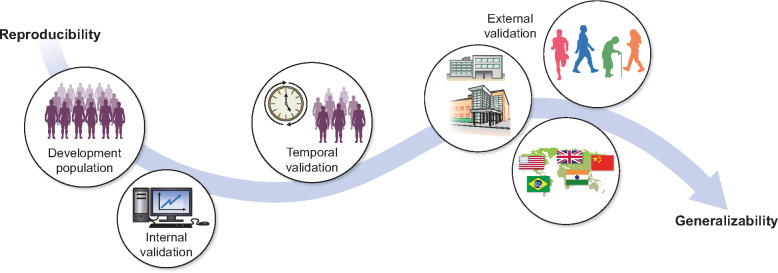
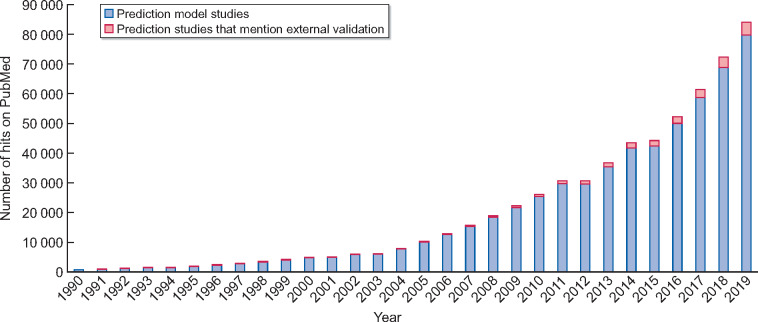
Prognostic models that aim to improve the prediction of clinical events, individualized treatment and decision-making are increasingly being developed and published. However, relatively few models are externally validated and validation by independent researchers is rare. External validation is necessary to determine a prediction model's reproducibility and generalizability to new and different patients. Various methodological considerations are important when assessing or designing an external validation study. In this article, an overview is provided of these considerations, starting with what external validation is, what types of external validation can be distinguished and why such studies are a crucial step towards the clinical implementation of accurate prediction models. Statistical analyses and interpretation of external validation results are reviewed in an intuitive manner and considerations for selecting an appropriate existing prediction model and external validation population are discussed. This study enables clinicians and researchers to gain a deeper understanding of how to interpret model validation results and how to translate these results to their own patient population.
Overview
The claims and statistics of this paper haven’t been checked yet.
Free: it reads the open-access text and checks the first 5 claims that cite a source we can check. Create a free account to check every claim.
Integrity signals
Registry
Cites
Statistics
Figures
Verification
Claims the paper makes
The claims and statistics of this paper haven’t been checked yet.
Free: it reads the open-access text and checks the first 5 claims that cite a source we can check. Create a free account to check every claim.
Self-check
Percentages, sums and reported differences re-computed from the paper’s own numbers.
The self-check needs the paper’s full text.
Citations
Cites
An Introduction to the Bootstrap
Efron, B., & Tibshirani, R. J. (1994) · doi:10.1201/9780429246593 · Cited by 40,500
Decision curve analysis: a novel method for evaluating prediction models
Vickers, A. J., & Elkin, E. B. (2006) · Medical Decision Making · doi:10.1177/0272989x06295361 · Cited by 6,341
Assessing the Performance of Prediction Models: A Framework for Traditional and Novel Measures
Steyerberg, E. W., Vickers, A. J., Cook, N. R., Gerds, T., Gonen, M., Obuchowski, N., Pencina, M. J., & Kattan, M. W. (2010) · Epidemiology · doi:10.1097/ede.0b013e3181c30fb2 · Cited by 5,170 · cited 1×
“net benefit, decision analysis) may also be assessed but are generally complementary to the discrimination and calibration results [22].”
BackgroundMoons, K. G. M., Altman, D. G., Reitsma, J. B., Ioannidis, J. P. A., Macaskill, P., Steyerberg, E. W., Vickers, A. J., Ransohoff, D. F., & Collins, G. S. (2015) · Annals of Internal Medicine · doi:10.7326/m14-0698 · Cited by 5,147 · cited 3×
“For researchers planning an external validation study we highly recommend consulting the Transparent Reporting of a multivariable prediction model for Individual Prognosis Or Diagnosis checklist and explanation and elaboration document [4].”
BackgroundMethodClinical Prediction Models: A Practical Approach to Development, Validation, and Updating
Steyerberg, E. W. (2019) · Statistics for Biology and Health · doi:10.1007/978-3-030-16399-0 · Cited by 3,281
An Introduction to the Bootstrap.
Buckland, S. T., Efron, B., & Tibshirani, R. J. (1994) · Biometrics · doi:10.2307/2532810 · Cited by 3,103
PROBAST: A Tool to Assess the Risk of Bias and Applicability of Prediction Model Studies
Wolff, R. F., Moons, K. G. M., Riley, R. D., Whiting, P. F., Westwood, M., Collins, G. S., Reitsma, J. B., Kleijnen, J., Mallett, S., & for the PROBAST Group† (2019) · Annals of Internal Medicine · doi:10.7326/m18-1376 · Cited by 2,984 · cited 1×
“Bias in prognostic models can be assessed using the Prediction model Risk Of Bias ASsessment Tool tool [31].”
MethodInternal validation of predictive models
Steyerberg, E. W., Harrell, F. E., Borsboom, G. J. J. M., Eijkemans, M. J. C., Vergouwe, Y., & Habbema, J. D. F. (2001) · Journal of Clinical Epidemiology · doi:10.1016/s0895-4356(01)00341-9 · Cited by 2,746
Use and Misuse of the Receiver Operating Characteristic Curve in Risk Prediction
Cook, N. R. (2007) · Circulation · doi:10.1161/circulationaha.106.672402 · Cited by 2,112 · cited 1×
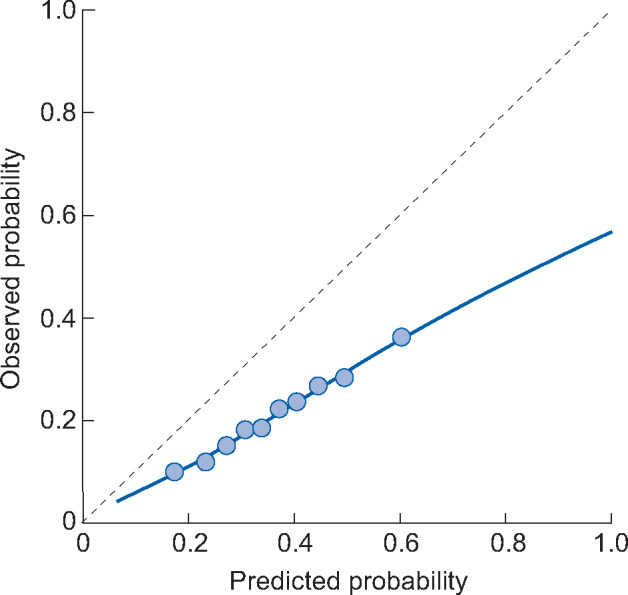
“When assessing the overall performance of a prognostic model, it is important to take both discrimination and calibration into account, as well as the intended use of the model [4, 26, 27].”
MethodUno, H., Cai, T., Pencina, M. J., D'Agostino, R. B., & Wei, L. J. (2011) · Statistics in Medicine · doi:10.1002/sim.4154 · Cited by 1,535 · cited 1×
“For Cox proportional hazards prediction models a time-toevent C-index such as Harrel’s C-index or Uno’s C-index can be computed [21, 25].”
Method
Cited by
Items 801–900 of 976
Clinical scoring systems for diagnosing tuberculous meningitis: A systematic review
Teo, E., Kung, K., Chen, S., & See, K. C. (2026) · World Journal of Critical Care Medicine · doi:10.5492/wjccm.v15.i1.110763
Kom, I. Y. (2024) · Pure Amsterdam UMC
Sadeghi, Y. (2025) · TSpace (University of Toronto)
Tao, Z., Chen, L., Xu, Q., Zhu, Y., Ding, S., & Dong, Y. (2026) · BMC Public Health · doi:10.1186/s12889-026-26661-5
Lei, Z. (2026) · Journal of Medical Systems · doi:10.1007/s10916-026-02336-x
Chew, B., & Ngiam, K. Y. (2026) · JMIR AI · doi:10.2196/80340
Joshi, D. M., Bhatt, H., & Patel, H. K. (2026) · BENTHAM SCIENCE PUBLISHERS eBooks · doi:10.2174/9798898813635126010011
Ethical and Regulatory Challenges in In Silico Modeling
Joshi, D. M., Bhatt, H., & Patel, H. K. (2026) · BENTHAM SCIENCE PUBLISHERS eBooks · doi:10.2174/9798898813635126010010
Yang, J., Hao, X., Sang, X., Jiang, E., & Zhang, X. (2026) · Neuropsychiatric Disease and Treatment · doi:10.2147/ndt.s594239
Langenhuijsen, L. F. S., Groenwold, R. H. H., Cannegieter, S. C., Klok, F. A., van Diepen, M., & de Jong, Y. (2026) · Journal of Clinical Epidemiology · doi:10.1016/j.jclinepi.2026.112232 · Cited by 1
Bolignano, D., Greco, M., Pugliese, S., Duni, Α., Presta, P., Errante, A., Pappas, E. M., Lakkas, L. S., Misiti, R., Naka, K. Κ., et al. (2026) · Cardiorenal Medicine · doi:10.1159/000551517
When clinical prediction models do not generalize: a simulation study in liver transplantationPreprint
Brulhart, D., Magini, G. M., Schäfer, A., Schwab, S., & Held, U. (2026) · medRxiv · doi:10.64898/2026.03.19.26348780
DYCZKO, D., Fakra, A. H., Djedjig, R., & Khelifa, M. (2026) · International Journal of Heat and Mass Transfer · doi:10.1016/j.ijheatmasstransfer.2026.128708
Clinical prediction of the mortality for acute kidney injury in decompensated cirrhosis
Pan, X.-Y., Yang, H.-L., Du, T., Wu, J.-H., Feng-yan, Q. I. N., Yu, B., Liang, Z., & Luo, W. (2026) · Scientific Reports · doi:10.1038/s41598-026-43918-6
Chen, J., Liang, X., Ma, W., Guo, Y., Li, K., & Deng, Q. (2026) · Journal of Gastrointestinal Cancer · doi:10.1007/s12029-026-01430-0
人工知能(AI)を利用した放射線治療の腫瘍制御予測-子宮頸がん病理組織の放射線治療変化を評価するDeep learningモデルの開発-
Masaaki, G., マサアキ, ゴ., & Masaaki, G. (2025) · Institutional Repositories DataBase (IRDB) · doi:10.15068/0002017606
Kulasekera, A. L., & Benaragama, H. N. (2026) · International Conference on Advanced Research in Computing (ICARC) · doi:10.1109/icarc68737.2026.11454086
“The 0.018 AUC drop (0.62 0.60) across ICUs substantially outperforms typical external validation degradation of 0.05-0.15 reported in systematic reviews [4] and recent large-scale analyses showing mean drops of 0.12 (0.76 0.64) across 469 cardiovascular prediction models [12].”
InfluentialDevelopment and validation of risk scores in vascular diseases
Lapébie, F.-X. (2021) · theses.fr (ABES) · doi:10.70675/4893255az220cz4e47z8833ze45283a937a4
Hirosse, A. E., Backes, A. R., Woloszynek, R. D. S. B. R., & Neves, F. F. (2026) · Cureus · doi:10.7759/cureus.107140
“Accordingly, the potential clinical applicability of this approach should be interpreted as preliminary and dependent on successful external validation across other hospitals, patient populations, and laboratory platforms [30].”
Kundu, A., Selby, P. L., Felsky, D., Moraes, T. J., Planinac, L. C., & Chaiton, M. (2026) · International Journal of Environmental Research and Public Health · doi:10.3390/ijerph23040527
Risk prediction models for imported infectious diseases: A systematic review
Xu, S., Xie, J., Xie, L., Zhang, L., Xie, C., Zhang, Y., Hong, S., Qu, L., Yuan, G., Chen, R., et al. (2026) · International Journal of Infectious Diseases · doi:10.1016/j.ijid.2026.108737
Memon, S., Memon, A., & Faisal, H. (2026) · The Egyptian Journal of Neurosurgery : the official publication of the Egyptian Society of Neurological Surgeons/Egyptian journal of neurosurgery · doi:10.1186/s41984-026-00572-4
Mian, Q., Guillen, P. A. V., Nooruddin, M., Alami, L., Vintimilla, B., Castillo, J., Satea, S. R. S. A. M., & Shafeea, M. S. (2026) · IntechOpen eBooks · doi:10.5772/intechopen.1015203
Sanpablo, A. I. P., Rodríguez-Barragán, M. A., Peñaloza, A. M., Quinzaños-Fresnedo, J., Barrera-Ortiz, A., Palomino-Ramos, F. M., Prado-Escobar, O., Rodríguez, M. D., López-Nava, I. H., & Ambrosio-Bastián, J. (2026) · JMIR Research Protocols · doi:10.2196/95236
“This temporal separation constitutes a more stringent test than random partitioning, as it captures potential shifts in patient characteristics or clinical practices over time [27].”
Liu, Y., Lei, X., Hao, J., Yang, J., Bao, H., Wang, Q., & Huang, X. (2026) · Clinics and Research in Hepatology and Gastroenterology · doi:10.1016/j.clinre.2026.102844
Advances in pharmacotherapy for fibrotic interstitial lung disease
Feng, X., Deng, M., Miao, J., Zheng, Z., & Hou, G. (2026) · Medical Review · doi:10.1515/mr-2025-0086 · Cited by 1
“Furthermore, the predominant use of retrospective data, as opposed to prospective real-world evidence, restricts the evaluation of model robustness in the face of complex clinical variable [154].”
Joshi, N., Rani, H. P., Shevtsov, M., & Chandran, T. (2026) · Journal of Clinical Medicine · doi:10.3390/jcm15103701
“It has been observed that prognostic models developed in a certain population might not be applicable to another population due to differences in ethnicity and healthcare systems [3].”
Andreas, A., Yusuf, M., Ferry Erdani, X., Hidayat, I., & Isa, M. M. (2026) · JURNAL INFO KESEHATAN · doi:10.31965/infokes.vol24.iss1.2405
Yang, G., Gao, Y., Liu, P., Jiang, J., Qiao, H., & Sheng, W. (2026) · Medical Science Monitor · doi:10.12659/msm.953235
“Additionally, the test set was not resampled during validation, potentially yielding results more reflective of real-world conditions [37].”
External Validation of the EPOS Prediction Model for Independent Gait After Stroke
Vinzens, L., Betschart, M., & Veerbeek, J. M. (2026) · Neurorehabilitation and neural repair · doi:10.1177/15459683261425934
“30,31 In the development study, 21% of the patients did not regain independent gait.”
Jacketti, M., Chesnutt, J., Schroeter, J., Haskins, R., & Chemerynski, S. (2026) · Computational Toxicology · doi:10.1016/j.comtox.2026.100418
Lung cancer in primary care: Development & validation of a prediction algorithm
Lapi, F., Marconi, E., Bianchini, E., Gorini, M., Bate, R., Medea, G., & Cricelli, I. (2026) · Cancer Epidemiology · doi:10.1016/j.canep.2026.103104
Lawson‐Michod, K. A., Barberio, J., MacLehose, R. F., Ahern, T. P., Lash, T. L., & Collin, L. J. (2026) · Epidemiology · doi:10.1097/ede.0000000000002008
Burchardt, J., Stokes, K., Victory, Y., & Liao, W. (2026) · Cancer Causes & Control · doi:10.1007/s10552-026-02173-w
Waqo, H. W., Woldemedihn, G. M., Kifle, Y. G., Konietschke, F., & Asfaw, Z. G. (2026) · Scientific Reports · doi:10.1038/s41598-026-53425-3
“Temporal validation assesses the reproducibility of predictive performance using data collected at a later time from the same setting 29,30,33 .”
InfluentialLiu, C., Wang, H., Li, Y., & Liu, X. (2026) · Oral Surgery Oral Medicine Oral Pathology and Oral Radiology · doi:10.1016/j.oooo.2026.05.014
Ramírez-Giraldo, C., Cirillo, B., Lucietto, M., Fabbri, N., Biondi, A., Feo, C., & Pesce, A. (2026) · International Journal of Colorectal Disease · doi:10.1007/s00384-026-05152-4
“While internal validation provides important information about the initial robustness of a model, it does not guarantee that the model will perform equally well in different contexts [23].”
The Emerging Role of Artificial Intelligence in Advancing Molecular Precision Medicine for Cancer
Cerchia, C., & Lavecchia, A. (2026) · Cancer drug discovery and develogment/Cancer drug discovery and development · doi:10.1007/978-3-032-24071-2_13
Wang, Y., Zhang, S., Chen, L., Zhang, H., Cao, A., & Du, P. (2026) · Frontiers in Medicine · doi:10.3389/fmed.2026.1771274
Dor, B. B., & Sonis, S. T. (2026) · Head and Neck Pathology · doi:10.1007/s12105-026-01919-x
Zhong, R., Wang, X., Gong, D., Man, C., & Fan, Y. (2026) · Translational Cancer Research · doi:10.21037/tcr-2026-1-0348
“Therefore, the preliminary external validation may still provide additional information regarding the potential applicability of the model across different practice settings (36), although this interpretation should remain cautious given the limited external sample size.”
Preeclampsia Screening and Prediction
Chaemsaithong, P., & Poon, L. C. (2026) · Springer eBooks · doi:10.1007/978-3-032-23479-7_13
Su, Y., Wang, D.-X., Zhao, Y.-Q., & Xing, X. (2026) · World Journal of Gastroenterology · doi:10.3748/wjg.118337
Future directions in noninvasive prediction of cirrhosis decompensation: An opinion review
Gao, X., Zhang, D.-Y., & Wang, Y. (2026) · World Journal of Gastroenterology · doi:10.3748/wjg.117300
Hajal, A. A., & Meslamani, A. Z. A. (2026) · Computational Toxicology · doi:10.1016/j.comtox.2026.100429
Foodeh, T., Korani, M. A., Teymourzadeh, M., Hassanpour-Fard-Khor, M., Abdollahi, Z., Hatami, B., Payandeh, A., Shojaeshafiei, F., Ebrahimi, S. M. S., Fayazbakhsh, F., et al. (2026) · Neurosurgical Review · doi:10.1007/s10143-026-04362-2
Clinical artificial intelligence applications of vision-language foundation models
Thirunavukarasu, A. J., Li, S. Y., Qin, P., Nie, D., Sanghera, R., Lim, E., Yu, J., & Zhang, L. (2026) · PLOS Digital Health · doi:10.1371/journal.pdig.0001453
“External validation—using data to which models have not been previously exposed—is therefore essential [86,87].”
Carrein, M., der Heyden, J. V., Mehuys, E., Petrovic, M., & Boussery, K. (2026) · Drugs & Aging · doi:10.1007/s40266-026-01307-8
van Pinxteren, R., Marzolla, M. C., Wijenberg, M., Heugten, C. M. V., van Osch, F., van der Naalt, J., Spikman, J. M., Timmerman, M. E., & Roor, J. J. (2026) · European Journal of Neurology · doi:10.1111/ene.70626
“Discrimination is a relative measure of the ability to classify patients with a poor versus a good outcome based on a prognostic model and is assessed by the area under the operator receiver characteristic curve (AUC), which is equal to the concordance-index in logistic regression models [20, 32].”
InfluentialClinical applications of digital twin technology in In Vitro Fertilisation
Olawade, D. B., Abe, O. R., Nwazuo, K. E., Apena, T., Olawuyi, O. F., & Egbon, E. (2026) · Journal of Gynecology Obstetrics and Human Reproduction · doi:10.1016/j.jogoh.2026.103235 · Cited by 1
Dessie, D. B., Kitawa, Y. S., & Asfaw, Z. G. (2026) · Scientific Reports · doi:10.1038/s41598-026-59905-w
“While internal validation (e.g., bootstrapping or cross-validation) assesses performance on the original dataset, it is often insufficient due to overfitting 71 .”
Neural Network Performance in Drug Dose Prediction: A Systematic Review: A Systematic Review
Hosseini, K. Z., Emami, H., Nazari, E. L. H. A. M., & Golabpour, A. (2026) · Iranian South Medical Journal · doi:10.66224/ismj.28.6.911
Prognostic models for diabetic kidney disease outcomes: A systematic review
Yang, D., Fan, Y., Xu, Y., Jin, K., Ma, Y., & Wang, R. (2026) · Diabetic Medicine · doi:10.1111/dme.70391
Lin, C.-H., Lin, C.-H., Liu, C. P., Hsiao, C.-Y., Wang, Y.-N., Hsu, H.-S., Wu, F.-H., & Chan, Y. (2026) · BMC Health Services Research · doi:10.1186/s12913-026-15040-w
“Specifically, we note that the model’s performance may vary when applied to data from other institutions due to differences in patient populations, clinical practices, and data distributions [62–65].”
Bartolomaeus, H., Reitmeir, R., Versnjak, J., Hofstetter, J., Behrens, F., Yarritu, A., Bonnekoh, P. M., Liebau, M. C., Bayazıt, A. K., Düzova, A., et al. (2026) · medRxiv · doi:10.64898/2026.07.01.26357013
Chen, Y.-Y., & Poon, L. C. (2026) · Diagnostics · doi:10.3390/diagnostics16132074
“External validation is necessary to assess a prediction model’s reproducibility and generalizability to different settings or populations [47,48].”
Canizalez‐Román, A., Llanes-Cardenas, R., Martínez‐Villa, F. A., & Izabal, D. Y. A. (2026) · Clinical & Translational Oncology · doi:10.1007/s12094-026-04490-7
Bora, P. S., & Sharma, U. K. (2026) · Planta Medica · doi:10.1055/a-2893-0341 · Cited by 2
Clinical lipidomics in bacterial sepsis: a systematic review of serum and plasma evaluations
Ahmad, N. S., Ibrahim, R., Tan, T. L., Baharum, S. N., & Sekawi, Z. (2026) · Metabolomics · doi:10.1007/s11306-026-02488-4
“Crucially, biomarker validation remains min - imal with most studied solely on internal statistic validation techniques (e.g., cross-validation, CV-ANOVA) which increase the risk of data overfitting in independent cohorts (Castaldi et al., 2011; Ramspek et al., 2020 ).”
Lin¹², L., Lin⁵, S., Abulimit⁵, M., Zhou³⁴, L., Wei⁵, Z., Li³⁴, X., & Li, X. B. (2026) · Research Square · doi:10.21203/rs.3.rs-9760691/v1
Kravchenko, O., Halvorsen, M., Boberg, J., Kaldo, V., Crowley, J. J., Kuja‐Halkola, R., Rück, C., & Wallert, J. (2026) · Journal of Medical Internet Research · doi:10.2196/100162
Predictive models of adverse outcomes of overweight or obesity: a nationwide cohort validation
Turchin, A., Shubina, M., Morrison, F. J. R., Ahmad, N. N., Neff, L. M., & Kan, H. (2026) · BMC Endocrine Disorders · doi:10.1186/s12902-026-02399-4
“It is also important to ensure that predictive models being considered for clinical use are generalizable by evaluating them on a broad population sample not used to derive the original model [18, 19].”
Jöud, A., Thorén, H., Sprečo, A., Lundh, T., Timpka, T., & Gerlee, P. (2026) · BMC Health Services Research · doi:10.1186/s12913-026-15076-y
“We consider validation to be retrospective/internal if it is carried out on data from the same time frame and population and external if validated on another population and/or time frame [15].”
Salleh, M. M. M., Kasim, S. M., Razak, T. R., Azahar, N., & Isa, M. R. (2026) · Malaysian Family Physician · doi:10.51866/rv.1027
Zhao, Y., Li, J., & Cui, X. (2026) · Research Square · doi:10.21203/rs.3.rs-10016112/v1
Transparent chest radiograph foundation model enables explainable human disease profiling
Lin, C., Chen, K., Huang, J.-W., Fang, W., Chang, W.-C., Ko, K., Hsu, Y., Lin, C.-S., Lin, S.-H., & Tsai, D. (2026) · npj Digital Medicine · doi:10.1038/s41746-026-02990-y
Predictive Accuracy of the Framingham Risk Score in the Republic of Korea
Park, S.-Y., Ratcliffe, S. J., Bowles, K. H., & Ulrich, C. M. (2026) · Nursing Research · doi:10.1097/nnr.0000000000000929
Giovanni, D. A. D., Tanaka, A., Horikoshi, T., Tsuboyama, T., Yokota, H., Zakarian, R., Matsumoto, Y., Vallières, M., & Reinhold, C. (2026) · medRxiv · doi:10.64898/2026.07.14.26358100
Yazdi, S. M., Motevaselian, M., Khatami, S., Radfar, N., Jourahmad, Z., & Perez, H. A. (2026) · medRxiv · doi:10.64898/2026.07.15.26358113
Elayan, H., Sperrin, M., Martin, G. P., Braunschweig, F., Faxén, J., Alfredsson, J., & Jenkins, D. A. (2026) · Biometrical Journal · doi:10.1002/bimj.70166
Sukayogula, M., Surapaneni, T., Shah, A. G., & Ghimire, A. (2026) · The Journal of Obstetrics and Gynecology of India · doi:10.1007/s13224-026-02433-4
Bakidou, A., Caragounis, E.-C., Hagiwara, M. A., Røise, O., Jönsson, A., Sjöqvist, B. A., & Candefjord, S. (2026) · Scandinavian Journal of Trauma Resuscitation and Emergency Medicine · doi:10.1186/s13049-026-01662-w
“The observed change in performance during external validation may be used as an indicator if a model’s performance can be reproduced for similar but new data [29], which helps researchers avoid research waste and secure patient safety for future clinical implementation.”
Xue, G., Guo, X.-Y., Chen, J.-Q., Xu, H.-N., & Zhou, D.-M. (2026) · Digital Health · doi:10.1177/20552076261460172
“55 According to Table 1, in this study, the number of candidate predictors is 58, the event prevalence is 0.23.”
InfluentialTang, L., Liu, Y., Chen, B., Zou, H., Yang, Y., Sun, X., & Zhong, L. (2026) · Frontiers in Medicine · doi:10.3389/fmed.2026.1802265
“Models derived from single-center retrospective data are susceptible to overfitting, and their performance may deteriorate when applied across different institutions or geographic contexts (33).”
Predicting old-growth structures in temperate small-scale private forests using landscape data
Hansen, P., Tiebel, M., Plieninger, T., & Mölder, A. (2026) · Annals of Forest Science · doi:10.1186/s13595-026-01354-6
Lekšić, Ž., & Sanchez–Varela, Z. (2026) · Applied Sciences · doi:10.3390/app16157647
van der Gun, G. J., Selles, R. W., Brunner, I. C., Lundquist, C. B., & Lab, F. T. I. S. (2026) · Neurorehabilitation and neural repair · doi:10.1177/15459683261469091
External validation of the Liverpool Head Injury Tomography Score for mild traumatic brain injury
Gillespie, C. S., Guo, Y., Kingham, M., Yang, S. W., Li, Z., Veremu, M., Cook, W. H., Chedid, Y., Simmons, E., Deakin, N. D., et al. (2026) · Acta Neurochirurgica · doi:10.1007/s00701-026-06991-4
“The score, however, requires external validation to establish reproducibility in different patient populations [6, 26].”
Dapamede, T., Aitcheson, K., Lagari, P. L., Farooq, A., Louis, P. C., Robichaux, C. J., Li, F., Khosravi, B., Chavoshi, M., Mansuri, A., et al. (2026) · EClinicalMedicine · doi:10.1016/j.eclinm.2026.104078
“%) patients, and a correspondingly higher diabetes prevalence (22.2% vs. 14.6%).23,24 22–25 While laboratory-based tools like the CKD-PC score represent the standard for risk prediction, 7 their real-world utility is severely limited by missing data.”
InfluentialLi, H., Zhang, Y., Li, W., & Lu, Y. (2026) · Lymphatic Research and Biology · doi:10.1177/15578585261470704
Kurobe, Y., Nakamura, K., Ushiyama, N., & Momose, K. (2026) · Scientific Reports · doi:10.1038/s41598-026-73542-3
“Therefore, demonstrating that a prediction model maintains adequate predictive performance across different clinical settings is essential before its implementation in routine practice 11 .”
Karamcheti, S. T. (2022) · Otago University Research Archive (University of Otago) · Cited by 1
Paesano, N. E., Catalá, V., Camean, J. J., Olmedo, T. E., Gurovich, J., Ringa, M., Miró, B., Regis, L., Méndez, O., Trilla, E., et al. (2026) · Cancers · doi:10.3390/cancers18162541
“Consequently, temporal changes in diagnostic pathways and differences between development and validation cohorts may progressively reduce model calibration, highlighting the need for periodic recalibration and adjustment of decision thresholds [20].”
Fan, X., Zhou, J., Li, M., Qin, Y., Pei, P., Sun, D., Yu, C., Lv, J., Pan, E., Lu, Y., et al. (2026) · Diabetes Obesity and Metabolism · doi:10.1111/dom.71212
Hashmi, A. B., Khalil, M., & Bareera, S. (2026) · Endocrinology Diabetes & Metabolism · doi:10.1002/edm2.70310
Generative conformal prediction under multiple covariate shifts
Lan, M., Wang, T., Zheng, S., & Lin, Y. (2026) · Statistics and Computing · doi:10.1007/s11222-026-10936-3
Kelly, J. F., van der Meer, J. R. M., Lommen, K., Fazzi, G. E., Weinans, C. R. G. J., Li, X., Baldewijns, M. M. L. L., Ramaekers, B. L. T., Marcelissen, T. A. T., van Roermund, J. G. H., et al. (2026) · Pathology - Research and Practice · doi:10.1016/j.prp.2026.156631
Liu, T., Yan, X., & Lu, J. (2026) · Frontiers in Medicine · doi:10.3389/fmed.2026.1920677
Alvarado-Dyer, R., Houpt, A. C., Gonzalez, I. Z., Vélez, F. G. S., Carrick, M. M., Crose, A., Walker, A., Goicoechea, E. B., Lo, E., Fakhri, F., et al. (2026) · Research Square · doi:10.21203/rs.3.rs-10607520/v1
Zhao, C., Li, H., Yang, Y., Yang, Y., & Wu, X. (2026) · Frontiers in Digital Health · doi:10.3389/fdgth.2026.1917647
Wang, X., Zuo, Z., Huang, Q., Li, C., Jin, J., Li, D., Liao, X., Wang, Z., Dai, J., Zhang, L., et al. (2026) · Scientific Reports · doi:10.1038/s41598-026-67468-z
Jasenecova, M., Harker, G., Adas, M. A., Qureshi, S., Duquenne, L. M., Wilson, M., Hensor, E. M. A., Emery, P., Mankia, K. S., Bechman, K., et al. (2026) · EULAR Rheumatology Open · doi:10.1016/j.ero.2026.100228
“However, most recently reported risk prediction models, including in RA, lack external independent validation [17,18].”
Cai, L., & Peng, Y. (2026) · Frontiers in Oncology · doi:10.3389/fonc.2026.1923907
“Multicenter external validation across institutions, vendors, and imaging protocols is warranted (40).”
Rajkovic, L. A., Veerbeek-Preuss, S., Bärtschi, S., Ottiger, B., Nyffeler, T., & Veerbeek, J. M. (2026) · Neurorehabilitation and neural repair · doi:10.1177/15459683261477077
van den Bergh, F. J. P. N., van Rietbergen, B., van den Bergh, J. P., Biver, E., Wyers, C. E., & Bevers, M. S. A. M. (2026) · Bone · doi:10.1016/j.bone.2026.118076
Integration of artificial intelligence and multi-omics for precision medicine
Marei, H. E. S., Cenciarelli, C., & Vagni, D. (2026) · Functional & Integrative Genomics · doi:10.1007/s10142-026-02024-6
Riaz, S., Khuda, F., Nasim, A., Qazi, R., Alnemari, R. M., & Alsubaie, N. (2026) · Psychiatry Research · doi:10.1016/j.psychres.2026.117432
Pereira, S., Tavares, J., Dias, B., Madureira, A., Fonseca, I., Silva, F., Queirós, J., Carvalho, M. J., & Rodrigues, A. (2026) · Research Square · doi:10.21203/rs.3.rs-10480175/v1
Handbook of mathematical modelling of infectious diseases for decision-making
Gerlee, P., Lundh, T., Björnham, O., Brouwers, L., & Tegnell, A. (2025) · Chalmers Research (Chalmers University of Technology)
Metadata
- Authors
- Ramspek, C. L., Jager, K. J., Dekker, F. W., Zoccali, C., & van Diepen, M.
- Affiliations
- Leiden University Medical Center (NL)
- Amsterdam Public Health (NL)
- CNR-IFC, Clinical Epidemiology of Renal Diseases and Hypertension, Reggio Calabria, Italy
- Department of Clinical Epidemiology, Leiden University Medical Center, Leiden, The Netherlands
- Venue
- Clinical Kidney Journal
- Publisher
- Oxford University Press (OUP)
- Published
- 2020-11-24
- Volume
- 14
- Issue
- 1
- Pages
- 49-58
- ISSN
- 2048-8505 (ISSN-L)
- 2048-8513
- PMC
- PMC7857818
- OpenAlex
- W3109609494
- Cited by
- 887
- References
- 46
- Citations by year
- 2026: 197 · 2025: 209 · 2024: 194 · 2023: 162 · 2022: 96 · 2021: 28
- FWCI
- 11.62
- Type
- journal article
- Language
- en
- Open access
- gold
- doi.org
- Licence
- Locations
- Clinical Kidney Journal (publishedVersion, cc-by-nc)
- Europe PMC (PubMed Central) (publishedVersion, cc-by-nc)
- PubMed Central (publishedVersion, cc-by-nc)
- PubMed (publishedVersion)
- Leiden Repository (Leiden University) (submittedVersion, cc-by-nc)
- Data Archiving and Networked Services (DANS) (submittedVersion, other-oa)
- Data Archiving and Networked Services (DANS) (submittedVersion, cc-by-nc)
- Pure Amsterdam UMC (submittedVersion, cc-by)
- Funders
- Dutch Kidney Foundation (16OKG12)
- Topics
- Physical Sciences › Mathematics › Statistics and Probability › Statistical Methods in Epidemiology
- Social Sciences › Decision Sciences › Statistics, Probability and Uncertainty › Meta-analysis and systematic reviews
- Health Sciences › Health Professions › Health Information Management › Artificial Intelligence in Healthcare
- Keywords
- external validation, prognostic model, prediction model, generalizability, reproducibility, clinical implementation, clinical decision-making
About these checks
Registry, retraction, Cites and statistics results are computed, not judged, with one exception: a printed reference that no index lists is read once by a model before it counts as a citation error. Claims are extracted by a model and kept only when their quote appears verbatim in the text; each cited source is then checked, with a model’s help, for whether it says what the claim relies on. Those verdicts can be wrong — read the claim’s quote and the cited source before relying on one.
Statistics and arithmetic are recomputed, not judged.
Confidence bands are shown only for fields calibrated on our annotated test set. None is calibrated yet, so no band is shown.
What counts as a claim ›How we measure confidence ›How we check this ›
Are you an author, or do you see a problem with this page? Request a review
Data sources
Bibliographic data: Semantic Scholar, OpenAlex, Crossref.
Contains information from the Semantic Scholar Academic Graph Datasets, made available under the ODC Attribution License (ODC-BY 1.0).
Semantic Scholar’s data is described in: Kinney, R., et al. (2023). The Semantic Scholar Open Data Platform. arXiv:2301.10140.
