

External validation of prognostic models: what, why, how, when and where?
Open accessThe DOI matches its Crossref record; 45 of the 46 references it cites were found in a registry or an index.
Abstract
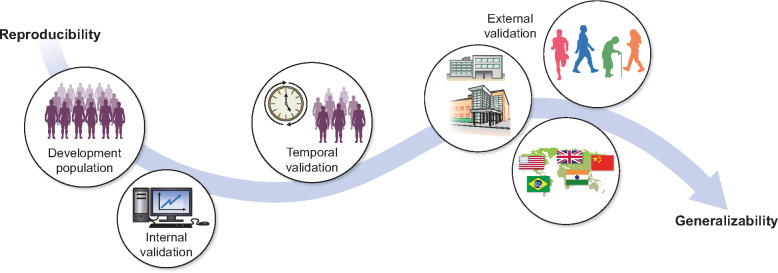
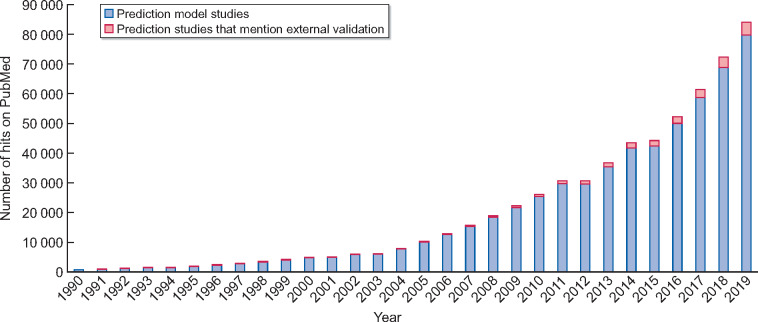
Prognostic models that aim to improve the prediction of clinical events, individualized treatment and decision-making are increasingly being developed and published. However, relatively few models are externally validated and validation by independent researchers is rare. External validation is necessary to determine a prediction model's reproducibility and generalizability to new and different patients. Various methodological considerations are important when assessing or designing an external validation study. In this article, an overview is provided of these considerations, starting with what external validation is, what types of external validation can be distinguished and why such studies are a crucial step towards the clinical implementation of accurate prediction models. Statistical analyses and interpretation of external validation results are reviewed in an intuitive manner and considerations for selecting an appropriate existing prediction model and external validation population are discussed. This study enables clinicians and researchers to gain a deeper understanding of how to interpret model validation results and how to translate these results to their own patient population.
Overview
The claims and statistics of this paper haven’t been checked yet.
Free: it reads the open-access text and checks the first 5 claims that cite a source we can check. Create a free account to check every claim.
Integrity signals
Registry
Cites
Statistics
Figures
Verification
Claims the paper makes
The claims and statistics of this paper haven’t been checked yet.
Free: it reads the open-access text and checks the first 5 claims that cite a source we can check. Create a free account to check every claim.
Self-check
Percentages, sums and reported differences re-computed from the paper’s own numbers.
The self-check needs the paper’s full text.
Citations
Cites
An Introduction to the Bootstrap
Efron, B., & Tibshirani, R. J. (1994) · doi:10.1201/9780429246593 · Cited by 40,500
Decision curve analysis: a novel method for evaluating prediction models
Vickers, A. J., & Elkin, E. B. (2006) · Medical Decision Making · doi:10.1177/0272989x06295361 · Cited by 6,341
Assessing the Performance of Prediction Models: A Framework for Traditional and Novel Measures
Steyerberg, E. W., Vickers, A. J., Cook, N. R., Gerds, T., Gonen, M., Obuchowski, N., Pencina, M. J., & Kattan, M. W. (2010) · Epidemiology · doi:10.1097/ede.0b013e3181c30fb2 · Cited by 5,170 · cited 1×
“net benefit, decision analysis) may also be assessed but are generally complementary to the discrimination and calibration results [22].”
BackgroundMoons, K. G. M., Altman, D. G., Reitsma, J. B., Ioannidis, J. P. A., Macaskill, P., Steyerberg, E. W., Vickers, A. J., Ransohoff, D. F., & Collins, G. S. (2015) · Annals of Internal Medicine · doi:10.7326/m14-0698 · Cited by 5,147 · cited 3×
“For researchers planning an external validation study we highly recommend consulting the Transparent Reporting of a multivariable prediction model for Individual Prognosis Or Diagnosis checklist and explanation and elaboration document [4].”
BackgroundMethodClinical Prediction Models: A Practical Approach to Development, Validation, and Updating
Steyerberg, E. W. (2019) · Statistics for Biology and Health · doi:10.1007/978-3-030-16399-0 · Cited by 3,281
An Introduction to the Bootstrap.
Buckland, S. T., Efron, B., & Tibshirani, R. J. (1994) · Biometrics · doi:10.2307/2532810 · Cited by 3,103
PROBAST: A Tool to Assess the Risk of Bias and Applicability of Prediction Model Studies
Wolff, R. F., Moons, K. G. M., Riley, R. D., Whiting, P. F., Westwood, M., Collins, G. S., Reitsma, J. B., Kleijnen, J., Mallett, S., & for the PROBAST Group† (2019) · Annals of Internal Medicine · doi:10.7326/m18-1376 · Cited by 2,984 · cited 1×
“Bias in prognostic models can be assessed using the Prediction model Risk Of Bias ASsessment Tool tool [31].”
MethodInternal validation of predictive models
Steyerberg, E. W., Harrell, F. E., Borsboom, G. J. J. M., Eijkemans, M. J. C., Vergouwe, Y., & Habbema, J. D. F. (2001) · Journal of Clinical Epidemiology · doi:10.1016/s0895-4356(01)00341-9 · Cited by 2,746
Use and Misuse of the Receiver Operating Characteristic Curve in Risk Prediction
Cook, N. R. (2007) · Circulation · doi:10.1161/circulationaha.106.672402 · Cited by 2,112 · cited 1×
“When assessing the overall performance of a prognostic model, it is important to take both discrimination and calibration into account, as well as the intended use of the model [4, 26, 27].”
MethodUno, H., Cai, T., Pencina, M. J., D'Agostino, R. B., & Wei, L. J. (2011) · Statistics in Medicine · doi:10.1002/sim.4154 · Cited by 1,535 · cited 1×
“For Cox proportional hazards prediction models a time-toevent C-index such as Harrel’s C-index or Uno’s C-index can be computed [21, 25].”
Method
Cited by
Items 401–500 of 976
Alabi, R. O., Guntinas‐Lichius, O., Elmusrati, M. S., Almangush, A., Ehrsson, Y. T., Laurell, G. F. E., & Mäkitie, A. A. (2025) · Scientific Reports · doi:10.1038/s41598-025-29295-6 · Cited by 5
“In recent years, there has been a surge in the development of prognostic prediction models for prognostication in various cancers 14,15 .”
InfluentialLangenhuijsen, L. F. S., Derksen, D. C. L., Milders, J., van der Horst, S. F. B., van Diepen, M., Trines, S. A. I. P., den Exter, P. L., Klok, F. A., Rotmans, J. I., & de Jong, Y. (2025) · Kidney Medicine · doi:10.1016/j.xkme.2025.101200 · Cited by 5
“5,6,18,19 Therefore, the aims of this systematic review and meta-analysis were to (1) identify external validations of the CHA 2 DS 2 -VASc, CHADS 2 , HAS-BLED, and HEMOR-R 2 HAGES models for predicting IS or bleeding in patients with AF undergoing dialysis or with CKD, (2) provide pooled estimates…”
Prediction of recovery grade in Bell’s palsy using machine learning models
Han, S., Park, J. R., Oh, H., Park, S.-M., Park, J., & Kim, Y. H. (2026) · Scientific Reports · doi:10.1038/s41598-025-34934-z · Cited by 5
Mjaess, G., Diamand, R., Dikete, N., Kwong, J. C. C., Pezzullo, M., Margue, G., Pasoglou, V., Michoux, N., Campi, R., Amparore, D., et al. (2026) · European Urology Focus · doi:10.1016/j.euf.2025.12.017 · Cited by 5
Yap, E., Ouyang, J., Puri, I., Melaku, Y., & Goldwasser, P. (2022) · Clinica Chimica Acta · doi:10.1016/j.cca.2022.05.003 · Cited by 5
Pan, J., Peng, L., Xia, C., Wang, A., Tong, X., Chen, X., Zhang, J., & Xu, X. (2023) · Clinical Breast Cancer · doi:10.1016/j.clbc.2023.02.008 · Cited by 5
Rivas, A. L., Smith, S. D., Basiladze, V., Chaligava, T., Malania, L., Burjanadze, I., Chichinadze, T., Suknidze, N., Bolashvili, N., Hoogesteijn, A. L., et al. (2023) · Frontiers in Veterinary Science · doi:10.3389/fvets.2023.1270505 · Cited by 5
Bonfiglio, C., Campanella, A., Donghia, R., Bianco, A., Franco, I., Curci, R., Bagnato, C. B., Tatoli, R., Giannelli, G., & Cuccaro, F. (2024) · Journal of Clinical Medicine · doi:10.3390/jcm13041181 · Cited by 5
Xie, H., Wang, B., & Hong, Y. (2024) · Technology and Health Care · doi:10.3233/thc-248048 · Cited by 5
“Future research should focus on further optimizing the model and validating its feasibility and effectiveness in larger and more diverse patient populations [18] to ensure its applicability in actual medical practice.”
BackgroundRegulatory Frameworks and Validation Strategies for Advancing Artificial Intelligence in Healthcare
Lopez-Perez, L., Barbancho, B. M., Rujas, M., Maccaro, A., Guillen, S. G., Pecchia, L., Cabrera, M. F., Arredondo, M. T., & Fico, G. (2024) · World Congress on Medical Physics and Biomedical Engineering, September 7 - 12, 2009, Munich, Germany · doi:10.1007/978-3-031-61628-0_28 · Cited by 5
Ricci, C., Crippa, S., Hee, J., Jung, H., Capurso, G., Ferronato, M., Lariño‐Noia, J., Gorris, M., Ghaneh, P., Demir, İ. E., et al. (2025) · Annals of Surgery · doi:10.1097/sla.0000000000006702 · Cited by 6
Kiatchoosakun, S., Chamnarnphol, N., Wongvipaporn, C., Pussadhamma, B., Roongsangmanoon, W., Siriyotha, S., Thakkinstian, A., & Sansanayudh, N. (2025) · Open Heart · doi:10.1136/openhrt-2024-003027 · Cited by 5
Karlsen, A. P. H., Sunde, P. B., Rasmussen, I., Folkersen, C., Tran, T. X. M., Nguyen, M. K. T., Elkjær, L. M., Lunn, T. H., Meyhoff, C. S., Andersen, J. V., et al. (2025) · Acta Anaesthesiologica Scandinavica · doi:10.1111/aas.70071 · Cited by 5
Fordyce, W., Kennedy, G., Allen, J. R., Abdelmonem, M. S. A., Evans, J. P., Evans, J. T., & Guyver, P. M. (2022) · Shoulder & Elbow · doi:10.1177/17585732221097092 · Cited by 5
Ots, P., Hengel, K. M. O., Burdorf, A., Robroek, S. J., Nieboer, D., Schram, J. L., van Zon, S. K. R., & Brouwer, S. (2022) · European Journal of Public Health · doi:10.1093/eurpub/ckac045 · Cited by 7
Takabayashi, K., Hamada, T., Kubo, T., Iwatsu, K., Ikeda, T., Okada, Y., Kitamura, T., Kitaguchi, S., Kimura, T., Kitaoka, H., et al. (2022) · Circulation Journal · doi:10.1253/circj.cj-22-0652 · Cited by 5
Petretta, M., Megna, R., Assante, R., Zampella, E., Nappi, C., Gaudieri, V., Mannarino, T., Green, R., Cantoni, V., D’Antonio, A., et al. (2023) · Journal of Nuclear Cardiology · doi:10.1007/s12350-022-03173-4 · Cited by 5
Opioid use following pelvic reconstructive surgery: a predictive calculator
Palm, K. M., Abrams, M. K., Sears, S. B., Wherley, S. D., Alfahmy, A. M., Kamumbu, S. A., Wang, N. C., Mahajan, S. T., El‐Nashar, S. A., Henderson, J. W., et al. (2023) · International Urogynecology Journal · doi:10.1007/s00192-022-05428-7 · Cited by 5
Buddhiraju, A., Shimizu, M. R., Seo, H. H., Chen, T. L., Rezazadehsaatlou, M., Huang, Z., & Kwon, Y. (2024) · Medical & Biological Engineering & Computing · doi:10.1007/s11517-024-03075-2 · Cited by 5
Tran, D. N. T., Ducher, M., Fouque, D. P., & Fauvel, J. (2024) · Journal of Nephrology · doi:10.1007/s40620-024-02011-9 · Cited by 5
Mocherla, M., & Pushpanjali, K. (2024) · Journal of Family Medicine and Primary Care · doi:10.4103/jfmpc.jfmpc_117_24 · Cited by 5
“[21] Few disease cases are overlooked when using a test that is extremely sensitive.”
BackgroundYang, Y., Li, F., Wei, Y., Zhao, Y., Fu, J., Xiao, X., & Bu, H. (2024) · Medinformatics · doi:10.47852/bonviewmedin42024108 · Cited by 9
“Both internal validation and external validation are essential [9-13], since internal validation can reflect the feasibility of constructing a DL-based AI model for a medical diagnostic or prognostic prediction task while external validation can reflect the potentials of the constructed DL-based AI…”
MethodValidity and Accuracy of the Derived Left Ventricular End-Diastolic Pressure in Impella 5.5
Poyanmehr, R., Hanke, J. S., Boethig, D., Merzah, A. S., Karsten, J., Frank, P. N., Hinteregger, M., Zubarevich, A., Doğan, G., Schmitto, J. D., et al. (2025) · Circulation Heart Failure · doi:10.1161/circheartfailure.124.012154 · Cited by 5
“9 13 We hypothesized that dLVEDP strongly and consistently correlates to PCWP, independently of P-Levels and patient characteristics.”
Goto, M., Futamura, Y., Makishima, H., SAITO, T. K., Sakamoto, N., Iijima, T., TAMAKI, Y., Okumura, T., Sakurai, T., & Sakurai, H. (2025) · Journal of Radiation Research · doi:10.1093/jrr/rraf004 · Cited by 5
“The temporal validation method is consideredtobeintermediatebetweeninternalandexternalvalidation [18, 19].”
Farm vehicle crashes on public roads: Analysis of farm‐level factors
McFalls, M., Ramirez, M. R., Harland, K. K., Zhu, M., Morris, N. L., Hamann, C., & Peek-Asa, C. L. (2021) · The Journal of Rural Health · doi:10.1111/jrh.12621 · Cited by 5
A Clinical Score to Predict Mortality in Patients After Acute Heart Failure from Japanese Registry
Takabayashi, K., Okada, Y., Iwatsu, K., Ikeda, T., Fujita, R., Takenaka, H., Kitamura, T., Kitaguchi, S., & Nohara, R. (2021) · ESC Heart Failure · doi:10.1002/ehf2.13664 · Cited by 5
“Keywords Acute heart failure; Outcome; ADL; Prognosis; Lifestyle; Risk score Received: 22 June 2021; Revised: 29 August 2021; Accepted: 28 September 2021 *Correspondence to: Kensuke Takabayashi, MD, PhD, Department of Cardiology, Hirakata Kohsai Hospital, 1-2-1, Fujisakashigashimachi, Hirakata-shi, Osaka 573-0153, Jap…”
MethodInfluentialExternal validation of a classifier of daily continuous glucose monitoring (CGM) profiles
Lobo, B. J., & Kovatchev, B. P. (2022) · Computers in Biology and Medicine · doi:10.1016/j.compbiomed.2022.105293 · Cited by 5
Reinson, T., Patel, J., Mathews, M., Fountain, D., Buchanan, R. M., & Byrne, C. D. (2023) · Journal of Clinical and Translational Hepatology · doi:10.14218/jcth.2022.00335 · Cited by 7
Chen, S.-F., Su, C.-C., Huang, C., Ogink, P. T., Yen, H., Groot, O. Q., & Hu, M. (2023) · Journal of the Formosan Medical Association · doi:10.1016/j.jfma.2023.06.027 · Cited by 5
Lue, K., Chen, Y., Chu, S., Chang, B.-S., Lin, C., Chen, Y., Lin, H., & Liu, S. (2023) · Nuclear Medicine Communications · doi:10.1097/mnm.0000000000001776 · Cited by 5
“1) [23,24].”
BackgroundYoung, C. C., Eason, K., García, R. M., Moulange, R., Mukherjee, S., Chin, S., Caldas, C., & Rueda, O. M. (2024) · Scientific Reports · doi:10.1038/s41598-024-62724-6 · Cited by 5
“IntClust 6 experienced the lowest individual recall, which could be due to differences in the distribution of IntClusts between cohorts (Supplementary Figure S2), leading to model miscalibration 21 .”
BackgroundMujanović, A., Ng, F., Branca, M., Deutschmann, H., Meinel, T. R., Churilov, L. P., Nistl, O., Mitchell, P. J., Yassi, N., Parsons, M. W., et al. (2024) · Neurology · doi:10.1212/wnl.0000000000209401 · Cited by 5
Stel, V. S., Jager, K. J., & Ortíz, A. (2024) · Nephrology Dialysis Transplantation · doi:10.1093/ndt/gfae094 · Cited by 5
Self-citationPrognostic Models in Patients with Dengue: A Systematic Review
Diaz‐Arocutipa, C., Chumbiauca, M., & Soto-Becerra, P. (2025) · American Journal of Tropical Medicine and Hygiene · doi:10.4269/ajtmh.24-0653 · Cited by 4
Petravić, L., Rogina, K. G., Albreht, T., Kukec, A., & Žibert, J. (2025) · BMC Emergency Medicine · doi:10.1186/s12873-025-01250-8 · Cited by 7
“Additionally, we found that the publishing of training data is rare and that most of the studies did not publish final models for use by other researchers.”
Shiraishi, D. H., Saha, S., Adanyeguh, I. M., Cocozza, S., Corben, L. A., Deistung, A., Delatycki, M. B., Dogan, I., Gaetz, W. C., Georgiou‐Karistianis, N., et al. (2025) · Radiology Artificial Intelligence · doi:10.1148/ryai.240478 · Cited by 5
“For artificial intelligence, testing with external datasets is crucial to assess the generalization capacity of the proposed models (26), although rarely reported (27,28).”
Prime-time for LncRNA signatures in acute myeloid leukemia?
Ren, Z., Moerloose, B. D., & Lammens, T. (2025) · Annals of Hematology · doi:10.1007/s00277-025-06616-3 · Cited by 4
Wang, X., Bampton, T. J., Dharmaprani, D., Mahajan, R., & Palmer, L. J. (2025) · BMJ Digital Health & AI · doi:10.1136/bmjdhai-2025-000154 · Cited by 4
Youn, S., & Park, B. J. (2025) · International Neurourology Journal · doi:10.5213/inj.2550316.158 · Cited by 6
Wu, L., Su, S., Salama, E., Ma, X., Chen, L., & Wang, Y. (2025) · BMC Oral Health · doi:10.1186/s12903-025-07245-y · Cited by 4
Ahmed, R. S., & Shaban, M. (2026) · Child Abuse & Neglect · doi:10.1016/j.chiabu.2026.107923 · Cited by 4
Germaine, M., Belsti, Y., O'Higgins, A. C., Egan, B., Teede, H. J., Healy, G. F., & Enticott, J. (2026) · Computers in Biology and Medicine · doi:10.1016/j.compbiomed.2026.111547 · Cited by 4
Kayali, S., Golkari, A., & Mathur, M. (2025) · F1000Research · doi:10.12688/f1000research.172671.2 · Cited by 6
Yiu, C. H., Lau, E. C. Y., Le, C. T. T., & Lu, C. Y. (2026) · JCO Clinical Cancer Informatics · doi:10.1200/cci-25-00323 · Cited by 5
Mian, M. U. M., Kennedy, C. E., Coss‐Bu, J. A., Javaid, R., Naeem, B., Lam, F. W., Fogarty, T. P., Akcan‐Arikan, A., Nguyen, T. C., Bashir, D. A., et al. (2023) · Pediatric Transplantation · doi:10.1111/petr.14623 · Cited by 4
“However, PELD may not accurately reflect post-LT outcomes, 29 nor can it ac - curately reflect the severity of the liver disease in children, often putting them at a disadvantage during organ allocations.”
BackgroundTanaka, S., Tanaka, R., Jung, H., Yamashina, S., Inoue, Y., Hirata, K., Ushio, K., Ikuta, Y., Mikami, Y., & Adachi, N. (2024) · Osteoporosis and Sarcopenia · doi:10.1016/j.afos.2024.02.003 · Cited by 4
“Temporal validation involves assessing the reproducibility of a rule in different populations, and this design ensures evidence for clinical practice [9].”
Zheng, L., Yang, J., Zhao, L., Li, C., Fang, K., Li, S., Wu, J., & Zheng, M. (2024) · Digestive and Liver Disease · doi:10.1016/j.dld.2024.09.012 · Cited by 4
Janse, R. J., Milders, J., Rotmans, J. I., Caskey, F. J., Evans, M., Torino, C., Szymczak, M., Drechsler, C., Wanner, C., Pippias, M., et al. (2025) · Kidney Medicine · doi:10.1016/j.xkme.2025.101016 · Cited by 6
Self-citationMartin, R. K., Haaland, S., Persson, A., Kim, S. E., Ryu, B., Nam, J. W., Ro, D. H., & Inderhaug, E. (2025) · Orthopaedic Journal of Sports Medicine · doi:10.1177/23259671251333607 · Cited by 4
He, Z., Liu, M., Ying, P., Song, M., & Tan, X. (2025) · Heart · doi:10.1136/heartjnl-2025-325916 · Cited by 4
External Validation of a Multimodal Model for Predicting Outcomes in Preterm Newborns
Routier, L., Touati, S., Ghostine, G., Wallois, F., Querné, L., & Bourel‐Ponchel, E. (2025) · JAMA Network Open · doi:10.1001/jamanetworkopen.2025.23029 · Cited by 5
Awounvo, S., Kieser, M., & Feißt, M. (2025) · Journal of Clinical Epidemiology · doi:10.1016/j.jclinepi.2025.111916 · Cited by 4
Al-ezzi, G., Ali, A. M., Kubas, M. A., & Redzuan, A. M. (2025) · Therapeutics and Clinical Risk Management · doi:10.2147/tcrm.s520628 · Cited by 4
Singh, J., Alsaidan, O. A., Aodah, A. H., Alrobaian, M., Almalki, W. H., Almujri, S. S., Sahoo, A., Alam, K., Lal, J. A., Barkat, M. A., et al. (2025) · Future Oncology · doi:10.1080/14796694.2025.2606642 · Cited by 6
Obstacles to effective model deployment in healthcare
Chan, W. X., & Wong, L. (2023) · Journal of Bioinformatics and Computational Biology · doi:10.1142/s0219720023710014 · Cited by 4
“be temporal validation, where the development data set can be split into training and test sets according to time.(17)”
MethodYing, D., Lu, M., Zhi, Y., Shi, P., Cao, L., Wang, Q. K., Zhang, Y., & Zhang, J. (2023) · Clinical and Experimental Nephrology · doi:10.1007/s10157-023-02402-5 · Cited by 4
“…the performance of a clinical prediction model in new data sets (which may differ in setting, time, or place from the derivation data set) before using it in clinical practice because the performance of prediction models is generally poorer in new patients than in the developed population [10, 11].”
Cohort profile: the Turin prostate cancer prognostication (TPCP) cohort
Destefanis, N., Fiano, V., Milani, L., Vasapolli, P., Fiorentino, M., Giunchi, F., Lianas, L., Rio, M. D., Frexia, F., Pireddu, L., et al. (2023) · Frontiers in Oncology · doi:10.3389/fonc.2023.1242639 · Cited by 4
Ikegami, K., Imai, S., Yasumuro, O., Tsuchiya, M., Henmi, N., Suzuki, M., Hayashi, K., Miura, C., Abe, H., Kizaki, H., et al. (2024) · JCO Clinical Cancer Informatics · doi:10.1200/cci.24.00078 · Cited by 5
Kang, J. H.-E., Levine, E. H., Fleet, A., Padilla, M. S., Lee, J. K., Harrison, H., & Usher‐Smith, J. A. (2024) · Journal of Gastroenterology and Hepatology · doi:10.1111/jgh.16682 · Cited by 4
“Consistent with existing methodological literature, 15 – 18 we de-fi ned discriminatory performance as poor for C-indexes of 0.50 – 0.70, good for C-indexes > 0.70 – 0.80, and excellent for C-indexes ≥ 0.80.”
InfluentialMuraru, D., Pontone, G., Jurcut, R. O., Magné, J., Donal, E., Stanković, I., Anagnostopoulos, C., Bartko, P. E., Bijnens, B. H., Fontana, M., et al. (2024) · European Heart Journal - Cardiovascular Imaging · doi:10.1093/ehjci/jeae238 · Cited by 5
Karchoud, J. F., Hoeboer, C. M., Piwanski, G., Haagsma, J. A., Olff, M., van de Schoot, R., & van Zuiden, M. (2024) · BMC Psychiatry · doi:10.1186/s12888-024-06110-6 · Cited by 5
Chang, C. H., Nguyen, P., Huang, C., Liu, C., Melisa, S., Chen, C., Hsu, C., Lin, H.-J., Hsu, M., Shih, C.-M., et al. (2024) · International Journal of Medical Informatics · doi:10.1016/j.ijmedinf.2024.105683 · Cited by 4
Harnessing real-world evidence in pharmacoeconomics: A comprehensive review
Bhatia, N. (2024) · Open Health · doi:10.1515/ohe-2023-0048 · Cited by 5
Lomer, N. B., Khalaj, F., Ghorani, H., Mohammadi, M., Ghadimi, D. J., Zakavi, S. S., Afsharzadeh, M., & Sotoudeh, H. (2025) · Clinical Imaging · doi:10.1016/j.clinimag.2025.110436 · Cited by 4
Arafa, A., Kato, Y., Sakata, S., Ninomiya, T., Khairan, P., Kawachi, H., Nakao, Y. M., Matsumoto, C., Mizuno, A., & Kokubo, Y. (2025) · Circulation Journal · doi:10.1253/circj.cj-24-0939 · Cited by 4
“11 To address these limitations, in this study we aimed to develop a new AF risk model based on the Suita Study data, incorporating risk factors commonly assessed in Japanese governmental health check-ups.”
Novel Imaging Biomarkers to Assess Oncologic Treatment–Related Changes
Viswanathan, V. S., Gupta, A. B., & Madabhushi, A. (2022) · American Society of Clinical Oncology Educational Book · doi:10.1200/edbk_350931 · Cited by 4
Which Curve Fits Best: Fitting ROC Curve Models to Empirical Credit-Scoring Data
Kochański, B. (2022) · Risks · doi:10.3390/risks10100184 · Cited by 4
Morphew, T. L., Tirakitsoontorn, P., & Galant, S. P. (2022) · Pediatric Pulmonology · doi:10.1002/ppul.26170 · Cited by 4
“To accomplish this Ramspect et al.14 has suggested the importance of an external validation approach to determine whether available equations developed in a specific normal population of interest are applicable to other populations of interest.”
BackgroundMethodInfluentialHany, M., Zidan, A., Sabry, K., Ibrahim, M., Agayby, A. S. S., Aboelsoud, M. R., & Torensma, B. (2023) · Obesity Surgery · doi:10.1007/s11695-023-06532-3 · Cited by 4
National Multi-Institutional Validation of a Surgical Transfusion Risk Prediction Model
Lou, S. S., Liu, Y., Cohen, M. E., Ko, C. Y., Hall, B. L., & Kannampallil, T. (2023) · Journal of the American College of Surgeons · doi:10.1097/xcs.0000000000000874 · Cited by 4
Mawhinney, J. A., Mounsey, C. A., O'Brien, A. J., Sádaba, R., & Freemantle, N. (2023) · European Journal of Cardio-Thoracic Surgery · doi:10.1093/ejcts/ezad385 · Cited by 4
von Samson‐Himmelstjerna, F. A., Kakavand, N., Gleske, C., Schraml, F., Basta, A. A., Braunisch, M. C., Bräsen, J. H., Schmitz, J., Kraus, D., Weinmann‐Menke, J., et al. (2024) · Transplantation · doi:10.1097/tp.0000000000004906 · Cited by 4
“12,13 The TRABIO (TRAnsplant BIOpsies) cohort consists exclusively of biopsies performed in the setting of graft dysfunction (indication biopsies) in several German transplant centers.”
BackgroundRen, Z., Vanhooren, J., Derpoorter, C., Moerloose, B. D., & Lammens, T. (2024) · Blood Advances · doi:10.1182/bloodadvances.2024012667 · Cited by 4
“47 Thus, data from the AAML0531 study, distinct from the discovery cohort, were used for external validation in this study.”
Porras, C. P., Teraa, M., Damen, J. A., Hazenberg, C. E. V. B., Bots, M. L., Verhaar, M. C., & Vernooij, R. W. M. (2024) · European Journal of Vascular and Endovascular Surgery · doi:10.1016/j.ejvs.2024.05.029 · Cited by 4
Provost, C., Broughan, J., McCombe, G., Kelly, M. O., Ledwidge, M. T., Cullen, W., & Gallagher, J. (2025) · medRxiv · doi:10.1101/2025.03.21.25324379 · Cited by 5
“44 15 models mentioned periods of time their prediction was for, . with the most common being exactly 1-year following the initial data collection (n=7), 32, 34, 35, 43, 48, 52, 54 as shown in Figure 6 .”
InfluentialAsaye, M. M., Matebe, Y. H., Lindgren, H. E., Erlandsson, K., & Gelaye, K. A. (2024) · Global Health Action · doi:10.1080/16549716.2024.2392354 · Cited by 3
“It compares predicted and observed risks within subgroups of participants and provides information on calibration accuracy [44].”
BackgroundPredicting postoperative pulmonary infection risk in patients with diabetes using machine learning
Zhao, C., Xiang, B., Zhang, J., Yang, P., Liu, Q., & Wang, S. (2024) · Frontiers in Physiology · doi:10.3389/fphys.2024.1501854 · Cited by 3
Mari, T., Ali, H. H., Pacinotti, L., Powsey, S., & Fallon, N. B. (2025) · Cognitive Affective & Behavioral Neuroscience · doi:10.3758/s13415-025-01268-2 · Cited by 5
Bahri, A., Razali, S., Maimun, Rahman, A., Muchallil, S., & Walidainy, H. (2025) · Jurnal JTIK (Jurnal Teknologi Informasi dan Komunikasi) · doi:10.35870/jtik.v9i3.3345 · Cited by 3
“Validasi dilakukan bersama perangkat desa guna memastikan tidak ada kekeliruan atau duplikasi data (Amalia, Gumilar, Utama, & Dewi, 2023; Ramspek et al ., 2021).”
Hooft, A. M., Umuhoza, C., Mfuranziza, C., Trawin, J., Uwiragiye, E., Zhang, C., Nguyen, V., Kornblith, A. E., Kenya‐Mugisha, N., Ansermino, J. M., et al. (2025) · PLOS Global Public Health · doi:10.1371/journal.pgph.0004606 · Cited by 3
Song, P., Xiong, H., Quan, X., Chen, Q., Wang, D., Liu, X., & Shi, M. (2025) · VASA · doi:10.1024/0301-1526/a001228 · Cited by 3
Gao, M., Li, G., Wang, X., Wang, X., Tang, D., Ao, X., Luo, A., Wen, Z., Wang, T., & Jia, Z. (2025) · IET Systems Biology · doi:10.1049/syb2.70038 · Cited by 3
“External validation is a crucial step towards the reproducibility, generalisability and clinical implementation of a prediction model [44].”
Kamal, V. K., Agrawal, D. K., Kumar, A., Radhakrishnan, R., Ponnaiah, M., Ramaiya, D., Thiruvalluvan, A., & Sivaram, A. (2025) · BMJ Open · doi:10.1136/bmjopen-2024-096275 · Cited by 3
Labriffe, M., Prémaud, A., Naesens, M., Thaunat, O., Woillard, J., & Marquet, P. (2025) · Transplantation Direct · doi:10.1097/txd.0000000000001801 · Cited by 3
“11 When actually done, the number of patients/events was sometimes small and/or the follow-up was not long enough to conclude on their applicability for long-term patient care.”
Coston, T. D., Poolchanuan, P., Ross, J. E., Xia, L., Zelnick, L. R., Hantrakun, V., Chamnan, P., Wongsuvan, G., Furfaro, D. M., O’Donnell, M. R., et al. (2025) · EClinicalMedicine · doi:10.1016/j.eclinm.2025.103572 · Cited by 3
“Then, internal validation was performed via bootstrap validation with 200 replicates to obtain an optimism-corrected C-statistic, as recommended by Harrell et al. 35–37 The PCM was then applied to the SE Asian external validation cohort to classify sub-phenotypes.”
Pathak, N., Kimmel, A., Berner-Wygoda, Y., Almuthri, S. A., Santiago, A., Jin, R., Monginot, S., Alibhai, S. M. H., & Nadler, M. B. (2025) · Breast Cancer Research and Treatment · doi:10.1007/s10549-025-07869-2 · Cited by 3
Liu, Y., Liu, C., Li, S., Zhao, L., Lin, R., Chen, K., Zang, L., Gu, W., Mu, Y.-M., Lyu, Z., et al. (2025) · Frontiers in Endocrinology · doi:10.3389/fendo.2025.1670909 · Cited by 3
“First, EFS integrates multiple feature selection algorithms, reducing bias from single-algorithm use (25).”
Risk prediction models for postmenopausal osteoporosis: a systematic review and meta-analysis study
Li, L., Lan, X., Zeng, W., Xu, Y., & Chen, Q. (2026) · BMC Musculoskeletal Disorders · doi:10.1186/s12891-025-09385-2 · Cited by 3
Gao, S., Zhang, Y., Deng, M., Liu, H., Xu, W., Luo, M., Tian, Y., & Zhang, B. (2026) · Frontiers in Cardiovascular Medicine · doi:10.3389/fcvm.2025.1694001 · Cited by 5
“The bidirectional validation approach implemented in this study establishes a new standard for ML model evaluation in critical care settings (41–44).”
Boutin, L., Kadri, F., Chaftar, A., Deniau, B., Minani, S., Figueroa, S. M., Chadjichristos, C. E., Ghorbel, A., Mebazaa, A., & Dépret, F. (2026) · European Heart Journal - Digital Health · doi:10.1093/ehjdh/ztaf150 · Cited by 3
“18 In contrast, the APHP-burn and eICU cohorts provided critical insights into performance in more heterogeneous and real-world ICU settings, including burn patients and a multicentre ICU population, respectively.”
Smith, M., Scrivener, B. J., & Stinear, C. M. (2026) · Neurorehabilitation and neural repair · doi:10.1177/15459683261417638 · Cited by 3
Yankam, B. M. (2026) · Frontiers in Artificial Intelligence · doi:10.3389/frai.2026.1739192 · Cited by 3
“External validation remains rare, reported in fewer than 1% of studies, yet is essential, as performance commonly declines from 0.85 to 0.72 in c-statistics when evaluated on independent datasets (Kolasa et al., 2024; Ramspek et al., 2021).”
InfluentialLiu, J., Yang, H., Wang, Z., Ahmad, S., Zhou, S., Zhou, L., Lou, D., Guo, Z., Li, H., & Li, X. G. (2026) · Journal of Translational Medicine · doi:10.1186/s12967-026-08540-0 · Cited by 3
“…NHANES, developed a pragmatic 5-year all-cause mortality risk model, quantified calibration and clinical utility, tested incremental value beyond a prespecified base model, and externally evaluated the final Base + Combine model in an independent multicenter cohort with PSG-confirmed OSA [27–29].”
Kortlever, T. L., de Klaver, W., Vlugt, M. V., Meijer, G. A., Dekker, E., & Bossuyt, P. M. (2023) · Expert Review of Molecular Diagnostics · doi:10.1080/14737159.2023.2279607 · Cited by 3
Preoperative splenic area as a prognostic biomarker of early-stage non-small cell lung cancer
Liu, M., Yan, G., Li, Y., You, R., Liu, L., Zhang, D., Yang, G., Dong, X., Ding, Y., Yan, S., et al. (2023) · Cancer Imaging · doi:10.1186/s40644-023-00640-0 · Cited by 2
Blake, H. A., Sharples, L. D., Boyle, J. M., Kuryba, A., Moonesinghe, R., Murray, D., Hill, J., Fearnhead, N. S., van der Meulen, J., & Walker, K. (2024) · International Journal of Surgery · doi:10.1097/js9.0000000000000966 · Cited by 3
Cognitions in antisocial personality and their association with “dark” traits
Rabl, L., Kienhöfer, V., Moshagen, M., Labek, K., & Viviani, R. (2024) · Scientific Reports · doi:10.1038/s41598-024-69473-6 · Cited by 3
Pan, Z.-M., & Charoenkwan, K. (2024) · Diagnostics · doi:10.3390/diagnostics14182018 · Cited by 3
“These models are designed to improve individuals’ health status and enhance clinical decision-making by aiding in diagnosis, prognosis, monitoring, and treatment [10,11].”
BackgroundPelicon, K., Petek, K., Boc, A., Kejžar, N., Blinc, A., & Boc, V. (2024) · VASA · doi:10.1024/0301-1526/a001159 · Cited by 3
Belt, M., Smulders, K., Schreurs, B. W., & Hannink, G. (2024) · Acta Orthopaedica · doi:10.2340/17453674.2024.42449 · Cited by 3
Metadata
- Authors
- Ramspek, C. L., Jager, K. J., Dekker, F. W., Zoccali, C., & van Diepen, M.
- Affiliations
- Leiden University Medical Center (NL)
- Amsterdam Public Health (NL)
- CNR-IFC, Clinical Epidemiology of Renal Diseases and Hypertension, Reggio Calabria, Italy
- Department of Clinical Epidemiology, Leiden University Medical Center, Leiden, The Netherlands
- Venue
- Clinical Kidney Journal
- Publisher
- Oxford University Press (OUP)
- Published
- 2020-11-24
- Volume
- 14
- Issue
- 1
- Pages
- 49-58
- ISSN
- 2048-8505 (ISSN-L)
- 2048-8513
- PMC
- PMC7857818
- OpenAlex
- W3109609494
- Cited by
- 887
- References
- 46
- Citations by year
- 2026: 197 · 2025: 209 · 2024: 194 · 2023: 162 · 2022: 96 · 2021: 28
- FWCI
- 11.62
- Type
- journal article
- Language
- en
- Open access
- gold
- doi.org
- Licence
- Locations
- Clinical Kidney Journal (publishedVersion, cc-by-nc)
- Europe PMC (PubMed Central) (publishedVersion, cc-by-nc)
- PubMed Central (publishedVersion, cc-by-nc)
- PubMed (publishedVersion)
- Leiden Repository (Leiden University) (submittedVersion, cc-by-nc)
- Data Archiving and Networked Services (DANS) (submittedVersion, other-oa)
- Data Archiving and Networked Services (DANS) (submittedVersion, cc-by-nc)
- Pure Amsterdam UMC (submittedVersion, cc-by)
- Funders
- Dutch Kidney Foundation (16OKG12)
- Topics
- Physical Sciences › Mathematics › Statistics and Probability › Statistical Methods in Epidemiology
- Social Sciences › Decision Sciences › Statistics, Probability and Uncertainty › Meta-analysis and systematic reviews
- Health Sciences › Health Professions › Health Information Management › Artificial Intelligence in Healthcare
- Keywords
- external validation, prognostic model, prediction model, generalizability, reproducibility, clinical implementation, clinical decision-making
About these checks
Registry, retraction, Cites and statistics results are computed, not judged, with one exception: a printed reference that no index lists is read once by a model before it counts as a citation error. Claims are extracted by a model and kept only when their quote appears verbatim in the text; each cited source is then checked, with a model’s help, for whether it says what the claim relies on. Those verdicts can be wrong — read the claim’s quote and the cited source before relying on one.
Statistics and arithmetic are recomputed, not judged.
Confidence bands are shown only for fields calibrated on our annotated test set. None is calibrated yet, so no band is shown.
What counts as a claim ›How we measure confidence ›How we check this ›
Are you an author, or do you see a problem with this page? Request a review
Data sources
Bibliographic data: Semantic Scholar, OpenAlex, Crossref.
Contains information from the Semantic Scholar Academic Graph Datasets, made available under the ODC Attribution License (ODC-BY 1.0).
Semantic Scholar’s data is described in: Kinney, R., et al. (2023). The Semantic Scholar Open Data Platform. arXiv:2301.10140.
