

External validation of prognostic models: what, why, how, when and where?
Open accessThe DOI matches its Crossref record; 45 of the 46 references it cites were found in a registry or an index.
Abstract
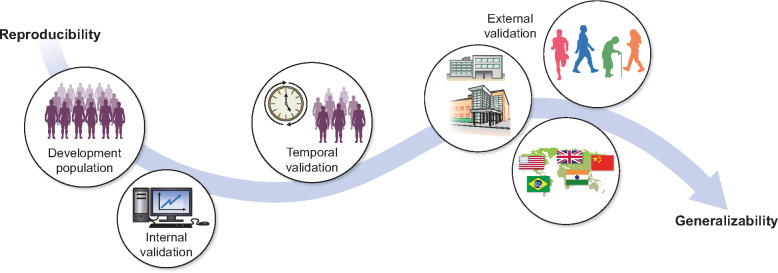
Prognostic models that aim to improve the prediction of clinical events, individualized treatment and decision-making are increasingly being developed and published. However, relatively few models are externally validated and validation by independent researchers is rare. External validation is necessary to determine a prediction model's reproducibility and generalizability to new and different patients. Various methodological considerations are important when assessing or designing an external validation study. In this article, an overview is provided of these considerations, starting with what external validation is, what types of external validation can be distinguished and why such studies are a crucial step towards the clinical implementation of accurate prediction models. Statistical analyses and interpretation of external validation results are reviewed in an intuitive manner and considerations for selecting an appropriate existing prediction model and external validation population are discussed. This study enables clinicians and researchers to gain a deeper understanding of how to interpret model validation results and how to translate these results to their own patient population.
Overview
The claims and statistics of this paper haven’t been checked yet.
Free: it reads the open-access text and checks the first 5 claims that cite a source we can check. Create a free account to check every claim.
Integrity signals
Registry
Cites
Statistics
Figures
Verification
Claims the paper makes
The claims and statistics of this paper haven’t been checked yet.
Free: it reads the open-access text and checks the first 5 claims that cite a source we can check. Create a free account to check every claim.
Self-check
Percentages, sums and reported differences re-computed from the paper’s own numbers.
The self-check needs the paper’s full text.
Citations
Cites
An Introduction to the Bootstrap
Efron, B., & Tibshirani, R. J. (1994) · doi:10.1201/9780429246593 · Cited by 40,500
Decision curve analysis: a novel method for evaluating prediction models
Vickers, A. J., & Elkin, E. B. (2006) · Medical Decision Making · doi:10.1177/0272989x06295361 · Cited by 6,341
Assessing the Performance of Prediction Models: A Framework for Traditional and Novel Measures
Steyerberg, E. W., Vickers, A. J., Cook, N. R., Gerds, T., Gonen, M., Obuchowski, N., Pencina, M. J., & Kattan, M. W. (2010) · Epidemiology · doi:10.1097/ede.0b013e3181c30fb2 · Cited by 5,170 · cited 1×
“net benefit, decision analysis) may also be assessed but are generally complementary to the discrimination and calibration results [22].”
BackgroundMoons, K. G. M., Altman, D. G., Reitsma, J. B., Ioannidis, J. P. A., Macaskill, P., Steyerberg, E. W., Vickers, A. J., Ransohoff, D. F., & Collins, G. S. (2015) · Annals of Internal Medicine · doi:10.7326/m14-0698 · Cited by 5,147 · cited 3×
“For researchers planning an external validation study we highly recommend consulting the Transparent Reporting of a multivariable prediction model for Individual Prognosis Or Diagnosis checklist and explanation and elaboration document [4].”
BackgroundMethodClinical Prediction Models: A Practical Approach to Development, Validation, and Updating
Steyerberg, E. W. (2019) · Statistics for Biology and Health · doi:10.1007/978-3-030-16399-0 · Cited by 3,281
An Introduction to the Bootstrap.
Buckland, S. T., Efron, B., & Tibshirani, R. J. (1994) · Biometrics · doi:10.2307/2532810 · Cited by 3,103
PROBAST: A Tool to Assess the Risk of Bias and Applicability of Prediction Model Studies
Wolff, R. F., Moons, K. G. M., Riley, R. D., Whiting, P. F., Westwood, M., Collins, G. S., Reitsma, J. B., Kleijnen, J., Mallett, S., & for the PROBAST Group† (2019) · Annals of Internal Medicine · doi:10.7326/m18-1376 · Cited by 2,984 · cited 1×
“Bias in prognostic models can be assessed using the Prediction model Risk Of Bias ASsessment Tool tool [31].”
MethodInternal validation of predictive models
Steyerberg, E. W., Harrell, F. E., Borsboom, G. J. J. M., Eijkemans, M. J. C., Vergouwe, Y., & Habbema, J. D. F. (2001) · Journal of Clinical Epidemiology · doi:10.1016/s0895-4356(01)00341-9 · Cited by 2,746
Use and Misuse of the Receiver Operating Characteristic Curve in Risk Prediction
Cook, N. R. (2007) · Circulation · doi:10.1161/circulationaha.106.672402 · Cited by 2,112 · cited 1×
“When assessing the overall performance of a prognostic model, it is important to take both discrimination and calibration into account, as well as the intended use of the model [4, 26, 27].”
MethodUno, H., Cai, T., Pencina, M. J., D'Agostino, R. B., & Wei, L. J. (2011) · Statistics in Medicine · doi:10.1002/sim.4154 · Cited by 1,535 · cited 1×
“For Cox proportional hazards prediction models a time-toevent C-index such as Harrel’s C-index or Uno’s C-index can be computed [21, 25].”
Method
Cited by
Items 301–400 of 976
Pamporaki, C., Pommer, G., Apostolopoulos, I. D., Filippatos, A., Peitzsch, M., Remde, H., Constantinescu, G. A., Berends, A. M. A., Nazari, M. A., Beuschlein, F., et al. (2025) · EClinicalMedicine · doi:10.1016/j.eclinm.2025.103181 · Cited by 8
“30 Although this may be suf fi cient for binary classi fi cation, the present analysis establishes that external validation alone is insuf fi cient to ensure that ML-derived probability scores provide meaningful information for clinicians.”
Predicting gastric cancer survival using machine learning: A systematic review
Wang, H.-N., An, J.-H., Wang, F., Hu, W., & Zong, L. (2025) · World Journal of Gastrointestinal Oncology · doi:10.4251/wjgo.v17.i5.103804 · Cited by 9
“Although cross-validation is useful for limited datasets[58], external validation ensures that the models used are applicable to diverse populations, each with unique characteristics that may influence survival outcomes.”
Hoberstorfer, T., Nopp, S., Steiner, D., Blasco, L., Jou, I., López-Núñez, J. J., Fidalgo, Á., López-Miguel, P., Monréal, M., Ay, C., et al. (2025) · Journal of Thrombosis and Haemostasis · doi:10.1016/j.jtha.2025.08.007 · Cited by 8
Yuan, J., Zeng, Q., Anjie, W. A. N. G., Zhang, Y., & Li, J. (2025) · Journal of Sports Science and Medicine · doi:10.52082/jssm.2026.172 · Cited by 8
Tirkkonen, O., Tiensuu, H., Väyrynen, E., Suutala, J., Vuollo, V., Laitala, M., & Karki, S. (2026) · BMC Oral Health · doi:10.1186/s12903-026-07660-9 · Cited by 8
“External validation refers to the process of evaluating a model’s predictions using data from a different source (data not used for training) to assess the performance of the ML model [5].”
External multicentre validation of pseudomyxoma peritonei PSOGI-Ki67 classification
Arjona‐Sánchez, Á., Martínez-López, A., Moreno-Montilla, M. T., Mulsow, J., Lozano, P., Martínez-Torres, B., Rau, B., Canbay, E., Sommariva, A., Milione, M., et al. (2023) · European Journal of Surgical Oncology · doi:10.1016/j.ejso.2023.03.206 · Cited by 8
Opportunities and Challenges of Prognostic Models for Extremely Preterm Infants
de Boer, A., van Beek, P. E., Andriessen, P., Groenendaal, F., Hogeveen, M., Meijer, J. S., Obermann-Borst, S. A., Onland, W., Scheepers, L. H. C. J., Vermeulen, M. J., et al. (2023) · Children · doi:10.3390/children10101712 · Cited by 12
“Subsequently, after external validation, it is essential to assess the model’s impact on clinicians’ behavior and/or clinical outcomes before considering its implementation in clinical practice [68].”
BackgroundWang, Y., Liu, S., Zhang, W., Zheng, L., Li, E., Zhu, M., Yan, D., Shi, J., Bao, J., & Yu, J. (2023) · Advanced Biology · doi:10.1002/adbi.202300378 · Cited by 8
Prediction Models for Successful External Cephalic Version: An Updated Systematic Review
Yerrabelli, R. S., Lee, C., Palsgaard, P. K., Lauinger, A. R., Abdelsalam, O., & Jennings, V. (2023) · American Journal of Perinatology · doi:10.1055/a-2211-4806 · Cited by 8
“18 In our analysis, we considered two studies to be from the same investigational team if they shared at least one author and if they occurred at the same institution.”
MethodDevelopment and external validation of a head and neck cancer risk prediction model
Smith, C. D. L., McMahon, A. D., Lyall, D. M., Goulart, M. D. A., Inman, G. J., Ross, A. J., Gormley, M., Dudding, T., Macfarlane, G. J., Robinson, M., et al. (2024) · Head & Neck · doi:10.1002/hed.27834 · Cited by 8
“20 21 – 23 The growing number of large population-cohort studies offers new opportunities for developing and validating clinically applicable risk models.”
Janse, R. J., Stel, V. S., Jager, K. J., Tripepi, G. L., Zoccali, C., Dekker, F. W., & van Diepen, M. (2024) · Nephrology Dialysis Transplantation · doi:10.1093/ndt/gfae170 · Cited by 12
“This is termed external validation, and is an essential aspect of developing a prediction model [5 ].”
Self-citationLee, R., Griffiths, S. L., Gkoutos, G. V., Wood, S. J., Bravo-Merodio, L., Lalousis, P. A., Everard, L., Jones, P. B., Fowler, D. G., Hodegkins, J., et al. (2024) · Schizophrenia Research · doi:10.1016/j.schres.2024.09.010 · Cited by 8
“An external validation allows for an examination of reproducibility and it determines how the model generalises to new individuals (Ramspek et al., 2021).”
BackgroundNejad, M. C., Matthiesen, R. V., Dukovska‐Popovska, I., Jakobsen, T. L., & Johansen, J. (2024) · International Journal of Medical Informatics · doi:10.1016/j.ijmedinf.2024.105631 · Cited by 11
Ghanbari, G., Lam, J. Y., Shashikumar, S. P., Awdishu, L., Singh, K., Malhotra, A., Nemati, S., & Yousif, Z. K. (2024) · JAMIA Open · doi:10.1093/jamiaopen/ooae097 · Cited by 9
“63,64 Additionally, further work is required to investigate the integration of Nephrocast’s predictions into clinical practice and develop a best practice advisory in the EHR system.”
BackgroundRedefining precision: the current and future roles of artificial intelligence in spine surgery
Turlip, R., Khela, H. S., Dagli, M. M., Chauhan, D., Ghenbot, Y. G., Ahmad, H. S., & Yoon, J. W. (2024) · Artificial Intelligence Surgery · doi:10.20517/ais.2024.29 · Cited by 8
Mahurkar‐Joshi, S., Thompson, M., Villarruel, E. E., Lewis, J. D., Lin, L. D., Farid, M., Nayeb‐Hashemi, H., Storage, T. R., Weiss, G. A., Limketkai, B. N., et al. (2024) · Neurogastroenterology & Motility · doi:10.1111/nmo.14980 · Cited by 10
den Eynde, R. V., Vrancken, A., Foubert, R., Tuand, K., Vandendriessche, T., Schrijvers, A., Verbrugghe, P., Devos, T., CALSTER, B. V., & Rex, S. (2024) · Transfusion · doi:10.1111/trf.18108 · Cited by 8
Mulugeta, G., Zewotir, T. T., Tegegne, A. S., Muleta, M. B., & Juhar, L. H. (2025) · BMC Medical Informatics and Decision Making · doi:10.1186/s12911-025-02906-y · Cited by 11
Salimi, M., Vadipour, P., Bahadori, A. R., Houshi, S., Mirshamsi, A., & Fatemian, H. (2025) · Emergency Radiology · doi:10.1007/s10140-025-02336-3 · Cited by 8
“External validation helps ensure that the model's performance holds up in real-world settings and not just in the original study cohort [67, 68].”
Sánchez, J., Caraballo, A., Chérrez-Ojeda, I., García, E., Larco, J. I., Ramon, G. D., Velásquez‐Lopera, M. M., & Jaimes, F. A. (2025) · The Journal of Allergy and Clinical Immunology In Practice · doi:10.1016/j.jaip.2025.05.051 · Cited by 8
Huang, C., Su, C., Chou, C., Mukundan, A., Karmakar, R., Chen, T., Shukla, P., Gupta, D., & Wang, H. (2025) · Diagnostics · doi:10.3390/diagnostics15131664 · Cited by 8
“Future studies should focus on doing external validation utilising databases obtained from several hospitals [47].”
Jensen, K. H., Vogelius, I. R., Bernsdorf, M., Gothelf, A., Kristensen, C. A., Maare, C., Andersen, E., Specht, L., & Friborg, J. (2022) · Radiotherapy and Oncology · doi:10.1016/j.radonc.2022.03.020 · Cited by 8
Kiser, A. C., Eilbeck, K. L., Ferraro, J. P., Skarda, D. E., Samore, M. H., & Bucher, B. T. (2022) · JMIR Medical Informatics · doi:10.2196/39057 · Cited by 9
Kim, T., Lee, S., & Jang, T. W. (2022) · Thoracic Cancer · doi:10.1111/1759-7714.14694 · Cited by 8
Paik, K., Kim, B. R., & Youn, S. W. (2023) · The Journal of Dermatology · doi:10.1111/1346-8138.16752 · Cited by 8
Transportability of bacterial infection prediction models for critically ill patients
Eickelberg, G., Sanchez-Pinto, L. N., Kline, A. S., & Luo, Y. (2023) · Journal of the American Medical Informatics Association · doi:10.1093/jamia/ocad174 · Cited by 9
Hameed, M., Yeung, J., Boone, D. J., Mallett, S., & Halligan, S. (2023) · European Radiology · doi:10.1007/s00330-023-10168-3 · Cited by 9
“3b. Similarly, no external evaluation attracted a “low” overall score for applicability concerns: Two evaluations were considered “high risk” and the remaining four “unclear”.”
Bravo-Zúñiga, J., Chávez-Gómez, R., & Soto-Becerra, P. (2024) · BMJ Open · doi:10.1136/bmjopen-2023-076217 · Cited by 10
Farrag, A. N., Kamel, A. M., & El-Baraky, I. A. (2024) · Reviews in Medical Virology · doi:10.1002/rmv.2514 · Cited by 8
“106 Added to the prediction functionality, many of the introduced applications employed several AI/ML ‐ inherited dimensionality reduction techniques to identify the key determinants of the inspected outcome.”
MethodValidation of the OAKS prognostic model for acute kidney injury after gastrointestinal surgery
Collaborative, S. C. A. E., Ahmed, W. U. R., Bhatia, S., McLean, K. A., Khaw, R. R., Baker, D., Kamarajah, S. K., Bell, S., Nepogodiev, D., Harrison, E. M., et al. (2021) · BJS Open · doi:10.1093/bjsopen/zrab150 · Cited by 8
Kubota, S., Imai, T., Nishimoto, A., AMEKAWA, S., & Uzawa, N. (2022) · Odontology · doi:10.1007/s10266-022-00716-6 · Cited by 8
Ogwel, B., Mzazi, V. H., Awuor, A. O., Okonji, C., Anyango, R. O., Oreso, C., Ochieng, J. B., Munga, S., Nasrin, D., Tickell, K. D., et al. (2025) · BMC Medical Informatics and Decision Making · doi:10.1186/s12911-025-02855-6 · Cited by 7
Lorenz, W. R., Holland, A. M., Sarac, B. A., Kerr, S. W., Wilson, H. H., Ayuso, S. A., Murphy, K., Scarola, G. T., Mead, B. S., Heniford, B. T., et al. (2025) · Journal of Abdominal Wall Surgery · doi:10.3389/jaws.2025.14371 · Cited by 7
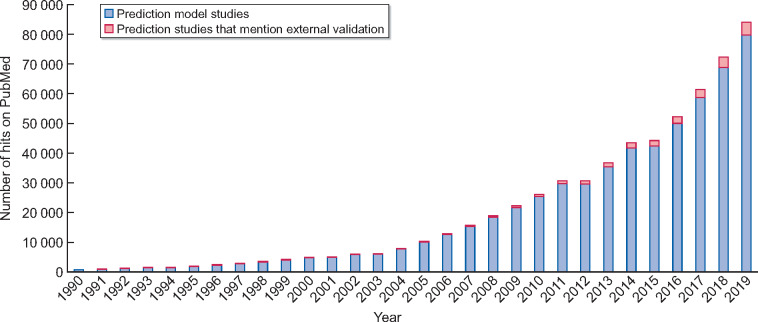
“In general, external validation of predictive models is rarely described in the literature with only 5% of the approximately 85,000 prediction model publications on PubMed including some form of external validation [17, 29].”
Development and Validation of a Novel Prediction Model for Hearing Loss From Cisplatin Chemotherapy
Millstein, J., Rassekh, S. R., Brown, A. L., Nie, Q., Esbenshade, A. J., Knight, K. R., Scheurer, M. E., Sung, L., Brooks, B., Moke, D. J., et al. (2025) · Journal of Clinical Oncology · doi:10.1200/jco-24-01861 · Cited by 7
Yang, A., Shi, M., Lau, E. S. H., Yu, J., Luk, A. O. Y., Ronald, C. W., Kong, A. P. S., Wong, R. S. M., Chan, J. C. M., Chan, J. C. N., et al. (2025) · Age and Ageing · doi:10.1093/ageing/afaf285 · Cited by 8
“We used recommended criteria to assess the performance of the developed model [34] by conducting validation in a separate cohort from the Hong Kong Diabetes Register (HKDR) [35].”
Early-Onset of Obesity Model: Impact of Early-Onset Obesity on Comorbidity Risk and Life Expectancy
Wiedemann, U. C. H., van den Akker, E. L. T., Barber, T. M., Clément, K., Farooqi, I. S., Goldstone, A. P., Haqq, A. M., Marcus, C., Molnár, D., Moreno, L. A., et al. (2025) · Obesity Facts · doi:10.1159/000549499 · Cited by 8
“We followed standard statistical Impact of Early-Onset Obesity on Comorbidities and Life Expectancy methods to validate our predictive model outputs [25–29].”
Development and Validation of a Hybrid Machine Learning Model to Predict Lung Transplant Outcomes
Sharma, G., Kamal, V. K., Bollineni, S., Timofte, I., Plasencia, J. D., Lesaja, S., Kaza, V., Keshavamurthy, S., Murala, J. S. K., Peltz, M., et al. (2025) · JAMA Network Open · doi:10.1001/jamanetworkopen.2025.45369 · Cited by 7
Accuracy and Reliability of Remote Categorization of Upper Limb Outcome After Stroke
Jordan, H. T., & Stinear, C. M. (2024) · Neurorehabilitation and neural repair · doi:10.1177/15459683241231272 · Cited by 7
Vens, C., van Luijk, P., Vogelius, R. I., Naqa, I. E., Humbert‐Vidan, L., von Neubeck, C., Gomez-Roman, N., Bahn, E., Brualla, L., Böhlen, T. T., et al. (2024) · Radiotherapy and Oncology · doi:10.1016/j.radonc.2024.110277 · Cited by 7
Cero, M. D., Gibert, J., Grande, L., Gimeno, M., Osorio, J., Bencivenga, M., Romario, U. F., Rosati, R., Morgagni, P., Gisbertz, S. S., et al. (2024) · Cancers · doi:10.3390/cancers16132463 · Cited by 10
Development of a prediction model for clinically-relevant fatigue: a multi-cancer approach
Adiprakoso, D., Katsimpokis, D., Oerlemans, S., Ezendam, N. P. M., van Maaren, M. C., van Til, J. A., van der Heijden, T. G. W., Mols, F., Aben, K. K. H., Vink, G. R., et al. (2024) · Quality of Life Research · doi:10.1007/s11136-024-03807-9 · Cited by 8
Cosgrave, N., Saleh, S., Ong, W. S., Frydenlund, J., Williams, D. J., & Cahir, C. (2024) · European Journal of Clinical Pharmacology · doi:10.1007/s00228-024-03774-7 · Cited by 9
Dretzke, J., Abou-Foul, A. K., Albon, E., Hillier, B., Scandrett, K., Price, M. J., Moore, D. J., Mehanna, H. M., & Nankivell, P. (2024) · BMJ Open · doi:10.1136/bmjopen-2024-090393 · Cited by 7
“We considered, but ruled out, a multivariate meta-analysis approach for comparing model performance as undertaken in the study by Usher-Smith et al as evaluation of different models in the same cohort was only undertaken in two studies, and transferability assumptions were unlikely to be met.”
The Role of Artificial Intelligence in Epiretinal Membrane Care: A Scoping Review
Mikhail, D., Milad, D., Antaki, F., Hammamji, K., Qian, C. X., Rezende, F., & Duval, R. (2024) · Ophthalmology Science · doi:10.1016/j.xops.2024.100689 · Cited by 7
“50 In addition, external validity as an indicator for ML model generalizability has been debated, with some researchers maintaining that validity must be continuously assessed over time to ensure robust performance.”
Kanavos, T., Birbas, E., & Zanos, T. P. (2024) · Cancers · doi:10.3390/cancers17010069 · Cited by 8
“Furthermore, over half of the studies did not conduct external validation, which is essential for assessing a model’s reproducibility and generalizability to diverse and unseen patient populations [85,86].”
Kim, H. C., Chandel, A., King, C. S., Kim, M. J., Shawabkeh, M., Arunachalam, A., Tomic, R., & Nathan, S. D. (2025) · Lung · doi:10.1007/s00408-024-00783-2 · Cited by 7
Alemu, M., Alemu, S. M., Bagheri, N., Wangdi, K., & Chateau, D. G. (2025) · Open Heart · doi:10.1136/openhrt-2024-003147 · Cited by 8
Niazi, S. K. (2025) · Pharmaceuticals · doi:10.3390/ph18071024 · Cited by 10
Evaluation of machine learning and logistic regression-based gestational diabetes prognostic models
Belsti, Y., Moran, L., Mousa, A., Teede, H. J., & Enticott, J. (2025) · Journal of Clinical Epidemiology · doi:10.1016/j.jclinepi.2025.111957 · Cited by 7
Comparative analysis of RNN, LSTM and CNN algorithms for marine data prediction
Vincent, A. N., Sankaran, K. S., Sunhaloo, M. S., Clement, J. C., Laloo, N., & Bagurubumwe, U. (2025) · Journal of Coastal Conservation · doi:10.1007/s11852-025-01161-7 · Cited by 9
Luck, T. G., Locke, K. C., Sherman, B. C., Vibbert, M. D., Hefton, S., & Shah, S. O. (2022) · Neurocritical Care · doi:10.1007/s12028-022-01570-8 · Cited by 7
Using Machine Learning to Expand the Ann Arbor Staging System for Hodgkin and Non-Hodgkin Lymphoma
Wang, H., Liu, Z., Yang, J. L., Li, S., & Chen, D. (2023) · BioMedInformatics · doi:10.3390/biomedinformatics3030035 · Cited by 7
Langenberger, B. (2023) · Intelligence-Based Medicine · doi:10.1016/j.ibmed.2023.100111 · Cited by 7
Xiang, Y., Ma, G., Yang, Q., Cao, M., Xu, W., Li, L., & Yang, Q. (2024) · Renal Failure · doi:10.1080/0886022x.2024.2322031 · Cited by 7
“This discrepancy may be attributed to variations in the study timeframe, geographical locale, and the original modeling cohort [33].”
BackgroundLue, K., Chen, Y., Chu, S.-C., Lin, C., Wang, T., & Liu, S. (2024) · Annals of Nuclear Medicine · doi:10.1007/s12149-024-01936-2 · Cited by 7
“1) [19, 20].”
Automatic evaluation of Nail Psoriasis Severity Index using deep learning algorithm
Paik, K., Kim, B. R., & Youn, S. W. (2024) · The Journal of Dermatology · doi:10.1111/1346-8138.17313 · Cited by 7
Timbrook, T. T., & Fowler, M. J. (2023) · Antibiotics · doi:10.3390/antibiotics12091452 · Cited by 8
“predicted risks across predicted risk ranges) [22].”
Siddiqa, M., Kimber, A., & Shabbir, J. (2021) · Saudi Medical Journal · doi:10.15537/smj.2021.42.7.20210082 · Cited by 8
Cohort Profile: Dementia Risk Prediction Project (DRPP)
Krefman, A. E., Stephen, J. J., Carolan, P., Sedaghat, S., Mansolf, M. A., Soumaré, A., Gross, A. L., Aiello, A. E., Singh‐Manoux, A., Ikram, M. A., et al. (2024) · International Journal of Epidemiology · doi:10.1093/ije/dyae012 · Cited by 6
Xie, Y., Zheng, H., Gan, W., Chen, S., Shams, M., & Yang, J. (2025) · Journal of Reproductive and Infant Psychology · doi:10.1080/02646838.2025.2517103 · Cited by 6
“Since testing on separate datasets is vital for proving robustness and enabling safe use (Ho et al., 2020; Ramspek et al., 2021), future work urgently needs to prioritise this.”
Wei, X., Norsuddin, N. M., Hamid, H. A., Azmi, M. I., Zhang, G., & Tian, J. (2025) · Health Science Reports · doi:10.1002/hsr2.71350 · Cited by 6
Nwokedi, V. U., Odedele, M. K., Yusuff, T. A., Anderson, I. A., Akanbi, O. O., Agu, C. P., & Omoike, A. O. (2025) · Epidemiology and Health Data Insights · doi:10.63946/ehdi/17369 · Cited by 8
Xie, R., Herder, C., Sha, S., Brenner, H., Carlsson, S., & Schöttker, B. (2025) · Cardiovascular Diabetology · doi:10.1186/s12933-025-03036-5 · Cited by 10
“Consequently, the reported improvements in predictive performance may be overly optimistic, and replication in independent cohorts is necessary to confirm generalizability [62].”
Chen, X., Zhou, H., Gao, J., Shi, Y., Yu, J., & Zhang, Y. (2023) · European Journal of Oncology Nursing · doi:10.1016/j.ejon.2023.102350 · Cited by 6
Yeo, J., Kim, J. Y., Park, J. K., Shin, K., Lee, E. Y., Kim, T., & Park, J. W. (2024) · Rheumatology · doi:10.1093/rheumatology/keae138 · Cited by 7
Gomez-Randulfe, I., Gomes, F., Mackean, M., Phillips, I., & Stares, M. (2024) · Cancers · doi:10.3390/cancers16223833 · Cited by 6
Tian, C. H., Liu, L., Huang, Y. F., Yang, H. J., Lai, Y. Y., Li, C. L., Gan, D., & Yang, J. (2025) · Human Reproduction · doi:10.1093/humrep/deaf013 · Cited by 7
Du, H., Yu, J., Chen, D., Wu, J., Xue, E., Zhou, Y., Pan, X., Shao, J., & Ye, Z. (2025) · Journal of Medical Internet Research · doi:10.2196/72636 · Cited by 9
“We also found that diagnostic and prognostic models emphasize externally validated results [94].”
Virin, A., Khongsomchit, L., & Kaewunruen, S. (2025) · Frontiers in Built Environment · doi:10.3389/fbuil.2025.1497331 · Cited by 7
Väyrynen, E., Tirkkonen, O., Tiensuu, H., Suutala, J., Anttonen, V., Laitala, M., Kukkola, K., & Karki, S. (2025) · JMIR Medical Informatics · doi:10.2196/75117 · Cited by 6
“Before clinical use, external validation is necessary [48].”
den Eynde, L. V., Clercq, P. D., Rombouts, E., Vandermosten, M., & Zink, I. (2025) · Journal of Speech Language and Hearing Research · doi:10.1044/2025_jslhr-24-00541 · Cited by 6
Roemmel, N., Bahmane, S., Hadjistavropoulos, H. D., Nugent, M., Lieb, R., & Meinlschmidt, G. (2025) · BMJ Open · doi:10.1136/bmjopen-2024-097651 · Cited by 6
Eriakha, E., Yu, H., Li, M., Li, J., & Huang, Y. (2025) · BMC Rheumatology · doi:10.1186/s41927-025-00584-x · Cited by 6
Baysan, M., Arbous, M. S., Steyerberg, E. W., & van der Bom, J. G. (2022) · Critical Care Explorations · doi:10.1097/cce.0000000000000750 · Cited by 6
“The differences in the definition and calculation of predictors between derivation and validation cohort could eventually influence model performances (45, 46).”
BackgroundA scoring system for cochlear implant candidate selection using artificial intelligence
Abousetta, A. E.-D., Kholy, W. E., Hegazy, M. H. M., Kolkaila, E. A., Emara, A. A., Serag, S. A., Fathalla, A., & Ismail, O. R. (2023) · Hearing Balance and Communication · doi:10.1080/21695717.2023.2165371 · Cited by 6
“Also, metrics such as the proportion of variance explained do not give any indication of the model’s ability to make predictions on unseen new patients, where predictions are usually less accurate [22].”
BackgroundRuangsomboon, O., Jirathanavichai, S., Phanprasert, N., Puchongmart, C., Boonmee, P., Thirawattanasoot, N., Dorongthom, T., Monsomboon, A., & Praphruetkit, N. (2023) · Western Journal of Emergency Medicine · doi:10.5811/westjem.58311 · Cited by 6
Villiger, R., Méan, M., Stalder, O., Limacher, A., Rodondi, N., Righini, M., & Aujesky, D. (2023) · Journal of Thrombosis and Haemostasis · doi:10.1016/j.jtha.2023.04.025 · Cited by 7
van Beek, S., Nieboer, D., Klimek, M., Stolker, R. J., & Mijderwijk, H.-J. (2024) · Scientific Reports · doi:10.1038/s41598-023-50518-1 · Cited by 6
Ichita, C., Goto, T., Okada, Y., Uojima, H., Iwagami, M., Sasaki, A., & Shimizu, S. (2024) · Digestive Endoscopy · doi:10.1111/den.14773 · Cited by 6
Chagas, O. J., Gonçalves, F. A. R., Nagatomo, P. P., Buccheri, R., Pereira‐Chioccola, V. L., Negro, G. M. B. D., & Benard, G. (2024) · Scientific Reports · doi:10.1038/s41598-024-61174-4 · Cited by 6
Thiboud, P.-E., François, Q., Faure, C., Chaufferin, G., Arribe, B., & Ettahar, N. (2025) · Diagnostics · doi:10.3390/diagnostics15030302 · Cited by 6
Pamukçu, E., & Kaya, M. O. (2025) · Journal of Clinical Hypertension · doi:10.1111/jch.70015 · Cited by 6
Israr, M. Z., Salzano, A., Zhan, H., Voors, A. A., Ng, L. L., & Suzuki, T. (2025) · European Journal of Preventive Cardiology · doi:10.1093/eurjpc/zwaf270 · Cited by 7
Li, R., Cheng, K., Wei, Z., Liu, Z., & Peng, X. (2022) · Frontiers in Oncology · doi:10.3389/fonc.2022.840367 · Cited by 6
“External validation was a crucial step to determine the reproducibility of a predictive model and its generalizability to new and different patients (20).”
BackgroundExternal validation of a prediction model for timely implementation of innovations in radiotherapy
Swart, R., Fijten, R., Boersma, L. J., Kalendralis, P., Behrendt, M., Ketelaars, M., Roumen, C., & Jacobs, M. (2023) · Radiotherapy and Oncology · doi:10.1016/j.radonc.2022.109459 · Cited by 7
Kim, T., Kim, S. J., Choi, H., Shin, T. R., & Sim, Y. S. (2023) · Cancers · doi:10.3390/cancers15102819 · Cited by 7
Epstein, R. H., Perez, O. F., Hofer, I. S., Renew, J. R., Nemes, R., & Brull, S. J. (2023) · BJA Open · doi:10.1016/j.bjao.2023.100236 · Cited by 6
Andrews, S., Timbrook, T. T., Fisher, M. A., & Tritle, B. J. (2023) · Microbiology Spectrum · doi:10.1128/spectrum.03131-23 · Cited by 6
Cheng, W., Zhang, N., Liang, D., Zhang, H., Wang, L., & Lin, L. (2024) · Frontiers in Neurology · doi:10.3389/fneur.2024.1337225 · Cited by 6
Lin, W.-C., Weng, C., Ko, A.-T., Jan, Y., Lin, J., Wu, K., & Lee, J. (2024) · Supportive Care in Cancer · doi:10.1007/s00520-024-08757-z · Cited by 6
“The dataset for cohort 1 was divided into training and temporal validation sets based on the time of treatment [23].”
Wickstrøm, K. E., Vitelli, V., Carr, E., Holten, A. R., Bendayan, R., Reiner, A. H., Bean, D. M., Searle, T., Shek, A., Kraljević, Ž., et al. (2021) · PLoS ONE · doi:10.1371/journal.pone.0255748 · Cited by 6
“Many prediction models have been published, but few have been systematically validated [26].”
MethodSu, C.-C., Lin, Y.-P., Yen, H., Pan, Y., Zijlstra, H., Verlaan, J., Schwab, J. H., Lai, C., Hu, M., Yang, S., et al. (2023) · Journal of the American Academy of Orthopaedic Surgeons · doi:10.5435/jaaos-d-23-00091 · Cited by 6
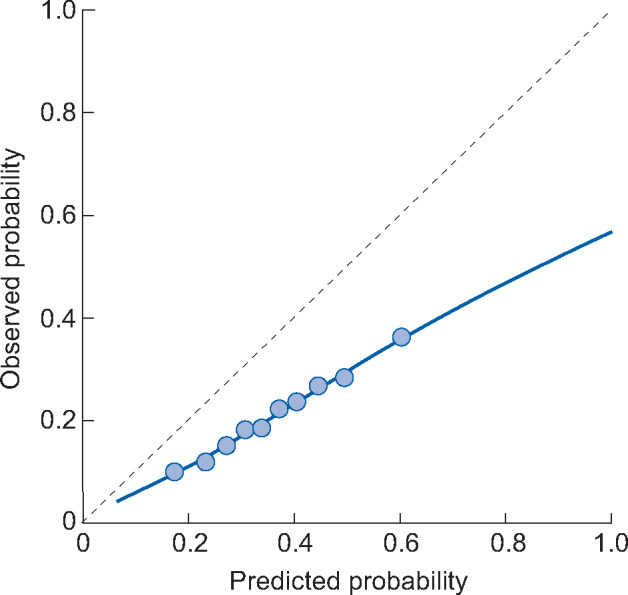
“19 Calibration slope and intercept are the quantitative method of reporting calibration plot.”
MethodStokel-Walker, C. (2023) · BMJ · doi:10.1136/bmj.p2362 · Cited by 7
Mari, T., Henderson, J., Ali, H. H., Hewitt, D., Brown, C. A., Stančák, A., & Fallon, N. B. (2023) · BMC Neuroscience · doi:10.1186/s12868-023-00819-y · Cited by 6
Validity of nomograms for predicting cancer risk in oral leukoplakia and oral lichen planus
Adeoye, J., & Su, Y. B. (2023) · Oral Diseases · doi:10.1111/odi.14811 · Cited by 6
Lapi, F., Marconi, E., Lombardo, F. P., Cricelli, I., Ansaldo, E., Gorini, M., Micheletto, C., Marco, F. D., & Cricelli, C. A. (2024) · Respiratory Medicine · doi:10.1016/j.rmed.2024.107634 · Cited by 5
Takegami, N., Espin, A. T., Imagawa, Y., Watanabe, I., Rowell, S., Schreiber, M. A., Ferguson, A. R., & Hinson, H. E. (2024) · Journal of Neurotrauma · doi:10.1089/neu.2024.0158 · Cited by 5
“4 Next, we evaluated the performance of the IMPACT original model (Core, CT, Lab model with original coef fi cient), 5,16,20,23,24 in each cohort with calibration and discrimination, leveraging the calibration plot and the AUCs.”
InfluentialPersonalized, disease-stage specific, rapid identification of immunosuppression in sepsis
Παππά, Θ., Rivas, A. L., Iandiorio, M. J., Hoogesteijn, A. L., Fair, J. M., Gil, A. P. R., Burriel, A. R., Bagos, P. G., Chatzipanagiotou, S., & Ioannidis, A. (2024) · Frontiers in Immunology · doi:10.3389/fimmu.2024.1430972 · Cited by 5
Risk prediction of cardiovascular events in peritoneal dialysis patients
Liu, L., Zhang, L., Zhang, D., Guan, T., He, T., Liang, B., & Zhao, J. (2025) · BMC Nephrology · doi:10.1186/s12882-025-04091-6 · Cited by 10
“Additionally, 42 PD patients were included as the external validation set [23].”
Sikder, R., Hua, G., & Ye, T. (2025) · Water Research · doi:10.1016/j.watres.2025.124823 · Cited by 7
Metadata
- Authors
- Ramspek, C. L., Jager, K. J., Dekker, F. W., Zoccali, C., & van Diepen, M.
- Affiliations
- Leiden University Medical Center (NL)
- Amsterdam Public Health (NL)
- CNR-IFC, Clinical Epidemiology of Renal Diseases and Hypertension, Reggio Calabria, Italy
- Department of Clinical Epidemiology, Leiden University Medical Center, Leiden, The Netherlands
- Venue
- Clinical Kidney Journal
- Publisher
- Oxford University Press (OUP)
- Published
- 2020-11-24
- Volume
- 14
- Issue
- 1
- Pages
- 49-58
- ISSN
- 2048-8505 (ISSN-L)
- 2048-8513
- PMC
- PMC7857818
- OpenAlex
- W3109609494
- Cited by
- 887
- References
- 46
- Citations by year
- 2026: 197 · 2025: 209 · 2024: 194 · 2023: 162 · 2022: 96 · 2021: 28
- FWCI
- 11.62
- Type
- journal article
- Language
- en
- Open access
- gold
- doi.org
- Licence
- Locations
- Clinical Kidney Journal (publishedVersion, cc-by-nc)
- Europe PMC (PubMed Central) (publishedVersion, cc-by-nc)
- PubMed Central (publishedVersion, cc-by-nc)
- PubMed (publishedVersion)
- Leiden Repository (Leiden University) (submittedVersion, cc-by-nc)
- Data Archiving and Networked Services (DANS) (submittedVersion, other-oa)
- Data Archiving and Networked Services (DANS) (submittedVersion, cc-by-nc)
- Pure Amsterdam UMC (submittedVersion, cc-by)
- Funders
- Dutch Kidney Foundation (16OKG12)
- Topics
- Physical Sciences › Mathematics › Statistics and Probability › Statistical Methods in Epidemiology
- Social Sciences › Decision Sciences › Statistics, Probability and Uncertainty › Meta-analysis and systematic reviews
- Health Sciences › Health Professions › Health Information Management › Artificial Intelligence in Healthcare
- Keywords
- external validation, prognostic model, prediction model, generalizability, reproducibility, clinical implementation, clinical decision-making
About these checks
Registry, retraction, Cites and statistics results are computed, not judged, with one exception: a printed reference that no index lists is read once by a model before it counts as a citation error. Claims are extracted by a model and kept only when their quote appears verbatim in the text; each cited source is then checked, with a model’s help, for whether it says what the claim relies on. Those verdicts can be wrong — read the claim’s quote and the cited source before relying on one.
Statistics and arithmetic are recomputed, not judged.
Confidence bands are shown only for fields calibrated on our annotated test set. None is calibrated yet, so no band is shown.
What counts as a claim ›How we measure confidence ›How we check this ›
Are you an author, or do you see a problem with this page? Request a review
Data sources
Bibliographic data: Semantic Scholar, OpenAlex, Crossref.
Contains information from the Semantic Scholar Academic Graph Datasets, made available under the ODC Attribution License (ODC-BY 1.0).
Semantic Scholar’s data is described in: Kinney, R., et al. (2023). The Semantic Scholar Open Data Platform. arXiv:2301.10140.
