

External validation of prognostic models: what, why, how, when and where?
Open accessThe DOI matches its Crossref record; 45 of the 46 references it cites were found in a registry or an index.
Abstract
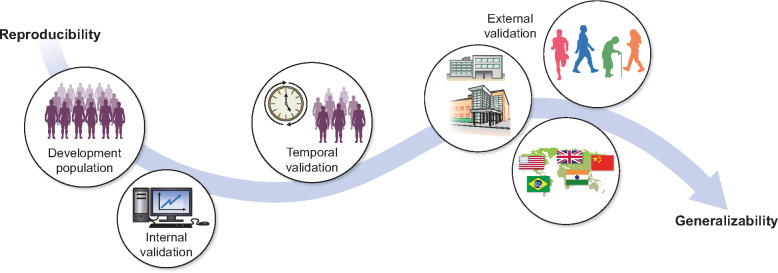
Prognostic models that aim to improve the prediction of clinical events, individualized treatment and decision-making are increasingly being developed and published. However, relatively few models are externally validated and validation by independent researchers is rare. External validation is necessary to determine a prediction model's reproducibility and generalizability to new and different patients. Various methodological considerations are important when assessing or designing an external validation study. In this article, an overview is provided of these considerations, starting with what external validation is, what types of external validation can be distinguished and why such studies are a crucial step towards the clinical implementation of accurate prediction models. Statistical analyses and interpretation of external validation results are reviewed in an intuitive manner and considerations for selecting an appropriate existing prediction model and external validation population are discussed. This study enables clinicians and researchers to gain a deeper understanding of how to interpret model validation results and how to translate these results to their own patient population.
Overview
The claims and statistics of this paper haven’t been checked yet.
Free: it reads the open-access text and checks the first 5 claims that cite a source we can check. Create a free account to check every claim.
Integrity signals
Registry
Cites
Statistics
Figures
Verification
Claims the paper makes
The claims and statistics of this paper haven’t been checked yet.
Free: it reads the open-access text and checks the first 5 claims that cite a source we can check. Create a free account to check every claim.
Self-check
Percentages, sums and reported differences re-computed from the paper’s own numbers.
The self-check needs the paper’s full text.
Citations
Cites
An Introduction to the Bootstrap
Efron, B., & Tibshirani, R. J. (1994) · doi:10.1201/9780429246593 · Cited by 40,500
Decision curve analysis: a novel method for evaluating prediction models
Vickers, A. J., & Elkin, E. B. (2006) · Medical Decision Making · doi:10.1177/0272989x06295361 · Cited by 6,341
Assessing the Performance of Prediction Models: A Framework for Traditional and Novel Measures
Steyerberg, E. W., Vickers, A. J., Cook, N. R., Gerds, T., Gonen, M., Obuchowski, N., Pencina, M. J., & Kattan, M. W. (2010) · Epidemiology · doi:10.1097/ede.0b013e3181c30fb2 · Cited by 5,170 · cited 1×
“net benefit, decision analysis) may also be assessed but are generally complementary to the discrimination and calibration results [22].”
BackgroundMoons, K. G. M., Altman, D. G., Reitsma, J. B., Ioannidis, J. P. A., Macaskill, P., Steyerberg, E. W., Vickers, A. J., Ransohoff, D. F., & Collins, G. S. (2015) · Annals of Internal Medicine · doi:10.7326/m14-0698 · Cited by 5,147 · cited 3×
“For researchers planning an external validation study we highly recommend consulting the Transparent Reporting of a multivariable prediction model for Individual Prognosis Or Diagnosis checklist and explanation and elaboration document [4].”
BackgroundMethodClinical Prediction Models: A Practical Approach to Development, Validation, and Updating
Steyerberg, E. W. (2019) · Statistics for Biology and Health · doi:10.1007/978-3-030-16399-0 · Cited by 3,281
An Introduction to the Bootstrap.
Buckland, S. T., Efron, B., & Tibshirani, R. J. (1994) · Biometrics · doi:10.2307/2532810 · Cited by 3,103
PROBAST: A Tool to Assess the Risk of Bias and Applicability of Prediction Model Studies
Wolff, R. F., Moons, K. G. M., Riley, R. D., Whiting, P. F., Westwood, M., Collins, G. S., Reitsma, J. B., Kleijnen, J., Mallett, S., & for the PROBAST Group† (2019) · Annals of Internal Medicine · doi:10.7326/m18-1376 · Cited by 2,984 · cited 1×
“Bias in prognostic models can be assessed using the Prediction model Risk Of Bias ASsessment Tool tool [31].”
MethodInternal validation of predictive models
Steyerberg, E. W., Harrell, F. E., Borsboom, G. J. J. M., Eijkemans, M. J. C., Vergouwe, Y., & Habbema, J. D. F. (2001) · Journal of Clinical Epidemiology · doi:10.1016/s0895-4356(01)00341-9 · Cited by 2,746
Use and Misuse of the Receiver Operating Characteristic Curve in Risk Prediction
Cook, N. R. (2007) · Circulation · doi:10.1161/circulationaha.106.672402 · Cited by 2,112 · cited 1×
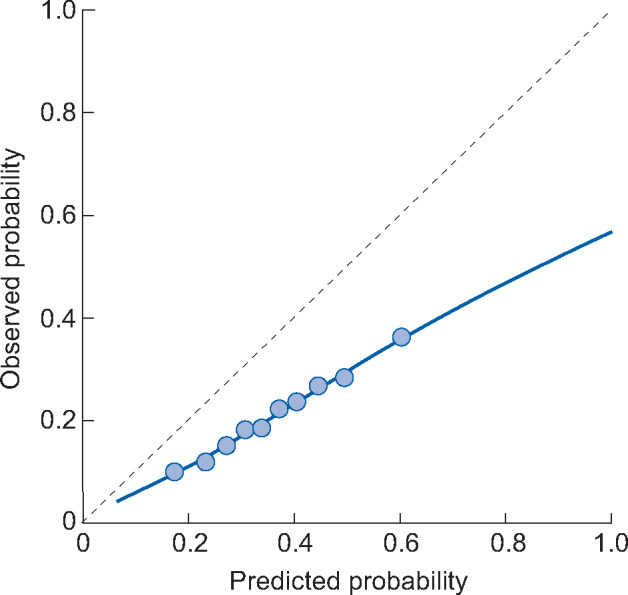
“When assessing the overall performance of a prognostic model, it is important to take both discrimination and calibration into account, as well as the intended use of the model [4, 26, 27].”
MethodUno, H., Cai, T., Pencina, M. J., D'Agostino, R. B., & Wei, L. J. (2011) · Statistics in Medicine · doi:10.1002/sim.4154 · Cited by 1,535 · cited 1×
“For Cox proportional hazards prediction models a time-toevent C-index such as Harrel’s C-index or Uno’s C-index can be computed [21, 25].”
Method
Cited by
Items 701–800 of 976
Prudhomme, T., Roumiguié, M., & Timsit, M. (2023) · Transplant International · doi:10.3389/ti.2023.11393
“External validation is necessary to determine predictive model reproducibility and generalizability to different patients [9].”
BackgroundWulaningsih, W., Akram, A., Benemile, J., Kathyrn, R., Croce, F., & Watkins, J. A. (2023) · medRxiv · doi:10.1101/2023.06.06.23291012
“41 The majority of studies considered were on the development of the DL-based model, and not on external validation.”
BackgroundAkpinar, E. O. (2023) · Research Publications (Maastricht University) · doi:10.26481/dis.20230704ea
Rincón-Castellanos, S. P., Barrios-Meza, J. L., & Rojas‐Gualdrón, D. F. (2023) · Acta Colombiana de Cuidado Intensivo · doi:10.1016/j.acci.2023.07.008
Schuring, N., Donlon, N. E., Hagens, E., Gootjes, D., Donohoe, C. L., Henegouwen, M. I. V. B., Reynolds, J. V., & Gisbertz, S. S. (2023) · Surgery · doi:10.1016/j.surg.2023.08.013
Albalkhi, I., & Alkhawaldeh, I. M. (2023) · World Neurosurgery · doi:10.1016/j.wneu.2023.06.128
Ingwersen, T., Olma, M. C., Schlemm, E., Mayer, C., Cheng, B., Tütüncü, S., Kirchhof, P. F., Veltkamp, R. C., Röther, J., Laufs, U., et al. (2023) · Neurological Research and Practice · doi:10.1186/s42466-023-00279-z
“The risk of stroke recurrence between the groups was compared using Kaplan– Meier cumulative risk estimation [24].”
MethodTindale, A., & Panoulas, V. F. (2023) · Cardiovascular revascularization medicine · doi:10.1016/j.carrev.2023.10.004
Developing a prognostic model for stress reduction in patients with prolonged work‐related stress
Jensen, J. H., Rugulies, R., Flachs, E. M., Petersen, K. U., Ross, L., Eller, N. H., & Khoury, B. (2023) · Stress and Health · doi:10.1002/smi.3329
Rademaker, M. M. (2023) · Utrecht University Repository (Utrecht University) · doi:10.33540/1932
van der Ploeg, T., Schalk, R., & Gobbens, R. J. J. (2023) · Clinical Interventions in Aging · doi:10.2147/cia.s428036
Validated Prediction Models of Nursing Home Utilization: A Scoping Review (Preprint)Preprint
Han, E., & Kim, J. (2023) · doi:10.2196/preprints.53310
Fu, H., Li, F., Wei, F., Qu, W., Wu, D., Liang, B., Zhang, X., & Liu, Q. (2024) · Research Square · doi:10.21203/rs.3.rs-3831221/v1
Keepanasseril, A., Pande, S. N., Satheesh, S., Siu, S. C., & D'Souza, R. D. (2024) · Journal of the American College of Cardiology · doi:10.1016/j.jacc.2023.11.023
Nieto-Gutiérrez, W., Campos-Chambergo, J., Gonzalez-Ayala, E., Oyola-Garcia, O., Alejandro-Mora, A., Luis-Aguire, E., Pasquel-Santillan, R., Leiva-Aguirre, J., Ugarte‐Gil, C., & Loyola, S. (2024) · PLOS Global Public Health · doi:10.1371/journal.pgph.0002854
Interdisciplinary Approaches in Veterinary Sciences After COVID-19
(2024) · Frontiers research topics · doi:10.3389/978-2-8325-4376-4
Mathematical issues in body water volume estimation using bio impedance analysis in e-Health
Dimassi, S. E., Gautier, J., Zalc, V., Boudaoud, S., & Istrate, D. (2023) · HAL · Cited by 1
L'Intelligence Artificielle au service de la médecine de précision en transplantation
Labriffe, M. (2023) · theses.fr (ABES) · doi:10.70675/813790f0zafa4z4ffczb581z1b14d486eed2
Prognostic Evaluation and Rehabilitation Treatment of Intracerebral Hemorrhage and Falls
Hu, J. (2024) · International Journal of Frontiers in Medicine · doi:10.25236/ijfm.2024.060108
Lapi, F., Nuti, L., Cricelli, I., Marconi, E., & Cricelli, C. A. (2024) · International Journal of Medical Informatics · doi:10.1016/j.ijmedinf.2024.105440
Witsch, J., Sloane, K. L., Rothstein, A., & Claassen, J. (2024) · Acta Neurochirurgica · doi:10.1007/s00701-024-06046-6
“In validation cohorts, variability of sex distribution, age, genetic make-up, or geographic location are desired as they potentially support generalizability, and thus may enable more widespread use of a prognostic score [3].”
Ramos, P. A. A., & Arias, I. (2024) · Universidad Peruana de Ciencias Aplicadas (UPC) · doi:10.19083/tesis/671676
Geographical validation of the Smart Triage Model by age group
Zhang, C., Wiens, M. O., Dunsmuir, D. T., Pillay, Y., Huxford, C., Kimutai, D. K., Tenywa, E., Ouma, M., Kigo, J., Kamau, S., et al. (2024) · PLOS Digital Health · doi:10.1371/journal.pdig.0000311
“However, these models need to be externally validated 76 before implementation in clinical settings (14, 16, 17).”
BackgroundMethodInfluentialDevelopment and validation of a predictive score for diagnosing prostate cancer in primary care
Lapi, F., Marconi, E., Cricelli, I., Sobrero, A. F., Salvetti, A., Campo, S., & Cricelli, C. A. (2024) · Journal of Evaluation in Clinical Practice · doi:10.1111/jep.14111 · Cited by 1
Lapi, F., Domnich, A., Marconi, E., Cricelli, I., Rossi, A., Icardi, G., & Cricelli, C. A. (2024) · Respiratory Medicine · doi:10.1016/j.rmed.2024.107761
Wong, K. C. (2024) · Clinical Orthopaedics and Related Research · doi:10.1097/corr.0000000000003226
Re‐visiting the electrodiagnosis of Guillain‐Barré syndrome
Rajabally, Y. A., & Min, Y. G. (2024) · Muscle & Nerve · doi:10.1002/mus.28242
“16 Efforts to improve the use of electrophysiology in GBS are essential, and despite limitations, the study by .”
Introduction to prediction modeling using machine learning and omics data
Szymczak, S. (2024) · Elsevier eBooks · doi:10.1016/b978-0-443-13550-7.00004-5
Precautions to Consider in the Analysis of Prognostic and Predictive Indices
Chartier, L., Belot, A., Chaillol, I., Elsensohn, M., Portugues, C., Fournier, M., Joubert, C., Gat, E., Pizot, C., Fogarty, P., et al. (2024) · Journal of Nuclear Medicine · doi:10.2967/jnumed.123.267021
“Validating a prognostic index ( 22, 23 ) involves assessing its performance, reliability, and generalizability using independent datasets (from other clinical trials or real-life data).”
Continuing Discoveries in Immunogenetics and Computational Immunology: An Update
Russo, G. L., Crispino, E., Lafuente, E. M., Reche, P. A., & Pappalardo, F. (2024) · Elsevier eBooks · doi:10.1016/b978-0-323-95502-7.00142-1
M’Pembele, R., Roth, S., & Buse, G. L. (2024) · Die Anaesthesiologie · doi:10.1007/s00101-024-01481-7
Magboo, R., Cooper, J. A., Shipolini, A., Krasopoulos, G., Kirmani, B. H., Akowuah, E., Byers, H., & Sanders, J. (2024) · Journal of Hospital Infection · doi:10.1016/j.jhin.2024.11.014
Hartika, Y., Permanasari, A. E., Fauziati, S., & Aldini, I. (2024) · International Conference on Information Technology, Computer, and Electrical Engineering · doi:10.1109/icitacee62763.2024.10762820
Varey, A. H. R., Thompson, J. F., & Lo, S. (2025) · Surgery · doi:10.1016/j.surg.2024.109015
Shi, L., & Xia, Z. (2024) · International Journal of Heat and Technology · doi:10.18280/ijht.420634
“To comprehensively evaluate the effectiveness of the corrective measures, a systematic validation of the fluid dynamics model for the vacuum pressure reducing valve was conducted [16].”
Chugaev, A. I., Vasilev, Y. A., Petraikin, A. V., Blokhin, I. A., Vladzymyrskyy, A. V., & Omelyanskaya, O. V. (2025) · Digital Diagnostics · doi:10.17816/dd635014 · Cited by 1
Oomen, L., de Wall, L. L., Tönshoff, B., Krupka, K., Harambat, J., Hogan, J., Couchoud, C., Savoye, É., de Jong, H., Cornelissen, E. A. M., et al. (2025) · Clinical Kidney Journal · doi:10.1093/ckj/sfaf031 · Cited by 1
“Some of these discrepancies may be attributed to variations in cohort characteristics, as discussed previously [15 ].”
Wan, Y., Zou, M.-S., Zeng, Z., Cao, X., Wu, H., & Zhang, B. (2025) · World Journal of Surgical Oncology · doi:10.1186/s12957-025-03782-6
“Certain studies advocate for its inclusion during the development phase, suggesting that it enhances model accuracy, which is crucial as clinical decisions based on inaccurate predictive models can negatively impact patient outcomes [27].”
Machine Learning-based QSAR Modeling of α-Amylase Inhibitors as Potential Antidiabetic AgentsPreprint
Zamani, M., Casañola‐Martín, G. M., & Rasulev, B. (2025) · Preprints.org · doi:10.20944/preprints202504.1159.v1
Lee, M. C. M., Farahvash, A., & Zezos, P. (2025) · Inflammatory Bowel Diseases · doi:10.1093/ibd/izaf096
Optimizing external validation of deep neural networks for interictal discharge detection
Anguelova, G. V. (2025) · Epilepsia · doi:10.1111/epi.18412
Reply to: Optimizing external validation of deep neural networks for interictal discharge detection
Tjepkema‐Cloostermans, M. C., & van Putten, M. J. A. M. (2025) · Epilepsia · doi:10.1111/epi.18411
Meyer, N., Rekabdarkolaee, H. M., Varilek, B. M., Ngorsuraches, S., Brooks, P., Schrier, J., & Michael, S. (2025) · Research Square · doi:10.21203/rs.3.rs-6523746/v1
“In other words, data based on a different sample of individuals should be used to test the risk scores instead of using the same data used during model development [10].”
Yang, J., Chen, S., Gong, X., Qi, Z., Yin, X., & Min, Q. (2025) · Research Square · doi:10.21203/rs.3.rs-6746525/v1
Carrasco-Ribelles, L. A., Cabrera‐Bean, M., Prats‐Uribe, A., Khalid, S., & Violán, C. (2025) · Proceedings - IEEE Symposium on Computer-Based Medical Systems · doi:10.1109/cbms65348.2025.00030
Comment on “The Pupillary Light-Off Reflex in Acute Disorders of Consciousness”
Imran, A., & Haider, A. (2025) · Neurocritical Care · doi:10.1007/s12028-025-02317-x
“Additionally, it lacks external validation, which restricts the reproducibility of these results in independent cohorts [5].”
Schulz, M., & Leha, A. (2025) · medRxiv · doi:10.1101/2025.08.14.25333566
“Thereby, sharing trained models enables the validation of these models both in similar and in different populations and is therefore crucial for their adaptation to different populations and domains [12].”
MOFI-FL, a novel score for detecting hepatic steatosis and predicting cardiometabolic mortality
Reyes-Barrera, J., Posadas‐Sánchez, R., Vargas‐Alarcón, G., Cardoso-Saldaña, G. C., Almeda‐Valdés, P., Bello‐Chavolla, O. Y., Ortiz-Hernández, L., & Antonio‐Villa, N. E. (2025) · Scientific Reports · doi:10.1038/s41598-025-15487-7
Belder, N., Charyeva, S., Oruc, E. E. A., Hakiimu, K., Sahar, N.-E., Omidvar, N., Savaş, B., Ensarı, A., & Özdağ, H. (2025) · PeerJ · doi:10.7717/peerj.19852
“…critical importance of independent validation for substantiating the reproducibility, generalizability, and biomarker potential of these fi ndings ( Ramspek et al., 2021 ; Shariat et al., 2010 ), we conducted a biologically independent validation using 64 archival FFPE samples comprising matched…”
Spillinger, A., Ellefson, J. L., Yang, Q., Yin, L. X., Stokken, J. K., Pasic, T. R., Koszewski, I. J., & Lin, S. Y. (2025) · International Forum of Allergy & Rhinology · doi:10.1002/alr.70024
The Evaluative, Economic, and Organizational Dimensions of Personalized Medicine
Trieste, L., & Turchetti, G. (2025) · Data science, machine intelligence, and law · doi:10.1007/978-3-031-99709-9_9
Evaluation of a pediatric post-acute sequelae of SARS-CoV-2 index score
Dun-Dery, F., Xie, J., Winston, K., Burstein, B., Sabhaney, V. J., Emsley, J. G., Gravel, J., Kam, A. J., Beer, D. L., Zemek, R. L., et al. (2025) · Frontiers in Pediatrics · doi:10.3389/fped.2025.1628826
“This fi nding is not surprising as prediction models generally perform poorer in new patients than in the derivation population due to over fi tting (31), and as such, models should not be recommended for clinical use before external validity is established (32).”
Navarro, A. T., Bassas, E., Vendrell, M., Bijelić, L., & Martínez‐Palli, G. (2025) · Minerva Surgery · doi:10.23736/s2724-5691.25.10946-5
Saito, K., Nihei, S., Asaka, J., & Kudo, K. (2025) · Journal of Pharmaceutical Health Care and Sciences · doi:10.1186/s40780-025-00471-0
“To enable this, external validation is essential to confirm that a model performs reliably in populations or settings different from those in which it was originally developed, whether geographically or temporally [13, 14].”
Machine Learning in Head and Neck Cancer: Clinical Prospects and Future Directions
Alabi, R. O., Almangush, A., & Elmusrati, M. S. (2024) · Journal of Technology Research · doi:10.26629/jtr.2024.07
Zhu, X., Srirangam, S., Mari, T., Wu, H. J., & Xiao, S. (2025) · Polish Journal of Environmental Studies · doi:10.15244/pjoes/210362
“The same sampling and evaluation methods were applied to a new set of villages to test the model’s performance under different geographic and socio-environmental contexts [73, 74].”
Rahimi, M., Wiens, M. O., Kabakyenga, J. K., Kumbakumba, E., Kenya‐Mugisha, N., Ansermino, J. M., & Dumont, G. A. (2026) · PLOS Digital Health · doi:10.1371/journal.pdig.0001056
Lerogeron, H., Schipper, J. D., Schauben, J. L., Guéguen, L., Lacotte, V., & Nguyen, K. A. (2025) · Clinical Toxicology · doi:10.1080/15563650.2025.2571454
Madethen, A., Lusikooy, R. E., Uwuratuw, J. A., LAIDDING, S. R., Warsinggih, W., Syarifuddin, E., Labeda, I., Rauf, M. A., Sampetoding, S., Kusuma, M. I., et al. (2025) · Asian Pacific Journal of Cancer Prevention · doi:10.31557/apjcp.2025.26.10.3743
“By contrast, PIBS-CRC provides a cost-effective and accessible solution, particularly for resource-limited settings [18,21].”
Ghaffar, G. (2025) · Catheterization and Cardiovascular Interventions · doi:10.1002/ccd.70336
“Reviews on diagnostic model development emphasize that derived cutoffs must undergo ex-ternal validation; otherwise performance estimates (sensitivity, specificity, area under the curve) are often optimistic [2].”
Long, Z., & Tong, S. (2025) · Research Square · doi:10.21203/rs.3.rs-8076538/v1
Wang, Y., Wang, L., Du, Y., Li, J., Shi, Y., Zhang, Z., & Peng, L. (2025) · Frontiers in Oncology · doi:10.3389/fonc.2025.1678860
Thadani, S. V., Horvat, C. M., Silos, C. N., Sutherland, B., Dolan, K. J., Chen, J., Akcan‐Arikan, A., & Neyra, J. A. (2025) · Pediatric Nephrology · doi:10.1007/s00467-025-07019-2
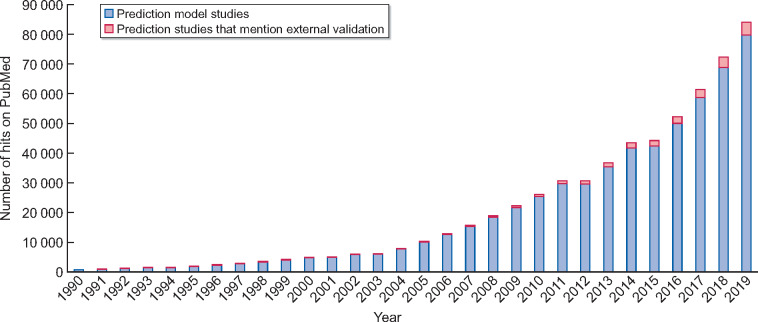
“Since 1990, the proportion of predictive models that have undergone external validation has increased from 0.5% to 7% [47].”
InfluentialWang, W., Liu, X., Yang, C., & Li, Y. (2025) · Medicine · doi:10.1097/md.0000000000046056
Economic Evaluation Methods for HIV Testing of Children and Adolescents in Zimbabwe
Vasantharoopan, A. (2025) · LSHTM Research Online (London School of Hygiene and Tropical Medicine) · doi:10.17037/pubs.04675163
Shi, Z. (2024) · Carolina Digital Repository (University of North Carolina at Chapel Hill) · doi:10.17615/77pg-fb47
Dung-Hung, C., Cong, T., Zeyu, J., Yu-Shan, O.-Y., & Yung-Yan, L. (2022) · Figshare · doi:10.6084/m9.figshare.20317475
Tornero, C., Navarro-Compán, V., Buño, A., Heath, K. E., Díaz-Almirón, M., Balsa, A., Tenorio, J. A., Quer, J.-C., & Aguado, P. (2022) · Figshare · doi:10.6084/m9.figshare.19305036
Liu, M., Yan, G., Li, Y., You, R., Liu, L., Zhang, D., Yang, G., Dong, X., Ding, Y., Yan, S., et al. (2024) · Figshare · doi:10.6084/m9.figshare.24715537
Huber, M., Schober, P. R., Petersen, S., & Luedi, M. M. (2023) · Figshare · doi:10.6084/m9.figshare.22622953
OKADA, Y., Matsuyama, T., Hayashida, K., Takauji, S., Kanda, J., & Yokobori, S. (2022) · Figshare · doi:10.6084/m9.figshare.19905856
Tornero, C., Navarro-Compán, V., Buño, A., Heath, K. E., Díaz-Almirón, M., Balsa, A., Tenorio, J. A., Quer, J.-C., & Aguado, P. (2022) · Figshare · doi:10.6084/m9.figshare.19305039
de Haan, E., van Oosten, B., van Rijckevorsel, V. A. J. I. M., Kuijper, T. M., de Jong, L., & Roukema, G. R. (2024) · Figshare · doi:10.6084/m9.figshare.26170540
Bravo-Zúñiga, J., Chávez-Gómez, R., & Soto-Becerra, P. (2023) · medRxiv · doi:10.1101/2023.03.27.23287771
Liu, M., Yan, G., Li, Y., You, R., Liu, L., Zhang, D., Yang, G., Dong, X., Ding, Y., Yan, S., et al. (2024) · Figshare · doi:10.6084/m9.figshare.26648301
Liu, M., Yan, G., Li, Y., You, R., Liu, L., Zhang, D., Yang, G., Dong, X., Ding, Y., Yan, S., et al. (2023) · Figshare · doi:10.6084/m9.figshare.24715408
de Winkel, J., Maas, C. C. H. M., Roozenbeek, B., van Klaveren, D., & Lingsma, H. F. (2024) · Figshare · doi:10.6084/m9.figshare.26758733
Liao, K., Wang, T., Coomber-Moore, J., Wong, D., Gomes, F., Finn, C. F., Sperrin, M., Yorke, J., & van der Veer, S. N. (2022) · Figshare · doi:10.6084/m9.figshare.21366065
Huber, M., Schober, P. R., Petersen, S., & Luedi, M. M. (2023) · Figshare · doi:10.6084/m9.figshare.22622956
Pabla, G. S. (2024) · Mspace (University of Manitoba)
Machine learning for the genetic prediction of Alzheimer’s Disease
Rowe, T. W. (2023) · ORCA Online Research @Cardiff (Cardiff University)
Barroso, J. M. L. A. (2023) · Portuguese National Funding Agency for Science, Research and Technology (RCAAP Project by FCT)
Huang, C.-Y. (2023) · Lirias
Ventura, R. P. (2025) · Portuguese National Funding Agency for Science, Research and Technology (RCAAP Project by FCT)
Sun, Q.-Y., Zhang, M., Feng, F.-Y., Min, D., Shen, Y., Ou, Y.-F., & Wu, Y. (2025) · Research Square · doi:10.21203/rs.3.rs-8265970/v1
de Filippis, R., & Foysal, A. A. (2025) · OALib · doi:10.4236/oalib.1114599 · Cited by 1
Lee, H. Y., Kim, H., Lim, B., You, D., Song, C., Jeong, I. G., Hong, J. H., Hong, B., Ahn, H., Jeong, S., et al. (2025) · Korean journal of urology · doi:10.4111/icu.20250385
Lue, K., Chen, Y., Chu, S.-C., Lin, C., Chang, B.-S., Chang, P., & Liu, S. (2025) · Nuclear Medicine Communications · doi:10.1097/mnm.0000000000002098
Soldatos, R. F., Kasselimis, D. S., Parpoula, C., Konidari, E., Dimitriou, V., Katirtzoglou, E. A., Kiosses, D. N., Tsibanis, K., Konsta, A., Vorvolakos, T., et al. (2026) · Frontiers in Psychology · doi:10.3389/fpsyg.2025.1696407
“Psychopathological and cognitive data is collected through the Patient Health Questionnaire-2 (PHQ-2; Kroenke et al., 2003), the Generalized Anxiety Disorder-2 (GAD-2; Sapra et al., 2020) and the Mini-Cog (Fage et al., 2021).”
Fat‐Free Mass Predictions From Anthropometrics in South African Prepubertal Children
White, Z., Walsh, L. M., Pretorius, A., & Wenhold, F. A. M. (2026) · Journal of Paediatrics and Child Health · doi:10.1111/jpc.70276
Crystal balls for PD care: How predictive models can help us see ahead
McCullough, K. P., Henn, L. L., & Tsai, D. (2026) · Peritoneal Dialysis International · doi:10.1177/08968608251413925
“9 Machine learning and AI approaches can be vulnerable to these pitfalls and should also be carefully reviewed.”
Hsu, H.-S., Kao, C.-H., Chang, S.-S., Wu, K.-C., Huang, P.-T., Tsai, S.-J., Tang, Y.-Z., & Lin, W. Y. (2026) · Digital Health · doi:10.1177/20552076261419945
Prediction of Major Stroke (NIHSS > 5) Based on MR Perfusion Imaging Using a 3D ResNet
Kurmann, C. C., Mujanović, A., Beyeler, M., Clénin, L., Becker, P., Rohner, R., McKinley, R., Zheng, S., Olivé‐Gadea, M., Piechowiak, E. I., et al. (2026) · Clinical Neuroradiology · doi:10.1007/s00062-026-01623-x
“The model was tested us-ing temporal validation, which lies in the midway of internal and external validation and is a reasonable alternative when lacking data from another center [7].”
Li, K.-C., 夏菲, & Wu, X. (2026) · Clinics · doi:10.1016/j.clinsp.2026.100882
“27 By conducting external validation with local data, the authors aimed to demonstrate that GALAD is applicable and effective within our specific population.”
Predicting Surgical Outcomes in Breast Reconstruction With Machine Learning: A Systematic Review
Rosenbloom, A., Gasbeck, T., Mamoun, L., Shah, N. D., Nanda, A., & Lee, G. (2026) · Annals of Plastic Surgery · doi:10.1097/sap.0000000000004667
D’Elia, R. G. D. M., & Penteado, A. S. D. A. (2026) · Jornal de Pediatria · doi:10.1016/j.jped.2026.101523
“Established guidance consistently emphasizes that external validation is essential to avoid overly optimistic performance estimates and to understand likely heterogeneity in real-world settings [3].”
Metadata
- Authors
- Ramspek, C. L., Jager, K. J., Dekker, F. W., Zoccali, C., & van Diepen, M.
- Affiliations
- Leiden University Medical Center (NL)
- Amsterdam Public Health (NL)
- CNR-IFC, Clinical Epidemiology of Renal Diseases and Hypertension, Reggio Calabria, Italy
- Department of Clinical Epidemiology, Leiden University Medical Center, Leiden, The Netherlands
- Venue
- Clinical Kidney Journal
- Publisher
- Oxford University Press (OUP)
- Published
- 2020-11-24
- Volume
- 14
- Issue
- 1
- Pages
- 49-58
- ISSN
- 2048-8505 (ISSN-L)
- 2048-8513
- PMC
- PMC7857818
- OpenAlex
- W3109609494
- Cited by
- 887
- References
- 46
- Citations by year
- 2026: 197 · 2025: 209 · 2024: 194 · 2023: 162 · 2022: 96 · 2021: 28
- FWCI
- 11.62
- Type
- journal article
- Language
- en
- Open access
- gold
- doi.org
- Licence
- Locations
- Clinical Kidney Journal (publishedVersion, cc-by-nc)
- Europe PMC (PubMed Central) (publishedVersion, cc-by-nc)
- PubMed Central (publishedVersion, cc-by-nc)
- PubMed (publishedVersion)
- Leiden Repository (Leiden University) (submittedVersion, cc-by-nc)
- Data Archiving and Networked Services (DANS) (submittedVersion, other-oa)
- Data Archiving and Networked Services (DANS) (submittedVersion, cc-by-nc)
- Pure Amsterdam UMC (submittedVersion, cc-by)
- Funders
- Dutch Kidney Foundation (16OKG12)
- Topics
- Physical Sciences › Mathematics › Statistics and Probability › Statistical Methods in Epidemiology
- Social Sciences › Decision Sciences › Statistics, Probability and Uncertainty › Meta-analysis and systematic reviews
- Health Sciences › Health Professions › Health Information Management › Artificial Intelligence in Healthcare
- Keywords
- external validation, prognostic model, prediction model, generalizability, reproducibility, clinical implementation, clinical decision-making
About these checks
Registry, retraction, Cites and statistics results are computed, not judged, with one exception: a printed reference that no index lists is read once by a model before it counts as a citation error. Claims are extracted by a model and kept only when their quote appears verbatim in the text; each cited source is then checked, with a model’s help, for whether it says what the claim relies on. Those verdicts can be wrong — read the claim’s quote and the cited source before relying on one.
Statistics and arithmetic are recomputed, not judged.
Confidence bands are shown only for fields calibrated on our annotated test set. None is calibrated yet, so no band is shown.
What counts as a claim ›How we measure confidence ›How we check this ›
Are you an author, or do you see a problem with this page? Request a review
Data sources
Bibliographic data: Semantic Scholar, OpenAlex, Crossref.
Contains information from the Semantic Scholar Academic Graph Datasets, made available under the ODC Attribution License (ODC-BY 1.0).
Semantic Scholar’s data is described in: Kinney, R., et al. (2023). The Semantic Scholar Open Data Platform. arXiv:2301.10140.
