

External validation of prognostic models: what, why, how, when and where?
Open accessThe DOI matches its Crossref record; 45 of the 46 references it cites were found in a registry or an index.
Abstract
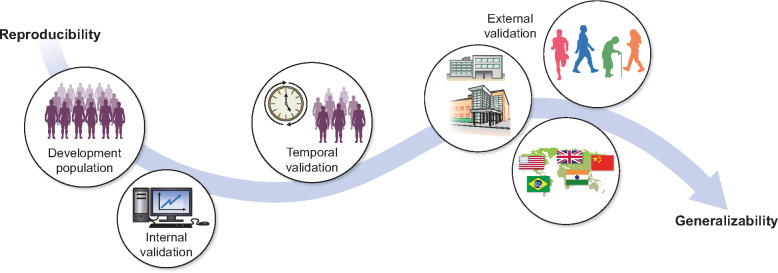
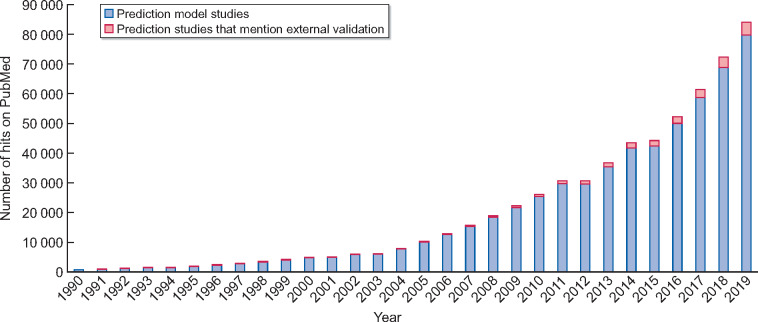
Prognostic models that aim to improve the prediction of clinical events, individualized treatment and decision-making are increasingly being developed and published. However, relatively few models are externally validated and validation by independent researchers is rare. External validation is necessary to determine a prediction model's reproducibility and generalizability to new and different patients. Various methodological considerations are important when assessing or designing an external validation study. In this article, an overview is provided of these considerations, starting with what external validation is, what types of external validation can be distinguished and why such studies are a crucial step towards the clinical implementation of accurate prediction models. Statistical analyses and interpretation of external validation results are reviewed in an intuitive manner and considerations for selecting an appropriate existing prediction model and external validation population are discussed. This study enables clinicians and researchers to gain a deeper understanding of how to interpret model validation results and how to translate these results to their own patient population.
Overview
The claims and statistics of this paper haven’t been checked yet.
Free: it reads the open-access text and checks the first 5 claims that cite a source we can check. Create a free account to check every claim.
Integrity signals
Registry
Cites
Statistics
Figures
Verification
Claims the paper makes
The claims and statistics of this paper haven’t been checked yet.
Free: it reads the open-access text and checks the first 5 claims that cite a source we can check. Create a free account to check every claim.
Self-check
Percentages, sums and reported differences re-computed from the paper’s own numbers.
The self-check needs the paper’s full text.
Citations
Cites
An Introduction to the Bootstrap
Efron, B., & Tibshirani, R. J. (1994) · doi:10.1201/9780429246593 · Cited by 40,500
Decision curve analysis: a novel method for evaluating prediction models
Vickers, A. J., & Elkin, E. B. (2006) · Medical Decision Making · doi:10.1177/0272989x06295361 · Cited by 6,341
Assessing the Performance of Prediction Models: A Framework for Traditional and Novel Measures
Steyerberg, E. W., Vickers, A. J., Cook, N. R., Gerds, T., Gonen, M., Obuchowski, N., Pencina, M. J., & Kattan, M. W. (2010) · Epidemiology · doi:10.1097/ede.0b013e3181c30fb2 · Cited by 5,170 · cited 1×
“net benefit, decision analysis) may also be assessed but are generally complementary to the discrimination and calibration results [22].”
BackgroundMoons, K. G. M., Altman, D. G., Reitsma, J. B., Ioannidis, J. P. A., Macaskill, P., Steyerberg, E. W., Vickers, A. J., Ransohoff, D. F., & Collins, G. S. (2015) · Annals of Internal Medicine · doi:10.7326/m14-0698 · Cited by 5,147 · cited 3×
“For researchers planning an external validation study we highly recommend consulting the Transparent Reporting of a multivariable prediction model for Individual Prognosis Or Diagnosis checklist and explanation and elaboration document [4].”
BackgroundMethodClinical Prediction Models: A Practical Approach to Development, Validation, and Updating
Steyerberg, E. W. (2019) · Statistics for Biology and Health · doi:10.1007/978-3-030-16399-0 · Cited by 3,281
An Introduction to the Bootstrap.
Buckland, S. T., Efron, B., & Tibshirani, R. J. (1994) · Biometrics · doi:10.2307/2532810 · Cited by 3,103
PROBAST: A Tool to Assess the Risk of Bias and Applicability of Prediction Model Studies
Wolff, R. F., Moons, K. G. M., Riley, R. D., Whiting, P. F., Westwood, M., Collins, G. S., Reitsma, J. B., Kleijnen, J., Mallett, S., & for the PROBAST Group† (2019) · Annals of Internal Medicine · doi:10.7326/m18-1376 · Cited by 2,984 · cited 1×
“Bias in prognostic models can be assessed using the Prediction model Risk Of Bias ASsessment Tool tool [31].”
MethodInternal validation of predictive models
Steyerberg, E. W., Harrell, F. E., Borsboom, G. J. J. M., Eijkemans, M. J. C., Vergouwe, Y., & Habbema, J. D. F. (2001) · Journal of Clinical Epidemiology · doi:10.1016/s0895-4356(01)00341-9 · Cited by 2,746
Use and Misuse of the Receiver Operating Characteristic Curve in Risk Prediction
Cook, N. R. (2007) · Circulation · doi:10.1161/circulationaha.106.672402 · Cited by 2,112 · cited 1×
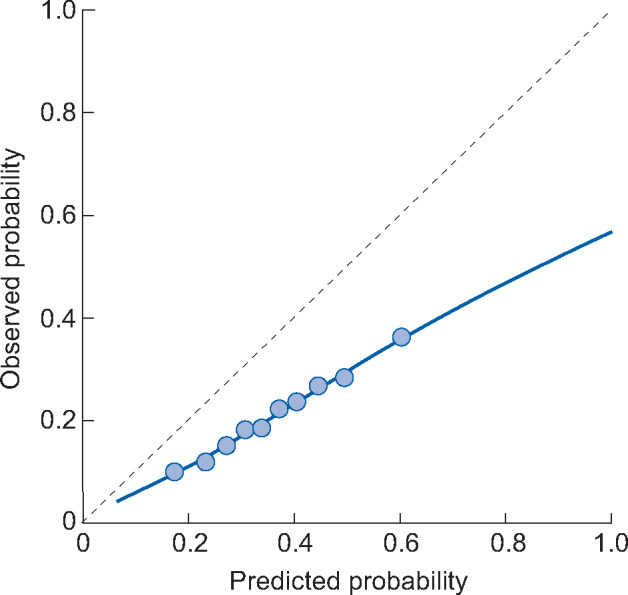
“When assessing the overall performance of a prognostic model, it is important to take both discrimination and calibration into account, as well as the intended use of the model [4, 26, 27].”
MethodUno, H., Cai, T., Pencina, M. J., D'Agostino, R. B., & Wei, L. J. (2011) · Statistics in Medicine · doi:10.1002/sim.4154 · Cited by 1,535 · cited 1×
“For Cox proportional hazards prediction models a time-toevent C-index such as Harrel’s C-index or Uno’s C-index can be computed [21, 25].”
Method
Cited by
Items 601–700 of 976
Heesen, P., Christ, S. M., Ciobanu-Caraus, O., Kahraman, A., Schelling, G., Studer, G., Bode‐Lesniewska, B., & Fuchs, B. (2025) · Diagnostic and Prognostic Research · doi:10.1186/s41512-025-00186-8 · Cited by 1
External validation of current quality care metrics after radical nephroureterectomy
Duquesne, I., Gabriel, P., Chakra, M. A., Moussa, M., Mansour, R., Borz, M. B., Duffaut, L., Mesnard, B., Ourfali, S., Mercier, J., et al. (2025) · British Journal of Urology · doi:10.1111/bju.16741 · Cited by 1
“The development of standardised evaluation criteria is essential for improving clinical practice, ensuring consistency in patient care, and facilitating comparisons across institutions [9].”
Tachi, H., Kokabu, T., Suzuki, H., Ishikawa, Y., Yabu, A., Yanagihashi, Y., Hyakumachi, T., Shimizu, T., Endo, T., Ohnishi, T., et al. (2025) · European Spine Journal · doi:10.1007/s00586-025-08908-8 · Cited by 1
“Although we performed EV as temporal validation, we also prepared an independent data-set from the hospital in this study, which was assembled separately from the development cohort [25].”
Round table discussion. Integration of artificial intelligence into daily practice
Miller, R., Kedgley, A. E., Farnebo, S. J., Stockmans, F., Zlotolow, D. A., & Horwitz, M. D. (2025) · Journal of Hand Surgery (European Volume) · doi:10.1177/17531934251342418 · Cited by 1
“While internal validation has been proven quite successful for several models at one hospital site (carpal tunnel syndrome, trapeziometacarpal joint osteoarthritis, fracture classification), it may take time before exter-nal validation allows widespread use (Ramspek et al., 2020).”
Chen, J., Yang, L., Liu, C., Bai, L., Li, X., Chen, J., Zhang, Y., Xu, Y., Fan, Y., Tu, Y., et al. (2025) · Computers in Biology and Medicine · doi:10.1016/j.compbiomed.2025.110562 · Cited by 1
Gutiérrez-Arias, R. E., Fuentes, C. C., Pavez, J. F., & Cabello, M. E. (2025) · Retos · doi:10.47197/retos.v70.114154 · Cited by 1
Dalqvist, E., Rancati, T., Embring, A., von Döbeln, G. A., Lax, I., Friesland, S., & Onjukka, E. (2025) · Acta Oncologica · doi:10.2340/1651-226x.2025.43462 · Cited by 1
“However, this test has been questioned due to its sensitivity to sample size and binning choices [18, 19].”
Schubert, P., May, M. S., Höfler, D., Fautz, H., Hutter, J. M., Merten, R., Mansoorian, S., Weißmann, T., Deloch, L., Schonath, M., et al. (2025) · Physics and Imaging in Radiation Oncology · doi:10.1016/j.phro.2025.100825 · Cited by 1
“Testing was performed on the independent cohort of 10 patients (temporal validation [22]).”
Poornachandran, M., Harun, S. N., Teh, S. Y., Yahaya, N., & Ghadzi, S. M. S. (2025) · Therapeutic Drug Monitoring · doi:10.1097/ftd.0000000000001380 · Cited by 1
Hosozawa, K., Suzuki, Y., Nagamoto, Y., Kita, K., Kanie, Y., Furuya, M., Ukon, Y., Takenaka, S., Kaito, T., Kishimoto, K., et al. (2025) · Spine · doi:10.1097/brs.0000000000005534 · Cited by 1
Development of a Neural Network to Predict Optimal IOP Reduction in Glaucoma Management
Remtulla, R., Rahman, S., & Saheb, H. (2025) · Vision · doi:10.3390/vision9040087 · Cited by 1
“Similarly, the role of axial length and refractive error in glaucoma susceptibility has been increasingly recognized, as longer axial lengths can be linked to changes in the biomechanical environment of the optic nerve head [30].”
Variable-based probabilistic calibration with binary outcome
Seto, H., Kitora, S., Oyama, A., Toki, H., Yamamoto, R., & Yamamoto, M. (2024) · Biostatistics · doi:10.1093/biostatistics/kxaf026 · Cited by 1
Topsakal, F. E., Özdemir, E., Altay, N., & Demirel, E. (2025) · Medicina · doi:10.3390/medicina61111995 · Cited by 1
“For this reason, the TRIPOD guideline recommends that every new model should, if possible, be validated in large, multicenter populations [37].”
Falah, Z. E., Marfak, A., Asmaa, M. A., & Thimou, A. (2025) · Clinical Epidemiology and Global Health · doi:10.1016/j.cegh.2025.102227 · Cited by 1
Postoperative recurrence prediction model for perianal abscess using machine learning algorithms
Wang, D., Zhang, C., Li, Z., Zheng, Z., Chen, A., Fang, Y., Huangfu, S., Zhou, C., Liu, Q., & Jiang, B. (2025) · Frontiers in Public Health · doi:10.3389/fpubh.2025.1722109 · Cited by 1
Leite, F. M. F., Silva, A. M., Paupério, G. S., & Santos, L. L. (2025) · Journal of Cardiothoracic Surgery · doi:10.1186/s13019-025-03661-x · Cited by 1
Zhang, Y., Wang, C., Bai, C., Shiqi, C., Qiu, Y., Chen, J., Wang, T., & Dong, Y. (2025) · European Journal of Clinical Pharmacology · doi:10.1007/s00228-025-03936-1 · Cited by 1
Barry, N., Kendrick, J., Molin, K., Li, S., Rowshanfarzad, P., Hassan, G. M., Dowling, J., Ong, J. S. L., Parizel, P. M., Hofman, M. S., et al. (2026) · Physics in Medicine and Biology · doi:10.1088/1361-6560/ae36e0 · Cited by 1
“This occurs when data is collected from another institution, where the population may exhibit different baseline risks, methods of evaluation, and imaging characteristics (Ramspek et al 2021).”
Goh, W. Y., Ng, S. H.-X., Low, Z. J., & Hum, A. Y. M. (2026) · BMJ Connections Oncology · doi:10.1136/bmjconc-2025-000045 · Cited by 1
Kundu, A., Selby, P. L., Felsky, D., Moraes, T. J., & Chaiton, M. (2026) · Addictive Behaviors · doi:10.1016/j.addbeh.2026.108617 · Cited by 1
Prognostic models for all‐cause and cardiovascular mortality in type 2 diabetes: Systematic review
Kundu, M., Funnell, M. P., Karimi, Z., Kunutsor, S. K., Naderpour, S., Peace, A., Welford, A. E., Zaccardi, F., Khunti, K., Gharibzadeh, S., et al. (2026) · Diabetic Medicine · doi:10.1111/dme.70218 · Cited by 1
Cleary, F., Prieto‐Merino, D., Major, R., Carrero, J. J., & Nitsch, D. (2026) · BMJ Medicine · doi:10.1136/bmjmed-2025-001950 · Cited by 4
AI for Personalized Learning Experiences: Adaptive Course Content and Intelligent Tutoring Systems
Khalil, S. A., Mahmood, M., Ali, Z., & Alam, I. (2026) · Advances in computational intelligence and robotics book series · doi:10.4018/979-8-3373-2752-5.ch010 · Cited by 1
Hellinck, S., Boedt, M., Hornick, M. M., Gryspeerdt, F., Lerut, A.-V., Allaeys, M., Rashidian, N., Eker, H. H., de Carvalho, L. A., van Gremberghe, I., et al. (2026) · Hernia · doi:10.1007/s10029-026-03600-2 · Cited by 1
Tian, H., Wang, L., Hou, Y., Meng, Z., Wang, Y. N., & Li, H. (2026) · Annals of Medicine · doi:10.1080/07853890.2026.2634471 · Cited by 1
Petch, J., Di, S., Watson, T., Becerra, M. P., Rosella, L. C., Natarajan, M., Sheth, T., & Schwalm, J.-D. (2026) · European Heart Journal - Digital Health · doi:10.1093/ehjdh/ztag040 · Cited by 1
“Our approach to external validation of the local model follows the methodology proposed in Moons et al. 28 and Ramspek et al. , 29 and includes three components: geographical validation, temporal validation, and subgroup analysis.”
Diagnosing Urinary Tract Infection in Young Febrile Children in the Emergency Department
Kinlin, C., Gravel, J., Barrowman, N., Bijelik, V., Cook, R., Wills-Ibarra, N., Zemek, R. L., Shaikh, N., Bhatt, M., Ali, S., et al. (2026) · JAMA Network Open · doi:10.1001/jamanetworkopen.2026.1741 · Cited by 1
Liu, J., Gao, R., Huang, L., Zhu, Y., Cheng, G., Zeng, L., Yu, Q., Li, H., & Zhang, L. (2026) · BMJ Open · doi:10.1136/bmjopen-2025-102448 · Cited by 1
Wang, S., Gao, Y., Ran, J., Zhang, Y., Chen, Y., Yan, H., & Pang, L. (2026) · CNS Neuroscience & Therapeutics · doi:10.1002/cns.70837 · Cited by 1
“To rigorously evaluate model generalizability [10, 11] and address potential distribution shifts between clinical settings [12, 13], patients were allocated to a development cohort ( n = 1654 from two centers) and an independent external validation cohort ( n = 101 from a third center), as depicted…”
George, R., Serrano, C. A., Garong, J. T., Magsanay, K., Maguigad, A. C., Castro, M. A. D., Navarro, A. N., Mandac, G. R., Ramos, K., Isais, M., et al. (2026) · Spectrochimica Acta Part A Molecular and Biomolecular Spectroscopy · doi:10.1016/j.saa.2026.127781 · Cited by 1
Pomohaci, D., Marciuc, E.-A., Dobrovăț, B. I., Onicescu, O.-M., Chirica, S.-I., Chirica, C., Popescu, M.-R., & Haba, D. (2026) · Diagnostics · doi:10.3390/diagnostics16071017 · Cited by 1
“This approach corresponds to temporal validation and lies between internal and external validation [37].”
López-Medina, D. C., Oliveros, A., Moreno-Ángel, N., Arellano, A. C. H., & Henao-Pérez, M. (2026) · Journal of Medical Internet Research · doi:10.2196/78168 · Cited by 1
Delgado, J. F., Pasini, A. C., Elsa, & Moran, C. (2026) · Journal of Computer Science and Technology · doi:10.24215/16666038.26.e02 · Cited by 1
Diagnostic performance and heterogeneity of validated flow cytometry scores: a systematic review
Sorigué, M. (2026) · Critical Reviews in Clinical Laboratory Sciences · doi:10.1080/10408363.2026.2651313 · Cited by 1
Zhang, L. L., Lin, S., Xue, W., Wang, W., & Zhou, Y.-N. (2026) · BMC Musculoskeletal Disorders · doi:10.1186/s12891-026-09794-x · Cited by 2
Dash, A., Majhi, K., Ghosh, N., Jena, P., Choudhury, S., Anushapreethi, S., Samal, S., Panda, S., Patra, S. K., & Mishra, S. B. (2026) · Indian Journal of Critical Care Medicine · doi:10.5005/jp-journals-10071-25157 · Cited by 1
“33–35 A complete case analysis was employed, which could introduce bias if data are not missing fully at random; yet, the assessment of missingness and sensitivity analyses utilizing multiple imputation produced consistent results, alleviating this worry.”
Moldakhmetova, S., Bimurat, B., Berdaly, A., Makhammajanov, Z., Salykov, A., Bukasov, R., & Gaipov, A. (2026) · International Journal of Molecular Sciences · doi:10.3390/ijms27083648 · Cited by 1
Issa, Z. A., Trad, F. S., Yammine, R., Rhayem, C., Ghosn, A., Alwan, J. S., Tamim, H., Haidar, R., Chehab, A., & Fuleihan, G. E. (2026) · JBMR Plus · doi:10.1093/jbmrpl/ziag079 · Cited by 1
Development of a prediction method for severe pancreatitis using a nomogram
Wei, W., Wang, Y., Xie, P., Wang, W., Li, S.-G., Lv, S.-J., Hou, Y., Cui, D., Pei, R.-M., & Zhu, Y. (2026) · Frontiers in Medicine · doi:10.3389/fmed.2026.1737122 · Cited by 1
“…features, reporting a sensitivity of 71.4% and specificity of 72.2% (34) score; its coefficients and structure have been optimized across multiple populations, which often leads to more stable performance when transported to new settings, even if a new model looks superior in its training cohort (35).”
InfluentialTakala, J., Zanier, O., Blom, V., Kälin, V., Höbner, L. M., Klesel, C. M., Hostettler, I. C., Staartjes, V. E., & Korja, M. (2026) · Scientific Reports · doi:10.1038/s41598-026-54488-y · Cited by 1
Liu, Y., meng, X., Ding, Y., Yao, R., & Xu, S. (2026) · JMIR Medical Informatics · doi:10.2196/84980 · Cited by 2
Asfour, H., Aram, K., Hassouna, M., Singhania, N., Deric, D., Yii, N.-W., & Agarwal, R. (2026) · Annals of Surgical Oncology · doi:10.1245/s10434-026-19853-1 · Cited by 1
Li, N., Xu, M., Wei, X., Qu, Y., Zhang, H., & Liu, Y. (2026) · International Urology and Nephrology · doi:10.1007/s11255-026-05223-z · Cited by 1
“This process of external validation is an indispensable methodo‑ logical standard that moves a prediction model from a proof‑ of‑concept to a potentially reliable clinical tool, mitigating the risk of overfitting and ensuring its performance is not confined to the development population [33].”
Erina, S. T. S., Jannat, F., Tahin, T. A., Hosen, M. R., Nower, N., Hossain, M. A., Hossen, S., Hossain, T. M., Amal, R. A., Faruk, M. O., et al. (2026) · Computers in Biology and Medicine · doi:10.1016/j.compbiomed.2026.111803 · Cited by 1
Mielke, N., Ferrari, D., Barghouth, M. H., Ebert, N., Kaiser, J., & Schäeffner, E. (2026) · GeroScience · doi:10.1007/s11357-026-02350-4 · Cited by 1
Fauszt, T. (2026) · Information · doi:10.3390/info17060581 · Cited by 1
“…the same entity may introduce hidden dependencies between partitions if row-wise splitting procedures are applied [17–19 Valid entity-level separation requires Training and test partitions must preserve the chronological order of cohorts, calendar periods, or institutional presentations [38,39].”
Huang, X., Chen, W., Guan, W., & Lin, W. (2026) · BMC Medical Research Methodology · doi:10.1186/s12874-026-02909-x · Cited by 1
“Regarding analysis: the absence of any real-world external validation renders the model’s generalizability completely unknown [84].”
Sayadi, H., Grégoire, M., Fromage, Y., Labriffe, M., Maizaud, F., Monchaud, C., Codde, C., Boutoille, D., Marquet, P., & Woillard, J. (2026) · Antimicrobial Agents and Chemotherapy · doi:10.1128/aac.00665-26 · Cited by 1
Pereira, H. R., Diogo, V. S., Fonseca, J., Ferreira, H. A., & Prata, D. P. (2026) · Clinical Neuroradiology · doi:10.1007/s00062-026-01688-8 · Cited by 2
Identifying predictors of student depression through validated machine learning pipelines
Washton, J., Owens, T., Sierra, A., & Toma, M. (2026) · Frontiers in Medicine · doi:10.3389/fmed.2026.1864665 · Cited by 1
Incremental value of breast arterial calcification beyond PREVENT requires cautious interpretation
Li, G., Yang, N., & Liu, J. (2026) · European Heart Journal · doi:10.1093/eurheartj/ehag472 · Cited by 1
On-premises open-source large language models for privacy-preserving multimodal depression screening
Kwon, S., Kim, Y., Jhon, M., Park, J.-H., Lim, B., Jeon, E., Kim, J.-M., Kim, J.-W., & Lee, H. (2026) · International Journal of Medical Informatics · doi:10.1016/j.ijmedinf.2026.106577 · Cited by 1
Kundu, A., Selby, P. L., Felsky, D., Moraes, T. J., & Chaiton, M. (2026) · Nicotine & Tobacco Research · doi:10.1093/ntr/ntag137 · Cited by 1
Abd-Alrazaq, A. A., Mohamed, S. P., Alajlani, M., Tabassum, A., Ordóñez-Mena, J. M., Yoosuf, S., Alkhateeb, M., Ahmed, A., Bashir, M., Qadir, J., et al. (2026) · Journal of Medical Internet Research · doi:10.2196/87882 · Cited by 1
“While these methods are useful for preliminary evaluation, they do not adequately assess transportability across different populations or health care settings [65].”
Saçak, M. E., & Denizbaşı, A. (2026) · Journal of Thrombosis and Thrombolysis · doi:10.1007/s11239-026-03350-z · Cited by 1
Yadav, S., Yadav, A., Bais, S. S., Khurana, U., Sharma, A., & Jha, P. (2026) · Urologia Internationalis · doi:10.1159/uin/aewag012 · Cited by 2
Gong, A., Ren, B., Cao, Y., Li, Z., Li, F., Li, W., Hu, X., Zhou, Y., & Zeng, R. (2026) · Heart Rhythm · doi:10.1016/j.hrthm.2026.08.048 · Cited by 1
Wang, S.-H., Shao, S., Yang, M.-R., Chen, S. C.-C., & Su, E. C. (2026) · Journal of Clinical Epidemiology · doi:10.1016/j.jclinepi.2026.112508 · Cited by 2
Accuracy and Equity of the End-of-Life Care Index in Predicting 1-Year Mortality
Kohn, R. A., Courtright, K. R., Grau‐Sepulveda, M. V., Olsen, M. K., Madden, V. L., Sewell, B. D., Sheu, D., Ahmad, Y. S., Auriemma, C. L., Nimetz, A., et al. (2026) · JAMA Network Open · doi:10.1001/jamanetworkopen.2026.33038 · Cited by 1
An, R., Meng, B., & Lu, X. (2026) · Journal of International Medical Research · doi:10.1177/03000605261491422 · Cited by 1
AI algorithms and external validation: promises, pitfalls, and a practical blueprint
Thambiraj, G., & Armoundas, A. A. (2026) · European Heart Journal · doi:10.1093/eurheartj/ehag816 · Cited by 2
Gene-based Diagnostics: Ready for Prime Time?
Adams, K. T. (2005) · Europe PMC (PubMed Central) · Cited by 1
Farewell from the CKJ Editor-in-Chief: key kidney topics from 2014 to 2021
Ortíz, A., & Vinck, C. (2022) · Clinical Kidney Journal · doi:10.1093/ckj/sfac023 · Cited by 1
Luo, Z., Jiao, B., Zhao, H., Huang, T., Liu, Y., Chen, H., Guan, Y., Zhang, G., & Jiang, Z. (2023) · Clinical & Translational Oncology · doi:10.1007/s12094-023-03226-1 · Cited by 1
Fabricius, J., & Pedersen, A. R. (2023) · Clinical Nutrition · doi:10.1016/j.clnu.2023.07.007 · Cited by 1
Ma, E., Ohira, T., Miyazaki, M., Fukasawa, M., Yoshimoto, M., Suzuki, T., Furuyama, A., Kataoka, M., Yasumura, S., & Hosoya, M. (2023) · Journal of Atherosclerosis and Thrombosis · doi:10.5551/jat.64018 · Cited by 1
Unraveling the Predictive Potential of Rapid Scoring in Pleural Infection: A Critical Review
Annareddy, S., Ghewade, B., Jadhav, U. S., & Wagh, P. B. (2023) · Cureus · doi:10.7759/cureus.44515 · Cited by 1
Fusario, D., Neri, A., Carbone, L., Resca, L., Marano, L., Grassi, G., Calomino, N., Verre, L., Roviello, F., & Marrelli, D. (2023) · World Journal of Surgery · doi:10.1007/s00268-023-07152-9 · Cited by 1
“According to Ramspek’s insights, we independently compared the predicted risks with the outcomes observed in patient admitted in our Institution, aimed at improving the prediction of clinical events, individualized treatment, and decision-making [2], and identified a cutoff value that indicates a group of more frail p…”
Оценка суицидального риска: новые решения «проклятых вопросов»
Любов, Е. Б., & Zotov, P. B. (2023) · Суицидология · doi:10.32878/suiciderus.23-14-02(51)-22-35 · Cited by 1
Elhefnawy, M. E., Harun, S. N., Leykhim, T., Tangiisuran, B., Zainal, H., Looi, I., Sidek, N. N., Aziz, Z. A., & Ghadzi, S. M. S. (2023) · Cureus · doi:10.7759/cureus.50794 · Cited by 2
Williams, H., Steinberg, S., Leon, K., Vingum, R., Hu, M., Berzin, R., Woodward-Hagg, H., & Hanaway, P. J. (2024) · JMIR Formative Research · doi:10.2196/53316 · Cited by 1
Development and validation of a prediction score to assess the risk of depression in primary care
Lapi, F., Castellini, G., Ricca, V., Cricelli, I., Marconi, E., & Cricelli, C. A. (2024) · Journal of Affective Disorders · doi:10.1016/j.jad.2024.03.160 · Cited by 1
Fundamentals on transparency, reproducibility, and validation
Camarasu-Pop, S., Vila, G., Tristan Glatard, B., Bonnet, A., Frindel, C., & Ratiney, H. (2025) · Elsevier eBooks · doi:10.1016/b978-0-44-323761-4.00017-1 · Cited by 1
Smeets, M. J. R., Petersen, P. B., Jørgensen, C. C., Cannegieter, S. C., Ostrowski, S. R., Kehlet, H., & Nemeth, B. (2024) · Research and Practice in Thrombosis and Haemostasis · doi:10.1016/j.rpth.2024.102644 · Cited by 1
Lapi, F., Marconi, E., Medea, G., Cricelli, I., Parretti, D., Rossi, A., & Cricelli, C. A. (2025) · Endocrine · doi:10.1007/s12020-024-04157-9 · Cited by 1
“Generally, when these tools are developed and validated using a representative dataset applied in the same context, their internal validity should be adequate [36].”
Hatzl, S., Kriegl, L., Geiger, C., Eller, P., & Krause, R. (2025) · Intensive Care Medicine · doi:10.1007/s00134-025-07838-9 · Cited by 1
Hayter, E., Badial, V., Barter, R., Hodgson, H., & Anakwe, R. E. (2025) · Journal of Clinical Orthopaedics and Trauma · doi:10.1016/j.jcot.2025.102974 · Cited by 1
“17 We analyzed a separate cohort of patients who underwent primary THA and TKA from a more recent time period to those used in the training data set.”
Modelos de predicción en trasplantes: Estado del arte y aplicaciones
Cabas, S., Garcia-Lopez, A. E., Gómez-Montero, A., Anichiarico-Castillo, L. A., Sarmiento-Gallego, J. A., & Girón-Luque, F. (2025) · Revista Colombiana de Cirugía · doi:10.30944/20117582.2813 · Cited by 1
Werenski, J. O., Su, M. W., Krueger, R., Groot, O. Q., Clunk, M. J., Sodhi, A., Patil, R., Bell, N., Levin, A. S., & Lozano‐Calderón, S. A. (2025) · Journal of the American Academy of Orthopaedic Surgeons · doi:10.5435/jaaos-d-24-01131 · Cited by 1
“11 12-16 Although they may be favored for their simplicity and ease of application in clinical practice, these tools lack the specificity and granularity required for accurate risk stratification and differentiation among high-risk oncologic patients with metastatic solid tumors.”
Paquier, Z., Dhont, J., Guiot, T., Levillain, H., Critchi, G., Saúde-Conde, R., Sclafani, F., Flamen, P., Reynaert, N., Woff, E., et al. (2025) · JCO Clinical Cancer Informatics · doi:10.1200/cci-24-00207 · Cited by 2
Ikegami, K., Tsuchiya, M., Imai, S., Fujita, Y., Yasumuro, O., Kizaki, H., Funakoshi, R., Sato, Y., & Hori, S. (2025) · Biological and Pharmaceutical Bulletin · doi:10.1248/bpb.b24-00768 · Cited by 1
Lapin, B. R., Passek, S. D., Schuster, A. T., Stilphen, M., Minick, K. I., Collingridge, D. S., Hunt, B., Woodfield, D., Rothberg, M. B., & Johnson, J. K. (2025) · Physical Therapy · doi:10.1093/ptj/pzaf093 · Cited by 2
Prognostic risk scores for liver transplantation: game changers or statistical artworks?
Claasen, M. P. A. W., Ivanics, T., Gravely, A., & Sapisochín, G. (2021) · HepatoBiliary Surgery and Nutrition · doi:10.21037/hbsn-21-258 · Cited by 1
“Moreover, the model’s transportability and performance in other similar settings remain to be clarified (13).”
BackgroundChakraborty, N., Rizvi, I., Parihar, A., Siddiqui, S. S., & Muzaffar, S. N. (2022) · Intensive Care Medicine · doi:10.1007/s00134-022-06628-x · Cited by 1
Bydon, M., Durrani, S., & Mualem, W. (2022) · Neurosurgery · doi:10.1227/neu.0000000000001989 · Cited by 1
Akazawa, M., & Hashimoto, K. (2022) · SSRN Electronic Journal · doi:10.2139/ssrn.4191367 · Cited by 1
Chen, T., Tang, Z., Wang, X., Wang, W., & Zhou, N. (2022) · Research Square · doi:10.21203/rs.3.rs-1715895/v1 · Cited by 1
Galbusera, F., Cina, A., & Samartzis, D. (2023) · Neurospine · doi:10.14245/ns.2346296.148 · Cited by 1
A Canado-European external validation of the Kidney Transplant Failure ScorePreprint
Chatton, A., Feugo, K. A., Pilote, É., Cardinal, H., Platt, R. W., & Schnitzer, M. E. (2024) · medRxiv · doi:10.1101/2024.10.31.24316511 · Cited by 1
Omokhomion, I. (2023) · Research Open (London South Bank University) · doi:10.18744/lsbu.941v8 · Cited by 1
Awe, O. D., Oliveira, A. P. D. M. E., Charles, C. M., Oladimeji, K. E., Torezzan, C., & Pacagnella, R. C. (2026) · Research Square · doi:10.21203/rs.3.rs-8651301/v1 · Cited by 1
Developing, validating, and evaluating clinical prediction models in breast and prostate cancer
Hueting, T. A. (2022) · doi:10.3990/1.9789036553940 · Cited by 1
Validação do modelo PREDICT em uma coorte de casos de câncer de mama no Brasil
Magario, M. B. (2022) · Digital Library of Theses and Dissertations (Universidade de São Paulo) · doi:10.11606/t.17.2022.tde-21062022-144552
Diamand, R., Mjaess, G., Ploussard, G., Fiard, G., Oderda, M., Lefebvre, Y., Sirtaine, N., Roumeguère, T., Peltier, A., & Albisinni, S. (2022) · The French Journal of Urology · doi:10.1016/s1166-7087(22)00170-1
Difference between 5A score and the HOPE score
Okada, Y., Matsuyama, T., Hayashida, K., Takauji, S., Kanda, J., & Yokobori, S. (2022) · Journal of Intensive Care · doi:10.1186/s40560-022-00636-1
Wongyikul, P., Wongchanudom, S., Lumkul, L., Isaradech, N., Phanphaisarn, A., Phinyo, P., & Pruksakorn, D. (2022) · International Journal of Clinical Oncology · doi:10.1007/s10147-022-02273-y
“However, as studies that develop scoring systems usually do not report modeling equations to be used for the calculation of linear predictors (lp), the assessment of performance, especially calibration, is not straightforward [13, 15].”
BackgroundAkazawa, M., & Hashimoto, K. (2022) · Research Square · doi:10.21203/rs.3.rs-2264880/v1
Horváth, I., & Tepjit, S. (2023) · Journal of Integrated Design and Process Science · doi:10.3233/jid-220015
“Ramspek et al. (2021) investigated the issues of external validation of prognostic models in a non-engineering context (i.e. in the case of prediction of clinical events and decision-making).”
Assessment of Pre-operative Risk in Complex Cardiac Surgery
Grande, A. M., Fiore, A., & Salsano, A. (2023) · Springer eBooks · doi:10.1007/978-3-031-17273-1_15
Mo, X., Chen, X., Zeng, H., Zheng, W., Ieong, C., Li, H., Huang, Q., Xu, Z., Yang, J., Liang, Q., et al. (2023) · Pharmacotherapy The Journal of Human Pharmacology and Drug Therapy · doi:10.1002/phar.2788
“The baseline model of this study is logistic regression (LR) model, and the formulas of Group 1 are as shown in (1) and (2); the LR model of Group 2 consist of 3 formulas (1), in which the regression coefficient and model intercept of the formula are shown in Table 1.”
Method
Metadata
- Authors
- Ramspek, C. L., Jager, K. J., Dekker, F. W., Zoccali, C., & van Diepen, M.
- Affiliations
- Leiden University Medical Center (NL)
- Amsterdam Public Health (NL)
- CNR-IFC, Clinical Epidemiology of Renal Diseases and Hypertension, Reggio Calabria, Italy
- Department of Clinical Epidemiology, Leiden University Medical Center, Leiden, The Netherlands
- Venue
- Clinical Kidney Journal
- Publisher
- Oxford University Press (OUP)
- Published
- 2020-11-24
- Volume
- 14
- Issue
- 1
- Pages
- 49-58
- ISSN
- 2048-8505 (ISSN-L)
- 2048-8513
- PMC
- PMC7857818
- OpenAlex
- W3109609494
- Cited by
- 887
- References
- 46
- Citations by year
- 2026: 197 · 2025: 209 · 2024: 194 · 2023: 162 · 2022: 96 · 2021: 28
- FWCI
- 11.62
- Type
- journal article
- Language
- en
- Open access
- gold
- doi.org
- Licence
- Locations
- Clinical Kidney Journal (publishedVersion, cc-by-nc)
- Europe PMC (PubMed Central) (publishedVersion, cc-by-nc)
- PubMed Central (publishedVersion, cc-by-nc)
- PubMed (publishedVersion)
- Leiden Repository (Leiden University) (submittedVersion, cc-by-nc)
- Data Archiving and Networked Services (DANS) (submittedVersion, other-oa)
- Data Archiving and Networked Services (DANS) (submittedVersion, cc-by-nc)
- Pure Amsterdam UMC (submittedVersion, cc-by)
- Funders
- Dutch Kidney Foundation (16OKG12)
- Topics
- Physical Sciences › Mathematics › Statistics and Probability › Statistical Methods in Epidemiology
- Social Sciences › Decision Sciences › Statistics, Probability and Uncertainty › Meta-analysis and systematic reviews
- Health Sciences › Health Professions › Health Information Management › Artificial Intelligence in Healthcare
- Keywords
- external validation, prognostic model, prediction model, generalizability, reproducibility, clinical implementation, clinical decision-making
About these checks
Registry, retraction, Cites and statistics results are computed, not judged, with one exception: a printed reference that no index lists is read once by a model before it counts as a citation error. Claims are extracted by a model and kept only when their quote appears verbatim in the text; each cited source is then checked, with a model’s help, for whether it says what the claim relies on. Those verdicts can be wrong — read the claim’s quote and the cited source before relying on one.
Statistics and arithmetic are recomputed, not judged.
Confidence bands are shown only for fields calibrated on our annotated test set. None is calibrated yet, so no band is shown.
What counts as a claim ›How we measure confidence ›How we check this ›
Are you an author, or do you see a problem with this page? Request a review
Data sources
Bibliographic data: Semantic Scholar, OpenAlex, Crossref.
Contains information from the Semantic Scholar Academic Graph Datasets, made available under the ODC Attribution License (ODC-BY 1.0).
Semantic Scholar’s data is described in: Kinney, R., et al. (2023). The Semantic Scholar Open Data Platform. arXiv:2301.10140.
