

Cardiovascular and kidney outcomes with finerenone in patients with type 2 diabetes and chronic kidney disease: the FIDELITY pooled analysis
Open accessThe DOI matches its Crossref record; 30 of the 31 references it cites were found in a registry or an index; 26 of the 33 sources its claims cite were checked for support.
Abstract
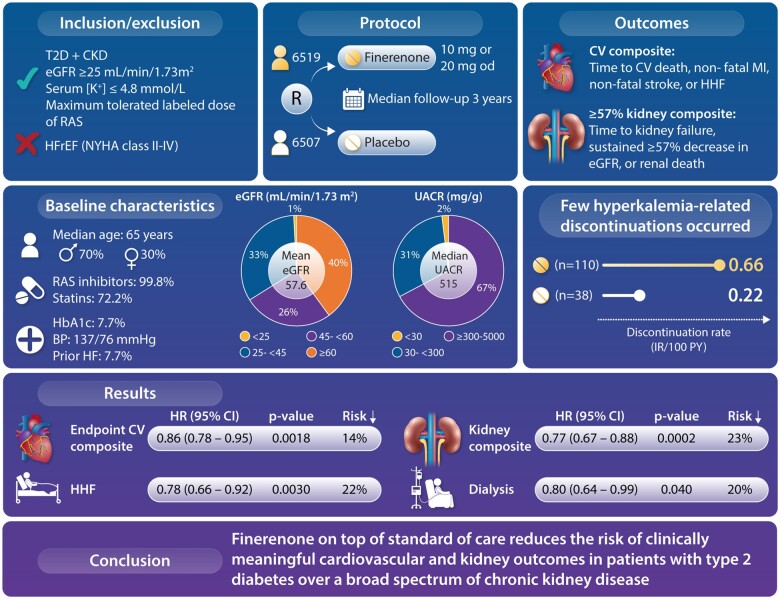
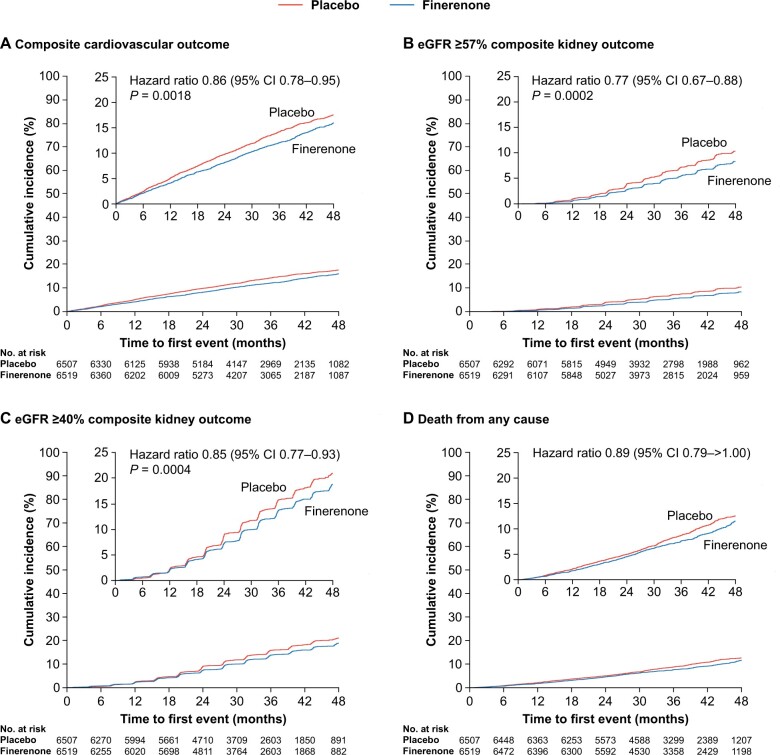
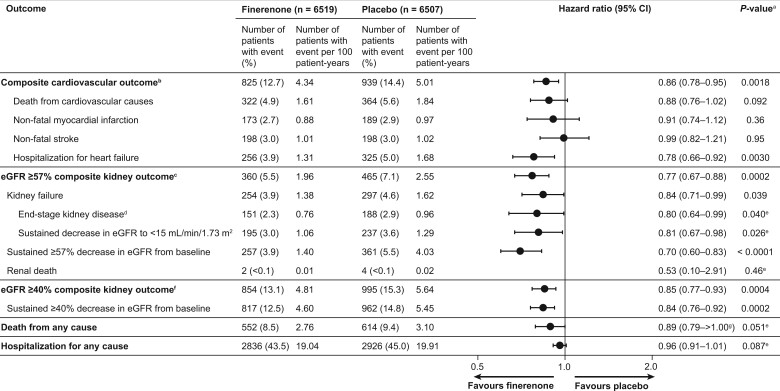
Aims: The complementary studies FIDELIO-DKD and FIGARO-DKD in patients with type 2 diabetes and chronic kidney disease (CKD) examined cardiovascular and kidney outcomes in different, overlapping stages of CKD. The purpose of the FIDELITY analysis was to perform an individual patient-level prespecified pooled efficacy and safety analysis across a broad spectrum of CKD to provide more robust estimates of safety and efficacy of finerenone compared with placebo. Methods and results: For this prespecified analysis, two phase III, multicentre, double-blind trials involving patients with CKD and type 2 diabetes, randomized 1:1 to finerenone or placebo, were combined. Main time-to-event efficacy outcomes were a composite of cardiovascular death, non-fatal myocardial infarction, non-fatal stroke, or hospitalization for heart failure, and a composite of kidney failure, a sustained ≥57% decrease in estimated glomerular filtration rate from baseline over ≥4 weeks, or renal death. Among 13 026 patients with a median follow-up of 3.0 years (interquartile range 2.3–3.8 years), the composite cardiovascular outcome occurred in 825 (12.7%) patients receiving finerenone and 939 (14.4%) receiving placebo [hazard ratio (HR), 0.86; 95% confidence interval (CI), 0.78–0.95; P = 0.0018]. The composite kidney outcome occurred in 360 (5.5%) patients receiving finerenone and 465 (7.1%) receiving placebo (HR, 0.77; 95% CI, 0.67–0.88; P = 0.0002). Overall safety outcomes were generally similar between treatment arms. Hyperkalaemia leading to permanent treatment discontinuation occurred more frequently in patients receiving finerenone (1.7%) than placebo (0.6%). Conclusion: Finerenone reduced the risk of clinically important cardiovascular and kidney outcomes vs. placebo across the spectrum of CKD in patients with type 2 diabetes. Key Question: Does finerenone, a novel selective, nonsteroidal mineralocorticoid receptor antagonist, added to maximum tolerated renin–angiotensin system inhibition reduce cardiovascular disease and kidney disease progression over a broad range of chronic kidney disease in patients with type 2 diabetes? Key Finding: In a prespecified, pooled individual-level analysis from two randomized trials, we found reductions both in cardiovascular events and kidney failure outcomes with finerenone. Because 40% of the patients had an estimated glomerular filtration rate of >60 mL/min/1.73m2 they were identified solely on the basis of albuminuria. Take Home Message: Finerenone reduces the risk of clinical cardiovascular outcomes and kidney disease progression in a broad range of patients with chronic kidney disease and type 2 diabetes. Screening for albuminuria to identify at-risk patients among patients with type 2 diabetes facilitates reduction of both cardiovascular and kidney disease burden.
Overview
CoChat Summary
TL;DR
In a prespecified pooled analysis of FIDELIO-DKD and FIGARO-DKD (13,026 patients with type 2 diabetes and CKD), finerenone reduced composite cardiovascular and kidney outcomes versus placebo. Hyperkalaemia was more frequent with finerenone but rarely led to permanent discontinuation, and no fatal hyperkalaemia occurred.
Key findings
- The composite cardiovascular outcome (cardiovascular death, non-fatal MI, non-fatal stroke, or hospitalization for heart failure) occurred in 825 (12.7%) finerenone patients vs 939 (14.4%) placebo patients (HR 0.86; 95% CI 0.78–0.95; P=0.0018).
- The composite kidney outcome (kidney failure, sustained ≥57% eGFR decrease over ≥4 weeks, or renal death) occurred in 360 (5.5%) finerenone patients vs 465 (7.1%) placebo patients (HR 0.77; 95% CI 0.67–0.88; P=0.0002).
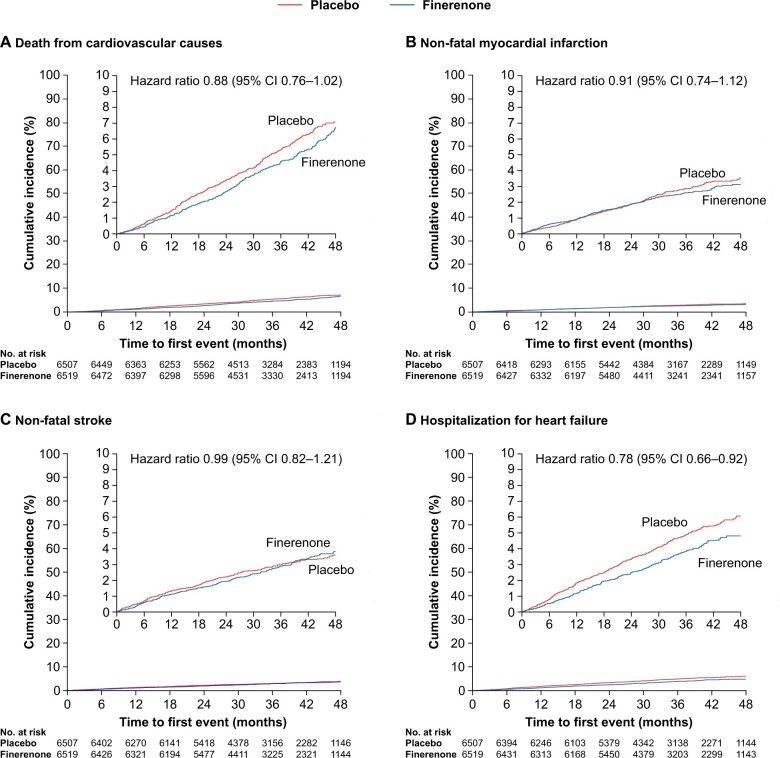
- Hospitalization for heart failure was lower with finerenone (HR 0.78; 95% CI 0.66–0.92; P=0.0030); sustained ≥57% eGFR decrease had HR 0.70 (95% CI 0.60–0.83; P<0.0001) and ESKD had HR 0.80 (95% CI 0.64–0.99; P=0.040).
- Hyperkalaemia leading to permanent treatment discontinuation occurred in 1.7% of finerenone patients vs 0.6% of placebo patients; hyperkalaemia-related adverse events occurred in 14.0% vs 6.9%, with no fatal hyperkalaemia.
Methods
- Prespecified pooled individual patient-level analysis of two phase III, multicentre, double-blind, placebo-controlled trials (FIDELIO-DKD and FIGARO-DKD) in adults with type 2 diabetes and CKD on maximum tolerated ACEi or ARB, randomized 1:1 to finerenone or placebo.
- The full analysis set included 13,026 patients after prospective exclusion of 145 patients with critical Good Clinical Practice violations; median follow-up was 3.0 years (IQR 2.3–3.8), mean eGFR was 57.6 mL/min/1.73 m², and median UACR was 515 mg/g.
- Outcomes were analyzed with stratified Cox proportional hazards models using stratification factors including study, region, eGFR category, albuminuria category, and history of cardiovascular disease; P-values came from stratified log-rank tests, and analyses were prespecified exploratory without multiplicity adjustment.
Limitations
- Stated in the paper: the analysis did not include patients with non-albuminuric CKD, and only a small proportion of Black patients were included.
- Stated in the paper: SGLT-2 inhibitors emerged as therapeutic options after the trials were designed; some patients received these agents at baseline, and combination efficacy/safety was not tested in a randomized combination trial.
- Evident from the text: statistical tests were exploratory rather than hypothesis-confirming and no multiplicity adjustment was performed; patients with chronic symptomatic heart failure with reduced ejection fraction were excluded, limiting generalizability to that population.
Model-written summary. Check it against the paper before relying on it.
Integrity signals
Registry
Cites
Statistics
Figures
Verification
Claims the paper makes
14 Valid · 2 Not valid · 2 Not checked · 76 Own results and interpretations
The cited sources that could be checked couldn’t confirm or dispute this claim.
In the paper
“Patient characteristics, medications, and demographics at baseline were balanced between patients randomized to finerenone and placebo (Table 2 and Supplementary material online, Table S1; published previously3).”
§ Cardiovascular and kidney outcomes with finerenone in patients with type 2 diabetes and chronic kidney disease: the FIDELITY pooled analysis > Results
What the sources say
- Could not verifycites [3] Agarwal, 2020, Investigating new treatment opportunities for patients with chronic kidney disease in type 2 diabetes: the role of finerenone, Nephrol Dial Transplant sourceExperimental — accuracy not yet measured
Table 1 in the FINERENONE PHASE II PROGRAM section reports baseline demographics, clinical characteristics, and medications by trial and in combination, not by finerenone versus placebo assignment. The FINERENONE PHASE III PROGRAM section identifies the trials as randomized and placebo-controlled, but the passages found do not establish that baseline characteristics were balanced between treatment arms (searched for baseline balance and finerenone–placebo group comparisons). (LLM, conf=0.76)
plain- Asserted: passes — The authors put it forward as true.
- Checkable: passes — It can be checked against evidence.
- Load-bearing: passes — The paper’s conclusions depend on it.
- Based: passes — The paper gives a reason why it holds.
- Could not verify
The cited sources that could be checked couldn’t confirm or dispute this claim.
In the paper
“Compared with patients with advanced kidney disease, who are more likely to progress to dialysis, patients with better preserved estimated glomerular filtration rate (eGFR) have a greater lifetime risk of cardiovascular morbidity such as heart failure, myocardial infarction (MI), stroke, or dying from cardiovascular causes.7”
§ Cardiovascular and kidney outcomes with finerenone in patients with type 2 diabetes and chronic kidney disease: the FIDELITY pooled analysis > Introduction
What the sources say
- Could not verifycites [7] Bakris, 2020, Effect of finerenone on chronic kidney disease outcomes in type 2 diabetes, N Engl J Med sourceExperimental — accuracy not yet measured
The Outcomes section defines kidney failure to include long-term dialysis, and the Discussion describes cardiovascular events in a trial whose participants mostly had advanced CKD. Neither passage compares lifetime cardiovascular risk in patients with better-preserved eGFR against those with advanced kidney disease. Searches for that comparison and for preserved eGFR found no supporting passage in our copy; page numbers were not provided. (LLM, conf=0.76)
plainstates an association- Asserted: passes — The authors put it forward as true.
- Checkable: passes — It can be checked against evidence.
- Load-bearing: unclear — It is unclear whether the paper’s conclusions depend on it.
- Based: passes — The paper gives a reason why it holds.
- Could not verify
The cited sources support only part of this claim — read each source’s verdict below.
In the paper
“In FIGARO-DKD, finerenone significantly reduced the primary cardiovascular composite outcome risk in a broader patient population than studied in FIDELIO-DKD (patients with stage 2–4 CKD and moderately increased albuminuria, or stage 1–2 CKD with severely increased albuminuria).7 , 10”
§ Cardiovascular and kidney outcomes with finerenone in patients with type 2 diabetes and chronic kidney disease: the FIDELITY pooled analysis > Introduction
What the sources say
- Partly supportedcites [7] Bakris, 2020, Effect of finerenone on chronic kidney disease outcomes in type 2 diabetes, N Engl J Med sourceExperimental — accuracy not yet measured
Split into 2 atoms — 0 confirmed, 2 partially supported, 0 disputed, 0 misattributed, 0 unverifiable. Expand the claim to see per-atom verdicts.
- Supportedcites [10] Pitt, 2021, Cardiovascular events with finerenone in kidney disease and type 2 diabetes, N Engl J Med source
Split into 2 atoms — 2 confirmed, 0 partially supported, 0 disputed, 0 misattributed, 0 unverifiable. Expand the claim to see per-atom verdicts.
plainstates a cause- Asserted: passes — The authors put it forward as true.
- Checkable: passes — It can be checked against evidence.
- Load-bearing: passes — The paper’s conclusions depend on it.
- Based: passes — The paper gives a reason why it holds.
- Partly supported
The cited sources support only part of this claim — read each source’s verdict below.
In the paper
“Patients with chronic kidney disease (CKD) and type 2 diabetes have high residual cardiorenal morbidity and mortality, despite current therapies,1–5”
§ Cardiovascular and kidney outcomes with finerenone in patients with type 2 diabetes and chronic kidney disease: the FIDELITY pooled analysis > Introduction
What the sources say
- Supportedcites [1] Alicic, 2017, Diabetic kidney disease: challenges, progress, and possibilities, Clin J Am Soc Nephrol source
The Abstract states that diabetic kidney disease carries substantial cardiovascular mortality and that a large risk of kidney disease onset and progression remains despite current therapies. The Treatment of DKD passage specifically discusses patients with type 2 diabetes and CKD, noting persistent cardiovascular and kidney risks under treatment. (LLM, conf=0.90)
- Supportedcites [2] Perkovic, 2019, Canagliflozin and renal outcomes in type 2 diabetes and nephropathy, N Engl J Med source
The Patients section states that participants with type 2 diabetes and chronic kidney disease were required to receive ACE-inhibitor or angiotensin-receptor-blocker therapy. The Secondary and Exploratory Outcomes table reports substantial kidney and cardiovascular event rates, including deaths, in the placebo group despite that background treatment. Page numbers were not supplied for these passages. (LLM, conf=0.88)
- Supportedcites [3] Agarwal, 2020, Investigating new treatment opportunities for patients with chronic kidney disease in type 2 diabetes: the role of finerenone, Nephrol Dial Transplant source
The Introduction states that, despite ACE inhibitor or ARB treatment and concomitant SGLT2 inhibitor use, patients with CKD and type 2 diabetes retain a risk of progression to end-stage kidney disease and cardiovascular morbidity and mortality. The Conclusions also describe patients at high cardiorenal risk despite standard care. (LLM, conf=0.94)
- Partly supportedcites [4] Neuen, 2019, SGLT2 inhibitors for the prevention of kidney failure in patients with type 2 diabetes: a systematic review and meta-analysis, Lancet Diabetes Endocrinol sourceExperimental — accuracy not yet measured
The Introduction says that residual kidney risk remains high despite recommended ACE inhibitor or ARB treatment for people with type 2 diabetes who have, or are at risk of, kidney disease. The Results include cardiovascular or kidney death in a composite outcome, but the paper does not establish the claimed high residual cardiovascular morbidity and mortality in patients with both CKD and type 2 diabetes. (LLM, conf=0.83)
- Not checked — no full text of the sourcecites [5] Zelniker, 2019, Comparison of the effects of glucagon-like peptide receptor agonists and sodium-glucose cotransporter 2 inhibitors for prevention of major adverse cardiovascular and renal outcomes in type 2 diabetes mellitus, Circulation source
plain- Asserted: passes — The authors put it forward as true.
- Checkable: passes — It can be checked against evidence.
- Load-bearing: passes — The paper’s conclusions depend on it.
- Based: passes — The paper gives a reason why it holds.
- Supported
Every source the paper cites for this claim was checked and supports it.
In the paper
“They investigated the efficacy and safety of finerenone, on top of maximum tolerated renin–angiotensin system inhibition, on kidney and cardiovascular outcomes in patients with mild-to-severe CKD in type 2 diabetes (Supplementary material online, Figure S1).3”
§ Cardiovascular and kidney outcomes with finerenone in patients with type 2 diabetes and chronic kidney disease: the FIDELITY pooled analysis > Introduction
What the sources say
- Supportedcites [3] Agarwal, 2020, Investigating new treatment opportunities for patients with chronic kidney disease in type 2 diabetes: the role of finerenone, Nephrol Dial Transplant source
The FINERENONE PHASE III PROGRAM section describes FIDELIO-DKD and FIGARO-DKD as trials of finerenone’s efficacy and safety for kidney and cardiovascular outcomes in patients with CKD and type 2 diabetes. Its comparison-of-populations subsection says participants received maximum tolerated labeled doses of an ACE inhibitor or ARB, and describes the trials’ inclusion of patients with preserved kidney function as well as those at high cardiorenal risk. Page numbers are not available in our copy. (LLM, conf=0.94)
plainstates a cause- Asserted: passes — The authors put it forward as true.
- Checkable: passes — It can be checked against evidence.
- Load-bearing: passes — The paper’s conclusions depend on it.
- Based: passes — The paper gives a reason why it holds.
- Supported
55 more claims · 5 with their cited sources checked
Create a free account to see all 94 claims and every source verdict.
- It may state two separate claims as one. 17
- Probably not a substantial claim. 23
Claims other papers make about this one
Each is checked against this paper’s own text: does it say what the citing paper says it does?
The source backs part of the claim, not all of it — or backs it for a different population, condition or comparison.
In the citing paper
“Sub-group analyses considering those co-prescribed MRA and SGLT2 inhibitors suggest their combined use does not modify safety findings from the key trials.150,189,[722][723][724][725][726]”
From 2023 ESC guidelines for the management of cardiovascular disease in patients with diabetes. (2023) · cites this paper as [722]
Experimental — accuracy not yet measuredThe source backs part of the claim, not all of it — or backs it for a different population, condition or comparison.
In the citing paper
“The pooled FIDELITY trial analysis confirms and strengthens the positive cardiovascular and kidney outcomes with finerenone across the spectrum of CKD, irrespective of baseline ASCVD history (with the exclusion of those with heart failure with reduced ejection fraction).”
From 11. Chronic Kidney Disease and Risk Management: Standards of Care in Diabetes—2025 (2025) · cites this paper as [127]
Experimental — accuracy not yet measuredThe source backs part of the claim, not all of it — or backs it for a different population, condition or comparison.
In the citing paper
“It also demonstrated a 23% reduction in the composite kidney outcome, consisting of sustained $57% decrease in eGFR from baseline over $4 weeks, or renal death, for finerenone vs. placebo (5.5% vs. 7.1%; HR 0.77 [95% CI 0.670.88];P = 0.0002).”
From 11. Chronic Kidney Disease and Risk Management: Standards of Care in Diabetes—2025 (2025) · cites this paper as [127]
Experimental — accuracy not yet measuredThe source backs part of the claim, not all of it — or backs it for a different population, condition or comparison.
In the citing paper
“and a lower incidence of kidney failure, de fi ned as initiation of chronic dialysis or kidney transplantation (HR: 0.80; 95% CI: 0.64 -0.99).”
From KDIGO 2022 Clinical Practice Guideline for Diabetes Management in Chronic Kidney Disease (2022) · cites this paper as [165]
Experimental — accuracy not yet measuredThe source backs part of the claim, not all of it — or backs it for a different population, condition or comparison.
In the citing paper
“HR: 0.79; 95% CI: 0.52 -1.11 among 944 participants using a GLP-1 RA”
From KDIGO 2022 Clinical Practice Guideline for Diabetes Management in Chronic Kidney Disease (2022) · cites this paper as [165]
Experimental — accuracy not yet measured
23 more claims about this paper
Create a free account to see every claim other papers make about this one.
Self-check
Percentages, sums and reported differences re-computed from the paper’s own numbers.
Rated minor: it would not touch a result — a value no result rests on, a p-value that stays on the same side of the significance level, or a conflict that is clerical, resolved elsewhere in the paper, or outside its own findings.
In the paper
“| Others | 385 (5.9) | 356 (5.4) | 741 (5.8) |”
§ Cardiovascular and kidney outcomes with finerenone in patients with type 2 diabetes and chronic kidney disease: the FIDELITY pooled analysis > Results
Reported 5.8 · recomputed 5.688623
Citations
Cites
McDonagh, T. A., Metra, M., Adamo, M., Gardner, R. S., Baumbach, A., Böhm, M., Burri, H., Butler, J., Čelutkienė, J., Chioncel, O., et al. (2021) · European Heart Journal · doi:10.1093/eurheartj/ehab670 · Cited by 19,442
2013 ACCF/AHA Guideline for the Management of Heart Failure
Yancy, C. W., Jessup, M., Bozkurt, B., Butler, J., Casey, D. E., Drazner, M. H., Fonarow, G. C., Geraci, S. A., Horwich, T., Januzzi, J. L., et al. (2013) · Journal of the American College of Cardiology · doi:10.1016/j.jacc.2013.05.019 · Cited by 12,536
Ahmed, A., Jorna, T., & Bhandari, S. (2016) · Nephron · doi:10.1159/000447068 · Cited by 11,717
2016 ESC Guidelines for the diagnosis and treatment of acute and chronic heart failure
Ponikowski, P., Voors, A. A., Anker, S. D., Bueno, H., Cleland, J. G. F., Coats, A. J. S., Falk, V., González-Juanatey, J. R., Harjola, V.-P., Jankowska, E. A., et al. (2016) · European Heart Journal · doi:10.1093/eurheartj/ehw128 · Cited by 11,429
Self-citationBrenner, B. M., Cooper, M. E., de Zeeuw, D., Keane, W. F., Mitch, W. E., Parving, H.-H., Remuzzi, G., Snapinn, S. M., Zhang, Z., & Shahinfar, S. (2001) · New England Journal of Medicine · doi:10.1056/nejmoa011161 · Cited by 7,493
Canagliflozin and Renal Outcomes in Type 2 Diabetes and Nephropathy
Perkovic, V., Jardine, M. J., Neal, B., Bompoint, S., Heerspink, H. J. L., Charytan, D. M., Edwards, R., Agarwal, R., Bakris, G., Bull, S., et al. (2019) · New England Journal of Medicine · doi:10.1056/nejmoa1811744 · Cited by 6,189
Self-citationLewis, E. J., Hunsicker, L. G., Clarke, W. R., Berl, T., Pohl, M. A., Lewis, J. B., Ritz, E., Atkins, R. C., Rohde, R., & Raz, I. (2001) · New England Journal of Medicine · doi:10.1056/nejmoa011303 · Cited by 5,987
Dapagliflozin in Patients with Chronic Kidney Disease
Heerspink, H. J. L., Stefánsson, B. V., Correa-Rotter, R., Chertow, G. M., Greene, T., Hou, F.-F., Mann, J. F. E., McMurray, J. J. V., Lindberg, M., Rossing, P., et al. (2020) · New England Journal of Medicine · doi:10.1056/nejmoa2024816 · Cited by 5,618
Self-citationEffect of finerenone on chronic kidney disease outcomes in type 2 diabetes
Bakris, G. L., Agarwal, R., Anker, S. D., Pitt, B., Ruilope, L. M., Rossing, P., Kolkhof, P., Nowack, C., Schloemer, P., Joseph, A., et al. (2020) · New England Journal of Medicine · doi:10.1056/nejmoa2025845 · Cited by 2,935 · cited 10×
“In FIDELIO-DKD, finerenone significantly reduced the risk of the primary kidney composite outcome and the key secondary cardiovascular composite outcome in patients with predominantly stage 3–4 CKD with severely increased albuminuria and type 2 diabetes.(7) In FIGARO-DKD, finerenone significantly reduced the primary c…”
BackgroundMethodInfluentialSelf-citationDiabetic Kidney Disease: Challenges, Progress, and Possibilities
Alicic, R. Z., Rooney, M. T., & Tuttle, K. R. (2017) · Clinical Journal of the American Society of Nephrology · doi:10.2215/cjn.11491116 · Cited by 2,898
Cited by
KDIGO 2024 clinical practice guideline for the evaluation and management of chronic kidney disease
Stevens, P. E., Ahmed, S. B., Carrero, J. J., Foster, B., Francis, A., Hall, R. K., Herrington, W. G., Hill, G., Inker, L. A., Kazancıoğlu, R., et al. (2024) · Kidney International · doi:10.1016/j.kint.2023.10.018 · Cited by 8,530
Mancia, G., Kreutz, R., Brunström, M., Burnier, M., Grassi, G., Januszewicz, A., Muiesan, M. L., Tsioufis, K., Agabiti-Rosei, E., Algharably, E. A. E., et al. (2023) · Journal of Hypertension · doi:10.1097/hjh.0000000000003480 · Cited by 3,473
McDonagh, T. A., Metra, M., Adamo, M., Gardner, R. S., Baumbach, A., Böhm, M., Burri, H., Butler, J., Čelutkienė, J., Chioncel, O., et al. (2023) · European Heart Journal · doi:10.1093/eurheartj/ehad195 · Cited by 2,612
2024 ESC Guidelines for the management of elevated blood pressure and hypertension
McEvoy, J. W., McCarthy, C. P., Bruno, R. M., Brouwers, S., Canavan, M. D., Ceconi, C., Christodorescu, R. M., Daskalopoulou, S. S., Ferro, C. J., Gerdts, E., et al. (2024) · European Heart Journal · doi:10.1093/eurheartj/ehae178 · Cited by 2,298
Cardiovascular-kidney-metabolic health: a presidential advisory from the American Heart Association
Ndumele, C. E., Rangaswami, J., Chow, S. L., Neeland, I. J., Tuttle, K. R., Khan, S. S., Coresh, J., Mathew, R. O., Baker-Smith, C. M., Carnethon, M. R., et al. (2023) · Circulation · doi:10.1161/cir.0000000000001184 · Cited by 2,208
“103 Finerenone can be considered to reduce adverse cardiovascular and kidney events in patients with diabetes and CKD already on maximally tolerated renin-angiotensin system inhibition, 104 with or without SGLT2 inhibitor use.”
Background2023 ESC guidelines for the management of cardiovascular disease in patients with diabetes.
Marx, N., Federici, M., Schütt, K., Müller-Wieland, D., Ajjan, R. A., Antunes, M. J., Christodorescu, R. M., Crawford, C., Di Angelantonio, E., Eliasson, B., et al. (2023) · European Heart Journal · doi:10.1093/eurheartj/ehad192 · Cited by 1,642
Self-citationNdumele, C. E., Neeland, I. J., Tuttle, K. R., Chow, S. L., Mathew, R. O., Khan, S. S., Coresh, J., Baker-Smith, C. M., Carnethon, M. R., Després, J.-P., et al. (2023) · Circulation · doi:10.1161/cir.0000000000001186 · Cited by 1,405
“149 In the SHARP trial (Study of Heart and Renal Protection), among patients with CKD (almost half of whom were on dialysis) with no known history of ASCVD, patients randomized to simvastatin plus ezeti-mibe compared with placebo had a significant reduction in first major atherosclerotic events.”
BackgroundKDIGO 2022 Clinical Practice Guideline for Diabetes Management in Chronic Kidney Disease
Rossing, P., Caramori, M. L., Chan, J. C. N., Heerspink, H. J. L., Hurst, C., Khunti, K., Liew, A., Michos, E. D., Navaneethan, S. D., Olowu, W. A., et al. (2022) · Kidney International · doi:10.1016/j.kint.2022.06.008 · Cited by 1,373
Self-citationde Boer, I. H., Khunti, K., Sadusky, T., Tuttle, K. R., Neumiller, J. J., Rhee, C. M., Rosas, S. E., Rossing, P., & Bakris, G. (2022) · Diabetes Care · doi:10.2337/dci22-0027 · Cited by 919
“Findings from the FIDELITY (Finerenone in Chronic Kidney Disease and Type 2 Diabetes: Combined FIDELIODKD and FIGARO-DKD Trial Programme Analysis) individual patient, prespecified combined analysis of both trials (13,191 total participants) demonstrated significant reductions of 18% for the composite cardiovascular ou…”
ResultSelf-citationEpidemiology and risk of cardiovascular disease in populations with chronic kidney disease
Matsushita, K., Ballew, S. H., Wang, A. Y.-M., Kalyesubula, R., Schaeffner, E., & Agarwal, R. (2022) · Nature Reviews Nephrology · doi:10.1038/s41581-022-00616-6 · Cited by 670
Self-citationMolecular mechanisms and therapeutic targets for diabetic kidney disease
Tuttle, K. R., Agarwal, R., Alpers, C. E., Bakris, G. L., Brosius, F. C., Kolkhof, P., & Uribarri, J. (2022) · Kidney International · doi:10.1016/j.kint.2022.05.012 · Cited by 668
Self-citationBlonde, L., Umpierrez, G. E., Reddy, S. S., McGill, J. B., Berga, S. L., Bush, M., Chandrasekaran, S., DeFronzo, R. A., Einhorn, D., Galindo, R. J., et al. (2022) · Endocrine Practice · doi:10.1016/j.eprac.2022.08.002 · Cited by 507
10. Cardiovascular Disease and Risk Management: Standards of Care in Diabetes—2023
ElSayed, N. A., Aleppo, G., Aroda, V. R., Bannuru, R. R., Brown, F. M., Bruemmer, D., Collins, B. S., Das, S. R., Hilliard, M. E., Isaacs, D., et al. (2023) · Diabetes Care · doi:10.2337/dc23-s010 · Cited by 465
Authors/Task Force Members:, McDonagh, T. A., Metra, M., Adamo, M., Gardner, R. S., Baumbach, A., Böhm, M., Burri, H., Butler, J., Čelutkienė, J., et al. (2024) · European Journal of Heart Failure · doi:10.1002/ejhf.3024 · Cited by 466
Cardiovascular disease in type 2 diabetes mellitus: progress toward personalized management
Ma, C.-X., Ma, X.-N., Guan, C.-H., Li, Y.-D., Mauricio, D., & Fu, S.-B. (2022) · Cardiovascular Diabetology · doi:10.1186/s12933-022-01516-6 · Cited by 464
10. Cardiovascular Disease and Risk Management: Standards of Care in Diabetes—2024
American Diabetes Association Professional Practice Committee, ElSayed, N. A., Aleppo, G., Bannuru, R. R., Bruemmer, D., Collins, B. S., Das, S. R., Ekhlaspour, L., Hilliard, M. E., Johnson, E. L., et al. (2024) · Diabetes Care · doi:10.2337/dc24-s010 · Cited by 438
Hypertension as Cardiovascular Risk Factor in Chronic Kidney Disease
Burnier, M., & Damianaki, A. (2023) · Circulation Research · doi:10.1161/circresaha.122.321762 · Cited by 400
“108 Finerenone also improved heart failure outcomes irrespective of baseline eGFR or UACR categories, thus confirming the role of aldosterone antagonists in the management of heart failure.”
Samson, S. L., Vellanki, P., Blonde, L., Christofides, E. A., Galindo, R. J., Hirsch, I. B., Isaacs, S. D., Izuora, K. E., Low Wang, C. C., Twining, C. L., et al. (2023) · Endocrine Practice · doi:10.1016/j.eprac.2023.02.001 · Cited by 375
Targeting inflammation to treat diabetic kidney disease: the road to 2030
Rayego-Mateos, S., Rodrigues-Diez, R. R., Fernandez-Fernandez, B., Mora-Fernández, C., Marchant, V., Donate-Correa, J., Navarro-González, J. F., Ortiz, A., & Ruiz-Ortega, M. (2023) · Kidney International · doi:10.1016/j.kint.2022.10.030 · Cited by 366
de Boer, I. H., Khunti, K., Sadusky, T., Tuttle, K. R., Neumiller, J. J., Rhee, C. M., Rosas, S. E., Rossing, P., & Bakris, G. (2022) · Kidney International · doi:10.1016/j.kint.2022.08.012 · Cited by 353
Self-citationNeuen, B. L., Heerspink, H. J. L., Vart, P., Claggett, B. L., Fletcher, R. A., Arnott, C., de Oliveira Costa, J., Falster, M. O., Pearson, S.-A., Mahaffey, K. W., et al. (2024) · Circulation · doi:10.1161/circulationaha.123.067584 · Cited by 358
Self-citation10. Cardiovascular Disease and Risk Management: Standards of Care in Diabetes—2025
American Diabetes Association Professional Practice Committee, ElSayed, N. A., McCoy, R. G., Aleppo, G., Balapattabi, K., Beverly, E. A., Briggs Early, K., Bruemmer, D., Das, S. R., Echouffo-Tcheugui, J. B., et al. (2025) · Diabetes Care · doi:10.2337/dc25-s010 · Cited by 486
Diabetic Nephropathy: Update on Pillars of Therapy Slowing Progression
Naaman, S. C., & Bakris, G. L. (2023) · Diabetes Care · doi:10.2337/dci23-0030 · Cited by 292
Self-citation11. Chronic Kidney Disease and Risk Management: Standards of Care in Diabetes—2023
ElSayed, N. A., Aleppo, G., Aroda, V. R., Bannuru, R. R., Brown, F. M., Bruemmer, D., Collins, B. S., Hilliard, M. E., Isaacs, D., Johnson, E. L., et al. (2023) · Diabetes Care · doi:10.2337/dc23-s011 · Cited by 289
11. Chronic Kidney Disease and Risk Management: Standards of Care in Diabetes—2024
American Diabetes Association Professional Practice Committee, ElSayed, N. A., Aleppo, G., Bannuru, R. R., Bruemmer, D., Collins, B. S., Ekhlaspour, L., Hilliard, M. E., Johnson, E. L., Khunti, K., et al. (2024) · Diabetes Care · doi:10.2337/dc24-s011 · Cited by 275
11. Chronic Kidney Disease and Risk Management: Standards of Care in Diabetes—2025
American Diabetes Association Professional Practice Committee, ElSayed, N. A., McCoy, R. G., Aleppo, G., Balapattabi, K., Beverly, E. A., Briggs Early, K., Bruemmer, D., Echouffo-Tcheugui, J. B., Ekhlaspour, L., et al. (2025) · Diabetes Care · doi:10.2337/dc25-s011 · Cited by 318
Navaneethan, S. D., Zoungas, S., Caramori, M. L., Chan, J. C. N., Heerspink, H. J. L., Hurst, C., Liew, A., Michos, E. D., Olowu, W. A., Sadusky, T., et al. (2023) · Annals of Internal Medicine · doi:10.7326/m22-2904 · Cited by 248
Self-citationRossing, P., Anker, S. D., Filippatos, G., Pitt, B., Ruilope, L. M., Birkenfeld, A. L., McGill, J. B., Rosas, S. E., Joseph, A., Gebel, M., et al. (2022) · Diabetes Care · doi:10.2337/dc22-0294 · Cited by 216
Self-citation2024 Clinical practice guidelines for Hypertension in adults
Kobalava, Z. D., Konradi, A. O., Nedogoda, S. V., Shlyakhto, E. V., Arutyunov, G. P., Baranova, E. I., Barbarash, O. L., Bobkova, N. V., Boytsov, S. A., Bubnova, M. G., et al. (2024) · Russian Journal of Cardiology · doi:10.15829/1560-4071-2024-6117 · Cited by 211
Hypertension management in patients with cardiovascular comorbidities
Lauder, L., Mahfoud, F., Azizi, M., Bhatt, D. L., Ewen, S., Kario, K., Parati, G., Rossignol, P., Schlaich, M. P., Teo, K. K., et al. (2023) · European Heart Journal · doi:10.1093/eurheartj/ehac395 · Cited by 210
Beghini, A., Sammartino, A. M., Papp, Z., von Haehling, S., Biegus, J., Ponikowski, P., Adamo, M., Falco, L., Lombardi, C. M., Pagnesi, M., et al. (2025) · ESC Heart Failure · doi:10.1002/ehf2.14857 · Cited by 203
JCS/JHFS 2025 Guideline on Diagnosis and Treatment of Heart Failure
Kitai, T., Kohsaka, S., Kato, T., Kato, E., Sato, K., Teramoto, K., Yaku, H., Akiyama, E., Ando, M., Izumi, C., et al. (2025) · Circulation Journal · doi:10.1253/circj.cj-25-0002 · Cited by 191
Romagnani, P., Agarwal, R., Chan, J. C. N., Levin, A., Kalyesubula, R., Karam, S., Nangaku, M., Rodríguez-Iturbe, B., & Anders, H.-J. (2025) · Nature Reviews Disease Primers · doi:10.1038/s41572-024-00589-9 · Cited by 184
Self-citationThe major global burden of chronic kidney disease
Jadoul, M., Aoun, M., & Masimango Imani, M. (2024) · The Lancet Global Health · doi:10.1016/s2214-109x(24)00050-0 · Cited by 181
The impact of population ageing on the burden of chronic kidney disease
Chesnaye, N. C., Ortiz, A., Zoccali, C., Stel, V. S., & Jager, K. J. (2024) · Nature Reviews Nephrology · doi:10.1038/s41581-024-00863-9 · Cited by 171
Vaduganathan, M., Filippatos, G., Claggett, B. L., Desai, A. S., Jhund, P. S., Henderson, A., Brinker, M., Kolkhof, P., Schloemer, P., Lay-Flurrie, J., et al. (2024) · Nature Medicine · doi:10.1038/s41591-024-03264-4 · Cited by 158
Self-citationChinese Guidelines for the Prevention and Treatment of Hypertension (2024 revision)
Wang, J. (2025) · 老年心脏病学杂志:英文版 · doi:10.26599/1671-5411.2025.01.008 · Cited by 196
Cardiovascular disease in chronic kidney disease
Marx-Schütt, K., Cherney, D. Z. I., Jankowski, J., Matsushita, K., Nardone, M., & Marx, N. (2025) · European Heart Journal · doi:10.1093/eurheartj/ehaf167 · Cited by 185
“52 In the 13 026 CKD participants with diabetes included in FIDELITY, finerenone demonstrated a 14% reduction in the composite CV endpoint of CV death, non-fatal MI, non-fatal stroke, or HF hospitalization [HR: 0.86 (95% CI: 0.76–0.98)], which was largely driven by treatment effects on the…”
InfluentialCombination therapy for kidney disease in people with diabetes mellitus
van Raalte, D. H., Bjornstad, P., Cherney, D. Z. I., de Boer, I. H., Fioretto, P., Gordin, D., Persson, F., Rosas, S. E., Rossing, P., Schaub, J. A., et al. (2024) · Nature Reviews Nephrology · doi:10.1038/s41581-024-00827-z · Cited by 127
Self-citationKhan, M. S., Shahid, I., Anker, S. D., Fonarow, G. C., Fudim, M., Hall, M. E., Hernandez, A. F., Morris, A. A., Shafi, T., Weir, M. R., et al. (2023) · Journal of the American College of Cardiology · doi:10.1016/j.jacc.2022.10.028 · Cited by 160
Self-citationNovel Insights into Diabetic Kidney Disease
Młynarska, E., Buławska, D., Czarnik, W., Hajdys, J., Majchrowicz, G., Prusinowski, F., Stabrawa, M., Rysz, J., & Franczyk, B. (2024) · International Journal of Molecular Sciences · doi:10.3390/ijms251810222 · Cited by 167
Theodorakis, N., & Nikolaou, M. (2025) · Biomolecules · doi:10.3390/biom15020213 · Cited by 175
Michos, E. D., Bakris, G. L., Rodbard, H. W., & Tuttle, K. R. (2023) · American Journal of Preventive Cardiology · doi:10.1016/j.ajpc.2023.100502 · Cited by 125
Self-citation2023 Clinical Practice Guidelines for Diabetes Mellitus of the Korean Diabetes Association
Choi, J. H., Lee, K. A., Moon, J. H., Chon, S., Kim, D. J., Kim, H. J., Kim, N. H., Seo, J. A., Kim, M. K., Lim, J. H., et al. (2023) · Diabetes & Metabolism Journal · doi:10.4093/dmj.2023.0282 · Cited by 150
“Nonsteroidal mineralocorticoid receptor antagonists (e.g., finerenone) that have shown cardiac and renal benefits can be considered in T2DM patients with albumin-uria, decreased eGFR, and normal blood potassium levels (RCT, General) [114-116].”
Judge, P., Staplin, N., Mayne, K., Wanner, C., Green, J., Hauske, S. J., Emberson, J., Preiss, D., Ng, S., Roddick, A., et al. (2023) · The Lancet Diabetes & Endocrinology · doi:10.1016/s2213-8587(23)00322-4 · Cited by 155
Agarwal, R., Pitt, B., Palmer, B. F., Kovesdy, C. P., Burgess, E. D., Filippatos, G. S., Małyszko, J., Ruilope, L. M., Rossignol, P., Rossing, P. R., et al. (2022) · Clinical Kidney Journal · doi:10.1093/ckj/sfac234 · Cited by 124
“2 mmHg at weeks 17 and 16, respectively), likely because of the higher baseline BP in the TRH subgroup investigated [10].”
Self-citationPandey, A. K., Bhatt, D. L., Pandey, A. K., Marx, N., Cosentino, F., Pandey, A., & Verma, S. (2023) · European Heart Journal · doi:10.1093/eurheartj/ehad389 · Cited by 143
Prevention of cardiorenal damage: importance of albuminuria
Ruilope, L. M., Ortíz, A., Lucía, A., Miranda, B., Álvarez‐Llamas, G., Barderas, M. G., Volpe, M., Ruiz‐Hurtado, G., & Pitt, B. (2022) · European Heart Journal · doi:10.1093/eurheartj/ehac683 · Cited by 125
Self-citationAdvances and challenges in kidney fibrosis therapeutics
Abbad, L., Estève, E., & Chatziantoniou, C. (2025) · Nature Reviews Nephrology · doi:10.1038/s41581-025-00934-5 · Cited by 148
Agarwal, R., Tu, W., Farjat, A. E., Farag, Y. M. K., Toto, R., Kaul, S., Lawatscheck, R., Rohwedder, K., Ruilope, L. M., Rossing, P., et al. (2023) · Annals of Internal Medicine · doi:10.7326/m23-1023 · Cited by 109
Self-citation11. Chronic Kidney Disease and Risk Management: Standards of Care in Diabetes—2026
American Diabetes Association Professional Practice Committee for Diabetes*, Bajaj, M., McCoy, R. G., Balapattabi, K., Bannuru, R. R., Bellini, N. J., Bennett, A. K., Beverly, E. A., Briggs Early, K., ChallaSivaKanaka, S., et al. (2026) · Diabetes Care · doi:10.2337/dc26-s011 · Cited by 226
Epstein, M., Kovesdy, C. P., Clase, C. M., Sood, M. M., & Pecoits‐Filho, R. (2022) · American Journal of Kidney Diseases · doi:10.1053/j.ajkd.2022.04.016 · Cited by 134
10. Cardiovascular Disease and Risk Management: Standards of Care in Diabetes—2026
American Diabetes Association Professional Practice Committee for Diabetes*, Bajaj, M., McCoy, R. G., Balapattabi, K., Bannuru, R. R., Bellini, N. J., Bennett, A. K., Beverly, E. A., Briggs Early, K., ChallaSivaKanaka, S., et al. (2026) · Diabetes Care · doi:10.2337/dc26-s010 · Cited by 225
Handelsman, Y., Butler, J., Bakris, G. L., DeFronzo, R. A., Fonarow, G. C., Green, J. B., Grunberger, G., Januzzi, J. L., Klein, S., Kushner, P. R., et al. (2023) · Journal of Diabetes and its Complications · doi:10.1016/j.jdiacomp.2022.108389 · Cited by 119
Self-citationEffect of finerenone on ambulatory blood pressure in chronic kidney disease in type 2 diabetes
Agarwal, R., Ruilope, L. M., Ruiz‐Hurtado, G., Haller, H. G., Schmieder, R. E., Anker, S. D., Filippatos, G. S., Pitt, B., Rossing, P. R., Lambelet, M., et al. (2022) · Journal of Hypertension · doi:10.1097/hjh.0000000000003330 · Cited by 117
Self-citationLupus nephritis-related chronic kidney disease
Lichtnekert, J., & Anders, H. (2024) · Nature Reviews Rheumatology · doi:10.1038/s41584-024-01158-w · Cited by 113
Law, J. P., Pickup, L. C., Pavlović, D., Townend, J., & Ferro, C. J. (2022) · Journal of Human Hypertension · doi:10.1038/s41371-022-00751-4 · Cited by 134
Stanciu, S. M., Rusu, E., Miricescu, D., Radu, A. C., Axinia, B., Vrabie, A.-M., Ionescu, R. F., Jinga, M., & Sîrbu, C. A. (2023) · Metabolites · doi:10.3390/metabo13010087 · Cited by 144
Recent Advances in the Management of Diabetic Kidney Disease: Slowing Progression
Wang, N., & Zhang, C. (2024) · International Journal of Molecular Sciences · doi:10.3390/ijms25063086 · Cited by 139
“…Reducing Kidney Failure and Disease Progression in Diabetic Kidney Disease (FIDELIO-DKD) and Finerenone in Reducing cardiovascular mortality and morbidity in Diabetic Kidney Disease (FIGCARO-DKD) clinical trials in participants with T2D and DKD treated with ARB or ACEI as the standard care [151].”
BackgroundNavaneethan, S. D., Bansal, N., Cavanaugh, K. L., Chang, A. R., Crowley, S. T., Delgado, C., Estrella, M. M., Ghossein, C., Ikizler, T. A., Koncicki, H. M., et al. (2024) · American Journal of Kidney Diseases · doi:10.1053/j.ajkd.2024.08.003 · Cited by 127
“…risks across a range of baseline eGFR from 25 to > 60 mL/min/1.73 m 2 and UACR levels of 30 to ≥ 300 mg/g and irrespective of atherosclerotic CVD. 148,149 The KDOQI Work Group agrees with the KDIGO guidelines, the ADA-KDIGO consensus report, and the ADA “Standards of Care in Diabetes — 2024,”…”
InfluentialHerrington, W. G., Judge, P. K., Grams, M. E., & Wanner, C. (2025) · The Lancet · doi:10.1016/s0140-6736(25)01942-7 · Cited by 150
Vaduganathan, M., Claggett, B. L., Lam, C. S. P., Pitt, B., Senni, M., Shah, S. J., Voors, A. A., Zannad, F., Desai, A. S., Jhund, P. S., et al. (2024) · European Journal of Heart Failure · doi:10.1002/ejhf.3253 · Cited by 92
Self-citationHeerspink, H. J. L., Agarwal, R., Bakris, G. L., Cherney, D. Z. I., Lam, C. S. P., Neuen, B. L., Sarafidis, P. A., Tuttle, K. R., Wanner, C., BRINKER, M. D., et al. (2024) · Nephrology Dialysis Transplantation · doi:10.1093/ndt/gfae132 · Cited by 110
“Both trials excluded patients with CKD without diabetes [13 , 14 , 21 ].”
Self-citationNdumele, C. E., Rodriguez, F., Dixon, D. L., Khan, S. S., Mukherjee, D., Bajaj, M., Bangalore, S., Bozkurt, B., Breathett, K., Clarke, S. L., et al. (2026) · JACC · doi:10.1016/j.jacc.2026.03.056 · Cited by 90
New strategies to improve clinical outcomes for diabetic kidney disease
Forst, T. M., Mathieu, C., Giorgino, F., Wheeler, D. C., Παπάνας, Ν., Schmieder, R. E., Halabi, A., Schnell, O., Streckbein, M., & Tuttle, K. R. (2022) · BMC Medicine · doi:10.1186/s12916-022-02539-2 · Cited by 101
Bakris, G. L., Ruilope, L. M., Anker, S. D., Filippatos, G. S., Pitt, B., Rossing, P. R., Fried, L. P., Roy‐Chaudhury, P., Sarafidis, P. A., Ahlers, C., et al. (2022) · Kidney International · doi:10.1016/j.kint.2022.08.040 · Cited by 102
Self-citationWhat’s New in the Molecular Mechanisms of Diabetic Kidney Disease: Recent Advances
Watanabe, K., Sato, E., Mishima, E., Miyazaki, M., & Tanaka, T. (2022) · International Journal of Molecular Sciences · doi:10.3390/ijms24010570 · Cited by 105
Biomarkers to Guide Medical Therapy in Primary Aldosteronism
Hundemer, G. L., Leung, A. A. C., Kline, G. A., Brown, J. M., Turcu, A. F., & Vaidya, A. (2023) · Endocrine Reviews · doi:10.1210/endrev/bnad024 · Cited by 97
Pathomechanisms of Diabetic Kidney Disease
Sinha, S. K., & Nicholas, S. B. (2023) · Journal of Clinical Medicine · doi:10.3390/jcm12237349 · Cited by 114
Moving from Evidence to Implementation of Breakthrough Therapies for Diabetic Kidney Disease
Tuttle, K. R., Wong, L., St. Peter, W., Roberts, G., Rangaswami, J., Mottl, A., Kliger, A. S., Harris, R. C., Gee, P. O., Fowler, K., et al. (2022) · Clinical Journal of the American Society of Nephrology · doi:10.2215/cjn.02980322 · Cited by 87
Screening, identifying, and treating chronic kidney disease: why, who, when, how, and what?
Farrell, D. R., & Vassalotti, J. A. (2024) · BMC Nephrology · doi:10.1186/s12882-024-03466-5 · Cited by 113
“Importantly, finerenone should be avoided in those with decompensated cirrhosis [92–94] There are no head-to-head trials comparing spironolactone, eplere-none, and finerenone.”
BackgroundHandelsman, Y., Anderson, J. E., Bakris, G. L., Ballantyne, C. M., Bhatt, D. L., Bloomgarden, Z. T., Bozkurt, B., Budoff, M. J., Butler, J., Cherney, D. Z. I., et al. (2024) · Metabolism · doi:10.1016/j.metabol.2024.155931 · Cited by 103
Self-citationMechanisms of diabetic kidney disease and established and emerging treatments
Leon, V. M., Hilburg, R., & Suszták, K. (2025) · Nature Reviews Endocrinology · doi:10.1038/s41574-025-01171-3 · Cited by 127
Hypertension and Type 2 Diabetes—The Novel Treatment Possibilities
Przezak, A., Bielka, W., & Pawlik, A. (2022) · International Journal of Molecular Sciences · doi:10.3390/ijms23126500 · Cited by 117
Mind the gap in kidney care: translating what we know into what we do
Luyckx, V. A., Tuttle, K. R., Abdellatif, D. A., Correa‐Rotter, R., Fung, W. W., Haris, A., Hsiao, L., Khalife, M., Kumaraswami, L. A., Loud, F. C., et al. (2024) · Kidney International · doi:10.1016/j.kint.2023.12.003 · Cited by 96
Non-steroidal mineralocorticoid receptor antagonists in cardiorenal disease
Pandey, A. K., Bhatt, D. L., Cosentino, F., Marx, N., Rotstein, O. D., Pitt, B., Pandey, A., Butler, J., & Verma, S. (2022) · European Heart Journal · doi:10.1093/eurheartj/ehac299 · Cited by 96
Self-citationThe Cardio-Kidney Patient: Epidemiology, Clinical Characteristics and Therapy
Schuett, K. A., Marx, N., & Lehrke, M. (2023) · Circulation Research · doi:10.1161/circresaha.122.321748 · Cited by 100
Advances in the management of chronic kidney disease
Chen, T. K., Hoenig, M. P., Nitsch, D., & Grams, M. E. (2023) · BMJ · doi:10.1136/bmj-2022-074216 · Cited by 122
Diabetes and its complications: molecular mechanisms, prevention and treatment
Zhao, L., Yuan, J., Yang, Q., Ma, J., Yang, F., Zou, Y., Liu, K., & Liu, F. (2026) · Signal Transduction and Targeted Therapy · doi:10.1038/s41392-025-02401-w · Cited by 80
“Recent multicenter RCTs have demonstrated that SGLT-2Is, 278,337 – 339 GLP-1RAs, 340 and ns-MRAs 329,341,342 offer signi fi cant kidney and cardiovascular bene fi ts, regardless of baseline albuminuria, eGFR, or diabetes status.”
Filippatos, G. S., Anker, S. D., Pitt, B., Rossing, P. R., Joseph, A., Kolkhof, P., Lambelet, M., Lawatscheck, R., Bakris, G. L., Ruilope, L. M., et al. (2022) · JACC Heart Failure · doi:10.1016/j.jchf.2022.07.013 · Cited by 92
Self-citationCardiovascular Outcomes in Patients With Diabetes and Kidney Disease
Morales, J., & Handelsman, Y. (2023) · Journal of the American College of Cardiology · doi:10.1016/j.jacc.2023.04.052 · Cited by 93
Judge, P. K., Tuttle, K. R., Staplin, N., Hauske, S. J., Zhu, D., Sardell, R. J., Cronin, L., Green, J. B., Agrawal, N., Arimoto, R., et al. (2024) · Nephrology Dialysis Transplantation · doi:10.1093/ndt/gfae263 · Cited by 91
Self-citationYeo, S. C., Wang, H., Ang, G. Y., Lim, C. K., & Ooi, X. Y. (2023) · Clinical Kidney Journal · doi:10.1093/ckj/sfad137 · Cited by 105
Predicting and preventing heart failure in type 2 diabetes
Pandey, A., Khan, M. S., Patel, K. V., Bhatt, D. L., & Verma, S. (2023) · The Lancet Diabetes & Endocrinology · doi:10.1016/s2213-8587(23)00128-6 · Cited by 92
Cardiorenal benefits of finerenone: protecting kidney and heart
González‐Juanatey, J. R., Górriz, J. L., Ortíz, A., Valle, A., Soler, M. J., & Fácila, L. (2023) · Annals of Medicine · doi:10.1080/07853890.2023.2171110 · Cited by 95
Hypertension and Heart Failure: From Pathophysiology to Treatment
Gallo, G., & Savoia, C. (2024) · International Journal of Molecular Sciences · doi:10.3390/ijms25126661 · Cited by 112
“HF hospitalization was the main driver of the cardiovascular benefit of finerenone in a population that excluded patients with HFrEF at the run-in visit [87].”
BackgroundLv, R., Xu, L., Che, L., Liu, S., Wang, Y., & Dong, B. (2023) · Frontiers in Endocrinology · doi:10.3389/fendo.2023.1125693 · Cited by 80
Hypertension in chronic kidney disease—treatment standard 2023
Georgianos, P. I., & Agarwal, R. (2023) · Nephrology Dialysis Transplantation · doi:10.1093/ndt/gfad118 · Cited by 116
Self-citationMark, P. B., Sarafidis, P. A., Ekart, R., Ferro, C. J., Balafa, O. C., Fernández‐Fernández, B., Herrington, W. G., Rossignol, P., Vecchio, L. D., Valdivielso, J. M., et al. (2023) · Nephrology Dialysis Transplantation · doi:10.1093/ndt/gfad112 · Cited by 87
Role of Uremic Toxins, Oxidative Stress, and Renal Fibrosis in Chronic Kidney Disease
Frąk, W., Dąbek, B., Balcerczyk-Lis, M., Motor, J., Radzioch, E., Młynarska, E., Rysz, J., & Franczyk, B. (2024) · Antioxidants · doi:10.3390/antiox13060687 · Cited by 86
Handelsman, Y., Anderson, J. E., Bakris, G. L., Ballantyne, C. M., Beckman, J. A., Bhatt, D. L., Bloomgarden, Z. T., Bozkurt, B., Budoff, M. J., Butler, J., et al. (2022) · Journal of Diabetes and its Complications · doi:10.1016/j.jdiacomp.2021.108101 · Cited by 64
Self-citationRenal Protection of Mineralocorticoid Receptor Antagonist, Finerenone, in Diabetic Kidney Disease
Kim, D., Lee, S., & Kim, N. H. (2023) · Endocrinology and Metabolism · doi:10.3803/enm.2022.1629 · Cited by 73
Heerspink, H. J. L., Birkenfeld, A. L., Cherney, D. Z. I., Colhoun, H. M., Ji, L., Mathieu, C., Groop, P.-H., Pratley, R. E., Rosas, S. E., Rossing, P., et al. (2023) · Diabetes Research and Clinical Practice · doi:10.1016/j.diabres.2023.110908 · Cited by 63
Self-citationAlicic, R. Z., Neumiller, J. J., & Tuttle, K. R. (2025) · Nephrology Dialysis Transplantation · doi:10.1093/ndt/gfae212 · Cited by 81
Heart Failure: An Update from the Last Years and a Look at the Near Future
Riccardi, M., Sammartino, A. M., Piepoli, M. F., Adamo, M., Pagnesi, M., Rosano, G. M. C., Metra, M., von Haehling, S., & Tomasoni, D. (2022) · ESC Heart Failure · doi:10.1002/ehf2.14257 · Cited by 81
Kidney Fibrosis and Oxidative Stress: From Molecular Pathways to New Pharmacological Opportunities
Patera, F., Gatticchi, L., Cellini, B., Chiasserini, D., & Reboldi, G. (2024) · Biomolecules · doi:10.3390/biom14010137 · Cited by 77
Recent successes in heart failure treatment
Lam, C. S. P., Docherty, K. F., Ho, J. E., McMurray, J. J. V., Myhre, P. L., & Omland, T. (2023) · Nature Medicine · doi:10.1038/s41591-023-02567-2 · Cited by 71
Mutruc, V., Bologa, C., Șorodoc, V., Ceasovschih, A., Morărașu, B. C., Șorodoc, L., Catar, O., & Lionte, C. (2025) · Journal of Clinical Medicine · doi:10.3390/jcm14082833 · Cited by 89
Ortíz, A., Guerra, J. M. A., Chan, J. C. N., Jha, V., Kramer, H., Nicholas, S. B., Pavkov, M. E., Wanner, C., Wong, L. P., Cheung, M., et al. (2025) · Kidney International · doi:10.1016/j.kint.2025.04.005 · Cited by 91
Self-citationSarafidis, P. A., Agarwal, R., Pitt, B., Wanner, C., Filippatos, G. S., Boletis, J., Tuttle, K. R., Ruilope, L. M., Rossing, P. R., Toto, R., et al. (2023) · Clinical Journal of the American Society of Nephrology · doi:10.2215/cjn.0000000000000149 · Cited by 64
“Any treatment-emergent AE 392 (90) 408 (91) Related to study drug 118 (27) 84 (19) Leading to treatment discontinuation 42 (10) 38 (9)”
BackgroundSelf-citation
Metadata
- Authors
- Agarwal, R., Filippatos, G., Pitt, B., Anker, S. D., Rossing, P., Joseph, A., Kolkhof, P., Nowack, C., Gebel, M., Ruilope, L. M., Bakris, G. L., & FIDELIO-DKD and FIGARO-DKD investigators
- Affiliations
- Richard L. Roudebush VA Medical Center (US)
- University General Hospital Attikon (GR)
- University of Michigan (US)
- German Centre for Cardiovascular Research (DE)
- University of Copenhagen (DK)
- Bayer (Germany) (DE)
- Research Institute Hospital 12 de Octubre (ES)
- University of Chicago (US)
- Corresponding author
- Agarwal, Rajiv
- Filippatos, Gerasimos
- ORCID
- Venue
- European Heart Journal
- Publisher
- Oxford University Press (OUP)
- Published
- 2021-11-22
- Volume
- 43
- Issue
- 6
- Pages
- 474-484
- ISSN
- 0195-668X (ISSN-L)
- 1522-9645
- PMC
- PMC8830527
- OpenAlex
- W4206077470
- Semantic Scholar
- 2dad20aa0edb43b1fed3b45b3b6ddda14f0e4b5f
- Cited by
- 1,317
- References
- 31
- Citations by year
- 2026: 340 · 2025: 348 · 2024: 265 · 2023: 243 · 2022: 115 · 2021: 4
- FWCI
- 107.33
- Type
- journal article
- Language
- en
- Open access
- hybrid
- doi.org
- Licence
- Locations
- European Heart Journal (publishedVersion, cc-by-nc)
- PubMed Central (publishedVersion, cc-by-nc)
- PubMed (publishedVersion)
- Research at the University of Copenhagen (University of Copenhagen) (publishedVersion, cc-by)
- Purdue University Indianapolis (Indiana University) (submittedVersion, cc-by-nc)
- ABACUS. Repositorio de Producción Científica (Universidad Europea) (submittedVersion, cc-by-nc)
- Adelaide Research & Scholarship (AR&S) (University of Adelaide) (submittedVersion, cc-by-nc)
- IUScholarWorks (Indiana University) (submittedVersion, cc-by-nc)
- Funders
- Bayer AG,
- Topics
- Health Sciences › Medicine › Nephrology › Chronic Kidney Disease and Diabetes
- Health Sciences › Medicine › Endocrinology, Diabetes and Metabolism › Diabetes Treatment and Management
- Health Sciences › Medicine › Nephrology › Acute Kidney Injury Research
- Keywords
- finerenone, type 2 diabetes, chronic kidney disease, mineralocorticoid receptor antagonists, cardiovascular outcomes, renal outcomes, hyperkalemia, renin-angiotensin system blockade, FIDELIO-DKD, FIGARO-DKD, heart failure hospitalization, renal failure, estimated glomerular filtration rate decline, renal safety
- MeSH terms
- Cardiovascular Diseases, Diabetes Mellitus, Type 2, Double-Blind Method, Humans, Kidney, Naphthyridines, Renal Insufficiency, Chronic
About these checks
Registry, retraction, Cites and statistics results are computed, not judged, with one exception: a printed reference that no index lists is read once by a model before it counts as a citation error. Claims are extracted by a model and kept only when their quote appears verbatim in the text; each cited source is then checked, with a model’s help, for whether it says what the claim relies on. Those verdicts can be wrong — read the claim’s quote and the cited source before relying on one.
The claim verdicts this report counts are experimental: their accuracy is not yet measured.
A language model drew the claims from the paper on 2026-10-16, under version 3 of the claim definition (model deepseek-v4.1-flash, prompt extract-v3).
A second model labelled each claim on 2026-10-16 (model jev-1.13-20260917, definition revision gold-guideline-v0.2).
Cited sources are checked with a language model’s help (gpt-6-sol).
Statistics and arithmetic are recomputed, not judged.
Confidence bands are shown only for fields calibrated on our annotated test set. None is calibrated yet, so no band is shown.
What counts as a claim ›How we measure confidence ›How we check this ›
Are you an author, or do you see a problem with this page? Request a review
Data sources
Bibliographic data: Semantic Scholar, OpenAlex, Crossref.
Contains information from the Semantic Scholar Academic Graph Datasets, made available under the ODC Attribution License (ODC-BY 1.0).
Semantic Scholar’s data is described in: Kinney, R., et al. (2023). The Semantic Scholar Open Data Platform. arXiv:2301.10140.
