

The DOI matches its Crossref record; 61 of the 61 references it cites were found in a registry or an index.
Isolation of MECP2-null Rett Syndrome patient hiPS cells and isogenic controls through X-chromosome inactivation
Open accessAbstract
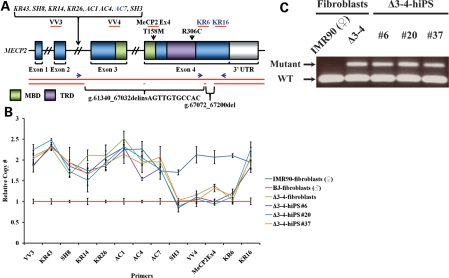
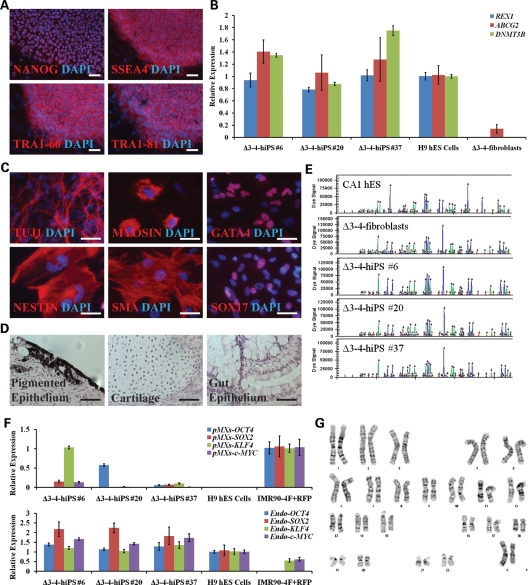
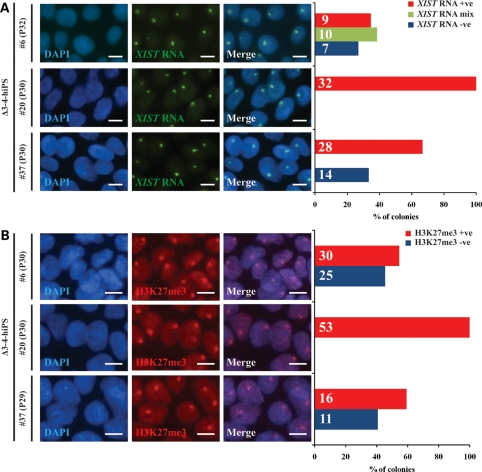
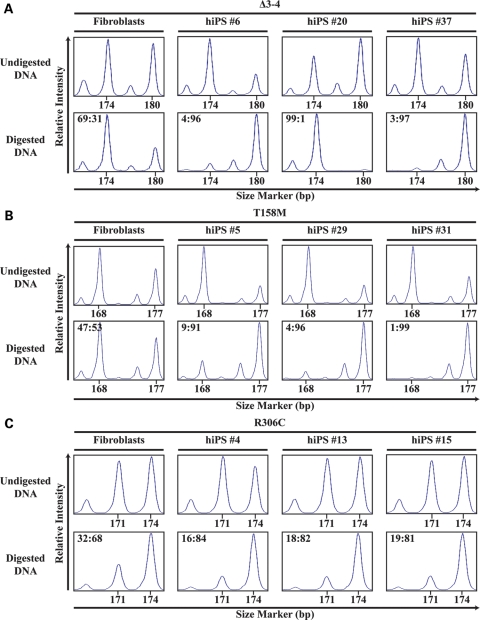
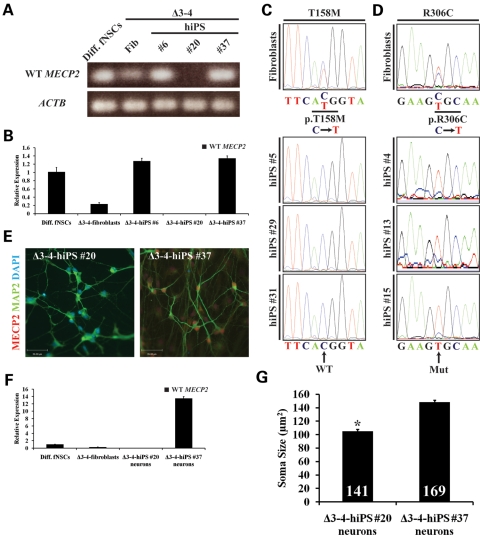
Rett syndrome (RTT) is a neurodevelopmental autism spectrum disorder that affects girls due primarily to mutations in the gene encoding methyl-CpG binding protein 2 (MECP2). The majority of RTT patients carry missense and nonsense mutations leading to a hypomorphic MECP2, while null mutations leading to the complete absence of a functional protein are rare. MECP2 is an X-linked gene subject to random X-chromosome inactivation resulting in mosaic expression of mutant MECP2. The lack of human brain tissue motivates the need for alternative human cellular models to study RTT. Here we report the characterization of a MECP2 mutation in a classic female RTT patient involving rearrangements that remove exons 3 and 4 creating a functionally null mutation. To generate human neuron models of RTT, we isolated human induced pluripotent stem (hiPS) cells from RTT patient fibroblasts. RTT-hiPS cells retained the MECP2 mutation, are pluripotent and fully reprogrammed, and retained an inactive X-chromosome in a nonrandom pattern. Taking advantage of the latter characteristic, we obtained a pair of isogenic wild-type and mutant MECP2 expressing RTT-hiPS cell lines that retained this MECP2 expression pattern upon differentiation into neurons. Phenotypic analysis of mutant RTT-hiPS cell-derived neurons demonstrated a reduction in soma size compared with the isogenic control RTT-hiPS cell-derived neurons from the same RTT patient. Analysis of isogenic control and mutant hiPS cell-derived neurons represents a promising source for understanding the pathogenesis of RTT and the role of MECP2 in human neurons.
Overview
The claims and statistics of this paper haven’t been checked yet.
Run the check — free, no account needed. It reads the open-access text and checks the sources it cites.
Integrity signals
Registry
Cites
Statistics
Figures
Verification
Claims the paper makes
The claims and statistics of this paper haven’t been checked yet.
Run the check — free, no account needed. It reads the open-access text and checks the sources it cites.
Claims other papers make about this one
Each is checked against this paper’s own text: does it say what the citing paper says it does?
In the citing paper
“As a proof-of-principle, several recent studies have now shown that hiPSC-derived neurons from patients with psychiatric disorders exhibit significant aberrations in neuronal connectivity, synapse maturation, and synaptic function compared with those of healthy controls (Brennand et al., 2011; Cheung et al., 2011; Marchetto et al., 2010; Pasca et al., 2011).”
From CNVs: Harbingers of a Rare Variant Revolution in Psychiatric Genetics (2012) · cites this paper as Cheung et al., 2011
Self-check
Percentages, sums and reported differences re-computed from the paper’s own numbers.
The self-check needs the paper’s full text.
Citations
Cites
Induction of Pluripotent Stem Cells from Adult Human Fibroblasts by Defined Factors
Takahashi, K., Tanabe, K., Ohnuki, M., Narita, M., Ichisaka, T., Tomoda, K., & Yamanaka, S. (2007) · Cell · doi:10.1016/j.cell.2007.11.019 · Cited by 20,221
Induced Pluripotent Stem Cell Lines Derived from Human Somatic Cells
Yu, J., Vodyanik, M. A., Smuga-Otto, K., Antosiewicz-Bourget, J., Frane, J. L., Tian, S., Nie, J., Jonsdottir, G. A., Ruotti, V., Stewart, R., et al. (2007) · Science · doi:10.1126/science.1151526 · Cited by 10,310
Rett syndrome is caused by mutations in X-linked MECP2, encoding methyl-CpG-binding protein 2
Amir, R. E., Van den Veyver, I. B., Wan, M., Tran, C. Q., Francke, U., & Zoghbi, H. Y. (1999) · Nature Genetics · doi:10.1038/13810 · Cited by 4,990
Nan, X., Ng, H.-H., Johnson, C. A., Laherty, C. D., Turner, B. M., Eisenman, R. N., & Bird, A. (1998) · Nature · doi:10.1038/30764 · Cited by 3,440
Reprogramming of human somatic cells to pluripotency with defined factors
Park, I.-H., Zhao, R., West, J. A., Yabuuchi, A., Huo, H., Ince, T. A., Lerou, P. H., Lensch, M. W., & Daley, G. Q. (2008) · Nature · doi:10.1038/nature06534 · Cited by 2,436
Disease-Specific Induced Pluripotent Stem Cells.
Park, I.-H., Arora, N., Huo, H., Maherali, N., Ahfeldt, T., Shimamura, A., Lensch, M. W., Cowan, C., Hochedlinger, K., & Daley, G. Q. (2008) · Cell · doi:10.1016/j.cell.2008.07.041 · Cited by 2,196 · cited 1×
“D3–4-hiPS cells were fully reprogrammed, as retroviral transgenes were largely silenced and have simultaneously reactivated the endogenous loci of the reprogramming factors similar to previously published patient-specific hiPS cell lines (29,31,32) (Fig.”
ResultDimos, J. T., Rodolfa, K. T., Niakan, K. K., Weisenthal, L. M., Mitsumoto, H., Chung, W. K., Croft, G. F., Saphier, G., Leibel, R. L., Goland, R., et al. (2008) · Science · doi:10.1126/science.1158799 · Cited by 2,019
MeCP2, a Key Contributor to Neurological Disease, Activates and Represses Transcription
Chahrour, M., Jung, S. Y., Shaw, C., Zhou, X., Wong, S. T. C., Qin, J., & Zoghbi, H. Y. (2008) · Science · doi:10.1126/science.1153252 · Cited by 1,823
Maherali, N., Sridharan, R., Xie, W., Utikal, J., Eminli, S., Arnold, K., Stadtfeld, M., Yachechko, R., Tchieu, J., Jaenisch, R., et al. (2007) · Cell stem cell · doi:10.1016/j.stem.2007.05.014 · Cited by 1,725
A mouse Mecp2-null mutation causes neurological symptoms that mimic Rett syndrome
Guy, J., Hendrich, B., Holmes, M., Martin, J. E., & Bird, A. (2001) · Nature Genetics · doi:10.1038/85899 · Cited by 1,558
Cited by
Sorted by citations
CNVs: Harbingers of a Rare Variant Revolution in Psychiatric Genetics
Malhotra, D., & Sebat, J. (2012) · Cell · doi:10.1016/j.cell.2012.02.039 · Cited by 854
Neurodevelopmental model of schizophrenia: update 2012
Rapoport, J. L., Giedd, J. N., & Gogtay, N. (2012) · Molecular Psychiatry · doi:10.1038/mp.2012.23 · Cited by 790
Induced pluripotent stem cells: the new patient?
Bellin, M., Marchetto, M. C., Gage, F. H., & Mummery, C. L. (2012) · Nature Reviews Molecular Cell Biology · doi:10.1038/nrm3448 · Cited by 454
Genetic and Epigenetic Variations in iPSCs: Potential Causes and Implications for Application
Liang, G., & Zhang, Y. (2013) · Cell stem cell · doi:10.1016/j.stem.2013.07.001 · Cited by 383
Erosion of Dosage Compensation Impacts Human iPSC Disease Modeling
Mekhoubad, S., Bock, C., de Boer, A. S., Kiskinis, E., Meissner, A., & Eggan, K. C. (2012) · Cell stem cell · doi:10.1016/j.stem.2012.02.014 · Cited by 366
MBNL proteins repress ES-cell-specific alternative splicing and reprogramming
Han, H. R., Irimia, M., Ross, P. J., Sung, H., Alipanahi, B., David, L., Golipour, A., Gabut, M., Michael, I. P., Nachman, E. N., et al. (2013) · Nature · doi:10.1038/nature12270 · Cited by 332
Self-citationEpigenetics of Reprogramming to Induced Pluripotency
Papp, B., & Plath, K. (2013) · Cell · doi:10.1016/j.cell.2013.02.043 · Cited by 307
Li, Y., Wang, H., Muffat, J., Cheng, A. W., Orlando, D. A., Lovén, J., Kwok, S., Feldman, D., Bateup, H. S., Gao, Q., et al. (2013) · Cell stem cell · doi:10.1016/j.stem.2013.09.001 · Cited by 315
The Human Brain in a Dish: The Promise of iPSC-Derived Neurons
Dolmetsch, R. E., & Geschwind, D. H. (2011) · Cell · doi:10.1016/j.cell.2011.05.034 · Cited by 320
The promises and challenges of human brain organoids as models of neuropsychiatric disease
Quadrato, G., Brown, J., & Arlotta, P. (2016) · Nature Medicine · doi:10.1038/nm.4214 · Cited by 304
Applications of CRISPR–Cas systems in neuroscience
Heidenreich, M., & Zhang, F. (2015) · Nature reviews. Neuroscience · doi:10.1038/nrn.2015.2 · Cited by 290
Investigating human disease using stem cell models
Sterneckert, J. L., Reinhardt, P., & Schöler, H. R. (2014) · Nature Reviews Genetics · doi:10.1038/nrg3764 · Cited by 262
Usage of Human Mesenchymal Stem Cells in Cell-based Therapy: Advantages and Disadvantages
Kim, H. J., & Park, J. (2017) · Development & Reproduction · doi:10.12717/dr.2017.21.1.001 · Cited by 246
Neuronal maturation defect in induced pluripotent stem cells from patients with Rett syndrome
Kim, K., Hysolli, E., & Park, I. (2011) · Proceedings of the National Academy of Sciences · doi:10.1073/pnas.1018979108 · Cited by 223
Pluripotent Stem Cells: Current Understanding and Future Directions
Romito, A., & Cobellis, G. (2015) · Stem Cells International · doi:10.1155/2016/9451492 · Cited by 241
Ananiev, G. E., Williams, E. C., Li, H., & Chang, Q. (2011) · PLoS ONE · doi:10.1371/journal.pone.0025255 · Cited by 210
Human Models Are Needed for Studying Human Neurodevelopmental Disorders
Zhao, X., & Bhattacharyya, A. (2018) · The American Journal of Human Genetics · doi:10.1016/j.ajhg.2018.10.009 · Cited by 192
Induced pluripotent stem cells (iPSCs) and neurological disease modeling: progress and promises
Marchetto, M. C., Brennand, K., Boyer, L. F., & Gage, F. H. (2011) · Human Molecular Genetics · doi:10.1093/hmg/ddr336 · Cited by 195
Disease characterization using LQTS-specific induced pluripotent stem cells
Egashira, T., Yuasa, S., Suzuki, T., Aizawa, Y., Yamakawa, H., Matsuhashi, T., Ohno, Y., Tohyama, S., Okata, S., Seki, T., et al. (2012) · Cardiovascular Research · doi:10.1093/cvr/cvs206 · Cited by 178
SHANK2 mutations associated with autism spectrum disorder cause hyperconnectivity of human neurons
Zaslavsky, K., Zhang, W.-B., McCready, F. P., Rodrigues, D. C., Deneault, E., Loo, C., Zhao, M., Ross, P. J., El Hajjar, J., Romm, A., et al. (2019) · Nature Neuroscience · doi:10.1038/s41593-019-0365-8 · Cited by 174
Self-citationAnguera, M. C., Sadreyev, R. I., Zhang, Z., Szántó, A., Payer, B., Sheridan, S. D., Kwok, S., Haggarty, S. J., Sur, M., Alvarez, J., et al. (2012) · Cell stem cell · doi:10.1016/j.stem.2012.03.008 · Cited by 166
Human induced pluripotent stem cells for modelling neurodevelopmental disorders
Ardhanareeswaran, K., Mariani, J., Coppola, G., Abyzov, A. S., & Vaccarino, F. M. (2017) · Nature Reviews Neurology · doi:10.1038/nrneurol.2017.45 · Cited by 162
Constructing and Deconstructing Stem Cell Models of Neurological Disease
Han, S. S. W., Williams, L. A., & Eggan, K. C. (2011) · Neuron · doi:10.1016/j.neuron.2011.05.003 · Cited by 159
Morphological and functional reversal of phenotypes in a mouse model of Rett syndrome
Robinson, L., Guy, J., McKay, L., Brockett, E., Spike, R. C., Selfridge, J., De Sousa, D., Merusi, C., Riedel, G., Bird, A., et al. (2012) · Brain · doi:10.1093/brain/aws096 · Cited by 157
Signaling defects in iPSC-derived fragile X premutation neurons
Liu, J., Koscielska, K. A., Cao, Z., Hulsizer, S., Grace, N., Mitchell, G., Nacey, C., Githinji, J., McGee, J., Garcia-Arocena, D., et al. (2012) · Human Molecular Genetics · doi:10.1093/hmg/dds207 · Cited by 147
Oxidative brain damage in Mecp2-mutant murine models of Rett syndrome
De Felice, C., Della Ragione, F., Signorini, C., Leoncini, S., Pecorelli, A., Ciccoli, L., Scalabrì, F., Marracino, F., Madonna, M., Belmonte, G., et al. (2014) · Neurobiology of Disease · doi:10.1016/j.nbd.2014.04.006 · Cited by 126
Modeling psychiatric disorders at the cellular and network levels
Brennand, K. J., Simone, A., Tran, N., & Gage, F. H. (2012) · Molecular Psychiatry · doi:10.1038/mp.2012.20 · Cited by 119
Farra, N., Zhang, W.-B., Pasceri, P., Eubanks, J. H., Salter, M. W., & Ellis, J. (2012) · Molecular Psychiatry · doi:10.1038/mp.2011.180 · Cited by 121
Self-citationKathuria, A., Nowosiad, P., Jagasia, R., Aigner, S., Taylor, R. D., Andreae, L. C., Gatford, N. J. F., Lucchesi, W., Srivastava, D. P., & Price, J. (2017) · Molecular Psychiatry · doi:10.1038/mp.2017.185 · Cited by 120
Epileptic Encephalopathies: New Genes and New Pathways
Nieh, S. E., & Sherr, E. H. (2014) · Neurotherapeutics · doi:10.1007/s13311-014-0301-2 · Cited by 115
Histone deacetylase 3 associates with MeCP2 to regulate FOXO and social behavior
Nott, A., Cheng, J., Gao, F., Lin, Y.-T., Gjoneska, E., Ko, T., Minhas, P., Zamudio, A. V., Meng, J., Zhang, F., et al. (2016) · Nature Neuroscience · doi:10.1038/nn.4347 · Cited by 110
Derivation Conditions Impact X-Inactivation Status in Female Human Induced Pluripotent Stem Cells
Tomoda, K., Takahashi, K., Leung, K., Okada, A., Narita, M., Yamada, N. A., Eilertson, K. E., Tsang, P. W. K., Baba, S., White, M. P., et al. (2012) · Cell stem cell · doi:10.1016/j.stem.2012.05.019 · Cited by 109
Modeling human neurological disorders with induced pluripotent stem cells
Imaizumi, Y., & Okano, H. (2013) · Journal of Neurochemistry · doi:10.1111/jnc.12625 · Cited by 111
Epigenetic aberrations in human pluripotent stem cells
Bar, S., & Benvenisty, N. (2019) · The EMBO Journal · doi:10.15252/embj.2018101033 · Cited by 107
Gabriele, M., Lopez Tobon, A., D'Agostino, G., & Testa, G. (2018) · Progress in Neuro-Psychopharmacology and Biological Psychiatry · doi:10.1016/j.pnpbp.2017.12.013 · Cited by 103
Current status of drug screening and disease modelling in human pluripotent stem cells
Rajamohan, D., Matsa, E., Kalra, S., Crutchley, J., Patel, A. K., George, V. T., & Denning, C. N. (2012) · BioEssays · doi:10.1002/bies.201200053 · Cited by 104
Pomp, O., Dreesen, O., Leong, D. F. M., Meller-Pomp, O., Tan, T. T., Zhou, F., & Colman, A. (2011) · Cell stem cell · doi:10.1016/j.stem.2011.06.004 · Cited by 98
Andoh-Noda, T., Akamatsu, W., Miyake, K., Matsumoto, T., Yamaguchi, R., Sanosaka, T., Okada, Y., Kobayashi, T., Ohyama, M., Nakashima, K., et al. (2015) · Molecular Brain · doi:10.1186/s13041-015-0121-2 · Cited by 92
X Chromosome Inactivation and Epigenetic Responses to Cellular Reprogramming
Lessing, D., & Lee, J. T. (2013) · Annual Review of Genomics and Human Genetics · doi:10.1146/annurev-genom-091212-153530 · Cited by 93
Djuric, U., Cheung, A. Y. L., Zhang, W., Mok, R. S. F., Lai, W., Piekna, A., Hendry, J. A., Ross, P. J., Pasceri, P., Kim, D. S., et al. (2015) · Neurobiology of Disease · doi:10.1016/j.nbd.2015.01.001 · Cited by 93
Self-citationModeling psychiatric disorders: from genomic findings to cellular phenotypes
Falk, A., Heine, V. M., Harwood, A. J., Sullivan, P. F., Peitz, M., Brüstle, O., Shen, S., Sun, Y.-M., Glover, J. C., Posthuma, D., et al. (2016) · Molecular Psychiatry · doi:10.1038/mp.2016.89 · Cited by 88
iPS cells to model CDKL5-related disorders
Amenduni, M., Filippis, R. D., Cheung, A. Y. L., Disciglio, V., Epistolato, M. C., Ariani, F., Mari, F., Mencarelli, M. A., Hayek, Y., Renieri, A., et al. (2011) · European Journal of Human Genetics · doi:10.1038/ejhg.2011.131 · Cited by 85
Self-citationModeling psychiatric disorders with patient-derived iPSCs
Wen, Z., Christian, K. M., Song, H., & Ming, G.-L. (2016) · Current Opinion in Neurobiology · doi:10.1016/j.conb.2015.11.003 · Cited by 84
Synaptic Dysfunction in Human Neurons With Autism-Associated Deletions in PTCHD1-AS
Ross, P. J., Zhang, W., Mok, R. S. F., Zaslavsky, K., Deneault, É., D’Abate, L., Rodrigues, D. C., Yuen, R. K. C., Faheem, M., Mufteev, M., et al. (2019) · Biological Psychiatry · doi:10.1016/j.biopsych.2019.07.014 · Cited by 92
Self-citationYazdani, M., Deogracias, R., Guy, J., Poot, R. A., Bird, A. P., & Barde, Y. (2012) · Stem Cells · doi:10.1002/stem.1180 · Cited by 84
Loss of MECP2 Leads to Activation of P53 and Neuronal Senescence
Ohashi, M., Korsakova, E., Allen, D., Lee, P., Fu, K., Vargas, B. S., Cinkornpumin, J., Salas, C., Park, J. C., Germanguz, I., et al. (2018) · Stem Cell Reports · doi:10.1016/j.stemcr.2018.04.001 · Cited by 80
Concise Review: Drug Discovery in the Age of the Induced Pluripotent Stem Cell
Ko, H. C., & Gelb, B. D. (2014) · Stem Cells Translational Medicine · doi:10.5966/sctm.2013-0162 · Cited by 80
Idiopathic Autism: Cellular and Molecular Phenotypes in Pluripotent Stem Cell-Derived Neurons
Liu, X., Campanac, E., Cheung, H., Ziats, M. N., Canterel-Thouennon, L., Raygada, M. J., Baxendale, V., Pang, A. L., Yang, L., Swedo, S. E., et al. (2016) · Molecular Neurobiology · doi:10.1007/s12035-016-9961-8 · Cited by 83
Modeling synaptogenesis in schizophrenia and autism using human iPSC derived neurons
Habela, C. W., Song, H., & Ming, G. (2015) · Molecular and Cellular Neuroscience · doi:10.1016/j.mcn.2015.12.002 · Cited by 80
Kinnear, C., Chang, W. Y., Khattak, S., Hinek, A., Thompson, T., Rodrigues, D. C., Kennedy, K., Mahmut, N., Pasceri, P., Stanford, W. L., et al. (2012) · Stem Cells Translational Medicine · doi:10.5966/sctm.2012-0054 · Cited by 74
Self-citationComparing ESC and iPSC—Based Models for Human Genetic Disorders
Halevy, T., & Urbach, A. (2014) · Journal of Clinical Medicine · doi:10.3390/jcm3041146 · Cited by 78
Kramer, A. S., Harvey, A. R., Plant, G. W., & Hodgetts, S. I. (2012) · Cell Transplantation · doi:10.3727/096368912x655208 · Cited by 73
Recent advances in gene therapy for neurodevelopmental disorders with epilepsy
Turner, T. J., Zourray, C., Schorge, S., & Lignani, G. (2021) · Journal of Neurochemistry · doi:10.1111/jnc.15168 · Cited by 71
Optimizing neuronal differentiation from induced pluripotent stem cells to model ASD
Kim, D.-S., Ross, P. J., Zaslavsky, K., & Ellis, J. (2014) · Frontiers in Cellular Neuroscience · doi:10.3389/fncel.2014.00109 · Cited by 70
Self-citationHigh-throughput fingerprinting of human pluripotent stem cell fate responses and lineage bias
Nazareth, E. J. P., Östblom, J., Lücker, P. B., Shukla, S., Alvarez, M., Oh, S. K. W., Yin, T., & Zandstra, P. W. (2013) · Nature Methods · doi:10.1038/nmeth.2684 · Cited by 71
Livide, G., Patriarchi, T., Amenduni, M., Amabile, S., Yasui, D. H., Calcagno, E., Rizzo, C. L., Falco, G. D., Ulivieri, C., Ariani, F., et al. (2014) · European Journal of Human Genetics · doi:10.1038/ejhg.2014.81 · Cited by 68
Rodrigues, D. C., Mufteev, M., Weatheritt, R. J., Djuric, U., Ha, K., Ross, P. J., Wei, W., Piekna, A., Sartori, M. A., Byres, L., et al. (2019) · Cell Reports · doi:10.1016/j.celrep.2020.02.107 · Cited by 72
Self-citationXu, X., & Zhong, Z. (2013) · Acta Pharmacologica Sinica · doi:10.1038/aps.2013.63 · Cited by 67
CREB Signaling Is Involved in Rett Syndrome Pathogenesis
Bu, Q., Wang, A., Hamzah, H., Waldman, A. D., Jiang, K., Dong, Q., Li, R., Kim, J., Turner, D., & Chang, Q. (2017) · Journal of Neuroscience · doi:10.1523/jneurosci.3735-16.2017 · Cited by 65
Modeling psychiatric disorders through reprogramming
Brennand, K., & Gage, F. H. (2011) · Disease Models & Mechanisms · doi:10.1242/dmm.008268 · Cited by 68
Generating Human Neurons In Vitro and Using Them to Understand Neuropsychiatric Disease
Pașca, S. P., Panagiotakos, G., & Dolmetsch, R. E. (2014) · Annual Review of Neuroscience · doi:10.1146/annurev-neuro-062012-170328 · Cited by 68
Tanaka, T., Takahashi, K., Yamane, M., Tomida, S., Nakamura, S., Oshima, K., Niwa, A., Nishikomori, R., Kambe, N., Hara, H., et al. (2012) · Blood · doi:10.1182/blood-2012-03-417881 · Cited by 66
Rodrigues, D. C., Kim, D. S., Yang, G., Zaslavsky, K., Ha, K., Mok, R. S. F., Ross, P. J., Zhao, M., Piekna, A., Wei, W., et al. (2016) · Cell Reports · doi:10.1016/j.celrep.2016.09.049 · Cited by 65
Self-citationHuman pluripotent stem cells for disease modelling and drug screening
Maury, Y., Gauthier, M., Peschanski, M., & Martinat, C. (2011) · BioEssays · doi:10.1002/bies.201100071 · Cited by 72
The Pharmacology of Regenerative Medicine
Christ, G. J., Saul, J. M., Furth, M. E., & Andersson, K. (2013) · Pharmacological Reviews · doi:10.1124/pr.112.007393 · Cited by 63
Völkner, M., Wagner, F., Steinheuer, L. M., Carido, M., Kurth, T., Yazbeck, A. M., Schor, J., Wieneke, S., Ebner, L. J. A., Runzer, C. D. T., et al. (2022) · Nature Communications · doi:10.1038/s41467-022-33848-y · Cited by 58
Psychiatry in a Dish: Stem Cells and Brain Organoids Modeling Autism Spectrum Disorders
Ilieva, M. S., Svenningsen, Å. F., Thorsen, M., & Michel, T. M. (2017) · Biological Psychiatry · doi:10.1016/j.biopsych.2017.11.011 · Cited by 64
Corti, S. P., Faravelli, I., Cardano, M., & Conti, L. (2015) · Expert Opinion on Drug Discovery · doi:10.1517/17460441.2015.1037737 · Cited by 65
Srikanth, P., & Young‐Pearse, T. L. (2014) · Journal of Neurogenetics · doi:10.3109/01677063.2014.881358 · Cited by 61
Brennand, K., Landek‐Salgado, M. A., & Sawa, A. (2013) · Biological Psychiatry · doi:10.1016/j.biopsych.2013.10.025 · Cited by 58
Minkovsky, A., Patel, S. G., & Plath, K. (2011) · Stem Cells · doi:10.1002/stem.755 · Cited by 56
Advancing drug discovery for neuropsychiatric disorders using patient-specific stem cell models
Haggarty, S. J., Silva, M. C., Cross, A. J., Brandon, N. J., & Perlis, R. H. (2016) · Molecular and Cellular Neuroscience · doi:10.1016/j.mcn.2016.01.011 · Cited by 57
X-Chromosome Inactivation in Rett Syndrome Human Induced Pluripotent Stem Cells
Cheung, A. Y. L., Horvath, L. M., Carrel, L., & Ellis, J. (2012) · Frontiers in Psychiatry · doi:10.3389/fpsyt.2012.00024 · Cited by 56
Self-citationLanducci, E., Brindisi, M., Bianciardi, L., Catania, L. M., Daga, S., Croci, S., Frullanti, E., Fallerini, C., Butini, S., Brogi, S., et al. (2018) · Experimental Cell Research · doi:10.1016/j.yexcr.2018.05.001 · Cited by 57
Stable X Chromosome Reactivation in Female Human Induced Pluripotent Stem Cells
Barakat, T. S., Ghazvini, M., de Hoon, B., Li, T. M. W. Y., Eussen, B., Douben, H., van der Linden, R., van der Stap, N., Boter, M., Laven, J. S. E., et al. (2015) · Stem Cell Reports · doi:10.1016/j.stemcr.2014.12.012 · Cited by 51
Precision Health Resource of Control iPSC Lines for Versatile Multilineage Differentiation
Hildebrandt, M. R., Reuter, M. S., Wei, W., Tayebi, N., Liu, J., Sharmin, S., Mulder, J., Lesperance, L. S., Brauer, P. M., Mok, R. S. F., et al. (2019) · Stem Cell Reports · doi:10.1016/j.stemcr.2019.11.003 · Cited by 56
Self-citationAcharya, P., Choi, N. Y., Shrestha, S., Jeong, S., & Lee, M. (2023) · Biotechnology and Bioengineering · doi:10.1002/bit.28606 · Cited by 50
Probing disorders of the nervous system using reprogramming approaches
Ichida, J. K., & Kiskinis, E. (2015) · The EMBO Journal · doi:10.15252/embj.201591267 · Cited by 51
Modeling Psychiatric Disorder Biology with Stem Cells
Das, D., Feuer, K. L., Wahbeh, M. H., & Avramopoulos, D. (2020) · Current Psychiatry Reports · doi:10.1007/s11920-020-01148-1 · Cited by 49
Reprogramming patient-derived cells to study the epilepsies
Parent, J. M., & Anderson, S. A. (2015) · Nature Neuroscience · doi:10.1038/nn.3944 · Cited by 53
iPSC-derived neurons as a higher-throughput readout for autism: promises and pitfalls
Prilutsky, D., Palmer, N., Smedemark-Margulies, N., Schlaeger, T. M., Margulies, D. M., & Kohane, I. S. (2013) · Trends in Molecular Medicine · doi:10.1016/j.molmed.2013.11.004 · Cited by 51
Transcriptomics analysis of iPSC-derived neurons and modeling of neuropsychiatric disorders
Lin, M., Lachman, H. M., & Zheng, D. (2015) · Molecular and Cellular Neuroscience · doi:10.1016/j.mcn.2015.11.009 · Cited by 48
Sabitha, K. R., Shetty, A. K., & Upadhya, D. (2020) · Neuroscience & Biobehavioral Reviews · doi:10.1016/j.neubiorev.2020.12.025 · Cited by 50
Early Actions of Neurotransmitters During Cortex Development and Maturation of Reprogrammed Neurons
Ojeda, J., & Ávila, A. (2019) · Frontiers in Synaptic Neuroscience · doi:10.3389/fnsyn.2019.00033 · Cited by 48
Spatiotemporal Proteomic Profiling of Human Cerebral Development
Djuric, U., Rodrigues, D. C., Batruch, I., Ellis, J., Shannon, P. T., & Diamandis, P. (2017) · Molecular & Cellular Proteomics · doi:10.1074/mcp.m116.066274 · Cited by 47
Self-citationSmall Molecule Screening in Human Induced Pluripotent Stem Cell-derived Terminal Cell Types
Engle, S. J., & Vincent, F. (2013) · Journal of Biological Chemistry · doi:10.1074/jbc.r113.529156 · Cited by 48
Human induced pluripotent stem cell derived neurons as a model for Williams-Beuren syndrome
Khattak, S., Brimble, E., Zhang, W., Zaslavsky, K., Strong, E., Ross, P. J., Hendry, J. A., Mital, S. R., Salter, M. W., Osborne, L. R., et al. (2015) · Molecular Brain · doi:10.1186/s13041-015-0168-0 · Cited by 43
Self-citationBarral, S., & Kurian, M. A. (2016) · Frontiers in Molecular Neuroscience · doi:10.3389/fnmol.2016.00078 · Cited by 48
Kruth, K., Grisolano, T. M., Ahern, C. A., & Williams, A. J. (2020) · Molecular Autism · doi:10.1186/s13229-020-00330-9 · Cited by 45
Briggs, S. F., Dominguez, A. A., Chavez, S. L., & Pera, R. A. R. (2015) · Stem Cells · doi:10.1002/stem.1992 · Cited by 43
Modeling neurodevelopmental disorders using human neurons
Chailangkarn, T., Acab, A., & Muotri, A. R. (2012) · Current Opinion in Neurobiology · doi:10.1016/j.conb.2012.04.004 · Cited by 44
Induced pluripotent stem cells for modeling neurological disorders
Russo, F. B. (2015) · World Journal of Transplantation · doi:10.5500/wjt.v5.i4.209 · Cited by 43
Yang, G., & Shcheglovitov, A. (2019) · Developmental Dynamics · doi:10.1002/dvdy.100 · Cited by 46
Modeling Neurodevelopmental Disorders Using Human Pluripotent Stem Cells
Telias, M., & Ben‐Yosef, D. (2014) · Stem Cell Reviews and Reports · doi:10.1007/s12015-014-9507-2 · Cited by 43
Systematic optimization of human pluripotent stem cells media using Design of Experiments
Marinho, P. A., Chailangkarn, T., & Muotri, A. R. (2015) · Scientific Reports · doi:10.1038/srep09834 · Cited by 42
The Path from Skin to Brain: Generation of Functional Neurons from Fibroblasts
Abdullah, A. I., Pollock, A., & Sun, T. (2012) · Molecular Neurobiology · doi:10.1007/s12035-012-8277-6 · Cited by 42
Induced Pluripotent Stem Cell Potential in Medicine, Specifically Focused on Reproductive Medicine
Botman, O., & Wyns, C. (2014) · Frontiers in Surgery · doi:10.3389/fsurg.2014.00005 · Cited by 41
Tidball, A. M., & Parent, J. M. (2015) · Stem Cells · doi:10.1002/stem.2203 · Cited by 43
Regulation of X-chromosome dosage compensation in human: mechanisms and model systems
Sahakyan, A., Plath, K., & Rougeulle, C. (2017) · Philosophical Transactions of the Royal Society B Biological Sciences · doi:10.1098/rstb.2016.0363 · Cited by 40
Evolving toward a human-cell based and multiscale approach to drug discovery for CNS disorders
Schadt, E. E., Buchanan, S., Brennand, K. J., & Merchant, K. M. (2014) · Frontiers in Pharmacology · doi:10.3389/fphar.2014.00252 · Cited by 39
Metadata
- Authors
- Cheung, A. Y. L., Horvath, L. M., Grafodatskaya, D., Pasceri, P., Weksberg, R., Hotta, A., Carrel, L., & Ellis, J.
- Affiliations
- University of Toronto (CA)
- Pennsylvania State University (US)
- Hospital for Sick Children (CA)
- Biologie du Développement et Cellules Souches (FR)
- Corresponding author
- Ellis, James
- Venue
- Human Molecular Genetics
- Publisher
- Oxford University Press (OUP)
- Published
- 2011-03-03
- Volume
- 20
- Issue
- 11
- Pages
- 2103-2115
- ISSN
- 0964-6906 (ISSN-L)
- 1460-2083
- PMC
- PMC3090191
- OpenAlex
- W2103756619
- Cited by
- 271
- References
- 61
- Citations by year
- 2026: 3 · 2025: 6 · 2024: 13 · 2023: 15 · 2022: 5 · 2021: 3 · 2020: 21 · 2019: 15 · 2018: 19 · 2017: 19 · 2016: 20 · 2015: 30 · 2014: 19 · 2013: 24 · 2012: 42
- FWCI
- 20.35
- Type
- journal article
- Language
- en
- Open access
- hybrid
- doi.org
- Licence
- cc-by-nc
- Locations
- Human Molecular Genetics (publishedVersion, cc-by-nc)
- PubMed Central (publishedVersion, cc-by-nc)
- PubMed (publishedVersion)
- Funders
- Canadian Institutes of Health Research (RMF92090, 94505_1, MOP102649)
- Eunice Kennedy Shriver National Institute of Child Health and Human Development (HD056452, R01HD056452)
- Topics
- Life Sciences › Biochemistry, Genetics and Molecular Biology › Genetics › Genetics and Neurodevelopmental Disorders
- Life Sciences › Biochemistry, Genetics and Molecular Biology › Molecular Biology › Pluripotent Stem Cells Research
- Health Sciences › Medicine › Ophthalmology › Retinal Development and Disorders
- Keywords
- Rett syndrome, MeCP2, X chromosome inactivation, induced pluripotent stem cells, isogenic cell lines, fibroblast reprogramming, neurodevelopmental disorders, autism spectrum disorder
- MeSH terms
- Brain, Cell Differentiation, Cell Line, Chromosome Mapping, Exons, Female, Gene Expression Regulation, Genotype, Humans, Immunohistochemistry, Karyotyping, Male, Mutation, Neurons, Phenotype, Rett Syndrome, DNA Fingerprinting, Chromosomes, Human, X, X Chromosome Inactivation, Genes, X-Linked, Methyl-CpG-Binding Protein 2, Induced Pluripotent Stem Cells
About these checks
Registry, retraction, Cites and statistics results are computed, not judged, with one exception: a printed reference that no index lists is read once by a model before it counts as a citation error. Claims are extracted by a model and kept only when their quote appears verbatim in the text; each cited source is then checked, with a model’s help, for whether it says what the claim relies on. Those verdicts can be wrong — read the claim’s quote and the cited source before relying on one.
Statistics and arithmetic are recomputed, not judged.
Confidence bands are shown only for fields calibrated on our annotated test set. None is calibrated yet, so no band is shown.
What counts as a claim ›How we measure confidence ›How we check this ›
Are you an author, or do you see a problem with this page? Request a review
