

BRENDA, the enzyme information system in 2011
Open accessThe DOI matches its Crossref record; 12 of the 13 references it cites were found in a registry or an index.
Abstract
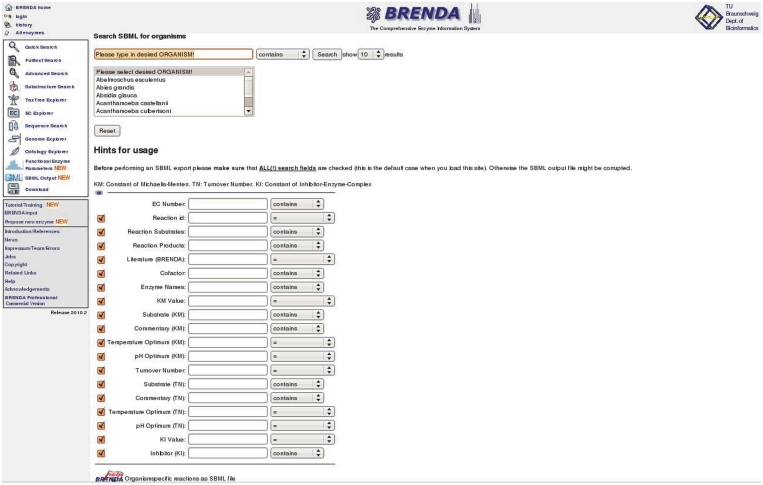
The BRENDA (BRaunschweig ENzyme Database, http://www.brenda-enzymes.org) enzyme information system is the main collection of enzyme functional and property data for the scientific community. The majority of the data are manually extracted from the primary literature. The content covers information on function, structure, occurrence, preparation and application of enzymes as well as properties of mutants and engineered variants. The number of manually annotated references increased by 30% to more than 100,000, the number of ligand structures by 45% to almost 100,000. New query, analysis and data management tools were implemented to improve data processing, data presentation, data input and data access. BRENDA now provides new viewing options such as the display of the statistics of functional parameters and the 3D view of protein sequence and structure features. Furthermore a ligand summary shows comprehensive information on the BRENDA ligands. The enzymes are linked to their respective pathways and can be viewed in pathway maps. The disease text mining part is strongly enhanced. It is possible to submit new, not yet classified enzymes to BRENDA, which then are reviewed and classified by the International Union of Biochemistry and Molecular Biology. A new SBML output format of BRENDA kinetic data allows the construction of organism-specific metabolic models.
Overview
The claims and statistics of this paper haven’t been checked yet.
Free: it reads the open-access text and checks the first 5 claims that cite a source we can check. Create a free account to check every claim.
Integrity signals
Registry
Cites
Statistics
Figures
Verification
Claims the paper makes
The claims and statistics of this paper haven’t been checked yet.
Free: it reads the open-access text and checks the first 5 claims that cite a source we can check. Create a free account to check every claim.
Claims other papers make about this one
Each is checked against this paper’s own text: does it say what the citing paper says it does?
The check wasn’t confident either way, so it gives no verdict — never disputed.
In the citing paper
“Vmax values could be obtained for 105 ‘non-pseudo’ reactions (i.e. excluding exchange, biomass and macromolecular reactions). Of these, 86 had non-zero fluxes.”
From Essential metabolism for a minimal cell (2019) · cites this paper as Scheer et al., 2010
Experimental — accuracy not yet measured
Self-check
Percentages, sums and reported differences re-computed from the paper’s own numbers.
The self-check needs the paper’s full text.
Citations
Cites
Database resources of the National Center for Biotechnology Information: update
Wheeler, D. L. (2004) · Nucleic Acids Research · doi:10.1093/nar/gkh073 · Cited by 10,641
Caspi, R., Billington, R., Ferrer, L., Foerster, H., Fulcher, C. A., Keseler, I. M., Kothari, A., Krummenacker, M., Latendresse, M., Mueller, L. A., et al. (2016) · Nucleic Acids Research · doi:10.1093/nar/gkv1164 · Cited by 3,395
Hucka, M., Finney, A., Sauro, H. M., Bolouri, H., Doyle, J. C., Kitano, H., Arkin, A. P., Bornstein, B. J., Bray, D., Cornish-Bowden, A., et al. (2003) · Bioinformatics · doi:10.1093/bioinformatics/btg015 · Cited by 3,060
KEGG for representation and analysis of molecular networks involving diseases and drugs
Kanehisa, M., Goto, S., Furumichi, M., Tanabe, M., & Hirakawa, M. (2010) · Nucleic Acids Research · doi:10.1093/nar/gkp896 · Cited by 2,322 · cited 1×
“For viewing the enzymes in their metabolic context the BRENDA enzymes are linked to the pathway maps and modules of the KEGG (5) and MetaCyc (6) databases.”
MethodThe Universal Protein Resource (UniProt) in 2010
The UniProt Consortium (2010) · Nucleic Acids Research · doi:10.1093/nar/gkp846 · Cited by 1,257
Database resources of the National Center for Biotechnology Information
Sayers, E. W., Barrett, T., Benson, D. A., Bolton, E., Bryant, S. H., Canese, K., Chetvernin, V., Church, D. M., DiCuccio, M., Federhen, S., et al. (2010) · Nucleic Acids Research · doi:10.1093/nar/gkp967 · Cited by 804
Caspi, R., Altman, T., Dale, J. M., Dreher, K., Fulcher, C. A., Gilham, F., Kaipa, P., Karthikeyan, A. S., Kothari, A., Krummenacker, M., et al. (2010) · Nucleic Acids Research · doi:10.1093/nar/gkp875 · Cited by 483
BRENDA, AMENDA and FRENDA the enzyme information system: new content and tools in 2009
Chang, A., Scheer, M., Grote, A., Schomburg, I., & Schomburg, D. (2009) · Nucleic Acids Research · doi:10.1093/nar/gkn820 · Cited by 356
Self-citationPDBe: Protein Data Bank in Europe
Velankar, S., Best, C., Beuth, B., Boutselakis, C. H., Cobley, N., Sousa Da Silva, A. W., Dimitropoulos, D., Golovin, A., Hirshberg, M., John, M., et al. (2010) · Nucleic Acids Research · doi:10.1093/nar/gkp916 · Cited by 329
An Open Standard for Chemical Structure Representation: The IUPAC Chemical Identifier
Stein, S. E., Heller, S. R., & Tchekhovskoi, D. V. (2003) · Cited by 71
Cited by
ChEMBL: a large-scale bioactivity database for drug discovery
Gaulton, A., Bellis, L. J., Bento, A. P., Chambers, J., Davies, M., Hersey, A., Light, Y., McGlinchey, S., Michalovich, D., Al-Lazikani, B., et al. (2012) · Nucleic Acids Research · doi:10.1093/nar/gkr777 · Cited by 4,382
Structure and dynamics of molecular networks: A novel paradigm of drug discovery
Csermely, P., Korcsmáros, T., Kiss, H. J. M., London, G., & Nussinov, R. (2013) · Pharmacology & Therapeutics · doi:10.1016/j.pharmthera.2013.01.016 · Cited by 892
Constraint-based models predict metabolic and associated cellular functions
Bordbar, A., Monk, J. M., King, Z. A., & Palsson, B. O. (2014) · Nature Reviews Genetics · doi:10.1038/nrg3643 · Cited by 830
Quantitative and logic modelling of molecular and gene networks
Le Novère, N. (2015) · Nature Reviews Genetics · doi:10.1038/nrg3885 · Cited by 430
Schomburg, I., Chang, A., Placzek, S., Söhngen, C., Rother, M., Lang, M., Munaretto, C., Ulas, S., Stelzer, M., Grote, A., et al. (2012) · Nucleic Acids Research · doi:10.1093/nar/gks1049 · Cited by 417
Self-citationBRENDA in 2019: a European ELIXIR core data resource
Jeske, L., Placzek, S., Schomburg, I., Chang, A., & Schomburg, D. (2019) · Nucleic Acids Research · doi:10.1093/nar/gky1048 · Cited by 385
Self-citationCyanobacterial conversion of carbon dioxide to 2,3-butanediol
Oliver, J. W. K., Machado, I. M. P., Yoneda, H., & Atsumi, S. (2013) · Proceedings of the National Academy of Sciences · doi:10.1073/pnas.1213024110 · Cited by 380
Sauter, M., Moffatt, B., Saechao, M. C., Hell, R., & Wirtz, M. (2013) · Biochemical Journal · doi:10.1042/bj20121744 · Cited by 372
A trait‐based approach for modelling microbial litter decomposition
Allison, S. D. (2012) · Ecology Letters · doi:10.1111/j.1461-0248.2012.01807.x · Cited by 366
Systems-level analysis of mechanisms regulating yeast metabolic flux
Hackett, S. R., Zanotelli, V. R. T., Xu, W., Goya, J., Park, J. O., Perlman, D. H., Gibney, P. A., Botstein, D., Storey, J. D., & Rabinowitz, J. D. (2016) · Science · doi:10.1126/science.aaf2786 · Cited by 294
“We also constructed a list ( 31 ); we assume thatthe vast majority of regulation in this list is nonphysiological.”
BackgroundMethodInfluentialKinetic models in industrial biotechnology – Improving cell factory performance
Almquist, J., Cvijovic, M., Hatzimanikatis, V., Nielsen, J., & Jirstrand, M. (2014) · Metabolic Engineering · doi:10.1016/j.ymben.2014.03.007 · Cited by 293
Jex, A. R., Liu, S., Li, B., Young, N. D., Hall, R. S., Li, Y., Yang, L., Zeng, N., Xu, X., Xiong, Z., et al. (2011) · Nature · doi:10.1038/nature10553 · Cited by 276
Li, G., & Young, K. D. (2013) · Microbiology · doi:10.1099/mic.0.064139-0 · Cited by 266
SABIO-RK--database for biochemical reaction kinetics
Wittig, U., Kania, R., Golebiewski, M., Rey, M., Shi, L., Jong, L., Algaa, E., Weidemann, A., Sauer-Danzwith, H., Mir, S., et al. (2012) · Nucleic Acids Research · doi:10.1093/nar/gkr1046 · Cited by 259
Trans-Omics: How To Reconstruct Biochemical Networks Across Multiple ‘Omic’ Layers
Yugi, K., Kubota, H., Hatano, A., & Kuroda, S. (2016) · Trends in Biotechnology · doi:10.1016/j.tibtech.2015.12.013 · Cited by 258
Nutritional Metabolomics: Progress in Addressing Complexity in Diet and Health
Jones, D. P., Park, Y., & Ziegler, T. R. (2012) · Annual Review of Nutrition · doi:10.1146/annurev-nutr-072610-145159 · Cited by 257
Link, H., Kochanowski, K., & Sauer, U. (2013) · Nature Biotechnology · doi:10.1038/nbt.2489 · Cited by 228
UniKP: a unified framework for the prediction of enzyme kinetic parameters
Yu, H., Deng, H., He, J., Keasling, J. D., & Luo, X. (2023) · Nature Communications · doi:10.1038/s41467-023-44113-1 · Cited by 226
“For k cat / K m prediction, an additional dataset was collected from BRENDA, UniProt and PubChem 6,7,31 , containing 910 enzyme sequences,substratestructures,andtheircorresponding k cat / K m values.”
The BRENDA enzyme information system–From a database to an expert system
Schomburg, I., Jeske, L., Ulbrich, M., Placzek, S., Chang, A., & Schomburg, D. (2017) · Journal of Biotechnology · doi:10.1016/j.jbiotec.2017.04.020 · Cited by 222
Self-citationPersonalized whole‐body models integrate metabolism, physiology, and the gut microbiome
Thiele, I., Sahoo, S., Heinken, A., Hertel, J., Heirendt, L., Aurich, M. K., & Fleming, R. M. (2020) · Molecular Systems Biology · doi:10.15252/msb.20198982 · Cited by 215
From correlation to causation: analysis of metabolomics data using systems biology approaches
Rosato, A., Tenori, L., Cascante, M., De Atauri Carulla, P. R., Martins dos Santos, V. A. P., & Saccenti, E. (2018) · Metabolomics · doi:10.1007/s11306-018-1335-y · Cited by 213
“On the other hand, regarding reaction kinetics, there is also an accumulated knowledge, which can be explored in databases such as BRENDA (Scheer et al. 2011; Schomburg et al. 2013) or SABIO-RK (Wittig et al. 2012).”
BackgroundEssential metabolism for a minimal cell
Breuer, M., Earnest, E. E., Merryman, C., Wise, K. S., Sun, L., Lynott, M. R., Hutchison, C. A., Smith, H. O., Lapek, J. D., Gonzalez, D. J., et al. (2019) · eLife · doi:10.7554/elife.36842 · Cited by 190
“The protein abundances were derived from proteomics experiments (see Section ’Abundances of essential and non-essential proteins’) and the turnover numbers were extracted from the BRENDA database (Scheer et al., 2010) (see Figure 15, Figure 15—figure supplement 1 and Appendix 1).”
MethodArginine-Based Inhibitors of Nitric Oxide Synthase: Therapeutic Potential and Challenges
Víteček, J., Lojek, A., Valacchi, G., & Kubala, L. (2012) · Mediators of Inflammation · doi:10.1155/2012/318087 · Cited by 194
Genome Degeneration and Adaptation in a Nascent Stage of Symbiosis
Oakeson, K. F., Gil, R., Clayton, A. L., Dunn, D. M., von Niederhausern, A. C., Hamil, C., Aoyagi, A., Duval, B., Baca, A., Silva, F. J., et al. (2014) · Genome Biology and Evolution · doi:10.1093/gbe/evt210 · Cited by 193
“Yet, SOPE resides alone in a specialized structure (bacteriome) just like many obligate “primary” symbionts that have small genome sizes and long established associations with their insect hosts.”
BackgroundEngineering a Cyanobacterial Cell Factory for Production of Lactic Acid
Angermayr, S. A., Paszota, M., & Hellingwerf, K. J. (2012) · Applied and Environmental Microbiology · doi:10.1128/aem.01587-12 · Cited by 186
Evans, A. G. L., Davey, H. M., Cookson, A., Currinn, H., Cooke-Fox, G., Stanczyk, P. J., & Whitworth, D. E. (2012) · Microbiology · doi:10.1099/mic.0.060343-0 · Cited by 179
How Do Enzymes ‘Meet’ Nanoparticles and Nanomaterials?
Chen, M., Zeng, G., Xu, P., Lai, C., & Tang, L. (2017) · Trends in Biochemical Sciences · doi:10.1016/j.tibs.2017.08.008 · Cited by 179
Pocketome: an encyclopedia of small-molecule binding sites in 4D
Kufareva, I., Ilatovskiy, A. V., & Abagyan, R. (2012) · Nucleic Acids Research · doi:10.1093/nar/gkr825 · Cited by 175
Complement factor I in health and disease
Nilsson, S. C., Sim, R. B., Lea, S. M., Fremeaux-Bacchi, V., & Blom, A. M. (2011) · Molecular Immunology · doi:10.1016/j.molimm.2011.04.004 · Cited by 168
“The BRENDA database (Scheer et al., 2011) summarises available data on substrates and inhibitors of FI (http://www.brenda-enzymes.org/php/result_flat.php4?ecno=3.4.21.45).”
MethodInfluentialSaad, R., Rizkallah, M. R., & Aziz, R. K. (2012) · Gut Pathogens · doi:10.1186/1757-4749-4-16 · Cited by 164
Angermayr, S. A., van der Woude, A. D., Correddu, D., Vreugdenhil, A., Verrone, V., & Hellingwerf, K. J. (2014) · Biotechnology for Biofuels · doi:10.1186/1754-6834-7-99 · Cited by 163
“In higher eukaryotes one does find highly NADPH-dependent reductases for hydroxypyru-vate; however, these do not seem to show any affinity for pyruvate itself [34,47].”
BackgroundMethodCampodonico, M. A., Andrews, B. A., Asenjo, J. A., Palsson, B. O., & Feist, A. M. (2014) · Metabolic Engineering · doi:10.1016/j.ymben.2014.07.009 · Cited by 162
Choe, H., Joo, J. C., Cho, D. H., Kim, M. H., Lee, S. H., Jung, K., & Kim, Y. H. (2014) · PLoS ONE · doi:10.1371/journal.pone.0103111 · Cited by 157
Reconstructing genome-scale metabolic models with merlin
Dias, O., Rocha, M., Ferreira, E. C., & Rocha, I. (2015) · Nucleic Acids Research · doi:10.1093/nar/gkv294 · Cited by 143
MetRxn: a knowledgebase of metabolites and reactions spanning metabolic models and databases
Kumar, A., Suthers, P. F., & Maranas, C. D. (2012) · BMC Bioinformatics · doi:10.1186/1471-2105-13-6 · Cited by 140
Systems medicine and metabolic modelling
Mardinoglu, A., & Nielsen, J. (2012) · Journal of Internal Medicine · doi:10.1111/j.1365-2796.2011.02493.x · Cited by 137
A review of computational tools for design and reconstruction of metabolic pathways
Wang, L., Dash, S., Ng, C. Y., & Maranas, C. D. (2017) · Synthetic and Systems Biotechnology · doi:10.1016/j.synbio.2017.11.002 · Cited by 153
“…a number of databases have been constructed for known biochemical reactions and pathways (i.e., BIGG [25], KEGG [26], MetaCyc [27], BRENDA [28], ModelSEED [29], MetRxn [30], Rhea [31], UM-BBD [32], MOS [33], and Beilste Cross fi le [34]), as well as hypothetical metabolites and reactions…”
BackgroundMethodCai, M., Wilkins, D. E., Chen, J., Ng, S.-K., Lu, H., Jia, Y., & Lee, P. K. H. (2016) · Frontiers in Microbiology · doi:10.3389/fmicb.2016.00778 · Cited by 162
TDR Targets: a chemogenomics resource for neglected diseases
Magarinos, M. P., Carmona, S. J., Crowther, G. J., Ralph, S. A., Roos, D. S., Shanmugam, D., Van Voorhis, W. C., & Aguero, F. (2012) · Nucleic Acids Research · doi:10.1093/nar/gkr1053 · Cited by 130
Complete Resequencing and Reannotation of the Lactobacillus plantarum WCFS1 Genome
Siezen, R. J., Francke, C., Renckens, B., Boekhorst, J., Wels, M., Kleerebezem, M., & van Hijum, S. A. F. T. (2012) · Journal of Bacteriology · doi:10.1128/jb.06275-11 · Cited by 130
Mathematical optimization applications in metabolic networks
Zomorrodi, A. R., Suthers, P. F., Ranganathan, S., & Maranas, C. D. (2012) · Metabolic Engineering · doi:10.1016/j.ymben.2012.09.005 · Cited by 144
Hydroxynitrile Lyases: Insights into Biochemistry, Discovery, and Engineering
Dadashipour, M., & Asano, Y. (2011) · ACS Catalysis · doi:10.1021/cs200325q · Cited by 128
Zuñiga, C., Li, C.-T., Huelsman, T., Levering, J., Zielinski, D. C., McConnell, B. O., Long, C. P., Knoshaug, E. P., Guarnieri, M. T., Antoniewicz, M. R., et al. (2016) · Plant Physiology · doi:10.1104/pp.16.00593 · Cited by 126
Cell-free prototyping of limonene biosynthesis using cell-free protein synthesis
Dudley, Q. M., Karim, A. S., Nash, C. J., & Jewett, M. C. (2020) · Metabolic Engineering · doi:10.1016/j.ymben.2020.05.006 · Cited by 131
Network-level architecture and the evolutionary potential of underground metabolism
Notebaart, R. A., Szappanos, B., Kintses, B., Pál, F., Györkei, Á., Bogos, B., Lázár, V., Spohn, R., Csörgő, B., Wagner, A., et al. (2014) · Proceedings of the National Academy of Sciences · doi:10.1073/pnas.1406102111 · Cited by 123
Flux analysis and metabolomics for systematic metabolic engineering of microorganisms
Toya, Y., & Shimizu, H. (2013) · Biotechnology Advances · doi:10.1016/j.biotechadv.2013.05.002 · Cited by 133
Algar, W. R., Ancona, M. G., Malanoski, A. P., Susumu, K., & Medintz, I. L. (2012) · ACS Nano · doi:10.1021/nn304736j · Cited by 120
In Silico Constraint-Based Strain Optimization Methods: the Quest for Optimal Cell Factories
Maia, P., Rocha, M., & Rocha, I. (2016) · Microbiology and Molecular Biology Reviews · doi:10.1128/mmbr.00014-15 · Cited by 119
Structural Systems Biology Evaluation of Metabolic Thermotolerance in Escherichia coli
Chang, R. L., Andrews, K., Kim, D., Li, Z., Godzik, A., & Palsson, B. O. (2013) · Science · doi:10.1126/science.1234012 · Cited by 116
Rhea—a manually curated resource of biochemical reactions
Alcántara, R., Axelsen, K. B., Morgat, A., Belda, E., Coudert, E., Bridge, A., Cao, H., de Matos, P., Ennis, M., Turner, S., et al. (2012) · Nucleic Acids Research · doi:10.1093/nar/gkr1126 · Cited by 113
Cagnola, J. I., Ploschuk, E. L., Benech-Arnold, T., Finlayson, S. A., & Casal, J. J. (2012) · PLANT PHYSIOLOGY · doi:10.1104/pp.112.201921 · Cited by 121
IUPHAR-DB: updated database content and new features
Sharman, J. L., Benson, H. E., Pawson, A. J., Lukito, V., Mpamhanga, C. P., Bombail, V., Davenport, A. P., Peters, J. A., Spedding, M., Harmar, A. J., et al. (2013) · Nucleic Acids Research · doi:10.1093/nar/gks960 · Cited by 111
Steiner, E., Auer, A., Becker, T. M., & Gastl, M. I. (2011) · Journal of the Science of Food and Agriculture · doi:10.1002/jsfa.4651 · Cited by 110
Topology of molecular interaction networks
Winterbach, W., Mieghem, P. V., Reinders, M. J. T., Wang, H., & de Ridder, D. (2013) · BMC Systems Biology · doi:10.1186/1752-0509-7-90 · Cited by 122
“…transcription factors, are found using yeast-one-hybrid and chromatin immunoprecipitation [4] and deposited in databases such as JASPAR [5] and FactorBook [6]; enzyme-metabolite interactions are measured using enzymatic assays and can be found in for example, BRENDA [7], KEGG [8] and MetaCyc [9].”
MethodSystematic Construction of Kinetic Models from Genome-Scale Metabolic Networks
Stanford, N. J., Lubitz, T., Smallbone, K., Klipp, E., Mendes, P., & Liebermeister, W. (2013) · PLoS ONE · doi:10.1371/journal.pone.0079195 · Cited by 109
“Constants for allosteric regulators were taken as averages of those found in the BRENDA database [47], the values used can be found in Supporting Table 7 in File S1.”
MethodCurrent IUBMB recommendations on enzyme nomenclature and kinetics
Cornish-Bowden, A. J. (2014) · Perspectives in Science · doi:10.1016/j.pisc.2014.02.006 · Cited by 109
Kinetic Modeling of Mammalian Cell Culture Bioprocessing: The Quest to Advance Biomanufacturing
Kyriakopoulos, S., Ang, K. S., Lakshmanan, M., Huang, Z., Yoon, S., Gunawan, R., & Lee, D. (2018) · Biotechnology Journal · doi:10.1002/biot.201700229 · Cited by 106
Spatially-resolved metabolic cooperativity within dense bacterial colonies
Cole, J. A., Kohler, L., Hedhli, J., & Luthey-Schulten, Z. A. (2015) · BMC Systems Biology · doi:10.1186/s12918-015-0155-1 · Cited by 106
Algar, W. R., Malanoski, A. P., Susumu, K., Stewart, M. H., Hildebrandt, N., & Medintz, I. L. (2012) · Analytical Chemistry · doi:10.1021/ac3028068 · Cited by 102
A whole-body mathematical model of cholesterol metabolism and its age-associated dysregulation
Auley, M. T. M., Wilkinson, D. J., Jones, J. J., & Kirkwood, T. B. L. (2012) · BMC Systems Biology · doi:10.1186/1752-0509-6-130 · Cited by 115
Computational systems biology and in silico modeling of the human microbiome
Borenstein, E. (2012) · Briefings in Bioinformatics · doi:10.1093/bib/bbs022 · Cited by 98
The HUPO proteomics standards initiative- mass spectrometry controlled vocabulary
Mayer, G., Montecchi‐Palazzi, L., Ovelleiro, D., Jones, A. R., Binz, P., Deutsch, E. W., Chambers, M., Kallhardt, M., Levander, F., Shofstahl, J., et al. (2013) · Database · doi:10.1093/database/bat009 · Cited by 100
Development of highly efficient, low-cost lignocellulolytic enzyme systems in the post-genomic era
Liu, G., Qin, Y., Li, Z., & Qu, Y. (2013) · Biotechnology Advances · doi:10.1016/j.biotechadv.2013.03.001 · Cited by 95
Emergent Biosynthetic Capacity in Simple Microbial Communities
Chiu, H.-C., Levy, R., & Borenstein, E. (2014) · PLoS Computational Biology · doi:10.1371/journal.pcbi.1003695 · Cited by 107
Labhsetwar, P., Cole, J. A., Roberts, E., Price, N. D., & Luthey-Schulten, Z. A. (2013) · Proceedings of the National Academy of Sciences · doi:10.1073/pnas.1222569110 · Cited by 94
Guidelines for development and implementation of biocatalytic P450 processes
Lundemo, M. T., & Woodley, J. M. (2015) · Applied Microbiology and Biotechnology · doi:10.1007/s00253-015-6403-x · Cited by 95
“…this number is outstanding, and reported activities above 1 s −1 are scarce with the exception of BM3 and P450cam systems, which are the most explored P450s, and a few other one component systems (P450nor and reductase-independent eukaryotic systems; search on BRENDA 2012-08) (Scheer et al. 2011).”
BackgroundRomán, M. S., & Wagner, A. (2018) · PLoS Computational Biology · doi:10.1371/journal.pcbi.1006340 · Cited by 100
“These parameters are based on data in the Brenda enzyme data-base [88,89] and have been used in related analyses [47].”
MethodGarcía‐Contreras, R., Vos, P., Westerhoff, H. V., & Boogerd, F. C. (2012) · The FEBS Journal · doi:10.1111/febs.12007 · Cited by 87
Systematic Approaches towards the Development of Host-Directed Antiviral Therapeutics
Prussia, A. J., Thepchatri, P., Snyder, J. P., & Plemper, R. K. (2011) · International Journal of Molecular Sciences · doi:10.3390/ijms12064027 · Cited by 91
A survey of metabolic databases emphasizing the MetaCyc family
Karp, P. D., & Caspi, R. (2011) · Archives of Toxicology · doi:10.1007/s00204-011-0705-2 · Cited by 97
“It covers more than 79,000 individual reactions from 10,500 organisms, and the information in BRENDA is distilled from more than 100,000 references ( Scheer et al. 2010 ).”
BackgroundA novel intracellular mutualistic bacterium in the invasive antCardiocondyla obscurior
Klein, A., Schrader, L., Gil, R., Manzano-Marín, A., Flórez, L., Wheeler, D., Werren, J. H., Latorre, A., Heınze, J., Kaltenpoth, M., et al. (2015) · The ISME Journal · doi:10.1038/ismej.2015.119 · Cited by 87
“, 1999) and BRENDA (Scheer et al., 2011) databases.”
MethodCardioNet: A human metabolic network suited for the study of cardiomyocyte metabolism
Karlstaedt, A., Fliegner, D., Kararigas, G., Sanchez‐Ruderisch, H., Regitz‐Zagrosek, V., & Holzhütter, H. (2012) · BMC Systems Biology · doi:10.1186/1752-0509-6-114 · Cited by 82
MACiE: exploring the diversity of biochemical reactions
Holliday, G. L., Andreini, C., Fischer, J. D., Rahman, S. A., Almonacid, D. E., Williams, S. T., & Pearson, W. R. (2011) · Nucleic Acids Research · doi:10.1093/nar/gkr799 · Cited by 82
“Most web resources relating to enzymes [such as BRENDA (4), KEGG (5), SABIO-RK (6), the IUBMB Enzyme Nomenclature website (1) and IntEnz (7)] focus on the overall reaction, accompanied in some cases by a textual or graphical description of the mechanism.”
BackgroundSynthetic gene circuits for metabolic control: design trade-offs and constraints
Oyarzún, D. A., & Stan, G.-B. V. (2012) · Journal of The Royal Society Interface · doi:10.1098/rsif.2012.0671 · Cited by 87
Shi, R., Shuford, C. M., Wang, J. P., Sun, Y., Yang, Z., Chen, H.-C., Tunlaya‐Anukit, S., Li, Q., Liu, J., Muddiman, D. C., et al. (2013) · Planta · doi:10.1007/s00425-013-1905-1 · Cited by 88
“Usually, there are four or five PAL genes identified in different plant genomes (Scheer et al. 2011; Lepelley et al. 2012; Bagal et al. 2012).”
BackgroundMethodINOH: ontology-based highly structured database of signal transduction pathways
Yamamoto, S., Sakai, N., Nakamura, H., Fukagawa, H., Fukuda, K., & Takagi, T. (2011) · Database · doi:10.1093/database/bar052 · Cited by 86
“The MoleculeRole Ontology and the Event Ontology files are downloadable from not only our web site, but also the Open Biological and Biomedical Ontologies (OBO) (20), NCBO BioPortal (21) and BRENDA Ontology Explorer (22).”
Frontiers in metabolic reconstruction and modeling of plant genomes
Seaver, S. M. D., Henry, C. S., & Hanson, A. D. (2012) · Journal of Experimental Botany · doi:10.1093/jxb/err371 · Cited by 73
“BRENDA, the enzyme information system in 2011.”
MethodInfluentialEnzyme Activity in the Crowded Milieu
Vöpel, T., & Makhatadze, G. I. (2012) · PLoS ONE · doi:10.1371/journal.pone.0039418 · Cited by 80
Humphreys, C. M., McLean, S., Schatschneider, S., Millat, T., Henstra, A. M., Annan, F. J., Breitkopf, R., Pander, B., Piatek, P., Rowe, P., et al. (2015) · BMC Genomics · doi:10.1186/s12864-015-2287-5 · Cited by 91
Mishra, P., Park, G., Lakshmanan, M., Lee, H., Lee, H., Chang, M. W., Ching, C. B., Ahn, J., & Lee, D. (2016) · Biotechnology and Bioengineering · doi:10.1002/bit.25955 · Cited by 72
“First, an initial model was drafted by assembling metabolic reactions with the corresponding annotated genes from KEGG (Kanehisa et al., 2006) and BRENDA (Scheer et al., 2011).”
MethodGhorbaniaghdam, A., Chen, J., Henry, O., & Jolicoeur, M. (2014) · PLoS ONE · doi:10.1371/journal.pone.0090832 · Cited by 71
BKM-react, an integrated biochemical reaction database
Lang, M., Stelzer, M., & Schomburg, D. (2011) · BMC Biochemistry · doi:10.1186/1471-2091-12-42 · Cited by 71
Self-citationPredicting the impact of diet and enzymopathies on human small intestinal epithelial cells
Sahoo, S., & Thiele, I. (2013) · Human Molecular Genetics · doi:10.1093/hmg/ddt119 · Cited by 68
Osmoprotection of Bacillus subtilis through Import and Proteolysis of Proline-Containing Peptides
Zaprasis, A., Brill, J., Thüring, M., Wünsche, G., Heun, M., Barzantny, H., Hoffmann, T., & Bremer, E. (2013) · Applied and Environmental Microbiology · doi:10.1128/aem.01934-12 · Cited by 69
Reconciliation of metabolites and biochemical reactions for metabolic networks
Bernard, T., Bridge, A., Morgat, A., Moretti, S., Xenarios, I., & Pagni, M. (2014) · Briefings in Bioinformatics · doi:10.1093/bib/bbs058 · Cited by 69
“BKM-react uses a smaller number of input resources than MNXref, incorporating information from BRENDA [24], KEGG [22] and MetaCyc [23].”
MethodBusby, J. N., Landsberg, M. J., Simpson, R. M., Jones, S. A., Hankamer, B. D., Hurst, C. J., & Lott, J. S. (2011) · Journal of Molecular Biology · doi:10.1016/j.jmb.2011.11.018 · Cited by 77
Organic cofactors in the metabolism of Dehalococcoides mccartyi strains
Schipp, C. J., Marco‐Urrea, E., Kublik, A., Seifert, J., & Adrian, L. (2013) · Philosophical Transactions of the Royal Society B Biological Sciences · doi:10.1098/rstb.2012.0321 · Cited by 86
The application of reaction engineering to biocatalysis
Ringborg, R. H., & Woodley, J. M. (2016) · Reaction Chemistry & Engineering · doi:10.1039/c5re00045a · Cited by 68
Schwans, J. P., Sunden, F., Lassila, J. K., Gonzalez, A. M., Tsai, Y., & Herschlag, D. (2013) · Proceedings of the National Academy of Sciences · doi:10.1073/pnas.1206710110 · Cited by 66
Global insights into energetic and metabolic networks in Rhodobacter sphaeroides
Imam, S., Noguera, D. R., & Donohue, T. J. (2013) · BMC Systems Biology · doi:10.1186/1752-0509-7-89 · Cited by 68
Pathway analysis of NAD+ metabolism
de Figueiredo, L. F., Gossmann, T. I., Ziegler, M., & Schuster, S. (2011) · Biochemical Journal · doi:10.1042/bj20110320 · Cited by 64
Genome-scale metabolic model in guiding metabolic engineering of microbial improvement
Xu, C., Liu, L., Zhang, Z., Jin, D., Qiu, J., & Chen, M. (2012) · Applied Microbiology and Biotechnology · doi:10.1007/s00253-012-4543-9 · Cited by 72
Comparing methods for metabolic network analysis and an application to metabolic engineering
Tomar, N., & De, R. K. (2013) · Gene · doi:10.1016/j.gene.2013.03.017 · Cited by 77
Ellis, L. B. M., & Wackett, L. P. (2012) · Microbial Informatics and Experimentation · doi:10.1186/2042-5783-2-1 · Cited by 63
FastAnnotator- an efficient transcript annotation web tool
Chen, T.-W., Gan, R.-C. R., Wu, T. H., Huang, P.-J., Lee, C.-Y., Chen, Y. M., Chen, C.-C., & Tang, P. (2012) · BMC Genomics · doi:10.1186/1471-2164-13-s7-s9 · Cited by 69
MetaCrop 2.0: managing and exploring information about crop plant metabolism
Schreiber, F., Colmsee, C., Czauderna, T., Grafahrend-Belau, E., Hartmann, A., Junker, A., Junker, B. H., Klapperstuck, M., Scholz, U., & Weise, S. (2012) · Nucleic Acids Research · doi:10.1093/nar/gkr1004 · Cited by 60
Observing Single‐Molecule Dynamics at Millimolar Concentrations
Goldschen-Ohm, M. P., White, D. S., Klenchin, V. A., Chanda, B., & Goldsmith, R. H. (2017) · Angewandte Chemie International Edition · doi:10.1002/anie.201612050 · Cited by 63
Modular design: Implementing proven engineering principles in biotechnology
Garcia, S., & Trinh, C. T. (2019) · Biotechnology Advances · doi:10.1016/j.biotechadv.2019.06.002 · Cited by 70
Progress towards machine learning reaction rate constants
Komp, E., Janulaitis, N., & Valleau, S. (2022) · Physical Chemistry Chemical Physics · doi:10.1039/d1cp04422b · Cited by 63
Schatschneider, S., Persicke, M., Watt, S. A., Hublik, G., Pühler, A., Niehaus, K., & Vorhölter, F. (2013) · Journal of Biotechnology · doi:10.1016/j.jbiotec.2013.01.023 · Cited by 63
Metadata
- Authors
- Scheer, M., Grote, A., Chang, A., Schomburg, I., Munaretto, C., Rother, M., Sohngen, C., Stelzer, M., Thiele, J., & Schomburg, D.
- Affiliations
- Technische Universität Braunschweig (DE)
- ORCID
- Stelzer, M.
- Venue
- Nucleic Acids Research
- Publisher
- Oxford University Press (OUP)
- Published
- 2010-11-09
- Volume
- 39
- Issue
- Database
- Pages
- D670-D676
- ISSN
- 0305-1048 (ISSN-L)
- 1362-4962
- PMC
- PMC3013686
- OpenAlex
- W2002635898
- Cited by
- 409
- References
- 13
- Citations by year
- 2026: 1 · 2025: 8 · 2024: 5 · 2023: 9 · 2022: 4 · 2021: 16 · 2020: 11 · 2019: 13 · 2018: 20 · 2017: 21 · 2016: 27 · 2015: 29 · 2014: 39 · 2013: 88 · 2012: 74
- FWCI
- 26.51
- Type
- journal article
- Language
- en
- Open access
- gold
- doi.org
- Licence
- Locations
- Nucleic Acids Research (publishedVersion, cc-by-nc)
- PubMed Central (publishedVersion, cc-by-nc)
- PubMed (publishedVersion)
- Funders
- European Commission (226073)
- Topics
- Life Sciences › Biochemistry, Genetics and Molecular Biology › Molecular Biology › Bioinformatics and Genomic Networks
- Life Sciences › Biochemistry, Genetics and Molecular Biology › Structural Biology › Enzyme Structure and Function
- Life Sciences › Biochemistry, Genetics and Molecular Biology › Molecular Biology › Genomics and Phylogenetic Studies
- Keywords
- BRENDA, enzyme properties, enzyme mutants, ligand structure, enzyme classification, kinetic data, metabolic modeling, SBML
- MeSH terms
- Enzymes, Ligands, Protein Conformation, Software, Databases, Protein, Metabolic Networks and Pathways
About these checks
Registry, retraction, Cites and statistics results are computed, not judged, with one exception: a printed reference that no index lists is read once by a model before it counts as a citation error. Claims are extracted by a model and kept only when their quote appears verbatim in the text; each cited source is then checked, with a model’s help, for whether it says what the claim relies on. Those verdicts can be wrong — read the claim’s quote and the cited source before relying on one.
Statistics and arithmetic are recomputed, not judged.
Confidence bands are shown only for fields calibrated on our annotated test set. None is calibrated yet, so no band is shown.
What counts as a claim ›How we measure confidence ›How we check this ›
Are you an author, or do you see a problem with this page? Request a review
Data sources
Bibliographic data: Semantic Scholar, OpenAlex, Crossref.
Contains information from the Semantic Scholar Academic Graph Datasets, made available under the ODC Attribution License (ODC-BY 1.0).
Semantic Scholar’s data is described in: Kinney, R., et al. (2023). The Semantic Scholar Open Data Platform. arXiv:2301.10140.
