

Rank–rank hypergeometric overlap: identification of statistically significant overlap between gene-expression signatures
Open accessThe DOI matches its Crossref record; 54 of the 55 references it cites were found in a registry or an index.
Abstract
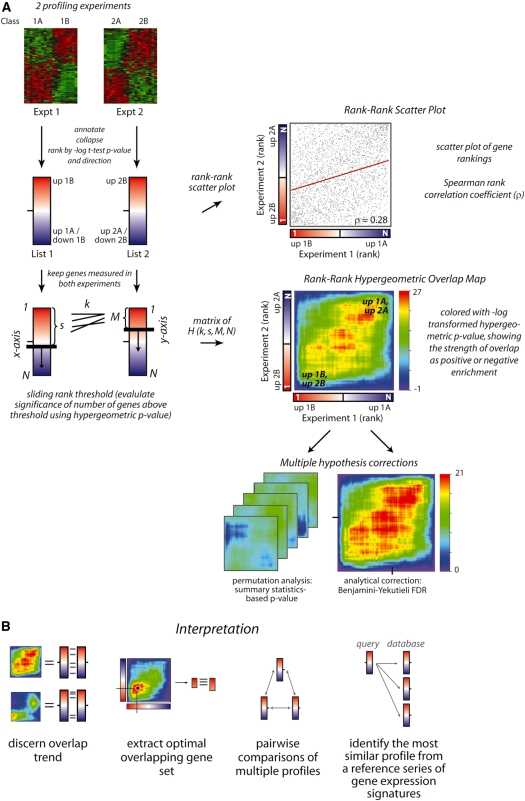
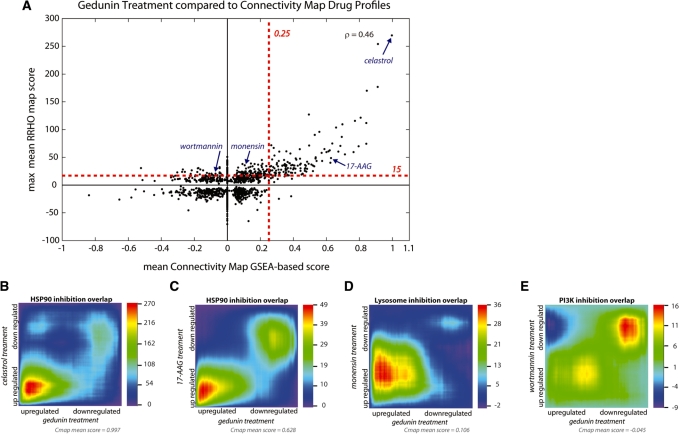
Comparing independent high-throughput gene-expression experiments can generate hypotheses about which gene-expression programs are shared between particular biological processes. Current techniques to compare expression profiles typically involve choosing a fixed differential expression threshold to summarize results, potentially reducing sensitivity to small but concordant changes. We present a threshold-free algorithm called Rank-rank Hypergeometric Overlap (RRHO). This algorithm steps through two gene lists ranked by the degree of differential expression observed in two profiling experiments, successively measuring the statistical significance of the number of overlapping genes. The output is a graphical map that shows the strength, pattern and bounds of correlation between two expression profiles. To demonstrate RRHO sensitivity and dynamic range, we identified shared expression networks in cancer microarray profiles driving tumor progression, stem cell properties and response to targeted kinase inhibition. We demonstrate how RRHO can be used to determine which model system or drug treatment best reflects a particular biological or disease response. The threshold-free and graphical aspects of RRHO complement other rank-based approaches such as Gene Set Enrichment Analysis (GSEA), for which RRHO is a 2D analog. Rank-rank overlap analysis is a sensitive, robust and web-accessible method for detecting and visualizing overlap trends between two complete, continuous gene-expression profiles. A web-based implementation of RRHO can be accessed at http://systems.crump.ucla.edu/rankrank/.
Overview
The claims and statistics of this paper haven’t been checked yet.
Free: it reads the open-access text and checks the first 5 claims that cite a source we can check. Create a free account to check every claim.
Integrity signals
Registry
Cites
Statistics
Figures
Verification
Claims the paper makes
The claims and statistics of this paper haven’t been checked yet.
Free: it reads the open-access text and checks the first 5 claims that cite a source we can check. Create a free account to check every claim.
Claims other papers make about this one
Each is checked against this paper’s own text: does it say what the citing paper says it does?
The source backs part of the claim, not all of it — or backs it for a different population, condition or comparison.
In the citing paper
“However, while these approaches are useful, they have conceptual limitations. Some lack a clear estimand (such as the running-sum GSEA statistic); some have ambiguous units (such as the energy distance); some are biased at finite sample size (such as the proportion of DE genes π in iDEA, see O’Connor et al11).”
From Transcriptome-wide analysis of differential expression in perturbation atlases (2025) · cites this paper as [9]
Experimental — accuracy not yet measuredIn the citing paper
“Consistently, rank-rank hypergeometric transcriptional overlap (RRHO) mapping between pre-natal and adult brain, and between iPSC-iNs and iNs, revealed a pronounced bias in the overlap of iNs with adult brain samples (Figure 7M; Plaisier et al., 2010).”
From Age-dependent instability of mature neuronal fate in induced neurons from Alzheimer’s patients (2021) · cites this paper as Plaisier et al., 2010
Self-check
Percentages, sums and reported differences re-computed from the paper’s own numbers.
The self-check needs the paper’s full text.
Citations
Cites
Subramanian, A., Tamayo, P., Mootha, V. K., Mukherjee, S., Ebert, B. L., Gillette, M. A., Paulovich, A., Pomeroy, S. L., Golub, T. R., Lander, E. S., et al. (2005) · Proceedings of the National Academy of Sciences · doi:10.1073/pnas.0506580102 · Cited by 53,625 · cited 3×
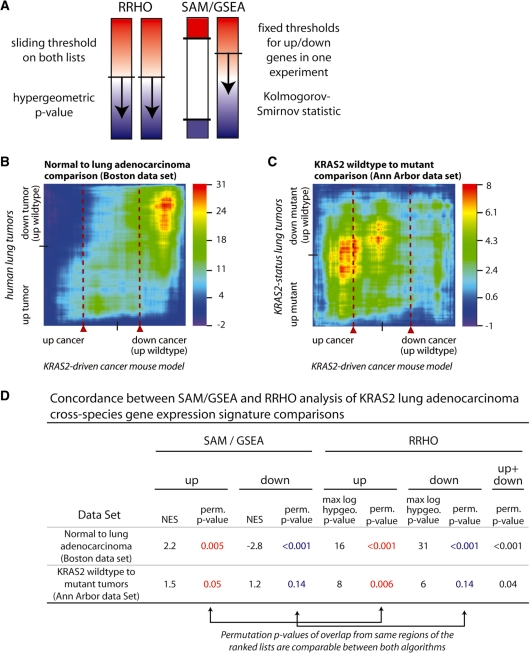
“In the SAM/GSEA approach, the output is a permutation P-value and a Kolmogorov–Smirnov mountain plot illustrating the overlap between a subset of high-ranking genes chosen to represent the mouse model profile (a fixed gene set) and the range of differential gene expression in the human data set (a continuous ranked li…”
MethodGene Expression Omnibus: NCBI gene expression and hybridization array data repository
Edgar, R. (2002) · Nucleic Acids Research · doi:10.1093/nar/30.1.207 · Cited by 13,288 · cited 2×
“Gene-expression information from microarray data repositories such as Gene-expression Omnibus (19) and ArrayExpress (53) as well as from more specialized resources such as the drug response profile database Cmap (10) can be readily converted to ranked list inputs for our program.”
BackgroundMethodThe control of the false discovery rate in multiple testing under dependency
Benjamini, Y., & Yekutieli, D. (2001) · The Annals of Statistics · doi:10.1214/aos/1013699998 · Cited by 10,490
Mootha, V. K., Lindgren, C. M., Eriksson, K.-F., Subramanian, A., Sihag, S., Lehar, J., Puigserver, P., Carlsson, E., Ridderstråle, M., Laurila, E., et al. (2003) · Nature Genetics · doi:10.1038/ng1180 · Cited by 10,197
DAVID: Database for Annotation, Visualization, and Integrated Discovery
Dennis, G., Sherman, B. T., Hosack, D. A., Yang, J., Gao, W., Lane, H. C., & Lempicki, R. A. (2003) · Genome Biology · doi:10.1186/gb-2003-4-5-p3 · Cited by 9,327
Lamb, J., Crawford, E. D., Peck, D., Modell, J. W., Blat, I. C., Wrobel, M. J., Lerner, J., Brunet, J.-P., Subramanian, A., Ross, K. N., et al. (2006) · Science · doi:10.1126/science.1132939 · Cited by 5,257 · cited 20×
“is the Cmap, a database of transcriptional responses to a panel of specific drug treatments (10).”
BackgroundMethodInfluentialGenes that mediate breast cancer metastasis to lung
Minn, A. J., Gupta, G. P., Siegel, P. M., Bos, P. D., Shu, W., Giri, D. D., Viale, A., Olshen, A. B., Gerald, W. L., & Massagué, J. (2005) · Nature · doi:10.1038/nature03799 · Cited by 2,922 · cited 1×
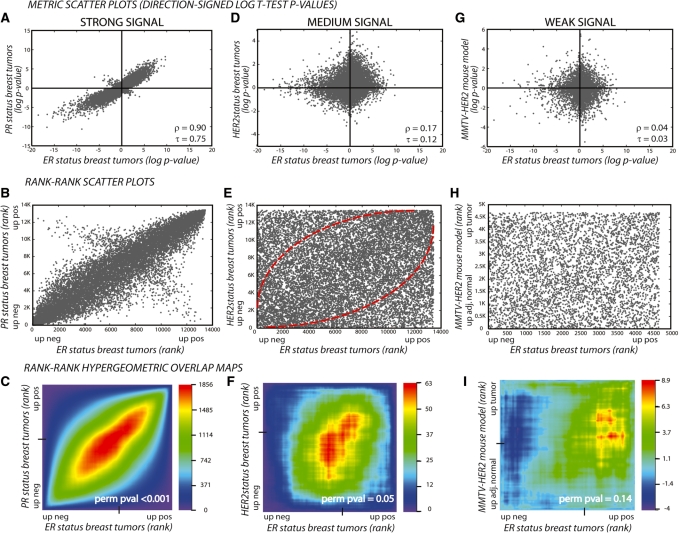
“The x-axis on all representations shows the difference between ER positive to ER negative human breast tumors (24); the y-axis shows gene-expression profiles based on other mutations or other profiles relevant to human breast cancer.”
BackgroundOncogenic pathway signatures in human cancers as a guide to targeted therapies
Bild, A. H., Yao, G., Chang, J. T., Wang, Q., Potti, A., Chasse, D., Joshi, M.-B., Harpole, D., Lancaster, J. M., Berchuck, A., et al. (2006) · Nature · doi:10.1038/nature04296 · Cited by 2,032 · cited 2×
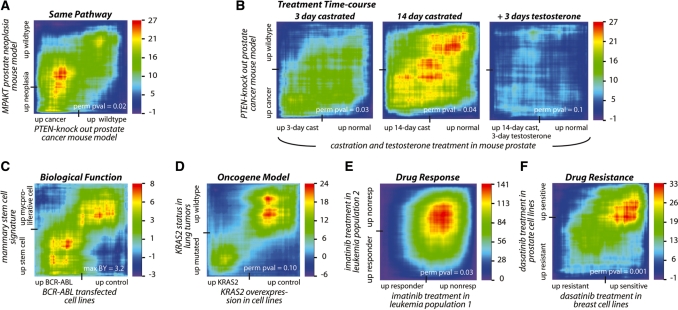
“High overlap between gene-expression changes driven by mutated KRAS2 oncogene in human lung tumors and by overexpression of KRAS2 in a cell line identify signaling events downstream of this oncogene that have in vivo relevance that can be studied effectively in vitro (Figure 3D) (35).”
BackgroundUsing GOstats to test gene lists for GO term association
Falcon, S., & Gentleman, R. (2007) · Bioinformatics · doi:10.1093/bioinformatics/btl567 · Cited by 2,015
Empirical Bayes analysis of a microarray experiment
Efron, B., Tibshirani, R., Storey, J. D., & Tusher, V. (2001) · Journal of the American Statistical Association · doi:10.1198/016214501753382129 · Cited by 1,733 · cited 7×
“Comparing the permutation P-values from the SAM/GSEA approach to those from the RRHO approach demonstrates that both methods have equivalent sensitivity and are able to detect the weak but statistically significant cross-species signal (Figure 4D).”
MethodInfluential
Cited by
Items 101–200 of 489
Podleśny-Drabiniok, A., Novikova, G., Liu, Y., Dunst, J., Temizer, R., Giannarelli, C., Marro, S., Kreslavsky, T., Marcora, E., & Goate, A. M. (2024) · Nature Communications · doi:10.1038/s41467-024-46315-7 · Cited by 52
Browne, C. J., Futamura, R., Minier-Toribio, A. M., Hicks, E. M., Ramakrishnan, A., Martínez-Rivera, F. J., Estill, M. S., Godino, A., Parise, E. M., Torres‐Berrío, A., et al. (2023) · Science Advances · doi:10.1126/sciadv.adg8558 · Cited by 52
“RRHO provides the ability to compare gene expression profiles of two conditions in a threshold-free manner to identify the degree and significance of overlap ( 49 ).”
Daskalakis, N. P., Xu, C., Bader, H. N., Chatzinakos, C., Weber, P. C., Makotkine, I., Lehrner, A. L., Bierer, L. M., Binder, E. B., & Yehuda, R. (2020) · Neuropsychopharmacology · doi:10.1038/s41386-020-00900-8 · Cited by 53
Transcriptional dissection of symptomatic profiles across the brain of men and women with depression
Mansouri, S., Pessoni, A. M., Marroquín-Rivera, A., Parise, E. M., Tamminga, C. A., Turecki, G., Nestler, E. J., Chen, T., & Labonté, B. (2023) · Nature Communications · doi:10.1038/s41467-023-42686-5 · Cited by 51
Phillips, R. A., Tuscher, J. J., Fitzgerald, N. D., Wan, E., Zipperly, M. E., Duke, C. G., Ianov, L., & Day, J. J. (2023) · Molecular and Cellular Neuroscience · doi:10.1016/j.mcn.2023.103849 · Cited by 50
Bobak, C. A., Abhimanyu, A., Natarajan, H., Gandhi, T., Grimm, S. L., Nishiguchi, T., Koster, K. J., Longlax, S. C., Dlamini, Q., Kahari, J., et al. (2022) · Aging · doi:10.18632/aging.203936 · Cited by 53
Ashbrook, D. G., Williams, R. W., Lu, L., Stein, J. L., Hibar, D. P., Nichols, T. E., Medland, S. E., Thompson, P. M., & Hager, R. (2014) · BMC Genomics · doi:10.1186/1471-2164-15-850 · Cited by 53
“This is corroborated by a separate Rank Rank Hypergeometric Overlap test [28] used to compare the two datasets, which yielded a non-significant result (p = 0.”
MethodNSD1 deposits histone H3 lysine 36 dimethylation to pattern non-CG DNA methylation in neurons
Hamagami, N., Wu, D. Y., Clemens, A. W., Nettles, S. A., Li, A., & Gabel, H. W. (2023) · Molecular Cell · doi:10.1016/j.molcel.2023.04.001 · Cited by 46
Stapleton, K., Das, S., Reddy, M. A., Leung, A., Samara, V. A., Lanting, L. L., Chen, Z., Zhang, L., Palanivel, R., Deiuliis, J. A., et al. (2020) · Arteriosclerosis Thrombosis and Vascular Biology · doi:10.1161/atvbaha.119.313359 · Cited by 53
Ambolet-Camoit, A., Ottolenghi, C., Leblanc, A. F., Kim, M. J., Letourneur, F., Jacques, S., Cagnard, N., Guguen‐Guillouzo, C., Barouki, R., & Aggerbeck, Μ. (2015) · Biochimie · doi:10.1016/j.biochi.2015.07.003 · Cited by 45
Girnius, N., Edwards, Y. J. K., Garlick, D. S., & Davis, R. J. (2018) · eLife · doi:10.7554/elife.36389 · Cited by 46
hnRNPs Interacting with mRNA Localization Motifs Define Axonal RNA Regulons
Lee, S. J., Oses-Prieto, J. A., Kawaguchi, R., Sahoo, P. K., Kar, A. N., Rozenbaum, M., Oliver, D., Chand, S., Ji, H., Shtutman, M., et al. (2018) · Molecular & Cellular Proteomics · doi:10.1074/mcp.ra118.000603 · Cited by 48
“Top mRNAs enriched in comparisons with both controls were identified using the Rank-Rank Hypergeometric Overlap (RRHO) algorithm (32) (Fig.”
MethodOlave, F. A., Aguayo, F. I., Román-Albasini, L., Corrales, W. A., Silva, J. P., González, P. I., Lagos, S., García-Pérez, M. A., Alarcón-Mardones, M., Rojas, P. S., et al. (2022) · Neurobiology of Stress · doi:10.1016/j.ynstr.2022.100440 · Cited by 50
“We compared the stress-induced transcriptional signatures of the dorsal and ventral hippocampus within- and between-sexes using the RRHO2 package (Plaisier et al., 2010; Cahill et al., 2018).”
MethodYong, H. J., Toledo, M. P., Nowakowski, R. S., & Wang, Y. J. (2022) · Endocrinology · doi:10.1210/endocr/bqac156 · Cited by 49
Schimek, M. G., Budínská, E., Kugler, K., Švendová, V., Ding, J., & Lin, S. (2015) · Statistical Applications in Genetics and Molecular Biology · doi:10.1515/sagmb-2014-0093 · Cited by 51
RNA editing in cancer impacts mRNA abundance in immune response pathways
Chan, T. W., Fu, T., Bahn, J. H., Jun, H.-I., Lee, J., Quinones-Valdez, G., Cheng, C., & Xiao, X. G. (2020) · Genome biology · doi:10.1186/s13059-020-02171-4 · Cited by 51
Sadeghi, I., Gispert, J. D., Palumbo, E., Muñoz-Aguirre, M., Wucher, V., D’Argenio, V., Santpere, G., Navarro, A., Guigó, R., & Vilor‐Tejedor, N. (2022) · Computational and Structural Biotechnology Journal · doi:10.1016/j.csbj.2022.08.037 · Cited by 43
Foo, J. C., Trautmann, N., Sticht, C., Treutlein, J., Frank, J., Streit, F., Witt, S. H., Torre, C. D. L., von Heydendorff, S. C., Sirignano, L., et al. (2019) · Translational Psychiatry · doi:10.1038/s41398-019-0671-7 · Cited by 46
Diurnal rhythms across the human dorsal and ventral striatum
Ketchesin, K. D., Zong, W., Hildebrand, M. A., Seney, M. L., Cahill, K. M., Scott, M. R., Shankar, V. G., Glausier, J. R., Lewis, D. A., Tseng, G. C., et al. (2020) · Proceedings of the National Academy of Sciences · doi:10.1073/pnas.2016150118 · Cited by 47
Szymczak, F., Alvelos, M. I., Marín‐Cañas, S., Castela, Â., Demine, S., Colli, M. L., Beeck, A. O. D., Thomaidou, S., Marselli, L., Zaldumbide, A., et al. (2022) · Science Advances · doi:10.1126/sciadv.abn5732 · Cited by 44
An Ancestral Balanced Inversion Polymorphism Confers Global Adaptation
Kapun, M., Mitchell, E. D., Kawecki, T. J., SCHMIDT, P. S., & Flatt, T. (2023) · Molecular Biology and Evolution · doi:10.1093/molbev/msad118 · Cited by 43
“RRHO tests for significant overlaps between gene lists are based on hypergeometric tests calculated while sliding across all possible thresholds in the two ranked lists.”
MethodInfluentialHervé, M., Bergon, A., Guisquet, A. L., Leman, S., Consoloni, J.-L., Fernandez, N., Lefebvre, M., El‐Hage, W., Belzeaux-R, R., Belzung, C., et al. (2017) · Frontiers in Molecular Neuroscience · doi:10.3389/fnmol.2017.00248 · Cited by 47
“Heatmaps represent expression variation of the most significant microarray probe for each candidate gene. presenting similar expression variations between several tissues (Plaisier et al., 2010; Bagot et al., 2016).”
BackgroundMethodInfluentialLee, J. D., Kim, H. Y., Kang, K., Jeong, H. G., Song, M., Tae, I. H., Lee, S. H., Kim, H.-R., Lee, K., Chae, S., et al. (2020) · Archives of Toxicology · doi:10.1007/s00204-020-02657-x · Cited by 41
The Pancreatic ß-cell Response to Secretory Demands and Adaption to Stress
Kalwat, M. A., Scheuner, D., Rodrigues-dos-Santos, K., Eizirik, D. L., & Cobb, M. H. (2021) · Endocrinology · doi:10.1210/endocr/bqab173 · Cited by 43
Gene expression variability and the analysis of large-scale RNA-seq studies with the MDSeq
Ran, D., & Daye, Z. J. (2017) · Nucleic Acids Research · doi:10.1093/nar/gkx456 · Cited by 46
“This allows us to account for lowly expressed or low variance genes with potentially significant FCs in the mean or dispersion, respectively (109).”
BackgroundCates, H. M., Heller, E. A., Lardner, C. K., Purushothaman, I., Peña, C. J., Walker, D. M., Cahill, M. E., Neve, R. L., Shen, L., Bagot, R. C., et al. (2017) · Biological Psychiatry · doi:10.1016/j.biopsych.2017.11.027 · Cited by 40
Xue, X., Zong, W., Glausier, J. R., Kim, S.-M., Shelton, M. A., Phan, B. N., Srinivasan, C., Pfenning, A. R., Tseng, G. C., Lewis, D. A., et al. (2022) · Translational Psychiatry · doi:10.1038/s41398-022-01894-1 · Cited by 40
A systematic review and meta-analysis on the transcriptomic signatures in alcohol use disorder
Friske, M. M., Torrico, E. C., Haas, M. J. W., Borruto, A. M., Giannone, F., Hade, A.-C., Yu, Y., Gao, L., Sutherland, G. T., HITZEMANN, R. J., et al. (2024) · Molecular Psychiatry · doi:10.1038/s41380-024-02719-x · Cited by 40
“5C; Suppl 1, sheet 26).”
Smith, K. B., Tran, L. M., Tam, B., Shurell, E., Li, Y., Braas, D., Tap, W. D., Christofk, H. R., Dry, S., Eilber, F. C., et al. (2013) · American Journal Of Pathology · doi:10.1016/j.ajpath.2013.01.002 · Cited by 38
Regulation of impulsive and aggressive behaviours by a novel lncRNA
Labonté, B., Abdallah, K., Maussion, G., Yerko, V., Yang, J., Bittar, T. P., Quessy, F., Golden, S. A., Navarro-Sánchez, L., Checknita, D., et al. (2020) · Molecular Psychiatry · doi:10.1038/s41380-019-0637-4 · Cited by 39
Brivio, E., Kos, A., Ulivi, A. F., Karamihalev, S., Ressle, A., Stoffel, R., Hirsch, D., Stelzer, G., Schmidt, M. V., López, J. P., et al. (2023) · Cell Reports · doi:10.1016/j.celrep.2023.112874 · Cited by 36
Mono-methylation of lysine 27 at histone 3 confers lifelong susceptibility to stress
Torres‐Berrío, A., Estill, M. S., Patel, V., Ramakrishnan, A., Kronman, H. G., Minier-Toribio, A. M., Issler, O., Browne, C. J., Parise, E. M., van der Zee, Y. Y., et al. (2024) · Neuron · doi:10.1016/j.neuron.2024.06.006 · Cited by 36
Floris, G., Dabrowski, K. R., Zanda, M. T., & Daws, S. E. (2024) · Molecular Psychiatry · doi:10.1038/s41380-024-02788-y · Cited by 40
Yao, J., Czaplińska, D., Ialchina, R., Schnipper, J., Liu, B., Sandelin, A., & Pedersen, S. F. (2020) · Cancers · doi:10.3390/cancers12082183 · Cited by 37
“Next, we compared the acid adaptation ranked list to each ranked patient gene lists in a pairwise fashion, using the Rank–Rank Hypergeometric Overlap (RRHO) method [77], as implemented in R [78].”
MethodPage, N. F., Gandal, M. J., Estes, M. L., Cameron, S., Buth, J. E., Parhami, S., Ramaswami, G., Murray, K. D., Amaral, D. G., de Water, J. V., et al. (2020) · Biological Psychiatry · doi:10.1016/j.biopsych.2020.10.016 · Cited by 38
Krause, G. J., Kirchner, P., Stiller, B., Morozova, K. S., Díaz, A., Chen, K., Krogan, N. J., Agulló-Pascual, E., Clement, C. C., Lindenau, K. L., et al. (2023) · Cell Reports · doi:10.1016/j.celrep.2023.113529 · Cited by 35
Modeling Progressive Fibrosis with Pluripotent Stem Cells Identifies an Anti-fibrotic Small Molecule
Vijayaraj, P., Minasyan, A., Durra, A., Karumbayaram, S., Mehrabi, M., Aros, C. J., Ahadome, S. D., Shia, D. W., Chung, K., Sandlin, J. M., et al. (2019) · Cell Reports · doi:10.1016/j.celrep.2019.11.019 · Cited by 35
“The Rank Rank Hypergeometric Overlap (RRHO) Analysis—”
BackgroundMethodSelf-citationPaden, W., Barko, K., Puralewski, R., Cahill, K. M., Huo, Z., Shelton, M. A., Tseng, G. C., Logan, R. W., & Seney, M. L. (2020) · Translational Psychiatry · doi:10.1038/s41398-020-0742-9 · Cited by 36
The CBP KIX domain regulates long-term memory and circadian activity
Chatterjee, S., Angelakos, C. C., Bahl, E., Hawk, J. D., Gaine, M. E., Poplawski, S. G., Schneider‐Anthony, A., Yadav, M., Porcari, G. S., Cassel, J., et al. (2020) · BMC Biology · doi:10.1186/s12915-020-00886-1 · Cited by 36
Systematical analysis reveals a strong cancer relevance of CREB1-regulated genes
Zheng, T., Huang, J., Xiang, X., Li, S., Yu, J., Qu, K., Xu, Z., Han, P., Dong, Z., Liu, Y., et al. (2021) · Cancer Cell International · doi:10.1186/s12935-021-02224-z · Cited by 39
Bahlawane, C., Eulenfeld, R., Wiesinger, M., Wang, J., Muller, A., Girod, A., Nazarov, P. V., Felsch, K., Vallar, L., Sauter, T., et al. (2015) · Cell Communication and Signaling · doi:10.1186/s12964-015-0096-8 · Cited by 35
“The RRHO analysis shows that the gene expression signatures of the three mutant proteins are highly similar (Figure 6A, RRHO heat maps).”
BackgroundMethodInfluentialMolecular Footprints of the Immune Assault on Pancreatic Beta Cells in Type 1 Diabetes
Colli, M. L., Szymczak, F., & Eizirik, D. L. (2020) · Frontiers in Endocrinology · doi:10.3389/fendo.2020.568446 · Cited by 37
McCullough, K. M., Chatzinakos, C., Hartmann, J., Missig, G., Neve, R. L., Fenster, R. J., Carlezon, W. A., Daskalakis, N. P., & Ressler, K. J. (2020) · Nature Communications · doi:10.1038/s41467-020-18985-6 · Cited by 35
“RRHO analyses were performed to identify signi fi cant overlap of differential expression lists between pairs of results by determining the degree of statistical enrichment using the hypergeometric distribution 83 .”
RedRibbon: A new rank–rank hypergeometric overlap for gene and transcript expression signatures
Piron, A., Szymczak, F., Papadopoulou, T., Alvelos, M. I., Defrance, M., Lenaerts, T., Eizirik, D. L., & Cnop, M. (2023) · Life Science Alliance · doi:10.26508/lsa.202302203 · Cited by 32
“Our re-implementation of the Plaisier et al (2010) grid algorithm is compared with the new evolutionary algorithm that has no step size limitation and hence higher accuracy. alternative splicing data.”
BackgroundMethodInfluentialLiu, S. X., Gades, M. S., Swain, Y., Ramakrishnan, A., Harris, A. C., Tran, P. V., & Gewirtz, J. C. (2021) · Drug and Alcohol Dependence · doi:10.1016/j.drugalcdep.2021.108598 · Cited by 35
“The RRHO method was used to evaluate overlap in gene signatures between major depressive disorder (MDD) in humans (assayed in mPFC postmortem by RNA-seq) and morphine dependence in rats in this study in a threshold-free manner (Plaisier et al., 2010).”
MethodEmmrich, S., Trapp, A., Zakusilo, F. T., Straight, M. E., Ying, K., Tyshkovskiy, A., Mariotti, M., Gray, S., Zhang, Z., Drage, M. G., et al. (2022) · The EMBO Journal · doi:10.15252/embj.2021109694 · Cited by 36
“We used the RUVSeq package to normalize TPMs for batch effects across datasets (Risso et al , 2014).”
Samala, R. K., Chan, H., Lu, Y., Hadjiiski, L. M., Wei, J., & Helvie, M. A. (2015) · Physics in Medicine and Biology · doi:10.1088/0031-9155/60/21/8457 · Cited by 31
Elvira, B., Vandenbempt, V., Bauzá‐Martinez, J., Crutzen, R., Negueruela, J., Ibrahim, H., Winder, M. L., Brahma, M. K., Vekeriotaite, B., Martens, P.-J., et al. (2022) · Diabetes · doi:10.2337/db21-0443 · Cited by 32
Using deep learning to quantify neuronal activation from single-cell and spatial transcriptomic data
Bahl, E., Chatterjee, S., Mukherjee, U., Elsadany, M., Vanrobaeys, Y. S., Lin, L., McDonough, M. C., Resch, J. M., Giese, K.-P., Abel, T. G., et al. (2024) · Nature Communications · doi:10.1038/s41467-023-44503-5 · Cited by 34
“…function ‘ fold ’ with the parameters ‘ cat_col ’ set to the species-class group and ‘ num_col ’ set to the target gene PC1 values in order to keep these balanced across folds, but also set the ‘ id_col ’ parameter to the sub-class label so each subclass was present in some folds but not others.”
Sadino, J. M., Bradeen, X., Kelly, C. J., Brusman, L. E., Walker, D. M., & Donaldson, Z. R. (2023) · eLife · doi:10.7554/elife.80517 · Cited by 31
“To further examine similarity in transcriptional patterns between short-term and long-term pair bonds we employed Rank-Rank Hypergeometric Overlap (RRHO; Figure 2E ; Plaisier et al., 2010 ; Cahill et al., 2018 ).”
MethodProteomic Portraits Reveal Evolutionarily Conserved and Divergent Responses to Spinal Cord Injury
Skinnider, M. A., Rogalski, J. C., Tigchelaar, S., Manouchehri, N., Prudova, A., Jackson, A., Nielsen, K., Jeong, J., Chaudhary, S., Shortt, K., et al. (2021) · Molecular & Cellular Proteomics · doi:10.1016/j.mcpro.2021.100096 · Cited by 32
Sey, N. Y. A., Hu, B., Iskhakova, M., Lee, S., Sun, H., Shokrian, N., Hutta, G. B., Marks, J. A., Quach, B. C., Johnson, E. O., et al. (2022) · Molecular Psychiatry · doi:10.1038/s41380-022-01558-y · Cited by 31
Diurnal Alterations in Gene Expression Across Striatal Subregions in Psychosis
Ketchesin, K. D., Zong, W., Hildebrand, M. A., Scott, M. R., Seney, M. L., Cahill, K. M., Shankar, V. G., Glausier, J. R., Lewis, D. A., Tseng, G. C., et al. (2022) · Biological Psychiatry · doi:10.1016/j.biopsych.2022.08.013 · Cited by 30
Cell-type specific defects in PTEN -mutant cortical organoids converge on abnormal circuit activity
Pigoni, M., Uzquiano, A., Paulsen, B. D. S., Kedaigle, A. J., Yang, S. M., Symvoulidis, P., Adiconis, X., Velasco, S., Sartore, R., Kim, K., et al. (2023) · Human Molecular Genetics · doi:10.1093/hmg/ddad107 · Cited by 32
Cyclin D1 integrates G9a-mediated histone methylation
Li, Z., Jiao, X., Sante, G. D., Ertel, A., Casimiro, M. C., Wang, M., Katiyar, S., Ju, X., Klopfenstein, D. V., Tözeren, A., et al. (2019) · Oncogene · doi:10.1038/s41388-019-0723-8 · Cited by 29
Palam, L. R., Mali, R. S., Ramdas, B., Srivatsan, S. N., Visconte, V., Tiu, R. V., Vanhaesebroeck, B., Roers, A., Gerbaulet, A., Xu, M., et al. (2018) · JCI Insight · doi:10.1172/jci.insight.94679 · Cited by 28
From Pancreatic β-Cell Gene Networks to Novel Therapies for Type 1 Diabetes
Eizirik, D. L., Szymczak, F., Alvelos, M. I., & Martin, F. (2021) · Diabetes · doi:10.2337/dbi20-0046 · Cited by 31
“As an external comparison, we also included the RRHO analysis of b-cells from T1D patients versus optic chiasma from patients affected by MS (27) (Fig.”
MethodTol, M. J., van der Lienden, M. J. C., Gabriel, T. L., Hagen, J. J., Scheij, S., Veenendaal, T., Klumperman, J., Donker-Koopman, W. E., Verhoeven, A. J., Overkleeft, H., et al. (2018) · Autophagy · doi:10.1080/15548627.2017.1419118 · Cited by 27
SATB2 organizes the 3D genome architecture of cognition in cortical neurons
Wahl, N., Espeso-Gil, S., Chietera, P., Nagel, A., Laighneach, A., Morris, D. W., Rajarajan, P., Akbarian, S., Dechant, G., & Apostolova, G. (2024) · Molecular Cell · doi:10.1016/j.molcel.2023.12.024 · Cited by 30
SATB2‐LEMD2 interaction links nuclear shape plasticity to regulation of cognition‐related genes
Feurle, P., Abentung, A., Cera, I., Wahl, N., Ablinger, C., Bucher, M., Stefan, E., Sprenger, S., Teis, D., Fischer, A., et al. (2020) · The EMBO Journal · doi:10.15252/embj.2019103701 · Cited by 27
“…active cultures, the comparison of the global gene expression signatures upon Lemd2 knockdown and Satb2 ablation using the thresh-old-free rank – rank hypergeometric overlap (RRHO) analysis (Plaisier et al , 2010) revealed statistically significant overlap (hyper-geometric P -value = 1 × 10 (cid”
Toussaint, A. B., Foster, W., Jones, J. M., Kaufmann, S., Wachira, M., Hughes, R., Bongiovanni, A. R., Famularo, S. T., Dunham, B. P., Schwark, R., et al. (2022) · Science Advances · doi:10.1126/sciadv.abk2425 · Cited by 28
“Subsequently, a heatmap is created that shows the strength and pattern of correlation between two expression profiles[59].”
Gammie, S. C. (2021) · Scientific Reports · doi:10.1038/s41598-021-83348-0 · Cited by 26
PNPase knockout results in mtDNA loss and an altered metabolic gene expression program
Shimada, E., Ahsan, F. M., Nili, M., Huang, D., Atamdede, S., TeSlaa, T. A., Case, D., Yu, X., Gregory, B. D., Perrin, B. J., et al. (2018) · PLoS ONE · doi:10.1371/journal.pone.0200925 · Cited by 28
TIP60/KAT5 is required for neuronal viability in hippocampal CA1
Urban, I., Kerimoglu, C., Sakib, M. S., Wang, H., Benito, E., Thaller, C., Zhou, X., Yan, J., Fischer, A., & Eichele, G. (2019) · Scientific Reports · doi:10.1038/s41598-019-50927-1 · Cited by 27
Valdes, P., Caldwell, A. B., Liu, Q., Fitzgerald, M. Q., Ramachandran, S., Karch, C. M. M., Dominantly Inherited Alzheimer Network (DIAN), Adams, S., Allegri, R., Araki, A., et al. (2025) · Alzheimer s Research & Therapy · doi:10.1186/s13195-024-01659-6 · Cited by 28
Lardner, C. K., van der Zee, Y. Y., Estill, M. S., Kronman, H. G., Salery, M., Cunningham, A. M., Godino, A., Parise, E. M., Kim, J. H., Neve, R. L., et al. (2021) · Biological Psychiatry · doi:10.1016/j.biopsych.2021.06.017 · Cited by 29
Molecular and long-term behavioral consequences of neonatal opioid exposure and withdrawal in mice
Dunn, A. D., Robinson, S. A., Nwokafor, C., Estill, M. S., Ferrante, J. R., Shen, L., Lemchi, C. O., Creus‐Muncunill, J., Ramirez, A., Mengaziol, J., et al. (2023) · Frontiers in Behavioral Neuroscience · doi:10.3389/fnbeh.2023.1202099 · Cited by 28
Bernuzzi, F., Märtens, A., Saha, S., Troncoso‐Rey, P., Ludwig, T., Hiller, K., Mithen, R. F., Korcsmáros, T., & Τράκα, Μ. (2023) · Redox Biology · doi:10.1016/j.redox.2023.102878 · Cited by 25
“The RRHO algorithm compares two gene expression profiles as a ranked list, typically using the statistical results from the differential expression analysis.”
MethodTranscriptional signatures of early-life stress and antidepressant treatment efficacy
Parel, S. T., Bennett, S. N., Cheng, C., Timmermans, O. C., Fiori, L. M., Turecki, G., & Peña, C. J. (2023) · Proceedings of the National Academy of Sciences · doi:10.1073/pnas.2305776120 · Cited by 26
“More details are in SI Appendix , Materials and Methods.”
MethodInfluentialRamelli, S. C., Comer, B. S., McLendon, J. M., Sandy, L. L., Ferretti, A. P., Barrington, R. A., Sparks, J., Matar, M. M., Fewell, J. G., & Gerthoffer, W. T. (2020) · Molecular Therapy — Nucleic Acids · doi:10.1016/j.omtn.2019.12.033 · Cited by 25
Tian, M., Kawaguchi, R., Shen, Y., Machnicki, M., Villegas, N. G., Cooper, D. R., Montgomery, N., Cai, Y., Haring, J., Lan, R., et al. (2025) · Cell · doi:10.1016/j.cell.2025.06.002 · Cited by 28
Cera, I., Whitton, L., Donohoe, G., Morris, D. W., Dechant, G., & Apostolova, G. (2019) · PLOS Genetics · doi:10.1371/journal.pgen.1007890 · Cited by 27
Scott, M. R., Zong, W., Ketchesin, K. D., Seney, M. L., Tseng, G. C., Zhu, B., & McClung, C. A. (2023) · PLoS Biology · doi:10.1371/journal.pbio.3001688 · Cited by 24
“RRHO plots comparing the (A) full and match NP cohorts, the (B) fNP and SZ cohorts, and the (C) mNP and SZ cohorts.”
MethodResultInfluentialHicks, E. M., Seah, C., Cote, A. C., Marchese, S., Brennand, K., Nestler, E. J., Girgenti, M. J., & Huckins, L. M. (2023) · Translational Psychiatry · doi:10.1038/s41398-023-02412-7 · Cited by 30
Wang, J., Fonseca, G. J., & Ding, J. (2024) · Nature Communications · doi:10.1038/s41467-024-50150-1 · Cited by 27
Sex-specific effects of social defeat stress on miRNA expression in the anterior BNST
Luo, P. X., Manning, C., Fass, J. N., Williams, A. V., Hao, R., Campi, K. L., & Trainor, B. C. (2020) · Behavioural Brain Research · doi:10.1016/j.bbr.2020.113084 · Cited by 28
“RRHO is a threshold free approach that compares multiple gene expression datasets to identify overlapping trends [75, 76].”
BackgroundRelapse to cocaine seeking is regulated by medial habenula NR4A2/NURR1 in mice
Childs, J. E., Morabito, S., Das, S., Santelli, C., Pham, V., Kusche, K. M., Vera, V. A., Reese, F., Campbell, R. R., Matheos, D. P., et al. (2024) · Cell Reports · doi:10.1016/j.celrep.2024.113956 · Cited by 27
Dissecting the Transcriptional Patterns of Social Dominance across Teleosts
Renn, S. C. P., O’Rourke, C. F., Aubin‐Horth, N., Fraser, E. J., & Hofmann, H. A. (2016) · Integrative and Comparative Biology · doi:10.1093/icb/icw118 · Cited by 27
“In order to identify patterns beyond single gene level, it is necessary to use algorithms that are sensitive and robust to experimental variation, statistical noise, and cofounding factors (Plaisier et al. 2010; Pfenning et al. 2014).”
BackgroundMethodInfluentialLoss of NR2E3 represses AHR by LSD1 reprogramming, is associated with poor prognosis in liver cancer
Khanal, T., Choi, K., Leung, Y., Wang, J., Kim, D., Govindarajah, V., Cho, S., Puga, A., Ho, S., & Kim, K. (2017) · Scientific Reports · doi:10.1038/s41598-017-11106-2 · Cited by 26
MAF1 is a chronic repressor of RNA polymerase III transcription in the mouse
Bonhoure, N., Praz, V., Moir, R. D., Willemin, G., Mange, F., Moret, C., Willis, I. M., & Hernandez, N. (2020) · Scientific Reports · doi:10.1038/s41598-020-68665-0 · Cited by 32
Spatial transcriptomic analysis of the mouse brain following chronic social defeat stress
Wang, T., Song, Z., Zhao, X., Wu, Y., Wu, L., Haghparast, A., & Wu, H. (2023) · Exploration · doi:10.1002/exp.20220133 · Cited by 28
McCann, K. E., Sinkiewicz, D. M., Rosenhauer, A. M., Beach, L. Q., & Huhman, K. L. (2018) · Molecular Neurobiology · doi:10.1007/s12035-018-1339-7 · Cited by 25
Blood transcriptomic biomarker as a surrogate of ischemic brain gene expression
Ramsay, L., Quillé, M.-L., Orset, C., de la Grange, P., Rousselet, E., Férec, C., Gac, G. L., Génin, E., & Timsit, S. (2019) · Annals of Clinical and Translational Neurology · doi:10.1002/acn3.50861 · Cited by 22
“Significant overlap between brain and blood differential expression results was determined using the rank–rank hypergeometric overlap test.(21) This method performs a hypergeometric test on all possible overlaps of the sorted lists of genes in order to identify the cutoff at which the Table 1.”
MethodCreation of a Single Cell RNASeq Meta-Atlas to Define Human Liver Immune Homeostasis
Rocque, B., Barbetta, A., Singh, P., Goldbeck, C. S., Helou, D. G., Loh, Y. E., Ung, N. M., Lee, J. S. H., Akbari, O., & Emamaullee, J. A. (2021) · Frontiers in Immunology · doi:10.3389/fimmu.2021.679521 · Cited by 22
Caradonna, S. G., Zhang, T., O’Toole, N., Shen, M., Khalil, H., Einhorn, N. R., Wen, X., Parent, C. I., Lee, F. S., Akil, H., et al. (2021) · Neuropsychopharmacology · doi:10.1038/s41386-021-01219-8 · Cited by 22
“[57] (see Supplementary Methods) with nonrelevant quadrants shaded in gray.”
BackgroundZheng, Y., Zhao, C. N., Song, Q., Xu, L., Zhang, B., Hu, G., Kong, X., Li, S., Li, X., Shen, Y., et al. (2023) · Cell Reports · doi:10.1016/j.celrep.2023.113496 · Cited by 21
Benjamin, K. J., Arora, R., Feltrin, A. S., Pertea, G. M., Giles, H. H., Stolz, J. M., D’Ignazio, L., Collado‐Torres, L., Shin, J. H., Ulrich, W. S., et al. (2024) · Nature Communications · doi:10.1038/s41467-024-48048-z · Cited by 30
Caradonna, S. G., Einhorn, N. R., Saudagar, V., Khalil, H., Petty, G. H., Lihagen, A., LeFloch, C., Lee, F. S., Akil, H., Guidotti, A., et al. (2022) · Translational Psychiatry · doi:10.1038/s41398-022-01864-7 · Cited by 21
Widespread inference of weighted microRNA-mediated gene regulation in cancer transcriptome analysis
Suzuki, H. I., Mihira, H., Watabe, T., Sugimoto, K., & Miyazono, K. (2012) · Nucleic Acids Research · doi:10.1093/nar/gks1439 · Cited by 20
“Rank–rank hypergeometric overlap (RRHO) analysis was performed according to a previous report (21).”
Hearn, D. J., O’Brien, P., & Poulsen, S. M. (2018) · PLoS ONE · doi:10.1371/journal.pone.0197166 · Cited by 21
From gene networks to drugs: systems pharmacology approaches for AUD
Ferguson, L. B., Harris, R. A., & Mayfield, R. D. (2018) · Psychopharmacology · doi:10.1007/s00213-018-4855-2 · Cited by 23
“An alternative approach is to use an enrichment score to assess the overlap between two lists of differentially expressed genes, such as the hypergeometric statistic or the rank-based gene set enrichment analysis (GSEA; corresponds to a weighted KolmogorovSmirnov) (Subramanian et al. 2005).”
MethodInfluentialPark, J., Lee, E.-H., Kwon, H., Baek, I., Seo, J.-S., Kim, K., & Han, P. (2021) · Biological Psychiatry · doi:10.1016/j.biopsych.2021.09.027 · Cited by 20
Browne, C. J., Mews, P., Zhou, X., Holt, L. M., Estill, M., Futamura, R., Schaefer, A., Kenny, P. J., Hurd, Y. L., Shen, L., et al. (2025) · Molecular Psychiatry · doi:10.1038/s41380-025-03004-1 · Cited by 21
Laopracha, N., Sunat, K., & Chiewchanwattana, S. (2019) · IEEE Access · doi:10.1109/access.2019.2893320 · Cited by 19
“The following procedures can find the optimal common configuration: the accuracies produced by DPHOG with 72 combinations of s, l, and α values are ranked by competition ranking [53] for each dataset, which gives us the ranks for each configuration.”
MethodOlah, M., Menon, V., Habib, N., Taga, M., Yung, C., Cimpean, M., Khairalla, A., Dionne, D., Hopp, S., Frosch, M. P., et al. (2018) · bioRxiv (Cold Spring Harbor Laboratory) · doi:10.1101/343780 · Cited by 21
Devrukhkar, P. R., Watson, M. A., Soygur, B., Wu, F., Bons, J., Anvari, H., Atazhanova, T., Martin, N., Tran, T., Schneider, K., et al. (2025) · Aging Cell · doi:10.1111/acel.70111 · Cited by 18
“Rank-Rank Hypergeometric Overlap (RRHO) analysis (Cahill et al. 2018; Plaisier et al. 2010) was performed by using the RRHO2 R package (version 1.0) to compare the differential expression patterns between doxorubicin and control of cortex versus medulla tissues.”
InfluentialBosi, E., Marselli, L., Luca, C. D., Suleiman, M., Tesi, M., Ibberson, M. R., Eizirik, D. L., Cnop, M., & Marchetti, P. (2020) · NAR Genomics and Bioinformatics · doi:10.1093/nargab/lqaa097 · Cited by 19
“In a first set of analyses, we used the RRHO approach (41) that allows to compare differentially expressed transcriptomes between independent studies in a threshold-free way and visualize both the significance and direction of the possible overlays.”
BackgroundMethodInfluentialCong, L., Dai, S., Shi, R., He, X., Wang, Y., He, B., Sun, X., Du, H., Liu, C., & Teng, Z. (2021) · Glia · doi:10.1002/glia.23966 · Cited by 18
Wang, Y., Zhang, J., Deji, C., Fan, J., Miao, X., Li, S. C., Zeng, X., & Guan, F. (2021) · Journal of Neuroscience Research · doi:10.1002/jnr.24963 · Cited by 18
“In addition, we utilized RRHO to probe the similarities and differences in microbiota signatures across different conditions.”
MethodInfluentialCompendiums of cancer transcriptomes for machine learning applications
Lim, S. B., Tan, S. J., Lim, W., & Lim, C. T. (2019) · Scientific Data · doi:10.1038/s41597-019-0207-2 · Cited by 19
Metadata
- Authors
- Plaisier, S. B., Taschereau, R., Wong, J. A., & Graeber, T. G.
- Affiliations
- California NanoSystems Institute (US)
- Corresponding author
- Graeber, Thomas G.
- Venue
- Nucleic Acids Research
- Publisher
- Oxford University Press (OUP)
- Published
- 2010-07-21
- Volume
- 38
- Issue
- 17
- Pages
- e169-e169
- ISSN
- 0305-1048 (ISSN-L)
- 1362-4962
- PMC
- PMC2943622
- OpenAlex
- W2111065008
- Cited by
- 468
- References
- 55
- Citations by year
- 2026: 36 · 2025: 41 · 2024: 66 · 2023: 57 · 2022: 40 · 2021: 57 · 2020: 51 · 2019: 34 · 2018: 27 · 2017: 17 · 2016: 12 · 2015: 9 · 2014: 6 · 2013: 4 · 2012: 4
- FWCI
- 1.95
- Type
- journal article
- Language
- en
- Open access
- gold
- doi.org
- Licence
- Locations
- Nucleic Acids Research (publishedVersion, cc-by-nc)
- Europe PMC (PubMed Central) (publishedVersion, cc-by-nc)
- PubMed Central (publishedVersion, cc-by-nc)
- PubMed (publishedVersion)
- eScholarship (California Digital Library) (submittedVersion, other-oa)
- eScholarship (California Digital Library) (submittedVersion)
- HighWire Press Open Archive (submittedVersion)
- Funders
- U.S. Department of Health and Human Services
- Alfred P. Sloan Foundation
- National Cancer Institute (T32CA09056, T32CA009056)
- National Institute of General Medical Sciences (T32GM008652)
- Topics
- Life Sciences › Biochemistry, Genetics and Molecular Biology › Molecular Biology › Bioinformatics and Genomic Networks
- Life Sciences › Biochemistry, Genetics and Molecular Biology › Molecular Biology › Gene expression and cancer classification
- Life Sciences › Biochemistry, Genetics and Molecular Biology › Molecular Biology › Genomics and Phylogenetic Studies
- Keywords
- tumor progression, stem cell properties, web-based analysis tool
- MeSH terms
- Algorithms, Animals, Computer Graphics, Data Interpretation, Statistical, Humans, Neoplasms, Gene Expression Profiling, Databases, Genetic, Mice
About these checks
Registry, retraction, Cites and statistics results are computed, not judged, with one exception: a printed reference that no index lists is read once by a model before it counts as a citation error. Claims are extracted by a model and kept only when their quote appears verbatim in the text; each cited source is then checked, with a model’s help, for whether it says what the claim relies on. Those verdicts can be wrong — read the claim’s quote and the cited source before relying on one.
Statistics and arithmetic are recomputed, not judged.
Confidence bands are shown only for fields calibrated on our annotated test set. None is calibrated yet, so no band is shown.
What counts as a claim ›How we measure confidence ›How we check this ›
Are you an author, or do you see a problem with this page? Request a review
Data sources
Bibliographic data: Semantic Scholar, OpenAlex, Crossref.
Contains information from the Semantic Scholar Academic Graph Datasets, made available under the ODC Attribution License (ODC-BY 1.0).
Semantic Scholar’s data is described in: Kinney, R., et al. (2023). The Semantic Scholar Open Data Platform. arXiv:2301.10140.
