

Rank–rank hypergeometric overlap: identification of statistically significant overlap between gene-expression signatures
Open accessThe DOI matches its Crossref record; 54 of the 55 references it cites were found in a registry or an index.
Abstract
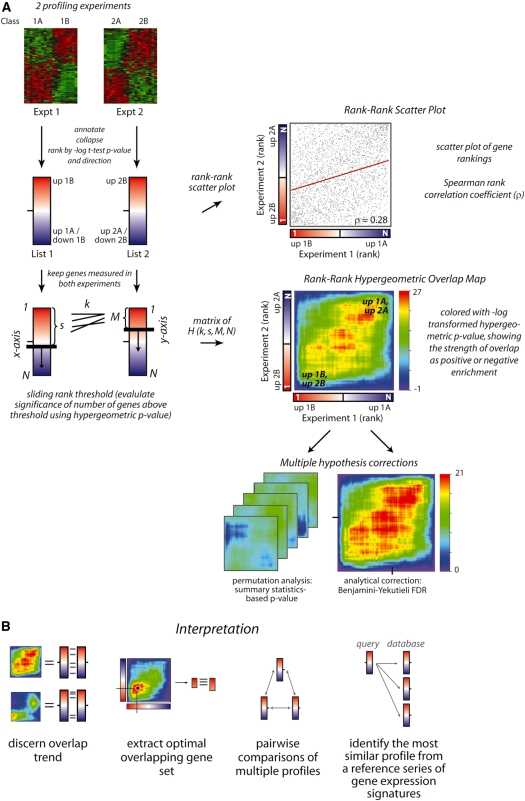
Comparing independent high-throughput gene-expression experiments can generate hypotheses about which gene-expression programs are shared between particular biological processes. Current techniques to compare expression profiles typically involve choosing a fixed differential expression threshold to summarize results, potentially reducing sensitivity to small but concordant changes. We present a threshold-free algorithm called Rank-rank Hypergeometric Overlap (RRHO). This algorithm steps through two gene lists ranked by the degree of differential expression observed in two profiling experiments, successively measuring the statistical significance of the number of overlapping genes. The output is a graphical map that shows the strength, pattern and bounds of correlation between two expression profiles. To demonstrate RRHO sensitivity and dynamic range, we identified shared expression networks in cancer microarray profiles driving tumor progression, stem cell properties and response to targeted kinase inhibition. We demonstrate how RRHO can be used to determine which model system or drug treatment best reflects a particular biological or disease response. The threshold-free and graphical aspects of RRHO complement other rank-based approaches such as Gene Set Enrichment Analysis (GSEA), for which RRHO is a 2D analog. Rank-rank overlap analysis is a sensitive, robust and web-accessible method for detecting and visualizing overlap trends between two complete, continuous gene-expression profiles. A web-based implementation of RRHO can be accessed at http://systems.crump.ucla.edu/rankrank/.
Overview
The claims and statistics of this paper haven’t been checked yet.
Free: it reads the open-access text and checks the first 5 claims that cite a source we can check. Create a free account to check every claim.
Integrity signals
Registry
Cites
Statistics
Figures
Verification
Claims the paper makes
The claims and statistics of this paper haven’t been checked yet.
Free: it reads the open-access text and checks the first 5 claims that cite a source we can check. Create a free account to check every claim.
Claims other papers make about this one
Each is checked against this paper’s own text: does it say what the citing paper says it does?
The source backs part of the claim, not all of it — or backs it for a different population, condition or comparison.
In the citing paper
“However, while these approaches are useful, they have conceptual limitations. Some lack a clear estimand (such as the running-sum GSEA statistic); some have ambiguous units (such as the energy distance); some are biased at finite sample size (such as the proportion of DE genes π in iDEA, see O’Connor et al11).”
From Transcriptome-wide analysis of differential expression in perturbation atlases (2025) · cites this paper as [9]
Experimental — accuracy not yet measuredIn the citing paper
“Consistently, rank-rank hypergeometric transcriptional overlap (RRHO) mapping between pre-natal and adult brain, and between iPSC-iNs and iNs, revealed a pronounced bias in the overlap of iNs with adult brain samples (Figure 7M; Plaisier et al., 2010).”
From Age-dependent instability of mature neuronal fate in induced neurons from Alzheimer’s patients (2021) · cites this paper as Plaisier et al., 2010
Self-check
Percentages, sums and reported differences re-computed from the paper’s own numbers.
The self-check needs the paper’s full text.
Citations
Cites
Subramanian, A., Tamayo, P., Mootha, V. K., Mukherjee, S., Ebert, B. L., Gillette, M. A., Paulovich, A., Pomeroy, S. L., Golub, T. R., Lander, E. S., et al. (2005) · Proceedings of the National Academy of Sciences · doi:10.1073/pnas.0506580102 · Cited by 53,625 · cited 3×
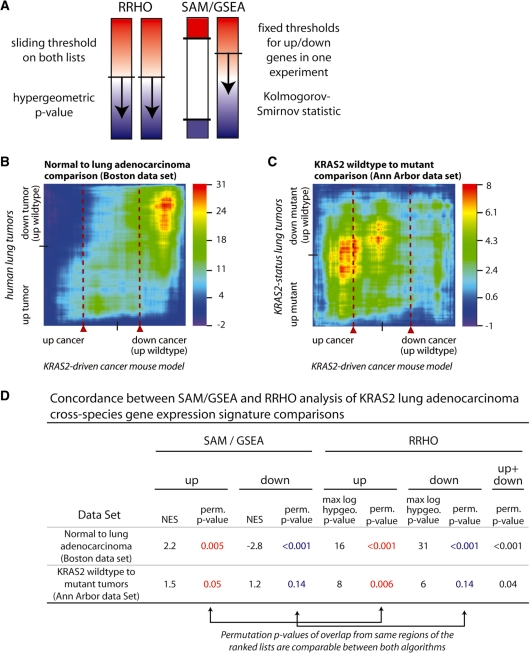
“In the SAM/GSEA approach, the output is a permutation P-value and a Kolmogorov–Smirnov mountain plot illustrating the overlap between a subset of high-ranking genes chosen to represent the mouse model profile (a fixed gene set) and the range of differential gene expression in the human data set (a continuous ranked li…”
MethodGene Expression Omnibus: NCBI gene expression and hybridization array data repository
Edgar, R. (2002) · Nucleic Acids Research · doi:10.1093/nar/30.1.207 · Cited by 13,288 · cited 2×
“Gene-expression information from microarray data repositories such as Gene-expression Omnibus (19) and ArrayExpress (53) as well as from more specialized resources such as the drug response profile database Cmap (10) can be readily converted to ranked list inputs for our program.”
BackgroundMethodThe control of the false discovery rate in multiple testing under dependency
Benjamini, Y., & Yekutieli, D. (2001) · The Annals of Statistics · doi:10.1214/aos/1013699998 · Cited by 10,490
Mootha, V. K., Lindgren, C. M., Eriksson, K.-F., Subramanian, A., Sihag, S., Lehar, J., Puigserver, P., Carlsson, E., Ridderstråle, M., Laurila, E., et al. (2003) · Nature Genetics · doi:10.1038/ng1180 · Cited by 10,197
DAVID: Database for Annotation, Visualization, and Integrated Discovery
Dennis, G., Sherman, B. T., Hosack, D. A., Yang, J., Gao, W., Lane, H. C., & Lempicki, R. A. (2003) · Genome Biology · doi:10.1186/gb-2003-4-5-p3 · Cited by 9,327
Lamb, J., Crawford, E. D., Peck, D., Modell, J. W., Blat, I. C., Wrobel, M. J., Lerner, J., Brunet, J.-P., Subramanian, A., Ross, K. N., et al. (2006) · Science · doi:10.1126/science.1132939 · Cited by 5,257 · cited 20×
“is the Cmap, a database of transcriptional responses to a panel of specific drug treatments (10).”
BackgroundMethodInfluentialGenes that mediate breast cancer metastasis to lung
Minn, A. J., Gupta, G. P., Siegel, P. M., Bos, P. D., Shu, W., Giri, D. D., Viale, A., Olshen, A. B., Gerald, W. L., & Massagué, J. (2005) · Nature · doi:10.1038/nature03799 · Cited by 2,922 · cited 1×
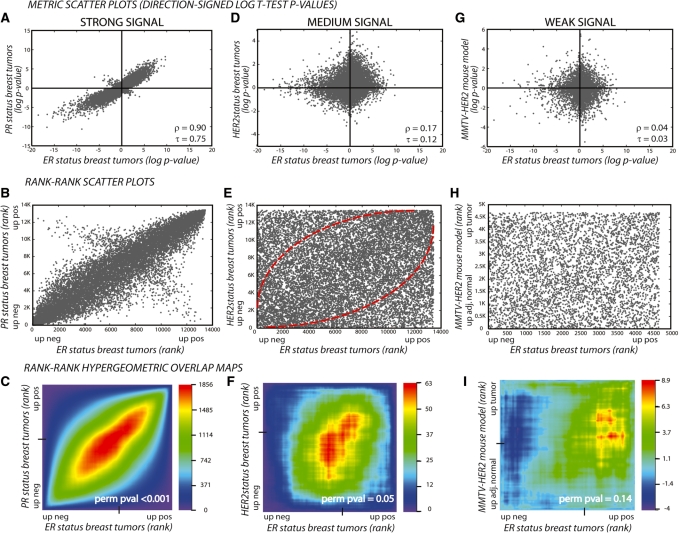
“The x-axis on all representations shows the difference between ER positive to ER negative human breast tumors (24); the y-axis shows gene-expression profiles based on other mutations or other profiles relevant to human breast cancer.”
BackgroundOncogenic pathway signatures in human cancers as a guide to targeted therapies
Bild, A. H., Yao, G., Chang, J. T., Wang, Q., Potti, A., Chasse, D., Joshi, M.-B., Harpole, D., Lancaster, J. M., Berchuck, A., et al. (2006) · Nature · doi:10.1038/nature04296 · Cited by 2,032 · cited 2×
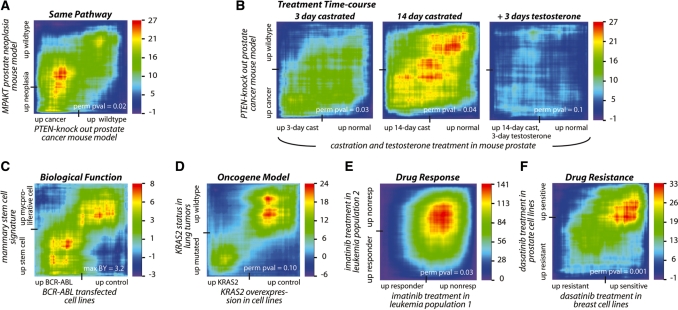
“High overlap between gene-expression changes driven by mutated KRAS2 oncogene in human lung tumors and by overexpression of KRAS2 in a cell line identify signaling events downstream of this oncogene that have in vivo relevance that can be studied effectively in vitro (Figure 3D) (35).”
BackgroundUsing GOstats to test gene lists for GO term association
Falcon, S., & Gentleman, R. (2007) · Bioinformatics · doi:10.1093/bioinformatics/btl567 · Cited by 2,015
Empirical Bayes analysis of a microarray experiment
Efron, B., Tibshirani, R., Storey, J. D., & Tusher, V. (2001) · Journal of the American Statistical Association · doi:10.1198/016214501753382129 · Cited by 1,733 · cited 7×
“Comparing the permutation P-values from the SAM/GSEA approach to those from the RRHO approach demonstrates that both methods have equivalent sensitivity and are able to detect the weak but statistically significant cross-species signal (Figure 4D).”
MethodInfluential
Cited by
Pancreatic β-cells in type 1 and type 2 diabetes mellitus: different pathways to failure
Eizirik, D. L., Pasquali, L., & Cnop, M. (2020) · Nature Reviews Endocrinology · doi:10.1038/s41574-020-0355-7 · Cited by 854
hdWGCNA identifies co-expression networks in high-dimensional transcriptomics data
Morabito, S., Reese, F., Rahimzadeh, N., Miyoshi, E., & Swarup, V. (2023) · Cell Reports Methods · doi:10.1016/j.crmeth.2023.100498 · Cited by 1,027
Sex-specific transcriptional signatures in human depression
Labonté, B., Engmann, O., Purushothaman, I., Menard, C., Wang, J., Tan, C., Scarpa, J. R., Moy, G., Loh, Y.-H. E., Cahill, M., et al. (2017) · Nature Medicine · doi:10.1038/nm.4386 · Cited by 748
Single cell RNA sequencing of human microglia uncovers a subset associated with Alzheimer’s disease
Olah, M., Menon, V., Habib, N., Taga, M. F., Ma, Y., Yung, C. J., Cimpean, M., Khairallah, A., Coronas-Samano, G., Sankowski, R., et al. (2020) · Nature Communications · doi:10.1038/s41467-020-19737-2 · Cited by 722
Cell Autonomous Role of PTEN in Regulating Castration-Resistant Prostate Cancer Growth
Mulholland, D. J., Tran, L. M., Li, Y., Cai, H., Morim, A., Wang, S., Plaisier, S., Garraway, I. P., Huang, J., Graeber, T. G., et al. (2011) · Cancer Cell · doi:10.1016/j.ccr.2011.05.006 · Cited by 516
“Using a rank-rank analysis and a hypergeometric overlap algorithm (Plaisier et al., 2010), we also found this similarity between the global expression profiles of genes altered in Pten null CaPs (Pten null cancer, WT control) with those enriched after castration (castration, intact or day 0…”
MethodSelf-citationMulholland, D. J., Kobayashi, N., Ruscetti, M., Zhi, A., Tran, L. M., Huang, J., Gleave, M., & Wu, H. (2012) · Cancer Research · doi:10.1158/0008-5472.can-11-3132 · Cited by 478
“Rank–rank analysis In rank–rank geometric overlap analysis (RRHO), genes in human data sets derived from the studies of Lapointe and colleagues (22) and Taylor and colleagues (2) were ranked on the basis of their log-transformed P values of t test comparing between 2 subgroups/genotypes as previously described (23, 24…”
SABER amplifies FISH: enhanced multiplexed imaging of RNA and DNA in cells and tissues
Kishi, J. Y., Lapan, S. W., Beliveau, B. J., West, E. R., Zhu, A., Sasaki, H. M., Saka, S. K., Wang, Y., Cepko, C. L., & Yin, P. (2019) · Nature Methods · doi:10.1038/s41592-019-0404-0 · Cited by 454
Srinivasan, R., Lu, T.-Y., Chai, H., Xu, J., Huang, B. S., Golshani, P., Coppola, G., & Khakh, B. S. (2016) · Neuron · doi:10.1016/j.neuron.2016.11.030 · Cited by 443
Early life stress confers lifelong stress susceptibility in mice via ventral tegmental area OTX2
Peña, C. J., Kronman, H. G., Walker, D. M., Cates, H. M., Bagot, R. C., Purushothaman, I., Issler, O., Loh, Y.-H. E., Leong, T., Kiraly, D. D., et al. (2017) · Science · doi:10.1126/science.aan4491 · Cited by 394
Type I Interferon Suppresses Type II Interferon–Triggered Human Anti-Mycobacterial Responses
Teles, R. M. B., Graeber, T. G., Krutzik, S. R., Montoya, D., Schenk, M., Lee, D. J., Komisopoulou, E., Kelly-Scumpia, K., Chun, R., Iyer, S. S., et al. (2013) · Science · doi:10.1126/science.1233665 · Cited by 380
Self-citationCTLA4 Blockade Broadens the Peripheral T-Cell Receptor Repertoire
Robert, L., Tsoi, J., Wang, X., Emerson, R., Homet, B., Chodon, T., Mok, S., Huang, R. R., Cochran, A. J., Comin-Anduix, B., et al. (2014) · Clinical Cancer Research · doi:10.1158/1078-0432.ccr-13-2648 · Cited by 376
“To visually understand the diversity and changes across patients, we generated rank-rank scatter plot figures for each patient (34).”
MethodSelf-citationLong-term maturation of human cortical organoids matches key early postnatal transitions
Gordon, A., Yoon, S.-J., Tran, S. S., Makinson, C. D., Park, J. Y., Andersen, J., Valencia, A. M., Horvath, S., Xiao, X., Huguenard, J. R., et al. (2021) · Nature Neuroscience · doi:10.1038/s41593-021-00802-y · Cited by 357
Chaperone-mediated autophagy prevents collapse of the neuronal metastable proteome
Bourdenx, M., Martín-Segura, A., Scrivo, A., Rodriguez-Navarro, J. A., Kaushik, S., Tasset, I., Diaz, A., Storm, N. J., Xin, Q., Juste, Y. R., et al. (2021) · Cell · doi:10.1016/j.cell.2021.03.048 · Cited by 337
Bagot, R. C., Cates, H. M., Purushothaman, I., Lorsch, Z. S., Walker, D. M., Wang, J., Huang, X., Schlüter, O. M., Maze, I., Peña, C. J., et al. (2016) · Neuron · doi:10.1016/j.neuron.2016.04.015 · Cited by 333
“We used a rank rank hypergeometric overlap test (RRHO) to identify the patterns and significance of overlap between gene expression profiles (Figure 2) (Plaisier et al., 2010).”
Cahill, K. M., Huo, Z., Tseng, G. C., Logan, R. W., & Seney, M. L. (2018) · Scientific Reports · doi:10.1038/s41598-018-27903-2 · Cited by 292
Ruiz García, S., Deprez, M., Lebrigand, K., Cavard, A., Paquet, A., Arguel, M.-J., Magnone, V., Truchi, M., Caballero, I., Leroy, S., et al. (2019) · Development · doi:10.1242/dev.177428 · Cited by 297
“Those differential analysis were performed multiple times (10 times) on different pool of cells and the DEG identified were compared between each pool of cells using the rank-rank hypergeometric overlap algorithm (Plaisier et al., 2010).”
MethodSey, N. Y. A., Hu, B., Mah, W., Fauni, H., McAfee, J. C., Rajarajan, P., Brennand, K. J., Akbarian, S., & Won, H. (2020) · Nature Neuroscience · doi:10.1038/s41593-020-0603-0 · Cited by 297
Zuber, J., Rappaport, A. R., Luo, W., Wang, E., Chen, C., Vaseva, A. V., Shi, J., Weissmueller, S., Fellman, C., Taylor, M. J., et al. (2011) · Genes & Development · doi:10.1101/gad.17269211 · Cited by 279
“13A,B), as determined by a recently developed method to compare global expression signatures (Rank–Rank Hypergeometric Overlap [RRHO]) (Plaisier et al. 2010).”
MethodSelf-citationOpposite Molecular Signatures of Depression in Men and Women
Seney, M. L., Huo, Z., Cahill, K., French, L., Puralewski, R., Zhang, J., Logan, R. W., Tseng, G., Lewis, D. A., & Sibille, E. (2018) · Biological Psychiatry · doi:10.1016/j.biopsych.2018.01.017 · Cited by 272
“Women with MDD also report greater illness severity, more symptoms (3, 8-10), and different symptomatology than men.”
Uzquiano, A., Kedaigle, A. J., Pigoni, M., Paulsen, B., Adiconis, X., Kim, K., Faits, T., Nagaraja, S., Antón-Bolaños, N., Gerhardinger, C., et al. (2022) · Cell · doi:10.1016/j.cell.2022.09.010 · Cited by 244
Molecular signatures underlying neurofibrillary tangle susceptibility in Alzheimer’s disease
Otero-Garcia, M., Mahajani, S. U., Wakhloo, D., Tang, W., Xue, Y.-Q., Morabito, S., Pan, J., Oberhauser, J., Madira, A. E., Shakouri, T., et al. (2022) · Neuron · doi:10.1016/j.neuron.2022.06.021 · Cited by 262
Transcriptional data: a new gateway to drug repositioning?
Iorio, F., Rittman, T., Ge, H., Menden, M., & Saez-Rodriguez, J. (2013) · Drug Discovery Today · doi:10.1016/j.drudis.2012.07.014 · Cited by 237
Dopaminylation of histone H3 in ventral tegmental area regulates cocaine seeking
Lepack, A. E., Werner, C. T., Stewart, A. F., Fulton, S. L., Zhong, P., Farrelly, L. A., Smith, A. C. W., Ramakrishnan, A., Lyu, Y., Bastle, R. M., et al. (2020) · Science · doi:10.1126/science.aaw8806 · Cited by 236
Injured adult neurons regress to an embryonic transcriptional growth state
Poplawski, G. H. D., Kawaguchi, R., Van Niekerk, E., Lu, P., Mehta, N., Canete, P., Lie, R., Dragatsis, I., Meves, J. M., Zheng, B., et al. (2020) · Nature · doi:10.1038/s41586-020-2200-5 · Cited by 247
Age-dependent instability of mature neuronal fate in induced neurons from Alzheimer’s patients
Mertens, J., Herdy, J. R., Traxler, L., Schafer, S. T., Schlachetzki, J. C. M., Böhnke, L., Reid, D. A., Lee, H., Zangwill, D., Fernandes, D. P., et al. (2021) · Cell Stem Cell · doi:10.1016/j.stem.2021.04.004 · Cited by 240
Frere, J. J., Serafini, R. A., Pryce, K. D., Zazhytska, M., Oishi, K., Golynker, I., Panis, M., Zimering, J., Horiuchi, S., Hoagland, D. A., et al. (2022) · Science Translational Medicine · doi:10.1126/scitranslmed.abq3059 · Cited by 233
Chan, J. C., Morgan, C. P., Adrian Leu, N., Shetty, A., Cisse, Y. M., Nugent, B. M., Morrison, K. E., Jašarević, E., Huang, W., Kanyuch, N., et al. (2020) · Nature Communications · doi:10.1038/s41467-020-15305-w · Cited by 220
MCT1 Modulates Cancer Cell Pyruvate Export and Growth of Tumors that Co-express MCT1 and MCT4
Hong, C. S., Graham, N. A., Gu, W., Espindola Camacho, C., Mah, V., Maresh, E. L., Alavi, M., Bagryanova, L., Krotee, P. A. L., Gardner, B. K., et al. (2016) · Cell Reports · doi:10.1016/j.celrep.2016.01.057 · Cited by 226
“These nes control) and shRNA towardMCT1 (knockdown) were used to generate a ranked anked list was compared to a ranked list of transcripts that correlate with high overlap (RRHO) algorithm.”
Self-citationEarly life stress alters transcriptomic patterning across reward circuitry in male and female mice
Peña, C. J., Smith, M., Ramakrishnan, A., Cates, H. M., Bagot, R. C., Kronman, H. G., Patel, B., Chang, A. B., Purushothaman, I., Dudley, J., et al. (2019) · Nature Communications · doi:10.1038/s41467-019-13085-6 · Cited by 219
Transcriptomic Characterization of Temperature Stress Responses in Larval Zebrafish
Long, Y., Li, L., Li, Q., He, X., & Cui, Z. (2012) · PLoS ONE · doi:10.1371/journal.pone.0037209 · Cited by 209
“Rank–rank Hypergeometric Overlap (RRHO) analysis [34] revealed a significant overlap between the reversed list of cold-regulated genes (16uC-48 h vs.”
BackgroundGenetic influences on schizophrenia and subcortical brain volumes: large-scale proof of concept
Schizophrenia Working Group of the Psychiatric Genomics Consortium, Franke, B., Enigma Consortium, Stein, J. L., Ripke, S., Anttila, V., Hibar, D. P., van Hulzen, K. J. E., Arias-Vasquez, A., Smoller, J. W., et al. (2016) · Nature Neuroscience · doi:10.1038/nn.4228 · Cited by 216
Williams, J. B., Horton, B. L., Zheng, Y., Duan, Y., Powell, J. D., & Gajewski, T. F. (2017) · Journal of Experimental Medicine · doi:10.1084/jem.20160485 · Cited by 210
“The rank-rank hypergeometric overlap (RRHO) analysis (Plaisier et al., 2010) was conducted through publicly available Rank-Rank Hypergeometric Overlap software (T. Graeber, University of California, Los Angeles, Los Angeles, CA) and the associated Bioconductor package RRHO (Rosenblatt and Stein,…”
MethodGrace, M. S., Formosa, M. F., Bozaoglu, K., Bergouignan, A., Brozynska, M., Carey, A. L., Veiga, C. B., Sethi, P., Dillon, F., Bertovic, D. A., et al. (2019) · Scientific Reports · doi:10.1038/s41598-019-40490-0 · Cited by 205
A Quantitative Framework to Evaluate Modeling of Cortical Development by Neural Stem Cells
Stein, J. L., de la Torre-Ubieta, L., Tian, Y., Parikshak, N. N., Hernández, I. A., Marchetto, M. C., Baker, D. K., Lu, D., Hinman, C. R., Lowe, J. K., et al. (2014) · Neuron · doi:10.1016/j.neuron.2014.05.035 · Cited by 201
Extracellular succinate hyperpolarizes M2 macrophages through SUCNR1/GPR91-mediated Gq signaling
Trauelsen, M., Hiron, T. K., Lin, D., Petersen, J. E., Breton, B., Husted, A. S., Hjorth, S. A., Inoue, A., Frimurer, T. M., Bouvier, M., et al. (2021) · Cell Reports · doi:10.1016/j.celrep.2021.109246 · Cited by 180
Jašarević, E., Howard, C. D., Morrison, K., Misic, A., Weinkopff, T., Scott, P., Hunter, C., Beiting, D., & Bale, T. L. (2018) · Nature Neuroscience · doi:10.1038/s41593-018-0182-5 · Cited by 189
Descalzi, G., Mitsi, V., Purushothaman, I., Gaspari, S., Avrampou, K., Loh, Y.-H. E., Shen, L., & Zachariou, V. (2017) · Science Signaling · doi:10.1126/scisignal.aaj1549 · Cited by 188
“The direction signed log10-transformed hypergeometric P values were corrected for multiple comparisons according to the Benjamini and Yekutieli method (48).”
MethodInfluentialBalanis, N. G., Sheu, K. M., Esedebe, F. N., Patel, S. J., Smith, B. A., Park, J. W., Alhani, S., Gomperts, B. N., Huang, J., Witte, O. N., et al. (2019) · Cancer Cell · doi:10.1016/j.ccell.2019.06.005 · Cited by 177
Self-citationPearson, J. D., Huang, K., Pacal, M., McCurdy, S. R., Lu, S., Aubry, A., Yu, T., Wadosky, K. M., Zhang, L., Wang, T., et al. (2021) · Cancer Cell · doi:10.1016/j.ccell.2021.06.016 · Cited by 175
“A uthor M anuscript A uthor M anuscript A uthor M anuscript A uthor M anuscript REAGENT or RESOURCE SOURCE IDENTIFIER Kaluza, Flow Cytometry analysis software Beckman Coulter https://www.mybeckman.ca/flowcytometry/software/kaluza Prism GraphPad https://www.graphpad.com/scientificsoftware/prism/ RSEM Li and Dewey, 2011…”
MethodThe evolutionary landscape of chronic lymphocytic leukemia treated with ibrutinib targeted therapy
Landau, D. A., Sun, C., Rosebrock, D., Herman, S. E. M., Fein, J., Sivina, M., Underbayev, C., Liu, D., Hoellenriegel, J., Ravichandran, S., et al. (2017) · Nature Communications · doi:10.1038/s41467-017-02329-y · Cited by 176
Global mRNA polarization regulates translation efficiency in the intestinal epithelium
Moor, A. E., Golan, M., Massasa, E. E., Lemze, D., Weizman, T., Shenhav, R., Baydatch, S., Mizrahi, O., Winkler, R., Golani, O., et al. (2017) · Science · doi:10.1126/science.aan2399 · Cited by 166
Cocaine Self-administration Alters Transcriptome-wide Responses in the Brain’s Reward Circuitry
Walker, D. M., Cates, H. M., Loh, Y.-H. E., Purushothaman, I., Ramakrishnan, A., Cahill, K. M., Lardner, C. K., Godino, A., Kronman, H. G., Rabkin, J., et al. (2018) · Biological Psychiatry · doi:10.1016/j.biopsych.2018.04.009 · Cited by 176
“RRHO identifies overlap between expression profiles in a threshold free manner to assess the degree and significance of overlap (11).”
Lee, J. K., Bangayan, N. J., Chai, T., Smith, B. A., Pariva, T. E., Yun, S., Vashisht, A., Zhang, Q., Park, J. W., Corey, E., et al. (2018) · Proceedings of the National Academy of Sciences · doi:10.1073/pnas.1802354115 · Cited by 147
“RRHO analysis was performed in pairwise comparisons of gene-expression datasets as described (25).”
MethodSelf-citationColli, M. L., Ramos-Rodríguez, M., Nakayasu, E. S., Alvelos, M. I., Lopes, M., Hill, J. L. E., Turatsinze, J.-V., Coomans de Brachène, A., Russell, M. A., Raurell-Vila, H., et al. (2020) · Nature Communications · doi:10.1038/s41467-020-16327-0 · Cited by 140
Seney, M. L., Kim, S.-M., Glausier, J. R., Hildebrand, M. A., Xue, X., Zong, W., Wang, J., Shelton, M. A., Phan, B. N., Srinivasan, C., et al. (2021) · Biological Psychiatry · doi:10.1016/j.biopsych.2021.06.007 · Cited by 145
“Because pathways were largely similar in OUD between brain regions, we explored the extent of transcriptional overlap between the DLPFC and NAc using rank-rank hypergeometric overlap (26,27), which orders transcripts by effect size direction and p value.”
Marselli, L., Piron, A., Suleiman, M., Colli, M. L., Yi, X., Khamis, A., Carrat, G., Rutter, G. A., Bugliani, M., Giusti, L., et al. (2020) · Cell Reports · doi:10.1016/j.celrep.2020.108466 · Cited by 135
Palaskas, N., Larson, S. M., Schultz, N., Komisopoulou, E., Wong, J., Rohle, D., Campos, C., Yannuzzi, N., Osborne, J. R., Linkov, I., et al. (2011) · Cancer Research · doi:10.1158/0008-5472.can-10-4633 · Cited by 121
“The rank–rank hypergeometric overlap (RRHO) algorithm (6) was used to examine the statistical significance of similarity between our FDG signature and other gene expression signatures.”
MethodSelf-citationArion, D., Huo, Z., Enwright, J. F., Corradi, J. P., Tseng, G., & Lewis, D. A. (2017) · Biological Psychiatry · doi:10.1016/j.biopsych.2017.03.018 · Cited by 122
Whole-genome analyses of whole-brain data: working within an expanded search space
Medland, S. E., Jahanshad, N., Neale, B. M., & Thompson, P. M. (2014) · Nature Neuroscience · doi:10.1038/nn.3718 · Cited by 119
Swaminathan, S., Huang, C., Geng, H., Chen, Z., Harvey, R., Kang, H., Ng, C., Titz, B., Hurtz, C., Sadiyah, M. F., et al. (2013) · Nature Medicine · doi:10.1038/nm.3247 · Cited by 115
Self-citationAn active vesicle priming machinery suppresses axon regeneration upon adult CNS injury
Hilton, B. J., Husch, A., Schaffran, B., Lin, T.-C., Burnside, E. R., Dupraz, S., Schelski, M., Kim, J., Müller, J. A., Schoch, S., et al. (2022) · Neuron · doi:10.1016/j.neuron.2021.10.007 · Cited by 116
A Human Adult Stem Cell Signature Marks Aggressive Variants across Epithelial Cancers
Smith, B. A., Balanis, N. G., Nanjundiah, A., Sheu, K. M., Tsai, B. L., Zhang, Q., Park, J. W., Thompson, M. J., Huang, J., Witte, O. N., et al. (2018) · Cell Reports · doi:10.1016/j.celrep.2018.08.062 · Cited by 141
“6 (RRHO) algorithm, which enables identification of significantly concordant transcriptional profiles from independent RNA profiling experiments regardless of sequencing platform or other variables (Plaisier et al., 2010) (Figure 1A).”
BackgroundSelf-citationConserved transcriptomic profiles underpin monogamy across vertebrates
Young, R. L., Ferkin, M. H., Ockendon-Powell, N. F., Orr, V. N., Phelps, S. M., Pogány, Á., Richards-Zawacki, C. L., Summers, K., Székely, T., Trainor, B. C., et al. (2019) · Proceedings of the National Academy of Sciences · doi:10.1073/pnas.1813775116 · Cited by 93
“To identify shared transcriptomic patterns across monogamous species and assess whether the degree of overlap in expression between monogamous species is statistically significant, we utilize the Rank-Rank Hypergeometric Overlap (RRHO) approach (34).”
BackgroundMethodShared Transcriptional Signatures in Major Depressive Disorder and Mouse Chronic Stress Models
Scarpa, J. R., Fatma, M., Loh, Y. E., Traore, S. R., Stefan, T., Chen, T. H., Nestler, E. J., & Labonté, B. (2020) · Biological Psychiatry · doi:10.1016/j.biopsych.2019.12.029 · Cited by 116
“These differences reflect the knowledge that DEGs, RRHO and WGCNA each captures only partly overlapping modes of transcriptional regulation.”
InfluentialΤράκα, Μ., Melchini, A., Coode‐Bate, J., Kadhi, O. A., Saha, S., Defernez, M., Troncoso‐Rey, P., Kibblewhite, H., O’Neill, C. M., Bernuzzi, F., et al. (2019) · American Journal of Clinical Nutrition · doi:10.1093/ajcn/nqz012 · Cited by 109
“DGE lists were ranked according to their P value, modified using the rank–rank hypergeometric overlap (RRHO) algorithm (23).”
MethodControl of osteocyte dendrite formation by Sp7 and its target gene osteocrin
Wang, J. S., Kamath, T., Mazur, C. M., Mirzamohammadi, F., Rotter, D., Hojo, H., Castro, C. D., Tokavanich, N., Patel, R., Govea, N., et al. (2021) · Nature Communications · doi:10.1038/s41467-021-26571-7 · Cited by 99
“The 967 degree of differential expression overlap between two transcriptomic profiles was determined by 968 Rank-Rank Hypergeometric Overlap (RRHO and RRHO2) [80, 81].”
MethodInfluentialDiurnal rhythms in gene expression in the prefrontal cortex in schizophrenia
Seney, M. L., Cahill, K., Enwright, J. F., Logan, R. W., Huo, Z., Zong, W., Tseng, G., & McClung, C. A. (2019) · Nature Communications · doi:10.1038/s41467-019-11335-1 · Cited by 108
Yang, X., Mann, K. K., Wu, H., & Ding, J. (2024) · Genome biology · doi:10.1186/s13059-024-03338-z · Cited by 118
“To assess the level of correlation between the differential gene signatures of the original Ast cells and the simulated 1X Ast data against a background, we employ the RRHO methodology [80].”
MethodEstrogen receptor α drives pro-resilient transcription in mouse models of depression
Lorsch, Z. S., Loh, Y.-H. E., Purushothaman, I., Walker, D. M., Parise, E. M., Salery, M., Cahill, M. E., Hodes, G. E., Pfau, M. L., Kronman, H., et al. (2018) · Nature Communications · doi:10.1038/s41467-018-03567-4 · Cited by 104
“c Mice exposed to CVS take longer to feed in a novel environment than the home cage in the novelty suppressed feeding test (F(1,20)= 116.”
BackgroundEndothelial deletion of Ino80 disrupts coronary angiogenesis and causes congenital heart disease
Rhee, S., Chung, J. I., King, D. A., D’Amato, G., Paik, D. T., Duan, A., Chang, A. H., Nagelberg, D., Sharma, B., Jeong, Y., et al. (2018) · Nature Communications · doi:10.1038/s41467-017-02796-3 · Cited by 106
eVITTA: a web-based visualization and inference toolbox for transcriptome analysis
Cheng, X., Yan, J., Liu, Y., Wang, J., & Taubert, S. (2021) · Nucleic Acids Research · doi:10.1093/nar/gkab366 · Cited by 98
“The eVITTA web server runs on Ubuntu Linux (18.04.5 LTS) with 32 GB memory, 16-core CPUs and a 10TB hard drive with Apache (version 2.4.29, https://httpd. apache.org), R (version 4.0.2, https://www.r-project.org/), and R Shiny Server (version 1.5.14.948, https://rstudio.com/ products/shiny/download-server/). eVITTA ut…”
BackgroundMethodInfluentialSex differences in developmental patterns of neocortical astroglia: A mouse translatome database
Rurak, G. M., Simard, S., Andrade, M. F., Lacoste, B., Charih, F., Geel, A. V., Stead, J. D. H., Woodside, B. C., Green, J. R., Coppola, G., et al. (2022) · Cell Reports · doi:10.1016/j.celrep.2022.110310 · Cited by 101
High-Risk Alphapapillomavirus Oncogenes Impair the Homologous Recombination Pathway
Wallace, N. A., Khanal, S., Robinson, K. L., Wendel, S. O., Messer, J. J., & Galloway, D. A. (2017) · Journal of Virology · doi:10.1128/jvi.01084-17 · Cited by 84
“Using an established approach (62), a ranked file containing the gene identifier and the ranking metric were generated for each data set, ranking the genes from the most significantly upregulated (top) to the most significantly downregulated (bottom) with insignificant regulation changes in the middle.”
MethodSharma, A., Kazim, S. F., Larson, C. S., Ramakrishnan, A., Gray, J. D., McEwen, B. S., Rosenberg, P. A., Shen, L., & Pereira, A. C. (2019) · Proceedings of the National Academy of Sciences · doi:10.1073/pnas.1903566116 · Cited by 92
“RRHO analysis showed that partial loss of astrocytic EAAT2 drives gene expression changes in the hippocampus associated with inflammation and synaptic function, similar to human AD, and gene expression changes in the hippocampus associated with inflammation similar to the aging human brain.”
MethodInfluentialMachine learning approaches to predict lupus disease activity from gene expression data
Kegerreis, B. J., Catalina, M. D., Bachali, P., Geraci, N., Labonte, A. C., Zeng, C., Stearrett, N., Crandall, K. A., Lipsky, P. E., & Grammer, A. C. (2019) · Scientific Reports · doi:10.1038/s41598-019-45989-0 · Cited by 93
Melanoma dedifferentiation induced by IFN-γ epigenetic remodeling in response to anti–PD-1 therapy
Kim, Y. J., Sheu, K. M., Tsoi, J., Abril-Rodríguez, G., Medina, E., Grasso, C. S., Torrejon, D. Y., Champhekar, A. S., Litchfield, K., Swanton, C., et al. (2021) · Journal of Clinical Investigation · doi:10.1172/jci145859 · Cited by 83
“A step size of 100 was used for genes and gene sets (24).”
MethodSelf-citationA Comparison of mRNA Sequencing with Random Primed and 3′-Directed Libraries
Xiong, Y., Soumillon, M., Wu, J., Hansen, J., Hu, B., van Hasselt, J. G. C., Jayaraman, G., Lim, R. G., Bouhaddou, M., Ornelas, L., et al. (2017) · Scientific Reports · doi:10.1038/s41598-017-14892-x · Cited by 82
“Lastly, we ranked the entire list of 22,811 genes for each mRNAseq technique and drug, and then analyzed their overlap via the rank-rank hypergeometric test 27 (Fig.”
MethodJUN dependency in distinct early and late BRAF inhibition adaptation states of melanoma
Titz, B., Lomova, A., Le, A., Hugo, W., Kong, X., ten Hoeve, J., Friedman, M., Shi, H., Moriceau, G., Song, C., et al. (2016) · Cell Discovery · doi:10.1038/celldisc.2016.28 · Cited by 72
Self-citationGuma, E., Bordignon, P. D. C., Devenyi, G. A., Gallino, D., Anastassiadis, C., Cvetkovska, V., Barry, A., Snook, E., Germann, J., Greenwood, C. M. T., et al. (2021) · Biological Psychiatry · doi:10.1016/j.biopsych.2021.03.017 · Cited by 81
A microRNA signature that correlates with cognition and is a target against cognitive decline
Islam, M. R., Kaurani, L., Berulava, T., Heilbronner, U., Budde, M., Centeno, T. P., Elerdashvili, V., Zafieriou, M., Benito, E., Sertel, S. M., et al. (2021) · EMBO Molecular Medicine · doi:10.15252/emmm.202013659 · Cited by 74
“Rank-rank hypergeometric overlap analysis The significance overlap of expressed microRNAs between two cohorts was calculated using the rank-rank hypergeometric test (Plaisier et al, 2010).”
MethodInterferons are key cytokines acting on pancreatic islets in type 1 diabetes
de Brachène, A. C., Alvelos, M. I., Szymczak, F., Zimath, P. L., Castela, Â., de Souza, B. M., Roca-Rivada, A., Marín‐Cañas, S., Yi, X., Beeck, A. O. D., et al. (2024) · Diabetologia · doi:10.1007/s00125-024-06106-7 · Cited by 79
“Rank–rank hypergeometric overlap (RRHO) test has been used to evaluate the level of agreement between two ranked lists [28, 29].”
APOE4 confers transcriptomic and functional alterations to primary mouse microglia
Machlovi, S. I., Neuner, S. M., Hemmer, B. M., Khan, R., Liu, Y., Huang, M., Zhu, J. D., Castellano, J. M., Cai, D., Marcora, E., et al. (2022) · Neurobiology of Disease · doi:10.1016/j.nbd.2022.105615 · Cited by 73
“Rank-rank hypergeometric overlap (RRHO) testing (Plaisier et al., 2010) (see Methods) revealed a large degree of similarity in the response of E4 and E3 microglia to myelin (Fig.”
BackgroundSzymczak, F., Colli, M. L., Mamula, M. J., Evans‐Molina, C., & Eizirik, D. L. (2021) · Science Advances · doi:10.1126/sciadv.abd7600 · Cited by 79
Is there Progress? An Overview of Selecting Biomarker Candidates for Major Depressive Disorder
Young, J. J., Silber, T., Bruno, D., Galatzer-Levy, I. R., Pomara, N., & Marmar, C. R. (2016) · Frontiers in Psychiatry · doi:10.3389/fpsyt.2016.00072 · Cited by 71
Malaiya, S., Cortes-Gutierrez, M., Herb, B. R., Coffey, S. R., Legg, S. R. W., Cantle, J. P., Colantuoni, C., Carroll, J. B., & Ament, S. A. (2021) · Journal of Neuroscience · doi:10.1523/jneurosci.2074-20.2021 · Cited by 89
Lee, S., Hong, J. H., Kim, J. S., Yoon, J. S., Chun, S. H., Hong, S. A., Kim, E. J., Kang, K., Kang, J. L., Ko, Y. H., et al. (2021) · Cancer Letters · doi:10.1016/j.canlet.2021.03.021 · Cited by 75
Transcriptome-wide analysis of differential expression in perturbation atlases
Nadig, A., Replogle, J. M., Pogson, A. N., Murthy, M., McCarroll, S. A., Weissman, J. S., Robinson, E. B., & O’Connor, L. J. (2025) · Nature Genetics · doi:10.1038/s41588-025-02169-3 · Cited by 70
Genetic Control of Myelin Plasticity after Chronic Psychosocial Stress
Laine, M. A., Trontti, K., Misiewicz, Z., Sokolowska, E., Kulesskaya, N., Heikkinen, A., Saarnio, S., Balcells, I., Ameslon, P., Greco, D., et al. (2018) · eneuro · doi:10.1523/eneuro.0166-18.2018 · Cited by 62
“(Plaisier et al., 2010) RRHO infers pair-wise similarity between two DE result lists, where genes are ranked by DE (-log10( p ) (cid:2) logFC) between resilient and control, or between susceptible and control mice, by calculating significance of overlapping genes at different rank bins (Plaisier et…”
InfluentialProteomic predictors of individualized nutrient-specific insulin secretion in health and disease
Kolic, J., Sun, W. G., Cen, H. H., Ewald, J., Rogalski, J. C., Sasaki, S., Sun, H., Rajesh, V., Xia, Y. H., Moravcova, R., et al. (2024) · Cell Metabolism · doi:10.1016/j.cmet.2024.06.001 · Cited by 70
Wu, F., Du, H., Overbey, E. G., Kim, J., Makhijani, P., Martin, N., Lerner, C. A., Nguyen, K., Baechle, J. J., Valentino, T. R., et al. (2024) · Nature Communications · doi:10.1038/s41467-023-42013-y · Cited by 75
Suppression of p16 Induces mTORC1-Mediated Nucleotide Metabolic Reprogramming
Buj, R., Chen, C.-W., Dahl, E. S., Leon, K. E., Kuskovsky, R., Maglakelidze, N., Navaratnarajah, M., Zhang, G., Doan, M. T., Jiang, H., et al. (2019) · Cell Reports · doi:10.1016/j.celrep.2019.07.084 · Cited by 64
Lynch, C. J., Bernad, R., Martínez‐Val, A., Shahbazi, M. N., Pereira, S. N., Calvo, I., Blanco‐Aparicio, C., Tarantino, C., Garreta, E., Richart, L., et al. (2020) · Nature Cell Biology · doi:10.1038/s41556-020-0573-1 · Cited by 70
Herdy, J., Schafer, S., Kim, Y., Ansari, Z., Zangwill, D., Ku, M., Paquola, A., Lee, H., Mertens, J., & Gage, F. H. (2019) · eLife · doi:10.7554/elife.41356 · Cited by 64
“RRHO schematic adapted from RRHO User Guide (Plaisier et al., 2010).”
BackgroundMethodInfluentialJaveed, N., Her, T. K., Brown, M., Vanderboom, P. M., Rakshit, K., Egan, A. M., Vella, A. V., Lanza, I. R., & Matveyenko, A. V. (2021) · Cell Reports · doi:10.1016/j.celrep.2021.109613 · Cited by 69
Bourdenx, M., Nioche, A., Doveró, S., Arotçarena, M.-L., Camus, S. M. J., Porras, G., Thiolat, M.-L., Rougier, N. P., Prigent, A., Aubert, P., et al. (2020) · Science Advances · doi:10.1126/sciadv.aaz9165 · Cited by 70
“RRHO test was performed as previously described (59) using RRHO package (1.”
Fröhlich, A. S., Gerstner, N., Gagliardi, M., Ködel, M., Yusupov, N., Matosin, N., Czamara, D., Sauer, S., Roeh, S., Murek, V., et al. (2024) · Nature Neuroscience · doi:10.1038/s41593-024-01742-z · Cited by 66
“0) 88,89 by ranking the genes according to the log 2 FC value multiplied by the negative base 10 logarithm of the uncorrected P value from differential expression analysis.”
BackgroundJang, S., Cook, N. J., Pye, V. E., Bedwell, G. J., Dudek, A. M., Singh, P. K., Cherepanov, P., & Engelman, A. N. (2019) · Nucleic Acids Research · doi:10.1093/nar/gkz206 · Cited by 57
“The hypergeometric test was used to assess statistically significant differences in numbers of overlapping genes between samples assuming a total population of 25 000 human genes (68).”
MethodMulti-omics analysis identifies mitochondrial pathways associated with anxiety-related behavior
Misiewicz, Z., Iurato, S., Kulesskaya, N., Salminen, L., Rodrigues, L., Maccarrone, G., Martins, J., Czamara, D., Laine, M. A., Sokolowska, E., et al. (2019) · PLoS Genetics · doi:10.1371/journal.pgen.1008358 · Cited by 61
FGWAS: Functional genome wide association analysis
Huang, C., Thompson, P. M., Wang, Y., Yu, Y., Zhang, J., Kong, D., Colen, R. R., Knickmeyer, R. C., & Zhu, H. (2017) · NeuroImage · doi:10.1016/j.neuroimage.2017.07.030 · Cited by 66
“In order to compare the GWAS results obtained under the model including group effects with those under the model without group effects, the rank-rank analysis (Plaisier et al., 2010) was conducted to compare the rank consistency of”
Identification of long non-coding RNAs expressed in knee and hip osteoarthritic cartilage
Ajekigbe, B., Cheung, K., Xu, Y., Skelton, A. J., Panagiotopoulos, A., Soul, J., Hardingham, T., Deehan, D. J., Barter, M. J., & Young, D. A. (2019) · Osteoarthritis and Cartilage · doi:10.1016/j.joca.2018.12.015 · Cited by 69
Brain-trait-associated variants impact cell-type-specific gene regulation during neurogenesis
Aygün, N., Elwell, A. L., Liang, D., Lafferty, M. J., Cheek, K. E., Courtney, K. P., Mory, J. T., Hadden-Ford, E., Krupa, O., de la Torre-Ubieta, L., et al. (2021) · The American Journal of Human Genetics · doi:10.1016/j.ajhg.2021.07.011 · Cited by 65
“Toevaluate the transcriptomic similaritybetweenour in vitro culture systemand the in vivobrain,weperformed transitionmappinganalysis as described in previous work.(26,40) To evaluate transcriptomic similarity to cortical laminae in the developing brain, we used previously published laminar expressiondata from laser ca…”
MethodHill, M. A., & Gammie, S. C. (2022) · Scientific Reports · doi:10.1038/s41598-022-22179-z · Cited by 56
Kwon, H., Lee, E. H., Park, S., Park, J., Hong, J.-H., Kim, E., Shin, T.-S., Kim, Y., & Han, P. (2023) · Experimental & Molecular Medicine · doi:10.1038/s12276-023-01084-z · Cited by 61
Inhibition of colony stimulating factor-1 receptor improves antitumor efficacy of BRAF inhibition
Mok, S., Tsoi, J., Koya, R. C., Hu-Lieskovan, S., West, B. L., Bollag, G., Graeber, T. G., & Ribas, A. (2015) · BMC Cancer · doi:10.1186/s12885-015-1377-8 · Cited by 54
“Using a gene signature overlap analysis (Rank-Rank Hypergeometric Overlap, RRHO) and a reference immune cell signature database (Differentiation Map, DMAP), we analyzed the presence of T-cell and monocytes gene signatures in each tumor treatment group compared with vehicle control [22,23].”
MethodSelf-citationDoron‐Mandel, E., Koppel, I., Abraham, O., Rishal, I., Smith, T. P., Buchanan, C. N., Sahoo, P. K., Kadlec, J., Osés-Prieto, J. A., Kawaguchi, R., et al. (2021) · The EMBO Journal · doi:10.15252/embj.2020107158 · Cited by 57
Lytrivi, M., Ghaddar, K., Lopes, M., Rosengren, V., Piron, A., Yi, X., Johansson, H. J., Lehtiö, J., Igoillo‐Esteve, M., Cunha, D. A., et al. (2020) · BMC Genomics · doi:10.1186/s12864-020-07003-0 · Cited by 59
Bentsen, M. A., Rausch, D. M., Mirzadeh, Z., Muta, K., Scarlett, J. M., Brown, J. M., Herranz-Pérez, V., Baquero, A. F., Thompson, J., Alonge, K. M., et al. (2020) · Nature Communications · doi:10.1038/s41467-020-17720-5 · Cited by 55
Walker, D. M., Zhou, X., Cunningham, A. M., Lipschultz, A. P., Ramakrishnan, A., Cates, H. M., Bagot, R. C., Shen, L., Zhang, B., & Nestler, E. J. (2021) · Biological Psychiatry · doi:10.1016/j.biopsych.2021.02.964 · Cited by 57
Podleśny-Drabiniok, A., Novikova, G., Liu, Y., Dunst, J., Temizer, R., Giannarelli, C., Marro, S., Kreslavsky, T., Marcora, E., & Goate, A. M. (2024) · Nature Communications · doi:10.1038/s41467-024-46315-7 · Cited by 52
Browne, C. J., Futamura, R., Minier-Toribio, A. M., Hicks, E. M., Ramakrishnan, A., Martínez-Rivera, F. J., Estill, M. S., Godino, A., Parise, E. M., Torres‐Berrío, A., et al. (2023) · Science Advances · doi:10.1126/sciadv.adg8558 · Cited by 52
“RRHO provides the ability to compare gene expression profiles of two conditions in a threshold-free manner to identify the degree and significance of overlap ( 49 ).”
Metadata
- Authors
- Plaisier, S. B., Taschereau, R., Wong, J. A., & Graeber, T. G.
- Affiliations
- California NanoSystems Institute (US)
- Corresponding author
- Graeber, Thomas G.
- Venue
- Nucleic Acids Research
- Publisher
- Oxford University Press (OUP)
- Published
- 2010-07-21
- Volume
- 38
- Issue
- 17
- Pages
- e169-e169
- ISSN
- 0305-1048 (ISSN-L)
- 1362-4962
- PMC
- PMC2943622
- OpenAlex
- W2111065008
- Cited by
- 468
- References
- 55
- Citations by year
- 2026: 36 · 2025: 41 · 2024: 66 · 2023: 57 · 2022: 40 · 2021: 57 · 2020: 51 · 2019: 34 · 2018: 27 · 2017: 17 · 2016: 12 · 2015: 9 · 2014: 6 · 2013: 4 · 2012: 4
- FWCI
- 1.95
- Type
- journal article
- Language
- en
- Open access
- gold
- doi.org
- Licence
- Locations
- Nucleic Acids Research (publishedVersion, cc-by-nc)
- Europe PMC (PubMed Central) (publishedVersion, cc-by-nc)
- PubMed Central (publishedVersion, cc-by-nc)
- PubMed (publishedVersion)
- eScholarship (California Digital Library) (submittedVersion, other-oa)
- eScholarship (California Digital Library) (submittedVersion)
- HighWire Press Open Archive (submittedVersion)
- Funders
- U.S. Department of Health and Human Services
- Alfred P. Sloan Foundation
- National Cancer Institute (T32CA09056, T32CA009056)
- National Institute of General Medical Sciences (T32GM008652)
- Topics
- Life Sciences › Biochemistry, Genetics and Molecular Biology › Molecular Biology › Bioinformatics and Genomic Networks
- Life Sciences › Biochemistry, Genetics and Molecular Biology › Molecular Biology › Gene expression and cancer classification
- Life Sciences › Biochemistry, Genetics and Molecular Biology › Molecular Biology › Genomics and Phylogenetic Studies
- Keywords
- tumor progression, stem cell properties, web-based analysis tool
- MeSH terms
- Algorithms, Animals, Computer Graphics, Data Interpretation, Statistical, Humans, Neoplasms, Gene Expression Profiling, Databases, Genetic, Mice
About these checks
Registry, retraction, Cites and statistics results are computed, not judged, with one exception: a printed reference that no index lists is read once by a model before it counts as a citation error. Claims are extracted by a model and kept only when their quote appears verbatim in the text; each cited source is then checked, with a model’s help, for whether it says what the claim relies on. Those verdicts can be wrong — read the claim’s quote and the cited source before relying on one.
Statistics and arithmetic are recomputed, not judged.
Confidence bands are shown only for fields calibrated on our annotated test set. None is calibrated yet, so no band is shown.
What counts as a claim ›How we measure confidence ›How we check this ›
Are you an author, or do you see a problem with this page? Request a review
Data sources
Bibliographic data: Semantic Scholar, OpenAlex, Crossref.
Contains information from the Semantic Scholar Academic Graph Datasets, made available under the ODC Attribution License (ODC-BY 1.0).
Semantic Scholar’s data is described in: Kinney, R., et al. (2023). The Semantic Scholar Open Data Platform. arXiv:2301.10140.
