

Summarizing and correcting the GC content bias in high-throughput sequencing
Open accessThe DOI matches its Crossref record; 21 of the 21 references it cites were found in a registry or an index.
Abstract
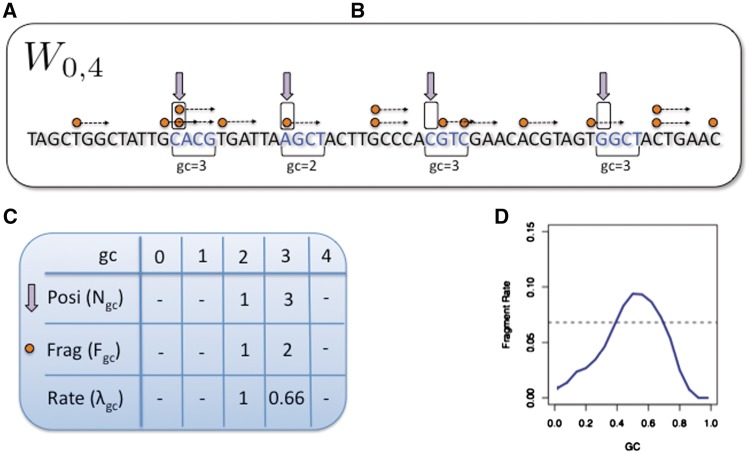
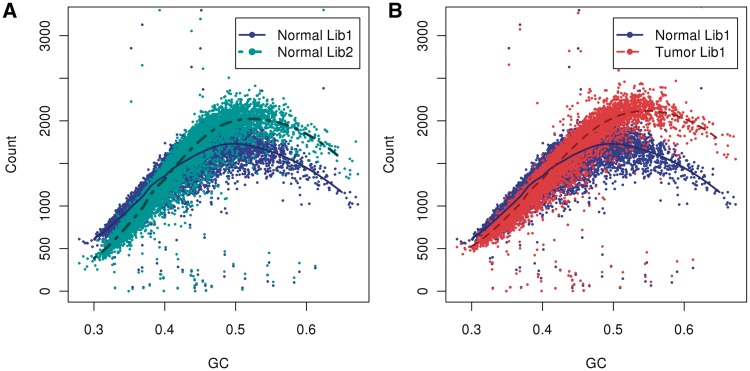
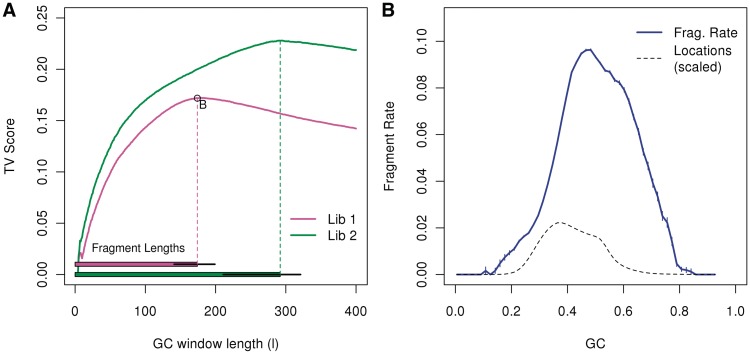
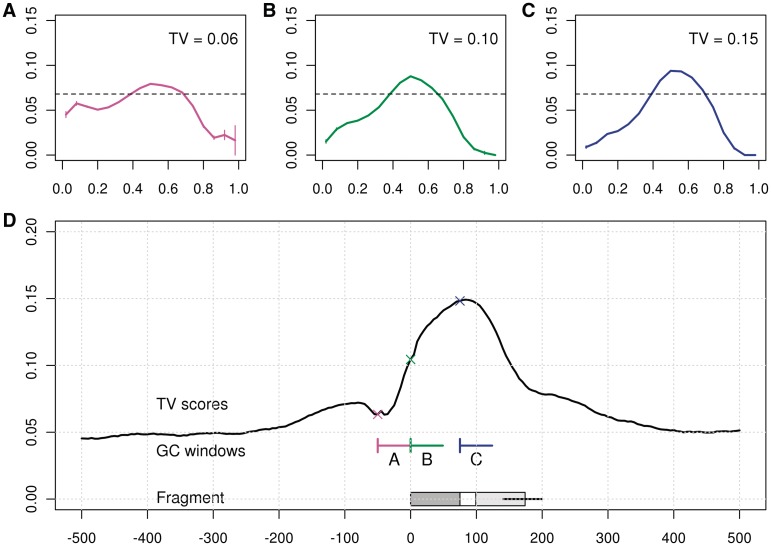
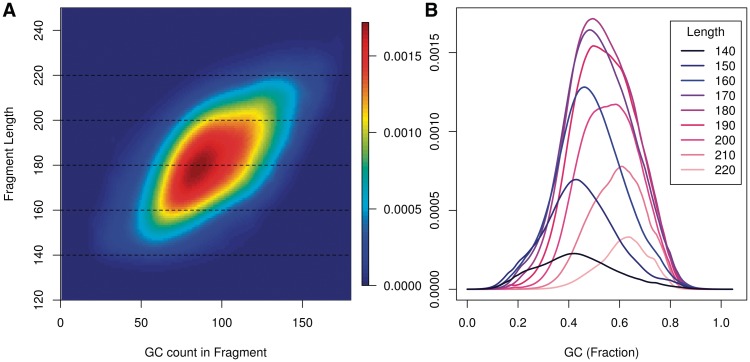
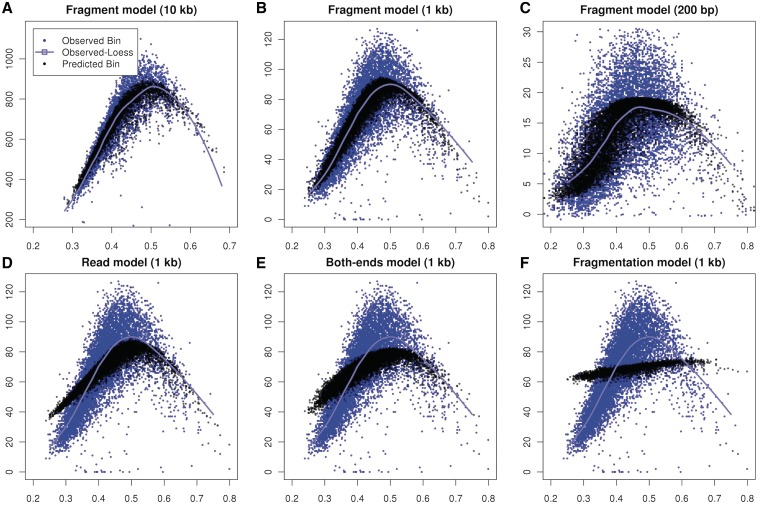
GC content bias describes the dependence between fragment count (read coverage) and GC content found in Illumina sequencing data. This bias can dominate the signal of interest for analyses that focus on measuring fragment abundance within a genome, such as copy number estimation (DNA-seq). The bias is not consistent between samples; and there is no consensus as to the best methods to remove it in a single sample. We analyze regularities in the GC bias patterns, and find a compact description for this unimodal curve family. It is the GC content of the full DNA fragment, not only the sequenced read, that most influences fragment count. This GC effect is unimodal: both GC-rich fragments and AT-rich fragments are underrepresented in the sequencing results. This empirical evidence strengthens the hypothesis that PCR is the most important cause of the GC bias. We propose a model that produces predictions at the base pair level, allowing strand-specific GC-effect correction regardless of the downstream smoothing or binning. These GC modeling considerations can inform other high-throughput sequencing analyses such as ChIP-seq and RNA-seq.
Overview
The claims and statistics of this paper haven’t been checked yet.
Free: it reads the open-access text and checks the first 5 claims that cite a source we can check. Create a free account to check every claim.
Integrity signals
Registry
Cites
Statistics
Figures
Verification
Claims the paper makes
The claims and statistics of this paper haven’t been checked yet.
Free: it reads the open-access text and checks the first 5 claims that cite a source we can check. Create a free account to check every claim.
Claims other papers make about this one
Each is checked against this paper’s own text: does it say what the citing paper says it does?
The source backs part of the claim, not all of it — or backs it for a different population, condition or comparison.
In the citing paper
“GC-bias was estimated for input chromatin samples using computeGCBias (Benjamini and Speed, 2012) from deepTools (Ramírez et al., 2014).”
From SALL4 controls cell fate in response to DNA base composition (2021) · cites this paper as Benjamini and Speed, 2012
Experimental — accuracy not yet measuredThe cited source says what the claim attributes to it.
In the citing paper
“Illumina sequencing was previously observed to have bias on GC-extreme sequences15,27,28, but GC content in our files did not show practically significant bias in the PCR GC bias test. Therefore, high-throughput sequencing and sample dilution are modeled using random sampling.”
From Quantifying Molecular Bias in DNA Data Storage (2019) · cites this paper as [28]
In the citing paper
“For DNA-seq, this bias is best corrected by modeling at the scale of the fragment21.”
From Modeling of RNA-seq fragment sequence bias reduces systematic errors in transcript abundance estimation (2016) · cites this paper as [21]
In the citing paper
“we confirmed other findings 21, that the GC content effect was often nonlinear and highly sample-specific, therefore requiring sample-specific bias estimation using smooth functions of fragment GC content.”
From Modeling of RNA-seq fragment sequence bias reduces systematic errors in transcript abundance estimation (2016) · cites this paper as [21]
Self-check
Percentages, sums and reported differences re-computed from the paper’s own numbers.
The self-check needs the paper’s full text.
Citations
Cites
Fast and accurate short read alignment with Burrows-Wheeler transform
Li, H., & Durbin, R. (2009) · Bioinformatics · doi:10.1093/bioinformatics/btp324 · Cited by 58,607
Ultrafast and memory-efficient alignment of short DNA sequences to the human genome.
Langmead, B., Trapnell, C., Pop, M., & Salzberg, S. L. (2009) · Genome Biology · doi:10.1186/gb-2009-10-3-r25 · Cited by 21,849
Accurate whole human genome sequencing using reversible terminator chemistry
Bentley, D. R., Balasubramanian, S., Swerdlow, H. P., Smith, G. P., Milton, J., Brown, C. G., Hall, K. P., Evers, D. J., Barnes, C. L., Bignell, H. R., et al. (2008) · Nature · doi:10.1038/nature07517 · Cited by 3,684
Probability: Theory and Examples.
Prewitt, K., & Durrett, R. (1992) · Journal of the American Statistical Association · doi:10.2307/2290301 · Cited by 3,085
Mapping short DNA sequencing reads and calling variants using mapping quality scores
Li, H., Ruan, J., & Durbin, R. (2008) · Genome Research · doi:10.1101/gr.078212.108 · Cited by 2,638
Analyzing and minimizing PCR amplification bias in Illumina sequencing libraries
Aird, D., Ross, M. G., Chen, W.-S., Danielsson, M., Fennell, T., Russ, C., Jaffe, D. B., Nusbaum, C., & Gnirke, A. (2011) · Genome Biology · doi:10.1186/gb-2011-12-2-r18 · Cited by 1,174
Substantial biases in ultra-short read data sets from high-throughput DNA sequencing
Dohm, J. C., Lottaz, C., Borodina, T., & Himmelbauer, H. (2008) · Nucleic Acids Research · doi:10.1093/nar/gkn425 · Cited by 1,088 · cited 2×
“(1), probably because GC-rich areas are rare (especially in simpler organisms).”
BackgroundProbability: Theory and Examples.
Durrett, R. (1993) · Biometrics · doi:10.2307/2532227 · Cited by 857
A large genome center's improvements to the Illumina sequencing system
Quail, M. A., Kozarewa, I., Smith, F., Scally, A., Stephens, P. J., Durbin, R., Swerdlow, H., & Turner, D. J. (2008) · Nature Methods · doi:10.1038/nmeth.1270 · Cited by 727
Biases in Illumina transcriptome sequencing caused by random hexamer priming
Hansen, K. D., Brenner, S. E., & Dudoit, S. (2010) · Nucleic Acids Research · doi:10.1093/nar/gkq224 · Cited by 713 · cited 1×
“Sequence-related biases in the priming (9), size selection (3), PCR (10) and probability of sequencing errors (11–13) have all been found.”
Background
Cited by
Items 901–1,000 of 1,001
Sequencing in Isolation: Next-generation sequencing studies in founder populations
Gilly, A. (2018) · Apollo (University of Cambridge) · doi:10.17863/cam.40557
Mechanisms Determining the Dynamic Localisation of Ribosomes in Neurons
Davey, A. (2023) · White Rose eTheses Online (University of Leeds, The University of Sheffield, University of York)
Deciphering mechanisms of gene regulation through novel strategies for mapping genome architecture
Beagrie, R. A. (2015) · Spiral (Imperial College London) · doi:10.25560/55112
Application of genome assembly methods to human and non-human primate genomics
Kuderna, L. F. K. (2020) · Repositori digital de la UPF (Universitat Pompeu Fabra)
Additional file 8 of Population and subspecies diversity at mouse centromere satellites
Arora, U. P., Charlebois, C., Lawal, R. A., & Dumont, B. L. (2021) · Figshare · doi:10.6084/m9.figshare.14444901
Additional file 7 of Population and subspecies diversity at mouse centromere satellites
Arora, U. P., Charlebois, C., Lawal, R. A., & Dumont, B. L. (2021) · Figshare · doi:10.6084/m9.figshare.14444898
Computational methods for studying epigenomic regulation
Faux, T. (2023) · UTUPub (University of Turku)
Computational Processing of Omics Data: Implications for Analysis
Benjamin, A. M. (2013) · DukeSpace (Duke University)
Eeckhoutte, A. (2021) · theses.fr (ABES) · doi:10.70675/03bea19ezd170z4969zb289z7240c0bcab03
Genomic Complexities in the Legume-Rhizobial Symbiosis
Guhlin, J. G. (2018) · University of Minnesota Digital Conservancy (University of Minnesota)
García, M. D. M. G., & Universitat Autònoma de Barcelona. Departament de Biologia Animal, D. B. V. I. D. (2019) · LA Referencia (Red Federada de Repositorios Institucionales de Publicaciones Científicas)
Yan, X. S., Wang, Z., Li, Z., Zhao, Y., Lu, S., Shi, Q., & Wei, W. (2025) · bioRxiv (Cold Spring Harbor Laboratory) · doi:10.1101/2025.11.27.690914
Estimation and Modelling of Errors in the Library Preparation Stage of Next Generation Sequencing
Beka, N. (2020) · University of Hertfordshire Research Archive (University of Hertfordshire) · doi:10.18745/th.23909
Bioinformatic approach for identifying and correcting artifacts in diploid genome assemblies
고병준 (2023) · Seoul National University Open Repository (Seoul National University)
The Intra-Tumour Heterogeneity Landscape of Human Cancers
Dentro, S. C. (2017) · Apollo (University of Cambridge) · doi:10.17863/cam.48225
Levine, B. A. (2018) · Journal of the Arkansas Academy of Science
Evolutionary Genomics of Longevity in Experimentally Evolved Insects
Toros, A. (2025) · Uppsala University Publications (Uppsala University)
A distance-type measure approach to the analysis of copy number variation in DNA sequencing data
Biswas, B., & Lai, Y. (2019) · BMC Genomics · doi:10.1186/s12864-019-5491-x
Patterns and algorithms in high-throughput sequencing count data
Mammana, A. (2016) · Universitätsbibliothek der FU Berlin Hochschulschriftenstelle u. Dokumentenserver · doi:10.17169/refubium-16832
Variant Calling from Next Generation Sequencing Data and Information Management
Ralph, E. (2014) · UTUPub (University of Turku)
Haghani, V., Goyal, A., Zhang, A., Sharifi, O., Mariano, N. A. F., Yasui, D. H., Korf, I. F., & LaSalle, J. M. (2025) · F1000Research · doi:10.12688/f1000research.164319.1
Pathogen genomics of methicillin resistant staphylococcus aureus and leishmania
Coughlan, S. (2017) · Arrow@dit (Dublin Institute of Technology) · doi:10.13025/16747
Integrative analysis of multi-genomics using variable selection for autism data
Salenius, K. (2020) · Tampere University Institutional Repository (Tampere University)
Grapevine acidity: SVM tool development and NGS data analyses.
Leonardelli, L. (2014) · Unitn-eprints PhD (University of Trento) · doi:10.15168/11572_368613
Univariate and Multivariate Representation and Modeling of Cancer Biomedical Data
Srivastava, A. (2020) · OhioLink ETD Center (Ohio Library and Information Network)
Bandlamudi, C. (2016) · Knowledge@UChicago (University of Chicago) · doi:10.6082/k2g00-0se24
Analysis of gene regulation using high throughput genomics
Geeleher, P. (2012) · Arrow@dit (Dublin Institute of Technology) · doi:10.13025/17106
Integrative statistical methods for the genomic analysis of immune-mediated disease
Burren, O. S. (2020) · Apollo (University of Cambridge) · doi:10.17863/cam.48342
Computational epigenomics in gene regulation and cancer research
de Jong, J. (2015) · Research Repository (Delft University of Technology) · doi:10.4233/uuid:f893f961-13e8-4f02-8b82-0fa836c73f57
Computational methods for systems biology data of cancer
Ding, J. (2016) · cIRcle (University of British Columbia) · doi:10.14288/1.0303119
Promoter and Enhancer Chromatin Dynamics during Direct Cell Fate Programming
Ibrahim, M. M. (2017) · edoc Publication server (Humboldt University of Berlin) · doi:10.18452/18137
Wald, N., Bestwick, J. P., Lau, K. W., Huttly, W. J., Ke, W., Cheng, R., & Old, R. W. (2019) · Clinica Chimica Acta · doi:10.1016/j.cca.2019.06.015
Analysis of somatic copy number alterations in liquid biopsies from cancer patients
Yuan, Z. (2024) · heiDOK (Heidelberg University) · doi:10.11588/heidok.00035696
Carro, R. P. (2017) · LA Referencia (Red Federada de Repositorios Institucionales de Publicaciones Científicas)
Machlab, D. (2015) · Repository for Publications and Research Data (ETH Zurich) · doi:10.3929/ethz-a-010489852
ZEBRAFISH AS A MODEL TO STUDY MYELINATION DEFECTS IN CNS & PNS
Alsomali, N. (2014) · White Rose eTheses Online (University of Leeds, The University of Sheffield, University of York)
Bioinformatic solutions for chromosomal copy number analysis in cancer
Scheinin, I. (2017) · Digital Academic REpository of VU University Amsterdam (Vrije Universiteit Amsterdam)
Jenke, N., Smith, G. M., & Gruenstaeudl, M. (2024) · Research Square · doi:10.21203/rs.3.rs-4602374/v1
Representation Learning and Inference from Signals and Sequences
Eghbal-zadeh, H. (2019) · University Library Linz repository (Johannes Kepler Universitat Linz)
Statistical methods for the analysis and interpretation of RNA-Seq data
Patrick, E. (2013) · The Sydney eScholarship Repository (The University of Sydney)
Wilson, D. (2018) · Carolina Digital Repository (University of North Carolina at Chapel Hill) · doi:10.17615/q4pr-5b55
Filer, D. L., Kuo, F., Brandt, A., Tilley, C. R., Mieczkowski, P. A., Berg, J. S., Robasky, K., Li, Y., Bizon, C., Tilson, J. L., et al. (2021) · Figshare · doi:10.6084/m9.figshare.15026503
Adobor, S. (2022) · HARVEST (University of Saskatchewan)
Improvement and Implementation of Molecular Authentication Techniques in Natural Health Products
Faller, A. C. (2021) · The Atrium (University of Guelph)
A Study on DNA Memory Encoding Architecture
Mason, R. W. (2020) · RIT Scholar Works (Rochester Institute of Technology)
Bonnet, A. (2013) · Thèses en ligne de l'Université Toulouse III (Université Toulouse III)
Variational methods for phylogeny and single-cell genomics
Koptagel, H. (2023) · KTH Publication Database DiVA (KTH Royal Institute of Technology)
Epigenetic profiling in cancer
Trooskens, G. (2017) · Ghent University Academic Bibliography (Ghent University)
The role of the tumour suppressor gene, TP53, in determining breast tumour subtype
Packwood, K. E. (2016) · ePrints Soton (University of Southampton)
EVOLUTION OF REPETITIVE DNA: METHODOLOGIES, EXPANSIONS, AND CONSTRAINTS
Flynn, J. M. (2021) · eCommons (Cornell University) · doi:10.7298/kq9b-cj12
Raman, L. (2021) · Ghent University Academic Bibliography (Ghent University)
Decoding Brain Somatic Mosaicism with New Single-Cell Copy Number Analysis Methods
Zhao, Y. (2025) · DSpace@MIT (Massachusetts Institute of Technology)
Meningococcal genome dynamics: an allele based, population approach to define lineage structure
Bratcher, H. B. (2015) · Oxford University Research Archive (ORA) (University of Oxford) · doi:10.5287/ora-8gao8okyg
Wu, H. (2013) · Purdue e-Pubs (Purdue University System)
Mapping complex genomic translocations using Strand-seq
Yuen, M. W.-K. (2018) · cIRcle (University of British Columbia) · doi:10.14288/1.0362577
Automated copy number variation concordance analysis
Thapa Magar, P. (2021) · Helda - University of Helsinki Institutional Repository
Integration of Optical Maps and Short-Read Sequencing Data in Genomic Investigation
Sigmon, J. S. (2025) · Carolina Digital Repository (University of North Carolina at Chapel Hill) · doi:10.17615/4m93-v565
Guidelines for the Establishment of Reference Values for Omics
Scherer, A., Nordlund, J., Gloerich, J., Najdekr, L., & García‐Bermejo, L. (2021) · Zenodo (CERN European Organization for Nuclear Research) · doi:10.5281/zenodo.6984796
Map2Peak: A Novel Perspective on ChIP-Seq Data Analysis Pipeline
Gujjula, K. R. (2018) · OakTrust (Texas A&M University Libraries)
Eyður í röðum TruSeq-raðgreiningar og notkun Sanger-aðferðar til að fylla í þær
1990, H. K. (2013) · Skemman
Peering into the dark matter of the \mbox{\emph{M. tuberculosis}} genome using long-read sequencing
Marin, M. G. (2023) · Digital Access to Scholarship at Harvard (DASH) (Harvard University)
Estudio de mutaciones missense neutrales mediante el uso y análisis de datos ómicos
López, A. G. (2018) · LA Referencia (Red Federada de Repositorios Institucionales de Publicaciones Científicas)
Korekcja danych z sekwencjonowania genomów
Długosz, M. (2023) · Digital Library of the Silesian University of Technology (Silesian University of Technology)
Исследование особенностей распределения ридов по последовательности, секвенируемой методом NGS
Кобец, В. А. (2019) · SibFU Digital Repository (Siberian Federal University)
PRINCE: Accurate approximation of the copy number of tandem repeats
Booth, J. (2019) · Summit (Simon Fraser University)
Santo, D. (2018) · Università Politecnica delle Marche (Università Politecnica delle Marche)
Platzer, A. (2014) · reposiTUm (TU Wien) · doi:10.34726/hss.2014.24728
Analysis of most complete biological datasets
Platzer, A. (2014) · reposiTUm (TU Wien)
Performance comparison of four human whole-genome sequencing technologies
Rieber, N. (2013) · heiDOK (Heidelberg University) · doi:10.11588/heidok.00015677
Statistical methods for analysing high throughput sequencing data
Richard, H. (2024) · HAL · doi:10.17169/refubium-47510
Ha, G. (2015) · cIRcle (University of British Columbia) · doi:10.14288/1.0167340
Razzaq, A. (2020) · Massey Research Online (Massey University)
BSReadSim: a versatile and efficient simulator to generate realistic bisulfite sequencing readsPreprint
Guo, W., & Pellegrini, M. A. (2024) · bioRxiv (Cold Spring Harbor Laboratory) · doi:10.1101/2024.12.24.627620
Wide Scale Analysis of Transcription Factor Biases and Specificity
Awdeh, A. (2022) · uO Research (University of Ottawa) · doi:10.20381/ruor-28511
Tools and statistical approaches for integrating DNA sequencing into clinical care
Filer, D. L. (2021) · Carolina Digital Repository (University of North Carolina at Chapel Hill) · doi:10.17615/164b-5k27
Highlight--Stacking the Deck: Heritage and Environment Shape Nucleotide Composition in Prokaryotes
Venton, D. (2015) · Genome Biology and Evolution · doi:10.1093/gbe/evv077
Avaliação do viés GC em plataformas de sequenciamento de nova geração
Pinheiro, K. D. C. (2015) · Americanae (AECID Library)
Computational Methods for ChIP-seq Data Analysis and Applications
Ashoor, H. (2017) · King Abdullah University of Science and Technology Repository (King Abdullah University of Science and Technology) · doi:10.25781/kaust-3y33f
Pathak, V. S. (2016) · OhioLink ETD Center (Ohio Library and Information Network)
Soto, J. A. (2017) · LA Referencia (Red Federada de Repositorios Institucionales de Publicaciones Científicas)
Developing an antisense oligonucleotide treatment for Spinocerebellar Ataxia Type 3
Toonen, L. J. A. (2018) · Leiden Repository (Leiden University)
Signal Processing Based CNV Detection in Bacterial Genomes
Jugas, R., Vítek, M., Maděránková, D., & Škutková, H. (2019) · Lecture notes in computer science · doi:10.1007/978-3-030-17938-0_9
Gunasekera, S. (2019) · Murdoch University Research Portal
Balcı, F. (2014) · Bilkent University Institutional Repository (Bilkent University)
Analysis of chlorophyll synthesis mutants xantha-m and xantha-j of Hordeum vulgare L.
Klinghammer, F. (2020) · Lund University Publications Student Papers (Lund University)
Il’icheva, I. A., Khodikov, M. V., Panchenko, L. A., Polozov, R. V., & Nechipurenko, Y. D. (2020) · BIOPHYSICS · doi:10.1134/s0006350920030082
T-CNV: a robust tool for detecting and visualizing copy number variants in targeted sequencing data.Preprint
Ye, L., Wu, Y., zexin, Z., & Zhou, T. (2020) · Research Square · doi:10.21203/rs.3.rs-27672/v1
Schaarschmidt, S. (2021) · publish.UP (University of Potsdam) · doi:10.25932/publishup-50963
Mahrous, N. S., & Noseer, E. A. (2023) · SVU- International Journal of Veterinary Sciences · doi:10.21608/svu.2023.207008.1269
Variable Selection for Sparse Logistic Regression Model with Errors in Covariates
Yin, Z., & Wang, Z. (2025) · American Journal of Applied Mathematics and Statistics · doi:10.12691/ajams-13-2-1
Chromosome-level genome assembly of Cheilinus chlorourus (Bloch, 1791) (Perciformes: Labridae)
Qu, J., Yang, X., Song, Z., Wang, S., Xing, Z., Wang, L., & Wang, X. (2025) · Scientific Data · doi:10.1038/s41597-025-05288-y
Long-Short Term Memory Model for chromosomal aberration detection in Non-Invasive Prenatal Testing
van Ruyven, N. (. (2021) · Research Repository (Delft University of Technology)
Yunik, M. E. M. (2024) · HARVEST (University of Saskatchewan)
Metadata
- Authors
- Benjamini, Y., & Speed, T. P.
- Affiliations
- Walter and Eliza Hall Institute of Medical Research (AU)
- Corresponding author
- Benjamini, Yuval
- Speed, Terence P.
- Venue
- Nucleic Acids Research
- Publisher
- Oxford University Press (OUP)
- Published
- 2012-02-09
- Volume
- 40
- Issue
- 10
- Pages
- e72-e72
- ISSN
- 0305-1048 (ISSN-L)
- 1362-4962
- PMC
- PMC3378858
- OpenAlex
- W2018604728
- Cited by
- 913
- References
- 21
- Citations by year
- 2026: 52 · 2025: 57 · 2024: 69 · 2023: 47 · 2022: 63 · 2021: 84 · 2020: 74 · 2019: 73 · 2018: 83 · 2017: 69 · 2016: 52 · 2015: 60 · 2014: 72 · 2013: 47 · 2012: 10
- FWCI
- 24.27
- Type
- journal article
- Language
- en
- Open access
- gold
- doi.org
- Licence
- Locations
- Nucleic Acids Research (publishedVersion, cc-by-nc)
- PubMed Central (publishedVersion, cc-by-nc)
- PubMed (publishedVersion)
- Minerva Access (University of Melbourne) (submittedVersion, cc-by-nc)
- HighWire Press Open Archive (submittedVersion)
- Funders
- National Science Foundation
- National Institutes of Health
- National Cancer Institute (U24CA143799)
- National Institute of General Medical Sciences (R01GM083084)
- Topics
- Life Sciences › Biochemistry, Genetics and Molecular Biology › Molecular Biology › Genomics and Phylogenetic Studies
- Life Sciences › Biochemistry, Genetics and Molecular Biology › Molecular Biology › Gene expression and cancer classification
- Life Sciences › Biochemistry, Genetics and Molecular Biology › Molecular Biology › Fractal and DNA sequence analysis
- Keywords
- GC content bias, read coverage, DNA sequencing, copy number estimation, PCR bias, ChIP-seq, RNA-seq
- MeSH terms
- Base Composition, DNA, Humans, Models, Genetic, Genome, Human, Poisson Distribution, Sequence Analysis, DNA, High-Throughput Nucleotide Sequencing
About these checks
Registry, retraction, Cites and statistics results are computed, not judged, with one exception: a printed reference that no index lists is read once by a model before it counts as a citation error. Claims are extracted by a model and kept only when their quote appears verbatim in the text; each cited source is then checked, with a model’s help, for whether it says what the claim relies on. Those verdicts can be wrong — read the claim’s quote and the cited source before relying on one.
Statistics and arithmetic are recomputed, not judged.
Confidence bands are shown only for fields calibrated on our annotated test set. None is calibrated yet, so no band is shown.
What counts as a claim ›How we measure confidence ›How we check this ›
Are you an author, or do you see a problem with this page? Request a review
Data sources
Bibliographic data: Semantic Scholar, OpenAlex, Crossref.
Contains information from the Semantic Scholar Academic Graph Datasets, made available under the ODC Attribution License (ODC-BY 1.0).
Semantic Scholar’s data is described in: Kinney, R., et al. (2023). The Semantic Scholar Open Data Platform. arXiv:2301.10140.
