

Summarizing and correcting the GC content bias in high-throughput sequencing
Open accessThe DOI matches its Crossref record; 21 of the 21 references it cites were found in a registry or an index.
Abstract
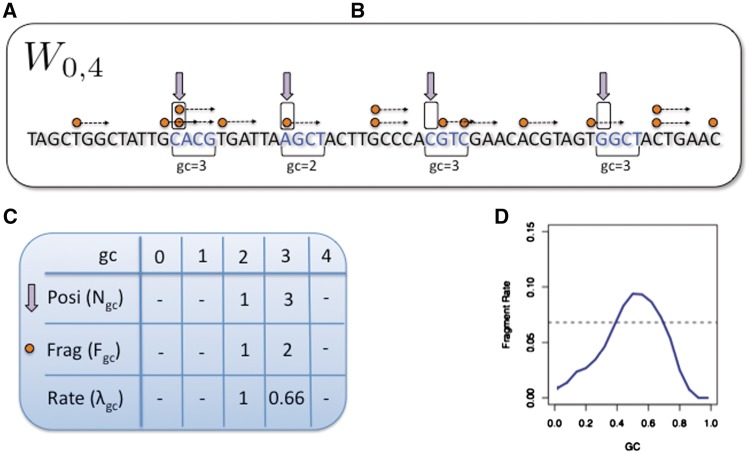
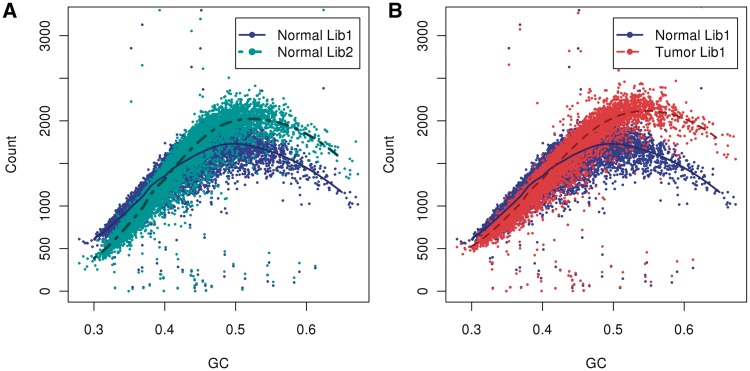
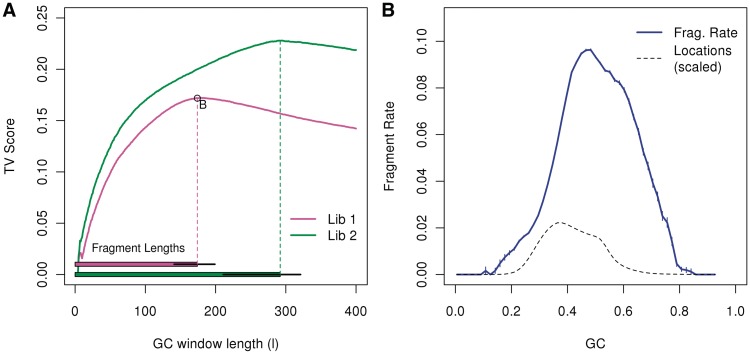
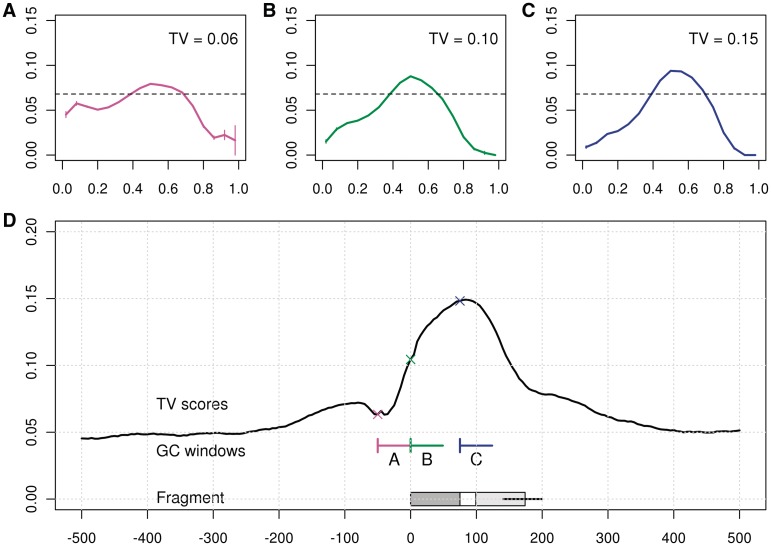
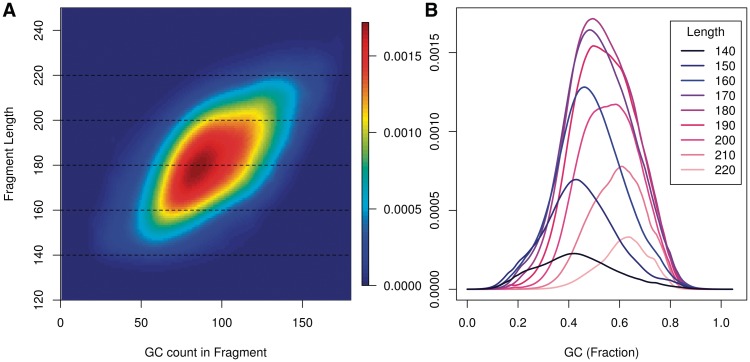
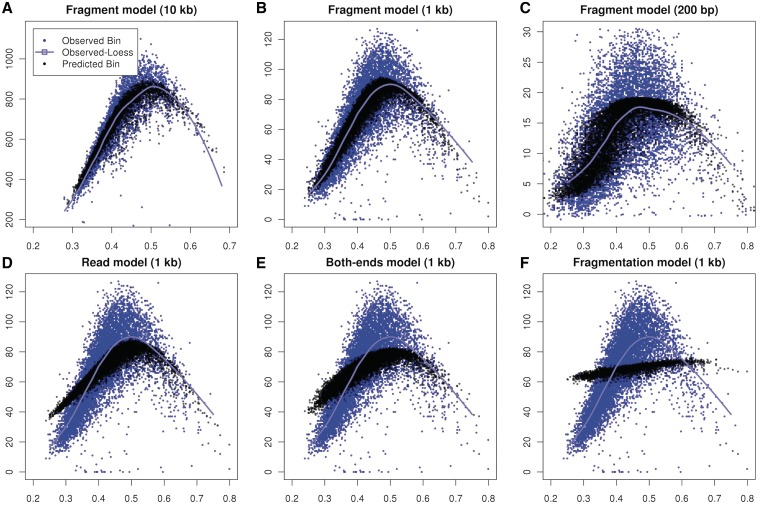
GC content bias describes the dependence between fragment count (read coverage) and GC content found in Illumina sequencing data. This bias can dominate the signal of interest for analyses that focus on measuring fragment abundance within a genome, such as copy number estimation (DNA-seq). The bias is not consistent between samples; and there is no consensus as to the best methods to remove it in a single sample. We analyze regularities in the GC bias patterns, and find a compact description for this unimodal curve family. It is the GC content of the full DNA fragment, not only the sequenced read, that most influences fragment count. This GC effect is unimodal: both GC-rich fragments and AT-rich fragments are underrepresented in the sequencing results. This empirical evidence strengthens the hypothesis that PCR is the most important cause of the GC bias. We propose a model that produces predictions at the base pair level, allowing strand-specific GC-effect correction regardless of the downstream smoothing or binning. These GC modeling considerations can inform other high-throughput sequencing analyses such as ChIP-seq and RNA-seq.
Overview
The claims and statistics of this paper haven’t been checked yet.
Free: it reads the open-access text and checks the first 5 claims that cite a source we can check. Create a free account to check every claim.
Integrity signals
Registry
Cites
Statistics
Figures
Verification
Claims the paper makes
The claims and statistics of this paper haven’t been checked yet.
Free: it reads the open-access text and checks the first 5 claims that cite a source we can check. Create a free account to check every claim.
Claims other papers make about this one
Each is checked against this paper’s own text: does it say what the citing paper says it does?
The source backs part of the claim, not all of it — or backs it for a different population, condition or comparison.
In the citing paper
“GC-bias was estimated for input chromatin samples using computeGCBias (Benjamini and Speed, 2012) from deepTools (Ramírez et al., 2014).”
From SALL4 controls cell fate in response to DNA base composition (2021) · cites this paper as Benjamini and Speed, 2012
Experimental — accuracy not yet measuredThe cited source says what the claim attributes to it.
In the citing paper
“Illumina sequencing was previously observed to have bias on GC-extreme sequences15,27,28, but GC content in our files did not show practically significant bias in the PCR GC bias test. Therefore, high-throughput sequencing and sample dilution are modeled using random sampling.”
From Quantifying Molecular Bias in DNA Data Storage (2019) · cites this paper as [28]
In the citing paper
“For DNA-seq, this bias is best corrected by modeling at the scale of the fragment21.”
From Modeling of RNA-seq fragment sequence bias reduces systematic errors in transcript abundance estimation (2016) · cites this paper as [21]
In the citing paper
“we confirmed other findings 21, that the GC content effect was often nonlinear and highly sample-specific, therefore requiring sample-specific bias estimation using smooth functions of fragment GC content.”
From Modeling of RNA-seq fragment sequence bias reduces systematic errors in transcript abundance estimation (2016) · cites this paper as [21]
Self-check
Percentages, sums and reported differences re-computed from the paper’s own numbers.
The self-check needs the paper’s full text.
Citations
Cites
Fast and accurate short read alignment with Burrows-Wheeler transform
Li, H., & Durbin, R. (2009) · Bioinformatics · doi:10.1093/bioinformatics/btp324 · Cited by 58,607
Ultrafast and memory-efficient alignment of short DNA sequences to the human genome.
Langmead, B., Trapnell, C., Pop, M., & Salzberg, S. L. (2009) · Genome Biology · doi:10.1186/gb-2009-10-3-r25 · Cited by 21,849
Accurate whole human genome sequencing using reversible terminator chemistry
Bentley, D. R., Balasubramanian, S., Swerdlow, H. P., Smith, G. P., Milton, J., Brown, C. G., Hall, K. P., Evers, D. J., Barnes, C. L., Bignell, H. R., et al. (2008) · Nature · doi:10.1038/nature07517 · Cited by 3,684
Probability: Theory and Examples.
Prewitt, K., & Durrett, R. (1992) · Journal of the American Statistical Association · doi:10.2307/2290301 · Cited by 3,085
Mapping short DNA sequencing reads and calling variants using mapping quality scores
Li, H., Ruan, J., & Durbin, R. (2008) · Genome Research · doi:10.1101/gr.078212.108 · Cited by 2,638
Analyzing and minimizing PCR amplification bias in Illumina sequencing libraries
Aird, D., Ross, M. G., Chen, W.-S., Danielsson, M., Fennell, T., Russ, C., Jaffe, D. B., Nusbaum, C., & Gnirke, A. (2011) · Genome Biology · doi:10.1186/gb-2011-12-2-r18 · Cited by 1,174
Substantial biases in ultra-short read data sets from high-throughput DNA sequencing
Dohm, J. C., Lottaz, C., Borodina, T., & Himmelbauer, H. (2008) · Nucleic Acids Research · doi:10.1093/nar/gkn425 · Cited by 1,088 · cited 2×
“(1), probably because GC-rich areas are rare (especially in simpler organisms).”
BackgroundProbability: Theory and Examples.
Durrett, R. (1993) · Biometrics · doi:10.2307/2532227 · Cited by 857
A large genome center's improvements to the Illumina sequencing system
Quail, M. A., Kozarewa, I., Smith, F., Scally, A., Stephens, P. J., Durbin, R., Swerdlow, H., & Turner, D. J. (2008) · Nature Methods · doi:10.1038/nmeth.1270 · Cited by 727
Biases in Illumina transcriptome sequencing caused by random hexamer priming
Hansen, K. D., Brenner, S. E., & Dudoit, S. (2010) · Nucleic Acids Research · doi:10.1093/nar/gkq224 · Cited by 713 · cited 1×
“Sequence-related biases in the priming (9), size selection (3), PCR (10) and probability of sequencing errors (11–13) have all been found.”
Background
Cited by
Items 201–300 of 1,001
Uelze, L., Borowiak, M., Deneke, C., Szabó, I., Fischer, J., Tausch, S. H., & Malorny, B. (2019) · Applied and Environmental Microbiology · doi:10.1128/aem.02265-19 · Cited by 60
What Is in Umbilicaria pustulata? A Metagenomic Approach to Reconstruct the Holo-Genome of a Lichen
Tzovaras, B. G., Segers, F. H. I. D., Bicker, A., Grande, F. D., Otte, J., Anvar, S. Y., Hankeln, T., Schmitt, I., & Ebersberger, I. (2020) · Genome Biology and Evolution · doi:10.1093/gbe/evaa049 · Cited by 59
High-Resolution Transcriptome Analysis with Long-Read RNA Sequencing
Cho, H., Davis, J. R., Li, X., Smith, K. S., Battle, A. J., & Montgomery, S. B. (2014) · PLoS ONE · doi:10.1371/journal.pone.0108095 · Cited by 58
Diversity of ribosomes at the level of rRNA variation associated with human health and disease
Rothschild, D., Susanto, T. T., Sui, X., Spence, J. P., Rangan, R., Genuth, N. R., Sinnott-Armstrong, N., Wang, X., Pritchard, J. K., & Barna, M. (2024) · Cell Genomics · doi:10.1016/j.xgen.2024.100629 · Cited by 58
Ribarska, T., Bjørnstad, P. M., Sundaram, A. Y. M., & Gilfillan, G. D. (2022) · BMC Genomics · doi:10.1186/s12864-022-08316-y · Cited by 58
An essential role for the piRNA pathway in regulating the ribosomal RNA pool in C. elegans
Wahba, L., Hansen, L., & Fire, A. Z. (2021) · Developmental Cell · doi:10.1016/j.devcel.2021.07.014 · Cited by 58
Burger, B. T., Imam, S., Scarborough, M., Noguera, D. R., & Donohue, T. J. (2017) · mSystems · doi:10.1128/msystems.00015-17 · Cited by 57
The evolution of RNA structural probing methods: From gels to next‐generation sequencing
Mailler, É., Paillart, J., Marquet, R., Smyth, R. P., & Vivet‐Boudou, V. (2018) · Wiley Interdisciplinary Reviews - RNA · doi:10.1002/wrna.1518 · Cited by 57
Technical and Methodological Aspects of Cell-Free Nucleic Acids Analyzes
Pös, Z., Pös, O., Styk, J., Mocova, A., Striešková, L., Budiš, J., Kádaši, Ľ., Radvánszky, J., & Szemes, T. (2020) · International Journal of Molecular Sciences · doi:10.3390/ijms21228634 · Cited by 56
Protein–DNA binding in high-resolution
Mahony, S., & Pugh, B. F. (2015) · Critical Reviews in Biochemistry and Molecular Biology · doi:10.3109/10409238.2015.1051505 · Cited by 56
Kuznetsov, V. A., Bondarenko, V., Wongsurawat, T., Yenamandra, S. P., & Jenjaroenpun, P. (2018) · Nucleic Acids Research · doi:10.1093/nar/gky554 · Cited by 56
iCopyDAV: Integrated platform for copy number variations—Detection, annotation and visualization
Dharanipragada, P., Vogeti, S., & Parekh, N. (2018) · PLoS ONE · doi:10.1371/journal.pone.0195334 · Cited by 55
Best Practices in Designing, Sequencing, and Identifying Random DNA Barcodes
Johnson, M. S., Venkataram, S., & Kryazhimskiy, S. (2023) · Journal of Molecular Evolution · doi:10.1007/s00239-022-10083-z · Cited by 55
The statistical-mechanics of chromosome conformation capture
O'Sullivan, J. M., Hendy, M. D., Pichugina, T., Wake, G. C., & Langowski, J. (2013) · Nucleus · doi:10.4161/nucl.26513 · Cited by 55
Identification of pathogen genomic variants through an integrated pipeline
Manary, M. J., Singhakul, S. S., Flannery, E. L., Bopp, S. E. R., Corey, V. C., Bright, A. T., McNamara, C. W., Walker, J. R., & Winzeler, E. A. (2014) · BMC Bioinformatics · doi:10.1186/1471-2105-15-63 · Cited by 55
Detecting differential peaks in ChIP-seq signals with ODIN
Allhoff, M., Seré, K., Chauvistré, H., Lin, Q., Zenke, M., & Costa, I. G. (2014) · Bioinformatics · doi:10.1093/bioinformatics/btu722 · Cited by 54
The rise of genomics in snake venom research: recent advances and future perspectives
Rao, W., Kalogeropoulos, K., Allentoft, M. E., Gopalakrishnan, S., Zhao, W., Workman, C. T., Knudsen, C., Jiménez‐Mena, B., Seneci, L., Mousavi‐Derazmahalleh, M., et al. (2022) · GigaScience · doi:10.1093/gigascience/giac024 · Cited by 54
Human copy number variants are enriched in regions of low mappability
Monlong, J., Cossette, P., Meloche, C., Rouleau, G. A., Girard, S., & Bourque, G. (2018) · Nucleic Acids Research · doi:10.1093/nar/gky538 · Cited by 53
Fast, Accurate and Automatic Ancient Nucleosome and Methylation Maps with epiPALEOMIX
Hanghøj, K., Seguin-Orlando, A., Schubert, M., Madsen, T., Pedersen, J. S., Willerslev, E., & Orlando, L. (2016) · Molecular Biology and Evolution · doi:10.1093/molbev/msw184 · Cited by 53
Simultaneous Identification of Multiple Causal Mutations in Rice
Yan, W., Chen, Z., Lu, J., Xu, C., ., G. X., Li, Y., Deng, X. W., He, H., & Tang, X. (2017) · Frontiers in Plant Science · doi:10.3389/fpls.2016.02055 · Cited by 53
Comparative genomics of host adaptive traits in Xanthomonas translucens pv. graminis
Hersemann, L., Wibberg, D., Blom, J., Goesmann, A., Widmer, F., Vorhölter, F., & Kölliker, R. (2017) · BMC Genomics · doi:10.1186/s12864-016-3422-7 · Cited by 53
Quenez, O., Cassinari, K., Coutant, S., Lecoquierre, F., Guennec, K. L., Rousseau, S., Richard, A., Vasseur, S., Bouvignies, E., Bou, J., et al. (2020) · European Journal of Human Genetics · doi:10.1038/s41431-020-0672-2 · Cited by 52
Veeraraghavan, J., Ma, J., Hu, Y., & Wang, X.-S. (2016) · Breast Cancer Research and Treatment · doi:10.1007/s10549-016-3876-y · Cited by 52
Novel roles for scleraxis in regulating adult tenocyte function
Nichols, A. E. C., Settlage, R. E., Werre, S. R., & Dahlgren, L. A. (2018) · BMC Cell Biology · doi:10.1186/s12860-018-0166-z · Cited by 51
Heitkam, T., Weber, B., Walter, I., Liedtke, S., Ost, C., & Schmidt, T. (2020) · The Plant Journal · doi:10.1111/tpj.14705 · Cited by 51
Heinrich, E. C., Wu, L., Lawrence, E. S., Cole, A. M., Anza‐Ramirez, C., Villafuerte, F. C., & Simonson, T. S. (2019) · Annals of Human Genetics · doi:10.1111/ahg.12299 · Cited by 50
Consistent Errors in First Strand cDNA Due to Random Hexamer Mispriming
van Gurp, T. P., McIntyre, L. M., & Verhoeven, K. J. F. (2013) · PLoS ONE · doi:10.1371/journal.pone.0085583 · Cited by 50
Plasmodium parasites of birds have the most AT-rich genes of eukaryotes
Videvall, E. (2018) · Microbial Genomics · doi:10.1099/mgen.0.000150 · Cited by 50
Penaud-Budloo, M., Lecomte, E., Guy-Duché, A., Saleun, S., Roulet, A., Lopez-Roques, C., Tournaire, B., Cogné, B., Léger, A., Blouin, V., et al. (2017) · Human Gene Therapy Methods · doi:10.1089/hgtb.2016.185 · Cited by 49
Li, S., Dong, X., & Su, Z. (2013) · BMC Genomics · doi:10.1186/1471-2164-14-520 · Cited by 49
Liu, Y., Asan, Ma, D., Lv, F., Xu, X., Wang, J., Xia, W., Jiang, Y., Wang, O., Xing, X., et al. (2017) · Osteoporosis International · doi:10.1007/s00198-017-4250-6 · Cited by 49
An epigenetic map of malaria parasite development from host to vector
Witmer, K., Fraschka, S. A. K., Vlachou, D., Bártfai, R., & Christophides, G. K. (2020) · Scientific Reports · doi:10.1038/s41598-020-63121-5 · Cited by 48
Indexcov: fast coverage quality control for whole-genome sequencing
Pedersen, B. S., Collins, R. L., Talkowski, M. E., & Quinlan, A. R. (2017) · GigaScience · doi:10.1093/gigascience/gix090 · Cited by 47
Stümm, M., Entezami, M., Haug, K., Blank, C., Wüstemann, M., Schulze, B., Raabe‐Meyer, G., Hempel, M., Schelling, M., Ostermayer, E., et al. (2013) · Prenatal Diagnosis · doi:10.1002/pd.4278 · Cited by 47
Evaluation of next generation sequencing for the analysis of Eimeria communities in wildlife
Vermeulen, E. T., Lott, M. J., Eldridge, M. D. B., & Power, M. L. (2016) · Journal of Microbiological Methods · doi:10.1016/j.mimet.2016.02.018 · Cited by 47
ACEseq – allele specific copy number estimation from whole genome sequencing
Kleinheinz, K., Bludau, I., Hübschmann, D., Heinold, M., Kensche, P., Gu, Z., López, C., Hummel, M., Klapper, W., Möller, P., et al. (2017) · bioRxiv (Cold Spring Harbor Laboratory) · doi:10.1101/210807 · Cited by 46
Riiser, E. S., Haverkamp, T. H. A., Varadharajan, S., Borgan, Ø., Jakobsen, K. S., Jentoft, S., & Star, B. (2019) · Environmental Microbiology · doi:10.1111/1462-2920.14652 · Cited by 46
SALL4 controls cell fate in response to DNA base composition
Pantier, R., Chhatbar, K., Quante, T., Skourti-Stathaki, K., Cholewa-Waclaw, J., Alston, G., Alexander-Howden, B., Lee, H. Y., Cook, A. G., Spruijt, C. G., et al. (2021) · Molecular Cell · doi:10.1016/j.molcel.2020.11.046 · Cited by 45
Increased taxon sampling reveals thousands of hidden orthologs in flatworms
Martín-Durán, J. M., Ryan, J. F., Vellutini, B. C., Pang, K., & Hejnol, A. (2017) · Genome Research · doi:10.1101/gr.216226.116 · Cited by 45
Huang, H.-C. R., Niu, Y., & Qin, L. (2015) · Cancer Informatics · doi:10.4137/cin.s21631 · Cited by 45
Schouten, P. C., Grigoriadis, A. E., Kuilman, T., Mirza, H., Watkins, J. A., Cooke, S. A., van Dyk, E., Severson, T., Rueda, O. M., Hoogstraat, M., et al. (2015) · Molecular Oncology · doi:10.1016/j.molonc.2015.03.002 · Cited by 45
Wessim: a whole-exome sequencing simulator based on in silico exome capture
Kim, S., Jeong, K., & Bafna, V. (2013) · Bioinformatics · doi:10.1093/bioinformatics/btt074 · Cited by 45
Systematic biases in DNA copy number originate from isolation procedures
van Heesch, S., Mokry, M., Boskova, V., Junker, W., Mehon, R., Toonen, P., de Bruijn, E., Shull, J. D., Aitman, T. J., Cuppen, E., et al. (2013) · Genome Biology · doi:10.1186/gb-2013-14-4-r33 · Cited by 44
Accounting for GC-content bias reduces systematic errors and batch effects in ChIP-seq data
Teng, M., & Irizarry, R. A. (2017) · Genome Research · doi:10.1101/gr.220673.117 · Cited by 44
RNA ‐based approaches for body fluid identification in forensic science
Lynch, C. R. H., & Fleming, R. I. (2020) · Wiley Interdisciplinary Reviews Forensic Science · doi:10.1002/wfs2.1407 · Cited by 43
synDNA—a Synthetic DNA Spike-in Method for Absolute Quantification of Shotgun Metagenomic Sequencing
Zaramela, L. S., Tjuanta, M., Moyne, O., Neal, M. J., & Zengler, K. (2022) · mSystems · doi:10.1128/msystems.00447-22 · Cited by 43
High Satellite Repeat Turnover in Great Apes Studied with Short- and Long-Read Technologies
Čechová, M., Harris, R. S., Tomaszkiewicz, M., Arbeithuber, B., Chiaromonte, F., & Makova, K. D. (2019) · Molecular Biology and Evolution · doi:10.1093/molbev/msz156 · Cited by 43
Liu, R., & Dickerson, J. A. (2017) · PLoS Computational Biology · doi:10.1371/journal.pcbi.1005851 · Cited by 43
Widespread genetic heterogeneity of human ribosomal RNA genes
Fan, W., Eklund, E., Sherman, R. M., Liu, H., Pitts, S. C., Ford, B. L., Rajeshkumar, N. V., & Laiho, M. (2022) · RNA · doi:10.1261/rna.078925.121 · Cited by 43
Rhopalocnemis phalloides has one of the most reduced and mutated plastid genomes known
Schelkunov, M. I., NURALIEV, M. S., & Logacheva, M. D. (2019) · PeerJ · doi:10.7717/peerj.7500 · Cited by 43
Swindell, W. R., Xing, X., Voorhees, J. J., Elder, J. T., Johnston, A., & Gudjonsson, J. E. (2014) · Physiological Genomics · doi:10.1152/physiolgenomics.00022.2014 · Cited by 42
International Standards for Genomes, Transcriptomes, and Metagenomes
Mason, C. E., Afshinnekoo, E., Tighe, S. W., Wu, S., & Levy, S. (2017) · Journal of Biomolecular Techniques JBT · doi:10.7171/jbt.17-2801-006 · Cited by 41
R9AP is a common receptor for EBV infection in epithelial cells and B cells
Li, Y., Zhang, H., Sun, C., Dong, X.-D., Xie, C., Liu, Y.-T., Lin, R.-B., Kong, X., Hu, Z.-L., Ma, X.-Y., et al. (2025) · Nature · doi:10.1038/s41586-025-09166-w · Cited by 41
Multimodal cell-free DNA whole-genome TAPS is sensitive and reveals specific cancer signals
Vavoulis, D. V., Cutts, A., Thota, N., Brown, J., Sugar, R., Rueda, A., Ardalan, A., Howard, K., Santo, F. M., Sannasiddappa, T., et al. (2025) · Nature Communications · doi:10.1038/s41467-024-55428-y · Cited by 41
Shridhar, S., Klanert, G., Auer, N., Hernandez-Lopez, I., Kańduła, M. M., Hackl, M., Grillari, J., Stralis‐Pavese, N., Kreil, D. P., & Borth, N. (2017) · Journal of Biotechnology · doi:10.1016/j.jbiotec.2017.03.012 · Cited by 40
Transcriptomic Profiling Using Next Generation Sequencing - Advances, Advantages, and Challenges
Anamika, K., Verma, S. P., Jere, A., & Desai, A. (2016) · InTech eBooks · doi:10.5772/61789 · Cited by 40
Ma, X., Zhu, L., Wu, X., Bao, H., Wang, X., Chang, Z., Shao, Y. W., & Wang, Z. (2017) · PLoS ONE · doi:10.1371/journal.pone.0169231 · Cited by 40
Iakovishina, D., Janoueix‐Lerosey, I., Barillot, E., Régnier, M., & Boeva, V. (2016) · Bioinformatics · doi:10.1093/bioinformatics/btv751 · Cited by 40
Li, S., Wang, J., Xiang, W., Yang, K., Li, Z., & Wang, W. (2017) · ACS Synthetic Biology · doi:10.1021/acssynbio.7b00318 · Cited by 40
Li, H., Gao, X., Li, X., Chen, Q., Dong, J., & Zhao, W. (2013) · PLoS ONE · doi:10.1371/journal.pone.0083530 · Cited by 39
Stochastic Gain and Loss of Novel Transcribed Open Reading Frames in the Human Lineage
Dowling, D., Schmitz, J. F., & Bornberg-Bauer, E. (2020) · Genome Biology and Evolution · doi:10.1093/gbe/evaa194 · Cited by 39
Artieri, C. G., Haverty, C. E., Evans, E. A., Goldberg, J. D., Haque, I. S., Yaron, Y., & Muzzey, D. (2017) · Prenatal Diagnosis · doi:10.1002/pd.5036 · Cited by 39
Prevention, diagnosis and treatment of high‐throughput sequencing data pathologies
Zhou, X., & Rokas, A. (2014) · Molecular Ecology · doi:10.1111/mec.12680 · Cited by 38
Evaluating bias-reducing protocols for RNA sequencing library preparation
Jackson, T. J., Spriggs, R. V., Burgoyne, N. J., Jones, C., & Willis, A. E. (2014) · BMC Genomics · doi:10.1186/1471-2164-15-569 · Cited by 38
Godfroid, M., Dagan, T., & Kupczok, A. (2018) · Genome Biology and Evolution · doi:10.1093/gbe/evy143 · Cited by 37
GROM-RD: resolving genomic biases to improve read depth detection of copy number variants
Smith, S. D., Kawash, J., & Grigoriev, A. (2015) · PeerJ · doi:10.7717/peerj.836 · Cited by 37
Genotyping and Sequencing Technologies in Population Genetics and Genomics
Holliday, J. A., Hallerman, E. M., & Haak, D. C. (2018) · Population genomics · doi:10.1007/13836_2017_5 · Cited by 37
ReMixT: clone-specific genomic structure estimation in cancer
McPherson, A., Roth, A. J. L., Ha, G., Chauve, C., Steif, A., de Souza, C. P. E., Eirew, P. D., Bouchard‐Côté, A., Aparicio, S. A. J. R., Şahinalp, S. C., et al. (2017) · Genome biology · doi:10.1186/s13059-017-1267-2 · Cited by 37
Bianconi, M. E., Dunning, L. T., Moreno-Villena, J. J., Osborne, C. P., & Christin, P. (2018) · Journal of Experimental Botany · doi:10.1093/jxb/ery029 · Cited by 37
Multiscale DNA partitioning: statistical evidence for segments
Futschik, A., Hotz, T., Munk, A., & Sieling, H. (2014) · Bioinformatics · doi:10.1093/bioinformatics/btu180 · Cited by 37
Charlesworth, D., Zhang, Y., Bergero, R., Graham, C., Gardner, J., & Yong, L. (2020) · Molecular Biology and Evolution · doi:10.1093/molbev/msaa187 · Cited by 37
Discovery and genotyping of novel sequence insertions in many sequenced individuals
Kavak, P., Lin, Y., Numanagić, I., Asghari, H., Güngör, T., Alkan, C., & Hach, F. (2017) · Bioinformatics · doi:10.1093/bioinformatics/btx254 · Cited by 36
Understanding spatial organizations of chromosomes via statistical analysis of Hi‐C data
Hu, M., Deng, K., Qin, Z. S., & Liu, J. S. (2013) · Quantitative Biology · doi:10.1007/s40484-013-0016-0 · Cited by 36
Design considerations for advancing data storage with synthetic DNA for long-term archiving
Ezekannagha, C., Becker, A., Heider, D., & Hattab, G. (2022) · Materials Today Bio · doi:10.1016/j.mtbio.2022.100306 · Cited by 36
Differential performance of strategies for single-cell whole-genome amplification
Estévez‐Gómez, N., Prieto, T., Tomás, L., Alvariño, P., Guillaumet-Adkins, A., Heyn, H., Prado‐Lòpez, S., & Posada, D. (2025) · Cell Reports Methods · doi:10.1016/j.crmeth.2025.101025 · Cited by 36
Imamura, H., Monsieurs, P., Jara, M., Sanders, M. J., Maes, I., Vanaerschot, M., Berriman, M., Cotton, J. A., Dujardin, J., & Domagalska, M. A. (2020) · Scientific Reports · doi:10.1038/s41598-020-71882-2 · Cited by 36
Highly Sensitive Detection Method of Retinoblastoma Genetic Predisposition and Biomarkers
Gall, J. L., Dehainault, C., Benoist, C., Matet, A., Rouïc, L. L.-L., Aerts, I., Jiménez, I., Schleiermacher, G., Houdayer, C., Radvanyi, F., et al. (2021) · Journal of Molecular Diagnostics · doi:10.1016/j.jmoldx.2021.08.014 · Cited by 36
PerSVade: personalized structural variant detection in any species of interest
Schikora-Tamarit, M. À., & Gabaldón, T. (2022) · Genome Biology · doi:10.1186/s13059-022-02737-4 · Cited by 35
Progress in Methods for Copy Number Variation Profiling
Gordeeva, V. D., Sharova, E. I., & Arapidi, G. P. (2022) · International Journal of Molecular Sciences · doi:10.3390/ijms23042143 · Cited by 35
Investigating and Correcting Plasma DNA Sequencing Coverage Bias to Enhance Aneuploidy Discovery
Chandrananda, D., Thorne, N., Ganesamoorthy, D., Bruno, D. L., Benjamini, Y., Speed, T. P., Slater, H. R., & Bahlo, M. (2014) · PLoS ONE · doi:10.1371/journal.pone.0086993 · Cited by 34
Self-citationComputational Methods for Mapping, Assembly and Quantification for Coding and Non-coding Transcripts
Babarinde, I. A., Li, Y., & Hutchins, A. P. (2019) · Computational and Structural Biotechnology Journal · doi:10.1016/j.csbj.2019.04.012 · Cited by 34
Hamdan, A., & Ewing, A. (2022) · The Journal of Pathology · doi:10.1002/path.5901 · Cited by 34
Zhou, X., Zheng, H., Fu, H., McKillip, K. D., Pinney, S. M., & Liu, Y. (2022) · Genome Medicine · doi:10.1186/s13073-022-01141-8 · Cited by 34
Ferrarini, A., Forcato, C., Buson, G., Tononi, P., Monaco, V. D., Terracciano, M., Bolognesi, C., Fontana, F., Medoro, G., Neves, R. P., et al. (2018) · PLoS ONE · doi:10.1371/journal.pone.0193689 · Cited by 34
Beauclair, L., Ramé, C., Arensburger, P., Piégu, B., Guillou, F., Dupont, J., & Bigot, Y. (2019) · BMC Genomics · doi:10.1186/s12864-019-6131-1 · Cited by 34
Sensitive and robust assessment of ChIP-seq read distribution using a strand-shift profile
Nakato, R., & Shirahige, K. (2018) · Bioinformatics · doi:10.1093/bioinformatics/bty137 · Cited by 33
Estimating optimal window size for analysis of low-coverage next-generation sequence data
Gusnanto, A., Taylor, C. C., Nafisah, I., Wood, H. M., Rabbitts, P. H., & Berri, S. (2014) · Bioinformatics · doi:10.1093/bioinformatics/btu123 · Cited by 33
Pinto, B. J., Gamble, T., Smith, C. H., Keating, S. E., Havird, J. C., & Chiari, Y. (2023) · Journal of Heredity · doi:10.1093/jhered/esad016 · Cited by 33
Luo, Z.-H., Fan, X., Yao, S., & Huang, Y. S. (2018) · Bioinformatics · doi:10.1093/bioinformatics/bty043 · Cited by 33
Ragheb, M. N., Ford, C. B., Chase, M. R., Lin, P. L., Flynn, J. L., & Fortune, S. M. (2013) · BMC Genomics · doi:10.1186/1471-2164-14-145 · Cited by 33
Transcriptomics for Clinical and Experimental Biology Research: Hang on a Seq
Stokes, T., Cen, H. H., Kapranov, P., Gallagher, I. J., Pitsillides, A. A., Volmar, C., Kraus, W. E., Johnson, J. D., Phillips, S. M., Wahlestedt, C., et al. (2023) · Advanced Genetics · doi:10.1002/ggn2.202200024 · Cited by 32
Estimating exome genotyping accuracy by comparing to data from large scale sequencing projects
Heinrich, V., Kamphans, T., Stange, J., Parkhomchuk, D., Hecht, J., Dickhaus, T., Robinson, P. N., & Krawitz, P. M. (2013) · Genome Medicine · doi:10.1186/gm473 · Cited by 32
Selection Constrains High Rates of Tandem Repetitive DNA Mutation in Daphnia pulex
Flynn, J. M., Caldas, I. V., Cristescu, M. E., & Clark, A. G. (2017) · Genetics · doi:10.1534/genetics.117.300146 · Cited by 32
Binding of high mobility group A proteins to the mammalian genome occurs as a function of AT-content
Colombo, D., Burger, L., Baubec, T., & Schübeler, D. (2017) · PLoS Genetics · doi:10.1371/journal.pgen.1007102 · Cited by 32
Population and subspecies diversity at mouse centromere satellites
Arora, U. P., Charlebois, C., Lawal, R. A., & Dumont, B. L. (2021) · BMC Genomics · doi:10.1186/s12864-021-07591-5 · Cited by 32
Challenges and Approaches to Genotyping Repetitive DNA
Morton, E. A., Hall, A. N., Kwan, E. X., Mok, C. A., Queitsch, K., Nandakumar, V., Stamatoyannopoulos, J. A., Brewer, B. J., Waterston, R., & Queitsch, C. (2020) · G3 Genes Genomes Genetics · doi:10.1534/g3.119.400771 · Cited by 31
Detecting Copy Number Variation via Next Generation Technology
Mason‐Suares, H., Landry, L. G., & Lebo, M. S. (2016) · Current Genetic Medicine Reports · doi:10.1007/s40142-016-0091-4 · Cited by 31
Population genomics of the island thrush elucidates one of earth’s great archipelagic radiations
Reeve, A. H., Gower, G., Pujolar, J. M., Smith, B. T., Petersen, B., Olsson, U., Haryoko, T., Koane, B., Maiah, G., Blom, M. P. K., et al. (2023) · Evolution Letters · doi:10.1093/evlett/qrac006 · Cited by 31
Massey, D. J., & Koren, A. (2022) · Nature Communications · doi:10.1038/s41467-022-30212-y · Cited by 31
Sequence diversity lost in early pregnancy
Arnadottir, G. A., Jónsson, H., Hartwig, T. S., Gruhn, J. R., Møller, P. L., Gylfason, A., Westergaard, D., Chan, A. C.-H., Oddsson, Á., Stefánsdóttir, L., et al. (2025) · Nature · doi:10.1038/s41586-025-09031-w · Cited by 30
Metadata
- Authors
- Benjamini, Y., & Speed, T. P.
- Affiliations
- Walter and Eliza Hall Institute of Medical Research (AU)
- Corresponding author
- Benjamini, Yuval
- Speed, Terence P.
- Venue
- Nucleic Acids Research
- Publisher
- Oxford University Press (OUP)
- Published
- 2012-02-09
- Volume
- 40
- Issue
- 10
- Pages
- e72-e72
- ISSN
- 0305-1048 (ISSN-L)
- 1362-4962
- PMC
- PMC3378858
- OpenAlex
- W2018604728
- Cited by
- 913
- References
- 21
- Citations by year
- 2026: 52 · 2025: 57 · 2024: 69 · 2023: 47 · 2022: 63 · 2021: 84 · 2020: 74 · 2019: 73 · 2018: 83 · 2017: 69 · 2016: 52 · 2015: 60 · 2014: 72 · 2013: 47 · 2012: 10
- FWCI
- 24.27
- Type
- journal article
- Language
- en
- Open access
- gold
- doi.org
- Licence
- Locations
- Nucleic Acids Research (publishedVersion, cc-by-nc)
- PubMed Central (publishedVersion, cc-by-nc)
- PubMed (publishedVersion)
- Minerva Access (University of Melbourne) (submittedVersion, cc-by-nc)
- HighWire Press Open Archive (submittedVersion)
- Funders
- National Science Foundation
- National Institutes of Health
- National Cancer Institute (U24CA143799)
- National Institute of General Medical Sciences (R01GM083084)
- Topics
- Life Sciences › Biochemistry, Genetics and Molecular Biology › Molecular Biology › Genomics and Phylogenetic Studies
- Life Sciences › Biochemistry, Genetics and Molecular Biology › Molecular Biology › Gene expression and cancer classification
- Life Sciences › Biochemistry, Genetics and Molecular Biology › Molecular Biology › Fractal and DNA sequence analysis
- Keywords
- GC content bias, read coverage, DNA sequencing, copy number estimation, PCR bias, ChIP-seq, RNA-seq
- MeSH terms
- Base Composition, DNA, Humans, Models, Genetic, Genome, Human, Poisson Distribution, Sequence Analysis, DNA, High-Throughput Nucleotide Sequencing
About these checks
Registry, retraction, Cites and statistics results are computed, not judged, with one exception: a printed reference that no index lists is read once by a model before it counts as a citation error. Claims are extracted by a model and kept only when their quote appears verbatim in the text; each cited source is then checked, with a model’s help, for whether it says what the claim relies on. Those verdicts can be wrong — read the claim’s quote and the cited source before relying on one.
Statistics and arithmetic are recomputed, not judged.
Confidence bands are shown only for fields calibrated on our annotated test set. None is calibrated yet, so no band is shown.
What counts as a claim ›How we measure confidence ›How we check this ›
Are you an author, or do you see a problem with this page? Request a review
Data sources
Bibliographic data: Semantic Scholar, OpenAlex, Crossref.
Contains information from the Semantic Scholar Academic Graph Datasets, made available under the ODC Attribution License (ODC-BY 1.0).
Semantic Scholar’s data is described in: Kinney, R., et al. (2023). The Semantic Scholar Open Data Platform. arXiv:2301.10140.
