

Summarizing and correcting the GC content bias in high-throughput sequencing
Open accessThe DOI matches its Crossref record; 21 of the 21 references it cites were found in a registry or an index.
Abstract
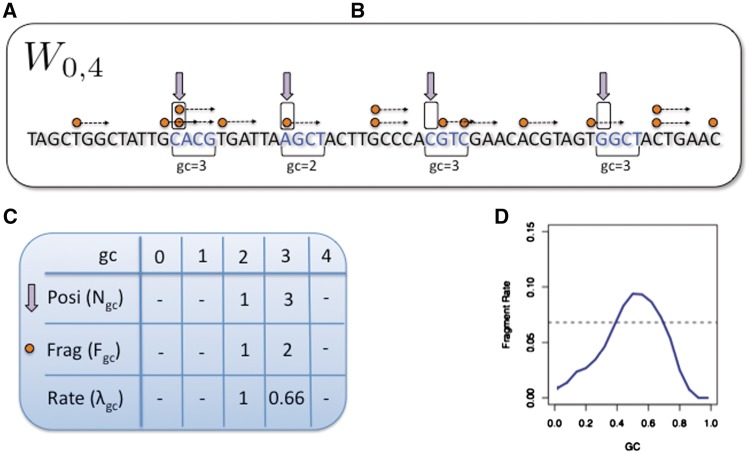
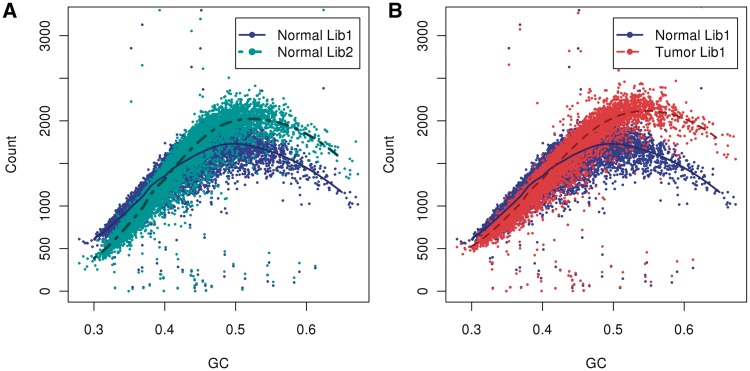
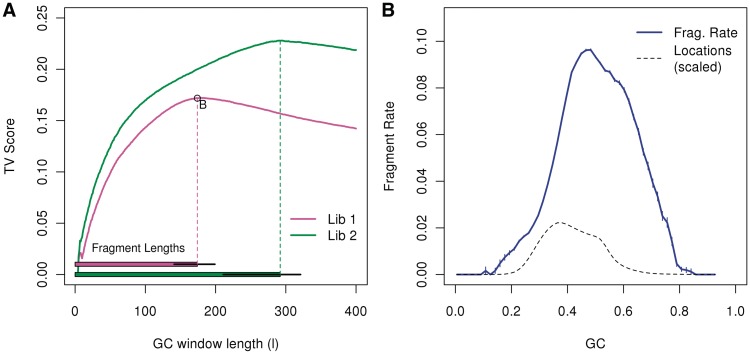
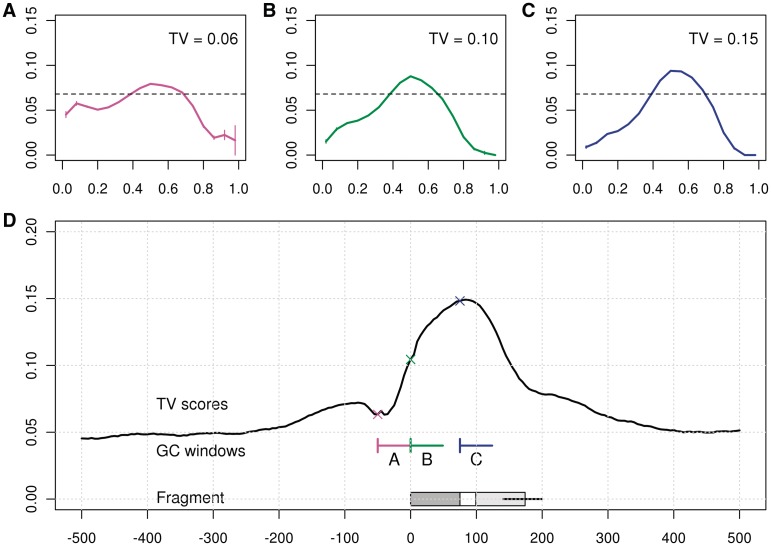
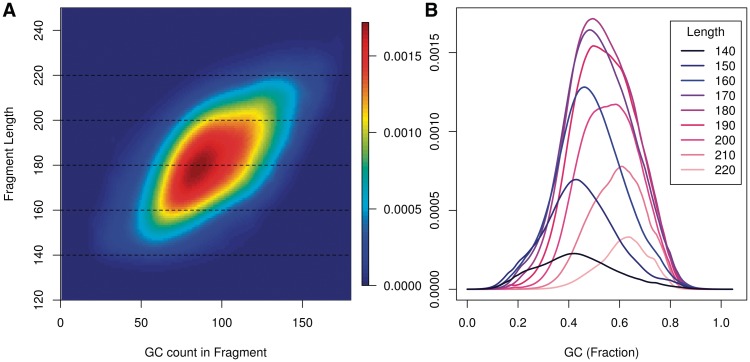
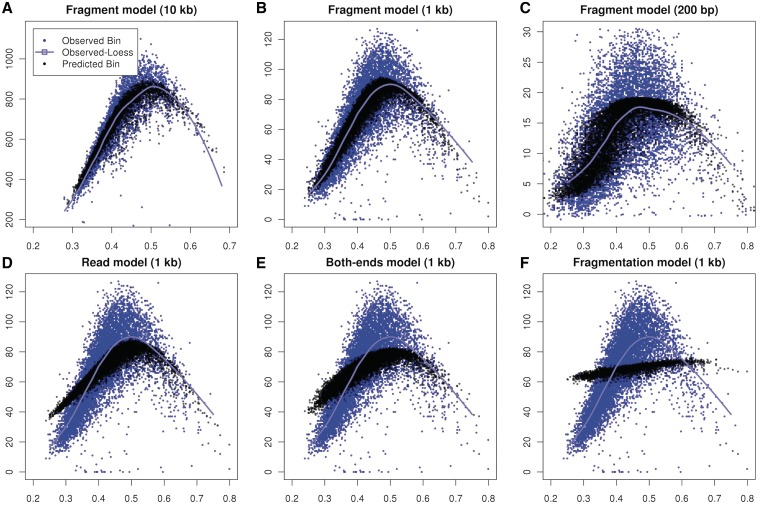
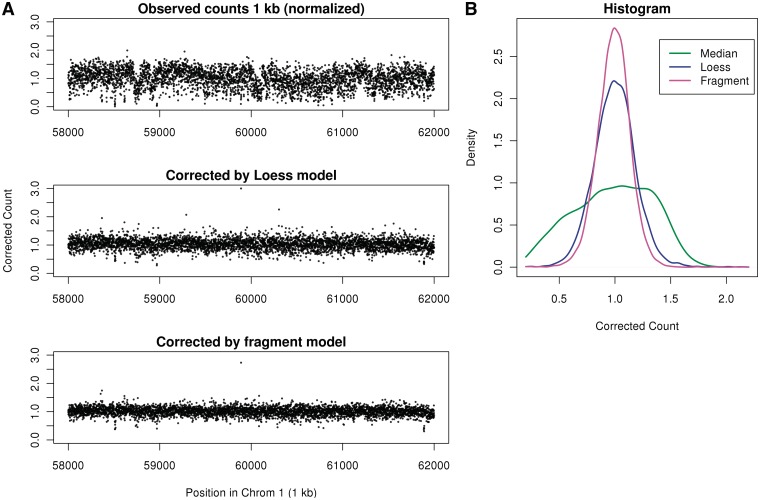
GC content bias describes the dependence between fragment count (read coverage) and GC content found in Illumina sequencing data. This bias can dominate the signal of interest for analyses that focus on measuring fragment abundance within a genome, such as copy number estimation (DNA-seq). The bias is not consistent between samples; and there is no consensus as to the best methods to remove it in a single sample. We analyze regularities in the GC bias patterns, and find a compact description for this unimodal curve family. It is the GC content of the full DNA fragment, not only the sequenced read, that most influences fragment count. This GC effect is unimodal: both GC-rich fragments and AT-rich fragments are underrepresented in the sequencing results. This empirical evidence strengthens the hypothesis that PCR is the most important cause of the GC bias. We propose a model that produces predictions at the base pair level, allowing strand-specific GC-effect correction regardless of the downstream smoothing or binning. These GC modeling considerations can inform other high-throughput sequencing analyses such as ChIP-seq and RNA-seq.
Overview
The claims and statistics of this paper haven’t been checked yet.
Free: it reads the open-access text and checks the first 5 claims that cite a source we can check. Create a free account to check every claim.
Integrity signals
Registry
Cites
Statistics
Figures
Verification
Claims the paper makes
The claims and statistics of this paper haven’t been checked yet.
Free: it reads the open-access text and checks the first 5 claims that cite a source we can check. Create a free account to check every claim.
Claims other papers make about this one
Each is checked against this paper’s own text: does it say what the citing paper says it does?
The source backs part of the claim, not all of it — or backs it for a different population, condition or comparison.
In the citing paper
“GC-bias was estimated for input chromatin samples using computeGCBias (Benjamini and Speed, 2012) from deepTools (Ramírez et al., 2014).”
From SALL4 controls cell fate in response to DNA base composition (2021) · cites this paper as Benjamini and Speed, 2012
Experimental — accuracy not yet measuredThe cited source says what the claim attributes to it.
In the citing paper
“Illumina sequencing was previously observed to have bias on GC-extreme sequences15,27,28, but GC content in our files did not show practically significant bias in the PCR GC bias test. Therefore, high-throughput sequencing and sample dilution are modeled using random sampling.”
From Quantifying Molecular Bias in DNA Data Storage (2019) · cites this paper as [28]
In the citing paper
“For DNA-seq, this bias is best corrected by modeling at the scale of the fragment21.”
From Modeling of RNA-seq fragment sequence bias reduces systematic errors in transcript abundance estimation (2016) · cites this paper as [21]
In the citing paper
“we confirmed other findings 21, that the GC content effect was often nonlinear and highly sample-specific, therefore requiring sample-specific bias estimation using smooth functions of fragment GC content.”
From Modeling of RNA-seq fragment sequence bias reduces systematic errors in transcript abundance estimation (2016) · cites this paper as [21]
Self-check
Percentages, sums and reported differences re-computed from the paper’s own numbers.
The self-check needs the paper’s full text.
Citations
Cites
Fast and accurate short read alignment with Burrows-Wheeler transform
Li, H., & Durbin, R. (2009) · Bioinformatics · doi:10.1093/bioinformatics/btp324 · Cited by 58,607
Ultrafast and memory-efficient alignment of short DNA sequences to the human genome.
Langmead, B., Trapnell, C., Pop, M., & Salzberg, S. L. (2009) · Genome Biology · doi:10.1186/gb-2009-10-3-r25 · Cited by 21,849
Accurate whole human genome sequencing using reversible terminator chemistry
Bentley, D. R., Balasubramanian, S., Swerdlow, H. P., Smith, G. P., Milton, J., Brown, C. G., Hall, K. P., Evers, D. J., Barnes, C. L., Bignell, H. R., et al. (2008) · Nature · doi:10.1038/nature07517 · Cited by 3,684
Probability: Theory and Examples.
Prewitt, K., & Durrett, R. (1992) · Journal of the American Statistical Association · doi:10.2307/2290301 · Cited by 3,085
Mapping short DNA sequencing reads and calling variants using mapping quality scores
Li, H., Ruan, J., & Durbin, R. (2008) · Genome Research · doi:10.1101/gr.078212.108 · Cited by 2,638
Analyzing and minimizing PCR amplification bias in Illumina sequencing libraries
Aird, D., Ross, M. G., Chen, W.-S., Danielsson, M., Fennell, T., Russ, C., Jaffe, D. B., Nusbaum, C., & Gnirke, A. (2011) · Genome Biology · doi:10.1186/gb-2011-12-2-r18 · Cited by 1,174
Substantial biases in ultra-short read data sets from high-throughput DNA sequencing
Dohm, J. C., Lottaz, C., Borodina, T., & Himmelbauer, H. (2008) · Nucleic Acids Research · doi:10.1093/nar/gkn425 · Cited by 1,088 · cited 2×
“(1), probably because GC-rich areas are rare (especially in simpler organisms).”
BackgroundProbability: Theory and Examples.
Durrett, R. (1993) · Biometrics · doi:10.2307/2532227 · Cited by 857
A large genome center's improvements to the Illumina sequencing system
Quail, M. A., Kozarewa, I., Smith, F., Scally, A., Stephens, P. J., Durbin, R., Swerdlow, H., & Turner, D. J. (2008) · Nature Methods · doi:10.1038/nmeth.1270 · Cited by 727
Biases in Illumina transcriptome sequencing caused by random hexamer priming
Hansen, K. D., Brenner, S. E., & Dudoit, S. (2010) · Nucleic Acids Research · doi:10.1093/nar/gkq224 · Cited by 713 · cited 1×
“Sequence-related biases in the priming (9), size selection (3), PCR (10) and probability of sequencing errors (11–13) have all been found.”
Background
Cited by
Items 701–800 of 1,001
Oman, K. M. (2015) · OhioLink ETD Center (Ohio Library and Information Network) · Cited by 2
Population Genomics of Organelle Genomes in Crop Plants
Scarcelli, N. (2020) · Population genomics · doi:10.1007/13836_2020_82 · Cited by 2
Application of RAD-seq in Evolutionary Genomics of Non-Model Organisms
Koseva, B. S. (2017) · KU ScholarWorks (The University of Kansas) · Cited by 2
van Rossum, A. G. J., Schouten, P. C., Weber, K. E., Nekljudova, V., Denkert, C., Solbach, C., Köhne, C.-H., Thomssen, C., Forstbauer, H., Hoffmann, G. M., et al. (2017) · Breast Cancer Research and Treatment · doi:10.1007/s10549-017-4444-9 · Cited by 2
Bridging the Generalization Gap: Training Robust Models on Confounded Biological DataPreprint
Liu, T., Kannan, A., Drake, A. M., Bertin, M., & Wan, N. (2018) · arXiv (Cornell University) · doi:10.48550/arxiv.1812.04778 · Cited by 2
Yosilia, R., Afandi, A., Hoya, A. L., Cahyani, C. N., & Hieno, A. (2024) · Jurnal Agrotek Tropika · doi:10.23960/jat.v12i4.9532 · Cited by 2
Genome-wide identification of signatures of positive selection in African admixed zebu cattle
Bahbahani, H. M. (2015) · Nottingham ePrints (University of Nottingham) · Cited by 2
Copy number variations of colorectal cancer by whole exome sequencing data
Márquez, C., & María, A. (2014) · RIUVic (UVic-UCC) · Cited by 2
Castells-Ballester, J., Taron, A., Smith, M., Gawron, R., Beaulieu, J., Papa, O., Buss, J. A., Ong, J. L., & Chen, M. (2026) · ACS Synthetic Biology · doi:10.1021/acssynbio.6c00061 · Cited by 2
Morriss, A., Pachebat, J. A., Tyson, G., Robinson, G., Chalmers, R. M., & Swain, M. (2020) · Communications in computer and information science · doi:10.1007/978-3-030-46970-2_11 · Cited by 2
WAVECNV: A New Approach for Detecting Copy Number Variation by Wavelet Clustering
Guo, Y., Wang, S., Haque, A. K. A., & Yuan, X. (2022) · Mathematics · doi:10.3390/math10122151 · Cited by 2
Statistical Modeling of Coverage in High-Throughput Data
Golan, D., & Rosset, S. (2013) · Methods in molecular biology · doi:10.1007/978-1-62703-514-9_4 · Cited by 2
Vandekerckhove, T. G. L. (2018) · Ghent University Academic Bibliography (Ghent University) · Cited by 2
Quenez, O., Schramm, C., Cassinari, K., Nicolas, A., Groeneveld, J., Huguet, G., Grenier‐Boley, B., Hulsman, M., Walters, G. B., de Rojas, I., et al. (2026) · The American Journal of Human Genetics · doi:10.1016/j.ajhg.2026.07.013 · Cited by 1
Translational control : mTOR signalling and the use of next-generation sequencing methods
Jackson, T. J. (2013) · Nottingham ePrints (University of Nottingham) · Cited by 1
Liharska, L. E., & Charney, A. W. (2024) · Current topics in behavioral neurosciences · doi:10.1007/7854_2024_466 · Cited by 1
Karri, S., Vadela, M. B., & Gundi, V. A. K. B. (2023) · Springer eBooks · doi:10.1007/978-981-99-5114-7_16 · Cited by 1
CRISPR-Cas9-based strategies for enhanced targeted integration
Lacombe, L. (2024) · theses.fr (ABES) · doi:10.70675/9c9d279dz512az4b72z8322zea205cef9b67 · Cited by 1
Guidelines for single-cell RNA sequencing analysis of eosinophils
Handler, K., Gurtner, A., Raju, D., Gonzalez-Perez, I., & Arnold, I. C. (2026) · Journal of Leukocyte Biology · doi:10.1093/jleuko/qiag055 · Cited by 1
Nucleotide composition bias in high throughput gene expression measurement methods
Jaksik, R., Lalik, A., & Puszyński, K. (2019) · International Conference on Signal Processing and Communication Systems · doi:10.1109/icspcs47537.2019.9008642 · Cited by 1
Uddin, M. M. (2019) · theses.fr (ABES) · doi:10.70675/c0ea56dez00b3z4321zac70z35e800418885 · Cited by 1
Short tandem repeat expansions in patients with neurodegenerative dementia
Zhu, Y., Xiao, X., Liu, Y., Wang, Z., Luo, T., Xu, T., Yang, Q., Hao, X., Zhang, C., Zhang, S., et al. (2026) · EBioMedicine · doi:10.1016/j.ebiom.2026.106190 · Cited by 1
The Next Generation Sequencing Based Molecular Diagnosis of Visual Diseases
Wang, X., & Lewis, R. A. (2017) · Springer eBooks · doi:10.1007/978-3-319-56418-0_4 · Cited by 1
Kirchner, R., Pereira, M., Peterson, M., Berres, M. E., & Churpek, J. E. (2026) · Journal of Molecular Diagnostics · doi:10.1016/j.jmoldx.2026.01.005 · Cited by 1
Zhang, Y., Imoto, S., Miyano, S., & Yamaguchi, R. (2017) · IEEE International Conference on Bioinformatics and Biomedicine (BIBM) · doi:10.1109/bibm.2017.8217832 · Cited by 1
Biełło, K., Rodríguez-Caballero, G., Becerra-Mora, D., Dorado-Blanco, N., Sáez-Melero, L. P., Moreno‐Vivián, C., Luque‐Almagro, V. M., Olaya‐Abril, A., & Roldán, M. D. (2026) · Frontiers in Microbiology · doi:10.3389/fmicb.2026.1746922 · Cited by 1
A Computational Framework for Analysis of cfDNA Fragmentation ProfilesPreprint
Poh, Z. W., Zhu, G., Wong, P., Odinokov, D., Carrié, H., Lau, Y. T., Gan, A., Poon, P. S. Y., Tan, P. B. O., Skanderup, A. J., et al. (2025) · bioRxiv (Cold Spring Harbor Laboratory) · doi:10.1101/2025.04.17.649313 · Cited by 1
The application and challenges of RNA-sequencing to the study of circadian rhythms
Lahens, N. F. (2014) · ScholarlyCommons (University of Pennsylvania) · Cited by 1
A novel genomic DNA library preparation method with low GC biasPreprint
Kelly, S. T., Hakoyama, T., Kumaishi, K., Okuda-Yabukami, H., Kato, S., Hayashi, M., Minoda, A., & Ichihashi, Y. (2022) · bioRxiv (Cold Spring Harbor Laboratory) · doi:10.1101/2022.01.28.478268 · Cited by 1
Analysis of Genomic Islands and Other Features in Draft Versus Complete Bacterial Genomes
Shay, J. A. (2016) · Summit (Simon Fraser University) · Cited by 1
Priebe, O., Solan, R., Messer, C., Chu, C., Hess, J. M., & Getz, G. A. (2026) · Genome biology · doi:10.1186/s13059-026-03971-w · Cited by 1
Phenotypic tolerance for rDNA copy number variation within the natural range of C. elegans
Hall, A. N., Morton, E. A., Walters, R., Cuperus, J. T., & Queitsch, C. (2025) · PLoS Genetics · doi:10.1371/journal.pgen.1011759 · Cited by 1
Functional Anabolic Network Analysis of Human-associated Lactobacillus StrainsPreprint
Moutinho, T. J., Neubert, B. C., Jenior, M. L., Carey, M. A., Medlock, G. L., Kolling, G. L., & Papin, J. A. (2019) · bioRxiv (Cold Spring Harbor Laboratory) · doi:10.1101/746420 · Cited by 1
Zhang, K., Yu, L., Lin, G., & Li, J. (2022) · Clinica Chimica Acta · doi:10.1016/j.cca.2022.08.008 · Cited by 1
Robust and generalizable CNV detection for single-cell sequencing assays
Moore, T. W., Mohammed, H., Adey, A., & Yardımcı, G. G. (2026) · Nucleic Acids Research · doi:10.1093/nar/gkag636 · Cited by 1
O’Shea, J. M., Best, H. D., & Fulmer, M. L. (2024) · Advances in Molecular Pathology · doi:10.1016/j.yamp.2024.06.007 · Cited by 1
Caractérisation de la reprogrammation de l'expression des gènes chez les blés allopyloïdes
Chalabi, S. (2014) · theses.fr (ABES) · doi:10.70675/bee96c14z587dz44d5zad96z53a7d6126cec · Cited by 1
Detection of False-Positive Deletions from the Database of Genomic Variants
Duan, J., Liu, H., Zhao, L., Yuan, X., Wang, Y., & Wan, M. (2019) · BioMed Research International · doi:10.1155/2019/8420547 · Cited by 1
Statistical analysis of high-throughput sequencing count data
Love, M. I. (2013) · Universitätsbibliothek der FU Berlin Hochschulschriftenstelle u. Dokumentenserver · doi:10.17169/refubium-9391 · Cited by 1
Berthelier, J. (2018) · theses.fr (ABES) · doi:10.70675/2cc987c0z9536z4449z9b00za8b607d01c0b · Cited by 1
COMPARATIVE STUDIES OF DIFFERENTIAL GENE CALLING METHODS FOR RNA-SEQ DATA
Zheng, X. (2012) · Lincoln (University of Nebraska) · Cited by 1
Bridge Capture Permits Cost-Efficient, Rapid, and Sensitive Molecular Precision Diagnostics
Adamusová, S., Korkiakoski, A., Laine, N., Musku, A., Rantasalo, T., Kim, J., Blomster, J., Laine, J., Hirvonen, T., Pursiheimo, J.-P., et al. (2025) · Journal of Molecular Diagnostics · doi:10.1016/j.jmoldx.2025.09.006 · Cited by 1
RNA sequencing for the study of splicing
Gonzàlez-Porta, M. (2014) · Apollo (University of Cambridge) · doi:10.17863/cam.15986 · Cited by 1
Quantitative comparison of single-cell sequencing methods using hippocampal neuronsPreprint
Ning, L., Wang, G., Li, Z., Hu, W. J., Hou, Q., Tong, Y., Zhang, M., Li, Q., Chen, X., Man, H., et al. (2014) · bioRxiv (Cold Spring Harbor Laboratory) · doi:10.1101/004366 · Cited by 1
Mapping Algorithms in High-Throughput Sequencing
Gupta, M. K., Gouda, G., Sabarinathan, S., Donde, R., Vadde, R., & Behera, L. (2021) · Springer eBooks · doi:10.1007/978-981-16-3993-7_14 · Cited by 1
Bayesian copy number detection and association in large-scale studies
Cristiano, S., McKean, D. M., Carey, J., Bracci, P. M., Brennan, P., Chou, M., Du, M., Gallinger, S., Goggins, M., Hassan, M. M., et al. (2020) · BMC Cancer · doi:10.1186/s12885-020-07304-3 · Cited by 1
Chang, T.-Y., & Waxman, D. J. (2026) · Endocrinology · doi:10.1210/endocr/bqag031 · Cited by 1
Machine‐Guided Approaches for Synthetic Biology Part Design
Amil, M. A. S., Ventimiglia, L. N., & Zelezniak, A. (2026) · Wiley eBooks · doi:10.1002/9783527850532.ch3 · Cited by 1
Copy Number Analysis of Cancer
Mayrhofer, M. (2015) · Uppsala University Publications (Uppsala University) · Cited by 1
Zhang, Z., Wang, J., Zhang, X., Guan, X., Gao, T. X., Mao, Y., Poetsch, A., & Wang, D. (2023) · Plants · doi:10.3390/plants12091883 · Cited by 1
Stanciu, A., Gombos, A., Agostinetto, E., Vincent, D., Buisseret, L., Papagiannis, A., Rothé, F., Occelli, N., Sotiriou, C., Venet, D., et al. (2026) · PLoS Computational Biology · doi:10.1371/journal.pcbi.1014505 · Cited by 1
Regulation of gene expression in macrophage immune response
Alasoo, K. (2017) · Apollo (University of Cambridge) · doi:10.17863/cam.9233 · Cited by 1
Biesack, E. E. (2017) · ODU Digital Commons (Old Dominion University) · doi:10.25777/ky0g-w988 · Cited by 1
Braae, A. (2016) · Nottingham ePrints (University of Nottingham) · Cited by 1
Using molecular QTLs to identify cell types and causal variants for complex traits
Schwartzentruber, J. (2018) · Apollo (University of Cambridge) · doi:10.17863/cam.18288 · Cited by 1
Statistical analysis of metagenomic data
Viktor, J. (2014) · Chalmers Publication Library (Chalmers University of Technology) · Cited by 1
Jenke, N., & Gruenstaeudl, M. (2022) · bioRxiv (Cold Spring Harbor Laboratory) · doi:10.1101/2022.05.06.490930 · Cited by 1
Romiguier, J. (2012) · theses.fr (ABES) · doi:10.70675/cc82ee12zfe8az4669z8a6ez4292dea7a4d1 · Cited by 1
Towards the Latent TranscriptomePreprint
Trofimov, A., Dutil, F., Perreault, C., Lemieux, S., Bengio, Y., & Cohen, J. (2018) · arXiv (Cornell University) · doi:10.48550/arxiv.1810.03442 · Cited by 1
Genomic Approaches to the Analysis of Cell Free Nucleic Acids
Pan, W., & Quake, S. R. (2014) · Advances in predictive, preventive and personalised medicine · doi:10.1007/978-94-017-9168-7_6 · Cited by 1
Dynamic changes in mRNA isoform usage during human retinal organoid development
Keuthan, C. J., Parthiban, S., Chang, Y.-Y., Shan, X., Chang, X., Yan, E., Cavalier, S., Timp, W., Hicks, S. C., & Zack, D. J. (2026) · Genome biology · doi:10.1101/2025.11.26.689062 · Cited by 1
Etude de l'organisation du génome de poulet à travers les séquences répétées
Guizard, S. (2016) · theses.fr (ABES) · doi:10.70675/2733f2acz4b03z432az9994z9a4ce02f7e9b · Cited by 1
Cell-free DNA fragmentomics: from chromatin biology to clinical stratification
Bui, T.-D., Phung, T. M., Chou, T., & Le, N. Q. K. (2026) · Epigenomics · doi:10.1080/17501911.2026.2740396 · Cited by 1
Regulation der Genexpression des humanen kationischen Aminosäuretransporters hCAT-1
Muther, S. K. (2017) · Gutenberg Open Science · doi:10.25358/openscience-839 · Cited by 1
Chimeric reference panels for genomic imputation
Zhou, M., James, M. E., Engelstädter, J., & Ortíz-Barrientos, D. (2025) · Genetics · doi:10.1093/genetics/iyaf212 · Cited by 1
Fecal Egg Counts, Nemabiomes, and Management Practices in Saskatchewan Horses
Saworski, T. (2023) · HARVEST (University of Saskatchewan) · Cited by 1
Dargahi, D. (2016) · Summit (Simon Fraser University) · Cited by 1
Genotyping‐by‐sequencing informs conservation of Andean palms sources of non‐timber forest products
Loaiza, N. P., Chafe, A. H., Mónica Moraes, R., Oleas, N. H., & Roncal, J. (2024) · Evolutionary Applications · doi:10.1111/eva.13765 · Cited by 1
A Clonal Evolution Simulator for Planning Somatic Evolution Studies
Srivatsa, A., Lei, H., & Schwartz, R. S. (2022) · Lecture notes in computer science · doi:10.1007/978-3-031-23198-8_21 · Cited by 1
Extracting Randomness from Nucleotide Sequencers for use in a Decentralised Randomness Beacon
Hurley-Smith, D., Droop, A., Lyon, R., & Teodor, R. (2024) · International Conference on Availability, Reliability and Security (ARES) · doi:10.1145/3664476.3664480 · Cited by 1
Tracing the evolution of aneuploid cancers by multiregional sequencing with CRUST
Chattopadhyay, S., Karlsson, J., Valind, A., Andersson, N., & Gisselsson, D. (2021) · Briefings in Bioinformatics · doi:10.1093/bib/bbab292 · Cited by 1
Naseem, F. (2019) · Wolverhampton Intellectual Repository and E-Theses (University of Wolverhampton) · Cited by 1
Duplication in biological databases: definitions, impacts and methods
Chen, Q. (2017) · Minerva Access (University of Melbourne) · Cited by 1
Metagenomic surveillance of viruses at the human-animal interface
Bogaardt, C. (2020) · ERA · doi:10.7488/era/1329 · Cited by 1
The effects of natural selection on human Y chromosome amplicons
Teitz, L. S. (2018) · DSpace@MIT (Massachusetts Institute of Technology) · Cited by 1
Zero-Inflated Models to Identify Transcription Factor Binding Sites in ChIP-seq Experiments
Viswakula, S. (2015) · ODU Digital Commons (Old Dominion University) · doi:10.25777/1s51-cs87 · Cited by 1
Detecting horizontal co-transfer of antimicrobial resistance genes in bacteria: a network approach
Wan, Y. (2019) · Minerva Access (University of Melbourne) · Cited by 1
van Beek, D. M. (2012) · Research Repository (Delft University of Technology) · Cited by 1
A novel method addressing NGS-based mappability bias for sensitive detection of DNA alterations
Sinha, R., Pal, R. K., & De, R. K. (2024) · Journal of Bioinformatics and Computational Biology · doi:10.1142/s0219720024500094 · Cited by 1
Virus discovery in small mammals : a closer look at the families arteriviridae and paramyxoviridae
Vanmechelen, B. (2022) · Ghent University Academic Bibliography (Ghent University) · Cited by 1
Uncovering the biological features of unknown viruses using shotgun metagenomic sequence data
Nasko, D. J. (2017) · Library, Museums and Press - UDSpace (University of Delaware) · doi:10.58088/grh1-2d93 · Cited by 1
Somatic mutations in tumors: their detection, generation mechanisms and implications
Xu, H. (2017) · mediaTUM (Technical University of Munich) · Cited by 1
A SNP-based capture and clustering workflow to assess donor-derived cell-free DNA in transplantation
Mitsunaga, S., Yamada, Y., Nguyen, P. T., Fujito, N. T., Nakaoka, H., Aoyama, H., Kitamura, H., Saigo, K., Inoue, I., Fujino, A., et al. (2026) · PLoS ONE · doi:10.1371/journal.pone.0342082 · Cited by 1
Agripino, J. D. M., Tahira, A. C., de Souza, L. Â., Bastos, M. S. E., Sauer, B., Schmidt, M., Bressan, G. C., Vasconcellos, R. D. S., Sippl, W., Pierce, R. J., et al. (2026) · ACS Omega · doi:10.1021/acsomega.5c10727 · Cited by 1
Detecting differential peaks in ChIP-seq signals with ODIN
Allhoff, M., Seré, K., Chauvistré, H., Lin, Q., Zenke, M., & Costa, I. G. (2015) · Bioinformatics · doi:10.1093/bioinformatics/btv030 · Cited by 1
Scanning a Poisson Random Field for Local SignalsPreprint
Zhang, N. R., Yakir, B., Xia, C. L., & Siegmund, D. (2014) · arXiv (Cornell University) · doi:10.48550/arxiv.1406.3258 · Cited by 1
Heitkam, T., & Garcia, S. (2021) · Annals of Botany · doi:10.1093/aob/mcab080 · Cited by 1
From specimens to the tree-of-life: tackling tropical arthropod diversity
Yeo, D. (2018) · National University of Singapore · doi:10.25560/83843 · Cited by 1
Maretty, L., Sibbesen, J. A., & Krogh, A. (2014)
Whole-Genome Deep Learning Predicts Chemotherapy Response in Colorectal Cancer
SADEGHI, H., & Seif, F. (2026) · Biochemical Genetics · doi:10.1007/s10528-026-11368-4
Chen, M., Hou, L., & Zhao, H. (2014) · Springer eBooks · doi:10.1007/978-3-319-07212-8_19
Studying the Role of Astrocytes at Synapses Using Single-Cell Transcriptomics
Pestana, F., Belgard, T. G., Voet, T., & Holt, M. G. (2024) · Neuromethods · doi:10.1007/978-1-0716-3742-5_9
Developing a bioinformatics framework for proteogenomics
Chapman, B. (2015) · Murdoch University Research Portal
Grand Celebration: 10th Anniversary of the Human Genome Project
Rampelotto, P. H., Burn, J., Lupski, J., & Nelson, K. (2016) · MDPI eBooks · doi:10.3390/books978-3-03842-170-2
Zhao, X. (2017) · Deep Blue (University of Michigan)
Integrative Data Analysis of Microarray and RNA-seq
Wang, Q. (2018) · NDSU Repository (North Dakota State University)
Metadata
- Authors
- Benjamini, Y., & Speed, T. P.
- Affiliations
- Walter and Eliza Hall Institute of Medical Research (AU)
- Corresponding author
- Benjamini, Yuval
- Speed, Terence P.
- Venue
- Nucleic Acids Research
- Publisher
- Oxford University Press (OUP)
- Published
- 2012-02-09
- Volume
- 40
- Issue
- 10
- Pages
- e72-e72
- ISSN
- 0305-1048 (ISSN-L)
- 1362-4962
- PMC
- PMC3378858
- OpenAlex
- W2018604728
- Cited by
- 913
- References
- 21
- Citations by year
- 2026: 52 · 2025: 57 · 2024: 69 · 2023: 47 · 2022: 63 · 2021: 84 · 2020: 74 · 2019: 73 · 2018: 83 · 2017: 69 · 2016: 52 · 2015: 60 · 2014: 72 · 2013: 47 · 2012: 10
- FWCI
- 24.27
- Type
- journal article
- Language
- en
- Open access
- gold
- doi.org
- Licence
- Locations
- Nucleic Acids Research (publishedVersion, cc-by-nc)
- PubMed Central (publishedVersion, cc-by-nc)
- PubMed (publishedVersion)
- Minerva Access (University of Melbourne) (submittedVersion, cc-by-nc)
- HighWire Press Open Archive (submittedVersion)
- Funders
- National Science Foundation
- National Institutes of Health
- National Cancer Institute (U24CA143799)
- National Institute of General Medical Sciences (R01GM083084)
- Topics
- Life Sciences › Biochemistry, Genetics and Molecular Biology › Molecular Biology › Genomics and Phylogenetic Studies
- Life Sciences › Biochemistry, Genetics and Molecular Biology › Molecular Biology › Gene expression and cancer classification
- Life Sciences › Biochemistry, Genetics and Molecular Biology › Molecular Biology › Fractal and DNA sequence analysis
- Keywords
- GC content bias, read coverage, DNA sequencing, copy number estimation, PCR bias, ChIP-seq, RNA-seq
- MeSH terms
- Base Composition, DNA, Humans, Models, Genetic, Genome, Human, Poisson Distribution, Sequence Analysis, DNA, High-Throughput Nucleotide Sequencing
About these checks
Registry, retraction, Cites and statistics results are computed, not judged, with one exception: a printed reference that no index lists is read once by a model before it counts as a citation error. Claims are extracted by a model and kept only when their quote appears verbatim in the text; each cited source is then checked, with a model’s help, for whether it says what the claim relies on. Those verdicts can be wrong — read the claim’s quote and the cited source before relying on one.
Statistics and arithmetic are recomputed, not judged.
Confidence bands are shown only for fields calibrated on our annotated test set. None is calibrated yet, so no band is shown.
What counts as a claim ›How we measure confidence ›How we check this ›
Are you an author, or do you see a problem with this page? Request a review
Data sources
Bibliographic data: Semantic Scholar, OpenAlex, Crossref.
Contains information from the Semantic Scholar Academic Graph Datasets, made available under the ODC Attribution License (ODC-BY 1.0).
Semantic Scholar’s data is described in: Kinney, R., et al. (2023). The Semantic Scholar Open Data Platform. arXiv:2301.10140.
