

Summarizing and correcting the GC content bias in high-throughput sequencing
Open accessThe DOI matches its Crossref record; 21 of the 21 references it cites were found in a registry or an index.
Abstract
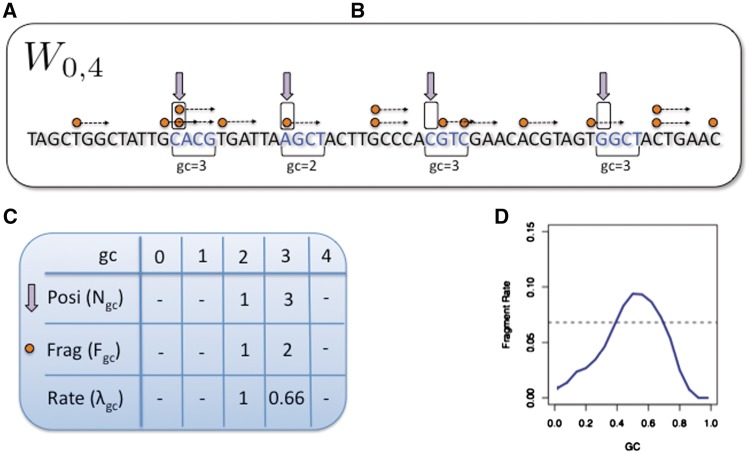
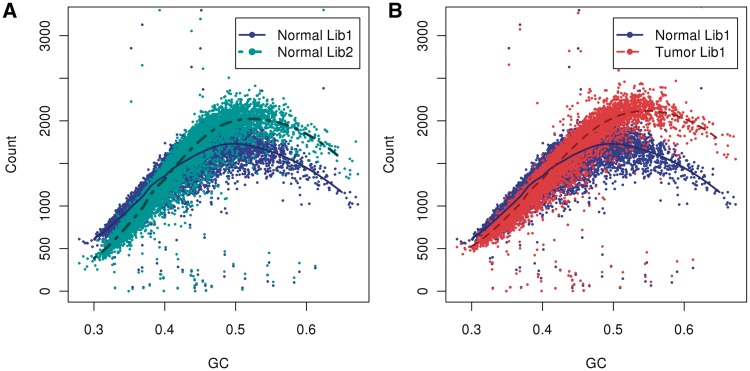
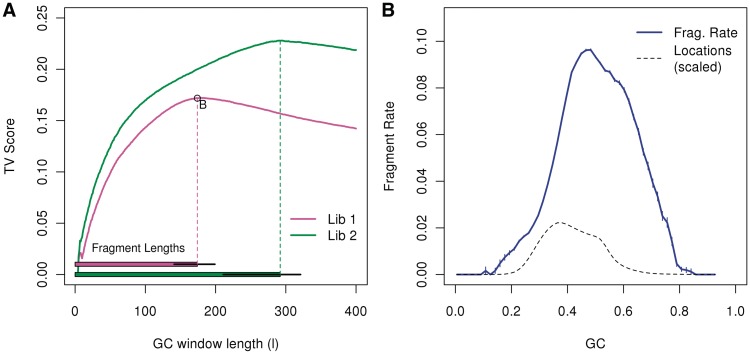
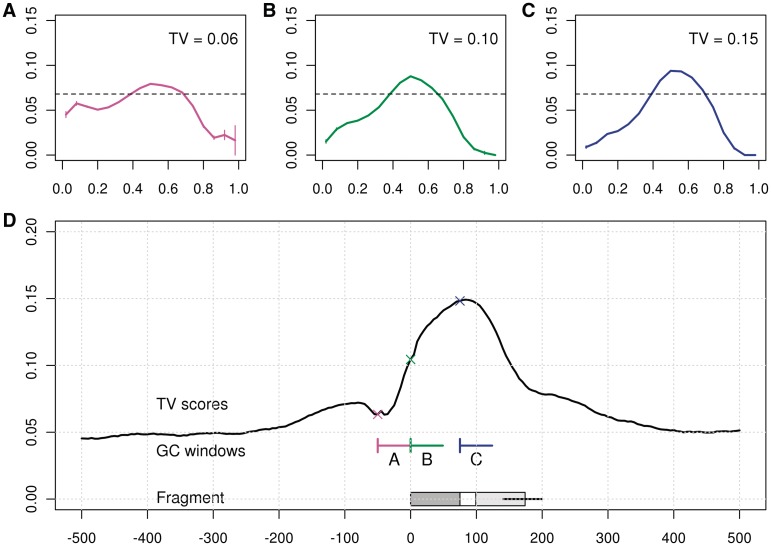
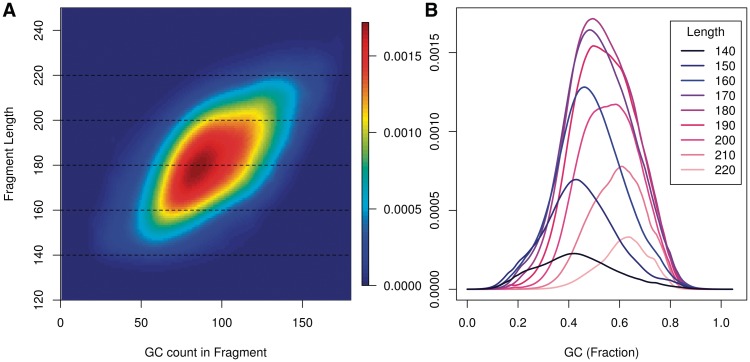
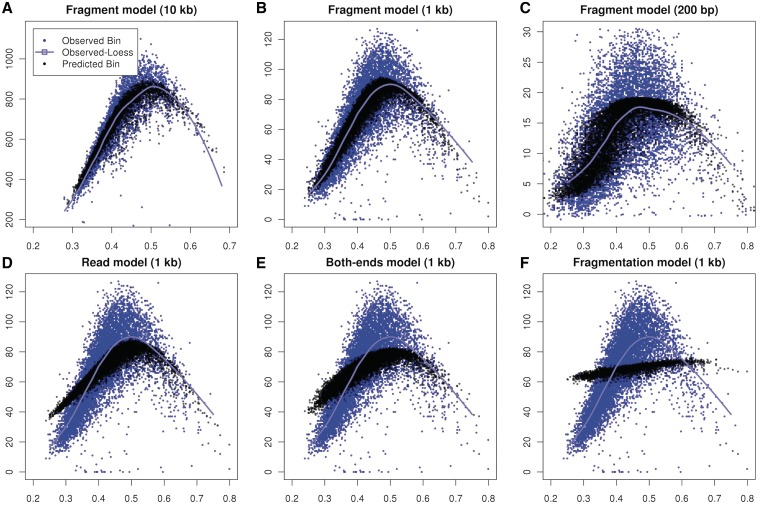
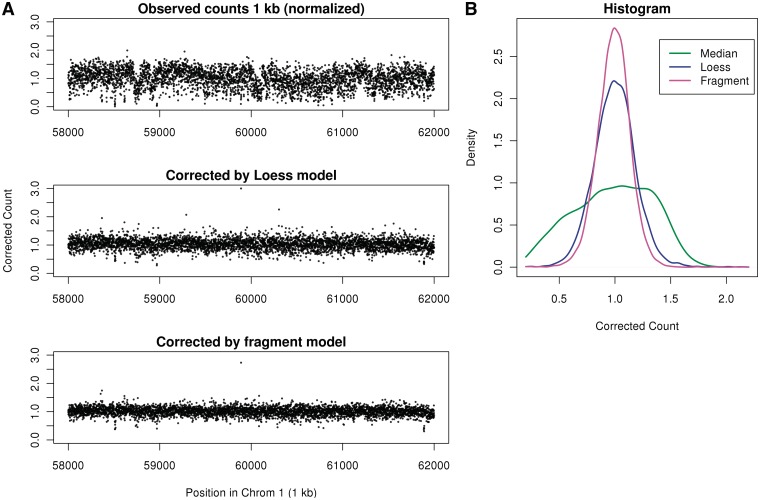
GC content bias describes the dependence between fragment count (read coverage) and GC content found in Illumina sequencing data. This bias can dominate the signal of interest for analyses that focus on measuring fragment abundance within a genome, such as copy number estimation (DNA-seq). The bias is not consistent between samples; and there is no consensus as to the best methods to remove it in a single sample. We analyze regularities in the GC bias patterns, and find a compact description for this unimodal curve family. It is the GC content of the full DNA fragment, not only the sequenced read, that most influences fragment count. This GC effect is unimodal: both GC-rich fragments and AT-rich fragments are underrepresented in the sequencing results. This empirical evidence strengthens the hypothesis that PCR is the most important cause of the GC bias. We propose a model that produces predictions at the base pair level, allowing strand-specific GC-effect correction regardless of the downstream smoothing or binning. These GC modeling considerations can inform other high-throughput sequencing analyses such as ChIP-seq and RNA-seq.
Overview
The claims and statistics of this paper haven’t been checked yet.
Free: it reads the open-access text and checks the first 5 claims that cite a source we can check. Create a free account to check every claim.
Integrity signals
Registry
Cites
Statistics
Figures
Verification
Claims the paper makes
The claims and statistics of this paper haven’t been checked yet.
Free: it reads the open-access text and checks the first 5 claims that cite a source we can check. Create a free account to check every claim.
Claims other papers make about this one
Each is checked against this paper’s own text: does it say what the citing paper says it does?
The source backs part of the claim, not all of it — or backs it for a different population, condition or comparison.
In the citing paper
“GC-bias was estimated for input chromatin samples using computeGCBias (Benjamini and Speed, 2012) from deepTools (Ramírez et al., 2014).”
From SALL4 controls cell fate in response to DNA base composition (2021) · cites this paper as Benjamini and Speed, 2012
Experimental — accuracy not yet measuredThe cited source says what the claim attributes to it.
In the citing paper
“Illumina sequencing was previously observed to have bias on GC-extreme sequences15,27,28, but GC content in our files did not show practically significant bias in the PCR GC bias test. Therefore, high-throughput sequencing and sample dilution are modeled using random sampling.”
From Quantifying Molecular Bias in DNA Data Storage (2019) · cites this paper as [28]
In the citing paper
“For DNA-seq, this bias is best corrected by modeling at the scale of the fragment21.”
From Modeling of RNA-seq fragment sequence bias reduces systematic errors in transcript abundance estimation (2016) · cites this paper as [21]
In the citing paper
“we confirmed other findings 21, that the GC content effect was often nonlinear and highly sample-specific, therefore requiring sample-specific bias estimation using smooth functions of fragment GC content.”
From Modeling of RNA-seq fragment sequence bias reduces systematic errors in transcript abundance estimation (2016) · cites this paper as [21]
Self-check
Percentages, sums and reported differences re-computed from the paper’s own numbers.
The self-check needs the paper’s full text.
Citations
Cites
Fast and accurate short read alignment with Burrows-Wheeler transform
Li, H., & Durbin, R. (2009) · Bioinformatics · doi:10.1093/bioinformatics/btp324 · Cited by 58,607
Ultrafast and memory-efficient alignment of short DNA sequences to the human genome.
Langmead, B., Trapnell, C., Pop, M., & Salzberg, S. L. (2009) · Genome Biology · doi:10.1186/gb-2009-10-3-r25 · Cited by 21,849
Accurate whole human genome sequencing using reversible terminator chemistry
Bentley, D. R., Balasubramanian, S., Swerdlow, H. P., Smith, G. P., Milton, J., Brown, C. G., Hall, K. P., Evers, D. J., Barnes, C. L., Bignell, H. R., et al. (2008) · Nature · doi:10.1038/nature07517 · Cited by 3,684
Probability: Theory and Examples.
Prewitt, K., & Durrett, R. (1992) · Journal of the American Statistical Association · doi:10.2307/2290301 · Cited by 3,085
Mapping short DNA sequencing reads and calling variants using mapping quality scores
Li, H., Ruan, J., & Durbin, R. (2008) · Genome Research · doi:10.1101/gr.078212.108 · Cited by 2,638
Analyzing and minimizing PCR amplification bias in Illumina sequencing libraries
Aird, D., Ross, M. G., Chen, W.-S., Danielsson, M., Fennell, T., Russ, C., Jaffe, D. B., Nusbaum, C., & Gnirke, A. (2011) · Genome Biology · doi:10.1186/gb-2011-12-2-r18 · Cited by 1,174
Substantial biases in ultra-short read data sets from high-throughput DNA sequencing
Dohm, J. C., Lottaz, C., Borodina, T., & Himmelbauer, H. (2008) · Nucleic Acids Research · doi:10.1093/nar/gkn425 · Cited by 1,088 · cited 2×
“(1), probably because GC-rich areas are rare (especially in simpler organisms).”
BackgroundProbability: Theory and Examples.
Durrett, R. (1993) · Biometrics · doi:10.2307/2532227 · Cited by 857
A large genome center's improvements to the Illumina sequencing system
Quail, M. A., Kozarewa, I., Smith, F., Scally, A., Stephens, P. J., Durbin, R., Swerdlow, H., & Turner, D. J. (2008) · Nature Methods · doi:10.1038/nmeth.1270 · Cited by 727
Biases in Illumina transcriptome sequencing caused by random hexamer priming
Hansen, K. D., Brenner, S. E., & Dudoit, S. (2010) · Nucleic Acids Research · doi:10.1093/nar/gkq224 · Cited by 713 · cited 1×
“Sequence-related biases in the priming (9), size selection (3), PCR (10) and probability of sequencing errors (11–13) have all been found.”
Background
Cited by
deepTools: a flexible platform for exploring deep-sequencing data
Ramírez, F., Dündar, F., Diehl, S., Grüning, B. A., & Manke, T. (2014) · Nucleic Acids Research · doi:10.1093/nar/gku365 · Cited by 3,738
“In addition to the basic correlation analysis by bamCorrelate, the deepTools computeGCbias and correctGCbias produce diagnostic plots that help detect and correct GC bias using the most recent insights into GC bias properties of NGS samples (5, 6) (Figure 1C).”
MethodRSeQC: quality control of RNA-seq experiments
Wang, L., Wang, S., & Li, W. (2012) · Bioinformatics · doi:10.1093/bioinformatics/bts356 · Cited by 2,788
CNVkit: Genome-Wide Copy Number Detection and Visualization from Targeted DNA Sequencing
Talevich, E., Shain, A. H., Botton, T., & Bastian, B. C. (2016) · PLOS Computational Biology · doi:10.1371/journal.pcbi.1004873 · Cited by 2,094
(2015) · doi:10.7717/peerj.1165 · Cited by 1,960
Harnessing the power of RADseq for ecological and evolutionary genomics
Andrews, K. R., Good, J. M., Miller, M. R., Luikart, G., & Hohenlohe, P. A. (2016) · Nature Reviews Genetics · doi:10.1038/nrg.2015.28 · Cited by 1,489
Genome-wide cell-free DNA fragmentation in patients with cancer
Cristiano, S., Leal, A., Phallen, J., Fiksel, J., Adleff, V., Bruhm, D. C., Jensen, S. Ø., Medina, J. E., Hruban, C., White, J. R., et al. (2019) · Nature · doi:10.1038/s41586-019-1272-6 · Cited by 1,476
mRNAs, proteins and the emerging principles of gene expression control
Buccitelli, C., & Selbach, M. (2020) · Nature Reviews Genetics · doi:10.1038/s41576-020-0258-4 · Cited by 1,243
Chromothripsis from DNA damage in micronuclei
Zhang, C.-Z., Spektor, A., Cornils, H., Francis, J. M., Jackson, E. K., Liu, S., Meyerson, M., & Pellman, D. (2015) · Nature · doi:10.1038/nature14493 · Cited by 1,148
Zhou, Z., Jiang, Y., Wang, Z., Gou, Z., Lyu, J., Li, W., Yu, Y., Shu, L., Zhao, Y., Ma, Y., et al. (2015) · Nature Biotechnology · doi:10.1038/nbt.3096 · Cited by 1,102
SEQC/MAQC-III Consortium (2014) · Nature Biotechnology · doi:10.1038/nbt.2957 · Cited by 983
Characterizing and measuring bias in sequence data
Ross, M. G., Russ, C., Costello, M., Hollinger, A., Lennon, N. J., Hegarty, R., Nusbaum, C., & Jaffe, D. B. (2013) · Genome Biology · doi:10.1186/gb-2013-14-5-r51 · Cited by 909
Furey, T. S. (2012) · Nature Reviews Genetics · doi:10.1038/nrg3306 · Cited by 835
RobiNA: a user-friendly, integrated software solution for RNA-Seq-based transcriptomics
Lohse, M., Bolger, A. M., Nagel, A., Fernie, A. R., Lunn, J. E., Stitt, M., & Usadel, B. (2012) · Nucleic Acids Research · doi:10.1093/nar/gks540 · Cited by 786
Guidelines for Validation of Next-Generation Sequencing–Based Oncology Panels
Jennings, L. J., Arcila, M. E., Corless, C., Kamel-Reid, S., Lubin, I. M., Pfeifer, J., Temple-Smolkin, R. L., Voelkerding, K. V., & Nikiforova, M. N. (2017) · The Journal of Molecular Diagnostics · doi:10.1016/j.jmoldx.2017.01.011 · Cited by 743
Zhou, Z., Jiang, Y., Wang, Z., Gou, Z., Lyu, J., Li, W., Yu, Y., Shu, L., Zhao, Y., Ma, Y., et al. (2016) · Nature Biotechnology · doi:10.1038/nbt0416-441c · Cited by 689
Oligotyping: differentiating between closely related microbial taxa using 16S rRNA gene data
Eren, A. M., Maignien, L., Sul, W. J., Murphy, L. G., Grim, S. L., Morrison, H. G., & Sogin, M. L. (2013) · Methods in Ecology and Evolution · doi:10.1111/2041-210x.12114 · Cited by 628
WASP: allele-specific software for robust molecular quantitative trait locus discovery
van de Geijn, B., McVicker, G., Gilad, Y., & Pritchard, J. K. (2015) · Nature Methods · doi:10.1038/nmeth.3582 · Cited by 575
Single sample scoring of molecular phenotypes
Foroutan, M., Bhuva, D. D., Lyu, R., Horan, K., Cursons, J., & Davis, M. J. (2018) · BMC Bioinformatics · doi:10.1186/s12859-018-2435-4 · Cited by 548
Somatic mutation landscapes at single-molecule resolution
Abascal, F., Harvey, L. M. R., Mitchell, E., Lawson, A. R. J., Lensing, S. V., Ellis, P., Russell, A. J. C., Alcantara, R. E., Baez-Ortega, A., Wang, Y., et al. (2021) · Nature · doi:10.1038/s41586-021-03477-4 · Cited by 546
Sequential regulatory activity prediction across chromosomes with convolutional neural networks
Kelley, D. R., Reshef, Y. A., Bileschi, M., Belanger, D., McLean, C. Y., & Snoek, J. (2018) · Genome Research · doi:10.1101/gr.227819.117 · Cited by 537
Sequencing DNA with nanopores: Troubles and biases
Delahaye, C., & Nicolas, J. (2021) · PLOS ONE · doi:10.1371/journal.pone.0257521 · Cited by 534
Characterizing genetic intra-tumor heterogeneity across 2,658 human cancer genomes
Dentro, S. C., Leshchiner, I., Haase, K., Tarabichi, M., Wintersinger, J., Deshwar, A. G., Yu, K., Rubanova, Y., Macintyre, G., Demeulemeester, J., et al. (2021) · Cell · doi:10.1016/j.cell.2021.03.009 · Cited by 533
Primer and platform effects on 16S rRNA tag sequencing
Tremblay, J., Singh, K., Fern, A., Kirton, E. S., He, S., Woyke, T., Lee, J., Chen, F., Dangl, J. L., & Tringe, S. G. (2015) · Frontiers in Microbiology · doi:10.3389/fmicb.2015.00771 · Cited by 529
Scheinin, I., Sie, D., Bengtsson, H., van de Wiel, M. A., Olshen, A. B., van Thuijl, H. F., van Essen, H. F., Eijk, P. P., Rustenburg, F., Meijer, G. A., et al. (2014) · Genome Research · doi:10.1101/gr.175141.114 · Cited by 518
The sheep genome illuminates biology of the rumen and lipid metabolism
Jiang, Y., Xie, M., Chen, W., Talbot, R., Maddox, J. F., Faraut, T., Wu, C., Muzny, D. M., Li, Y., Zhang, W., et al. (2014) · Science · doi:10.1126/science.1252806 · Cited by 514
Detection and characterization of lung cancer using cell-free DNA fragmentomes
Mathios, D., Johansen, J. S., Cristiano, S., Medina, J. E., Phallen, J., Larsen, K. R., Bruhm, D. C., Niknafs, N., Ferreira, L., Adleff, V., et al. (2021) · Nature Communications · doi:10.1038/s41467-021-24994-w · Cited by 472
Carss, K. J., Arno, G., Erwood, M., Stephens, J., Sanchis-Juan, A., Hull, S., Megy, K., Grozeva, D., Dewhurst, E., Malka, S., et al. (2017) · The American Journal of Human Genetics · doi:10.1016/j.ajhg.2016.12.003 · Cited by 463
Long-Read Sequencing Emerging in Medical Genetics
Mantere, T., Kersten, S., & Hoischen, A. (2019) · Frontiers in Genetics · doi:10.3389/fgene.2019.00426 · Cited by 440
ExpansionHunter: a sequence-graph-based tool to analyze variation in short tandem repeat regions
Dolzhenko, E., Deshpande, V., Schlesinger, F., Krusche, P., Petrovski, R., Chen, S., Emig-Agius, D., Gross, A., Narzisi, G., Bowman, B., et al. (2019) · Bioinformatics · doi:10.1093/bioinformatics/btz431 · Cited by 394
Detection of long repeat expansions from PCR-free whole-genome sequence data
Dolzhenko, E., van Vugt, J. J. F. A., Shaw, R. J., Bekritsky, M. A., van Blitterswijk, M., Narzisi, G., Ajay, S. S., Rajan, V., Lajoie, B. R., Johnson, N. H., et al. (2017) · Genome Research · doi:10.1101/gr.225672.117 · Cited by 388
Promises, pitfalls and practicalities of prenatal whole exome sequencing
Best, S., Wou, K., Vora, N., Van der Veyver, I. B., Wapner, R., & Chitty, L. S. (2018) · Prenatal Diagnosis · doi:10.1002/pd.5102 · Cited by 370
Special features of RAD Sequencing data: implications for genotyping
Davey, J. W., Cezard, T., Fuentes‐Utrilla, P., Eland, C., Gharbi, K., & Blaxter, M. L. (2013) · Molecular Ecology · doi:10.1111/mec.12084 · Cited by 343
Identifying and mitigating bias in next-generation sequencing methods for chromatin biology
Meyer, C. A., & Liu, X. S. (2014) · Nature Reviews Genetics · doi:10.1038/nrg3788 · Cited by 338
LHX2- and LDB1-mediated trans interactions regulate olfactory receptor choice
Monahan, K., Horta, A., & Lomvardas, S. (2019) · Nature · doi:10.1038/s41586-018-0845-0 · Cited by 327
Mak, S. S. T., Gopalakrishnan, S., Carøe, C., Geng, C., Liu, S., Sinding, M.-H. S., Kuderna, L. F. K., Zhang, W., Fu, S., Vieira, F. G., et al. (2017) · GigaScience · doi:10.1093/gigascience/gix049 · Cited by 317
Polyester : simulating RNA-seq datasets with differential transcript expression
Frazee, A. C., Jaffe, A. E., Langmead, B., & Leek, J. T. (2015) · Bioinformatics · doi:10.1093/bioinformatics/btv272 · Cited by 313
Barrick, J. E., Colburn, G., Deatherage, D. E., Traverse, C. C., Strand, M. D., Borges, J. J., Knoester, D. B., Reba, A., & Meyer, A. G. (2014) · BMC Genomics · doi:10.1186/1471-2164-15-1039 · Cited by 299
Angly, F. E., Dennis, P. G., Skarshewski, A., Vanwonterghem, I., Hugenholtz, P., & Tyson, G. W. (2014) · Microbiome · doi:10.1186/2049-2618-2-11 · Cited by 292
Toward Accurate and Quantitative Comparative Metagenomics
Nayfach, S., & Pollard, K. S. (2016) · Cell · doi:10.1016/j.cell.2016.08.007 · Cited by 292
Effects of GC Bias in Next-Generation-Sequencing Data on De Novo Genome Assembly
Chen, Y.-C., Liu, T., Yu, C.-H., Chiang, T.-Y., & Hwang, C.-C. (2013) · PLoS ONE · doi:10.1371/journal.pone.0062856 · Cited by 285
“Benjamini et al. recently claimed a uni-modal GC bias, i.e., both GC-rich and GC-poor regions are under-represented in read coverage [34].”
BackgroundVariant ribosomal RNA alleles are conserved and exhibit tissue-specific expression
Parks, M. M., Kurylo, C. M., Dass, R. A., Bojmar, L., Lyden, D., Vincent, C. T., & Blanchard, S. C. (2018) · Science Advances · doi:10.1126/sciadv.aao0665 · Cited by 260
Clonal Decomposition and DNA Replication States Defined by Scaled Single-Cell Genome Sequencing
Laks, E., McPherson, A., Zahn, H., Lai, D., Steif, A., Brimhall, J., Biele, J., Wang, B., Masud, T., Ting, J., et al. (2019) · Cell · doi:10.1016/j.cell.2019.10.026 · Cited by 257
Analysis of plant microbe interactions in the era of next generation sequencing technologies
Knief, C. (2014) · Frontiers in Plant Science · doi:10.3389/fpls.2014.00216 · Cited by 253
Reproducibility of high-throughput mRNA and small RNA sequencing across laboratories
The GEUVADIS Consortium, 't Hoen, P. A. C., Friedländer, M. R., Almlöf, J., Sammeth, M., Pulyakhina, I., Anvar, S. Y., Laros, J. F. J., Buermans, H. P. J., Karlberg, O., et al. (2013) · Nature Biotechnology · doi:10.1038/nbt.2702 · Cited by 250
Issues and current standards of controls in microbiome research
Hornung, B. V. H., Zwittink, R. D., & Kuijper, E. J. (2019) · FEMS Microbiology Ecology · doi:10.1093/femsec/fiz045 · Cited by 248
Teo, S. M., Pawitan, Y., Ku, C. S., Chia, K. S., & Salim, A. (2012) · Bioinformatics · doi:10.1093/bioinformatics/bts535 · Cited by 240
Measuring differential gene expression with RNA-seq: challenges and strategies for data analysis
Finotello, F., & Di Camillo, B. (2015) · Briefings in Functional Genomics · doi:10.1093/bfgp/elu035 · Cited by 238
Mechanisms of OCT4-SOX2 motif readout on nucleosomes
Michael, A. K., Grand, R. S., Isbel, L., Cavadini, S., Kozicka, Z., Kempf, G., Bunker, R. D., Schenk, A. D., Graff-Meyer, A., Pathare, G. R., et al. (2020) · Science · doi:10.1126/science.abb0074 · Cited by 235
Kwiatkowski, D. J., Choueiri, T. K., Fay, A. P., Rini, B. I., Thorner, A. R., de Velasco, G., Tyburczy, M. E., Hamieh, L., Albiges, L., Agarwal, N., et al. (2016) · Clinical Cancer Research · doi:10.1158/1078-0432.ccr-15-2631 · Cited by 228
From Benchtop to Desktop: Important Considerations when Designing Amplicon Sequencing Workflows
Murray, D. C., Coghlan, M. L., & Bunce, M. (2015) · PLOS ONE · doi:10.1371/journal.pone.0124671 · Cited by 224
Exome sequencing for prenatal diagnosis of fetuses with sonographic abnormalities
Drury, S., Williams, H., Trump, N., Boustred, C., GOSGene, Lench, N., Scott, R. H., & Chitty, L. S. (2015) · Prenatal Diagnosis · doi:10.1002/pd.4675 · Cited by 223
“Exome designs are likely to improve and increase the depth of coverage and sequencing costs should fall, however, some regions of the genome remain hard to capture, because of factors such as high GC content and repetitive sequence.(28)”
BackgroundLelieveld, S. H., Spielmann, M., Mundlos, S., Veltman, J. A., & Gilissen, C. (2015) · Human Mutation · doi:10.1002/humu.22813 · Cited by 222
Satellite DNA evolution: old ideas, new approaches
Lower, S. S., McGurk, M. P., Clark, A. G., & Barbash, D. A. (2018) · Current Opinion in Genetics & Development · doi:10.1016/j.gde.2018.03.003 · Cited by 207
“In the absence of PCR-free libraries, GC-bias can be accounted for by inferring correction factors from the relationship between coverage and GC content of single copy sequence [25,26] or by including GC composition as a covariate in regression analyses.”
Xiao, Y.-L., Liu, S., Ge, R., Wu, Y., He, C., Chen, M., & Tang, W. (2023) · Nature Biotechnology · doi:10.1038/s41587-022-01587-6 · Cited by 201
Practical considerations for plant phylogenomics
McKain, M. R., Johnson, M. G., Uribe‐Convers, S., Eaton, D., & Yang, Y. (2018) · Applications in Plant Sciences · doi:10.1002/aps3.1038 · Cited by 201
Peneder, P., Stütz, A. M., Surdez, D., Krumbholz, M., Semper, S., Chicard, M., Sheffield, N. C., Pierron, G., Lapouble, E., Tötzl, M., et al. (2021) · Nature Communications · doi:10.1038/s41467-021-23445-w · Cited by 200
McCoy, R. C., Taylor, R. W., Blauwkamp, T. A., Kelley, J. L., Kertesz, M., Pushkarev, D., Petrov, D. A., & Fiston-Lavier, A.-S. (2014) · PLoS ONE · doi:10.1371/journal.pone.0106689 · Cited by 200
The linker histone H1.0 generates epigenetic and functional intratumor heterogeneity
Torres, C. M., Biran, A., Burney, M. J., Patel, H., Henser-Brownhill, T., Cohen, A.-H. S., Li, Y., Ben-Hamo, R., Nye, E., Spencer-Dene, B., et al. (2016) · Science · doi:10.1126/science.aaf1644 · Cited by 193
Goldstein, S., Beka, L., Graf, J., & Klassen, J. L. (2019) · BMC Genomics · doi:10.1186/s12864-018-5381-7 · Cited by 187
Love, M. I., Hogenesch, J. B., & Irizarry, R. A. (2016) · Nature Biotechnology · doi:10.1038/nbt.3682 · Cited by 186
Mouliere, F., Mair, R., Chandrananda, D., Marass, F., Smith, C. G., Su, J., Morris, J., Watts, C., Brindle, K. M., & Rosenfeld, N. (2018) · EMBO Molecular Medicine · doi:10.15252/emmm.201809323 · Cited by 185
Whole-genome CNV analysis: advances in computational approaches
Pirooznia, M., Goes, F. S., & Zandi, P. P. (2015) · Frontiers in Genetics · doi:10.3389/fgene.2015.00138 · Cited by 185
Bratcher, H. B., Corton, C., Jolley, K. A., Parkhill, J., & Maiden, M. C. (2014) · BMC Genomics · doi:10.1186/1471-2164-15-1138 · Cited by 184
GC bias affects genomic and metagenomic reconstructions, underrepresenting GC-poor organisms
Browne, P. D., Nielsen, T. K., Kot, W., Aggerholm, A., Gilbert, M. T. P., Puetz, L., Rasmussen, M., Zervas, A., & Hansen, L. H. (2020) · GigaScience · doi:10.1093/gigascience/giaa008 · Cited by 178
Frey, K. G., Herrera-Galeano, J. E., Redden, C. L., Luu, T. V., Servetas, S. L., Mateczun, A. J., Mokashi, V. P., & Bishop-Lilly, K. A. (2014) · BMC Genomics · doi:10.1186/1471-2164-15-96 · Cited by 177
“A closer examination of the mapped reads seems to show a slight correlation with areas of low G/C-content, but follow on experiments would be required to conclusively elucidate the impact of G/Ccontent in this context.”
Mu, W., Lu, H.-M., Chen, J., Li, S., & Elliott, A. M. (2016) · The Journal of Molecular Diagnostics · doi:10.1016/j.jmoldx.2016.07.006 · Cited by 176
Xia, X., Wu, W. K. K., Wong, S. H., Liu, D., Kwong, T. N. Y., Nakatsu, G., Yan, P. S., Chuang, Y., Chan, M. W. Y., Coker, O. O., et al. (2020) · Microbiome · doi:10.1186/s40168-020-00847-4 · Cited by 176
Detecting and correcting systematic variation in large-scale RNA sequencing data
Li, S., Łabaj, P. P., Zumbo, P., Sykacek, P., Shi, W., Shi, L., Phan, J., Wu, P.-Y., Wang, M., Wang, C., et al. (2014) · Nature Biotechnology · doi:10.1038/nbt.3000 · Cited by 175
“We applied two R packages cqn 17 and EDASeq 18 to correct the GC content bias and normalized the gene expression, respectively.”
Naught all zeros in sequence count data are the same
Silverman, J. D., Roche, K., Mukherjee, S., & David, L. A. (2020) · Computational and Structural Biotechnology Journal · doi:10.1016/j.csbj.2020.09.014 · Cited by 174
Microarray experiments and factors which affect their reliability
Jaksik, R., Iwanaszko, M., Rzeszowska‐Wolny, J., & Kimmel, M. (2015) · Biology Direct · doi:10.1186/s13062-015-0077-2 · Cited by 174
Genome measures used for quality control are dependent on gene function and ancestry
Wang, J., Raskin, L., Samuels, D. C., Shyr, Y., & Guo, Y. (2015) · Bioinformatics · doi:10.1093/bioinformatics/btu668 · Cited by 173
“A similar pattern has been used to describe the effect of GC-content on Illumina sequencing depth (Benjamini and Speed, 2012; Guo et al., 2014).”
MethodPflug, J. M., Holmes, V. R., Burrus, C., Johnston, J. S., & Maddison, D. R. (2020) · G3 Genes Genomes Genetics · doi:10.1534/g3.120.401028 · Cited by 173
How low can you go? Short-read polishing of Oxford Nanopore bacterial genome assemblies
Bouras, G. S., Judd, L. M., Edwards, R. A., Vreugde, S., Stinear, T. P., & Wick, R. R. (2024) · Microbial Genomics · doi:10.1099/mgen.0.001254 · Cited by 172
Genome-wide nucleosome map and cytosine methylation levels of an ancient human genome
Pedersen, J. S., Valen, E., Velazquez, A. M. V., Parker, B. J., Rasmussen, M., Lindgreen, S., Lilje, B., Tobin, D. J., Kelly, T. K., Vang, S., et al. (2014) · Genome Research · doi:10.1101/gr.163592.113 · Cited by 170
Romiguier, J., Ranwez, V., Delsuc, F., Galtier, N., & Douzery, E. J. P. (2013) · Molecular Biology and Evolution · doi:10.1093/molbev/mst116 · Cited by 170
Non-random DNA fragmentation in next-generation sequencing
Poptsova, M. S., Il’icheva, I. A., Nechipurenko, D. Y., Panchenko, L. A., Khodikov, M. V., Oparina, N. Y., Polozov, R. V., Nechipurenko, Y. D., & Grokhovsky, S. L. (2014) · Scientific Reports · doi:10.1038/srep04532 · Cited by 166
Zhao, C., Tynan, J. A., Ehrich, M., Hannum, G., McCullough, R. M., Saldivar, J., Oeth, P., van den Boom, D., & Deciu, C. (2015) · Clinical Chemistry · doi:10.1373/clinchem.2014.233312 · Cited by 164
GATK-gCNV enables the discovery of rare copy number variants from exome sequencing data
Babadi, M., Fu, J. M., Lee, S. K., Smirnov, A. N., Gauthier, L. D., Walker, M., Benjamin, D. I., Zhao, X., Karczewski, K. J., Wong, I., et al. (2023) · Nature Genetics · doi:10.1038/s41588-023-01449-0 · Cited by 163
Galtier, N., Roux, C., Rousselle, M., Romiguier, J., Figuet, E., Glémin, S., Bierne, N., & Duret, L. (2018) · Molecular Biology and Evolution · doi:10.1093/molbev/msy015 · Cited by 162
Jelin, A. C., & Vora, N. L. (2018) · Obstetrics and Gynecology Clinics of North America · doi:10.1016/j.ogc.2017.10.003 · Cited by 161
IVT-seq reveals extreme bias in RNA sequencing
Lahens, N. F., Kavakli, I. H., Zhang, R., Hayer, K., Black, M. B., Dueck, H., Pizarro, A., Kim, J., Irizarry, R., Thomas, R. S., et al. (2014) · Genome Biology · doi:10.1186/gb-2014-15-6-r86 · Cited by 158
“Previous efforts at understanding bias identified several contributing sources, including GC-content and PCR enrichment [8,9], priming of reverse transcription by random hexamers [10], read errors introduced during the sequencing-by-synthesis reaction [11], and bias introduced by various methods of rRNA subtraction [7…”
BackgroundNext Generation Sequencing Methods for Diagnosis of Epilepsy Syndromes
Dunn, P. J., Albury, C. L., Maksemous, N., Benton, M. C., Sutherland, H. G. E., Smith, R. A., Haupt, L. M., & Griffiths, L. R. (2018) · Frontiers in Genetics · doi:10.3389/fgene.2018.00020 · Cited by 158
Multi-perspective quality control of Illumina RNA sequencing data analysis
Sheng, Q., Vickers, K. C., Zhao, S., Wang, J., Samuels, D. C., Koues, O. I., Shyr, Y., & Guo, Y. P. (2016) · Briefings in Functional Genomics · doi:10.1093/bfgp/elw035 · Cited by 157
A framework for clinical cancer subtyping from nucleosome profiling of cell-free DNA
Doebley, A.-L., Ko, M., Liao, H., Cruikshank, A. E., Santos, K., Kikawa, C., Hiatt, J. B., Patton, R. D., Sarkar, N. D., Collier, K. A., et al. (2022) · Nature Communications · doi:10.1038/s41467-022-35076-w · Cited by 157
A whole-genome sequence and transcriptome perspective on HER2-positive breast cancers
Ferrari, A., Vincent-Salomon, A., Pivot, X., Sertier, A.-S., Thomas, E., Tonon, L., Boyault, S., Mulugeta, E., Treilleux, I., MacGrogan, G., et al. (2016) · Nature Communications · doi:10.1038/ncomms12222 · Cited by 150
Mavromatis, K., Land, M. L., Brettin, T. S., Quest, D. J., Copeland, A., Clum, A., Goodwin, L., Woyke, T., Lapidus, A., Klenk, H. P., et al. (2012) · PLoS ONE · doi:10.1371/journal.pone.0048837 · Cited by 150
Rapid species-level metagenome profiling and containment estimation with sylph
Shaw, J., & Yu, Y. W. (2024) · Nature Biotechnology · doi:10.1038/s41587-024-02412-y · Cited by 148
Hardwick, S. A., Chen, W. Y., Wong, T., Madala, B. S., Deveson, I. W., Ongley, S. E., Santini, N. S., Marcellin, E., Smith, M. A., Nielsen, L. K., et al. (2018) · Nature Communications · doi:10.1038/s41467-018-05555-0 · Cited by 148
New insights into the performance of human whole-exome capture platforms
Meienberg, J., Žerjavic, K., Keller, I., Okoniewski, M. J., Patrignani, A., Ludin, K., Xu, Z., Steinmann, B. U., Carrel, T. P., Röthlisberger, B., et al. (2015) · Nucleic Acids Research · doi:10.1093/nar/gkv216 · Cited by 148
CODEX: a normalization and copy number variation detection method for whole exome sequencing
Jiang, Y., Oldridge, D. A., Diskin, S. J., & Zhang, N. R. (2015) · Nucleic Acids Research · doi:10.1093/nar/gku1363 · Cited by 147
CoCoLasso for high-dimensional error-in-variables regression
Datta, A., & Zou, H. (2017) · The Annals of Statistics · doi:10.1214/16-aos1527 · Cited by 144
Assessing Copy Number Alterations in Targeted, Amplicon-Based Next-Generation Sequencing Data
Grasso, C. S., Butler, T. M., Rhodes, K., Quist, M. J., Neff, T. L., Moore, S., Tomlins, S. A., Reinig, E. F., Beadling, C., Andersen, M., et al. (2014) · Journal of Molecular Diagnostics · doi:10.1016/j.jmoldx.2014.09.008 · Cited by 143
Circulating DNA fragmentomics and cancer screening
Thierry, A. R. (2023) · Cell Genomics · doi:10.1016/j.xgen.2022.100242 · Cited by 140
WisecondorX: improved copy number detection for routine shallow whole-genome sequencing
Raman, L., Dheedene, A., Smet, M. D., Dorpe, J. V., & Menten, B. (2018) · Nucleic Acids Research · doi:10.1093/nar/gky1263 · Cited by 139
A High-Coverage Yersinia pestis Genome from a Sixth-Century Justinianic Plague Victim
Feldman, M., Harbeck, M., Keller, M., Spyrou, M. A., Rott, A., Trautmann, B., Scholz, H. C., Päffgen, B., Peters, J., McCormick, M., et al. (2016) · Molecular Biology and Evolution · doi:10.1093/molbev/msw170 · Cited by 138
Detecting Expansions of Tandem Repeats in Cohorts Sequenced with Short-Read Sequencing Data
Tankard, R. M., Bennett, M. F., Degorski, P., Delatycki, M. B., Lockhart, P. J., & Bahlo, M. (2018) · The American Journal of Human Genetics · doi:10.1016/j.ajhg.2018.10.015 · Cited by 137
Bowers, R. M., Clum, A., Tice, H., Lim, J., Singh, K., Ciobanu, D., Ngan, C. Y., Cheng, J.-F., Tringe, S. G., & Woyke, T. (2015) · BMC Genomics · doi:10.1186/s12864-015-2063-6 · Cited by 134
Quantifying tumor heterogeneity in whole-genome and whole-exome sequencing data
Oesper, L., Satas, G., & Raphael, B. J. (2014) · Bioinformatics · doi:10.1093/bioinformatics/btu651 · Cited by 131
Extremely rare variants reveal patterns of germline mutation rate heterogeneity in humans
Carlson, J., Locke, A. E., Flickinger, M., Zawistowski, M., Levy, S., Myers, R. M., Boehnke, M., Kang, H. M., Scott, L. J., Li, J. Z., et al. (2018) · Nature Communications · doi:10.1038/s41467-018-05936-5 · Cited by 130
High-resolution characterization of sequence signatures due to non-random cleavage of cell-free DNA
Chandrananda, D., Thorne, N. P., & Bahlo, M. (2015) · BMC Medical Genomics · doi:10.1186/s12920-015-0107-z · Cited by 128
Metadata
- Authors
- Benjamini, Y., & Speed, T. P.
- Affiliations
- Walter and Eliza Hall Institute of Medical Research (AU)
- Corresponding author
- Benjamini, Yuval
- Speed, Terence P.
- Venue
- Nucleic Acids Research
- Publisher
- Oxford University Press (OUP)
- Published
- 2012-02-09
- Volume
- 40
- Issue
- 10
- Pages
- e72-e72
- ISSN
- 0305-1048 (ISSN-L)
- 1362-4962
- PMC
- PMC3378858
- OpenAlex
- W2018604728
- Cited by
- 913
- References
- 21
- Citations by year
- 2026: 52 · 2025: 57 · 2024: 69 · 2023: 47 · 2022: 63 · 2021: 84 · 2020: 74 · 2019: 73 · 2018: 83 · 2017: 69 · 2016: 52 · 2015: 60 · 2014: 72 · 2013: 47 · 2012: 10
- FWCI
- 24.27
- Type
- journal article
- Language
- en
- Open access
- gold
- doi.org
- Licence
- Locations
- Nucleic Acids Research (publishedVersion, cc-by-nc)
- PubMed Central (publishedVersion, cc-by-nc)
- PubMed (publishedVersion)
- Minerva Access (University of Melbourne) (submittedVersion, cc-by-nc)
- HighWire Press Open Archive (submittedVersion)
- Funders
- National Science Foundation
- National Institutes of Health
- National Cancer Institute (U24CA143799)
- National Institute of General Medical Sciences (R01GM083084)
- Topics
- Life Sciences › Biochemistry, Genetics and Molecular Biology › Molecular Biology › Genomics and Phylogenetic Studies
- Life Sciences › Biochemistry, Genetics and Molecular Biology › Molecular Biology › Gene expression and cancer classification
- Life Sciences › Biochemistry, Genetics and Molecular Biology › Molecular Biology › Fractal and DNA sequence analysis
- Keywords
- GC content bias, read coverage, DNA sequencing, copy number estimation, PCR bias, ChIP-seq, RNA-seq
- MeSH terms
- Base Composition, DNA, Humans, Models, Genetic, Genome, Human, Poisson Distribution, Sequence Analysis, DNA, High-Throughput Nucleotide Sequencing
About these checks
Registry, retraction, Cites and statistics results are computed, not judged, with one exception: a printed reference that no index lists is read once by a model before it counts as a citation error. Claims are extracted by a model and kept only when their quote appears verbatim in the text; each cited source is then checked, with a model’s help, for whether it says what the claim relies on. Those verdicts can be wrong — read the claim’s quote and the cited source before relying on one.
Statistics and arithmetic are recomputed, not judged.
Confidence bands are shown only for fields calibrated on our annotated test set. None is calibrated yet, so no band is shown.
What counts as a claim ›How we measure confidence ›How we check this ›
Are you an author, or do you see a problem with this page? Request a review
Data sources
Bibliographic data: Semantic Scholar, OpenAlex, Crossref.
Contains information from the Semantic Scholar Academic Graph Datasets, made available under the ODC Attribution License (ODC-BY 1.0).
Semantic Scholar’s data is described in: Kinney, R., et al. (2023). The Semantic Scholar Open Data Platform. arXiv:2301.10140.
