

Summarizing and correcting the GC content bias in high-throughput sequencing
Open accessThe DOI matches its Crossref record; 21 of the 21 references it cites were found in a registry or an index.
Abstract
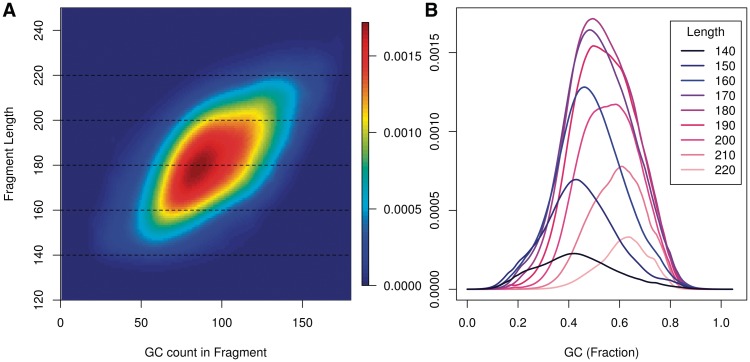
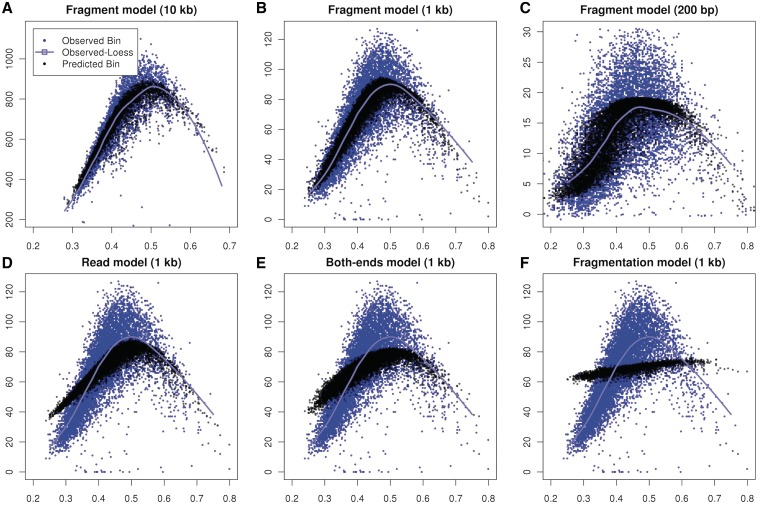
GC content bias describes the dependence between fragment count (read coverage) and GC content found in Illumina sequencing data. This bias can dominate the signal of interest for analyses that focus on measuring fragment abundance within a genome, such as copy number estimation (DNA-seq). The bias is not consistent between samples; and there is no consensus as to the best methods to remove it in a single sample. We analyze regularities in the GC bias patterns, and find a compact description for this unimodal curve family. It is the GC content of the full DNA fragment, not only the sequenced read, that most influences fragment count. This GC effect is unimodal: both GC-rich fragments and AT-rich fragments are underrepresented in the sequencing results. This empirical evidence strengthens the hypothesis that PCR is the most important cause of the GC bias. We propose a model that produces predictions at the base pair level, allowing strand-specific GC-effect correction regardless of the downstream smoothing or binning. These GC modeling considerations can inform other high-throughput sequencing analyses such as ChIP-seq and RNA-seq.
Overview
The claims and statistics of this paper haven’t been checked yet.
Free: it reads the open-access text and checks the first 5 claims that cite a source we can check. Create a free account to check every claim.
Integrity signals
Registry
Cites
Statistics
Figures
Verification
Claims the paper makes
The claims and statistics of this paper haven’t been checked yet.
Free: it reads the open-access text and checks the first 5 claims that cite a source we can check. Create a free account to check every claim.
Claims other papers make about this one
Each is checked against this paper’s own text: does it say what the citing paper says it does?
The source backs part of the claim, not all of it — or backs it for a different population, condition or comparison.
In the citing paper
“GC-bias was estimated for input chromatin samples using computeGCBias (Benjamini and Speed, 2012) from deepTools (Ramírez et al., 2014).”
From SALL4 controls cell fate in response to DNA base composition (2021) · cites this paper as Benjamini and Speed, 2012
Experimental — accuracy not yet measuredThe cited source says what the claim attributes to it.
In the citing paper
“Illumina sequencing was previously observed to have bias on GC-extreme sequences15,27,28, but GC content in our files did not show practically significant bias in the PCR GC bias test. Therefore, high-throughput sequencing and sample dilution are modeled using random sampling.”
From Quantifying Molecular Bias in DNA Data Storage (2019) · cites this paper as [28]
In the citing paper
“For DNA-seq, this bias is best corrected by modeling at the scale of the fragment21.”
From Modeling of RNA-seq fragment sequence bias reduces systematic errors in transcript abundance estimation (2016) · cites this paper as [21]
In the citing paper
“we confirmed other findings 21, that the GC content effect was often nonlinear and highly sample-specific, therefore requiring sample-specific bias estimation using smooth functions of fragment GC content.”
From Modeling of RNA-seq fragment sequence bias reduces systematic errors in transcript abundance estimation (2016) · cites this paper as [21]
Self-check
Percentages, sums and reported differences re-computed from the paper’s own numbers.
The self-check needs the paper’s full text.
Citations
Cites
Fast and accurate short read alignment with Burrows-Wheeler transform
Li, H., & Durbin, R. (2009) · Bioinformatics · doi:10.1093/bioinformatics/btp324 · Cited by 58,607
Ultrafast and memory-efficient alignment of short DNA sequences to the human genome.
Langmead, B., Trapnell, C., Pop, M., & Salzberg, S. L. (2009) · Genome Biology · doi:10.1186/gb-2009-10-3-r25 · Cited by 21,849
Accurate whole human genome sequencing using reversible terminator chemistry
Bentley, D. R., Balasubramanian, S., Swerdlow, H. P., Smith, G. P., Milton, J., Brown, C. G., Hall, K. P., Evers, D. J., Barnes, C. L., Bignell, H. R., et al. (2008) · Nature · doi:10.1038/nature07517 · Cited by 3,684
Probability: Theory and Examples.
Prewitt, K., & Durrett, R. (1992) · Journal of the American Statistical Association · doi:10.2307/2290301 · Cited by 3,085
Mapping short DNA sequencing reads and calling variants using mapping quality scores
Li, H., Ruan, J., & Durbin, R. (2008) · Genome Research · doi:10.1101/gr.078212.108 · Cited by 2,638
Analyzing and minimizing PCR amplification bias in Illumina sequencing libraries
Aird, D., Ross, M. G., Chen, W.-S., Danielsson, M., Fennell, T., Russ, C., Jaffe, D. B., Nusbaum, C., & Gnirke, A. (2011) · Genome Biology · doi:10.1186/gb-2011-12-2-r18 · Cited by 1,174
Substantial biases in ultra-short read data sets from high-throughput DNA sequencing
Dohm, J. C., Lottaz, C., Borodina, T., & Himmelbauer, H. (2008) · Nucleic Acids Research · doi:10.1093/nar/gkn425 · Cited by 1,088 · cited 2×
“(1), probably because GC-rich areas are rare (especially in simpler organisms).”
BackgroundProbability: Theory and Examples.
Durrett, R. (1993) · Biometrics · doi:10.2307/2532227 · Cited by 857
A large genome center's improvements to the Illumina sequencing system
Quail, M. A., Kozarewa, I., Smith, F., Scally, A., Stephens, P. J., Durbin, R., Swerdlow, H., & Turner, D. J. (2008) · Nature Methods · doi:10.1038/nmeth.1270 · Cited by 727
Biases in Illumina transcriptome sequencing caused by random hexamer priming
Hansen, K. D., Brenner, S. E., & Dudoit, S. (2010) · Nucleic Acids Research · doi:10.1093/nar/gkq224 · Cited by 713 · cited 1×
“Sequence-related biases in the priming (9), size selection (3), PCR (10) and probability of sequencing errors (11–13) have all been found.”
Background
Cited by
Items 501–600 of 1,001
Eghbal-zadeh, H., Fischer, L., Popitsch, N. P., Kromp, F., Taschner‐Mandl, S., Koutini, K., Gerber, T., Bozsaky, E., Ambros, I. M., Ambros, I. M., et al. (2018) · Journal of Computational Biology · doi:10.1089/cmb.2018.0172 · Cited by 9
Wang, L., Han, J., Fearnley, L. G., Milton, M., Rafehi, H., Reid, J., Gerring, Z. F., Masaldan, S., Lang, T., Speed, T. P., et al. (2024) · npj Parkinson s Disease · doi:10.1038/s41531-024-00831-x · Cited by 9
Self-citationGustafsson, J., Robinson, J. L., Nielsen, J., & Pachter, L. S. (2021) · Genome biology · doi:10.1186/s13059-021-02386-z · Cited by 9
Improving the Accuracy of Bulk Fitness Assays by Correcting Barcode Processing Biases
McGee, R. S., Kinsler, G., Petrov, D. A., & Tikhonov, M. (2024) · Molecular Biology and Evolution · doi:10.1093/molbev/msae152 · Cited by 9
Characterisation of the changing genomic landscape of metastatic melanoma using cell free DNA
Cutts, A., Venn, O., Dilthey, A., Gupta, A., Vavoulis, D. V., Dreau, H. M.-P., Middleton, M. R., McVean, G., Taylor, J. C., & Schuh, A. (2017) · npj Genomic Medicine · doi:10.1038/s41525-017-0030-7 · Cited by 9
Tizabi, D., Bachvaroff, T. R., & Hill, R. T. (2022) · Frontiers in Marine Science · doi:10.3389/fmars.2022.914197 · Cited by 9
GCparagon: evaluating and correcting GC biases in cell-free DNA at the fragment level
Spiegl, B., Kapidzic, F., Röner, S., Kircher, M., & Speicher, M. R. (2023) · NAR Genomics and Bioinformatics · doi:10.1093/nargab/lqad102 · Cited by 9
Larson, N. B., Larson, M. C., Na, J., Sosa, C. P., Wang, C., Kocher, J.-P., & Rowsey, R. A. (2019) · Pacific Symposium on Biocomputing (PSB) · doi:10.1142/9789811215636_0053 · Cited by 9
Sharp, N. P., Smith, D. R., Driscoll, G., Sun, K., Vickerman, C. M., & Martin, S. C. T. (2023) · Genome Biology and Evolution · doi:10.1093/gbe/evad179 · Cited by 9
Fish antifreeze protein origin in sculpins by frameshifting within a duplicated housekeeping gene
Graham, L. A., & Davies, P. L. (2024) · FEBS Journal · doi:10.1111/febs.17205 · Cited by 9
Hobbs, E. C., Halpin, K., Singanallur, N. B., & Tribolet, L. (2021) · Scientific and Technical Review (World Organisation for Animal Health) · doi:10.20506/rst.40.1.3214 · Cited by 9
Chung, D., Zhang, Q., & Keleş, S. (2014) · Springer eBooks · doi:10.1007/978-3-319-07212-8_14 · Cited by 9
Program, N. C. S., Cherukuri, P. F., Maduro, V. V. B., Fajardo, K. V. F., Lam, K., Adams, D. R., Tifft, C. J., Mullikin, J. C., Gahl, W. A., & Boerkoel, C. F. (2015) · BMC Genomics · doi:10.1186/s12864-015-2107-y · Cited by 9
Straver, R., Weiss, M. M., Waisfisz, Q., Sistermans, E. A., & Reinders, M. J. T. (2017) · European Journal of Human Genetics · doi:10.1038/s41431-017-0005-2 · Cited by 9
Microbiome data integration via shared dictionary learning
Yuan, B., & Wang, S. (2025) · Nature Communications · doi:10.1038/s41467-025-63425-y · Cited by 8
Copy Number Variations Detection: Unravelling the Problem in Tangible Aspects
Nascimento, F. F. D., & Guimarães, K. S. (2016) · IEEE Transactions on Computational Biology and Bioinformatics · doi:10.1109/tcbb.2016.2576441 · Cited by 8
Impact of prenatal genomics on clinical genetics practice
Zemet, R., & den Veyver, I. B. V. (2024) · Best Practice & Research Clinical Obstetrics & Gynaecology · doi:10.1016/j.bpobgyn.2024.102545 · Cited by 8
Qin, Q., Heinz, J., & Li, H. (2026) · Cancer Research Communications · doi:10.1158/2767-9764.crc-25-0769 · Cited by 8
Lu, Z., Xiao, X., Zheng, Q., Wang, X., & Xu, L. (2024) · Briefings in Bioinformatics · doi:10.1093/bib/bbae366 · Cited by 8
Clonal analysis of metachronous double biliary tract cancers
Omori, Y., Aoki, S., Ono, Y., Kokumai, T., Yoshimachi, S., Sato, H., Kusaka, A., Iseki, M., Douchi, D., Miura, T., et al. (2024) · The Journal of Pathology · doi:10.1002/path.6265 · Cited by 8
Liu, D., Yehia, L., Dhawan, A., Ni, Y., & Eng, C. (2024) · Cell Reports Medicine · doi:10.1016/j.xcrm.2023.101384 · Cited by 8
Comprehensive guide for epigenetics and transcriptomics data quality control
Comendul, A., Ruf-Zamojski, F. M., Ford, C. T., Agarwal, P., Zaslavsky, E., Nudelman, G., Hariharan, M., Rubenstein, A. B., Pinças, H., Nair, V. D., et al. (2025) · STAR Protocols · doi:10.1016/j.xpro.2025.103607 · Cited by 8
Balázs, Z., Balermpas, P., Ivanković, I., Willmann, J., Gitchev, T., Bryant, A., Gückenberger, M., Krauthammer, M. O., & Andratschke, N. H. (2024) · Radiotherapy and Oncology · doi:10.1016/j.radonc.2024.110364 · Cited by 8
DAGIP: alleviating cell-free DNA sequencing biases with optimal transport
Passemiers, A., Tuveri, S., Jatsenko, T., Vanderstichele, A., Busschaert, P., Coosemans, A., Timmerman, D., Tejpar, S., Vandenberghe, P., Lambrechts, D., et al. (2025) · Genome biology · doi:10.1186/s13059-025-03511-y · Cited by 8
ZARP: An automated workflow for processing of RNA-seq dataPreprint
Katsantoni, M., Gypas, F., Herrmann, C. J., Bürri, D., Bąk, M., Iborra, P., Agarwal, K., Ataman, M., Börsch, A., Zavolan, M., et al. (2021) · bioRxiv (Cold Spring Harbor Laboratory) · doi:10.1101/2021.11.18.469017 · Cited by 8
Kuznetsov, V. A., Bondarenko, V., Wongsurawat, T., Yenamandra, S. P., & Jenjaroenpun, P. (2018) · Nucleic Acids Research · doi:10.1093/nar/gky690 · Cited by 8
Tan, J., Chow, Y. P., Abidin, N. Z., Chang, K. M., Selvaratnam, V., Tumian, N. R., Poh, Y. M., Veerakumarasivam, A., Laffan, M., & Wong, C. L. (2022) · BMC Medical Genomics · doi:10.1186/s12920-021-01145-0 · Cited by 8
A Model for Distributed Processing and Analyses of NGS Data under Map-Reduce Paradigm
Samaddar, S., Sinha, R., & De, R. K. (2018) · IEEE Transactions on Computational Biology and Bioinformatics · doi:10.1109/tcbb.2018.2816022 · Cited by 8
Statistical inference for cell type deconvolution
Xie, D., Gui, L., & Wang, J. (2026) · Journal of the Royal Statistical Society Series B (Statistical Methodology) · doi:10.1093/jrsssb/qkag054 · Cited by 8
Deng, C., Daley, T., Calabrese, P. P., Ren, J., & Smith, A. D. (2019) · Journal of Computational Biology · doi:10.1089/cmb.2019.0264 · Cited by 8
Bairoliya, S., Goel, A., Mukherjee, M., Xiang, J. K. Z., & Cao, B. (2022) · Environmental Science & Technology · doi:10.1021/acs.est.2c06632 · Cited by 8
Cytochrome P450 CYP6CY3 Mediated Cross-Resistance to Isocycloseram and Fluralaner in Myzus persicae
Chen, Z., Yin, C., Wang, F., Sun, X., Kandegama, W., Wang, Z. G., & Yang, G. (2025) · Journal of Agricultural and Food Chemistry · doi:10.1021/acs.jafc.5c12109 · Cited by 8
Liu, C., Liu, Y., Zhang, X., Xu, X., & Zhao, S. (2017) · Scientific Reports · doi:10.1038/s41598-017-02600-8 · Cited by 8
Kulkarni, S., Wood, H. M., & Hormiga, G. (2023) · Molecular Phylogenetics and Evolution · doi:10.1016/j.ympev.2023.107855 · Cited by 8
Multiresolution correction of GC bias and application to identification of copy number alterations
Jang, H. G., & Lee, H. (2019) · Bioinformatics · doi:10.1093/bioinformatics/btz174 · Cited by 8
Wang, C., & Zhang, S. (2017) · Journal of Molecular Cell Biology · doi:10.1093/jmcb/mjx058 · Cited by 7
Grasso, G., Debruyne, R., Adamo, M., Rué, O., Lejzerowicz, F., Bittner, L., Bianciotto, V., & Marmeisse, R. (2025) · Molecular Ecology Resources · doi:10.1111/1755-0998.14122 · Cited by 7
GCevobase: an evolution-based database for GC content in eukaryotic genomes
Wang, D. (2018) · Bioinformatics · doi:10.1093/bioinformatics/bty068 · Cited by 7
TARDIS, a targeted RNA directional sequencing method for rare RNA discovery
Portal, M. M., Pavet, V., Erb, C., & Gronemeyer, H. (2015) · Nature Protocols · doi:10.1038/nprot.2015.120 · Cited by 7
Morshneva, A. V., Kozyulina, P., Vashukova, E. S., Tarasenko, O., Dvoynova, N. M., Chentsova, A., Евгеньевна, Т. О., Koroteev, A. L., Ivanov, D., Serebryakova, E. A., et al. (2021) · Genes · doi:10.3390/genes12050743 · Cited by 7
Decoding human gene expression signatures in the brain
Wang, G.-Z., & Konopka, G. (2013) · Transcription · doi:10.4161/trns.24885 · Cited by 7
Said, I., Barbash, D. A., & Clark, A. G. (2024) · Genome Biology and Evolution · doi:10.1093/gbe/evae153 · Cited by 7
Frellsen, J., Menzel, P., & Krogh, A. (2014) · Elsevier eBooks · doi:10.1016/b978-0-444-53632-7.01103-5 · Cited by 7
Lithio, A., & Nettleton, D. S. (2015) · Journal of Agricultural Biological and Environmental Statistics · doi:10.1007/s13253-015-0232-3 · Cited by 7
Qayyum, H., Raziq, M. F., Manzoor, H., Zaidi, S. S. A., Ali, A. H., & Kayani, M. U. R. (2025) · Interdisciplinary Sciences Computational Life Sciences · doi:10.1007/s12539-025-00722-6 · Cited by 7
The influence of CpG (5′-d(CpG)-3′ dinucleotides) methylation on ultrasonic DNA fragmentation
Гарафутдинов, Р. Р., Galimova, A. A., & Sakhabutdinova, A. R. (2018) · Journal of Biomolecular Structure and Dynamics · doi:10.1080/07391102.2018.1533888 · Cited by 7
Towards Chinese text and DNA shift encoding scheme based on biomass plasmid storage
Yang, X., Lai, L., Qiang, X., Deng, M. X., Xie, Y., Shi, X., & Kou, Z. (2023) · Frontiers in Bioinformatics · doi:10.3389/fbinf.2023.1276934 · Cited by 7
Fan, Y., Wang, W., & Zhu, Q. (2020) · PLoS ONE · doi:10.1371/journal.pone.0228479 · Cited by 7
Bozzi, F., Conca, E., Silvestri, M., Dagrada, G. P., Ardore, A., Penso, D., Lorenzini, D., Volpi, C. C., Trupia, D. V., Busico, A., et al. (2025) · Scientific Reports · doi:10.1038/s41598-025-88494-3 · Cited by 7
Non-canonical DNA and sequencing challenges in bird genomesPreprint
Smeds, L., Sieg, J. P., Secomandi, S., Lee, C., Sollitto, M., Medico, J. A., Chiaromonte, F., Jarvis, E. D., Formenti, G., & Makova, K. D. (2025) · bioRxiv (Cold Spring Harbor Laboratory) · doi:10.1101/2025.10.17.683159 · Cited by 7
Long-read sequencing revealing intragenic deletions in exome-negative spastic paraplegias
Fukuda, H., Mizuguchi, T., Doi, H., Kameyama, S., Kunii, M., Joki, H., Takahashi, T., Komiya, H., Sasaki, M., Miyaji, Y., et al. (2023) · Journal of Human Genetics · doi:10.1038/s10038-023-01170-0 · Cited by 7
Noninvasive Prenatal Screening for Common Fetal Aneuploidies Using Single-Molecule Sequencing
Qian, Y., Liu, Y., Yan, K., Xu, Y., Sun, Y., Xiaoyang, G., Chen, N., Jin, P., Zeng, L., Sun, L., et al. (2023) · Laboratory Investigation · doi:10.1016/j.labinv.2022.100043 · Cited by 7
Chromosome-level genome assembly of Przevalski’s partridge (Alectoris magna)
Wang, X., Xia, W., Teng, X., Lin, W., Xing, Z., Wang, S., Liu, X., Qu, J., Zhao, W., & Wang, L. (2023) · Scientific Data · doi:10.1038/s41597-023-02655-5 · Cited by 7
A Clonal Evolution Simulator for Planning Somatic Evolution Studies
Srivatsa, A., Lei, H., & Schwartz, R. S. (2023) · Journal of Computational Biology · doi:10.1089/cmb.2023.0086 · Cited by 7
BinQuasi: a peak detection method for ChIP-sequencing data with biological replicates
Goren, E., Liu, P., Wang, C., & Wang, C. B. (2018) · Bioinformatics · doi:10.1093/bioinformatics/bty227 · Cited by 7
Liu, S., Liu, S., Hou, W., Zhang, X.-Y., Peng, C., Yue, B., Fan, Z., Li, J., Hou, W., Zhang, X.-Y., et al. (2018) · 动物学研究 · doi:10.24272/j.issn.2095-8137.2018.047 · Cited by 8
Spatiotemporal Changes in the Bacterial Community of the Meromictic Lake Uchum, Siberia
Chan, Y., Chiang, P., Tandon, K., Rogozin, D. Y., Degermendzhi, A. G., Zykov, V. V., & Tang, S. (2020) · Microbial Ecology · doi:10.1007/s00248-020-01592-9 · Cited by 7
AI in Genomics and Epigenomics
Fishman, V., Sindeeva, M., Chekanov, N., Shashkova, T., Ivanisenko, N. V., & Kardymon, O. L. (2023) · Healthy ageing and longevity · doi:10.1007/978-3-031-35176-1_11 · Cited by 6
Nucleosome Positioning and Its Role in Gene Regulation in Yeast
Liu, H., Ma, W., Xie, J., Li, H., Luo, K., Luo, D., Liu, L., & Sun, X. S. (2018) · InTech eBooks · doi:10.5772/intechopen.70935 · Cited by 6
Identification of Copy Number Alterations from Next-Generation Sequencing Data
Nabavi, S., & Zare, F. (2022) · Advances in experimental medicine and biology · doi:10.1007/978-3-030-91836-1_4 · Cited by 6
Liu, H., Hu, K., O’Connor, K. W., Kelliher, M. A., & Zhu, L. J. (2024) · BioTech · doi:10.3390/biotech13030030 · Cited by 6
ZARP: A user-friendly and versatile RNA-seq analysis workflow
Katsantoni, M., Gypas, F., Herrmann, C., Bürri, D., Bąk, M., Iborra, P., Agarwal, K., Ataman, M., Balajti, M., Pozzan, N. J., et al. (2024) · F1000Research · doi:10.12688/f1000research.149237.1 · Cited by 6
Topsicle: a method for estimating telomere length from whole genome long-read sequencing data
Nguyen, L., & Choi, J. Y. (2025) · Genome biology · doi:10.1186/s13059-025-03783-4 · Cited by 6
Accounting for GC-content bias reduces systematic errors and batch effects in ChIP-Seq dataPreprint
Teng, M., & Irizarry, R. A. (2016) · bioRxiv (Cold Spring Harbor Laboratory) · doi:10.1101/090704 · Cited by 6
Mazzoni, G., & Kadarmideen, H. N. (2016) · Springer eBooks · doi:10.1007/978-3-319-43332-5_3 · Cited by 6
Vicedomini, R., Righetti, N., Polit, L., Condémi, S., Longo, L., & Carbone, A. (2021) · bioRxiv (Cold Spring Harbor Laboratory) · doi:10.1101/2021.10.30.466563 · Cited by 6
Puchtler, T. J., Johnson, K., Palmer, R. N., Talbot, E. L., Ibbotson, L. A., Powalowska, P. K., Knox, R. G., Shibahara, A., Cunha, P. M. S., Newell, O. J., et al. (2020) · Nucleic Acids Research · doi:10.1093/nar/gkaa987 · Cited by 6
PCR-based evaluation of sequence specificity of DNA fragmentation by ultrasound
Гарафутдинов, Р. Р., Galimova, A. A., Sakhabutdinova, A. R., & Chemeris, A. V. (2016) · Molecular Biology · doi:10.1134/s0026893316020059 · Cited by 6
ExCNVSS: A Noise-Robust Method for Copy Number Variation Detection in Whole Exome Sequencing Data
Kong, J., Shin, J., Won, J.-I., Lee, K., Lee, U., & Yoon, J. (2017) · BioMed Research International · doi:10.1155/2017/9631282 · Cited by 6
Cui, H., Zou, F., & Ling, L. (2023) · Communications in Mathematics and Statistics · doi:10.1007/s40304-022-00317-3 · Cited by 6
Vector Integration Sites Identification for Gene-Trap Screening in Mammalian Haploid Cells
Yu, J., & Ciaudo, C. (2017) · Scientific Reports · doi:10.1038/srep44736 · Cited by 6
Bak, S. E., Kim, H., Yoon, S. M., Cho, E., Lee, J., Youn, S. M., Park, S.-W., Han, M.-R., Hur, S. Y., Lee, S. J., et al. (2023) · Cancers · doi:10.3390/cancers15020530 · Cited by 6
Meshkov, I. O., Koturgin, A. P., Ershov, P. V., Safonova, L. A., Remizova, J. A., Maksyutina, V. V., Maralova, E. D., Astafieva, V. A., Ивашечкин, А. А., Ignatiev, B. D., et al. (2025) · Frontiers in Medicine · doi:10.3389/fmed.2025.1435428 · Cited by 6
SSLCNV: A Semi-supervised Learning Framework for Accurate Copy Number Variation Detection
Du, R., Dong, J., Jiang, H., Qi, M., Zhang, Y., Sun, R., & Xu, M. (2025) · Interdisciplinary Sciences Computational Life Sciences · doi:10.1007/s12539-025-00795-3 · Cited by 6
Vendrell, X., Fernández‐Pedrosa, V., Triviño, J. C., Bautista-Llácer, R., Collado, C., Rodríguez, O., García-Mengual, E., Ferrer, E., Calatayud, C., & Ruíz-Jorro, M. (2017) · Systems Biology in Reproductive Medicine · doi:10.1080/19396368.2017.1312633 · Cited by 6
Mak, S. S. T., Gopalakrishnan, S., Carøe, C., Geng, C., Liu, S., Sinding, M. S., Kuderna, L. F. K., Zhang, W., Fu, S., Vieira, F. G., et al. (2018) · GigaScience · doi:10.1093/gigascience/giy151 · Cited by 6
Data exploration, quality control and statistical analysis of ChIP-exo/nexus experiments
Welch, R., Chung, D., Grass, J., Landick, R. C., & Keleş, S. (2017) · Nucleic Acids Research · doi:10.1093/nar/gkx594 · Cited by 6
Diagnostics of viral infections using high-throughput genome sequencing data
Ning, H., Boyes, I., Numanagić, I., Rott, M., Xing, L., & Zhang, X. (2024) · Briefings in Bioinformatics · doi:10.1093/bib/bbae501 · Cited by 6
Kulkarni, S., & Hormiga, G. (2021) · Invertebrate Systematics · doi:10.1071/is21030 · Cited by 6
Xu, D., Zhang, X., Wang, P., Chu, M.-M., Xie, J.-Y., Wang, M., Li, X.-L., Xu, Y.-F., Liu, J., Wen, Q.-R., et al. (2025) · Experimental Neurology · doi:10.1016/j.expneurol.2025.115549 · Cited by 6
Estimating Viral Haplotypes in a Population Using k-mer Counting
Malhotra, R., Prabhakara, S., Poss, M. L., & Acharya, R. S. (2013) · Lecture notes in computer science · doi:10.1007/978-3-642-39159-0_24 · Cited by 6
Cheng, S., Ku, Y., Cheung, M.-Y., & Lam, H. (2022) · Frontiers in Plant Science · doi:10.3389/fpls.2022.1001920 · Cited by 6
Álvarez-Carretero, S., & dos Reis, M. (2020) · Springer eBooks · doi:10.1007/978-3-030-60181-2_13 · Cited by 5
Copy Number Variant Detection Using Next-Generation Sequencing
Nord, A. S., Salipante, S. J., & Pritchard, C. C. (2014) · Elsevier eBooks · doi:10.1016/b978-0-12-404748-8.00011-3 · Cited by 5
Suzuki, S., & Yamada, T. (2020) · PeerJ · doi:10.7717/peerj.8722 · Cited by 5
Polgárová, K., Vašková, M., Froňková, E., Slámová, L., Kalina, T., Mejstříková, E., Dobiasova, A., Fišer, K., & Hrušák, O. (2015) · Differentiation · doi:10.1016/j.diff.2015.11.003 · Cited by 5
Research trajectory of the mechanism of preeclampsia: a scientometric perspective
Li, S., Sun, M., Liu, D., & Wang, X. (2025) · Journal of Health Population and Nutrition · doi:10.1186/s41043-025-00806-5 · Cited by 5
Technologie µLAS pour l'analyse et la purification d'ADN de haut poids moléculaire
Milon, N. (2019) · theses.fr (ABES) · doi:10.70675/a5c24523zb66fz4178za69bz88cebf59b04c · Cited by 5
Schieffer, K. M., Hawkins, C. E., Jiang, N., Levine, R. L., Pugh, T. J., Raca, G., Shams, S., Baughn, L. B., & Akkari, Y. M. N. (2026) · Genetics in Medicine · doi:10.1016/j.gim.2025.101658 · Cited by 5
Ordóñez, C. D., Mayoral-Campos, C., Egas, C., & Redrejo‐Rodríguez, M. (2023) · NAR Genomics and Bioinformatics · doi:10.1093/nargab/lqad073 · Cited by 5
Jenke, N., Smith, G. M., Magar, B. T., & Gruenstaeudl, M. (2025) · Scientific Reports · doi:10.1038/s41598-025-11568-9 · Cited by 5
CNproScan: Hybrid CNV detection for bacterial genomes
Jugas, R., Sedlář, K., Vítek, M., Nykrýnová, M., Bartoň, V., Bezdíček, M., Lengerová, M., & Škutková, H. (2021) · Genomics · doi:10.1016/j.ygeno.2021.06.040 · Cited by 5
Structural Variation Detection with Read Pair Information: An Improved Null Hypothesis Reduces Bias
Sahlin, K., Frånberg, M., & Arvestad, L. (2016) · Journal of Computational Biology · doi:10.1089/cmb.2016.0124 · Cited by 5
Calibrated zero-norm regularized LS estimator for high-dimensional error-in-variables regression
Tao, T., Pan, S., & Bi, S. (2019) · Statistica Sinica · doi:10.5705/ss.202018.0507 · Cited by 5
cfDNA UniFlow: a unified preprocessing pipeline for cell-free DNA data from liquid biopsies
Röner, S., Burkard, L., Speicher, M. R., & Kircher, M. (2024) · GigaScience · doi:10.1093/gigascience/giae102 · Cited by 5
SM-RCNV: a statistical method to detect recurrent copy number variations in sequenced samples
Li, Y., Yuan, X., Zhang, J., Yang, L., Bai, J., & Jiang, S. (2019) · Genes & Genomics · doi:10.1007/s13258-019-00788-9 · Cited by 5
Wang, X., Zhang, H., & Liu, X. (2018) · Current Bioinformatics · doi:10.2174/1574893613666180703110126 · Cited by 5
Molecular findings in patients for whole exome sequencing and mitochondrial genome assessment
Sun, G., Huang, W. M., Wang, L., Wu, J., Zhao, G., Ren, H., Liu, L., & Kong, X. (2024) · Clinica Chimica Acta · doi:10.1016/j.cca.2024.119774 · Cited by 5
GCfix: a fast and accurate fragment length-specific method for correcting GC bias in cell-free DNA
Rahman, C. R., Poh, Z. W., Skanderup, A. J., & Wong, L. (2025) · Bioinformatics · doi:10.1093/bioinformatics/btaf293 · Cited by 5
The Technology and Bioinformatics of Cell-Free DNA-Based NIPT
Muzzey, D. (2018) · Elsevier eBooks · doi:10.1016/b978-0-12-814189-2.00003-7 · Cited by 5
Metadata
- Authors
- Benjamini, Y., & Speed, T. P.
- Affiliations
- Walter and Eliza Hall Institute of Medical Research (AU)
- Corresponding author
- Benjamini, Yuval
- Speed, Terence P.
- Venue
- Nucleic Acids Research
- Publisher
- Oxford University Press (OUP)
- Published
- 2012-02-09
- Volume
- 40
- Issue
- 10
- Pages
- e72-e72
- ISSN
- 0305-1048 (ISSN-L)
- 1362-4962
- PMC
- PMC3378858
- OpenAlex
- W2018604728
- Cited by
- 913
- References
- 21
- Citations by year
- 2026: 52 · 2025: 57 · 2024: 69 · 2023: 47 · 2022: 63 · 2021: 84 · 2020: 74 · 2019: 73 · 2018: 83 · 2017: 69 · 2016: 52 · 2015: 60 · 2014: 72 · 2013: 47 · 2012: 10
- FWCI
- 24.27
- Type
- journal article
- Language
- en
- Open access
- gold
- doi.org
- Licence
- Locations
- Nucleic Acids Research (publishedVersion, cc-by-nc)
- PubMed Central (publishedVersion, cc-by-nc)
- PubMed (publishedVersion)
- Minerva Access (University of Melbourne) (submittedVersion, cc-by-nc)
- HighWire Press Open Archive (submittedVersion)
- Funders
- National Science Foundation
- National Institutes of Health
- National Cancer Institute (U24CA143799)
- National Institute of General Medical Sciences (R01GM083084)
- Topics
- Life Sciences › Biochemistry, Genetics and Molecular Biology › Molecular Biology › Genomics and Phylogenetic Studies
- Life Sciences › Biochemistry, Genetics and Molecular Biology › Molecular Biology › Gene expression and cancer classification
- Life Sciences › Biochemistry, Genetics and Molecular Biology › Molecular Biology › Fractal and DNA sequence analysis
- Keywords
- GC content bias, read coverage, DNA sequencing, copy number estimation, PCR bias, ChIP-seq, RNA-seq
- MeSH terms
- Base Composition, DNA, Humans, Models, Genetic, Genome, Human, Poisson Distribution, Sequence Analysis, DNA, High-Throughput Nucleotide Sequencing
About these checks
Registry, retraction, Cites and statistics results are computed, not judged, with one exception: a printed reference that no index lists is read once by a model before it counts as a citation error. Claims are extracted by a model and kept only when their quote appears verbatim in the text; each cited source is then checked, with a model’s help, for whether it says what the claim relies on. Those verdicts can be wrong — read the claim’s quote and the cited source before relying on one.
Statistics and arithmetic are recomputed, not judged.
Confidence bands are shown only for fields calibrated on our annotated test set. None is calibrated yet, so no band is shown.
What counts as a claim ›How we measure confidence ›How we check this ›
Are you an author, or do you see a problem with this page? Request a review
Data sources
Bibliographic data: Semantic Scholar, OpenAlex, Crossref.
Contains information from the Semantic Scholar Academic Graph Datasets, made available under the ODC Attribution License (ODC-BY 1.0).
Semantic Scholar’s data is described in: Kinney, R., et al. (2023). The Semantic Scholar Open Data Platform. arXiv:2301.10140.
