

Summarizing and correcting the GC content bias in high-throughput sequencing
Open accessThe DOI matches its Crossref record; 21 of the 21 references it cites were found in a registry or an index.
Abstract
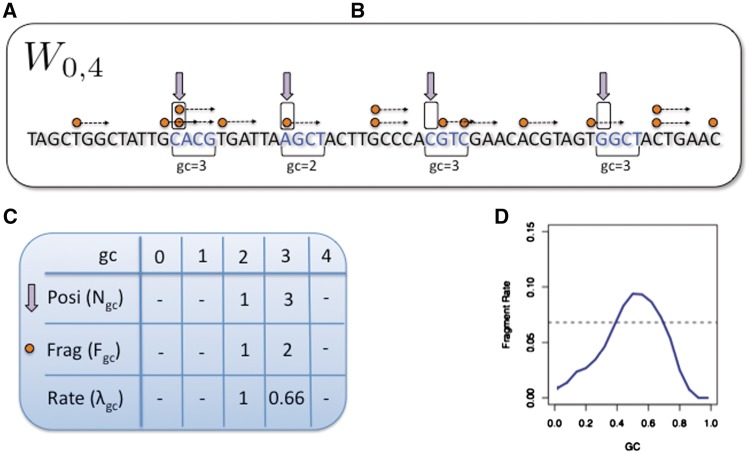
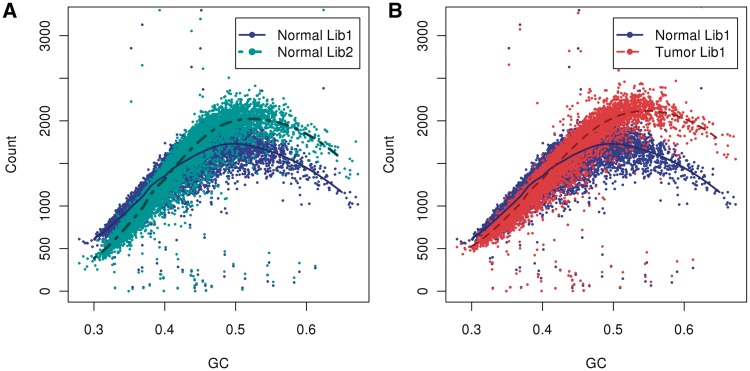
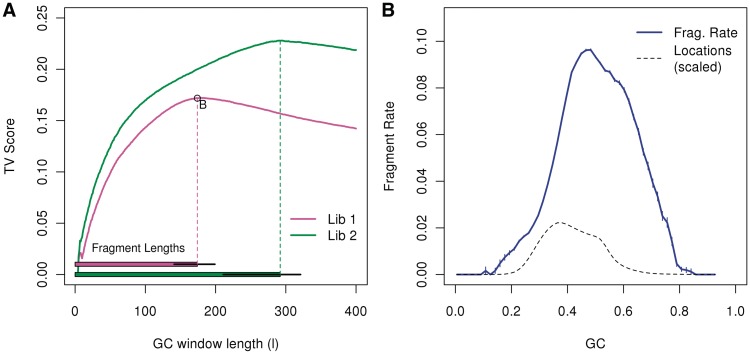
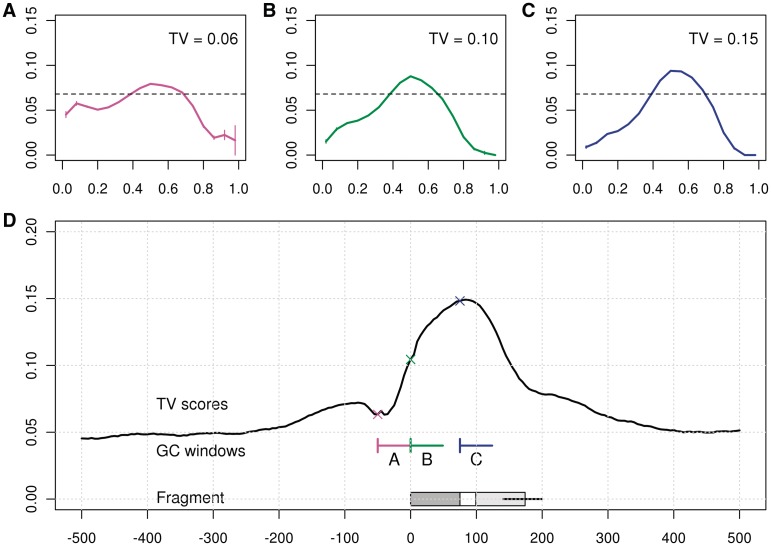
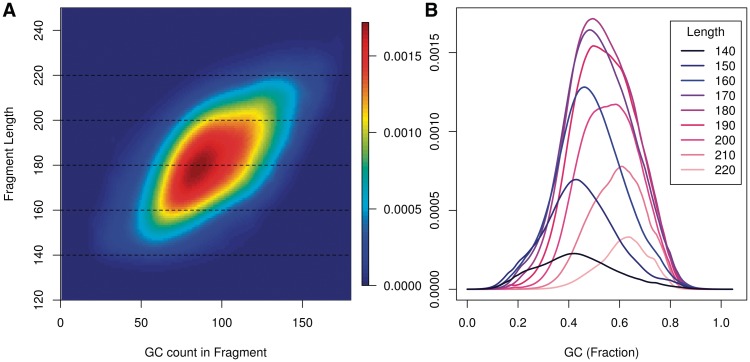
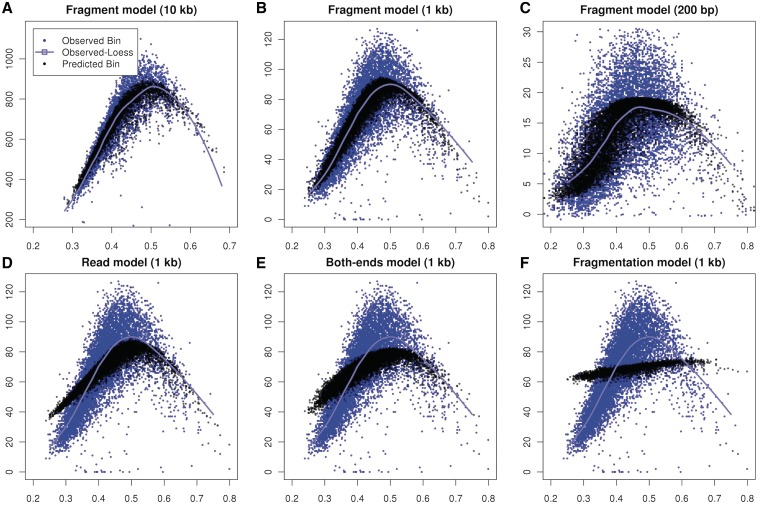
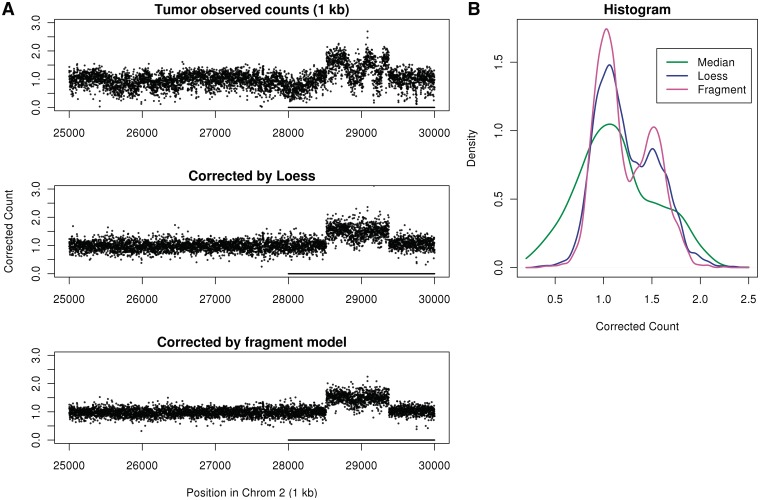
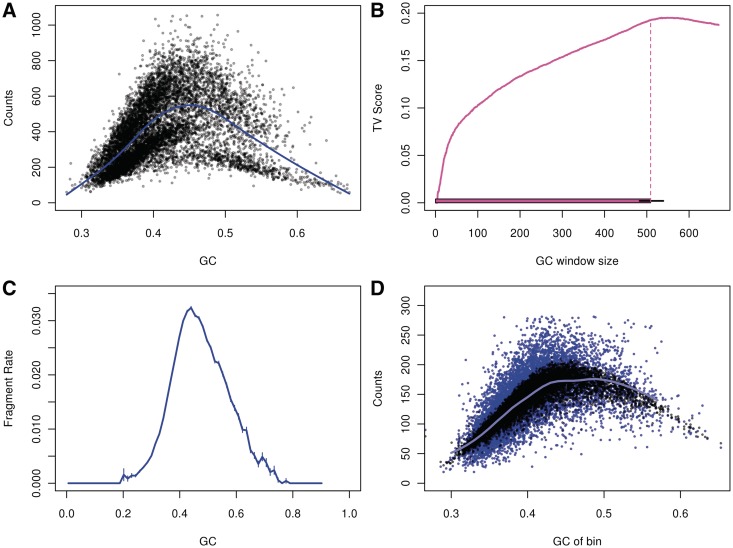
GC content bias describes the dependence between fragment count (read coverage) and GC content found in Illumina sequencing data. This bias can dominate the signal of interest for analyses that focus on measuring fragment abundance within a genome, such as copy number estimation (DNA-seq). The bias is not consistent between samples; and there is no consensus as to the best methods to remove it in a single sample. We analyze regularities in the GC bias patterns, and find a compact description for this unimodal curve family. It is the GC content of the full DNA fragment, not only the sequenced read, that most influences fragment count. This GC effect is unimodal: both GC-rich fragments and AT-rich fragments are underrepresented in the sequencing results. This empirical evidence strengthens the hypothesis that PCR is the most important cause of the GC bias. We propose a model that produces predictions at the base pair level, allowing strand-specific GC-effect correction regardless of the downstream smoothing or binning. These GC modeling considerations can inform other high-throughput sequencing analyses such as ChIP-seq and RNA-seq.
Overview
The claims and statistics of this paper haven’t been checked yet.
Free: it reads the open-access text and checks the first 5 claims that cite a source we can check. Create a free account to check every claim.
Integrity signals
Registry
Cites
Statistics
Figures
Verification
Claims the paper makes
The claims and statistics of this paper haven’t been checked yet.
Free: it reads the open-access text and checks the first 5 claims that cite a source we can check. Create a free account to check every claim.
Claims other papers make about this one
Each is checked against this paper’s own text: does it say what the citing paper says it does?
The source backs part of the claim, not all of it — or backs it for a different population, condition or comparison.
In the citing paper
“GC-bias was estimated for input chromatin samples using computeGCBias (Benjamini and Speed, 2012) from deepTools (Ramírez et al., 2014).”
From SALL4 controls cell fate in response to DNA base composition (2021) · cites this paper as Benjamini and Speed, 2012
Experimental — accuracy not yet measuredThe cited source says what the claim attributes to it.
In the citing paper
“Illumina sequencing was previously observed to have bias on GC-extreme sequences15,27,28, but GC content in our files did not show practically significant bias in the PCR GC bias test. Therefore, high-throughput sequencing and sample dilution are modeled using random sampling.”
From Quantifying Molecular Bias in DNA Data Storage (2019) · cites this paper as [28]
In the citing paper
“For DNA-seq, this bias is best corrected by modeling at the scale of the fragment21.”
From Modeling of RNA-seq fragment sequence bias reduces systematic errors in transcript abundance estimation (2016) · cites this paper as [21]
In the citing paper
“we confirmed other findings 21, that the GC content effect was often nonlinear and highly sample-specific, therefore requiring sample-specific bias estimation using smooth functions of fragment GC content.”
From Modeling of RNA-seq fragment sequence bias reduces systematic errors in transcript abundance estimation (2016) · cites this paper as [21]
Self-check
Percentages, sums and reported differences re-computed from the paper’s own numbers.
The self-check needs the paper’s full text.
Citations
Cites
Fast and accurate short read alignment with Burrows-Wheeler transform
Li, H., & Durbin, R. (2009) · Bioinformatics · doi:10.1093/bioinformatics/btp324 · Cited by 58,607
Ultrafast and memory-efficient alignment of short DNA sequences to the human genome.
Langmead, B., Trapnell, C., Pop, M., & Salzberg, S. L. (2009) · Genome Biology · doi:10.1186/gb-2009-10-3-r25 · Cited by 21,849
Accurate whole human genome sequencing using reversible terminator chemistry
Bentley, D. R., Balasubramanian, S., Swerdlow, H. P., Smith, G. P., Milton, J., Brown, C. G., Hall, K. P., Evers, D. J., Barnes, C. L., Bignell, H. R., et al. (2008) · Nature · doi:10.1038/nature07517 · Cited by 3,684
Probability: Theory and Examples.
Prewitt, K., & Durrett, R. (1992) · Journal of the American Statistical Association · doi:10.2307/2290301 · Cited by 3,085
Mapping short DNA sequencing reads and calling variants using mapping quality scores
Li, H., Ruan, J., & Durbin, R. (2008) · Genome Research · doi:10.1101/gr.078212.108 · Cited by 2,638
Analyzing and minimizing PCR amplification bias in Illumina sequencing libraries
Aird, D., Ross, M. G., Chen, W.-S., Danielsson, M., Fennell, T., Russ, C., Jaffe, D. B., Nusbaum, C., & Gnirke, A. (2011) · Genome Biology · doi:10.1186/gb-2011-12-2-r18 · Cited by 1,174
Substantial biases in ultra-short read data sets from high-throughput DNA sequencing
Dohm, J. C., Lottaz, C., Borodina, T., & Himmelbauer, H. (2008) · Nucleic Acids Research · doi:10.1093/nar/gkn425 · Cited by 1,088 · cited 2×
“(1), probably because GC-rich areas are rare (especially in simpler organisms).”
BackgroundProbability: Theory and Examples.
Durrett, R. (1993) · Biometrics · doi:10.2307/2532227 · Cited by 857
A large genome center's improvements to the Illumina sequencing system
Quail, M. A., Kozarewa, I., Smith, F., Scally, A., Stephens, P. J., Durbin, R., Swerdlow, H., & Turner, D. J. (2008) · Nature Methods · doi:10.1038/nmeth.1270 · Cited by 727
Biases in Illumina transcriptome sequencing caused by random hexamer priming
Hansen, K. D., Brenner, S. E., & Dudoit, S. (2010) · Nucleic Acids Research · doi:10.1093/nar/gkq224 · Cited by 713 · cited 1×
“Sequence-related biases in the priming (9), size selection (3), PCR (10) and probability of sequencing errors (11–13) have all been found.”
Background
Cited by
Items 301–400 of 1,001
Hackflex: low cost Illumina Nextera Flex sequencing library constructionPreprint
Gaio, D., Anantanawat, K., To, J., Liu, M., Monahan, L. G., & Darling, A. E. (2019) · bioRxiv (Cold Spring Harbor Laboratory) · doi:10.1101/779215 · Cited by 30
Donato, L., Scimone, C., Rinaldi, C., D’Angelo, R., & Sidoti, A. (2021) · Neural Computing and Applications · doi:10.1007/s00521-021-06188-z · Cited by 30
Majumder, P., Scharer, C. D., Choi, N. M., & Boss, J. M. (2014) · The Journal of Immunology · doi:10.4049/jimmunol.1303205 · Cited by 29
A robust targeted sequencing approach for low input and variable quality DNA from clinical samples
So, A. P., Vilborg, A., Bouhlal, Y., Koehler, R. T., Grimes, S. M., Pouliot, Y., Mendoza, D., Ziegle, J. S., Stein, J. B., Goodsaid, F. M., et al. (2018) · npj Genomic Medicine · doi:10.1038/s41525-017-0041-4 · Cited by 29
Liu, D., Qu, K., Yuan, Y., Zhao, Z., Chen, Y., Han, B., Li, W., El-Kassaby, Y. A., Yin, Y., Xie, X., et al. (2023) · Frontiers in Genetics · doi:10.3389/fgene.2022.1050040 · Cited by 29
Filtration and Normalization of Sequencing Read Data in Whole-Metagenome Shotgun Samples
Chouvarine, P., Wiehlmann, L., Losada, P. M., DeLuca, D. S., & Tümmler, B. (2016) · PLoS ONE · doi:10.1371/journal.pone.0165015 · Cited by 28
Degradation in forensic trace DNA samples explored by massively parallel sequencing
Hanssen, E. N., Lyle, R., Egeland, T., & Gill, P. (2017) · Forensic Science International Genetics · doi:10.1016/j.fsigen.2017.01.002 · Cited by 28
Langsjoen, R. M., Muruato, A. E., Kunkel, S. R., Jaworski, E. A., & Routh, A. L. (2020) · mBio · doi:10.1128/mbio.00731-20 · Cited by 28
Summarizing Specific Profiles in Illumina Sequencing from Whole-Genome Amplified DNA
Tsai, I. J., Hunt, M., Holroyd, N. E., Huckvale, T., Berriman, M., & Kikuchi, T. (2013) · DNA Research · doi:10.1093/dnares/dst054 · Cited by 28
Ren, J., Song, K., Deng, M., Reinert, G., Cannon, C. H., & Sun, F. (2015) · Bioinformatics · doi:10.1093/bioinformatics/btv395 · Cited by 28
The complete mitochondrial genome of Papilio glaucus and its phylogenetic implications
Shen, J., Cong, Q., & Grishin, N. V. (2015) · Meta Gene · doi:10.1016/j.mgene.2015.05.002 · Cited by 28
Genomic approaches to diagnose rare bone disorders
Falardeau, F., Camurri, M. V., & Campeau, P. M. (2016) · Bone · doi:10.1016/j.bone.2016.07.020 · Cited by 27
The quality and detection limits of mitochondrial heteroplasmy by long read nanopore sequencing
Slapnik, B., Šket, R., Črepinšek, K., Tesovnik, T., Bizjan, B. J., & Kovač, J. (2024) · Scientific Reports · doi:10.1038/s41598-024-78270-0 · Cited by 27
Transcriptomic analysis of early B-cell development in the chicken embryo
Nuthalapati, N., Evans, J. D., Taylor, R. L., Branton, S. L., Nanduri, B., & Pharr, G. T. (2019) · Poultry Science · doi:10.3382/ps/pez354 · Cited by 27
Meyer, T. D., Bady, P., Trooskens, G., Kurscheid, S., Bloch, J., Kros, J. M., Hainfellner, J. A., Stupp, R., Delorenzi, M., Hegi, M. E., et al. (2015) · Scientific Reports · doi:10.1038/srep15375 · Cited by 27
Shim, H., & Stephens, M. (2015) · The Annals of Applied Statistics · doi:10.1214/14-aoas776 · Cited by 27
Markham, J. F., Yerneni, S., Ryland, G. L., Leong, H. S., FELLOWES, A. P., Thompson, E. R., Silva, W. D., Kumar, A., Lupat, R., Li, J., et al. (2019) · Scientific Reports · doi:10.1038/s41598-019-42858-8 · Cited by 27
The Kernel Interaction Trick: Fast Bayesian Discovery of Pairwise Interactions in High DimensionsPreprint
Agrawal, R., Huggins, J. H., Trippe, B. L., & Broderick, T. (2019) · arXiv (Cornell University) · doi:10.48550/arxiv.1905.06501 · Cited by 27
Native RNA or cDNA Sequencing for Transcriptomic Analysis: A Case Study on Saccharomyces cerevisiae
Wongsurawat, T., Jenjaroenpun, P., Wanchai, V., & Nookaew, I. (2022) · Frontiers in Bioengineering and Biotechnology · doi:10.3389/fbioe.2022.842299 · Cited by 26
An integrative method to normalize RNA-Seq data
Filloux, C., Meersseman, C., Philippe, R., Forestier, L., Klopp, C., Rocha, D., Maftah, A. A., & Daniel, P. T. (2014) · BMC Bioinformatics · doi:10.1186/1471-2105-15-188 · Cited by 26
MetaGen: reference-free learning with multiple metagenomic samples
Xing, X., Liu, J. S., & Zhong, W. (2017) · Genome biology · doi:10.1186/s13059-017-1323-y · Cited by 26
Gu, J., Wang, X., Halakivi-Clarke, L., Clarke, R. C., & Xuan, J. (2014) · BMC Bioinformatics · doi:10.1186/1471-2105-15-s9-s6 · Cited by 26
Uelze, L., Borowiak, M., Bönn, M., Brinks, E., Deneke, C., Hankeln, T., Kleta, S., Murr, L., Stingl, K., Szabo, K., et al. (2020) · Frontiers in Microbiology · doi:10.3389/fmicb.2020.573972 · Cited by 26
Statistical Analysis of ChIP-seq Data with MOSAiCS
Sun, G., Chung, D., Liang, K., & Keleş, S. (2013) · Methods in molecular biology · doi:10.1007/978-1-62703-514-9_12 · Cited by 26
Monger, C., Kelly, P. S., Gallagher, C., CLYNES, M. M., Barron, N., & Clarke, C. (2015) · Biotechnology Journal · doi:10.1002/biot.201500107 · Cited by 25
Revisiting Rustrela Virus: New Cases of Encephalitis and a Solution to the Capsid Enigma
Pfaff, F., Breithaupt, A., Rubbenstroth, D., Nippert, S., Baumbach, C., Gerst, S., Langner, C., Wylezich, C., Ebinger, A., Höper, D. W., et al. (2022) · Microbiology Spectrum · doi:10.1128/spectrum.00103-22 · Cited by 25
Linthorst, J., Nivard, M. G., & Sistermans, E. A. (2024) · Cell Reports · doi:10.1016/j.celrep.2024.114799 · Cited by 25
Mapping-based genome size estimation
Natarajan, S., Gehrke, J., & Pucker, B. (2025) · BMC Genomics · doi:10.1186/s12864-025-11640-8 · Cited by 25
Guizard, S., Piégu, B., Arensburger, P., Guillou, F., & Bigot, Y. (2016) · BMC Genomics · doi:10.1186/s12864-016-3015-5 · Cited by 25
The complete mitochondrial genome of Lerema accius and its phylogenetic implications
Cong, Q., & Grishin, N. V. (2016) · PeerJ · doi:10.7717/peerj.1546 · Cited by 25
Guerra, D., Morcia, C., Badeck, F., Rizza, F., Delbono, S., Francia, E., Milc, J. A., Monostori, I., Galiba, G., Cattivelli, L., et al. (2021) · Theoretical and Applied Genetics · doi:10.1007/s00122-021-03985-x · Cited by 25
Chen, D., Zhen, H., Qiu, Y., Liu, P., Zeng, P., Xia, J., Shi, Q., Xie, L. Y., Zhu, Z., Gao, Y. M., et al. (2018) · Scientific Reports · doi:10.1038/s41598-018-23325-2 · Cited by 25
ICoVeR – an interactive visualization tool for verification and refinement of metagenomic bins
Broeksema, B., Całusińska, M., McGee, F., Winter, K., Bongiovanni, F., Goux, X., Wilmes, P., Delfosse, P., & Ghoniem, M. (2017) · BMC Bioinformatics · doi:10.1186/s12859-017-1653-5 · Cited by 24
Telomeres are shorter in wild Saccharomyces cerevisiae isolates than in domesticated ones
D’Angiolo, M., Yue, J., Chiara, M. D., Barré, B. P., Giraud-Panis, M.-J. E., Gilson, É., & Liti, G. (2022) · Genetics · doi:10.1093/genetics/iyac186 · Cited by 24
Hackflex: low cost Illumina sequencing library construction for high sample counts
Gaio, D., To, J., Liu, M., Monahan, L., Anantanawat, K., & Darling, A. E. (2019) · UTS ePRESS (University of Technology Sydney) · Cited by 24
TIGER: inferring DNA replication timing from whole-genome sequence data
Koren, A., Massey, D. J., & Bracci, A. N. (2021) · Bioinformatics · doi:10.1093/bioinformatics/btab166 · Cited by 24
Chow, E. Y., Lyu, K., Kwok, C. K., & Chan, T. (2020) · RNA Biology · doi:10.1080/15476286.2020.1740470 · Cited by 24
Martin, R. C., Vining, K. J., & Dombrowski, J. E. (2018) · BMC Plant Biology · doi:10.1186/s12870-018-1275-8 · Cited by 24
Qiu, P., Stevens, R. A., Wei, B., Lahser, F. C., Howe, A., Klappenbach, J. A., & Marton, M. J. (2015) · PLoS ONE · doi:10.1371/journal.pone.0122082 · Cited by 24
Highly accurate assembly polishing with DeepPolisher
Mastoras, M., Asri, M., Brambrink, L., Hebbar, P., Kolesnikov, A., Cook, D. E., Nattestad, M., Lucas, J., Won, S. T., Chang, P.-C., et al. (2025) · Genome Research · doi:10.1101/gr.280149.124 · Cited by 23
Hoang, N.-M., Liu, Y., Bates, P. D., Heaton, A. R., Lopez, A. F., Liu, P., Zhu, F., Chen, R., Kondapelli, A., Zhang, X., et al. (2024) · Cell Reports Medicine · doi:10.1016/j.xcrm.2024.101484 · Cited by 23
Framework for quality assessment of whole genome cancer sequences
Whalley, J. P., Buchhalter, I., Rheinbay, E., Raine, K. M., Kleinheinz, K., Stobbe, M. D., Werner, J., Beltrán, S., Gut, M., Hübschmann, D., et al. (2020) · Nature Communications · doi:10.1038/s41467-020-18688-y · Cited by 23
Epigenetic and chromosomal features drive transposon insertion inDrosophila melanogaster
Cao, J., Yu, T., Xu, B., Hu, Z., Zhang, X.-O., Theurkauf, W. E., & Weng, Z. (2023) · Nucleic Acids Research · doi:10.1093/nar/gkad054 · Cited by 23
A population-level invasion by transposable elements triggers genome expansion in a fungal pathogenPreprint
Oggenfuss, U., Badet, T., Wicker, T., Hartmann, F. E., Singh, N. K., Abraham, L., Karisto, P., Vonlanthen, T., Mundt, C. C., McDonald, B. A., et al. (2020) · bioRxiv (Cold Spring Harbor Laboratory) · doi:10.1101/2020.02.11.944652 · Cited by 23
Mastering methodological pitfalls for surviving the metagenomic jungle
Delmont, T. O., Simonet, P., & Vogel, T. M. (2013) · BioEssays · doi:10.1002/bies.201200155 · Cited by 23
Schmutzer, T., Ma, L., Pousarebani, N., Bull, F., Stein, N., Houben, A., & Scholz, U. (2013) · Cytogenetic and Genome Research · doi:10.1159/000356460 · Cited by 23
Bioinformatics analysis of circulating cell-free DNA sequencing data
Chan, L. L., & Jiang, P. (2015) · Clinical Biochemistry · doi:10.1016/j.clinbiochem.2015.04.022 · Cited by 23
Exome Sequencing from Nanogram Amounts of Starting DNA: Comparing Three Approaches
Rykalina, V. N., Shadrin, A. A., Amstislavskiy, V. S., Rogaev, E. I., Lehrach, H., & Borodina, T. A. (2014) · PLoS ONE · doi:10.1371/journal.pone.0101154 · Cited by 23
Genomic Outcomes of Haploid Induction Crosses in Potato ( Solanum tuberosum L.)
Amundson, K., Ordoñez, B., Santayana, M., Tan, E. H., Henry, I. M., Mihovilovich, E., Bonierbale, M., & Comai, L. (2020) · Genetics · doi:10.1534/genetics.119.302843 · Cited by 23
GC Content Across Insect Genomes: Phylogenetic Patterns, Causes and Consequences
Kyriacou, R. G., Mulhair, P. O., & Holland, P. W. H. (2024) · Journal of Molecular Evolution · doi:10.1007/s00239-024-10160-5 · Cited by 22
“In the most extreme cases, documented in gerbils and in birds, GC-rich regions of the genome have affected the ability to accurately sequence DNA, leading to erroneous reports of missing genes (Benjamini and Speed 2012; Hargreaves et al. 2017; Hron et al. 2015).”
BackgroundEtiology of Autism Spectrum Disorder: A Genomics Perspective
Connolly, J. J., & Hakonarson, H. H. (2014) · Current Psychiatry Reports · doi:10.1007/s11920-014-0501-9 · Cited by 22
Application of third-generation sequencing to herbal genomics
Gao, L., Xu, W., Xin, T., & Song, J. (2023) · Frontiers in Plant Science · doi:10.3389/fpls.2023.1124536 · Cited by 22
Evaluation of a high-throughput, cost-effective Illumina library preparation kit
Tvedte, E. S., Michalski, J. M., Cheng, S., Patkus, R. S., Tallon, L. J., Sadzewicz, L., Bruno, V. M., da Silva, J. C. F., Rasko, D. A., & Hotopp, J. C. D. (2021) · Scientific Reports · doi:10.1038/s41598-021-94911-0 · Cited by 22
Ramachandran, P., Palidwor, G., & Perkins, T. J. (2015) · Epigenetics & Chromatin · doi:10.1186/s13072-015-0028-2 · Cited by 22
Is this the right normalization? A diagnostic tool for ChIP-seq normalization
Angelini, C., Heller, R., Volkinshtein, R., & Yekutieli, D. (2015) · BMC Bioinformatics · doi:10.1186/s12859-015-0579-z · Cited by 22
De novo assembly of bacterial genomes with repetitive DNA regions by dnaasm application
Kuśmirek, W., & Nowak, R. M. (2018) · BMC Bioinformatics · doi:10.1186/s12859-018-2281-4 · Cited by 22
Behera, S., Belyeu, J. R., Chen, X., Paulin, L. F., Nguyen, N. Q. H., Newman, E., Mahmoud, M., Menon, V. K., Qi, Q., Joshi, P., et al. (2023) · doi:10.1101/2023.04.24.538128 · Cited by 21
Universal Count Correction for High-Throughput Sequencing
Hashimoto, T., Edwards, M. D., & Gifford, D. K. (2014) · PLoS Computational Biology · doi:10.1371/journal.pcbi.1003494 · Cited by 21
den Berge, K. V., Chou, H.-J., de Bézieux, H. R., Street, K., Risso, D., Ngai, J., & Dudoit, S. (2022) · Cell Reports Methods · doi:10.1016/j.crmeth.2022.100321 · Cited by 22
Höllbacher, B., Balázs, K., Heinig, M., & Uhlenhaut, N. H. (2020) · Computational and Structural Biotechnology Journal · doi:10.1016/j.csbj.2020.05.018 · Cited by 21
Behera, S., Belyeu, J. R., Chen, X., Paulin, L. F., Nguyen, N. Q., Newman, E., Mahmoud, M., Menon, V. K., Qi, Q., Joshi, P. H., et al. (2024) · BMC Medical Genomics · doi:10.1186/s12920-024-02024-0 · Cited by 21
Correcting signal biases and detecting regulatory elements in STARR-seq data
Kim, Y., Johnson, G. D., Seo, J., Barrera, A., Cowart, T., Majoros, W. H., Ochoa, A., Allen, A. S., & Reddy, T. E. (2021) · Genome Research · doi:10.1101/gr.269209.120 · Cited by 21
Soto‐Serrano, A., Li, W., Panah, F. M., Yan, H., Atienza, P., Fomenkov, A. I., Roberts, R. J., Deptula, P., & Krych, Ł. (2024) · Microbial Genomics · doi:10.1099/mgen.0.001316 · Cited by 21
Ivanov, M. V., Chernenko, P., Breder, V. V., Лактионов, К. К., Rozhavskaya, E., Musienko, S. V., Baranova, A. V., & Mileyko, V. (2019) · Frontiers in Genetics · doi:10.3389/fgene.2019.00194 · Cited by 21
Caruana, G., Farlie, P. G., Hart, A. H., Bagheri‐Fam, S., Wallace, M. J., Dobbie, M. S., Gordon, C. T., Miller, K. A., Whittle, B., Abud, H. E., et al. (2013) · PLoS ONE · doi:10.1371/journal.pone.0055429 · Cited by 21
Long, G. S., Hider, J., Duggan, A. T., Klunk, J., Eaton, K., Karpinski, E., Giuffra, V., Ventura, L., Prowse, T., Fornaciari, A., et al. (2023) · PLoS Pathogens · doi:10.1371/journal.ppat.1011538 · Cited by 21
Qu, K., Chen, Y., Liu, D., Guo, H., Xu, T., Qi, J., Ge, L., Shu, X., Xin, X., Xie, X., et al. (2024) · Plant Cell Reports · doi:10.1007/s00299-024-03232-9 · Cited by 21
PREFACE: In silico pipeline for accurate cell‐free fetal DNA fraction prediction
Raman, L., Baetens, M., Smet, M. D., Dheedene, A., Dorpe, J. V., & Menten, B. (2019) · Prenatal Diagnosis · doi:10.1002/pd.5508 · Cited by 21
Thung, D. T., Beulen, L., Hehir-Kwa, J., & Faas, B. H. (2015) · Expert Review of Molecular Diagnostics · doi:10.1586/14737159.2015.973857 · Cited by 20
“[81] proposed a further improved GC correction, based on a single-position GC-bias-correction model [82], which more accurately reflects PCR biases because it is not dependent on artificial bin sizes.”
BackgroundLee, H., Lee, B., Kim, D. G., Cho, Y. A., Kim, J.-S., & Suh, Y. (2021) · Cancer Research and Treatment · doi:10.4143/crt.2021.107 · Cited by 20
Evaluation of multiple displacement amplification for metagenomic analysis of low biomass samples
Ospino, M. C., Engel, K., Ruiz-Navas, S., Binns, W. J., Doxey, A. C., & Neufeld, J. D. (2024) · ISME Communications · doi:10.1093/ismeco/ycae024 · Cited by 20
Evaluating coverage bias in next-generation sequencing of Escherichia coli
Gunasekera, S., Abraham, S., Stegger, M., Pang, S., Wang, P., Sahibzada, S., & O’Dea, M. A. (2021) · PLoS ONE · doi:10.1371/journal.pone.0253440 · Cited by 21
Lee, T.-R., Ahn, J. M., Lee, J., Kim, D., Park, J., Jeong, B., Oh, D., Kim, S.-M., Jung, G. C., Choi, B. H., et al. (2025) · Cancer Research · doi:10.1158/0008-5472.can-24-1517 · Cited by 20
OccuPeak: ChIP-Seq Peak Calling Based on Internal Background Modelling
de Boer, B. A., van Duijvenboden, K., van den Boogaard, M., Christoffels, V. M., Barnett, P., & Ruijter, J. M. (2014) · PLoS ONE · doi:10.1371/journal.pone.0099844 · Cited by 20
Yu, Z., Du, F., Ban, R., & Zhang, Y. (2020) · BMC Bioinformatics · doi:10.1186/s12859-020-03665-5 · Cited by 20
Dou, X., Zhou, Z., & Zhao, L. (2021) · Genomics · doi:10.1016/j.ygeno.2021.08.019 · Cited by 20
‘COV’COP’ allows to detect CNVs responsible for inherited diseases among amplicons sequencing data
Derouault, P., Parfait, B., Moulinas, R., Barrot, C.-C., Sturtz, F. G., Mérillou, S., & Lia, A. (2017) · Bioinformatics · doi:10.1093/bioinformatics/btx017 · Cited by 20
The clinical implementation of copy number detection in the age of next-generation sequencing
Hehir‐Kwa, J. Y., Tops, B. B. J., & Kemmeren, P. (2018) · Expert Review of Molecular Diagnostics · doi:10.1080/14737159.2018.1523723 · Cited by 19
Findings made in gene panel to whole genome sequencing: data, knowledge, ethics – and consequences?
Winkler, E. C., & Wiemann, S. (2016) · Expert Review of Molecular Diagnostics · doi:10.1080/14737159.2016.1212662 · Cited by 19
ReSeq simulates realistic Illumina high-throughput sequencing data
Schmeing, S., & Robinson, M. D. (2021) · Genome biology · doi:10.1186/s13059-021-02265-7 · Cited by 19
Comparative studies of differential gene calling using RNA-Seq data
Zheng, X., & Moriyama, E. N. (2013) · BMC Bioinformatics · doi:10.1186/1471-2105-14-s13-s7 · Cited by 19
Soto, J. A., Rodríguez‐Antolín, C., Vera, O., Pernía, O., Esteban‐Rodríguez, I., Diestro, M. D., Benitez, J. J., Sánchez‐Cabo, F., Álvarez-Gallego, R., de Castro, J., et al. (2021) · Clinical Epigenetics · doi:10.1186/s13148-021-01149-8 · Cited by 19
Copy number polymorphisms near SLC2A9 are associated with serum uric acid concentrations
Scharpf, R. B., Mireles, L., Yang, Q., Köttgen, A., Ruczinski, I., Suszták, K., Halper‐Stromberg, E., Tin, A., Cristiano, S., Chakravarti, A., et al. (2014) · BMC Genetics · doi:10.1186/1471-2156-15-81 · Cited by 19
Stelzer, C., Blommaert, J., Waldvogel, A., Pichler, M., Hecox-Lea, B. J., & Welch, D. (2021) · BMC Biology · doi:10.1186/s12915-021-01134-w · Cited by 19
Common distal elements orchestrate CIITA isoform-specific expression in multiple cell types
Lohsen, S., Majumder, P., Scharer, C. D., Barwick, B. G., Austin, J. W., Zinzow-Kramer, W. M., & Boss, J. M. (2014) · Genes and Immunity · doi:10.1038/gene.2014.49 · Cited by 19
Flynn, J. M., Lower, S. E., Barbash, D. A., & Clark, A. G. (2018) · Genome Biology and Evolution · doi:10.1093/gbe/evy123 · Cited by 19
Giese, S. H., Zickmann, F., & Renard, B. Y. (2013) · Bioinformatics · doi:10.1093/bioinformatics/btt255 · Cited by 19
Sources of variation in cell-type RNA-Seq profiles
Gustafsson, J., Held, F., Robinson, J. L., Björnson, E., Jörnsten, R. J., & Nielsen, J. (2020) · PLoS ONE · doi:10.1371/journal.pone.0239495 · Cited by 19
Mitochondrial heteroplasmy is responsible for Atovaquone drug resistance in Plasmodium falciparumPreprint
Siegel, S. V., Rivero, A., Adapa, S. R., Wang, C. C. Q., Manetsch, R., Jiang, R. H. Y., & Kyle, D. E. (2017) · bioRxiv (Cold Spring Harbor Laboratory) · doi:10.1101/232033 · Cited by 19
Sequencing refractory regions in bird genomes are hotspots for accelerated protein evolution
Huttener, R., Thorrez, L., Veld, T. I., Granvik, M., Lommel, L. V., Waelkens, E., Derua, R., Lemaire, K., Goyvaerts, L., Coster, S. D., et al. (2021) · BMC Ecology and Evolution · doi:10.1186/s12862-021-01905-7 · Cited by 18
Laks, E., Zahn, H., Lai, D., McPherson, A., Steif, A., Brimhall, J., Biele, J., Wang, B., Masud, T., Grewal, D. S., et al. (2018) · bioRxiv (Cold Spring Harbor Laboratory) · doi:10.1101/411058 · Cited by 18
Hijikata, A., Suyama, M., Kikugawa, S., Matoba, R., Naruto, T., Enomoto, Y., Kurosawa, K., Harada, N., Yanagi, K., Kaname, T., et al. (2023) · Nucleic Acids Research · doi:10.1093/nar/gkad1140 · Cited by 18
Random Peptides Rich in Small and Disorder-Promoting Amino Acids Are Less Likely to Be Harmful
Kosinski, L., Aviles, N., Gómez, K., & Masel, J. (2022) · Genome Biology and Evolution · doi:10.1093/gbe/evac085 · Cited by 18
The Nubeam reference-free approach to analyze metagenomic sequencing reads
Dai, H., & Guan, Y. (2020) · Genome Research · doi:10.1101/gr.261750.120 · Cited by 18
Smith, B., Neff, R. T., Cohn, D. E., Backes, F. J., Suarez, A. A., Mutch, D. G., Rush, C. M., Walker, C. J., & Goodfellow, P. J. (2016) · Gynecologic Oncology · doi:10.1016/j.ygyno.2016.08.237 · Cited by 18
PopDel identifies medium-size deletions simultaneously in tens of thousands of genomes
Niehus, S., Jónsson, H., Schönberger, J., Björnsson, E., Beyter, D., Eggertsson, H. P., Sulem, P., Stefánsson, K., Halldórsson, B. V., & Kehr, B. (2021) · Nature Communications · doi:10.1038/s41467-020-20850-5 · Cited by 18
Adaptive bandwidth kernel density estimation for next-generation sequencing data
Ramachandran, P., & Perkins, T. J. (2013) · BMC Proceedings · doi:10.1186/1753-6561-7-s7-s7 · Cited by 18
Jiang, J., Chen, L., Chen, X., Li, P., Xu, X., Fowler, V. G., van Duin, D., & Wang, M. (2022) · Microbiology Spectrum · doi:10.1128/spectrum.01000-22 · Cited by 18
A Deep-Learning Pipeline for TSS Coverage Imputation From Shallow Cell-Free DNA Sequencing
Han, B., Yang, X., Qu, S., Guo, Z., Huang, L., Li, K., Ouyang, G., Cai, G., Xiao, W., Weng, R., et al. (2021) · Frontiers in Medicine · doi:10.3389/fmed.2021.684238 · Cited by 18
Neglected no longer: Phylogenomic resolution of higher-level relationships in Solifugae
Kulkarni, S., Steiner, H. G., Garcia, E. L., Iuri, H. A., Jones, R. R., Ballesteros, J. A., Gainett, G., Graham, M. R., Harms, D., Lyle, R., et al. (2023) · iScience · doi:10.1016/j.isci.2023.107684 · Cited by 18
Metadata
- Authors
- Benjamini, Y., & Speed, T. P.
- Affiliations
- Walter and Eliza Hall Institute of Medical Research (AU)
- Corresponding author
- Benjamini, Yuval
- Speed, Terence P.
- Venue
- Nucleic Acids Research
- Publisher
- Oxford University Press (OUP)
- Published
- 2012-02-09
- Volume
- 40
- Issue
- 10
- Pages
- e72-e72
- ISSN
- 0305-1048 (ISSN-L)
- 1362-4962
- PMC
- PMC3378858
- OpenAlex
- W2018604728
- Cited by
- 913
- References
- 21
- Citations by year
- 2026: 52 · 2025: 57 · 2024: 69 · 2023: 47 · 2022: 63 · 2021: 84 · 2020: 74 · 2019: 73 · 2018: 83 · 2017: 69 · 2016: 52 · 2015: 60 · 2014: 72 · 2013: 47 · 2012: 10
- FWCI
- 24.27
- Type
- journal article
- Language
- en
- Open access
- gold
- doi.org
- Licence
- Locations
- Nucleic Acids Research (publishedVersion, cc-by-nc)
- PubMed Central (publishedVersion, cc-by-nc)
- PubMed (publishedVersion)
- Minerva Access (University of Melbourne) (submittedVersion, cc-by-nc)
- HighWire Press Open Archive (submittedVersion)
- Funders
- National Science Foundation
- National Institutes of Health
- National Cancer Institute (U24CA143799)
- National Institute of General Medical Sciences (R01GM083084)
- Topics
- Life Sciences › Biochemistry, Genetics and Molecular Biology › Molecular Biology › Genomics and Phylogenetic Studies
- Life Sciences › Biochemistry, Genetics and Molecular Biology › Molecular Biology › Gene expression and cancer classification
- Life Sciences › Biochemistry, Genetics and Molecular Biology › Molecular Biology › Fractal and DNA sequence analysis
- Keywords
- GC content bias, read coverage, DNA sequencing, copy number estimation, PCR bias, ChIP-seq, RNA-seq
- MeSH terms
- Base Composition, DNA, Humans, Models, Genetic, Genome, Human, Poisson Distribution, Sequence Analysis, DNA, High-Throughput Nucleotide Sequencing
About these checks
Registry, retraction, Cites and statistics results are computed, not judged, with one exception: a printed reference that no index lists is read once by a model before it counts as a citation error. Claims are extracted by a model and kept only when their quote appears verbatim in the text; each cited source is then checked, with a model’s help, for whether it says what the claim relies on. Those verdicts can be wrong — read the claim’s quote and the cited source before relying on one.
Statistics and arithmetic are recomputed, not judged.
Confidence bands are shown only for fields calibrated on our annotated test set. None is calibrated yet, so no band is shown.
What counts as a claim ›How we measure confidence ›How we check this ›
Are you an author, or do you see a problem with this page? Request a review
Data sources
Bibliographic data: Semantic Scholar, OpenAlex, Crossref.
Contains information from the Semantic Scholar Academic Graph Datasets, made available under the ODC Attribution License (ODC-BY 1.0).
Semantic Scholar’s data is described in: Kinney, R., et al. (2023). The Semantic Scholar Open Data Platform. arXiv:2301.10140.
