

Summarizing and correcting the GC content bias in high-throughput sequencing
Open accessThe DOI matches its Crossref record; 21 of the 21 references it cites were found in a registry or an index.
Abstract
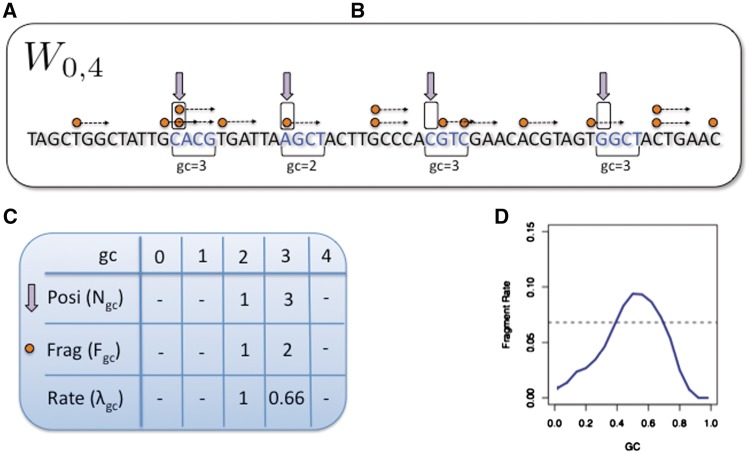
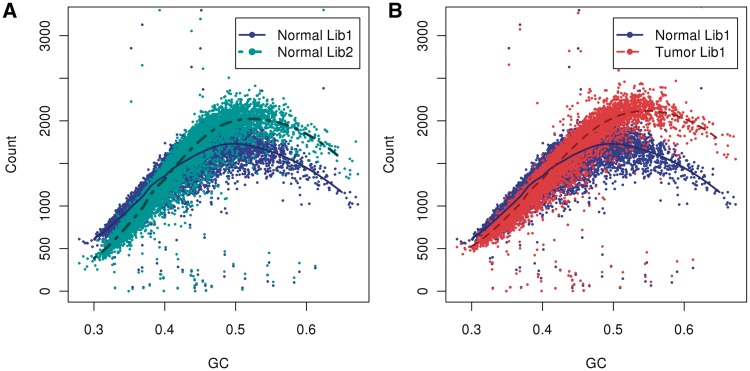
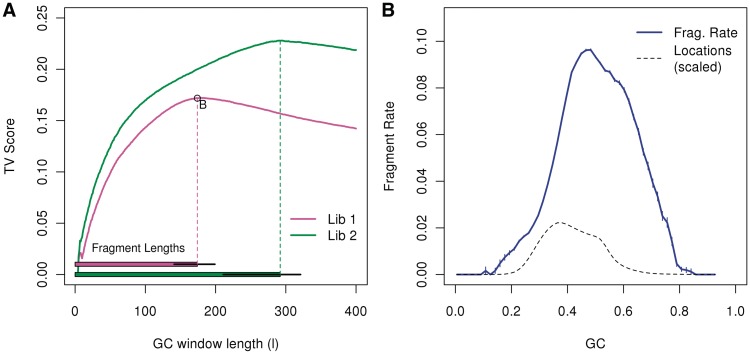
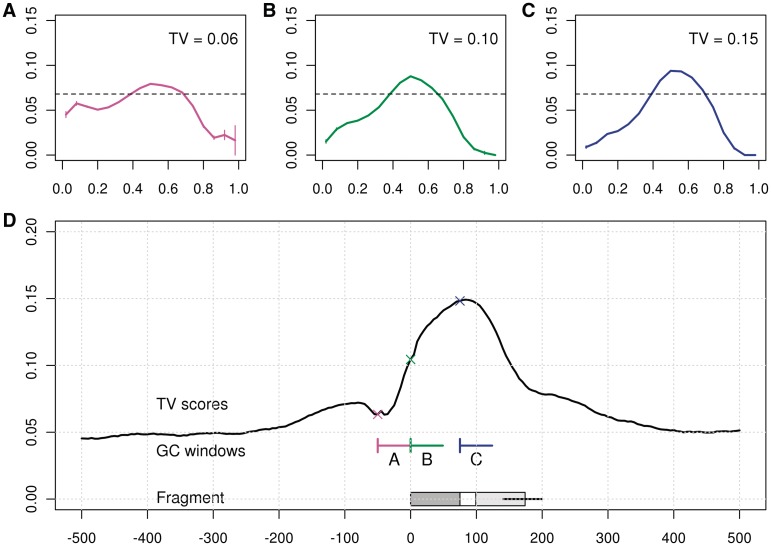
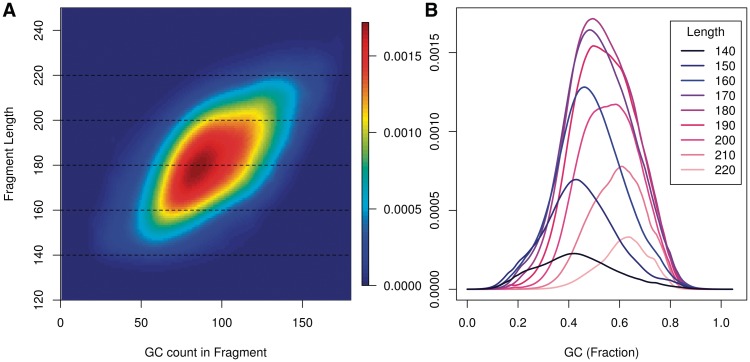
GC content bias describes the dependence between fragment count (read coverage) and GC content found in Illumina sequencing data. This bias can dominate the signal of interest for analyses that focus on measuring fragment abundance within a genome, such as copy number estimation (DNA-seq). The bias is not consistent between samples; and there is no consensus as to the best methods to remove it in a single sample. We analyze regularities in the GC bias patterns, and find a compact description for this unimodal curve family. It is the GC content of the full DNA fragment, not only the sequenced read, that most influences fragment count. This GC effect is unimodal: both GC-rich fragments and AT-rich fragments are underrepresented in the sequencing results. This empirical evidence strengthens the hypothesis that PCR is the most important cause of the GC bias. We propose a model that produces predictions at the base pair level, allowing strand-specific GC-effect correction regardless of the downstream smoothing or binning. These GC modeling considerations can inform other high-throughput sequencing analyses such as ChIP-seq and RNA-seq.
Overview
The claims and statistics of this paper haven’t been checked yet.
Free: it reads the open-access text and checks the first 5 claims that cite a source we can check. Create a free account to check every claim.
Integrity signals
Registry
Cites
Statistics
Figures
Verification
Claims the paper makes
The claims and statistics of this paper haven’t been checked yet.
Free: it reads the open-access text and checks the first 5 claims that cite a source we can check. Create a free account to check every claim.
Claims other papers make about this one
Each is checked against this paper’s own text: does it say what the citing paper says it does?
The source backs part of the claim, not all of it — or backs it for a different population, condition or comparison.
In the citing paper
“GC-bias was estimated for input chromatin samples using computeGCBias (Benjamini and Speed, 2012) from deepTools (Ramírez et al., 2014).”
From SALL4 controls cell fate in response to DNA base composition (2021) · cites this paper as Benjamini and Speed, 2012
Experimental — accuracy not yet measuredThe cited source says what the claim attributes to it.
In the citing paper
“Illumina sequencing was previously observed to have bias on GC-extreme sequences15,27,28, but GC content in our files did not show practically significant bias in the PCR GC bias test. Therefore, high-throughput sequencing and sample dilution are modeled using random sampling.”
From Quantifying Molecular Bias in DNA Data Storage (2019) · cites this paper as [28]
In the citing paper
“For DNA-seq, this bias is best corrected by modeling at the scale of the fragment21.”
From Modeling of RNA-seq fragment sequence bias reduces systematic errors in transcript abundance estimation (2016) · cites this paper as [21]
In the citing paper
“we confirmed other findings 21, that the GC content effect was often nonlinear and highly sample-specific, therefore requiring sample-specific bias estimation using smooth functions of fragment GC content.”
From Modeling of RNA-seq fragment sequence bias reduces systematic errors in transcript abundance estimation (2016) · cites this paper as [21]
Self-check
Percentages, sums and reported differences re-computed from the paper’s own numbers.
The self-check needs the paper’s full text.
Citations
Cites
Fast and accurate short read alignment with Burrows-Wheeler transform
Li, H., & Durbin, R. (2009) · Bioinformatics · doi:10.1093/bioinformatics/btp324 · Cited by 58,607
Ultrafast and memory-efficient alignment of short DNA sequences to the human genome.
Langmead, B., Trapnell, C., Pop, M., & Salzberg, S. L. (2009) · Genome Biology · doi:10.1186/gb-2009-10-3-r25 · Cited by 21,849
Accurate whole human genome sequencing using reversible terminator chemistry
Bentley, D. R., Balasubramanian, S., Swerdlow, H. P., Smith, G. P., Milton, J., Brown, C. G., Hall, K. P., Evers, D. J., Barnes, C. L., Bignell, H. R., et al. (2008) · Nature · doi:10.1038/nature07517 · Cited by 3,684
Probability: Theory and Examples.
Prewitt, K., & Durrett, R. (1992) · Journal of the American Statistical Association · doi:10.2307/2290301 · Cited by 3,085
Mapping short DNA sequencing reads and calling variants using mapping quality scores
Li, H., Ruan, J., & Durbin, R. (2008) · Genome Research · doi:10.1101/gr.078212.108 · Cited by 2,638
Analyzing and minimizing PCR amplification bias in Illumina sequencing libraries
Aird, D., Ross, M. G., Chen, W.-S., Danielsson, M., Fennell, T., Russ, C., Jaffe, D. B., Nusbaum, C., & Gnirke, A. (2011) · Genome Biology · doi:10.1186/gb-2011-12-2-r18 · Cited by 1,174
Substantial biases in ultra-short read data sets from high-throughput DNA sequencing
Dohm, J. C., Lottaz, C., Borodina, T., & Himmelbauer, H. (2008) · Nucleic Acids Research · doi:10.1093/nar/gkn425 · Cited by 1,088 · cited 2×
“(1), probably because GC-rich areas are rare (especially in simpler organisms).”
BackgroundProbability: Theory and Examples.
Durrett, R. (1993) · Biometrics · doi:10.2307/2532227 · Cited by 857
A large genome center's improvements to the Illumina sequencing system
Quail, M. A., Kozarewa, I., Smith, F., Scally, A., Stephens, P. J., Durbin, R., Swerdlow, H., & Turner, D. J. (2008) · Nature Methods · doi:10.1038/nmeth.1270 · Cited by 727
Biases in Illumina transcriptome sequencing caused by random hexamer priming
Hansen, K. D., Brenner, S. E., & Dudoit, S. (2010) · Nucleic Acids Research · doi:10.1093/nar/gkq224 · Cited by 713 · cited 1×
“Sequence-related biases in the priming (9), size selection (3), PCR (10) and probability of sequencing errors (11–13) have all been found.”
Background
Cited by
Items 601–700 of 1,001
Using controls to limit false discovery in the era of big data
Parks, M., Raphael, B. J., & Lawrence, C. E. (2018) · BMC Bioinformatics · doi:10.1186/s12859-018-2356-2 · Cited by 5
Potdar, P., Pinto, P., D’Souza, N., Joshi, P., Malwade, A., & Sen, S. (2018) · Protist · doi:10.1016/j.protis.2018.06.006 · Cited by 5
Filer, D. L., Kuo, F., Brandt, A., Tilley, C. R., Mieczkowski, P. A., Berg, J. S., Robasky, K., Li, Y., Bizon, C., Tilson, J. L., et al. (2021) · BMC Bioinformatics · doi:10.1186/s12859-021-04246-w · Cited by 5
Leibar-Porcel, E. (2020) · Lancaster EPrints (Lancaster University) · doi:10.17635/lancaster/thesis/832 · Cited by 5
Étude topologique du flot horocyclique : le cas des surfaces géométriquement infinies
Bellis, A. (2018) · theses.fr (ABES) · doi:10.70675/b7770ca6z45f0z4ce4z9251z9df6cfa8cfeb · Cited by 5
Ishihara, S., Kotomura, N., Yamamoto, N., & Ochiai, H. (2017) · Analytical Biochemistry · doi:10.1016/j.ab.2017.05.011 · Cited by 5
Variational nonparametric discriminant analysis
Yu, W., Azizi, L., & Ormerod, J. T. (2019) · Computational Statistics & Data Analysis · doi:10.1016/j.csda.2019.106817 · Cited by 5
Allan, J., Fraser, R. M., Owen‐Hughes, T., Docherty, K., & Singh, V. (2013) · Journal of Molecular Biology · doi:10.1016/j.jmb.2013.07.019 · Cited by 5
[Letter to the Editor] Replication Timing Influences DNA Copy Number Determination by Array-CGH
Manukjan, G., Tauscher, M., & Steinemann, D. (2013) · BioTechniques · doi:10.2144/000114097 · Cited by 5
Integrated Computational Pipeline for Single-Cell Genomic Profiling
Chorbadjiev, L., Kendall, J., Alexander, J., Zhygulin, V., Song, J., Wigler, M. H., & Krasnitz, A. (2020) · JCO Clinical Cancer Informatics · doi:10.1200/cci.19.00171 · Cited by 4
varAmpliCNV: analyzing variance of amplicons to detect CNVs in targeted NGS data
Kumar, A. A., Loeys, B., van de Beek, G., Peeters, N., Wuyts, W. A., Laer, L. V., Vandeweyer, G., & Alaerts, M. (2022) · Bioinformatics · doi:10.1093/bioinformatics/btac756 · Cited by 4
Su, Q., Long, Y., Gou, D., Quan, J., & Lian, Q. (2024) · BMC Genomics · doi:10.1186/s12864-024-10814-0 · Cited by 4
Prakash, C., & von Haeseler, A. (2016) · Journal of Computational Biology · doi:10.1089/cmb.2016.0096 · Cited by 4
Zhang, T., Dong, J., Jiang, H., Zhao, Z., Zhou, M., & Yuan, T. (2022) · Frontiers in Bioengineering and Biotechnology · doi:10.3389/fbioe.2022.1000638 · Cited by 4
A Review of Probe-Based Enrichment Methods to Inform Plant Virus Diagnostics
Farrall, T., Brawner, J. T., Dinsdale, A., & Kehoe, M. A. (2024) · International Journal of Molecular Sciences · doi:10.3390/ijms25158348 · Cited by 4
Cantin, L. J., Hotopp, J. C. D., & Foster, J. M. (2024) · Frontiers in Microbiology · doi:10.3389/fmicb.2024.1352378 · Cited by 4
Ldb1 mediates trans enhancement in mammalsPreprint
Monahan, K., Horta, A., Mumbay-Wafula, A. M., Li, L., Zhao, Y., Love, P. E., & Lomvardas, S. (2018) · bioRxiv (Cold Spring Harbor Laboratory) · doi:10.1101/287524 · Cited by 4
Essential Elements for Establishing Clinical Next-generation Sequencing Testing
Park, K., Lee, W., Chun, S., & Min, W. (2019) · Laboratory Medicine Online · doi:10.3343/lmo.2019.9.2.37 · Cited by 4
Shi, T., Gao, Z., Zhang, Y., Rausher, M. D., & Chen, J. (2025) · Molecular Ecology Resources · doi:10.1111/1755-0998.14080 · Cited by 4
Sarangi, P., Kumar, N., Sambasivan, R., Ramalingam, S., Amit, S., Chandra, D., & Jayandharan, G. R. (2024) · Thrombosis Research · doi:10.1016/j.thromres.2024.04.031 · Cited by 4
Ribosomal DNA copy number variation shapes human physiology and disease riskPreprint
Raj, A., Brown, J., Thayer, N. H., Hotz, M., Lam, I., Fong, N. L., Sorokin, E. P., Thanaj, M., Rothschild, D., Pritchard, J. K., et al. (2026) · Research Square · doi:10.21203/rs.3.rs-8547638/v1 · Cited by 4
Sørensen, N., Daugbjerg, N., Richardson, K., Nørregaard, R. D., Espersen, L., Møhl, M., & Nielsen, T. G. (2016) · Polar Biology · doi:10.1007/s00300-016-1952-8 · Cited by 4
Illuminating the mystery of thylacine extinction: a role for relaxed selection and gene loss
Salve, B. G., & Vijay, N. (2025) · Proceedings of the Royal Society B Biological Sciences · doi:10.1098/rspb.2025.1339 · Cited by 4
Naranjo-Ortíz, M. A., Molina, M., Fuentes, D., Mixão, V., & Gabaldón, T. (2022) · GigaScience · doi:10.1093/gigascience/giac088 · Cited by 4
Read Depth Analysis to Identify CNV in Bacteria Using CNOGpro
Brynildsrud, O. B. (2018) · Methods in molecular biology · doi:10.1007/978-1-4939-8666-8_5 · Cited by 4
Dominelli, N., Jäger, H. Y., Langer, A., Brachmann, A., & Heermann, R. (2022) · Annals of Microbiology · doi:10.1186/s13213-022-01677-5 · Cited by 4
ClearCNV: CNV calling from NGS panel data in the presence of ambiguity and noise
May, V., Koch, L. A., Fischer‐Zirnsak, B., Horn, D., Gehle, P., Kornak, U., Beule, D., & Holtgrewe, M. (2022) · Bioinformatics · doi:10.1093/bioinformatics/btac418 · Cited by 4
Wang, J., Lu, C., & Wei, S. (2022) · G3 Genes Genomes Genetics · doi:10.1093/g3journal/jkac037 · Cited by 4
KIM, D.-Y., Cho, E., Kim, J. S., Chie, E. K., & Kang, H. (2023) · In Vivo · doi:10.21873/invivo.13333 · Cited by 4
Daley, T., & Smith, A. D. (2016) · arXiv (Cornell University) · doi:10.48550/arxiv.1605.03294 · Cited by 3
Detecting and Analyzing Genomic Structural Variation Using Distributed Computing
Whelan, C. W. (2014) · doi:10.6083/m43x85c3 · Cited by 3
RNA-Seq Analysis of Trans-Differentiated ARPE-19 Cells Transduced by AAV9-AIPL1 Vectors
Galieva, A., Egorov, A. D., Malogolovkin, A. S., Brovin, A. N., & Karabelsky, A. V. (2023) · International Journal of Molecular Sciences · doi:10.3390/ijms25010197 · Cited by 3
Nazaretyan, L., & Kircher, M. (2026) · Trends in Genetics · doi:10.1016/j.tig.2026.02.007 · Cited by 3
Best practices in designing, sequencing and identifying random DNA barcodesPreprint
Johnson, M. S., Venkataram, S., & Kryazhimskiy, S. (2022) · EcoEvoRxiv · doi:10.32942/osf.io/t58xw · Cited by 3
Li, R., & Ernst, J. (2025) · Genome biology · doi:10.1186/s13059-025-03619-1 · Cited by 3
Increased taxon sampling reveals thousands of hidden orthologs in flatwormsPreprint
Martín-Durán, J. M., Ryan, J. F., Vellutini, B. C., Pang, K., & Hejnol, A. (2016) · bioRxiv (Cold Spring Harbor Laboratory) · doi:10.1101/050724 · Cited by 3
The structure of microbial communities in redoximorphic microsites of Gleysol
Samoilova, E., Tejnecký, V., Kopecký, J., Drábek, O., Šťovíček, A., Vokurková, P., Rapoport, D., Němeček, K., Burešová, A., Choteborsky, R., et al. (2023) · European Journal of Soil Science · doi:10.1111/ejss.13369 · Cited by 3
Ahmad, T., Keşküş, A. G., Aganezov, S. S., Goretsky, A., Rodriguez, I., Yoo, B., Lansdon, L. A., Repnikova, E. A., Zhang, L., Liu, Y., et al. (2025) · medRxiv · doi:10.64898/2025.12.11.25342098 · Cited by 3
Evolution of Organic Solvent-Resistant DNA Polymerases
Elias, M., Guan, X., Hudson, D., Bose, R., Kwak, J., Petrounia, I. P., Touah, K., Mansour, S., Peng, Y., Errasti, G., et al. (2023) · ACS Synthetic Biology · doi:10.1021/acssynbio.2c00515 · Cited by 3
Jourdain, L., Rossi, P., Charpagne, A., Chevalier, E., Praz, V., Marquis, J., Weber, J., & Gu, W. (2026) · Molecular Ecology Resources · doi:10.1111/1755-0998.70138 · Cited by 3
Burger, L., Gil, N., & Schübeler, D. (2025) · bioRxiv (Cold Spring Harbor Laboratory) · doi:10.1101/2025.08.11.669605 · Cited by 3
Genotyping Error Detection and Customised Filtration for SNP Datasets
Kan‐Lingwood, N. Y., Sagi, L., Mazie, S., Shahar, N., Bitton, L. Z., Templeton, A. R., Rubenstein, D. I., Bouskila, A., & Bar‐David, S. (2024) · Molecular Ecology Resources · doi:10.1111/1755-0998.14033 · Cited by 3
A censored‐Poisson model based approach to the analysis of RNA‐seq data
Chen, X., & Lai, Y. (2020) · Quantitative Biology · doi:10.1007/s40484-020-0208-3 · Cited by 3
ПЦР-анализ специфичной к последовательности ультразвуковой фрагментации ДНК
Гарафутдинов, Р. Р., Galimova, A. A., Sakhabutdinova, A. R., & Chemeris, A. V. (2016) · Molecular Biology · doi:10.7868/s0026898416020051 · Cited by 3
Fenstermacher, K., Achuthan, V., Schneider, T. D., & DeStefano, J. J. (2018) · Journal of Bacteriology · doi:10.1128/jb.00579-17 · Cited by 3
Copy number variation detection workflow using next generation sequencing data
Dharanipragada, P., & Parekh, N. (2016) · International Conference on Bioinformatics and Systems Biology (BSB) · doi:10.1109/bsb.2016.7552117 · Cited by 3
Lorente-Bermúdez, R., Pan-Lizcano, R., Núñez, L., Vázquez, D. L., Rebollal-Leal, F., Vázquez‐Rodríguez, J. M., & Hermida‐Prieto, M. (2024) · International Journal of Molecular Sciences · doi:10.3390/ijms25052548 · Cited by 3
Noise cancellation for robust copy number variation detection using next generation sequencing data
Zare, F., Ansari, S., Najarian, K., & Nabavi, S. (2017) · IEEE International Conference on Bioinformatics and Biomedicine (BIBM) · doi:10.1109/bibm.2017.8217654 · Cited by 3
Harmanci, A. O., Harmanci, A. O., Swaminathan, J., & Gopalakrishnan, V. (2019) · Bioinformatics · doi:10.1093/bioinformatics/btz702 · Cited by 3
The effects of bioinformatics preprocessing on cell-free DNA fragment analysis
Ivanković, I., Balázs, Z., Gitchev, T., Trottet, C., Moldován, N., Bahce, I., Mouliere, F. C., & Krauthammer, M. O. (2025) · GigaScience · doi:10.1093/gigascience/giaf139 · Cited by 3
CLnc-Pred: A Machine Learning Approach to Predict Long Non-Coding RNAs in Crops
Choubisa, B. K., Sharma, A., Sharma, N. K., Farooqi, M. S., Mishra, D. C., Chaturvedi, K. K., Lal, S. B., Arora, A., & Jha, G. K. (2026) · Current Genomics · doi:10.2174/0113892029416615260116163601 · Cited by 3
George, B., Ashokachandran, V., Paul, A. M., & Girijadevi, R. (2017) · InTech eBooks · doi:10.5772/intechopen.70026 · Cited by 3
Liao, H., Chen, H., & Liu, S. (2025) · Scientific Reports · doi:10.1038/s41598-025-01724-6 · Cited by 3
Fan, X., Bing, L., Hu, J. S., & Guo, Z. (2024) · IEEE Transactions on Computational Biology and Bioinformatics · doi:10.1109/tcbb.2024.3421228 · Cited by 3
Haque, A. K. A., Xie, K., Liu, K., Zhao, H., Yang, X., & Yuan, X. (2022) · Digital Signal Processing · doi:10.1016/j.dsp.2022.103524 · Cited by 3
CRSCNV: A Cross-Model-Based Statistical Approach to Detect Copy Number Variations in Sequence Data
Liu, G., Yuan, X., Zhang, J., Zhao, H., Li, J., & Duan, J. (2019) · IEEE Access · doi:10.1109/access.2019.2962156 · Cited by 3
Tran, M. T., Fausel, C. A., Bray, S. M., Jiang, G., Cantor, E., Philips, S., Shen, F., & Schneider, B. P. (2025) · JCO Precision Oncology · doi:10.1200/po-24-00935 · Cited by 3
Goodness‐of‐fit tests for disorder detection in NGS experiments
Otero, N. J., de Uña‐Álvarez, J., & Pardo–Fernández, J. C. (2018) · Biometrical Journal · doi:10.1002/bimj.201700284 · Cited by 3
VenomCap : An exon‐capture probe set for the targeted sequencing of snake venom genes
Travers, S. L., Hutter, C. R., Austin, C. C., Donnellan, S. C., Buehler, M. D., Ellison, C. E., & Ruane, S. (2024) · Molecular Ecology Resources · doi:10.1111/1755-0998.14020 · Cited by 3
Pattern Recognition on Read Positioning in Next Generation Sequencing
Byeon, B., & Kovalchuk, I. (2016) · PLoS ONE · doi:10.1371/journal.pone.0157033 · Cited by 3
Mörseburg, A. (2018) · Apollo (University of Cambridge) · doi:10.17863/cam.46121 · Cited by 3
Chu, Y., Teng, M., & Wang, Y. (2018) · BMC Bioinformatics · doi:10.1186/s12859-018-2099-0 · Cited by 3
Setting Up of First NIPT Service Laboratory in a Thailand Hospital
Chang, B. C., Chareonsirisuthigul, T., & Janchompoo, P. (2016) · Journal of Next Generation Sequencing & Applications · doi:10.4172/2469-9853.1000137 · Cited by 3
Comprehensive statistical inference of the clonal structure of cancer from multiple biopsies
Liu, J., Halloran, J. T., Bilmes, J. A., Daza, R. M., Lee, C., Mahen, E. M., Prunkard, D. E., Song, C.-Z., Blau, S. H., Dorschner, M. O., et al. (2017) · Scientific Reports · doi:10.1038/s41598-017-16813-4 · Cited by 3
Smissen, R. D., Breitwieser, I., & de Lange, P. J. (2022) · New Zealand Journal of Botany · doi:10.1080/0028825x.2022.2132871 · Cited by 3
Pre-SCNAClonal: Efficient GC bias correction for SCNA based tumor subclonal populations inferring
Chu, Y., Teng, M., Wang, Z., Wang, Y., & Wang, Y. (2017) · IEEE International Conference on Bioinformatics and Biomedicine (BIBM) · doi:10.1109/bibm.2017.8217660 · Cited by 3
Uelze, L., Borowiak, M., Deneke, C., Szabó, I., Fischer, J., Tausch, S. H., & Malorny, B. (2020) · Applied and Environmental Microbiology · doi:10.1128/aem.01260-20 · Cited by 3
A single microfluidic device for multi-omics analysis sample preparation
Kumar, R. R., Haddad, I., Ndiaye, M., Marbouty, M., Vinh, J., & Verdier, Y. (2025) · Lab on a Chip · doi:10.1039/d4lc00919c · Cited by 2
GapCNV: A comprehensive framework for CNV detection in low-input DNA sequencing data
Yu, X., Qin, F., Liu, S., Brown, N. J., Fan, X., Lu, Q., Cai, G., Güler, J. L., & Xiao, F. (2026) · PLoS Computational Biology · doi:10.1101/2024.12.19.629494 · Cited by 2
Su, Q., Long, Y., Gou, D., Quan, J., & Lian, Q. (2024) · Briefings in Bioinformatics · doi:10.1093/bib/bbae532 · Cited by 2
Chan, J. Z.-M., Holdstock, J., Shovelton, J., Reid, J., Speight, G., Molha, D., Pullabhatla, V., Carpenter, S. J., Uddin, E., Washio, T., et al. (2024) · PLoS ONE · doi:10.1371/journal.pone.0305422 · Cited by 2
A Low-Complexity Deep Learning Model for Predicting Targeted Sequencing Depth from Probe Sequence
Feng, Y., Guo, Q., Chen, W., & Han, C. (2023) · Applied Sciences · doi:10.3390/app13126996 · Cited by 2
Deep Learning for Better Variant Calling for Cancer Diagnosis and Treatment
Ramachandran, A., Li, H., Klee, E. W., Lumetta, S. S., & Chen, D. (2018) · Asia and South Pacific Design Automation Conference (ASP-DAC) · doi:10.1109/aspdac.2018.8297276 · Cited by 2
Marchet, C. (2018) · theses.fr (ABES) · doi:10.70675/946fdd07ze610z4c3fz903bzae57a94c7bb8 · Cited by 2
BIT: Bayesian Identification of Transcriptional regulators from epigenomics-based query region sets
Lu, Z., Xu, L., & Wang, X. (2025) · Nature Communications · doi:10.1038/s41467-025-60269-4 · Cited by 2
Nichols, S., Estandía, A., Young, C., Knowles, L. S., Palinauskas, V., Okamura, B., & Clegg, S. M. (2026) · International Journal for Parasitology · doi:10.1016/j.ijpara.2025.104768 · Cited by 2
Toward Early Detection Of Pancreatic Cancer: An Evidence-Based Approach
Sharagi, O. (2019) · San José State University ScholarWorks (San Jose State University) · doi:10.31979/etd.2tzh-x2j9 · Cited by 2
Statistical methods for transcriptomics: From microarrays to RNA-seq
Campos, S. T. (2014) · RiuNet (Universitat Politècnica de València) · doi:10.4995/thesis/10251/48485 · Cited by 2
Taxonomy bias in metagenome-assembled genome recovery
Nebauer, D. J., Nelson, T. M., Romanis, C. S., Neilan, B. A., & Timms, V. J. (2026) · Microbial Genomics · doi:10.1099/mgen.0.001736 · Cited by 2
Lu, Y., Wu, Y., Liu, Y., Li, Y., Jing, R., & Li, M. (2021) · Human Mutation · doi:10.1002/humu.24203 · Cited by 2
Loose ends in cancer genome structurePreprint
Behr, J. M., Yao, X., Hadi, K., Tian, H., Deshpande, A. S., Rosiene, J. A., de Lange, T., & Imielinski, M. B. (2021) · bioRxiv (Cold Spring Harbor Laboratory) · doi:10.1101/2021.05.26.445837 · Cited by 2
Simper, M., Coletta, L. D., Gaddis, S., Lin, K., Mikulec, C., Takata, T., Tomida, M., Zhang, D., Tang, D. G., Estecio, M. R., et al. (2022) · Journal of Biomolecular Techniques JBT · doi:10.7171/3fc1f5fe.7910785e · Cited by 2
Single-Molecule Sequencing of RNA
Grohmann, D., & Grünberger, F. (2025) · ACS in focus · doi:10.1021/acsinfocus.7e9002 · Cited by 2
Linear Programming and Integer Linear Programming in Bioinformatics
Andreotti, S. (2015) · Universitätsbibliothek der FU Berlin Hochschulschriftenstelle u. Dokumentenserver · doi:10.17169/refubium-17199 · Cited by 2
Quantitative comparison of single-cell sequencing methods using hippocampal neuronsPreprint
Ning, L., Wang, G., Li, Z., Hu, W. J., Hou, Q., Tong, Y., Zhang, M., Li, Q., Chen, X., Man, H., et al. (2014) · bioRxiv (Cold Spring Harbor Laboratory) · doi:10.1101/004291 · Cited by 2
Li, X., & Wu, D. (2025) · Journal of Optimization Theory and Applications · doi:10.1007/s10957-025-02660-1 · Cited by 2
An Empirical Algorithm for Bias Correction Based on GC Estimation for Single Cell Sequencing
Xu, B., Li, T., Luo, Y., Xu, R., & Cai, H. (2014) · Lecture notes in computer science · doi:10.1007/978-3-319-13186-3_2 · Cited by 2
Genomic GC bias correction improves species abundance estimation from metagenomic data
Holcik, L., von Haeseler, A., & Pflug, F. (2025) · Nature Communications · doi:10.1038/s41467-025-65530-4 · Cited by 2
Integration of bulk RNA-seq pipeline metrics for assessing low-quality samples
Hamilton, S., Gadhvi, G. T., Therron, T., Winter, D. R., & SCRIPT Study Investigators (2026) · BMC Bioinformatics · doi:10.1186/s12859-025-06298-8 · Cited by 2
Décrypter les données omiques : importance du contrôle qualité. Application au cancer de l'ovaire
Sambourg, L. (2013) · theses.fr (ABES) · doi:10.70675/1d91eb8bzbee9z49b6zbccfzeffd6c25336e · Cited by 2
Molecular Profiling of Gynaecological Cancer and Breast Cancer
Rai, A. K., Borah, P., & Kataki, A. C. (2022) · Springer eBooks · doi:10.1007/978-981-19-5860-1_2 · Cited by 2
Alleviating cell-free DNA sequencing biases with optimal transportPreprint
Passemiers, A., Jatsenko, T., Vanderstichele, A., Busschaert, P., Coosemans, A., Timmerman, D., Lambrechts, D., Raimondi, D., Vermeesch, J. R., & Moreau, Y. (2024) · eLife · doi:10.7554/elife.98116.1 · Cited by 2
Nucleotide Composition Based Measurement Bias in High Throughput Gene Expression Studies
Jaksik, R., Bensz, W., & Śmieja, J. (2015) · Advances in intelligent systems and computing · doi:10.1007/978-3-319-23437-3_17 · Cited by 2
A Study of Feature Selection and Extraction Algorithms for Cancer Subtype Prediction
Sinha, V., Dash, S., Naskar, N., & Hossain, S. M. M. (2022) · International Conference for Advancement in Technology (ICONAT) · doi:10.1109/iconat53423.2022.9726007 · Cited by 2
Error Correction in Methylation Profiling From NGS Bisulfite Protocols
Barturen, G., Oliver, J. L. T., & Hackenberg, M. (2017) · Springer eBooks · doi:10.1007/978-3-319-59826-0_8 · Cited by 2
Grasso, G. (2024) · theses.fr (ABES) · doi:10.70675/19347969z4326z4f23zb1e2za8d2588a835b · Cited by 2
Yang, S.-H., He, H., Hou, S., Yang, T., Yin, Z., Zhang, H., & Gu, W. (2026) · Briefings in Bioinformatics · doi:10.1093/bib/bbag100 · Cited by 2
Copy Number Variation Detection by Single-Cell DNA Sequencing with SCOPE
Wang, R., & Jiang, Y. (2022) · Methods in molecular biology · doi:10.1007/978-1-0716-2293-3_18 · Cited by 2
Pilea: profiling bacterial growth dynamics from metagenomes with sketching
Chen, X., Xu, X., Lin, Y., Shi, X., Wang, D., & Zhang, T. (2026) · Microbiome · doi:10.1186/s40168-026-02374-0 · Cited by 2
Metadata
- Authors
- Benjamini, Y., & Speed, T. P.
- Affiliations
- Walter and Eliza Hall Institute of Medical Research (AU)
- Corresponding author
- Benjamini, Yuval
- Speed, Terence P.
- Venue
- Nucleic Acids Research
- Publisher
- Oxford University Press (OUP)
- Published
- 2012-02-09
- Volume
- 40
- Issue
- 10
- Pages
- e72-e72
- ISSN
- 0305-1048 (ISSN-L)
- 1362-4962
- PMC
- PMC3378858
- OpenAlex
- W2018604728
- Cited by
- 913
- References
- 21
- Citations by year
- 2026: 52 · 2025: 57 · 2024: 69 · 2023: 47 · 2022: 63 · 2021: 84 · 2020: 74 · 2019: 73 · 2018: 83 · 2017: 69 · 2016: 52 · 2015: 60 · 2014: 72 · 2013: 47 · 2012: 10
- FWCI
- 24.27
- Type
- journal article
- Language
- en
- Open access
- gold
- doi.org
- Licence
- Locations
- Nucleic Acids Research (publishedVersion, cc-by-nc)
- PubMed Central (publishedVersion, cc-by-nc)
- PubMed (publishedVersion)
- Minerva Access (University of Melbourne) (submittedVersion, cc-by-nc)
- HighWire Press Open Archive (submittedVersion)
- Funders
- National Science Foundation
- National Institutes of Health
- National Cancer Institute (U24CA143799)
- National Institute of General Medical Sciences (R01GM083084)
- Topics
- Life Sciences › Biochemistry, Genetics and Molecular Biology › Molecular Biology › Genomics and Phylogenetic Studies
- Life Sciences › Biochemistry, Genetics and Molecular Biology › Molecular Biology › Gene expression and cancer classification
- Life Sciences › Biochemistry, Genetics and Molecular Biology › Molecular Biology › Fractal and DNA sequence analysis
- Keywords
- GC content bias, read coverage, DNA sequencing, copy number estimation, PCR bias, ChIP-seq, RNA-seq
- MeSH terms
- Base Composition, DNA, Humans, Models, Genetic, Genome, Human, Poisson Distribution, Sequence Analysis, DNA, High-Throughput Nucleotide Sequencing
About these checks
Registry, retraction, Cites and statistics results are computed, not judged, with one exception: a printed reference that no index lists is read once by a model before it counts as a citation error. Claims are extracted by a model and kept only when their quote appears verbatim in the text; each cited source is then checked, with a model’s help, for whether it says what the claim relies on. Those verdicts can be wrong — read the claim’s quote and the cited source before relying on one.
Statistics and arithmetic are recomputed, not judged.
Confidence bands are shown only for fields calibrated on our annotated test set. None is calibrated yet, so no band is shown.
What counts as a claim ›How we measure confidence ›How we check this ›
Are you an author, or do you see a problem with this page? Request a review
Data sources
Bibliographic data: Semantic Scholar, OpenAlex, Crossref.
Contains information from the Semantic Scholar Academic Graph Datasets, made available under the ODC Attribution License (ODC-BY 1.0).
Semantic Scholar’s data is described in: Kinney, R., et al. (2023). The Semantic Scholar Open Data Platform. arXiv:2301.10140.
