

Mouse Genome Database (MGD) 2019
Open accessThe DOI matches its Crossref record; 16 of the 17 references it cites were found in a registry or an index.
Abstract
The Mouse Genome Database (MGD; http://www.informatics.jax.org) is the community model organism genetic and genome resource for the laboratory mouse. MGD is the authoritative source for biological reference data sets related to mouse genes, gene functions, phenotypes, and mouse models of human disease. MGD is the primary outlet for official gene, allele and mouse strain nomenclature based on the guidelines set by the International Committee on Standardized Nomenclature for Mice. In this report we describe significant enhancements to MGD, including two new graphical user interfaces: (i) the Multi Genome Viewer for exploring the genomes of multiple mouse strains and (ii) the Phenotype-Gene Expression matrix which was developed in collaboration with the Gene Expression Database (GXD) and allows researchers to compare gene expression and phenotype annotations for mouse genes. Other recent improvements include enhanced efficiency of our literature curation processes and the incorporation of Transcriptional Start Site (TSS) annotations from RIKEN's FANTOM 5 initiative.
Overview
The claims and statistics of this paper haven’t been checked yet.
Free: it reads the open-access text and checks the first 5 claims that cite a source we can check. Create a free account to check every claim.
Integrity signals
Registry
Cites
Statistics
Figures
Verification
Claims the paper makes
The claims and statistics of this paper haven’t been checked yet.
Free: it reads the open-access text and checks the first 5 claims that cite a source we can check. Create a free account to check every claim.
Claims other papers make about this one
Each is checked against this paper’s own text: does it say what the citing paper says it does?
The source backs part of the claim, not all of it — or backs it for a different population, condition or comparison.
In the citing paper
“However, available information in the MGI database [32, 34, 36] indicates that for some of these genes, their knock-out results in heart defects (Fig. 4, red border) or they are expressed in the heart (Fig. 4, double-line border).”
From A cis-regulatory-directed pipeline for the identification of genes involved in cardiac development and disease (2021) · cites this paper as [34]
Experimental — accuracy not yet measuredThe check wasn’t confident either way, so it gives no verdict — never disputed.
In the citing paper
“Most (15/16) of nearby genes or 3D interaction genes were expressed in branchial arch and embryo ectoderm in mice [36,37].”
From Combined genome-wide association study of 136 quantitative ear morphology traits in multiple populations reveal 8 novel loci (2023) · cites this paper as [37]
Experimental — accuracy not yet measuredThe check wasn’t confident either way, so it gives no verdict — never disputed.
In the citing paper
“Yet, it is expressed in several tissues based on the transcriptome data (Fig. 3A) and in situ hybridization results of E14.5 mouse embryos [34] (Fig. 3C).”
From A cis-regulatory-directed pipeline for the identification of genes involved in cardiac development and disease (2021) · cites this paper as [34]
Experimental — accuracy not yet measuredThe check wasn’t confident either way, so it gives no verdict — never disputed.
In the citing paper
“Similarly, Cbx5 is also highly expressed in all four tissues (Fig. 3A) and is widely expressed in E14.5 embryo [34] (Fig. 3D).”
From A cis-regulatory-directed pipeline for the identification of genes involved in cardiac development and disease (2021) · cites this paper as [34]
Experimental — accuracy not yet measured
Self-check
Percentages, sums and reported differences re-computed from the paper’s own numbers.
The self-check needs the paper’s full text.
Citations
Cites
The Gene Ontology Resource: 20 years and still GOing strong
The Gene Ontology Consortium (2019) · Nucleic Acids Research · doi:10.1093/nar/gky1055 · Cited by 4,747
A promoter-level mammalian expression atlas
The FANTOM Consortium and the RIKEN PMI and CLST (DGT) (2014) · Nature · doi:10.1038/nature13182 · Cited by 1,982
Expansion of the Gene Ontology knowledgebase and resources
The Gene Ontology Consortium (2017) · Nucleic Acids Research · doi:10.1093/nar/gkw1108 · Cited by 1,850
JBrowse: A next-generation genome browser
Skinner, M. E., Uzilov, A. V., Stein, L. D., Mungall, C. J., & Holmes, I. H. (2009) · Genome Research · doi:10.1101/gr.094607.109 · Cited by 717 · cited 1×
“org/), a JavaScriptbased interactive genome browser with multiple features for navigation and track selection (14).”
BackgroundThe Mouse Genome Database (MGD): facilitating mouse as a model for human biology and disease
Eppig, J. T., Blake, J. A., Bult, C. J., Kadin, J. A., Richardson, J. E., & The Mouse Genome Database Group (2015) · Nucleic Acids Research · doi:10.1093/nar/gku967 · Cited by 357
Self-citationSupporting conditional mouse mutagenesis with a comprehensive cre characterization resource
Heffner, C. S., Herbert Pratt, C., Babiuk, R. P., Sharma, Y., Rockwood, S. F., Donahue, L. R., Eppig, J. T., & Murray, S. A. (2012) · Nature Communications · doi:10.1038/ncomms2186 · Cited by 230 · cited 1×
“Other database resources that are coordinated within the MGI consortium include the Gene Expression Database (GXD) (3), the Mouse Tumor Biology Database (MTB) (4), the Gene Ontology project (GO) (5), MouseMine (6), the International Mouse Strain Resource (IMSR) (7) and the CrePortal database of recombinase expressing…”
BackgroundMouse Genome Database (MGD)-2018: knowledgebase for the laboratory mouse
Smith, C. L., Blake, J. A., Kadin, J. A., Richardson, J. E., Bult, C. J., & the Mouse Genome Database Group (2018) · Nucleic Acids Research · doi:10.1093/nar/gkx1006 · Cited by 219
Self-citationMouseMine: a new data warehouse for MGI
Motenko, H., Neuhauser, S. B., O’Keefe, M., & Richardson, J. E. (2015) · Mammalian Genome · doi:10.1007/s00335-015-9573-z · Cited by 132 · cited 9×
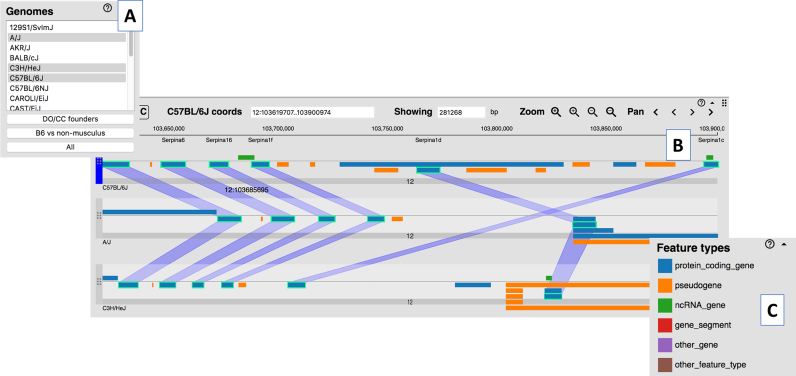
“Gene model structure details and sequences for all 19 annotated mouse genomes are also accessible from MGI’s MouseMine (http://www.mousemine.org) through its user interface and web services (MouseMine web services back the Multiple Genome Viewer).”
BackgroundInfluentialSelf-citationThe mouse Gene Expression Database (GXD): 2019 update
Smith, C. M., Hayamizu, T. F., Finger, J. H., Bello, S. M., McCright, I. J., Xu, J., Baldarelli, R. M., Beal, J. S., Campbell, J., Corbani, L. E., et al. (2019) · Nucleic Acids Research · doi:10.1093/nar/gky922 · Cited by 119
Self-citationThybert, D., Roller, M., Navarro, F. C. P., Fiddes, I., Streeter, I., Feig, C., Martin-Galvez, D., Kolmogorov, M., Janoušek, V., Akanni, W., et al. (2018) · Genome Research · doi:10.1101/gr.234096.117 · Cited by 117 · cited 2×
“The recent release of assembled and annotated genomes for 16 inbred mouse strains (https://www.biorxiv.org/content/ early/2018/02/12/235838) and two wild-derived strains (CAROLI/EiJ and PAHARI/EiJ) (10) represent major milestones in mouse genetics and comparative genomics.”
Background
Cited by
Items 101–200 of 723
Dolan, M. E., Hill, D. P., Mukherjee, G., McAndrews-Hill, M., Chesler, E. J., & Blake, J. A. (2020) · Scientific Reports · doi:10.1038/s41598-020-77632-8 · Cited by 62
Self-citationChen, Y., Chaudhari, S. N., Harris, D. A., Roberts, C. F., Moscalu, A., Mathur, V., Zhao, L., Tavakkoli, A., Devlin, A. S., & Sheu, E. G. (2024) · Cell Host & Microbe · doi:10.1016/j.chom.2024.06.014 · Cited by 55
Sahana, G., Cai, Z., Sanchez, M.-P., Bouwman, A. C., & Boichard, D. (2023) · Journal of Dairy Science · doi:10.3168/jds.2022-22694 · Cited by 71
“org/ ), or Mouse Genome Informatics (http: / / www .informatics .jax .org/ ; Bult et al., 2019) databases can be declared as candidate genes.”
BackgroundComputational epitope-based vaccine design with bioinformatics approach; a review
Basmenj, E. R., Pajhouh, S. R., Ebrahimi-Fallah, A., Naijian, R., Rahimi, E., Atighy, H., Ghiabi, S., & Ghiabi, S. (2025) · Heliyon · doi:10.1016/j.heliyon.2025.e41714 · Cited by 69
Tonino, P., Kiss, B., Gohlke, J., Smith, J. E., & Granzier, H. L. M. (2019) · Journal of Molecular and Cellular Cardiology · doi:10.1016/j.yjmcc.2019.05.026 · Cited by 48
Vysotskiy, M., Zhong, X. Y., Miller‐Fleming, T. W., Zhou, D., Cox, N. J., & Weiss, L. A. (2021) · Genome Medicine · doi:10.1186/s13073-021-00972-1 · Cited by 54
“Mice with a heterozygous mutation in Ino80e showed increased body weight, consistent with our BMI association result for the same gene [98].”
Topham, L., Grégoire, S., Kang, H., Salmon‐Divon, M., Lax, E., Millecamps, M., Szyf, M., & Stone, L. S. (2020) · Pain · doi:10.1097/j.pain.0000000000001917 · Cited by 52
“For homology conversion, gene symbols from nonmouse species were converted to known mouse homologs based on the Mouse Genome Database—Vertebrate Homology, Mouse Genome Informatics, The Jackson Laboratory, Bar Harbor, Maine.9 The data discussed in this publication have been deposited in NCBI’s Gene Expression Omnibus17…”
MethodChen, D., Wang, J., Li, Y., Xu, C., Meng, F., Zhang, P., & Liu, L. (2023) · Clinical and Translational Medicine · doi:10.1002/ctm2.1418 · Cited by 48
Biological Network Approaches and Applications in Rare Disease Studies
Zhang, P., & Itan, Y. (2019) · Genes · doi:10.3390/genes10100797 · Cited by 50
Singh, M. D., Jensen, M., Lasser, M. C., Huber, E., Yusuff, T., Pizzo, L., Lifschutz, B., Desai, I., Kubina, A., Yennawar, S., et al. (2020) · PLoS Genetics · doi:10.1371/journal.pgen.1008590 · Cited by 48
Nuclear encoded mitochondrial ribosomal proteins are required to initiate gastrulation
Cheong, A., Archambault, D., Degani, R. E., Iverson, E., Tremblay, K. D., & Mager, J. (2020) · Development · doi:10.1242/dev.188714 · Cited by 47
“Specifically, theMRP group is composed of 48 MRPL and 30 MRPS in humans and 50 Mrpl and 29Mrps in mice (Yates et al., 2017; Bult et al., 2019).”
BackgroundPhase and context shape the function of composite oncogenic mutations
Gorelick, A. N., Rivera, F. J. S., Cai, Y., Bielski, C. M., Biederstedt, E., Jonsson, P., Richards, A. L., Vasan, N., Penson, A. V., Friedman, N. D., et al. (2020) · Nature · doi:10.1038/s41586-020-2315-8 · Cited by 46
Updates to HCOP: the HGNC comparison of orthology predictions tool
Yates, B., Gray, K. A., Jones, T. E. M., & Bruford, E. A. (2021) · Briefings in Bioinformatics · doi:10.1093/bib/bbab155 · Cited by 43
“In addition to orthology data, HCOP also imports further data from HGNC, VGNC [10], Mouse Genome Informatics (MGI) [22], Rat Genome Database (RGD) [23], Chicken Gene Nomenclature Consortium (CGNC) [24], Xenbase [25], ZFIN [20], WormBase [26], Saccharomyces Genome Database (SGD) [27] and PomBase [17] to ensure that the…”
MethodNovak, G., Kyriakis, D., Grzyb, K., Bernini, M., Rodius, S., Dittmar, G., Finkbeiner, S. M., & Skupin, A. (2022) · Communications Biology · doi:10.1038/s42003-021-02973-7 · Cited by 48
Moore, P. K., Anderson, K. C., McManus, S. A., Tu, T.-H. C., King, E. M., Mould, K. J., Redente, E. F., Henson, P. M., Janssen, W. J., & McCubbrey, A. L. (2023) · American Journal of Physiology-Lung Cellular and Molecular Physiology · doi:10.1152/ajplung.00223.2022 · Cited by 54
Akabane, S., Kiyona, W., Kosako, H., Yamashita, S., Nishino, K., Kato, M., Sekine, S., Kanki, T., Matsuda, N., Endo, T., et al. (2023) · Cell Reports · doi:10.1016/j.celrep.2023.112454 · Cited by 47
Tet1 Deficiency Leads to Premature Ovarian Failure
Liu, L., Wang, H., Xu, G. L., & Liu, L. (2021) · Frontiers in Cell and Developmental Biology · doi:10.3389/fcell.2021.644135 · Cited by 52
Cooley, L. S., Rudewicz, J., Souleyreau, W., Emanuelli, A., Álvarez-Arenas, A., Clarke, K., Falciani, F., Dufies, M., Lambrechts, D., Modave, E., et al. (2021) · Molecular Cancer · doi:10.1186/s12943-021-01416-5 · Cited by 45
“Patient characteristics and results have been previously described [43].”
BackgroundCooper, T. K., Meyerholz, D. K., Beck, A. P., Delaney, M. A., Piersigilli, A., Southard, T. L., & Brayton, C. F. (2021) · ILAR Journal · doi:10.1093/ilar/ilab022 · Cited by 58
E3 ubiquitin ligase Wwp1 regulates ciliary dynamics of the Hedgehog receptor Smoothened
Lv, B., Stuck, M. W., Desai, P. B., Cabrera, O. A., & Pazour, G. J. (2021) · Journal of Cell Biology · doi:10.1083/jcb.202010177 · Cited by 44
“Loss of Arih2 in mice leads to embryonic lethality, while heterozygotes show a variety of cilia-related phenotypes, including polycystic kidney disease and bone morphology defects (Bult et al., 2019; Dickinson et al., 2016).”
BackgroundRNA splicing regulators play critical roles in neurogenesis
Fisher, E., & Feng, J. (2022) · Wiley Interdisciplinary Reviews - RNA · doi:10.1002/wrna.1728 · Cited by 47
Guo, Y., Cai, L., Liu, X., Ma, L., Zhang, H., Wang, B., Qi, Y., Liu, J., Diao, F., Sha, J., et al. (2022) · Molecular & Cellular Proteomics · doi:10.1016/j.mcpro.2022.100267 · Cited by 44
Comparative Analysis Identifies Similarities between the Human and Murine Microglial Sensomes
Abels, E. R., Nieland, L., Hickman, S. E., Broekman, M. L. D., Khoury, J. B. E., & Maas, S. L. N. (2021) · International Journal of Molecular Sciences · doi:10.3390/ijms22031495 · Cited by 49
Strategies to Uplift Novel Mendelian Gene Discovery for Improved Clinical Outcomes
Seaby, E. G., Rehm, H. L., & O’Donnell‐Luria, A. (2021) · Frontiers in Genetics · doi:10.3389/fgene.2021.674295 · Cited by 46
“Several mouse model organism databases exist including the Mouse Genome Database (MGD) (Smith et al., 2017; Bult et al., 2019), the Knockout Mouse Project (KOMP) (Austin et al., 2004), and the International Mouse Phenotyping Consortium (IMPC) (Meehan et al., 2017; Muñoz-Fuentes et al., 2018).”
BackgroundInfluentialChoy, K. H. K., Chan, S. Y., Lam, W., Jin, J., Zheng, T., Law, T. Y. S., Yu, S. S. B., Wang, W., Li, L. X., Xie, G., et al. (2022) · BMC Biology · doi:10.1186/s12915-022-01268-5 · Cited by 46
Genetic variation regulates opioid-induced respiratory depression in mice
Bubier, J. A., He, H., Philip, V. M., Roy, T., Hernandez, C. M., Bernat, R., Donohue, K. D., O’Hara, B. F., & Chesler, E. J. (2020) · Scientific Reports · doi:10.1038/s41598-020-71804-2 · Cited by 42
Robbins, S. M., Thimm, M. A., Valle, D. L., & Jelin, A. C. (2019) · Journal of Assisted Reproduction and Genetics · doi:10.1007/s10815-019-01499-6 · Cited by 40
A Meta-Analysis of Bioelectric Data in Cancer, Embryogenesis, and Regeneration
Srivastava, P., Kane, A., Harrison, C., & Levin, M. (2021) · Bioelectricity · doi:10.1089/bioe.2019.0034 · Cited by 37
HGNChelper: identification and correction of invalid gene symbols for human and mouse
Oh, S., Abdelnabi, J., Al-Dulaimi, R., Aggarwal, A., Ramos, M., Davis, S. R., Riester, M., & Waldron, L. (2020) · F1000Research · doi:10.12688/f1000research.28033.1 · Cited by 72
Developmental basis of trachea-esophageal birth defects
Edwards, N. A., Shacham-Silverberg, V., Weitz, L., Kingma, P. S., Shen, Y., Wells, J. M., Chung, W. K., & Zorn, A. M. (2021) · Developmental Biology · doi:10.1016/j.ydbio.2021.05.015 · Cited by 43
“In addition, efforts to aggregate phenotypic data from different model organism knowledge bases such as Mouse Genome Informatics (MGI; http://www.informatics.jax.org; RRID SCR_006460) (Bult et al., 2019) and Xenbase (www.Xenbase.org; RRID SCR_003280) (Karimi et al., 2018) will be critical.”
BackgroundLeyrolle, Q., Decoeur, F., Déjean, C., Brière, G., Leon, S., Bakoyiannis, I., Baroux, E., Sterley, T., Bosch‐Bouju, C., Morel, L., et al. (2021) · Glia · doi:10.1002/glia.24088 · Cited by 46
“We then used the MGI database (Bult, 2019) to retrieve the nonredundant Gene-Ontology annotations of interest that are related to the set of DEGs identified above.”
MethodWhole-genome sequencing reveals de-novo mutations associated with nonsyndromic cleft lip/palate
Awotoye, W. A., Mossey, P. A., Hetmanski, J. B., Gowans, L. J. J., Eshete, M. A., Adeyemo, W. L., Alade, A. A., Zeng, E., Adamson, O., Naicker, T., et al. (2022) · Scientific Reports · doi:10.1038/s41598-022-15885-1 · Cited by 44
Long noncoding RNA LEENE promotes angiogenesis and ischemic recovery in diabetes models
Tang, X., Luo, Y., Yuan, D., Calandrelli, R., Malhi, N. K., Sriram, K., Miao, Y., Lou, C.-H., Tsark, W. M. K., Tapia, A., et al. (2023) · Journal of Clinical Investigation · doi:10.1172/jci161759 · Cited by 40
“To use the tool on mouse data, we converted the mouse genes to human homologs using the conversion table available at the Mouse Genome Database (60).”
HISTome2: a database of histone proteins, modifiers for multiple organisms and epidrugs
Shah, S. G., Mandloi, T., Kunte, P. S., Natu, A., Rashid, M., Reddy, D., Gadewal, N., & Gupta, S. (2020) · Epigenetics & Chromatin · doi:10.1186/s13072-020-00354-8 · Cited by 38
“Further, gene-related information such as name, symbol, and GeneID was acquired from HGNC [57], RGD [58], and MGI [59] for human, rat, and mouse, respectively.”
MethodManshaei, R., Merico, D., Reuter, M. S., Engchuan, W., Mojarad, B. A., Chaturvedi, R., Heung, T., Pellecchia, G., Zarrei, M., Nalpathamkalam, T., et al. (2020) · Frontiers in Genetics · doi:10.3389/fgene.2020.00957 · Cited by 36
Aviña‐Padilla, K., Ramírez-Rafael, J. A., Herrera-Oropeza, G. E., Muley, V. Y., Valdivia, D. I., Díaz-Valenzuela, E., García-García, A., Varela‐Echavarría, A., & Hernández-Rosales, M. (2021) · Frontiers in Genetics · doi:10.3389/fgene.2021.654256 · Cited by 39
Modeling regulatory network topology improves genome-wide analyses of complex human traits
Zhu, X., Duren, Z., & Wong, W. H. (2021) · Nature Communications · doi:10.1038/s41467-021-22588-0 · Cited by 42
Pujol‐Gualdo, N., Läll, K., Lepamets, M., Metspalu, A., Nelis, M., Milani, L. A., Esko, T., Hudjashov, G., Rossi, H., Arffman, R. K., et al. (2022) · Nature Communications · doi:10.1038/s41467-022-31188-5 · Cited by 44
Mitra, D., Mitra, D., Bensaad, M. S., Sinha, S., Pant, K., Pant, M., Priyadarshini, A., Singh, P., Dassamiour, S., Hambaba, L., et al. (2022) · Computational Toxicology · doi:10.1016/j.comtox.2022.100248 · Cited by 50
Lukić, B., Čurik, I., Držaić, I., Galić, V., Shihabi, M., VOSTRÝ, L., & Čubrić-Ćurik, V. (2023) · Journal of Animal Science and Biotechnology/Journal of animal science and biotechnology · doi:10.1186/s40104-023-00936-y · Cited by 39
“The gene on OAR2, NOL8 , which has been associated with circulating fasting glucose levels in mice [135] and may be important for energy expenditure in harsh environments.”
BackgroundImproving gene function predictions using independent transcriptional components
Urzúa-Traslaviña, C. G., Leeuwenburgh, V. C., Bhattacharya, A., Loipfinger, S., van Vugt, M. A. T. M., de Vries, E. G. E., & Fehrmann, R. S. N. (2021) · Nature Communications · doi:10.1038/s41467-021-21671-w · Cited by 40
Wang, Q., Davis, P. B., Qi, X., Chen, S. G., Gurney, M. E., Perry, G. L., Doraiswamy, P. M., & Xu, R. (2021) · Alzheimer s Research & Therapy · doi:10.1186/s13195-021-00917-1 · Cited by 38
“Mutational phenotype–gene network (PhenGN) PhenGN was constructed from MGD that contains The Mouse Genome Database (MGD) database large amounts of phenotypic descriptions of systematic genetic knockouts in mouse models [32].”
MethodTranscriptional control of cone photoreceptor diversity by a thyroid hormone receptor
Aramaki, M., Wu, X., Liu, H., Liu, Y., Cho, Y., Song, M.-N., Fu, Y., Ng, L., & Forrest, D. (2022) · Proceedings of the National Academy of Sciences · doi:10.1073/pnas.2209884119 · Cited by 38
“Libraries were edited to remove reads for pseudogenes, Y-linked genes, mitochondrial-encoded genes (56) and artifactual reads for Calu and Tex28, which lie on the opposite strands of Opn1sw and Opn1mw, respectively.”
The developmental impacts of natural selection on human pelvic morphology
Young, M., Richard, D. J., Grabowski, M. W., Auerbach, B. M., de Bakker, B. S., Hagoort, J., Muthuirulan, P., Kharkar, V., Kurki, H. K., Betti, L., et al. (2022) · Science Advances · doi:10.1126/sciadv.abq4884 · Cited by 38
Alternative splicing in endothelial cells: novel therapeutic opportunities in cancer angiogenesis
Matteo, A. D., Belloni, E., Pradella, D., Cappelletto, A., Volf, N., Zacchigna, S., & Ghigna, C. (2020) · Journal of Experimental & Clinical Cancer Research · doi:10.1186/s13046-020-01753-1 · Cited by 38
“A list of SRFs relevant for vascular development is shown in Supplementary Table 2 (Additional files 1 and 2), based on the Mouse Genome Information (MGI) [164] and the Zebrafish Information Network (ZFIN) [165], which provide information on mouse gene and zebrafish knockouts and their phenotypes.”
PhenoDB, GeneMatcher and VariantMatcher, tools for analysis and sharing of sequence data
Wohler, E., Martin, R. P., Griffith, S., Rodrigues, E. D. S., Antonescu, C. M., Posey, J. E., Coban‐Akdemir, Z., Jhangiani, S. N., Doheny, K. F., Lupski, J. R., et al. (2021) · Orphanet Journal of Rare Diseases · doi:10.1186/s13023-021-01916-z · Cited by 34
Leyrolle, Q., Decoeur, F., Brière, G., Amadieu, C., Quadros, A. R. A. D. A., Voytyuk, I., Lacabanne, C., Benmamar‐Badel, A., Bourel, J., Aubert, A., et al. (2020) · Neuropsychopharmacology · doi:10.1038/s41386-020-00793-7 · Cited by 40
“We then used the MGI database [84] to retrieve the nonredundant Gene-Ontology annotations of interest that are related to the set of DEGs identified above.”
MethodDimitrakopoulos, G. Ν., Klapa, M. I., & Moschonas, N. Κ. (2020) · Bioinformatics · doi:10.1093/bioinformatics/btaa1070 · Cited by 34
Synaptic activity–dependent changes in the hippocampal palmitoylome
Nasseri, G. G., Matin, N., Tosefsky, K. N., Stacey, G., Flibotte, S., Hollman, R., Wild, A. R., Foster, L. J., & Bamji, S. X. (2022) · Science Signaling · doi:10.1126/scisignal.add2519 · Cited by 35
Ratajczak, F., Joblin, M., Hildebrandt, M. E., Ringsquandl, M., Falter‐Braun, P., & Heinig, M. (2023) · Nature Communications · doi:10.1038/s41467-023-42975-z · Cited by 40
“We then used these queries to retrieve a set of genes that, if deliberately knocked out in mice, produce phenotypes that match the queries using the Mouse Genome Database (MGD) 125,126 (accessed 17.3.22).”
InfluentialRajendran, A., Soory, A., Khandelwal, N., Ratnaparkhi, G. S., & Kamat, S. S. (2022) · Journal of Biological Chemistry · doi:10.1016/j.jbc.2022.102128 · Cited by 36
Genomic imbalances in the placenta are associated with poor fetal growth
Gobbo, G. F. D., Yin, Y., Choufani, S., Butcher, E. A., Wei, J., Rajcan‐Separovic, E., Bos, H., von Dadelszen, P., Weksberg, R., Robinson, W. P., et al. (2021) · Molecular Medicine · doi:10.1186/s10020-020-00253-4 · Cited by 35
Canine DVL2 variant contributes to brachycephalic phenotype and caudal vertebral anomalies
Niskanen, J. E., Reunanen, V. L. J., Salonen, M. K., Bannasch, D. L., Lappalainen, A. K., Lohi, H., & Hytönen, M. K. (2021) · Human Genetics · doi:10.1007/s00439-021-02261-8 · Cited by 34
Why Is It So Difficult To Have Competent Oocytes from In vitro Cultured Preantral Follicles?
Paulino, L. R. F. M., de Assis, E. I. T., Azevedo, V. A. N., Silva, B. R., da Cunha, E. V., & Silva, J. R. V. (2022) · Reproductive Sciences · doi:10.1007/s43032-021-00840-8 · Cited by 37
Lagger, C., Ursu, E., Equey, A., Avelar, R. A., Pisco, A. O., Tăcutu, R., & de Magalhães, J. P. (2023) · Nature Aging · doi:10.1038/s43587-023-00514-x · Cited by 37
“If mouse LRIs were not provided (namely, for CellPhoneDB, connectomeDB2020, ICELLNET, NicheNet and SingleCellSignalR), we converted human LRIs to their mouse equivalent by retrieving orthology information from Ensembl version 102 (ref.”
MethodCircadian Clock Regulation of Developmental Time in the Kidney
Dan, H., Ruan, T., & Sampogna, R. V. (2020) · Cell Reports · doi:10.1016/j.celrep.2020.107661 · Cited by 30
Adadey, S. M., Wonkam‐Tingang, E., Aboagye, E. T., Nayo-Gyan, D. W., Ansong, M. B., Quaye, O., Awandare, G. A., & Wonkam, A. (2020) · Life · doi:10.3390/life10110258 · Cited by 34
“Noise-induced HI has been reported in GJC3 null mice [131], while another study conducted with adult mice did not find any di ff erence in the hearing threshold of GJC3 null and wildtype mice [138].”
BackgroundResultInfluentialTransgenic mouse models of breast cancer
Regua, A. T., Arrigo, A., Doheny, D. L., Wong, G. L., & Lo, H. (2021) · Cancer Letters · doi:10.1016/j.canlet.2021.05.027 · Cited by 41
Revisiting the Characteristics of Testicular Germ Cell Lines GC-1(spg) and GC-2(spd)ts
Verma, P., & Parte, P. P. (2021) · Molecular Biotechnology · doi:10.1007/s12033-021-00352-5 · Cited by 35
Multi-scale inference of genetic trait architecture using biologically annotated neural networks
Demetçi, P., Cheng, W., Darnell, G., Zhou, X., Ramachandran, S., & Crawford, L. A. (2021) · PLoS Genetics · doi:10.1371/journal.pgen.1009754 · Cited by 33
Adipocyte HIF2α functions as a thermostat via PKA Cα regulation in beige adipocytes
Han, J. S., Jeon, Y. G., Oh, M., Lee, G., Nahmgoong, H., Han, S. M., Choi, J., Kim, Y. Y., Shin, K. C., Kim, J., et al. (2022) · Nature Communications · doi:10.1038/s41467-022-30925-0 · Cited by 31
Hao, R.-H., Guo, Y., Wang, C., Chen, F., Di, C., Dong, S., Cao, Q.-L., Guo, J., Rong, Y., Yao, S., et al. (2022) · Cell Death and Differentiation · doi:10.1038/s41418-022-01035-7 · Cited by 34
Kiu, R., Treveil, A., Harnisch, L. C., Caim, S., Leclaire, C., van Sinderen, D., Korcsmáros, T., & Hall, L. J. (2020) · iScience · doi:10.1016/j.isci.2020.101336 · Cited by 35
“Briefly, for functional assignment analysis, a list of genes of interest in Ensembl IDs were supplied to the webserver to be mapped to the Mouse Genome Database (MGD) to generate functional classification on those genes of interest (Bult et al., 2019).”
MethodSRGAP1 Controls Small Rho GTPases To Regulate Podocyte Foot Process Maintenance
Rogg, M., Maier, J. I., Dotzauer, R., Artelt, N., Kretz, O., Helmstädter, M., Abed, A., Sammarco, A., Sigle, A., Sellung, D., et al. (2021) · Journal of the American Society of Nephrology · doi:10.1681/asn.2020081126 · Cited by 33
Tripal v3: an ontology-based toolkit for construction of FAIR biological community databases
Spoor, S., Cheng, C.-H., Sanderson, L.-A., Condon, B. J., Almsaeed, A., Chen, M., Bretaudeau, A., Rasche, H., Jung, S., Main, D., et al. (2019) · Database · doi:10.1093/database/baz077 · Cited by 35
“The model organism databases of FlyBase, the Mouse Genome Database (MGD) (18), SGD, The Gene Ontology Consortium (19), RGD, WormBase (20, 21) and the Zebrafish Information Network (ZFIN) (22) are unifying efforts under the Alliance of Genome Resources (https://www. alliancegenome.org/) to reduce duplication of effort…”
BackgroundGlyGen data model and processing workflow
Kahsay, R. Y., Vora, J., Navelkar, R., Mousavi, R., Fochtman, B. C., Holmes, X., Pattabiraman, N., Ranzinger, R., Mahadik, R., Williamson, T., et al. (2020) · Bioinform. · doi:10.1093/bioinformatics/btaa238 · Cited by 28
Models of renal cell carcinoma used to investigate molecular mechanisms and develop new therapeutics
Shapiro, D. D., Virumbrales-Muñoz, M., Beebe, D. J., & Abel, E. J. (2022) · Frontiers in Oncology · doi:10.3389/fonc.2022.871252 · Cited by 28
Huang, C., van Wijnen, A. J., & Im, H. (2023) · Journal of Pain · doi:10.1016/j.jpain.2023.10.008 · Cited by 36
Sphingosine kinase 2 restricts T cell immunopathology but permits viral persistence
Studstill, C. J., Pritzl, C. J., Seo, Y., Kim, D. Y., Xia, C., Wolf, J. J., Nistala, R., Vijayan, M., Cho, Y., Kang, K. W., et al. (2020) · Journal of Clinical Investigation · doi:10.1172/jci125297 · Cited by 30
“Transcripts were renamed using mouse genome informatics (MGI) naming identifications (Ensembl and MGI) (87, 90).”
MethodHolzer, G., Magistris, P. D., Gramminger, C., Sachdev, R., Magalska, A., Schooley, A., Scheufen, A., Lennartz, B., Tatarek‐Nossol, M., Lue, H., et al. (2021) · The EMBO Journal · doi:10.15252/embj.2021108788 · Cited by 29
“Although referred to as a pseudo-gene, this locus is effectively expressed as indicated in the expression atlas (Papatheodorou et al , 2020) and the mouse genome database (Bult et al , 2019) and has been previously named Nup50rel (Smitherman et al , 2000).”
Boeddrich, A., Haenig, C., Neuendorf, N., Blanc, E., Ivanov, A., Kirchner, M., Schleumann, P., Bayraktaroğlu, I., Richter, M., Molenda, C., et al. (2023) · Genome Medicine · doi:10.1186/s13073-023-01206-2 · Cited by 39
Oligodendrocyte precursor cells prune axons in the mouse neocortexPreprint
Buchanan, J., Elabbady, L., Collman, F., Jorstad, N. L., Bakken, T. E., Ott, C. M., Glatzer, J. C., Bleckert, A., Bodor, Á. L., Brittan, D., et al. (2021) · bioRxiv (Cold Spring Harbor Laboratory) · doi:10.1101/2021.05.29.446047 · Cited by 28
Genes essential for embryonic stem cells are associated with neurodevelopmental disorders
Shohat, S., & Shifman, S. (2019) · Genome Research · doi:10.1101/gr.250019.119 · Cited by 21
“A list of genes leading to pre- or postnatal lethality or abnormal survival phenotype in knockout mice was obtained from the Mouse Genome Informatics (MGI) database (Supplemental Table S5; Bult et al. 2019).”
MethodDong, S., Zhu, D., Zhou, X., Rong, Y., Zeng, M., Chen, J., Jiang, F., Tuo, X.-M., Feng, Z., Yang, T., et al. (2021) · Diabetes · doi:10.2337/db20-1151 · Cited by 36
Hunter, W. B., & Wintermantel, W. M. (2021) · Plants · doi:10.3390/plants10091782 · Cited by 35
3D-cardiomics: A spatial transcriptional atlas of the mammalian heart
Mohenska, M., Tan, N. M., Tokolyi, A., Furtado, M. B., Costa, M. W., Perry, A., Hatwell-Humble, J., van Duijvenboden, K., Nim, H. T., Ji, Y. M. M., et al. (2021) · Journal of Molecular and Cellular Cardiology · doi:10.1016/j.yjmcc.2021.09.011 · Cited by 27
ConVarT: a search engine for matching human genetic variants with variants from non-human species
Pir, M. S., Bilgin, H., Sayıcı, A., Çoşkun, F., Torun, F. M., Zhao, P., Kang, Y., Cevik, S., & Kaplan, O. I. (2021) · Nucleic Acids Research · doi:10.1093/nar/gkab939 · Cited by 26
Paul, B., Weeratunga, S., Tillu, V. A., Hariri, H., Henne, W. M., & Collins, B. M. (2022) · Frontiers in Cell and Developmental Biology · doi:10.3389/fcell.2022.826688 · Cited by 27
“In mice SNX13, SNX14 and SNX25 are all essential for normal development (Bryant et al., 2020; Bult et al., 2019; Zheng et al., 2006), while altering the expression of Snz significantly extends the lifespan of flies (Ugrankar et al.”
PlaqView 2.0: A comprehensive web portal for cardiovascular single-cell genomics
Feng, W., Turner, A. W., Gancayco, C. A., Wong, D., Song, Y., Mosquera, J. V., Auguste, G. E., Hodonsky, C. J., Prabhakar, A., Ekiz, H. A., et al. (2022) · Frontiers in Cardiovascular Medicine · doi:10.3389/fcvm.2022.969421 · Cited by 26
“, APOE for humans and Apoe for mice) (20, 21).”
BackgroundMetabolic Signatures Elucidate the Effect of Body Mass Index on Type 2 Diabetes
Dong, Q., Sidra, S., Gieger, C., Wang‐Sattler, R., Rathmann, W., Prehn, C. P., Adamski, J., Köenig, W., Peters, A., Grallert, H., et al. (2023) · Metabolites · doi:10.3390/metabo13020227 · Cited by 32
Oh, K. P., Shiels, A. B., Shiels, L., Blondel, D. V., Campbell, K. J., Saah, J. R., Lloyd, A. L., Thomas, P. Q., Gould, F. L., Abdo, Z., et al. (2021) · Evolutionary Applications · doi:10.1111/eva.13210 · Cited by 31
“…of gene drive designs have been proposed, the most basic strategy for suppression of wild populations involves targeting a female haplosufficient fertility or viability gene (Burt, 2003; Hammond et al., 2016; Prowse et al., 2017), wherein insertion of the gene drive construct creates a null allele.”
BackgroundIcick, R., Forget, B., Cloëz-Tayarani, I., Pons, S., Maskos, U., & Besson, M. (2020) · Neuropharmacology · doi:10.1016/j.neuropharm.2020.108234 · Cited by 31
CD40-miRNA axis controls prospective cell fate determinants during B cell differentiation
Salunkhe, S. S., & Vaidya, T. (2020) · Molecular Immunology · doi:10.1016/j.molimm.2020.07.007 · Cited by 26
Synergizing Mouse and Human Studies to Understand the Heterogeneity of Obesity
Gordon‐Larsen, P., French, J. E., Moustaïd‐Moussa, N., Voruganti, V. S., Mayer‐Davis, E. J., Bizon, C., Cheng, Z., Stewart, D. A., Easterbrook, J. W., & Shaikh, S. R. (2021) · Advances in Nutrition · doi:10.1093/advances/nmab040 · Cited by 32
“The genetic sequence and identification of phenotype-associated QTL identified candidate gene SNP or structural variants and tools to aid mouse to human translation are available on the Mouse Genome Informatics database at The Jackson Laboratories (97, 98).”
MethodThe SARS-CoV-2 SSHHPS Recognized by the Papain-like Protease
Reynolds, N. D., Aceves-Ewing, N. M., Liu, J. L., Compton, J. R., Leary, D. H., Freitas, B. T., Pegan, S. D., Doctor, K. Z., Wu, F. Y., Hu, X., et al. (2021) · ACS Infectious Diseases · doi:10.1021/acsinfecdis.0c00866 · Cited by 26
Wang, H., Huang, B., & Wang, J. (2021) · Nucleic Acids Research · doi:10.1093/nar/gkab841 · Cited by 27
Iyer, N. R., Shin, J., Cuskey, S., Tian, Y., Nicol, N. R., Doersch, T. E., Seipel, F., McCalla, S. G., Roy, S., & Ashton, R. S. (2022) · Science Advances · doi:10.1126/sciadv.abn7430 · Cited by 33
The JAX Synteny Browser for mouse-human comparative genomics
Kolishovski, G., Lamoureux, A., Hale, P., Richardson, J. E., Recla, J. M., Adesanya, O., Simons, A., Kunde‐Ramamoorthy, G., & Bult, C. J. (2019) · Mammalian Genome · doi:10.1007/s00335-019-09821-4 · Cited by 28
Self-citationDibus, N., Liďák, T., & C̆ermák, L. (2019) · Genes · doi:10.3390/genes10100815 · Cited by 30
Ribosomal proteins: mutant phenotypes by the numbers and associated gene expression changes
Polymenis, M. (2020) · Open Biology · doi:10.1098/rsob.200114 · Cited by 31
“org/); MGI for Mus musculus ([13]; http://www.”
MRP5 and MRP9 play a concerted role in male reproduction and mitochondrial function
Chambers, I. G., Kumar, P., Lichtenberg, J., Wang, P., Yu, J., Phillips, J. D., Kane, M. A., Bodine, D. M., & Hamza, I. (2022) · Proceedings of the National Academy of Sciences · doi:10.1073/pnas.2111617119 · Cited by 27
de Almeida, M. P., Kambakam, S., Liu, F., Ming, Z., Welker, J. M., Wierson, W. A., Schultz‐Rogers, L. E., Ekker, S. C., Clark, K. J., Essner, J. J., et al. (2022) · eLife · doi:10.7554/elife.71478 · Cited by 27
“Homologous recombination driven site- directed genetic modification in embryonic stem cells enabled creation of the mouse Cre/lox resource that contains more than 2500 Cre drivers and lox conditional gene alleles (Bult et al., 2019).”
BackgroundIdentification of risk genes for Alzheimer’s disease by gene embedding
Lagisetty, Y., Bourquard, T., Al‐Ramahi, I., Mangleburg, C. G., Mota, S., Soleimani, S., Shulman, J. M., Botas, J., Lee, K. D., & Lichtarge, O. (2022) · Cell Genomics · doi:10.1016/j.xgen.2022.100162 · Cited by 26
“88 This would reveal whether gene candidates are involved in neuronal maintenance and function and whether their loss of function may constitute a risk factor for AD or be a trigger for neurodegeneration.”
Nair, N. U., Cheng, K., Naddaf, L., Sharon, E., Pal, L. R., Rajagopal, P. S., Unterman, I., Aldape, K., Hannenhalli, S. S., Day, C., et al. (2022) · Science Advances · doi:10.1126/sciadv.abj7176 · Cited by 28
Molecular Evidence for Olfactory Neuroblastoma as a Tumor of Malignant Globose Basal Cells
Zunitch, M. J., Fisch, A. S., Lin, B., Barrios-Camacho, C. M., Faquin, W. C., Tachie-Baffour, Y., Louie, J. D., Jang, W., Curry, W. T., Gray, S. T., et al. (2023) · Modern Pathology · doi:10.1016/j.modpat.2023.100122 · Cited by 26
Stenton, S. L., O’Leary, M., Lemire, G., VanNoy, G. E., DiTroia, S. P., Ganesh, V. S., Groopman, E., O’Heir, E., Mangilog, B. E., Osei‐Owusu, I., et al. (2024) · Human Genomics · doi:10.1186/s40246-024-00604-w · Cited by 34
CELSR1 Risk Alleles in Familial Bicuspid Aortic Valve and Hypoplastic Left Heart Syndrome
Theis, J. L., Niaz, T., Sundsbak, R. S., Fogarty, Z. C., Bamlet, W. R., Hagler, D. J., & Olson, T. M. (2022) · Circulation Genomic and Precision Medicine · doi:10.1161/circgen.121.003523 · Cited by 27
Masuda, N., Murakami, K., Kita, Y., Hamada, A., Kamada, M., Teramoto, Y., Sakatani, T., Matsumoto, K., Sano, T., Saito, R., et al. (2020) · American Journal Of Pathology · doi:10.1016/j.ajpath.2020.04.005 · Cited by 28
Chowdhury, F., Wang, L., Al‐Raqad, M., Amor, D. J., Baxová, A., Bendová, Š., Biamino, E., Brusco, A., Caluseriu, O., Cox, N. J., et al. (2021) · Genetics in Medicine · doi:10.1038/s41436-021-01129-6 · Cited by 25
Myc controls NK cell development, IL-15-driven expansion, and translational machinery
Khameneh, H. J., Fonta, N., Zenobi, A., Niogret, C., Ventura, P., Guerra, C., Kwee, I., Rinaldi, A., Pecoraro, M., Geiger, R., et al. (2023) · Life Science Alliance · doi:10.26508/lsa.202302069 · Cited by 33
Metadata
- Authors
- Bult, C. J., Blake, J. A., Smith, C. L., Kadin, J. A., Richardson, J. E., the Mouse Genome Database Group, Anagnostopoulos, A., Asabor, R., Baldarelli, R. M., Beal, J. S., Bello, S. M., Blodgett, O., Butler, N. E., Christie, K. R., Corbani, L. E., Creelman, J., Dolan, M. E., Drabkin, H. J., Giannatto, S. L., Hale, P., Hill, D. P., Law, M., Mendoza, A., McAndrews, M., Miers, D., Motenko, H., Ni, L., Onda, H., Perry, M., Recla, J. M., Richards-Smith, B., Sitnikov, D., Tomczuk, M., Tonorio, G., Wilming, L., & Zhu, Y.
- Affiliations
- Jackson Laboratory (US)
- Corresponding author
- Bult, Carol J
- ORCID
- Venue
- Nucleic Acids Research
- Publisher
- Oxford University Press (OUP)
- Published
- 2018-11-08
- Volume
- 47
- Issue
- D1
- Pages
- D801-D806
- ISSN
- 0305-1048 (ISSN-L)
- 1362-4962
- PMC
- PMC6323923
- OpenAlex
- W2900255713
- Cited by
- 686
- References
- 17
- Citations by year
- 2026: 18 · 2025: 33 · 2024: 58 · 2023: 101 · 2022: 133 · 2021: 177 · 2020: 126 · 2019: 37
- FWCI
- 31.47
- Type
- journal article
- Language
- en
- Open access
- gold
- doi.org
- Licence
- Locations
- Nucleic Acids Research (publishedVersion, cc-by)
- Europe PMC (PubMed Central) (publishedVersion, cc-by)
- PubMed Central (publishedVersion, cc-by)
- PubMed (publishedVersion)
- The Mouseion at the JAXlibrary (Jackson Laboratory) (submittedVersion, cc-by)
- Funders
- National Institutes of Health (U41 HG000330, R25 HG007053, U41 HG002223)
- Topics
- Health Sciences › Medicine › Health Informatics › Biomedical Text Mining and Ontologies
- Life Sciences › Biochemistry, Genetics and Molecular Biology › Molecular Biology › Genomics and Phylogenetic Studies
- Life Sciences › Biochemistry, Genetics and Molecular Biology › Molecular Biology › Bioinformatics and Genomic Networks
- Keywords
- Mouse Genome Database, laboratory mice, mouse genetics, mouse genomics, gene nomenclature, allele nomenclature, mouse models of human disease, phenotypes, gene expression, gene expression database, literature curation, transcription start sites, genome annotation
- MeSH terms
- Alleles, Animals, Terminology as Topic, Gene Expression, Genome, Internet, Genomics, Transcription Initiation Site, Databases, Genetic, Mice, Molecular Sequence Annotation
About these checks
Registry, retraction, Cites and statistics results are computed, not judged, with one exception: a printed reference that no index lists is read once by a model before it counts as a citation error. Claims are extracted by a model and kept only when their quote appears verbatim in the text; each cited source is then checked, with a model’s help, for whether it says what the claim relies on. Those verdicts can be wrong — read the claim’s quote and the cited source before relying on one.
Statistics and arithmetic are recomputed, not judged.
Confidence bands are shown only for fields calibrated on our annotated test set. None is calibrated yet, so no band is shown.
What counts as a claim ›How we measure confidence ›How we check this ›
Are you an author, or do you see a problem with this page? Request a review
Data sources
Bibliographic data: Semantic Scholar, OpenAlex, Crossref.
Contains information from the Semantic Scholar Academic Graph Datasets, made available under the ODC Attribution License (ODC-BY 1.0).
Semantic Scholar’s data is described in: Kinney, R., et al. (2023). The Semantic Scholar Open Data Platform. arXiv:2301.10140.
