

Mouse Genome Database (MGD) 2019
Open accessThe DOI matches its Crossref record; 16 of the 17 references it cites were found in a registry or an index.
Abstract
The Mouse Genome Database (MGD; http://www.informatics.jax.org) is the community model organism genetic and genome resource for the laboratory mouse. MGD is the authoritative source for biological reference data sets related to mouse genes, gene functions, phenotypes, and mouse models of human disease. MGD is the primary outlet for official gene, allele and mouse strain nomenclature based on the guidelines set by the International Committee on Standardized Nomenclature for Mice. In this report we describe significant enhancements to MGD, including two new graphical user interfaces: (i) the Multi Genome Viewer for exploring the genomes of multiple mouse strains and (ii) the Phenotype-Gene Expression matrix which was developed in collaboration with the Gene Expression Database (GXD) and allows researchers to compare gene expression and phenotype annotations for mouse genes. Other recent improvements include enhanced efficiency of our literature curation processes and the incorporation of Transcriptional Start Site (TSS) annotations from RIKEN's FANTOM 5 initiative.
Overview
The claims and statistics of this paper haven’t been checked yet.
Free: it reads the open-access text and checks the first 5 claims that cite a source we can check. Create a free account to check every claim.
Integrity signals
Registry
Cites
Statistics
Figures
Verification
Claims the paper makes
The claims and statistics of this paper haven’t been checked yet.
Free: it reads the open-access text and checks the first 5 claims that cite a source we can check. Create a free account to check every claim.
Claims other papers make about this one
Each is checked against this paper’s own text: does it say what the citing paper says it does?
The source backs part of the claim, not all of it — or backs it for a different population, condition or comparison.
In the citing paper
“However, available information in the MGI database [32, 34, 36] indicates that for some of these genes, their knock-out results in heart defects (Fig. 4, red border) or they are expressed in the heart (Fig. 4, double-line border).”
From A cis-regulatory-directed pipeline for the identification of genes involved in cardiac development and disease (2021) · cites this paper as [34]
Experimental — accuracy not yet measuredThe check wasn’t confident either way, so it gives no verdict — never disputed.
In the citing paper
“Most (15/16) of nearby genes or 3D interaction genes were expressed in branchial arch and embryo ectoderm in mice [36,37].”
From Combined genome-wide association study of 136 quantitative ear morphology traits in multiple populations reveal 8 novel loci (2023) · cites this paper as [37]
Experimental — accuracy not yet measuredThe check wasn’t confident either way, so it gives no verdict — never disputed.
In the citing paper
“Yet, it is expressed in several tissues based on the transcriptome data (Fig. 3A) and in situ hybridization results of E14.5 mouse embryos [34] (Fig. 3C).”
From A cis-regulatory-directed pipeline for the identification of genes involved in cardiac development and disease (2021) · cites this paper as [34]
Experimental — accuracy not yet measuredThe check wasn’t confident either way, so it gives no verdict — never disputed.
In the citing paper
“Similarly, Cbx5 is also highly expressed in all four tissues (Fig. 3A) and is widely expressed in E14.5 embryo [34] (Fig. 3D).”
From A cis-regulatory-directed pipeline for the identification of genes involved in cardiac development and disease (2021) · cites this paper as [34]
Experimental — accuracy not yet measured
Self-check
Percentages, sums and reported differences re-computed from the paper’s own numbers.
The self-check needs the paper’s full text.
Citations
Cites
The Gene Ontology Resource: 20 years and still GOing strong
The Gene Ontology Consortium (2019) · Nucleic Acids Research · doi:10.1093/nar/gky1055 · Cited by 4,747
A promoter-level mammalian expression atlas
The FANTOM Consortium and the RIKEN PMI and CLST (DGT) (2014) · Nature · doi:10.1038/nature13182 · Cited by 1,982
Expansion of the Gene Ontology knowledgebase and resources
The Gene Ontology Consortium (2017) · Nucleic Acids Research · doi:10.1093/nar/gkw1108 · Cited by 1,850
JBrowse: A next-generation genome browser
Skinner, M. E., Uzilov, A. V., Stein, L. D., Mungall, C. J., & Holmes, I. H. (2009) · Genome Research · doi:10.1101/gr.094607.109 · Cited by 717 · cited 1×
“org/), a JavaScriptbased interactive genome browser with multiple features for navigation and track selection (14).”
BackgroundThe Mouse Genome Database (MGD): facilitating mouse as a model for human biology and disease
Eppig, J. T., Blake, J. A., Bult, C. J., Kadin, J. A., Richardson, J. E., & The Mouse Genome Database Group (2015) · Nucleic Acids Research · doi:10.1093/nar/gku967 · Cited by 357
Self-citationSupporting conditional mouse mutagenesis with a comprehensive cre characterization resource
Heffner, C. S., Herbert Pratt, C., Babiuk, R. P., Sharma, Y., Rockwood, S. F., Donahue, L. R., Eppig, J. T., & Murray, S. A. (2012) · Nature Communications · doi:10.1038/ncomms2186 · Cited by 230 · cited 1×
“Other database resources that are coordinated within the MGI consortium include the Gene Expression Database (GXD) (3), the Mouse Tumor Biology Database (MTB) (4), the Gene Ontology project (GO) (5), MouseMine (6), the International Mouse Strain Resource (IMSR) (7) and the CrePortal database of recombinase expressing…”
BackgroundMouse Genome Database (MGD)-2018: knowledgebase for the laboratory mouse
Smith, C. L., Blake, J. A., Kadin, J. A., Richardson, J. E., Bult, C. J., & the Mouse Genome Database Group (2018) · Nucleic Acids Research · doi:10.1093/nar/gkx1006 · Cited by 219
Self-citationMouseMine: a new data warehouse for MGI
Motenko, H., Neuhauser, S. B., O’Keefe, M., & Richardson, J. E. (2015) · Mammalian Genome · doi:10.1007/s00335-015-9573-z · Cited by 132 · cited 9×
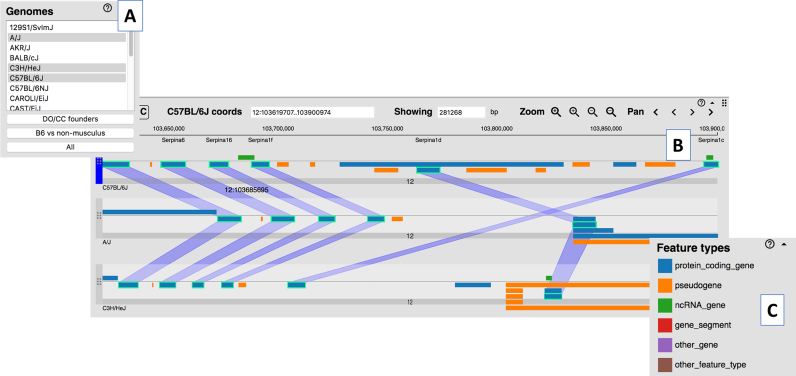
“Gene model structure details and sequences for all 19 annotated mouse genomes are also accessible from MGI’s MouseMine (http://www.mousemine.org) through its user interface and web services (MouseMine web services back the Multiple Genome Viewer).”
BackgroundInfluentialSelf-citationThe mouse Gene Expression Database (GXD): 2019 update
Smith, C. M., Hayamizu, T. F., Finger, J. H., Bello, S. M., McCright, I. J., Xu, J., Baldarelli, R. M., Beal, J. S., Campbell, J., Corbani, L. E., et al. (2019) · Nucleic Acids Research · doi:10.1093/nar/gky922 · Cited by 119
Self-citationThybert, D., Roller, M., Navarro, F. C. P., Fiddes, I., Streeter, I., Feig, C., Martin-Galvez, D., Kolmogorov, M., Janoušek, V., Akanni, W., et al. (2018) · Genome Research · doi:10.1101/gr.234096.117 · Cited by 117 · cited 2×
“The recent release of assembled and annotated genomes for 16 inbred mouse strains (https://www.biorxiv.org/content/ early/2018/02/12/235838) and two wild-derived strains (CAROLI/EiJ and PAHARI/EiJ) (10) represent major milestones in mouse genetics and comparative genomics.”
Background
Cited by
Items 401–500 of 723
Conniff, A. S., Tur, J., Kohena, K., Zhang, M., Gibbons, J., & Heller, L. C. (2022) · Vaccines · doi:10.3390/vaccines10122037 · Cited by 11
Investigation of early molecular alterations in tauopathy with generative adversarial networks
Kim, H., Kim, Y.-J., Lee, C.-Y., Kim, D.-G., & Cheon, M. (2023) · Scientific Reports · doi:10.1038/s41598-023-28081-6 · Cited by 8
van der Weyden, L., Świątkowska, A., Iyer, V., Speak, A. O., & Adams, D. J. (2020) · G3 Genes Genomes Genetics · doi:10.1534/g3.120.401128 · Cited by 9
Krull, F., Hirschfeld, M., Wemheuer, W., & Brenig, B. (2020) · Frontiers in Genetics · doi:10.3389/fgene.2020.591794 · Cited by 10
“In addition, candidate genes were compared with publicly available databases for Mendelian diseases using keywords cramp, spastic paraplegia, hyperekplexia, amyotrophic lateral sclerosis, Parkinson, Huntington, and multiple sclerosis (Nicholas, 2003; Lenffer et al., 2006; Amberger et al., 2015; Bult et al., 2019; Smit…”
MethodDoshida, Y., Sano, H., Iwabuchi, S., Aigaki, T., Yoshida, M., Hashimoto, S., & Ishigami, A. (2020) · PLoS ONE · doi:10.1371/journal.pone.0242171 · Cited by 8
“Gene expression data presented as gene symbols were converted to the Mouse Genome Informatics (MGI) ID [24] provided by Jackson Laboratory (Bar Harbor, ME, USA) based on the GRCm38 dataset in the Ensembl Gene 98 database using BioMart provided by Europe’s flagship laboratory for the life sciences, the European Bioinfo…”
MethodTeruya, K., Oguma, A., Arai, K., Nishizawa, K., Iwabuchi, S., Watanabe‐Matsui, M., Sakasegawa, Y., Schätzl, H. M., Gilch, S., & Doh‐ura, K. (2021) · Biochemical and Biophysical Research Communications · doi:10.1016/j.bbrc.2021.04.116 · Cited by 8
Identification of Hub Genes in Hemifacial Microsomia: Evidence From Bioinformatic Analysis
Zhao, S., Sun, P., Li, X., Xu, X., Peng, Q., Shu, K., Ma, L., Liang, Y., Liu, B., & Zhang, Z. (2021) · Journal of Craniofacial Surgery · doi:10.1097/scs.0000000000008164 · Cited by 8
Multi-scale Inference of Genetic Trait Architecture using Biologically Annotated Neural NetworksPreprint
Demetçi, P., Cheng, W., Darnell, G., Zhou, X., Ramachandran, S., & Crawford, L. A. (2020) · bioRxiv (Cold Spring Harbor Laboratory) · doi:10.1101/2020.07.02.184465 · Cited by 8
Mills, M., Tropf, F. C., Brazel, D., van Zuydam, N. V., Vaez, A., Pers, T., Snieder, H., Perry, J., Ong, K., den Hoed, M., et al. (2020) · bioRxiv · doi:10.1101/2020.05.06.081273 · Cited by 12
Complex system modeling reveals oxalate homeostasis is driven by diverse oxalate-degrading bacteria
Mukherjee, S., Batagello, C., Adler, A., Agudelo, J., Zampini, A. M., Suryavanshi, M. V., Nguyen, A. H., Orr, T. J., Dearing, M. D., Monga, M., et al. (2025) · eLife · doi:10.7554/elife.104121 · Cited by 10
“Sequences mapping to mouse genes were annotated to metabolic pathway with the gene ontology database ( Bult et al., 2019 ).”
Cilia, C., Friggieri, D., Vassallo, J., Xuereb‐Anastasi, A., & Formosa, M. M. (2022) · Genes · doi:10.3390/genes13020204 · Cited by 8
Incremental data integration for tracking genotype-disease associations
Konopka, T., & Smedley, D. P. (2020) · PLoS Computational Biology · doi:10.1371/journal.pcbi.1007586 · Cited by 8
A Standardized Brain Molecular Atlas: A Resource for Systems Modeling and Simulation
Shichkova, P., Coggan, J. S., Markram, H., & Keller, D. X. (2021) · Frontiers in Molecular Neuroscience · doi:10.3389/fnmol.2021.604559 · Cited by 8
Mutli, E., Mändar, R., Koort, K., Salumets, A., & Laisk, T. (2024) · Journal of Reproductive Immunology · doi:10.1016/j.jri.2024.104216 · Cited by 8
Chuang, Y.-T., Yen, C., Chien, T., Chang, F., Tsai, Y., Wu, K., Tang, J., & Chang, H. (2024) · International Journal of Molecular Sciences · doi:10.3390/ijms25116083 · Cited by 10
“The search methodology for exosome biogenesis genes was performed bioinformat-ically via the Gene Oncology database [18].”
BackgroundMethodIllingworth, E. J., Rychlik, K. A., Maertens, A., & Sillé, F. C. M. (2023) · Toxicology · doi:10.1016/j.tox.2024.153988 · Cited by 6
Marquardt, S., Pavlopoulou, A., Takan, I., Dhar, P., Pützer, B. M., & Logotheti, S. (2021) · Frontiers in Cell and Developmental Biology · doi:10.3389/fcell.2021.682619 · Cited by 8
Foong, D., Liyanage, L. H., Zhou, J., Zarrouk, A., Ho, V., & O’Connor, M. D. (2021) · Neurogastroenterology & Motility · doi:10.1111/nmo.14303 · Cited by 8
Arih2 regulates Hedgehog signaling through smoothened ubiquitylation and ER-associated degradation
Lv, B., Zhang, X.-O., & Pazour, G. J. (2022) · Journal of Cell Science · doi:10.1242/jcs.260299 · Cited by 9
Deak, P., Studnitzer, B., Ung, T. W.-M., Steinhardt, R. C., Swartz, M. A., & Esser-Kahn, A. P. (2022) · Cell Reports · doi:10.1016/j.celrep.2022.111563 · Cited by 7
Sex-specific effects of Cre expression in Syn1Cre mice
Baghdadi, M., Mesaros, A., Purrio, M., & Partridge, L. (2023) · Scientific Reports · doi:10.1038/s41598-023-37029-9 · Cited by 12
Frederiksen, S., Wicki‐Stordeur, L. E., & Swayne, L. A. (2023) · Channels · doi:10.1080/19336950.2023.2253102 · Cited by 11
“As described above, for the genes we were unable to obtain entrez IDs, we manually looked up the human orthologs in the MGI international data-base [46].”
MethodInfluentialBoros, É., Prontvai, B., Kellermayer, Z., Balogh, P., Sarlós, P., Vincze, Á., Varga, C., Maróti, Z., Bálint, B., & Nagy, I. (2020) · Biomolecules · doi:10.3390/biom10070974 · Cited by 8
Yu, X., Pan, X., Zhang, S., Zhang, Y., Chen, L., Wan, S., Huang, T., & Cai, Y. (2021) · Frontiers in Genetics · doi:10.3389/fgene.2020.605012 · Cited by 10
Bozkurt‐Yozgatli, T., Alanay, Y., Işık, U., & Sezerman, O. U. (2021) · BMC Medical Genomics · doi:10.1186/s12920-021-01045-3 · Cited by 7
Liu, S., He, L., Bannister, O. B., Li, J., Schnegelberger, R. D., Vanderpuye, C.-M., Althouse, A. D., Schopfer, F. J., Wahlang, B., Cave, M. C., et al. (2022) · Toxicology and Applied Pharmacology · doi:10.1016/j.taap.2023.116514 · Cited by 7
Shparberg, R. A., Dewi, C. U., Gnanasambandapillai, V., Liyanage, L. H., & O’Connor, M. D. (2021) · Data in Brief · doi:10.1016/j.dib.2020.106657 · Cited by 7
Serum amyloid A proteins reduce bone mass during mycobacterial infections
Gomes, A. C., Sousa, D. M., Oliveira, T. C., Fonseca, Ó., Pinto, R., Silvério, D., Fernandes, A. I., Moreira, A. C., Silva, T., Teles, M. J., et al. (2023) · Frontiers in Immunology · doi:10.3389/fimmu.2023.1168607 · Cited by 7
Milchevskaya, V., Bugnon, P., ten Buren, E. B. J., Vanhecke, D., Brand, F., Tresch, A., & Buch, T. (2023) · Lab Animal · doi:10.1038/s41684-023-01213-1 · Cited by 7
“Mouse Genome Informatics counts 64,000 entries for mouse lines 1,2 .”
BackgroundDu, S., Chen, J., Li, J., Qian, W., Wu, S., Peng, Q., Liu, Y., Pan, T., Li, Y., Hadi, S. S., et al. (2024) · Journal of genetics and genomics/Journal of Genetics and Genomics · doi:10.1016/j.jgg.2024.07.005 · Cited by 7
Bhandari, S., Kyrrestad, I., Simón-Santamaría, J., Li, R., Szafranska, K. J., Dumitriu, G., Sánchez Romano, J., Smedsrød, B., & Sørensen, K. K. (2024) · Frontiers in Pharmacology · doi:10.3389/fphar.2024.1377136 · Cited by 6
Bakker, O. B., Claringbould, A., Westra, H.-J., Wiersma, H. H., Boulogne, F., Võsa, U., Urzúa-Traslaviña, C. G., Symmons, S. M., Zidan, M., Sadler, M. C., et al. (2024) · Scientific Reports · doi:10.1038/s41598-024-80670-1 · Cited by 17
Trott, J. F., Schennink, A., Horigan, K. C., Lemay, D. G., Cohen, J. R., Famula, T. R., Dragon, J. A., & Hovey, R. C. (2021) · Endocrinology · doi:10.1210/endocr/bqab256 · Cited by 7
Kim, M., Huda, M. N., Evans, L. W., Que, E. S., Gertz, E., Maeda-Smithies, N., & Bennett, B. J. (2023) · Scientific Reports · doi:10.1038/s41598-023-35917-8 · Cited by 8
Prioritizing drug targets by perturbing biological network response functions
Perrone, M. C., Lerner, M. G., Dunworth, M., Ewald, A. J., & Bader, J. S. (2024) · PLoS Computational Biology · doi:10.1371/journal.pcbi.1012195 · Cited by 9
CREB-regulated transcription during glycogen synthesis in astrocytes
Lim, W. L., Gaunt, J. R., Tan, J. M., Zainolabidin, N., Bansal, V. A., Lye, Y. M., & Ch’ng, T. H. (2024) · Scientific Reports · doi:10.1038/s41598-024-67976-w · Cited by 7
Liongue, C., & Ward, A. C. (2025) · International Journal of Molecular Sciences · doi:10.3390/ijms26083498 · Cited by 6
“…liver and intestine of the brown croaker [17], the African clawed frog testes [19], mouse ovaries, testes, liver and other visceral organs [18] and syncytial trophoblasts in Crlf3 knockout mice displayed reduced overall body weight and, in particular, reduced lean body mass [12]. humans [20].”
InfluentialDeciphering the etiology of congenital scoliosis: A genetic and epigenetic perspective
Zhao, R., Zhao, J.-R., Xue, X., & Ma, D. (2025) · World Journal of Orthopaedics · doi:10.5312/wjo.v16.i6.104853 · Cited by 6
Sleeping Beauty Mouse Models of Cancer: Microenvironmental Influences on Cancer Genetics
Guimarães-Young, A., Feddersen, C. R., & Dupuy, A. J. (2019) · Frontiers in Oncology · doi:10.3389/fonc.2019.00611 · Cited by 7
PTPα promotes fibroproliferative responses after acute lung injury
Aschner, Y., Correll, K. A., Beke, K. M., Foster, D. G., Roybal, H. M., Nelson, M., Meador, C., Strand, M. J., Anderson, K. C., Moore, C. M., et al. (2022) · American Journal of Physiology-Lung Cellular and Molecular Physiology · doi:10.1152/ajplung.00436.2021 · Cited by 8
PhenoExam: gene set analyses through integration of different phenotype databases
Cisterna‐García, A., González-Vidal, A., Ruiz, D., Ortiz, J., Gómez-Pascual, A., Chen, Z., Nalls, M. A., Faghri, F., Hardy, J., Díez, I., et al. (2022) · BMC Bioinformatics · doi:10.1186/s12859-022-05122-x · Cited by 8
Oommen, A. M., Roberts, K. J., Joshi, L., & Cunningham, S. (2023) · International Journal of Molecular Sciences · doi:10.3390/ijms24021200 · Cited by 8
Akalın, A., Şimşek‐Kiper, P. Ö., Taşkıran, E. Z., Karaosmanoğlu, B., Ütine, G. E., & Boduroğlu, K. (2023) · American Journal of Medical Genetics Part A · doi:10.1002/ajmg.a.63120 · Cited by 6
“1 (KOMP)Vlcg null allele died between fertilization and weaning, indicating the importance of CRIPT during development (Bult et al., 2019; Niethammer et al., 1998).”
BackgroundDNA Electrotransfer Regulates Molecular Functions in Skeletal Muscle
Conniff, A. S., Tur, J., Kohena, K., Zhang, M., Gibbons, J., & Heller, L. C. (2024) · Bioelectricity · doi:10.1089/bioe.2022.0041 · Cited by 7
“30”
LaPolice, T. M., & Huang, Y.-F. (2023) · BMC Bioinformatics · doi:10.1186/s12859-023-05481-z · Cited by 8
Zhao, F., Grimm, S. A., & Yao, H. H. (2020) · Sexual Development · doi:10.1159/000513878 · Cited by 7
van Duijvenboden, S., Ramírez, J., Young, W. J., Orini, M., Mifsud, B., Tinker, A., Lambiase, P. D., & Munroe, P. B. (2021) · Human Molecular Genetics · doi:10.1093/hmg/ddab197 · Cited by 8
SLC2A3 variants in familial and sporadic congenital heart diseases in a Chinese Yunnan population
Ma, L., Xu, J., Tang, Q., Cao, Y. Q., Kong, R., Li, K., Liu, J., & Jiang, L. (2022) · Journal of Clinical Laboratory Analysis · doi:10.1002/jcla.24456 · Cited by 5
Liu, G., Yang, G., Zhao, G., Guo, C., Zeng, Y., Xue, Y., & Zeng, F. (2022) · Cell Proliferation · doi:10.1111/cpr.13298 · Cited by 6
Epigenetic and pharmacological control of pigmentation via Bromodomain Protein 9 ( BRD9 )
Basuroy, T., Dreier, M. R., Baum, C. E., Blomquist, T. M., Trumbly, R. J., Filipp, F. V., & de la Serna, I. L. (2022) · Pigment Cell & Melanoma Research · doi:10.1111/pcmr.13068 · Cited by 5
“Gene orthologues were mapped using Genome Reference Consortium Human Build 37 (GRCh37) and the mouse genome database (MGD) at the Mouse Genome Informatics website accessed 03/29/2019 (The Jackson Laboratory, Bar Harbor, Maine) (Bult et al., 2019).”
Single-cell identity definition using random forests and recursive feature eliminationPreprint
Park, M., Vorperian, S. K., Wang, S., & Pisco, A. O. (2020) · bioRxiv (Cold Spring Harbor Laboratory) · doi:10.1101/2020.08.03.233650 · Cited by 7
Medina‐Gómez, C., Mullin, B. H., Chesi, A., Prijatelj, V., Kemp, J. P., Shochat-Carvalho, C., Trajanoska, K., Wang, C. A., Joro, R., Evans, T. E., et al. (2021) · medRxiv · doi:10.1101/2021.11.01.21265592 · Cited by 6
Freyer, L., Iturri, L., Biton, A., Sommer, A., Dardenne, P., Cumano, A., & Perdiguero, E. G. (2021) · Research Square · doi:10.21203/rs.3.rs-1002760/v1 · Cited by 7
Whole-genome Sequencing Reveals De-novo Mutations Associated with Nonsyndromic Cleft Lip/PalatePreprint
Awotoye, W. A., Mossey, P. A., Hetmanski, J. B., Gowans, L. J. J., Eshete, M. A., Adeyemo, W. L., Alade, A. A., Zeng, E., Adamson, O., Naicker, T., et al. (2021) · Research Square · doi:10.21203/rs.3.rs-1064924/v1 · Cited by 6
Pietzner, M., Williamson, A., Hunt, K. A., Koprulu, M., Kohleick, L., Demircan, K., van Heel, D. A., Finer, S., Carrasco-Zanini, J., van Heel, D. A., et al. (2026) · Nature Genetics · doi:10.1038/s41588-026-02697-6 · Cited by 9
“We therefore collated additional layers of orthogonal evidence, such as rare gene burden analyses 42 , Mendelian disorders 43 , mouse models 44 , as well as tissue and single-cell-type gene expression patterns 45 (Fig.”
Brown, R. E. (2022) · The EuroBiotech Journal · doi:10.2478/ebtj-2022-0008 · Cited by 7
Aalam, S. M. M., Varela, A. R., Khaderi, A., Mondesir, R. J., Mun, D., Ding, A. Z., Lombaert, I. M. A., Coppes, R. P., Emperumal, C. P., Pandey, A., et al. (2025) · npj Regenerative Medicine · doi:10.1038/s41536-025-00410-5 · Cited by 10
“Cell types were annotated based on protein and gene expression signatures cross-referencedthroughHumanProteinAtlasimmunostaining,MouseGenome Informatics 80 , Enrichr 81 , Hauser et al. 2020 46 , and additional literature review.”
Han, J.-H., Ryan, G., Guy, A., Liu, L., Quinodoz, M., Helbling, I., Lai-Cheong, J., Barwell, J., Folcher, M., McGrath, J. A., et al. (2022) · Human Molecular Genetics · doi:10.1093/hmg/ddab368 · Cited by 4
“Noteworthy, knockout mice for LTV1 die before weaning age, implying that LTV1 protein is required for survival (11).”
The FAM86 domain of FAM86A confers substrate specificity to promote EEF2-Lys525 methylation
Francis, J. W., Shao, Z., Narkhede, P., Trinh, A. T., Lu, J., Song, J., & Gozani, O. (2023) · Journal of Biological Chemistry · doi:10.1016/j.jbc.2023.104842 · Cited by 6
“While FAM86A exists in yeast, neither of the human genes FAM86B1 or FAM86B2 exists in many lower animals including mice (32).”
BackgroundChen, J., Goudey, B., Geard, N. L., & Verspoor, K. M. (2024) · Bioinformatics · doi:10.1093/bioinformatics/btae246 · Cited by 8
Mignogna, K. M., Tatom, Z., Macleod, L. C., Sergi, Z., Nguyen, A., Michenkova, M., Smith, M. L., & Miles, M. F. (2024) · Neuropsychopharmacology · doi:10.1038/s41386-024-01902-6 · Cited by 7
“Zfyve26 had two signi fi cant eQTLs and a coding sequence variant in the top variants as noted above.”
Marine anticancer drugs in modulating miRNAs and antioxidant signaling
Chuang, Y.-T., Yen, C., Tang, J., Wu, K., Chang, F., Tsai, Y., Chien, T., & Chang, H. (2024) · Chemico-Biological Interactions · doi:10.1016/j.cbi.2024.111142 · Cited by 6
The ParaHox gene Cdx4 induces acute erythroid leukemia in mice
Thoene, S., Mandal, T., Naidu, V. M., Quintanilla‐Martínez, L., Rösler, R., Wiese, S., Metzeler, K. H., Herold, T., Haferlach, T., Döhner, K., et al. (2019) · Blood Advances · doi:10.1182/bloodadvances.2019000761 · Cited by 6
Deal, K. K., Chandrashekar, A. S., Beaman, M. M., Branch, M. C., Buehler, D. P., Conway, S. J., & Southard‐Smith, E. M. (2021) · Developmental Biology · doi:10.1016/j.ydbio.2021.03.024 · Cited by 7
Bellchambers, H. M., Phatak, A. R., Nenni, M. J., Padua, M. B., Gao, H., Liu, Y., & Ware, S. M. (2023) · Scientific Reports · doi:10.1038/s41598-023-36862-2 · Cited by 5
Cheleuitte-Nieves, C., & Lipman, N. S. (2020) · ILAR Journal · doi:10.1093/ilar/ilaa022 · Cited by 6
Barcellona, M. N., Speer, J. E., Jing, L., Gupta, M. C., Buchowski, J. M., Kelly, M. P., & Setton, L. A. (2021) · bioRxiv (Cold Spring Harbor Laboratory) · doi:10.1101/2021.03.05.434094 · Cited by 6
Putnam, H. M., Trigg, S. A., White, S. J., Spencer, L. H., Vadopalas, B., Natarajan, A., Hetzel, J., Jaeger, E. B., Soohoo, J., Gallardo‐Escárate, C., et al. (2022) · bioRxiv (Cold Spring Harbor Laboratory) · doi:10.1101/2022.06.24.497506 · Cited by 7
“A tab-delimited file mapping GO identifiers to 37 GO slim terms from Molecular Function (MF), Biological Process (BP), and Cellular Component (CC) categories was retrieved from the Mouse Genome Database (MGD) (Bult et al. 2019) at the Mouse Genome Informatics website, The Jackson Laboratory, Bar Harbor, Maine, World W…”
MethodInfluentialAdlam, D., Berrandou, T.-E., Georges, A. B., Nelson, C. P., Giannoulatou, E., Henry, J., Ma, L., Blencowe, M., Turley, T. N., Yang, M., et al. (2022) · medRxiv · doi:10.1101/2022.07.05.22277238 · Cited by 5
Absolute protein quantitation of the mouse macrophage Toll-like receptor and chemotaxis pathways
Manes, N. P., Calzola, J. M., Kaplan, P. R., Fraser, I. D. C., Germain, R. N., Meier‐Schellersheim, M., & Nita‐Lazar, A. (2022) · Scientific Data · doi:10.1038/s41597-022-01612-y · Cited by 6
Molecular drivers of osteogenesis imperfecta: a cellular and extracellular collagen disease
Cotti, S., Franco, W., & Forlino, A. (2025) · Clinical Science · doi:10.1042/cs20255642 · Cited by 8
Whole Exome Sequencing Identifies Damaging Variants in Indonesians with Clefts
Aladenika, E., Maskoen, A. M., Awotoye, W. A., Abdulaziz, R., Alade, A. A., Nasroen, S. L., Oladayo, A., Busch, T. D., Sarilita, E., & Butali, A. (2023) · The Cleft Palate-Craniofacial Journal · doi:10.1177/10556656231210085 · Cited by 4
Essential role of Card11 in airway hyperresponsiveness in high-fat diet-induced obese mice
Lee, H., Kim, B., Lee, S., Kwon, H., & Park, H. (2024) · Experimental & Molecular Medicine · doi:10.1038/s12276-024-01367-z · Cited by 4
“22 This tool provides phenotypes directly attributed to mutations of mouse genes.”
Seraj, R. G. M., Ahmadikhah, A., Esmaeilzadeh‐Salestani, K., Shariati, V., Behnamian, M., Tariverdizadeh, N., Emadi, A., & Dezhsetan, S. (2025) · BMC Plant Biology · doi:10.1186/s12870-025-07272-5 · Cited by 4
“During embryo development, which ends in seed dormancy, a distinct progression of the embryo is observed from the stage of zygote formation until the end of seed dormancy [45].”
Glycoinformatics Resources Integrated Through the GlySpace Alliance
Lisacek, F., Aoki-Kinoshita, K. F., Vora, J. K., Mazumder, R., & Tiemeyer, M. (2021) · Elsevier eBooks · doi:10.1016/b978-0-12-819475-1.00107-3 · Cited by 4
Starcher, A. E., Peissig, K. B., Stanton, J. B., Churchill, G. A., Cai, D., Maxwell, J. T., Grider, A., Love, K., Chen, S., Coleman, A. E., et al. (2021) · G3 Genes Genomes Genetics · doi:10.1093/g3journal/jkab293 · Cited by 4
Theis, J. L., Shatila, S.-D. H., Fogarty, Z. C., Bamlet, W. R., & Olson, T. M. (2022) · Circulation Genomic and Precision Medicine · doi:10.1161/circgen.122.003761 · Cited by 5
Bowman, J. D., Silva, N., Schüftan, E., Almeida, J. M., Correia, R. B., Oliveira, R. A., Tüttelmann, F., Enard, D., Navarro‐Costa, P., & Lynch, V. J. (2026) · eLife · doi:10.7554/elife.94563.3 · Cited by 3
A simple approach for local and global variable importance in nonlinear regression models
Winn-Nuñez, E. T., Griffin, M., & Crawford, L. A. (2024) · Computational Statistics & Data Analysis · doi:10.1016/j.csda.2023.107914 · Cited by 7
Intermittent fasting shifts the diurnal transcriptome atlas of transcription factors
Fu, M., Lu, S., Gong, L., Zhou, Y., Wei, F., Duan, Z., Xiang, R., Gonzalez, F. J., & Li, G. (2024) · Molecular and Cellular Biochemistry · doi:10.1007/s11010-024-04928-y · Cited by 4
“Therefore, we performed parametric analysis of gene set enrichment (PAGE) [57] with the whole transcriptome data using a priori defined gene sets [58, 59] to determine the differences between pathways.”
Context-Dependent Distinct Roles of SOX9 in Combined Hepatocellular Carcinoma–Cholangiocarcinoma
Park, Y., Hu, S., Kim, M., Oertel, M., Singhi, A. D., Monga, S. P., Liu, S., & Ko, S. (2024) · Cells · doi:10.3390/cells13171451 · Cited by 4
Bader, A. S., & Bushell, M. (2021) · DNA repair · doi:10.1016/j.dnarep.2021.103158 · Cited by 5
Jakob, L., Müller, T. A., Rassner, M. P., Kleinfelder, H., Veratti, P., Mitschke, J., Miething, C., Oostendorp, R. A. J., Pfeifer, D., Waterhouse, M., et al. (2021) · International Journal of Molecular Sciences · doi:10.3390/ijms222111649 · Cited by 5
Delpero, M., Arends, D., Freiberg, A., Brockmann, G. A., & Hesse, D. (2022) · Scientific Reports · doi:10.1038/s41598-022-14316-5 · Cited by 4
“The Mouse Genome Informatics (MGI) database was used to investigate tissue specific expression of top candidate genes27.”
MethodG3BP2, a stress granule assembly factor, is dispensable for spermatogenesis in mice
Yun, D., Zhou, L., Shi, J. R., Li, X., Wu, X., & Sun, F. (2022) · PeerJ · doi:10.7717/peerj.13532 · Cited by 4
Christen, M., Rupp, S., Soens, I. V., Bhatti, S. F. M., Matiasek, K., von Klopmann, T., Jagannathan, V., Madden, I. E., Batcher, K., Bannasch, D. L., et al. (2022) · Genes · doi:10.3390/genes13071223 · Cited by 5
DARTpaths, anin silicoplatform to investigate molecular mechanisms of compounds
Bhalla, D., Steijaert, M. N., Poppelaars, E. S., Teunis, M., van der Voet, M., Corradi, M., Dévière, E., Noothout, L., Tomassen, W., Rooseboom, M., et al. (2022) · Bioinformatics · doi:10.1093/bioinformatics/btac767 · Cited by 3
Cornes, B. K., Paisie, C. A., Swanzey, E., Fields, P. D., Schile, A. J., Brackett, K., Reinholdt, L. G., & Srivastava, A. (2023) · G3 Genes Genomes Genetics · doi:10.1093/g3journal/jkad015 · Cited by 5
Imam, N., Alam, A., Siddiqui, M. F., Veg, A., Bay, S., Khan, M. J. I., & Ishrat, R. (2023) · Briefings in Functional Genomics · doi:10.1093/bfgp/elac054 · Cited by 5
Exosomes induce neurogenesis of pluripotent P19 cells
Anji, A., Anderson, B., Akhtar, F., Meekins, D. A., Ito, T., Mummidi, S., & Kumari, M. (2023) · Stem Cell Reviews and Reports · doi:10.1007/s12015-023-10512-6 · Cited by 5
Hekselman, I., Vital, A., Ziv, M., Kerber, L., Yairi, I., & Yeger‐Lotem, E. (2024) · eLife · doi:10.7554/elife.84613 · Cited by 2
GJB4 and GJC3 variants in non-syndromic hearing impairment in Ghana
Adadey, S. M., Esoh, K. K., Quaye, O., Amedofu, G. K., Awandare, G. A., & Wonkam, A. (2020) · Experimental Biology and Medicine · doi:10.1177/1535370220931035 · Cited by 4
“Mouse models created with alterations in the GJC3 gene indicated that about 50% of homozygous GJC3 null mice had delayed maturation of hearing thresholds, highfrequency hearing loss, and were vulnerable to noiseinduced hearing loss.(65) An earlier study, however, did not describe any significant difference between the…”
BackgroundMoshaii, B. A., Moradi, M. H., Yin, T., Rahimi‐Mianji, G., Nejati‐Javaremi, A., & König, S. (2022) · Journal of Animal Breeding and Genetics · doi:10.1111/jbg.12737 · Cited by 5
Niazi, Y., Thomsen, H., Smolková, B., Vodičková, Ľ., Vodenková, S., Kroupa, M., Vymetalkova, V. P., Kažimírová, A., Barančoková, M., Volkovová, K., et al. (2020) · Mutation Research/Genetic Toxicology and Environmental Mutagenesis · doi:10.1016/j.mrgentox.2020.503253 · Cited by 4
Kaur, S., & Roberts, D. D. (2021) · Journal of Cell Communication and Signaling · doi:10.1007/s12079-020-00598-9 · Cited by 4
Harris, R. M., Kao, H., Alarcón, J. M., Fenton, A. A., & Hofmann, H. A. (2020) · bioRxiv (Cold Spring Harbor Laboratory) · doi:10.1101/2020.02.05.935759 · Cited by 4
“(2010) ‘PKMzeta maintains 1-day- and 6-day-old long-term object location but not object identity memory in dorsal hippocampus’, Hippocampus, 20(6), pp.”
BackgroundLiu, Y., Chen, Y., Duffy, C. R., VanLeuven, A. J., Byers, J. B., Schriever, H. C., Ball, R., Carpenter, J. M., Gunderson, C. E., Filipov, N. M., et al. (2024) · bioRxiv (Cold Spring Harbor Laboratory) · doi:10.1101/2024.09.11.612511 · Cited by 7
Pietzner, M., Williamson, A., Hunt, K. A., Koprulu, M., Kohleick, L., Demircan, K., Genes & Health Research Team, Finer, S., Zanini, J. C., van Heel, D. A., et al. (2025) · doi:10.1101/2025.08.12.25333522 · Cited by 4
Profiling muscle transcriptome in mice exposed to microgravity using gene set enrichment analysis
Oommen, A. M., Stafford, P., & Joshi, L. (2024) · npj Microgravity · doi:10.1038/s41526-024-00434-z · Cited by 6
The Osgin Gene Family: Underexplored Yet Essential Mediators of Oxidative Stress
Hussey, G., Royster, M. O., Vaidy, N., Culkin, M., & Saha, M. S. (2025) · Biomolecules · doi:10.3390/biom15030409 · Cited by 4
Metadata
- Authors
- Bult, C. J., Blake, J. A., Smith, C. L., Kadin, J. A., Richardson, J. E., the Mouse Genome Database Group, Anagnostopoulos, A., Asabor, R., Baldarelli, R. M., Beal, J. S., Bello, S. M., Blodgett, O., Butler, N. E., Christie, K. R., Corbani, L. E., Creelman, J., Dolan, M. E., Drabkin, H. J., Giannatto, S. L., Hale, P., Hill, D. P., Law, M., Mendoza, A., McAndrews, M., Miers, D., Motenko, H., Ni, L., Onda, H., Perry, M., Recla, J. M., Richards-Smith, B., Sitnikov, D., Tomczuk, M., Tonorio, G., Wilming, L., & Zhu, Y.
- Affiliations
- Jackson Laboratory (US)
- Corresponding author
- Bult, Carol J
- ORCID
- Venue
- Nucleic Acids Research
- Publisher
- Oxford University Press (OUP)
- Published
- 2018-11-08
- Volume
- 47
- Issue
- D1
- Pages
- D801-D806
- ISSN
- 0305-1048 (ISSN-L)
- 1362-4962
- PMC
- PMC6323923
- OpenAlex
- W2900255713
- Cited by
- 686
- References
- 17
- Citations by year
- 2026: 18 · 2025: 33 · 2024: 58 · 2023: 101 · 2022: 133 · 2021: 177 · 2020: 126 · 2019: 37
- FWCI
- 31.47
- Type
- journal article
- Language
- en
- Open access
- gold
- doi.org
- Licence
- Locations
- Nucleic Acids Research (publishedVersion, cc-by)
- Europe PMC (PubMed Central) (publishedVersion, cc-by)
- PubMed Central (publishedVersion, cc-by)
- PubMed (publishedVersion)
- The Mouseion at the JAXlibrary (Jackson Laboratory) (submittedVersion, cc-by)
- Funders
- National Institutes of Health (U41 HG000330, R25 HG007053, U41 HG002223)
- Topics
- Health Sciences › Medicine › Health Informatics › Biomedical Text Mining and Ontologies
- Life Sciences › Biochemistry, Genetics and Molecular Biology › Molecular Biology › Genomics and Phylogenetic Studies
- Life Sciences › Biochemistry, Genetics and Molecular Biology › Molecular Biology › Bioinformatics and Genomic Networks
- Keywords
- Mouse Genome Database, laboratory mice, mouse genetics, mouse genomics, gene nomenclature, allele nomenclature, mouse models of human disease, phenotypes, gene expression, gene expression database, literature curation, transcription start sites, genome annotation
- MeSH terms
- Alleles, Animals, Terminology as Topic, Gene Expression, Genome, Internet, Genomics, Transcription Initiation Site, Databases, Genetic, Mice, Molecular Sequence Annotation
About these checks
Registry, retraction, Cites and statistics results are computed, not judged, with one exception: a printed reference that no index lists is read once by a model before it counts as a citation error. Claims are extracted by a model and kept only when their quote appears verbatim in the text; each cited source is then checked, with a model’s help, for whether it says what the claim relies on. Those verdicts can be wrong — read the claim’s quote and the cited source before relying on one.
Statistics and arithmetic are recomputed, not judged.
Confidence bands are shown only for fields calibrated on our annotated test set. None is calibrated yet, so no band is shown.
What counts as a claim ›How we measure confidence ›How we check this ›
Are you an author, or do you see a problem with this page? Request a review
Data sources
Bibliographic data: Semantic Scholar, OpenAlex, Crossref.
Contains information from the Semantic Scholar Academic Graph Datasets, made available under the ODC Attribution License (ODC-BY 1.0).
Semantic Scholar’s data is described in: Kinney, R., et al. (2023). The Semantic Scholar Open Data Platform. arXiv:2301.10140.
