

Mouse Genome Database (MGD) 2019
Open accessThe DOI matches its Crossref record; 16 of the 17 references it cites were found in a registry or an index.
Abstract
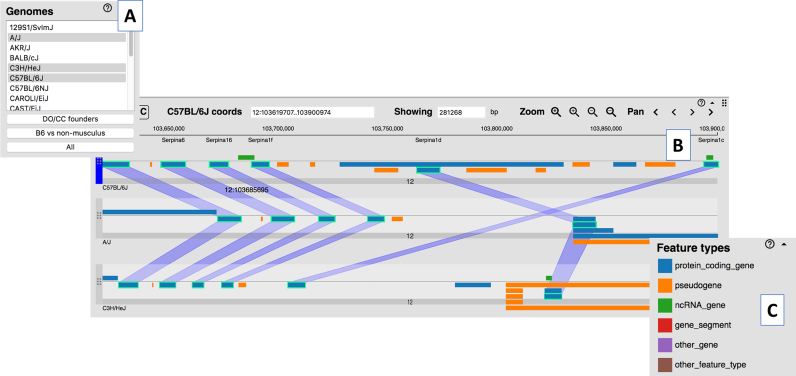
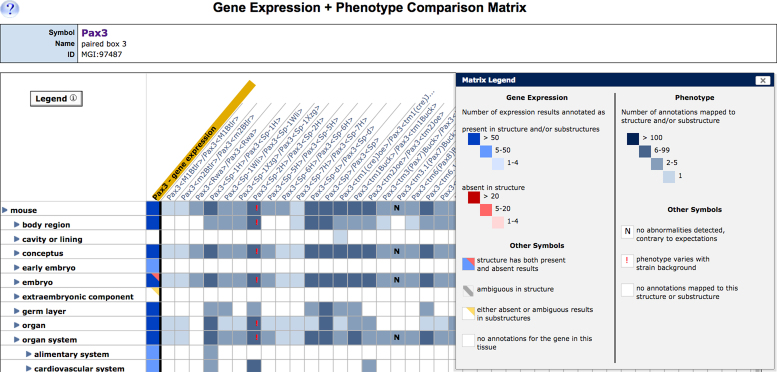
The Mouse Genome Database (MGD; http://www.informatics.jax.org) is the community model organism genetic and genome resource for the laboratory mouse. MGD is the authoritative source for biological reference data sets related to mouse genes, gene functions, phenotypes, and mouse models of human disease. MGD is the primary outlet for official gene, allele and mouse strain nomenclature based on the guidelines set by the International Committee on Standardized Nomenclature for Mice. In this report we describe significant enhancements to MGD, including two new graphical user interfaces: (i) the Multi Genome Viewer for exploring the genomes of multiple mouse strains and (ii) the Phenotype-Gene Expression matrix which was developed in collaboration with the Gene Expression Database (GXD) and allows researchers to compare gene expression and phenotype annotations for mouse genes. Other recent improvements include enhanced efficiency of our literature curation processes and the incorporation of Transcriptional Start Site (TSS) annotations from RIKEN's FANTOM 5 initiative.
Overview
The claims and statistics of this paper haven’t been checked yet.
Free: it reads the open-access text and checks the first 5 claims that cite a source we can check. Create a free account to check every claim.
Integrity signals
Registry
Cites
Statistics
Figures
Verification
Claims the paper makes
The claims and statistics of this paper haven’t been checked yet.
Free: it reads the open-access text and checks the first 5 claims that cite a source we can check. Create a free account to check every claim.
Claims other papers make about this one
Each is checked against this paper’s own text: does it say what the citing paper says it does?
The source backs part of the claim, not all of it — or backs it for a different population, condition or comparison.
In the citing paper
“However, available information in the MGI database [32, 34, 36] indicates that for some of these genes, their knock-out results in heart defects (Fig. 4, red border) or they are expressed in the heart (Fig. 4, double-line border).”
From A cis-regulatory-directed pipeline for the identification of genes involved in cardiac development and disease (2021) · cites this paper as [34]
Experimental — accuracy not yet measuredThe check wasn’t confident either way, so it gives no verdict — never disputed.
In the citing paper
“Most (15/16) of nearby genes or 3D interaction genes were expressed in branchial arch and embryo ectoderm in mice [36,37].”
From Combined genome-wide association study of 136 quantitative ear morphology traits in multiple populations reveal 8 novel loci (2023) · cites this paper as [37]
Experimental — accuracy not yet measuredThe check wasn’t confident either way, so it gives no verdict — never disputed.
In the citing paper
“Yet, it is expressed in several tissues based on the transcriptome data (Fig. 3A) and in situ hybridization results of E14.5 mouse embryos [34] (Fig. 3C).”
From A cis-regulatory-directed pipeline for the identification of genes involved in cardiac development and disease (2021) · cites this paper as [34]
Experimental — accuracy not yet measuredThe check wasn’t confident either way, so it gives no verdict — never disputed.
In the citing paper
“Similarly, Cbx5 is also highly expressed in all four tissues (Fig. 3A) and is widely expressed in E14.5 embryo [34] (Fig. 3D).”
From A cis-regulatory-directed pipeline for the identification of genes involved in cardiac development and disease (2021) · cites this paper as [34]
Experimental — accuracy not yet measured
Self-check
Percentages, sums and reported differences re-computed from the paper’s own numbers.
The self-check needs the paper’s full text.
Citations
Cites
The Gene Ontology Resource: 20 years and still GOing strong
The Gene Ontology Consortium (2019) · Nucleic Acids Research · doi:10.1093/nar/gky1055 · Cited by 4,747
A promoter-level mammalian expression atlas
The FANTOM Consortium and the RIKEN PMI and CLST (DGT) (2014) · Nature · doi:10.1038/nature13182 · Cited by 1,982
Expansion of the Gene Ontology knowledgebase and resources
The Gene Ontology Consortium (2017) · Nucleic Acids Research · doi:10.1093/nar/gkw1108 · Cited by 1,850
JBrowse: A next-generation genome browser
Skinner, M. E., Uzilov, A. V., Stein, L. D., Mungall, C. J., & Holmes, I. H. (2009) · Genome Research · doi:10.1101/gr.094607.109 · Cited by 717 · cited 1×
“org/), a JavaScriptbased interactive genome browser with multiple features for navigation and track selection (14).”
BackgroundThe Mouse Genome Database (MGD): facilitating mouse as a model for human biology and disease
Eppig, J. T., Blake, J. A., Bult, C. J., Kadin, J. A., Richardson, J. E., & The Mouse Genome Database Group (2015) · Nucleic Acids Research · doi:10.1093/nar/gku967 · Cited by 357
Self-citationSupporting conditional mouse mutagenesis with a comprehensive cre characterization resource
Heffner, C. S., Herbert Pratt, C., Babiuk, R. P., Sharma, Y., Rockwood, S. F., Donahue, L. R., Eppig, J. T., & Murray, S. A. (2012) · Nature Communications · doi:10.1038/ncomms2186 · Cited by 230 · cited 1×
“Other database resources that are coordinated within the MGI consortium include the Gene Expression Database (GXD) (3), the Mouse Tumor Biology Database (MTB) (4), the Gene Ontology project (GO) (5), MouseMine (6), the International Mouse Strain Resource (IMSR) (7) and the CrePortal database of recombinase expressing…”
BackgroundMouse Genome Database (MGD)-2018: knowledgebase for the laboratory mouse
Smith, C. L., Blake, J. A., Kadin, J. A., Richardson, J. E., Bult, C. J., & the Mouse Genome Database Group (2018) · Nucleic Acids Research · doi:10.1093/nar/gkx1006 · Cited by 219
Self-citationMouseMine: a new data warehouse for MGI
Motenko, H., Neuhauser, S. B., O’Keefe, M., & Richardson, J. E. (2015) · Mammalian Genome · doi:10.1007/s00335-015-9573-z · Cited by 132 · cited 9×
“Gene model structure details and sequences for all 19 annotated mouse genomes are also accessible from MGI’s MouseMine (http://www.mousemine.org) through its user interface and web services (MouseMine web services back the Multiple Genome Viewer).”
BackgroundInfluentialSelf-citationThe mouse Gene Expression Database (GXD): 2019 update
Smith, C. M., Hayamizu, T. F., Finger, J. H., Bello, S. M., McCright, I. J., Xu, J., Baldarelli, R. M., Beal, J. S., Campbell, J., Corbani, L. E., et al. (2019) · Nucleic Acids Research · doi:10.1093/nar/gky922 · Cited by 119
Self-citationThybert, D., Roller, M., Navarro, F. C. P., Fiddes, I., Streeter, I., Feig, C., Martin-Galvez, D., Kolmogorov, M., Janoušek, V., Akanni, W., et al. (2018) · Genome Research · doi:10.1101/gr.234096.117 · Cited by 117 · cited 2×
“The recent release of assembled and annotated genomes for 16 inbred mouse strains (https://www.biorxiv.org/content/ early/2018/02/12/235838) and two wild-derived strains (CAROLI/EiJ and PAHARI/EiJ) (10) represent major milestones in mouse genetics and comparative genomics.”
Background
Cited by
Items 701–723 of 723
Siragher, E. J., Higgins, J., Vaughan, O. R., Fowden, A. L., & Sferruzzi-Perri, A. N. (2026) · Cellular and Molecular Life Sciences · doi:10.1007/s00018-026-06110-7 · Cited by 1
“To assess the functional relevance of these DEGs, we cross-referenced them with the International Mouse Phe-notyping Consortium (IMPC) database [ 48].”
Uddin, M. M. (2019) · theses.fr (ABES) · doi:10.70675/c0ea56dez00b3z4321zac70z35e800418885 · Cited by 1
Development of new computational methods for a synthetic gene set annotation
Ayllón-Benítez, A. (2019) · theses.fr (ABES) · doi:10.70675/e4ca6537z5926z484fz9de9z8ae5b1e1f63a
Identification de gènes impliqués dans la qualité des viandes chez les bovins allaitants français
Hou, A. E. (2021) · theses.fr (ABES) · doi:10.70675/f7d4f196zec56z4130z96f7z17b5aacd113f
Forrest, H., Huzard, D., Restivo, L., Baran, S. W., & Petit‐Demoulière, B. (2026) · Springer eBooks · doi:10.1007/978-3-032-19781-8_10
Lineage-specific lncRNAs critically determine cross-species differences in tumorsPreprint
Lin, J., Liu, X., & Zhu, H. (2026) · bioRxiv (Cold Spring Harbor Laboratory) · doi:10.64898/2026.05.01.722350 · Cited by 1
“…cross-species comparison, we identified one-to-one orthologous PCGs by extracting gene pairs from the Compara API on the EMBL-EBI website and downloading the list of human-mouse one-to-one orthologs from the MGI website (Supplementary Table 2, 3) (Bult et al., 2019; Vilella et al., 2009).”
Ju, Y. H., Zhao, J. Y., Sianati, S., Egebjerg, C., Gonzalez, O. C., Criswell, A., Lee, C. Y., Du, K., Luff, C., Stralka, J., et al. (2026) · bioRxiv (Cold Spring Harbor Laboratory) · doi:10.64898/2026.06.03.730017
“Coding sequences were submitted to CRISPOR 38,39 and CHOPCHOP 40,41 to identify candidate sgRNAs and corresponding protospacer adjacent motif (PAM) sites.”
Bhak, Y., Jeon, S., & Bhak, J. (2026) · bioRxiv (Cold Spring Harbor Laboratory) · doi:10.64898/2026.06.08.731002
Sun, Y., Wang, X., Jia, Y., Imoto, S., Li, F., Li, C., & Song, J. (2026) · Briefings in Bioinformatics · doi:10.1093/bib/bbag329
Xu, Q.-H., Chai, Z., Jin, J.-C., Zhang, Y.-N., & Shen, J. (2026) · Molecular Diversity · doi:10.1007/s11030-026-11672-6
“To assess the functional relevance of prioritized candidate genes in early-onset ischemic stroke, we queried the Mouse Genome Informatics (MGI) database (accessed in December 2025) [ 42] for knockout/loss-of-function models exhibiting phenotypes relevant to microplastic targets.”
魏玺通, Wu, C., Zhengyan, 薛. X., Yigelamujiang, G., Yang, J., Aoxiang, Y., & Zhang, Y. (2026) · Journal of Physics Conference Series · doi:10.1088/1742-6596/3291/1/012041
Evidence of selection in sympatry between two closely related species of rockfishPreprint
Harned, S. P., Scholten, B. D., & Reiskind, M. O. B. (2026) · bioRxiv (Cold Spring Harbor Laboratory) · doi:10.64898/2026.09.15.751943
Aladenika, E., Olujitan, M., Busch, T. D., Gowans, L. J. J., Adeyemo, W., Adekunle, A. A., Eshete, M. A., Ajala, O., Gadde, R., Mba, N., et al. (2026) · Human Mutation · doi:10.1155/humu/2471705
“SP8 has been implicated in mouse models of cleft palate and cleft lip, whereas SP3 has been associated with abnormal cranial and nasal bone morphology [37].”
InfluentialSantos, R., Marinheiro, B., Ramos, M., Oliveira, P. F., Corda, P. O., Fardilha, M., & Santiago, J. (2026) · Journal of Molecular Medicine · doi:10.1007/s00109-026-02719-0
Selvaraj, G., Fan, P., Kaliamurthi, S., Zhang, L., Li, R.-F., & Wei, D. (2026) · Research Square · doi:10.21203/rs.3.rs-11343904/v1
FAIRsharing record for: MGI Mouse Gene Expression Database
FAIRsharing Team, et al. (2018) · FAIRsharing.org · doi:10.25504/fairsharing.q9neh8
FAIRsharing record for: Rat Genome Database
FAIRsharing Team, et al. (2015) · FAIRsharing.org · doi:10.25504/fairsharing.pfg82t
FAIRsharing record for: Alliance of Genome Resources
FAIRsharing Team, et al. (2018) · FAIRsharing.org · doi:10.25504/fairsharing.6ba5fw
FAIRsharing record for: Vertebrate Gene Nomenclature Committee
FAIRsharing Team, McQuilton, P., et al. (2018) · FAIRsharing.org · doi:10.25504/fairsharing.ebp3tb
FAIRsharing record for: Open Data, Open Code, and Open Infrastructure Guidelines
FAIRsharing Team, Hoyt, C., & Hoyt, C. (2026) · FAIRsharing.org · doi:10.25504/fairsharing.f064d8
FAIRsharing record for: Kinase-Ligand Interaction Fingerprints and Structures database
FAIRsharing Team, & Kooistra, A. (2018) · FAIRsharing.org · doi:10.25504/fairsharing.mihb12
Metadata
- Authors
- Bult, C. J., Blake, J. A., Smith, C. L., Kadin, J. A., Richardson, J. E., the Mouse Genome Database Group, Anagnostopoulos, A., Asabor, R., Baldarelli, R. M., Beal, J. S., Bello, S. M., Blodgett, O., Butler, N. E., Christie, K. R., Corbani, L. E., Creelman, J., Dolan, M. E., Drabkin, H. J., Giannatto, S. L., Hale, P., Hill, D. P., Law, M., Mendoza, A., McAndrews, M., Miers, D., Motenko, H., Ni, L., Onda, H., Perry, M., Recla, J. M., Richards-Smith, B., Sitnikov, D., Tomczuk, M., Tonorio, G., Wilming, L., & Zhu, Y.
- Affiliations
- Jackson Laboratory (US)
- Corresponding author
- Bult, Carol J
- ORCID
- Venue
- Nucleic Acids Research
- Publisher
- Oxford University Press (OUP)
- Published
- 2018-11-08
- Volume
- 47
- Issue
- D1
- Pages
- D801-D806
- ISSN
- 0305-1048 (ISSN-L)
- 1362-4962
- PMC
- PMC6323923
- OpenAlex
- W2900255713
- Cited by
- 686
- References
- 17
- Citations by year
- 2026: 18 · 2025: 33 · 2024: 58 · 2023: 101 · 2022: 133 · 2021: 177 · 2020: 126 · 2019: 37
- FWCI
- 31.47
- Type
- journal article
- Language
- en
- Open access
- gold
- doi.org
- Licence
- Locations
- Nucleic Acids Research (publishedVersion, cc-by)
- Europe PMC (PubMed Central) (publishedVersion, cc-by)
- PubMed Central (publishedVersion, cc-by)
- PubMed (publishedVersion)
- The Mouseion at the JAXlibrary (Jackson Laboratory) (submittedVersion, cc-by)
- Funders
- National Institutes of Health (U41 HG000330, R25 HG007053, U41 HG002223)
- Topics
- Health Sciences › Medicine › Health Informatics › Biomedical Text Mining and Ontologies
- Life Sciences › Biochemistry, Genetics and Molecular Biology › Molecular Biology › Genomics and Phylogenetic Studies
- Life Sciences › Biochemistry, Genetics and Molecular Biology › Molecular Biology › Bioinformatics and Genomic Networks
- Keywords
- Mouse Genome Database, laboratory mice, mouse genetics, mouse genomics, gene nomenclature, allele nomenclature, mouse models of human disease, phenotypes, gene expression, gene expression database, literature curation, transcription start sites, genome annotation
- MeSH terms
- Alleles, Animals, Terminology as Topic, Gene Expression, Genome, Internet, Genomics, Transcription Initiation Site, Databases, Genetic, Mice, Molecular Sequence Annotation
About these checks
Registry, retraction, Cites and statistics results are computed, not judged, with one exception: a printed reference that no index lists is read once by a model before it counts as a citation error. Claims are extracted by a model and kept only when their quote appears verbatim in the text; each cited source is then checked, with a model’s help, for whether it says what the claim relies on. Those verdicts can be wrong — read the claim’s quote and the cited source before relying on one.
Statistics and arithmetic are recomputed, not judged.
Confidence bands are shown only for fields calibrated on our annotated test set. None is calibrated yet, so no band is shown.
What counts as a claim ›How we measure confidence ›How we check this ›
Are you an author, or do you see a problem with this page? Request a review
Data sources
Bibliographic data: Semantic Scholar, OpenAlex, Crossref.
Contains information from the Semantic Scholar Academic Graph Datasets, made available under the ODC Attribution License (ODC-BY 1.0).
Semantic Scholar’s data is described in: Kinney, R., et al. (2023). The Semantic Scholar Open Data Platform. arXiv:2301.10140.
